
TL;DR
Google killed ChromeOS and unveiled Googlebook, a premium Android laptop with Gemini embedded at the OS level, turning the cursor into an AI agent and unifying its 3.6 billion-device ecosystem onto a desktop for the first time.



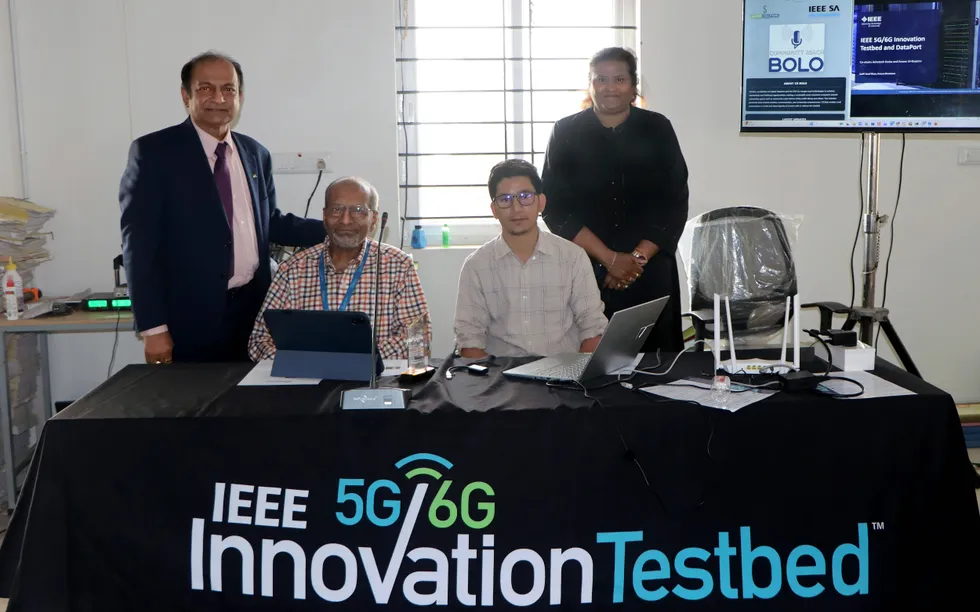

Given how integral the Internet has become to everyday tasks such as shopping, paying bills, and holding virtual meetings, it’s interesting that nearly 30 percent of the global population still has no access to it. More than 2 billion people are still offline, according to a report released in November by the International Telecommunication Union.
More and more people are being connected, though, thanks to IEEE Future Networks’ Connecting the Unconnected (CTU) and similar programs. Since 2021, the technical community has been working to accelerate the development, standardization, and deployment of 5G, 6G, and future generations.
Every year, CTU holds a worldwide competition to seek out innovators who are in the early stages of developing technologies or applications to provide greater access. It also holds an annual summit that brings together experts, community leaders, and other interested parties to discuss strategies to expand access and foster digital inclusion.
CTU expanded in several ways last year. It launched regional summits to focus on local connectivity issues, organized community-focused events, and established an expanded mentorship program to further support contest winners and the next generation of technological innovators impacting humanity. The program also partners with the IEEE Standards Association (IEEE SA) to develop guidelines for some of the submitted innovations.
“IEEE Future Networks has created a community to bring all these initiatives working on digital connectivity together in a single platform and leverage the IEEE brand to help raise the visibility of their work,” says IEEE Life Fellow Sudhir Dixit, a CTU cochair and a Basic Internet Foundation cofounder, which also works to expand Internet access.
The CTU challenge, launched in 2021, typically receives 200 to 300 submissions each year, Dixit says. Last year 245 projects from 52 countries were submitted. Participants include academics, nonprofit organizations, startups, and students.
Projects can be entered into one of three categories. The Technology Applications category is for new connectivity methods or innovations that broaden broadband access. Those who improve the affordability of Internet services can enter the Business Model category. The Community Enablement category is for strategies that promote public broadband adoption.
After selecting a category, entrants choose between two tracks based on their project’s maturity. The proof-of-concept route is for early-stage but functional technology that has already produced results. The conceptual path is for projects in the theoretical phase that have not undergone full testing.
“IEEE Future Networks has created a community to bring all these initiatives working on digital connectivity together in a single platform and leverage the IEEE brand to help raise the visibility of their work.” —Sudhir Dixit, Connecting the Unconnected cochair
Last year’s challenge submission period was from March to June, with judging phases from June through November. The 20 winners presented their solutions in December at a virtual Winners Summit. Fourteen projects received prize money, ranging from US $500 to $2,500. Six finalists earned an honorable mention at the summit.
The awards amounts have varied over the years, based on the sponsorship.
Among the winners were a solar-powered community broadband network in Tanzania, a low-cost method for accessing the Internet that uses FM radio and a short message service (SMS), and a strategy for utilizing India’s rural broadband infrastructure to deliver medical services to people living in isolated, tribal, and other underserved regions.
“Our job is to help further develop the technology, look for gaps, and see if it is good enough to be applied to rural villages, like those in Africa and India,” says IEEE Fellow Ashutosh Dutta, who is a CTU cochair and a professor at Johns Hopkins University, in Baltimore. “The idea behind the contest is to make sure the technology actually gets implemented at the grassroots level and is being used by the local community.”
This year’s challenge submission period runs until 19 June, with judging phases from July through October.
The finalists of the 2025 IEEE Connect the Unconnected challenge describe their projects.IEEE Future Networks
The CTU program hosted three regional summits last year. The North American event was held in September in Washington, D.C. In November, the Global/Asia-Pacific meeting took place in Bangalore, India; it was co-located with the IEEE Future Networks World Forum. The Europe, Middle East, and Africa summit also was held in November, in Abuja, Nigeria.
Topics discussed at the summits included infrastructure solutions for universal connectivity; sustainable business models; scaling homegrown technologies; and policy, regulation, and financing issues.
As of press time, the dates for this year’s regional summits had not been announced.
To help bridge the gap between ideas and their deployment, the Connect a Community event was established to demonstrate how some new technologies might benefit people. The inaugural event was held in November in Bengaluru, India. During the daylong program, 10 of the challenge winners demonstrated their connectivity solutions to villagers from seven rural communities.
Dutta credits IEEE Life Fellow Rakesh Kumar with devising the event. Kumar chairs IEEE Future Directions, which was where Future Networks got its start in 2017 as the 5G Initiative.
“Kumar wants to ensure the winning technologies are going to be useful for the community,” Dutta says.
Dixit says the Future Networks team believed that simply conducting a competition and distributing prizes wasn’t enough.
“We wanted to follow up with the winners, monitor their progress, and help them turn their ideas into a business,” he says.
To accomplish that, IEEE launched the Empowerment Through Mentorship program, in which budding entrepreneurs are paired with industry leaders and experienced mentors who provide them with 1,000 days of guidance, coaching them on scaling up their business.
“We launched the mentorship program to further the cause,” Dixit says. “These people may be good at developing technology, but they don’t know the marketing challenges, how to raise money, and other factors.”
The Lemelson Foundation, an organization in Portland, Ore., that partners with IEEE, collaborated on the mentorship program. The foundation’s philanthropic strategy is to cultivate a robust ecosystem for entrepreneurs in East Africa, India, and the United States. It does so by providing the entrepreneurs with tools including financing options and access to communities that share their passion.
The foundation chose to partner with IEEE “because of its powerful international network and focus on electrical engineering, which is a critical element of communications and energy infrastructure globally,” says Kory Murphy, Lemelson’s program officer for U.S. invention and entrepreneurship.
“Other factors include IEEE’s focus on nontraditional or disadvantaged areas in India,” Murphy says, “and its recognition that mentorship is critical for the successful deployment of new technologies.”
IEEE began an early pilot project in 2023 with support of a grant from the Lemelson Foundation, to determine if a sustained entrepreneurship mentorship program was valuable and necessary, he says. It then conducted a survey through 2024 to collect information to better understand the needs of stakeholders, mentors, and entrepreneurs in hard-to-reach areas in India. While the early pilot program was restricted to that country, its intent was to learn from the experience and share the findings globally, he says.
“Our job is to help further develop the technology, look for gaps, and see if it is good enough to be applied to rural villages, like those in Africa and India.” —Ashutosh Dutta, Connecting the Unconnected cochair
“The foundation’s involvement was aimed at testing certain activities, partnership strategies, and understanding the budgetary requirements for a prepilot program,” he says. “The primary goal of the foundation is to enable conditions for innovation to occur within regional systems, especially addressing the opportunity for sustained, systematic, and relational mentorship in technology innovation.”
The Empowerment Through Mentorship program is structured into three tiers. One focuses on individuals and their needs, the program/technical level focuses on the invention, and the venture level guides participants from the initial concept through product testing and validation. Within each track, participants engage in activities such as networking, securing financial support, and pitching their innovations, Murphy says.
“The 1,000-day approach reflects the belief that it requires a long period of time to coach and support those who traditionally are excluded,” he says.
CTU mentors can be IEEE members or nonmembers who are successful entrepreneurs and own small or large companies, Dixit says. They also can work in academia.
“They need to be passionate about training and mentoring other people,” Dixit says. “We have created a curriculum that covers topics such as ways to get financing from investors and how to turn ideas into a profitable business. It’s not the technology that will make the product successful; it’s everything else that goes into it.”
To determine whether any of the challenge’s submitted projects have the potential to become a standard, the CTU working group collaborates with the IEEE SA Industry Connections program’s 6G Rural Connectivity and Intelligent Village activity. Projects considered for standards do not have to be winners. Any project that has successfully passed the first phase, completed the second-phase requirements, and requested a review may be considered.
Typically, about half of the submitted projects are reviewed for possible standard implications, Dutta says.
“We selected about 60 submissions that could be potentially standardized,” he says. “Out of those, we work with IEEE SA’s rapid reactive standards activity group to narrow them down to five or 10 that can be potentially standardized.
“The CTU program is not only about developing a technology or implementing it, but also standardizing it so that people around the world can use the standard.”
One such project led to the development of IEEE P1962, “Standard for Providing Broadband Connectivity to Rural Infrastructure by Utilizing Solar Panels as Optical Communication Receivers.” It specifies an architecture for an optical receiver that uses solar panels and associated circuitry to provide energy-efficient, affordable, and high-speed optical wireless communication.
“CTU has created a platform for the world to bring their ideas to one single place where people can talk to each other about them,” Dixit says. “We are a unifying force.
We bring these many dimensions together to connect the unconnected.”
From Your Site Articles
Related Articles Around the Web

I’ll let you all in on a little secret: I love pickles. Yes, let that statement spawn a million jokes in the comments; I don’t care. Pickles are great and the fresher the better. I began gardening specifically so that I could grow cucumbers, garlic, onion, and dill, just so I could make my own at home. And, because I investigate pickle brines the way a sommelier inspects a glass of red zinfandel from a freshly tapped cask, I’ve been to my share of pickle festivals.
So perhaps I’m in a slightly protective posture having come across an article about how one pickle festival in Canada, the Downtown Brandon International Pickle Fest, had to rebrand under threat from Picklefest Canada, which somehow has a trademark on the term “Pickle Fest”.
Aly Wowchuk, who is one of the organizers, said the trademark issue forced a name change — but not a change in spirit.
“It’s the same event, we have the same heart and soul, it just has a different name,” she told the Sun. “We were not sued … we received an email on behalf of Picklefest Canada’s lawyer about the use of ‘Pickle Fest.’ There was a lot of back and forth between lawyers about the use of the name, but ultimately, it was easier for us to move forward and change the name of the Brandon Pickle Fest event.”
This is the outcome of a point we’ve made for years and years: Trademark bullying happens because it generally works. And this is trademark bullying. As in the States, Canadian trademark law does include prohibitions on trademarking descriptive marks. Picklefest Canada is an organization with a trademark on its name and logo and it primarily, you guessed it, puts on pickle festivals. To that end, its trademark rights ought to be extremely limited. Limited, I would say, to its use of the term in overall branding and marketing iconography, as that can be described as original and creative.
But the idea that such a trademark could be wielded to prevent other people, groups, or municipalities from putting on their own pickle fests is plainly at odds with how trademarks are supposed to work. But when a small entity is bullied by a larger one, they often feel they have no choice but to rebrand.
Wowchuk said the new name, Brandon Brine Bash, was chosen in part to stand out in an increasingly crowded field of pickle-themed events.
“With the popularity of pickle festivals across Canada and internationally, almost every variation of ‘pickle party’ or ‘pickle palooza’ has been used,” she said. “We wanted something unique that included Brandon and was easy to find.”
The rebrand also required updates to the festival’s logo, created by local artist Alexander Matheson. While the iconic pickle design has been retained and modernized, references to “Pickle Fest” have been removed.
It’s too bad that a simple festival to celebrate one of man’s greatest inventions has to devolve in overly protective intellectual property bullshit. And it’s equally too bad that nobody has yet stood up to Big Pickle to get this nonsense trademark cancelled.
Filed Under: canada, picklefest, pickles, trademark
Companies: brandon brine bash, pickle fest, picklefest, picklefest canada

Racing fanatics who own Apple Vision Pro headsets can now enjoy a high-quality, mixed reality racing simulation experience, thanks to iRacing Connect, available starting Tuesday, provided that they own all other required hardware.
Of course, we already iRacing was coming to Apple Vision Pro, as Eddy Cue, Apple’s Services chief, already said as much in April. However, starting Tuesday, May 12, iRacing Connect is available for free in the App Store.
The experience blends a user’s racing rig with a virtual cockpit and aligns the physical steering wheel with the in-game one. It does this via technical integration of CloudXR.
According to an iRacing press release, physics calculations and high-fidelity graphic rendering are performed on PCs equipped with NVIDIA’s RTX GPU. Frames are encoded and shared wirelessly over Wi-Fi to iRacing Connect on visionOS.
“We’re thrilled to have worked with Apple and NVIDIA to bring iRacing to Apple Vision Pro,” said iRacing president Tony Gardner.
“With the ultra-high-resolution capabilities of Apple Vision Pro and the power of NVIDIA’s RTX GPU, this new spatial experience puts our users in the driver’s seat with a level of immersion and fidelity never before seen in sim racing.”
Those who wish to try out iRacing will need an Apple Vision Pro running visionOS 26.4, a PC with an Nvidia graphics card model 4070Ti+ or 5070Ti+ running driver version 580+, and a Wi-Fi 6+ enabled router capable of over 1000Mbps on the 5Ghz band.

Spotify Wrapped usually gives you a quick snapshot of your year in music. Spotify 20 goes much further back, and that makes it a lot more personal.
To celebrate its 20th anniversary, Spotify has launched Spotify 20: Your Party of the Year(s), a new mobile-only in-app experience that looks at your full listening history on the platform. It shows your first day on Spotify, the total number of unique songs you have played, your first streamed song, and your all-time most-streamed artist. Spotify is also giving users an All-Time Top Songs Playlist with their 120 most-played tracks, including play counts.
That turns the feature into something closer to a musical diary than a normal stats recap. Your Spotify account probably remembers the song you played during a college phase, the artist you overplayed after a breakup, the gym playlist you once took way too seriously, and the track you quietly returned to for years without realizing it.

The most charming part may be the first-streamed song. It is the kind of stat that can be weirdly emotional, deeply embarrassing, or both. A single song can pull up an old version of you faster than any photo album. In my case, that song was Baba O’Riley by The Who, which had been stuck in my head after playing the 2012 Need for Speed: Most Wanted.
Like Wrapped, Spotify has made these throwback moments shareable. Each story includes a share card that can be saved, sent to friends, or posted online. The experience is available on mobile across 144 markets and in 16 languages. Users can find it by opening the Spotify app and searching “Spotify 20” or “Party of the Year(s),” or by visiting Spotify’s 20th anniversary page on mobile.
The 120-track playlist is also easy to miss. It appears on the final slide of your Spotify 20 experience, where you need to claim it to save it to your library. Spotify has also added editorial playlists around major eras, movements, and cultural shifts from the past two decades. These playlists can be found in the hub on Spotify.

South Korea’s presidential policy chief is calling for a “citizen dividend” that would return some AI-driven profits and tax revenue to the public. The Straits Times. From the report: Presidential policy chief Kim Yong-beom said in a Facebook post that a portion of the profits and tax revenue derived from the artificial intelligence boom “should be structurally returned to all citizens.” That is because, Mr Kim argued, the economic gains from AI are based at least partly on industrial infrastructure built by the country over five decades. Mr Kim’s comments come after tens of thousands of people gathered outside Samsung’s main chip hub in April to demand employees get a greater share of AI profits. The company’s labour union wants 15 per cent of operating profit handed to chip-division employees.
The union has threatened an 18-day strike starting May 21. Workers have pointed to rising payouts at SK Hynix, which in 2025 agreed to allocate 10 per cent of its annual operating profit to a performance bonus pool, as evidence they deserve more pay. “Excess profits in the AI era are, by nature, concentrated,” Mr Kim wrote. Memory companies, core engineers and asset holders are highly likely to receive substantial benefits, while much of the middle class may experience only indirect effects.

Google killed ChromeOS and unveiled Googlebook, a premium Android laptop with Gemini embedded at the OS level, turning the cursor into an AI agent and unifying its 3.6 billion-device ecosystem onto a desktop for the first time.
TL;DR
Google killed the Chromebook. It took 15 years, but the company that invented the browser-as-operating-system has concluded that a browser is not enough. At the Android Show on Monday, Google unveiled Googlebook, a new category of premium laptops running Android with Gemini embedded at the operating system level. The devices will ship this autumn from Acer, ASUS, Dell, HP, and Lenovo. ChromeOS is not being updated. It is being replaced.
The rebrand is not cosmetic. Googlebook runs on what Google internally calls Aluminium OS, a version of Android 17 rebuilt as a genuine desktop platform with a custom window manager, native multitasking, and Gemini woven into every interaction. There are no containers, no emulation layers, no compatibility modes. The operating system is Android. The apps are native. The AI is not an assistant sitting in a sidebar. It is the interface.
The most revealing feature is called Magic Pointer. Built with Google’s DeepMind team, it turns the laptop cursor into a context-aware AI agent. Wiggle the cursor over a date in an email and Gemini offers to schedule a meeting. Point at two images and it composites them together. Select a paragraph and it summarises, translates, or rewrites. The cursor, the oldest interaction metaphor in personal computing, becomes a direct channel to a large language model that can see your screen and act on what it finds.
Magic Pointer is not a chatbot. It does not require a prompt. It reads the context of whatever the cursor touches and surfaces actions before the user asks for them. The distinction matters because it represents a different theory of how AI should enter personal computing. Apple embeds intelligence into individual applications. Microsoft puts Copilot in a panel beside the workspace. Google is putting Gemini inside the pointing device itself.
The second signature feature is Create your Widget, which lets users describe a custom widget in plain language and Gemini builds it on the spot, pulling data from Gmail, Calendar, web searches, and other Google services into a single personalised dashboard. The widgets are vibe-coded, generated by AI from a natural language description rather than selected from a catalogue. The user does not choose from what exists. The user describes what should exist and the machine builds it.
Googlebook solves a problem that has plagued Google for a decade. ChromeOS was a web-first operating system that ran Android apps inside a compatibility layer. The experience was functional but compromised. Android apps on Chromebooks ran in containers that could not access the file system natively, could not interact with desktop windows properly, and could not use hardware features the way they could on a phone. The platform had two souls and neither worked as well as it should have.
Aluminium OS eliminates the split. Android apps run natively on the laptop because the laptop runs Android. A feature called Cast my Apps lets users open any application from their Android phone on the Googlebook’s screen without downloading it. Quick Access provides direct access to phone files through the laptop’s file browser, with no manual transfers required. The phone and the laptop share an operating system, an app ecosystem, and an AI layer.
The European Commission is preparing to force Google to give rival AI assistants the same access to Android that Gemini receives, a ruling that could determine whether Googlebook’s deep Gemini integration becomes a competitive moat or a mandated open platform. The DMA decision is expected in July. Googlebook ships in the autumn. The regulatory timeline and the product timeline are on a collision course.
Googlebook enters a laptop market that has been reshaped by two forces. The first is Apple’s MacBook Neo, a 599-dollar laptop running macOS on an A18 Pro chip derived from the iPhone, which brought Apple’s entry price below 600 dollars for the first time. The second is the Snapdragon X Elite, which gave Windows laptops competitive battery life and AI inference capabilities for the first time in years.
Google’s response is to abandon the low end entirely. Googlebook is positioned as a premium product with what Google describes as premium craftsmanship and materials. Every device will feature a Glowbar, an LED strip embedded in the keyboard deck that animates in response to Gemini’s activity. The company is not building a cheap laptop that happens to have AI. It is building an AI device that happens to be a laptop.
The pivot is striking because Chromebooks succeeded precisely by being cheap. Google is deploying Gemini to four million GM vehicles, embedding the same AI into cars, phones, wearables, and now laptops. The pattern is clear. Google does not want Gemini to be a product. It wants Gemini to be the intelligence layer that connects every screen in a user’s life. Googlebook is the desktop-sized piece of that strategy.
Chromebooks hold more than 60 per cent of the global education laptop market. The platform serves 38 million students in K-12 schools, and 93 per cent of US school districts plan Chromebook purchases this year. The installed base is enormous, the margins are thin, and the switching costs are low.
Google says existing Chromebooks will continue receiving security updates until their stated auto-update expiration dates. Some devices may qualify for an opt-in upgrade to the new platform. But the premium positioning of Googlebook raises an obvious question: what happens to the education market that made Chromebooks ubiquitous? A 200-dollar Chromebook for a fourth-grader and a premium Googlebook for a professional are different products for different buyers. Google has not announced pricing, but the emphasis on premium hardware suggests that the cheapest Googlebook will cost considerably more than the cheapest Chromebook.
Intel is previewing its next generation of AI PC processors at Computex 2026, betting that local AI inference on laptops is the next wave of chip demand. Googlebook’s Gemini integration is cloud-first, but the hardware partnerships with Intel’s competitors in the ARM ecosystem suggest that on-device AI processing will follow. The question of where the intelligence runs, on the device or in the cloud, will determine whether Googlebook works offline and how much it costs to operate at scale.
Google’s laptop strategy has always been a distribution strategy for Google services. Chromebooks put Chrome, Gmail, Drive, Docs, and Search in front of hundreds of millions of users, particularly students, at the lowest possible hardware cost. The services generated the revenue. The hardware was the delivery mechanism.
Googlebook extends the same logic but changes the service being distributed. The service is no longer a suite of web applications. It is Gemini. The AI that reads your email, builds your widgets, summarises your documents, and anticipates your next action is the product. The laptop is the surface it runs on. The Android ecosystem, with its 3.6 billion active devices, is the network that feeds it context.
Apple has argued that AI will become as commonplace as word processing, a utility that disappears into the background of everyday computing. Google is making a different argument. Gemini on Googlebook is not in the background. It is the cursor. It is the widget. It is the interface between the user and the machine. Google is not making AI invisible. It is making AI the thing you interact with every time you touch the trackpad.
Apple’s AI rollout has already stumbled in China, where regulatory delays left Cupertino without its most important differentiator in its most competitive market. Google faces similar risks. Gemini’s deep integration into Googlebook means that any market where Gemini is restricted, whether by regulation, data sovereignty requirements, or competitive dynamics, is a market where the laptop’s core value proposition is diminished.
Fifteen years ago, Google bet that the browser was the operating system. That bet built a dominant position in education and a meaningful share of the consumer laptop market. Now Google is betting that AI is the operating system, that the intelligence layer matters more than the application layer, and that the company with the most context about a user’s life, across phone, car, watch, and laptop, will build the most useful computing experience. Googlebook is not a laptop. It is the argument that the device does not matter. The intelligence does.

OpenAI CEO Sam Altman took the stand Tuesday in Elon Musk’s trial against the company, testifying that Musk repeatedly sought control of OpenAI before leaving in 2018. Altman said he opposed putting AI “under the control of any one person,” while Musk’s lawyer used a pointed cross-examination to attack Altman’s trustworthiness. An anonymous reader shares updates from the testimony via the New York Times: Before Elon Musk left OpenAI in a power struggle in 2018, he wanted to merge the nonprofit artificial intelligence lab with Tesla, his electric car company. Mr. Musk and other OpenAI co-founders met several times to discuss the merger. OpenAI’s chief executive, Sam Altman, was even offered a seat on Tesla’s board of directors, according to a court document. But folding OpenAI into Tesla would have eliminated the lab’s nonprofit status, and that, Mr. Altman said on the witness stand on Tuesday, was something he wanted to avoid. […] “I believed that A.I. should not be under the control of any one person,” Mr. Altman said. […] Mr. Altman testified about his feud with Mr. Musk. He said he had become worried that Mr. Musk, who provided the early investment money for OpenAI, wanted to take control of the lab. He described what he called a “particularly harrowing moment” when his OpenAI co-founders asked Mr. Musk what would happen to his control of a potential for-profit when he died. Mr. Altman said Mr. Musk had replied that the control would pass to his children. “I was not comfortable with that,” Mr. Altman said. When Mr. Musk lost a power struggle for control of the lab, he left, forcing Mr. Altman to find another big financial backer in Microsoft.
But Mr. Altman ran into trouble in 2023 when OpenAI’s board fired him because, as several of its members have testified in the trial, it didn’t trust him. Steven Molo, Mr. Musk’s lead lawyer, homed in on Mr. Altman’s trustworthiness during an aggressive cross-examination. “Are you completely trustworthy?” Mr. Molo asked. “I believe so,” Mr. Altman answered. After questioning Mr. Altman’s trustworthiness for nearly 20 minutes, Mr. Molo turned to Mr. Altman’s relationship with Mr. Musk. Mr. Altman said that after he met Mr. Musk in the mid-2010s, Mr. Musk had occasionally expressed concern about the dangers of A.I. But Mr. Musk spent far more time saying he was worried that companies like Google would get ahead in A.I. development, Mr. Altman said. (Mr. Musk testified in the trial that he had wanted to create OpenAI to prevent Google from controlling the technology.)
Mr. Altman, the lawyer intimated, took advantage of Mr. Musk’s concerns and was never sincere about his own A.I. fears. “Are you a person who just tells people things they want to hear whether those things are true or not?” Mr. Molo asked. The lawyer also questioned whether Mr. Atman, who became a billionaire through years of tech investments, was self-dealing through OpenAI. Mr. Molo showed a list of Mr. Altman’s personal investments across a number of companies that stand to benefit from their association with OpenAI. They included Helion Energy, a start-up that has deals with Microsoft and OpenAI, and Cerebras, a chip maker in business with OpenAI. Mr. Molo asked if Mr. Altman, who is on OpenAI’s board as well as its chief executive, would ever fire himself. “I have no plans to do that,” Mr. Altman said.
OpenAI’s odd journey from nonprofit lab to what it is today — a well-funded, for-profit company that is still connected to a nonprofit called the OpenAI Foundation with an endowment that could be worth more than $130 billion — provided grist for Mr. Molo’s questions about Mr. Altman’s motivations. He implied that Mr. Altman could have continued to build OpenAI as a pure nonprofit. But the only way to build such a valuable charity was to raise billions through a for-profit venture, Mr. Altman responded. Still, the giant sums being raised appeared to upset Mr. Musk. In late 2022, according to court documents, Mr. Musk sent a text to Mr. Altman complaining that Microsoft was preparing to invest $10 billion in OpenAI. “This is a bait and switch,” Mr. Musk said at the time. But Mr. Altman, under questioning from his own lawyers, said: “Every step of the way, I have done my best to maximize the value of the nonprofit. I would point out that there are not a lot of historical examples of a nonprofit at this scale.” Before Altman took the stand, OpenAI board chair Bret Taylor continued his testimony that began on Monday. He said Elon Musk’s 2024 bid to buy the company’s assets appeared to conflict with his lawsuit and was rejected because the board did not believe OpenAI’s mission should be controlled by one person. “We did not feel like it was appropriate for one person to control our mission,” he said.
Recap:
Microsoft CEO Satya Nadella Testifies In OpenAI Trial (Day Nine)
Sam Altman Had a Bad Day In Court (Day Eight)
Sam Altman’s Management Style Comes Under the Microscope At OpenAI Trial (Day Seven)
Brockman Rebuts Musk’s Take On Startup’s History, Recounts Secret Work For Tesla (Day Six)
OpenAI President Discloses His Stake In the Company Is Worth $30 Billion (Day Five)
Musk Concludes Testimony At OpenAI Trial (Day Four)
Elon Musk Says OpenAI Betrayed Him, Clashes With Company’s Attorney (Day Three)
Musk Testifies OpenAI Was Created As Nonprofit To Counter Google (Day Two)
Elon Musk and OpenAI CEO Sam Altman Head To Court (Day One)
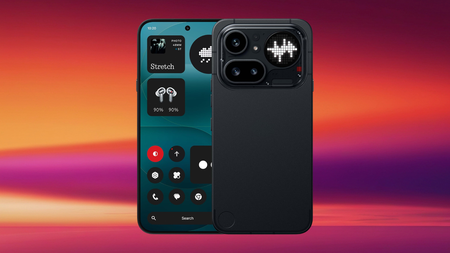
When does a phone that’s barely left the shelves drop by nearly £50, and how long before that window closes for good?
The answer arrived less than two months into the Phone (4a) Pro’s life. Nothing’s boldest mid-ranger is now available for £449.10 instead of its usual £499, putting one of the most distinctive new Android handsets within considerably easier reach.
Save nearly £50 on the Nothing Phone (4a) Pro — even though it’s only been out a few weeks
When does a phone that’s barely left the shelves drop by nearly £50, and how long before that deal slips away?

The camera is the clearest argument for the Phone (4a) Pro, with a three-lens system spanning 0.6x ultra-wide all the way to 140x ultra zoom, anchored by a 50MP OIS Sony main sensor that handles the heavy lifting in both daylight and low-light conditions.
That periscope zoom capability is genuinely unusual at this price point, meaning you can pull in detail from a distance that most rivals simply cannot match without asking you to spend significantly more money.
The Snapdragon 7 Gen 4 chip underneath keeps everything moving cleanly, whether you’re switching between apps, running AI tasks through the built-in Gemini integration, or pushing through extended gaming sessions on the 144Hz AMOLED display.

Nothing OS runs on top of Android 16 and brings its own texture to the experience, with Essential Space acting as an AI-powered second memory that captures notes, screenshots, and voice recordings and makes sense of them automatically without you having to file anything manually.
The Glyph Matrix on the rear panel adds a layer of utility that feels genuinely considered rather than gimmicky, surfacing alerts, acting as a selfie mirror, and running tools like a timer without requiring you to wake the screen at all.
Backing all of this is a 5,080mAh battery with 64-minute charge times, and Nothing is committing to three years of OS updates and six years of security patches, which is a meaningful promise for a phone at this price.
For a phone only less than two months old, the Nothing Phone (4a) Pro is already proving that the best time to buy is not always at launch, with a saving that makes its already competitive offer even harder to dismiss.
SQUIRREL_PLAYLIST_10148964
The U.S. House Committee on Homeland Security is calling on Instructure executives to testify about two cyberattacks by the ShinyHunters extortion group that targeted the company’s Canvas platform, allowing threat actors to steal student data and disrupt schools during final exams.
In a letter sent Monday afternoon to Instructure CEO Steve Daly, Homeland Security Committee Chairman Andrew R. Garbarino said the committee is investigating the massive breach at Instructure that impacts millions of students.
“The Committee on Homeland Security (Committee) is investigating the concerning reports related to recent cybersecurity incidents affecting Instructure Holdings, Inc. and the tens of millions of students, educators, and administrators who rely on its Canvas learning management platform,” reads the letter.
“Within the span of one week, the cybercriminal group known as ShinyHunters breached Instructure twice.”
As first reported by BleepingComputer, Instructure disclosed on May 3 that it had suffered a breach. The company later confirmed it detected the intrusion on April 29 after threat actors compromised its systems and stole data belonging to students and school staff using Canvas.
The company said the exposed information included names, email addresses, student identification numbers, and messages exchanged between students and teachers on the platform. However, the data did not include passwords, financial information, or government identifiers.
On May 3, the ShinyHunters extortion gang claimed responsibility for the attack, telling BleepingComputer that they stole 280 million data records from 8,809 colleges, school districts, and online education platforms.
The threat actor shared a list of impacted education organizations, with stolen record counts ranging from tens of thousands to several million for each institution.
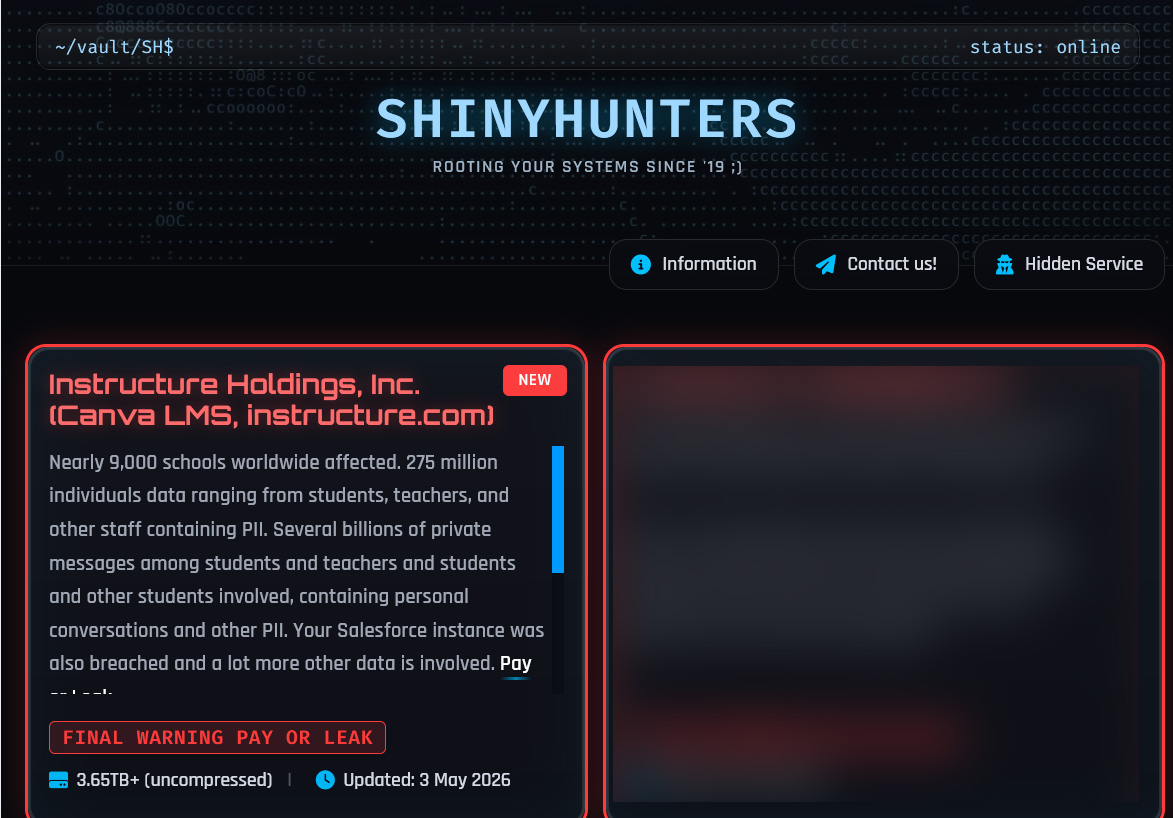
The ShinyHunters group conducted a second attack that defaced Canvas login portals at schools and universities across the United States, displaying extortion messages demanding that Instructure negotiate with the group. The disruption affected institutions across multiple states during final exams and end-of-semester activities, with some colleges forced to cancel exams.
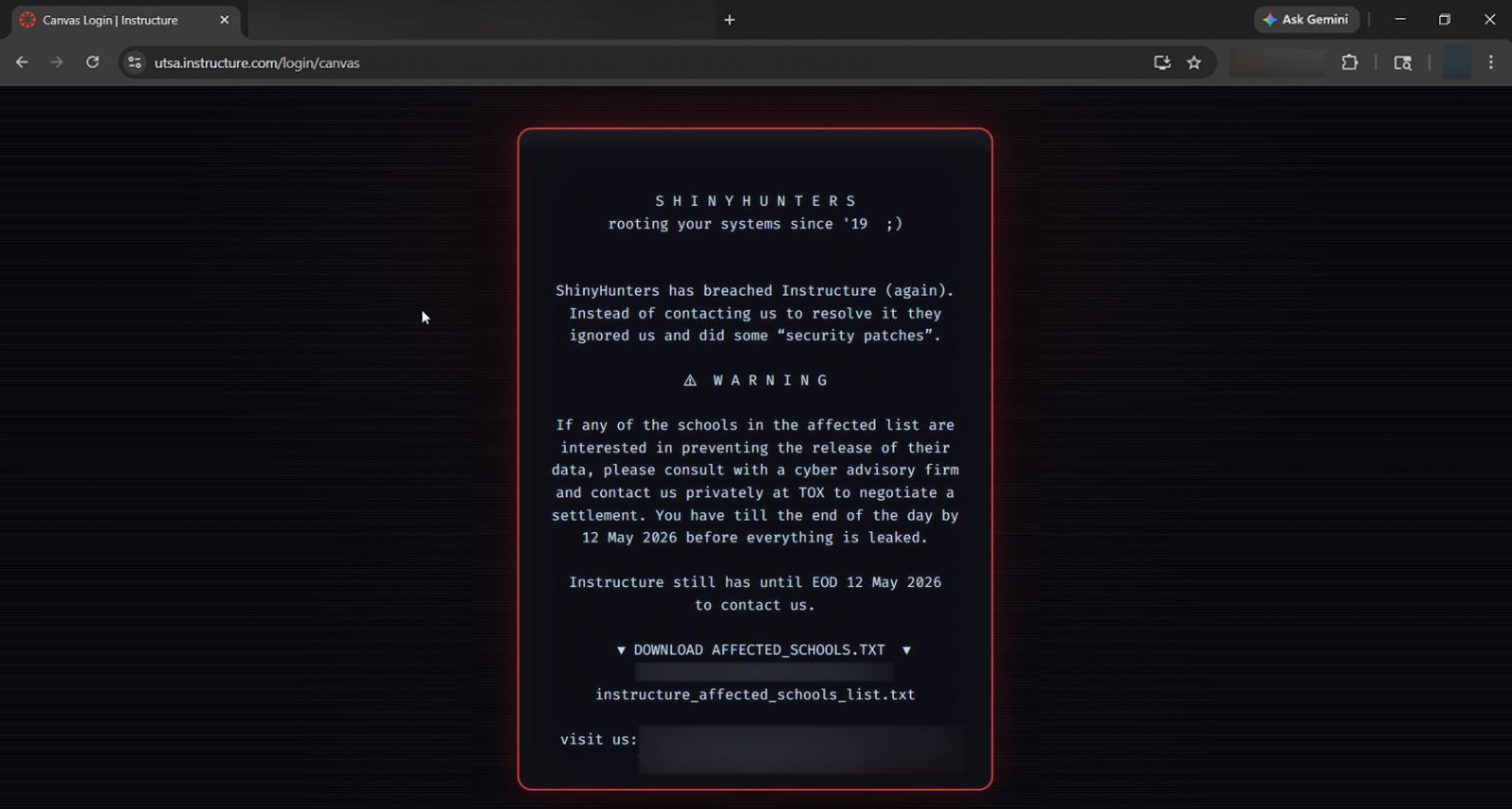
BleepingComputer later learned that the threat actors used multiple cross-site scripting (XSS) vulnerabilities to obtain authenticated admin sessions and modify the login portal pages.
According to the Homeland Security Committee letter, schools in California, Florida, Georgia, Oklahoma, Oregon, Nevada, North Carolina, Tennessee, Utah, Virginia, and Wisconsin reported disruptions tied to the incident.
The committee also referred to messages posted by the attackers claiming they targeted Instructure again because the company refused to negotiate with the group.
Last night, soon after ShinyHunters mysteriously removed Instructure from its data leak site, the company disclosed that it had reached an agreement with ShinyHunters to stop the public leak and ensure the stolen data was deleted.
While the company did not outright state that it paid a ransom or directly confirm BleepingComputer’s questions on the matter via email, extortion groups rarely agree to delete stolen data or halt leaks unless some form of payment or agreement has been reached.
The extortion gang also updated its data leak site today, with a new statement claiming that the data has been destroyed and that schools do not need to indepdently contact them to negotiate.
“We have nothing to add on or comment regarding the recent situation at the LMS company. If you are an impacted institution, we are not seeking your money. Please halt all attempts to reach out to us, the matter has been resolved,” reads the ShinyHunters update.
“The Company and it’s customers will not further be targeted or contacted for payment. The data is nonexistent.”
The Homeland Security Committee said the repeated compromises raise “serious questions” about the company’s incident response capabilities and its obligations to properly protect the data it stores.
The committee is requesting that Instructure or a senior company representative participate in a briefing no later than May 21 to discuss both intrusions, the stolen data, its containment and notification efforts, and coordination with federal agencies.

AI chained four zero-days into one exploit that bypassed both renderer and OS sandboxes. A wave of new exploits is coming.
At the Autonomous Validation Summit (May 12 & 14), see how autonomous, context-rich validation finds what’s exploitable, proves controls hold, and closes the remediation loop.
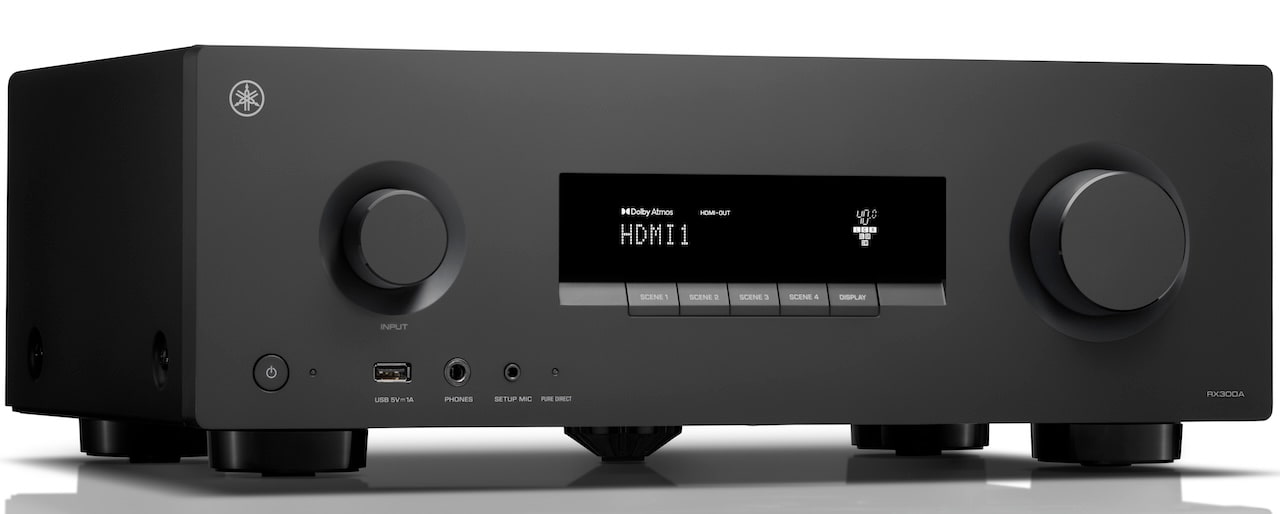
Yamaha’s current AVR lineup has been running on 2020 and 2021 hardware, with firmware updates doing the heavy lifting to keep things relevant. That trick only works for so long. At some point, HDMI, processing, wireless features, and home theater expectations move on, and no amount of software fairy dust changes the hardware underneath. For 2026, Yamaha appears ready to turn the page with the new RX300A and RX500A, two entry level A/V receivers aimed at buyers who want a modern home theater upgrade without wandering into flagship pricing territory.
“The RX300A and RX500A close the gap between soundbars and true AV receiver-based home theater,” said Alex Sadeghian, director of marketing for consumer audio at Yamaha. “They include all the essential tech you need to build a modern home theater with phenomenal sound at an accessible price point, while offering simplified setup and operation that will appeal to both first-time AV receiver users and experienced enthusiasts alike.”
The RX300A and RX500A also give Yamaha’s entry level AVR design a needed visual reset. The front panels look cleaner than the outgoing models, with fewer buttons, simpler labeling, and less of the “command center from a 2004 cable box” energy. The essential controls are still there, but Yamaha has clearly tried to make the layout easier to read and less cluttered. It is not a radical redesign, but it does make the RX300A and RX500A look more current without alienating longtime Yamaha home theater owners.
Yamaha is leaning on more than four decades of AVR development with the RX300A and RX500A, and the engineering story is familiar in the best way. The company’s True Sound philosophy is not just marketing wallpaper here. In practical terms, it points to circuit layout, shorter signal paths, vibration control, and the kind of internal housekeeping that matters when an AVR is being asked to handle movies, music, gaming, and whatever else gets plugged into it before dinner.
Both models also inherit Yamaha’s Anti Resonance Technology Wedge, a center mounted fifth foot borrowed from the company’s flagship AVENTAGE models. The goal is simple: reduce chassis vibration and improve stability. Nobody should expect a $600 receiver to suddenly behave like a five figure separates stack, but better mechanical control is still better mechanical control.
The bigger upgrade for most buyers will be HDMI 2.1 support. The RX300A and RX500A are built for modern video sources with 4K/120Hz and 8K/60Hz pass through, along with Dolby Vision and HDR10+. Gamers also get VRR and ALLM, which should help with smoother motion and lower input lag when used with current consoles.
The RX300A and RX500A include a setup microphone for automatic room correction, allowing the receivers to measure room acoustics and speaker behavior before adjusting performance for the space. Yamaha also includes an on screen setup guide that walks users through connections and configuration step by step, which should make installation less painful for first time AVR owners and anyone who would rather not spend Saturday afternoon decoding a manual like it was recovered from a Cold War dead drop.

To simplify the listening experience, both AVRs feature Scene buttons. These buttons enable users to recall system settings with a single press.
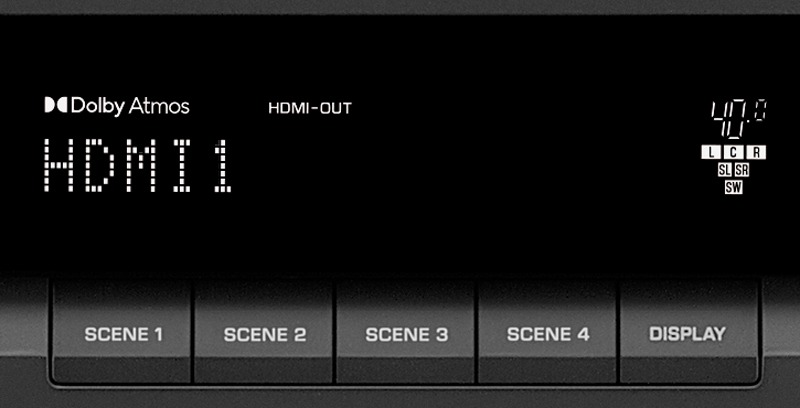
Each Scene button can be programmed to select an input, sound mode, and other key parameters, making it easy to switch seamlessly between activities like watching TV, streaming music, or gaming. The result is a more intuitive experience that keeps the user focused on enjoying content rather than getting distracted fiddling around trying to find the right settings.
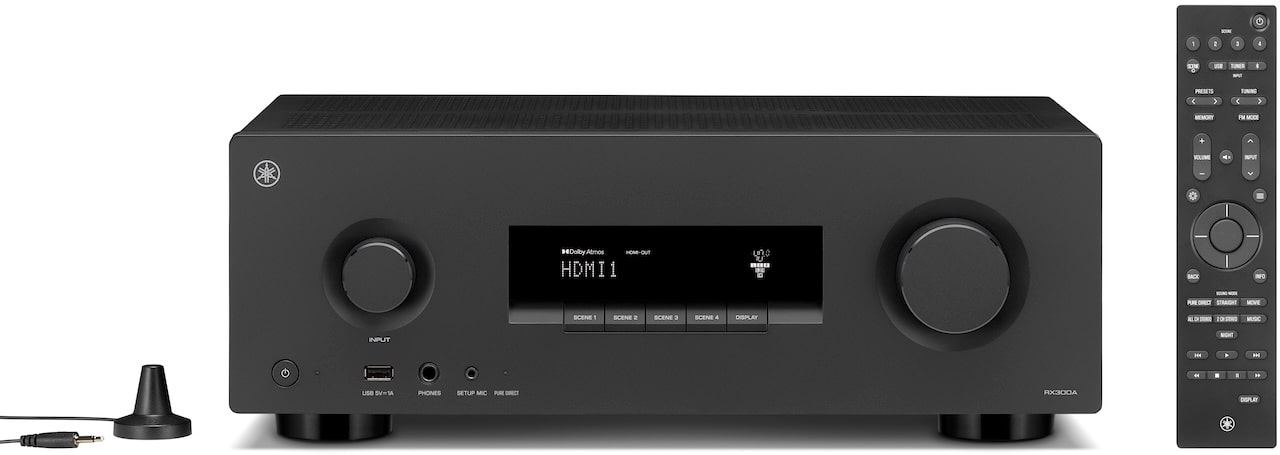
Building on the previous Yamaha RX‑V385, the RX300A is a 5.2 channel AVR designed to meet the needs of those who may be just getting started in home theater, wanting to upgrade from a soundbar or are on a budget with a price ($399.95 MSRP).
New enhancements compared with the RX-V385 include support for Dolby Atmos and DTS Virtual:X, compatibility with 4K/120Hz and 8K/60Hz video, gaming support that includes ALLM and VRR, dual subwoofer outputs, Bluetooth Multipoint, enhanced build quality, and an updated on-screen setup guide with streamlined menus.
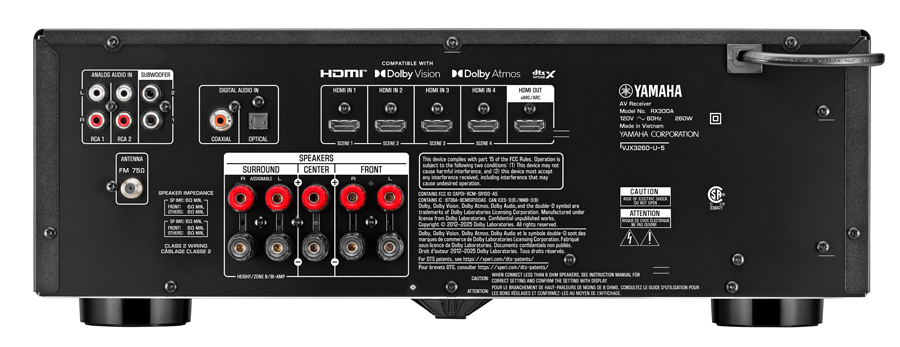
The RX300A supports Dolby Atmos in flexible speaker configurations, including 3.2.2-channel with up-firing or in-ceiling height speakers and virtualized rear channel sound, or with a traditional 5.1 or 5.2-channel setup in combination with virtual height processing to create sound from above without dedicated height speakers.
Bluetooth Multipoint allows two devices to remain paired simultaneously, making it easy to switch between sources without reconnecting.
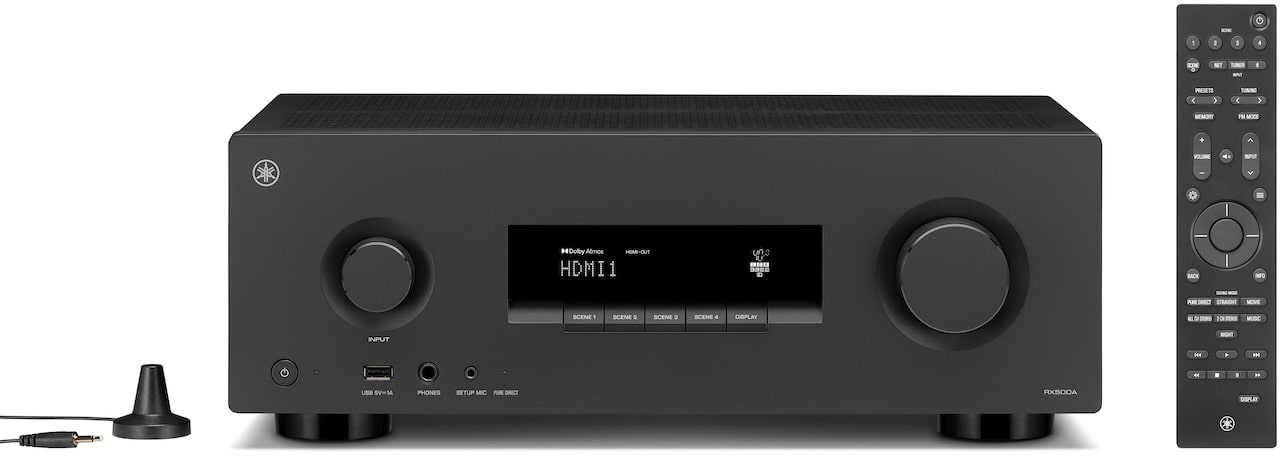
The RX500A builds on the RX300A platform with 7.2 channel amplification and more flexible speaker layout options.
With seven channels of amplification, Dolby Atmos support allows the RX500A to work with real discrete speakers for both the height channels and the surround channels, creating a more convincing immersive sound field than you can get with a 5-channel system. The RX500A supports multiple height speaker configurations, including in ceiling speakers or up-firing height modules. And if you don’t want to bother with height channels, the RX500A can virtualize those with its speaker virtualization technology. This can leave two of your amplifier channels free for speakers in a second room. The RX500A also supports DTS:X, giving users access to the two major immersive audio formats without moving into Yamaha’s more expensive AVR models.
The RX500A also adds stronger network audio support. In addition to Bluetooth Multipoint, it includes built in Wi-Fi and Ethernet for music streaming through Spotify Connect, AirPlay 2, Google Cast, Qobuz Connect, TIDAL Connect, internet radio, and other supported services. That makes it the more complete option for buyers who want both home theater flexibility and everyday music streaming in one box.
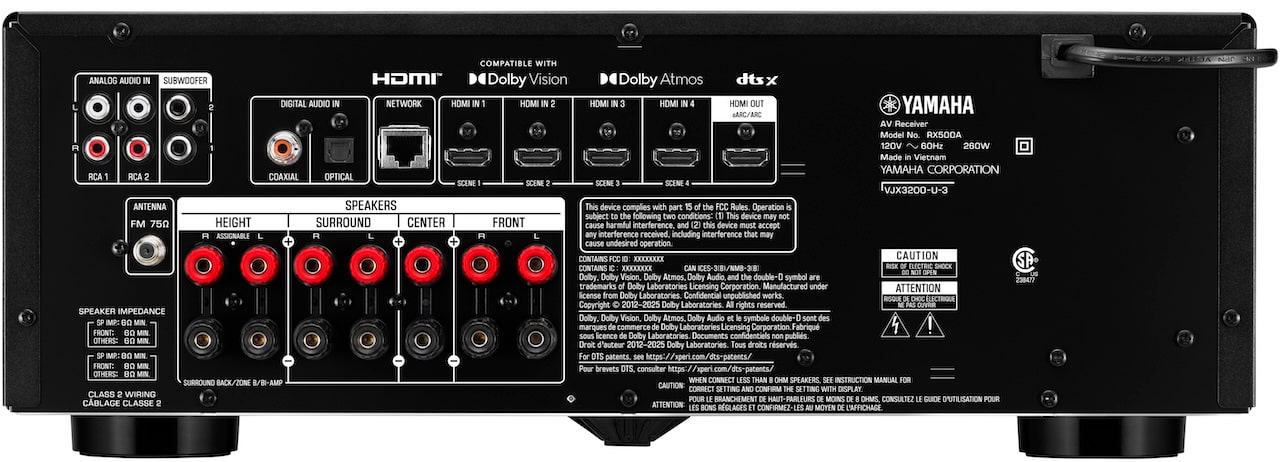
The RX500A is a new model tier in the Yamaha AV receiver lineup, offering a step up from the RX300A for those who want more speaker channels and more advanced music streaming capabilities at an accessible MSRP of $599.95. The current Yamaha RX-V6A 7.2-channel AV receiver remains in the lineup—offering some additional features such as MusicCast capabilities (e.g., full app control and multi-room audio), more connectivity options, Zone 2, increased performance, and other features—at an MSRP of $799.95.
| Yamaha Model | RX500A (2026) | RX300A (2026) | RX-V385 (2018) |
| Product Type | AVR | AVR | AVR |
| Price | $599.95 | $399.95 | $379.99 |
| Channels | 7.2 | 5.2 | 5.1 |
| Decodable Channels | 7.1 | 5.1 | 5.1 |
| Amplified Channels | 7 | 5 | 5 |
| Output Power | 70 W (8 ohms, 20 Hz – 20 kHz, 0.09% THD, 2-ch driven),
145 W (6 ohms, 1kHz, 10% THD, 1ch driven) |
70 W (8 ohms, 20 Hz – 20 kHz, 0.09% THD, 2-ch driven),
145 W (6 ohms, 1kHz, 10% THD, 1ch driven) |
70 W (8 ohms, 20 Hz – 20 kHz, 0.09% THD, 2-ch driven), |
| Bi-amp Capable | Yes | Yes | Yes |
| Surround Sound Decoding Formats | Dolby Atmos Dolby True HD Dolby Digital Plus Dolby Digital DTS-HD Master Audio DTS-HD High Resolution DTS-Express DTS DTS-ES Matrix 6.1 DTS-ES Discrete 6.1 DTS 96/24 DTS:X |
Dolby Atmos Dolby True HD Dolby Digital Plus Dolby Digital DTS |
Dolby True HD Dolby Digital Plus Dolby Digital DTS-HD Master Audio DTS- HD High Resolution DTS DTS 96/24 DTS Neo:6 |
| Surround Sound Post Decoding Formats | Dolby Surround DTS Neural:X |
Dolby Surround DTS Virtual:X |
Not Indicated |
| Network Decoding Formats | MP3, MPEG4-AAC, WMA, WAV, FLAC, Apple Lossless, AIFF | No | No |
| USB Decoding Formats | MP3 MPEG4-AAC WMA WAV |
MP3 MPEG4-AAC WMA WAV |
MP3 MPEG4-AAC WMA WAV |
| HDMI Decoding Formats | PCM (8ch max) | PCM (8ch max) | PCM (8ch max) |
| Sound Modes | Pure Direct Straight Movie All Channel Stereo 2 Channel Stereo Music Night |
Pure Direct Straight Movie All Channel Stereo 2 Channel Stereo Music Night |
Direct Straight Enhancer Bass program BD/DVD TV CD Radio |
| Zone B | Yes | Yes | Not Indicated |
| Room Calibration | Room Correction | Room Correction | YPAO |
| Other Features | Dialogue Level Subwoofer Trim Extra Bass Lip Sync |
Dialogue Level Subwoofer Trim Extra Bass Lip Sync |
Dialogue Level Subwoofer Trim Extra Bass Lip Sync |
| HDMI Connections | 4 Inputs / 1 Output | 4 Inputs / 1 Output | 4 Inputs / 1 Output |
| HDMI Features | HDMI 2.1 8K60Hz/4K120Hz eARC, ARC VRR ALLM QMS HDCP 2.3 CEC Auto Lip Sync Deep Color x.v. Color HD audio playback |
HDMI 2.1 8K60Hz/4K120Hz eARC, ARC VRR ALLM QMS HDCP 2.3 CEC Auto Lip Sync Deep Color x.v. Color HD audio playback |
HDMI 2.1 4K60p eARC, ARC HDCP 2.2 CEC Auto Lip Sync Deep Color x.v. Color HD audio playback |
| High Dynamic Range (HDR) Support | HDR10+ HDR10 Dolby Vision Hybrid Log-Gamma |
HDR10+ HDR10 Dolby Vision Hybrid Log-Gamma |
HDR10 Dolby Vision Hybrid Log-Gamma |
| Speaker Output | 7 (binding post terminals) | 5 (binding post terminals) | 5 (binding post terminals) |
| Headphone Output | 1 | 1 | 1 |
| Subwoofer Pre-outs | 2 | 2 | 1 |
| HDMI | 4 Inputs / 1 Output | 4 Inputs / 1 Output | 4 Inputs / 1 Output |
| Analog RCA Inputs | 2 | 2 | 2 |
| Optical Input | 1 | 1 | 1 |
| Coaxial Input | 1 | 1 | 2 |
| USB | 1 (Audio File Playback from a Mass Storage Device, Firmware Updates) | 1 (Audio File Playback from a Mass Storage Device, Firmware Updates) | 1 (Audio File Playback from a Mass Storage Device, Firmware Updates) |
| FM/AM Tuner | Yes / No | Yes / No | Yes/Yes |
| Bluetooth | Yes (Ver. 5.3, Multipoint) | Yes (Ver. 5.3, Multipoint) | Yes (Version 2.1) |
| Streaming | Spotify Connect Qobuz Connect TIDAL Connect Google Cast AirPlay 2 Net Radio Podcasts |
No (Streaming through Bluetooth only) | No (Streaming through Bluetooth only) |
| Wi-Fi / Ethernet Port | Yes / Yes | No | No |
| Power Consumption | 260W | 260W | Not Indicated |
| Standby Power Consumption | ≤0.3W | ≤0.3W | Not Indicated |
| Auto Power Standby | Yes | Yes | Not Indicated |
| Dimensions (WxHxD) |
434 x 157 x 319 mm 17-1/8” x 6-1/8” x 12-1/2” |
434 x 157 x 319 mm 17-1/8” x 6-1/8” x 12-1/2” |
17.13″ x 6.31 x 12.56″ |
| Weight (Unit) | 8.0 kg; 17.6 lbs | 7.6 kg; 16.8 lbs | 17 lbs |
| App | Audio Connect | Not Indicated | Not Indicated |
| Included Accessories | Remote Control Batteries FM Antenna Setup Mic Microphone Stand Quick Guide Safety Guide |
Remote Control Batteries FM Antenna Setup Mic Microphone Stand Quick Guide Safety Guide |
Remote Control Batteries AM/FM Antenna Setup Mic Microphone Stand Quick Guide Safety Guide |
Yamaha finally has new entry level AVRs, and the RX300A and RX500A look like practical updates rather than a full reset. That is not a bad thing. HDMI 2.1 support, cleaner industrial design, automatic room correction, better setup tools, and broader gaming and streaming compatibility all matter for buyers moving beyond a soundbar without stepping into flagship AVR pricing.
The RX500A is the more interesting of the two, thanks to 7.2 channel amplification, Dolby Atmos, DTS:X, Wi Fi, Ethernet, and support for Spotify Connect, AirPlay 2, Google Cast, Qobuz Connect, TIDAL Connect, and internet radio. That makes it the better fit for users who want a real home theater foundation and modern music streaming in one box.
What is missing? HDMI 2.2 would have been nice from a future proofing standpoint, but the current ecosystem does not really demand it yet. The bigger question is whether Yamaha follows these models with updated midrange and AVENTAGE AVRs. Denon, Marantz, Onkyo and others are not waiting around politely with tea and biscuits. Yamaha needed fresh hardware. The RX300A and RX500A are a solid first step.


Imagine if you were still regularly driving a 1952 Buick Roadmaster — similar to Tom Cruise’s movie car from “Rain Man” – with no GPS or Apple CarPlay. In fact, there’s also no power steering or even anti-lock brakes! Life has changed in innumerable ways since the 1950s and technology has forged ahead, but in one way the U.S. Air Force is still living in the ’50s. The first B-52A bombers took the skies in 1954, and the B model, the first to be used in active service, took flight in 1955. The Air Force has used several iterations of the massive plane since, but the current variant, the B-52H, was first delivered in 1961, 65 years ago! The Air Force plans to continue flying the B-52 until 2050, but it’s seeking $1 million in the 2027 budget to begin the formal process of exploring a successor. It will certainly be a tough act to follow.
At time of writing, very little is known about potential replacements for the B-52. The Air Force is reportedly at work on a classified “proof-of-concept,” and the formal process includes identifying key performance parameters, system attributes, and additional performance attributes. The 2027 budget funding will also help identify future vendor options.
The U.S. has relied heavily on its fleet of B-52 bombers in the recent conflict with Iran, and despite a potential retirement date, the Air Force is at work updating and modernizing the fleet. A potential cost for the replacement program has not been disclosed, but the upgrades will cost billions, starting with a multi-billion contract with Boeing.

Described by the Air Force as the “backbone” of the strategic bomber force in the U.S., the B-52 can drop or launch a wider array of weapons than any other plane currently in service. Of course, it has been modernized, which is why it’s still flying, and the Air Force currently has 58 B-52s in active service and 18 in reserve. Built by Boeing, each B-52 can carry up to 70,000 of payload weight and has a range of 8,800 miles. It typically carries a crew of five, including a commander, pilot, radar navigator, navigator, and electronic warfare officer.
While it explores replacement options, the Air Force is also at work on a plan to continue to modernize the fleet, investing in new engines, radar, avionics systems, landing gear, and more. The revamped planes will be designated B-52Js and plans also include new ordnance such as hypersonic missiles and nuclear weapons.
In May 2026, the Air Force announced that it completed a design review of the engine replacement plans, and modifications will begin on the first two B-52s at Boeing’s San Antonio, Texas facility this year. After the new Rolls-Royce F130 engines are installed and other work is completed, the two B-52s will be sent to Edwards Air Force Base in California for testing before the rest of the fleet is updated. The new engines alone will cost approximately $15 billion, while the entire upgrade process is expected to cost about $48.6 billion.






HarrisX Poll Found 52% of Registered Voters Support the CLARITY Act


Weekend Open Thread: Marianne Dress


Upbit adds B3 Korean won pair as Base token gains Korea access

NCP car park operator enters administration putting 340 UK sites at risk of closure


Coffee Break: Travel Steam Iron


What to Know Before Buying a Curling Wand or Curling Iron


Auto Enthusiast Carves Functional Two-Stroke Engine from Solid Metal


What to expect when you’re expecting a budget


Politics Home Article | Starmer Enters The Danger Zone

Ignore market noise, India’s long-term story intact, say D-Street bulls Ramesh Damani and Sunil Singhania


BlackRock CEO Larry Fink Discusses a New Asset Class


GM Agrees To Pay $12.75 Million To Settle California Lawsuit Over Misuse Of Customers’ Driving Data

NBA playoff winners and losers: Austin Reaves is not loving Lakers vs. Thunder matchup, but Chet Holmgren is


Sarah Paulson Called Out For Met Gala ‘Hypocrisy’


General Hospital: Ric & Ava Bombshell – Ric’s Massive Secret Exposed!


Simon Cowell Says He Was ‘Horrible’ To Susan Boyle During BGT Audition


Robinhood says Wall Street is building onchain


Bold and Beautiful Early Spoilers May 11-15: Steffy Revolted & Liam Overjoyed!


UEFA Champions League final schedule, teams, venue, live time and streaming | Football News


Why David Letterman Called CBS ‘Lying Weasels’
You must be logged in to post a comment Login