If you have ever been a subscriber of YouTube TV or DirecTV at any point since April 2019, you could get cash as part of a $50 million settlement agreed to by Disney in an antitrust lawsuit the corporation faced for allegedly forcing higher prices for live TV streaming services.
To be eligible for a payout, you had to have bought a subscription to either YouTube TV or DirecTV — or both — between April 1, 2019, and March 31, 2026. DirecTV subscriptions might have been called DirecTV Stream, DirecTV Now and/or AT&T TV Now.
How to apply for the settlement
If you’re part of the settlement, you will likely get a notice in your USPS mailbox or your email inbox. Check your junk or spam folders in case your email service filtered it. The deadline for claiming a payment is Sept. 8.
Advertisement
If you get a notice, go to this website and log in with the ID and PIN provided on the settlement notice. You will need to verify your YouTube TV or DirecTV Stream subscription.
If you don’t get a notice but believe you are eligible for the cash settlement, send an email to info@OnlineTVSettlement.com or print out a PDF version of the claim form and send it via snail mail to:
Biddle v. Disney Settlement Administrator P.O. Box 4720 Portland, OR 97208-4720
Printed settlement claims must be postmarked by Sept. 8.
Advertisement
The settlement terms specify that 90% of the money will go to payees in these states and territories: Alabama, Arizona, Arkansas, California, Colorado, Connecticut, Delaware, District of Columbia, Florida, Guam, Hawaii, Iowa, Kansas, Maine, Maryland, Massachusetts, Michigan, Minnesota, Mississippi, Missouri, Montana, Nebraska, Nevada, New Hampshire, New Jersey, New Mexico, New York, North Carolina, North Dakota, Oregon, Puerto Rico, Rhode Island, South Carolina, South Dakota, Tennessee, Utah, Vermont, West Virginia and Wisconsin.
The remaining 10% will go to settlement members in other states.
Why the lawsuit?
In Biddle v. Disney, (PDF) filed in 2022, the plaintiffs alleged that Disney violated federal and state antitrust and consumer protection laws by forcing YouTube TV, DirecTV and FuboTV subscribers to pay more for livestreaming TV. The $50 million settlement does not apply to FuboTV plaintiffs, who have not yet settled with Disney.
The plaintiffs alleged that Disney forced streaming platforms to bundle content from expensive channels such as ESPN and Hulu — both owned by Disney — into base packages, thereby escalating the subscription prices for those packages. It was alleged that prices for YouTube TV base package subscriptions went up from $35 to $65.
Advertisement
“Since Disney acquired operational control over Hulu in May 2019, prices across the SLPTV [Streaming Live Pay Television] Market, including for YouTube TV and DirecTV Stream, have nearly doubled,” the lawsuit alleged.
Disney denies violating any laws. There will be a hearing on Jan. 14, 2027, for final approval of the settlement.
A representative for Disney did not immediately respond to a request for comment.
Incoming British prime minister Andy Burnham will scrap the government’s troubled plans for a digital ID scheme when he enters office on Monday, a spokesperson for the new Labour Party leader said. Resources devoted to the scheme, deemed a “fiasco” by a cross-party committee of lawmakers, will be redirected to Burnham’s priorities, the spokesperson said…
“All the time and resource that was going to be spent on a national ID scheme will go instead to where it’s most needed, such as helping with the cost of living,” Burnham’s spokesperson said.
In November, the Office for Budget Responsibility watchdog estimated the cost of the digital ID scheme at around £1.8 billion ($2.4 billion) between financial years 2026/27 and 2028/29.
Apple may try to focus ads in Apple Maps on local businesses and points of interest, based on new advertising guidelines the company published this week. The company announced plans to introduce ads to its maps app in March 2026, but hasn’t shared an exact timeline for the launch other than this summer in the US and Canada. The new rules could be a hint that when the business launches, ads in Apple Maps could be meaningfully different from the company’s competitors.
The ad guidelines include several rules around prohibited content that are similar to Apple’s App Review guidelines. The company prohibits ads with defamatory or profane content, prohibits ads that promote “illegal or criminal conduct” and generally doesn’t allow ads that are deceptive, drug-related or political. What’s unique are the more specific categories of ads Apple is forbidding, most notably, “home services.”
“Ad content that contains or directly or indirectly promotes home services — including but not limited to plumbing, electrical, locksmith, HVAC, pest control, roofing, or general contracting services — is prohibited,” Apple writes.
It’s not uncommon to see ads for local electricians or plumbers on Google Maps, but Apple is apparently trying to cultivate a different experience on Maps. The company suggests as much on its landing page for Ads in Apple Maps, where it describes the service as being for discovery as much as it is for navigation:
Advertisement
People rely on Apple Maps to explore new places and try new things. From discovering coffee shops and restaurants, to stores and landmarks, Maps is where “what’s around here?” becomes “I’m on my way.” Soon local businesses can run ads on Apple Maps — right where customers are deciding where to go.
Discovering pest control companies doesn’t sound as romantic as a coffee shop, so it might make sense Apple isn’t focusing there first. Reserving ad space for local businesses, landmarks and other points of interest may also make the fact the company is selling ad space at all feel less scuzzy. The company’s commitment to prohibiting ads for bail bonds and cryptocurrency ATMs could fit that, too. Of course, another way to avoid that feeling entirely would be to not advertise in Apple Maps at all.
Ads are a growing part of Apple’s “Services” business, which is made up of the company’s subscriptions, along with things like platform fees for in-app purchases and ad sales. Besides this expansion into Apple Maps, the company also offers ad space in Apple News (where the quality of ads has been particularly poor) and in multiple parts of the App Store. In 2022, Apple announced a major update to its App Store advertising business, expanding ads out of App Store search and into app pages and Today, the App Store’s home screen. At least for now, the company appears to be taking a more restrained approach in Maps.
You can’t claim to be a passive host after vetting a creator’s channel, Google warned
The Court of Justice of the European Union (CJEU) has ruled that Google may not be able to claim intermediary liability protection for YouTube content it reviews as part of a commercial partnership with a creator.
The case stems from a €750,000 fine imposed on Google Ireland by Italy’s communications regulator in 2022 over YouTube videos promoting online gambling.
Advertisement
Before entering the revenue-sharing agreement, under which Google placed pre-roll ads on the creator’s videos, the company reviewed the channel’s content. The regulator argued that this examination undermined Google’s claim that it acted as a neutral intermediary exempt from liability.
Google appealed against the fine, and the case was referred to the CJEU. The court rejected Mountain View’s reading of the liability exemption, leaving Italy’s Council of State to decide the dispute.
The exemption still applies where “the service provider has neither knowledge of nor control over the information which is transmitted or stored.” However, in this instance, Google was aware of the content.
The court held that the exemption “does not apply” to a platform operator that agreed commercial terms with a channel where the operator “carried out an examination of the content of that channel,” including its main theme, its most-viewed or newest videos, or the associated metadata.
Advertisement
In effect, the ruling limits Google’s ability to rely on its “intermediary service provider” defense when it has reviewed a channel as part of a commercial partnership. In those circumstances, the platform may be unable to claim the liability exemption for the content at issue.
This doesn’t mean Google is liable for everything on YouTube, but the megacorp needs to be more careful with channels where it has commercial deals that come with a level of content review and specific knowledge that can forfeit intermediary status.
A Google spokesperson said: “We are disappointed by the CJEU’s decision, which we will need further clarity on. We will raise our arguments before the Council of State.” ®
Inkling is Thinking Machines Lab’s first big AI model launch, and comes a little more than a year after the start-up was founded.
Mira Murati’s Thinking Machines Lab has unveiled the first of its family of multimodal open-source models called Inkling. The model was the first from the start-up to be trained on Nvidia GB300 NVL72 systems, following a partnership agreement between the two companies earlier this year.
Inkling does not promise to be the strongest open or closed model available, but rather markets itself as one made to be customised. It has 975bn total parameters, with 41bn active, and supports a context window of up to 1m tokens.
“Inkling is designed to be broad. We trained it across agentic, reasoning, coding, instruction-following, factuality, vision, and audio tasks, rather than narrowly optimising for one domain,” Thinking Machines Lab said in a blogpost announcing the new model on Wednesday (15 July).
Advertisement
The model, available to download on Hugging Face, was trained using 45trn tokens of text, images, audio and video. It can accept inputs via text, images and audio, and produces text-only outputs. It is a ‘mixture-of-experts’ transformer that follows a similar design to DeepSeek-V3, according to its maker.
Inkling’s model card places it squarely around its open-weight contemporaries, including Kimi K2.5, Kimi K2.6, GLM 5.2 and DeepSeekV4 Pro, across various benchmarks.
The launch represents Thinking Machines Lab’s first major AI model showcase after more than a year under development.
Murati, who left OpenAI while its chief technology officer in 2024, founded her start-up just months after, with plans to make “AI systems more widely understood, customisable and generally capable”.
Alongside Inkling, the company is also launching, in preview, Inkling-Small – a lighter-weight model with 12bn active parameters that supposedly achieves strong performance with “even lower cost and latency”.
Nvidia has taken a liking to Thinking Machines Lab, having made a “significant” investment into the start-up alongside taking the company on for a multi-year partnership to develop its AI models. The partnership is expected to have cost the chipmaker several billion dollars.
Don’t miss out on the knowledge you need to succeed. Sign up for the Daily Brief, Silicon Republic’s digest of need-to-know sci-tech news.
ZTE showed the NaviX Ultra at WAIC, calling it the first agentic AI smartphone. It runs ByteDance’s Doubao agent. StepFun and Honor showed similar devices.
ZTE showcased the NaviX Ultra at the World AI Conference in Shanghai this week, calling it the world’s first agentic AI smartphone. The device, built under ZTE’s Nubia brand, runs ByteDance’s Doubao AI agent and can be activated by voice or a dedicated button. It comes in four colours and was prototyped in December at 3,499 yuan ($516). The initial 30,000 units sold out quickly and doubled in price on the used market.
ZTE was not alone. StepFun unveiled a device running a proprietary operating system with a built-in agent called Amoo. Honor, the smartphone maker spun off from Huawei, is showcasing an AI agent co-developed with Alibaba that will ship on new devices later this year. The idea is the same across all three: build an agentic layer into the operating system that lets AI execute tasks autonomously across apps, rather than bolting isolated AI features onto an existing interface. “Many so-called AI phones on the market simply stack AI functions on top of an existing system,” said Nubia chief Ni Fei. “That actually makes it more cumbersome for users.”
The timing is not coincidental. China’s smartphone shipments have fallen for five consecutive quarters as the memory crisis pushed component costs up and consumer demand down. IDC expects the global smartphone market to post its steepest annual decline on record in 2026. Chinese manufacturers, many of which sell budget devices with thin margins, are being squeezed hardest. AI phones are their escape route. IDC’s Arthur Guo said more than half of China’s smartphone market could be dominated by AI devices this year.
The launches also deepen the competition with Apple, which just received Beijing’s approval to roll out Apple Intelligence in China through partnerships with Alibaba and Baidu. “In terms of AI smart devices, we are ahead of Apple,” Ni said on Weibo in June. The AI boom that is killing the cheap smartphone is simultaneously creating the argument for a new kind of phone. Whether an agent that books flights and edits photos is enough to make people replace a device they already own is the question the market will answer by the end of the year.
I’ve always had a soft spot for devices that lean heavily into one aspect as their main identity. From phones that aim to replace a dedicated camera to devices with batteries larger than some power banks, these products know exactly what they were made for. They do not chase the same all-rounder brief as a typical flagship.
The Red Magic 11S Pro is a great example of this. I’ve always had a soft spot for devices that lean heavily into one aspect as their main identity. From phones that aim to replace a dedicated camera to devices with batteries larger than some power banks, these products know exactly what they were made for. They do not chase the same all-rounder brief as a typical flagship.
Moinak Pal/Digital Trends
The Red Magic 11S Pro is a great example. It drops all subtlety with RGB lighting, a visible liquid-cooling loop, a physical fan, and dedicated gaming performance modes. Underneath all that gamer excess sits one of the most capable hardware packages available on any phone.
$799 buys an outrageous amount of hardware
Vikhyaat Vivek / Digital Trends
The Red Magic 11S Pro costs $799, which still puts it in premium territory. However, it sits hundreds of dollars below some mainstream flagships. That money goes toward a flagship processor, active cooling, a liquid-cooling system, shoulder triggers, a 144Hz AMOLED display, a 7,500mAh battery, and 80W wired and wireless charging. It also keeps the headphone jack, strong stereo speakers, and a charger in the box.
After reviewing this gaming phone, I kept wondering why more major brands do not take a similar approach. A heavily equipped phone can skip some prestige features and still deliver excellent hardware where its purpose demands it, along with sensible compromises elsewhere.
Nadeem Sarwar / Digital Trends
The Snapdragon 8 Elite Gen 5 Leading Version tore through Android games during my testing. It also gave me enough headroom to run Ghost of Tsushima Director’s Cut through GameHub, an experiment that reached more than 40fps after a bit of tweaking.
A large vapor chamber, liquid metal, an active fan, and flowing liquid cooling help sustain that performance. Most flagship phones still depend primarily on passive cooling, which can lead to performance dropping during longer gaming sessions. Vapor chambers are becoming more common on newer models, though their effectiveness varies between devices.
Advertisement
Vikhyaat Vivek / Digital Trends
The rest of the specifications are similarly loaded. You get up to 16GB of fast memory, UFS 4.1 storage, a responsive 144Hz display, touch-sensitive shoulder buttons, and that massive 7,500mAh battery. Every part serves the same goal: running games quickly, at high frame rates, for longer periods.
Red Magic spends according to its priorities
Mainstream flagships have a much broader job description. They are expected to deliver premium materials, advanced camera systems, long software support, ecosystem integration, AI features, slim bodies, and broad carrier availability. In fairness, that is a difficult balancing act. It takes years of research, development, and impressive engineering to achieve what modern flagship phones can do.
Fitting every one of those goals into a single product also costs money. Buyers eventually pay for the entire checklist, even when their own priorities cover only a fraction of it. Red Magic takes a narrower approach. The 11S Pro concentrates its budget around performance, cooling, battery capacity, and gaming-focused hardware and software.
Vikhyaat Vivek / Digital Trends
Even with that specialization, the phone’s versatility surprised me. The giant battery helps during gaming and regular daily use. Fast charging shortened the time I spent near an outlet, while bypass charging helped reduce the additional battery heat and stress created during longer gaming sessions.
The high-refresh display kept everyday navigation and gaming smooth and responsive. Performance was also one area I never had to worry about, regardless of whether I was playing a demanding game or simply moving through regular smartphone tasks.
The cuts are easy to spot, and somehow easier to live with
Reaching $799 requires compromises, and those cuts become much easier to accept when you know what you want from the device. The cameras land somewhere around midrange territory. Its 50MP main camera can take decent daylight pictures, and the ultrawide adds some flexibility. Photography-focused flagships still offer better processing, zoom, portraits, and low-light results. The under-display selfie camera also sacrifices image quality to preserve an uninterrupted screen.
Advertisement
Vikhyaat Vivek / Digital Trends
Overall software polish trails behind the likes of Samsung and Apple. RedMagic OS has some rough edges, and the official support policy promises only two major Android upgrades. Major competitors now support their phones for considerably longer. The device is also large, heavy, and visually loud. There is no official dust-resistance rating, and a basic feature such as eSIM is missing.
But do any of these features really matter to someone just looking to game on their phone? I’ve met plenty of people searching for a phone that can run games reliably at high frame rates. This does not only apply to competitive shooters. There are huge audiences for MOBA titles such as Mobile Legends, along with demanding action games, emulation, and increasingly ambitious mobile releases.
Big brands could learn from specialization
Apple and Samsung do not need to build phones with RGB fans or shoulder triggers. The real trick is how well Red Magic allocates its budget. Many premium phones chase universal appeal, creating packed specification sheets and steadily rising prices. A clearer identity could give buyers more affordable options without reducing every component to midrange quality.
Samsung S26 PlusMoinak Pal / Digital Trends
Imagine a creator-focused phone that spends heavily on cameras, storage, microphones, and display calibration while using a simpler design. Similarly, a battery-first flagship could trade an elaborate camera array for extreme endurance and faster charging. Even a compact performance phone could prioritize cooling and battery density.
Every model would make visible compromises. Buyers could then choose the expensive hardware that matches their actual needs instead of paying for a universal flagship package. In spite of all of its flaws, particularly around cameras and software support, the Red Magic 11S Pro never comes across as hollow or stripped down. Its extravagance stays focused on the areas that define it.
Give a phone a purpose, spend aggressively around it, and make cuts that don’t degrade the experience. A decked-out device can stay within reach when every dollar has somewhere useful to go.
Cutting corners: India’s antitrust regulator has fined HP’s local unit and a group of resellers after finding they coordinated bids and pricing for government technology contracts. The Competition Commission of India said HP India worked with its channel partners to influence bids for computer procurements while controlling prices for ink cartridges, toner, and other printing supplies. The penalties total 1.4 billion rupees, or about $14.4 million.
The case centers on how bids were handled on the Government e-Marketplace, the country’s main public procurement platform. According to the regulator, HP India and five resellers coordinated their bids to increase the likelihood that one of them would win government contracts.
In its order, the commission said, “[C]ertain resellers approached HP India to help facilitate an arrangement that would enhance their chances of securing Government supply contracts against other competing HP India resellers.”
It said those efforts included limiting which resellers could participate in certain tenders, dividing contracts among themselves, and controlling the issuance of manufacturer authorization forms required to submit bids.
Advertisement
The regulator also pointed to practices such as intervening when bids came in below the platform’s pricing guidelines and arranging “cover” bids designed to make a preferred bidder appear more competitive.
The conduct extended beyond hardware. The commission fined HP India 119.8 million rupees for what it described as cartelization in the sale of consumables such as toner and cartridges. Another 21 resellers were fined a combined 35.2 million rupees.
The findings draw in part on WhatsApp messages exchanged between HP India and its Tier-2 reseller partners. In a separate order, the commission said those chats showed the companies operating “in a collusive arrangement” involving “bid rigging, including cover bidding, price fixation, and customer allocation during 2017 – 2020.” It said HP India played a central role in the scheme.
HP India pushed back against that characterization. The order notes that the company “humbly objects to HP India’s role being characterized as a ‘kingpin’ of the entire collusive arrangement.” It also argued that pressure in the printing supplies market played a role, saying high prices led some resellers to consider switching to counterfeit products in order to remain competitive.
Advertisement
“HP India was commercially forced into a position where it had to support the collusive arrangement adopted by the Tier-2 resellers,” the order reads.
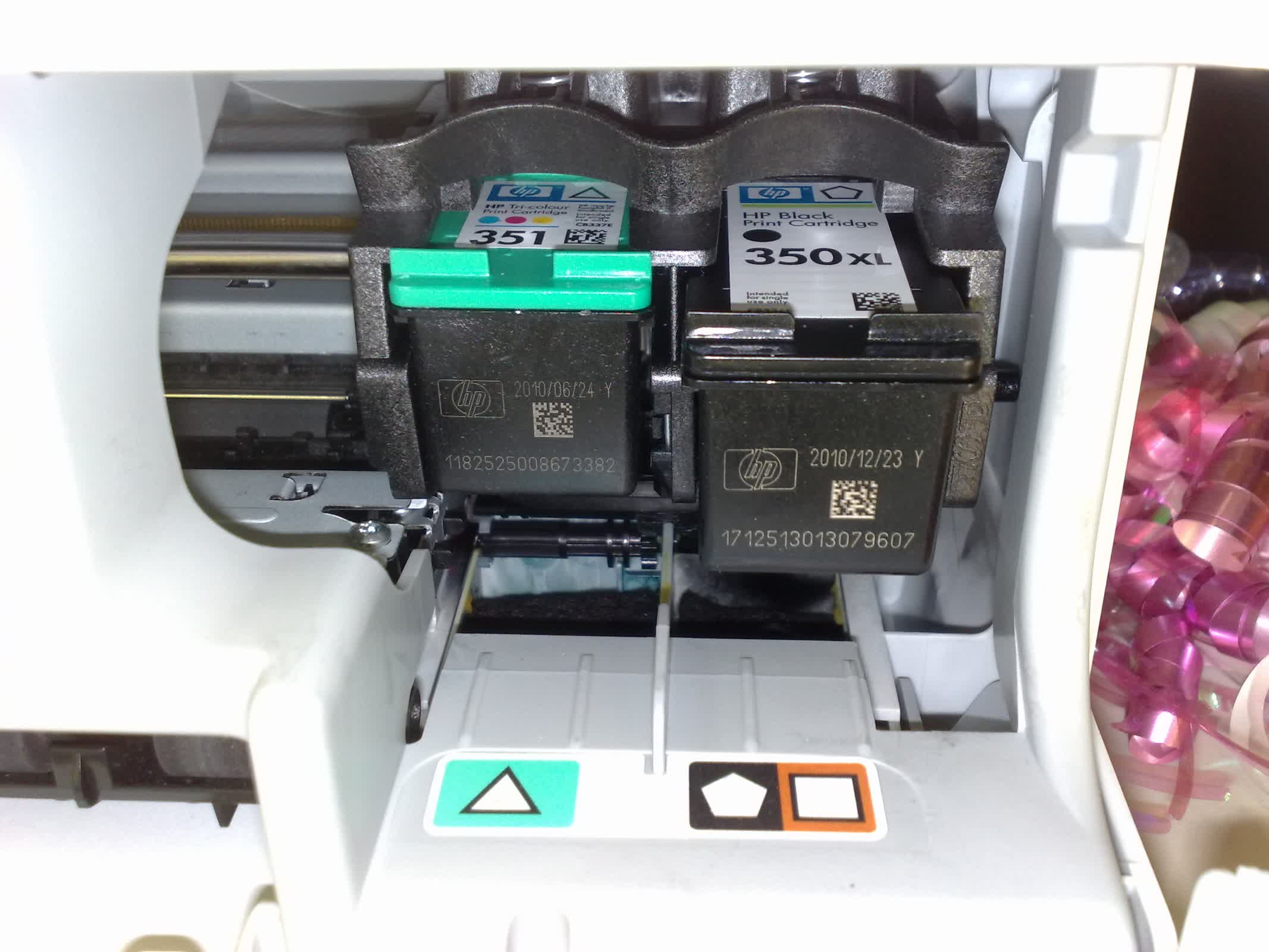
The case highlights the economics of the printer business, where hardware sales are closely tied to recurring revenue from proprietary ink and toner. HP has faced criticism for restricting the use of third-party cartridges, including through firmware updates, as part of a strategy designed to keep customers within its ecosystem.
In India, those pressures appear to have extended into the reseller channel, where margins and pricing are closely linked to HP’s supply chain.
The Competition Commission has ordered HP India and its partners to stop the conduct and implement competition compliance programs within 60 days. HP has not publicly commented on the fines.
The country’s gambling authority ordered ISPs to block access to the prediction market’s website.
PJ McDonnell/Shutterstock
France is doubling down on preventative measures for its citizens trying to access Polymarket. The Autorité Nationale Des Jeux (ANJ), the country’s independent regulatory authority in charge of licensed gambling and betting games, announced this week that it ordered internet service providers to block access to Polymarket.
The ANJ’s latest decision follows its previous regulatory action from November 2024 that placed a geoblock on any financial transactions from French residents on the Polymarket website. Despite this ban on transactions, the agency said that the platform continued to grow in France thanks to users circumventing the block. According to ANJ, Polymarket saw 578,751 visits, 205,057 of which were unique visits, in the month of June from French residents. Now the ANJ wants to crack down harder on Polymarket, again emphasizing that the platform is considered an illegal gambling site.
According to the ANJ’s latest move, anyone caught advertising an unauthorized betting or gambling site could be fined up to 100,000 euros, or around $114,000. In the neighboring Spain, the government also ordered to block access to both Polymarket and Kalshi while it investigates if these sites break the country’s gambling laws. In the US, Minnesota passed a bill that bans prediction markets from operating in the state, while other states are filing lawsuits against Polymarket and Kalshi.
The takeaway: Unveiling a long-term roadmap is often seen as a damage-control strategy when a game or franchise is underperforming commercially. Many would likely describe the Fallout franchise’s current position as healthy, with Fallout 76 continuing to receive frequent content updates and the TV series recently earning several Emmy nominations. However, announcing four new games with no confirmed release dates just weeks after significant layoffs could be viewed as a proof-of-life roadmap for the series.
Bethesda has confirmed that Fallout 5, remastered versions of Fallout 3 and Fallout: New Vegas, and a new Fallout title from Obsidian Entertainment are in various stages of development. Further details remain scarce, and at least some of these projects are likely years away, but Microsoft and Bethesda are aiming to reassure fans that more Fallout content is on the way despite thousands of job losses across the Xbox division.
The remasters have been rumored for some time and are expected to follow a similar approach to The Elder Scrolls IV: Oblivion Remastered, which enhanced the 2006 classic with Unreal Engine 5-powered visuals. Meanwhile, rumors about Obsidian’s new Fallout project emerged earlier this month.
– Bethesda Game Studios (@BethesdaStudios) July 17, 2026
Chris Avellone, director of 2010’s Fallout: New Vegas, which remains a fan favorite, is expected to helm the new project. In recent interviews with Bloomberg and Windows Central, Bethesda head Todd Howard said that his studio and Obsidian are collaborating on the game. The involvement of Fallout creator Tim Cain, who recently joined Obsidian, remains uncertain.
Advertisement
Howard also confirmed that Fallout 5 is in pre-production, but Bethesda is currently focused on The Elder Scrolls VI. The next Elder Scrolls entry is arguably the most anticipated game from any Microsoft-owned studio. The sequel to The Elder Scrolls V: Skyrim – one of the best-selling role-playing games of all time – was announced eight years ago and likely remains several years away.
Although it has not reached the popularity of Fallout or Elder Scrolls, Starfield will continue receiving new content this year. Bethesda also hinted at plans for the Fallout franchise’s 30th anniversary, which the company will celebrate in Washington, D.C., next year.
The announcements are among the first signs of new Xbox CEO Asha Sharma’s plan to refocus Microsoft’s gaming division around major franchises, including Fallout and The Elder Scrolls. Fans expressed concerns about the development of ongoing and future projects from Bethesda, Obsidian, and other Microsoft-owned studios after Sharma announced that the Redmond firm would eliminate 3,200 jobs this year.
While acknowledging the difficulties of losing employees, Howard noted that Bethesda has recovered from similar situations in the past. However, an anonymous developer involved with id Software’s Doom franchise, another series Sharma aims to promote, warned that the significant loss of talent could hurt future projects.
Calculators are so ubiquitous and so familiar that they are easy to take for granted in many different ways. [lcamtuf] points out one that has probably never occurred to many of us: the user interface for a calculator is an unexpectedly complex thing.
The internal logic to support sequential inputs and multiple operators in a way that feels intuitive is a complex thing.
Resolving something like 1 + 2 = is pretty straightforward but complexity compounds rapidly after that, with numerous special cases. Let’s imagine one decides to program a simple calculator UI as a weekend project. The development process might look a little like this:
User types in 1 + 2 = and the calculator displays 3. What happens if the user immediately presses -?
No problem, just consider the result of the previous operation as an already-there input. So we’ll have 3 - for this next operation, and wait for more.
Unless we should have treated that - as a negative sign for whatever number is coming next, making it a negative number? No, ignore that. Just treat whatever results from pressing equals as a pre-typed input.
Unless the user hits a number. Because if they hit 2 (for example) then we’ll have a 32 and not a 2 which they probably, definitely don’t expect. So that’s a special case and we should insert a clear if that happens.
Oh, better clear if the user enters a decimal, too.
I’m going to need a coffee…
And that’s just the tip of the iceberg. Imagine trying to figure all this out for the very first time, without the benefits of habit and history to fall back on.
The fact is that supporting the apparently trivial behavior of a simple calculator requires an underlying complex state machine that deals with all kinds of special cases in order to make the UI feel intuitive. And that’s just for a basic four-function calculator; we haven’t even touched on how special keys like % should behave.
We know [lcamtuf] speaks from experience, not just because of their deep knowledge of calculator history but because they rolled their own calculator that uses voltmeters as digit displays and there’s nothing like actually implementing something to make one appreciate it.


































































You must be logged in to post a comment Login