






Is the sugar in fruit the same as added sugar?
You will no doubt have heard that fruit is “full of sugar” and that it’s the same sugar that you find in cakes, chocolate and soft drinks. You may also have seen so-called health influencers claiming you should stay away from fruit, or at least limit your intake, for this reason.
But what is the reality? Is fruit sugar the same as added sugar and do they have the same impact on your body and your weight? A well-known heart surgeon is among those to have addressed the issue recently. Dr Jeremy London was asked if the two sugars are the same.
Dr London, who holds board certification in general surgery, vascular surgery and thoracic surgery, and frequently shares advice through social media and interviews, said: “Chemically, the sugar is identical. An apple has sugar, a glazed doughnut has sugar, but the way we metabolise those two things is completely different. An apple has fibre, it has water, polyphenols, antioxidants. These things slow the digestive process and affect how your body is processing the sugar.
“Now, when I say whole fruits, I do mean whole fruits, because with fruit juices and dried fruits you lose these components. Whole fruit is more satiating, calorie for calorie, than sugary drinks or processed sugar. In the end, sugar is sugar but what it comes with makes a tremendous difference.”
What is sugar?
Sugar is a type of carbohydrate that provides energy (as calories) from foods and drinks we consume. Without getting too technical, there are two subtypes of sugar: monosaccharides and disaccharides. The former include glucose, fructose and galactose, which are found naturally in fruit. The latter include lactose, which is found in dairy.
What’s the difference between fruit sugar and added sugar?
Harvard Medical School agrees with Dr London that “an increasingly important distinction among sugars as they pertain to health is whether they occur naturally in foods such as fruit, vegetables, and dairy, or whether they are added sugars (added to foods and beverages during manufacturing, processing, or preparation)”.
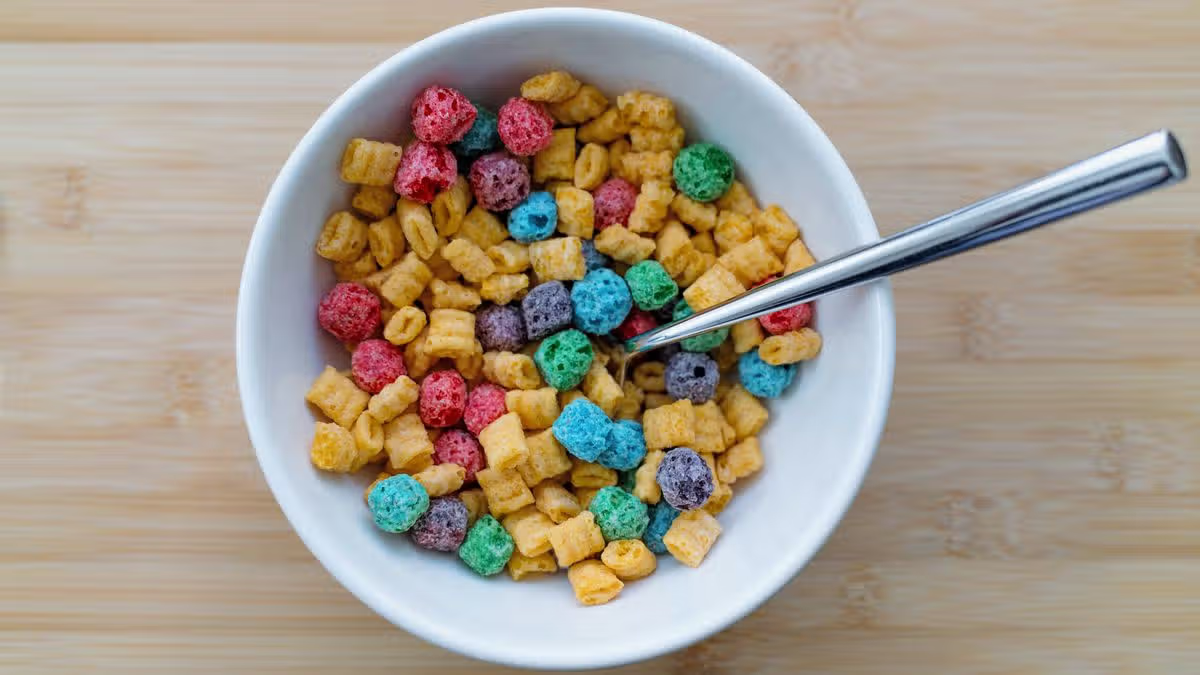
The biggest sources of added sugars in our diet are sugary (or soft) drinks (which have previously been labelled “liquid death” because of their impact on health), sweets and breakfast cereals. Many of these foods will fall into the category of ultra-processed foods, many of which come with little nutritional benefit alongside the added sugar. However, fruit comes with many different nutrients which have multiple positive health impacts and help guard against your risk of serious illnesses including heart disease and cancer.
Harvard Medical School explains: “Natural and added sugars are metabolised the same way in our bodies. But for most people, consuming natural sugars in foods such as fruit is not linked to negative health effects, since the amount of sugar tends to be modest and is ‘packaged’ with fibre and other healthful nutrients. On the other hand, our bodies do not need, or benefit from, eating added sugar.”
Why is added sugar bad for you?
Intake of added sugar has been associated with weight gain, which in turn is associated with higher risk of type 2 diabetes, cancer and cardiovascular disease. It also causes tooth decay. This does not mean you should avoid added sugar at all costs. It is fine in moderation. The NHS says added sugars “should not make up more than 5% of the energy (calories) you get from food and drink each day.” This means, for example, that adults should have no more than 30g of free sugars a day (roughly equivalent to seven sugar cubes).
What counts as added sugar?
The NHS does not count sugar found naturally in milk, fruit and vegetables as added sugars (which it calls “free” sugars). Added sugar includes the obvious, like white and brown sugar granules; sugar added during the processing of foods; honey and syrups; and fruit juices and smoothies. While people have long consumed fruit juice and smoothies believing them to be healthy, experts say the act of juicing reduces the fruit’s nutritional value and means the sugars are released into the blood quicker, causing blood spikes and inflammation. Some say drinking lots of fruit juice can harm the liver.
Does sugar cause cancer?
Another common health myth is that sugar causes cancer. But nutritionist Nichole Andrews explains that is not the case: “As a cancer dietician, let me clarify: sugar all on its own will not cause cancer [or] have your cancer grow quicker. If you have a diet high in sugar, you’re probably going to have excess calories… and then you’re going to gain weight, gain fat tissue and it’s the fat tissue that increases cancer risk.”
Only two foods are known to directly cause cancer and they are very common — you can read what they are here.











![Everything Is Crashing!!! [Bitcoin Holders Prepare]](https://wordupnews.com/wp-content/uploads/2026/07/1784430143_maxresdefault-80x80.jpg)




































You must be logged in to post a comment Login