

Connect with us
DAPA Banner
DAPA Coin
DAPA
COIN PAYMENT ASSET
PRIVACY · BLOCKDAG · HOMOMORPHIC ENCRYPTION · RUST
ElGamal Encrypted MINE DAPA
🚫 GENESIS SOLD OUT
DAPAPAY COMING

Tech

In a market where Mac has been aspirational, it’s somehow a better deal than windows machines now

Published

on

For a long time, the laptop buying advice was simple enough. Windows had a more versatile portfolio that brought you affordable, mid-range, high-end, and even gaming options, while MacBooks were known as the easy premium recommendation.

But owing to the pricing circus caused by memory shortages and component price hikes, the equation makes no sense anymore.

Apple has always had an aspirational pull with its products, including the Mac. The appeal was the sleek hardware, the tighter software experience, and an ecosystem that makes you feel comfortable after getting in. Pricing was the one aspect that pushed people back towards Windows. Don’t get me wrong, Windows does have its strong points. But for many people, the argument was always the same. The Mac is nice, but look at what you can get on the PC side for less money.

In 2026, this doesn’t hold true anymore. The MacBook Neo has changed the entry point for Apple’s laptop lineup. The Mac now starts from $599 with an A18 Pro chip, a 13-inch Liquid Retina display, and macOS Tahoe. It ships with 8GB of unified memory and starts with 256GB of storage, which are still obvious constraints in 2026. And yet, the value it offers is much better than its competitors at this price range.

Windows laptops are getting squeezed

The Windows side is dealing with a very big problem. Memory prices have become a serious pressure point across the PC industry. Windows laptop makers such as HP, Dell, Asus, and others are hiking prices because of the global memory chip shortage. And the worst part is, the memory prices might not fall until next year. The current RAM crunch is making Apple look like the sensible laptop choice.

Advertisement

This is something Apple has navigated skillfully. Thanks to its deep supply chain leverage and its highly effective chip strategy, the iPhone maker has avoided the issue plaguing its Windows rivals. Microsoft’s latest Surface for Business lineup is a great example. These are powerful new laptops, sure, but the pricing is frankly disappointing.

After years of pushing Windows 11 and Copilot, both of which require at least 16GB of RAM, the company is selling its very own Surface Laptop with 8GB for $1,299. In comparison, the brand-new M5 MacBook Air only costs $1,099, and Apple packs 16GB of RAM in it.

Still no answer to the MacBook Neo

At $599 in the US, Apple suddenly has a Mac that sits in a space Windows should have owned comfortably. Just pit it against the 13-inch Surface Laptop, and the massive price gap alone would win any arguments. Aside from a few rare models, the MacBook Neo stays uncontested.

You get a clean aluminum design, a sharp 13-inch display, long battery life, Apple Intelligence support, and enough everyday performance for students, families, and basic creative work. Sure, the Surface has advantages like touch, better battery claims, and stronger multicore performance, but that’s the same kind of argument people have made against the MacBook when Windows was cheaper. What mattered the most was what a buyer was willing to compromise on for the price. The only difference now is that I find myself defending the MacBook.

Apple is now the practical choice

The MacBook Neo is not without trade-offs. It is not the machine for heavy video editors, serious multitaskers, or anyone who refuses to buy an 8GB laptop in 2026. But it gives mainstream buyers the thing Apple usually reserved for higher price brackets, which is a proper Mac experience at a price that no longer feels absurd.

Meanwhile, the Windows market is getting squeezed. Memory costs are rising; every new laptop is much more expensive than the previous-gen models, and the budget-to-midrange space barely exists. Still, MacBooks aren’t the right choice for everyone. Windows maintains a solid lead in gaming, repair variety, hardware choice, and much more. Yet, in 2026, Apple’s cheapest MacBook now looks like the laptop you don’t have to justify with emotions, only math.

Advertisement

Source link

Continue Reading
Click to comment

You must be logged in to post a comment Login

Leave a Reply

Tech

How to watch Rick and Morty season 9 online from anywhere

Published

on

Ready to portal-jump back into the Morty-verse for Rick and Morty season 9? Perfect – we’ll show you how to watch season 9 from anywhere when episode 1 drops on May 24 in the US. Brits won’t have to wait long this year – season 9 drops on May 25 thanks to HBO Max.

The madcap irreverence that earned Rick and Morty such a huge and loyal following in the first place is still very much the backbone of the show, as demonstrated by Beth and Summer’s altercation with anthropomorphic furniture, the floor turning to lava and the plentiful pop culture riffs, which for the latest instalment include Planet of the Apes and Kill Bill (Pai Mei unleashes the Five-Point-Palm Exploding-Heart-Technique on Rick).

Source link

Advertisement
Continue Reading

Tech

Ninja’s Woodfire grill and smoker just dropped by 20% for summer

Published

on

Getting authentic smoky flavour from a backyard grill usually means committing to a bulky charcoal setup, hours of babysitting the temperature, and a clean-up job that extends well into the evening.

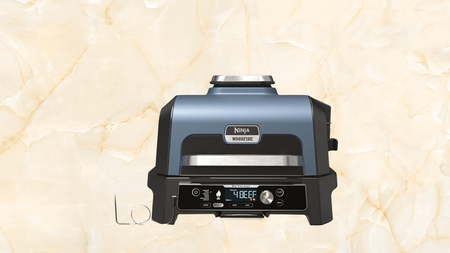
The Ninja Woodfire Pro Connect Premium XL Outdoor Grill and Smoker solves all three problems at once, and it’s now down from $499.99 to $399.98 on Amazon, saving you just over $100 heading into summer.

Ninja Woodfire Pro on a yellow stone backgroundNinja Woodfire Pro on a yellow stone background

Ninja’s Woodfire outdoor grill and smoker gets a tasty 20% price drop, just in time for summer cooking in the garden

With 180 square inches of cooking space, the Ninja Woodfire Pro Connect is a steal at any price, but this 20% discount is tempting indeed.

Advertisement

View Deal

The woodfire flavour here comes from real hardwood pellets, not gas or charcoal, and the integrated smoke box circulates that smoke evenly around the food, so the result tastes genuinely earned rather than artificially added.

Advertisement

Beyond smoking, the grill operates across seven functions, including grilling, air frying, roasting, baking, broiling, and dehydrating, which means it covers the full spread of outdoor cooking without requiring a separate appliance for each method.

Two built-in thermometers let you monitor two different proteins simultaneously and set individual doneness targets for each, which is the kind of practical feature that stops a cook from having to hover anxiously over the grill for the duration of the meal.

Advertisement

The Whatsapp LogoThe Whatsapp Logo

Get Updates Straight to Your WhatsApp

Advertisement

Join Now

The Ninja ProConnect app connects via Wi-Fi and Bluetooth, sending real-time notifications to your phone when the grill is preheated, when to flip, and when your food is ready, so you can actually be present with your guests rather than tethered to the cooking area.

Advertisement

With 180 square inches of cooking space, the Ninja Woodfire Pro Connect handles up to 10 burgers, two full racks of ribs, or a 12-pound brisket in a single cook, which is more than enough capacity for a proper summer gathering.

The stainless steel construction is rated weather-resistant for year-round outdoor storage, meaning it does not need to be hauled inside between uses, and the unit runs on electricity rather than gas, so there is no cylinder to manage or replace.

This is genuinely a strong buy for anyone who wants authentic smoky results without committing to the complexity of traditional BBQ, and a 20% discount heading into summer makes the case even harder to dismiss.

Advertisement

Advertisement

SQUIRREL_PLAYLIST_10148964


Source link

Advertisement
Continue Reading

Tech

Check Out Meshchera, An Atmospheric Match-Three Game For Playdate Set In A Haunted Marsh

Published

on

Spiders? Skeletons? Bad omens? My kind of party.

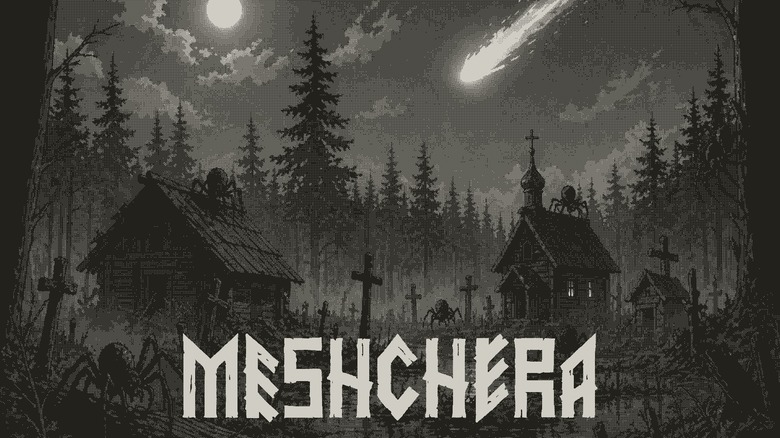
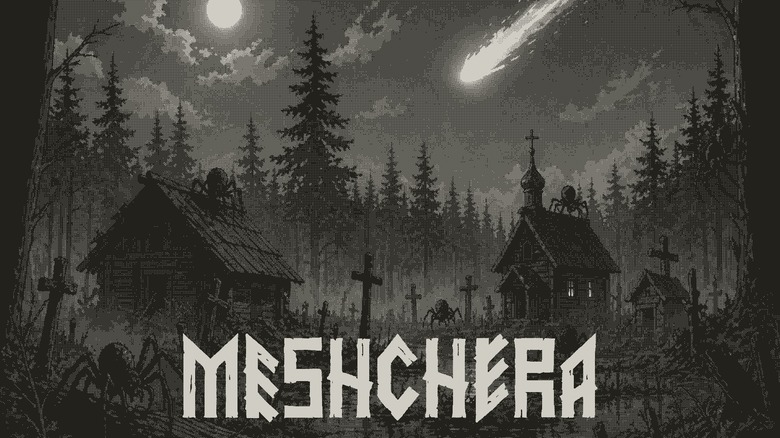
I almost don’t want to call Meshchera a match-three game because I fear that kind of undersells how captivating it is. But, it is a game you play within a six by six grid, in which you have to group matching tiles in clusters of three or more so they may merge and become other, higher value tiles, so that’s the description we’re working with. The atmosphere is off the charts, though, which isn’t something I’m used to finding in these types of games. It has gorgeously detailed artwork and background music that you can get completely lost in.

In Meshchera, you can choose to go for the high score or pick from several challenges that will dictate how you approach the round, like “kill five monsters” or “keep 10 monsters for 10 turns.” The gameboard is a dark marsh that will slowly become overrun with vegetation and creatures, unless you can stay ahead of creep by skillfully matching tiles to condense them into other things. Grasses become flowers, which become trees, campfires, houses, churches, etc. It is a uniquely complex matching game — you’re given next to no information about how the items work or how different elements on the board behave and interact, so you have to figure it out along the way and course-correct as you learn.

I’ve spent quite a bit of time playing Meshchera over the last week, but certain things still elude me. Take the “create and destroy a Monster” challenge. I have absolutely no idea how to create a monster, and that’s not for lack of trying. But, this gives me something to keep working toward even as my high scores nudge higher and higher. The game includes 10 challenges right now, and the developer says more are coming soon. Meshchera is really good, and feels like the kind of game you can revisit ad infinitum. It’s already found itself a home in my folder of “go-to” Playdate games.

Meshchera isn’t available in the Playdate Catalog (yet?), but don’t let that stop you from trying it out. It’s on itch.io at the moment, and sideloading games onto the Playdate is incredibly easy. Once you have the game file, you can just drag and drop it right into your library by signing into your Playdate account and going to the Sideload tab. This can also be done via USB. Panic has a detailed explanation of all the options, if you need some guidance.

Advertisement

Source link

Advertisement
Continue Reading

Tech

Etzioni on AI: The Virgin Unicorns

Published

on

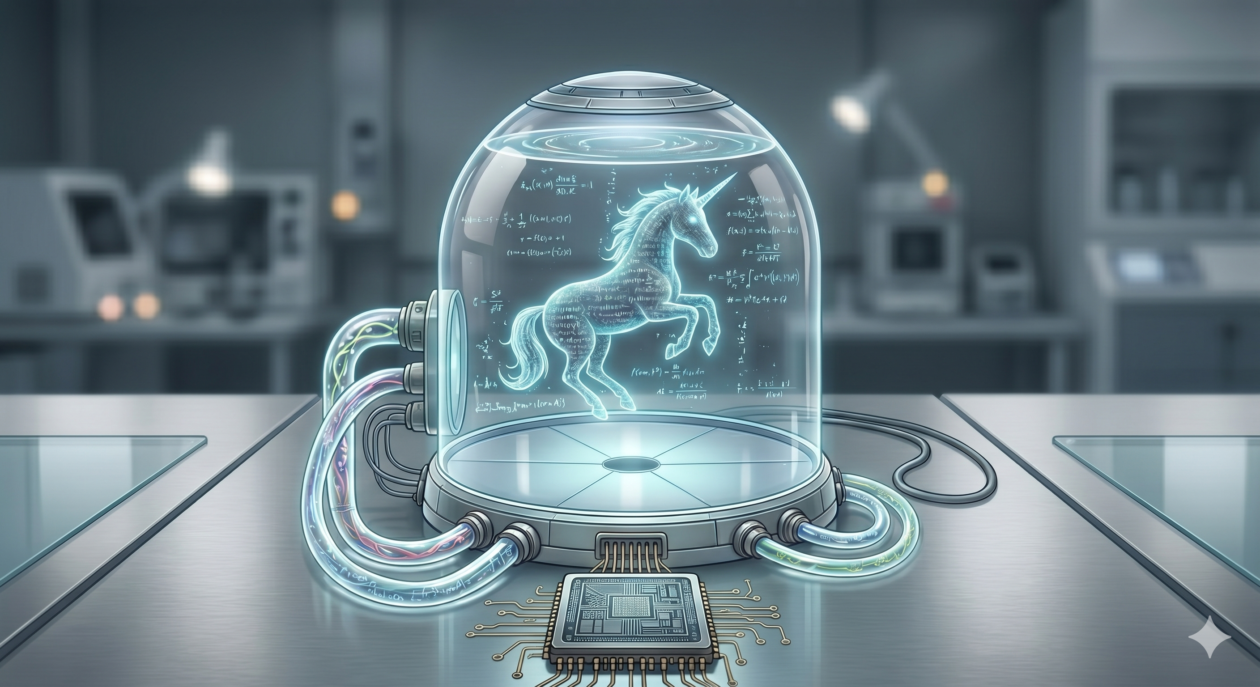
Illustration generated by Google Gemini

Twelve AI labs have a combined valuation larger than Ford and GM. None of them sell anything. I call them the Virgin Unicorns — valued above a billion dollars, but innocent of product or revenue.

OpenAI proved that an AI research lab with the right product could become one of the most valuable companies on earth. A dozen other AI labs are trying to repeat the trick. They have raised more than $29 billion at a combined valuation approaching $130 billion, without shipping anything a customer can buy.

Two questions are worth asking:

  • Why are sophisticated investors writing growth-stage checks to pre-companies?
  • What does history say about how this story ends?
Top Virgin Unicorns

.vu-table-wrapper {
overflow-x: auto;
margin: 1.5em 0;
height: auto !important;
min-height: 0 !important;
}
.vu-table {
border-collapse: collapse;
width: 100%;
font-size: 14px;
line-height: 1.4;
height: auto !important;
min-height: 0 !important;
}
.vu-table th,
.vu-table td {
border: 1px solid #ddd;
padding: 8px 10px;
text-align: left;
vertical-align: top;
}
.vu-table th {
background-color: #f4f4f4;
font-weight: 700;
}
.vu-table tr:nth-last-child(2) td {
font-weight: 700;
background-color: #f9f9f9;
}

Company Founded Founders Valuation Raised Lead Investors Product
Project Prometheus 2025 Bezos, Bajaj $38B $16.2B JPMorgan, BlackRock, Bezos None
Safe Superintelligence 2024 Sutskever, Gross, Levy $32B $3B Greenoaks, Sequoia, a16z, Lightspeed, DST, Alphabet, Nvidia None
Thinking Machines Lab 2025 Murati, Schulman, Zoph, Weng $12B $2B a16z, Nvidia, AMD, Cisco, Accel, Jane Street Tinker*
Reflection AI 2024 Laskin, Antonoglou $8B $2.1B Nvidia, Lightspeed, Sequoia, Schmidt, Citi, 1789 Capital None
Physical Intelligence 2024 Levine, Finn, Hausman, Ichter, Groom $5.6B $1B+ CapitalG, Lux, Thrive, Bezos, T. Rowe Price, Index Demo
Ineffable Intelligence 2025 Silver, Czarnecki, Espeholt, Oh $5.1B $1.1B Sequoia, Lightspeed, Nvidia, Google, UK Sovereign AI, Index None
World Labs 2024 Li, Johnson, Mildenhall $5B $1.2B a16z, NEA, Radical, Nvidia, AMD, Autodesk, Emerson Collective Marble*
Recursive Superintelligence 2025 Socher, Rocktäschel, Tian, Clune, Tobin $4.65B $650M GV, Greycroft, Nvidia, AMD None
Unconventional AI 2025 Rao, Carbin, Achour, Lee $4.5B $475M a16z, Lightspeed, Sequoia, Lux, DCVC, Bezos None
Humans& 2025 Zelikman, Harik, Peng, He, Goodman, and others $4.48B $480M SV Angel, Harik, Nvidia, Bezos, GV, Emerson Collective None
Ricursive Intelligence 2025 Goldie, Mirhoseini $4B $335M Lightspeed, Sequoia, DST, Nvidia, Felicis, Radical None
AMI Labs 2025 LeCun, LeBrun $3.5B $1.03B Cathay, Greycroft, Hiro, HV, Bezos Expeditions, Nvidia, Samsung, Temasek None
Total ~$127B ~$30B
* Limited research release. Tinker is a fine-tuning tool for researchers; Marble is a 3D-world-generation API in early partner access. Neither is a general-availability commercial product.
Sources: company announcements, Bloomberg, Financial Times, TechCrunch, Crunchbase, and PitchBook reporting from 2024-2026. Valuations reflect the most recent confirmed round; figures for rounds in active negotiation are not included.

To answer these questions, let’s identify four patterns across this cohort of companies.

Pattern 1: The pedigree premium. Every founder is a recognized leader in their field, and most come from a small set of institutions. Roughly four-fifths hold PhDs, mostly in computer science from a handful of universities — Berkeley, Stanford, MIT, Toronto, Alberta, Cambridge, UCL — and most of the rest left PhDs at one of those programs to start their companies.

Advertisement

On the employer side, the concentration is tighter still. Four of the twelve companies are anchored by DeepMind alumni (Ineffable, Reflection, Ricursive, Recursive Superintelligence). Two are anchored by OpenAI alumni (Thinking Machines, Safe Superintelligence). AMI Labs traces back to Meta’s FAIR group, and Humans& draws its founders from across Anthropic, xAI, and Google. Stanford and Berkeley faculty appointments account for most of the rest (World Labs, Physical Intelligence, and Noah Goodman of Humans&).

Four institutions — DeepMind, OpenAI, Berkeley, and Stanford — have produced the founders of nearly every Virgin Unicorn in the table. Investors are pricing CVs, not products.

Pattern 2: Nvidia as kingmaker. Nine of the twelve companies in the table have Nvidia as an investor. The supplier of the picks and shovels is also an equity holder in the prospectors. Nvidia gets early visibility into the most ambitious AI bets, locks in compute commitments, and earns multiples on capital deployed at near-zero marginal cost. Selling the shovels was already a good business. Owning the mines too is unprecedented.

Pattern 3: The cap tables are unusually wide. Each round in the table includes a syndicate of ten to twenty investors — venture firms, corporate strategics, sovereign wealth funds, and individuals. Sequoia and a16z still lead. But the rounds are large enough that they require balance-sheet capital — from JPMorgan, BlackRock, Alphabet, the UK Sovereign AI Fund, Samsung, Temasek, ADIA, and Bezos personally — to fill out. That makes these rounds structurally different from classical venture financings.

Advertisement

Pattern 4: A post-LLM thesis. Every company is arguing, in some form, that the current paradigm isn’t enough — that scaling LLMs won’t reach AGI, and that something else (world models, reinforcement learning, agentic systems, AI scientists, novel chips, formal mathematical reasoning) is required. The thesis is the product. The product is a promise.

Others have dissected these unicorns:

  • Howard Marks, in his December 2025 Oaktree memo Is It a Bubble?, described investor behavior as “lottery-ticket thinking” — investors backing startups with no product on the dream of an enormous payoff despite an overwhelming probability of failing.
  • Derek Thompson, writing in October, framed the same dynamic by reporting that a Thinking Machines pitch meeting was described by one investor as “the most absurd pitch meeting” because Mira Murati “couldn’t answer any questions” about what she was building.

  • GeekWire’s own year-end survey of regional venture investors found the same skepticism closer to home: the bubble, they said, is most pronounced at the early stages, where AI storytelling can substitute for real traction.

The lottery-ticket framing is now conventional wisdom. But will this lottery pay out? One way to handicap the odds is to look to the past.

What history teaches us

The closest historical parallel is not the dot-com era. Webvan, Pets.com, and Boo.com failed not because they were pre-product, but because they had products and bad business models. Those companies burned capital on infrastructure and marketing, not on research.

The closer cautionary tales are the celebrity-founder pre-product flops of the last fifteen years.

Advertisement
  • Magic Leap raised $3.5 billion over nine years on the strength of Rony Abovitz’s prior exit and shipped a flop.
  • Quibi raised $1.75 billion on Katzenberg and Whitman’s pedigree and lasted six months.
  • Inflection AI raised $1.5 billion on Mustafa Suleyman and Reid Hoffman and was effectively absorbed into Microsoft in 2024 — its team hired, its technology licensed, its company hollowed into a shell.

In each case, founder credentials raised the money. The product never justified the valuation.

The structurally closest analogy, though, is biotech. Roughly 80% of 2021 biotech IPOs were pre-revenue. The probability that a pre-clinical drug reaches commercialization is under 10%. Development takes a decade and costs $1 billion. Yet a Bentley University study of 319 biotech IPOs from 1997 to 2016 found that the cohort produced over $100 billion in net shareholder value despite a failure rate above 50%. The winners were large enough to carry the portfolio. And many of the most successful biotechs were acquired before reaching profitability.

The Virgin Unicorns are biotech-shaped businesses. Pre-revenue, science-driven, decade-long timelines, binary outcomes, acquisition as the usual exit. But they aren’t financed like biotechs. Biotech investors release capital in milestone tranches tied to specific scientific results, and they expect most candidates to fail. Virgin Unicorn investors release capital in one large round on the strength of a CV, and price for success. Same shape of business, opposite financing logic. That mismatch is where the disappointment will come from.

Why Sequoia invests anyway

The OpenAI story counters the biotech analogy. From its 2015 founding to the ChatGPT launch in late 2022, OpenAI looked exactly like a Virgin Unicorn — pre-consumer-product for seven years, billions in capital, and only research to show for it. Then ChatGPT shipped and revenue went from zero to over $10 billion in three years. No biotech has ever scaled like that.

Sequoia and other investors writing checks to today’s Virgin Unicorns aren’t pricing for biotech outcomes. They’re pricing for the second coming of OpenAI.

Advertisement

@media (max-width: 600px) {
aside.callout { float:none !important; max-width:100% !important; margin-left:0 !important; margin-right:0 !important; }
aside.callout .callout-img { display:none !important; }
}

The table above makes the size of that bet legible. Early-stage venture investors aim for a 10x return. Most of these twelve will return zero, so the one winner has to carry the other eleven by itself. At a $127 billion aggregate marked-up value, that means the winner alone has to produce something like $1.3 trillion in value.

That is not a forecast — it is the bet the VCs have already placed. Sequoia and a16z made exactly this kind of bet on OpenAI and Anthropic, and the on-paper returns have already vindicated it many times over. Anthropic itself looked like a Virgin Unicorn in 2022 — and then it shipped Claude and built revenue.

The historical record suggests some skepticism. But bubbles have a way of producing the occasional Amazon or Google amid the wreckage. Identifying which Virgin Unicorn will become a trillion-dollar company — a “kilocorn,” a thousand unicorns in one — is tough. Which one would you bet on?

Source link

Advertisement
Continue Reading

Tech

SpaceX scrubs Starship launch with seconds to go

Published

on

Science

Not all bad news: Crypto billionaire signs up for a mission to Mars

SpaceX called off the launch of its huge Starship rocket seconds before liftoff due to a ground equipment problem.

The countdown clock reached a planned hold at T-40 seconds after a relatively trouble-free process. Some iffy weather had cleared, and everything looked good for the twelfth Starship test flight – the first try-out for the latest generation of the vehicle and launchpad.

Advertisement

Alas, it was not to be. After repeatedly resetting the countdown clock to the T-40 second mark due to problems, which included warnings from sensors on the quick-disconnect arm on the launch pad and issues with the pad’s water diverter, SpaceX eventually threw in the towel and scrubbed the launch.

Boss man Elon Musk blamed the scrub on the ground equipment, and posted on X: “The hydraulic pin holding the tower arm in place did not retract.” Musk wrote that if the issue could be fixed, SpaceX will try again later today. The next window opens at 5:30 pm CT, according to the billionaire.

Considering that this was the first launch attempt from a new pad and the first of this vehicle’s iteration, the countdown problems are unsurprising. As such, getting to the T-40 second mark was an achievement in its own right. Sadly, the team had only a few minutes to deal with the problems, since the propellant loading was complete and the fuel temperature could not be maintained for long.

Expectations are high for this mission. Despite years of development and Musk’s promises, Starship is still non-operational, and its launches remain on suborbital trajectories during its test phase. The vehicle has quite a way to go before it can play a part in NASA’s goal of landing a crew on the Moon.

Advertisement

According to the company’s recent IPO filing, “We expect Starship to commence payload delivery to orbit in the second half of 2026.”

The second half of 2026 is only weeks away, so it’ll be an interesting few months.

The IPO filing also states that Musk’s performance-based restricted shares in SpaceX vest upon the establishment of a permanent human colony on Mars “with at least one million inhabitants.”

First, however, the SpaceX needs to get to Mars. During the scrubbed launch attempt, it announced that crypto billionaire Chun Wang, who commanded the Fram2 private human spaceflight mission in 2025, would be on the crew for a future flyby of the red planet.

Advertisement

Hopefully, Wang’s jaunt to Mars won’t end up canceled like the dearMoon project, a mission to the Moon financed by Japanese billionaire Yusaku Maezawa. The project was unveiled in 2018, but was eventually canceled in 2024. Starship has yet to hit Earth orbit, let alone head to the Moon. ®

Source link

Continue Reading

Tech

ZTE Day Indonesia 2026 strengthens AI innovation and digital infrastructure collaboration to accelerate Indonesia’s digital transformation

Published

on

The annual tech showcase highlights next-gen AI, cloud, and future-ready ICT solutions while uniting ecosystem partners to build the foundation for the nation’s AI era

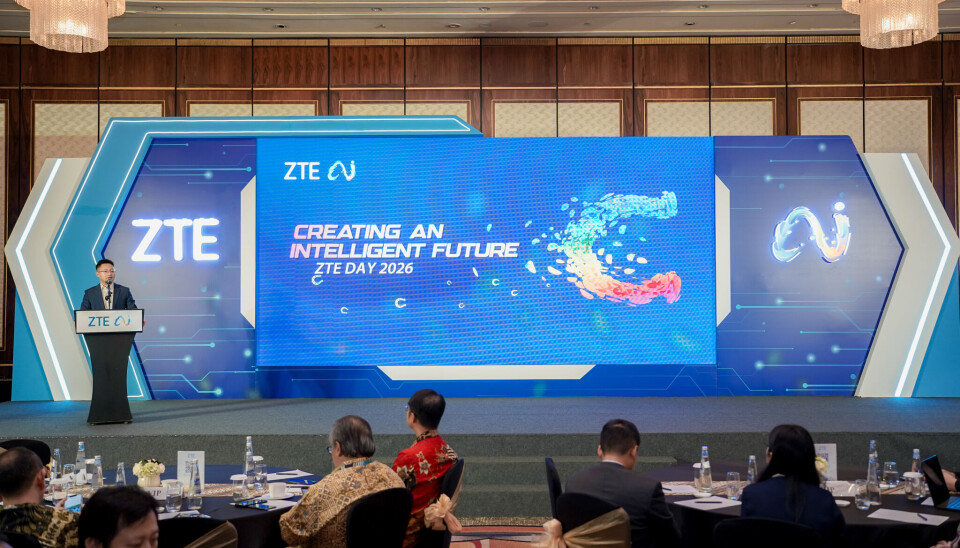
Partner Content ZTE Corporation (0763.HK / 000063.SZ), a global leading provider of integrated information and communication technology solutions, held ZTE Day Indonesia 2026 in Jakarta, as its annual technology showcase event, bringing together industry leaders, technology partners, and digital ecosystem players to discuss the future of AI, intelligent infrastructure, and digital transformation in Indonesia.


ZTE reinforced its commitment to accelerating Indonesia’s digital economy growth through intelligent and future-ready ICT solutions

As industries increasingly adopt AI, cloud technologies, and data-driven operations, the demand for smarter, adaptive, and future-ready digital infrastructure continues to accelerate. Responding to this momentum, ZTE Day Indonesia 2026 highlighted how AI, intelligent networks, cloud infrastructure, and next-generation connectivity are becoming key foundations for national digital competitiveness and future economic growth.

The event showcased a broad range of integrated ICT innovations spanning artificial intelligence (AI), intelligent computing, cloud infrastructure, optical transport, enterprise networking, Wi-Fi 7, and next-generation connectivity technologies designed to support enterprises, operators, and industries navigating the AI era.

Advertisement

Liu Sen, President Director of ZTE Indonesia, stated that Indonesia is currently entering an important phase of digital transformation, where progress will increasingly depend on strong collaboration between technology providers, infrastructure players, and partners across the digital ecosystem.

“Indonesia is currently entering an important phase of digital transformation, where AI, cloud technologies, and intelligent connectivity will become the key foundations of future digital economic growth. Through ZTE Day Indonesia 2026, we aim to demonstrate how technology innovation can be implemented to support the development of smarter, more efficient, and sustainable digital infrastructure. We believe that cross-industry collaboration will play a crucial role in building a strong digital foundation to support Indonesia’s vision of becoming a leading digital economy,” said Liu Sen.

Beyond showcasing technology innovations, ZTE Day Indonesia 2026 also emphasized the growing importance of ecosystem collaboration in supporting Indonesia’s AI-ready digital landscape.

During the exhibition showcase, ZTE presented a series of its latest innovations, including nubia’s latest AI smartphone, high-performance AI server solutions, optical transport technologies, AI-powered network management systems, and Wi-Fi 7 enterprise connectivity solutions.

Advertisement

ZTE also demonstrated its comprehensive end-to-end digital ecosystem capabilities through solutions covering RAN, microwave, transport network, core network, fixed network, and big video solutions. These innovations reflected the company’s commitment to supporting operators, enterprises, and industries in addressing the evolving demands of the digital era.

As part of ZTE Day Indonesia 2026, the ZTE Open Day Afternoon Session featured keynote presentations from Prof. Viciano Lee of Sertis Indonesia, Sami Muhammad Salman from Whale Cloud Technology Indonesia, Mohan Albert, Director of CTO Group at ZTE, and Chok Shin Lip, Partner Solution Architect Director at Alibaba Cloud Intelligence.

The keynote sessions explored the growing role of AI, cloud technologies, intelligent infrastructure, and ecosystem collaboration in supporting enterprise transformation and accelerating Indonesia’s digital economy development.

The event also hosted a panel discussion titled “Connecting the Ecosystem: Intelligent Connectivity for Enterprise Integration & Value Innovation”, featuring industry leaders including Eric Arianto, Chief Technology & Network Officer of Linknet, Irawan Delfi, Network Development Division Head of Fiberstar, and Sigit Dwi Cahyo, Head of Technology Planning and Product of Tower Bersama Group. The panel explored the importance of intelligent connectivity, fiber infrastructure readiness, and ecosystem integration in supporting enterprise digitalization, service innovation, and the growing demand for seamless digital experiences across industries.

Advertisement

Panel discussion titled “Connecting the Ecosystem: Intelligent Connectivity for Enterprise Integration & Value Innovation”

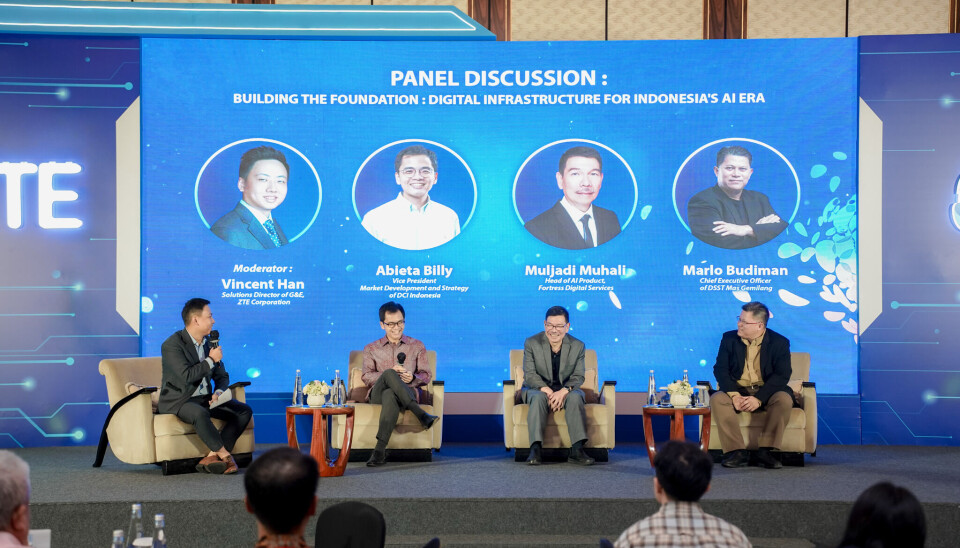
Another panel discussion titled “Building the Foundation: Digital Infrastructure for Indonesia’s AI Era”, moderated by Vincent Han, featured industry leaders including Abieta Billy from DCI Indonesia, Muljadi Muhali from Fortress Digital Services, and Marlo Budiman from DSST Mas Gemilang. The second panel emphasized the importance of strengthening digital infrastructure readiness, enhancing data center capabilities, and fostering industry collaboration to support the growing adoption of AI technologies and Indonesia’s broader digital transformation agenda.


Panel discussion titled “Building the Foundation: Digital Infrastructure for Indonesia’s AI Era”

Through keynote sessions, panel discussions, interactive product demonstrations, and networking activities, ZTE Day Indonesia 2026 provided customers, partners, and industry stakeholders with deeper insights into AI implementation, intelligent digital infrastructure, and real-world applications of next-generation technologies across industries.


ZTE Day Indonesia 2026 showcased the latest AI, cloud, and intelligent connectivity innovations to support Indonesia’s digital transformation

Contributed by ZTE.

Source link

Advertisement
Continue Reading

Tech

Image Playground to see upgrades in OS 27

Published

on

Image Playground will generate images based on provided photos and other inputs, but the results leave a lot to be desired

Generative AI is not Apple’s strong suit, but Image Playground, the tool responsible for horrific AI avatar generation and Genmoji, should see significant improvements with the OS 27 cycle.

Apple announced Apple Intelligence features that had to be delayed in 2024, and one of them should have been Image Playground. While the other AI tools were of passable usefulness and quality, the image generation tool still leaves a lot to be desired.

According to the “Power On” newsletter from Bloomberg, the Image Playground app should see a “big boost” from Apple’s upgraded Apple Foundation Models. It’s an obvious statement given that Gemini is being distilled into Apple’s models, and one of Gemini’s specialties is image generation.

Advertisement

However, even as Apple’s image generation feature improves, its models will still likely lag behind competing options by some margin. Users that want more oomph behind their image generation in Image Playground will be able to use third-party models of their choosing.

Image generation is bad AI

While the results are often unfortunate, Image Playground is more of a proof-of-concept than a useful tool in its current form. Apple presented it as a way to turn your mom into an AI-slop superhero for what would be a simply terrible birthday message.

While no one on Earth should use Image Playground for that function, it can be somewhat entertaining the same way other gen AI models have been. Using it to see how it might interpret a specific person or prompt can be amusing, but the output isn’t something anyone could or should rely on for anything beyond a giggle in an iMessage group chat.

The only good thing about Image Playground output (when using Apple’s models) is that it’s either on device or in Private Cloud Compute servers that run on renewable energy. While generative slop is loaded with moral quandaries, that’s one area Image Playground doesn’t suffer from.

Advertisement

Genmoji is the true winner in Image Playground. While it isn’t a function I’ve used much, it has enough guardrails that it can make some decent results.

Even if Image Playground is able to one day achieve Pixar or Ghibli-level results with on-device AI, there’s the argument that all gen AI is bad for humanity. One area of image generation Apple will no doubt stay away from is the ability to produce photorealistic output, which can lead to problems like deepfakes.

OS 27 getting new Apple Foundation Models

iOS 27 is expected to make Genmoji more proactive in the system by suggesting premade options in the text suggestion box. Shared Genmoji become available to the people you send them to, so everyone can get some use out of that weed emoji.

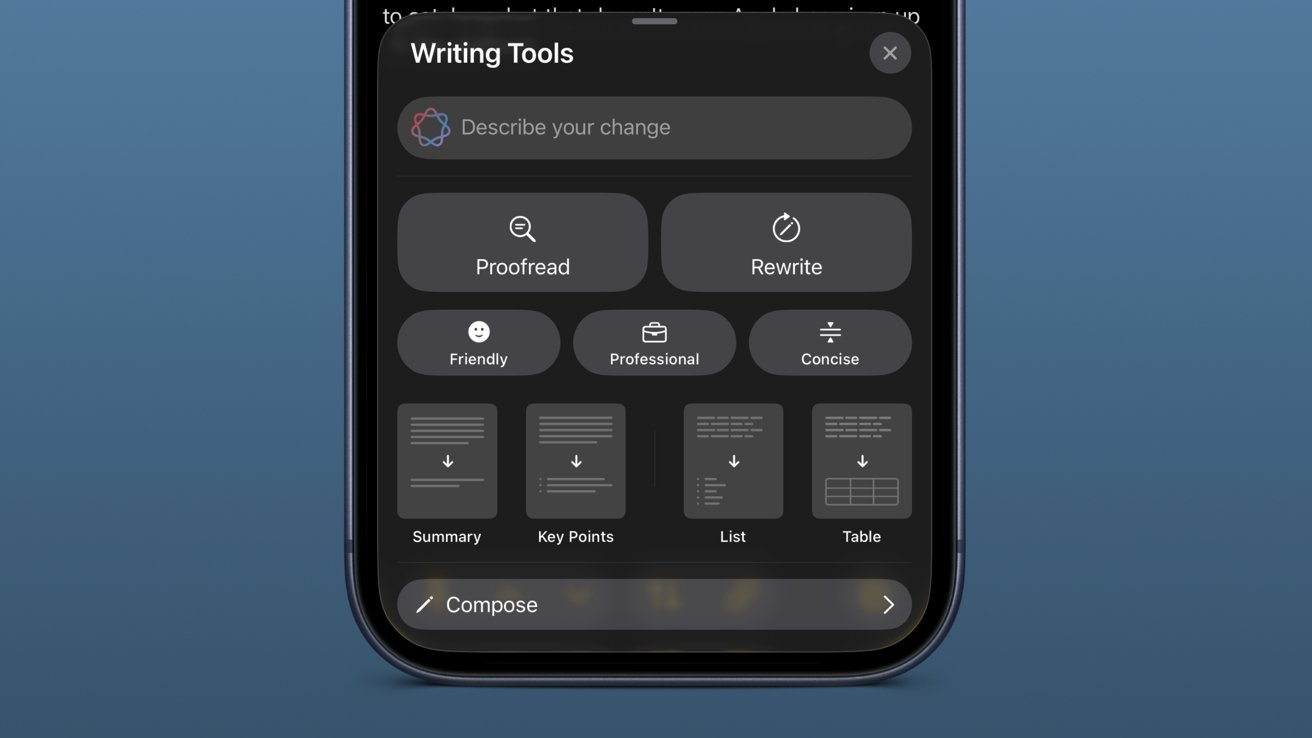
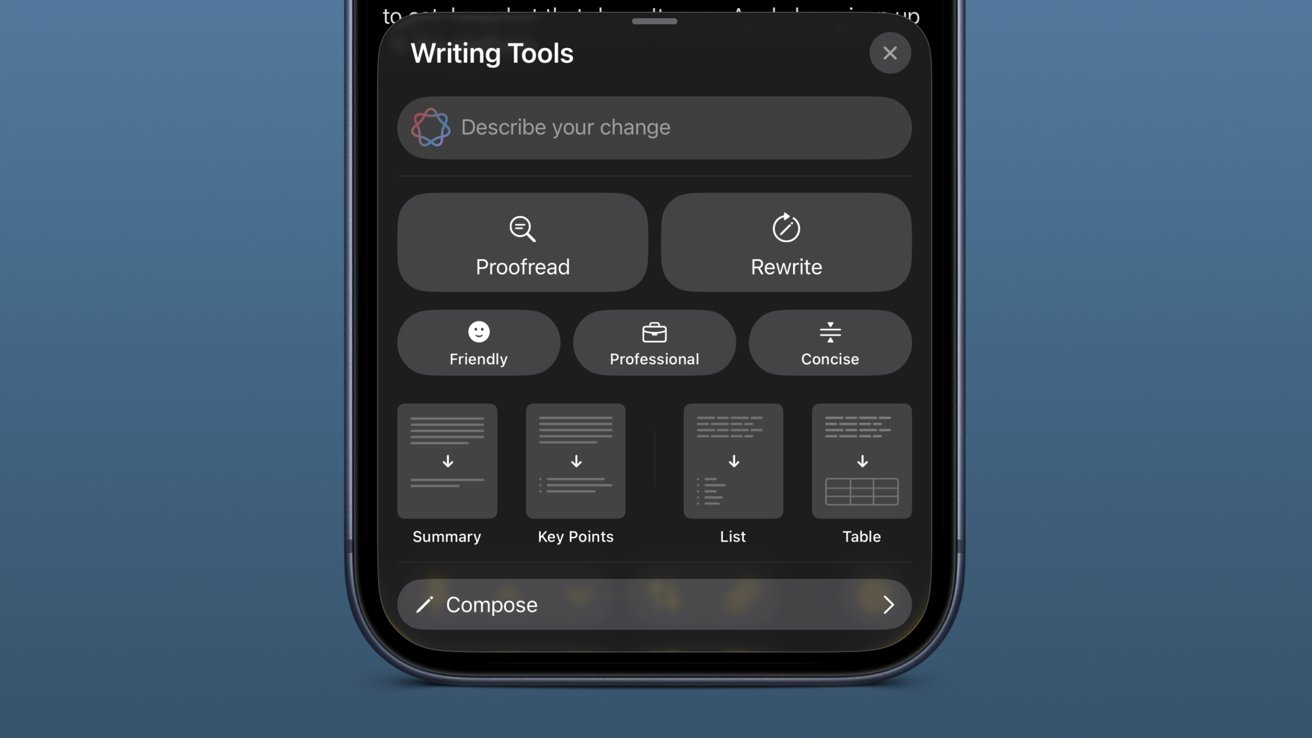
Smartphone screen showing a writing tools interface with options like proofread, rewrite, tone choices, and formatting styles such as summary, key points, list, and table on a blue background

Writing Tools are one of Apple’s better AI features

Advertisement

Apple’s weakest offerings in AI are its generative functions, however, they’re fully optional and easily ignored. There is no doubt Apple will continue to pursue better image generation, but if that’s something you want to do, you might want to stick to other apps.

That said, Image Playground could prove much better in OS 27 and earn its place as a useful toolset. The app itself is fine, but Image Playground also exists outside of the app as an extension interface in places like Notes and Freeform.

If Apple can make Image Playground a useful tool that can run on devices with Apple’s arguably somewhat ethical AI models, then I welcome it. Though improvements could mean turning the tool into a plagiarism machine, which will create a whole different set of issues.

People that want to perform these functions are going to seek out tools that offer them. If gen AI must exist to meet consumer expectations, then Apple should have a good offering.

Advertisement

These fake images that lack artistic ingenuity or integrity are getting created no matter what. So, if some of them can be made with ethically sourced AI, local models running on a device’s battery, or on private servers powered by renewable energy, I’d say it is a net positive.

The ability to choose third-party models for Image Playground through a system API will prove interesting. However, once you’ve sent your data to that third-party, all bets are off from an ethical and privacy-oriented standpoint.

At least you can make a plagiarized Ghibli avatar for social media instead of paying a human to make one for you, I guess.

Advertisement

Source link

Continue Reading

Tech

Max severity Cisco Secure Workload flaw gives Site Admin privileges

Published

on

Cisco

Cisco has released security updates to address a maximum-severity Secure Workload vulnerability that allows attackers to gain Site Admin privileges.

Formerly known as Cisco Tetration, Cisco Secure Workload helps admins reduce their network’s attack surface through zero trust microsegmentation and stop lateral movement to keep business applications safe.

Tracked as CVE-2026-20223, the security flaw was found in Secure Workload’s internal REST APIs, and it enables unauthenticated attackers to access resources with the privileges of the Site Admin role.

“This vulnerability is due to insufficient validation and authentication when accessing REST API endpoints. An attacker could exploit this vulnerability if they are able to send a crafted API request to an affected endpoint,” Cisco explained in a Wednesday advisory.

Advertisement

“A successful exploit could allow the attacker to read sensitive information and make configuration changes across tenant boundaries with the privileges of the Site Admin user.”

Cisco says there are no workarounds for this security flaw, has released software updates to patch it for on-premises customers, and has already addressed it in the cloud-based Cisco Secure Workload SaaS deployment.


Advertisement


Cisco Secure Workload Release First Fixed Release
3.9 and earlier Migrate to a fixed release.
3.10 3.10.8.3
4.0 4.0.3.17

The company also added that its Product Security Incident Response Team (PSIRT) has not found evidence that the vulnerability has been exploited in the wild before publishing this week’s advisory.

Earlier this month, Cisco warned that another maximum severity authentication bypass vulnerability (CVE-2026-20182) affecting its Catalyst SD-WAN software-based networking platform was being actively exploited as a zero-day, allowing attackers to gain admin privileges.

Advertisement

The U.S. Cybersecurity and Infrastructure Security Agency (CISA) added the CVE-2026-20182 flaw to its Known Exploited Vulnerabilities Catalog on May 14 and ordered federal agencies to secure affected devices within three days, by May 17.

In early May, Cisco also released security updates for a denial-of-service (DoS) vulnerability in Crosswork Network Controller (CNC) and Network Services Orchestrator (NSO), which requires manually rebooting targeted systems to recover.

Over the past five years, CISA has flagged 91 Cisco vulnerabilities as actively exploited, six of which have been used by various ransomware gangs.


article image

Automated pentesting tools deliver real value, but they were built to answer one question: can an attacker move through the network? They were not built to test whether your controls block threats, your detection rules fire, or your cloud configs hold.

This guide covers the 6 surfaces you actually need to validate.

Advertisement

Download Now

Source link

Continue Reading

Tech

Workday wants AI to punch in instead of having to hire new recruits

Published

on

SaaS

CEO eyes margin gains by keeping headcount flat – bold for a company selling HR software to employers

Workday is hoping to boost its revenue
and margins by using AI agents instead of hiring
people, according to its CEO.

After announcing revenue growth, Aneel Bhusri – the company co-founder who was
reinstated as CEO in February – said his aspiration is to keep headcount
the same while sustaining growth and increasing margins by harnessing AI.

Advertisement

“I’d love to see us continue the growth
that we had in Q1, but keep headcount as close to flat for the year as possible
because we are getting the benefits of using our own products and other AI
tools. That’s where I’m hopeful and believe that we’re going to have additional
margin expansion as we get those benefits. That’s different than what my view
was coming in three months ago.”

In its Q1 results ended April 30, Workday recorded net profit of $222 million versus $68 million in the prior year, when the bottom line was hit by restructuring expenses. Revenue generated for the three months was $2.54 billion, up 13.5 percent year-on-year. 

The results beat market expectations and Workday forecast higher margins for the rest of the year, sending its share price up 10 percent in
after-hours trading. 

Bhusri’s aspiration to keep headcount flat
while increasing revenue and margins follows a roller-coaster ride of public statements on employment
plans.

Advertisement

In February 2025, Workday announced
an 8.5 percent cut to its global workforce – 1,750 positions – as it “intended to prioritize its investments and continue advancing Workday’s ongoing focus on durable growth,” an SEC
filing said.

In June 2025, CFO Zane
Rowe told an investment conference that the SaaS biz planned to rehire the same number
of people, although with different roles. “We will be hiring back. We wanted to
make sure everyone understood that this is not us reducing,” he said.

Nonetheless, in September 2025, then CEO
Carl Eschenbach seemingly reversed the plan, telling investors it was “consolidating
and streamlining the organization model” and did not “need more
headcount to drive the business forward.”

By February 2026, Eschenbach was out the door
as Workday said it would lay off about 2 percent of its staff in a bid to
align with its “highest priorities.”

Advertisement

Shareholders may be delighted that Workday
can now expand without having to increase the size of its workforce. But for a company that
relies on organizations hiring people to create demand for its HR software, it seems like a strange example to set. ®

Source link

Continue Reading

Tech

Chinese hackers target telcos with new Linux, Windows malware

Published

on

China

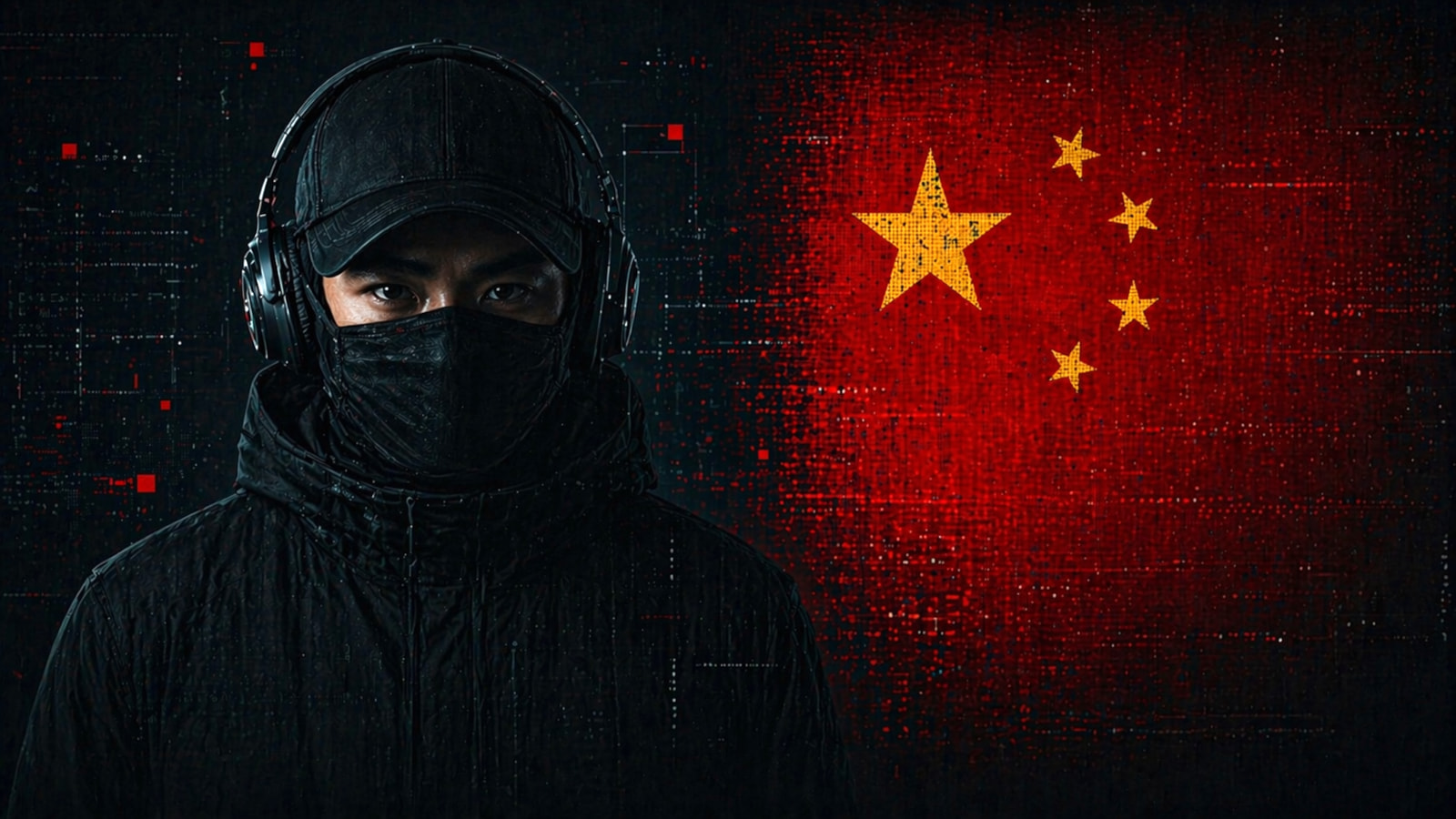
A Chinese cyber-espionage campaign has been targeting telecommunications providers with newly discovered Linux and Windows malware dubbed Showboat and JFMBackdoor, respectively.

The operation has been active since at least mid-2022 and targeted organizations across the Asia Pacific and parts of the Middle East. It was attributed to the Calypso threat group, also tracked as Red Lamassu.

According to researchers at Lumen’s Black Lotus Labs and PwC Threat Intelligence, the threat actor set up and used multiple telecom-themed domains to impersonate their targets.

The Showboat Linux malware

The Linux implant Calypso uses in these attacks, dubbed Showboat/kworker, is a modular post-exploitation framework built to  for long-term persistence after initial compromise. The initial infection vector is unknown.

Advertisement

According to a report today from Black Lotus Labs, once Showboat is deployed on a target system, it starts collecting information about the host and sends it to a command-and-control (C2) server.

The malware can also upload or download files, hide its own process, and establish persistence via a new service.

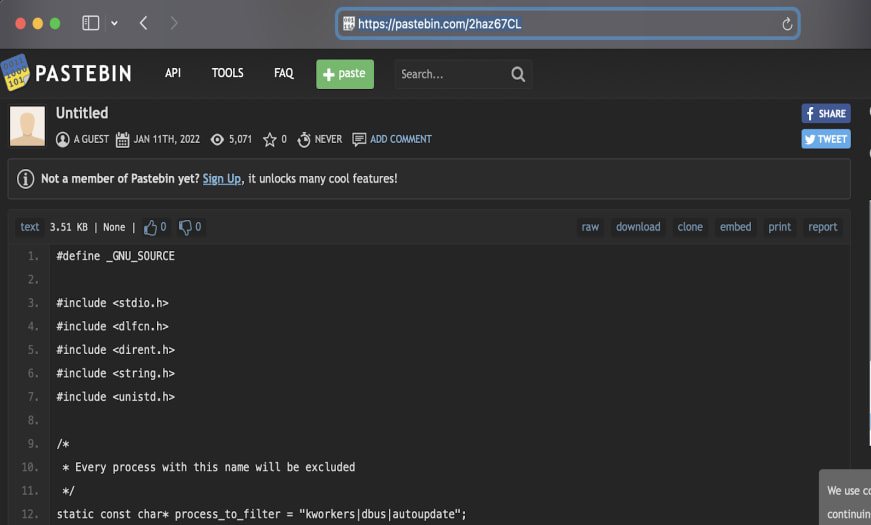
“One notable feature is the ‘hide’ command, which enables a process to conceal itself on a host machine by retrieving code stored on external websites such as Pastebin or online forums for use as a ‘dead drop’, Lumen’s Black Lotus Labs researchers explain.

Pastebin page used in the attacks
Source: Lumen

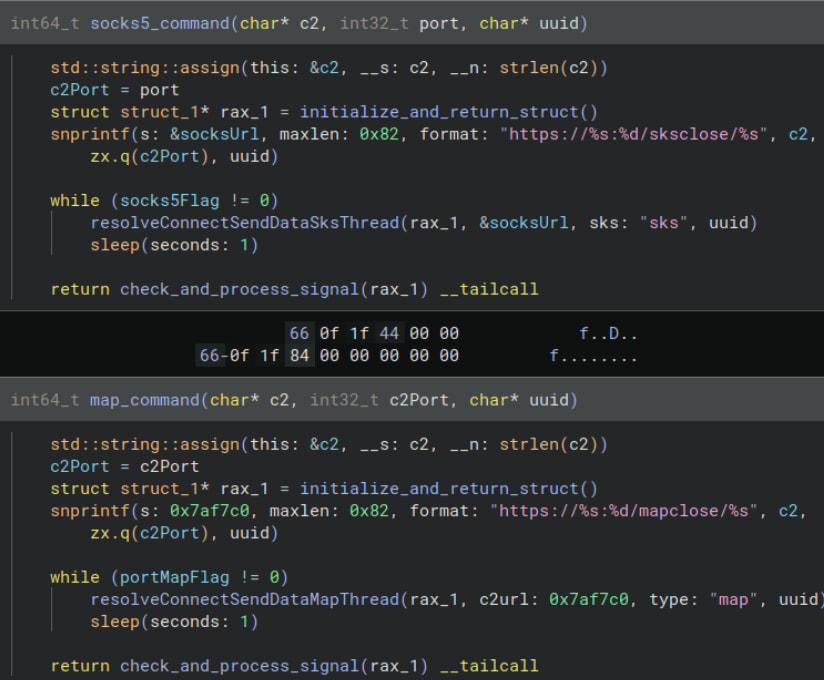
Its most notable function is acting as a SOCKS5 proxy and port-forwarding pivot point, serving as a foothold on compromised endpoints and enabling the attackers to move to other systems on the internal network.

SOCKS5 and portmap functionality
Source: Lumen

The JMFBackdoor Windows malware

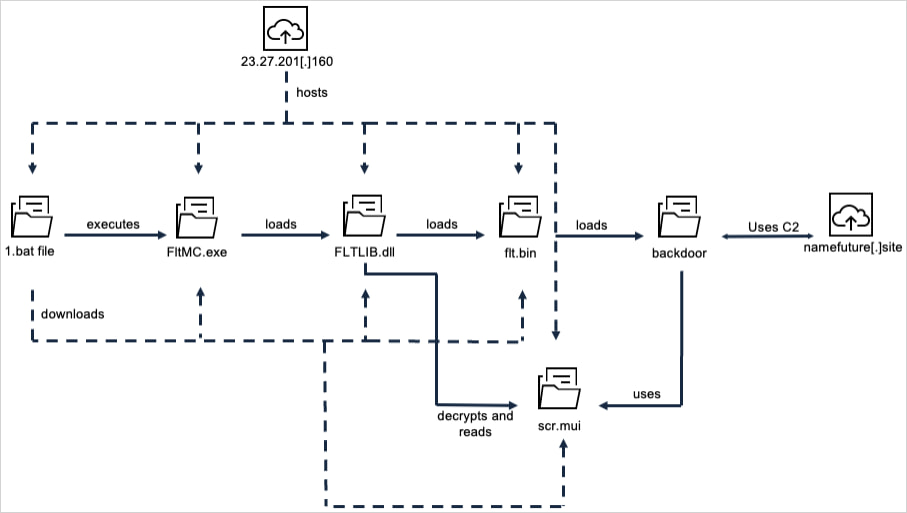
Researchers at PwC Threat Intelligence analyzed Red Lamassu’s infection chain on Windows and noted that it starts with the execution of a batch script that drops payloads to stage a DLL-sideloading procedure (fltMC.exe + FLTLIB.dll). Ultimately, the final payload called JMFBackdoor is loaded.

The Windows attack chain
Source: PwC

According to the researchers, JFMBackdoor is a full-featured Windows espionage implant that has the following capabilities:

  • Reverse shell access — Remote command execution on the infected machine.
  • File management — Upload, download, modify, move, and delete files.
  • TCP proxying — Uses the victim system as a network relay into internal systems.
  • Process/service management — Start, stop, create, or kill processes and services.
  • Registry manipulation — Modify Windows registry keys and values.
  • Screenshot capture — Take screenshots of the victim’s desktop and encrypt them for exfiltration.
  • Encrypted configuration management — Store/update malware settings in encrypted configs.
  • Self-removal and anti-forensics — Hide activity, remove persistence, and delete traces.

Infrastructure analysis suggests that the hackers follow a partially decentralized operational model, in which multiple clusters share similar certificate-generation patterns and tooling but target distinct victim sets.

Lumen concludes that the tooling is likely shared across multiple China-aligned threat groups, each targeting different regions and using the same malware ecosystem.

Advertisement

article image

Automated pentesting tools deliver real value, but they were built to answer one question: can an attacker move through the network? They were not built to test whether your controls block threats, your detection rules fire, or your cloud configs hold.

This guide covers the 6 surfaces you actually need to validate.

Download Now

Source link

Continue Reading

Trending

Copyright © 2025