The Irish company said its existing identity services and resources will be integrated with the CyberIAM team to form a new identity managed services practice.
Irish-founded and -headquartered cybersecurity company Integrity360 has acquired CyberIAM, a South African cyber identity services company, for an undisclosed amount.
CyberIAM, founded in 2016, employs around 120 in the UK’s London and Chester, and South Africa’s Cape Town.
It specialises in solutions for identity access management; identity governance and administration; privileged access management; and customer identity and access management.
Advertisement
Its enterprise customers come from areas such as financial services, retail, healthcare, insurance, energy, legal and the public sector, according to the companies.
Integrity360 said the acquisition would “significantly strengthen” its capability around identity security in the age of AI deployments, which it said represents a new and prevailing cybersecurity challenge for businesses and organisations.
The Irish company said its existing identity services and resources will be integrated with the CyberIAM team to form a new identity managed services practice – led by current CyberIAM CEO Michael Ribaudo – that will operate from the group’s global security operations centre.
“We could not be more delighted to be welcoming Michael and the whole CyberIAM team to Integrity360,” said Ian Brown, executive chair at Integrity360.
Advertisement
“Identity is now the primary control plane for cybersecurity, and by strengthening our identity capabilities, we are helping customers build the secure foundation they need to embrace AI with confidence.”
Integrity360 said it now projects a revenue run rate of around €230m – with the addition of €18m in revenue from CyberIAM – and has a new total headcount of around 900 working from 16 locations across the UK, Europe, Africa and Canada.
“Thanks to the support of our customers and employees, CyberIAM has grown to become one of the leading experts in identity services helping businesses control and protect human and machine identities,” said Ribaudo.
“With the backing of Ian and the considerable resources, capability and track record of the entire Integrity360 team, we are excited about what we can further achieve for our customers and our employees, and we look forward to expanding further into international markets.”
In June, Integrity360’s CTO Richard Ford spoke to us about how cyber teams can prepare for the continuing emergence of increasingly powerful and capable AI models. In May, the company’s Matthew Olney wrote about the importance of security in both information technology and operational technology.
Don’t miss out on the knowledge you need to succeed. Sign up for the Daily Brief, Silicon Republic’s digest of need-to-know sci-tech news.
As we slowly drop our reliance on fossil fuels, there is still discussion about how to plug the gaps in our energy needs. Of course, renewable sources like wind power are helping take the strain, and modern turbines are far more capable than early designs were. However, renewable schemes like this are not yet ready to take up all of the energy shortfall, especially in places where the wind doesn’t blow consistently or where large-scale installations simply aren’t practical.
This is why nuclear power is still regularly touted as the energy source the planet needs to help make the transition away from fossil fuels. While there is always controversy and debate surrounding nuclear power, it does pack a “power punch.” It would take around 800 wind turbines to replace a typical nuclear reactor. All these turbines would have a footprint of about 1,000 times that of a nuclear reactor — it just isn’t a practical option. However, there is a comparison where the playing field might be slightly fairer: nuclear microreactors.
Microreactors, as the name suggests, are small reactors useful for supplying power to isolated communities, military installations, research stations, and anywhere else where there is limited or no grid access. In many of these situations, and assuming the right conditions, wind turbines can also be used as a power source.
Advertisement
However, to really understand how wind turbines stack up against microreactors, we first need to understand a few things.
Advertisement
What are microreactors?
There is nothing new about the relationship between nuclear power and portability. U.S. Navy submarines, for instance, have used portable nuclear reactors since the USS Nautilus was commissioned as the first nuclear-powered submarine in 1954. The latest generation of naval reactors powers ships like the USS Gerald R. Ford, one of the largest aircraft carriers in the world.
However, regardless of size, all nuclear reactors unlock the energy contained within matter by splitting uranium or plutonium atoms and use the heat energy released to power turbines that generate electricity. The vast majority of nuclear reactors are a type known as pressurized water reactors (PWRs), and a typical commercial one produces around 1 gigawatt of power.
When it comes to nuclear microreactors, the underlying physics are identical, but there are some fundamental differences. These include how the reactors are cooled, with various reactor types under development. However, for the purposes of this article, the most obvious difference is size. While there is no clear definition that classifies microreactors, the U.S. Energy Information Administration (EIA) classifies microreactors as producing between 1 and 20 megawatts of power. While there are arguments stating that 50-megawatt reactors also fall into this category, let’s give the wind turbines a fair crack at the whip and base our comparison figure on the EIA definition. To be completely fair, we’ll set the bar about midway and run our comparison against a 10-megawatt microreactor.
Advertisement
Wind turbines vs. nuclear microreactors
WILLIAM LUQUE/Shutterstock
Now that we’ve set the baseline for a microreactor, we need to do the same for a wind turbine. However, this is where we also need to look at one of the biggest drawbacks of wind turbines — they need wind to work, and the weather doesn’t always play ball. The measured output of a wind turbine is its maximum possible output in ideal situations. Our comparison will need to account for this. So, let’s split the difference again and assume that the wind turbines are situated somewhere there is enough wind that they consistently hit half their maximum output.
Which leads us to the next point. Just how much power can a wind turbine generate? Size matters here too — the larger the turbine, the more power it produces. To give wind turbines the best chance, let’s assume that we’re going big with this. A large onshore wind turbine can have a rotor diameter of about 438 feet and can produce up to 3.5 megawatts of power, optimally. Or, about 1.75 megawatts for our wind-adjusted comparison. In this scenario, and when compared to a 10-megawatt microreactor, we’d need about six wind turbines to replace it.
On the face of it, this seems like a realistic option. Certainly when compared to replacing a commercial reactor with wind turbines, the numbers are certainly kinder. However, we need to temper this slightly — a microreactor will provide consistent power regardless of weather conditions and can do so for years at a time without refueling.
At last, somewhere comfy to sit while your PlayStation 5 game loads
Microsoft’s latest Xbox merchandising deal means at least you can sit on an IKEA cushion while you wait for your PlayStation 5 to boot.
Advertisement
IKEA has announced YXSTABY, a nine-piece collection of items aimed at the XBOX completist who has to have every possible piece of merchandise associated with their beloved game console. Need a stool? How about one modeled on a controller’s thumbstick? A cushion? There’s a D-pad to throw on the sofa.
IKEA has long had a reputation for being that place where relationships go to die, thanks in part to the occasionally labyrinthine layout of its store. Xbox has, under the leadership of Asha Sharma, acquired a similar rep as far as staffers and game studios are concerned. Thousands of workers were laid off in recent months as Sharma “reset the business” to improve the platform’s standing in a market dominated by rivals.
In the UK, IKEA charges £12 for a cushion or platter, and up to £115 for a side table on wheels. The Reg suspects Xbox branded stuff will be a little pricier but considerably less than an Xbox itself.
Advertisement
Microsoft Store shows the comparatively weedy Xbox Series S retailing for £429.99, while the beefier Series X goes for £669.99. When launched in 2020, the Series S cost £249. “Unfortunately,” wrote Microsoft, “console storage and memory prices have increased by more than 2.5x and we expect another doubling by the fall of 2027.”
It is far from alone. Price rises have become a way of life in the tech industry in recent months as demand for memory outstripped supply.
A green pedestal stool, lounge chair and other furnishings from IKEA’s new Xbox-themed YXSTABY collection.Pic credit: IKEA press kit
This is not the first gaming-related wares that IKEA has sold. The BRÄNNBOLL collection predates the Xbox collaboration and features “everything to improve your gaming adventures, from a rug that helps you hit the enemies, not the table, to gaming bolsters that boost your comfort and play.”
The YXSTABY range was unveiled at Gamescom this month, but eager buyers have a little longer to wait for that Xbox-inspired stool. The range will be in stores and available online from October 1. ®
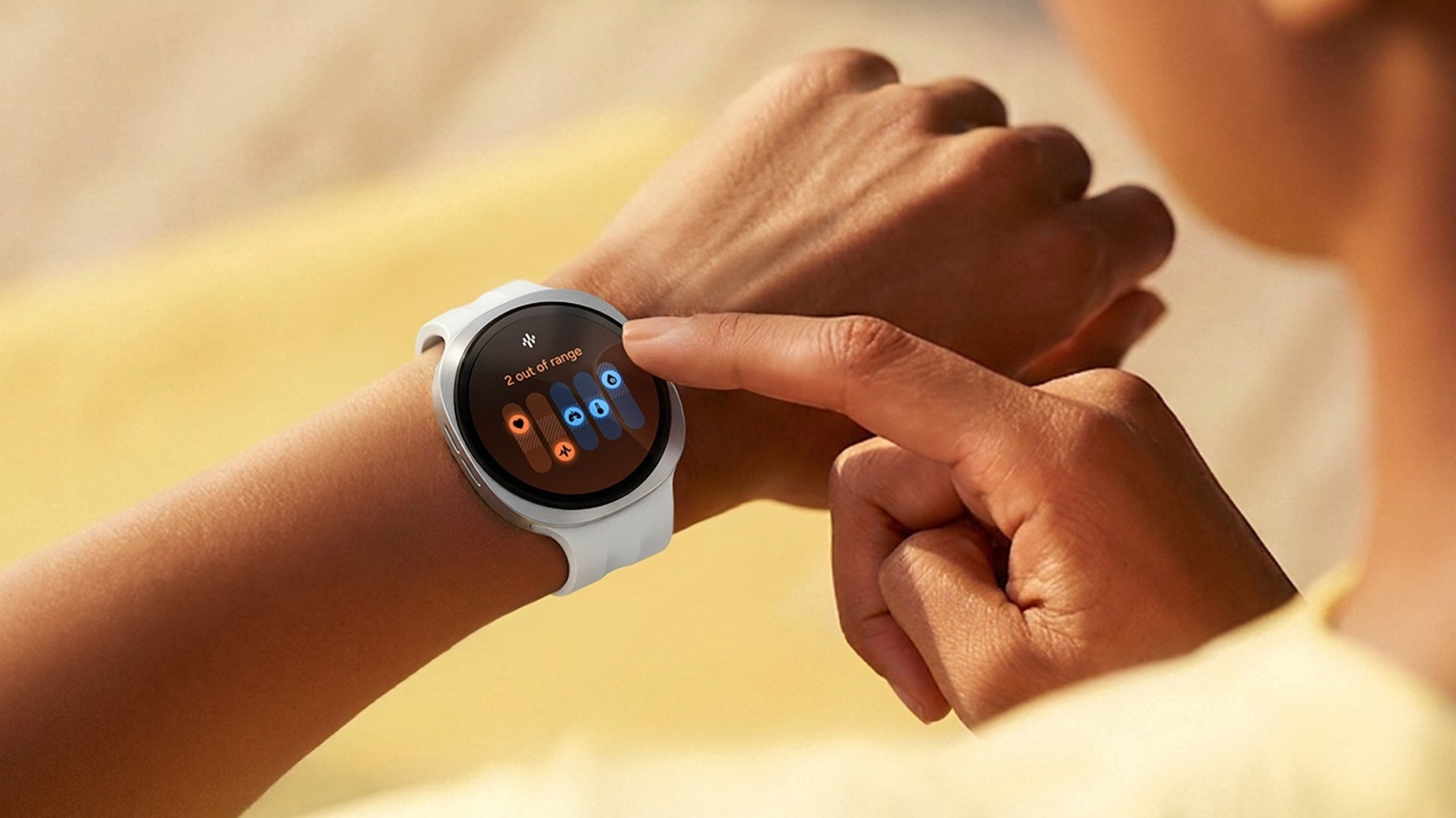
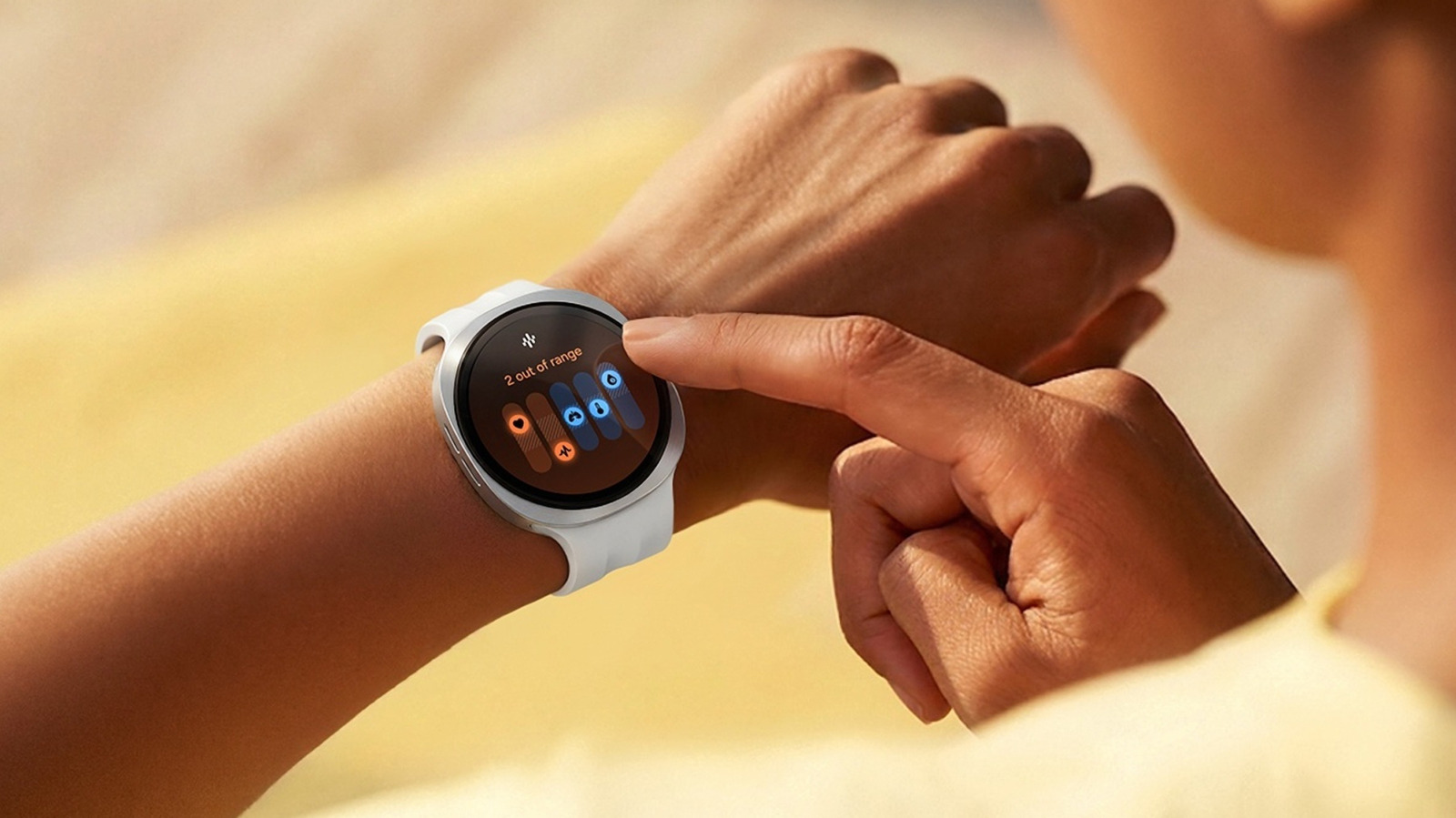
Anyone weighing up Samsung’s 2026 smartwatch options — Galaxy Watch Ultra 2 and Galaxy Watch 9 — would have to pick one over the other mostly based on price, since the former costs nearly twice as much as the latter. But if money’s not a problem, then the question shifts to whether the Ultra 2 is worth the extra cash. While there are some key differences, both share more or less the same foundation, like being powered by Qualcomm’s Snapdragon Wear Elite processor. They also use the same BioActive sensor package, allowing health tracking to work identically on either watch.
As for differences, the first thing you’d notice is also what would make or break your decision. The Galaxy Watch Ultra 2 — the predecessor to the Galaxy Watch Ultra — comes in just one size, 47mm, landing on your wrist at 61.5 grams. Meanwhile, the 40mm Galaxy Watch 9 weighs roughly half of that, coming in at 31.5 grams. Even the larger 44mm version tips the scales at just 34 grams. You’d certainly feel the difference on your wrist, and even more so if it’s skinny. This can be a real drawback considering wearing something around the clock is exactly how these watches collect health data.
Advertisement
However, with that additional weight, you get fancier materials. While both watches have the same sapphire crystal over the screen, the Ultra 2 uses a grade 4 titanium frame and a ceramic-and-sapphire back. The Watch 9 sticks with aluminum and some plastic. Water resistance on a Galaxy Watch gets measured in atmospheres, and Samsung rates the Watch 9 at 5ATM, while the Ultra 2 doubles that to 10ATM.
Advertisement
Beyond the immediate differences
Additionally, the Ultra 2 has a third button that the Watch 9 lacks. It’s this orange Quick Button you can map to whatever you want. Holding it down for five seconds triggers a safety feature, too – an 86-decibel siren, which Samsung says carries up to 180 meters.
However, perhaps the biggest selling point of the Ultra 2 is the battery. The company quotes up to 60 hours with the always-on display running. That said, one of the tips to maximize battery life on a Galaxy Watch is to switch off the AOD. GSMArena and Wareable did that and were able to push the battery to over four days. Strangely, however, the reviews found the Galaxy Watch 9 delivering less than promised. Samsung claims up to 30 hours with AOD on, but several outlets, including GSMArena and PCMag, achieved far less than that, sometimes not even getting a full day out of it.
The other differentiating factor is display brightness. The Ultra 2 supposedly peaks at 5,000 nits against 3,000 for the Watch 9. That said, Samsung, in a footnote, quietly explains that’s for a localized peak under bright light. The Ultra 2 also doubles storage to 64GB against the Watch 9’s 32GB.
Other useful features present on the Ultra 2 but not on the Watch 9 include Trail Run, which reads live elevation, how deep into a climb you are, and your total ascent. That 10ATM rating also comes in handy underwater, since the Ultra 2 is likewise capable of logging depth and water temperature.
TL;DR: Scientists have built a quantum battery prototype that can produce an electrical current after charging in femtoseconds, marking a step forward for a technology that has largely remained theoretical and limited to small-scale lab experiments. The prototype is far from replacing conventional batteries, but it provides evidence that quantum effects could eventually enable faster energy transfer in quantum hardware and other specialized systems.
The device, developed by a team led by CSIRO quantum science researcher James Quach, is designed to take advantage of a quantum effect called superabsorption. In simple terms, the more molecules involved, the faster the system can absorb energy.
That is the opposite of what happens with conventional batteries, which generally take longer to charge as they get larger. The work does not mean quantum batteries are ready to replace those used in phones, laptops, or electric vehicles. The prototype stores only a small amount of energy and holds it for nanoseconds. Still, researchers say the experiment demonstrates that energy can be rapidly absorbed and extracted from a quantum battery.
The prototype uses an optical microcavity made of two mirrors separated by about 100 nanometers. The space between the mirrors is filled with organic dye molecules. A laser shines into the cavity, causing the light and molecules to interact strongly.
Advertisement
That interaction creates hybrid light-matter states. The molecules do not absorb energy independently, as they would in a classical system. Instead, they respond collectively.
The battery charges in femtoseconds, or quadrillionths of a second. It can retain energy for nanoseconds, about six orders of magnitude longer than the charging period.
Quach’s team first demonstrated superabsorption in 2022. The newer experiment added the ability to extract an electrical current. The current remains small, but demonstrating it is an important step toward making a quantum battery useful beyond a physics experiment.
Quantum batteries are not expected to compete with conventional batteries simply by storing more energy. Their main attraction is the possibility of very fast charging and precise energy delivery.
Advertisement
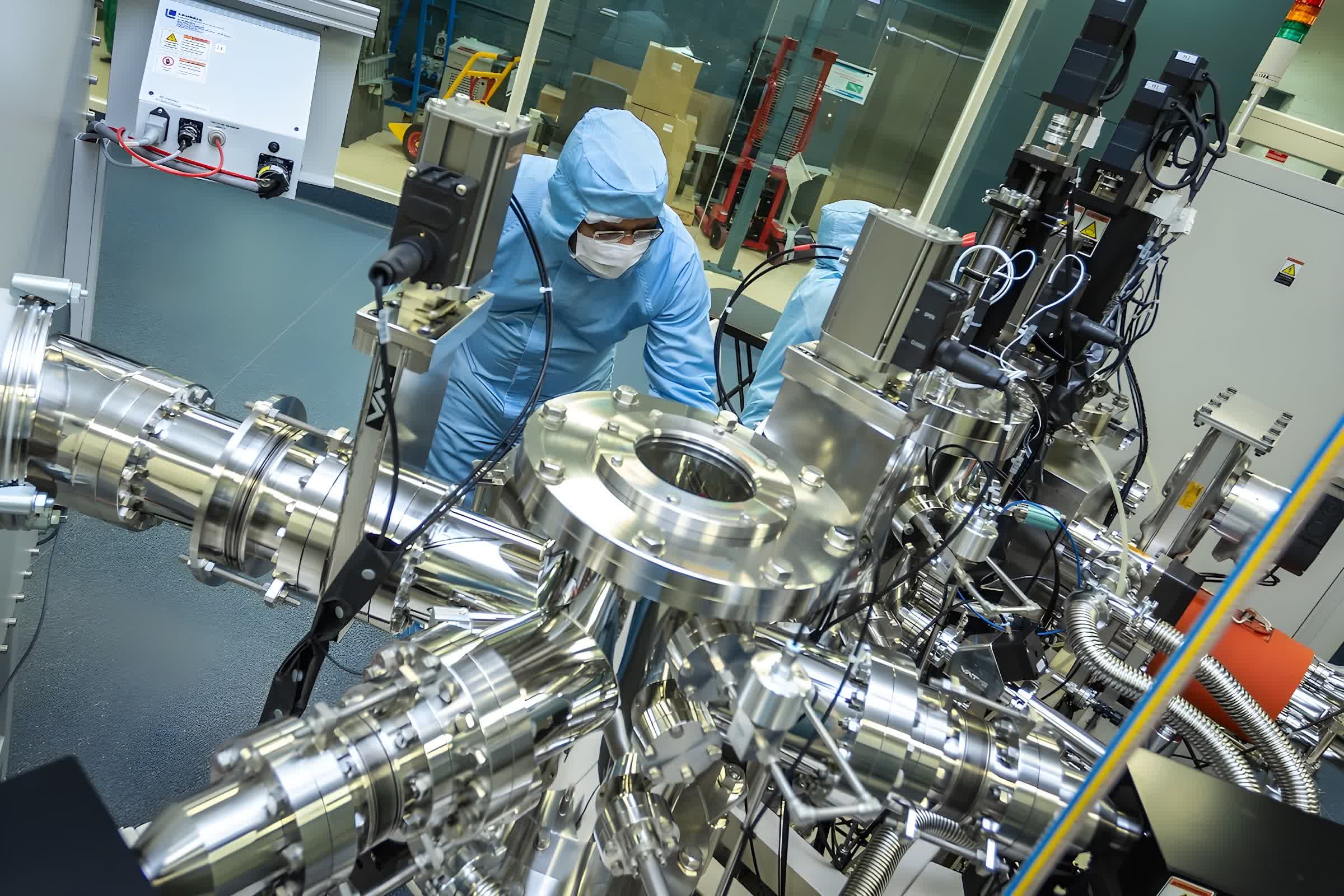
CSIRO’s clean lab for engineering prototype quantum batteries.
Dario Ferraro, an associate professor of physics at the University of Genova, told the BBC that quantum batteries are intended to improve the speed and control of energy delivery rather than significantly increase the amount of energy a battery can store.
For now, the gap between the prototype and a useful power source remains wide. The device can hold only a few billion electron volts of energy and retains it for a very short time. A real-world system would need far greater capacity and much longer storage times.
Quach said his group has built a hybrid design intended to address those limitations. It combines quantum components for rapid charging with classical layers that can store energy for longer. He said the team is preparing a paper on the work.
Advertisement
The researchers also plan to link multiple microscopic batteries together. “If we do those two things, then we’re on our way to being able to power a conventional device,” Quach said.
The optical microcavity system has one practical advantage: It operates at room temperature. Other quantum-battery designs use superconducting materials, which are already important in quantum computing but require extremely cold operating conditions.
Superconducting systems can operate at temperatures below -150°C. “This is fine for quantum computers, but not so useful to power your mobile phone,” Quach said.
The world’s first fully functioning proof-of-concept quantum battery.
Advertisement
Mauro Paternostro, a quantum physicist at Queen’s University Belfast, said the optical approach is a strong way to demonstrate that quantum charging can work. However, he added that it may be difficult to draw energy from such a system in a controlled and useful way. “A microcavity gives you a beautiful ensemble demonstration, but poor control over getting the energy back out in a useful, directed form,” he said.
The first practical use of quantum batteries, if they reach that point, may be in quantum hardware rather than consumer electronics. Quantum computers already rely on specialized equipment, and some use superconducting systems that operate at cryogenic temperatures.
Quach said a quantum battery could eventually help reduce energy use in quantum devices and support faster, more reliable operation. However, those benefits have not yet been demonstrated.
Ferraro said quantum effects are fragile and can break down when the system interacts with its environment. He expects quantum batteries to remain most useful in quantum-scale applications. “In my view… quantum batteries are unlikely to replace conventional batteries in everyday applications such as mobile phones or electric vehicles,” Ferraro said. “Their natural domain is the quantum scale.”
Advertisement
The latest prototype does not settle that debate. It does show that researchers can use quantum effects to charge a system quickly and extract an electrical current. The next challenge is building a device that can store more energy, hold it longer, and release it where it is needed.
VodafoneThree’s networks director says UK mobile quality is not ready for AI traffic and that planning rules, not money, are the obstacle, with more than half of its upgrades to existing masts requiring permission. The EU’s Gigabit Infrastructure Act has since November given authorities four months to decide a permit, after which it is deemed granted.
The UK’s largest mobile operator says its own network is not good enough. “I am embarrassed today at the level of quality of our network,” Andrea Donà of VodafoneThree told the Guardian.
He was describing what happens when AI traffic arrives. His comparison was the signal loss people get at a stadium, made permanent.
The starting position is poor. UK mobile coverage is worse than every EU member state and every other G7 country, on Opensignal data compiled for Which?. The same analysis puts it 57th globally for network performance.
Advertisement
Money is not the obstacle. VodafoneThree has committed £11B to upgrading masts, and it is cutting its mast count by 30%.
Almost none of the work needs a new site. About 96% of the upgrades are on existing structures, and more than half of those still require planning permission.
Donà’s ask is procedural rather than financial. “Planning reform is the lowest possible cost growth policy, it doesn’t require any government money,” he said.
The European Union legislated exactly that in 2024. The remedy he is describing is already on the statute book across the Channel.
Advertisement
Under the Gigabit Infrastructure Act, national authorities have four months to decide a permit application for a very high capacity network, and the permit is deemed granted if they miss the deadline.
It has applied since November last year. Member states may opt out of the automatic approval, but they have to offer compensation or a right to sue instead.
Brussels is going further. The Digital Networks Act proposes indefinite spectrum licences, use it or share it rules, and simpler deployment in exchange for tougher coverage duties.
The UK is bound by none of it. Its operators also point out that mobile networks are critical national infrastructure without the reliefs data centres receive on business rates and energy.
Advertisement
Elsewhere the gap is being attacked from a different direction. A Spanish startup raised €150M to beam 5G to ordinary phones from orbit, which needs no local consent at all.
Which is the shape of the problem. Britain protects the building where the model runs and not the network that has to reach it.
Spike drone defense system is designed to be carried in a rucksack or mounted on top of a vehicle
A defense startup has raised $7 million to develop its counter-drone system that uses small interceptors to defend against swarms of FPV (First-Person View) drone swarms, the kind causing heavy battlefield casualties in Ukraine.
Advertisement
San Francisco-based Mara says it has secured the funding to bring its Spike drone defense system to market, aiming to provide a cost-effective counter to small FPV attack drones – typically quad-copters with an explosive payload.
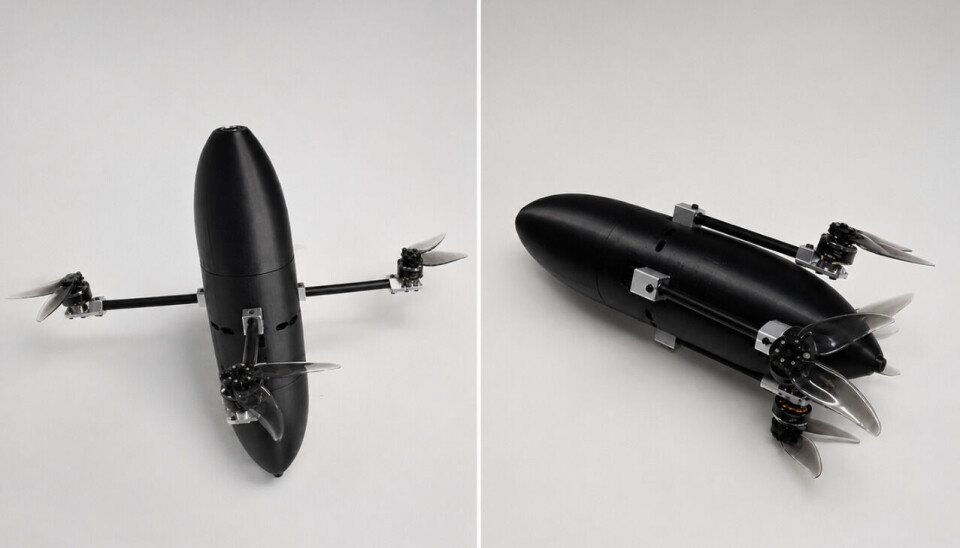
The system comprises separate Spotter sensor / targeting units and multiple Seeker kinetic interceptors. The latter are small (250g / half a pound), fast (200 kmph / 124 mph), tube-launched, and have onboard intelligence to help find their way to the target.
Mara claims that deployments can scale from a single rucksack kit to protect a squad of troops, to a vehicle-mounted launcher, up to a multi-kilometer perimeter shield for a base or site.
A launcher can be fitted with up to 48 of the Seeker interceptors, and reloaded in less than a minute, or so the firm says.
Advertisement
The Spotter detection and tracking sensor combines electro-optical and acoustic sensors with an optional low-signature radar, for day and night all-weather protection.
“Small drones changed the battlefield because they distributed the cost and capability of precise attack,” Mara co-founder and CEO Daniel Kofman said in a statement.
Yet many defensive countermeasures are concentrated into one costly point solution, he claims. “Spike creates a distributed mesh of small, cheap nodes that can each aim and shoot in multiple directions at once.”
The components of its Spike system have already been tested by potential customers, Mara says. Seeker completed intercepts cued through US Army systems at an exercise in Texas, while Spotter has been operated on an armored vehicle during another Army exercise in Europe.
Advertisement
Seeker drone and with rotors foldedPic courtesy: Mara inc
Most recently, Ukrainian forces operated Spotter near to the front line in their country, where it tracked multiple FPV drones.
Mara says it has research and testing agreements with three US defense organizations, and is in early-stage engagements with international military partners in the UK, Czech Republic and Ukraine.
The $7 million funding round was led by Khosla Ventures.
We asked Mara for further details, such as the range of its Seeker interceptors and just how inexpensive they are, and will update if we get answers. ®
The big picture: South Korea is preparing to offer free generative AI services to its entire population, using the technology to help people handle everyday tasks such as booking medical appointments, finding housing, and sorting out taxes. The program is intended to expand access to homegrown AI systems while giving the government a larger role in how they are used for everyday services.
The government’s “AI for All” program will begin beta testing in September, followed by a broader launch later this year. On Friday, Seoul named three technology consortia to provide the services. They include groups led by the country’s two largest telecom companies and the operator of Kakao, one of South Korea’s most widely used consumer platforms.
The services are expected to connect to government systems rather than function solely as standalone chatbots. Residents will be able to use them to book doctor appointments, search for apartments, and get tax guidance. Small businesses will be able to calculate taxes and check whether they qualify for government support. Parents will receive recommendations for educational content.
Each consortium plans to introduce its own AI app and add generative AI features to existing products. Users will have unlimited access, with no token limits under the government-supported plans.
Advertisement
Seoul will supply some of the computing capacity needed to run the services. The government plans to distribute up to 512 Nvidia B200 chips among the three consortia and help cover operating costs. The Ministry of Science and ICT has not disclosed the program’s total cost.
The initiative is part of South Korea’s effort to build a stronger domestic AI industry and reduce its reliance on systems developed in the US and China. The government is trying to steer more consumers toward locally developed AI products by making premium-level services widely available at no cost.
South Korea already has a large market for generative AI. A government survey earlier this year found that about one-quarter of South Koreans pay for AI services. By comparison, a PNC Bank survey found that about 2% of Americans pay for such services. Seoul estimates that more than 20 million people in South Korea use free generative AI tools.
The rollout is backed by a broader increase in AI spending. President Lee Jae Myung’s administration has set aside about 10 trillion won, or $7.2 billion, for AI-related spending in 2026. That is three times the amount allocated the previous year.
Advertisement
For South Korea, the project will test whether generative AI can become part of the country’s basic digital infrastructure. Its success will depend on whether the systems are reliable enough for people to use them for practical, routine tasks.
The government has not set an adoption target for the new service.
The growing backlash against surveillance companies like Flock may have reached a tipping point. A new survey has found that more Americans oppose these surveillance cameras than support them.
According to a new YouGov survey of 20,000 people across the U.S. that was shared exclusively with The Washington Post, 46% of respondents opposed the company’s surveillance cameras in their communities, while 38% supported them. This is a reversal from last year, when the majority of survey respondents said they were in favor.
Flock is one of the more visible surveillance companies, operating more than 120,000 license plate readers across the U.S. that can track the whereabouts of vehicles. The company has been embroiled in controversy following reports of police abusing the cameras’ surveillance, which resulted in dozens of U.S. communities rejecting Flock’s cameras or canceling their contracts amid privacy concerns.
The survey also reported that more respondents said the surveillance would not make them feel any safer.
Advertisement
When reached by TechCrunch, Flock claimed there was wide support for its surveillance technology, but acknowledged that “support isn’t unconditional,” and touted the rollout of its recent safeguards. Critics, like the ACLU, have said the company’s new safeguards amount to little, and Flock remains a major threat to civil liberties.
Amid the intensifying backlash, Flock CEO Garrett Langley last week called for a “compromise” between surveillance and privacy, following a rise in vandalism targeting Flock cameras.
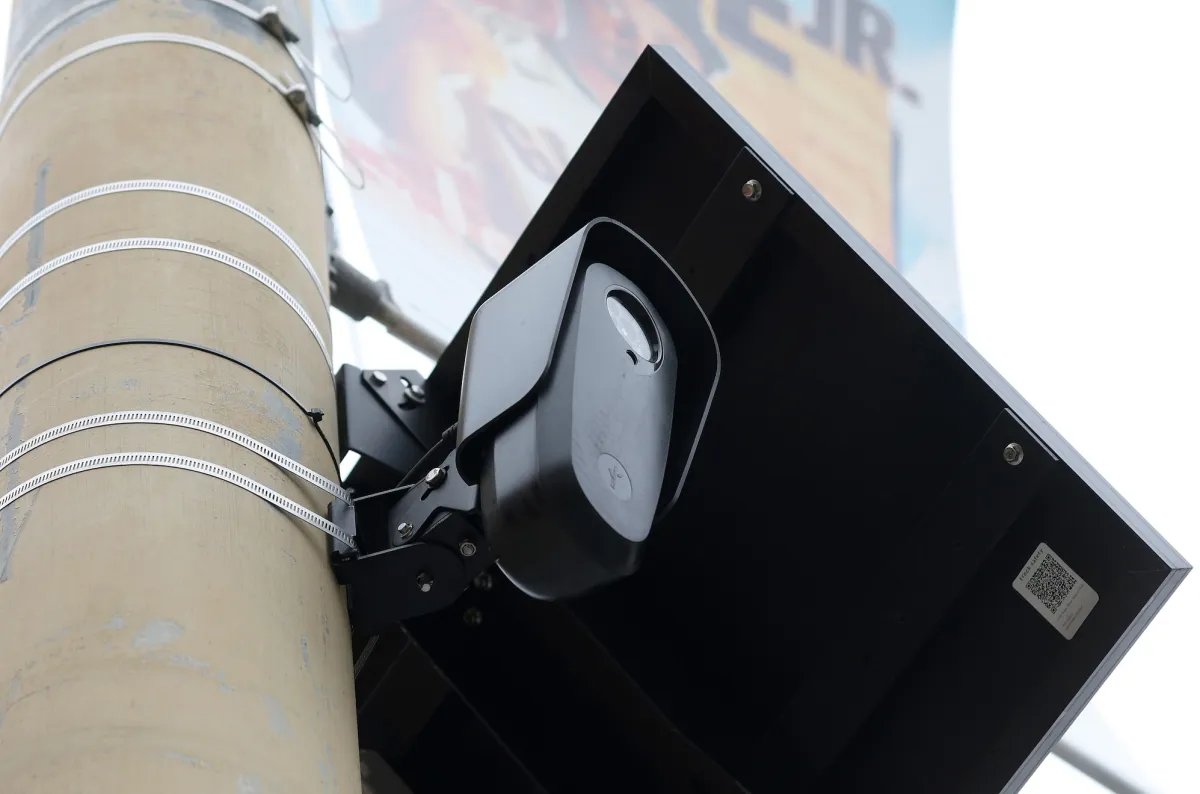
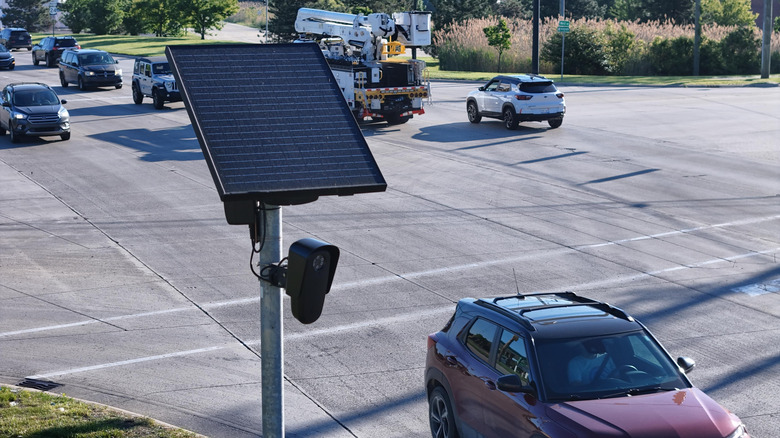
If you’ve noticed security cameras in parking lots at Home Depot or Lowe’s — whether on streetlights or standalone trailers with solar panels on them — it’s because both companies have deals with a company called Flock Safety. Among other things, Flock makes Automated License Plate Readers (ALPR) cameras and gunshot audio sensors. The cameras record every license plate they see, along with additional information about passing vehicles, including any bumper stickers, damage, bike racks, aftermarket wheels, or other identifying features. Flock collates this information into a Vehicle Signature and uses AI to create a searchable database, so it’s possible to look for a vehicle’s activities with details other than just its license plate. So why are Home Depot and Lowe’s paying for Flock cameras, and what are they doing with the data from them?
In an FAQ on its website, Home Depot says, “Like many retailers, we use license plate readers in our parking lots. These cameras are used for the purpose of detecting and preventing theft and protecting the safety of our customers and associates. We do not grant access to our license plate readers to federal law enforcement.” However, an investigation by 404 Media reveals the last portion of that statement is only partially correct. Home Depot may only be sharing data with local law enforcement agencies, but those agencies can pass it on to their federal counterparts. The investigation found that Lowe’s, meanwhile, is sharing it with both local police, and other police departments across state lines.
Advertisement
A boon for law enforcement, a bane for privacy advocates
Matthew G Eddy/Shutterstock
In March 2025, Flock published a blog post claiming its technology had helped expose a $20 million money laundering operation using Home Depot and Lowe’s gift cards. Scammers convinced people to buy the companies’ gift cards using computer malware and malicious text messages and then used the proceeds to buy expensive materials or merchandise from the retailers for resale. The appeal for retailers is easy to understand: more data on shoplifters or scammers makes it more likely they’ll be apprehended. But it’s the information on regular customers, and what those with access to Flock-powered databases can do with it, that has civil rights experts and private citizens worried.
Dozens of documented cases of police using Flock to stalk current or former romantic interests, and at least one instance of Texas police using Flock to investigate a woman who left the state for an abortion, are just some of the reasons there’s increasing resistance to the technology from civil society, and some Flock cameras have been vandalized.
Flock says more than 5,000 of its customers are law enforcement agencies. While private businesses using Flock aren’t obligated to share their data with local police, many choose to. Records obtained by the Electronic Frontier Foundation (EFF) show that the Johnson County, Texas Sheriff’s Office can access data from more than 170 Lowe’s locations, many of them outside of Texas, and from dozens of Home Depot locations in the state.
Advertisement
Who has access to Flock cameras matters
bluestork/Shutterstock
While Home Depot says it does not coordinate with Immigration and Customs Enforcement (ICE), Customs and Border Protection (CBP), or other federal agencies regarding immigration enforcement operations, 404 Media found that ICE, which has no contract with Flock, had routinely accessed and used Flock-sourced data with the help of local police.
The American Civil Liberties Union (ACLU) has found that, even when local police departments opt out of sharing data with federal agencies, Flock retains the right to do so. At the same time, the Institute for Justice continues to document how data from Flock cameras has been misused, and has launched an initiative called The Plate Privacy Project to pressure legislators to crack down on its use, improve safeguards, and force Flock and the companies that use its services to be more transparent about how data are handled to ensure they aren’t abused. Whether the mounting pressure is enough to get Home Depot or Lowe’s to change their stance on, and contracts with, Flock remains to be seen.
US Open 2026 has served up a sensational Round 1 draw, headlined by Matteo Berrettini vs Stan Wawrinka, Rafael Jodar vs Thanasi Kokkinakis and Carlos Alcaraz vs Roman Safiullin. The hard-hitting Russian is a less-than-ideal opponent for the No.2 seed and reigning champion, who’s been out of action since April with a wrist injury.
The tie that looks set to steal the show, however, is Berrettini’s clash with 2016 champion Wawrinka. They met for the very first time at Wimbledon two months ago – and produced the match of the tournament. With Wawrinka set to hang up his racket this year, it could end up being his final ever appearance at a major.
The women’s draw, topped by No.1 seed and back-to-back reigning champion Aryna Sabalenka, will get off to a slightly more low-key start, with Paula Badosa vs Daria Kasatkina and Venus Williams vs Sofia Kenin shaping up as the most intriguing matchups on paper.
Advertisement
Former world No.2 Badosa and former No.8 Kasatkina are both unseeded, while 46-year-old Williams’ first meeting with 27-year-old Kenin will likely have the feel of an all-American celebration, both grand slam champions having received wildcards in a bid to maximise viewing figures.
However, there’s a fascinating subplot concerning world No.1 status. By the end of the 2026 US Open, Sabalenka will have spent 99 straight weeks at the top of the rankings, and that’s where it could end. Elena Rybakina, who won her first hard-court major at the Australian Open in January, will leapfrog Sabalenka if she reaches the last four.
Here’s how to watch US Open 2026 from anywhere in the world. We’ve also listed the the seeds, recent winners and prize money below.
Advertisement
Can you watch US Open 2026 for free?
Yes. Free US Open 2026 coverage is being provided by Channel 9 and 9Gem in Australia, with live streaming available via 9Now.
Traveling abroad right now? You can use a VPN to watch US Open for free as if you were right at home.
Advertisement
Use a VPN to watch US Open 2026 live streams
A VPN is handy piece of software that can make your device appear as if it’s back in your home country, so you can unlock your usual service. The best VPN right now? We recommend NordVPN – it does everything and comes with up to 75% off.
How to watch US Open 2026 live streams in the US
US Open 2026 coverage is being provided by ESPN, ESPN2, ABC and ESPN Unlimited in the US.
ESPN Unlimited, which is live streaming every match on every court, costs $31.99/month or $319.99/year, but you can bundle it with Disney Plus and Hulu for $35.99/month.
Advertisement
New to ESPN’s coverage this year is US Open RedZone, a whiparound show that will air on ESPN Unlimited from Sunday, August 30 to Friday, September 4, between 11am and 6pm ET.
ESPN Unlimited includes streaming access to ESPN, ESPN2, ESPNU, ESPNEWS, ESPN Deportes, SECN, ACCN, ESPN+, ESPN on ABC, SECN+, ACCNX, NFL Network and CW Sports.
Alternatively, ESPN, ESPN2 and ABC are available through Sling – specifically the Orange & Blue plan, which starts at $60.99/month. It includes ABC, NBC and Fox in select locations, plus ESPN, ESPN2, FS1, USA Network, FX and more.
Alternatively, ESPN, ESPN2 and ABC are also carried by Fubo, YouTube TV and Hulu + Live TV, each of which offers a free trial to new users.
Advertisement
Outside of the US? Use a VPN while you’re traveling away from home to unlock your stream.
How to watch US Open 2026 live streams in the UK
(Image credit: Other)
In the UK, live US Open 2026 coverage is being provided by Sky Sports.
Sky Sports packages start at £35/month with £22/month pricing available for those who are already customers. Remember you can also access via NOW Sports.
Advertisement
If you’re out of the UK but still want to tune in, explore the VPN route set out above, which will help you access your accounts from anywhere.
How to watch US Open 2026 live streams in Australia
(Image credit: free)
US Open 2026 is free-to-air on Channel 9 and 9Gem in Australia, with live streaming available via the 9Now platform.
$108 million in prize money will be allocated to the players at the 2026 US Open, with the singles champions set to receive $5.5 million each.
$2.8 million will go to each finalist, $1.45 million to each semi-finalist, and $780,000 to each quarter-finalist.
Players will earn $480,000 for reaching Round 4, $290,000 for Round 3, $190,000 for Round 2, and $140,000 for Round 1.
We test and review VPN services in the context of legal recreational uses. For example: 1. Accessing a service from another country (subject to the terms and conditions of that service). 2. Protecting your online security and strengthening your online privacy when abroad. We do not support or condone the illegal or malicious use of VPN services. Consuming pirated content that is paid-for is neither endorsed nor approved by Future Publishing.

































































You must be logged in to post a comment Login