









Connect with us

Tech

South Korea is giving its entire population free access to AI, no token limits

Published

on

The big picture: South Korea is preparing to offer free generative AI services to its entire population, using the technology to help people handle everyday tasks such as booking medical appointments, finding housing, and sorting out taxes. The program is intended to expand access to homegrown AI systems while giving the government a larger role in how they are used for everyday services.

The government’s “AI for All” program will begin beta testing in September, followed by a broader launch later this year. On Friday, Seoul named three technology consortia to provide the services. They include groups led by the country’s two largest telecom companies and the operator of Kakao, one of South Korea’s most widely used consumer platforms.

The services are expected to connect to government systems rather than function solely as standalone chatbots. Residents will be able to use them to book doctor appointments, search for apartments, and get tax guidance. Small businesses will be able to calculate taxes and check whether they qualify for government support. Parents will receive recommendations for educational content.

Each consortium plans to introduce its own AI app and add generative AI features to existing products. Users will have unlimited access, with no token limits under the government-supported plans.

Advertisement

Seoul will supply some of the computing capacity needed to run the services. The government plans to distribute up to 512 Nvidia B200 chips among the three consortia and help cover operating costs. The Ministry of Science and ICT has not disclosed the program’s total cost.

The initiative is part of South Korea’s effort to build a stronger domestic AI industry and reduce its reliance on systems developed in the US and China. The government is trying to steer more consumers toward locally developed AI products by making premium-level services widely available at no cost.

South Korea already has a large market for generative AI. A government survey earlier this year found that about one-quarter of South Koreans pay for AI services. By comparison, a PNC Bank survey found that about 2% of Americans pay for such services. Seoul estimates that more than 20 million people in South Korea use free generative AI tools.

The rollout is backed by a broader increase in AI spending. President Lee Jae Myung’s administration has set aside about 10 trillion won, or $7.2 billion, for AI-related spending in 2026. That is three times the amount allocated the previous year.

Advertisement

For South Korea, the project will test whether generative AI can become part of the country’s basic digital infrastructure. Its success will depend on whether the systems are reliable enough for people to use them for practical, routine tasks.

The government has not set an adoption target for the new service.

Source link

Advertisement
Continue Reading
Click to comment

You must be logged in to post a comment Login

Leave a Reply

Tech

Scientists built a battery that charges almost instantly, but there’s a catch

Published

on

TL;DR: Scientists have built a quantum battery prototype that can produce an electrical current after charging in femtoseconds, marking a step forward for a technology that has largely remained theoretical and limited to small-scale lab experiments. The prototype is far from replacing conventional batteries, but it provides evidence that quantum effects could eventually enable faster energy transfer in quantum hardware and other specialized systems.

The device, developed by a team led by CSIRO quantum science researcher James Quach, is designed to take advantage of a quantum effect called superabsorption. In simple terms, the more molecules involved, the faster the system can absorb energy.

That is the opposite of what happens with conventional batteries, which generally take longer to charge as they get larger. The work does not mean quantum batteries are ready to replace those used in phones, laptops, or electric vehicles. The prototype stores only a small amount of energy and holds it for nanoseconds. Still, researchers say the experiment demonstrates that energy can be rapidly absorbed and extracted from a quantum battery.

The prototype uses an optical microcavity made of two mirrors separated by about 100 nanometers. The space between the mirrors is filled with organic dye molecules. A laser shines into the cavity, causing the light and molecules to interact strongly.

Advertisement

That interaction creates hybrid light-matter states. The molecules do not absorb energy independently, as they would in a classical system. Instead, they respond collectively.

The battery charges in femtoseconds, or quadrillionths of a second. It can retain energy for nanoseconds, about six orders of magnitude longer than the charging period.

Quach’s team first demonstrated superabsorption in 2022. The newer experiment added the ability to extract an electrical current. The current remains small, but demonstrating it is an important step toward making a quantum battery useful beyond a physics experiment.

Quantum batteries are not expected to compete with conventional batteries simply by storing more energy. Their main attraction is the possibility of very fast charging and precise energy delivery.

Advertisement

Dario Ferraro, an associate professor of physics at the University of Genova, told the BBC that quantum batteries are intended to improve the speed and control of energy delivery rather than significantly increase the amount of energy a battery can store.

For now, the gap between the prototype and a useful power source remains wide. The device can hold only a few billion electron volts of energy and retains it for a very short time. A real-world system would need far greater capacity and much longer storage times.

Quach said his group has built a hybrid design intended to address those limitations. It combines quantum components for rapid charging with classical layers that can store energy for longer. He said the team is preparing a paper on the work.

Advertisement

The researchers also plan to link multiple microscopic batteries together. “If we do those two things, then we’re on our way to being able to power a conventional device,” Quach said.

The optical microcavity system has one practical advantage: It operates at room temperature. Other quantum-battery designs use superconducting materials, which are already important in quantum computing but require extremely cold operating conditions.

Superconducting systems can operate at temperatures below -150°C. “This is fine for quantum computers, but not so useful to power your mobile phone,” Quach said.

Advertisement

Mauro Paternostro, a quantum physicist at Queen’s University Belfast, said the optical approach is a strong way to demonstrate that quantum charging can work. However, he added that it may be difficult to draw energy from such a system in a controlled and useful way. “A microcavity gives you a beautiful ensemble demonstration, but poor control over getting the energy back out in a useful, directed form,” he said.

The first practical use of quantum batteries, if they reach that point, may be in quantum hardware rather than consumer electronics. Quantum computers already rely on specialized equipment, and some use superconducting systems that operate at cryogenic temperatures.

Quach said a quantum battery could eventually help reduce energy use in quantum devices and support faster, more reliable operation. However, those benefits have not yet been demonstrated.

Ferraro said quantum effects are fragile and can break down when the system interacts with its environment. He expects quantum batteries to remain most useful in quantum-scale applications. “In my view… quantum batteries are unlikely to replace conventional batteries in everyday applications such as mobile phones or electric vehicles,” Ferraro said. “Their natural domain is the quantum scale.”

Advertisement

The latest prototype does not settle that debate. It does show that researchers can use quantum effects to charge a system quickly and extract an electrical current. The next challenge is building a device that can store more energy, hold it longer, and release it where it is needed.

Source link

Advertisement
Continue Reading

Tech

UK networks are not ready for AI traffic, say mobile operators

Published

on

VodafoneThree’s networks director says UK mobile quality is not ready for AI traffic and that planning rules, not money, are the obstacle, with more than half of its upgrades to existing masts requiring permission. The EU’s Gigabit Infrastructure Act has since November given authorities four months to decide a permit, after which it is deemed granted.

The UK’s largest mobile operator says its own network is not good enough. “I am embarrassed today at the level of quality of our network,” Andrea Donà of VodafoneThree told the Guardian.

He was describing what happens when AI traffic arrives. His comparison was the signal loss people get at a stadium, made permanent.

The starting position is poor. UK mobile coverage is worse than every EU member state and every other G7 country, on Opensignal data compiled for Which?. The same analysis puts it 57th globally for network performance.

Advertisement

Money is not the obstacle. VodafoneThree has committed £11B to upgrading masts, and it is cutting its mast count by 30%.

Almost none of the work needs a new site. About 96% of the upgrades are on existing structures, and more than half of those still require planning permission.

Donà’s ask is procedural rather than financial. “Planning reform is the lowest possible cost growth policy, it doesn’t require any government money,” he said.

The European Union legislated exactly that in 2024. The remedy he is describing is already on the statute book across the Channel.

Advertisement

Under the Gigabit Infrastructure Act, national authorities have four months to decide a permit application for a very high capacity network, and the permit is deemed granted if they miss the deadline.

It has applied since November last year. Member states may opt out of the automatic approval, but they have to offer compensation or a right to sue instead.

Brussels is going further. The Digital Networks Act proposes indefinite spectrum licences, use it or share it rules, and simpler deployment in exchange for tougher coverage duties.

The UK is bound by none of it. Its operators also point out that mobile networks are critical national infrastructure without the reliefs data centres receive on business rates and energy.

Advertisement

Elsewhere the gap is being attacked from a different direction. A Spanish startup raised €150M to beam 5G to ordinary phones from orbit, which needs no local consent at all.

Which is the shape of the problem. Britain protects the building where the model runs and not the network that has to reach it.

Source link

Advertisement
Continue Reading

Tech

Startup bags $7M to build drone-interceptor-in-a-backpack systems

Published

on

offbeat

Spike drone defense system is designed to be carried in a rucksack or mounted on top of a vehicle

A defense startup has raised $7 million to develop its counter-drone system that uses small interceptors to defend against swarms of FPV (First-Person View) drone swarms, the kind causing heavy battlefield casualties in Ukraine.

Advertisement

San Francisco-based Mara says it has secured the funding to bring its Spike drone defense system to market, aiming to provide a cost-effective counter to small FPV attack drones – typically quad-copters with an explosive payload.

The system comprises separate Spotter sensor / targeting units and multiple Seeker kinetic interceptors. The latter are small (250g / half a pound), fast (200 kmph / 124 mph), tube-launched, and have onboard intelligence to help find their way to the target.

Mara claims that deployments can scale from a single rucksack kit to protect a squad of troops, to a vehicle-mounted launcher, up to a multi-kilometer perimeter shield for a base or site.

A launcher can be fitted with up to 48 of the Seeker interceptors, and reloaded in less than a minute, or so the firm says.

Advertisement

The Spotter detection and tracking sensor combines electro-optical and acoustic sensors with an optional low-signature radar, for day and night all-weather protection.

“Small drones changed the battlefield because they distributed the cost and capability of precise attack,” Mara co-founder and CEO Daniel Kofman said in a statement.

Yet many defensive countermeasures are concentrated into one costly point solution, he claims. “Spike creates a distributed mesh of small, cheap nodes that can each aim and shoot in multiple directions at once.”

The components of its Spike system have already been tested by potential customers, Mara says. Seeker completed intercepts cued through US Army systems at an exercise in Texas, while Spotter has been operated on an armored vehicle during another Army exercise in Europe.

Advertisement
two images of a Seeker drone, one with rotors unfurled, the other with them folded

Seeker drone and with rotors folded

Most recently, Ukrainian forces operated Spotter near to the front line in their country, where it tracked multiple FPV drones.

Mara says it has research and testing agreements with three US defense organizations, and is in early-stage engagements with international military partners in the UK, Czech Republic and Ukraine.

The $7 million funding round was led by Khosla Ventures.

We asked Mara for further details, such as the range of its Seeker interceptors and just how inexpensive they are, and will update if we get answers. ®

Advertisement

Source link

Continue Reading

Tech

More Americans oppose police license plate cameras than support them: survey

Published

on

The growing backlash against surveillance companies like Flock may have reached a tipping point. A new survey has found that more Americans oppose these surveillance cameras than support them.

According to a new YouGov survey of 20,000 people across the U.S. that was shared exclusively with The Washington Post, 46% of respondents opposed the company’s surveillance cameras in their communities, while 38% supported them. This is a reversal from last year, when the majority of survey respondents said they were in favor.

Flock is one of the more visible surveillance companies, operating more than 120,000 license plate readers across the U.S. that can track the whereabouts of vehicles. The company has been embroiled in controversy following reports of police abusing the cameras’ surveillance, which resulted in dozens of U.S. communities rejecting Flock’s cameras or canceling their contracts amid privacy concerns.

The survey also reported that more respondents said the surveillance would not make them feel any safer.

Advertisement

When reached by TechCrunch, Flock claimed there was wide support for its surveillance technology, but acknowledged that “support isn’t unconditional,” and touted the rollout of its recent safeguards. Critics, like the ACLU, have said the company’s new safeguards amount to little, and Flock remains a major threat to civil liberties.

Amid the intensifying backlash, Flock CEO Garrett Langley last week called for a “compromise” between surveillance and privacy, following a rise in vandalism targeting Flock cameras.

Source link

Advertisement
Continue Reading

Tech

Yes, Home Depot And Lowe’s Have Flock Cameras In Their Parking Lots

Published

on


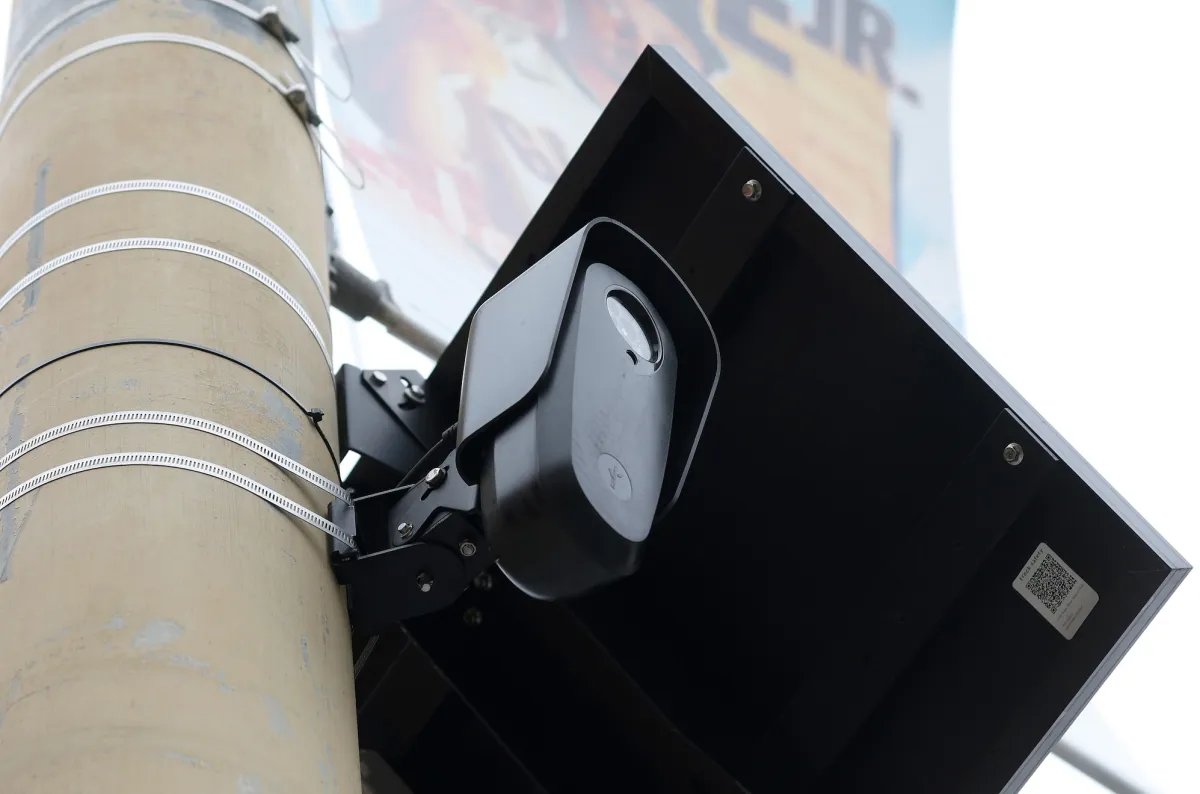
If you’ve noticed security cameras in parking lots at Home Depot or Lowe’s — whether on streetlights or standalone trailers with solar panels on them — it’s because both companies have deals with a company called Flock Safety. Among other things, Flock makes Automated License Plate Readers (ALPR) cameras and gunshot audio sensors. The cameras record every license plate they see, along with additional information about passing vehicles, including any bumper stickers, damage, bike racks, aftermarket wheels, or other identifying features. Flock collates this information into a Vehicle Signature and uses AI to create a searchable database, so it’s possible to look for a vehicle’s activities with details other than just its license plate. So why are Home Depot and Lowe’s paying for Flock cameras, and what are they doing with the data from them?

In an FAQ on its website, Home Depot says, “Like many retailers, we use license plate readers in our parking lots. These cameras are used for the purpose of detecting and preventing theft and protecting the safety of our customers and associates. We do not grant access to our license plate readers to federal law enforcement.” However, an investigation by 404 Media reveals the last portion of that statement is only partially correct. Home Depot may only be sharing data with local law enforcement agencies, but those agencies can pass it on to their federal counterparts. The investigation found that Lowe’s, meanwhile, is sharing it with both local police, and other police departments across state lines.

Advertisement

A boon for law enforcement, a bane for privacy advocates

In March 2025, Flock published a blog post claiming its technology had helped expose a $20 million money laundering operation using Home Depot and Lowe’s gift cards. Scammers convinced people to buy the companies’ gift cards using computer malware and malicious text messages and then used the proceeds to buy expensive materials or merchandise from the retailers for resale. The appeal for retailers is easy to understand: more data on shoplifters or scammers makes it more likely they’ll be apprehended. But it’s the information on regular customers, and what those with access to Flock-powered databases can do with it, that has civil rights experts and private citizens worried.

Dozens of documented cases of police using Flock to stalk current or former romantic interests, and at least one instance of Texas police using Flock to investigate a woman who left the state for an abortion, are just some of the reasons there’s increasing resistance to the technology from civil society, and some Flock cameras have been vandalized.

Flock says more than 5,000 of its customers are law enforcement agencies. While private businesses using Flock aren’t obligated to share their data with local police, many choose to. Records obtained by the Electronic Frontier Foundation (EFF) show that the Johnson County, Texas Sheriff’s Office can access data from more than 170 Lowe’s locations, many of them outside of Texas, and from dozens of Home Depot locations in the state.

Advertisement

Who has access to Flock cameras matters

While Home Depot says it does not coordinate with Immigration and Customs Enforcement (ICE), Customs and Border Protection (CBP), or other federal agencies regarding immigration enforcement operations, 404 Media found that ICE, which has no contract with Flock, had routinely accessed and used Flock-sourced data with the help of local police.

The American Civil Liberties Union (ACLU) has found that, even when local police departments opt out of sharing data with federal agencies, Flock retains the right to do so. At the same time, the Institute for Justice continues to document how data from Flock cameras has been misused, and has launched an initiative called The Plate Privacy Project to pressure legislators to crack down on its use, improve safeguards, and force Flock and the companies that use its services to be more transparent about how data are handled to ensure they aren’t abused. Whether the mounting pressure is enough to get Home Depot or Lowe’s to change their stance on, and contracts with, Flock remains to be seen.

Advertisement


Source link

Advertisement
Continue Reading

Tech

How to watch US Open 2026 for FREE: Live Streams & Channels

Published

on

US Open 2026 has served up a sensational Round 1 draw, headlined by Matteo Berrettini vs Stan Wawrinka, Rafael Jodar vs Thanasi Kokkinakis and Carlos Alcaraz vs Roman Safiullin. The hard-hitting Russian is a less-than-ideal opponent for the No.2 seed and reigning champion, who’s been out of action since April with a wrist injury.

The tie that looks set to steal the show, however, is Berrettini’s clash with 2016 champion Wawrinka. They met for the very first time at Wimbledon two months ago – and produced the match of the tournament. With Wawrinka set to hang up his racket this year, it could end up being his final ever appearance at a major.

Source link

Continue Reading

Tech

Can you trust AI to treat your skin?

Published

on

There’s no getting around the fact that AI is everywhere. From our smartphones to even our fridges, it seems like all modern gadgets are equipped with AI that promises to make life easier.

AI has also been steadily gaining traction within the beauty industry. Whether it’s an app that scans a selfie to determine potential skin issues or a pair of straighteners that use AI to adapt its temperature to your hair type, the guesswork is being taken out of skincare and beauty.

But can you really trust AI to correctly diagnose a skin issue and provide you with the right advice? Or is this just another elaborate marketing scheme to get consumers to buy from certain brands?

How can AI help with skincare and beauty?

I think many can agree that finding the perfect skincare routine is a pretty tough task. Despite there being plenty of recommendations out there, a product that works for one person may simply not work as well for another – even if you share similar skin concerns. 

Advertisement

I’ve spent more money than I’d like to admit on products that either friends or TikTokkers (I know) swear changed their lives for the better, only to find that they didn’t really work for me. In fact that’s sometimes the best case scenario, as I’ve even got a blacklist of products that did the exact opposite of what they promised and made me break out. 

Advertisement

I’m not alone in this, as L’Oreal reported in a survey of over 2,000 skincare users, it was revealed that almost 80% relied on “trial and error” to find their holy grail – and usually took around seven products to do so. 

In an ideal world, the perfect thing to do would be to visit a dermatologist who can diagnose and offer expert advice based on your exact needs. But seeing a dermatologist takes time and, usually, a fair bit of money too. So that’s where AI comes in. 

Advertisement

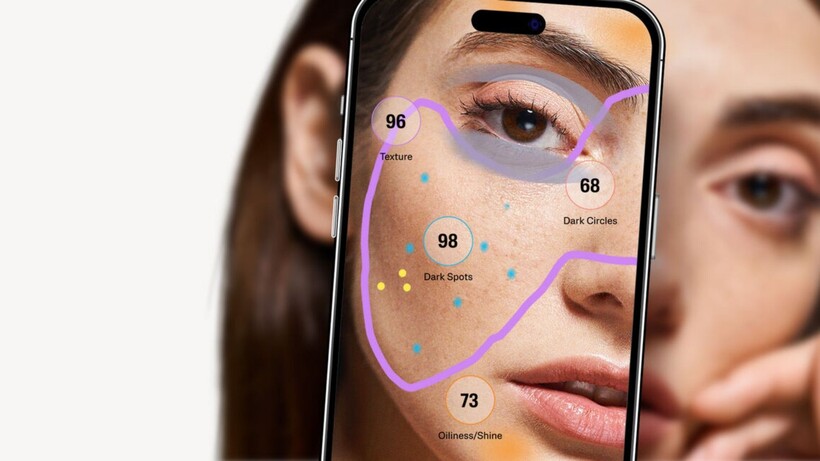
There are countless apps and services available that promise to assess your skin needs and offer so-called personalised product recommendations, all through a simple selfie or face scan. Cetaphil offers one of the fastest AI skincare tools I’ve used, and doesn’t require any registration. Instead, you simply take a selfie and it gives you a mark out of 100 based on factors like hydration, blemish and redness, oiliness, dark circles and wrinkles, to name a few. 

You can even click through all the different factors and see all the “issues” mapped out on your face. 

Cetaphil appCetaphil app
Image Credit (Cetaphil)

From here, you’re provided with a handful of Cetaphil products that are chosen according to your results. So, for example, my report said my skin was shiny – though I prefer the term “glowing”, but whatever – so I was advised to try Cetaphil’s oily skin cleanser. But is that really the best product for me, or is this just Cetaphil trying to get me to invest in its products?

Advertisement

It’s not just skincare that AI has infiltrated. Brands like Dcypher promise to create a shade of foundation specifically for your exact skin tone and undertone. 

Advertisement

I recently went on an epic forage through the streets of London in an attempt to find a new foundation shade, after discovering my tried-and-tested formula was recently discontinued. Discovering Dcypher sooner could have saved me both time and, unfortunately, money, as I’d made the silly mistake of buying a few bottles that looked good in-store but didn’t quite sit right in the broad light of day.

Limitations of AI skincare

But how accurate are these AI apps? At surface level, while they might note wrinkles or detect spots, can they really assess the root cause of the issues simply by looking at your skin alone?

Personally, I like the idea of L’Oreal’s Cell BioPrint, which was unveiled at CES back in 2025, but is yet to become readily available. Essentially, the Cell BioPrint is a tabletop device that provides users with a personalised skin analysis. To receive your analysis, you need to put a facial tape strip on your cheek, place it into L’Oreal’s buffer solution and then load this into the machine to receive an analysis. 

L'Oreal Cell BioPrintL'Oreal Cell BioPrint
Image Credit (L’Oreal)

While it’s processing, the device will then take images of your face to correspond with the sample. 

Advertisement

Advertisement

Will AI become a regular part of our skincare routines?

I’m not convinced that AI should be an integral part of our skincare routines at this stage. Yes, apps and scanners can detect obvious potential skin concerns, but I don’t think that’s particularly groundbreaking – yet

Until AI-powered skin tools can assess the root causes of conditions, and offer more in-depth advice on how to help your skin, rather than just providing general product recommendations, then I don’t think it should be something to be relied on. Having said that, it’s fair to say that if you’re not sure where to begin with a new skincare routine, then using an AI scanner could be a good place to start.

Source link

Advertisement
Continue Reading

Tech

Laser Your Way To Smoother FDM 3D Prints

Published

on

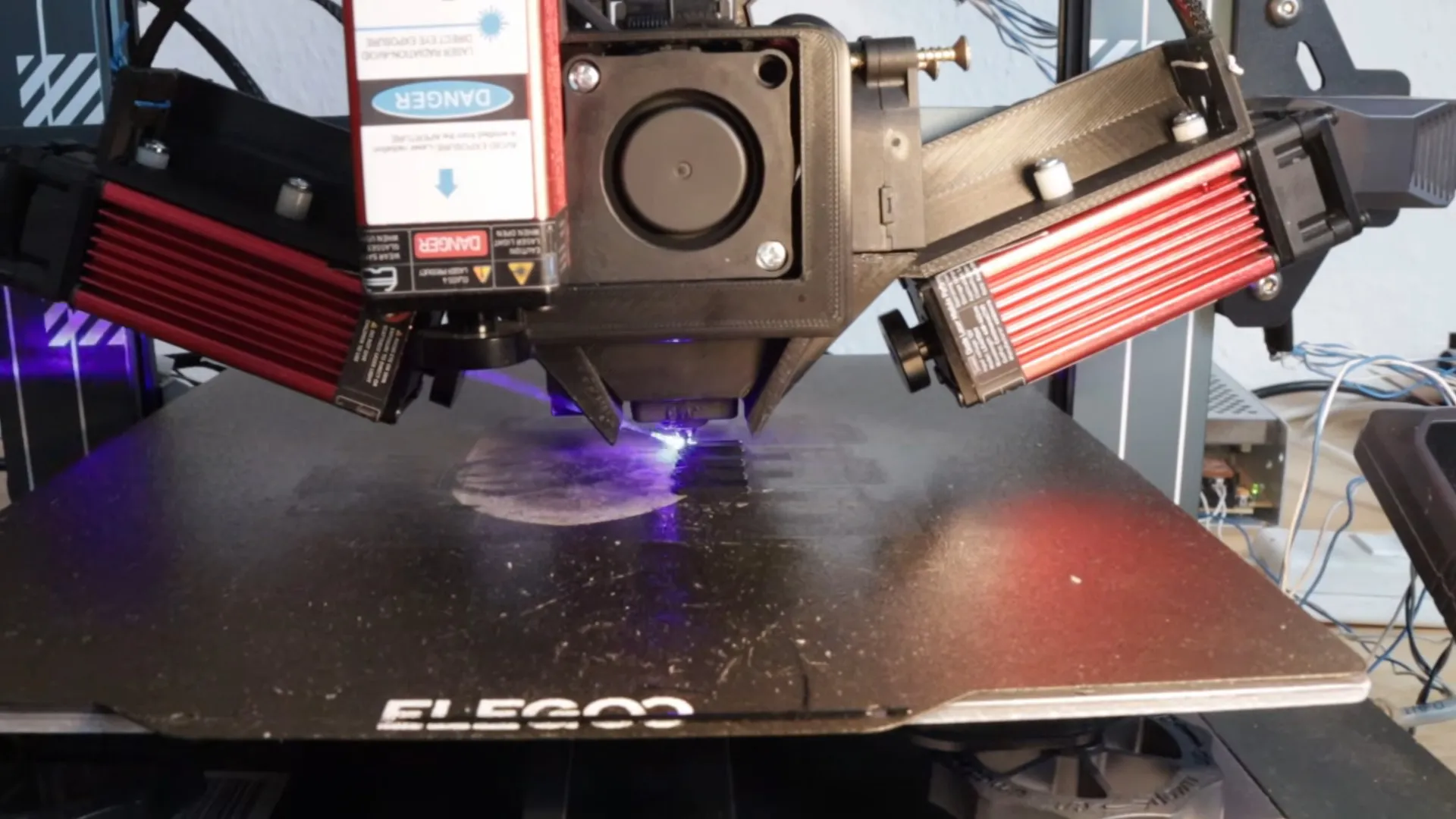
Now, not everyone minds the characteristic layer lines you get with Filament Deposition Modeling (FDM) 3D prints, but sometimes you need a smooth surface. If so we might go for filling primer, Bondo, or maybe break out the ABS and vapor smooth. Well, [I changed a thing] has an alternate suggestion: lasers. Laser melting can smooth the walls on a print, or the top surfaces as he shows in two different videos, both embedded below. The results look roughly similar to vapor smoothing, without the chemical exposure small risk of explosion.

Of course, you need a laser to do this, and [I changed a thing] has two diode lasers mounted to the X-axis of his printer. Of the two, the top surfaces were a lot easier to get right than the wall smoothing, which makes sense. Top surfaces are right there for the laser to get at, after all, while with his laser setup [I changed a thing] needs to get at the walls obliquely. [I changed a thing] tries melting layer-by-layer as well as a few methods to get at the walls of a finished print; which works best seems to depend on the size of and geometry of the object, so it looks like this technique is as much art as science right now.

This effort is closely related to the previous work [I changed a thing] did on improving layer adhesion with laser melting.  It’s also not the first time we’ve seen laser-driven print smoothing, but that project used non-planar movements to do a post-print laser pass.


Advertisement

Advertisement

Source link

Continue Reading

Tech

Integrity360 acquires identity services company CyberIAM

Published

on

The Irish company said its existing identity services and resources will be integrated with the CyberIAM team to form a new identity managed services practice.

Irish-founded and -headquartered cybersecurity company Integrity360 has acquired CyberIAM, a South African cyber identity services company, for an undisclosed amount.

CyberIAM, founded in 2016, employs around 120 in the UK’s London and Chester, and South Africa’s Cape Town.

It specialises in solutions for identity access management; identity governance and administration; privileged access management; and customer identity and access management.

Advertisement

Its enterprise customers come from areas such as financial services, retail, healthcare, insurance, energy, legal and the public sector, according to the companies.

Integrity360 said the acquisition would “significantly strengthen” its capability around identity security in the age of AI deployments, which it said represents a new and prevailing cybersecurity challenge for businesses and organisations.

The Irish company said its existing identity services and resources will be integrated with the CyberIAM team to form a new identity managed services practice – led by current CyberIAM CEO Michael Ribaudo – that will operate from the group’s global security operations centre.

“We could not be more delighted to be welcoming Michael and the whole CyberIAM team to Integrity360,” said Ian Brown, executive chair at Integrity360.

Advertisement

“Identity is now the primary control plane for cybersecurity, and by strengthening our identity capabilities, we are helping customers build the secure foundation they need to embrace AI with confidence.”

Integrity360 said it now projects a revenue run rate of around €230m – with the addition of €18m in revenue from CyberIAM – and has a new total headcount of around 900 working from 16 locations across the UK, Europe, Africa and Canada.

“Thanks to the support of our customers and employees, CyberIAM has grown to become one of the leading experts in identity services helping businesses control and protect human and machine identities,” said Ribaudo.

“With the backing of Ian and the considerable resources, capability and track record of the entire Integrity360 team, we are excited about what we can further achieve for our customers and our employees, and we look forward to expanding further into international markets.”

Advertisement

The acquisition is the latest of many by Integrity360 in recent times, including Canada’s Advantus360 in January, Belgium’s Cresco last December, South Africa’s Redshift the same month, France’s Holiseum in March 2025 and Nclose in January 2025.

In June, Integrity360’s CTO Richard Ford spoke to us about how cyber teams can prepare for the continuing emergence of increasingly powerful and capable AI models. In May, the company’s Matthew Olney wrote about the importance of security in both information technology and operational technology.

Don’t miss out on the knowledge you need to succeed. Sign up for the Daily Brief, Silicon Republic’s digest of need-to-know sci-tech news.

Advertisement

Source link

Continue Reading

Tech

Turns out Brits would quite like their private messages to stay private

Published

on

security

Polling finds two-thirds don’t trust this government, or any future one, with access to their encrypted chats

Brits have delivered a fairly unambiguous verdict on giving the government access to their encrypted messages: no, thanks.

Advertisement

New polling commissioned by the Center for Democracy & Technology (CDT) found that 93 percent of British adults believe they have a right to private conversations online, while 89 percent think nobody should be able to access their personal messages without a court order.

Perhaps more awkwardly for Westminster, two-thirds said they would not trust either the current government or any future one with the power to access encrypted messages.

That distrust crosses political lines. Among people who voted in the 2024 general election, 58 percent of Labour voters said they wouldn’t trust any government with the power, alongside 59 percent of Conservatives, 56 percent of Liberal Democrats, 69 percent of Greens and 75 percent of Reform voters.

Public First did the asking, polling 2,000 British adults for CDT in April and weighting the results to reflect the wider population. The margin of error is 2.2 percentage points.

Advertisement

The findings land as the UK government’s appetite for slurping encrypted data continues to collide with the tech industry’s insistence that encryption works best when nobody has a spare key lying around.

That fight became particularly public when Apple withdrew Advanced Data Protection from UK users after receiving a secret Technical Capability Notice (TCN) under the Investigatory Powers Act. Apple challenged the order, and while the US government later said Britain had withdrawn its demand for access to Americans’ encrypted data, reports have since suggested another TCN was issued focusing on British users.

Despite the international row, 55 percent of those polled hadn’t heard about the Apple notice at all. Once presented with the idea, enthusiasm remained thin.

Just 12 percent backed the government being able to secretly order companies to provide access to users’ information while preventing those companies from revealing the order. A third said the government shouldn’t have that power at all, while another 41 percent wanted greater transparency or parliamentary oversight.

Advertisement

Nor were respondents particularly sold on sacrificing security for law enforcement. 53 percent said the security risks of accessing encrypted messages outweighed the benefits, compared with 28 percent who thought the benefits came out on top.

The reasons will sound familiar to anyone who has followed the encryption debate for more than five minutes. 84 percent worried that mechanisms allowing access to encrypted messages could introduce vulnerabilities for hackers and criminals, while 82 percent were concerned the powers could be abused.

Knowing someone might be watching could also change how people behave. 65 percent said they’d become more cautious about what they liked, shared or commented on, while 41 percent said they’d self-censor criticism of public institutions or government officials.

CDT is not a disinterested observer: the digital rights group campaigns for strong encryption and commissioned the research as part of that work. The polling itself, however, was carried out independently.

Advertisement

Commenting on the research, Jim Killock, executive director of Open Rights Group, said: “The British public instinctively know that being able to communicate privately is crucial to our individuality and to the survival of a free and open society.

“The government persists with the myth that it can weaken encryption to target the bad guys only. Attacks on the security of our phones, security tools and messaging apps harm us all and make our democracy weaker.”

None of this is likely to end Westminster’s long-running pursuit of encrypted communications. But if ministers were hoping the public was enthusiastically behind them, the numbers suggest otherwise. ®

Source link

Advertisement
Continue Reading

Trending

Copyright © 2025