As you would probably expect, given its job, a riding mower can get pretty gross after a few runs across your lawn. If you look around your yard for tools to clean it with, you’ll probably notice your garden hose. Technically speaking, you can use your hose to clean your riding mower, but it’s important that you only use it to clean the mower deck on the bottom. If you spray the top of the mower, where all of its sensitive components are stored, it could end up doing more harm than good.
Indeed, the hose has always been a quick and easy option for spraying down dirty stuff, and both the mower deck on the bottom and the housing on top can get covered with dirt, grass stains, and little bits of debris. But besides being unseemly, dried crud can gradually start to clog up the mower’s moving parts. This is why properly maintaining your mower is important, but you need to use the right tools for the job, and be careful when using them.
Advertisement
Don’t spray the top, but the deck is fine
The Jungle Explorer/Shutterstock
As tempting as it may be to start spraying down your entire riding mower with reckless abandon, that’s a temptation that’s best tempered. While a blast from a hose may dislodge some stains and debris from the top housing of your mower, that housing almost definitely isn’t water-tight. That means you’re going to get water inside your mower’s more delicate components, including the oil and air filters and the spark plug housing. If any of these components get wet, they could suffer permanent damage. It’s the same reason you shouldn’t use a hose on an engine bay. Instead, you should clean off the top of your mower by hand, using useful mower cleaning tools like a wire brush or blower to physically dislodge debris and cleaning off stains with a rag.
On the literal flip side, the mower deck on the bottom of your riding mower is prime territory for a good hose-down. The mower deck is mostly self-contained, so as long as you’re careful to only spray the deck, it’s a great way to loosen any accumulated gunk. In fact, some mowers even have built-in washing ports that you can plug a hose right into, running the water alongside the blades to get a good, thorough wash going on the deck. If your mower doesn’t have a built-in port, however, just run the blades and spray the ground next to a corner of the deck. This will splash water up into the deck while it’s running. Just make sure to aim low to the ground so you don’t accidentally splash any parts of the upper housing.
New York City mayor Zohran Mamdani just announced a one-year ban of generative AI tools in public schools for students up to eighth grade. The legislation takes effect during the 2026-2027 school year and will impact around 600,000 students.
“This moratorium is a commitment to getting the future right,” Mayor Mamdani said. “We will embrace new technology, but only when it serves our students.” New York Governor Kathy Hochul added that the state “has been leading the way in our efforts to keep kids focused on learning and growing — not clicking and scrolling.”
Mayor Mamdani said this move was made to protect “human connection” in classrooms, suggesting that kids should develop problem-solving and social skills via teachers and peers instead of chatbots.
Advertisement
Throughout the one-year ban, studies will be conducted to analyze the technology’s impact on children. This coalition of educators, parents and elected officials will recommend next steps after that.
This doesn’t impact high schools, and a number of those classrooms will be allowed to participate in various AI pilot programs, though they will be closely monitored. All high school students will receive twice-yearly lessons “designed to help them think critically about AI before they begin to rely on it.”
Teachers will be able to use gen AI for lesson planning and administrative work, as long as the tools comply with public school safety standards. Additionally, there will be exceptions made for assistive technology usage by kids with disabilities, multilingual learners and students participating in career readiness programs, including computer science.
Today’s policy also introduces new screen time guidelines for children. This includes daily caps of 30 minutes for many elementary school students and 45 minutes for middle schoolers. It’s worth noting that these are just guidelines. Households can do whatever they want.
Advertisement
This crackdown comes as NYC parents grow increasingly concerned about the impact AI is having on their kids. Advocacy groups have pushed for this moratorium and more than half of City Council members signed a letter urging the Mayor and the Department of Education to stop expanded AI use in classrooms.
United Federation of Teachers (UFT) President Michael Mulgrew recently told ABC News that AI was a “dangerous thing” and that “parents are getting very, very upset with AI because all they hear are these horror stories” and “they’re rightfully protective of their children.”
To that end, NYC isn’t the only place instituting these kinds of bans. Norway did something similar and Italy passed legislation that requires parental consent in order for kids under 14 to use the tech. The American Senate and House have been discussing a bill that would require AI companies to implement an age-verification process and ban them from providing chatbots to minors. We’ll have to see what happens there, though the industry has spent a whopping $41.8 million on lobbying in just the first half of 2026 alone.
“The tech industry wants us to believe that AI-powered early education is not only inevitable, but necessary. We do not see it that way,” Mayor Mamdani said in a statement ahead of today’s announcement.
If you occasionally face network-related issues over Wi-Fi, whether it’s slow internet speeds or high latency, you may have considered switching to a wired connection. It seems simple, too. You get an Ethernet cable, plug one end of it into the router and the other into the device. But, as surprising as it may sound, setting up an Ethernet connection at home is neither simple nor convenient for many users. And it isn’t the best option either. Sometimes, Wi-Fi just makes more sense.
There are several downsides to using Ethernet cables. For instance, you sacrifice portability. While this works with largely stationary devices, smaller, more portable devices may suffer. There’s also the cost consideration. You can connect multiple devices to a regular home router without noticing any major impact on performance, but if you have the same in a wired setup, you will need as many or more Ethernet cables. Your router’s Ethernet ports are another limiting factor you can’t ignore. To bypass this limitation, you will need to invest in a network switch, an additional expense. And let’s not forget the cable runs themselves, which can be a hassle to set up.
Remember, there’s no denying that Ethernet has its benefits over Wi-Fi. The connection is more stable, has lower latency, and is less prone to interference from household appliances. So, if you are into gaming or other latency-intensive tasks, using Ethernet cables makes perfect sense. But for others, the downsides may far outweigh the benefits.
Advertisement
You lose out on portability
Chainarong Prasertthai/Getty Images
One of the biggest drawbacks of using Ethernet cables is that you can’t move the devices around as freely. As we said earlier, this may not be a problem with desktops, gaming consoles, and smart TVs — basically devices that stay in one place — but your laptop is designed to be moved around. And with an Ethernet cable, it’s restricted to a particular spot. If the cable is long enough, you can move it a little, but you will still be limited by its length. As a result, you lose out on the freedom to work in any corner of the house.
Of course, you can unplug the Ethernet cable as you please, but that defeats the very purpose of setting up a wired connection. You invest in cables and, sometimes, other networking devices, only to switch back to Wi-Fi because there’s little freedom of movement. Another option is to run Ethernet cables through the house and have a wall jack in every room, but that’s expensive.
Advertisement
That’s why a wired setup may not be the best choice if Wi-Fi already meets your requirements. Ethernet predates Wi-Fi by over two decades, and there’s a reason why people moved to the latter. Devices were no longer stationary; they had to be moved around, and Wi-Fi made that possible.
Advertisement
Ethernet is not always faster
ANDRANIK HAKOBYAN/Shutterstock
For the longest time, it wouldn’t have been wrong to say that Ethernet is faster than Wi-Fi, but that’s no longer the case, at least for the average home user. We now have newer Wi-Fi generations that can deliver multi-Gbps speeds. So, as long as your router is in an optimal position near the critical devices, you should get good speeds. It goes without saying that older ones, say Wi-Fi 4 routers, may struggle, but newer ones, like Wi-Fi 6 and 7 routers, offer better performance, speed, and range.
Switching to Ethernet does not automatically guarantee faster speeds. There are a lot of variables at play. For instance, you could be using an older-generation Ethernet cable, say CAT5, which was designed to deliver speeds of up to 100 Mbps. Similarly, your router’s Ethernet ports could be the bottleneck in the network. That’s because not all Ethernet ports work the same way on your router. Some deliver faster speeds; others may be slower, and you may even find a dedicated gaming port on some routers that automatically prioritizes traffic from the connected device.
That said, Ethernet is still more stable and has lower latency. But if all you are looking for is faster internet speeds, perhaps upgrading the router will do the trick. It will also save you from the inconvenience of running Ethernet cables.
Advertisement
Cable runs can be a hassle
Fabrikacr/Getty Images
Running a cable from your router to a nearby PC isn’t necessarily a problem. A neater setup will require a little bit of effort, but it’s still relatively easy. Running cables throughout the house for every device, on the other hand, is a challenge. The bigger the house, the bigger the challenge, unless the cables are pre-routed.
As soon as the cable hits the floor, it suddenly becomes more exposed. Someone may trip over the cable, or your pet may chew on it. There are many ways it could be damaged. As for concealing the cables, cable raceways are an option, but they entail additional expense. Similarly, you could run cables through the walls for a more permanent setup, but this, too, is not an easy feat. In homes with multiple floors, the setup is even more complicated.
Remember, running Ethernet cables from your router to different devices is not the problem. That’s the easy part. You simply need cables of the right length. The real challenge lies in making the setup more aesthetically pleasing rather than looking temporary. You could get a professional to do it, but that’s another expense. That money could instead be spent on a modern router and a Wi-Fi mesh system, which could significantly improve signal strength and, in turn, internet speeds across the entire house.
Advertisement
The setup is more expensive than you think
kubais/Shutterstock
For many people, Ethernet cables seem like the only requirement for a wired connection. But that’s far from true, especially if you plan to connect five to seven devices using Ethernet. Generally speaking, an average home router, even modern ones, has 4-5 Ethernet ports. Among them, one is typically reserved for the WAN connection. So, you have only 3-4 left.
This means you can only connect that many devices. If you have more, you will need a network switch. A network switch typically has anywhere from 5 to 48 LAN ports and lets you connect multiple devices to the network. And while a network switch is not that expensive, it’s still an expense most people don’t factor in initially. Similarly, if you don’t have cables that are long enough, you will need Ethernet couplers to join two or more cables, another expense many overlook.
A basic setup with one or two devices connected to the router via Ethernet cables doesn’t cost much. All you need are a couple of Ethernet cables, and they are affordable. But as the complexity of the setup increases, so does the cost. Apart from that, every new networking device you introduce is a potential bottleneck in your network and an additional potential point of failure.
Advertisement
Not every device features an Ethernet port
SOLDATOOFF/Shutterstock
Ethernet is reliable and stable, but you benefit from this only when the device can actually connect using it. While you will find an Ethernet port on computer monitors, smart TVs, gaming consoles, desktops, and more, many devices we rely on heavily don’t have one. Even laptop manufacturers are dropping Ethernet ports from newer models to achieve thinner, sleeker designs. That’s why you don’t see an Ethernet port on many modern laptops.
So, for devices like your smartphones, tablets, and laptops, you will need a dedicated USB-to-Ethernet adapter to establish a wired connection. Additionally, depending on the port type on your devices, you may need more than one adapter. For instance, you may need a USB-A-to-Ethernet adapter for your laptop and a USB-C-to-Ethernet adapter for your smartphones and tablets. Let’s not forget that you will need an adapter that supports the internet speed your ISP offers. Besides, devices like smart plugs and other smart home appliances don’t support wired connections, so you will always have to rely on Wi-Fi.
Advertisement
All of this makes the setup much less appealing to the average home user. If Wi-Fi already meets your requirements, there’s little reason to switch to Ethernet cables. While Ethernet lowers latency and improves connection stability, you sacrifice convenience and portability and often end up spending way more than you initially anticipated.
Ryobi power tools are currently being utilized, or at least safely stored in, residential dwellings all over the globe. It is, perhaps, less certain what specific variety of Ryobi tool you might find in those dwellings, as the Techtronic Industries-owned manufacturer offers a variety of devices that are powered by multiple different power sources, ranging from low-voltage USB models to the punchier 40V set.
Somewhere in the middle is Ryobi’s generally well-regarded One+ 18V lineup, which features more than 300 different tools to choose from. And yes, any Ryobi battery bearing the 18V brand can be used to power those devices. There are also different types of 18V batteries, and we aren’t just talking about their ampere hour (Ah) ratings. Over the years Ryobi has developed the One+ Lithium Edge variety of 18V battery pack alongside its standard 18V models. Even some Ryobi diehards may not be entirely sure about what makes them different.
Advertisement
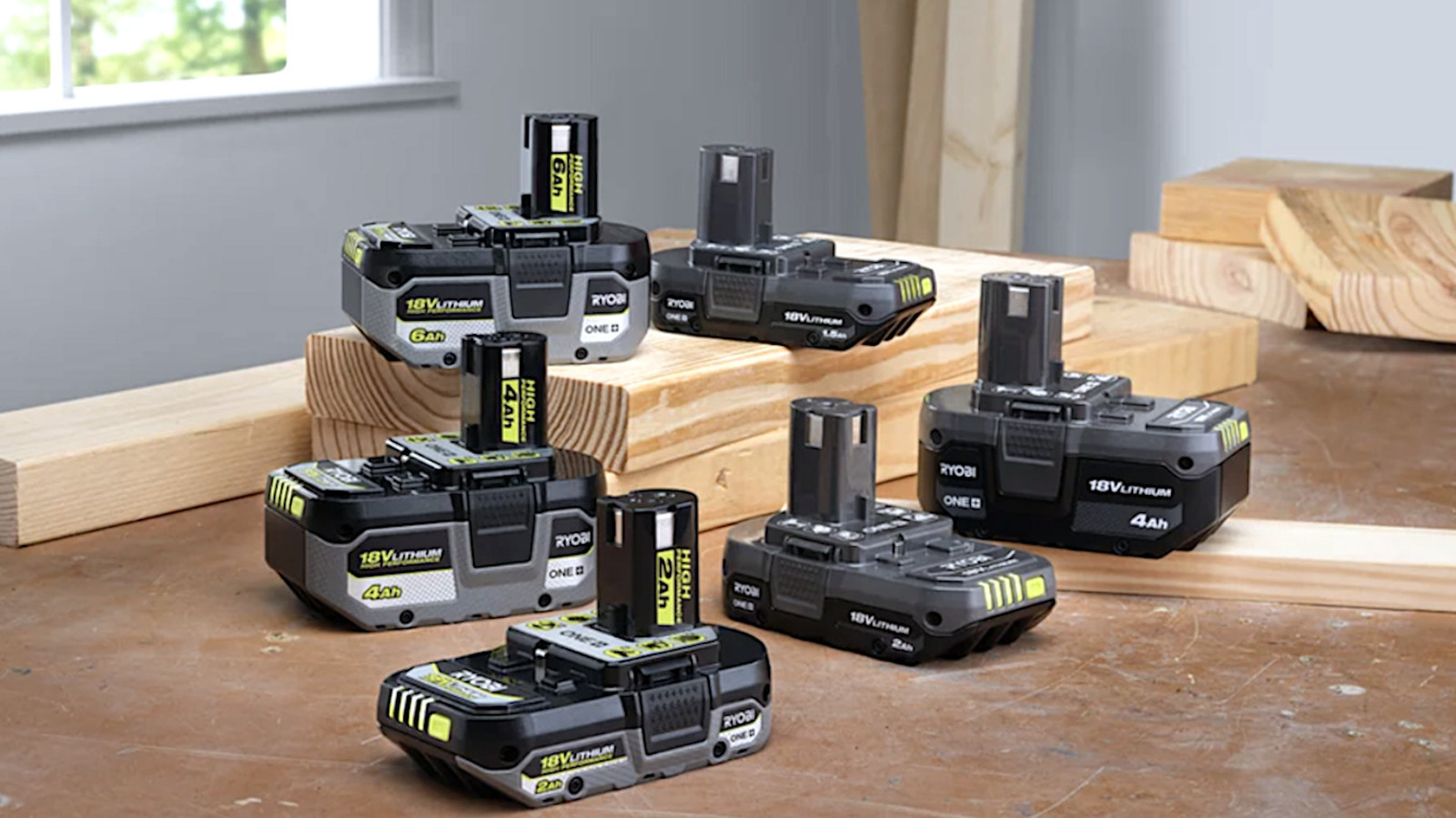
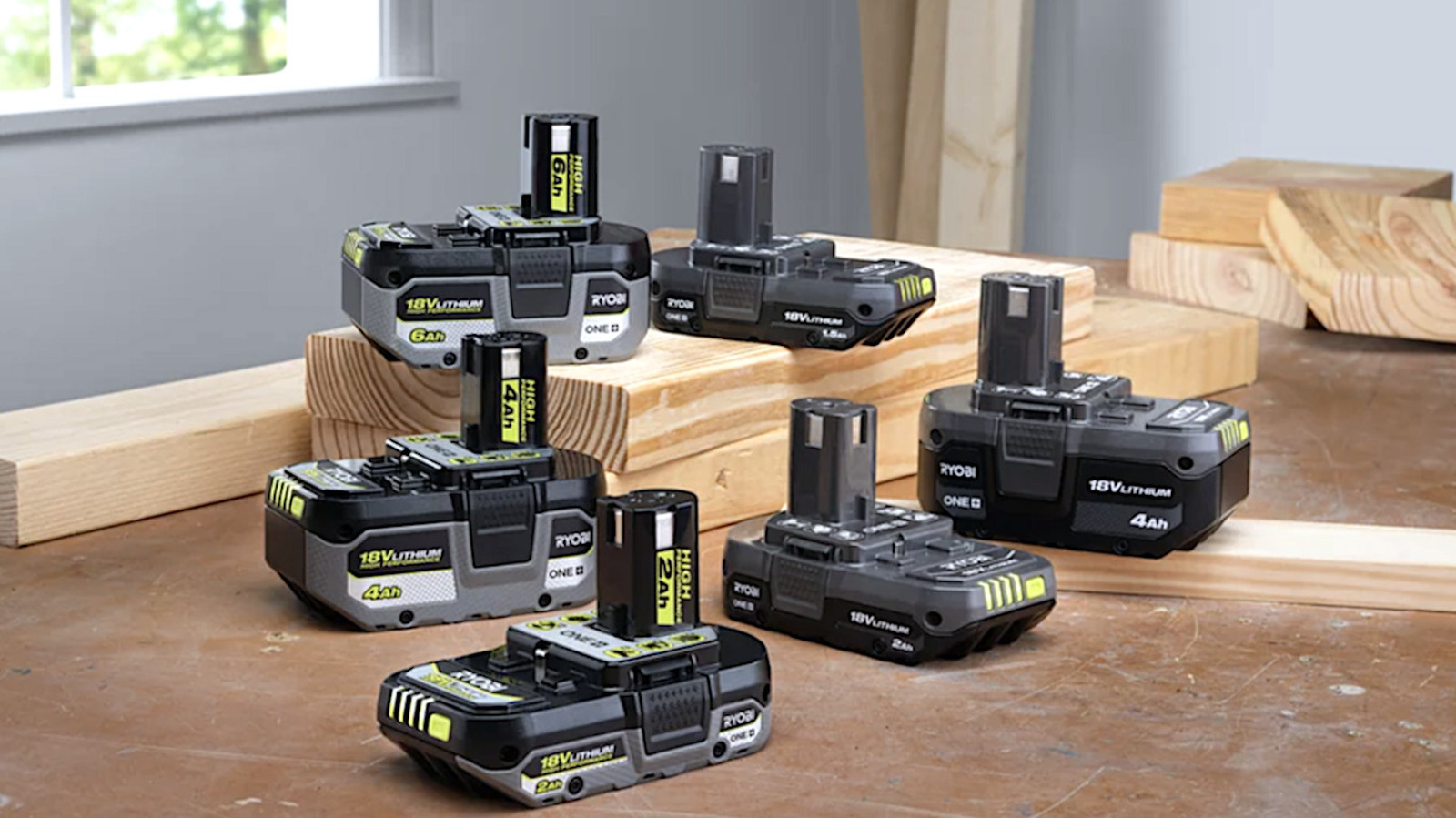
In the simplest terms we can offer, the Lithium Edge 18V batteries are high-performance models that are intended to provide both a power and a runtime upgrade over the standard 18V packs. They do so by utilizing Ryobi’s tabless cell design, which purports to improve the flow of energy and thus the overall performance of the tool. Lithium Edge 18V batteries can also help tools run cooler during heavy usage, and are designed to charge faster than standard-cell 18V power packs as well.
Advertisement
What’s the price difference between Ryobi’s standard 18V and 18V Edge batteries?
Ryobi’s standard 18V battery packs are still designed to deliver solid results when it comes to power and performance. One could easily argue that the long-running popularity and general effectiveness of Ryobi’s 18V tools have helped it earn a spot alongside the best power tool brands in the game. There’s also one very good reason to opt for Ryobi’s standard 18V battery packs over those with the Lithium Edge branding, which is that they tend to be notably cheaper at the point of purchase.
In comparing the price points, we’ll look at the lowest-rated comparable batteries in both the standard 18V and Lithium Edge lines for ampere hours. As the latter group starts at 4Ah, we’ll tell you that a single 18V Lithium Battery in that range costs $149, and it does not come with a charger. By comparison, the standard 4Ah-rated 18V battery without a charger is priced at just $99. Moreover, in the standard 18V battery lineup, Ryobi also makes 2Ah and 1.5Ah models that can be purchased for far less.
As you can imagine, the prices increase incrementally with every jump in ampere hours. That will lead many shoppers to debate whether or not it’s better to buy several of the cheaper, standard 18V batteries, or pay extra to have fewer of Ryobi’s Lithium Edge models on hand, as their performance enhancements will likely require fewer battery swaps on the job. Unfortunately, we cannot make that decision for you.
Attackers created Lenovo IDs with victims’ emails, bypassing login; 2FA absence worsened impact
Dropbox ended Lenovo ID logins, expired sessions, and urged password changes plus 2FA setup
Around 5,000 Dropbox user accounts were compromised when hackers found a vulnerability in the Lenovo ID verification process. What does a Lenovo flaw have to do with people’s Dropbox accounts, you might ask? Here is what happened:
Earlier this week, Dropbox started notifying affected individuals about the incident. In the data breach notification email, the company explains:
“Dropbox partners with Lenovo as an identity provider so that users can log in to their Dropbox accounts using verified Lenovo IDs. While you may not have an existing Lenovo ID, our investigation determined that an issue with Lenovo’s email verification process allowed an unauthorized party to register a Lenovo ID using your email address and then use that Lenovo ID to log into the Dropbox account associated with that email address.”
Latest Videos FromTechRadar
Advertisement
Fixing the flaw
In other words, all criminals needed to have to pull this off was people’s email addresses. Using that information, they created Lenovo IDs and simply waltzed right into Dropbox accounts.
The attack took place between August 4 and 21, the company further said, adding that most of the accounts that were accessed did not have 2FA enabled. In around a third of them, there is evidence stored documents were either viewed or downloaded.
The vulnerability has since been addressed, and further steps taken to protect Dropbox users’ privacy. The company said it “promptly expired all sessions logged in through Lenovo IDs,” and terminated all links between Lenovo and Dropbox accounts. Now, it made it mandatory to submit a password when logging in through a Lenovo ID.
“No one can access your Dropbox account via a Lenovo ID without first entering your Dropbox password,” it said. Still, it urged users to change their passwords, enable two-step verification, and change the password for their email accounts.
Sign up to the TechRadar Pro newsletter to get all the top news, opinion, features and guidance your business needs to succeed!
“Every single one of the compromised accounts lacked multi-factor authentication. In 2026, for cloud storage accounts holding data, that’s an indefensible gap and it’s one that users could have closed themselves regardless of what Lenovo or Dropbox did or didn’t do with their legacy integration,” said Muhammad Yahya Patel, vCISO and cybersecurity advisor for EMEA at Huntress.
Advertisement
“The combination of an unreviewed third-party authentication pathway and accounts without MFA is essentially an open invitation. The practical lesson is straightforward and applies well beyond this specific incident. Every organisation and every individual should periodically audit what third-party services have authentication access to their accounts. OAuth grants, SSO connections, and third-party login integrations accumulate silently and rarely get removed when the relationship that created them ends.”
Facepalm: Security experts recently uncovered a malicious campaign that had been active for years. Unknown cybercriminals abused Chrome’s extension system to infect tens of thousands of systems, and many victims may still be vulnerable if they haven’t manually changed their browser’s configuration.
Socket Inc. researchers have identified 19 malicious extensions targeting Chrome and Edge users. The cybercriminal campaign primarily targeted Google’s browser, but one extension gained significant popularity on both Chrome and Edge. In any case, the analysts believe a single “mind” is behind the campaign – and it’s determined to keep going even after the extensions have been removed from both browsers’ stores.
All of the malicious add-ons employed a similar strategy, Socket said. A majority of the extensions (14) were developed directly by the cybercriminals, while five others were purchased from legitimate developers and companies. Initially, the add-ons simply provided their advertised functionality. Over the past six months, however, the hackers updated the extensions with malicious code designed to compromise systems or start harvesting users’ data.
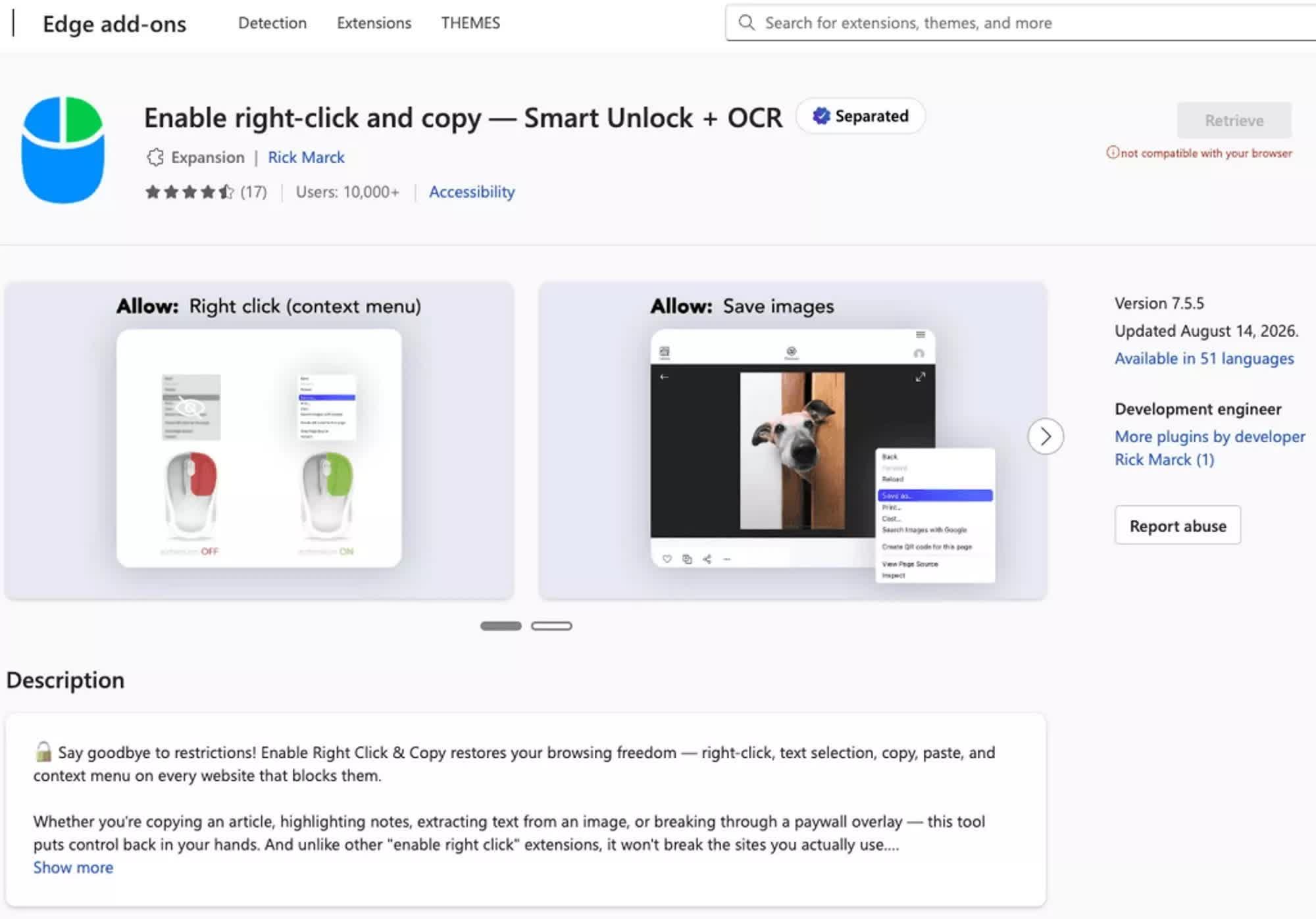
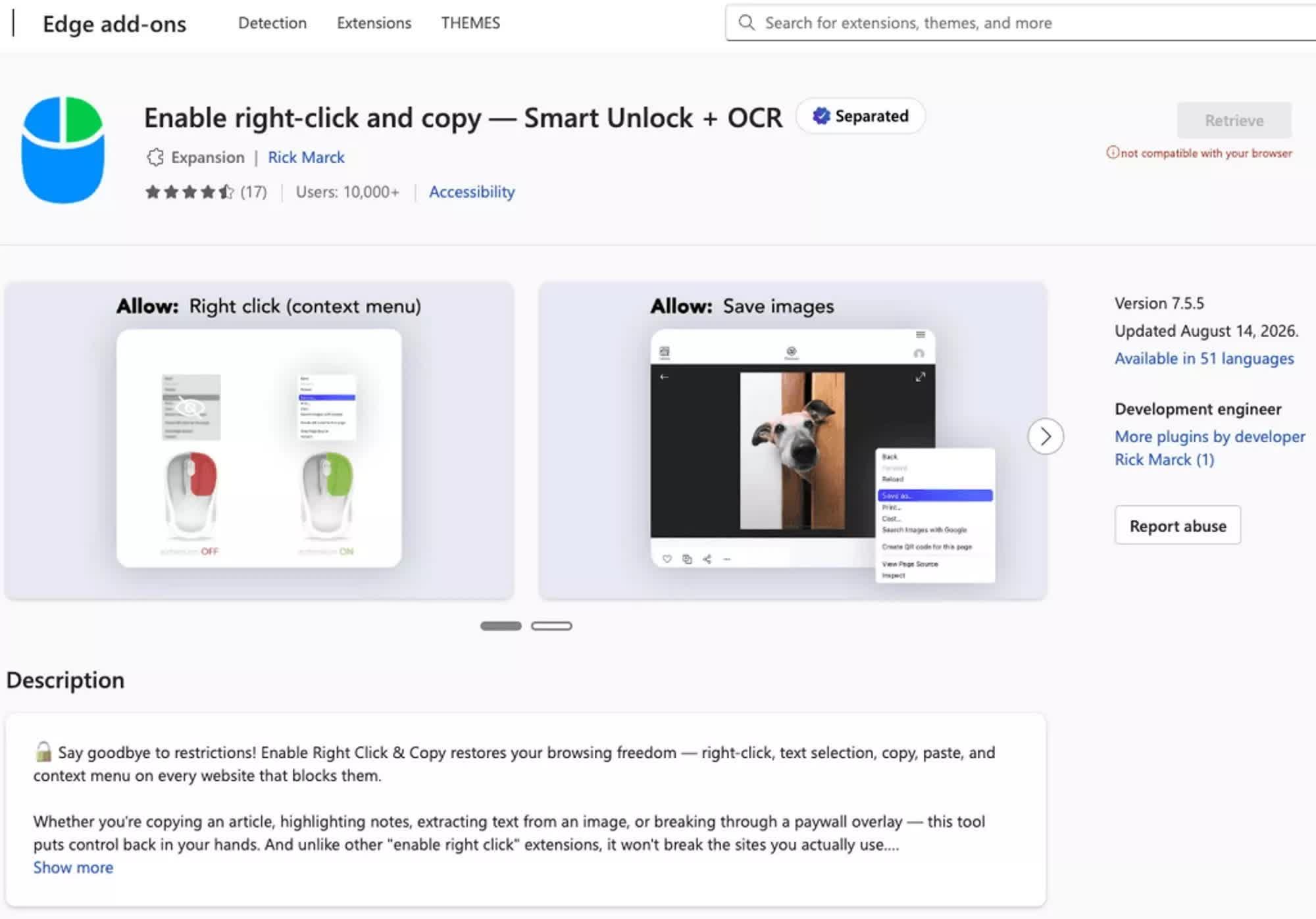
The list of add-ons included a particularly popular extension named “Enable Right Click & Copy – Smart Unlock + OCR.” It was ultimately installed on 70,000 Chrome browsers and another 10,000 Edge browsers. A total of 80,000 users were eventually exposed to the malicious extension, which primarily targeted crypto wallets and other cryptocurrency-related data.
Advertisement
The cybercriminals used some code-based attack patterns that were first identified in February 2024, Socket said. They injected malicious payloads after accumulating a considerable number of potential victims, managing the crypto-stealing campaign remotely through a flexible command-and-control domain infrastructure.
The malicious extensions were eventually removed from the Chrome and Edge stores. However, users might still be part of the C2 infrastructure if they haven’t checked for and manually removed all 19 add-ons listed by researchers.
In 2018, Google announced a major change to the extension technology used by the Chromium project. The Manifest V3 API was intended to improve the security architecture of add-ons across Chromium-based browsers, including Chrome and Microsoft Edge.
As the 19 malicious extensions retrofitted with malicious payloads clearly show, Google’s attempt to strengthen security might very well turn out to be wishful thinking. Cybercriminals are likely to continue targeting popular browser extensions even after Manifest V2 is gone.
The internet has a trust problem, and it’s not just because social media feeds are filling up with AI slop. AI-generated text and images are now making their way into job applications, product reviews, and even insurance claims, leaving platforms and users alike scrambling to figure out what’s real.
A handful of startups have cropped up in the past couple of years to become the “trust layer” the internet needs — including Pangram. The startup recently snapped up $9 million for its AI detection system and landed a partnership with Substack, which is now using Pangram’s tech to show readers which of their favorite authors use AI to write their newsletters. Pangram also recently dropped a new AI image detection tool.
Watch as Pangram co-founder and CEO Max Spero joins TechCrunch’s Equity podcast to dig into the promise of AI detection tools and where to draw the line between AI assisted and AI generated.
Though AI has seeped into every step of the job hunt for both applicants and recruiters, it has taken time to catch on in interviews. Voice AI is infamously tricky to pull off, as agents get tripped up by accents or “ums.” Behavior that would be second nature to a human—like not interrupting a candidate—turns into a “very, very difficult engineering problem,” according to Ophir Samson, the head of voice AI at recruitment platform Greenhouse. But recruiters, overwhelmed with the glut of applications, have increasingly turned to voice AI tools to screen candidates, with 63 percent of job seekers reporting they’ve encountered an AI interview, according to Greenhouse.
As recruiters turned to AI, so did applicants. Candidates using AI in the interview process has become so common that AI recruitment startups like Ribbon promise to help identify “overly scripted, AI-assisted, or coached” responses—just like those in Christopher’s experiment.
Now there are rumblings that bot-on-bot interviews aren’t duplicitous but a preview of things to come. In many ways, it’s the “next logical stage,” Mark Monaghan, vice president of organizational development at call center company IQor, tells WIRED.
That doesn’t mean he’s entirely happy about it. In Christopher’s case, Monaghan believes, the use of AI was more than justified.
Advertisement
“If you’re going to send a bot to me,” he says, “I’ll send a bot to you.”
After his fifth interview with no follow-up, Christopher decided to apply for one more Everforth Apex job. Perhaps, Christopher thought, the problem wasn’t AI. Maybe it was him. Maybe if Riley were able to speak to the company’s dream candidate, things would go differently. So he created a fake candidate, whom he called Don Dickner, packing a résumé to the brim with qualifications pulled from an open job posting.
After Christopher submitted the application, Riley immediately reached out. This time, the virtual recruiter spoke with ChatGPT—posing as Dickner—for 23 minutes. They discussed “sustainable operational improvement,” protecting “customer experience under volume pressure,” and refusing to let “tribal knowledge drift.” ChatGPT had an answer for every question, and a personal anecdote for every qualification. As the interview wrapped up, ChatGPT said it had a “few more questions I’d like answered.”
“I appreciate it,” Riley responded. “Upon carefully reviewing your application, we will assess your qualifications for the position. Should you meet our criteria, a recruiter from Everforth Apex will reach out to schedule a brief conversation.”
from the this-is-why-we-can’t-have-nice-things dept
Back in June, the Supreme Court ruled 6–3 in National Republican Senatorial Committee v. Federal Election Commission that federal limits on coordinated expenditures by political parties violate the First Amendment, opening the floodgates to a much broader array of political ads funded via no limit of rich assholes and their preferred dark money groups.
But it hasn’t all been easy going for the GOP, which believes its massive funding advantage ($125 million for the GOP versus a bunch of debt for the mismanaged DNC) would give them a real leg up during the midterms.
For one thing, the Richmond, Virginia-based 4th Circuit Court of Appeals recently sided 2-1 against the FCC, temporarily suspending the FCC’s attempt at discount TV agitprop, and ruling that neither political parties nor joint fundraising committees with non-candidate members are allowed the discounted rates.
“The committees submitted an emergency motion for a stay and asked the 4th Circuit to rule on that motion immediately so they can file a petition to the Supreme Court. “Intervenors respectfully request that the Court rule on this stay motion as soon as possible—whether by expediting or waiving response briefs—to permit Intervenors to seek emergency relief at the Supreme Court,” Republican committees told the court.
The court responded quickly, issuing an order today to deny the Republican committee’s motion and to immediately issue a mandate that can be appealed to the Supreme Court. Republicans will now seek swift action from the Supreme Court in an attempt to overturn the 4th Circuit ruling before the 60-day discount period starts on September 4.”
If the GOP wins, local broadcasters will be forced to offer dodgy dark money groups the same discounts previously reserved directly for candidates, something the FCC’s lone Democrat, Anna Gomez, states will be “unleashing a flood of coordinated campaign money into broadcast advertising, just as the Supreme Court has cleared the way for unlimited coordinated spending between parties and candidates.”
It’s another reminder (as if you needed one) that unless the U.S. Supreme court is radically expanded and reformed in the next few years, corruption is likely to strip the country down to parts and sell it for scrap off the back loading dock.
Klipsch showed us quite a lot of hardware at CES 2026, but some of the most interesting products were sitting behind closed doors and came with the rather important disclaimer that we were looking at concepts.
The new Klipsch Reference Signature Series was one of them.
Eight months later, Klipsch is bringing Reference Signature to CEDIA Expo 2026 in Denver, and this time attendees will actually get to hear them. The company has also confirmed the six-model lineup, disclosed considerably more about the acoustic design, and provided an initial indication of what the speakers will cost when select models arrive this winter.
If Reference Signature sounds familiar, you have been paying attention.
Advertisement
We covered the early versions at CES in January, where Klipsch described Reference Signature as a more ambitious extension of its modern horn-loaded loudspeaker platform alongside the considerably more experimental Project Apollo.
What we did not see at Audio Advice Live 2026 was a Reference Signature launch. Klipsch used the Raleigh show in August for the global debut of its Reference Premiere III Series, including a rather substantial 7.4.4-channel home theater demonstration with Onkyo electronics.
Different speakers. Different series. There are already enough Klipsch model numbers in circulation without us helping create another family reunion nobody can follow.
Related Reviews:
Six Reference Signature Speakers
The new Reference Signature lineup consists of two floorstanding speakers, two monitor models, one center channel and a multipurpose Dolby Atmos, height and surround speaker.
RS-6101SA: Two-way 6.5-inch Dolby Atmos, height and surround loudspeaker
The biggest departure from Reference Premiere is not the cabinetry or another variation on Klipsch’s familiar copper-colored drivers.
It is the dedicated midrange driver.
Advertisement. Scroll to continue reading.
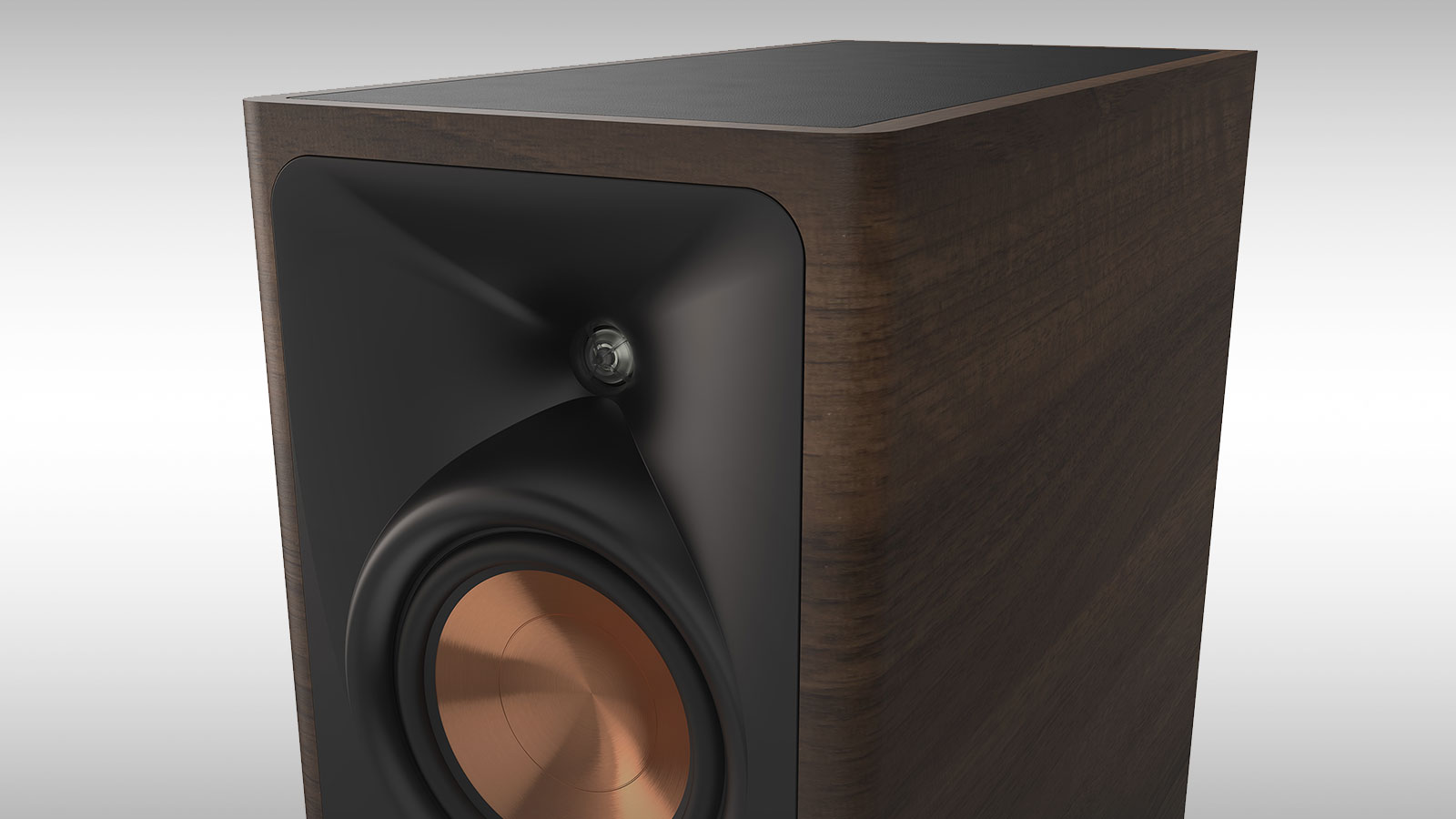
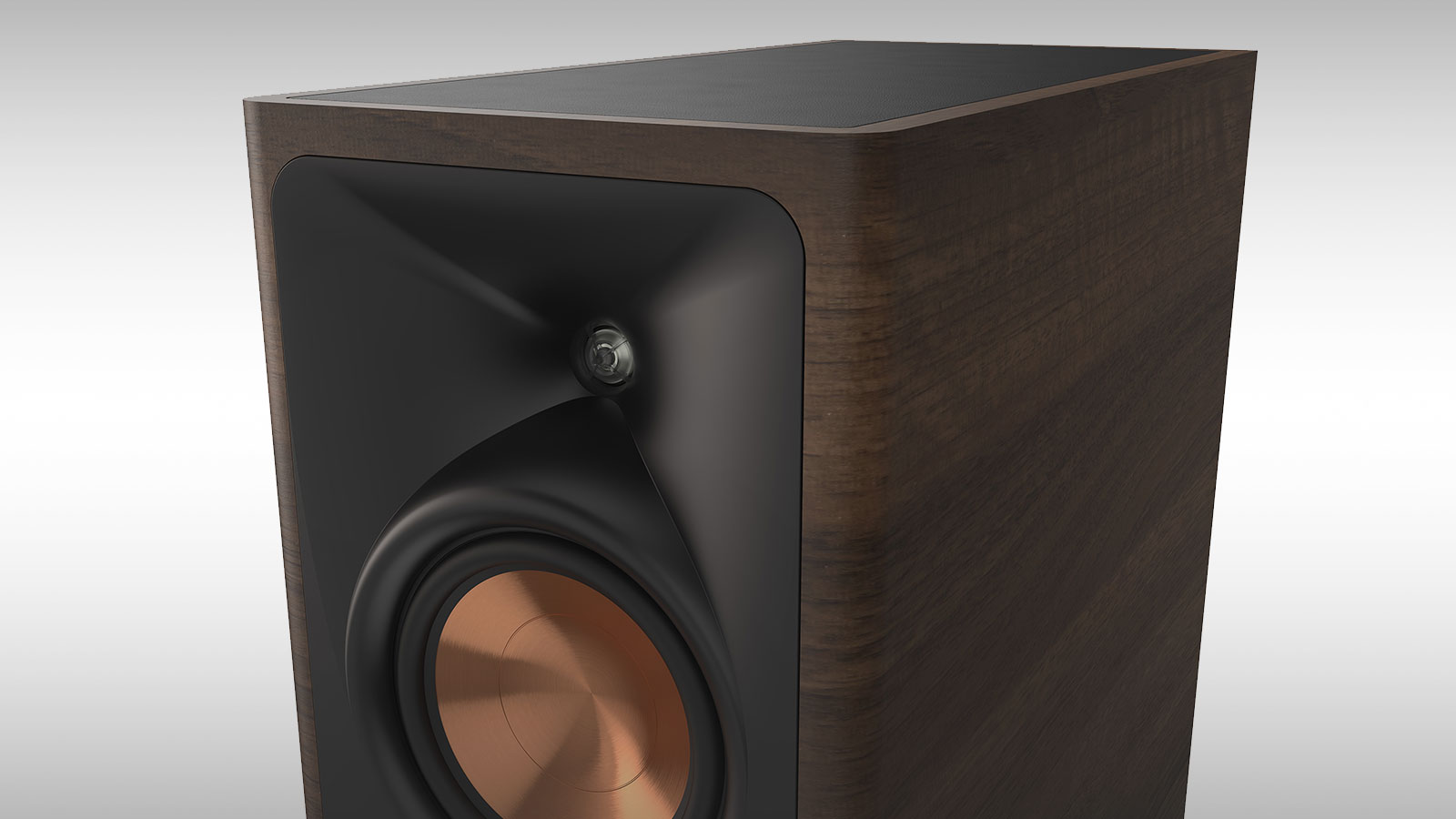
All-new Klipsch tweeter and midrange.
The floorstanding, monitor and center-channel models are true three-way designs with separate high-frequency, midrange and bass drivers. Klipsch says this allows each driver to handle a narrower portion of the audible spectrum and moves the crossover regions away from the frequencies where human hearing is particularly sensitive.
Paul W. Klipsch famously argued that “the midrange is where we live,” and apparently somebody in Indianapolis has been reading the old man’s notes.
Advertisement
A Different Kind of Klipsch Horn
Reference Signature still relies on horn loading and Klipsch’s titanium-diaphragm Linear Travel Suspension tweeter, but the more interesting development is its new phase-aligned horn architecture.
Klipsch positions the midrange directly within the tweeter horn so that the midrange and high frequencies originate from the same acoustic center. The objective is better coherence through the crossover region and more consistent tonal balance across a wider listening area.
That could prove particularly important in a home theater, where the person who paid for the system is rarely the only person sitting in front of it.
The larger Reference Signature models combine 8-inch Cerametallic bass drivers with a 6.5-inch midrange, while the smaller models pair 6.5-inch bass drivers with a 5.25-inch midrange. The floorstanding speakers use dual woofers, while the monitors use a single bass driver.
Advertisement
Klipsch’s spun-copper Cerametallic cones remain part of the recipe, maintaining some visual and technological continuity with Reference Premiere.
The Center Channel Might Be the Most Important Speaker Here
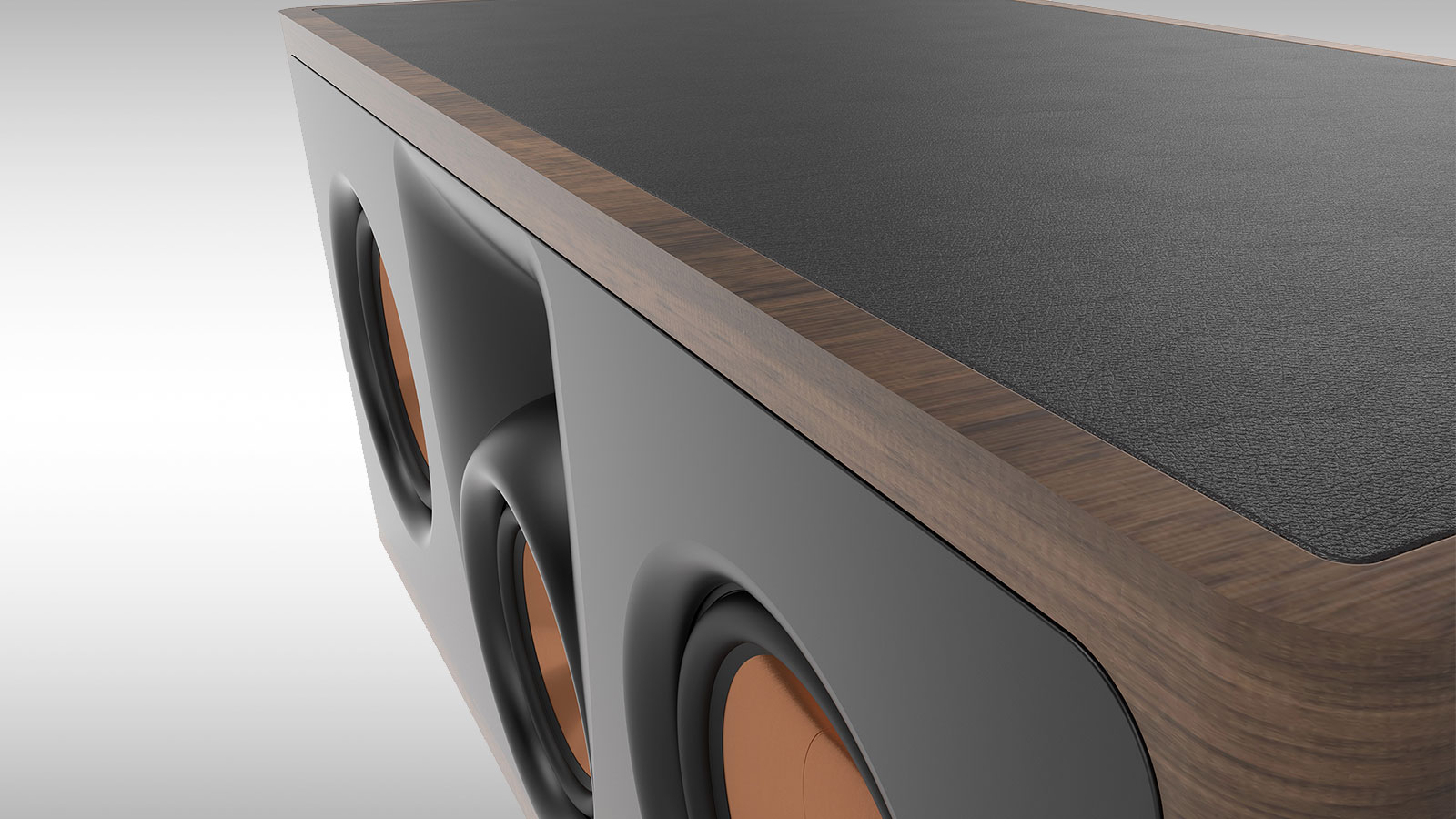
The RS-6301C deserves additional attention because Klipsch has moved away from the conventional horizontal MTM arrangement commonly used in center-channel loudspeakers.
Instead, Reference Signature uses a vertical driver array designed to reduce the horizontal lobing and comb-filtering issues that can make dialogue and tonal balance change as listeners move away from the center seat.
For a serious multichannel system, that is more than an engineering footnote.
The center channel carries an enormous percentage of movie dialogue and front-stage information, yet it is frequently the loudspeaker most compromised by furniture, screen placement and seating position. Klipsch’s approach is intended to provide clearer dialogue and more consistent timbre across multiple seats while maintaining a closer tonal match with the Reference Signature towers.
Advertisement
We want to hear this one from well off-axis before reaching any conclusions.
Advertisement. Scroll to continue reading.
Atmos Without Locking Yourself Into Atmos
Klipsch has also avoided making the RS-6101SA a one-trick Dolby Atmos module.
The two-way speaker can sit on top of a Reference Signature tower or monitor and fire upward toward the ceiling, but it can also be wall-mounted for use as a direct-radiating height or rear surround channel.
Advertisement
A rear-panel switch changes the crossover configuration between Atmos and Surround operation.
That flexibility matters if somebody changes rooms, moves from reflected Atmos to direct-mounted height channels, or eventually realizes that drilling holes in drywall is less frightening than explaining another speaker upgrade to their spouse.
Klipsch Dresses Up
Reference Signature also represents a noticeable industrial-design upgrade over Reference Premiere.
Klipsch is using a one-piece BMC front baffle designed to provide a denser and more rigid mounting surface while reducing unwanted cabinet resonance. Rounded cabinet edges are intended to reduce diffraction and improve off-axis performance.
Advertisement
Ebony and Walnut finishes feature horizontal grain running along the curved cabinet profile, and Klipsch has added a decorative leather top panel along with metal carpet spikes and rubber feet.
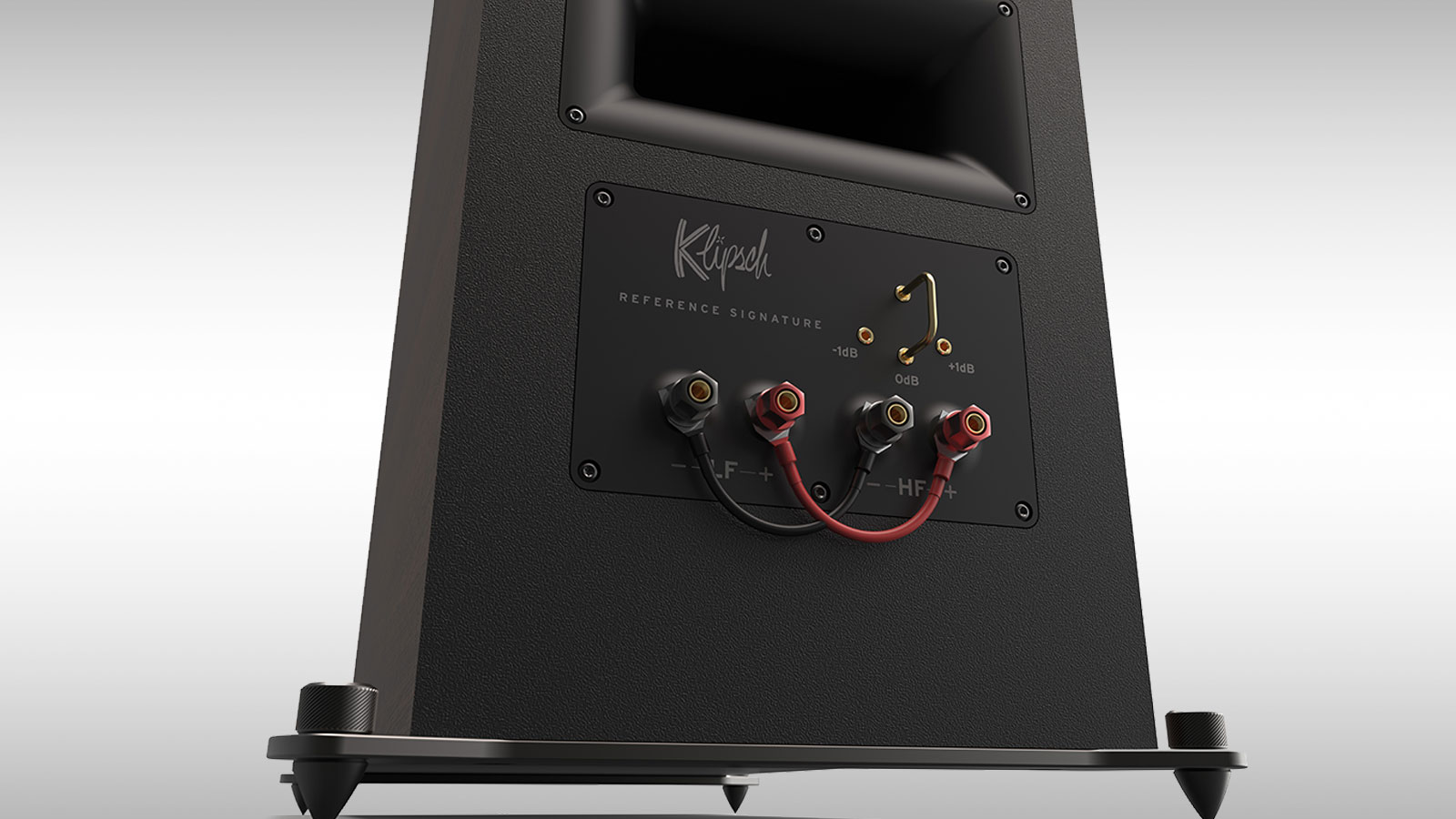
Rear speaker connections with jumper that adjusts tweeter output.
All models will also provide adjustable tweeter output at +1 dB, 0 dB or -1 dB, giving owners a small degree of room or preference-based tonal adjustment without reaching for DSP.
Dual binding posts for bi-wiring and bi-amping will also be available on select models. None of that transforms loudspeaker performance by itself, but Reference Signature clearly needs to look and feel more expensive if Klipsch expects buyers to move beyond Reference Premiere.
The Bottom Line
Reference Signature should not be confused with the Reference Premiere III Series introduced at Audio Advice Live.
Advertisement
Reference Premiere III remains Klipsch’s broad modern passive loudspeaker platform for both two-channel and home theater systems. Reference Signature pushes further with dedicated three-way designs, more elaborate horn geometry, upgraded cabinetry and a considerably more premium presentation.
It is also not Project Apollo.
Advertisement. Scroll to continue reading.
Klipsch previewed Apollo alongside Reference Signature at CES as a separate, more ambitious exploration of high-performance two-channel audio. Reference Signature is the more recognizable Klipsch proposition: a complete modern speaker family capable of supporting both serious stereo listening and immersive home theater.
Advertisement
That distinction makes the new series potentially more important commercially.
Klipsch does not need another loudspeaker that exists primarily to prove what its engineers can build when cost and living-room diplomacy are removed from the equation. It already has Heritage products capable of occupying that territory rather convincingly.
Reference Signature has to work in actual homes.
Price & Availability
Klipsch is targeting $1,600 to $3,000 per pair, with final pricing and complete specifications to be announced at launch. Select Reference Signature models are expected to arrive in winter 2026.
Advertisement
With CEDIA now underway, we’ll have a chance to hear the new three-way horn architecture for ourselves in Denver and find out whether Reference Signature delivers on the promise of what Klipsch first showed us at CES.
Every forward-deployed engineering (FDE) pitch sounds identical for the first ten minutes: an engineer embedded on-site, a workflow encoded within weeks, a demo that finally works on the customer’s real data. What differs is what happens in the following months, and most vendors will not tell you until you ask directly.
FDE has become one of enterprise AI’s most consequential operating models. Vendors are building entire go-to-market motions around engineers who embed with customers, wire products into operating environments, and make the demo real. Investors often read FDE headcount as a growth signal and buyers read it as a promise of speed. Neither tells you whether the work is becoming a product advantage or simply accumulating as delivery labor.
The test is simple: after an FDE engagement, does the next customer start with more product and fewer unknowns — or just a new services team?
Advertisement
FDE is not one thing. At its weakest, it papers over a product that cannot yet stand on its own, translating by hand what the software should eventually understand. At its strongest, it is a disciplined product-learning function: it finds the edge cases of an AI-native architecture and turns them into reusable capability. The org chart looks the same, but the economics and trajectory do not.
FDE is valuable because it creates automation that powers a system of intelligence. A system of intelligence is more than software that executes workflows. It captures enterprise context, incorporates what it learns from every deployment, and improves the quality of future decisions. Forward-deployed engineers are how that context enters the system in the first place.
The engineers are the context layer
Model choice still matters in some domains. But in many enterprise workflows, the bigger constraint is not the model, it is what the enterprise knows about itself including business rules, exceptions, workflow logic, and definitions that took a decade of operating history to settle. Access to data is not the same as understanding the business.
In one large telecommunications deployment, an initial definition of a “high-intent” customer did not survive contact with the operating systems. The model’s signal said one thing while the retention team’s actual save-desk criteria said another. Those criteria were built from years of which offers actually worked, on which tenure bands, in which regions. No schema documented that logic; it lived in the judgment of people who’d been doing the job for a decade. An engineer had to sit with them, extract the knowledge, and encode it before the intelligence layer we were building could be trusted to trigger an action instead of just a score.
Advertisement
Once that logic was encoded into the intelligence layer, new acquisition and retention use cases could move from idea to execution in days rather than months. Rather than rebuilding the integration each time, teams were adding decisions to a shared foundation.
That kind of work produces more than an answer for one customer. Properly captured, it can become a semantic mapping, a policy module, a workflow template, a connector, or an evaluation that guards the decision in future deployments. The FDE is the context layer delivered first as a person, who then translates and delivers it as product.
Sandbox, mud, and what happens to the learning
The useful question in a diligence call or renewal conversation is not whether a vendor has FDEs. It’s whether an engineer touching your environment is playing in a sandbox of tools, or trying to dig you out of the mud.
In the sandbox, FDEs use a general-purpose engine in specific, gnarly environments. Their job is to find where the engine needs a new part, install it, and feed the learning back so that part can ship again. In the mud, the engineer manually constructs a missing capability one customer at a time, and there is no engine underneath waiting to receive the part; instead, it’s another custom build.
Advertisement
Do not mistake these for a clean binary, though. Most companies live somewhere in the middle: reusable playbooks and connectors for the common cases, bespoke judgment for everything else. From the outside, sandbox, mud, and the middle can all look identical: a smart engineer, on-site, writing code against your data. The tell is what happens to what they learn. Either the next deployment begins with fewer unknowns, less custom code, and better tests, or it begins from zero with a prettier deck.
The strategic version of FDE treats every engagement as a disciplined learning loop. It starts with observing the exception in the field, codifying it into a reusable artifact, validating it with an evaluation and security review, releasing it into the product, then measuring whether the next deployment actually got easier. That last step is where most companies quietly fail. Not every field discovery belongs in the core product. Some customer logic is proprietary, temporary, or too idiosyncratic to generalize. Good teams know the difference between three things that get lumped together under “FDE”: product intelligence that compounds across every customer, configurable customer logic that’s reusable for one account but shouldn’t ship broadly, and one-off services work that is exactly what it looks like.
Customization is expected. The failure lies in not labeling which bucket the work is in, or in losing the learning from the parts that can compound.
This is the difference between a company that gets better at deploying and a product that gets better at understanding. The former can build a capable services business; its advantage lies in execution and relationships. The latter builds compounding product capability that persists after the engineer leaves.
Advertisement
The best FDE organization changes shape
The uncomfortable conclusion for teams building FDE functions is that human translation should shrink per unit of value delivered, even as absolute headcount grows. A fast-growing company may keep adding FDEs while still making each deployment materially lighter because more of the required logic already exists in the product. Each deployment should require less custom engineering than the last, with engineers spending more time extending reusable capabilities than rebuilding the same integrations, workflows, and decision logic.
Track four things:
engineers per live workflow
engineering hours per deployment
time-to-value by vertical
and the share of implementation work that gets reused rather than rebuilt.
Track one more that matters just as much and gets watched far less: the productization lag, the time between a field discovery, and a tested capability available to the next customer. Over time, that lag should fall, custom engineering should decline, and reuse should increase. If none of these are improving, the organization is delivering, without learning whatever the headcount chart says.
FDE is scaffolding only when it stays outside the building. The goal isn’t to eliminate the people doing the work; it’s to ensure more of what they learn becomes load-bearing product capability.
Advertisement
Three questions that get past the pitch
1. How is FDE priced?
Pricing is a signal rather than a verdict. A separate professional-services line may reflect honest transparency, bundled FDE may be a loss leader paid for by utilization. The more useful question is whether the contract, renewal, and margin story make clear which work is repeatable productization and which is bespoke delivery.
2. Where does field learning go?
Don’t infer this from résumés alone. Ask who owns the handoff from FDE to product, what artifacts are produced, and how quickly they become tested, supported capabilities. The organizational interface is what reveals whether learning compounds, not the job title.
3. What got faster on the last repeat deployment?
Ask for a specific vertical and a specific delta such as fewer engineering hours, fewer weeks to value, fewer custom integrations, or a higher reuse rate. A credible vendor can name what changed and how it was measured. General claims about “learnings” and “playbooks” are not enough.
Enterprise AI creates lasting advantage when every deployment leaves behind more than a satisfied customer. It leaves behind a deeper understanding of how enterprises operate. The goal isn’t simply to deploy AI. It’s to build a system of intelligence that captures enterprise context, converts customer learnings into reusable capability, and compounds over time.
Advertisement
Neej Gore is Chief Data Officer at Zeta.
Sponsored articles are content produced by a company that is either paying for the post or has a business relationship with VentureBeat, and they’re always clearly marked. For more information, contact sales@venturebeat.com.


























































You must be logged in to post a comment Login