

Tech
John Roberts Is The Driver Who Wants Credit For All The People He Didn’t Run Over


from the unkicked-puppies dept
John Roberts has a point: the Supreme Court—even this Supreme Court—sometimes gets things right. Maybe one could even fairly say it often gets things right. After all, just recently it produced good decisions in Case v. Montana, Cox v. Sony, and First Women’s Choice Centers v. Davenport, and arguably even Chiles v. Salazar, along with plenty more that have quietly taken their place in the annals of American jurisprudence with little fanfare but the staying power we look to the Court’s opinions for, to continue to speak well into the future about the contours of our law. These were decisions where there was significant accord among all the justices because the legal questions before them were just not that hard to resolve. Either statutory language, constitutional text, or previous precedent required certain results, and Roberts is correct: this Court is fully capable of producing them.
The issue, however, is that it doesn’t always. And when it doesn’t it is not because it’s getting tripped up by close calls where either the precedent or guiding text isn’t clear, or the facts are so unfortunate that they obscure what the law requires. The issue is that the law is as equally clear in cases where the Court produces deviant results as in the cases where the Court gets things right; it just doesn’t care to follow it consistently. If it wants a different result than what the law directs then that is the result it will find the votes for.
Roberts is of course also right that non-lawyers often can’t tell what the law indeed requires; the general public is much more likely to judge a decision based on how it affects the interests they favor. Which is why Roberts has a fair point to think the Court may be unfairly criticized in decisions like Chiles, First Women’s Choice Centers, or even 303 Creative, cases where interests many understand to be harmful to others nevertheless apparently prevailed. It is difficult, for instance, for non-lawyers to see how a win for those who discriminate is nevertheless a win for those who are discriminated against, because while a win for the former may seem like a loss for the latter in the short term, it’s the rationale being upheld by the decision that will ultimately amount to a more important gain for the vulnerable in the long term.
But one reason people are struggling to see these controversial but correct decisions as fortifications of their own future freedom is because they don’t believe that when their interests are at stake the Supreme Court will still apply the same principles this time in their favor. They fear that the Court will instead find a way to advance the interests it prefers, and it’s a fear that is eminently reasonable. The hypocrisy the justices regularly display in their jurisprudence when one of their favored interests is at stake forecloses any rational person having any faith in them as neutral jurists ably applying the law, even if it’s true that sometimes they are.
Roberts only has himself and his Court to blame for so many having that view. They have made it impossible for anyone to believe the Court will uphold principle and precedent because of how often it has not. It is happy to change the rules that we must all play by whenever it suits it, redrawing the rights we depend on as well as the ability to use the courts to shape them. And it’s not just laypeople who’ve noticed the problem but legal professionals. It’s lawyers, including members of the Supreme Court Bar who practice before them. It’s law professors, including those who have been teaching new generations of law students what were supposed to be timeless principles of American jurisprudence, which the Court so regularly and casually upends. It’s legal commentators, including those who specialize in watching this court. It is people who are experienced, if not expert—and if not at least as expert as anyone on the Court—in the American legal tradition who are calling foul. They are noticing how the Court keeps inventing arbitrary and imaginary rules, if not also facts, in order to arrive not where the law points but where the conservative justices steering the Court’s majority instead prefer to go.
It might be one thing if it were the rare case here and there in its busy docket where the Court has simply been sloppy in its jurisprudence. But the cases where the conservative majority has refused to produce jurisprudentially conservative results, instead elevating preferred outcomes over precedential reasoning, are hardly the exception; at this point it has become the apparently deliberate rule that when certain issues are on the table—partisan politics, reproductive freedom, LGBTQ+ rights, race relations, to name just a few areas where the conservative justices have particularly strong views—the Roberts Court will eagerly jump in to advance them, regardless of whether either substance or procedure—or consistency—even invites such an intervention, let alone their favored result. In fact it is fairly shocking to encounter the rare occasion where the Court has instead restrained itself—although it is certainly glad to when other interests the conservative majority is less dogmatically interested in advancing are instead on the table.
Furthermore, that its docket is so busy is entirely because the Court has abdicated any pretense of restraint, greedily helping itself to matters that historically would have been regarded as unripe for its consideration. In fact, it is a bit rich for Roberts to complain how the Supreme Court is being unfairly disrespected given the extent to which its new practice of aggressively insinuating itself in substantive adjudication of matters before there even is a lower court ruling or record ready for review has itself undercut the respect due the lower courts. What the Court has been doing, particularly with its Shadow Docket, goes far beyond the appellate review it is normally entitled to do. Not only does the Supreme Court’s incessant snatching of matters away from the lower courts prematurely arbitrarily diminish the lower courts’ power to render considered opinions on the questions before them, but it has also been having the practical effect of undermining their ability to speak with any authority on the law at all, let alone enforce it. Would only Roberts shed the same tears for the insult the lower courts have actually suffered as he does for himself as the cause of it.
Instead, and apparently without any capacity for introspection or self-reflection, he protests that the criticism increasingly directed at the Court is not also increasingly deserved. We should, he insists, be judging his Court based on what it gets right. But we do not celebrate a reckless driver for all the people he didn’t run over, or careless chef for all the diners he didn’t poison, or distracted doctor for all the patients he didn’t kill. In the American legal tradition we judge harshly those who cause injury to the public well-being, especially with behavior beyond the bounds of what law allows.
And with the Roberts Court there is so much to judge.
Filed Under: consistency, john roberts, partisanship, supreme court

A decade ago, kratom advocates fought a surprisingly successful campaign against a proposed Drug Enforcement Administration ban that claimed the obscure Southeast Asian plant posed “an imminent hazard to public safety.”
They won bipartisan allies from Bernie Sanders to Rand Paul, and helped create a billion-dollar industry out of kratom, which has pain-relieving effects they said could help fight the opioid epidemic as a far safer, natural alternative to pills.
Now, many of those same pro-kratom activists are calling for a ban on products containing concentrates of one of kratom’s active components: 7-hydroxymitragynine, or 7-OH, an ultra-potent extract with opioid-like effects. And it’s causing major friction amongst consumers, sellers, and advocates of both substances.
“This is a chemically manipulated, full-blown opioid that is now in the marketplace,” claims Mac Haddow, the senior public policy fellow at the American Kratom Association, a kratom industry lobby group. “They masquerade as kratom products.”
The proliferation of 7-OH in gummies, capsules, and shots with brand names like Magic 7OH, 7 O’Heaven, and Pure OHMS across thousands of gas stations and corner stores over the past few years has caused increasing consternation. Consumers of 7-OH have spoken of its excruciating withdrawal symptoms, and there have been reports of polydrug overdoses involving 7-OH and other substances. Some are now entering rehab to overcome their dependency, while others are self-detoxing based on advice from Redditors.
The kratom community fears that 7-OH’s bad reputation could drag the entire kratom industry into a regulatory quagmire. But the 7-OH industry has organized against the potential prohibition, claiming 7-OH is kratom, despite only appearing in trace amounts within the leaves of the kratom plant, and that its benefits as an analgesic outweigh its potential harms.
Anti-7-OH directives from the federal government have exacerbated tensions between the two sides.
Last July, US Health and Human Services secretary Robert F. Kennedy Jr. described the 7-OH industry as “sinister” at a press conference where FDA commissioner Marty Makary called for the DEA to categorize the drug as Schedule I—the most restrictive class of banned substances. Speaking from the Oval Office on May 11, President Donald Trump publicly endorsed “natural 7-OH,” in confusing remarks which appeared to refer to kratom. On top of all that, it appears that both RFK Jr. and Department of Homeland Security secretary Markwayne Mullin—who is also pushing for a 7-OH crackdown—have strong ties to a kratom lobbyist (and convicted criminal) behind a notorious kratom drinks company.
Proponents of 7-OH see the substance and the plant it’s derived from as inexorably linked. In April 2025 testimony to Colorado legislators debating how to regulate kratom and 7-OH, Michele Ross, the chief scientific adviser to the 7-OH advocacy group 7-HOPE Alliance, wrote, “To say 7-OH is not kratom is to say caffeine is not coffee or THC is not cannabis. It simply does not make sense.”
But as opposed to coffee, cannabis, and kratom—which have been consumed for centuries if not thousands of years—7-OH does not have a long history of human use. It’s only been on the market for a few years.
Many of the products that are labeled 7-OH contain little-understood compounds with unknown biological effects in animals or humans, says Chris McCurdy, a leading kratom researcher and director of the University of Florida’s translational drug development core. “So, these products, while represented as ‘clean’ are anything but.”
Meanwhile, a dozen states, from California to Vermont, according to reports, have already moved ahead of federal scheduling with their own 7-OH bans. Seven of those states have also banned kratom, although Rhode Island recently overturned its prohibition.

An anonymous reader quotes a report from The Guardian: Voters in Switzerland have rejected an unprecedented far-right proposal to cap the country’s population at 10 million in a divisive referendum dubbed “the Swiss Brexit.” Some 54.79% of voters were against the proposal by the Swiss People’s party (SVP) and 45.21% were in favor. Turnout was 58.86%. A different outcome would have obliged the Swiss government to limit the population, currently 9.1 million, to 10 million by 2050, enacting tough restrictions on family reunification, residency permits and asylum if the number had reached 9.5 million before that date.
Under the proposals, if the threshold of 10 million people was exceeded before 2050, the Swiss government would have been obliged to withdraw from the country’s free movement agreement with the EU — ending its access to the bloc’s single market. The SVP, which has the most seats in parliament, has for years fueled anti-immigrant sentiment, especially concerning workers from neighboring EU countries. The party had insisted that a so-called “sustainability initiative” was needed to address the increase in population, which it argued was putting pressure on Swiss infrastructure, housing, social programs, natural resources and way of life. “Voters were worried about negative consequences for Switzerland’s relationship with the EU and for the labour market,” said Urs Bieri, from the polling firm GFS Bern. “People are also worried about things like having enough care and health workers. Also, there’s a feeling that in the current international environment it’s not sensible for a small country to do this.”

The fiasco of the color-changing iPhone 17 Pro is threatening the iPhone 18 Pro, with one leaker claiming that Apple has apparently not managed to defeat truths about chemistry, physics, and user behavior for the fall release.
Following the launch of the iPhone 17 Pro, consumers started to complain about the coating of the Cosmic Orange model. If a leaker is to be believed, history is about to repeat itself. And, AppleInsider can confirm that each individual Apple Store, worldwide sees “a few” every week.
Weibo leaker Fixed Focus Digital posted on June 12 a warning to consumers planning to buy the iPhone 18 Pro. The account says that people should be careful about the color fading issue with the upcoming models.

An alleged discolored iPhone 17 Pro, shifting from Cosmic Orange to pink – Image Credit: DakAttack316/Reddit
The leaker refers to an issue with the Cosmic Orange version of the iPhone 17 Pro, which discolored to a pinkish hue within weeks of launch. It became a brief problem for Apple, causing concern for people wanting their iPhone to stick to just one color.
We may all like to believe that Apple does learn from its mistakes and course-corrects, especially with most of a year to fix the problem. But, if Fixed Focus Digital is right, the color will be a problem once again.
The Weibo post also reiterates a previous claim by Fixed Focus Digital that the iPhone 18 Pro will use an aluminum casing, not the titanium-based revival that other leakers believe will happen.
Weibo leakers don’t tend to have the greatest accuracy when it comes to rumors, due to accounts commonly reposting content they source from other leakers. Fixed Focus Digital is certainly prominent, but still has a middling level of accuracy.
Oil and water
While Apple hasn’t issued any explanation for the issue, the problem probably involves the aluminum anodization process.
The process requires cleaning the aluminum with a non-corrosive solution to remove any grease and fingerprints. Then, an etching process removes surface defects and the naturally forming oxide layer.
That is followed by anodization, which involves submersion in an electrolytic bath to form a porous aluminum oxide layer. That layer is used to absorb the coloring for the exterior of the iPhone.
Since the porous layer is like a sponge, a chemical and physical process is used to seal the layer. The idea is that it locks in the color, but also prevents other materials from getting into that oxide layer.
If the seal isn’t properly applied, liquids can be absorbed and affect the color of the oxide layer. This can be as simple as water or even finger oils from your hand.
While the initial complaint occurred over a few weeks after launch, it’s something that Apple still deals with to this day. It’s not a big problem, but it is still hanging around to this day.

Looking ahead: Capcom has updated the product page for Onimusha: Way of the Sword with a full breakdown of graphics modes, output resolutions, and target frame rates across PS5, Xbox Series, and PC – along with detailed system requirements covering 1080p, 1440p, and 4K at Low through Ultra settings.
Way of the Sword is the first new mainline entry in the series since Onimusha: Dawn of Dreams in 2006 – a gap of nearly two decades. That said, the series hasn’t been entirely dormant: it produced several spin-offs and side projects, including remasters, the VR title Onimusha VR: Shadow Team, and the browser-based multiplayer game Onimusha Soul.

Casual PC players running older mid-range hardware will be able to get the game running at 1080p/30fps, though the minimum CPU (Intel Core i5-8400) is now eight years old. Those targeting 4K/60fps on Ultra with upscaling will need something more modern on both the CPU and GPU front.
Minimum requirements (for 1080p / 30fps, Low settings)
- Intel Core i5-8400 or AMD Ryzen 3 3100
- Memory: 16GB
- Graphics: GeForce GTX 1660 Super (6GB) or Radeon RX 5500 XT (8GB)
Recommended requirements (for 1080p / 60fps, Medium settings)
- Intel Core i5-10400 or AMD Ryzen 5 3600
- Memory: 16GB
- Graphics: GeForce RTX 2060 Super (8GB) or Radeon RX 6600 (8GB)
Recommended requirements (for 1440p / 60fps, High settings)
- Intel Core i5-10400 or AMD Ryzen 5 3600
- Memory: 16GB
- Graphics Card: GeForce RTX 4060 Ti (16GB) or Radeon RX 6750 XT (12GB)
Recommended requirements (for 4K / 60fps, Ultra settings)
- Intel Core i5-12400 or AMD Ryzen 7 5700
- Memory: 16GB
- Graphics Card: GeForce RTX 4070 Ti (12GB) or Radeon RX 7900 XT (20GB)
All configurations require Windows 11 and at least 50GB of SSD storage.
Capcom confirmed the September 25 launch date during Sony’s State of Play, covering PS5 and Xbox Series, while the Nintendo Switch 2 version was announced separately during a Nintendo Direct. All versions including PC will ship simultaneously.
If you’re curious about this upcoming title, you don’t have to wait for months to experience the gameplay for yourself, a playable demo is currently live on PS5, Xbox, and Steam.
Way of the Sword is a dark fantasy action-adventure that follows the exploits of samurai warrior Miyamoto Musashi as he embarks on a mission to save Kyoto, threatened by supernatural beings during the Edo period. While the sword is Musashi’s primary weapon, he also carries the Oni Gauntlet, a sentient artifact that absorbs the souls of defeated enemies and unleashes superhuman abilities in combat.
Is it time to double down on red?
Subscriptions are everywhere these days, and it feels like only a matter of time before someone figures out a way to paywall the air we breathe. On top of that, the prices just keep going up, with companies ratcheting monthly costs up as much as they can without causing mass attrition. Over time, it adds up, and subscription juggling is a fact of life for many consumers. You might pay for a month of Netflix to catch the last season of Stranger Things while putting your Disney+ on pause until The Mandalorian and Grogu hits the latter service.
But there’s one subscription some people might be able to cut, at least those who spend a good amount of free time watching YouTube. Google’s ubiquitous video platform was once free, but charges a subscription these days in the form of YouTube Premium for users who want to avoid ads and gain access to a slew of user experience improvements.
What you might not have realized is that a full-fat YouTube Premium subscription, which costs $16 at the time of this writing due to a recent price hike, also includes unlimited access to the platform’s music streaming solution, YouTube Music. What that means for at least some heavy YouTube users is the ability to ditch a separate subscription to Spotify, Apple Music or another music streamer.
The trade-off isn’t right for everyone, though. Whether YouTube Music is fit for your needs depends largely on how much you value the features it lacks compared to the competition, as well as how willing you might be to let the platform logic of YouTube dictate the music you listen to. Here’s how YouTube Premium with YouTube Music compares to your existing music service, and how to figure out whether that single subscription is a better deal for you.
YouTube Music is great for avid watchers
The first thing you should know about YouTube Music is that it does not have a high-resolution library, even though that feature has become basic table stakes for the competition. Spotify, which dragged its feet on high-res for years, finally added its own lossless capabilities last year (it’s not bit-perfect lossless, but if you’re splitting that particular hair, YouTube Music isn’t for you and you can safely stop reading this article). However, lossless audio is a relatively niche feature that you can’t truly take advantage of without audiophile-grade playback equipment. If you listen to music on your AirPods via an iPhone, you’re not getting lossless playback in the first place.
YouTube Music tops out at 256kbps in resolution, which absolutely will be noticeable to some ears compared to the 320kbps other services offer before tipping into lossless quality. The bottom line is that, if you already listen to music on YouTube and haven’t had an issue with the sound quality, YouTube Music will suit you just fine in that regard.
Other differences between YouTube Music and Spotify or Apple Music become more subjective. Whereas those services allow you to build a more traditional music library, YouTube Music organizes things much in the same way as the video streaming side of the platform. You subscribe to artists rather than following them, and subscribing to an artist on YouTube also subscribes to them on YouTube Music. Playlists also carry over between both sides of the house. For those who want their taste in video content to affect their music recommendations, and vice versa, this can be a boon. But if you prefer some separation between church and state in that regard, it’s a massive headache. Just because you watched a video about the Drake and Kendrick beef doesn’t necessarily mean you want songs from all three of Drake’s unlistenable new albums piped into your ears during a jog.
YouTube Music has niche features you can’t get elsewhere

But the logic of YouTube gives YouTube Music one major edge: its user-uploaded library. In addition to most of the same major label offerings you’ll find on pretty much any modern music streamer, YouTube Music is home to the largest user-uploaded collection of hard-to-find tracks in the world. That leaked single your favorite artist never officially released? YouTube Music has it. That set from Coachella you’d do anything to experience again? Don’t bother looking on Spotify — YouTube Music has you covered and it’s no coincidence YouTube was the official streaming partner for Coachella in 2026. Speaking of the Drake and Kendrick beef, all of the songs from that kerfuffle went up on YouTube far in advance of their arrival on other streaming services as both emcees self-uploaded their disses to one-up each other in real time. The ability to add those kinds of tracks to your existing playlists is a structural advantage no competing service can match. Ditto for music videos because, you know, it’s YouTube.
YouTube Music also includes a robust podcast library, including many audio-forward offerings that only exist on Google’s platform in the form of user-created video essays and documentaries. Even among widely syndicated podcasts, a number of them can only be watched in video form on YouTube. That gives the platform an edge up over Spotify, although big green has put a heavy focus on bolstering its video podcast library in recent years, and an absolute win over Apple Music, as Apple users must get their podcasts from the separate Apple Podcasts app.
Because YouTube Music was born from the ashes of Google Play Music, it carries on its predecessor’s functionality as a cloud player for your own, local files. Its two primary competitors also allow local uploads, but they’ll lump your MP3 files in alongside streaming tracks in your library. YouTube music splits everything out, so you can isolate your uploads and browse just those songs by artist, album, and so on. If you’re still in possession of a digital music library from the iTunes or Napster days (how do you do, fellow kids?), YouTube Music is a great way to continue enjoying them without wasting storage space on your smartphone.
Swapping Spotify for YouTube Premium isn’t right for everyone
If all you got with a YouTube Premium subscription was the platform’s music service, it wouldn’t be worth replacing your Spotify or Apple Music subscription. But you’re also getting a better experience on YouTube itself. Getting your money’s worth from YouTube premium is easy if you’re an avid user already. In addition to never seeing a pre-roll or mid-roll ad ever again, you can skip your favorite creator’s sponsored segments using the Jump Ahead button that intelligently skips you over portions of a video that other users also tended to skip. Then there are perks like background play and offline downloads that let you take more control over where and how you enjoy YouTube videos.
It’s that combined value which makes this comparison worthwhile. YouTube Premium is not cheap at its new price of $16 a month, especially compared to Spotify’s $13 asking price, or Apple Music’s $11 tag. But if you’re already paying for it, and if YouTube Music offers an experience that meets your preferences, you can cut the standalone music subscription from your monthly budget without worry. Others may find it worth cutting the contract with their current music service and signing up for YouTube Premium to take advantage of its unique blend of content and features.


Luke Larson used to get a charge out of working on Tasers and body-worn cameras for law enforcement at Axon. Now he’s buzzing over matcha, the ancient Japanese green tea powder that devotees say delivers calm, focused energy without the jitters of coffee.
Larson’s ambition is noteworthy in its own right as he plans to build Vale into a Seattle-born beverage empire — think Starbucks, but make it matcha — scaling from a handful of local cafes and mobile bars to a nationwide network of thousands of automated machines.
It’s a move he’s pulled off before. As president of Axon, Larson helped grow the company from roughly $100 million to $1 billion in sales before stepping down in 2022.
Larson sees Vale as sitting at the intersection of consumer products, hospitality, technology and automation — and a chance to build something from the ground up.
“While other companies are leaving Seattle, we’re investing in Seattle,” Larson told GeekWire from Vale’s Pioneer Square headquarters, where he’s especially bullish on hiring tech talent from companies including Starbucks, Amazon and Microsoft.
Body cams to matcha bars

Larson, who grew up in Forks, Wash., served two tours in Iraq as a Marine Corps infantry officer and he was awarded the Bronze star with V for valor on his first tour. He joined Axon in 2008 and was product manager for the company’s first cameras.
He rose to president at Axon in 2017 and helped build out the Scottsdale, Ariz.-based company’s significant engineering presence in Seattle. Alongside its mission to build tools and technology to help de-escalate police use of force, Axon attracted attention in Seattle for its geeky spaceship-themed office and its unique recruiting tactics.
In 2022, Larson left Axon following a health scare, taking a six-month medical leave before relocating with his wife and three daughters to Switzerland for a two-year sabbatical — time that gave him space to think about his next chapter.
It was during that period that Larson first tried matcha, at the urging of his wife and sister-in-law. His initial reaction wasn’t promising — he didn’t like it. But an introduction to chef Jeffrey Hayden, a Culinary Institute of America graduate who had worked at Michelin-starred restaurants, convinced him that high-quality, cold-served matcha was a different experience entirely.
Larson returned to Seattle with a new company idea, and last year launched Vale, opening its first cafe in South Lake Union in May 2025.

While a second cafe is in the works on First Hill, Vale’s growth target is more pronounced. The company this summer will operate 23 portable, staffed matcha bars with plans to scale to 100 by year’s end and 1,000 by next year. To support that growth, Vale recently leased 36,000 square feet of production space south of downtown Seattle — a space formerly used by Atomo Coffee as a roastery.
Hayden serves as the startup’s head of craft and Vale has 73 employees, roughly half of them frontline matcha bar workers, with the rest split among software engineers, mechanical engineers and roboticists. Former Axon leaders include CTO Jay Reitz and Sydney Siegmeth, head of people and communications.
Larson, who is the majority investor, plans to keep the company private for another two years before seeking outside capital.
His longer-term play involves robots.
Larson wants to build out a network of automated self-serve matcha machines that he envisions in office towers, apartment buildings and other spaces that wouldn’t support a traditional cafe.
Matcha from a machine

Vale sources ceremonial-grade matcha from Shizuoka, Japan, a region Larson likens to the Pacific Northwest, sitting at the base of Mount Fuji. Hayden leads a team that has developed a specialty drink menu — from classic cold matcha to lattes and seasonal creations like a tiki-themed summer drink — served across the cafe, matcha bars and machines through a single mobile app.
Next to Vale’s HQ in the lobby of an office building at 505 First Ave. S., just a block from Lumen Field, sits a futuristic-looking matcha-dispensing machine. With its smooth finish and rounded edges, it’s about the size of a small car, with a touchscreen centered between two frosted panels that reveal a drink-delivery portal.
A peek inside the back of the machine reveals a robotic arm that moves from end to end. First it applies a personalized label to a plastic vessel to match what the customer typed in. Next it fills the container with the drink of choice from a selection of 10 automated taps. The container is then topped with a soda-can-style aluminum lid before it’s placed in the window for retrieval.

Larson envisions the machine as something like a “Star Trek” replicator, where the technology fades into the background and the focus stays on the customer experience.
“We want to shatter your expectation of what can come out of a machine,” he said.
A $7 strawberry matcha latte tasted by GeekWire came pretty close to doing just that. Flavored with oat milk, the iced, fruity, creamy drink was a nice surprise compared to more traditional hot and bitter matcha I’ve previously sipped from a straw.
Larson hopes the taste lands equally well with a generation of consumers increasingly drawn to matcha as an alternative to coffee — particularly younger drinkers who prefer cold beverages and are wary of the jitters that can come with a caffeine habit.
He’s betting Seattle is the right place to find them, and to build the team to serve them, as Vale plans to hire up to 100 people over the next 12 months.
“I believe that Seattle’s best years are ahead of it,” Larson said. “To build the type of company that I want to build, I don’t think there’s a better city in the world.”


SpaceX’s historic IPO just got super-sized, after the public offering’s underwriters exercised their option to purchase the maximum amount of shares — bringing the total amount raised to $85.7 billion.
Elon Musk’s space-and-AI company had initially raised $75 billion, which was already enough to make it the largest IPO windfall ever.
SpaceX has said it plans to use the proceeds from this IPO in a variety of ways. The company plans to extinguish around $20 billion in debt related to legacy loans tied to X, the social media company formerly known as Twitter, and Musk’s AI company xAI — both of which were combined into SpaceX before the IPO.
Funds will also be used to expand SpaceX’s AI compute infrastructure, enhance its launch infrastructure, and improve Starlink.
SpaceX’s stock started trading on the Nasdaq exchange on Friday. The company finished the day with a valuation of more than $2 trillion, and Musk became the world’s first trillionaire. Shares climbed higher on Monday, helping SpaceX eclipse the valuation of chipmaker TSMC.

Salesforce acquires Fin, the customer-service AI company formerly known as Intercom, in a deal worth about $3.6bn. The CRM giant signed a definitive agreement on Monday, it said, to fold Fin’s “customer agent” technology into Agentforce, its own fast-growing AI-agent platform.
Fin’s pitch is autonomous support.
Its AI Agent handles customer queries end-to-end across live chat, email, WhatsApp, SMS, phone and Slack, and Salesforce says it resolves, on average, 76 per cent of support volume without a human. It runs on Fin’s own model, Apex, which the company says it post-trained specifically for support and which it claims outperforms frontier models from OpenAI and Anthropic on resolution.
Fin brings more than 30,000 business customers with it.
The deal is expected to close in the fourth quarter of Salesforce’s fiscal 2027, subject to regulatory clearance. Salesforce says it will not change its FY2027 guidance or its buyback plans.

The 💜 of EU tech
The latest rumblings from the EU tech scene, a story from our wise ol’ founder Boris, and some questionable AI art. It’s free, every week, in your inbox. Sign up now!
Why Salesforce acquires Fin instead of out-building it
Salesforce is not short of agents. Agentforce, its own platform, hit $1.2bn in annual recurring revenue in the first quarter, up 205 per cent year on year. So this is not a company filling a hole. It is buying speed.
Agentforce is the deeply customisable, enterprise-grade option, powerful but slower to stand up. Fin is the opposite: packaged, pre-trained and live in days, which suits smaller and mid-market firms that want a working support agent now. Buying Fin lets Salesforce sell both, from a drop-in support bot to a bespoke enterprise build, rather than forcing every customer down the heavyweight path.
“We’ll help companies of every size seize this opportunity,” chief executive Marc Benioff said.
A rival, and its own model, absorbed
The target is a pointed one. Fin, under co-founder and chief executive Eoghan McCabe, has spent years positioning itself as the company that defined the customer-agent category, often at the industry’s expense.
Intercom only renamed itself Fin, after its AI agent, in May. Now the agent, the brand and the team are Salesforce’s. “We can deploy it far and wide at a rate far faster than we could have ever achieved on our own,” McCabe said.
There is a quieter prize, too. Fin launched in 2023 on OpenAI’s GPT-4 and later leaned on Anthropic’s Claude, then built Apex, its own post-trained support model, to cut that dependence. Salesforce is buying not just an app but a proprietary model tuned for one job. It slots into a wider land-grab in agentic AI, where the big platforms are racing to own the software that does the work, not just the software people work in.
The test now is integration: whether a packaged agent built outside Salesforce still feels fast once it is wired into Salesforce’s data, security and governance stack.


Presented by Splunk
AI has changed the economics of cyber deception.
An attacker can now generate thousands of convincing phishing lures, fake identities, and tailored pretexts before a defender finishes a single change-control cycle. That is the new security challenge: deception got faster and cheaper, while verification did not.
Much of the discussion around AI for defense centers on detection models. Detection matters, but it is not the only bottleneck. The deeper constraint is evidence: where data lives, whether it is available when needed, how quickly it can be correlated, how long it is retained, and whether analysts or agents can trust what they retrieve.
Defense in the AI era is a data problem before it is a detection problem.
The defender’s advantage is truth
Attackers can afford to lie at enterprise scale. They can test endless combinations of messages, identities, domains, and attack paths, and most can fail at almost no cost.
Defenders do not have that luxury. Their advantage is truth: quickly knowing what happened, where, when, which identity was involved, which assets were affected, what changed, and what business process may be at risk.
That truth must be documented, governed, auditable, and defensible. Attackers are using AI to scale deception, impersonation, social engineering, and speed. Defenders need AI to scale verification.
The goal is not just to act faster than the attacker. It is to take action that people and machines can trust.
Fragmented data breaks modern defense
Consider a suspicious login from a contractor account. On its own, it is just another authentication anomaly. To know whether it matters, a security team may need identity history, endpoint activity, cloud access logs, ticketing records, asset ownership, configuration changes, network telemetry, and business context.
If those records sit in different tools, expire at different times, or require multiple teams to retrieve, defenders are not investigating the incident. They are negotiating with their own data estate.
When signals can be reached in place and correlated quickly, the issue is no longer just whether the login looks unusual. It becomes whether the enterprise has enough evidence, in enough context, to take action it can defend.
That challenge grows more urgent with AI assistants and agents. AI can only reason over what it can retrieve in time to matter. If the data is partial, stale, fragmented, unavailable, or stripped of context, AI does not create truth. It accelerates uncertainty.
The system of record must become a defensive control plane
For years, enterprises treated security platforms, SIEMs, and data lakes as passive repositories: places to store data for later search and analysis. That model is no longer enough.
What organizations now need is a defensive control plane: a layer that connects what happened, what it means, and what the enterprise is allowed to do about it. In architectural terms, it ties together raw machine data, business context, and policy. It does not just store evidence. It makes evidence usable for decisions and actions that must be explainable and trusted.
In practice, that means doing four things well: preserving evidence, reaching data wherever it lives, adding business context, and governing action. More on each below.
The old system of record answered one question: What is the official record?
A defensive control plane answers the questions that matter operationally: What happened? What does it mean? What evidence supports that conclusion? And what action can we trust?
AI does not reduce the need for authoritative records. It raises the standard for what those records must do.
A defensive control plane must do four things
-
Preserve evidence. Logs, metrics, traces, events, identity records, configuration changes, tickets, and asset state all help establish what happened. Their value often becomes clear only after an incident begins.
-
Make data accessible wherever it lives. Security-relevant data is already spread across object stores, cloud platforms, operational tools, and business systems. Moving every byte into one place is often too slow, too expensive, and too difficult to govern. The better model is to bring analytics to the data.
-
Add business context. Correlating machine data with business information turns “anomaly on host X” into “the system supporting payment services for top accounts is being probed.” That is what allows organizations to prioritize correctly.
-
Govern action. In the agentic era, systems will do more than summarize incidents. They will enrich alerts, open cases, trigger workflows, isolate assets, update policies, and escalate decisions. Enterprises need to know what evidence an agent used, what policy governed the action, whether it stayed within scope, and how the decision can be reviewed afterward.
The real SOC problem is not too little data
Modern SOCs are not suffering from a lack of data. They are suffering from a lack of usable context.
According to the Splunk State of Security 2025 report, SOC analysts continue to struggle with too many alerts (59%), too many false positives (55%), and alerts that lack context (46%). The issue is not data volume. It is the difficulty of turning fragmented signals into trusted decisions.
Today, analysts are left stitching together context manually, pivoting across disconnected tools, and making high-stakes decisions without the full picture in time. Even as AI improves, outcomes still depend on whether humans are willing to approve changes across fragmented environments.
This creates a daily crisis of context. Teams are forced to make consequential decisions based on data they cannot easily see, correlate, or trust. The result is latency, inconsistency, missed opportunities, and unnecessary risk.
Trusted action is the durable advantage
A data fabric architecture offers a way forward by creating a unified, intelligent layer across data sources spanning SecOps, ITOps, and NetOps. The goal is not centralization for its own sake. It is to break down silos and deliver context-rich insight at the speed AI-driven operations require.
This is an operating model before it is a product. AI-driven defense depends on a foundation that can preserve evidence, reach data where it lives, add context, and maintain a reviewable link between data, decision, and action. That is the architectural shift behind Cisco Data Fabric powered by the Splunk Platform, which brings together machine data, federation, business context, governance, and provenance to help teams move from signal to trusted action.
Attackers will keep making deception cheaper, faster, and more personalized. Defenders do not win that race by generating more noise. They win by making truth faster, and by grounding every action in evidence that people and machines can trust.
Learn more about the Cisco Data Fabric powered by the Splunk Platform.
Seth Brickman is VP, Global Product – Splunk Platform, Cisco.
Sponsored articles are content produced by a company that is either paying for the post or has a business relationship with VentureBeat, and they’re always clearly marked. For more information, contact sales@venturebeat.com.
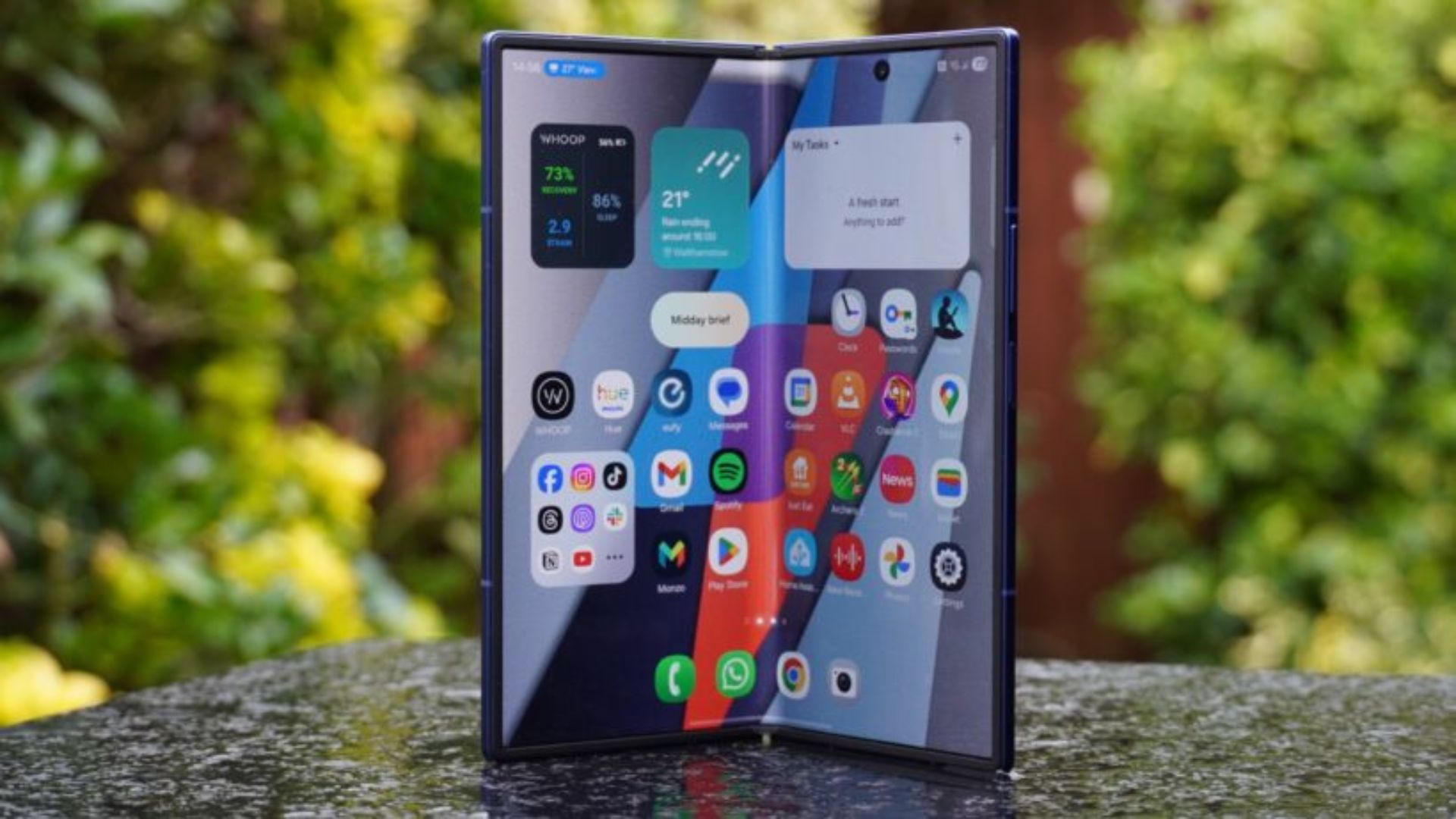
Samsung’s next foldable line-up may have just leaked ahead of schedule. A new image appears to show screen protectors for the upcoming Galaxy Z Flip 8, Galaxy Z Fold 8 and Galaxy Z Fold 8 Ultra side by side.
While leaked screen protectors aren’t usually the most exciting reveal, this one offers an early look at how Samsung could be reshaping its foldable range.
Most notably, the Galaxy Z Fold 8 appears wider and slightly shorter than previous models. Meanwhile, the Fold 8 Ultra looks set to sit in a class of its own.
If the leak is accurate, it suggests Samsung is putting more distance between its standard Fold and Ultra models. The company may no longer treat the Ultra as a simple spec bump. That could help the company better compete. After all, rivals such as Apple, Xiaomi and Vivo continue to push into the foldable market.
The image was shared by well-known tipster Ice Universe and appears to show noticeable differences between the two Fold devices. The standard Fold 8 looks broader than before. This could make the outer display feel more like a traditional smartphone screen. It may also feel less like the narrow panels found on earlier Galaxy Fold devices.
Beyond the redesigned shape, previous leaks have pointed to several upgrades for the Fold 8. These include a less visible display crease, a 4,800mAh battery and a weight of around 201g.
The Galaxy Z Flip 8, meanwhile, is expected to be a more modest update. Rumours suggest Samsung has tweaked the hinge design to make the clamshell foldable slightly thinner when closed. Additionally, the company is also shaving off a little weight. The biggest changes may come under the hood. Reports point to Samsung’s Exynos 2600 chip in Europe and South Korea. In other markets, there may be a Snapdragon 8 Elite Gen 5 for Galaxy processor.
Samsung expects to officially unveil the Galaxy Z Flip 8, Galaxy Z Fold 8 and Galaxy Z Fold 8 Ultra at its next Unpacked event on July 22. The company will reveal these alongside the Galaxy Watch 9 and Galaxy Watch Ultra 2.
The Kratom Civil War Is Heating Up, and MAHA Has Picked a Side

BREAKING: Michael Saylor Just FLIPPED | XRP Holders You BETTER Watch This!

Residents say Scarborough retail park would bring ‘continuous noise’


-

 Business1 day ago
No Jackpot Winner as $257 Million Prize Rolls Over to $269 Million Monday Draw
-

 Crypto World4 days ago
Oppenheimer backs SpaceX as $70 billion retail frenzy builds
-

 Crypto World4 days ago
Markets Rally as SpaceX IPO Looms Amid Iran Tensions and Inflation Surge
-

 Fashion3 days ago
Weekend Open Thread: Tuckernuck – Corporette.com
-

 Sports7 days ago
FIFA WC 2026 Group C: Morocco, Scotland challenge Brazil’s hunt for glory | FIFA World Cup 2022
-
 Crypto World16 hours ago
Zimbabwe Requires Crypto Businesses to Register Annually Under New FIU Regulations
-

 Entertainment6 days ago
The Ryan Gosling True Crime Thriller On Netflix That Gets Even Stranger, Stream It Now
-
 Sports6 days ago
Bangladesh beat Australia after 20 years in ODIs, register only their second win over six-time world champions | Cricket News
-

 Tech3 days ago
NanoClaw integrates JFrog registries to secure AI agent downloads
-

 Tech3 days ago
This Week In Security: Microsoft On Microsoft, Register Your Domains, Linux On ARM, And FreeBSD Joins The File Cache Club
-

 Crypto World2 days ago
Bitget enters Argentina’s regulated crypto market through PSAV registration
-

 Politics4 days ago
Politics Home | Healey Resignation Is “Colossal Failure Of Government”, Says Former Labour Defence Secretary
-
 Tech4 days ago
Dutton Ranch star claims they ‘didn’t see any disruption’ on set following Chad Feehan’s exit from Yellowstone spinoff fueled by Taylor Sheridan clash rumors
-

 Tech5 days ago
‘This is Seattle’s position on AI’: City Council votes unanimously to pause big new data centers
-

 NewsBeat4 days ago
El Nino has formed in the Pacific and could set records, forecasters say
-
 Entertainment4 days ago
Donnie Wahlberg & More Heat Up Las Vegas at Circa’s Barry’s Downtown Prime
-

 Sports4 days ago
First Time Since 1971: Australia Register Historic Low In ODI Cricket
-
 Tech4 days ago
Opendoor Ends India Operations, Fueling a Bigger Conversation About AI and Outsourcing
-

 Politics4 days ago
Belfast burns, while Met chief points finger at Iran and Russia
-

 Business5 days ago
Thailand Ranks Second Worldwide for AI Adoption Growth, Microsoft Reports
You must be logged in to post a comment Login