Connect with us
DAPA Banner
DAPA Coin
DAPA
COIN PAYMENT ASSET
PRIVACY · BLOCKDAG · HOMOMORPHIC ENCRYPTION · RUST
ElGamal Encrypted MINE DAPA
🚫 GENESIS SOLD OUT
DAPAPAY COMING

Tech

Knox County, TN Rolls Back ‘Roots’ Book Ban After Backlash

Published

on

from the fighting-works dept

It was just a week or so ago that we were talking about the absurd situation in Knox County, Tennessee, where local government used Tennessee’s book-banning laws to remove the book Roots from school libraries. Yes, this is the book by Alex Haley that spawned the 1970s miniseries of the same name and served as a cultural touchpoint for the understanding of American history and race relations across the country. Haley lived in Knox County himself. He even has a bronze statue placed in his honor in Morningside Park in Knoxville. Yet the book that earned him that statue was being banned in public schools.

The backlash to this occurring was swift and severe. It came from both local politicians and from the public around the country. The purity of just how bad and wrong this was hit a nerve. And, now, the county has caved to that pressure and have immediately reinstated Roots back onto public school bookshelves.

Knox County Schools Superintendent Jon Rysewyk said the district will return the 1976 novel to school library shelves, walking back a decision that had added Roots to a growing list of banned books and ignited debate about race, history and the reach of state law into public school libraries.

In a memo to the Knox County Board of Education dated May 26, 2026, Rysewyk said the decision to return Roots to shelves was effective immediately and that the initial removal “was in no way a commentary on the historical, cultural, or literary value of the novel.

And that’s bullshit, of course. Many of the other quotes from Rysewyk are very carefully lawyered, but this one stands out as obvious nonsense. Removing a book, any book, from school shelves is absolutely a commentary on the historical, cultural, and literary value of that book. You’re making a decision to hide away a literary work from children. If the work had value to those children, you wouldn’t be banning it.

Advertisement

Rysewyk goes on to note that he consulted with many lawyers on the passage that led to the book being banned and that there was no consensus whether that passage actually violated Tennessee’s law or not and that that’s why he reinstated it. Then he dropped this gem.

“Removing any book from circulation is, and should be, an immense decision. Our intent will always be to err on the side of access, which is the decision I have made with regard to “Roots,”” Rysewyk said.

No. No it won’t. Because last week was part of “always” and the initial decision was to err on the side of not pissing off racist goobers and removing access. Nice try, though. It was only when the revolt started coming from within the school board itself that Rysewyk was forced to walk this all back.

Knox County School board member Katherine Bike sent a memo to her colleagues demanding the book’s return. 

“Removing Roots is not a neutral act,” Bike wrote. “It sends a message to our students, particularly our Black students, about whose history is worth protecting. I don’t believe that is the message any of us intends to send. Intent and impact are two different things.” 

On Tuesday after the reversal was announced, State Rep. Sam McKenzie, whose district includes the Haley statue, called the ban a grave injustice and said he was disappointed but not surprised. 

Advertisement

“’Roots’ won a Pulitzer Prize and became a cultural touchstone that inspired and united millions of Americans,” McKenzie said. “I knew that taking it out of the hands of thousands of schoolchildren in Knox County would be a grave injustice.”

Now, what this should immediately result in is a recognition that public backlash can reverse bad policy. There are over 120 other books that are currently on the Knox County banned book list, not to mention similar anti-literature lists from the state’s other counties. Every one of them should get similar backlash. Banning Roots failed to work because of the name recognition of the book, the local interest in its author, and its obvious value to children. I have no reason to believe that there aren’t plenty of other works of literature in the other 120-plus books on the list worthy of defending.

That’s where the work actually needs to be done, now. Because the only thing we should be banning is the banning of books.

Filed Under: alex haley, book bans, culture, knox county, knox county schools, roots, tennessee

Advertisement

Source link

Continue Reading
Click to comment

You must be logged in to post a comment Login

Leave a Reply

Tech

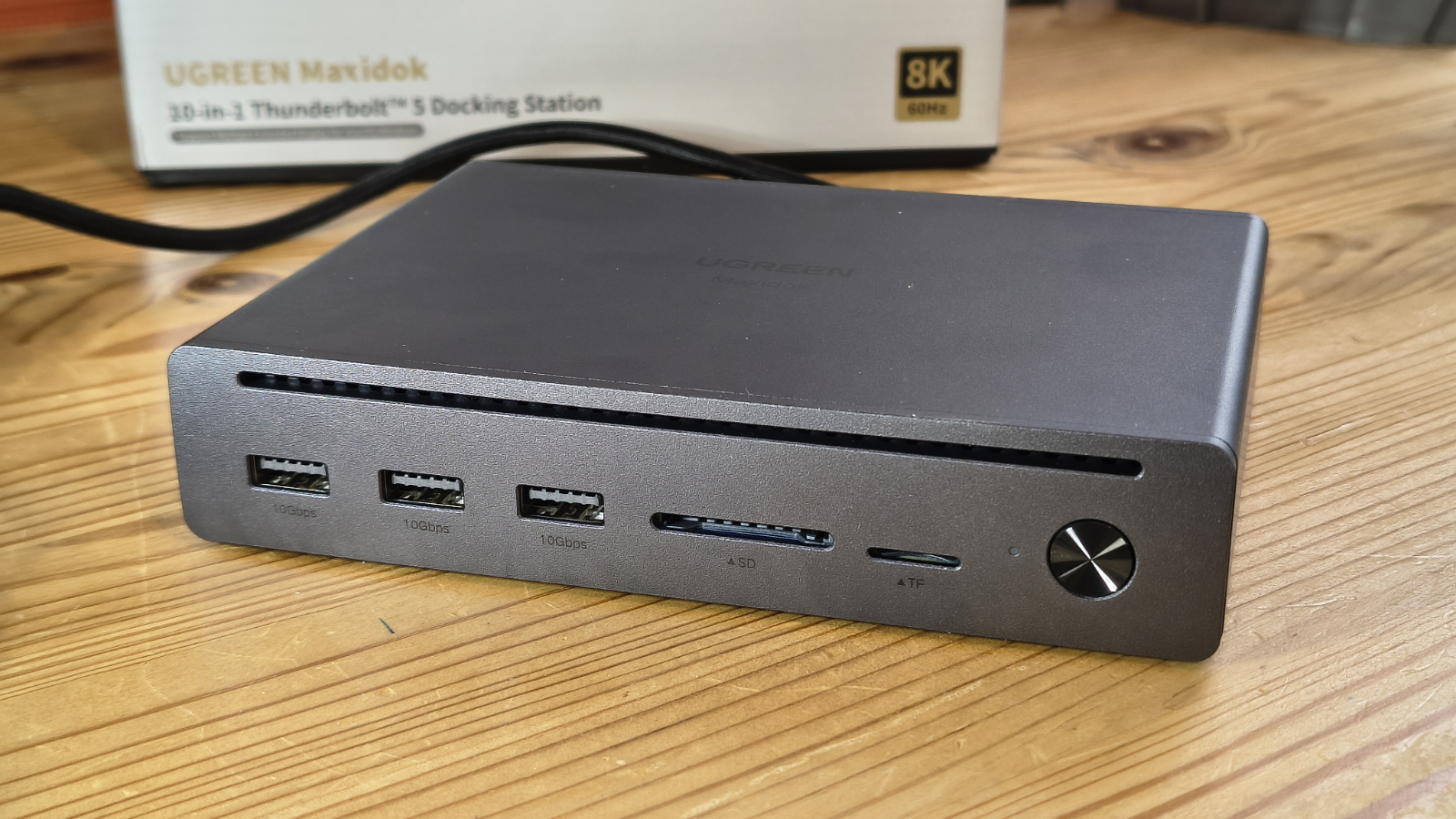
Ugreen Maxidok 10-in-1 Thunderbolt 5 Docking Station review

Published

on

Why you can trust TechRadar


We spend hours testing every product or service we review, so you can be sure you’re buying the best. Find out more about how we test.

UGREEN Maxidok 10-in-1: 30-second review

While docking stations aren’t glamorous, they can elevate a laptop or mini PC which has limited external ports. One cable in, everything on. That is the promise, and when it works, it can be transformative.

Ugreen has been steadily building its reputation in the docking station space. Its Revodok line has impressed across multiple price points. Now the company has moved upmarket with the Maxidok series, targeting users who want Thunderbolt 5 connectivity at a price that does not require a corporate expense account.

Advertisement

Source link

Advertisement
Continue Reading

Tech

‘We’re Just Getting the Crumbs Here’: Contractors Protest Layoffs at Meta’s European Headquarters

Published

on

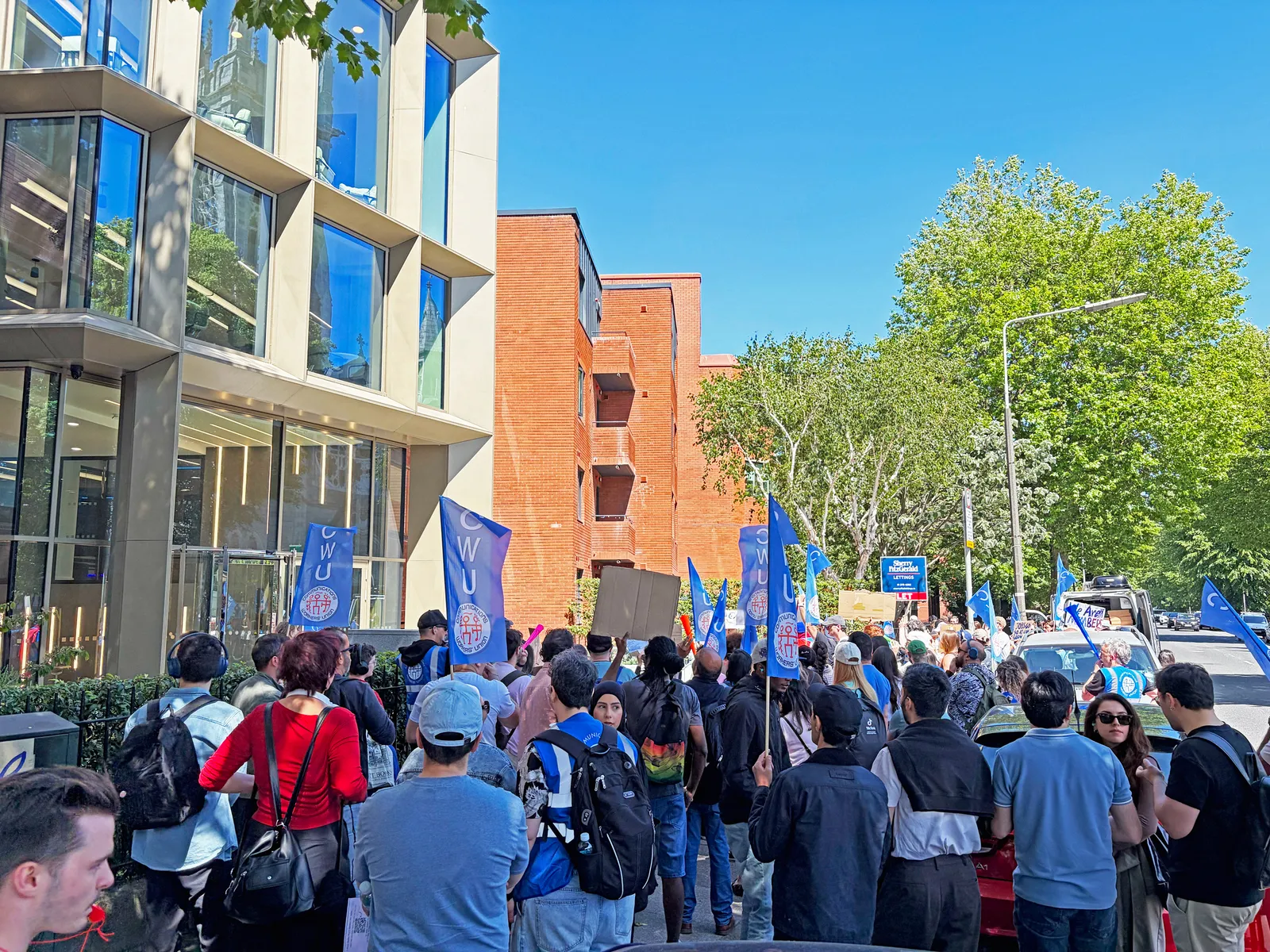
“We trained the bots. We did the grind. Now we’re being left behind,” chanted a horde of contract workers who gathered outside Meta’s offices in Dublin, Ireland, on Friday afternoon. Waving flags, brandishing signs, and armed with whistles and vuvuzelas, they were out to protest a round of planned layoffs.

The workers are employed by Dublin-based company Covalen, which handles content moderation and data labeling services that help Meta to fine-tune its AI products. In April, Covalen told 700 employees that their jobs were at risk, citing “reduced demand,” WIRED reported.

A large swath of the affected workers won’t receive any severance because they’ve been employed for less than two years. The rest are being offered the minimum payout required under local labor laws—two weeks’ pay for every year of employment—according to the Communications Workers’ Union (CWU), whose members include Covalen employees.

“We’re just getting the crumbs here,” Aadel Obaid, a team manager at Covalen who is part of the planned layoffs, tells WIRED. “Give us a little bit of the pie.”

Advertisement
Image may contain Isaiah Frey Urban Adult Person People Accessories Bag Handbag Clothing Jeans and Pants

Photograph: Joel Khalili

To try to compel Covalen into revising the severance package, workers voted to strike outside the company’s corporate office, before marching to Meta’s nearby European headquarters. According to John Bohan, an organizer at the CWU, Meta could use its leverage as an anchor client to pressure Covalen into offering its employees an enhanced severance package. The workers are asking for double what’s currently being offered—and at least some form of payment for workers who don’t meet the two-year threshold.

The company could also release Covalen workers from a “cooldown period” preventing them from working on another Meta account for six months after being laid off, Bohan says. (Meta previously described the cooldown period to WIRED as an industry standard.)

At 1 pm local time on Friday, the striking workers began to gather outside Covalen’s corporate headquarters, a red-brick office building on an otherwise largely residential street in the heart of Dublin. The protests began with a wall of sound: The workers beat drums, booed, whistled, shouted, and catcalled. Then came a volley of call-and-response chants led by a worker with a megaphone. The building’s security guard watched, bemused, from inside the lobby, hands on his hips.

Two hours later, the group—now more than 150 people—began to march down the center of the mile-long stretch of road to Meta’s campus, slowing the trailing traffic to a crawl. Dubliners enjoying the early onset of summer stopped to gawp; some applauded. When the protesters arrived at Meta’s complex, two security guards stood with crossed arms, blocking the way. The group set up at the gates and began another round of chants: “We scrub the feed. We take the pain. Meta profits from our strain.”

Advertisement

Source link

Continue Reading

Tech

Still ringing a bell: F5 marks its 30th year in business

Published

on

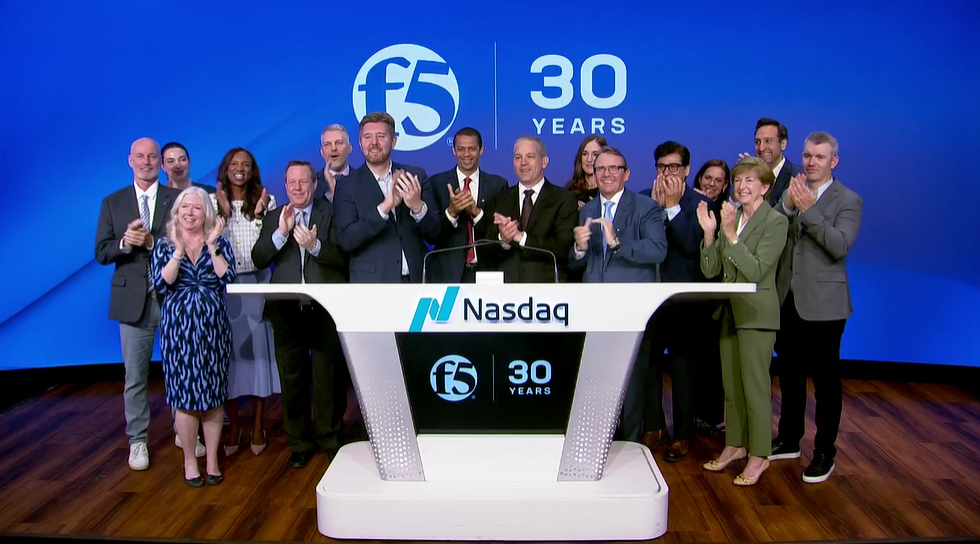
F5 CEO François Locoh-Donou (center) and members of the company’s leadership team with Nasdaq’s Jeff Thomas (in front of F5 logo) at the Nasdaq MarketSite in Times Square on Friday, marking F5’s 30th anniversary by ringing the opening bell. (Screenshot via webcast)

Nearly 27 years ago, in June 1999, a 3-year-old Seattle-based internet traffic-management company called F5 Networks Inc. went public on the Nasdaq, boasting customers such as PSINet, MCI WorldCom, StarMedia Network, Vanstar, Frontier GlobalCenter, and BellSouth.net.

Don’t recognize the names? That’s because they no longer exist. Each ended up bankrupt, acquired, or both within a few years, mostly as casualties of the dot-com crash.

F5 was far from a sure thing itself. The company, with 123 employees at the time, reported an annual loss of $3.7 million on revenue of $4.9 million in its IPO filing. It was a sign of how speculative the late-1990s internet boom had become, with unprofitable companies going public based on sales to other companies that had yet to prove their own business models.

F5 execs including CEO François Locoh-Donou in New York on Friday. (GeekWire Photo / Brian M. Westbrook)

But F5 has outlived most of the customers in its IPO prospectus and the three investment banks that took it public. The former Seattle startup this morning marked its 30th year in business by ringing the opening bell on the Nasdaq in New York City. 

“We have evolved from a load balancing startup into a global leader that delivers and secures every app and API anywhere,” F5 CEO François Locoh-Donou said at the Nasdaq podium.

F5 has survived over the years by adapting its business from the early internet to data centers and now the cloud and artificial intelligence — while weathering the dot-com crash, a wave of competitive and economic threats, and more recently, a cybersecurity incident of its own. 

Advertisement

Along the way, F5 has evolved from hardware appliances to software and back again, with hardware sales now surging again on demand from AI data centers.

The Seattle Times’ coverage of F5 Networks’ first day of trading, June 4, 1999. (Seattle Times archive)

The company has a market value of $21.9 billion, with revenue of $3.1 billion and profits of $692 million in its most recent fiscal year. Based in downtown Seattle’s F5 Tower, it employs 6,578 people globally and counts more than 80% of the Fortune 500 among its customers. 

In an investor presentation in New York on Thursday, F5 said it expects upper-single-digit annual revenue growth through fiscal 2029, with AI as a big driver. F5 projects its addressable market will grow from about $15 billion this year to more than $40 billion by 2030, citing new opportunities in load balancing for AI data centers, AI data delivery, and security for AI apps. 

One constant from those early years is the ticker symbol, FFIV. Shares were up about a half-percent in early trading today after the company rang the opening bell.

Source link

Advertisement
Continue Reading

Tech

Intel and 3DGS back a $3.3bn glass-substrate plant in India’s Odisha

Published

on

The fight over who makes the world’s chips is increasingly a fight over the parts of a chip nobody photographs. India has just landed one of them.

Intel and 3D Glass Solutions have signed an agreement to build a roughly $3.3 billion substrate-manufacturing plant in the eastern state of Odisha, the government announced on Friday.

The memorandum of understanding, signed between the Odisha government, Intel Corporation and 3DGS Inc., covers an advanced-packaging glass-core substrate facility in the Bhubaneswar-Khurda region, to be built over five to six years.

India’s electronics and IT minister, Ashwini Vaishnaw, framed it as one of the largest high-technology manufacturing commitments the country has secured.

Advertisement

The 💜 of EU tech

The latest rumblings from the EU tech scene, a story from our wise ol’ founder Boris, and some questionable AI art. It’s free, every week, in your inbox. Sign up now!

Substrates are the unglamorous layer that makes modern chips work. They are the engineered base a processor is mounted on, routing power and signals between the silicon and the circuit board, and as chipmakers hit the limits of shrinking transistors, the packaging around the silicon has become where much of the performance gain now lives.

Glass-core substrates, the technology at the centre of this plant, are seen as a leap over today’s organic materials, offering tighter, faster interconnections for the densest designs.

Advertisement

The plant’s output targets reflect that ambition. According to the government, it is expected to produce around 70,000 glass substrates a year, some 50 million assembled units, and close to 13,000 advanced 3D heterogeneous-integration modules, the stacked, multi-die packages that pack several chips into one.

It is also expected to create more than 1,800 direct high-skilled jobs, with wider indirect employment around it.

The deal does not stand alone. It was approved under the India Semiconductor Mission, the programme through which New Delhi has pledged billions in subsidies to pull chip manufacturing onshore, and the official project cost is put at about ₹1,943 crore, with central fiscal support of roughly ₹799 crore and additional state backing.

The subsidy structure is the mechanism: India is buying its way into a supply chain it has historically had to import.

Advertisement

For Intel, the move is a smaller, sharper bet than a full fabrication plant, and a notable one given the company’s wider retrenchment.

Backing a substrate facility lets it plant a manufacturing flag in a fast-growing market and in a part of the stack, advanced packaging, where it has staked much of its technological case, without the tens of billions a leading-edge fab would demand.

The strategic logic is the same one driving chip policy from Brussels to Washington. The EU’s Chips Act and the US CHIPS Act are both attempts to localise a supply chain that the pandemic and geopolitics exposed as dangerously concentrated, and India is now running the same playbook from further behind.

An MoU is a starting line, not a finished plant, and the five-to-six-year horizon leaves room for the usual slippage. But the direction is unmistakable: the map of where chips, and the things chips sit on, get made is being redrawn, and Odisha has just been added to it.

Advertisement

Source link

Continue Reading

Tech

Indecent’s $350,000 Porsche 911 Shooting Brake Turns a Coupe Into a Proper Wagon

Published

on

Indecent Porsche 911 Shooting Brake Wagon Conversion
Photo credit: Indecent Vehicles
Polish builder Indecent Vehicles has started taking orders for a conversion that gives the 991-generation Porsche 911 a shooting brake body. The work adds roughly $350,000 to the price of a donor car and sits on top of the company’s existing widebody package.


Indecent Porsche 911 Shooting Brake Wagon Conversion
Within the 991.1 and 991.2 lines, you can choose from the Turbo, Turbo S, or GT2 RS versions. This first one began life as a 991.2 Turbo and featured a familiar twin-turbo 3.8-liter flat-six engine capable of producing 533 horsepower. Unless the owner specifically wants otherwise, power and engine layout remain unchanged.

Sale


LEGO Speed Champions Porsche 911 GT3 RS Super Car Toy – Model Kit & Pretend Play Toy for Boys & Girls…
  • BUILD A RACING LEGEND – Boys and girls ages 9 years old and up can construct the LEGO Speed Champions Porsche 911 GT3 RS Super Car (77239) building…
  • AUTHENTIC PORSCHE DETAILS – Young builders can recreate the real-life vehicle’s signature elements including the famous rear wing, air intake…
  • 1 PORSCHE DRIVER MINIFIGURE – Kids can place the driver minifigure with helmet and red Porsche Track Day Experience outfit behind the wheel to stage…

The real job begins for the body as Indecent stretches the roofline to position it further back. In this case, they replace the conventional vented engine cover with a custom hatch that also serves as a tailgate and rear fender widening to complement the rest of the widebody treatment. The resulting car appears quite elegant, with a longer and more usable profile that is reminiscent of a smaller Panamera Sport Turismo while maintaining all of the proper 911 proportions. The good news is that rear passengers now have additional headroom, and storage space behind the seats has increased, allowing you to fit gear, luggage, or even a dog without sacrificing any of the fundamental 911 driving experience. Renders show the car looking slick in bright orange paint, with aftermarket wheels and a double rear spoiler that emphasizes the new design.

Indecent Porsche 911 Shooting Brake Wagon Conversion
Designing the tailgate was a difficult task since it had to cope with airflow; after all, the flat-six engine is right back there, so Indecent had to come up with a new design that addressed the cooling needs that the original vented panel handled. With extensive experience with body mods on 991s, Indecent was well-positioned to resolve the issue while maintaining structural integrity and panel fit.

Indecent Porsche 911 Shooting Brake Wagon Conversion
Each additional build following the prototype will take up to four months to complete. Indecent widebody projects already replace or mold practically all of the body panels save the front hood, top, and doors, thus the shooting brake conversion fits seamlessly into an established workflow. Of course, complete personalization is always a possibility. Owners can still choose from a variety of suspension, wheel, brake, and interior trim improvements, as well as power increases, all provided by the same crew.

Indecent Porsche 911 Shooting Brake Wagon Conversion
Every finished car has its own unique serial number, and what this essentially means is taking that method one step further into a body design that many 911 owners have desired for years but have been unable to obtain from the manufacturer. The prototype is anticipated to be unveiled in public sometime next year, after which anyone with a convenient donor car and a hefty budget can place an order for their own.
[Source]

Advertisement

Source link

Continue Reading

Tech

Samsung, LG Uplus to test 6G sensing that replaces radar

Published

on

Samsung Electronics and LG Uplus signed a memorandum of understanding on 27 May to jointly develop Integrated Sensing and Communication, or ISAC, a technology that would allow mobile network base stations to double as environmental sensors. The agreement was signed at LG Science Park in Magok, Seoul, with Samsung Research, the advanced R&D division within Samsung’s Device eXperience unit, leading the development effort.

ISAC works by analysing wireless signals as they reflect off nearby objects, extracting information about an object’s speed, distance, and direction of movement. In practical terms, it means a cell tower could detect a drone, track a vehicle, or monitor foot traffic without any dedicated sensing hardware. The technology uses the same signals that already carry voice and data, turning existing communications infrastructure into a sensing platform.

Why it matters

Environmental sensing today relies on dedicated equipment. LiDAR systems use laser light to measure distance, while radar uses radio waves. Both require separate hardware that must be installed, powered, and maintained independently of the communications network. ISAC eliminates that requirement by piggybacking sensing on the wireless infrastructure that mobile operators have already built.

The International Telecommunication Union’s Radiocommunication Sector, which sets the global framework for mobile standards, has designated ISAC as one of six usage scenarios for IMT-2030, the formal name for 6G. It sits alongside immersive communication, hyper-reliable low-latency communication, massive communication, ubiquitous connectivity, and AI-integrated communication. The inclusion signals that 6G networks are being designed from the outset to sense the physical world, not just move data through it.

Advertisement

What they will test

The 💜 of EU tech

The latest rumblings from the EU tech scene, a story from our wise ol’ founder Boris, and some questionable AI art. It’s free, every week, in your inbox. Sign up now!

The collaboration will initially focus on human detection for safety applications and on improving network operational efficiency. The two companies plan to validate ISAC performance on LG Uplus’s existing 5G networks first, then move to the 7 GHz band, a candidate frequency for 6G that offers a balance between the wide coverage of lower bands and the high bandwidth of millimetre-wave spectrum.

Over time the partnership will combine ISAC-generated wireless data, including location, speed, and density information, with camera imagery to improve detection accuracy. That work will involve developing multimodal AI models that integrate and analyse diverse forms of sensing data. Samsung Research will handle core ISAC and AI technology development, while LG Uplus will provide data and field-testing infrastructure from its commercial network.

Advertisement

The spectrum race behind 6G

The 7 GHz band is increasingly described as the “golden band” for 6G because it offers enough bandwidth for high-speed data while still propagating far enough for practical coverage. South Korea is actively exploring the 7.125 to 8.4 GHz range as a primary 6G candidate. The World Radiocommunication Conference in 2023 identified portions of the 6.425 to 7.125 GHz band for mobile use in several regions, and the 7.125 to 8.4 GHz range is on the agenda for WRC-27.

In the United States, the National Telecommunications and Information Administration must complete its study of the 7.125 to 7.4 GHz band by the end of 2026 before it can be opened to commercial wireless. Europe is pursuing the upper 6 GHz range. The allocation decisions at WRC-27 will largely determine which countries have the spectrum to deploy 6G at scale and which do not. For South Korea, whose economy is deeply exposed to shifts in global tech supply chains, securing early 6G spectrum and standards influence is a strategic priority.

Samsung’s 6G positioning

Samsung has been building its 6G credentials methodically. The company published a 6G white paper outlining its vision for AI-native and sustainable communications, demonstrated 6G technologies alongside global partners at the Silicon Valley Future Wireless Summit in November 2025, and showcased AI-RAN capabilities at Mobile World Congress in March 2026. The ISAC collaboration with LG Uplus extends that work from lab demonstrations to field validation on a live commercial network.

The partnership pairs Samsung’s research capabilities with LG Uplus’s operational infrastructure, a combination that matters because ISAC performance in controlled environments may differ significantly from real-world networks with interference, building reflections, and variable traffic loads. Samsung’s broader ambitions in AI and semiconductor manufacturing give it a vertically integrated stake in 6G infrastructure that few competitors can match.

Advertisement

Commercial 6G deployment is not expected until the early 2030s, and ISAC will need to clear both technical and regulatory hurdles before it replaces dedicated sensing equipment at scale. But the technology represents a genuine shift in what a wireless network can do, and Samsung and LG Uplus are now testing whether the physics holds up outside the lab.

Source link

Advertisement
Continue Reading

Tech

Controversial Apple Developer Academy begins its 5th year

Published

on

The Detroit Apple Developer Academy’s fifth year is underway, with the next generation of iPhone developers joining a program whose expense and success have been questioned.

The only developer academy of its kind in North America, the developer academy is a collaboration between Apple, Michigan State University, and the Gilbert Family Foundation. It offers a range of free programs, including the option for a full nine-month learning experience.

The Detroit academy is just one of 19 around the world. All of them help students learn how to design and create their apps, with an eye on turning them into full-fledged businesses.

In a newsroom post announcing the fifth commencement, Apple notes that more than 70% of the people who start the free academy go on to complete the program.

Advertisement

A history of (some) success

Apple talks a big game, but the results speak for themselves. Saamer Mansoor was part of the academy’s original cohort as the world continued to get to grips with the COVID pandemic. After he and his teammates realized they all knew someone with hearing difficulties, they set about creating BeAware Deaf Assistant.

Using Apple’s Neural Engine to handle real-time transcription and translation, the app became a hit. It’s now been translated into 25 spoken languages and is used by institutions including the George Washington University.

Mansoor wasn’t a one-off, either. Courey Jiminez is a 2026 academy graduate and Swift Student Challenge winner who credits the academy with teaching her the skills she needed.

“I had never heard of challenge-based learning prior to coming here. It taught me to dig deeper into the research and to be OK with pivoting if my idea shifts along the way,” the Detroit native noted.

Advertisement

Now, Jiminez is in project management, supporting coders and designers while managing the overall vision of the app being worked on.

If you’re keen to learn more and perhaps get involved with an Apple Developer Academy near you, Apple’s dedicated website is a good place to start.

Question marks

However, its academies aren’t without their detractors. The Detroit academy in particular has come under fire. Huge costs and questions around its ability to set students up for a job in the future left some wondering whether it’s worth the expense.

For Apple’s part, the academies are a key aspect of its continued success. They may be free to students, but Apple knows that teaching them to build apps for its platforms is good business sense for the future of those platforms.

Advertisement

As for the students, Apple is quick to tout its wins, but some have questioned whether it is the outright success it’s claimed to be.

Source link

Advertisement
Continue Reading

Tech

What Those Dots Under The Icons On Your MacBook Dock Are For

Published

on


Apple’s macOS has its fair share of quirks and a subtle design philosophy that distinguishes it from its biggest rival, Windows. Despite those differences, macOS has a surprising amount of overlap with Windows in both form and function. The Dock in macOS is akin to the Windows Taskbar; they effectively serve the same purpose, just going about it in slightly different ways. The Dock in macOS has heritage going all the way back to Mac OS X, and still serves as the primary way users launch applications in macOS Tahoe 26.

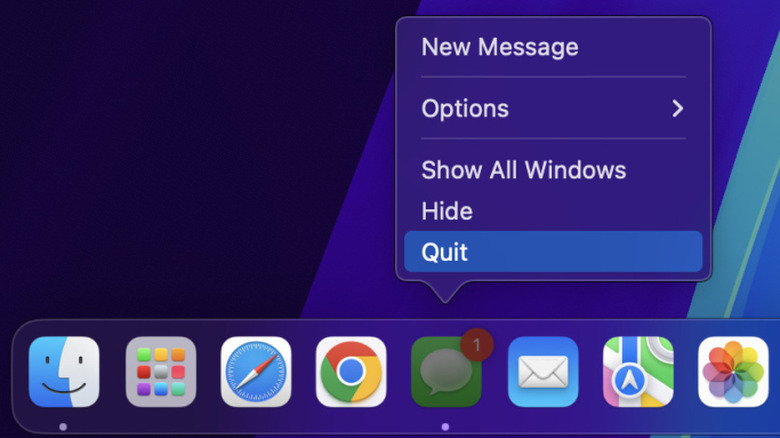
A feature distinct to the macOS Dock is how it handles applications that are currently running. Even if an app doesn’t have a visible window or you’ve closed the window, the app remains open. Those dots underneath the icons on the Dock indicate that those apps are running in the background. This isn’t a feature everyone loves, but fortunately, it can be changed, as there’s a surprising number of macOS settings you may not know you can change, including changes to the Dock itself.

Advertisement

How to really quit apps in macOS

As Apple notes in its support documentation on quitting apps, clicking the red “x” in the upper left-hand of the window doesn’t close the app, but instead moves it to the background. There are a number of reasons why Apple does this, but macOS has a unique way it manages background processes and app termination in an effort to preserve system resources and focus on user experience. Whether you’ve jumped ship from Windows with a new MacBook Neo or you’re a macOS veteran, in order to remove the dots beneath app icons, you’ll need to take a different approach. 

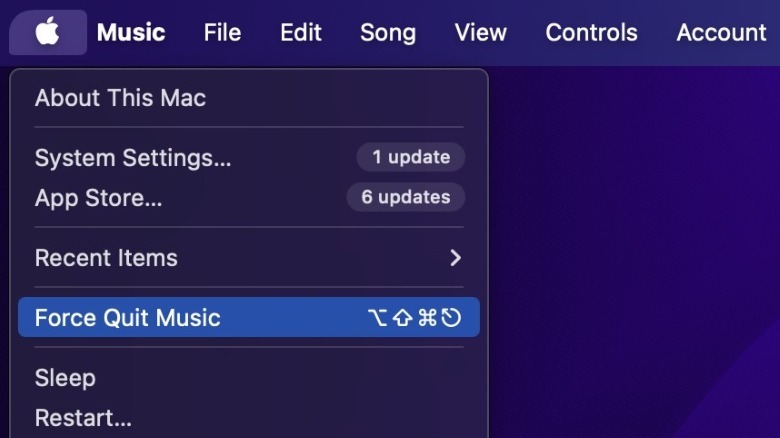
There are three ways to achieve this. First, you can control + click on the app’s icon in the Dock, then select “quit” in the corresponding window. Second, you can use the keyboard shortcut command + Q to quit an app with an open window. Lastly, you can navigate to the Apple menu in the top left-hand corner of the desktop, and select “Force Quit.” This will open a window with all currently running apps, which can then be quit.

Advertisement

If you would rather disable this feature entirely, click the Apple menu and navigate to “System Settings.” Once the System Settings window opens, select “Desktop & Doc” from the left-hand side panel. Inside the Dock & Desktop option, scroll down to the “Show indicators for open applications” and toggle it off. This should prevent any dots from appearing under app icons, with the exception of Finder – this is permanent, and there is currently no way to change it. As a bonus tip, you can also manage all of your open apps and your desktop with Mission Control. On newer Macs, you can launch Mission Control with the F3 key.


Source link

Advertisement
Continue Reading

Tech

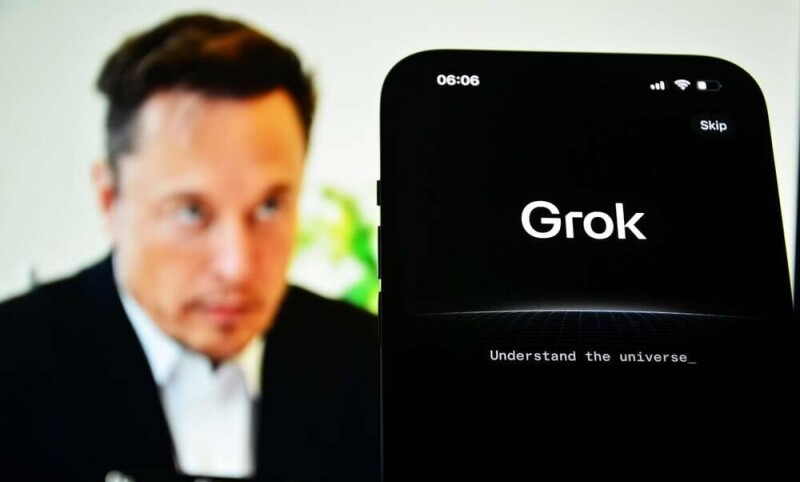
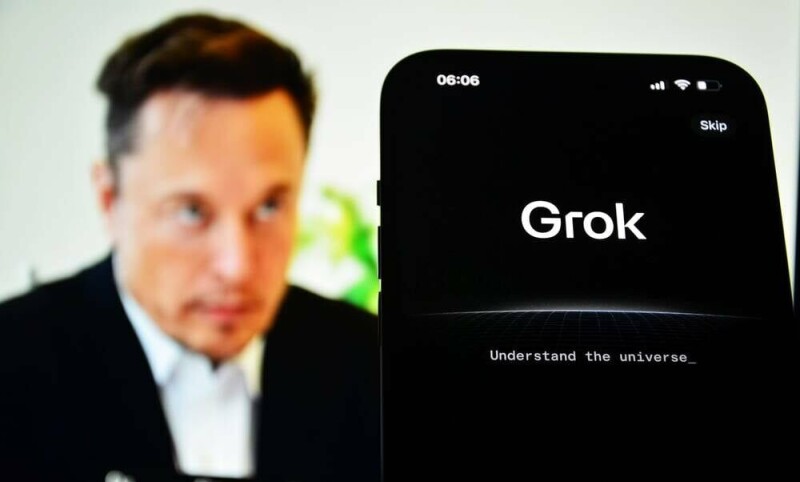
AWS reportedly to tuck Elon Musk’s Grok into Bedrock, despite zero enterprise demand

Published

on

A security lead at a large enterprise* told me last week, when I asked whether they had any interest in Grok: “The revenge porn edgelord LLM? Yeah, imagine that; our bank wants nothing to do with it.”

A couple of other people I put the question to seemed genuinely surprised I’d brought it up at all, the way you’d react if someone wandered into a board meeting and asked whether anyone wanted to expense a timeshare.

So that’s the current state of enterprise demand for Grok, as measured by the unscientific but reliable method of asking the people who actually sign the cloud contracts. It lands somewhere between “no” and “why would you ask me that?”

Which is awkward, because Business Insider reported this week that AWS is “in talks” to add SpaceX’s Grok models to Bedrock, joining Anthropic, Meta, Cohere, and the OpenAI models AWS is in the process of bolting on. SpaceX has reportedly already shipped the models to AWS. There’s no launch date, which in AWS announcement terms puts us squarely at the “intention to perhaps one day announce an announcement” stage.

Advertisement

But is it any good? (No)

Let me dispatch the obvious objection: maybe nobody wants Grok because they haven’t tried it, and it’s secretly excellent. I’ve run blind tests of the frontier models on some of my own deeply stupid side projects—the shitposting.ai family, where the entire design goal is to be edgier and weirder than the current discourse will tolerate. If there’s a use case purpose-built to let Grok flex its whole “we say the things others won’t” positioning, it’s mine.

Grok loses. It’s fast — legitimately, impressively fast — but it’s just not as good. It’s the energy drink of frontier models: it’ll keep you up, but you won’t enjoy the experience and you’ll regret it in the morning.

So we’ve got a model that enterprise buyers actively don’t want, that underperforms even on the single axis it’s purportedly optimized for, attached to a company whose image generator reportedly was used to produce roughly three million sexualized images of real people over an eleven-day stretch, including an estimated 23,000 depicting apparent minors, according to the Center for Countering Digital Hate, triggering regulatory action in more than a dozen jurisdictions and a Dutch court injunction carrying a €100,000-per-day penalty. That part isn’t a joke, and I’m not going to make one.

Then layer on the fact that nobody sensible wants to take a hard dependency on Elon Musk’s org chart. In roughly a year, the thing has been reorganized into oblivion — X (the rebranded Twitter) sold to Grok-producing xAI, xAI swallowed by SpaceX, with the whole AI unit then being dissolved into a division called SpaceXAI. All eleven original cofounders have left. More than fifty researchers walked after the SpaceX absorption. The API endpoint you’d integrate against, api.x.ai, is migrating to a SpaceX-branded URL on a timeline nobody’s published. Building production infrastructure on top of that is like renting an apartment in a building that keeps changing its name, its address, its compliance with the fire code, and its landlord while you’re still unpacking.

Advertisement

And here’s the part that should bother whoever greenlit this. Bedrock’s entire pitch— the reason anyone pays the wrapper tax instead of hitting a model’s API directly— is governance: IAM, PrivateLink, CloudTrail, encryption, guardrails, and an audit trail you can wave at a regulator. The model is almost secondary to those things for those customers. And the enterprises that actively value that stack are precisely the ones telling me they wouldn’t touch Grok with a borrowed keyboard.

The startups that hypothetically *do* want Grok — for the edge, for the speed, for whatever a founder talks themselves into at 2 a.m. — could not care less about CloudTrail. They want it cheap, fast, and now, and they can already have it: Grok is one curl to a public endpoint away, same as every other model on the shelf. Bedrock has no monopoly on third-party models; it never did. So sketch the Venn diagram. One circle is “wants Grok,” the other is “wants Bedrock’s governance.” Grok-on-Bedrock is built to serve only the gap where they don’t overlap.

So who asked for this?

Nobody. Which is the interesting part.

When customer demand can’t explain a decision, follow the corpdev. And AWS has run this exact play twice already this year, in public, with the numbers attached.

Advertisement

With Anthropic: a commitment to spend more than $100 billion on AWS over ten years and secure up to five gigawatts of Trainium capacity, with Amazon putting in another $5 billion immediately and up to $20 billion more on milestones — on top of the $8 billion it had already sunk in, for a cumulative stake somewhere around $33 billion.

With OpenAI: an existing $38 billion agreement expanded by another $100 billion, OpenAI committing to roughly two gigawatts of Trainium, and Amazon writing a $50 billion check on top.

The pattern is identical both times. Amazon invests, the lab commits to gigawatts of Trainium, and the model shows up on Bedrock as the consumer-facing bow on top. The Bedrock listing is the gift wrap. The Trainium commitment is the gift.

So here’s the way I’m thinking about it: AWS isn’t trying to sell Grok to your bank, but rather trying to sell Trainium to SpaceXAI — a company currently training Grok on something like 550,000 Nvidia GPUs in a Memphis facility the size of the chip on my shoulder. Peel even a fraction of that onto Amazon silicon ahead of the SpaceX IPO and the deal pencils out, regardless of whether a single human ever calls the Grok endpoint in anger. Bedrock becomes little more than a sales funnel with infuriatingly bad documentation.

Advertisement

The part where I say something nice

Because the strategy is clever, and I try to say so when it’s earned. Amazon is now bankrolling both leading independent AI labs at once, on its own chips, through its own model marketplace, while positioning itself as neutral infrastructure for whoever ends up winning. Against the roughly $200 billion in capex Amazon is torching in 2026, getting frontier labs to pre-commit to the silicon is about the only thing that makes that spreadsheet survivable. It worked twice. Why not go for three?

The third just happens to be a satellite-internet competitor. Amazon Leo – Amazon’s own years-later answer to Starlink – is out there signing Delta, JetBlue, AT&T, Vodafone, and NASA. So AWS would be cutting a relationship check to the one company it’s simultaneously trying to chase out of low Earth orbit. This seems fine. This is normal! Everybody in this industry is everybody else’s landlord, tenant, competitor, and shelf-mate, frequently within the same quarter and occasionally within the same press release. There will never be a problem that this arrangement causes.

The caveat that keeps me honest

I have no inside information here past “casual conversations with enterprise execs.” I haven’t seen a term sheet. There’s no public Trainium commitment from SpaceXAI, and Colossus runs on Nvidia today. So I can’t prove this is silicon corpdev rather than, say, AWS executives wanting a seat at the IPO table, or a marketing org that needs to put “every frontier model” on a slide. What I can tell you is that customer demand doesn’t explain it, because there isn’t any – and AWS has shown you, twice and with receipts, what its other explanation tends to look like.

So when Grok eventually lands on Bedrock with no fanfare and no launch date, and then is never mentioned again, don’t read it as AWS believing you want Grok. Read the S-1. If there’s a Trainium number in it, you’ll know what the model was really for.

Advertisement

* Specifics have been fuzzed to protect confidentiality. ®

Source link

Continue Reading

Tech

24 Best Father’s Day Gifts for Dads (2026)

Published

on

The only Father’s Day gift I can recall my own dad getting was a plate of fried sardines. It was prepared by my mother, his ex-wife, who knew how gratefully he’d receive a dish he grew up with in the Italian neighborhood of a steel town dying with such theatrical flair that Bruce Springsteen named a song after it. (An acoustic Springsteen song, at that.) We lived in a nearby city that had plenty of red-sauce restaurants, but they weren’t serving tinned fish in those days. As my father had only the most limited of food preparation skills and didn’t date the kind of women who could cook, this was the only way he’d ever taste that flavor again.

As Father’s Day gifts go, being united with a long-lost recipe from childhood is pretty good. If you can pull it off, that’s what you should give your dad this year. Otherwise, I have here a few ideas I’ve spent the last few months gathering for various types of dads and across many different budgets. With the exception of a few things picked by other dads on the team, these are all things I’ve personally tested and approved, and I hope they make your dad as happy as those sardines made mine.

The Best Father’s Day Gifts for Your Dad

The World’s Best Squirt Gun

Spyra SpyraFour Electric Water Blaster

Read more

The World’s Best Flying Disc

Aerobie Pro Ring

Advertisement

Read more

The Best Bocce Set I’ve Used

St. Pierre Tournament Bocce Set

Read more

A Premium Hibachi Grill

Mibrasa Hibachi MH 300 PLUS

Read more

For the Dad Who Plays With His Kids

  • Photograph: Martin Cizmar

Spyra

SpyraFour Electric Water Blaster

Maybe your dad has fond memories of the Super Soakers of his youth, but the SpyraFour is the new best water gun ever made. WIRED has been covering the German brand’s powerful electric squirt guns since 2023, and they’ve only gotten better over time. Just ask my daughter, who has to use the SpyraThree while I blast away at her with this gun that refills much faster (it sucks up enough water for about 20 shots in a cool 12 seconds) and has a full digital smart display to select between shooting styles and show you how much ammo you’ve got left. This is a very powerful squirt gun that shoots accurately up to 50 feet, and it’s recommended for kids who are at least 14. I can confirm that when I let my 11-year-old and her friends play with it, the battle often ends in tears. This only adds to the appeal as a gift for any dad over 40—when I was her age, we threw rocks at each other, and I had to go to the emergency room to get stitches you can still see. Good times.

Advertisement

Aerobie

Pro Ring

Playing catch is one of those classic activities dads and kids love to do. Over time, I’ve found, it transitions from the kid asking to toss the Frisbee around to the adult asking. Yes, the Aerobie is still the best flying disc you can buy, but the real reason to gift it is as an excuse to toss it around and talk.

St. Pierre

Advertisement

Tournament Bocce Set

Bocce is the best backyard game—it’s great for people of all ages and has no learning curve, though it’s possible to get better with practice. I hoard bocce sets from thrift stores and have owned like four; the best set is one like this from St. Pierre, which is made in America and is the brand they use in tournament play.

For the Grill Dad

Front of a hibachi grill with meat cooking on top and a bush in the background

Photograph: Martin Cizmar

Mibrasa

Hibachi MH 300 PLUS

Advertisement

Live-fire cooking has been the hottest trend in grilling for half a decade now, possibly as a reaction to the rise of super-automated pellet grills and high-tech smart grilling. The latest up-and-coming device is the charcoal oven, which Spanish brand Mibrasa is best known for (the smallest model, the Nano, runs just under $12,000). That would be an amazing gift for your dad if the budget allows. However, those of more modest means can confidently gift this super-premium hibachi grill from Mibrasa, which is made of heavy-gauge steel.

The MH 300 Plus is roughly one square foot and weighs about 18 pounds empty—you can carry it around, but it’s a little on the hefty side. It gets scorching hot (almost 500 degrees Fahrenheit) and holds the meat very near to the charcoal so that the drippings are vaporized and turned into flavorful smoke. I’ve made steak tacos and chicken skewers, and they’ve turned out perfectly with a kiss of char. When I refresh this guide in a few weeks, I will have used it to test the Snake River Farms Wagyu beef gift box that just arrived, which looks like it will also appear on this list soon.

Jacobsen Salt Co.

Grilling Trio

Advertisement

Jacobsen Sea Salt is hand-harvested on the Oregon coast, where the waters of Netarts Bay impart a lot more character than most of what you buy at the grocery store. The Grilling Trio has three variants blended with herbs to create flavor profiles that complement Dad’s dishes. My favorite is the steak blend, which includes dried garlic, coriander seed, fennel seed, and a half-dozen other classic herbs.

Oyster

Tempo Pro

Oyster has made the prettiest coolers on the market since the Norwegian brand’s debut in 2023. These aluminum ice boxes are double-walled for vacuum insulation, as you find on a travel coffee mug. The new Tempo Pro adds a small digital thermometer that tracks the temp inside without spoiling its clean lines.

Advertisement

For the Beach Dad/Pool Dad

This is one of the few products on this list that I have not personally tested, but for a dad with a pool, it’s such a good gift idea that I had to include it. Our reviewer gave the Sora, which sits in the middle of the Beatbot lineup, a stellar 8/10 review, saying it’ll clean up the debris from pretty much any mess short of a hurricane. This 20-pound robot crawls the walls of your pool, suctioning up grime and saving dad the hassle of skimming for an hour every week.

Vero

Vero X Realtree Tide Tracker

I wear an Apple Watch Ultra most days, but nothing annoys me more than needing to keep it charged during vacations and weekends. That’s where this very cool watch from Vero comes in. It’s a collab with Realtree, the Gucci of camo, and will track the tides for 14 days while being waterproof to almost 400 feet. Even—perhaps especially—if your dad has a smart watch or a luxury watch, this is a great gift that will serve him well in the outdoors and especially near the ocean.

Sunguard

Advertisement

Men’s Overhead Hoodie

I have been slathering myself in sunscreen—most dads I know do this too—which is why I’ve quickly become addicted to sun hoodies. I’ve amassed a half-dozen of them to wear when taking my daughter to the beach or pool, or when going for a hike. The best I’ve used so far is the Sunguard line from EMS, which offers 50 SPF protection in a polyester-elastane blend that’s thin, soft, and breathable. It dries ultra-fast, and the hood will cover as much of your face as you need to without being cumbersome when not in use.

For the Car Dad

  • Photograph: Martin Cizmar

  • Photograph: Martin Cizmar

Portable tire inflators and jump starters are both great things to have, and I have both. The AX65 from Noco is a high-powered combination of the two, and the best version of either I’ve encountered. The tire inflator is extremely quick, as fast as a gas station air compressor in my testing, and advertises it’ll take a tire from flat to 40 psi in two minutes. It holds 2,150 amp hours of power, enough to jump a regular passenger car multiple times. It jumped my Dieselgate-era Jetta with ease (I’ve had the device for a month and already needed to jump my car thanks to its lack of alarm when you leave the lights on). It’ll also recharge a phone or laptop via a 60-watt USB-C port, so it’s not just taking up dead space on road trips until disaster strikes.

BlueDriver

Pro Next Gen OBD2 Scanner

Advertisement

There are dozens of OBD2 scanners out there, and I’ve owned three or four different ones. The BlueDriver stands out for having lots of powerful features without requiring a subscription or credits to unlock its functions. This device connects to your car’s port and pairs to a phone app via Bluetooth so you can read, and in many cases clear, trouble codes. It plays pretty well with my VW, though it’s not a full VCDS system.

Decked

Halfrack 32

Decked makes the sturdiest of the many car storage systems I’ve used over the years, and what the medium-sized Halfrack lacks in size it more than makes up for in sheer toughness. It’s gasketed so it doesn’t leak, and not only can you stand on it, but supposedly drive a truck over it without it cracking (I have not driven my truck over it). It has a locking lid that can be opened with one hand and a convenient carry handle that folds down flush when not in use. This is the gateway to a full system of boxes and drawers, so if your dad likes it, you have gift ideas for years to come.

Advertisement

For the Yard Dad

  • Photograph: Martin Cizmar

  • Photograph: Martin Cizmar

My childhood neighbor Don Elmerick had the finest lawn I’ve ever seen. Elmerick, who lived across the street from my mother’s house for nearly 50 years before he passed in 2019, spent every summer meticulously tending to his acre of bright green grass, getting tan while mowing shirtless in jeans. His lawn was so nice that, as legend had it, the groundskeepers from the modest public golf course behind our house would come by to admire it. Every dad I know, including myself, would love to have a lawn like that. Unfortunately, I do not have the spare 10 to 20 hours a week it takes to do the research and labor required.

I won’t say that the Lawnbrite plan has my more modest patch of lawn looking like Firestone Country Club after six months of treatment, but it does look better than any lawn I’ve kept in my adult life. That’s thanks to this service, which uses data from your lawn to create a custom treatment plan and then sends different treatment bottles at strategic times. All you do is open the box, attach the bottle to a hose, and spray. I applied the Green Machine formula in the fall and then Weed Wipeout in the spring. If your dad is always talking about how nice another man’s grass looks, this is the gift for him.

Source link

Advertisement
Continue Reading

Trending

Copyright © 2025