
Security teams log 54% of successful attacks and alert on just 14%. The rest move through your environment unseen.
The Picus whitepaper shows how breach and attack simulation tests your SIEM and EDR rules so threats stop slipping by detection.





Kore.ai on Wednesday launched what amounts to a ground-up reinvention of its core technology: the Artemis edition of its Agent Platform, a system designed to let enterprises build, govern, and optimize AI agents using AI itself — compressing what has traditionally been months of engineering work into days.
The platform arrives at a moment when every major technology vendor — from Microsoft and Salesforce to Google and ServiceNow — is racing to become the default infrastructure for enterprise AI agents. Kore.ai’s answer to that crowded field is a bet on neutrality, a proprietary intermediary language for defining agents, and a philosophy that AI, not human developers, should do most of the heavy lifting.
“We’re trying to change the paradigm about how people design, build, deploy and optimize agentic AI applications,” Raj Koneru, the company’s founder and CEO, told VentureBeat in an exclusive interview ahead of the launch. “The whole theme that we are now coming out with is you do AI with AI — you design with AI, you build with AI, you test with AI, you deploy with AI, manage with AI, and optimize with AI.”
At the technical core of the Artemis platform sits Agent Blueprint Language (ABL), a compiled, declarative language built on YAML that standardizes how AI agents, workflows, and multi-agent systems are defined, validated, and governed. Kore.ai describes it as an intermediary layer that sits between the natural-language instructions a business user might provide and the production infrastructure where agents actually run.
ABL comes with its own parser, compiler, and runtime. It supports six built-in orchestration patterns — supervisor, delegation, handoff, fan-out, escalation, and agent-to-agent federation — that govern how multiple agents coordinate on complex tasks.
Koneru framed ABL as addressing a fundamental gap in the current AI landscape. “There’s a lot of value in generating code, and that code is used by developers to build applications,” he said. “What we saw is a gap between generating code and actually running it on infrastructure — with the deployment, version management, governance, and observability that production requires.”
Because ABL artifacts are YAML-based, they can be stored in GitHub, version-controlled through CI/CD pipelines, and reviewed by both developers and business stakeholders — a design choice intended to bridge the divide between no-code platforms and traditional software engineering. “The final artifact is ABL, a YAML-based construct — you can put it in GitHub, you can version-control it,” Koneru said. “It gives business people, developers, and IT a single standard to build on.”
The second major innovation is Arch, an AI system that translates business requirements into production-ready ABL. Users provide specifications, data sources, and business rules in natural language. Arch then designs the multi-agent topology — selecting from the platform’s six orchestration patterns — generates the ABL code, produces test data, deploys the application, and monitors it in production.
Critically, Arch also handles optimization. It observes whether deployed agents are meeting their goals, identifies where and why they fall short, and automatically regenerates and redeploys refined ABL to improve performance.
“Think of it this way,” Koneru explained. “In the beginning, I wanted 50% automation for a particular use case. I’m getting 30%. Because of that cycle of optimization, it moves the needle to 50% by adjusting the application based on actual usage data.”
This closed-loop approach — design, build, test, deploy, manage, optimize — is Kore.ai’s bid to differentiate from both the no-code configuration platforms that dominated the previous era of chatbot development and the pro-code frameworks emerging from companies like Anthropic and OpenAI, which Koneru argues place too much burden on individual developers. “So that’s a paradigm shift in the way AI agents have been built up until now,” he said, “either with no code, configuration-based platforms — and we were one of them — or pro code capabilities that you get with Cloud code or a Codex or something else, which then puts the onus on the developer to build a platform for themselves.”
Perhaps the most architecturally significant element of the Artemis platform is what Kore.ai calls its Dual-Brain Architecture: two cognitive engines — one for agentic reasoning powered by large language models, the other for deterministic execution of business rules — operating in parallel through shared memory within a single runtime.
This design reflects a hard lesson Kore.ai has learned from more than a decade of deploying AI in banking, healthcare, insurance, and telecommunications. In those environments, leaving all decision-making to a language model is a non-starter.
“Enterprises are not going to completely relegate decision-making to a model,” Koneru said. He drew a sharp contrast with newer AI-native startups: “A number of the AI-native companies that have emerged recently, especially in Silicon Valley, are essentially frameworks built as a wrapper around an LLM. That means much of the decision-making is left to the model — you’re heavily reliant on it, and the model itself is the one implementing the guardrails.”
Kore.ai’s approach flips that. Guardrails — both input and output — are enforced at the platform layer, not by the model. Evaluations run inside the platform’s governance engine. Business rules can execute deterministically when precision matters, while the LLM handles conversational responses and reasoning where appropriate. In a healthcare scenario where an AI agent is processing prescription refills for millions of consumers, or in a banking environment where an agent is advising clients on portfolio management, the consequences of a hallucinated response or an improperly executed workflow are severe. Kore.ai is positioning the Dual-Brain Architecture as the engineering answer to a trust problem that has slowed enterprise AI adoption across regulated sectors.
Artemis launches initially on Microsoft Azure, integrating natively with Microsoft Foundry, Microsoft Agent 365, Entra ID, and the Microsoft Graph API. Kore.ai is a launch partner for Agent 365 and is working toward becoming a native Azure service within Azure Foundry.
The Microsoft partnership runs deep. Koneru described multiple co-build initiatives spanning the past year: agents built on Kore.ai’s platform can run on Azure Foundry using its models and infrastructure; Kore.ai’s AI for Work product integrates with Microsoft Copilot so that enterprise data and agentic workflows surface directly in the Copilot interface; and AI for Service integrates with Dynamics 365 as a joint go-to-market offering.
“There is a deep relationship,” Koneru said. “In fact, I’m at their CEO Summit, and then for the next three days.”
Stephen Boyle, CVP of Enterprise Partner Solutions at Microsoft, offered support for the partnership in the Artemis press release, noting that the platform “integrates with Microsoft Foundry and Microsoft Agent 365, giving customers a governed environment to build, deploy, and operate AI agents.”
Yet Kore.ai simultaneously pitches itself as the vendor-neutral alternative to Microsoft and its peers — a tension the company addresses head-on. “All of the vendors or tech companies that you mentioned have a legacy that they’re trying to protect,” Koneru said when asked why a CIO should choose Kore.ai over an incumbent. “There’s an inbuilt lock-in to their legacy, whether that’s a Salesforce application, ServiceNow application, Microsoft Azure cloud, or whatever.” The platform supports 175 different AI models — including those from OpenAI, Anthropic, and open-source providers — deploys across Azure, AWS, Google Cloud, and on-premises environments, connects to any data source via tool calling or MCP, and delivers across more than 40 voice and digital channels.
Kore.ai’s claims about enterprise readiness are backed by deployments that rank among the largest AI implementations in the world.
One of the largest pharmacy chains in the United States — which Koneru declined to name but described in enough detail to make identification straightforward — receives approximately 750 million calls from consumers annually. The chain signed with Kore.ai at the end of March 2025, deployed on its own infrastructure, had half of its 9,000 stores live within three months, and reached full deployment across all stores within six months.
“The speed at which they were able to build out very complex functionality — which requires understanding what the prescription is all about, being able to answer questions about them, then tying it to their backend systems to fill the prescription, refill it — all of those processes was done essentially,” Koneru said.
A second example involves the world’s second-largest investment bank, which deployed Kore.ai’s AI for Work product to 135,000 employees and contractors. The bank uses the platform to give more than 30,000 financial advisors access to proprietary research and client portfolio data through a conversational interface, with agentic workflows handling routine tasks. The deployment went from initial users to global rollout within a year. A third customer — a major semiconductor manufacturer with 35,000 employees across multiple countries and languages — deployed AI for Work starting with HR use cases like onboarding, benefits management, and performance reviews, with backend integration to Workday, and has since expanded into IT, legal, and facilities management workflows.
The Artemis launch lands in one of the most fiercely contested markets in enterprise technology. Microsoft’s Copilot Studio and Agent 365, Salesforce’s Agentforce, Google’s Vertex AI Agent Builder, and ServiceNow’s AI Agents all target the same CIO budget. Meanwhile, a wave of well-funded startups — from established players like UiPath to AI-native entrants — is flooding the market with agent-building frameworks and platforms.
Kore.ai’s competitive position rests on several pillars. The company has earned consistent recognition from major analyst firms: it has been named a Leader in the Gartner Magic Quadrant for Enterprise Conversational AI Platforms (positioned highest for Ability to Execute, according to the company), a Leader in the Forrester Wave for Cognitive Search Platforms with the highest ranking in the Strategy category, and an Emerging Leader in Gartner’s Emerging Market Quadrants for both Generative AI Engineering and GenAI Applications. Everest Group has also positioned Kore.ai as a Leader in its Agentic AI Products PEAK Matrix Assessment for 2026.
The company’s financial trajectory adds further credibility. In January 2024, Kore.ai raised $150 million in a round led by FTV Capital with participation from Nvidia, bringing total funding to approximately $223 million. TechCrunch reported at the time that the company’s annual recurring revenue exceeded $100 million, with the platform automating 450 million interactions daily. In January 2026, the company secured an additional strategic growth investment led by AllianceBernstein Private Credit Investors, with continued backing from Vistara Growth, Beedie Capital, and Sweetwater Private Equity. The company now claims more than 500 Global 2000 customers and partners, with 75% of its customer base in regulated industries and support for over 300 enterprise integrations.
The Artemis platform is available today at kore.ai, launching initially on Microsoft Azure with broader cloud availability to follow. Koneru said existing customers — many of whom built their current deployments on Kore.ai’s previous no-code platform — are planning migrations to the new architecture, while all new customers are starting on Artemis.
The portability question remains partially unresolved. While ABL itself is a YAML-based artifact that customers can store and manage in their own systems, the runtime required to execute it is not yet available as a standalone component. Koneru said a lighter version of the runtime will be made available in the future for customers who want to run ABL outside the full Kore.ai platform, but acknowledged that the initial release prioritizes the integrated enterprise experience.
For CIOs navigating an increasingly crowded and fast-moving market for enterprise AI agents, the Artemis launch poses a clear choice: bet on a hyperscaler’s native platform and accept the lock-in that comes with it, or adopt a neutral layer that promises to orchestrate and govern agents across any model, any cloud, and any vendor — but requires trust in a company that, for all its scale and analyst recognition, remains far smaller than the giants it competes against.
“If I’m going to go down the path of one hyperscaler or one SaaS company that provides an agentic platform, I’m getting locked in in some fashion or the other,” Koneru said. “We need standardization. We need a central way to build and deploy. We need a central way to govern.”
It is a bold claim from a company that has spent 12 years building the plumbing for enterprise AI while flashier names grabbed headlines. But if the next chapter of the AI revolution is defined not by which model is smartest but by which platform can be trusted to run agents safely at scale, then Kore.ai’s long apprenticeship in the unglamorous trenches of compliance, governance, and regulated industry deployment may turn out to be exactly the right résumé for the job.


Most of the AI industry is betting that bigger models mean smarter machines. A new startup is betting the opposite.
Aether AI, based in San Diego, has raised a $20mn seed round to chase a different idea entirely. Its founder thinks the next leap will not come from scale. It will come from teaching machines cause and effect.
Today’s big models learn by spotting patterns in huge piles of data. That works well in the lab. But it can wobble in the messy real world, where a statistical shortcut quietly fails.
Aether wants machines to grasp the mechanisms behind events instead. Its “causal world models” are meant to let a system reason about what would happen if it acted, before it acts. The company says this makes AI more reliable and far less data-hungry. The thesis sits squarely in the wider debate over whether AI’s progress is starting to stall.
The first target is physical AI and robotics. The logic is neat. Every move a robot makes is an intervention in the world, so errors show up at once as dropped objects or failed tasks.
That makes robotics a brutal test for causal reasoning. Aether’s long-term goal is a single “causal brain” that could steer many kinds of robots. It is a crowded ambition, with everyone from Google DeepMind’s world models to Jeff Bezos’s $10bn physical-AI lab chasing the same prize.
The founder gives the bet credibility. Biwei Huang is an assistant professor at UC San Diego and a known name in causal discovery. She created the open-source tools Causal-Learn and Causal-Copilot, and has published widely at the field’s top venues.
Aether also invokes the founders of modern causality, naming Judea Pearl, Bernhard Schölkopf and others as supporters of its work. The round was led by MPCi, with Inno Angel Fund, SWC Global and Unity Ventures joining.
Causality is one of AI’s oldest unsolved problems, and turning it into a product is hard. So the caveats matter. Aether’s early results are its own, not peer-reviewed, and $20mn is small against the billions pouring into rival labs. Its backers are mostly Asia-based funds, not the usual Silicon Valley names.
Still, the idea lands at a useful moment. Doubts about pure scaling are growing, and robots keep stumbling on tasks that look simple to humans. If causal models really do cut the data needed and improve reliability, they would matter well beyond robotics. That is a big “if”. But it is the kind of bet worth watching.
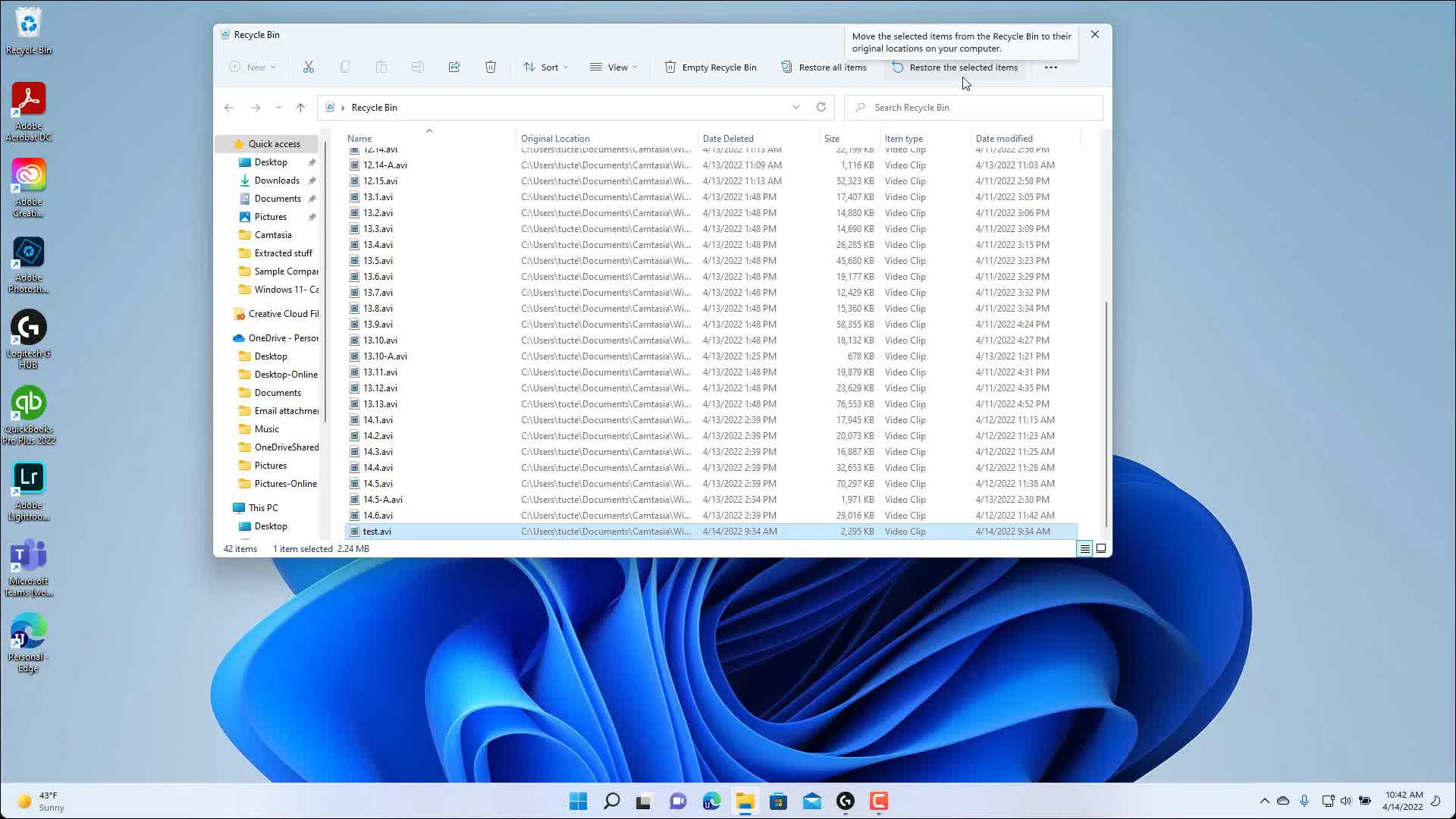
Facepalm: Microsoft has acknowledged a strange Recycle Bin bug affecting Windows 11 following this month’s Patch Tuesday update. Users have reported several other issues since the June 2026 update rolled out earlier this week, but this is the only bug Microsoft has officially confirmed.
According to Microsoft, users who have installed the KB5095051 update might encounter a strange Recycle Bin bug that replaces the names of deleted files with internal Recycle Bin filenames in specific situations. When permanently deleting a single file from the Recycle Bin, the confirmation dialog displays a cryptic internal filename, such as $Rxxxxx.ext, instead of the original filename, such as realfilename.txt.
However, the bug only affects the confirmation dialog, as the Recycle Bin window continues to display the original filename. Restoring the item also reportedly returns it to its original location with the correct filename. Despite the incorrect filename shown in the confirmation dialog, the file is still deleted as expected once the action is confirmed, meaning the bug does not cause any significant usability issues.

Microsoft says a workaround is available for affected devices, but only commercial users can deploy it for now. To obtain additional details on how to mitigate the issue, system administrators must contact Microsoft Support for Business. Everyone else will have to wait for a permanent fix, which Microsoft says will be delivered in a future Windows update.
Despite Microsoft’s recent emphasis on improving the Windows user experience, the operating system’s updates continue to be plagued by bugs and reliability issues. According to posts on Microsoft’s official forums, the June 2026 update has introduced a variety of annoying bugs, including problems accessing OneDrive and Dropbox. IT administrators are also reporting sluggish File Explorer performance across hundreds of PCs in their organizations.
Some HP users are reporting random BSODs after installing the update, while Lenovo users say their PCs freeze even under moderate workloads. Additionally, one IT administrator claims the update is triggering BitLocker Recovery on devices configured with local accounts and says a Microsoft support chatbot told them the only solution is to wipe the computer and reinstall Windows.

Crystal ball: The company accused of making Pokémon copycats “with guns” says it is not interested in using generative AI in its games. It argues that gamers are largely opposed to this kind of content, while noting that generative AI is likely to remain a controversial topic in the industry for a range of reasons.
The debate around AI-generated assets in games is heating up, and Pocketpair has already taken a clear stance. The Japanese studio, best known for Palworld, says it is not using generative AI in its games, arguing that potential customers are rejecting “fake” assets and other AI-generated content.
In a recent interview, Pocketpair’s Head of Publishing & Communications John Buckley said that “gamers don’t want it.” And “if the gamers don’t want it, I guess that’s it, right? Not much of a conversation to be had.”
The Palworld developer has previously faced accusations of both plagiarism and the use of generative AI in creating some of the game’s assets and creature designs. Nintendo is pursuing legal action against the studio, though the dispute has not unfolded entirely in the company’s favor so far.
During the interview, Buckley also said that some developers are already using generative AI in their games. However, he believes the trend is not yet widespread, and added that Pocketpair has no interest in extensively adopting the technology in any case.

Some companies are exploring chatbots and large language models to save time and reduce reliance on human creators, but growing public pushback suggests the generative AI “bubble” could eventually burst. Pocketpair already has all the in-house artists it needs, Buckley said, arguing there is no “pointless” reason to replace staff with AI systems doing the same work.
The controversy around generative AI in gaming continues to intensify. Established studios such as Crystal Dynamics have found themselves explaining the use of AI-generated assets as placeholders in the latest Tomb Raider remake. Meanwhile, Sega faced significant backlash after introducing the new Crazy Taxi game as an AI-assisted production.
Steam now requires developers to disclose whether and how they have used AI in their games. Epic Games CEO Tim Sweeney, however, has argued that Valve’s disclosure requirement is unnecessary, claiming that nearly all future games will incorporate generative AI in some form.
Pocketpair’s John Buckley is less convinced by Sweeney’s stance. He suggests the industry could eventually split, with some studios leaning into a heavily marketed “human-made” identity as a response to growing concerns over “AI slop” in digital storefronts. He also believes AI adoption could become a regional divide.
Developers in parts of Asia, including China and South Korea, may adopt AI more rapidly than competitors, while Western studios – and players – remain more resistant. Stellar Blade developer Shift Up has also said that generative AI could help South Korean studios compete with much larger companies in China and the US.

Alogic is bringing more touch and stylus input options to Mac with a new desktop monitor and portable displays, expanding a lineup that adds a feature Apple doesn’t offer on its own hardware yet.
The company unveiled the Aspekt Touch 27 and Folio portable displays at InfoComm 2026, expanding its lineup of touch-enabled hardware for Mac users. Both products let users interact directly with apps, documents, presentations, and creative projects through touch and stylus input.
Alogic is one of the few monitor makers offering touchscreen hardware for Macs. The company uses its own software to enable touch gestures, navigation, annotation, and drawing on macOS.
The Aspekt Touch 27 is a smaller version of Alogic’s existing 32-inch model. The new display combines a 27-inch 4K IPS touchscreen with a 60Hz refresh rate, 600 nits of brightness, a 1000:1 contrast ratio, and support for 97% of the DCI-P3 color space, 93% Adobe RGB, and 100% sRGB.
Alogic pairs the display with its Active Stylus, which offers 4,096 levels of pressure sensitivity. The monitor supports 10-point multitouch input and MPP 2.0 styluses, while a magnetic holder wirelessly charges the stylus between uses.
The monitor also functions as a docking station with HDMI 2.0, DisplayPort 1.4, USB-C, Gigabit Ethernet, and a 3.5mm headphone jack. Three USB-C ports, two USB-A ports, dual 5W speakers, and up to 150W of total charging output are built into the display, including up to 90W of USB-C power delivery for a connected laptop.
The Aspekt Touch 27 is available in Silver and Space Black, and buyers can choose from a Raise Stand, a Fold Stand, or an Omni Fold Stand. The Fold Stand lowers the display into a drafting position for stylus use, while the Omni Fold Stand includes an integrated mount for an M4 Mac mini.
Alogic also introduced the Folio and Folio Duo portable touchscreen displays for users who need a secondary screen away from a desk. The standard Folio features a 16-inch QHD IPS touchscreen, while the Folio Duo combines two 16-inch panels into a folding design that can be used side by side or stacked vertically.
A fabric cover doubles as a stand and allows the displays to fold flat for travel.
 The Folio Duo
Both models deliver 400 nits of brightness, a 1000:1 contrast ratio, and 100% sRGB color coverage. The displays support 10-point multitouch interaction, stylus input, and full gesture controls on both Mac and Windows.
The portable displays operate over a single USB-C connection and support up to 45W of passthrough charging. A magnetic attachment point wirelessly charges the Active Stylus. The Folio weighs about 1 kilogram, while the dual-screen Folio Duo weighs about 1.2 kilograms.
Alogic says the Folio lineup is the first portable display series to bring full gesture controls and 10-point multitouch support to both Mac and Windows. The company says users can draw, annotate, and edit content directly on screen without moving projects between a computer and tablet.
Alogic has spent years targeting users who want touch and stylus input on macOS. The Aspekt Touch 27 and Folio lineup expand those options with both desktop and portable designs.
The Aspekt Touch 27 starts at $1,799 and will be available beginning in July. The Folio is priced at $899, while the Folio Duo costs $1,299. Both portable displays are expected to launch around September.

Walk down East Coast Road on a weekday afternoon, and you might notice something that doesn’t quite fit the postcard image of Katong: shuttered shopfronts, darkened interiors, and “For Rent” signs that have clearly been hanging there a while.
Katong is the area where Joo Chiat Road meets East Coast Road, and it’s known for its hipster vibes—heritage shophouses, popular cafés, and a neighbourhood energy that earned it a spot on Time Out‘s list of the world’s coolest streets in 2025.
But that reputation is increasingly at odds with what people are actually seeing on the ground.
The unexpected side of Katong finally spilt into public view when a Reddit post on r/singapore gained traction. User u/HB_SG asked a simple question: has anyone else noticed the growing number of vacant shop units around Katong?

What the discussion made clear is that the vacancies aren’t new.
Residents and visitors pointed to a growing number of units that have sat empty for extended periods, including several within i12 Katong.
The mall, located at the junction of East Coast Road and Joo Chiat Road, closed for renovations in 2020 and only reopened in 2022. Yet years later, some retail spaces remain unoccupied, while others have seen a steady churn of tenants come and go with little fanfare.
One commenter described it as an “endless parade of opening and closing.” Among the apparent casualties are Zero Healthcare, which relocated its East Coast Road showroom to Parkway Parade, and fried chicken brand Frosti Fck, whose last social media activity was a Nov 2025 post and whose Google listing now shows as closed.
Vulcan Post has reached out to both businesses for further comment, but has not received a response at the time of publication.
The Reddit thread kept circling back to one word: rent. One Redditor summed up the prevailing sentiment bluntly: “Rents, rents, rents, rents—no vacancy tax. If rents were halved, everything will be occupied.”
Others pointed to specific examples. One commenter claimed that several shophouses along Koon Seng Road have remained vacant for years despite strong demand in the area, arguing that landlords are holding out for rents that many businesses simply cannot afford.
The issue also appears to extend beyond Katong. In other parts of the East Coast region, including Siglap, rising rents have become a growing concern for business owners. In 2025, it even pushed out several long-running businesses, including Flor Patisserie.
The frustration about retail rents has even reached Parliament. In Apr 2026, Member of Parliament Elysa Chen raised the issue in the House, asking how the government reconciles official data which suggests rent has actually fallen as a share of business costs, with what retailers on the ground are experiencing.
DPM and MTI Minister Gan Kim Yong acknowledged the gap in his written reply: while aggregate rental costs for F&B dropped from 26% to 17% of total business costs between 2019 and 2024, he noted that “at the local level, rental costs can vary for retailers due to attributes such as proximity to key transport nodes or estates with high population density.”
In other words, national averages may look fine, but they reveal little about what an individual business owner is paying for a shophouse in a highly sought-after neighbourhood.
ERA’s 1H 2025 shophouse market report also noted that more F&B operators were shutting down, and that a weaker rental outlook might push some landlords, particularly those with less holding power, or private equity investors looking to exit, to start accepting lower rents.
But for many, that moment hasn’t come yet.

The vacant units around Katong are not the result of a single problem. Beyond rental costs, Redditors highlighted a range of factors that may be contributing to the area’s retail struggles.
Firstly, parking is a nightmare on Katong’s roads. The streets around the area are notoriously narrow—barely two car-widths in places—and roadside parking creates its own bottleneck. On weekends, cars are often caught waiting for a spot to free up, which puts people off before they’ve even stepped out of the vehicle.
Then there’s the heat. Katong’s charm is mostly outdoors, but the dense rows of shophouses create a concrete warming effect that traps heat and humidity. Browsing around on foot in the middle of the day is genuinely unpleasant for most of the year.
The layout of buildings themselves doesn’t help either. Narrow footprints, tight staircases, and without the climate-controlled comfort of a mall, browsing on foot in Singapore’s heat is already a hard sell. Moreover, bus services through the smaller back streets are also sparse, limiting how easily people can get there without a personal vehicle.
Lastly, the gradual gentrification has narrowed the appeal of Katong. Several commenters pointed out that the shop mix has drifted toward expensive, Instagram-friendly concepts—the kind of places influencers visit once for the photo, not twice for the overpriced food. When the locals themselves don’t want to patronise the local shops, the foot traffic problem starts to make a lot more sense.
On top of all that, these aren’t units you can just slap a fresh coat of paint on and hand to a tenant. Shophouses fall under conservation rules, meaning any renovation requires engaging a qualified person, submitting drawings to URA, getting conservation approval, and then separate BCA permits for structural work.
Restoring a “shell” unit can run between S$700 and S$1,000 psf before a single tenant moves in. With shophouses in Katong and Joo Chiat now trading at S$3,000 to S$5,000 psf and heritage-restored stock commanding roughly a 10% premium on top of that, many landlords simply cannot afford to drop rents without the entire investment falling apart.

This is where the broader market context matters.
ERA’s data shows that landed shophouse transactions fell to just 34 in H1 2025, totalling S$234.7 million—the lowest half-year figure since 1998, and a steep fall from the peak of 245 transactions worth S$1.8 billion in 2021. District 15, which covers Katong and Joo Chiat, saw only four transactions in that period.
Many of the landlords sitting on empty units aren’t being stubborn for no reason—they’re caught in a bind.
For owners who bought at high prices, the rent they collect helps determine the property’s investment returns. Accepting a significantly lower rent may reduce their yield and potentially affect how the property is valued when they refinance or sell.
That creates a difficult trade-off: some landlords may prefer to wait for a tenant willing to pay closer to their asking price rather than lock in a lower rent that changes the financial assumptions behind the investment.
The problem is that prolonged vacancies carry their own costs. Empty storefronts can weaken a street’s vibrancy, reduce foot traffic, and eventually make it harder for landlords to attract the quality tenants needed to revive the area.
What the Reddit thread captured, more than any single data point, is a lived sense of mismatch: a neighbourhood with genuine heritage value and cultural cachet that isn’t consistently translating into a viable environment for the businesses trying to operate there.
Whether the fix requires lower rents, a vacancy tax to nudge landlords off the sideline, better infrastructure, or pedestrianising the area altogether, locals are clearly paying attention, and the patience for empty units is wearing thin.
For now, the “For Rent” signs stay up.
Featured Image Credit: u/HB_SG via Reddit/ Visit Singapore


The UK’s top data and AI regulator has resigned. It is the first time it has ever happened.
John Edwards stepped down as information commissioner on Friday, with immediate effect. His exit followed a months-long workplace investigation. He said his position had become “untenable”.
Edwards was careful in his statement, posted on LinkedIn. He said there had been “occasions where I exercised poor judgement and made attempts at humour that were inappropriate and caused offence”. He also said he disagreed with how the investigation had been run.
Crucially, the details remain hidden. Neither the regulator nor the government has said what the conduct actually was. The probe began in February over unspecified “HR matters”, and concluded this month with a finding that there was “a case to answer”.
The job matters more than the man. The Information Commissioner’s Office oversees data protection, freedom of information and AI in Britain. It can fine companies up to £17.5mn, or 4 per cent of global turnover. It also sets the rules on how companies handle Britons’ personal data, and recently hit Reddit with a £14mn penalty over children’s data.
His departure is also a historic first. The office has existed since 1984, and no commissioner had ever resigned before, one data-protection lawyer noted. So Britain’s data and AI watchdog is now without a permanent chief, while a deputy keeps things running.
The timing is awkward. Campaigners have been attacking the ICO as toothless, accusing it of brushing aside thousands of public complaints. One group called Edwards’s exit a chance to appoint “a regulator with teeth”.
The post is also about to change shape. Under new UK law, the role is being folded into a wider Information Commission, and Edwards was expected to leave later this year anyway. His abrupt resignation simply brings that reset forward, in far less flattering circumstances.
Edwards used his farewell to look ahead, not back. “As the AI tsunami breaks over us, we must redouble … our collective efforts to ensure safety, accountability, and trust online,” he wrote. He added that “no single organisation or country can address these challenges alone”.
For the tech industry, the real question is who governs AI and data in Britain next. The answer is suddenly unclear, just as governments everywhere fight over how to rule AI, and even as the EU’s own AI rulebook keeps slipping. A strong successor could sharpen enforcement. A weak one could prove the critics right. Either way, Britain has lost its data chief at an inconvenient moment.

Once the purview of crime labs and TV shows, DNA tests have instead become common gifts for birthdays, holidays and special occasions like Mother’s Day and Father’s Day. Quick tests like 23andMe and AncestryDNA have made the process of learning more about your family history easier, cheaper and faster than ever.
But in her new book, The Psychology of Genealogy, psychologist Susan Moore warns that you should consider all the risks before undergoing a test.
“Should you give DNA kits as gifts? It can be fun; it can be risky,” Moore said.
Beyond the safety concerns of a company having your DNA on file with the potential of data breaches and privacy concerns, emotional fallout can be an unexpected — yet not uncommon — result of these DNA tests. While genetic testing promises answers and connection, those findings can upend long-held beliefs about your identity and family.
With over 30 million users and a multibillion-dollar industry, surprising matches and results are common. Misattributed paternity, donor-conception discoveries, late-found adoptions and unknown family members have all emerged from growing databases. For people unprepared for these outcomes, the psychological effects can be severe, according to Moore.
Moore calls it “identity disruption” when new genetic information can undermine a person’s sense of self and belonging. She says some integrate the news and move on, while others face betrayal, mistrust and grief.
There are many practical, real risks when it comes to DNA testing. So why do millions of people still purchase them and send in their swabs?
Moore points to a few basic drives, such as curiosity, a need for rootedness and the intellectual thrill of uncovering family lore as to why people still undergo genetic tests. Genealogy can bring joy when people find long-lost relatives or overcome research barriers. Yet, curiosity often meets hard, unexpected truths.
“DNA gives you some new and interesting clues to your family tree structure, but the hard work of making sense of those clues must still be done,” Moore said.
If you’re still interested in pursuing genetic testing anyway, Moore offers some simple advice: Test only if you want to explore ancestry and are ready to learn how to interpret results and contact matches ethically. Do not gift a kit without asking first, and make sure recipients are emotionally prepared and aware of privacy risks.
TL;DR: ASML’s most advanced chipmaking tools have become the focus of a renewed dispute in Washington over how far the US should go to keep cutting-edge semiconductor technology out of China. In recent months, the Trump administration has pressed ASML over whether one of its extreme ultraviolet (EUV) lithography machines may have slipped past export controls and ended up in China. According to people familiar with the talks, Commerce Secretary Howard Lutnick raised the issue directly with ASML’s senior leadership, asking whether a machine that has never been approved for export to China could have nonetheless reached the country.
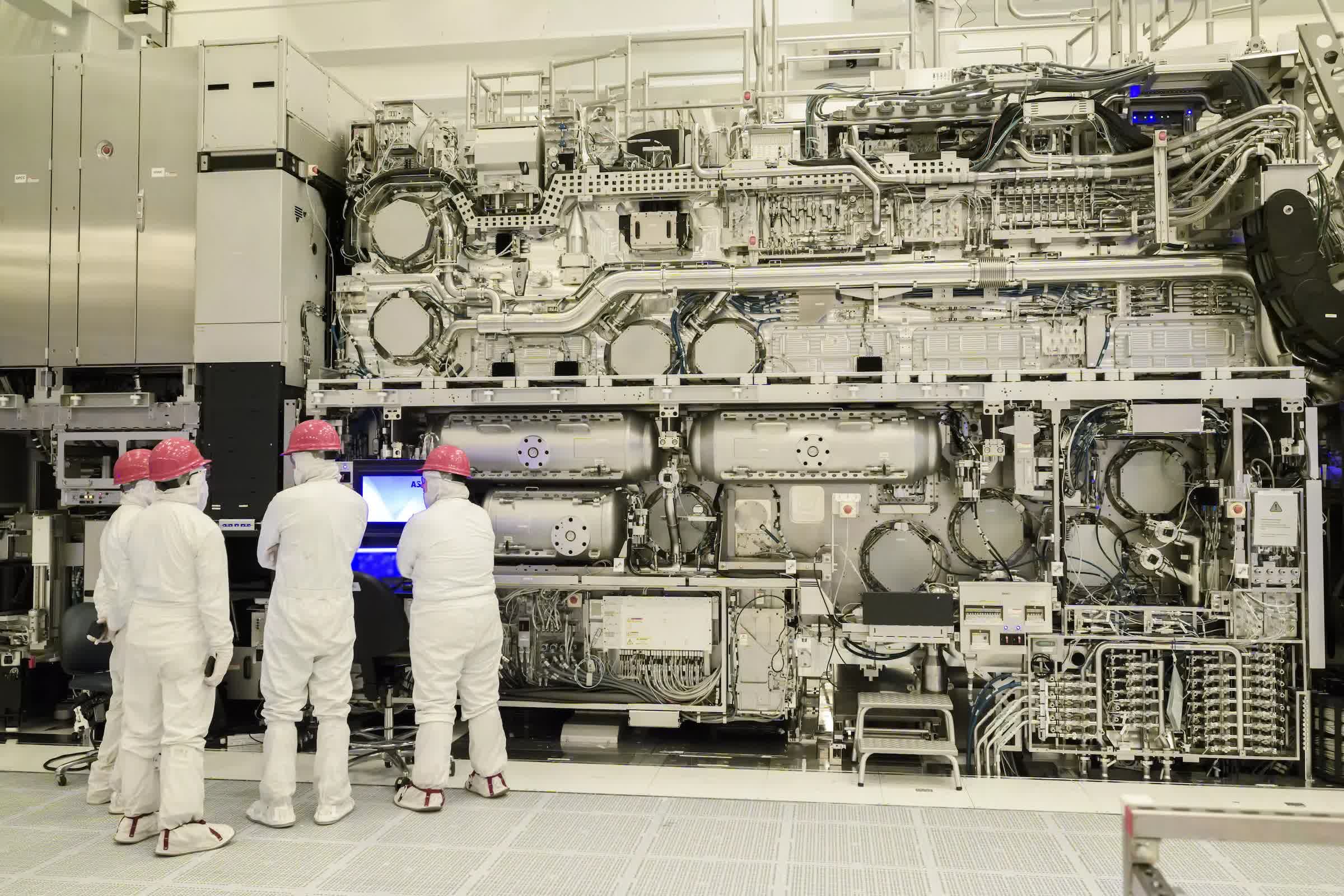
EUV is the technology that underpins today’s most advanced processors. The machines are used by companies such as TSMC to manufacture high-performance chips for Nvidia and Apple. They are roughly the size of a school bus, are produced in limited quantities, and require constant maintenance from ASML engineers.
US export rules have long barred ASML from selling EUV tools to China, and the company says it complies with those restrictions. In its discussions with Lutnick, ASML pushed back on the suggestion that an EUV system could be operating in China, according to people familiar with the talks.
A company spokesperson, responding to questions about those meetings, said ASML has never shipped an EUV machine to China and stressed that it regularly engages with governments worldwide while adhering to export regulations.
The conversation has taken on a sharper edge in Washington. Multiple senior Trump administration officials, speaking on condition of anonymity, said they believe ASML is not acting in good faith, citing exports to China of equipment they say is specifically related to EUV tools.
They declined to provide documentation, citing the sensitivity of the information, and did not say they had proof of an actual EUV machine operating in China. ASML, for its part, denied to Bloomberg that it has shipped any EUV-specific equipment to China.
Behind the scenes, the pressure has triggered an internal scramble at ASML. After Lutnick’s April meeting, the company prepared a document titled “No Indication of Any ASML EUV System in China” and circulated it among officials in Washington, according to people familiar with the situation.
The document, reviewed by Bloomberg, says there are 314 EUV machines in use worldwide and 26 that have been decommissioned, with none located in China. It also states that ASML can automatically detect “any interruption, abnormal behavior, or loss of connectivity” across its EUV fleet, and that customers “cannot remove, transport, or relocate EUV systems without ASML involvement due to specialized handling procedures.”
Those technical constraints are central to ASML’s argument. EUV tools are so complex that they effectively remain under the company’s oversight throughout their operational life. ASML says customers cannot remove, transport, or relocate EUV systems without its involvement because of specialized handling requirements.
Yet skepticism within the Trump administration persists. Senior officials say they have evidence that ASML shipped specialized transport equipment and other components for use with EUV systems to Chinese customers, though they have declined to provide supporting records.
The technology at the heart of the dispute is critical to China’s AI ambitions. Huawei Technologies, which has been cut off from EUV tools, has made progress in producing advanced chips without ASML’s most sophisticated equipment, narrowing the gap with TSMC. That absence of EUV capability is widely seen as one of the most significant constraints on Huawei’s ability to mass-produce cutting-edge AI chips.
If investigators were ever to confirm that a full EUV system had reached China, it would amount to one of the most serious known breaches of the US-led export control regime designed to limit Beijing’s access to high-end AI hardware. For now, officials have declined to explain why, if they suspect such a violation, they have not brought public enforcement actions or further tightened restrictions.
ASML’s broader China business is already constrained. The Netherlands has blocked EUV sales to Chinese chipmakers and, under US pressure, has also restricted certain types of immersion deep ultraviolet tools. Washington has been frustrated that ASML accelerated shipments of some DUV systems before the newer rules took effect.
Senior Trump administration officials say those episodes, along with alleged EUV-related exports, point to a company that is too willing to prioritize short-term revenue over national security.
The dispute over EUV is unfolding as Washington debates how far to extend its export control regime. The US has effectively severed Huawei from most foreign technology and has used extraterritorial measures to draw companies such as ASML into that effort.
At the same time, gaps remain in how allied controls are applied and how far they extend to maintenance, servicing, and support for restricted Chinese firms such as SwaySure Technology, which US officials say has received technological support from ASML. The administration has tools to halt those relationships outright but has not done so, and negotiations with the Netherlands and Japan over tighter rules have yet to produce a decisive outcome.
In Congress, lawmakers are pushing a bill that would bring foreign suppliers, including ASML and Tokyo Electron, under restrictions more closely aligned with those on US firms, and would effectively ban ASML’s shipments of immersion DUV tools to China.
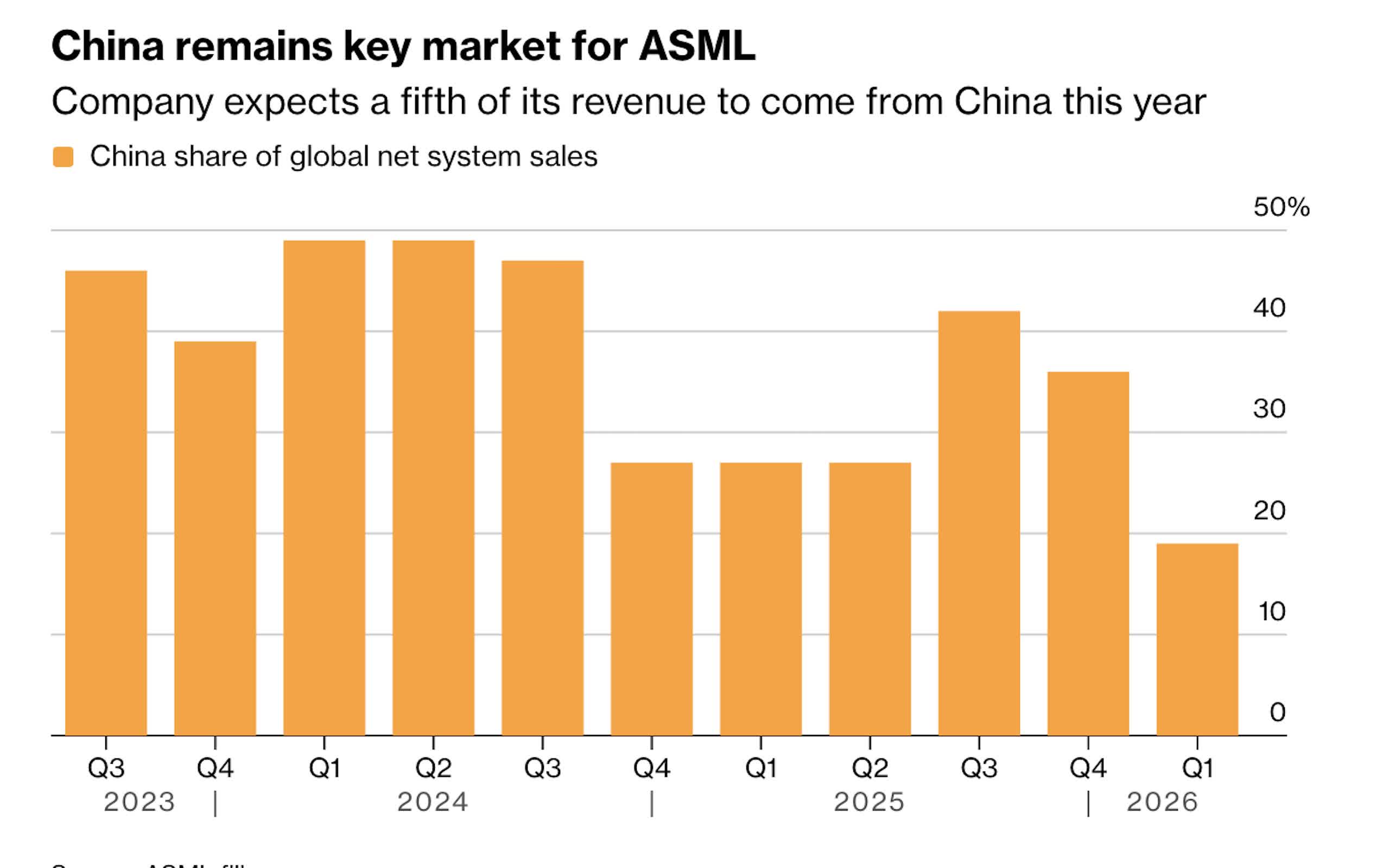
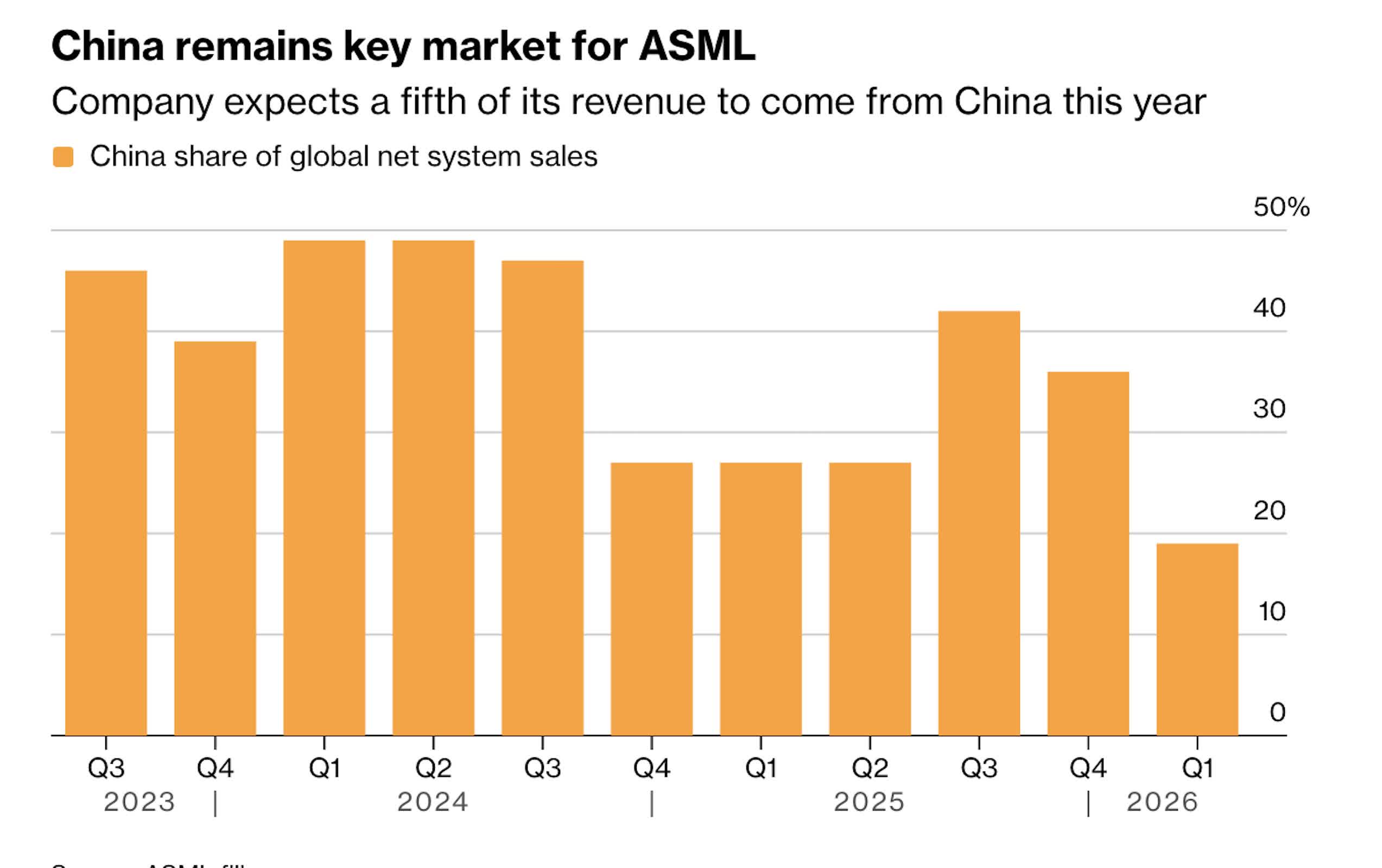
That shift would hit a business ASML expects to generate about one-fifth of its 2026 revenue. The Trump administration has not taken a formal position on the legislation, and US diplomats have suggested that a broader US-EU trade deal could reduce momentum behind the bill, which several European governments oppose.


The Texas Parks and Wildlife Department (TPWD) disclosed a data breach at its license system vendor that exposed personal information for more than three million individuals.
The Texas Cyber Command discovered the intrusion and launched an investigation to determine the extent and impact of the unauthorized access. The state authority found that Social Security Numbers (SSNs), dates of birth, or any financial information, such as credit cards, have not been impacted.
However, the threat actor may have obtained personally identifiable information that includes the following data types associated with 3,087,721 Texas hunting and fishing license customers:

The exposed data set is sufficient for hackers to target impacted individuals in phishing and social engineering attacks that lead to web pages distributing malware or seeking more sensitive information.
“There is no evidence that customers under the age of 18 were involved or that any specific group was targeted,” TPWD says in the data breach notification.
TPWD is the Texas state agency responsible for managing wildlife and fisheries, state parks, conservation programs, hunting and fishing regulations, boating registration, and enforcement by Texas Game Wardens.
The Texas state agency also issues hunting and fishing licenses and permits, which are sold through an external vendor.
BleepingComputer contacted TPWD for more information about the incident and the name of the third-party service provider, but we have not yet received a statement.
The agency says that it is “working closely with the license system vendor to implement new safeguards and enhanced monitoring services.”
TPWD advises customers to monitor their credit reports and financial statements. Impacted individuals are eligible for one year of free credit monitoring and should consider placing a credit freeze or fraud alert with major credit bureaus as an added protection against identity thieves.
It is also strongly recommended to remain vigilant for phishing and impersonation scams, as threat actors may try to send communication posing as a company or an official.

Security teams log 54% of successful attacks and alert on just 14%. The rest move through your environment unseen.
The Picus whitepaper shows how breach and attack simulation tests your SIEM and EDR rules so threats stop slipping by detection.

Jon Prosser, the leaker Apple is currently suing for allegedly leaking iOS 26 trade secrets, has published yet another video on his YouTube channel called Front Page Tech, showing what he says could be the final design of the purported iPhone Ultra.
Along with slightly different renders from last time, Prosser also points to iOS 27 developer code to back up his claims, particularly regarding the existence of the iPhone Ultra and a new feature that iOS users have been requesting for years.

The renders show a book-style foldable that Prosser describes as a “chunky iPhone” when closed and an “iPad” when opened, something we’ve already known for a while. When unfolded, the phone could measure just 4.5 mm, making it slimmer than the iPhone Air at 5.6 mm.
The titanium body pairs with what the host calls an “over-engineered hinge” designed to produce a near-creaseless display. Apple has reportedly been developing the technology for quite some time and has also faced a couple of setbacks.

As seen in the video, the purported iPhone Ultra could come in two colors: white and black (or a dark gray finish). Most of these details aren’t entirely new and have been echoed by several different sources.
What stood out to me, however, were a few smaller details that didn’t get much attention in the video.

Front Page Tech also uploaded a similar video in December 2025, calling the foldable the “iPhone Fold” instead of iPhone Ultra. After watching both videos side by side, here are some changes that I’ve noticed.
While the previous video had the power button (with integrated Touch ID) at the top of the smartphone, right above the camera bar (with the display facing you), the new renders show volume buttons in that position instead. There’s also a speaker grille on the top frame.


The power button is now located on the right frame, where it normally sits on an iPhone, but on the bottom half of the foldable. This isn’t the typical iPad button layout everyone is used to, and it may take some adjustment.
The elephant in the room is the new, more compact camera visor. Instead of covering the entire width of the rear panel, it extends only around the dual rear-facing camera module, elevating the sensors above an otherwise flat panel and creating a more seamless look.


Prosser claims the iPhone Ultra will bring split-screen multitasking to iOS, though it would reportedly be exclusive to the foldable. That means your current iPhone likely won’t get it, even though it supports iOS 27.
Apple appears to be laying the groundwork in iOS 27 code, with strings like “fold state” and “angle degrees” surfacing in the developer beta.
Following WWDC 2026, Apple also instructed developers to prepare for a dynamic range of screen sizes and aspect ratios. If Prosser is right, the iPhone Ultra would be the first iPhone to properly run two apps side by side.

Other claims about the phone, such as the A20 chip, the C2 modem with satellite-based 5G connectivity, and a price tag north of $2,000, remain similar. Whether the iPhone Ultra will ship with Touch ID and a Camera Control button remains unclear, but a September 2026 launch alongside the iPhone 18 Pro and iPhone 18 Pro Max seems likely.





No Jackpot Winner as $257 Million Prize Rolls Over to $269 Million Monday Draw

Zimbabwe Requires Crypto Businesses to Register Annually Under New FIU Regulations


Bitget enters Argentina’s regulated crypto market through PSAV registration


NanoClaw integrates JFrog registries to secure AI agent downloads


FBI searches office of Ohio voter registration group

Matt Damon’s Viral Sci-Fi Thriller Has Taken Over HBO Max


Anthropic staff to meet White House officials next week, Axios reports


As AI companies race to go public, who else is along for the ride?

Bitcoin could crash to $48,000, if this historical pattern is triggered


“Israel’s” ban on ICRC visits ruled illegal, but Knesset moves to stop them permanently

Warning of disruption as Cardiff Crossrail works to start


Financial Accounting | Last Day Revision Strategy and Booster | CMA Inter – June 2026

Tributes to former deputy head teacher at Cambridge school among death and funeral notices

what doctors are seeing in ebike crashes


Deion Sanders Shares Powerful Post After Viral Advice To Deiondra

Kate Middleton Glare Goes Viral After Kids Booed At Royal Event


XRP ETFs Outperform As Bitcoin And Ethereum Funds Extend Outflow Trend

Market Preview: SpaceX (SPCX) IPO Record, Federal Reserve Meeting, and Iran Nuclear Agreement


Invesco Quality Income Fund Q1 2026 Commentary


Over 400 Arch Linux packages compromised to push rootkit, infostealer


You must be logged in to post a comment Login