The It’s FOSS blog has news about the Linux Vendor Firmware Service, which gives hardware vendors a secure portal to upload firmware updates “which can then be downloaded and installed by users through clients such as GNOME Software or fwupdmgr.” (Originally developed in 2015 by GNOME maintainer Richard Hughes…) The issue, however, obviously, had been funding with the largest contributors being the usual suspects, Framework and Open Source Framework Foundation, at $10K a year. Recently, however, Lenovo and Dell joined suite as Premier sponsors, which is the highest tier at $100K a year each, making the project more sustainable and manageable.
These companies contributing makes a lot of sense, considering they are two of the bigger computer companies which offer Linux by default in some cases, especially with Lenovo’s ThinkPads being the Linux users’ favorite for decades. And now… HP has followed suit as a Premier sponsor, also providing $100K a year, right alongside Dell and Lenovo…
The question still remains, however, where are the other vendors? What are they waiting for… This major move by these three companies should not only be seen as a sign of relief and wider acceptance of the usage of Linux, but as a beacon for other vendors to follow, who ought to make their hardware more accessible to the open-source community.
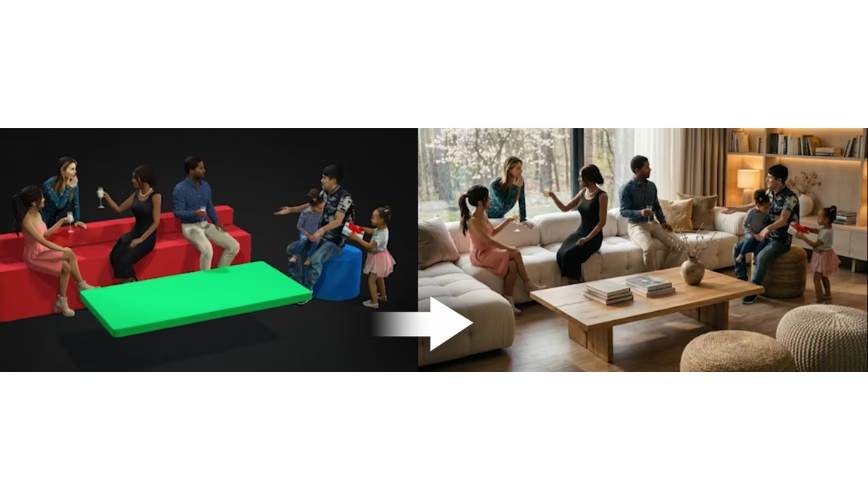
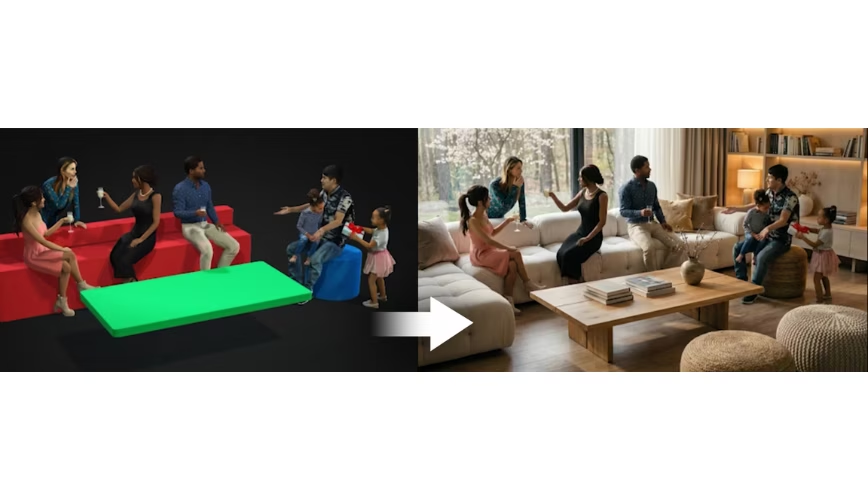
Reallusion launched AI Studio, a production platform that pairs its iClone 3D animation tools with ByteDance’s Seedance 2.0 to give filmmakers spatial precision that text-prompt-only AI video generators cannot match. The multi-model platform also supports Veo 3, Kling AI, and others.
Reallusion, the 3D animation software company behind iClone and Character Creator, has launched AI Studio, a production platform that pairs traditional 3D scene-building with generative AI video models. The centrepiece is a direct integration with ByteDance’s Seedance 2.0, currently the top-ranked AI video model on the Artificial Analysis leaderboard.
Advertisement
The pitch is straightforward. AI video generators like Seedance, Google’s Veo 3, and Runway’s Gen-4 can produce impressive footage from text prompts, but they struggle with precision. Complex character motion, camera choreography, and spatial continuity break down when the AI is working from language alone. Objects warp, perspectives shift, and directors have limited control over what actually appears on screen.
Reallusion’s answer is a hybrid workflow. Artists build their scene in iClone, a real-time 3D animation tool, setting camera paths, character positions, skeletal motion, and lighting. That 3D data then serves as what the company calls a “precision control layer” for the AI model. Seedance 2.0 handles the visual rendering, textures, and cinematic quality, while the 3D scene provides the spatial structure. The artist retains directorial control. The AI handles execution.
Seedance 2.0 is well suited to this approach. ByteDance designed it with strong spatial intelligence, meaning it can interpret exact scene layouts, camera paths, and skeletal data without the guesswork that plagues other models. It generates clips up to 15 seconds in length with camera choreography and motion dynamics that feel intentional rather than random. China’s AI video industry has moved faster than any other market on production tooling, and Seedance reflects that momentum.
AI Studio is not limited to a single engine. Reallusion has built it as a multi-model platform, consolidating Flux and Nano Banana for image generation alongside Kling AI, Veo 3, Wan, LTX, and Scail for video. Users can switch between models depending on the shot, choosing one for photorealism and another for stylised animation. The idea is to give studios the flexibility to use whichever model best fits each scene rather than locking into a single provider.
Advertisement
The timing matters. OpenAI shut down Sora in April after the video tool peaked at one million users and reportedly cost $1 million per day to operate. The shutdown rattled creators who had built workflows around it and underscored the risk of depending on a single AI platform. The AI-animated film Critterz missed its Cannes market debut as a direct consequence.
Reallusion is positioning AI Studio as a more stable alternative. Because the 3D scene data lives locally in iClone, the creative work is not lost if a particular AI model is discontinued or repriced. The 3D assets, motion data, and camera setups remain usable. Only the rendering layer changes. That is a meaningful difference for studios investing in long-term production pipelines.
The company, founded in 1993 with R&D centres in Taiwan and offices in Silicon Valley, Canada, Germany, and Japan, has spent decades building tools for real-time 3D character animation. iClone and Character Creator are used in game development, film pre-visualisation, and virtual production. AI Studio extends that ecosystem into generative video without abandoning the 3D skill set that existing users have invested years in developing.
Adobe has taken a similar approach with its Firefly AI Assistant and Project Graph, integrating generative models into existing creative software rather than replacing it. The pattern across the industry is converging: the most useful AI creative tools are not standalone generators but hybrid systems that augment professional workflows.
Advertisement
Whether AI Studio gains traction will depend on whether the hybrid model delivers on its promise. Pure AI video generation is improving rapidly, and each new model narrows the gap between what a text prompt can produce and what a 3D-controlled pipeline delivers. Reallusion is betting that the gap will never fully close, that professional filmmakers will always need spatial precision, repeatable camera setups, and frame-level control that language-driven generation cannot guarantee.
For an AI video market in flux, where the leading model changes every few months and platforms can vanish overnight, a tool that keeps the creative decisions in the artist’s hands rather than the model’s weights is a bet on stability over spectacle. Whether that bet pays off will depend on how many filmmakers prefer control to convenience.
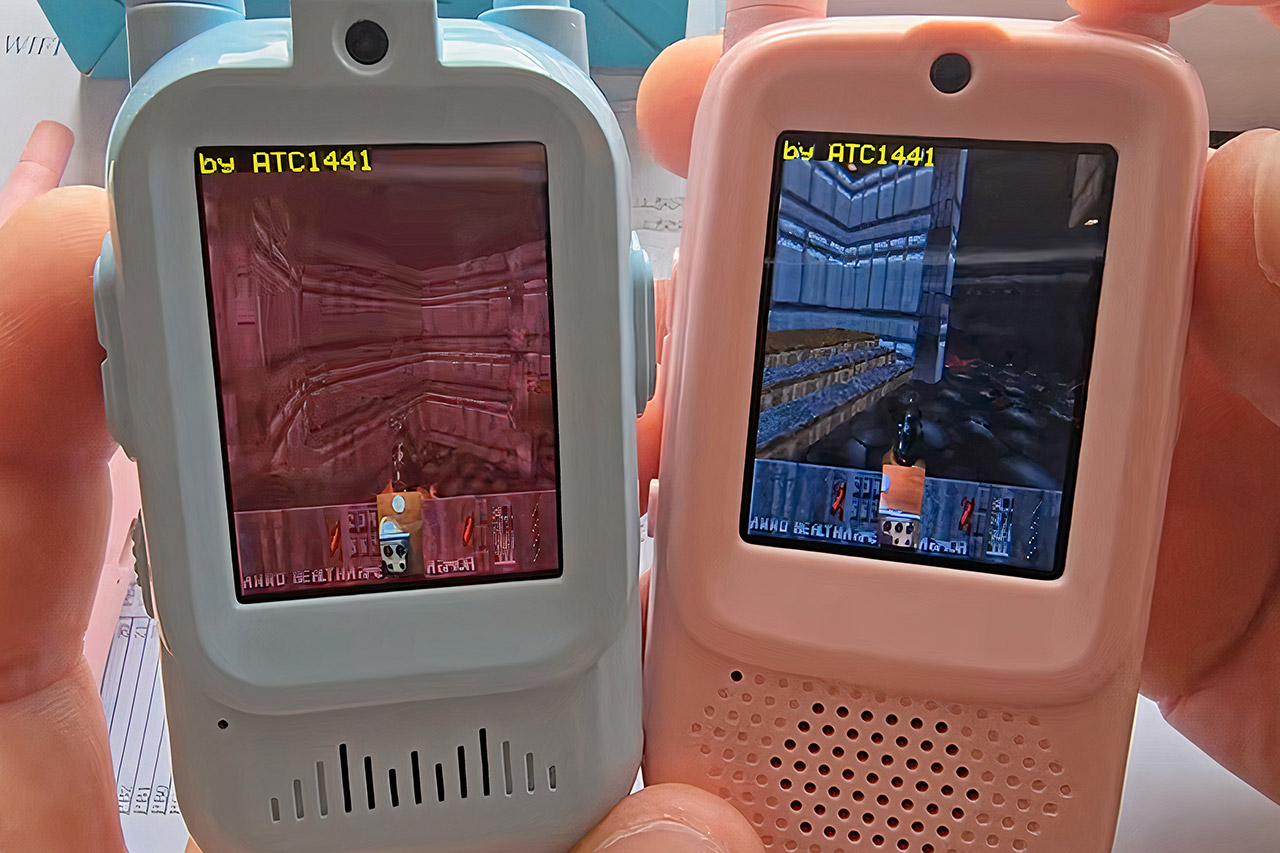
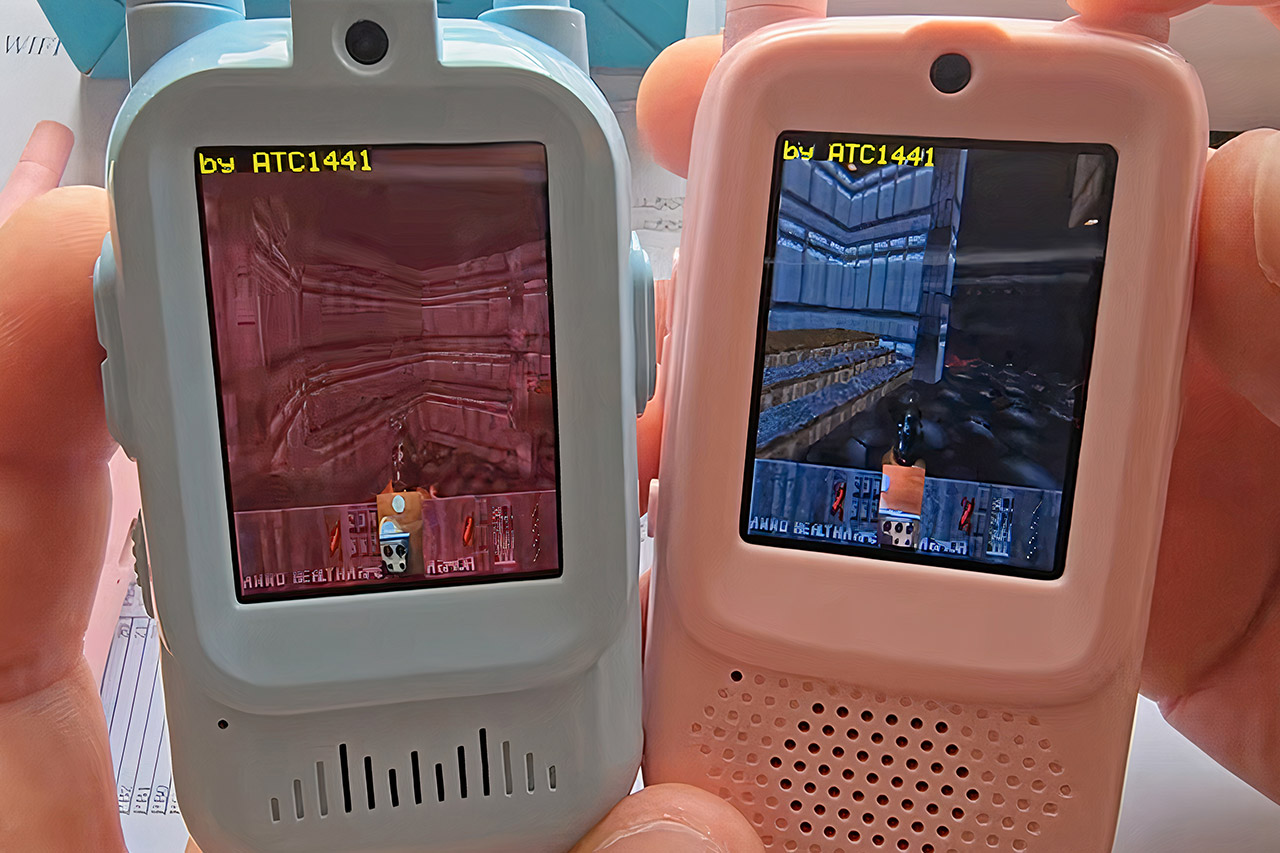
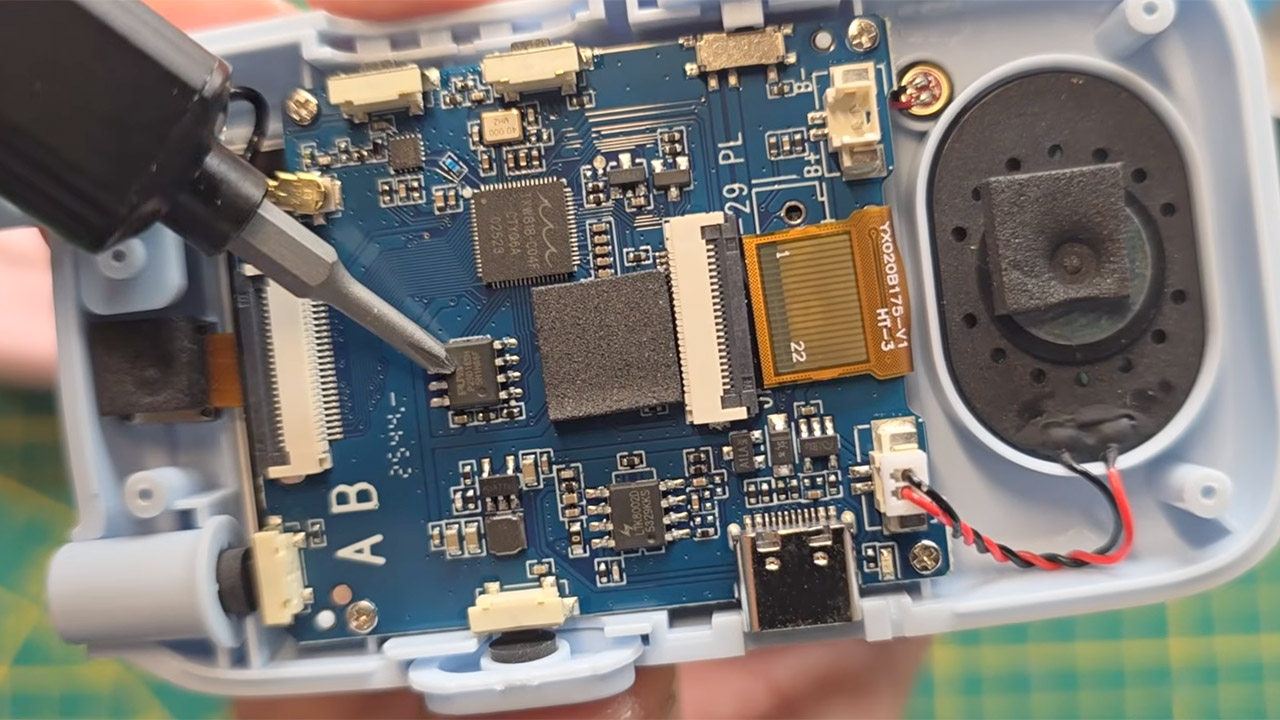
People buy video walkie-talkies to facilitate short-distance communication among children and / or family members. Aaron Christophel recognized an opportunity to bring DOOM onto one of these low-cost gadgets. These devices have small color screens, built-in cameras, microphones, speakers, and rechargeable batteries. Models retail online for between fifteen and twenty euros and rely on the TXW818 system on a chip to function. This chip has processing capacity comparable to some wireless modules and supports external memory, as well as four megabytes of PSRAM.
Christophel began by closely inspecting the electronics, noting that the devices differed: some had two megabytes of external flash memory, while others had four. Stuffing chip markings and scrambling flash memory is a typical practice that manufacturers use to make it difficult to meddle with their goods. Not to mention the specific tools required to delve deep into things: a USB to UART converter, a Blue Pill board posing as a J-Link clone, and a box called a profiler that allows you to monitor power consumption as devices perform different things.
Extended Jobsite Range: 2W output reaches up to 300,000 sq ft or 25 floors under optimal conditions, keeping large, dispersed crews reliably connected
IP67 Weatherproof Build: Rated for full water and dust immersion with anti-slip housing that survives drops up to 2 meters, built for harsh outdoor…
Secure Team Channels: 22 FRS channels and 121 privacy codes eliminate interference, with auto-squelch and up to 18 hours of battery life per charge
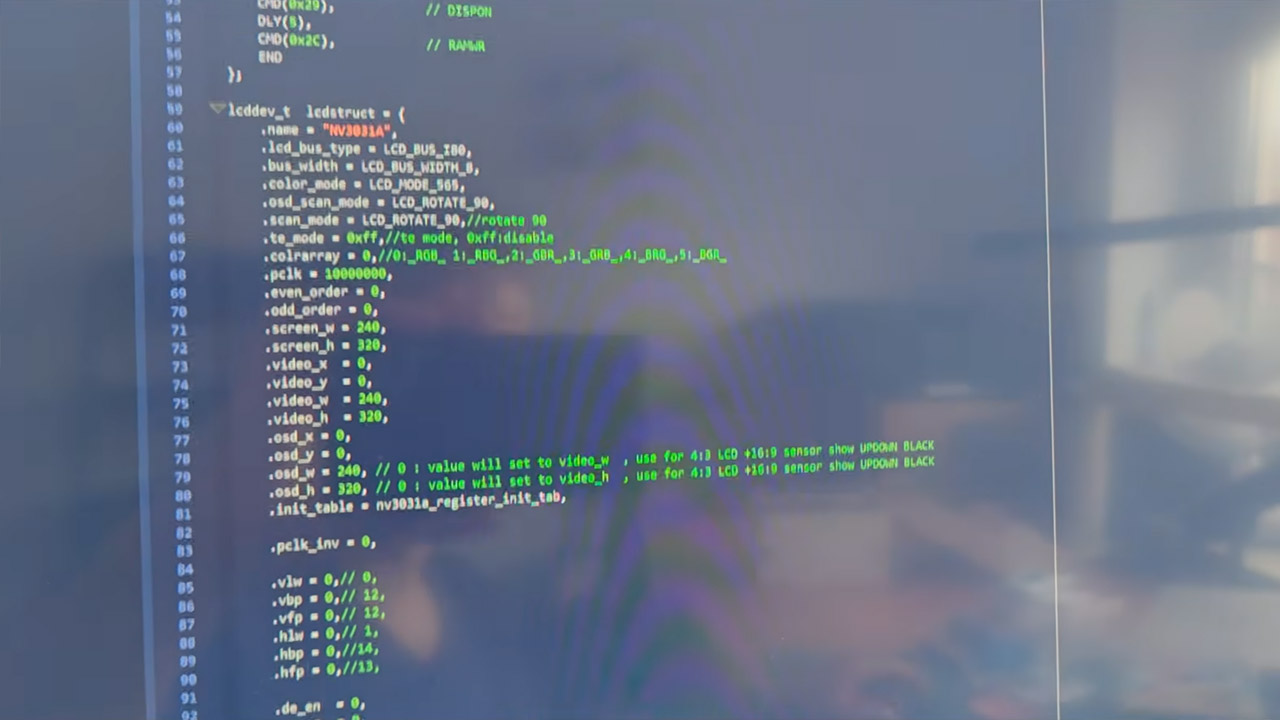
The majority of the project included reverse engineering. Christophel dumped the original firmware and examined it with Ghidra, an app that is quite useful for this type of task. The software development kit that came with the device did not include drivers for the screen or camera, so Christophel had to create his own. Things only got tougher from there, since the stock firmware disabled the debug interface immediately after booting up. Christophel needed to find a means to keep it on, so he devised a mechanism that allows him to maintain access to the debug capabilities by connecting specific capacitors and communicating with the flash chip at startup.
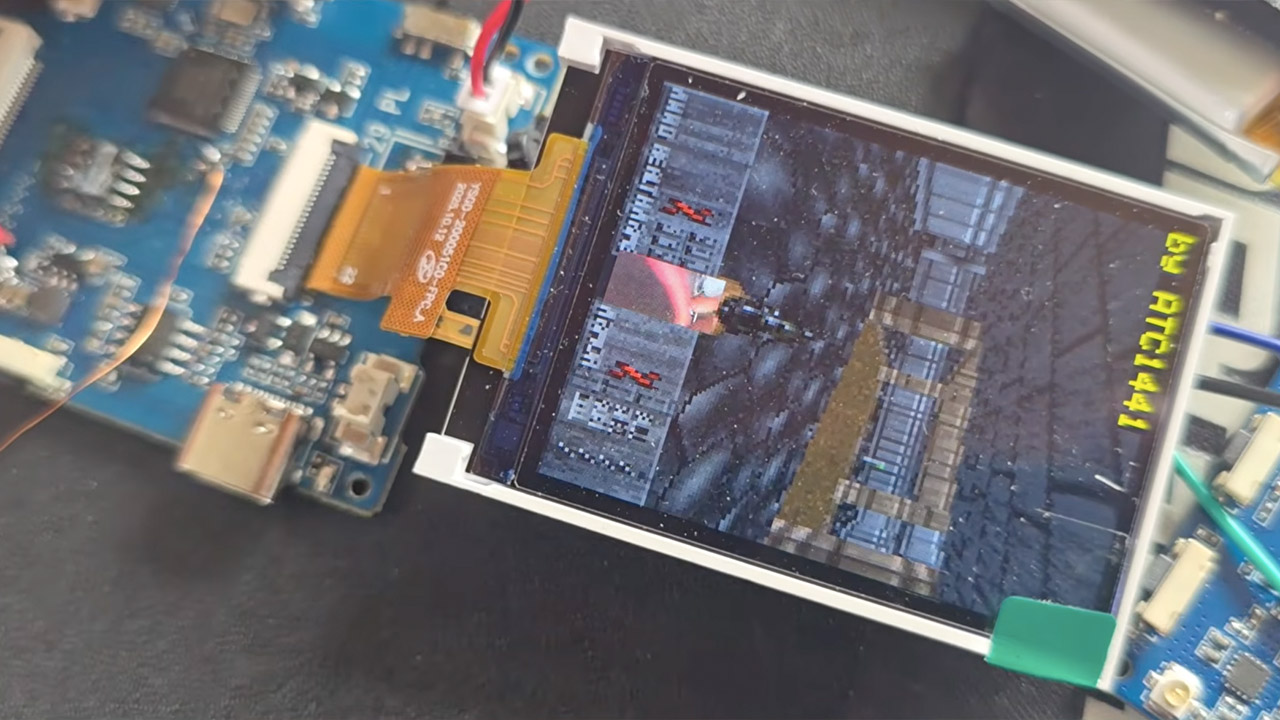
With that resolved, Christophel began work on a new firmware, which did a variety of cool things such as initialize the screen and make the buttons functional. He also created a function that allows the device to recognize the amount of flash memory it has on board and alter its settings accordingly. Things got a lot more complicated when he attempted to port the game DOOM over. The original game data file alone takes up approximately one and a quarter megabytes, which was a problem for devices with only two megabytes of flash. Christophel had to reduce the file size to five hundred kilobytes. When the device boots, the firmware unpacks this data into PSRAM, which is exactly what is required to run the game.
The gameplay is rather straightforward, with you using the walkie-talkie buttons to move ahead and backward, as well as to turn around. When things begin rolling, an entertaining visual effect appears in the center of the screen, which is simply the front camera feed with the player’s face staring back at themself. Given the limited hardware, the performance is adequate, and the little screen does an excellent job of displaying the action, allowing you to have some fun with the device. Christophel has made the whole source code available on GitHub, so if you’re intrigued, you can now build the binaries and try it for yourself. [Source]
Summary: China has launched a national ID system for humanoid robots, assigning each a 29-character code that tracks it from production to recycling. Over 28,000 robots across 200 models already have IDs. The system logs real-time performance data including joint wear, battery status, and AI training history.
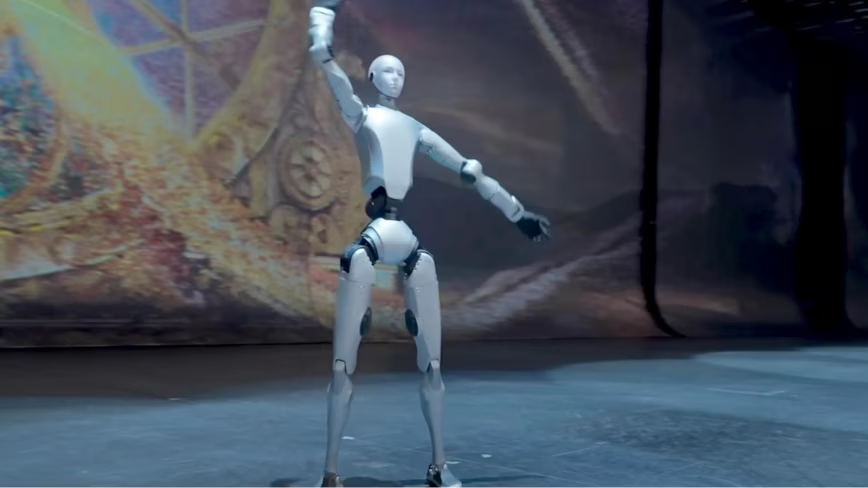
China has launched a national identification system for humanoid robots. The Humanoid Full Lifecycle Management Service Platform, built by the Humanoid Robotics and Embodied Intelligence Standardization committee under the Ministry of Industry and Information Technology, assigns each robot a unique 29-character digital code that follows it from the factory floor to the scrapyard.
The code captures everything: manufacturer, product model, serial number, hardware specifications, AI capability level, software training history, and production records. It is modelled on China’s 18-character national citizen ID system but adds 11 extra characters to cover operational data specific to machines. More than 28,000 robots across 200 models have already been assigned an ID through the platform, which was launched by the Hubei province’s Humanoid Robotics Innovation Center in May.
This is not a static registry. The platform functions as a live digital record that tracks maintenance history, work environments, and real-time performance metrics including mechanical joint wear rates, battery degradation, and movement precision. When something goes wrong, the system is designed to enable rapid fault detection. When a robot is decommissioned, the ID follows it through recycling.
Advertisement
The scale of China’s humanoid industry explains why regulators moved now. The country has more than 100 humanoid robot manufacturers. Investment in robotics and embodied intelligence in 2025 exceeded the full-year 2024 total by the end of May, with China pouring $3.4 billion into new robotics ventures, 42 per cent more than the United States and five times Europe’s total. Shanghai has issued China’s first provincial plan for embodied intelligence, pairing R&D support with shared infrastructure for compute, testing, pilot production, and financing.
The robots are already showing up in the real world. A humanoid named Lightning completed the Beijing E-Town Half-Marathon in 50 minutes and 26 seconds earlier this year, beating the human world record by nearly seven minutes while navigating the 21-kilometre course autonomously. China’s State Grid Corporation plans to deploy 8,500 robots, including humanoids and robot dogs, for power grid operations. Tea farms in Hubei province have begun field trials with humanoid workers ahead of the 2026 World Robot Games.
The ID system addresses a governance gap that is widening as deployment accelerates. Without a standard way to track who built a robot, what software it runs, where it has been deployed, and how it has performed, liability becomes murky. If a humanoid injures a worker or damages property, regulators need a chain of information that connects the incident to a specific machine, its manufacturer, and its operational history. The ID code provides that chain.
There is a broader regulatory context. China has moved faster than any other country on AI governance frameworks, from algorithmic recommendation rules in 2022 to generative AI regulations in 2023 to deepfake and synthetic content rules in 2024. The robot ID system extends that approach to physical AI, treating humanoid robots as entities that require lifecycle oversight in the same way that vehicles, medical devices, and industrial equipment do.
Advertisement
The comparison to citizen IDs is deliberate but imperfect. Robots are not citizens. They do not have rights. The ID system is an industrial standard, not a legal status. But the structural parallel, a unique identifier issued by the state that tracks an entity across its entire existence, raises questions that other countries will eventually need to answer. As humanoid robots move from factories into hospitals, homes, and public spaces, who is responsible for what they do? The ID code does not answer that question, but it creates the informational infrastructure to start.
The United States and Europe have no equivalent system. The EU AI Act classifies AI systems by risk level but does not require individual identification of physical robots. The US has no federal framework for humanoid robot registration. China’s approach to AI governance has consistently prioritised state visibility into how the technology is deployed, and the robot ID system is the latest extension of that philosophy.
For manufacturers, the system creates both obligations and opportunities. Compliance means submitting detailed technical data for every unit produced. But it also means that a robot with a clean lifecycle record, well-maintained, regularly updated, deployed within its rated capabilities, carries a verifiable history that could function as a quality signal for buyers. In a market with 100-plus manufacturers and no dominant brand, standardisation is a competitive tool as much as a regulatory one.
The question for the rest of the world is not whether China’s approach is right but whether it is early. If humanoid robots become as common as China’s industrial policy intends, every country will need a way to track them. China is building that system while the rest of the world is still debating whether the robots are ready. The 28,000 units already in the database suggest the debate may be beside the point.
Google’s Quick Share is the kind of feature you don’t think about until the day you need it and your phone simply doesn’t have it. Huawei device owners live in that reality permanently, given that they don’t have access to Google Play services, and so does anyone running the Chinese regional build of Android.
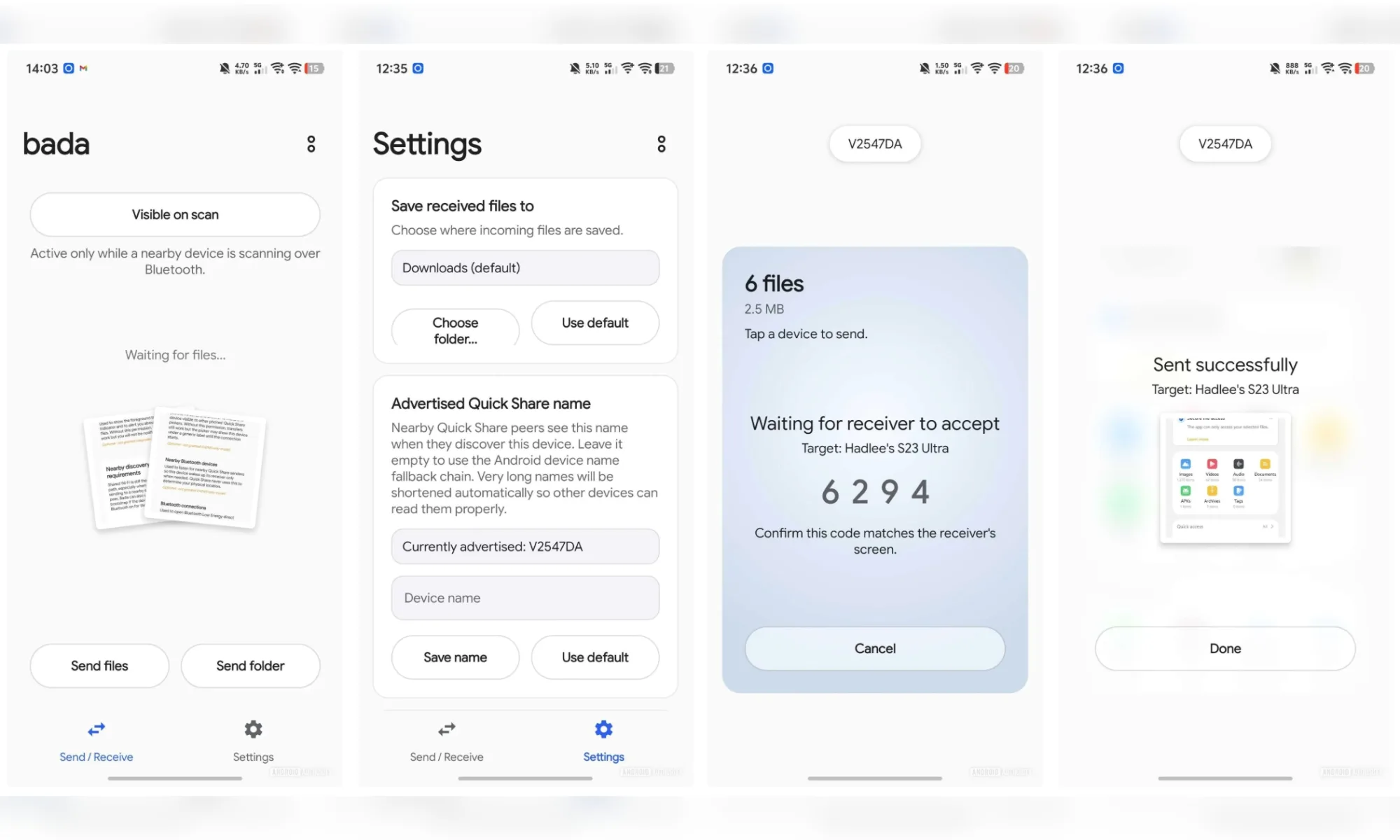
However, a developer with the handle Kyujin-cho just published an open-source Android app called Bada on GitHub that seems to solve exactly this problem. It does so by implementing Google’s own Quick Share protocol from scratch, circumventing the lack of Google Play Services.
Android Authority
What does Bada actually do?
Once Bada is installed on a device that lacks Quick Share, it becomes fully interoperable with any Quick Share-equipped Android device nearby on the same Wi-Fi network. The same four-digit PIN confirmation process that users already know shows up on both the sending and receiving sides.
Using the app, people can send files from any Android app (via the system share sheet), receive files to a specific folder, and even send entire folders, with the directory structure intact. Like Quick Share, the app supports Wi-Fi LAN as the transfer route, with BLE-based identification for devices running on stock Android and Samsung’s One UI.
Testing has already confirmed that Bada works with Galaxy S26 Ultra and Z Fold 7 over BLE GATT bootstrap. NearDrop on macOS and Quick Share on Windows are listed as targets; however, they remain untested.
Advertisement
Nadeem Sarwar / Digital Trends
Should you actually use it right now?
According to Android Authority’s hands-on testing, the app experience isn’t exactly seamless when sharing files from a Quick Share device to a Bada device. Windows transfers completely failed.
The project sits at 10 GitHub stars and one fork, which is still early-project territory by all means. The codebase is open-source, meaning anyone with the technical know-how can verify what it’s actually doing with their files.
The app itself confirms that transfers still use Quick Share’s encryption method. The developer explicitly targets interoperability with NearDrop and Windows Quick Share for the near future.
In my opinion, Bada won’t replace Quick Share for most people, but for Huawei users, along with the Chinese Android users Google quietly left behind, or for any other Android user whose phone doesn’t ship with Quick Share out of the box, it’s the closest thing to a real solution anyone has bothered to build.
You could argue, and people have, that the top gay dating apps are now optimized for monetization and juicing engagement loops. Increasingly overrun with bots, they are at times even devoid of actual connection.
Grindr, with its 15 million monthly active users, is drowning in ads while pushing expensive upsells on users. (In February, as part of its “gAI” overhaul, the company announced a new premium monthly subscription tier for $500.) Sniffies was beloved by cruisers until the seismic reaction in April to Match Group’s $100 million investment sparked concerns that another queer space could get absorbed into a larger dating conglomerate.
As public backlash against popular queer apps continues to mount, a batch of tech entrepreneurs are scrambling to meet the demand by doubling down on privacy-conscious, community-driven alternatives.
Calum Bowden, who posts under the internet persona @donjackoghue, launched MeetMarket in March. Currently only available as a web app, MeetMarket includes all the core features of your typical hookup app—a customizable profile, a grid of nearby users—with one major difference. It was built on a decentralized identity system, meaning MeetMarket doesn’t store users’ emails, passwords, or personal information. Users store everything on their device, giving them full control and ownership over their data and how it’s shared. Messages on the platform are end-to-end encrypted, and Bowden says it will always be ad-free, even for nonpaying members. (A monthly membership costs €12, or $13.99.)
Advertisement
“Decentralization and data privacy make a lot of sense for queer people in general, and especially in hostile legal environments or in the US right now, where you don’t really know what digital platforms actually have your best interest in mind,” says the 34-year-old PhD student in Berlin who studies the sociology of technology and organization.
Within the first 48 hours of MeetMarket’s launch on March 24, over 12,000 people had signed up, and some 60,000 people have used it since. The app averages 5,000 weekly visitors, according to Bowden, though there is not a lot of concurrent activity in the same cities. “It’s become more social than necessarily driving an immediate hookup.” But casual encounters do still happen, he says. “The Midwest bottom jockeys are eating meet market up,” one user noted on X.
Bowden didn’t anticipate public sentiment would sour on Sniffies just a few weeks after his launch. Still, the timing of it couldn’t have been more serendipitous. “When Sniffies announced their investment from Match Group, I was like, how are they fueling my fire?” he asks. “This is exactly the model that venture capital leads to. This is exactly why these economic models for technology are so bad, because they basically force the gentrification of a digital platform.” Sniffies did not immediately respond to a request for comment.
A self-described “utopian conspirator,” Bowden is the cofounder of Trust, a nonprofit that operates as a kind of incubator to prototype ideas “as a critique of technology and the status quo,” he says. With MeetMarket, he wanted to create an app that gave users more agency over their experience without cheapening it.
Advertisement
It can sometimes seem like Big Dating wants people to believe that it is the only answer to cure their romantic woes—Bumble CEO Whitney Wolfe Herd recently told Axios that there isn’t much longevity in niche apps—but the opposite is proving just as true, as people seek out more specificity and intention in their online dating experience.
“Gay men have tribes, subcultures, aesthetics, and different ways they want to be seen,” says Justin Finnegan, a 35-year-old software engineer in Toronto who last year created Chunkr, a gay hookup app that has resonated with the bear community despite originally being for all gay men.
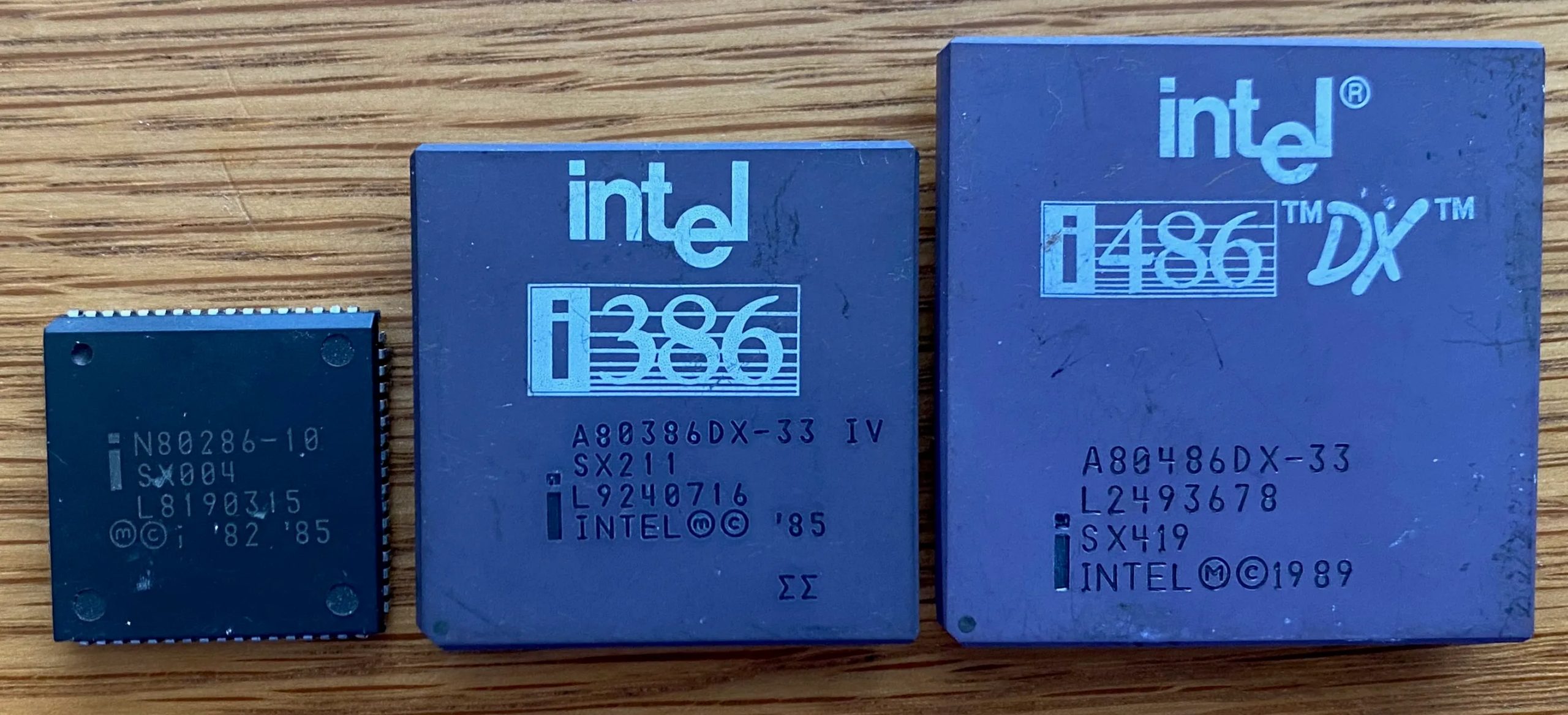
There are many ways you can implement an Intel i386 CPU on an FPGA, with the use of original microcode probably being one of the most interesting approaches. This is what [nand2mario]’s z386 project does, with a recent blog post summarizing development on this FPGA project so far.
This project is similar to the previously developed z8086 project, which as one may guess does something similar, except for the Intel 8086 CPU. By executing the original microcode you’re basically guaranteeing close compatibility with the original hardware, though of course the sheer scale of this microcode between an 8086 and 80386 is quite different.
There’s a much larger instruction set with a correspondingly much more complicated internal state to keep track of, including all those newfangled features like memory management, paging and register debugging, as well extensions to protected mode that began with the i286.
Advertisement
Currently z386 runs on a number of FPGAs, including the Altera Cyclone V and Gowin GW5A, with performance equivalent to a ~70 MHz i386 albeit with slightly worse cycle efficiency, some of which could be due to the limited 16 kB cache compared to the 32+ kB cache in the fastest i386 CPUs. Either way, it’s more than enough to run all kinds of software, including games like DOOM.
Important to note is that the goal here isn’t to be more performant than cores such as for example ao486, but more as an archaeological reconstruction of the original hardware and its interaction with said microcode.
Top image: line-up of Intel 286, 386 and 486 CPUs. (Credit: Sgroey, Wikimedia)
Microsoft’s April 2026 update lets users and administrators fully uninstall the Copilot app from Windows 11. The move follows poor adoption numbers, with only 3.3 per cent of eligible users paying for Copilot, and persistent criticism that Microsoft forced AI features on users without adequate control.
Microsoft has added the ability to fully remove the Copilot app from Windows 11. The change arrived in the April 2026 update and applies to both enterprise administrators using Group Policy and regular users who can now uninstall it through Settings like any other app.
Advertisement
For IT administrators, the new policy is called “Remove Microsoft Copilot app.” It sits under User Configuration, Administrative Templates, Windows Components, Windows AI in the Group Policy Editor. Administrators can also apply it through the Windows Registry. The policy will uninstall Copilot only if specific conditions are met: both Microsoft 365 Copilot and the standalone Microsoft Copilot must be installed, the user must not have manually installed the Copilot app, and the app must not have been launched in the past 28 days.
For home and Pro users, the path is simpler. Go to Settings, then Apps, then Installed Apps, search for Copilot, and select Uninstall. The app can be reinstalled later from the Microsoft Store if needed.
The 💜 of EU tech
The latest rumblings from the EU tech scene, a story from our wise ol’ founder Boris, and some questionable AI art. It’s free, every week, in your inbox. Sign up now!
Advertisement
The move is a concession. Since integrating Copilot across Windows 11 and the Microsoft 365 suite in 2023, Microsoft has positioned the tool as its centrepiece AI product. It embedded Copilot into the taskbar, Edge, Notepad, Office apps, and Outlook, all running in the background and enabled by default. Users who wanted it gone had to resort to PowerShell scripts, third-party debloating tools, or registry hacks. The new policy makes removal an official, supported option for the first time.
The timing reflects a broader problem with Copilot adoption. Only 3.3 per cent of Microsoft 365 users who have access to Copilot Chat actually pay for it. Of roughly 450 million Microsoft 365 seats, 15 million are paid Copilot subscribers. That is a conversion rate that suggests most users either do not find the tool useful enough to pay for or actively prefer to avoid it. Microsoft’s own terms of service describe Copilot as being “for entertainment purposes only,” a disclaimer that sits uncomfortably alongside a product marketed as a productivity tool priced at $30 per user per month.
The uninstall option is part of a wider Windows 11 cleanup effort. Microsoft has been removing legacy features and reducing pre-installed software in recent updates. WordPad was deprecated in 2024. The Tips app was removed. Cortana was discontinued. Letting users remove Copilot follows the same logic: if a feature is not being used, forcing it on people generates resentment rather than adoption.
Enterprise customers have been particularly vocal. IT administrators managing thousands of devices objected to Copilot being pushed to managed environments without adequate controls. Microsoft has been rethinking its AI strategy more broadly, launching its own MAI model family to reduce dependence on OpenAI and cutting internal Claude Code licences after the costs proved difficult to justify.
Advertisement
The 28-day inactivity condition on the Group Policy removal is worth noting. If a user has opened Copilot even once in the past four weeks, the policy will not uninstall it. Microsoft is clearly trying to preserve the app for anyone who has shown even minimal engagement while giving administrators a way to clear it from machines where it sits untouched.
The change does not affect Copilot features embedded elsewhere in Windows, such as AI suggestions in the Start menu search, AI-powered features in Paint and Photos, or Copilot integration in Edge. Removing the standalone Copilot app removes the dedicated AI chat interface but does not strip AI from the operating system entirely.
For Microsoft, the calculation is straightforward. A product that users actively resent and administrators work around is doing more harm to Windows sentiment than any AI feature is worth. Letting people remove it is cheaper than the support burden, community backlash, and enterprise friction that forcing it creates.
The broader pattern across the tech industry is similar. GitHub froze new Copilot sign-ups after agentic AI usage broke the economics of its pricing model. Google has faced pushback over AI Overviews in Search. Apple settled an AI exaggeration lawsuit for $250 million. The lesson is consistent: users will adopt AI tools that demonstrably improve their work, but they will push back hard against AI that is imposed on them without clear value.
Advertisement
Microsoft is learning that lesson in real time. The Copilot uninstall button is small, but the signal it sends is not. When a company that invested $13 billion in OpenAI admits that its flagship AI product should be optional, that is an acknowledgement that the current version has not yet earned its place on every desktop.
Here is my problem with The Boys finale. After five seasons of buildup, watching Homelander laser people in half for looking at him wrong and Butcher destroying himself for one shot at revenge – I wanted a bloodbath. And somehow, the memes that came out of the finale were more satisfying than the episode itself.
The Boys season 5 finale, titled “Blood and Bone,” is not the worst finale ever made, but it is one of the most frustrating ones to sit through. The show threw out every method the Boys had spent seasons chasing to kill Homelander, botched the execution of what remained, and delivered an ending that felt like the writers suddenly remembered they had a show to wrap up.
The Boys finale traded chaos for commentary and lost the plot doing it
Amazon MGM Studios
The writers wanted Homelander’s final moments to mirror the fall of every real-world tyrant who spent years terrifying people, only to crumble into a sniveling, pathetic mess. He is stripped of everything he thought made him God, and dies as a depowered man with a crowbar in his skull.
People watching this show have spent years watching real leaders abuse power with zero consequences. The symbolism of a tyrant losing everything and begging for his life in the end is not lost on me. I understand why a lot of viewers found it satisfying on that level, but when you spend five seasons building a monster and then quietly defang him to make the ending work, the symbolism stops feeling earned.
Let’s talk about the scorched earth promise that Homelander and Butcher made back in The Boys season 3. The pact was to raise the stakes until one of them was left standing in the rubble of everything they burned down together. The posters leaned into it hard, showing Homelander lording over a burning Earth. Key visuals had Butcher walking over the ruins of Vought Tower. I was ready for absolute apocalyptic chaos.
Advertisement
When the hyped showdown finally arrived, it took place entirely inside the Oval Office, a far cry from the scorched earth apocalypse we were promised. Showrunner Eric Kripke has since confirmed that a post-apocalyptic wasteland was never going to happen and that he always wanted something more intimate and character-driven. While that is a valid creative choice, you cannot spend seasons building up the hype and then hand fans a crowbar fight in a government office.
The show forgot its own rules
There is also the sheer logic collapse of how Butcher and his team even got there. The show spent episodes establishing that Vought Tower was impenetrable due to its heavy security and supe presence. Yet somehow, walking into the actual Oval Office with a sitting president-god on the premises was apparently no problem at all.
Homelander knew they were coming and assigned what felt like a handful of Secret Service agents to hold them off. Where was his supe army? Where was the manic, overwhelming response you would expect from a man who had literally just declared himself god on live television?
The wasted characters hurt more than the weak fight did
Amazon MGM Studios
Starlight was the face of the entire resistance against Homelander, but nothing says “final battle” like benching your most powerful resistance symbol on a beach to fight a fish man while the actual showdown happens without her. Deep had already been rejected by the ocean itself, but Starlight had no way of knowing that. So why would she fly him to a beach where she is surrounded by water, which is his element, and far from any electricity source that fuels her own powers? It made no tactical sense either.
Prime Video
Speaking of people who deserved more, Sister Sage had real potential because of her superintelligence. I thought the show was setting her up as the real puppet master, a villain smarter than Homelander in every way that actually mattered, pulling strings nobody else could even see. Instead, she spirals into depression, gets depowered by Kimiko, and ends up going to Harry Potter World in Florida, completely at peace with herself. What a waste of a perfectly good character!
Amazon Studios
Gen V getting cancelled before its third season, and then having its surviving characters shoved to the sidelines in the very season that needed them most, is a separate tragedy. Marie Moreau is described in the show’s own logic as Homelander-level powerful. She had blood-bending abilities that could have changed everything about that final fight. Instead, she got a few lines and a bus out of town. So I don’t understand why the writers built a trump card and refused to play it.
And then there is Soldier Boy. Why would an arrogant, deeply resentful man who does not even like Homelander hand over a vial of V1 to him, just because it is apparently “what Clara would have wanted”? However, the show never explains it. Maybe Vought Rising, the upcoming Boys prequel, will give us more context on the Clara Vought angle. Nevertheless, that scene has already spawned a flood of memes online, and I will be honest, I enjoyed those memes considerably more than I enjoyed the finale itself.
Advertisement
Mother’s Milk got the rawest deal of all when it comes to unresolved arcs. For context, MM’s entire reason for being on this team can be traced back to Soldier Boy. As a child, he watched Soldier Boy hurl a car into his family home, killing his grandfather and other family members. So when Soldier Boy ends up frozen back in Vought Tower at the end of all this, still very much alive, you would expect MM to do something about it. The revenge arc was right there, but the writers ghosted it completely. On top of that, MM takes in Ryan despite the two barely interacting this season.
The Boys deserved a better send-off than this
The Boys was never just a gory superhero show. It was supposed to be a cultural mirror that made people uncomfortable in the best possible way. Instead of going out as that show, the finale fumbled so badly it became the joke rather than the one telling it.
Fans are not quoting the finale’s emotional beats or its political symbolism online. They are making memes and comparing the finale to Game of Thrones and Stranger Things in the same breath, and not as a compliment. It is truly disappointing that after five seasons of holding a mirror up to the world, the finale could not even hold itself together.
Glass-based substrates are slowly beginning to push out organic substrates commonly used in PCBs due to often superior material properties. One area where glass substrates have however struggled is with through-hole vias and providing the conductive copper path through them. A 2024 article by [Keith Best] gives a good overview of the topic, with recent news showing how much companies like Intel are pushing for glass substrates, specifically for the packaging of dies.
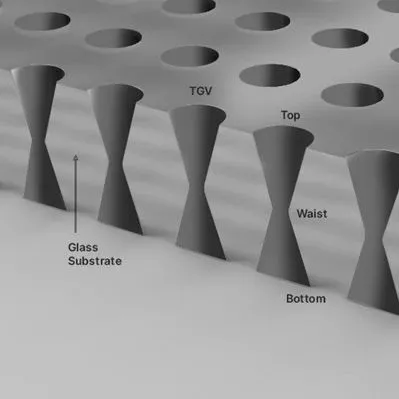
One major advantage with vias in glass substrates is that they can be much smaller, enabling smaller than 0.1 mm diameter holes with far finer pitch. The challenge here is to make perfect holes with a laser that are defect-free, as well as have the intended diameter.
After that this through-glass via (TGV) has to be coated or filled with copper, much like their organic equivalent. Said TGV can be fully filled with copper, or use plating and add dielectric filler. Detecting flaws in such a finished TGV is important.
In a 2025 review article of glass substrate technologies by [Pratik Nimbalkar] et al. published in Chips the state of the art at the time was covered. The need for ever higher-density integration options with ASICs is highlight here, especially now that many chips today consist of multiple interconnected dies inside a single package.
The complications of creating TGVs with femtosecond laser pulses in Borofloat 33 glass are highlighted by [Daniel Franz] et al. in a 2025 research article, with microcracks and backside ablation observed without proper precautions, something which previously was often resolved by an etching step following said laser drilling. The main issue here is the post-drilling residual stress from the thermal shock, which the authors demonstrate can be largely prevented with careful tweaking of the laser drilling parameters.
Advertisement
As pointed out in a 2024 review article by [Chen Yu] et al. glass substrates are useful for far more than just high-density chip packaging. Glass substrates are also chemically resistant, have a higher heat resistance, are largely transparent to RF and can be hermetically sealed against outside influences. This makes them great for various advanced sensors and communication devices.
Meanwhile, if you wanted to do some metal-depositing on glass at home, we covered this recently.
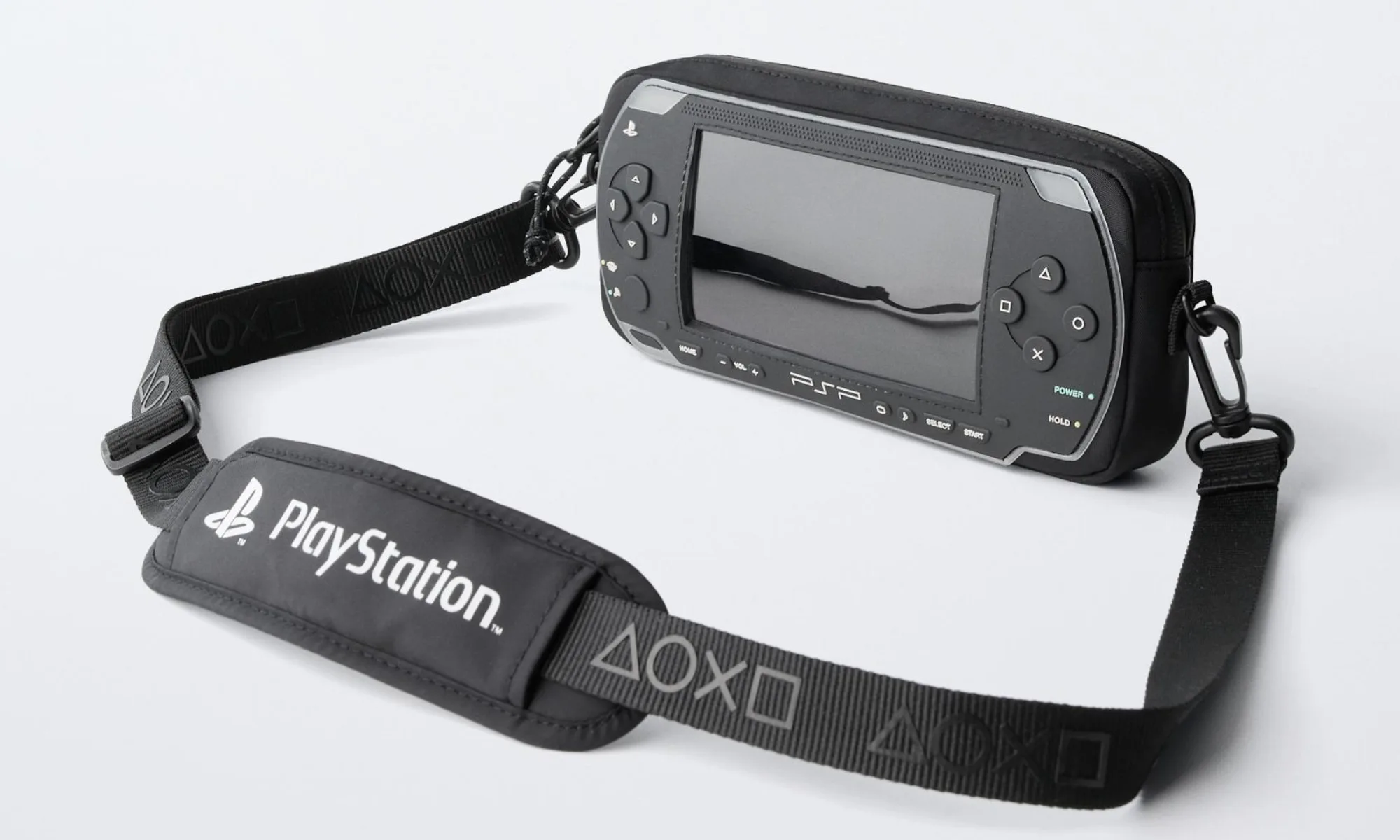
The PlayStation Portable, or the PSP, was discontinued over a decade ago, but its cultural presence never fully faded. Most recently, the fast-fashion brand Zara gave it a second life in the most unexpected form: the company has dropped a crossbody bag modelled after the PSP 1000.
The Zara PSP Crossbody Bag is exactly as delightful and absurd as the name sounds. The shadow drop came without an announcements or media campaigns, but the retro gaming community has already taken notice of it.
Zara
What does the bag actually look like?
It is actually a relatively small crossbody bag whose front face is a silicone recreation of the PSP 1000, in convincing detail. The bag comes with embossed buttons, logos (on the front and the back), an analogue nub, and a vinyl panel standing in for the iconic 4.3-inch widescreen display.
The adjustable shoulder strap also carries a PSP branding, along with the classic triangle, circle, cross, and square shapes. Clearly, Zara doesn’t want the product to look like a cheap knockoff, and the result shows.
The bag measures 4.3 x 7.9 x 2 inches, has a main zipper compartment, and is made from polyurethane thermoplastic on the front face with a silicone overlay and a polyester shell and lining.
For now, the Zara PSP Crossbody Bag is available at $35.90 in the United States and £19.99 in the United Kingdom, available directly via the company’s official website and in stores. The bag is only available in one color, black.
I also see the trademark symbol on the website, implying that this is some sort of licensed deal between Zara and Sony, rather than an unofficial product, even though neither company has confirmed the arrangement.
At $35.90, it could be among the most affordable pieces of PSP memorabilia you might ever own, but only if the PSP mattered to you.





















































You must be logged in to post a comment Login