Connect with us
DAPA Banner
DAPA Coin
DAPA
COIN PAYMENT ASSET
PRIVACY · BLOCKDAG · HOMOMORPHIC ENCRYPTION · RUST
ElGamal Encrypted MINE DAPA
🚫 GENESIS SOLD OUT
DAPAPAY COMING

Tech

Logicalis launches private 5G service for Irish enterprises

Published

on

These locally operated networks allow enterprises to take fuller advantage of the 5G spectrum.

UK technology service provider Logicalis is launching a private 5G service for enterprises in Ireland, following an €8m investment from the company to support the roll-out.

New regulatory changes introduced by ComReg have enabled access to private 5G spectrums in Ireland, which, according to Logicalis, represented “one of the most significant advances” in digital infrastructure in recent years.

These locally operated networks can be adapted to specific requirements and allow enterprises to take fuller advantage of the 5G spectrum, with lower latency connectivity across large operational sites.

Advertisement

Access to private 5G is a “transformational development” for Ireland, Logicalis said, adding that the technology supports a new generation connected operations such as robotics, industrial AI, autonomous vehicles, IoT devices and edge computing.

Irish businesses can use the technology to accelerate digital automation, AI and Industry 4.0 initiatives, the company said, while strengthening its competitiveness as a destination for global investment.

Logicalis believes private 5G will become a foundational technology supporting the next generation of connected enterprise operations. The company is offering its private 5G services in partnership with technology vendors, including Cisco, Nokia and Neutral Wireless.

It said that the solution encompasses network design, radio planning, deployment, security and integration, alongside fully managed services. It already offers private 5G spectrum across the UK, Europe and North America.

Advertisement

“Historically, enterprises wishing to deploy private 5G have had to rely on mobile operators as the spectrum was unavailable directly to industry,” said Frank Rubotham, the head of specialists and propositions at Logicalis’ UK and Irish operations.

“This framework created complexity and cost barriers to accessing this technology. Now, with industry access to private 5G spectrum, the technology has moved from pilot phase to production deployment at scale.

“At Logicalis, we have been investing and researching heavily into this technology for over 10 years, while deploying large scale private 5G networks in markets such as the UK, Germany and the US, ensuring we have the expertise to deliver truly transformative technology.”

The company is a division of Datatec and has operations across Europe, North America, Latin America, Asia Pacific and Africa. It last reported annualised revenues of $1.7bn.

Advertisement

“This advancement, in real terms, means that we can build and provide private 5G networks for enterprises in Ireland supporting greater automation, edge computing, industrial AI, robotics and real-time data analytics,” added Rubotham.

“This, in turn, helps to position Ireland as one of the world’s leading markets to deliver advanced interconnected technologies for business.”

Don’t miss out on the knowledge you need to succeed. Sign up for the Daily Brief, Silicon Republic’s digest of need-to-know sci-tech news.

Advertisement

Source link

Continue Reading
Click to comment

You must be logged in to post a comment Login

Leave a Reply

Tech

OpenAI Once Again Makes The Case For Giving ChatGPT Your Health Records

Published

on

The company is rolling out its ChatGPT Health feature to users in the US who are 18 years or older.

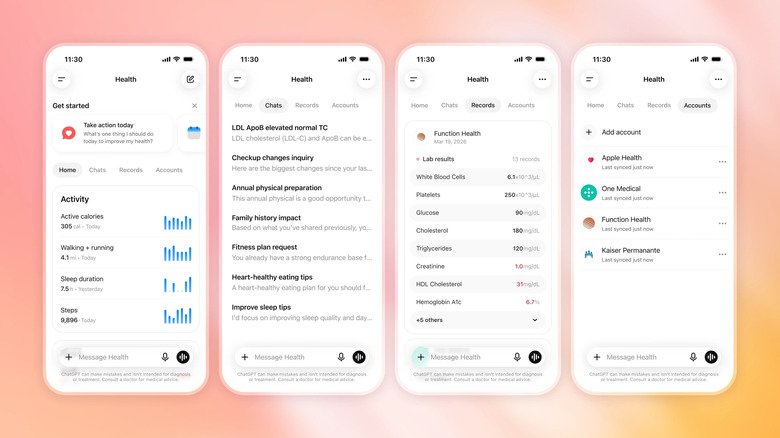
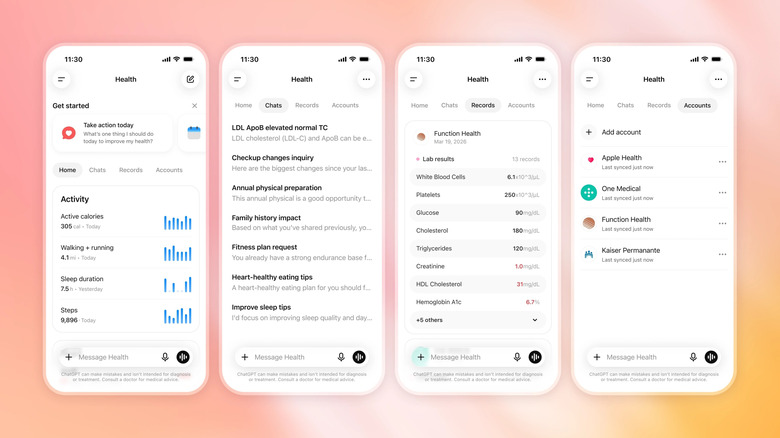
OpenAI is rolling out its dedicated health experience, ChatGPT Health, to users who are 18 years or older and live in the US. The company began testing ChatGPT Health in January in a separate portal, but this updated version lets ChatGPT reference relevant health data in any conversation.

The new feature is designed to go beyond the chatbot’s existing ability to answer health-related questions — something OpenAI claims its new GPT-5.6 Sol model improves — and grounds responses in personal data from doctors’ notes, blood tests and more. You can connect your data via ChatGPT’s new Health tab, where OpenAI will guide you through linking the chatbot to Apple Health (via the company’s Healthkit framework) and providers like Kaiser Permanente or One Medical. ChatGPT can also prompt you to review any current conditions you might have, medications you’re taking and your family’s history of illness to make sure it’s interpreting everything correctly.

From there, OpenAI suggests you can revisit the Health tab to browse your records, view recent health trends and see suggested prompts to ask ChatGPT, but the main thrust of ChatGPT Health happens anytime your health is relevant to a chat. OpenAI is (appropriately) careful to frame its responses as a way to summarize an appointment, understand test results and be a better patient, but that doesn’t stop anyone from asking for more direct advice from the chatbot. ChatGPT is still capable of making mistakes, and anything it says shouldn’t be considered diagnosis or official treatment, even if the chatbot offers it confidently.

Advertisement

Privacy is also a major concern worth considering when sharing things like health records. Like when it originally announced ChatGPT Health, OpenAI says your medical information is not used to train foundation models or target ads, regardless of your other settings. You can also decide when ChatGPT can use health information you’ve connected, forcing the chatbot to ask every time it wants to use your data. Any health information you’ve connected can be disconnected at any time.

The timing of OpenAI’s announcement is undeniably unfortunate. The company is currently being sued by a pastor who alleges that ChatGPT offered dangerous medical recommendations that led him to not seek treatment for a pulmonary embolism. The company is also embroiled in a separate lawsuit with Apple. That, at the very least, makes its reliance on Apple Health as a major data source awkward. OpenAI obviously doesn’t have a say in all the legal fights it’s embroiled in, but you can certainly decide you don’t feel comfortable giving ChatGPT your medical information.

Advertisement

Source link

Continue Reading

Tech

OpenAI sued over ChatGPT’s ‘dangerous’ medical advice

Published

on

ChatGPT leveraged faith to convince a man with a cardiac issue to stay home instead of seeking medical help. Now, facing years of recovery and profound financial damage, the man is suing OpenAI over the ordeal.

In a lawsuit filed in San Francisco Superior Court, Florida pastor Scott Winters argues that ChatGPT used his faith against him. After asking the chatbot about his symptoms, he was told that they were likely “another minor piece of the long story” and that “God did not design your body to endlessly fail.”

After going back and forth with ChatGPT’s Health feature for six weeks, Winters finally spoke to a real medical professional. He was then diagnosed with a dangerous blockage of arteries in both of his lungs.

During his talks with ChatGPT, Winters was told to stay “recliner-bound” until he’d had up to 10 more episodes. Doctors believe that this advice probably made matters worse, with Winters’ immobility aiding the blockage of those vital arteries.

Advertisement

Now, The Next Web reports, the pastor faces a long road to recovery. He’s no longer able to do his job as a result of the condition, and he blames OpenAI.

“Not only did I nearly die,” the pastor said in a statement, “but I lost my job, my career, my ministry, my home, everything.”

The accusations fly

In his lawsuit, Winters accuses OpenAI and CEO Sam Altman of the “unauthorized practice of medicine.” He wants damages, and he is seeking the roll-out of ChatGPT Health to be halted entirely.

At least, until independent auditors can give it a clean bill of health.

Advertisement

The legal complaint doesn’t pull any punches, either. In it, Winters’ lawyers argue that ChatGPT’s “sycophantic nature and authoritative tone, combined with its manipulation of Scott’s religious identity, cultivated in him a dangerous reliance on the tool that subverted Scott’s ability to make sound decisions, isolated him from family members who urged him to seek medical care, and convinced him that seeking medical attention was unnecessary and even potentially lethal.”

And as it always does, OpenAI is hiding behind one-line warnings that the models give from time to time. It should know at this point given at least five suits against the 4o model specifically, what it is doing, and what the dangers are, yet it persists.

The company argues that the chatbot regularly reminds users that it isn’t infallible. Users regularly ignore it.

It’s also telling that OpenAI offers ChatGPT Health, a feature that gives users the impression OpenAI’s chatbot is qualified to comment on exactly that: health.

Advertisement

As is so often the case with lawsuits like this, there’s a lot of blame to go around.

OpenAI can’t market ChatGPT as the all-knowing, all-doing technology of the future and be surprised when people listen to, and have faith in, what it has to say.

But similarly, people are still responsible for their actions. Unfortunately, too many buy into the hype and believe ChatGPT and other chatbots are much more capable than they really are.

In the case of Pastor Scott Winters, ChatGPT used his faith to argue its points. And he almost died.

Advertisement

Faith can be used for good, of course, and being a pastor shows real devotion. And Winters surely knows that weaponizing religion is a terrible misuse of faith.

Somehow, after being trained on stolen data across the depth and breadth of the internet, ChatGPT hasn’t quite figured that out and is happy to brandish that weapon to make its point.

Source link

Advertisement
Continue Reading

Tech

16 Of The Coolest BMW Designs Of All Time

Published

on


The blue and white badge that has represented BMW for over a century has been one of the most recognizable in the industry for almost as long. From making some of the most luxurious pre-War European cars to its most recent successes, BMW has continued to establish itself as one of the best examples of putting the driving experience first. 

Choosing the very best of all BMWs ever made is an incredibly hard task, but if we’re basing it primarily on looks, there are some nameplates that stand head and shoulders above the rest. The German brand has managed to experiment with quite a few different design philosophies over the years, with some prioritizing uninterrupted curves and others going all out on functional aerodynamics. Still, the following 16 models all perfect their individual styles, all while fitting perfectly with BMW’s image. Here’s a closer look at some of the coolest BMW cars ever designed. 

Advertisement

BMW M1

While the car officially broke cover in 1978, the foundations for the BMW M1’s design were set in 1972 with the Turbo Concept. For the production car, though, BMW hired Italian designer Giorgetto Giugiaro to ensure the car was just as effective on the race track as it was stunning to look at. As a homologation car intended for the Group 4 series, Giugiaro put aerodynamics at the forefront of the car’s philosophy. The defining element of the M1 is the super low-slung, wedged front end with sharp angles and tiny kidney grilles to remind you that it’s still a BMW at its core.

Advertisement

Moving down the side and to the rear, the sleek, minimal panels echo what was already seen in prior BMWs, but the continuation of the wedge design makes for what’s still one of the most unique rear ends. The 277-horsepower 3.5L six-cylinder sits under Italian-esque slats between the pillars, rounding off what might be the most Italian-looking BMW ever built (for all the right reasons).

Advertisement

BMW 1 Series M Coupe

Since the M1 was released in the ’70s, BMW’s performance division has come quite a long way. Cars like the M3 and M4 cemented the manufacturer’s place at the top of the industry, eventually adding cars like the 1 Series M Coupe to the lineup. The idea behind the relatively limited car was to create a compact version of the larger M-division performance cars to allow raw driving dynamics to take center stage.

The result was not only one of the most beloved driver’s machines of the 2010s, but the most eye-pleasing M-division cars of the decade by quite some margin. BMW heavily pushed how different the M Coupe was to any of the other 1 Series trims at the time, and you only have to look at it to see why. At the front, the grille is the only aspect that really looks similar, with the ultra-aggressive triple intake and carefully positioned openings in the bodywork on either side used to maximize aero efficiency as well as cooling. Wider archers can be found at both ends of the car, being one of the ways BMW used the M Coupe to honor the E30 M3.

Advertisement

BMW 507 Roadster

In the 1950s, buyers had no shortage of elegant cars in the market to choose from, with so many of the major names in the industry opting for simple, timeless designs that let natural, swooping curves throughout the body do all the work. The era-defining Ferraris and Mercedes-Benz, like the 250 GT and the Gullwing, tend to get the attention, at least until the BMW entered the two-seat grand touring segment with the 507 Roadster. Today, it’s still one of the most stunning European cars ever built.

At first glance, it’s easy to see the design elements typical of the ’50s. For the 507, Albrecht Graf Görtz used front fenders that stretched from the headlines down to the side of the car, creating the classic drop down to the sleek hood. However, compared to other European tourers of the time, the 507 really exaggerates the curves to create one of the smoothest, most elegant silhouettes from this era. Thanks to being a roadster, a similar effect is created with the rear fenders flanking the compact truck, which also has a curved design of its own. Only 259 examples were ever built.

Advertisement

BMW E9 3.0 CSL

Back to the 1970s, the M1 wasn’t the only car from the decade that spearheaded the direction BMW would go down in the following decades. In 1968, the E9 was released as the newest iteration of the two-door luxury grand touring philosophy introduced by the 503. It fell much more in line with BMW’s staple boxy style that the New Class models used earlier in the decade, but this time with a low-slung, aggressive stance.

While a great-looking car in its own right, the base model isn’t what we’re focusing on here. Over the following few years, BMW released different variants of the E9, with the last iteration aptly nicknamed the “batmobile”. Alongside getting a power boost to 206 horsepower, this particular homologation spec got the distinct aero kit comprising of small fins on the hood, a solid air dam under the shark nose front end, a roof spoiler, and the distinctive main wing at the rear. The race cars take the philosophy to the extreme, but even the road-going car’s aggression is incredibly hard to match.

Advertisement

BMW E31 8 Series

The 8 Series may now have been completely discontinued, but the largest of the two-door BMWs was a staple part of the manufacturer’s lineup throughout the late 20th century and into the 21st. Its roots can be traced back to 1989 with the first-gen E31 models, and it is still, without a doubt, one of the best-looking entries into BMW’s grand touring lineup ever.

Advertisement

BMW once again put aerodynamics at the forefront of the first 8 Series to make sure it performed as well or better than its key rivals at the time, subsequently giving it close relations to the M1. It features a wedge design with the same flat grille and small kidney grilles as the M1, but using interrupted lines stretching from the front all the way to the raised rear end. You’ll definitely prefer this take on the wedge front if you’re looking for something more understated. The E31 doesn’t do anything flashy, but that’s what makes it so special.

Advertisement

BMW M3 E30

The car that started it all for the iconic M3 nameplate. So much E9 DNA can be found in the top-spec E30’s design, but BMW made sure to still give it its own raw personality. Another homologation car from the Munich Manufacturer, the 1985 M3 doesn’t pay much attention to the grand touring elegance of its predecessor, earning its spot on this list for its all-out aggression instead.

Gone is the shark nose front fascia, replaced by a completely squared front end. In fact, pretty much every section a swooping curve should be is instead closed off by sharp angles, with the widebody-type arches being the main way the E30 M3 gets some shape. But it’s the simplicity of the first M3 that makes it so easy to love, with its design being proven effective time and time again as one of the most ground-breaking race cars of the 1980s.

Advertisement

BMW M2 CS

Given the overwhelming demand for the 1 Series M Coupe, it wasn’t much of a surprise to see BMW bring the two-door coupe design back on a more permanent basis. The base 2016 model could easily feature on this list by itself, essentially being a curvier, more compact version of the M3 of the time. Only a few years later, though, the 2020 M2 CS took the coupe even further than the Competition trim.

Visually, the CS model looks very similar to the first-gen Competition, but it adds a few pieces, like the larger splitter and central air vent on the hood, to evoke some more aggression. At the rear, the carbon fiber ducktail spoiler is another small addition that actually makes a massive difference to the back-end profile, once again making the car look more visceral without disrupting the perfectly proportioned curves and edges that complete the wide stance. While the all-new M2 CS is stunning, it’s also the perfect example of how blending aggression with the sleekness of the first iteration makes for a great looking vehicle from every angle.

Advertisement

BMW E52 Z8 Roadster

Almost 50 years after the 507 took BMW into new territory, the manufacturer decided to honor the car with what was essentially a modern iteration of the grand tourer in 1999. The Z3 helped to keep the philosophy alive, but the short-lived E52 Z8 Roadster blended performance with luxury on the same level as the 507. Like the ’50s roadster, the Z8 had a noticeably long hood to house the engine, in this case a 400-horsepower V8. Further forward, the double grille design makes a return, but in the sleeker manner that you’d expect with a late ’90s GT car.

The arches of the Z8 still bulge up slightly, but not as much as the 507, resulting in what’s almost one continuous curve covering the entire front end. The sides are also a touch flatter, but the side vents that featured on the 507 perfectly complement the minimalistic approach. The rear of the car also swoops down, but the more muscular, defined bumper helps the Z8 to achieve its modern take on the classic design style.

Advertisement

BMW M3 Touring

There may not be a lot of choice, but we want to include a wagon on this list. Considering how few of these cars BMW has built compared to sedans over the segments, there aren’t actually that many to choose from. But in recent years, the manufacturer has started to expand its presence in the segment, with the likes of the M5 Touring. However, the best-looking of the touring models has unfortunately been left out Stateside.

Advertisement

The M3 Touring is essentially the same car as the sedan M3. The once-controversial vertical kidney grille design introduced in 2020 does look great on the sedan, but the much larger dimensions of the Touring complement the larger openings up front perfectly. Hard lines and edges throughout the rest of the car also stem from the centerpiece grille, allowing them to flow uninterrupted from start to finish.

Advertisement

BMW M8 Competition

The first iteration of the M8 is one of the best-looking BMWs ever built, and the same can be said for the latest. Particularly in its Competition form, the most recent G15 model manages to retain some of the core design aspects of the original, all while implementing the modern BMW philosophy in all the right places, whether it’s the coupé or convertible model.

The main element that calls back to the E31 is using a wedge-style design, which, while not quite as aggressive as the original, gives the M8 Competition an imposing stance that’s missing elsewhere in the recent lineup. By using the wedge design, the M8 can keep the traditional kidney grille, retaining the minimalism that other new BMWs didn’t quite manage to replicate. Looking over the roof and to the back, the flow of the M8 Competition is never broken, achieving an ideal balance between performance and luxury.

Advertisement

BMW E36 Z3 Coupe

At the complete opposite end of the 8 Series stood once the Z3. In more recent times, we’re more familiar with the Z4 representing BMW within the two-door sports car segment, but in the late ’90s and early 2000s, the Z3 was the ultimate compact car from the brand. The first and only E36 generation didn’t just offer the standard roadster model, but a highly unique and spectacular ‘coupé’ model that uses a wagon-style shooting brake design.

While essentially a hatchback, the dimensions and proportions were unlike anything else you could buy at the time. As it’s still a two-door sports car beneath the new roofline, the front-end stays super low-slung. The “clown shoe” nickname may be accurate, but that somehow isn’t a bad thing. The new shooting brake rear combined with the long front end actually worked perfectly as far as proportions go, adding plenty of muscle without anything feeling out of place.

Advertisement

BMW E24 6 Series

Directly after the E9 led the grand touring segment, BMW replaced it with the first-ever 6 Series: the E24. When parking both side by side, the two do share quite a few similarities, but the latter puts much more of a focus on the luxury side of the GT, building what’s still one of the sleekest executive cars from the 1970s. This was one of the first BMWs to use hard lines and angular corners, similar to what’s still used today, deviating slightly from the emphasis on flowing curves that the E9 used.

Similarities between the two include the return of the shark nose, which might actually look more at home on the E24 due to the sharp angles and flatness. The protruding bumper adds some visual interest, almost creating symmetry from a side view with the roofline and long rear deck. The small ducktail spoiler is also spot on for rounding off the sporty yet functional design style.

Advertisement

BMW 2000 CS

We’ve briefly mentioned the New Class BMWs (Neue Klasse in German) that led the company through the mid 1960s and early 1970s. The Neue Klasse name is attached to very different cars today, but at the very end of the original New Class run came the 2000 CS, which helped establish the design approach that so many other cars on this list would subsequently follow. While nowhere near as imposing as some of the later models, the 2000 CS was still the top-spec performance model, but it opted for a much simpler, classy design to ensure it appealed to those wanting luxury.

Advertisement

The 2000 CS is another older BMW to utilize the shark nose, but it’s not as aggressive as the likes of the E9 or E24 6 Series. The drop-off from the hood is still noticeable, but the front fascia has much more of a gentle curve to match the rest of the car’s proportions. To divide the top and bottom halves, a single silver strip runs from the rear bumpers and around the top of the headlights, which is a subtle yet hugely important aspect adding some needed contrast.

Advertisement

BMW E46 M3 Coupe

A very nostalgic car for anyone born in the 1990s and the early 2000s, the 2000 E46 M3 was one of the defining performance cars for a generation. Like so many others, it wasn’t trying to be bold or flashy, rather reliable on a smooth, understated appearance that has aged better than so many of its rivals of the time. Particularly in its Coupe form, the E46 easily has one of the most recognizable silhouettes from the blend, essentially being a mixture of so many M division cars that came before it.

While it has a very distinct, aggressive stance that makes it look like a powerhouse before you even look at the renowned S54 engine, the E46 does a great job of softening its edges without deviating too far from the classic boxy proportions. BMW purposefully made the windshields steeper to make it look more tight-knit. To subtly break things up, though, BMW includes subtle lines and dividers, most notably with the “powerdome” hood, to help push the aggressive image further.

Advertisement

BMW M4 GTS

For quite a while now, the M3 and M4 have been mechanically identical, while also sharing plenty of visual traits as well. In 2016, though, the M4 got a special track-focused, street legal trim named GTS that the M3 never got. The coupé body style definitely made it the easy option, and the result is the best-looking version of the first-gen models.

As soon as the standard M4 was released in 2014, the coupe body style couldn’t have fitted better with the F82 philosophy. This is another BMW that uses curvature around its relatively simple, raked shell to create one of the sleekest-looking cars in the segment, but the GTS model uses a pretty extreme aero kit for the standards of BMW, allowing it to tackle any circuit with ease. The prominent front splitter and rear wing are the selling points here, contrasting the flowing lines with harsh carbon fiber at both ends.

Advertisement

BMW 2002 Turbo

In the 1960s, BMW offered more compact versions of its New Class models, with one of the most prominent being the 02 sedan. Given its body shape, the 02 was much closer to a sedan rather than a coupé, being more functional but inherently sportier thanks to its smaller size and coupé-esque design. Then, in 1973, BMW took the industry by storm with the legendary 2002 Turbo.

The core foundations of the 02 model can still be seen in the 2002 Turbo, but BMW took every opportunity to make it look as fast and capable as possible. The shark nose was less prominent here compared to the likes of the E9, but the new, giant air dam creates one of the most distinct, angular front fascias BMW has ever come up with. Better yet, the splitter connects to the bolt-on arches. It didn’t get much more rugged than that in the early ’70s. At the rear, the ducktail spoiler is also one of the most prominent in any BMW, stretching from the wraparound chrome trim and deeper into the rear deck.

Advertisement


Source link

Advertisement
Continue Reading

Tech

Samsung finally switched to silicon-carbon battery on Galaxy Z Fold 8. What’s so special about it?

Published

on

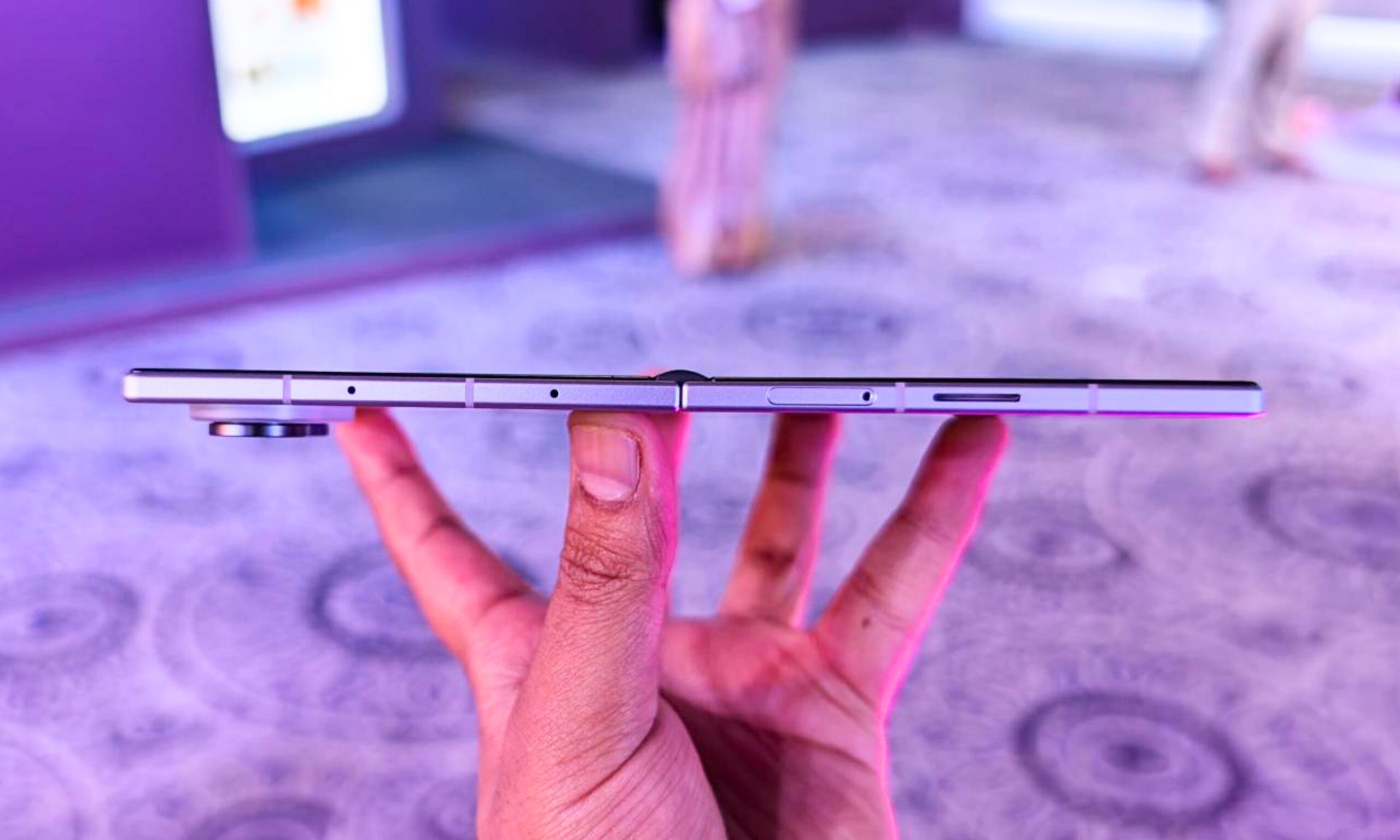
Samsung has finally joined the silicon-carbon battery race with its latest batch of premium foldables packing the new battery tech. But details for this change were rather hard to spot on the spec sheets. The company has confirmed during media briefings that the Galaxy Z Fold 8 Ultra, Galaxy Z Fold 8, and Galaxy Z Flip 8 all use silicon-carbon batteries.

Even then, the resulting capacities are hardly record-breaking. The Fold 8 Ultra carries a 5,000mAh battery, the regular Fold 8 gets 4,800mAh, and the Flip 8 has 4,300mAh. Rivals from Honor and Motorola have already crossed the 6,000mAh mark. But the figures only tell part of the story.

What is a silicon-carbon battery?

Silicon-carbon batteries remain a form of lithium-ion battery. The key change happens inside the anode, one of the electrodes responsible for storing and releasing lithium ions during charging and discharging. Conventional lithium-ion batteries predominantly use graphite in the anode. Silicon can hold considerably more lithium than graphite by weight, giving battery makers a route toward higher energy density.

Higher density creates two useful options for phone manufacturers. They can fit more battery capacity into the same physical space, or retain a familiar capacity while making the battery thinner and lighter. Foldables stand to benefit considerably from either approach. Every millimeter recovered from the battery can be used to improve thickness, weight, or even endurance.

However, pure silicon creates its own engineering problems. It expands dramatically as it absorbs lithium during charging, then contracts as the battery discharges. Repeated expansion can crack the material, damage internal connections, and accelerate battery degradation. This is why silicon-carbon designs combine silicon with carbon-based material to better control that expansion.

Advertisement

How it helped the Galaxy Z Fold 8 Ultra

The best example of how this tech helped Samsung is with the Z Fold 8 Ultra. Its 5,000mAh battery is 600mAh larger than the 4,400mAh cell in the Galaxy Z Fold 7. That works out to an increase of almost 14%. Samsung made that jump while trimming the unfolded thickness from 4.2mm to 4.1mm. Both generations weigh 215 grams. The company also claims up to 27 hours of video playback, compared with 24 hours on the Fold 7.

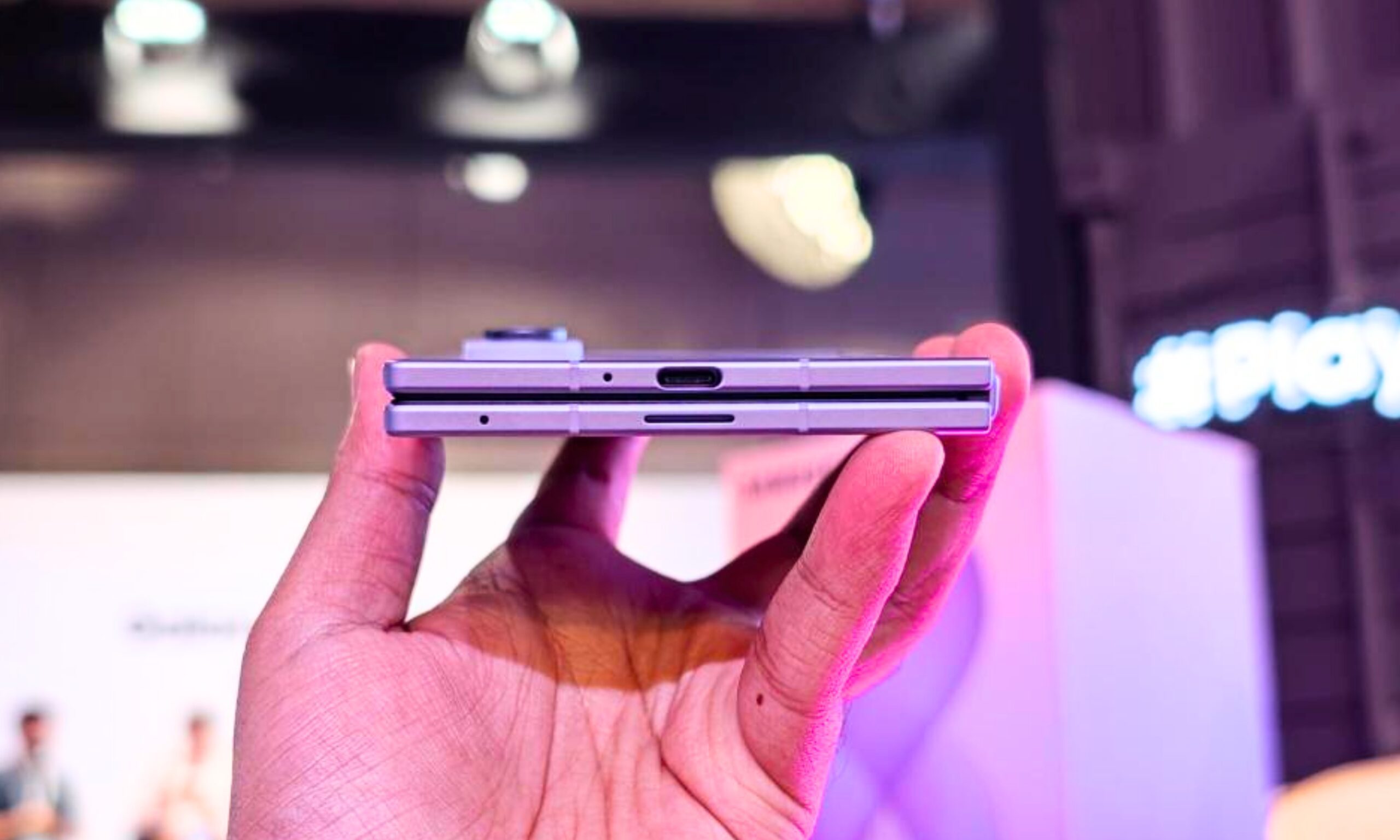
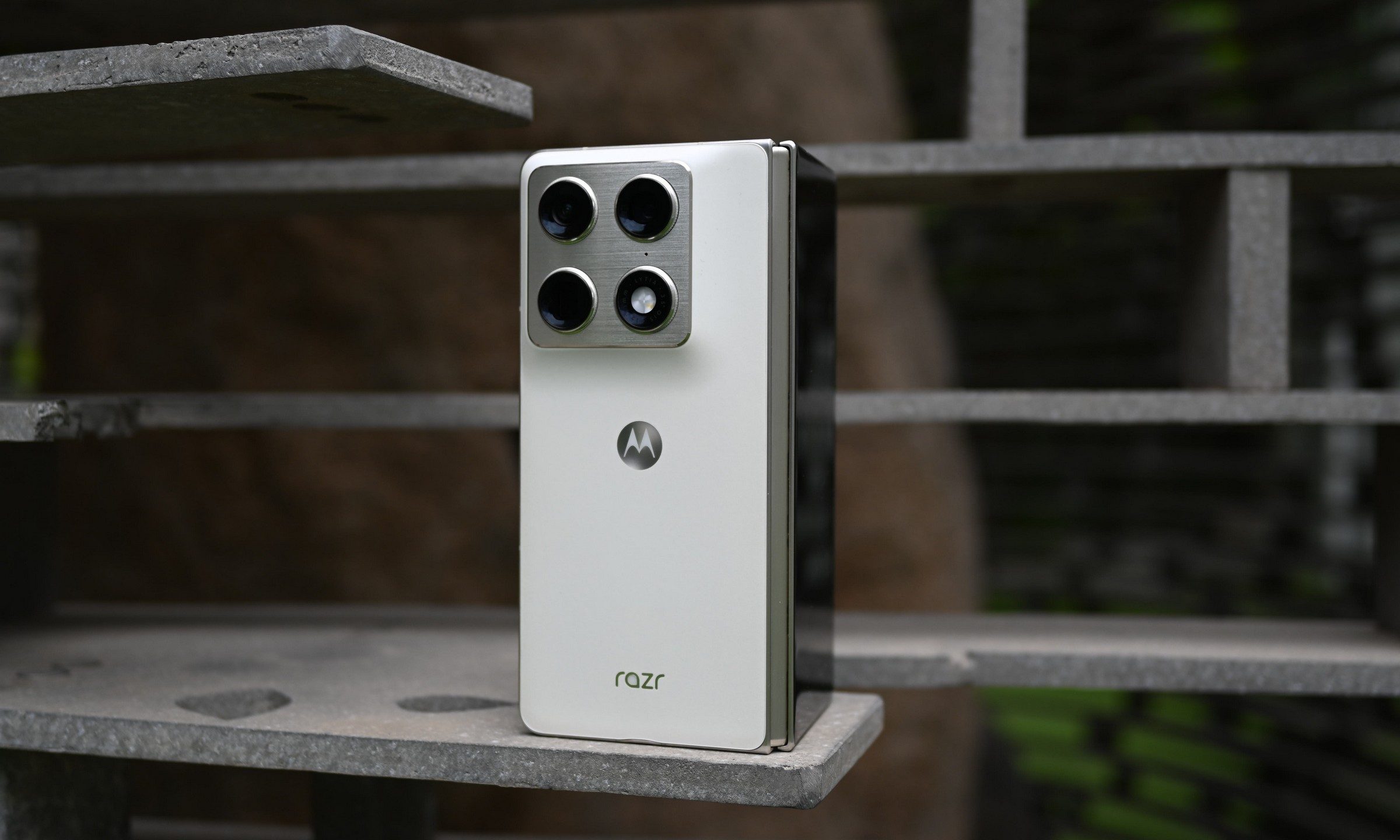
An extra 600mAh may sound modest beside the giant cells now appearing in Chinese foldables. The global Honor Magic V6 has a 6,660mAh silicon-carbon battery inside a body measuring 4mm when unfolded. Meanwhile, Motorola’s Razr Fold uses a 6,000mAh silicon-carbon battery while measuring 4.6mm unfolded. It also supports 80W wired and 50W wireless fast charging, giving it a considerable advantage over Samsung on paper.

So when you pit it against the other foldables out there, the Z Fold 8 Ultra looks rather conservative. It would be easy to dismiss Samsung over this, but the official briefings gave us a better insight into the company’s priorities. Samsung emphasized performance, longevity, and safety. The company also said users should expect battery health consistent with previous Galaxy products. Samsung appears to be limiting silicon content or using a more conservative cell design until it has greater confidence in long-term behavior.

Similar to Apple, Galaxy devices are looking to refine the experience and improve user experience with new models rather than introducing big spec numbers. There’s an argument to be made for both sides of this, but considering the past incidents, Samsung’s cautious approach isn’t surprising.

This is only Samsung’s first step

Samsung has arrived late to silicon-carbon batteries. Other brands have already used to technology to push phone batteries beyond capacities that once looked unrealistic. The first Galaxy attempt may not be hitting headline-grabbing figures, but the direction is clear.

Future Galaxy phones could adopt higher silicon percentages and larger capacities. The technology could eventually reach conventional Galaxy S devices too, where it might enable thicker battery reserves or slimmer designs. For now, silicon-carbon has helped Samsung make its newest foldables thinner without leaving battery capacity behind. We are now getting the best-built foldables ever, and after years of 4,400mAh Galaxy Folds, I’ll take the small but deliberate step.

Advertisement

Source link

Continue Reading

Tech

Sony’s Decision To Ditch Discs Was Practically Inevitable, Data Shows

Published

on

An anonymous reader quotes a report from Ars Technica: Many gamers have been lamenting Sony’s recently announced decision to halt sales of physical game discs in 2028. However, new data revealed by Circana analyst Mat Piscatella highlights how years of stark economic trends helped lead Sony to that decision. In a social media thread Thursday morning, Piscatella shared insights into Circana’s tracking data on physical game sales in the U.S. dating back to 2003. A graph of those trends shows physical sales peaking in the 12 months ending June 2009, when 297 million units were sold across the US. Those physical unit sales have been on a steady downward trajectory since then, leading to just 37 million physical units selling in the U.S. in the last 12 months.

The newly revealed data follows on an earlier post from Piscatella highlighting that only seven PlayStation games had sold over 100,000 physical units so far in 2026. Today, Piscatella followed up on that stat with a graph showing how this baseline used to be common; 100 PlayStation games sold at least 100,000 physical units in 2008. The ceiling for physical PlayStation game sales isn’t all that impressive these days either; Piscatella shared that the top-selling physical PlayStation game has only sold a paltry 275,000 units in the U.S. so far this year.

There are some small signs of hope for the physical game market, if you squint. Piscatella noted that aggregate spending on physical video games in the U.S. was actually up 4 percent year-to-date, compared to the year before. But that small increase is a mere blip following 16 straight years of sizable declines in physical game spending in the US, reducing a peak of $11.5 billion in physical spending in 2009 to a mere $1.6 billion for the 12 months ending in May. And Piscatella attributed the recent growth in physical spending to “the Switch 2 and physical sales growth on Nintendo platforms,” while other platforms (such as PlayStation) were still seeing “percentage drops from the teens to the mid 30s” in that spending.

Source link

Advertisement
Continue Reading

Tech

Adata boss: Samsung and Micron expansions won’t prevent a decade-long DRAM shortage; AI bubble unlikely before 2030

Published

on


  • Adata chief predicts memory shortages could persist throughout the next decade
  • Chen says AI demand still exceeds most industry expectations worldwide
  • DDR5 prices climbed another 7% during July despite earlier market optimism

Chen Li-bai, chairman of memory chip manufacturer ADATA, has dismissed growing market speculation about an imminent collapse in AI-related investment.

Speaking after TSMC’s stock price plummeted following its recent earnings call, Chen argued that discussions about an AI bubble remain premature at this stage.

Source link

Advertisement
Continue Reading

Tech

Instagram Is Now Banning Users Who Make Creepy Content With Meta Glasses

Published

on

“We don’t want people to be surreptitiously taking videos of other people.”

Meta has started banning Instagram users that use the company’s glasses to secretly record people to make content, according to a report by Business Insider. Meta owns Instagram, so this feels like an admission of something everybody already knows: a whole lot of creeps have begun using Meta Glasses to record people without their consent.

“If you’re posting content that is taking advantage of people and harassing them, like a lot of these pickup line kinds of videos that we’ve heard of and seen, then we’re going to take the content down,” Instagram head Adam Mosseri recently said in a social media post. “We don’t want people to be surreptitiously taking videos of other people and harassing them and then posting them on our platform.”

Advertisement

Regular Instagram users will likely have run into some of this stuff. Much of it involves arrogant content creators doing pranks on service workers, all while secretly filming everything with Meta Glasses or a similar product. Many of these “pranks” verge on harassment.

Other videos involve men filming their interactions with women in public. The women typically don’t know they are being filmed, which has given Meta’s specs unfortunate nicknames like “pervert glasses” and “predator glasses.” That is not great for branding and the continued success of the products.

We don’t know just how many videos have been removed under the new policy. Business Insider has noted that a pair of high-profile accounts that regularly film women in public without consent have been deactivated. The company also confirmed to the publication that those accounts were banned specifically for posting harassment content filmed with its glasses. 

This isn’t the only move Meta has made to try to stem the tide of creepy behavior enabled by smart glasses. The company recently added software that disables the camera entirely if the LED light that indicates recording has been tampered with. People have been hiding this light with tape, film or by drilling holes.

Advertisement

This led to the creation of a cottage industry of people willing to “jailbreak” smart glasses so users can film without that pesky light going off. Meta’s recent software fix hasn’t been live long enough for us to get a sense if it made any kind of a dent in unsavory behavior.

However, it’s worth noting that the LED light isn’t exactly a spotlight. It’s easy to miss, even when turned on. This is especially true while recording outside in natural light. Still, it’s good Meta is doing something about a problem that the company had a major hand in creating.

Advertisement

Source link

Continue Reading

Tech

Kilkenny’s Entegro to create 100 new jobs with Acel Energy acquisition

Published

on

Entegro is extending its expertise in fibre telecommunications and network infrastructure by moving into the renewable energy sector.

Entegro, a Kilkenny-based engineering group, has announced the acquisition of renewable energy specialist Acel Energy, a solar energy company headquartered in Monaghan. 

In acquiring Acel Energy, Entegro aims to further its expertise in the designing, building and operation of critical fibre telecommunications and network infrastructure. The move will involve the formation of a new entity – Entegro Energy – and there are also plans to grow its workforce from 200 employees to roughly 300. 

Entegro said its acquisition also builds on an established partnership with high- and medium-voltage engineering specialist Nahanagan Electrical.

Advertisement

According to Entegro, the new deal will align complementary capabilities under a single roof, furthering expertise in the delivery of renewables generation, battery storage and high-voltage infrastructure solutions domestically and internationally. 

Established in Kilkenny in 2019, Entegro, which is part of the Kyntus Group, has a presence in Ireland, the UK and the US, and delivers services from design and engineering through construction, commissioning and operation, with business units spanning fibre and telecommunications, transformation services and energy.

Commenting on the announcement, John Rooney, the group CEO for Entegro, said, “The board and I welcome the Acel team to the Entegro group. This is another milestone for Entegro as we continue to build a multi-utility business across telecoms, power and infrastructure to meet the demands of Ireland and beyond. 

“Entegro has always sat at the heart of critical infrastructure, so moving into energy is a natural next step rather than a departure. 

Advertisement

“Bringing Acel and Nahanagan together gives us the ability to design, commission and run energy systems end to end, from an Irish base and with a trusted team that keeps growing. That is the future we want to help build and to build well.”

Barry Sherry, the managing director at Acel Energy, added, “Declan McDonald and I built Acel on engineering-led renewable generation and storage, and joining Entegro lets us do that at a scale we could not reach alone.”

Don’t miss out on the knowledge you need to succeed. Sign up for the Daily Brief, Silicon Republic’s digest of need-to-know sci-tech news.

Advertisement

Source link

Continue Reading

Tech

Runway launches AI model router as generative media gets crowded

Published

on

Runway no longer wants to be just another AI model company. It wants to become the infrastructure layer for generative media.

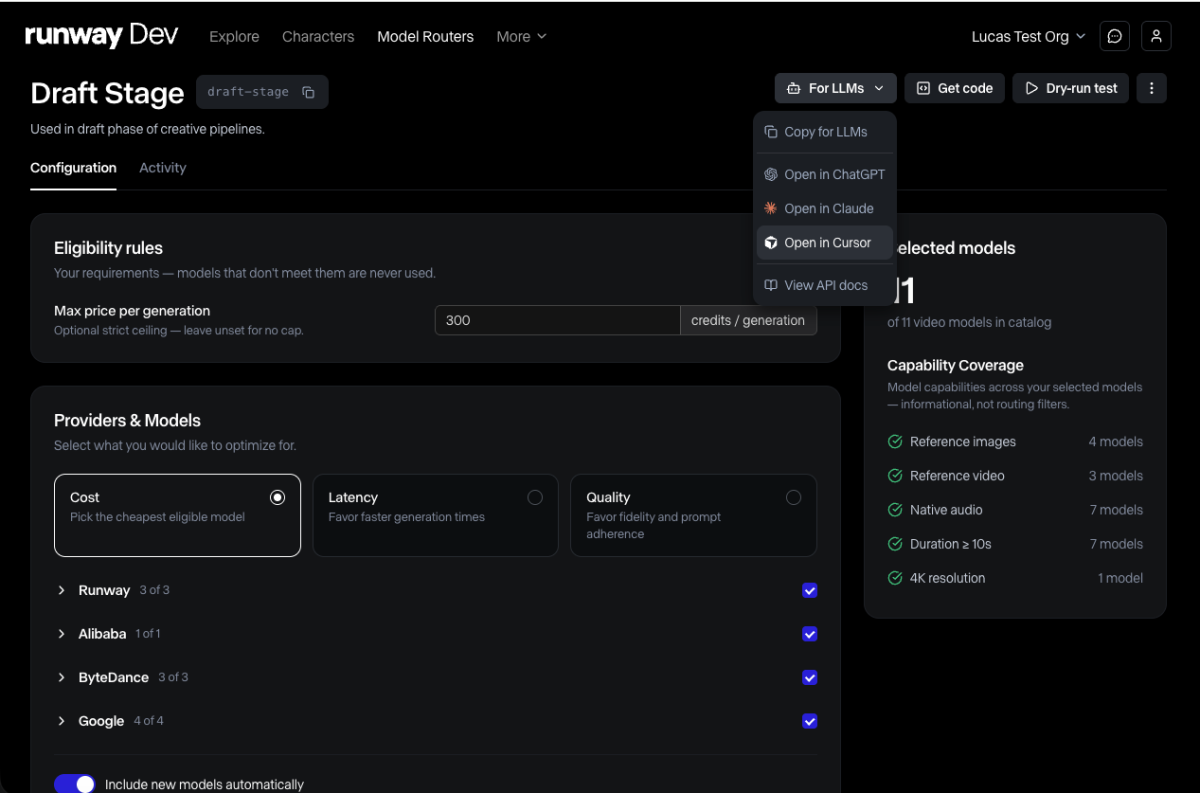
On Thursday, the startup launched Runway Media Router through Runway Dev, its developer platform, released earlier this month, that provides API access to a growing roster of third-party image, video and audio models alongside Runway’s own. 

The Media Router is a tool that automatically selects the best image, video, or audio generation model for a request based on whether a developer prioritizes quality, speed or cost. While model routers have become increasingly common in the world of large language models, Runway says this is the first built specifically for generative media. 

“The routing really fits into that overall promise of being the easiest one-stop shop for developers to integrate with any type of generative media model,” Anthony Maggio, Runway’s chief product officer, told TechCrunch.

Advertisement

The launch, shared exclusively with TechCrunch, marks another step in Runway’s evolution from an AI video startup into infrastructure for companies building with generative media. Through Runway Dev, customers including Adobe, Cloudflare, ElevenLabs, Expedia, Shutterstock, and Quora can build media generation directly into their own products using Runway’s API rather than sending their users to Runway’s own app or site.

The launch of the router comes as the number of generative media models has exploded, making it increasingly difficult and time-consuming for developers to evaluate new releases. Through the Runway Dev platform, developers can access the latest media models when they’re released. 

“Most developers are not spending the time to really understand the capabilities of each of these models and where they excel or differ based on various types of outputs across video, image, and audio,” Maggio said. “The unique proposition we’re bringing to the table is all of that intelligence around what the best model is for each different use case, and meshing that with preference you apply around the context of your business.”

Maggio noted that Chinese generative media models are becoming increasingly popular. However, many businesses building their own products might not be comfortable working with models that come out of China, so they could, he said, potentially set a preference for American model providers — a preference that may become more common as the Trump administration explores bans and sanctions against Chinese open AI models

Advertisement

That’s just one example of preferences that developers can set, though. Maggio says customers are mainly interested in routing the model to account for token pricing and quality. Token pricing has become a hot topic in 2026 as enterprises that went all-in on agentic AI felt the sting of high token bills. In the world of LLMs, model routing for token pricing has become common, so it only makes sense that routing for generative media would follow. The Media Router launch also comes weeks after Runway replaced its unlimited subscription plans with token-based pricing, a move that drew criticism from some users. 

On the quality front, deciding what models provide the best quality for any given task isn’t as easy for generative media as it is with language models, Maggio says. That’s where the router’s intelligence layer kicks in. It’s based on the expertise Runway’s in-house creative team has developed in evaluating output across every media type — things like how video models handle motion, how image models handle composition, or how voice models handle lip syncing. 

Runway had already done a lot of the work building that intelligence layer for its agent product, a conversational AI creative partner that Runway launched in May to help turn text prompts into fully edited multi-shot videos and marketing campaigns. 

The Runway Media Router, Maggio says, takes the same routing technology Runway built for its own products and packages it for outside developers to use.

Advertisement

Runway’s strategy today reflects how fragmented and competitive the current generative media landscape is, and how much the startup needs to expand and pivot to stay competitive. Runway’s last AI video model release — Gen 4.5 — was in December. At the time, the model topped leaderboards, outperforming similar models from incumbents like Google. In the same month, Runway released its first world model

Aside from an upgrade to its video editing model, Aleph 2.0, in May, Runway hasn’t dropped a new dedicated frontier video model in months. (TechCrunch has asked when the startup plans to release Gen-5.) Today, while Aleph 2.0 ranks among the leading video editing models according to Artificial Analysis, the company’s text-to-video and image-to-video models no longer lead the rankings. In the top 20 spots are models from heavy hitters like Google and China’s ByteDance and Alibaba. 

Rather than asking developers to bet on a single model staying ahead, Media Router assumes that the best model will continue to change — and it keeps Runway in the game so that it can continue to build on the frontier. If not as the best new AI model, then as the best orchestration layer. 

Anastasis Germanidis, Runway’s co-founder and co-CEO, acknowledged that the startup has been known for a long time primarily for “that end user piece,” but it had to build a full stack to get there, one that includes a developer platform, a creative tool suite, and an inference layer underneath it all. He says the company has seen increasing interest from companies for Runway to live across every part of that stack. 

Advertisement

“You need great models underneath, but the orchestration increasingly matters a lot because people are building entire campaigns with those models, or they’re building entire finished multi-scene generations out of those models,” Germanidis told TechCrunch. “It’s something that we increasingly had to build — that intelligence layer that comes on top of the pure pixel models. The router is one way in which the benefits of that come to users.”

Or as Maggio put it more broadly: “If you zoom out at the one thing Runway has been doing since 2018, it’s that we’re deeply focused on research, while building for where we think the space is going at the same time.”

Got a sensitive tip or confidential documents? Rebecca Bellan is reporting on the inner workings of the AI industry, from the companies shaping its future to the people impacted by their decisions. Contact her securely, and off the record, on Signal at rebeccabellan.491 or via email at rebecca.bellan@techcrunch.com from a non-work device.

When you purchase through links in our articles, we may earn a small commission. This doesn’t affect our editorial independence.

Advertisement

Source link

Continue Reading

Tech

‘The Morning Show’ gets a fifth and final season

Published

on

Jennifer Aniston and Reese Witherspoon helped bolster fledging Apple TV with “The Morning Show” in 2019. The final season of the award-winning drama has been announced, bringing an era to a close.

Eddy Cue wanted “The Morning Show.” Long before the service was announced in March 2019, or debuted in November that year, Cue was looking for shows that would bring the streamer attention, and “The Morning Show” was being shopped around.

Created by Jay Carson and developed by Kerry Ehrin, the drama was being executive produced by its stars, Jennifer Aniston and Reese Witherspoon. “I thought the show was amazing,” Cue later told Variety, “but… I came down to the realization that we weren’t going to get it, because somebody would always offer more.”

“But I thought we were special, and so I asked for a meeting with [Aniston and Witherspoon],” he continued. He says he asked “whether they thought they were going to make one of the best shows ever in television,” and they said yes.

Advertisement

“So do I,” he told them. “That means you need to do it with us, and the reason you have to do it with us is because we don’t have any other shows. So we believe 100% in what you’re doing, and we’re going to launch our service on that.”

Launching Apple TV+

The first star on stage at the launch of Apple TV+, as it was originally known, was Steve Spielberg. Then the lights went down, there was a long pause, and the spotlight came up on Reese Witherspoon and Jennifer Aniston.

“Reese and I are so proud to be a part of this exciting launch with Apple, officially announcing our new project, ‘The Morning Show,’” said Aniston.

“So in ‘The Morning Show,’ said Witherspoon, “we pull back the curtain on the power dynamics between men and women in the high-stakes world of morning news shows.”

Advertisement

“It’s a real insider’s view into the lives of the people who help America wake up every day,” she continued before handing back to Aniston.

“And through the prism of those under-slept, over-adrenalized people behind and in front of the camera, we take an honest look at the complex relationships between women and men in the workplace, and we engage in the conversation people are a little too afraid to have unless they are behind closed doors.”

That’s “The Morning Show,” and that’s exactly where the show went over what we now know will be its eight-year run.

As with many Apple TV series, “The Morning Show” was given a two-season order right at the start. But it has not aired as consistently as later hits such as “Slow Horses,” which runs annually.

Advertisement

Instead, “The Morning Show” has aired only four seasons so far, with its fifth and final one now in production to air in 2027. It’s worked out as a new season every second September, and perhaps because of that, each run has been a critically-acclaimed event event.

The show didn’t ignore how comparatively slowly it was being released, either as the story moved on two years between seasons three and four. It’s not known yet when the final season’s storylines will pick up, but it is known that it will feature new characters played by Jeff Daniels, Jesse Williams, and more.

Those new faces will join the regulars including Aniston, Witherspoon, and Billy Crudup. Crudup is just one of the actors to have won awards for the series, but he holds the distinction of having won the very first Emmy that Apple TV ever received.

If the new season keeps to the existing format, it will bring the total number of episodes up to 50. It’s a small number compared to network TV shows of the past. Over the same time frame, for example, Aniston’s “Friends” cranked out 194 half-hour episodes.

Advertisement

But maybe this what has made “The Morning Show” so consistently strong. Seasons are released when they’re ready, more or less, instead of having to hit specific air dates.

The seasons are long enough, at 10 episodes each, to tell a meaty story. But they’re not so long as to need those tales being stretched out unnaturally.

Back when hour dramas ran for upwards of 22 episodes per season, there used to be a reluctant belief on the part of producers. One third of your season’s episodes could be great, they would say, one third might be okay, but try as you might, one third would be terrible.

So far “The Morning Show” has avoided that trap. Here’s looking forward to seeing if it can get to the finishing line as strongly as it has run so far.

Advertisement

Apple has not announced any details of the last season yet, but if it follows form, the season will run in September 2027. And we’ll have to wait until August 2027 to even see the first trailer.

Source link

Advertisement
Continue Reading

Trending

Copyright © 2025