MapQuest stood up to President Donald Trump, and now its app is reaping the rewards.
The “OG of online mapping,” as the company calls itself, announced on Thursday that it would not change the name of Lake Ontario on its maps to Lake America, despite Trump’s executive order directing the U.S. Department of the Interior to update the lake’s name in the U.S. geographic naming service. As a result, MapQuest’s mobile app downloads soared, sending the iOS app to the No. 4 position on the U.S. App Store’s Top Charts for apps (not including games) as of Monday morning on the U.S. east coast.
MapQuest also reached the No. 8 position overall in the U.S. App Store across both apps and games, and it became the No. 1 Navigation app in the United States.
In Canada’s App Store, the app reached No. 2 overall as of Sunday evening.
Advertisement
The 30-year-old company remarked that it received “hundreds of thousands” of new downloads since its decision to keep the name Lake Ontario in place, and saw its app’s usage climb to 50 times above its normal levels.
Third-party data from market intelligence provider Sensor Tower confirms the surge, noting that MapQuest saw 184,000 and 162,000 total global and U.S. app downloads during the week beginning August 24, respectively, each representing an increase of more than 10x week-over-week. In the U.S., daily downloads were up 128% day-over-day from August 26 to August 30.
“We took the same approach we did with the Gulf of Mexico: be part of the conversation, and give people an app that keeps the names they’re familiar with,” said Doug Berger, General Manager of MapQuest, in a statement. “Hundreds of thousands of people signaled to us this weekend that we got it right by downloading our app.”
MapQuest also released an online tool that lets you jokingly rename Lake Ontario to whatever you want it to be, then share the results on social media. The company had offered a similar tool last year, after Trump renamed the Gulf of Mexico to the Gulf of America.
Advertisement
Trump’s decision to rename the body of water bordering the U.S and Canada comes as trade talks broke down, leading the U.S. to impose new 50% tariffs on $20 billion worth of Canadian goods, with Canada poised to retaliate.
On Saturday, Google Maps announced it was complying with Trump’s decision, explaining that it updates Google Maps to reflect the name changes in official government sources. In the U.S., that’s the Geographic Names Information System (GNIS). The updated map will only be shown to users in the U.S., while those in Canada will see Lake Ontario, and those outside of the two countries will see both names.
Both Apple Maps and Google Maps previously changed the name of the Gulf of Mexico to the Gulf of America last year, after Trump issued a similar name-changing executive order.
As of Monday morning, Apple Maps has yet to rename the Great Lake to Lake America and has not issued a statement about its plans.
Advertisement
MapQuest has changed hands several times over the years, having been acquired by AOL shortly after going public. It then ended up with Verizon for a time, as a result of Verizon’s acquisition of AOL. In 2019, Verizon sold MapQuest to internet advertising company System1.
MapQuest’s app has been downloaded 687,000 times worldwide this year so far, up 29% year-over-year, SensorTower estimated. Since 2012, MapQuest has been downloaded 24.4 million times, with 97% of those installs coming from the U.S.
When you purchase through links in our articles, we may earn a small commission. This doesn’t affect our editorial independence.
Samsung may be planning to standardize the zoom camera across the Galaxy S27, S27+, and S27 Pro, while keeping the Ultra on a separate telephoto setup.
According to tipster @phonefuturist, the Galaxy S27 and S27+ are being tested with the same 3x telephoto system as the Galaxy S27 Pro. The claim lines up with an earlier ETNews report that pointed to a 12MP 3x telephoto camera for the Pro, although the latest leak does not confirm whether it is referring to that exact sensor.
If accurate, Samsung could be giving all three non-Ultra models the same zoom hardware, while reserving a more capable telephoto camera for the Galaxy S27 Ultra.
The regular Galaxy S27 models could finally get a better zoom camera
The Galaxy S26 and S26+ currently use a relatively small 10MP 1/3.94-inch sensor for their 3x telephoto cameras, hardware that has changed very little over the past few generations. ETNews previously reported that the Galaxy S27 Pro could move to a newer 12MP 3x telephoto camera. If the latest leak is referring to that same system, the Galaxy S27 and S27+ could finally receive an overdue zoom camera upgrade as well.
Advertisement
🚨 EXCLUSIVE | Galaxy S27 Camera Strategy
Samsung is reportedly testing a shared telephoto strategy across the S27 lineup.
The Galaxy S27 and S27+ are said to use the same 3x telephoto system as the S27 Pro, while sharing their main and ultrawide camera hardware with the Ultra.…
The resolution increase alone would be fairly modest, and we still do not know the sensor size, lens, or other hardware details. A larger or newer sensor, however, could improve detail and low-light performance, two areas where the tiny telephoto cameras on Samsung’s regular Galaxy S models have plenty of room to improve.
Advertisement
The Galaxy S27 Ultra is expected to remain in a different league. Samsung is reportedly testing a much larger 50MP 1/1.9-inch 4x telephoto sensor for the Ultra, although it may retain its existing 5x approach if the new hardware does not provide enough of an advantage to justify the added cost.
The Galaxy S27 may have more upgrades under the hood
The shared telephoto camera could be part of a broader hardware upgrade for the Galaxy S27. Previous leaks suggest Samsung is also testing a new Sony sensor for the main camera and a larger 4,900mAh battery, even though leaked renders point to a design that looks almost unchanged from the Galaxy S26.
Android Headlines and OnLeaks
There is one confusing part of @phonefuturist’s claim worth pointing out. The tipster says the S27 and S27+ could use the Pro’s 3x telephoto while “sharing their main and ultrawide camera hardware with the Ultra.” Taken literally, that would mean the regular S27 models also inherit the Ultra’s main and ultrawide cameras. Previous reports have instead suggested theS27 Pro will share those cameras with the S27 Ultra, so that is likely what the tipster intended to say.
The latest telephoto claim has not been independently verified either. Until more reliable sources back it up, it is worth taking the idea of a shared 3x camera across the S27, S27+, and S27 Pro with a grain of salt.
Apple Fellow Phil Schiller is reducing his workload at Apple, with the long-time executive no longer in charge of the App Store and managing product events.
Phil Schiller became an “Apple Fellow” in 2020 but still led Apple’s App Store and Apple Events in the specially-created role. Six years later, things are changing.
The 66-year-old executive, who was formerly Apple’s SVP of marketing, made the decision in the last few days of the Tim Cook premiership. Bloombergreports people familiar with the matter found out about his choice, which has yet to be officially announced by Apple.
Though Schiller won’t be managing the App Store or Apple Events, he won’t be leaving the company yet. He advised to employees that he will instead be working on “unspecified initiatives.”
Advertisement
The change is one that could be viewed as a step towards retirement from Apple. Becoming an Apple Fellow was one of those steps, with Greg Joswiak taking over the role of SVP of Worldwide Marketing at the time.
The Apple Fellow role gave Schiller a chance to make time for his friends, family, and “a few personal projects I care deeply about,” he said in 2020.
By stepping away from dealing with the App Store and Apple Events on a day-to-day basis, this arguably gives Schiller more time for those personal connections, while still keeping a hand in at the company.
Coincidental timing
While there’s no immediate indication of it being due to the change of CEO at Apple, the timing of Schiller’s role adjustment seems to match up with that event anyway.
Advertisement
The story came out on Tim Cook’s last day as CEO. Tuesday marks John Ternus becoming the head of the company, and an almost certain shift in the way the company functions.
There have also been many recent changes at the top of Apple, if not a mass executive exodus.
With Schiller shifting priorities from the App Store, an important part of Apple’s empire, the company won’t keep that space vacant for long. Indeed, that void’s already been filled.
New App Store management
It is reported that Apple will be moving the responsibility for the App Store over to the Services division. That means it falls under the watchful eye of Eddy Cue.
Advertisement
Cue was previously the manager of the App Store until 2015, when it was passed to Schiller.
The day-to-day management will be handled by Carson Oliver, who has long been responsible for the App Store.
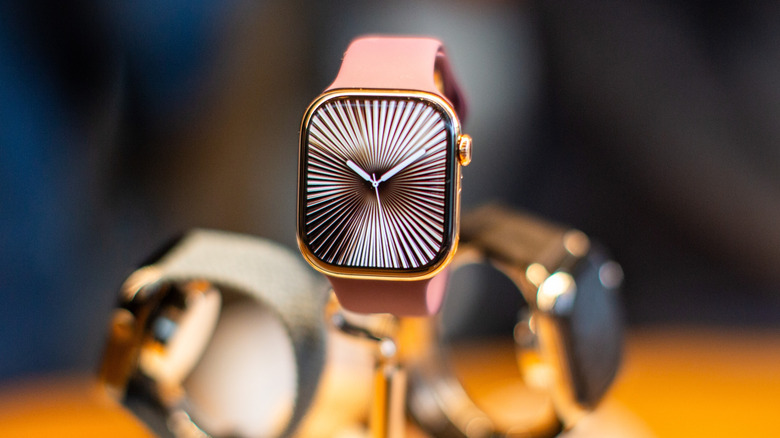
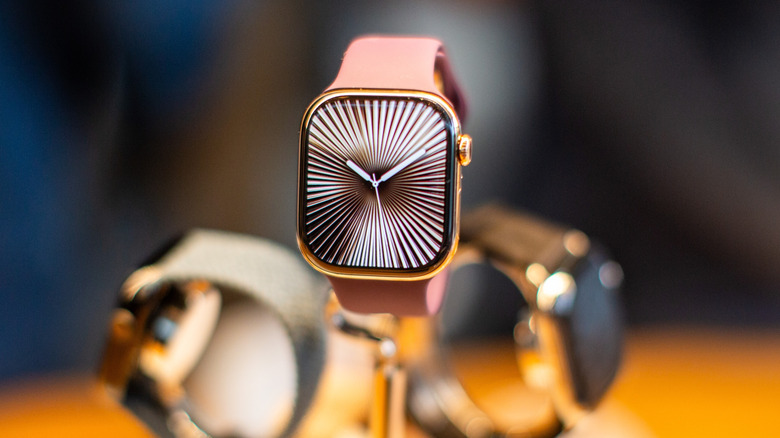
Garmin watches aren’t the only ones with the power of illumination.
Ringo Chiu/Shutterstock
Gather close, curious passersby, and gaze upon my wrist orb! Behold the notifications it annoys me with, the nearly incessant reminders and DoorDash delivery updates. Gasp as I use it to ask Google things I should already know, like whether it’s possible the milk I left on the counter last night is still good. Do not accuse me of witchcraft when you see me take a phone call with it, in public, while using both hands to eat my lunch.
But what is this mockery I hear as I activate the flashlight? Do my ears deceive me, or did you snort derisively in my direction when I lit this shining beacon? Oh, I get it. You think smartwatch flashlights are stupid. You assume that a small, white screen turned up to maximum brightness won’t do jack diddly squat to help me find the pill I just dropped on the floor. But you’re wrong. I just found the pill even though it was deep in the shag carpeting under my nightstand, and I did it all without digging through the kitchen junk drawer for an actual flashlight.
Yes, it’s time you realized just how useful the flashlight in your smartwatch can be. Whether you’ve got an Apple Watch, Google Pixel Watch or a Samsung Galaxy Watch, all of them have similar flashlight features. The temptation to put “flashlight” in air quotes makes sense. After all, the feature does nothing more than turn the watch’s display white and crank the brightness up to eleven. Moreover, your watch is a companion device to your phone, which has a much better flashlight built right into it in the form of a camera flash. But answer this: Is your phone strapped to your wrist?
Advertisement
In brightest day, in blackest night, a smartwatch casts perfectly adequate light!
Max Miller for Engadget
Is that a gaggle of Garmin users I hear, gloating about the actual LED flashlights built into their smartwatches? We get it, you go outdoors. This message is for the rest of us, the unwashed masses with smartwatches from mainstream brands. We have denigrated the flashlight functionality of our little wrist computers for too long. But the line must be drawn here. This far, no further!
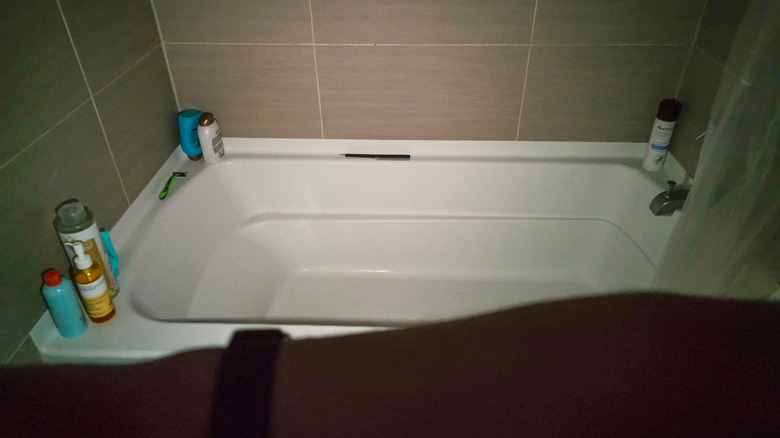
Look at the photo above. I mean, don’t look too closely. Stop judging my bathroom and instead observe how well the light from my dinky little Galaxy Watch illuminates the space. No, it’s not the power of the sun in the palm of my hand, but it’s fine! This is an entirely adequate amount of light! If I were looking for something in there, I’d find it.
Ah, but the elephant remains stubbornly in the room. Why not use a phone flashlight? Well, if you’re anything like me, you don’t have your phone glued to you. One of the reasons you probably bought a smartwatch was so that you could set your phone aside without missing important calls and texts. So, when your phone is charging in another room and you need a quick light source, who you gonna call? You already know the answer.
Advertisement
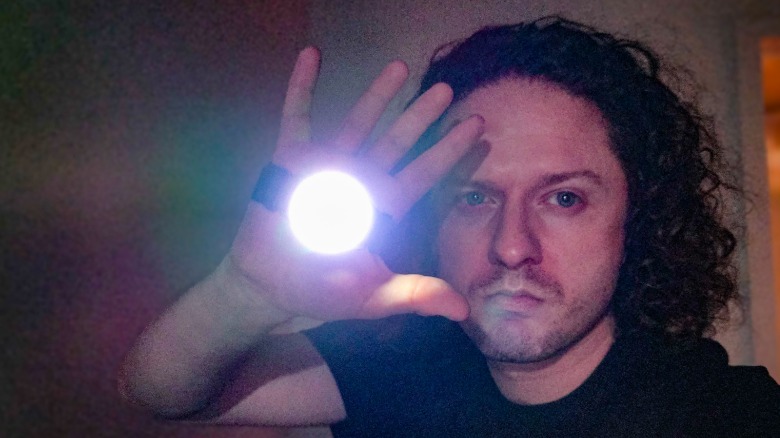
Moreover, your phone is a relatively heavy object that occupies at least one hand, and it’s cumbersomely shaped. If you need light while using both hands, you can either prop your phone awkwardly against something, or you can take the honorable path and activate the flashlight on your smartwatch. You can even strap the watch to your palm and use it in what I’m officially dubbing ‘Iron Man mode.’
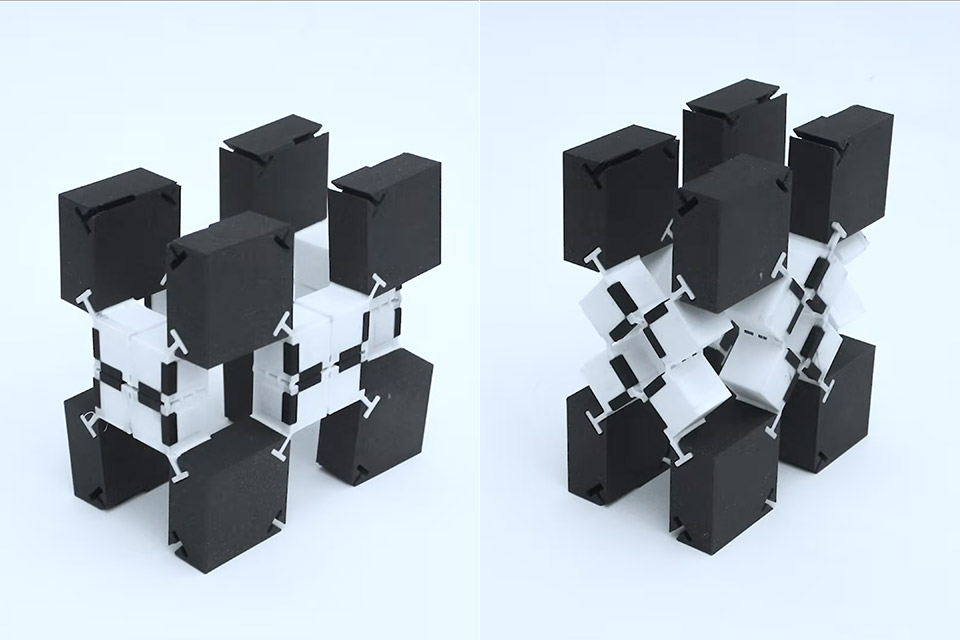
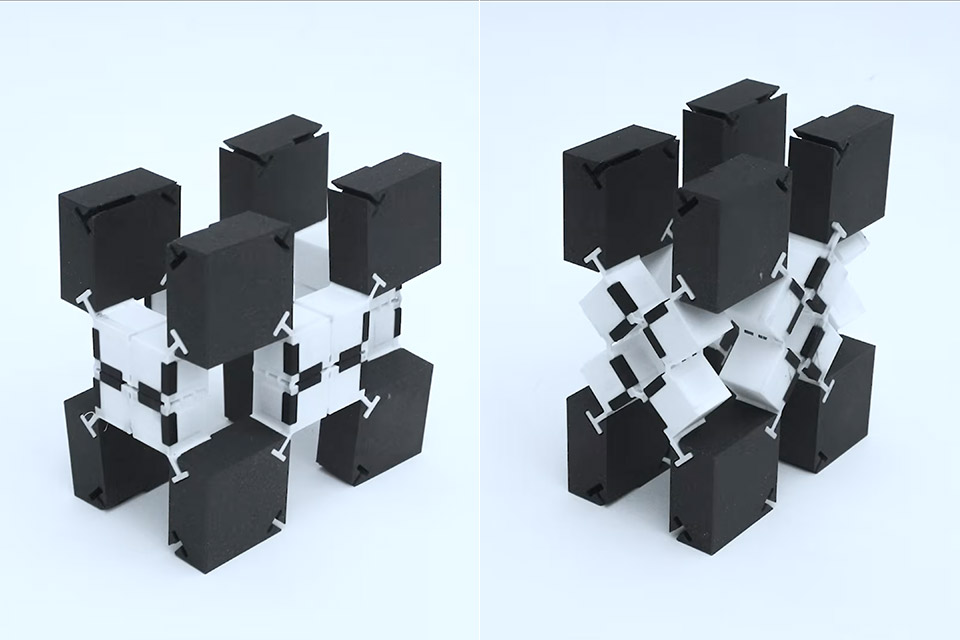
Chairs stay chairs. Tables stay tables. Anything that needs to become both usually grows hinges, motors, and a tangle of wires that quit the first time you twist the thing the wrong way. Researchers at MIT’s Computer Science and Artificial Intelligence Lab spent years looking for a quieter option, and they landed on Bifur-circuits: a kit of 3D-printed blocks that snap together, fold into new stable poses, and keep an electrical map of whatever form they just became.
Each printed unit is one of these smart auxetic lattices, which are repeating designs that widen when stretched rather than pinched inwards. You can find one unit in three different positions. When you link a couple of these devices with some connector pieces, a new behavior emerges. Pushing or twisting past a specific point causes the entire assembly to snap into a new stance and lock it in place. That rapid change is identical to the mechanical ‘bifurcation’ that occurs when a weak plastic ruler finally gives way under strain. When you combine more and more blocks, the number of viable stable positions skyrockets, far beyond the three fixed shapes employed by the same scientists in their previous shape-shifting antenna research.
A1 mini + LED Lamp Kit for Creative Light Projects: Bring your ideas to life with the included LED Lamp Kit. Simply print compatible lamp models and…
The Perfect 3D Printer for Beginners: A1 mini 3D Printer is designed to make 3D printing easy from day one with automatic calibration, simple setup…
Experience the Bambu Lab Ecosystem: Access MakerWorld’s huge library of ready-to-print models, manage prints through the Bambu Handy app, and enjoy…
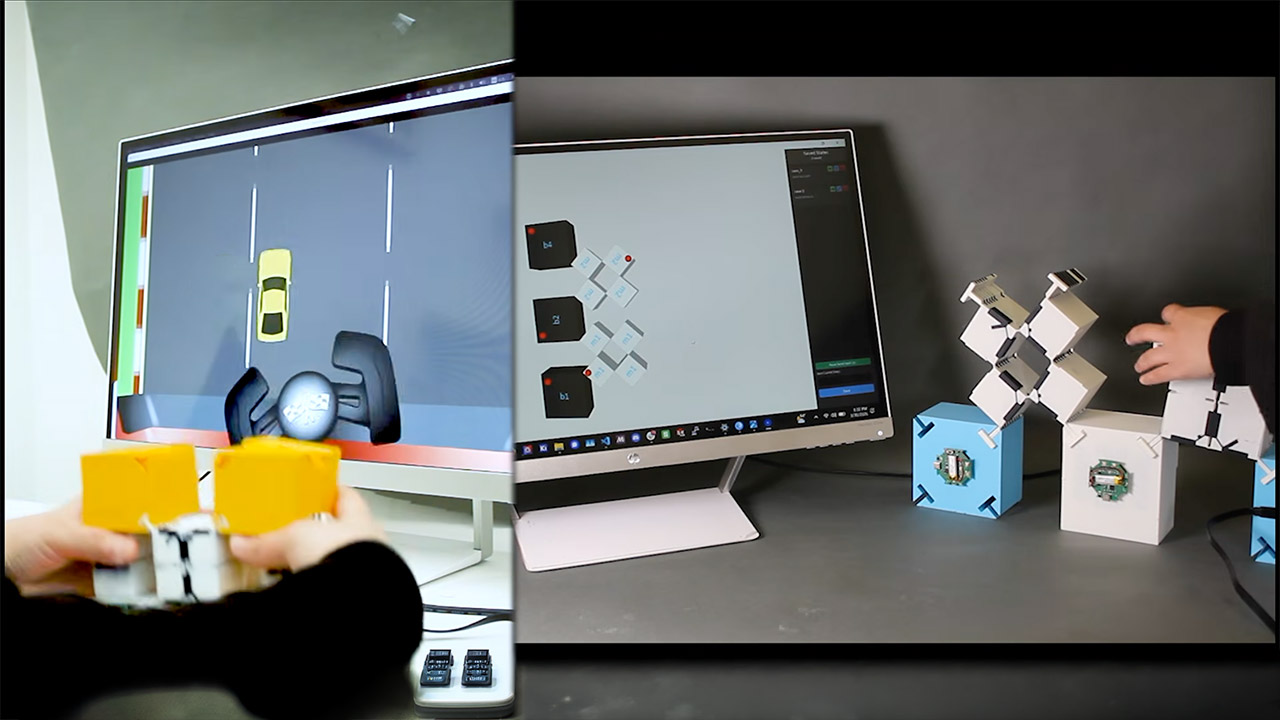
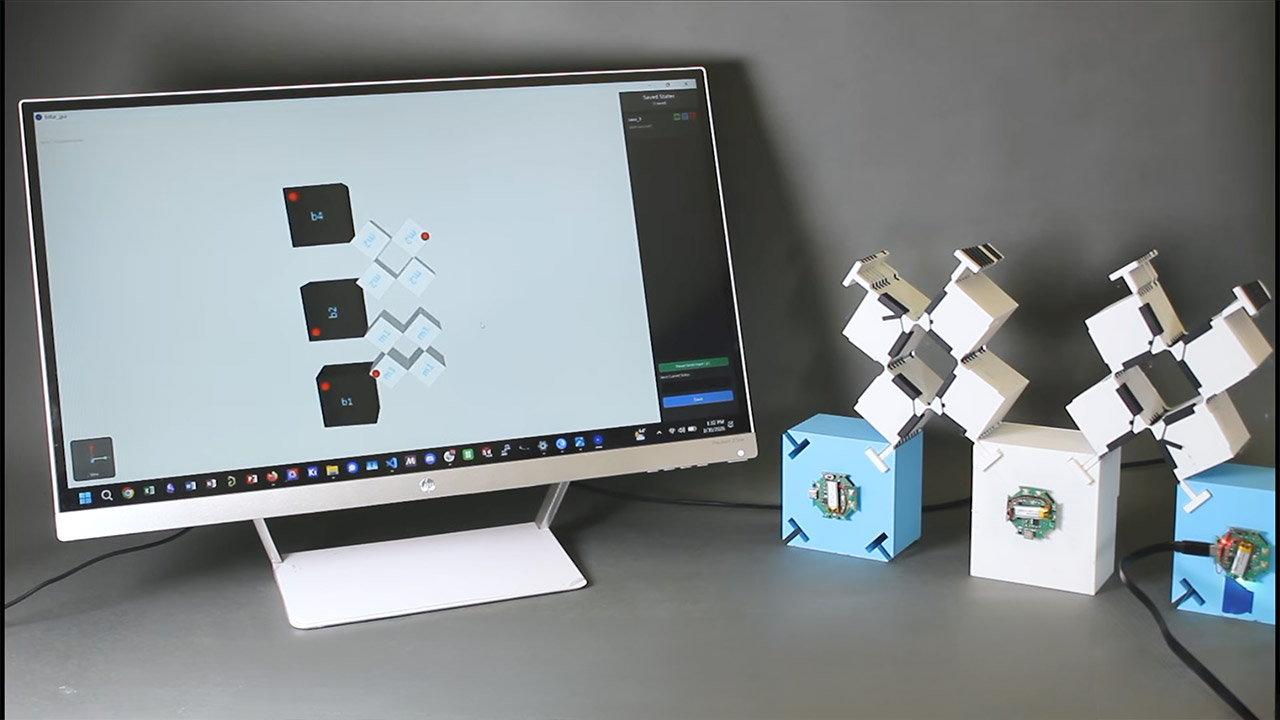
Conductive filaments for the connectors are built into the units as you print the flexible plastic, and they remain linked even if the entire structure is stretched, squished, rotated, or bent whatever you wish. When neighboring blocks meet in different orientations, contact pads at the joints close in a unique circuit, giving each position its own electrical signature. Then, a small controller at the assembly’s root pokes about the connections, asking the units who they are and where they are in respect to one another, and creates a map of the entire thing, all without the need for any further wire between the units.
Advertisement
The difficult part was finding a filament that could flex back and forth thousands of times without losing the signal. The units have stretchy TPU hinges, stronger PLA connectors, and a unique conductive flex filament for the actual electrical connections. If you need a specific position to be locked in tightly, you may even insert tiny magnets into the pockets during the print. After 10,000+ compression cycles, we discovered that the electrical contact remained firm. Larger assemblies take longer to scan; twenty units or so can take a few seconds to generate a comprehensive map.
A tool in Fusion 360 allows you to specify the size, thickness, and stiffness of each joint before exporting the file to be printed on one of those multi-material machines. There is also some companion software that allows you to preview the assembly, detects the finished pose when it occurs, and then creates code so that another app can react to that pose. Parts come out the printer ready to clip together, and all you need to do using heat and solder is add a little board to the end that communicates with the rest of your system.
One functioning model became a piece of furniture with twenty-four units, expanding into a tea table, folding up into a chair with a storage hole, and collapsing flat to store itself. While the geometry changed, the item communicated with a display to determine its new position. A second piece was a game controller that could be folded one way to launch a racing game, another way to launch a washing game, and a third way to launch a balloon-inflating game. You can simply add or delete units, and that controller will evolve into something else entirely. [Source]
These aren’t isolated moments, but the visible rise of a travel category: the “race-cation.” Fitness enthusiasts aren’t just picking a gym or a training plan anymore; they’re picking a destination, buying flights, booking hotels, and building entire holidays backwards from a finish line.
Advertisement
And the businesses that spotted it early—airlines, hotel chains, even government tourism boards—are already building entire products and services around it.
The businesses that got there first
(Left): AirAsia x HYROX aircraft; (Right): World of Hyatt’s advertisement./ Image Credit: AirAsia/ Grand Hyatt
A handful of brands were quick to build entire commercial products around the race-cation the moment they saw it coming.
These intentionally built products have found a big customer base designed around a specific new kind of trip, one where the itinerary is built backwards from a start line.
The fitness trend that started it all
HYROX’s workouts include sandbag lunges and sled pulls./ Image Credit: Dittaya Mhosomboon/ Elizabeth Low
So a Singaporean who trains for it at home can fly to Seoul or Bangkok and compete in something functionally identical, just with a new stadium, a new crowd and a fresh excuse for a holiday wrapped around it. It’s this portability that turns signing up for a race into a whole vacation.
(Left): Amelia Yeo (middle) in Incheon, South Korea, with her family; (Right): Amelia competing at the HYROX event in Incheon./ Image Credit: Amelia Yeo
That appeal shows up in how people actually build these trips.
Singapore-based orthopaedic surgeon Alan Cheung has completed nine HYROX races, six of them overseas across Seoul, Sydney, Melbourne, Hong Kong, Taipei and Bangkok—using each one as much as a way to reconnect with friends and relatives living abroad as a competition to win.
For fellow Singaporean Angus Tan, a fitness influencer who flew to Jakarta with his partner for his first overseas race, the pull is partly practical—a short flight, minimal leave needed—but mostly about what the race gives the rest of the trip. “There’s something really satisfying about earning your holiday,” he told CNA Luxury.
For some, the race becomes the reason a family finally gets together. When Singapore marketing lead Amelia Yeo signed up for her first HYROX in Incheon, her parents, brother and his girlfriend flew out to support her, turning into the family’s first holiday together in almost eight years.
And for whole gyms, the race-cation becomes a group pilgrimage: Hong Kong’s DOP Training Club brought around 90 members, roughly 70% of its membership, to Bangkok in Mar 2026, closing the gym for the week so the club could compete and celebrate together, continuing a pattern of earlier group trips to Taipei, Kobe and Beijing.
Advertisement
None of this is cheap, either, which is arguably the more telling part.
For a lot of racers, the entry fee, the flight and the months of training aren’t a deterrent, but may be what makes the finish line worth flying for in the first place.
Singapore & Singaporeans are jumping on the bandwagon
The annual Gold Coast Marathon (left) and the Great Wall Marathon (right)./ Image Credit: Gold Coast Marathon/ Worlds’s Marathons
Beyond HYROX, Singaporeans are also willing to fly out for other fitness events.
This regional travel-for-a-race pattern now has numbers to back it up, too. Similar to race-cation, travel platform Agoda has coined the term “run-cation” for the phenomenon of people travelling for marathons.
One of them was Vijay Andrews, a 32-year-old Indian fitness coach who’d spent months recovering from an injury that kept him out of a HYROX event in New Delhi earlier in the year. When he heard Singapore’s edition was coming up, he booked his flight.
The workout itself isn’t new. What’s changed is that a fitness class has become something people plan a whole trip around, train months to earn, and fly across the region to share with the people who train alongside them.
The race gives these trips a reason. Everything else—the city, the food, the extra few days off—is just the reward for having shown up at the start line.
Read other articles we’ve written on Singaporean businesses here.
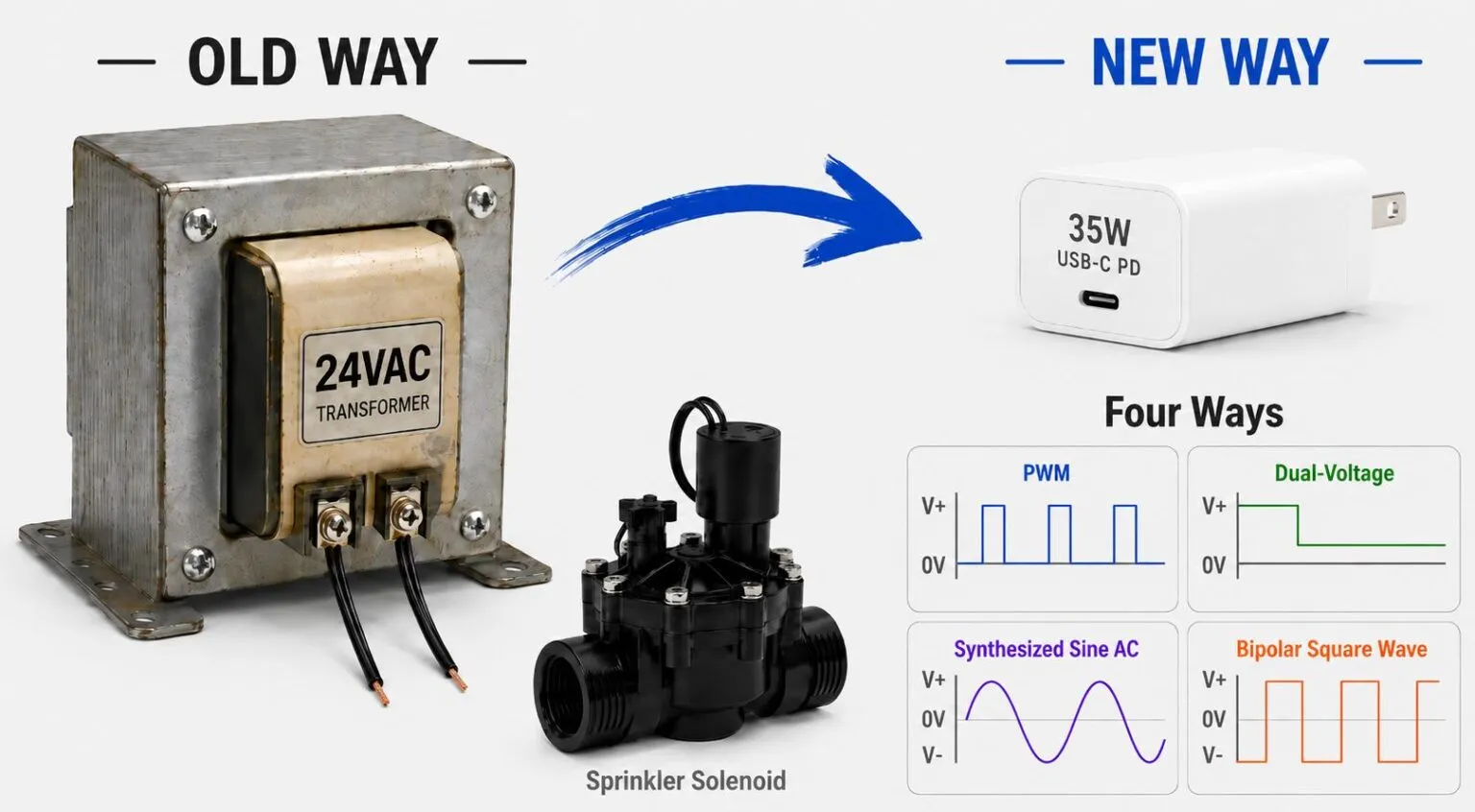
In the modern world USB has become a truly universal connector, with its inclusion on almost every major piece of consumer electronics. It has even expanded well beyond things that we’d think of as consumer electronics, like the solenoids on automatic sprinkler systems.
This project comes to us from opensprinkler.org who have been working on various ways of controlling the old sprinkler standards, which generally rely on a 24 VAC power supply to drive solenoids. This tests uses the power available from USB-PD and closely examines four methods of energizing the solenoids: unipolar PWM, dual voltage, synthesizing an AC wave from a DC supply, and producing a bipolar square wave. The bipolar square wave had some interesting results, being able to get pretty close to the behavior of a true sine wave while minimizing the demand on power electronics.
For those working on old sprinkler systems, or many other antiquated systems that still rely on 24 VAC, this project shows that USB can deliver a surprising amount of power in unique ways, and the fact that it’s near-ubiquitous and affordable makes it that much easier to adapt into situations it was never really designed for.
Outside the UK? Use NordVPN to unblock your free stream
Watch Aston Villa vs Arsenal live streams as the Gunners look to inflict more misery on the home side who lost their opening Premier League 2026/27game 4-0 after seeing a host of their best players depart over the summer.
It’s been a tough start to the campaign for Aston Villa boss Unai Emery. The Spaniard has seen Youri Tielemans, Lucas Digne, Morgan Rogers and Ezri Konsa all depart, while Ollie Watkins and Emiliano Martinez could soon follow suit. His decimated squad was then thumped 4-0 by Brighton, with João Gomes seeing red. With injuries also sidelining strikers Brian Madjo and Tammy Abraham, Villa fans will be fearing the worst against the reigning champions.
In stark contrast to the negativity around Villa Park, Arsenal will head to Birmingham brimming with confidence. The Gunners eased past Coventry 3-0 on the opening weekend, with new signing Christos Tzolis particularly impressive in attack. Mikel Arteta’s side will relish the opportunity to expose Villa’s problems and will expect the likes of Tzolis, Bukayo Saka and Kai Havertz to create plenty of chances.
Here’s how to watch Aston Villa vs Arsenal in the 2026/27 Premier League from anywhere in the world.
Advertisement
How to watch Aston Villa vs Arsenal from anywhere
A VPN is handy piece of software that can make your device appear as if it’s back in your home country, so you can unlock your usual service. The best VPN right now? We recommend NordVPN – it does everything and comes with a 75% discount and and extra three months for free…
How to watch Aston Villa vs Arsenal live streams in the USA
Soccer fans in the US can watch Aston Villa vs Arsenal in the Premier League on USA Network.
Advertisement
There is no dedicated streaming platform for USA Network, but it is available on cord-cutters like YouTube TV, Hulu+Live TV,Sling(select markets),FuboorDirecTV, many of which carry free trials.
Outside of the US? Use a VPN while you’re traveling away from home to unlock your stream.
How to watch Aston Villa vs Arsenal live streams in the UK
(Image credit: Future)
In the UK, Aston Villa vs Arsenal is being broadcast on Sky Sports Main Event and Sky Sports Premier League.
Advertisement
Sky Sports packages cost £35 per month for new customers, or £22 per month if you already have a 24-month Sky TV contract.
If you’re out of the UK but still want to tune in, explore the VPN route set out above, which will help you access your accounts from anywhere.
How to watch Aston Villa vs Arsenal live streams in Canada
Fubo is the Premier League’s broadcast partner in Canada and has live coverage of Aston Villa vs Arsenal.
Advertisement
Prices start from CA$31.49 per month for Fubo’s Sports Monthly package. However, the best option right now is the Quarterly Package which costs just CA$27.99 CA$14.99 for each of the first three months. You can also watch Fubo’s content if you have a selected DAZN subscription in Canada.
Not in Canada? Use NordVPN if you’re away from home, in order to tap into your preferred coverage from anywhere.
How to watch Aston Villa vs Arsenal live streams in Australia
(Image credit: free)
An Aston Villa vs Arsenal live stream is available in Australia on Stan Sport.
Advertisement
You can pick up a Stan Sport subscription for as little as AU$29.99 per month for the basic plan containing adds. That price consists of the AU$9.99 Stan subscription fee plus the Sport add-on for AU$20.
Outside of Oz? You can use NordVPN to access your usual Premier League coverage.
What is the Aston Villa vs Arsenal start time?
Aston Villa vs Arsenal kicks off at 8pm BST / 3pm ET / 12am PT on Monday, August 31.
If you are Down Under, the game will be broadcast at 5am AEST on Tuesday, September 1.
Advertisement
We test and review VPN services in the context of legal recreational uses. For example: 1. Accessing a service from another country (subject to the terms and conditions of that service). 2. Protecting your online security and strengthening your online privacy when abroad. We do not support or condone the illegal or malicious use of VPN services. Consuming pirated content that is paid-for is neither endorsed nor approved by Future Publishing.
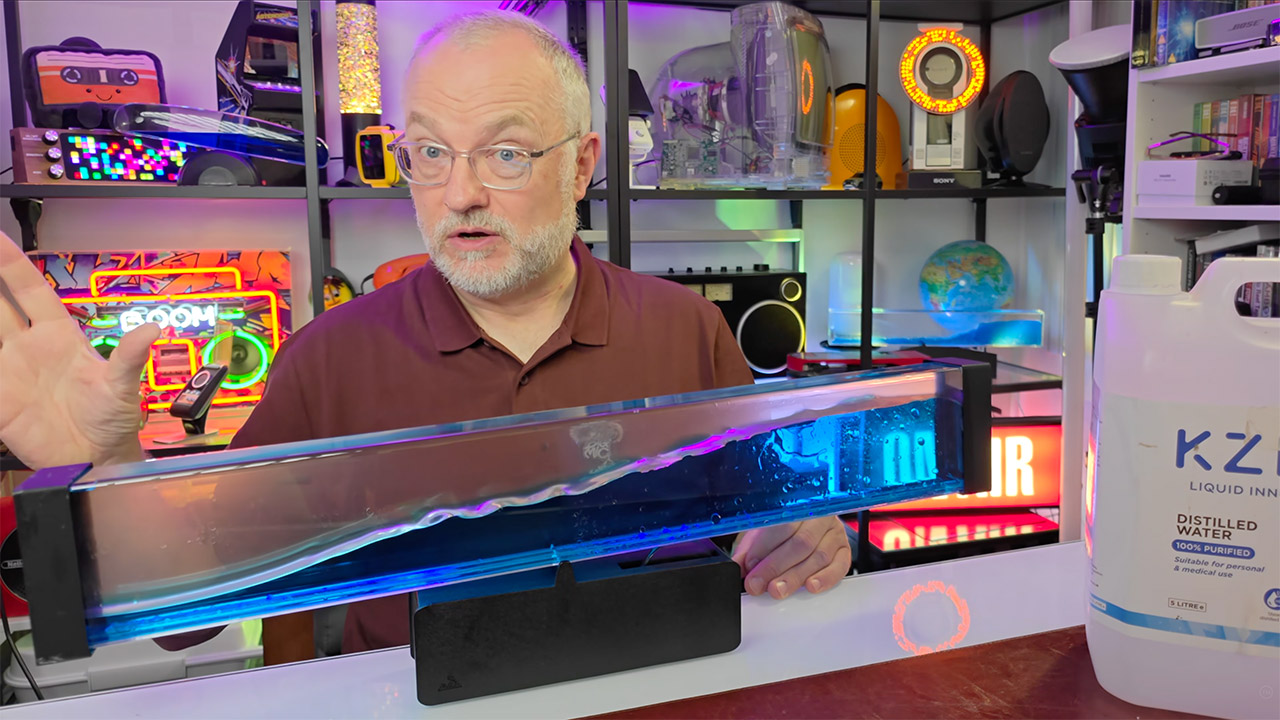
Techmoan already owned an 18-inch Hughes Wave Motion Machine that set him back about $500. He wanted something longer, so he paid $300 for the biggest model waveshop listed, a 25-inch unit shipped from India.
Website images appeared to be quite polished until he realized they were AI-generated. Prices sat in rupees. PayPal stayed unavailable on the main site, forcing a bank transfer unless you switched to the nearly identical waveshowcase.com page that accepted cards. A scam-checking site scored the operation at 50%. He ordered anyway and used PayPal through the dollar site for some protection.
【COMPACT BUT POWERFUL】- D11 Max has more skills. Designed for all things sleep, this sound machine comes with favorable features: rechargeable…
【HUGE BATTERY, WORRY-FREE ON THE GO】- Everything D11 max has, PLUS a LONG-LASTING battery. The portable sound machine is built with…
【HELPS SETTLE-IN & STAY ASLEEP】- Moms know how precious sleep can be. Turn it on to create peaceful sleep environment to help crying baby calm…
UPS delivered the box faster than expected after a short email exchange. Everything he bought was in the box, including the acrylic chamber, motorized base, funnel, a bare-bones set of instructions, and three little Minute Maid-style bottles holding transparent mineral oil. One of the thin plastic end caps shattered when he attempted to open the box to begin using it, and for some reason, the distilled water he had ordered did not arrive in the delivery.
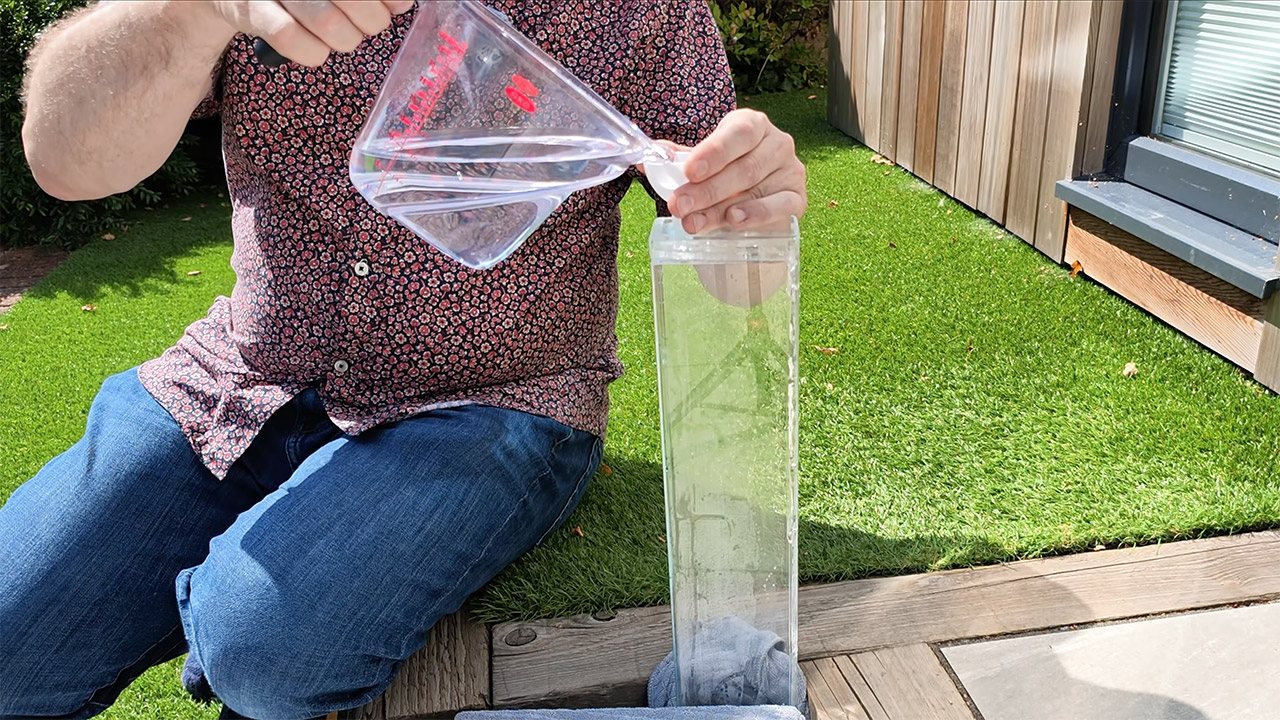
Filling the reservoir is a two-step process: first, mix 1 1/2 liters of distilled water with the supplied blue dye until it reaches the designated 45% line, shake it well, and then gently add mineral oil through the air trap hole until it is full. The instructions are a little vague about which brands or ratios to use, but once that’s done, all you have to do is run the motor for twenty minutes, turn it off for another twenty to allow the bubbles to collect in the side reservoir, then turn it back on and let it go.
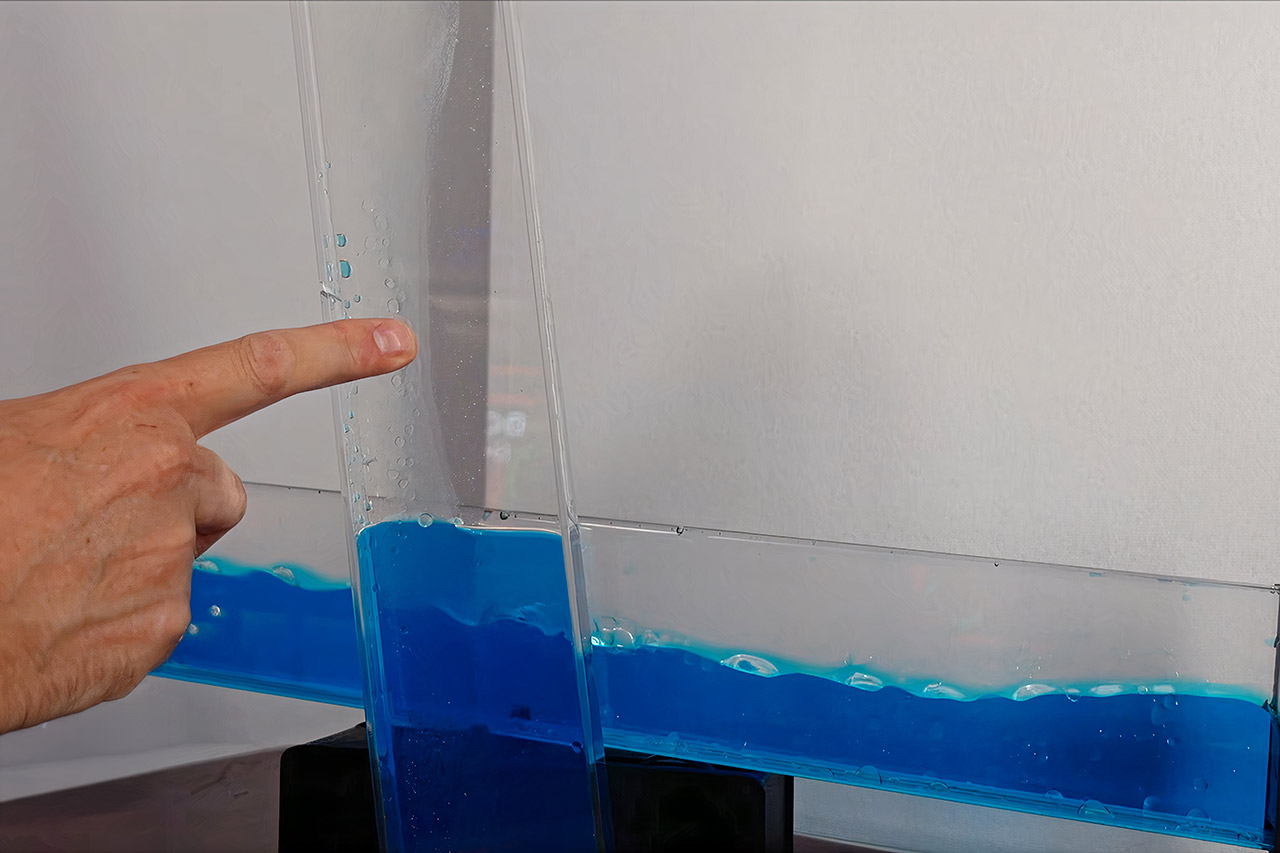
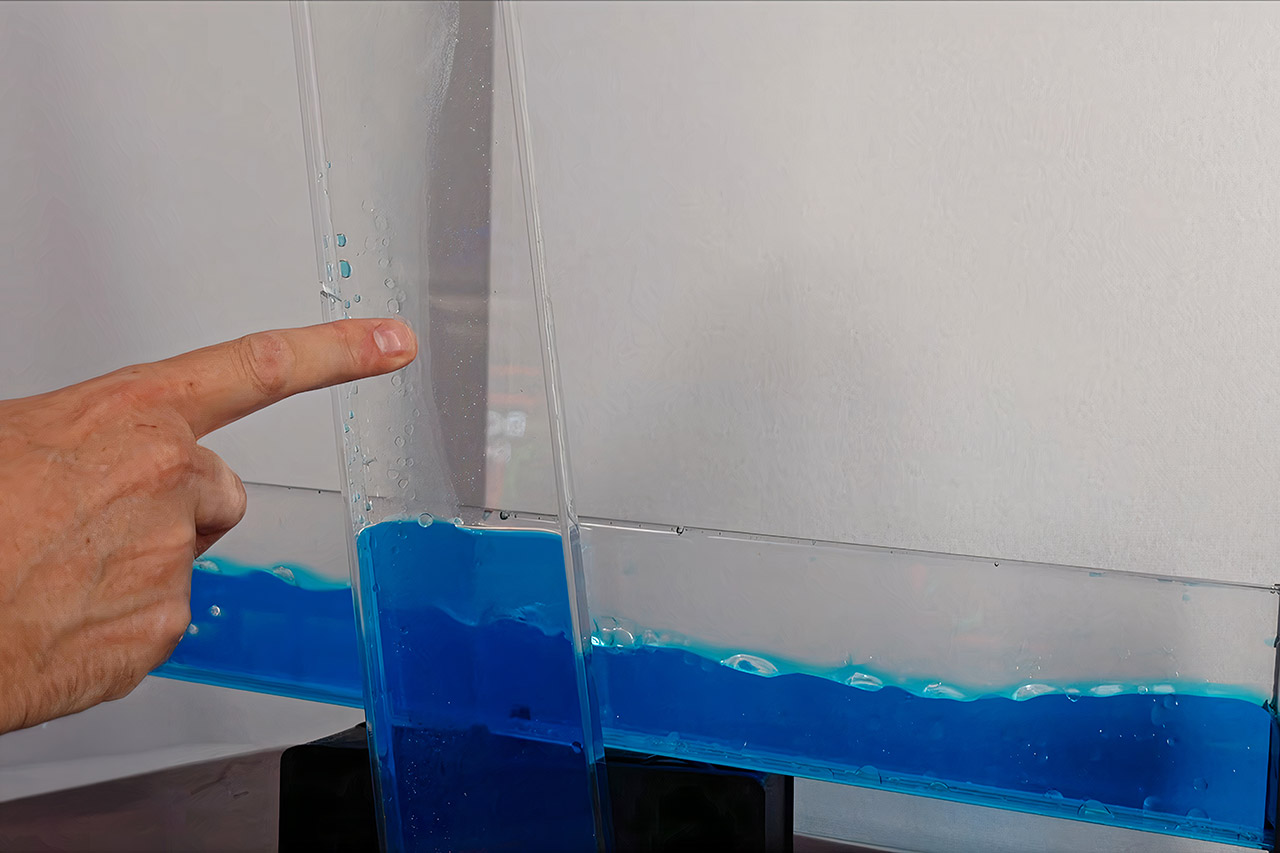
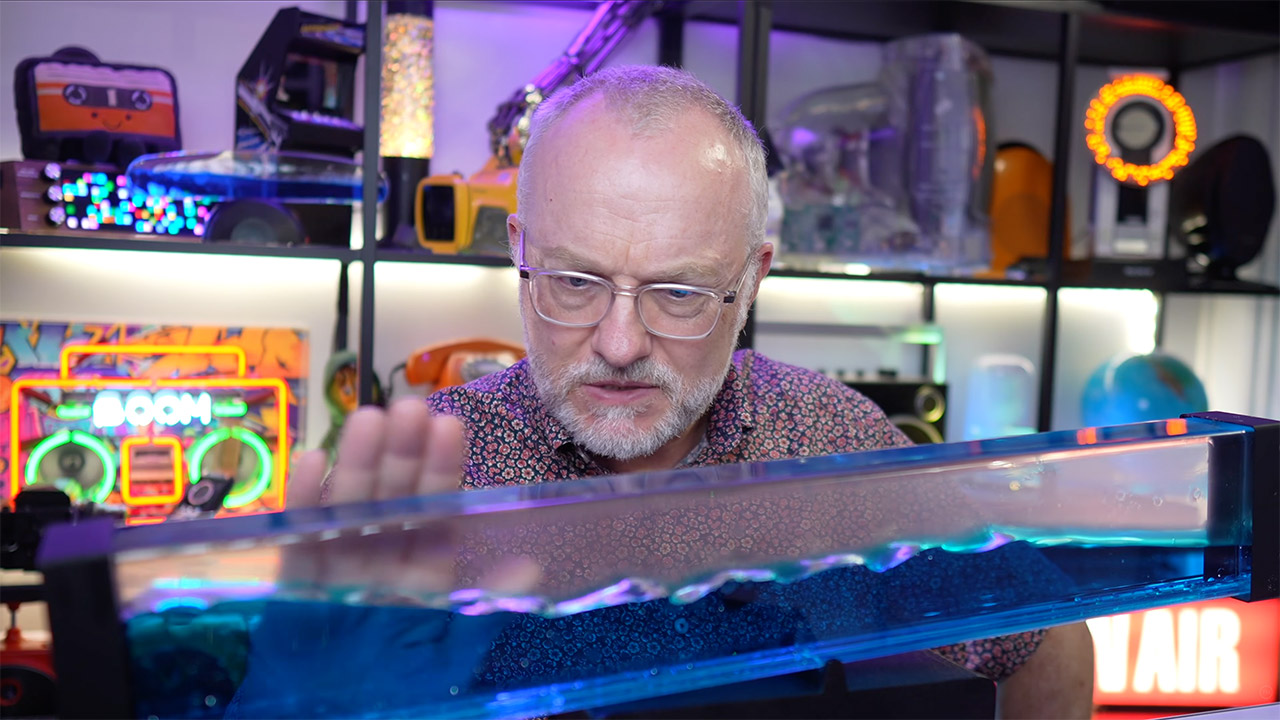
A small motor within moves a wheel, causing the entire chamber to rock back and forth in a gradual, soothing seesaw motion. Two liquids of differing densities collide and eventually mix to generate these continuous waves. The motion is quiet and even, and for the most part it remains that way. Unlike some of the older 1980s machines he used to witness, these waves do not crash or break apart in a spectacular manner, as one of his buddies, Techmoan, must have experienced. Bubbles still clung to the acrylic after the settling cycle, and a seam leaked slightly, which he fixed with tape. After a few hours of use, the blue layer began to emit a faint mist and form small floaters.
It’s evident that the budget materials match the price tag on this device. The base appears to have been 3D printed and is just weighted to provide stability. The end caps feel fragile and fit loosely. To be honest, the device lacks a power switch, so you must either unplug it or add a remote on/off socket to your own power strip, which is inconvenient. He tried adding some shims beneath the base to give it more stability, as well as altering the voltage to see if he could make it to rock quicker, but neither of these methods provided any further drama. The Hughes 18-inch unit may appear thicker and more polished, but it is actually not much different, having the same leaking concerns and edge blobs as this one. Both of these contemporary equipment are noticeably quieter than the old machines you used to see in the shop decades ago. This Indian version essentially uses the same process but scales it down to make it cheaper.
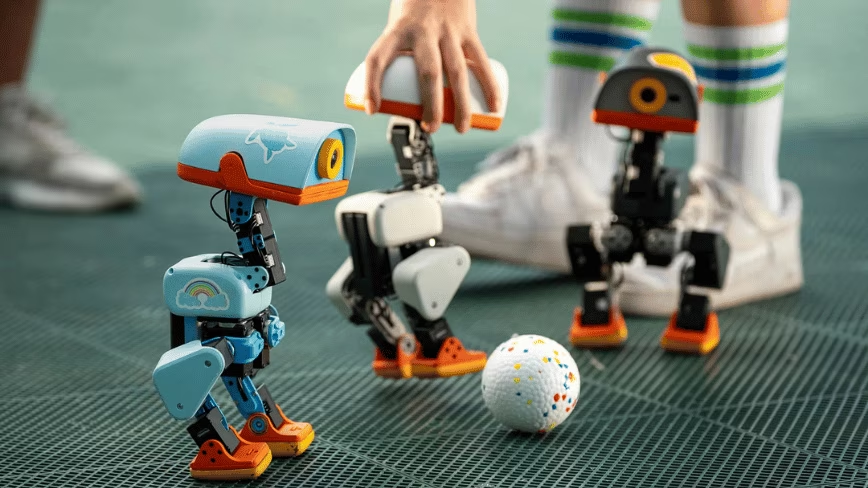
Pollen Robotics has unveiled a bipedal robot called Microduck, at an introductory price of $399 before taxes and shipping. The Bordeaux company is owned by the AI platform Hugging Face. Its new machine has one eye and 15 motors, stands 25cm tall, and weighs under 800g. Preorders opened on Thursday. Pollen is targeting first deliveries before Christmas 2026 in North America, Europe and the UK.
The robot walks, crouches, rights itself when it falls, and picks small objects up with its beak. Videos on the launch post show it collecting socks and a marker pen. An optional accessory pack adds wheeled feet so it can roller skate, along with a ball, an NFC chip and tags, and a laser pointer it follows with its camera.
Microduck runs on a Rockchip RK3566 with an AI accelerator, 1GB of RAM and 32GB of onboard storage, a part number first reported by The Verge. It sees through a front camera and judges distance with a compact LiDAR, an 8×8 time-of-flight matrix. One inertial measurement unit sits in the body and a second in the head. A 50Hz policy loop connects the onboard model to those sensors and decides what the robot does next, The Register reported.
It runs on a removable NP-F550 camera battery, a 2600mAh cell common in video kit, giving around an hour of runtime.
Advertisement
The software is open, the hardware is not
The whole software stack ships open source, and it is out already. The SDK and robot software sit in one GitHub repository, the reinforcement learning and sim-to-real tools in another, months before the first robot arrives. A developer can teach a skill in simulation, then push it onto the machine. European robotics firms increasingly work this way, and NEURA Robotics is building robot gyms.
The hardware is a different matter, and Pollen is unusually direct about it. Its press kit tells journalists that the open-source statement covers the software stack only. The mechanical and electronic design files are not open, and it asks reporters not to describe the robot as open-source hardware. A Pollen representative separately told The Register the company has no plans to open source it.
Buyers get an open stack on a closed chassis. Pollen already uses that arrangement for Reachy Mini, which it says has sold more than 10,000 units since launching last year.
Clement Delangue, Hugging Face’s chief executive, called it “a tiny $399 open-source robot you can teach new tricks with reinforcement learning”. His post on X has drawn 4.4 million views. He has spent the past year arguing that open models are winning. “Welcome to the era of open-source affordable robots to democratize physical AI and world models,” he wrote.
Advertisement
It cannot lift much
Santiago Pavon of Pollen Robotics put the robot’s lifting capacity at roughly 100 grams. That is about the weight of a bar of soap. The beak articulates and the camera can find an object, but Pavon accepts that grasping will stay limited on a machine this size. TechCrunch published a correction to its launch story after misstating how much the beak could carry.
Pollen is not selling a household helper. The Register called Microduck a cheap testbed for teaching people about hardware AI, machine learning and modern robotics. It is not an in-home butler or a cleaner. The framing matters in a year when robot demonstrations have outrun the machines. The humanoid that beat Usain Bolt’s record in Beijing left roboticists unimpressed.
Autonomy is left to the community
What Microduck does not have is any purpose of its own. Pollen wants owners to build voice recognition, navigation and grasping on top of the platform. It also wants simultaneous localisation and mapping. The company is asking for help rather than promising a roadmap, which makes this a bet on a user base that does not exist yet.
“Adding purpose and autonomy to the robot is something we are still working on, and we expect the community to pick up and contribute,” Pavon said. He described autonomous behaviour as a community objective, and called the idea exciting. Anyone can train new behaviours in simulation using reinforcement learning, he said.
Advertisement
Pollen’s own answer to what people should build is more ducks. It says the robot is about ten times more fun in groups. Races, football and robots reacting to each other are what made it feel alive internally. For developers it is a cheap way into multi-robot behaviour, without a room full of hardware.
Pollen is not the only firm trying to standardise how AI models reach real hardware. Anthropic published a standard for lab hardware on the same day Microduck went up for preorder.
Every robot gets its own voice
Microduck sings, and no two sound alike. Pollen says it “communicates through weird little sounds, closer to a creature than an assistant”, and that each robot generates its own audio identity the first time it wakes up. That voice stays with the unit for life. It comes in cream, graphite, lavender and sky.
The launch lands in the middle of a $12.9bn deal
Hugging Face bought Pollen Robotics in April 2025 to build cheap open hardware. The two launched Reachy Mini a couple of months later. That desktop robot now sells in two versions. A $499 model runs on a Raspberry Pi, and a $399 Lite runs off a Mac or a PC.
Advertisement
Microduck arrives in the middle of a takeover. The Information reported that Nvidia has agreed to buy Hugging Face for $12.9bn. That followed reports days earlier that put the two in talks over a sale. Business Insider put the figure above $13bn, citing a person familiar with the matter, and said the two sides had not finalised an agreement.
Nobody involved is discussing it. Pavon answered questions about Microduck but not about the Nvidia deal. Neither Nvidia nor Hugging Face replied to The Register, and both have stayed quiet since the Business Insider story broke. Nobody has said what the deal would mean for a small French robotics subsidiary.
A camera in the bedroom
Microduck carries a camera and a microphone, and Pollen expects people to put it in their homes. There is at least a light: the robot has a dedicated camera-use indicator, which Pollen says is modelled on the REC lights of old camcorders.
That is the fix Meta reached for on its smart glasses this month, after people worked out how to cover the LED. Delangue has argued before that robots running open models beat “a black box system” controlled by a handful of organisations, “especially if these organizations’ CEO is not the most stable person in the world,” he told TechCrunch.
Advertisement
Open source gives developers auditability, TechCrunch noted, but it does not guarantee that data stays private. Owners install applications on top of the model, and those apps can reach the camera and the microphone. What they do with it depends on how a developer builds them.
Some numbers are still soft. Pollen says camera resolution, LiDAR range, radio versions, SDK languages and any age recommendation are provisional.
Two things will show whether the pitch holds. The first is whether units ship before Christmas 2026, the date Pollen has given. The second is whether anyone outside the company publishes a behaviour worth installing, because the autonomy Pollen is promising is work it has asked other people to do.
The researchers discovered Fire Ant’s new tactic after finding an active GRE (Generic Routing Encapsulation) tunnel interface on a Cisco IOS XR router that could not be explained by a running configuration or commit history.
According to incident response company Sygnia, the threat actor switched from targeting VMware hypervisors to compromising Cisco routers, TACACS authentication servers, and Linux management hosts.
The researchers discovered Fire Ant’s new tactic after finding on a Cisco IOS XR router an active GRE (Generic Routing Encapsulation) tunnel interface that could not be explained by a running configuration or commit history.
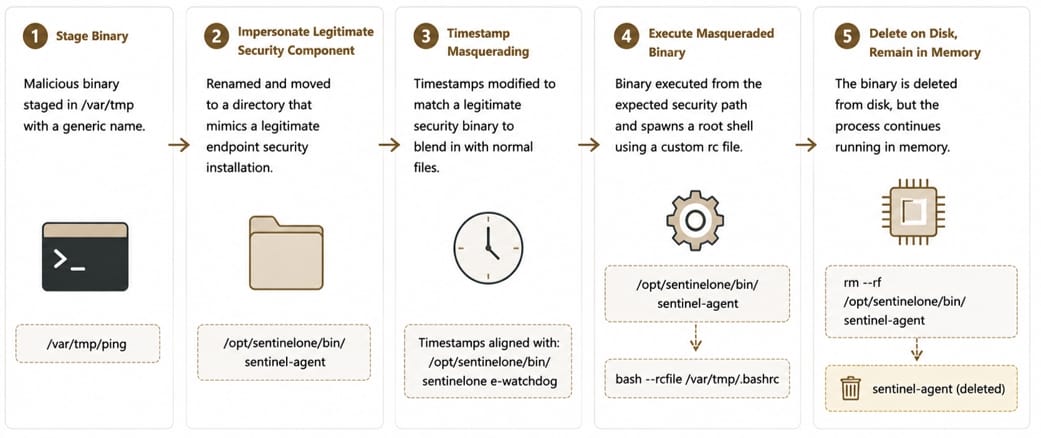
Further analysis revealed that Fire Ant had deployed custom malware on the devices, enabling persistence through a fake system service that ran the implant only during alternating hours.
The malware selectively suppressed syslog messages to hide tunnel-related information from legitimate administrators, established outbound Telnet connections to Fire Ant infrastructure, and supported interactive shell access with no logging.
Advertisement
Fire Ant’s evasion tactics Source: Sygnia
The attackers also used their administrative access to capture traffic from multiple routers and upload the resulting PCAP files to external FTP servers.
These captures could expose internal topology, administrative connections, authentication flows, routing relationships, and traffic exchanged with connected networks.
“This behavior shifts the router’s role from a transit device to a collection platform,” Sygnia explains.
“Once the actor controlled the router, the device became a vantage point for observing traffic moving through trusted network paths.”
The concealed GRE tunnel connected one compromised router to a legacy Linux server, which Fire Ant used as a staging and reconnaissance system.
Advertisement
From there, the attackers probed systems in connected high-value environments, including systems associated with critical infrastructure, over ports commonly used for SSH, web services, SMB/RPC, and RDP.
Sygnia believes that Fire Ant’s operation aimed to compromise trusted infrastructure at an initial victim and use it as a covert bridge to explore access paths into connected high-value networks, a tactic which they dub “target behind the target.”
Operational overview Source: Sygnia
The researchers also discovered a previously undocumented backdoor called ‘BridgeAgent,’ which Fire Ant disguised as a legitimate Zabbix monitoring agent.
The backdoor persists as a root-level systemd service and supports TLS reverse shells and the execution of additional payloads on the compromised host.
The GRE tunnel function backing BridgeAgent Source: Sygnia
Sygnia says Fire Ant activity strongly overlaps with UNC3886, a Chinese espionage group previously documented by Google. However, the researchers say that there are differences in filenames, paths, and implementation details.
The researchers warned that Fire Ant systematically tampers with system logs and records, even changing file timestamps to obscure evidence that would benefit investigators, noting that logs retrieved from compromised infrastructure should be validated against other data.
Advertisement
Sygnia’s report shares an extensive list of indicators of compromise (IoCs), along with hunting and YARA rules to detect Fire Ant activity.
Overall prevention scores can hide what happens after initial access. Once attackers are using valid credentials, prevention drops sharply.
The Blue Report 2026 measures defenses technique by technique across 338 million simulations run in customer production environments.





















.jpg)
.jpg)












































You must be logged in to post a comment Login