Connect with us
DAPA Banner
DAPA Coin
DAPA
COIN PAYMENT ASSET
PRIVACY · BLOCKDAG · HOMOMORPHIC ENCRYPTION · RUST
ElGamal Encrypted MINE DAPA
🚫 GENESIS SOLD OUT
DAPAPAY COMING

Tech

MasterPlug Auraline Black Glass Panel Heater Review

Published

on

Verdict

A great-looking convection heater, available in black or white, the MasterPlug Auraline Black Glass Panel Heater is also great value for a smart heater. Its front control panel is a little basic, but the smart app offers versatility and remote control.

  • Great price

  • Flexible installation

  • Useful smart app

  • Feet are fiddly to attach

Key Features

Introduction

Convection heaters might all work in the same way, but that doesn’t mean that you have to compromise on style or features, as the MasterPlug Auraline Black Glass Panel Heater demonstrates.

Advertisement

Available in black or white, this panel heater can stand on the floor or you can wall-mount it to keep it out of the way. Its front control panel is a little basic, but connect this well-priced 2kW heater to Wi-Fi and you get more via the app.

Advertisement

Design and features

  • Can stand on the floor or be wall-mounted
  • Black or white versions
  • Compatible with the SmartLife app

A lot of convection heaters are very ugly, but the MasterPlug Auraline Black Glass Panel Heater is much more attractive than most. As the name says, this heater has a glossy glass finish to it that gives it an air of quality and makes this heater look at lot more expensive than it is. I’ve got the black version, but there’s also a white version.

The eagle-eyed may spot that the MasterPlug Auraline Black Glass Panel Heater looks very similar to the Princess Glass Smart Panel Heater that I reviewed a few years ago. Both have the same finish, screen and controls. While the Princess heater was a 1.5kW model, there was also a 2kW model – the same rating as the MasterPlug here.

However, the MasterPlug version is cheaper at the time of review, and there are a few app differences, too.

Advertisement

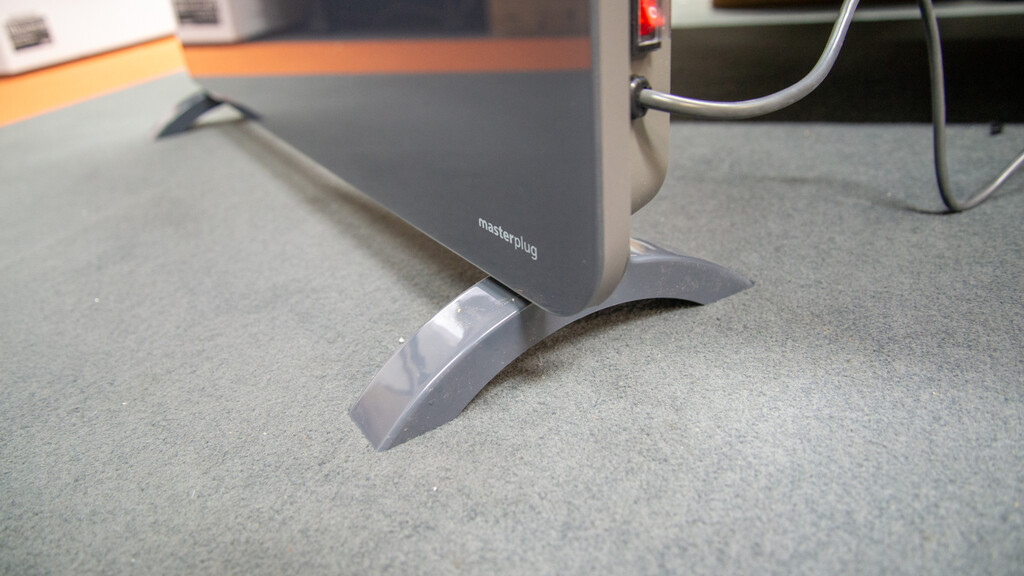
As with the Princess, the MasterPlug Auraline Black Glass Panel Heater can be wall-mounted, or you can attach the provided feet to the base and have it freestanding. The feet are as annoying to attach here as they were to the Princess heater.

MasterPlug Auraline Black Glass Panel Heater legsMasterPlug Auraline Black Glass Panel Heater legs
Image Credit (Trusted Reviews)

Advertisement

Thanks to a deep recess on the feet, the tiny screws are hard to get through the holes. I recommend a magnetic screwdriver to hold the screws while you delicately move them into position.

Once attached, the legs provide a lot of stability, but if the heater is knocked over, tip-over protection cuts the power to prevent damage.

Once plugged in, the heater has a physical power switch on the side that cuts power off. For most cases, you can leave this switch on, but it’s handy to have the option to fully cut power in the warmer months or if you won’t be using the heater for a while.

Advertisement
MasterPlug Auraline Black Glass Panel Heater power switchMasterPlug Auraline Black Glass Panel Heater power switch
Image Credit (Trusted Reviews)

With the main switch on, the heater is controlled via the touch buttons on the front. There’s a simple power button that turns the heater on and brings the screen to life, showing the current room temperature.

MasterPlug Auraline Black Glass Panel Heater main screen and controlsMasterPlug Auraline Black Glass Panel Heater main screen and controls
Image Credit (Trusted Reviews)

Advertisement

The plus/minus buttons let me select the target temperature in 1°C increments up to 40°C. Once the target has been reached, the heater turns off until the temperature drops, and then the heating process starts again.

MasterPlug Auraline Black Glass Panel Heater target temperatureMasterPlug Auraline Black Glass Panel Heater target temperature
Image Credit (Trusted Reviews)

There’s a timer button, which cycles through hourly increments up to 24 hours. It’s handy to have if you want to give a room a boost, but want the heater to shut down after a set time.

MasterPlug Auraline Black Glass Panel Heater timerMasterPlug Auraline Black Glass Panel Heater timer
Image Credit (Trusted Reviews)

Finally, there’s a control to switch between high and low power modes (2000W and 1000W). Lower power mode is useful if it’s either slightly warmer weather and you’re worried about overshooting the target temperature, or you have solar power and want to keep power usage below your energy generation on a bright day.

To get more from the heater, you need to connect it to the app. This heater is compatible with the SmartLife app, where you can mix and match devices from different manufacturers, or you can use the MPSmartEnergy app instead. Both give you the same interface, so there’s no good reason to us the MPSmartEnergy app over SmartLife.

Advertisement

MasterPlug Auraline Black Glass Panel Heater appMasterPlug Auraline Black Glass Panel Heater app
Image Credit (Trusted Reviews)

Be careful, as the app gives the wrong instructions for getting the radiator connected to Wi-Fi: it shows a flashing LED and says to hold the reset button, showing a diagram of someone holding down the power button; the flashing icon is actually on the LCD and shows what looks like a ringed-planet, and the reset button is actually the mode select button.

Once connected to the app, you get the same controls as on the MasterPlug Auraline Black Glass Panel Heater itself, plus the timer can be set in minutes as well as hours.

Advertisement

Scheduling is available via simple rules: you need one for each time the heater should turn on and which temperature it should aim for, and another rule for each time you want to turn it off. It’s handy to have this option, but it’s not as thorough as the full scheduling tool you get with Mill WiFi Max Portable Heater 1500W.

MasterPlug Auraline Black Glass Panel Heater app scheduleMasterPlug Auraline Black Glass Panel Heater app schedule
Image Credit (Trusted Reviews)

What MasterPlug offers over the similar Princess heaters is full energy monitoring in-app, so you can see how much energy the heater is using and how much it has used over time.

Advertisement

Performance

One of the main benefits of a convection heater is that it’s completely silent. Aside from a clunk as the heating element turns on or off, there’s no sound to be heard from the MasterPlug Auraline Black Glass Panel Heater at all.

The front gets hot, but no so hot as you’d burn yourself, but most of the heat comes out of the vent at the top. As the MasterPlug Auraline Black Glass Panel Heater heats up, it causes air to circulate, warming the room.

Advertisement

Testing it in the large front room of the Trusted Reviews Home Technology Lab (just shy of the 25m2 maximum that I’d recommend for a 2kW heater), it didn’t take long to raise the temperature from 17°C to a more pleasant 21°C. For living rooms and larger bedrooms, this heater would be all that you need.

I measured the MasterPlug Auraline Black Glass Panel Heater as drawing just under 2kW on maximum power and just over 1kW on low-power. How much energy is uses will depend on many things: the target temperature, starting temperature, outdoor temperature and target temperature. But, overall running costs are the same for this electric heater as for any other model specified for a target room size.

Advertisement

Should you buy it?

Advertisement

You want a cheap, good-looking smart heater

Versatile with wall- or floor-mounting and a smart app, this heater is well priced and attractive.

Advertisement

You want something smaller or with more features

If you’re limited on space, a fan heater might be better, and many of those can also double up as cooling fans in the summer.

Advertisement

Final Thoughts

Impressively cheap, the MasterPlug Auraline Black Glass Panel Heater also looks great and comes with a very useful smart app to get more out of it. If you want a fan heater or something for a smaller room, then check out my guide to the best electric heaters.

How we test

Unlike other sites, we test every heater we review thoroughly over an extended period of time. We use industry standard tests to compare features properly. We’ll always tell you what we find. We never, ever, accept money to review a product.

Find out more about how we test in our ethics policy.

Advertisement
  • Used as our main heater for the review period
  • We measure the fan speed (if available) using an anemometer so that we can accurately compare performance between models
  • We measure the heat output of the fan and its effect on our test lab.

FAQs

What does the MasterPlug Auraline Black Glass Panel Heater’s app do?

Using the app you can set schedules and more detailed timers, and view power usage.

Advertisement

Test Data

  MasterPlug Auraline Black Glass Panel Heater

Advertisement

Full Specs

  MasterPlug Auraline Black Glass Panel Heater Review
UK RRP £91.99
Manufacturer
Size (Dimensions) 920 x 235 x 430 MM
Weight 7.4 KG
Release Date 2026
First Reviewed Date 26/03/2026
Model Number MasterPlug Auraline Black Glass Panel Heater
Modes 1000W, 2000W
Stated Power 2000 W
App Control Yes
Timer Yes (hourly up to 24 hours)
Heater type Convection heater
Thermostat Yes
Safety features Overheat and tip-over protection

Source link

Continue Reading
Click to comment

You must be logged in to post a comment Login

Leave a Reply

Tech

To celebrate the long-awaited arrival of 007 First Light, I’ve hunted out the best tie-in merch you can buy

Published

on

For Bond fans, it’s been a tough few years. Until this month, the last new Bond ‘thing’ was No Time to Die way back in 2021 — too long to be without everyone’s favorite sexist, misogynist dinosaur. But now, finally, there’s some new Bond to get stuck into… for gamers, at least.

Just a few days ago, 007 First Light finally went on sale on PC, PS5, and Xbox Series X/S (a Switch 2 version is due later this year). This third-person shooter game from IO Interactive is being treated with the kind of fanfare usually reserved for the movies.

Source link

Advertisement
Continue Reading

Tech

New Releases on Prime Video in June: I’ve Picked a Few Titles to Watch

Published

on

One of Prime Video’s most popular adult animated series, The Legend of Vox Machina returns on June 3 for a fourth season. The show, based on the Dungeons and Dragons web series Critical Role, is now set a year after the Chroma Conclave, and the Vox Machina crew has gone their separate ways. When a long-dormant evil awakens, the gang reunites to protect the realm. The show’s core cast is back this season, and keep an ear out for new additions to the voice cast, including Wayne Brady, Kevin Michael Richardson (Kamek in The Super Mario Bros. Movie) and Debra Wilson.

Source link

Continue Reading

Tech

Lionsgate Joins Movies Anywhere, Leaving Paramount and MGM as Last Major Hold Outs

Published

on

If you’ve bought Lionsgate movies or redeemed codes for them, we’ve got some good news for you: Its vast library is being added to the digital movie locker, Movies Anywhere. That means Lionsgate titles will now sync across any participating digital retailers you’ve linked to your Movies Anywhere account.

Lionsgate says that a selection of Lionsgate movies will be eligible on Movies Anywhere beginning in June, with 225 of the studio’s most high-profile films made be available on the service, which is also a retailer. Going forward, around 100 additional films will be added monthly throughout 2026 and early 2027. According to Deadline, Movies Anywhere has 14.5 million users and its library will expand to nearly 10,000 digital movies with the addition of Lionsgate. 

Read more: Best media streaming devices of 2026

Advertisement

I’m already seeing Lionsgate titles like John Wick, Knives Out, La La Land, Rambo and The Hunger Games listed with the Movies Anywhere badge at Fandango at Home, but none have turned up in the Movies Anywhere catalog just yet. Participating Movies Anywhere digital retailers include Apple TV, Amazon Prime Video, Fandango at Home, Google Play/YouTube, Xfinity, Verizon Fios TV and DirectTV.

For those who purchase digital movies or redeem codes for digital versions of titles from physical media, the Lionsgate move to Movies Anywhere is a big deal (Movies Anywhere is owned by The Walt Disney Company, and Disney initially developed a rights synchronization platform called KeyChest back in 2009). 

lionsgate-recent-titles.png

Some recent Lionsgate films.

Advertisement

Screenshot by David Carnoy/CNET

I and plenty of other consumers find it annoying to buy a movie at one digital retailer, such as Fandango at Home, but not have it available for viewing on another platform I use, such as Apple TV or Google Play. Ideally, if you buy a title, you should be able to store it in one central digital locker and have universal access to it. (Technically, when you buy a digital movie, you’re buying a license to stream it as many times as you want, though you don’t truly own the title).    

Prior to this announcement, Movies Anywhere supported most though not all movies from The Walt Disney Studios (including Disney, Pixar, Twentieth Century Studios, Marvel Studios and Lucasfilm), Sony Pictures Entertainment, Universal Pictures (including DreamWorks and Illumination Entertainment) and Warner Bros. Entertainment. No new major studios have been added since 2017. 

There was some hope that when Amazon bought MGM in 2022, MGM would join Movies Anywhere because Prime Video was a participating retailer. That hasn’t happened yet, but hopefully the Lionsgate addition will encourage the remaining hold outs, which also include Paramount, A24 and Criterion to join.

Currently, only movies, not TV shows are on the Movies Anywhere platform — there is no TV Anywhere. So any TV series you purchase are not Movies Anywhere eligible and won’t sync across retailers.  

Advertisement

Source link

Continue Reading

Tech

Is the Ferrari Luce’s Design Really That Bad? 3 Italian Auto Experts Weigh In

Published

on

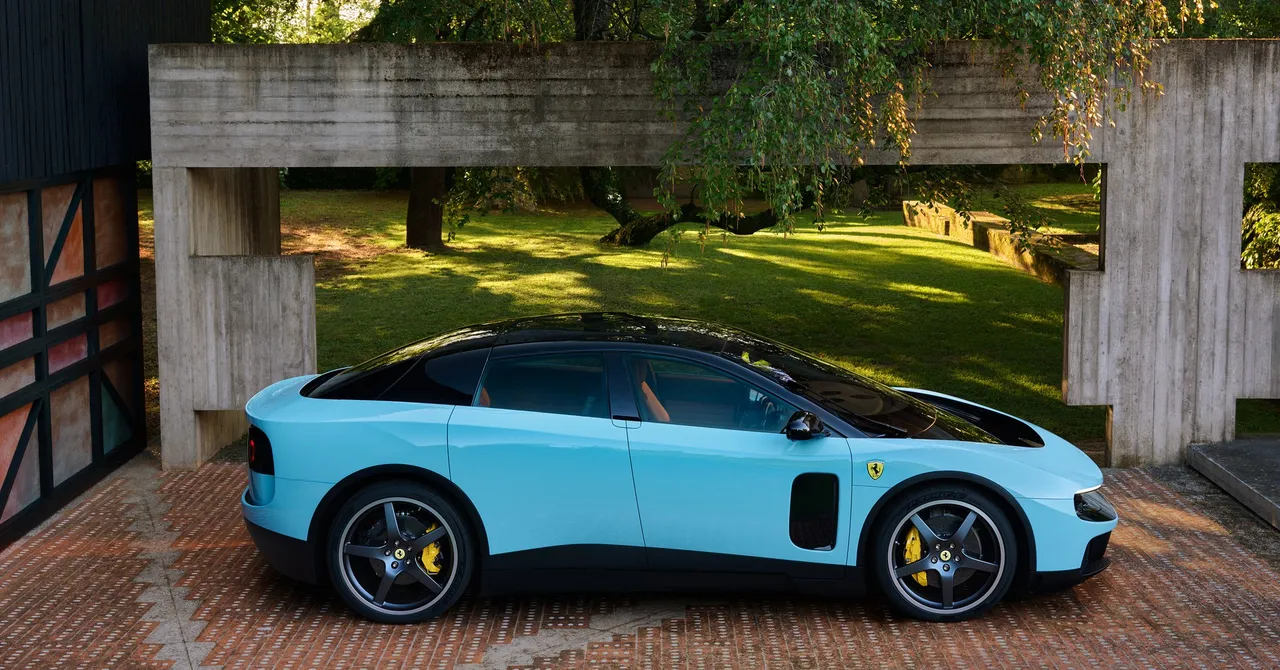
The Ferrari Luce, the first electric vehicle in the brand’s history, has generated heated discussion online, as comments and opinions about the design continue to bounce around the web.

The Luce, an electric sedan with a $650,000 price tag that Ferrari presented with pomp and circumstance at the Quirinale in Rome on Monday, has paid dearly for its coming out from behind the curtain. Since Monday, the automaker has been suffering an avalanche of complaints and skepticism about the Luce. It’s not just the price—which is high even for a Ferrari—but what the car represents and how it fits into the brand’s long and storied legacy. The day after the EV’s debut, Ferrari stock dipped 8 percent.

Luca Cordero di Montezemolo, Ferrari’s former chairman, said, “We risk the destruction of a myth.” Carlo Calenda, an Italian senator and the country’s former economic minister, called the release an “aesthetic and technological insult,” and took the opportunity to attack John Elkann—the leader of the Agnelli family, which owns a controlling stake in Ferrari—and his management of the family’s assets. Closing the circle was Matteo Salvini, who as Italy’s minister of transport felt compelled to intervene. His negative assessment, accompanied by an invocation of Enzo Ferrari, demonstrates that anything can be said about the Luce.

Beyond anything one might think, the Luce is a radically different car from its predecessors. It weighs roughly a ton more than a hybrid, uses four electric motors (one per wheel), and is built to seat five people. Its ability to sprint from zero to 100 kilometers per hour in 2.5 seconds is impressive; the instantaneous acceleration even required Ferrari to consult with NASA in order to keep the sensations of such an acceleration from being physically unpleasant. The “engine note” inside the car uses electronically treated mechanical sounds.

Advertisement

We discussed the disruptive and divisive Luce with Maurizio Corbi, a car designer with more than 30 years of experience. Corbi, who trained at the industrial design firm Bertone and later at the car designer Pininfarina, explains why the Ferrari Luce has triggered such polarized reactions, both among insiders and the general public.

“I suspect it’s a powerful marketing ploy,” Corbi says. “They literally threw a boulder in a pond, and that’s all people are talking about. I can’t recall anything similar.”

Advertisement

“The world of cars, and design in particular, follows a fine line. It’s constantly evolving, but there’s always a need for a culture rooted in time. Ferrari, when it comes to road cars, means Pininfarina. The brand’s greatest masterpieces bear that signature. [Ferrari’s] current design director, Flavio Manzoni, has been able to innovate while still keeping a close eye on that tradition. I fear that he too has been affected by this project, because he is too detached from the path Ferrari has taken in recent years.”

Source link

Continue Reading

Tech

Social media companies paid a school district more than its annual budget to avoid trial

Published

on

TL;DR

The Breathitt County social media settlement totals $27M: Meta $9M, Snap $8M, TikTok $8M, YouTube $2M. 1,300+ school districts have filed similar suits.

The financial terms of the Breathitt County social media settlement have been disclosed for the first time. Meta is paying $9 million. Snap and TikTok are each paying $8 million. YouTube negotiated a payout of slightly more than $2 million.

The combined $27 million is 8% more than the Kentucky school district’s $25 million annual budget. The figures were released under Kentucky’s open records laws. The settlements were announced earlier this month but without financial details.

When the settlements were first reported, only the fact that Snap, YouTube, and TikTok had agreed to settle was public. Meta settled separately. The financial breakdown shows Meta paying the largest share, consistent with the company’s position as the primary defendant across more than 6,000 related lawsuits nationwide.

Advertisement

The 💜 of EU tech

The latest rumblings from the EU tech scene, a story from our wise ol’ founder Boris, and some questionable AI art. It’s free, every week, in your inbox. Sign up now!

YouTube was the only company to include non-financial terms. It agreed to provide the district with training programmes to help teachers use its video product in classrooms. The other three paid cash only.

Breathitt County had asked for more than $60 million to finance mental health programmes and develop lesson plans around the dangers of social media. It received less than half that figure. The district’s superintendent, Phillip Watts, estimated in a deposition that he spent 20% of his working time handling social media-related concerns.

Advertisement

Carolyn McDaniel, the high school principal from 2016 to 2019, said the problem consumed even more of her time. “I had two assistant principals and they spent at least 50% of their time on social media stuff,” she said. “The kids would sneak their phones into class, video fights during the school day, vandalise property and bully one another online.

The settlements allowed the companies to avert the first trial in the nation over a school district’s addiction complaint. The trial had been scheduled for 12 June in Oakland. The reprieve will be short-lived. More than 1,300 other school districts have filed similar suits. The next bellwether trial is scheduled for February 2027 in Tucson, Arizona.

The Breathitt County terms could signal openness to a mass settlement. Bloomberg Intelligence has estimated the total potential liability at $400 billion. A $27 million payout per district across 1,300 districts would total $35 billion, a fraction of the theoretical maximum but still a transformative expense for companies accustomed to treating litigation as a cost of doing business.

The precedents are building. In March, a Los Angeles jury found Meta and YouTube liable for harming a 20-year-old woman with addictive product design. The $6 million damages award was symbolic. A New Mexico jury ordered Meta to pay $375 million in a separate case about failing to protect children from online predators.

Advertisement

Kentucky’s attorney general is part of a group of approximately three dozen states suing Meta separately. That trial is set for August in Oakland. Kentucky is seeking $40 billion in civil penalties in the state case alone.

The pattern across 2026 has been consistent. Snap and TikTok settle before trial. Meta fights, loses, and pays more. In the personal injury trial, Snap and TikTok settled confidentially while Meta and Google went to verdict. In the school district case, all four settled, but Meta paid the largest share.

Meta launched a new social app called Forum this week, a Reddit competitor built from Facebook Groups. The company is simultaneously launching new social products and settling lawsuits alleging its existing products are addictive. The contradiction is the business model.

The comparison to tobacco litigation remains the most frequently cited framing. The 1998 tobacco Master Settlement Agreement cost the industry $206 billion. Bloomberg Intelligence’s $400 billion estimate for social media exceeds that figure by nearly double. Whether the analogy holds depends on whether juries continue to find the companies liable, and whether the institutional costs school districts claim can be proven at scale.

Advertisement

McDaniel, who now works at a high school in Tennessee, said the social media problems have only intensified since she left Breathitt County. The $27 million settlement pays for the damage already done. It does not pay for the damage still being done. The 1,300 districts waiting for their turn in court are counting on that distinction to matter.

Source link

Advertisement
Continue Reading

Tech

MacBook Neo orders doubled as suppliers race to keep up

Published

on

Amid ongoing MacBook Neo shortages, Apple has reportedly tasked suppliers with doubling its original order to 10 million units in an attempt to satiate demand.

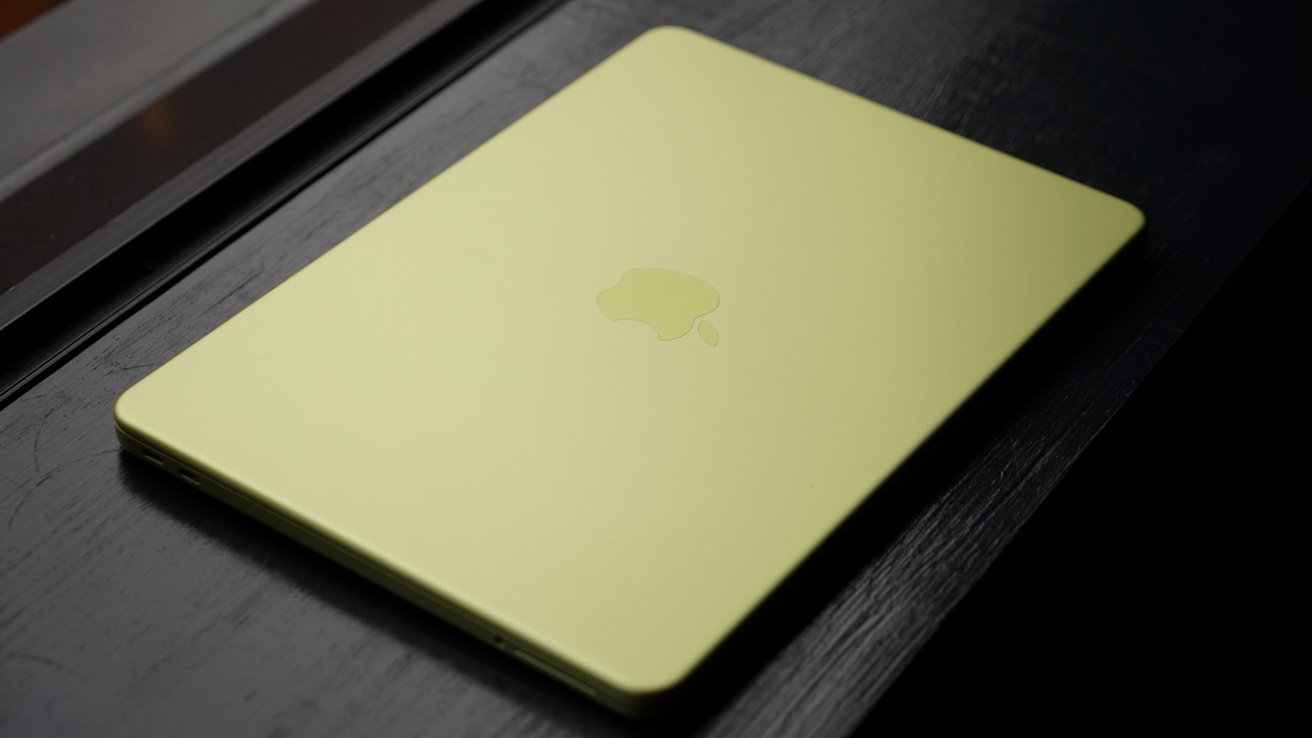
Buying a new MacBook Neo today remains an exercise in patience, with deliveries taking multiple weeks. The 13-inch, $599 laptop has proven hugely popular among students and mobile workers alike, so much so that Apple can’t keep up.

Now, a report by supply chain analyst Ming-Chi Kuo claims that Apple has told its suppliers to produce more MacBook Neos than ever before. After an initial five-million-unit order, Apple has now doubled the figure to 10 million units.

More Neos on the way

Kuo was writing in a lengthy post on the X social network when he noted that “Sunny has become a new Apple CCM supplier, producing the MacBook Neo CCM.” A CCM is a self-contained Compact Camera Module, ready to be used in laptops like the MacBook Neo.

Advertisement

Kuo went on to add that Apple has raised its 2026 shipment forecast from five million to 10 million units.

This news also matches a similar report from earlier in May. Then, analyst Tim Culpan reported that Apple had been forced to order more A18 Pro chips for the endeavor.

The MacBook Neo first went on sale on March 11, 2026, and almost immediately saw expected delivery dates slip by weeks and months. Delivery windows haven’t improved much since.

Apple’s present crack at the low-end of the market sells for just $599. It’s even cheaper at just $499 when purchased in an education setting, or with a military discount.

Advertisement

Source link

Continue Reading

Tech

Android Apple Music beta hints at alternate tiers, skip limits

Published

on

The Android client for Apple Music has hinted at new subscription tiers, opening the possibility for a cheaper plan with some added restrictions. It won’t be free.

Since its conception, Apple Music has provided the same general level of service to all users regardless of their actual subscription plan. Sure, you can get it as an Individual, Family, Student, or Apple One subscription, but you get the same service across the board.

However, code strings spotted by Aaron Perris on X hints that change is on the horizon. The developer beta for Apple Music on Android includes a few specific lines that don’t apply to the current service at all.

One line is an error message stating “Premium access required.” The other error message about reaching a “skip limit,” displaying the message “Can’t skip any more tracks” to the user.

Advertisement

These messages are interesting, but cannot possibly work for the way Apple Music currently operates.

Radio station skips and tier talk

Apple currently doesn’t have a “premium” tier at all. Nor does it have any tiers providing a limited service to users at a cheaper price.

There is the 30-day free trial, but that doesn’t really count at all, as you still get the full service.

A plausible explanation from Perris is that it could be for something unrelated, such as radio stations. However, this is doubtful to work with Apple’s current radio stations at all.

Advertisement

An alternative idea would be something similar to Spotify’s playlists, where free users have a limited number of skips in some cases.

It is plausible for Apple to introduce a skip system for programmatic radio stations that has limitations. But it would only be feasible if Apple were to introduce a lower tier of service.

Advertisement

A cheaper plan with more restrictions than the full-fat service makes sense in this context. It would mean the full-priced users retain the ability to skip without restrictions, while the “lite” users face limits.

It would also be a justifiable explanation for the “Premium access required” message. Users paying less than full-price subscribers would naturally have parts of the experience blocked off or curtailed, requiring such a message to be needed.

Not free

While the messages certainly correlate with the idea of a lower-priced “lite” tier, it does not mean that Apple will be bringing out a completely free tier of Apple Music.

Aside from the trials, Apple Music has never been offered completely free to users without engaging in some kind of offer. For example, being offered as a benefit of a mobile phone contract.

Advertisement

Apple certainly could make a free tier if it wanted to, joining rivals like Spotify in the process. It just won’t, because Apple believes it works against the artist.

In an interview in April, Apple Music VP Oliver Schusser argued that free ad-supported tiers devalue music. The paid subscription is a prioritization of artist compensation and consistent pricing, he insisted.

“I think it’s not the right thing for songwriters and artists to just say, you know what, we’re going to give this away for free,” he said. “Especially with the very little monetization that artists and songwriters are going to get in return.”

With Apple keen to keep Apple Music a paid service, that makes a free option extremely unlikely to arrive anytime soon, if ever.

Advertisement

Source link

Advertisement
Continue Reading

Tech

Fake FIFA ticket websites are exploding ahead of the 2026 World Cup as scammers prepare massive global fraud campaigns

Published

on


  • Thousands of fake FIFA domains are already waiting for desperate football fans
  • Fraudsters cloned FIFA’s login system with near-perfect visual accuracy for credential theft
  • Facebook advertisements are driving victims directly into a large-scale World Cup ticket scam

Over six million fans will fill stadiums across the U.S., Canada, and Mexico when the 2026 FIFA World Cup tournament kicks off in June.

The sheer scale of ticket demand has created ideal conditions for sophisticated fraud operations.

Source link

Continue Reading

Tech

AI agents are entering their rebuild era as enterprises confront the reliability problem

Published

on

As enterprise AI agents move into production, organizations are confronting a growing reliability problem. Many teams are discovering that LLM performance alone does not determine whether agents succeed in production. Long-running AI workflows must survive crashes, preserve state, recover from failures, manage inference costs, and coordinate across APIs, tools, and enterprise systems.

After a first wave focused on rapid deployment, organizations now need to revisit those first-generation implementations, and redesign early agent architectures around workflow orchestration, observability, governance, and recovery, said Preeti Somal, Senior VP Engineering at Temporal Technologies, during the latest AI Impact Series event in New York.

“We do have a lot of customers that come to us where they’re building version 2.0 of the same agent,” Somal said. “They had to move really fast, but they didn’t take care of the plumbing. Things crash and burn, and then they’re back to rebuilding with the reliable foundation.”

For workflow orchestration company Temporal, whose infrastructure predates the current wave of agentic AI, the shift reflects a broader enterprise realization: production AI systems require durable execution, state management, visibility into workflows, and mechanisms to recover when models or downstream systems fail.

Advertisement

Agentic AI has supercharged familiar engineering problems

“These patterns aren’t necessarily new,” Somal said. ” AI just supercharges them.”

Agentic systems introduce additional complexity because they often involve long-running, multi-step processes spanning multiple services, models, APIs, and tools. A single workflow might call several large language models, access retrieval systems, trigger external applications, and manage state over hours or days. The engineering questions, Somal said, often emerge only after deployment.

“People will write agents but haven’t thought about what happens if the agent crashes,” she said. “Am I going to need to run the entire agent flow again?”

For enterprises operating under cost constraints, the answer matters. Restarting workflows after failures can multiply inference expenses, increase latency, and create poor customer experiences.

Advertisement

Somal compared the current moment to an earlier period in enterprise cloud adoption when organizations went straight to migrating workloads before considering that they needed to redesign underlying architectures if they wanted these workloads to weather the long-term.

“This rush to do AI in a world where you haven’t even modernized your application reminds me a little bit of that lift-and-shift that happened in the cloud,” she said. “Everybody realized you’re spending more money on cloud and we haven’t gotten value there.”

Why long-running agents force a new architecture

Enterprise workflows increasingly involve agents executing over long windows, sometimes spanning many hours while interacting with tools and systems. Reliability challenges compound when workflows persist over time, and it impacts both state and memory, two ideas that are often treated interchangeably in AI conversations.

State concerns workflow execution. It includes where an agent is in a process, which actions have already completed, and where recovery should resume after failure. Memory or context captures information an agent carries forward across interactions or tasks.

Advertisement

“The state of the agent is around what step and what actions have been performed, and if something crashes, where do you want to recover from, versus the context and memory piece,” Somal explained.

That distinction becomes increasingly important when enterprises begin moving beyond simple chatbot interactions toward longer-running business processes. Somal pointed to a healthcare example involving customer Abridge, where workflows process physician visits through multiple stages, including audio processing, summarization, model calls, and after-visit generation.

“There’s not just one piece to that flow,” Somal said. “Taking videos and slicing that, taking summaries, calling the LLMs, generating the after-visit summary, all of that is being orchestrated.”

The implication for enterprises is that successful agents increasingly depend on systems that can survive interruptions, coordinate across services, and maintain continuity over time.

Advertisement

The rise of the deterministic spine

A useful framework for enterprise AI design is the deterministic spine, Somal said, which is how they think about Temporal’s role.

“It is denoting the path you want to take,” she said. “It is calling the brain, but if the brain doesn’t respond, it will call it again. If the brain responds but the next step is going to fail, it will pick up from where that failure happened.”

In this framing, the language model acts as a probabilistic system producing variable outputs, while orchestration software maintains execution reliability around it. And the concept matters because enterprise systems increasingly require consistency even when models remain non-deterministic. A procurement workflow, healthcare summary, customer support escalation, or compliance process cannot simply fail silently because a model call timed out or an external dependency crashed.

“What you care most about is making sure that you can recover and that you’re not paying the token tax if something goes wrong,” Somal said.

Advertisement

Reliability, visibility, and the economics of token spend

As enterprise leaders evaluate AI ROI, cost visibility has become a growing concern. Long-running agents frequently make multiple model calls across complex workflows, which can create opaque spending patterns. Somal described one operational advantage of orchestration as visibility into where costs accumulate. Because workflows are observable step-by-step, teams can see where tokens are being consumed across an agent process.

“You’ve got visibility into that entire flow in a single pane of glass,” she said. “You can now see where you’re spending the tokens in an agent that is multiple steps and calling multiple different systems.”

Workflow recovery also shapes cost efficiency. Without durable orchestration, a late-stage failure can force organizations to rerun an entire process from the beginning, including all prior model calls. Somal said systems designed around recovery can resume execution from the point of interruption.

“You pick up from where the crash happened,” she said. “We save you the cost of running the agent from step one again.”

Advertisement

Enterprises need to build paved paths and enlist partner expertise

Governance concerns are another emerging pattern as agentic AI takes hold. Rather than adopting fully managed agent systems wholesale, Somal said enterprises increasingly want standardized internal frameworks that provide guardrails while preserving flexibility, and implementing necessary features like governance controls, model selection policies, identity systems, cost management, and observability.

“The enterprises are looking at building these paved paths,” she said. “Taking something off the shelf is maybe not going to work because there are all of these other requirements.”

As organizations revisit first-generation deployments, challenges like this increasingly look less like a model problem and more like a systems engineering problem, and Temporal is positioned to help enterprises take this next step in part because for many organizations, it already existed as part of broader modernization programs before AI became a strategic priority.

“Temporal is already in the enterprise,” Somal said. “Taking that and extending that to AI and agent platforms feels very natural.”

Advertisement

Source link

Continue Reading

Tech

This tennis robot can rally like a human, train and coach

Published

on

We spotted the Aceii One while wandering the halls at Beyond Expo 2026, and it’s hard to slot it neatly into the usual “ball machine” category.

The Aceii One positions itself as a smart tennis partner rather than a feeding device, combining ball launching, AI vision tracking, coaching tools, and gamified training modes into a single mobile platform. The pitch is ambitious: replace predictable drills with something closer to a live rally that adapts to your level.

At the core is a dual-stage launch system that fires balls at intervals of up to 0.5 seconds, with speeds up to 80 mph (129 km/h). That alone puts it in serious training territory, but the differentiator is how it behaves between shots.

Thanks to its vertical dual-camera vision system, Aceii One tracks both player movement and ball trajectory in real time. It claims detection of shots up to 130 mph, using 1080p cameras and a 100° field of view. In practice, this lets it reposition, adjust feeds, and simulate rally patterns instead of just firing fixed sequences.

Advertisement

It also moves. A differential drive base lets it roll across court surfaces at up to 3.5 m/s, shifting between baseline, sideline, and service-line positions. In theory, that removes one of the biggest limitations of traditional machines: static placement.

Advertisement

Where Aceii One diverges most clearly from conventional hardware is its software. It doesn’t just offer drills; it builds structured “play.” It includes three main modes: Ranking Mode, which assigns an NTRP-style level and tracks progression; Challenge Mode, which unlocks new objectives as you improve; and Battle Mode, which simulates opponents using stored or shared play profiles.

The system turns repetition into progression by layering scoring, tiers, and unlocks on top of normal training. There’s also a coaching layer via the ACEII app, which builds structured courses and feeds them into practice sessions. It can analyse shot placement, spin, consistency, and speed, then adjust future drills accordingly.

Advertisement

However, the most interesting claim here is real-time coaching. Every shot is said to be analysed, with feedback covering placement, spin rate, and timing. It can identify errors and suggest corrections in the next drill cycle rather than after the session ends. There’s also a “Match Play” system that shifts training into competitive formats with scoring and adaptive difficulty, based on your NTRP range (1.0 to 5.0). It’s closer to a hybrid of training machine and interactive simulator than anything currently offered by consumer tennis equipment.

Physically, Aceii One is built around portability. It uses a foldable suitcase-style chassis, weighs around 25kg, and carries up to 120 balls. The design includes foldable legs, integrated storage, and a detachable ball container. Battery life ranges from two hours in motion to eight hours in stationary feeding, with a full recharge in around two hours. It also includes safety features like instant obstacle detection and automatic feed shutdown.

Aceii One is trying to move tennis robotics away from predictable repetition into something closer to adaptive training intelligence. Whether it fully replaces a coach is doubtful, but it clearly pushes beyond the traditional “ball launcher with settings” category.

Advertisement

Advertisement

Source link

Continue Reading

Trending

Copyright © 2025