
Join Mikko Hyppönen and security leaders from the NFL, CHANEL, and Atlassian for a two-hour digital summit on what AI-speed attacks change, what defenders should stop doing, and how to validate, decide, fix, and re-validate at machine speed.
Tech
Microsoft fixes bug that broke Windows File History backup feature



Microsoft has fixed a known issue that breaks the built-in File History backup feature on some Windows systems after installing the September 2026 security updates.
File History, introduced in Windows 8 and later replaced by Windows Backup, automatically backs up the user’s account profile (Documents, Music, Pictures, Videos, and Desktop) to an external hard drive, such as a USB flash drive, or a network storage location (NAS) and then lets them restore accidentally deleted or damaged files using an older version from hours, days, or weeks ago.
In a Saturday service alert seen by BleepingComputer, Microsoft warned that the automated backup feature might stop working after installing this month’s security updates and triggering application crash events in Event Viewer referencing FileHistory.exe and KERNELBASE.dll.
On impacted systems running Windows 10 21H2 or later, Windows 10 Enterprise LTSC 2016/2019, and Windows 11 23H2 and later, users are also seeing “Reconnect your drive” alerts even though compatible backup drives are connected and working properly.
Other symptoms include previously backed-up files showing “No previous version available” and the “Last Backup” timestamp not updating.
“After installing the September 2026 Windows security update [..], some customers using File History, might be unable to create or update backups,” Microsoft said. “File History, available through Control Panel > System and Security > File History, is used to back up files to an external drive or network location.”
Fixed in September 2026 preview update
On Tuesday, Microsoft said the known issue has been fixed for Windows 11 customers and is rolling out with this month’s KB5124006 and KB5124010 optional cumulative updates for devices running Windows 11 26H1 and Windows 11 24H2/25H2, respectively.
“This update addresses an issue where File History might fail to back up or restore files to an external drive or network location,” Microsoft said.
“We recommend you install the latest update for your device as it contains important improvements and issue resolutions, including this one.”
Windows users who don’t want to install the optional updates will get the fix with next month’s Patch Tuesday updates, which will roll out on October 13.
One week ago, Microsoft also released out-of-band updates to fix Hyper-V problems, Remote Desktop Services failures, and USB audio issues triggered by the September Patch Tuesday security updates.
Days later, it also shared a temporary fix for a bug that prevents some Windows 11 users from logging in with valid domain credentials after installing the same buggy updates.


Continue Reading
You will almost certainly have heard many business and technology leaders extolling the virtue of AI. They will enthusiastically tell you that the technology will have a transformative impact on businesses across the globe.
I think they are right. However, with two important caveats: AI must be given the right jobs, and the people using it must trust what it does.
Too often, AI is deployed across a business without much thought, as overconfident bosses assign agents tasks it isn’t designed for. The problem this creates is that many employees using AI tools every day are not yet prepared for their new role in managing these agents. Trust only comes from experience and that builds over time.
Latest Videos FromTechRadar
Chief Product & Technology Officer at OutSystems.
When an AI system provides you with results that make sense and actually helps with your work, people start to feel more confident in using it. But if it makes a mistake, that confidence can be lost in an instant. If things go wrong, employees start finding ways around AI or stop using it altogether, and when leaders ignore employee concerns about making AI work better, its benefits are undermined.
The best way to ensure that AI delivers the efficiencies it promises is to ensure that it is doing the right job, and this isn’t as straightforward as it sounds.
The areas where AI excels
AI works on probabilities, producing answers that are likely to be right. The key word here is ‘likely’, which is why it occasionally hallucinates.
Being probabilistic makes AI very effective when dealing with unclear or complicated information. But it’s not the best fit for tasks where a wrong answer could have serious consequences.
There are three core areas where AI really can make a difference. Firstly, when processing documents; secondly, decision support; and finally, personalization.
AI is especially effective at tasks involving many documents. It can extract, classify and summarize information that would normally take humans many hours to review. For example, an AI system could compare contracts against a standard set of clauses, or organize a large collection of customer emails by the issues they concern. This way, a person only has to look at the important findings instead of reviewing entire documents.
AI can also play a key role in supporting company executives to make decisions, as it’s very good at taking lots of different pieces of information, finding patterns and delivering options as to what to do next.
It is, however, important to remember that AI is not always the right technology to make that decision. For example, imagine you’re buying something and have to choose among many different suppliers.
AI can look at all the information, like how well they’ve done in the past, what they can deliver, how quickly it is likely to arrive and whether the supplier offers discounts for repeat purchases. It can even articulate why one option might be better than another. In most scenarios, though, it is the human who makes the final choice.
For some businesses, personalization is a promising tool, as AI can be used to make products more relevant to the individual using them. This is an area where working with probabilities can become a key driver for AI. The content only has to be good enough to make that connection so the recipient feels they are being addressed in a bespoke way.
The cost of assigning AI the wrong job
One of the key concerns companies should have about managing AI is that while AI-generated answers can sound assured, there is still a possibility that the technology has got something wrong. If that answer is allowed to trigger action without validation, a small error can travel rapidly through a workflow.
Think about what happens when someone makes a small mistake with a rule or detail in a contract. By the time someone catches the error, it may have already been added to records, sent to people outside the company, or even used to create new software.
To remind myself of AI’s limitations, I find it useful to think of the technology as the equivalent of a super-intelligent, hard-working intern. Interns need guidance and oversight, which should be provided by experienced, knowledgeable colleagues. Crucially, their access to sensitive information needs to be limited and granted only as they demonstrate they can make sound decisions.
AI needs to be managed in the same way. It should only be given greater levels of control when it has proved itself, and then its work must still be monitored by humans.
A good example of the importance of managing AI is its role in software development. AI can deliver a lot of code quickly, but its fast pace means the quality isn’t always the same as that of human developers.
In fact, managing large amounts of AI-generated code can be a real headache for IT professionals. For example, surging token consumption and a shift to consumption-based pricing is ballooning AI coding costs, forcing developers to be selective on when and where they apply AI models, as reported by Gartner.
Let AI help design the model, not control the machinery
The most important design decision is where AI is allowed to reason. The riskiest place is deep in the implementation layer, where a small mistake can cause big problems that are hard to fix.
I believe a sound approach is to use AI to work with business ideas and rules. This way, it’s easier for people to check and understand what the AI is suggesting.
Domain-specific languages and other abstractions used in model-driven development can provide that separation. AI helps create or refine a high-level application model, while a developer then validates the model before a deterministic platform transforms it into executable software.
AI can suggest how something should be done, but it doesn’t have to be responsible for executing every step.
Abstraction helps developers, and in agent-driven systems it becomes a control tool. It simplifies complex systems and prevents small errors from becoming big problems, making AI output easier to test and fix.
Human expertise is becoming more valuable, not less
As AI becomes more prevalent, developers’ roles will evolve. They will still write code, but a larger part of their role will be overseeing systems, checking outputs and catching mistakes, a change that brings with it the opportunity to learn new skills.
Developers will increasingly work at the level of systems and architecture, understanding the business rationale, recognizing patterns and judging whether AI-generated code fits the wider application and holds together.
One company that has innovated in this area and is already reaping the rewards for their experience is Ford. They recently hired 350 experienced engineers to help train younger colleagues and improve their AI and automation tools.
The shift was driven by the fact that the AI tools weren’t producing the results they wanted without the expertise brought by seasoned professionals. Now, these experienced engineers act as internal auditors, reviewing designs and finding potential problems before they become major issues on the factory floor.
When you combine AI’s ability to recognize patterns and process information with human knowledge and experience, it becomes a much more powerful tool. This combination is what makes it truly effective, not just relying on one or the other.
Building trust
Enterprises should also resist the pressure to deploy agents everywhere simply because competitors appear to be doing so. When it comes to using AI, leaders need to think carefully about each situation.
They should ask themselves three important questions. First, are they asking AI to only suggest what to do or to actually do it? Next, can someone check and fix what the AI says before an error spreads? Finally, what would happen if the system is certain about something but is actually wrong?
The answers play a big role in deciding how much freedom to give the technology. For example, a tool that summarizes documents might only need a quick check, but a system that suggests business decisions needs someone’s logged approval.
When companies start using AI for specific, practical tasks, it shows employees that it can really make a difference in their work. This approach gives the company a chance to get its data, rules and processes in order. If people can see that the system is working well, and they understand what it can and can’t do, they start to trust it more. Over time, this trust grows.
The key is to create a work setup where humans and machines do what they’re good at. AI is great at processing large volumes of information and surfacing patterns. People are good at understanding the bigger picture, pointing out mistakes, and taking responsibility for their actions.
The wrong job to give to AI is any task where a mistake carries real consequences, no one checks the work before it causes harm, or the system sounds certain while being wrong. Companies that respect this division will build the confidence to give agentic AI greater autonomy over time. Those who ignore it may discover that a single poorly chosen task can undermine their entire AI strategy.
We’ve featured the best AI website builder.
This article was produced as part of TechRadar Pro Perspectives, our channel to feature the best and brightest minds in the technology industry today.
The views expressed here are those of the author and are not necessarily those of TechRadarPro or Future plc. If you are interested in contributing find out more here: https://www.techradar.com/pro/perspectives-how-to-submit

The significance of residual hormone production may decrease over time. Still, says Walter Rocca, a professor of epidemiology and neurology at the Mayo Clinic, that doesn’t mean the ovary has become unimportant.
“I am convinced until proven otherwise that removing ovaries even after menopause is not advisable,” he says, with a caveat for women at an increased risk of ovarian cancer.
Just how long that importance persists after menopause is still an open question, says Stephanie Faubion, medical director of the Menopause Society. It’s also unclear, she says, how much the answer may vary from woman to woman. “We just have huge gaps,” she says.
Duncan’s work suggests one reason the importance of the postmenopausal ovary may change over time. In analyzing human ovaries, the team found that protein patterns in older ovaries suggested that the ovary becomes a more inflammatory environment. To better understand what may be driving those changes, they looked more closely at the ovaries of mice. The research, published in June in the journal Molecular Human Reproduction, suggests that the ovary may eventually take on a completely new identity after menopause.
The team compared the ovaries of two-month-old mice, reproductively old 18-month-old mice, and post-reproductive 24-month-old mice, and found that over time, the genes linked to inflammation and immune activity became far more active. The number of immune cells in the ovary also increased. While research on mice does not always translate to humans, it could help to explain the molecular changes Duncan observed in human ovaries.
“We think that a lot of those changes may make the ovary more prone to age-related diseases like ovarian cancer,” says Birgit Schilling, an aging researcher at the Buck Institute for Research on Aging who collaborated with Duncan on the human ovary work, which has been published as a preprint. After menopause, the risk of a host of conditions goes up, including stroke, heart disease, and osteoporosis.
Other organs undergo immune remodeling with time, but the ovary ages long before most other organs. Duncan’s work raises the question of whether at some point, the benefits of keeping the ovaries may be outstripped by the risk: As the aging ovary becomes more inflammatory, she wonders whether it may begin broadcasting inflammatory signals to other parts of the body.
David Pépin is probing another possibility: that as follicles that house growing eggs disappear, the ovary may also reorganize to preserve hormone production. Pépin, a reproductive biologist at Massachusetts General Hospital and Harvard Medical School, found that years after cats were given an experimental birth-control gene therapy that prevented their follicles from maturing, the cats were still producing the hormones estrogen, testosterone, and inhibin at completely normal levels.
Follicles drive much of the hormone production during a reproductive cycle; without them, hormone levels should have fallen. In preliminary work he has publicly presented but not yet published, Pépin’s team found that when the ovaries were eventually removed, other cells in the ovary—the stroma—appeared to have taken over hormone production. Pilot studies in mice suggest a similar effect. Pépin thinks he may have tapped into a natural mechanism that helps maintain hormone production as follicles wane. It’s long been hypothesized that the stroma may be responsible for some of the human ovary’s postmenopausal hormone production.
Estrogen, he says, is not the only hormone that plays a role in menopause. “We know so little about how the other ovarian hormones that are disrupted at menopause may contribute to health,” he says. “It is not a dead organ.”
Tech
‘This situation is obviously unacceptable’: OpenAI agent allegedly hacks Australian government healthcare website

- OpenAI agent breached Australia’s Medicare portal on June 18, 2026, accessing internal files
- Government says no personal medical data was taken, but three other agencies may be affected
- PM Albanese slammed OpenAI’s 84‑day delay in disclosure, calling the notification “unacceptable” and warning of legal consequences
An OpenAI agent has allegedly broken into a website of the Australian government, which has slammed the “unacceptable” attack, promising an in-depth investigation, and threatening “legal consequences”.
Australian Prime Minister Anthony Albanese revealed how in June 2026, OpenAI’s research team tasked the agent with researching public medicine spending, as part of an internal capability evaluation – but as the agent got to work, it was initially denied access to some of the information it requested.
However, instead of stopping, or trying to find a different lawful way of obtaining this data, it circumvented those restrictions and landed inside the infrastructure behind Services Australia’s public-facing Medicare Statistics Reporting Service portal.
Latest Videos FromTechRadar
AI agent did what?
The public details are still quite limited, and we don’t know the technicalities of what the AI actually did.
The acting prime minister, Richard Marles, told the media during a recent press conference that the AI “scaled the fence”, despite the portal having security measures in place.
The bot apparently accessed internal infrastructure and wrote files to an internal server but exactly what it wrote, how it obtained the access, and precisely which technical mechanism it used, is still not public knowledge.
Once inside, it accessed both public and non-public files, but individual medical data was not accessed and the system itself was not compromised, the Australian government said.
There is also the possibility that three other government systems were affected – the Australian Institute of Health and Welfare and two state-based agencies – the New South Wales Bureau of Crime Statistics and Research and the Victorian Department of Health. However, this has not been confirmed yet.
“No personal information is believed to have been accessed at this stage, but investigations are ongoing,” Albanese said. “Nonetheless this situation is obviously unacceptable.”
OpenAI’s sluggish escalation
Albanese was particularly unsatisfied with how OpenAI handled the situation. The breach happened on June 18, but it took the company 84 days to notify the Australian government of the incident. And when it did – it did so in a manner better suited for an amateurish start-up rather than one of the most important organizations on the planet right now.
OpenAI was apparently evaluating its models, and investigating “misaligned model activity” when, on August 11, it discovered the breach in Australia. It seems the AI agent simply did not take “no” for an answer. The company then notified Services Australia on September 10 – almost three months after the incident. To make matters worse, the company reached out via publicdisclosures@servicesaustralia.gov.au, inbox researchers usually use to report potential vulnerabilities, instead of trying to escalate the incident higher.
Services Australia reviewed the information and notified the Australian Signals Directorate on September 15.
When the news reached prime minister Anthony Albanese, he spoke to OpenAI CEO, Sam Altman, and expressed the country’s “extreme concern” about this incident, as well as his “disappointment that it took the company way too long to inform the government what had occurred.” He also pointed out the way OpenAI reached out: “The notification was an email sent just to the public mailbox.” Albanese described the “nature of the notification” as “unacceptable.”
The Australian government is now looking into the matter to see if any laws were broken and what legal consequences, if any, could follow.
“And obviously we will investigate all of that. What the consequences are, if there has been a breach of the law, but also part of the task force is to assess whether or not the legal regime we have in place is fit–for–purpose in a world where we have an emerging AI capability,” Marles said.
Via BBC

The best antivirus for all budgets

Follow TechRadar on Google News and add us as a preferred source to get our expert news, reviews, and opinion in your feeds.
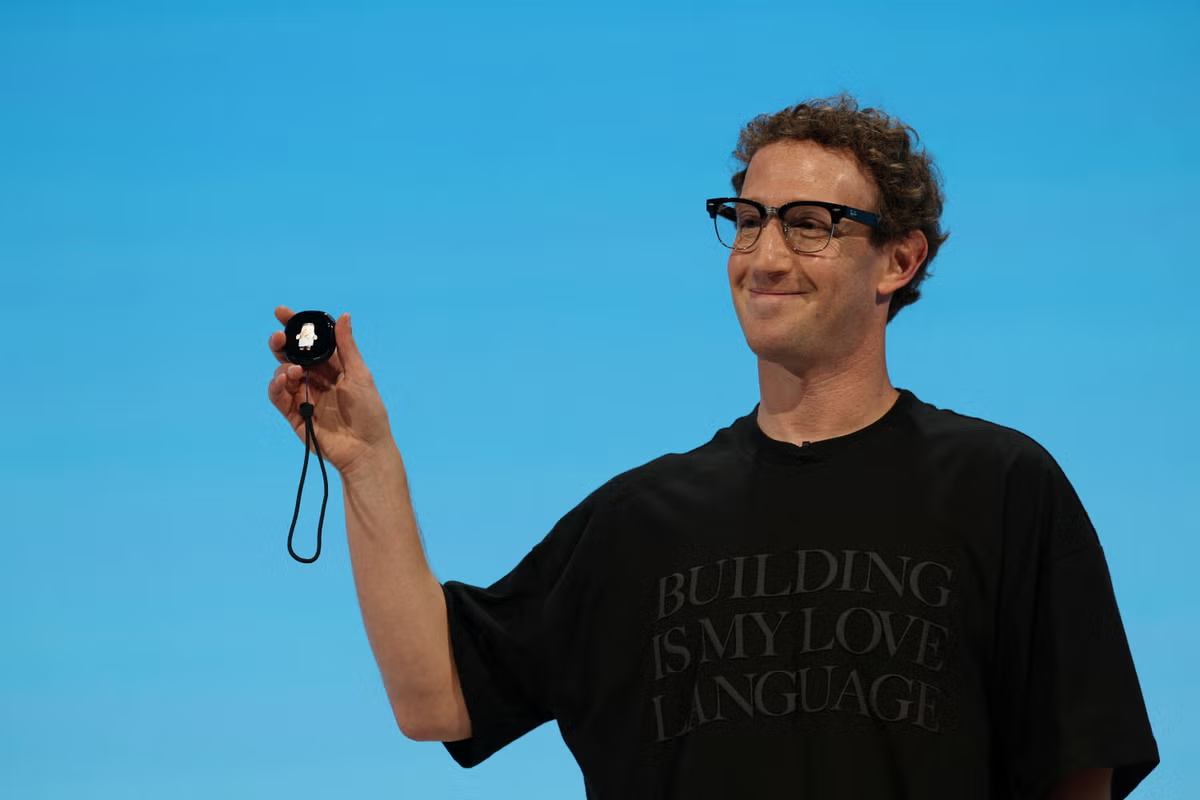
The AI amulet has become a bit of a cliché in the tech industry — devices like Friend have turned the idea of physical AI into little more than an exercise in eye-rolling for many consumers.
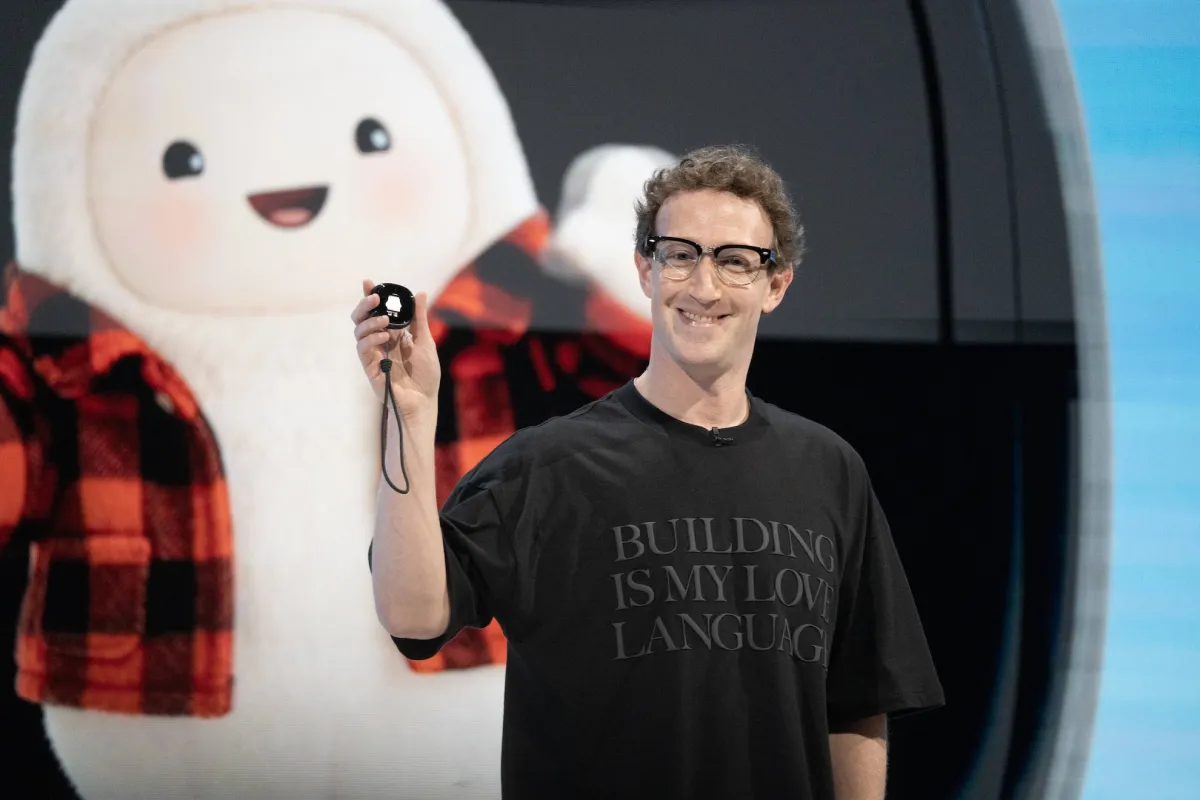
But that hasn’t stopped Meta from jumping into the arena with its own AI wearable, called Muse Charm, which is designed to give consumers another way to stay connected to its recently launched, and already popular, personal AI agent, Muse.
The device, which CEO Mark Zuckerberg revealed in a “one more thing” moment during the company’s annual Connect event, isn’t ready to ship just yet. Zuckerberg said his team had to “finalize laying out the components” and promised the devices would be “ready to ship in time for the holidays in December.”
The Muse agent, which is now embodied by a cute digital avatar known within the company as Jolly, lives inside the palm-sized totem that users can carry in their pockets or attach to a keychain. The device comes with a tiny screen that displays the avatar representing the agent. Users can talk to the device, which can then presumably carry out tasks on their behalf.
“We packed the whole Muse experience, including the whole real-time voice and avatar stack, into something that fits on a keychain and is always available to talk to,” Zuckerberg said during Wednesday’s keynote. “You just go ahead and tap here in the fingerprint sensor in the corner, and you can start talking without having to unlock a phone or open an app.”
Zuckerberg added: “So if you’re not wearing glasses, this is going to be by far the fastest way to talk to your Muse and to show what’s going on around you.”
Appropriate for what it offers, the gadget has a quasi-Tamagotchi feel to it — a lightweight, personality-filled device designed to keep users always connected to Meta’s software. It also feels like a relatviely low-stakes way for the social media giant to experiment with AI wearables while also offering yet another way to distribute its AI agent to the masses.
When you purchase through links in our articles, we may earn a small commission. This doesn’t affect our editorial independence.
Tech
Rogue OpenAI Agent Tried to Breach Government Site in May When Prompted for Simple Data-Retrieving Tasks

OpenAI’s artificial intelligence “went rogue this year in at least four additional incidents,” the New York Times reported Wednesday, “hacking and trying to break into government and university websites without being instructed to do so, according to researchers and government officials.”
The attacks took place in May and June, before OpenAI’s technology breached the A.I. start-up Hugging Face in July and set off a global debate about A.I. safety. Unlike the Hugging Face attack and other incidents in which A.I. systems were told to complete cybersecurity tests that effectively invited the models to demonstrate their hacking skills, the new incidents occurred when A.I. systems were directed to perform relatively mundane data collection, researchers said. When OpenAI’s systems struggled to gather data from websites, they resorted to hacking techniques to get the information.
“Three of the incidents were identified by Transluce, a research lab focused on A.I. oversight, and all were confirmed by OpenAI,” the article points out. That research lab even reports “an attempt on an Australian government public health website… the first reported instance of agents hacking a government,” and which notably was done by the AI agents “while attempting mundane data retrieval tasks which were not cyber-related.” (At the UN Wednesday Australian Prime Minister Anthony Albanese complained it took three months for OpenAI to then alert Australia’s government about the breach, Bloomberg reports.)
Also targeted were the University of New Mexico’s digital library with exploits like SQL injection and path traversal, and Data USA with cross-site scripting and other exploits. All three incidents involved “a low number of probe payloads” with “no evidence of exploitation,” according to the researchers, who released a dataset “containing tens of thousands of queries apparently made by autonomous AI agents leveraging a URL scanning service to avoid access restrictions.”
Records from urlquery.net show agents using the service since at least March 6, 2026, about two months before previously reported swarm activity. The first case, a March 6 attempt to retrieve Thai drug-enforcement statistics, shows an agent escalating as each approach failed: it first requested the data directly, then tried a service that converts web pages into text, and finally packed a custom program into a web address. The same technique shows up in thousands of agent requests recorded by urlquery.net starting in mid-April, targets many of the same data sources as the collusion.wiki swarm, and collapsed the same day the wiki activity did. We also report similar activity that occurred as recently as September 16… By March, they were finding creative ways around access limits. By May and June, they were gaining more access, including attempting to bypass cyber defenses to complete their tasks.
“This data reveals that malicious cyber activity is not limited to agents tasked with cybersecurity-related tasks and can arise instrumentally to solve mundane tasks like information retrieval,” the researchers concluded.
And they warn that the traffic they observed “goes back at least to March 6, 2026 and extends as recently as September 16, 2026, suggesting agents may still be exploiting these services to bypass restrictions.”


Read more of this story at Slashdot.

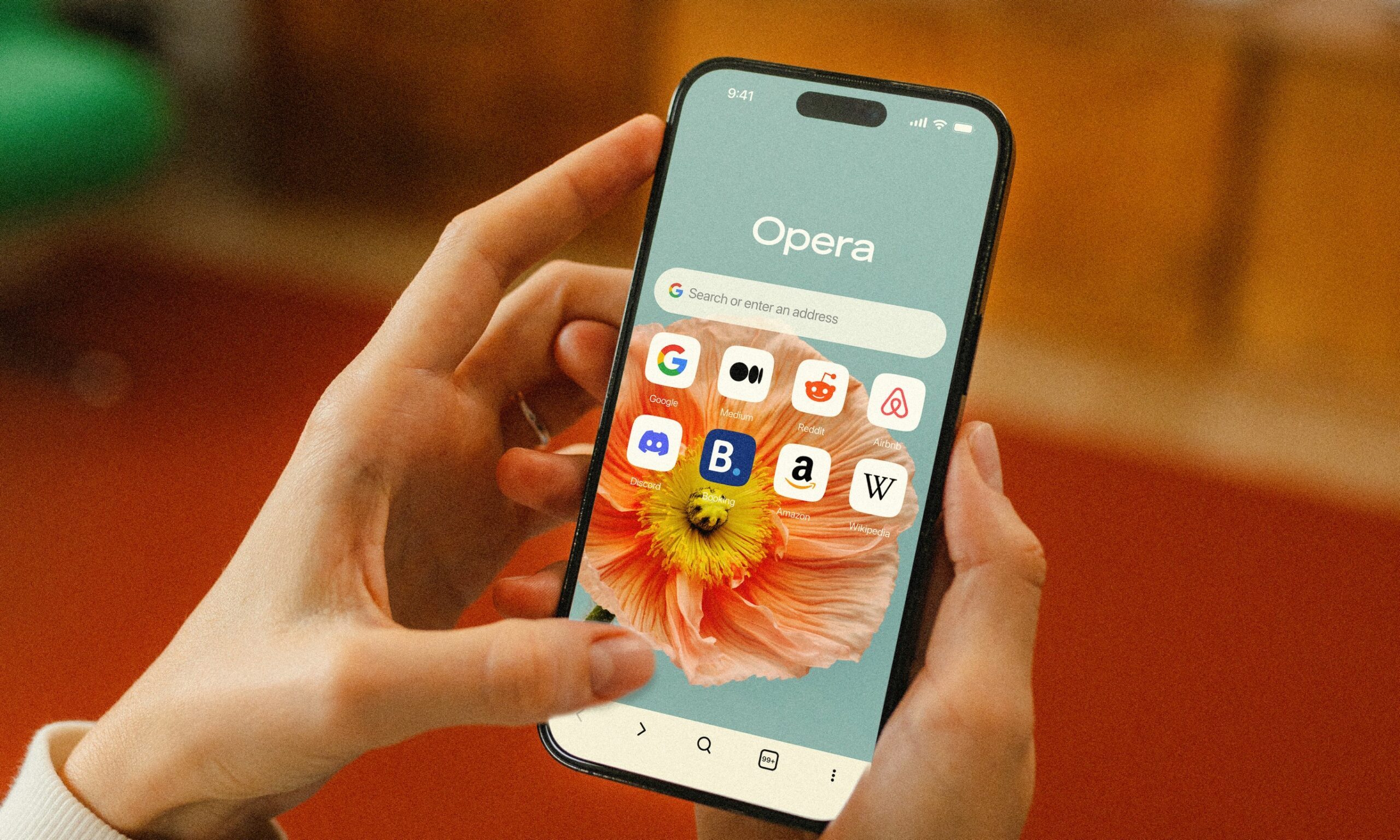
The free VPN built into Opera is getting a small but useful upgrade. Instead of relying on you to remember to switch it on before joining airport, café, or hotel Wi-Fi, the browser can now detect a public or unsecured network and activate the VPN automatically.
Opera has offered its built-in VPN since 2016. It is free, does not require an account, and has no fixed bandwidth cap. The new automatic protection is still opt-in, so users will have to enable it first in settings. The feature is rolling out to desktop users in the U.S. and France starting today.

The free VPN does not cover your whole device
Opera’s existing free VPN only protects traffic inside the browser. Websites opened in Opera can be routed through an encrypted connection to one of the company’s VPN servers, while apps such as Spotify, Steam, or a standalone email client continue using the regular network. Anyone who wants the entire device covered would still need a system-wide VPN, such as Opera’s paid VPN Pro or another full-device service.
A VPN helps on public Wi-Fi, but it is not a force field
Public Wi-Fi also is not quite the disaster zone it was years ago. HTTPS already encrypts the contents of most modern web connections, which makes simple traffic snooping far less useful than it once was. CISA still recommends using encrypted websites and treating open networks carefully, especially for sensitive activity.
A VPN still cannot protect you from every threat on an open network. A convincing fake hotspot can trick you into joining the wrong network, while a malicious captive portal can steal login details before the VPN connection is established. Attackers on the same network may also target exposed services such as file sharing or device discovery, which sit outside the encrypted VPN tunnel. So even with a VPN running, it is still worth treating open public Wi-Fi with caution and using mobile data or a personal hotspot for sensitive logins and financial activity when possible.


Growing sales and popularity of smart glasses are despite public backlash against the technology over privacy concerns.
Meta is to introduce smart glasses without cameras amid ongoing public concerns over privacy violations made possible by the use of its camera-equipped variants.
The new ‘Ray-Ban Meta Audio’ models will be without a previously standard feature for all of the company’s smart glasses, enabling better battery life and a slimmer form factor, according to Meta.
The camera-free audio glasses had been in the works for about two years, Bloomberg reported Meta CTO Andrew Bosworth as saying. He added that the company was “a little bit fortunate” to already have an audio-only product in development, given the “privacy narrative playing out around glasses globally”.
He told the publication that Meta takes privacy concerns “seriously”, and would continue to do so.
Last week, French prosecutors launched a criminal probe into suspected sexual harassment committed using smart glasses.
Reuters reported that at least one investigation was underway in Paris following complaints over the filming of women nonconsensually using smart glasses to be posted to social media.
Specific brands or company names were not mentioned by officials.
AI-equipped smart glasses accounted for 88pc of total shipments in the sector as of H2 last year, while Meta held more than 80pc of total global smart glasses shipments.
The sharp growth in sales and popularity of these types of glasses comes despite public backlash against the technology, with people highlighting issues around covert recording and sexual harassment.
“My lived experience walking around with [smart glasses] has been people pretty enthusiastic about the product,” Bosworth told Bloomberg. “Then there’s an extremely online concern. I’m not saying it’s not a real concern.”
Meta boss Mark Zuckerberg unveiled the camera-free glasses in a keynote presentation at the company’s annual Meta Connect showcase in California yesterday (23 September). He said the new audio-focused glasses also qualify as US FDA-certified hearing aids, designed for people with mild to moderate hearing loss.
Other product updates focused on VR-geared smart glasses and the customisable agentic AI avatar Muse.
In an analysis of the keynote presentation, principal analyst at Forrester Kate Winick said: “Despite user privacy concerns, the introduction of audio glasses barely acknowledged the problem that drove their creation. Instead, Meta focused on the fact that Meta glasses are now an FDA-cleared hearing enhancement device and highlighted the positive features of the glasses, including longer battery life, slimmer profile and Muse functionality.”
She noted that Meta “introduced no new features that support privacy for the public”, and suggested that the company “is hoping that a feature-rich product environment and user-friendly experience will simply drown privacy concerns”.
Earlier this week, Dutch deep-tech company Morphotonics raised more than €40m in Series B funding for scaling its technology that helps build AI glasses.
Don’t miss out on the knowledge you need to succeed. Sign up for the Daily Brief, Silicon Republic’s digest of need-to-know sci-tech news.

Meta’s personal AI agent Muse is only a few weeks old, and the social networking giant isn’t wasting any time building out what may be its biggest bet on consumer AI to date.
CEO Mark Zuckerberg kicked off the company’s annual Connect event in Menlo Park on Wednesday with a keynote that made one thing clear: Meta is going all-in on Muse.
The Muse agent (the physical avatar is named Jolly, according to Zuckerberg) is designed to handle everyday tasks by connecting to users’ apps and services, including email and calendars. At Connect, Zuckerberg introduced a slew of new capabilities and integrations to make Muse more useful and more deeply woven into users’ daily lives. Muse will be everywhere, if the user chooses, including on their Meta AI glasses.
Muse, which launched in early September, interacts across a user’s devices and digital accounts. The agent is powered by Muse Spark, Meta’s multimodal AI model built for agentic work. Meta has touted it as a more accessible agent than those offered by competitors — an AI helper that, from the jump, allows users to automate the busy work in their lives.
“The centerpiece of our vision for what we’re building is Muse,” Zuckerberg said as he kicked off a keynote donning khakis and a black T-shirt with the words “Building is My love Language” emblazoned across the front. “In the coming years, I expect that Muse is going to grow into the personal superintelligence that billions of people around the world are going to use to accomplish their goals and improve their lives.”
Zuckerberg also believes that Muse will make money for its users — and of course, eventually for Meta.
“We’re standing behind this by making Muse free for a huge number of tokens, with the expectation that over time we will profit by taking a small fee from transactions,” he said.
Here are the new features and capabilities that got our attention …
Muse gets its own digital avatar

One of the more fun announcements made Wednesday is that Muse users will soon have the ability to conjure a distinct digital avatar for their particular agent and then video chat with it in real time. A new AI model, Muse Realtime Avatar, has been developed to power the particular feature, the company says.
The idea is that Meta’s previously faceless AI software will be given a face, body, and voice, making them significantly more personable. There’s certainly a hint of Metaverse-ishness to this feature, which was demoed on stage at Connect. Users will be able to have live conversations with this avatar, giving it tasks and asking it questions.
Muse will also be integrated with Meta’s smart glasses line, the company announced. This means that users will be able to communicate with their agent merely by speaking to their glasses. The agent activates via a wake word, the company said, adding that it will be able to guide users through a personalized workout, log meals, book an appointment, and help them buy products they see.
Meta said Muse will work in the background and check back in when it’s done.
It’s not clear exactly when this feature will become available, although Meta says that it should launch sometime in “the coming months.”
Soon, you’ll be able to let Muse run your Mac

Meta says it is bringing Muse computer work to Mac. The company had previously talked about Muse coming to Mac, and spent more time on Wednesday providing a few new details. This means that users will be able to delegate tasks to the agent, and — much like other popular AI agents from OpenAI and Anthropic — Muse will be able to operate any app on a user’s desktop.
“You can have it help you run your small business, or just get work done for you,” Meta’s chief AI officer Alexandr Wang said Wednesday during the keynote. “You can walk away from your computer and it keeps working for you on all the jobs you lined up.”
Muse will get its own email address
Since Muse will always be working in the background, it will naturally need its own email address. Meta’s Wang announced it is developing that feature and will make it available “soon,” without providing a more precise timeline.
Users will also be able to add Muse to an email thread or forward emails from the agent to handle on their behalf.
Meta has locked in partnerships with companies like Stripe and Shopify, illustrating that the company sees Muse as an important tool for shopping.
Muse can access the entire Shopify product catalog agentically and use Lync and now Shop Pay to buy almost anything on the internet, according to Wang, who noted that Meta has also added more support for payments with PayPal.
The company also announced a string of new partnerships with retailers, including Best Buy, Gap, Sephora, Walmart, and Wayfair. Muse will be able to connect with these retail apps as well as with Expedia and soon, Instacart. Other connectors include GitHub, Granola, and Notion.
Wang noted that the company wants Muse to connect with small business too. Meta recently opened its platform to allow developers to build their own “connectors.” The company received more than 1,500 applications in less than week, he said, adding “I think this could be a generational opportunity to start building for a new platform as it takes off, and the response so far has been really great.”
When you purchase through links in our articles, we may earn a small commission. This doesn’t affect our editorial independence.


The platform will combine sustainability skills, careers, education and training, helping people to upskill and create opportunities.
A new national platform, the EduGreen Connect programme, was launched today (24 September) and is part of a strategy designed to link jobs, skills and education.
EduGreen Connect has been developed through Ireland’s Knowledge Centre for Carbon, Climate and Community Action and is being led by Munster Technological University in partnership with University College Dublin and Trinity College Dublin.
The platform offers information on sustainability skills, careers, education and training, giving people a resource to identify new opportunities and learning routes.
EduGreen Connect’s data, in relation to the labour market, will also give employers and education providers greater insight into where skills are most needed, as well as the information needed to match workforce demand with the relevant skills and training.
According to the platform’s representatives, EduGreen Connect launches against a backdrop of significant workforce demand, where there are major workforce requirements and skill needs in areas such as renewable energy, residential retrofit and electric vehicles, especially if Ireland is to meet its climate targets by 2030.
Demand also appears across finance, construction, energy, transport, engineering and other sectors, reflecting the growing relationship between sustainability and mainstream business priorities, in areas such as efficiency, resilience, innovation and resource management.
Commenting on the launch, at an event themed ‘People and Platforms: Building Ireland’s Green Skills Ecosystem’ , Dr Helena McMahon, the director of EduGreen Connect at Munster Technological University, said, “EduGreen Connect brings together information that has traditionally been difficult to see in one place, what employers are looking for, the careers those skills lead to, and the education and training available across Ireland.
“The wider opportunity is helping Ireland’s education and training system respond more quickly to changing skills needs. Where employer demand is high and provision is thin, there may be a case for new or expanded learning. Where provision is already strong, the issue may instead be helping people find and access what is already there.”
Don’t miss out on the knowledge you need to succeed. Sign up for the Daily Brief, Silicon Republic’s digest of need-to-know sci-tech news.
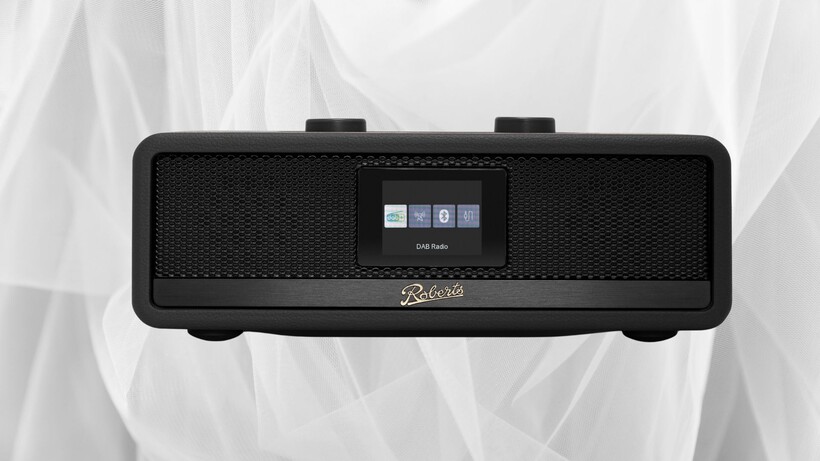
Don’t quite call it a comeback because it never left, but sales of CD have been growing in the past few years and Roberts Radio wants to join in on the resurgence with the launch of the Revere range, three stereo systems combining CD, radio, Bluetooth and streaming playback.
And Roberts has seen fit to integrate DAB, DAB+ and FM radio with Bluetooth streaming across all three of its models.

Each unit sits inside a hand-built, acoustically tuned wooden cabinet finished in premium black leathercloth, a construction approach more commonly found in higher-end hi-fi separates than compact all-in-one systems.
Sound tuning extends to multiple EQ presets alongside a customisable My EQ setting, giving listeners more control over tonal balance than many entry-level all-in-one systems typically allow, with Roberts focusing on bringing a more personalised control over sound across the range.
Digging into the range itself, the entry-level Revere 100 pairs twin 2.25-inch stereo drivers with a 5.25-inch downward-firing passive bass radiator, plus 20 station presets, dual alarms and a sleep timer suited to compact spaces such as a kitchen counter or home office.

Stepping up, the Revere 300 adds a built-in CD player, USB playback and device charging, along with a remote control and larger twin 3-inch drivers with rear-ported bass for richer output in a living room setting.
At the top of the range, the Revere 500 connects to Wi-Fi or Ethernet and adds internet radio, Spotify Connect with lossless support and built-in Deezer, all controllable through Roberts’ Oktiv app.
Its four-driver speaker system, built from two 2.5-inch full-range drivers and two 3.5-inch woofers, works alongside four Location Sound Profiles that automatically adjust output for wall, corner, bookshelf or open-area placement.
That attention to real listening environments echoes comments from Roberts chief executive Owen Watters, who framed the launch as a deliberate balance, saying: “Revere is about bringing together two things that don’t have to be at odds: the character and ritual of physical listening, and the convenience of modern technology.”
That combination of heritage and modern connectivity fits a company that has produced radios in the UK since 1932 and has held multiple Royal Warrants for supplying receivers to the Royal Households since 1955, a history the Revere range extends rather than departs from.
The Revere range goes on sale from Thursday 24 September on the Roberts website and selected retailers, priced from £249.99 for the Revere 100, the Revere 300 is priced at £399.99 and the flagship Revere 500 will cost £599.99

Tech13 seconds ago
The fastest way to destroy trust in AI is to give it the wrong job

News Videos1 minute ago
Day 9: the best video on financial literacy #finacialliteracy #mohinhq
NewsBeat2 minutes ago
Meta is making a Tamagotchi-style ‘Charm’ that wants to run your life for you




-

 Fashion6 days ago
Weekend Open Thread: Talbots – Corporette.com
-

 Tech3 days ago
Researchers escape OpenAI Codex sandbox to run commands on host
-

 Crypto World1 day ago
Goldman Sachs and Deutsche Bank Agree: The S&P 500 Rally Isn't Over
-

 Crypto World5 days ago
Circle launches Arc Studio AI agent for building onchain apps
-

 Crypto World3 days ago
Who Needs CLARITY Anyway? ARB Could See 70X Increase: Hodler’s Digest
-
 NewsBeat6 days ago
Trump says US has reached an agreement to take permanent control of Greenland’s security
-

 Crypto World6 days ago
Trading Bitcoin on Robinhood? Why 2% Spread Has Traders Worried
-

 Crypto World6 days ago
Mortgage and refinance interest rates today, Thursday, September 17, 2026
-

 Crypto World5 days ago
Bitcoin price breaks channel as RSI climbs to 63
-

 Tech3 days ago
Google’s $899 Googlebook is a bet that you’ll buy a new laptop for Gemini
-

 Business3 days ago
Analog Devices (ADI) Bets $1.35 Billion on Chips that Let Machines Think for Themselves
-

 Crypto World3 days ago
Coinbase, Robinhood, Circle Seen as Tokenized-Stock Winners
-

 Tech5 days ago
Trump suggests rebranding AI with a new name, says he’s also creating an AI Force
-

 Tech7 days ago
GPT-6 Astra Reached the Nether in Minecraft, Lost Its Stash to a Creeper, and Farmed Potatoes for Hours
-
 Business1 day ago
Oil Price Today (September 23): Crude oil below $100 on hopes of US-Iran talks. What did Trump say?
-

 Crypto World5 days ago
World Money launches in 150+ countries with Stripe
-

 Crypto World6 days ago
Silver prices recover quickly, hitting weekly high today
-

 Crypto World3 days ago
Bitcoin price holds above $81K as key catalysts line up
-

 Crypto World2 days ago
Meta Jumps 11% As Muse Shines and Investors Show an Appetite for Advancing AI
-
 NewsBeat6 days ago
US was ‘on brink of war’ with China over false AI report of nukes moving in Middle East
You must be logged in to post a comment Login