Connect with us

Tech

Watch South Africa vs Australia 2026 ODI series: Live Streams & Schedule

Published

on

The South Africa vs Australia ODI series 2026 is a chance for both side to step up their preparations for next year’s 50-over World Cup. There’s also the upcoming Test series, the Aussies’ first since in South Africa since the infamous 2018 ball-tampering scandal, which will add an extra frisson to proceedings.

Australia arrive with plenty of momentum after sweeping Zimbabwe 3-0 in Harare, with young gun Cooper Connolly making a strong case for a permanent role at No.3. The 23-year-old scored 51, 78, and 21 across the three matches to be named Player of the Series. Now, the Aussies are further bolstered by the return of captain Pat Cummins and pace spearhead Mitchell Starc, with Josh Hazlewood also in the squad. That creates an interesting selection battle, particularly after seamer Nathan Ellis’ nine wickets in Zimbabwe.

Source link

Advertisement
Continue Reading
Click to comment

You must be logged in to post a comment Login

Leave a Reply

Tech

Everything new coming to Meta’s AI agent Muse

Published

on

Meta’s personal AI agent Muse is only a few weeks old, and the social networking giant isn’t wasting any time building out what may be its biggest bet on consumer AI to date. 

CEO Mark Zuckerberg kicked off the company’s annual Connect event in Menlo Park on Wednesday with a keynote that made one thing clear: Meta is going all-in on Muse. 

The Muse agent (the physical avatar is named Jolly, according to Zuckerberg) is designed to handle everyday tasks by connecting to users’ apps and services, including email and calendars. At Connect, Zuckerberg introduced a slew of new capabilities and integrations to make Muse more useful and more deeply woven into users’ daily lives. Muse will be everywhere, if the user chooses, including on their Meta AI glasses. 

Muse, which launched in early September, interacts across a user’s devices and digital accounts. The agent is powered by Muse Spark, Meta’s multimodal AI model built for agentic work. Meta has touted it as a more accessible agent than those offered by competitors — an AI helper that, from the jump, allows users to automate the busy work in their lives. 

Advertisement

“The centerpiece of our vision for what we’re building is Muse,” Zuckerberg said as he kicked off a keynote donning khakis and a black T-shirt with the words “Building is My love Language” emblazoned across the front. “In the coming years, I expect that Muse is going to grow into the personal superintelligence that billions of people around the world are going to use to accomplish their goals and improve their lives.”

Zuckerberg also believes that Muse will make money for its users — and of course, eventually for Meta.

“We’re standing behind this by making Muse free for a huge number of tokens, with the expectation that over time we will profit by taking a small fee from transactions,” he said.

Here are the new features and capabilities that got our attention …

Advertisement

Muse gets its own digital avatar

Image Credits:Meta/screenshot /

One of the more fun announcements made Wednesday is that Muse users will soon have the ability to conjure a distinct digital avatar for their particular agent and then video chat with it in real time. A new AI model, Muse Realtime Avatar, has been developed to power the particular feature, the company says.

The idea is that Meta’s previously faceless AI software will be given a face, body, and voice, making them significantly more personable. There’s certainly a hint of Metaverse-ishness to this feature, which was demoed on stage at Connect. Users will be able to have live conversations with this avatar, giving it tasks and asking it questions. 

Muse will also be integrated with Meta’s smart glasses line, the company announced. This means that users will be able to communicate with their agent merely by speaking to their glasses. The agent activates via a wake word, the company said, adding that it will be able to guide users through a personalized workout, log meals, book an appointment, and help them buy products they see. 

Meta said Muse will work in the background and check back in when it’s done.

It’s not clear exactly when this feature will become available, although Meta says that it should launch sometime in “the coming months.” 

Advertisement

Soon, you’ll be able to let Muse run your Mac

Image Credits:Meta/screenshot /

Meta says it is bringing Muse computer work to Mac. The company had previously talked about Muse coming to Mac, and spent more time on Wednesday providing a few new details. This means that users will be able to delegate tasks to the agent, and — much like other popular AI agents from OpenAI and Anthropic — Muse will be able to operate any app on a user’s desktop.

“You can have it help you run your small business, or just get work done for you,” Meta’s chief AI officer Alexandr Wang said Wednesday during the keynote. “You can walk away from your computer and it keeps working for you on all the jobs you lined up.”

Muse will get its own email address

Since Muse will always be working in the background, it will naturally need its own email address. Meta’s Wang announced it is developing that feature and will make it available “soon,” without providing a more precise timeline.

Users will also be able to add Muse to an email thread or forward emails from the agent to handle on their behalf.

Meta has locked in partnerships with companies like Stripe and Shopify, illustrating that the company sees Muse as an important tool for shopping.

Advertisement

Muse can access the entire Shopify product catalog agentically and use Lync and now Shop Pay to buy almost anything on the internet, according to Wang, who noted that Meta has also added more support for payments with PayPal.

The company also announced a string of new partnerships with retailers, including Best Buy, Gap, Sephora, Walmart, and Wayfair. Muse will be able to connect with these retail apps as well as with Expedia and soon, Instacart. Other connectors include GitHub, Granola, and Notion.

Wang noted that the company wants Muse to connect with small business too. Meta recently opened its platform to allow developers to build their own “connectors.” The company received more than 1,500 applications in less than week, he said, adding “I think this could be a generational opportunity to start building for a new platform as it takes off, and the response so far has been really great.”

When you purchase through links in our articles, we may earn a small commission. This doesn’t affect our editorial independence.

Advertisement

Source link

Continue Reading

Tech

EduGreen Connect programme will link jobs, skills and education

Published

on

The platform will combine sustainability skills, careers, education and training, helping people to upskill and create opportunities.

A new national platform, the EduGreen Connect programme, was launched today (24 September) and is part of a strategy designed to link jobs, skills and education. 

EduGreen Connect has been developed through Ireland’s Knowledge Centre for Carbon, Climate and Community Action and is being led by Munster Technological University in partnership with University College Dublin and Trinity College Dublin.

The platform offers information on sustainability skills, careers, education and training, giving people a resource to identify new opportunities and learning routes. 

Advertisement

EduGreen Connect’s data, in relation to the labour market, will also give employers and education providers greater insight into where skills are most needed, as well as the information needed to match workforce demand with the relevant skills and training. 

According to the platform’s representatives, EduGreen Connect launches against a backdrop of significant workforce demand, where there are major workforce requirements and skill needs in areas such as renewable energy, residential retrofit and electric vehicles, especially if Ireland is to meet its climate targets by 2030. 

Demand also appears across finance, construction, energy, transport, engineering and other sectors, reflecting the growing relationship between sustainability and mainstream business priorities, in areas such as efficiency, resilience, innovation and resource management.

Commenting on the launch, at an event themed ‘People and Platforms: Building Ireland’s Green Skills Ecosystem’ , Dr Helena McMahon, the director of EduGreen Connect at Munster Technological University, said, “EduGreen Connect brings together information that has traditionally been difficult to see in one place, what employers are looking for, the careers those skills lead to, and the education and training available across Ireland.

Advertisement

“The wider opportunity is helping Ireland’s education and training system respond more quickly to changing skills needs. Where employer demand is high and provision is thin, there may be a case for new or expanded learning. Where provision is already strong, the issue may instead be helping people find and access what is already there.”

Don’t miss out on the knowledge you need to succeed. Sign up for the Daily Brief, Silicon Republic’s digest of need-to-know sci-tech news.

Source link

Advertisement
Continue Reading

Tech

Roberts Radio’s new Revere range arrives in time for CD renaissance

Published

on

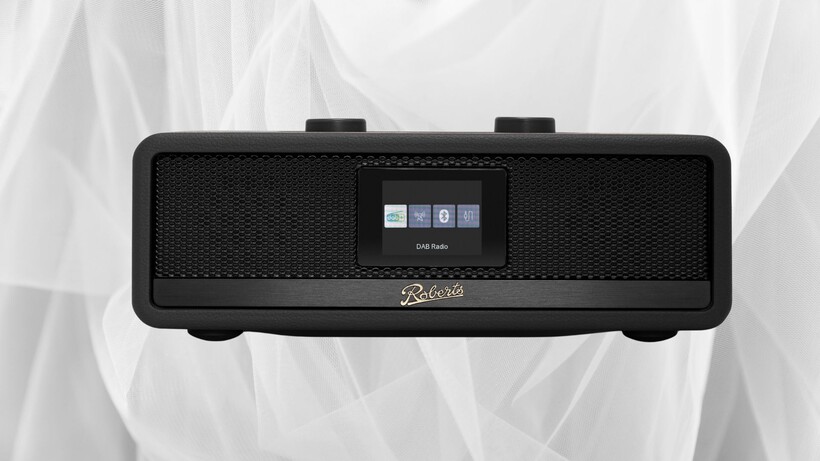
Don’t quite call it a comeback because it never left, but sales of CD have been growing in the past few years and Roberts Radio wants to join in on the resurgence with the launch of the Revere range, three stereo systems combining CD, radio, Bluetooth and streaming playback.

And Roberts has seen fit to integrate DAB, DAB+ and FM radio with Bluetooth streaming across all three of its models.

Roberts Revere 100 productRoberts Revere 100 product
Image Credit (Roberts Revere 100)

Each unit sits inside a hand-built, acoustically tuned wooden cabinet finished in premium black leathercloth, a construction approach more commonly found in higher-end hi-fi separates than compact all-in-one systems.

Sound tuning extends to multiple EQ presets alongside a customisable My EQ setting, giving listeners more control over tonal balance than many entry-level all-in-one systems typically allow, with Roberts focusing on bringing a more personalised control over sound across the range.

Advertisement

Advertisement

Digging into the range itself, the entry-level Revere 100 pairs twin 2.25-inch stereo drivers with a 5.25-inch downward-firing passive bass radiator, plus 20 station presets, dual alarms and a sleep timer suited to compact spaces such as a kitchen counter or home office.

Roberts Revere 300 productRoberts Revere 300 product
Image Credit (Roberts Revere 300)

Stepping up, the Revere 300 adds a built-in CD player, USB playback and device charging, along with a remote control and larger twin 3-inch drivers with rear-ported bass for richer output in a living room setting.

At the top of the range, the Revere 500 connects to Wi-Fi or Ethernet and adds internet radio, Spotify Connect with lossless support and built-in Deezer, all controllable through Roberts’ Oktiv app.

Its four-driver speaker system, built from two 2.5-inch full-range drivers and two 3.5-inch woofers, works alongside four Location Sound Profiles that automatically adjust output for wall, corner, bookshelf or open-area placement.

Advertisement

Advertisement

That attention to real listening environments echoes comments from Roberts chief executive Owen Watters, who framed the launch as a deliberate balance, saying: “Revere is about bringing together two things that don’t have to be at odds: the character and ritual of physical listening, and the convenience of modern technology.”

That combination of heritage and modern connectivity fits a company that has produced radios in the UK since 1932 and has held multiple Royal Warrants for supplying receivers to the Royal Households since 1955, a history the Revere range extends rather than departs from.

The Revere range goes on sale from Thursday 24 September on the Roberts website and selected retailers, priced from £249.99 for the Revere 100, the Revere 300 is priced at £399.99 and the flagship Revere 500 will cost £599.99

Advertisement

Source link

Continue Reading

Tech

Microsoft fixes bug that broke Windows File History backup feature

Published

on

Windows

Microsoft has fixed a known issue that breaks the built-in File History backup feature on some Windows systems after installing the September 2026 security updates.

File History, introduced in Windows 8 and later replaced by Windows Backup, automatically backs up the user’s account profile (Documents, Music, Pictures, Videos, and Desktop) to an external hard drive, such as a USB flash drive, or a network storage location (NAS) and then lets them restore accidentally deleted or damaged files using an older version from hours, days, or weeks ago.

In a Saturday service alert seen by BleepingComputer, Microsoft warned that the automated backup feature might stop working after installing this month’s security updates and triggering application crash events in Event Viewer referencing FileHistory.exe and KERNELBASE.dll.

On impacted systems running Windows 10 21H2 or later, Windows 10 Enterprise LTSC 2016/2019, and Windows 11 23H2 and later, users are also seeing “Reconnect your drive” alerts even though compatible backup drives are connected and working properly.

Advertisement

Other symptoms include previously backed-up files showing “No previous version available” and the “Last Backup” timestamp not updating.

“After installing the September 2026 Windows security update [..], some customers using File History, might be unable to create or update backups,” Microsoft said. “File History, available through Control Panel > System and Security > File History, is used to back up files to an external drive or network location.”

Fixed in September 2026 preview update

On Tuesday, Microsoft said the known issue has been fixed for Windows 11 customers and is rolling out with this month’s KB5124006 and KB5124010 optional cumulative updates for devices running Windows 11 26H1 and Windows 11 24H2/25H2, respectively.

“This update addresses an issue where File History might fail to back up or restore files to an external drive or network location,” Microsoft said.

Advertisement

“We recommend you install the latest update for your device as it contains important improvements and issue resolutions, including this one.”

Windows users who don’t want to install the optional updates will get the fix with next month’s Patch Tuesday updates, which will roll out on October 13.

One week ago, Microsoft also released out-of-band updates to fix Hyper-V problems, Remote Desktop Services failures, and USB audio issues triggered by the September Patch Tuesday security updates.

Days later, it also shared a temporary fix for a bug that prevents some Windows 11 users from logging in with valid domain credentials after installing the same buggy updates.

Advertisement

article image

Join Mikko Hyppönen and security leaders from the NFL, CHANEL, and Atlassian for a two-hour digital summit on what AI-speed attacks change, what defenders should stop doing, and how to validate, decide, fix, and re-validate at machine speed.

Save your seat

Source link

Continue Reading

Tech

Wayfair Coupons: Up to 80% Off September 2026

Published

on

Wayfair has become a staple of online furniture sales thanks to its wide selection of furniture and home goods, fast and free shipping on orders, and 24-hour flash sales. Save even more this month with Wayfair promo codes and coupons for up to 80% off pricey purchases like furniture. Wayfair carries almost everything needed to furnish a home, including pillowsmattressesbeddinghome goodscouchesoffice chairs, and so, so much more (even cat furniture); and we’ve rounded up the best ways to save from this often WIRED-tested and -reviewed brand.

Mercer41

Convertible Sleeper Sofa

Top Wayfair Coupons for 2026

Wayfair has become a staple of online furniture sales thanks to its wide selection of furniture and home goods, fast and free shipping on orders over $35, limited-time deals, and exclusive daily sales. There are tons of rotating Wayfair coupons and flash deals for up to 70% off pricey purchases like furniture. Since its founding 20 years ago, the Boston-based online retailer has grown steadily and now offers 14 million items from more than 11,000 global suppliers. Wayfair carries almost everything needed to furnish a home, including pillowsmattressesbeddinghome goodscouchesoffice chairs, and so, so much more (even cat furniture). We’ve rounded up the best ways to save from this often WIRED-tested and -reviewed brand.

Advertisement

Langley Street

Fleckenstein Oriental Area Rug

Langley Street

Herzig Multicolor Area Rug

Advertisement

Shop Wayfair Coupons and Flash Deals Up to 80% Off Furniture

Wayfair has daily sales and early Black Friday deals, with half off or more on bedroom, kitchen, dining room, and living room furniture, including tables and TV stands. There are also Wayfair flash sales, like rotating 24-hour Deals of the Day, which change daily and are heavily discounted, up to 80% off. There are also deeply discounted Closeout Deals on discontinued and overstocked products, with up to 70% off last-chance items. I’m taking advantage of these Wayfair Black Friday sales by nabbing an office desk for 50% off from the closeout deals page, and I’ll be investing in a Wayfair office chair to complete my new WFH setup (I’m currently working on one of my favorite Wayfair mattresses from my cheap mattresses guide, which isn’t the most, ahem, professional).

Wayfair

Sleep 12-Inch Medium Cooling Gel Memory Foam Mattress

Get 10% Off Your First Order With Wayfair Promo Code

First-time users can get 10% off their first order with this Wayfair promo code when they sign up for email or text alerts. While Wayfair doesn’t always offer coupons, they will send personalized promo codes directly to you via email, along with other deals, promotions, and discounts.

Advertisement

Wayfair

Sleep 8-Inch Medium Cooling Gel Memory Foam Mattress

Wayfair

Sleep 12-Inch Medium Memory Foam Mattress

Advertisement

Shop Verified Wayfair Deals for Top-Rated Quality

Wayfair knows you’re making an investment, not just buying home goods or furniture. These are items you’ll be sleeping on, eating on, and sitting on for years to come—they should be built to last. Wayfair has hundreds of items that have been hand-verified for quality by Wayfair’s own product specialists using a 10-point inspection system. The system measures material quality, ease of assembly, functionality and features, and ratings, so you don’t have to deal with returns and know it meets market-tested value. Wayfair product specialists go through each product category and identify which items meet key quality criteria—only 1% of items on Wayfair earn the Wayfair Verified stamp of approval, including many of their budget mattresses (which we’ve reviewed many of).

Be sure to check out Wayfair Verified items here, which include goods across bedroom like down comforters, living room like couches, and other important spaces like bathroom, office, storage, kitchen, and more.

Trule

Armless Large Microfiber Leather 3-Seat Bean Bag Sofa

Advertisement

Wayfair Sleep

All-Season Down Alternative Comforter

Other Ways to Save at Wayfair Right Now

You can save and find even more items and exclusive deals in the Wayfair mobile app. You can get up to 20% off in the app. The app not only helps you save more, but it also uses technology to help you visualize items in your room and provides exclusive access to handpicked products and flash sales.

If you own a business, you can join Wayfair Professional, which gives you access to exclusive discounted pricing of up to 15%, an additional 10% off specialty brands, a large selection of products across Wayfair’s brand network, 360-Degree Support, and fast, free shipping on select orders.

Advertisement

Whether you’re overhauling your home for a full makeover or just need affordable, fast delivery for furniture, Wayfair has practically everything you need to live comfortably. Be sure to check back often for more Wayfair promo codes, flash-sale notifications, and additional ways to save on furniture and home goods.

Front and inside views of a wooden sauna installed on the back deck of a house. Background: green fabric texture.

If you’ve been chasing an easy way to overheat, this click-together infrared sauna is easy to set up and works great.

Source link

Continue Reading

Tech

FlyWithRookie’s Fully Enclosed Boeing 737NG Home Flight Simulator Puts a Line Jet Behind a Locking Door

Published

on

FlyWithRookie Home Flight Simulator Boeing 737-800 Motion
FlyWithRookie streams from a Boeing 737NG flight deck that occupies a room the way a real jet occupies a hangar. Flight Deck Solutions in Canada supplied the fixed-base trainer, mixing replica hardware with real aircraft parts from the shell inward, and the result includes circuit breaker walls, a crew jumpseat, a working cockpit door that latches, and a custom galley aft of the flight deck. He has said there is nothing more satisfying than pressing TOGA and watching a real-world throttle walk forward as the jet builds toward V1, rotate, and V2.


Walking through that door puts you right in the middle of a full-size 737NG; everything is there, including the overhead panels, glare shield, main instrument panel, and aisle stand, which are all exactly where they should be on an actual jet. The captain and first officer seats are located on a unique platform designed to replicate the shaking of a real plane. There are also seismic sound transducers under both pilot seats, allowing you to feel the engine start and APU spool rather than just hearing them. Two ButtKicker LFE Mini units on the same platform add some of the heavier hits, such as speedbrakes coming out, pavement seams as you roll out of the gate, the main-gear touchdown, and the sensation of putting the gear on. Even the flight attendant chairs in the galley have their own transducers, so the rumbling of the cabin isn’t simply at the pointy end of the plane.

Behind the locked door sits a small airline world that most home sims never bother to finish. In-flight entertainment is provided by a 24 inch wall-mounted smart TV, similar to what you would find on a plane. Two speakers on the galley wall simulate the ambient cabin noise you’d hear on an actual trip. Another iPad hangs on the wall, dubbed the Flight Attendant Information Control Center, which controls everything from galley lighting to main cabin lighting, heat, air conditioning, and even flight tracking. You also got two more iPads up front, which were loaded with performance data and navigation. That back piece is what makes this configuration truly feel like a jet, rather than just a desk with a yoke.


Three Optoma short throw game projectors paint a 12 foot wrap-around screen, providing approximately 220 degrees of view. The Elise Immersive Display Pro performs an excellent job of mixing all three images, ensuring that the outside environment is not sliced up by the window frames. You can glance left and right through real window shapes in an Alu nose section, modeled from the actual airplane, and the projected world remains nice and continuous around the glare shield.


Sound work matches the metal. The main PC is equipped with a Logitech Z906 5.1 system to handle the principal airplane noise. The client PC features a Logitech Z313 2.1 stack that handles secondary aircraft sounds. There’s also an aural warning module on the first officer side that activates all of the GPWS callouts, fire bells, and other warning systems. Combined with the seat transducers and platform kickers, starting up, taxiing, and landing are truly a full-fledged physical experience, not simply a soundtrack.

Advertisement


Three computers ensure that the 737NG, jet, world, and stream don’t get on each other’s nerves. The primary computer is powered by an Intel Core i9-12900K processor, 64 GB of RAM, a 1,000-watt power supply, and a high-end EVGA GeForce RTX 3090 FTW3 graphics card. The main storage drive is a 4TB Samsung 980 Pro. When it comes to client work, this computer features an i9-9900K, a ROG Z390 board, 32 GB of RAM, another 1,000-watt power supply, a matching EVGA 3090 FTW3, and a matching 4 TB 980 Pro. Meanwhile, dispatch and live broadcasting are handled by an i9-11900K processor connected to a high-end ASUS motherboard, Z590 ROG Maximus Hero, 32 GB of RAM, a 1,000 watt EVGA power supply, an RTX 3090 FTW3 Ultra, and 2TB of Samsung Evo storage. Three computers and three iPads are a lot of electronics for a room, which is how a full 737NG runs smoothly even when someone is on camera.

Source link

Advertisement
Continue Reading

Tech

Copyright Infringement Still Isn’t Theft, Even When A Microsoft Employee Says It Is

Published

on

You may have seen the headlines about a Microsoft employee calling AI scraping “the largest theft of labor in human history.” It made the rounds on social media, with plenty of people insisting it was a slam dunk admission of criminality. I think I saw this gif applied to it multiple times:

The "Oh my God, He Admit It!" Meme

It certainly doesn’t look great. But does it actually matter? An exec’s statement doesn’t change the underlying facts: fair use isn’t copyright infringement, and even when something is infringement, it still isn’t theft. That someone colloquially calls it theft isn’t supposed to change the legal analysis, no matter how emotionally satisfying it feels.

For basically all of Techdirt’s history, we’ve explained that copyright infringement is not “theft,” and that using that term is misleading in dangerous ways. It’s been a few years since we last mentioned it, but the Supreme Court’s ruling in Dowling vs. the US has always been the clearest legal statement on this point.

Since the statutorily defined property rights of a copyright holder have a character distinct from the possessory interest of the owner of simple “goods, wares, [or] merchandise,” interference with copyright does not easily equate with theft, conversion, or fraud. The infringer of a copyright does not assume physical control over the copyright, nor wholly deprive its owner of its use. Infringement implicates a more complex set of property interests than does run-of-the-mill theft, conversion, or fraud.

That’s not to say that infringement is necessarily okay. But it’s a distinct issue from “theft.”

For years, most of the internet seemed to agree. But the arrival of generative AI has triggered a remarkable amount of backsliding, as people rush to (incorrectly) label training as “theft.” That’s wrong on two levels. First, if it were infringement, it still wouldn’t be “theft.” Theft removes something from someone’s possession. Copyright infringement doesn’t. It makes a copy without a license. Those are not the same things. At all.

Advertisement

But there’s an even bigger issue when it comes to AI training, which is that there’s a fairly strong argument that training is fair use. And at least one judge in one of the (many) cases exploring this issue has agreed. As Judge William Alsup noted:

To summarize the analysis that now follows, the use of the books at issue to train Claude and its precursors was exceedingly transformative and was a fair use under Section 107 of the Copyright Act. And, the digitization of the books purchased in print form by Anthropic was also a fair use but not for the same reason as applies to the training copies. Instead, it was a fair use because all Anthropic did was replace the print copies it had purchased for its central library with more convenient space-saving and searchable digital copies for its central library — without adding new copies, creating new works, or redistributing existing copies.

And here, too, the law is clear. Fair use is not a “defense” to infringement. Rather, a fair use “is not an infringement of copyright” at all. That doesn’t mean that there can’t be some aspects that are infringing and are punishable: indeed, in that very case where Alsup determined that Anthropic’s training was fair use, he also dinged them for widespread mass infringement for creating and storing “pirate libraries” of content without a license.

The point is that Alsup actually looked at the specifics of each use. An AI data scientist firing off an emotional internal message is not legal analysis, nor is it someone who understands the elements of either copyright infringement or fair use, let alone “theft” in the legal sense.

Of course, for decades now, the large copyright interests have polluted the discourse on this by deliberately equating infringement to theft (and simultaneously minimizing, dismissing, or demonizing fair use). Hollywood and others (including Microsoft!) spent years poisoning the language around copyright until calling infringement “theft” became the default, and “fair use” got treated as a grudging loophole or limited defense, rather than the public’s actual right.

Advertisement

Bill Patry, who knows more about the modern history of copyright law than maybe anyone, wrote a wonderful book about how the large copyright players used the language of “theft” and “piracy” to influence policy discussions.

Given all that as background, it’s somewhat hilarious that people are acting like it’s a huge deal that a Microsoft employee called AI training “theft.” This came out in a recently unredacted filing from the NY Times in its case against OpenAI.

This case is about, as Microsoft’s Director of Applied Science put it, “an astonishing theft of unprecedented proportions”; SF1437, perhaps the “largest theft of labor in human history.” SF1652. Defendants repeatedly copied millions of Plaintiffs’ copyrighted articles in their entirety without permission to produce substitutive commercial AI products.

The NY Times is trying to win a copyright lawsuit, so of course it has every interest in portraying these quotes as damning. The rest of the media doesn’t have to accept that framing — especially when it’s not how copyright law actually works. Just because a random employee of one company colloquially calls it “theft” doesn’t magically make it so, either legally or morally.

And, yes, that same filing goes after the fair use argument by quoting an OpenAI employee calling AI an “existential threat” to publishers, then insisting that this “undermines” any fair use claim. Notably, the filing quotes so little of the surrounding context that it’s not even clear what the person was referring to, but just because one employee makes such a statement doesn’t make fair use disappear. That’s not how fair use is determined.

Advertisement

There’s also a more basic problem with the “existential threat” argument. Lots of things can be “existential threats” to companies that refuse to adapt and change. That doesn’t make their competitors illegal. It’s just how competition itself works. This is also true of the “doom loop” quote from the filing:

A Microsoft document recognizes that nobody wins that contest: “Our AI content strategy has started a ‘doom loop’ that will hurt the performance of our models and the entire web at the same time: It is highly unusual that an end-product threatens the economic foundations of its essential suppliers, but that is the situation we have created for our LLM business with respect to its ‘content supply chain.’”

Read the full filing, though, and the Times’ lawyers seem to be playing a neat bit of sleight of hand here, conflating statements about search results that give users the facts they were looking for (rather than driving them to a separate website) with the claim that chatbot output is a substitute for news. Those are two separate things. Take the Satya Nadella testimony the filing leans on. He’s talking about chatbots answering questions a user has, not about anyone going to ChatGPT and asking it to replace the NY Times:

Microsoft’s CEO Satya Nadella agreed under oath that conversing with chatbots “has substituted … giving you the information right there on the website on the AI platform versus needing to go to the underlying source.”

And, in the end, what matters most is what users actually want, because that’s what they’re going to do regardless. The NY Times might not like that someone looking for a quick answer doesn’t want to read a long article, but that’s not the fault of an AI system. It’s how people work: the AI tools (or the search results) may simply be meeting that reader’s needs in that moment better than a long-form article does.

As an entity engaged in long-form reporting ourselves, that certainly represents a challenge for us, but we try to respond to that by providing something that can’t be replaced merely by a straight answer to a question. Instead, we focus on providing more value that makes it worthwhile to read our full commentary.

Advertisement

Why does the NY Times think it can’t do that? Does it really value what it does so little that it can’t compete with a word generator?

The courts still have a long way to go on the copyright questions around training, but the rush to wave a few cherry-picked quotes from the NY Times filing around as “evidence” that AI training broke the law is getting silly.

Fair use isn’t infringement. And if it is infringement, it’s not “theft.” And even if a use competes with you, competition doesn’t make it illegal. Indeed, the “effect of the use upon the potential market” is just one of four factors, and it isn’t supposed to let ordinary competition swallow the entire fair use analysis. That these employees (who are not, themselves, copyright experts) said random things does not change the actual underlying analysis of fair use. Or, at least, it shouldn’t.

Source link

Advertisement
Continue Reading

Tech

Audio Spectrum Analyzer On An ESP32 Display Board

Published

on

A slick spectrum analyzer used to be the kind of thing that would have been tricky to include in a DIY project, but as [Mirko “mircemk” Pavleski] demonstrates, a modern microcontroller like the ESP32 can handle the task with nothing more than a display panel and a few passives.

This particular example is built around the CrowPanel 3.5, which combines the powerful microcontroller with a 480×320 touch screen LCD. But there’s nothing inherently special about the CrowPanel, and you could get similar results with whatever display you might have kicking around the parts bin — albeit potentially with some code changes to account for the different hardware.

Beyond the microcontroller and the display, all you need to recreate what [mircemk] has done here is a handful of passives to tame the incoming analog audio signal so it can be piped into one of the analog-to-digital converter (ADC) pins on the MCU.

This project is fairly simple, but if you’re looking for something a little more advanced from [mircemk], don’t worry. The more daring home players can try their hand at recreating this high-voltage X-ray machine made from an old TV vacuum tube.

Advertisement

Source link

Advertisement
Continue Reading

Tech

This guy has spent two years hunting fake job listings on LinkedIn, and found 60,000 of them

Published

on

Big quote: Verified profiles, company pages, and polished job listings are being used to lure job seekers into scams that can cost them money or expose their personal information. Jay Jones, a Chicago-area job seeker who calls himself The Profiler, has made it his mission to find them. Since being laid off from an advertising role in late 2023, Jones says he has helped get nearly 60,000 fake job listings removed from the internet, most of them from LinkedIn. He has also flagged about 7,000 profiles that he believes were used in job scams.

The fraud is not limited to obvious fake accounts. Some scammers create batches of recruiter profiles using copied photos and similar account details. Others take over dormant, verified LinkedIn accounts and attach them to legitimate companies. Still others place job ads on legitimate company pages that direct applicants to outside websites or email addresses.

The approach is becoming increasingly sophisticated. Jones said scammers use artificial intelligence to tailor job pitches to a person’s résumé or career history. A recruiter might tell an applicant that their résumé needs work and then offer to help for a fee. Other scams seek more valuable information, including a driver’s license or Social Security number.

Jones recently came across several LinkedIn accounts using the name Linda Anthony. The accounts used the same image, showed recent creation dates, and listed similar roles at “Confidential Jobs.” One profile described Linda Anthony as a contract recruiter in Smyrna, Ga., while another identified her as a contract specialist in California.

Advertisement

Jones said the profile URLs also appeared to follow the same pattern, suggesting the accounts had been created in bulk. After he posted about them online, the links went dark.

Image credit: The Wall Street Journal

“You turn the lights on,” he told The Wall Street Journal, “and the roaches run.”

The scams are landing at a difficult time for people looking for work. In August, 27% of unemployed Americans had been searching for a job for more than six months, near the highest level in more than a decade outside the pandemic.

Advertisement

LinkedIn said its automated systems stop most scam activity before users see it. The company said it blocked nearly 90 million fake accounts before they went live in the second half of 2025. It has also introduced new safety features and worked with the FBI this summer to educate job seekers about scams.

Still, the platform faces a persistent problem: fake accounts and fake listings can borrow credibility from real people and real companies.

One scheme Jones has tracked involves hijacked LinkedIn accounts. Some users verify their identities on the platform, receive a verification badge, and later stop using their profiles. Scammers can take control of those accounts, change the work history, and list the account holder as a recruiter for a legitimate business.

That can give a scammer a verified profile and a company affiliation at the same time.

Advertisement

Jones found several such accounts listed as employees of Argenta Talent Acquisition, a Colorado recruiting firm. One account belonged to a dentist in Chile. Argenta CEO Kelley Barcus said the bogus profiles created a direct threat to her company.

“It’s my brand, it’s my reputation,” she said.

Barcus hired Jones to get the accounts disconnected from Argenta’s LinkedIn page. LinkedIn accepted reports on the profiles, but the accounts had 14 days to update their information or appeal before LinkedIn could remove their company affiliation. LinkedIn said that process can help correct inaccurate employment information.

Advertisement

Jones said the delay gave scammers more time to reach job seekers. “Scammers don’t deserve fairness,” he said. “It’s economic terrorism.”

Oscar Rodriguez, LinkedIn’s vice president of trust product, said scammers adapt quickly as platforms add new defenses. LinkedIn asks recruiters to verify their identities, but Rodriguez said verification doesn’t guarantee that a profile or job posting is legitimate.

The company plans to introduce a tool later this month that would allow verified employers to immediately remove users’ affiliations with their companies.

Jones also looks for fraud inside legitimate company pages. In one case, he found what appeared to be 30 job listings on Hyundai Motor’s verified LinkedIn page. The positions included data-entry specialist and customer-service representative. Screenshots reviewed by The Wall Street Journal showed that the ads contained errors and linked to an outside site not affiliated with Hyundai. Applicants were told to email résumés to an outside address.

Advertisement

He found a similar issue involving Capital One. Job ads for administrative assistants appeared on LinkedIn but led to an unaffiliated website. Jones compared the listings with Capital One’s own career site, where similar openings were generally listed under titles such as senior administrative assistant or administrative assistant III.

Hyundai and Capital One said they work with LinkedIn to remove fraudulent job postings.

For Jones, the work has become more than a side project. He still searches for a permanent job, drives for Uber, and trains cybersecurity professionals to recognize scam tactics. He also seeks paid speaking work, raises money online, and sells apparel with anti-scam slogans.

He often keeps about 50 browser tabs open while tracking leads, he said, and his browser crashes several times a week.

Advertisement

Source link

Continue Reading

Tech

Hackers start exploiting critical WordPress flaw for code execution

Published

on

Hackers start exploiting critical WordPress flaw for code execution

Threat actors have moved from probing WordPress sites vulnerable to CVE-2026-87902 to exploiting the flaw to write files to disk that execute shell commands when accessed.

Initial attack traffic was only for reconnaissance and started less than five hours after the patch was released in WordPress 7.1.2. Malicious activity increased by ten times, and attackers are now trying to deliver payloads.

WordPress security firm Patchstack reports that it observed the first malicious requests at 17:44 UTC on September 22 from a small group of IP addresses targeting multiple sites under its protection.

Discovered by security researcher Robert Ressl, the issue is an unauthenticated path traversal bug that can lead to remote code execution (RCE) under certain conditions.

Advertisement

The WordPress security team assesses that CVE-2026-87902 has critical severity, assigning a score of 9.2 out of 10.

“An unauthenticated attacker can make get_page_template() page-template resolution include a chosen readable local .php file outside the active theme directories,” reads the official advisory.

For RCE to be possible, the following conditions are required:

  • Active parent or child theme must have a top-level directory with a name starting with page-, such as page-templates. The attacker must also target a local .PHP file that exists and is readable by the web server
  • The included file must be readable by the web server account. The advisory gives pearcmd.php as an example when PHP’s register_argc_argv setting is active.

The WordPress advisory notes that the official PHP image for Docker is affected, and so is the default cPanel configuration when a PHP version before 8.5 is used.

WordPress addressed CVE-2026-87902 yesterday with the release of version 7.1.2, and fixes have also been backported to all branches down to 4.7 because of the critical severity of the flaw. Releases before 4.6 will not be getting a fix for this flaw.

Advertisement

Patchstack reports that in the observed reconnaissance activity, the attackers attempted to include ordinary WordPress core files, apparently to identify vulnerable sites.

Starting today, the researchers noticed that traffic related to the vulnerability increased tenfold and includes a writing to disk stage.

“The third stage swaps config-show for config-create, which pearcmd will happily use to write a file wherever it is told, with content the attacker controls.”

Some of the payloads only write a string that marks the host as exploitable via CVE-2026-87902. However, the researchers also saw payloads that “write a short tag that executes a shell command on access,” which indicates malicious activity.

Advertisement

The files are delivered to /tmp and /var/tmp and have names like wp-pear-rce-flag.php, poc87902.php, luci_.php, and zeta_.php.

Although the security firm did not publish a working request example, it warned that the observed probes use double-encoded traversal sequences in ‘pagename’ alongside a valid ‘page_id.’

The source IPs that should be added to a blocklist are 169.58.48.193, 169.58.48.195, and 2001:df1:e8c0::106b.

Given the active exploitation of CVE-2026-87902, website administrators should update to WordPress version 7.1.2 as soon as possible and review the logs for malicious activity.

Advertisement

article image

Join Mikko Hyppönen and security leaders from the NFL, CHANEL, and Atlassian for a two-hour digital summit on what AI-speed attacks change, what defenders should stop doing, and how to validate, decide, fix, and re-validate at machine speed.

Save your seat

Source link

Continue Reading

Trending

Copyright © 2025