Connect with us
DAPA Banner
DAPA Coin
DAPA
COIN PAYMENT ASSET
PRIVACY · BLOCKDAG · HOMOMORPHIC ENCRYPTION · RUST
ElGamal Encrypted MINE DAPA
🚫 GENESIS SOLD OUT
DAPAPAY COMING

Tech

Microsoft’s quiet Claude Code retreat and the real cost of enterprise AI

Published

on

In December of last year, Microsoft told thousands of its engineers, product managers and designers that they could use Claude Code, Anthropic’s command-line coding agent, on the company dime.

By spring, the tool had spread well beyond engineering: into the kind of non-technical roles that, in earlier waves of enterprise software, would have waited years for a seat. Inside Microsoft, the rollout was framed as a learning exercise. Outside it, the surface signal was simpler.

The world’s largest software company, the one with its own foundation models and its own coding assistant, had just paid a competitor to put a rival product in front of its workforce.

Six months later, that experiment is being wound down. According to reporting in Windows Central and other outlets following The Verge’s original scoop, Microsoft is cancelling most direct Claude Code licences inside its Experiences and Devices group, the division that builds Windows, Microsoft 365, Outlook, Teams and Surface.

Advertisement

Affected engineers have been told to migrate to GitHub Copilot CLI by 30 June, the last day of Microsoft’s fiscal year. The official reason is toolchain unification. The unofficial reason is in the calendar.

The 💜 of EU tech

The latest rumblings from the EU tech scene, a story from our wise ol’ founder Boris, and some questionable AI art. It’s free, every week, in your inbox. Sign up now!

The Claude pullback is the most credible signal yet that the unit economics of enterprise AI coding do not, at current token prices, work. Not because the tools are bad. The opposite: they are good enough that engineers use them constantly, and the constant use is what breaks the maths.

Advertisement

The clearest evidence is at Uber, which is not Microsoft and does not have Microsoft’s financial cushion. Praveen Neppalli Naga, Uber’s chief technology officer, told The Information in April that the company had burned through its entire planned 2026 AI coding budget in four months.

By March, Naga’s own figures had Claude Code use jumping from 32 per cent to 84 per cent of his roughly 5,000-engineer organisation. Individual engineers were spending between $500 and $2,000 a month on tokens. Around 70 per cent of code committed at Uber now originates with AI, and on the order of one in ten live backend updates is shipped by an agent with no human in the loop.

“I’m back to the drawing board,” Naga said, “because the budget I thought I would need is blown away already.”

That sentence is the whole story in miniature. The forecast was wrong because the variable being forecast, token consumption, behaves nothing like the licences and seats that finance teams know how to model. A traditional enterprise software deal is denominated in users.

Advertisement

A token-priced deal is denominated in how much the model has to think. Agentic coding makes the model think a lot. Sessions run for hours, spawn parallel threads and generate volumes of context that bear no resemblance to the autocomplete interactions that shaped the original pricing structure.

We have been tracking this fracture for months. In November, GitHub paused new Copilot Pro and Pro+ sign-ups because the agentic workloads of paying customers were generating costs that exceeded their monthly plan price.

Cost structures built for lightweight assistance, the company conceded, no longer held.

This is not an Uber problem or a Microsoft problem. It is an industry condition. Bryan Catanzaro, vice-president of applied deep learning at Nvidia, told Axios in April that, for his team, the cost of compute is now far beyond the cost of the employees using it.

Advertisement

This is the chip company saying it. Fortune followed in May with reporting that token-based AI tooling, when used heavily, can cost more per task than the human engineer it was supposed to augment.

A 2024 MIT analysis circulated widely in finance circles since then suggests that, on current pricing, AI automation pencils out as cheaper than human labour for roughly a quarter of the jobs people thought it would replace.

Set that against the spend forecasts. Gartner expects worldwide AI spending to reach $2.5 trillion this year, up 69 per cent on 2025.

The same firm now places generative AI squarely in what it calls the trough of disillusionment, predicting in a May press release that 25 per cent of planned 2026 AI budget will slip into 2027 as proofs of concept die in the procurement pipeline.

Advertisement

A separate Gartner read from April found that only 28 per cent of AI infrastructure projects fully deliver against their business case. That is not the curve of a technology going through an awkward adolescence. That is the curve of a market repricing itself.

Microsoft’s retreat lands inside this repricing, and not by accident. There are two ways to read the move. The first is the one Microsoft has briefed: that Copilot CLI is the strategic destination, that engineers will continue to have access to Claude models inside Copilot, and that the company simply wants a product it can shape directly with GitHub. That story is true.

It is also a story that Microsoft could have told at any point in the past six months and chose not to. What changed was not the strategic logic. What changed was the bill.

The second reading is harder to discount. Microsoft is uniquely positioned to know what enterprise-scale Claude usage actually costs, because its own engineers were the heaviest users outside Anthropic’s customer base. Inside Experiences and Devices, Claude Code had become, by several accounts, the preferred tool.

Advertisement

If the maths had improved with scale, this would be the moment Microsoft locked in a multi-year deal at favourable terms. Instead, it is unwinding the experiment in a window that conveniently closes the books on a fiscal year.

When the company with the most leverage in the room walks away from a vendor whose product its own staff prefer, the signal is not about preference.

Whether this constitutes a bubble depends on definitions. Token-level pricing will fall, as it has fallen at roughly a factor of ten every eighteen months for the past three years. The more interesting question is whether per-task token consumption falls faster than per-token cost.

The evidence so far runs the other way. Each generation of agentic system, by design, consumes more tokens per unit of work, because it reasons longer, plans more elaborately and verifies itself against the world.

Advertisement

Anthropic’s own infrastructure team has spoken publicly about reasoning workloads generating order-of-magnitude more compute per query than chat. That is the bet baked into the next twelve months of model releases. It is also the bet that put Uber back at the drawing board.

There is a worked example in TNW’s own coverage. In April, Anthropic banned a popular open-source agentic framework called OpenClaw from running on consumer Claude subscriptions, after discovering that single instances could chew through the equivalent of $1,000 to $5,000 in API costs in a day of autonomous operation. The framework was running on a $200-a-month Max plan.

The economic transfer was so blatant that Anthropic had to write a new clause into its terms of service. Multiply that pattern across a Fortune 500 engineering organisation, and you have the Uber budget memo.

The counterargument is real and worth stating. The cost of a working AI coding agent compared to the cost of an additional senior engineer is, even at current prices, often favourable on a per-feature basis. The productivity uplift is documented; the substitution is happening. What is breaking is not the value proposition.

Advertisement

It is the procurement model. Companies that signed up for a productivity tool are discovering they signed up for a metered utility, and the meter runs when nobody is looking. The fix may be straightforward: capped budgets per engineer, tiered access for high-leverage roles, agent runtime quotas.

Many of the larger buyers are already there. But the implication is that the era of “give every employee a Claude Code seat” is closing, and what replaces it will look more like AWS billing than like Office licences.

That is what Microsoft’s quiet email to its Windows and Surface teams really announces. Not the end of AI coding. Not even the end of Anthropic at Microsoft, given that Claude models will continue to be reachable through Copilot CLI.

It announces the end of the experimental phase, the phase in which the world’s largest software companies were willing to absorb arbitrary token costs in exchange for learning. The learning is done.

Advertisement

What comes next is the harder part. Enterprises will keep buying AI coding tools, because the productivity is real and the competitive pressure is unforgiving. But they will buy them the way they buy electricity, with usage caps, with shadow meters, with a finance team in the room.

Somewhere in a Microsoft conference room earlier this spring, someone looked at a Claude Code invoice and did the arithmetic against a Copilot CLI roadmap, and made a decision.

The same arithmetic is now being done in every CFO’s office that bought into the December 2025 rollout. The retreat will not be loud. It will be a series of fiscal-year-end emails, sent on a deadline nobody noticed until the budget was already gone.

Advertisement

Source link

Continue Reading
Click to comment

You must be logged in to post a comment Login

Leave a Reply

Tech

Shopee lays off staff globally, S’pore cuts reportedly hit product & engineering teams

Published

on

The cuts reportedly affect around 8% of Shopee’s developer workforce worldwide

Shopee has begun laying off hundreds of developers globally, including employees in Singapore, as the e-commerce giant restructures its workforce amid a broader industry push towards artificial intelligence (AI).

The job cuts, which began this week, will affect approximately 8% of Shopee’s developer workforce worldwide, according to a Bloomberg report.

When contacted by Vulcan Post, Shopee confirmed the layoffs, although it did not specify how many employees in Singapore were affected.

“We regularly assess our staffing needs as we continually review our business operations. From time to time, departments may make adjustments based on operational and business priorities,” a Shopee spokesperson said.

Advertisement

“These decisions are always made after careful consideration. For colleagues affected by any changes, Shopee is committed to providing support during this period of transition.”

The company declined to provide further comments.

Shopee’s parent company, Sea Ltd, is not unionised in Singapore. However, according to a union spokesperson, the company had informed the Creative Media and Publishing Union (CMPU) in advance about a “workforce adjustment affecting certain employees.”

“Advance notification has enabled CMPU to work closely with management to better support affected employees through this challenging period,” said the spokesperson. This includes ensuring fair compensation packages are offered.

Advertisement

The spokesperson added that CMPU representatives were on site during the layoff exercise to provide assistance.

No company-wide announcement, source says

According to a source who spoke to Vulcan Post, there was no official company-wide announcement regarding the layoffs.

Instead, employees realised the exercise was underway after colleagues suddenly lost access to their work accounts and began packing up their belongings.

The source added that Human Resources had scheduled individual calls with impacted employees and that the layoffs in Singapore primarily affected teams within product and engineering.

Advertisement

Employees affected by the exercise were reportedly offered a severance package equivalent to one month of salary for every year of service, along with an additional two months’ salary.

Shopee is ramping up its AI initiatives

The workforce reduction comes as Sea Limited, which operates both Shopee and gaming platform Garena, continues to ramp up its AI initiatives.

Earlier this year, Sea founder and CEO Forrest Li outlined ambitious growth plans for the company, stating that a trillion-dollar market capitalisation could be achievable if Sea successfully capitalises on opportunities presented by AI.

The company joins a growing list of tech firms investing heavily in AI while streamlining parts of their workforce. Rivals such as Alibaba have similarly been accelerating AI investments as competition intensifies across their core businesses.

Advertisement

To date, Sea has integrated AI into various parts of its operations, including product recommendation systems and seller-focused tools.

In Feb, the company announced a partnership with Google to expand AI adoption across its businesses, including the development of AI-powered shopping agents. Sea has also reportedly established dedicated teams to identify new AI investment opportunities as it seeks additional growth drivers beyond e-commerce.

Featured Image Credit: Edgar Su via Reuters

Advertisement

Source link

Continue Reading

Tech

Windows Ready Print is Microsoft’s biggest overhaul of Windows printing in years

Published

on

Forward-looking: Redmond is hell-bent on making printing on Windows a more modern and secure experience. A new printing framework is coming that could strip users of some choices while allegedly improving the reliability of printer management and support workflows.

Microsoft recently introduced Windows Ready Print, a new printing model designed to “evolve” the company’s previous Modern Print Platform. The core idea behind the model is to align printing devices and the Windows ecosystem with up-to-date communication standards, including Internet Printing Protocol (IPP), eSCL scanning, and Universal Print.

Microsoft’s post explained that using WRP means more than simply adopting newer printing protocols. The company is now focused on “simplifying printing, aligning modern standards, and delivering consistent, forward-looking experiences for users, IT administrators, and partners.”

WRP’s starting point is a transition away from legacy third-party drivers, a significant change Microsoft introduced earlier this year. The company later clarified the move, confirming that older printers and OEM device drivers would continue working on newer Windows releases, as they have for years.

Advertisement

However, more changes are coming in this WRP-focused approach. Starting in July 2026, newly installed printing devices will be managed through the Windows Ready Print framework by default. The new printing experience is already available in the latest Windows 11 Insider builds and is designed to streamline the traditionally complex process of driver management and installation.

Windows printer preferences will now include new options to customize how WRP operates. End users and system administrators will be able to enforce WRP-based print management or disable the new workflow to continue using OEM drivers. When Windows Protected Print Mode is enabled, printers will be installed exclusively through WRP, and non-compatible devices will not function.

Microsoft acknowledges that some enterprise organizations and small office/home office users are not ready to transition to WRP immediately. For this reason, the company is providing additional options to enable or disable the feature. New policies are also available in Group Policy Editor to allow or explicitly block driver selection through WRP.

Internet Printing Protocol, eSCL, and other modern standards are part of a broader effort to modernize traditional printing on Windows. Based on the Mopria Alliance industry initiative, these technologies are promoted as improving security, compatibility, and reliability in printer management across both x86 and Arm-based devices.

Advertisement

Source link

Continue Reading

Tech

Raspberry Pi project gives media libraries a VCR-style makeover

Published

on

offbeat

Who needs fancy menus and high definition? 240-MP will play your media files like it’s 1999

I love Star Trek so much. I’ve watched most Trek series multiple times over the decades, and was shocked when, on my most recent watch of The Next Generation, I noticed something: High definition upscaling makes the show look way worse. 

Old-school 4:3 CRT television screens with their low resolution hid a lot of stuff, like tape on the Enterprise set doors that hid whatever names were stenciled on them for prior episodes, which are glaringly present on modern editions of the show. I’ve always been on the lookout for a way to capture the classic Trek feeling, and one … ahem … enterprising developer has done just that.

Advertisement

Anthony Caccese, a principal product lead for enterprise platforms at Oak Ridge National Laboratory by day and a Raspberry Pi tinkerer by night, recently published an open-source project called 240-MP on GitHub. It’s a simple concept: Text-based menus that look like an old-school VCR interface, but with modern functionality and, most importantly, the ability to play local media files and Plex libraries on an old-school CRT TV.

240-MP runs on a Raspberry Pi, is based on the command-line media player MPV, and can play local files (either on the Pi itself, a USB drive, an external hard disk, or even a network share) or media from a Plex server, as Caccese built modules for both local and Plex-based playback. If you don’t happen to have an old CRT TV or monitor lying around, or the necessary Pi-compatible composite cable to connect your SBC to said TV, 240-MP will also work with a modern screen and an HDMI connection, too. 

Advertisement

One note on the composite vs. HDMI option, as noted in the setup instructions: You will need to update the config.txt file to support one or the other, so have your output chosen ahead of time. 

Once the system is installed, you can navigate around 240-MP with either a remote control or a keyboard, where you’ll see text menus for navigating around to different folders, choosing episodes or playlists, switching audio and subtitle tracks, looping playback, and the like. It might look like an old-school VCR interface, but with a lot more capabilities. 

Caccese has only tested 240-MP on a Raspberry Pi 4B, 3B+, and 3B, noting that he’s not sure it’ll work on other devices and has no plans to test other hardware, either. 

Advertisement

What will be coming in the future, Caccese said in an accompanying YouTube video, is modules to support other media playback software, like Jellyfin (a popular Plex alternative in light of that massive price hike), and RetroArch, a frontend for emulators designed to play old-school video games.

“Please feel free to fork this repo, update any aspects and tailor things to your own use case; that’s why the source is fully open and available,” Caccese noted on GitHub. 

Now if I could only find a working CRT TV to pair with my old Raspberry Pi, I could go on a hardcore 90s nostalgia trip and feel just like I did watching VHS tapes of Star Trek episodes I recorded from the TV when I was a kid. After all, streaming high-def remasters just isn’t the same. ®

Source link

Advertisement
Continue Reading

Tech

More California 4-year-olds are in publicly funded preschool than ever

Published

on

More California 4-year-olds are in publicly funded preschool than ever | EdSource


Advertisement


When it comes to universal pre-kindergarten, California has made significant progress — 62% of 4-year-olds were enrolled in publicly funded early childhood programs in 2024–25, up from 42% in 2019–20, according to a new Learning Policy Institute report. Transitional kindergarten (TK) alone enrolled 55% of 4-year-olds, or about 177,000 children. But access remains uneven: nearly 4 in 10 4-year-olds still aren’t enrolled, and the share of eligible children actually signing up has declined. Families may be unaware that TK is an option for their children, or they face other barriers to enrolling. This school year marks the first time every 4-year-old in California was guaranteed a TK spot.

62

Advertisement

Percentage of California 4-year-olds enrolled in transitional kindergarten (TK) and other publicly funded early childhood education programs, up from about 208,300 in 2019–20 to more than 264,000 in 2024–25, a 27% increase.

55

Percent of California 4-year-olds or 177,570 children enrolled in transitional kindergarten (TK) in 2024–25.

Advertisement


Advertisement

Advertisement

Source link

Continue Reading

Tech

How Much Does The World’s First Cordless Hammer Chisel Cost?

Published

on


We may receive a commission on purchases made from links.

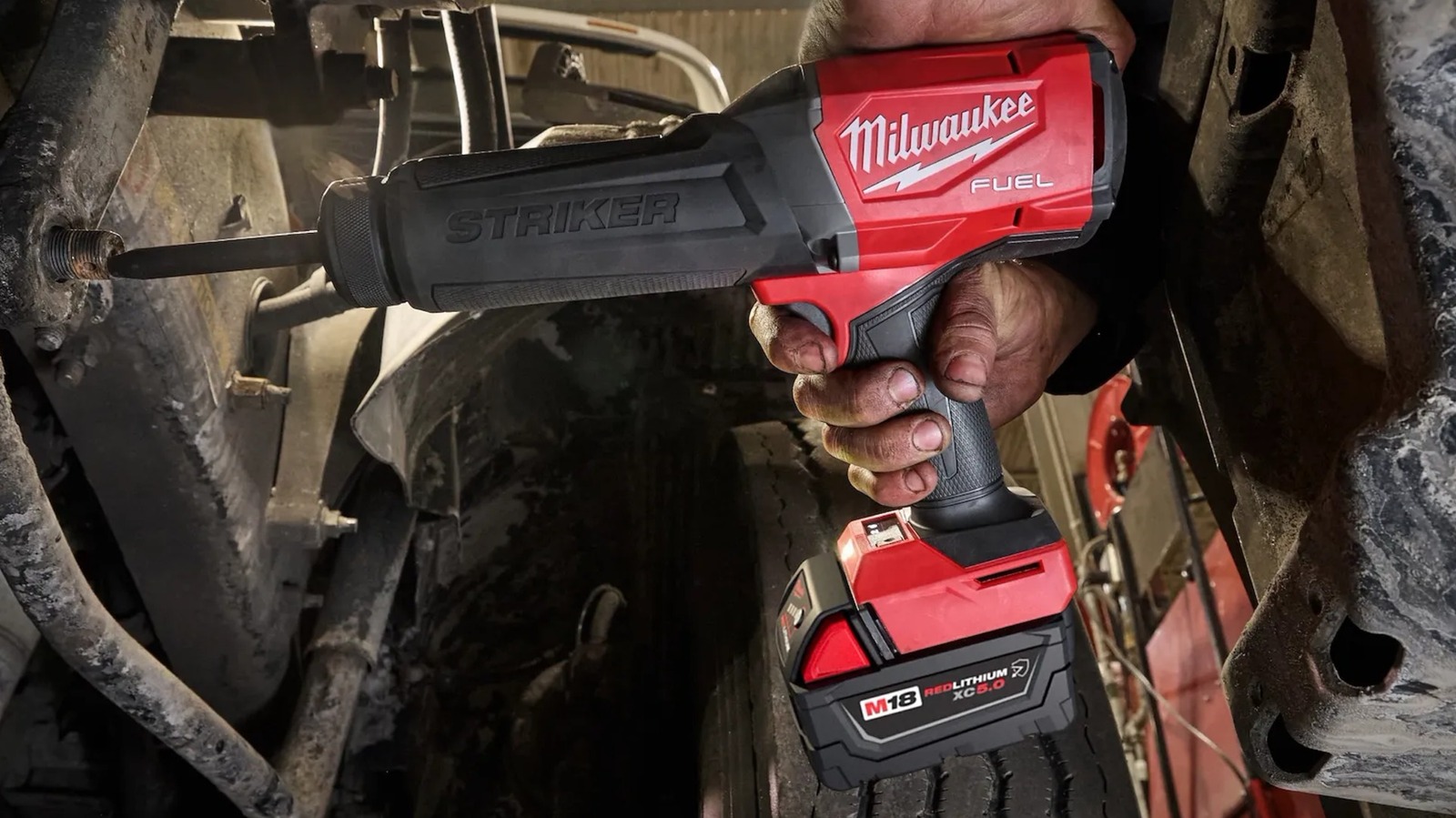
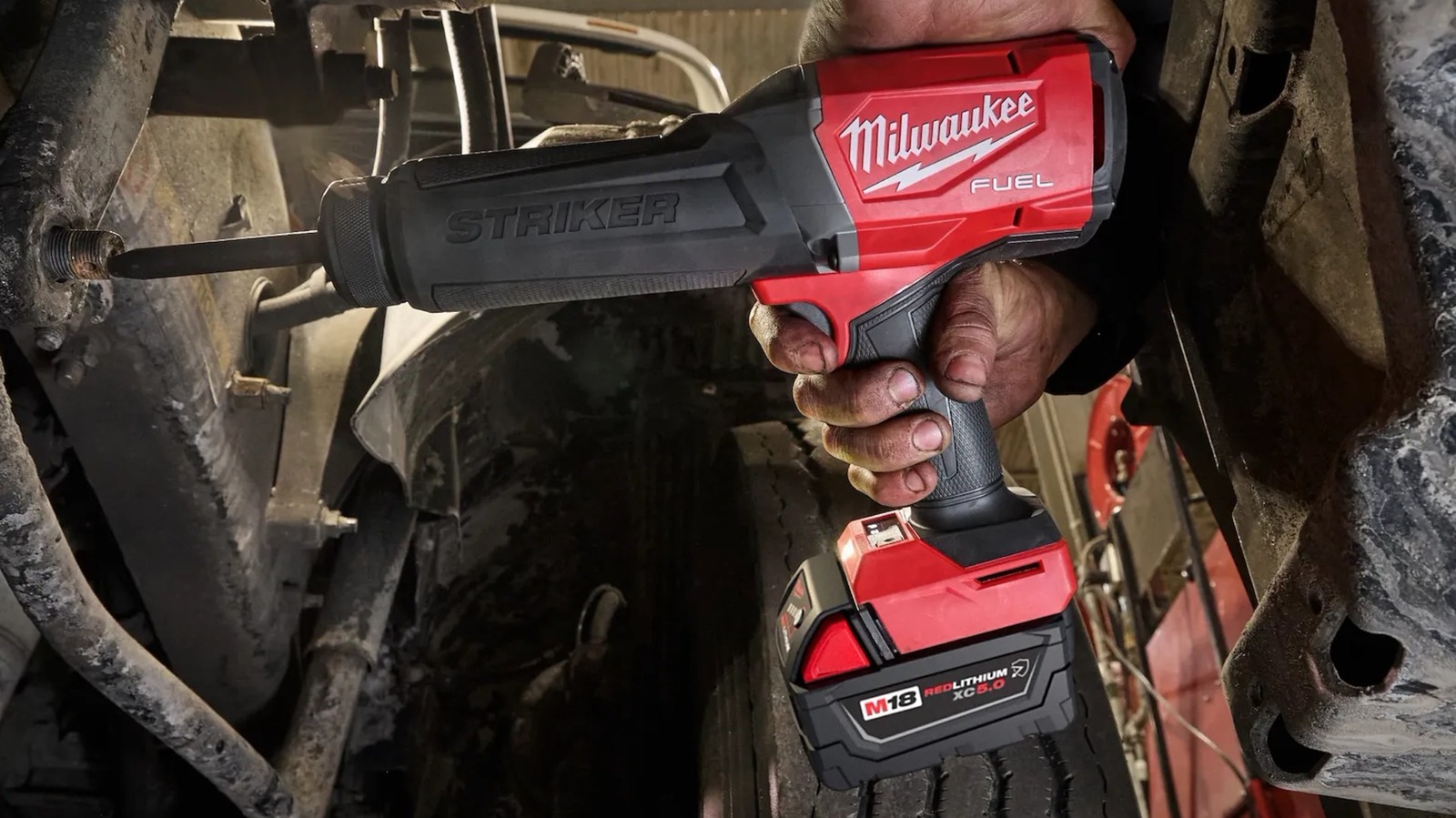
Like most other major power tool brands, Milwaukee has gone almost entirely cordless. While there are still some corded Milwaukee tools out there, most of its modern offerings rely on battery power — even some that feel like they shouldn’t be able to run effectively without wall power. A heavy-duty tool like a hammer chisel, for example, seems like it would need to draw power from the wall. However, Milwaukee has seemingly cracked the code and is releasing the M18 Fuel Striker Hammer Chisel, which it claims is the first cordless hammer chisel ever created.

Advertisement

Unfortunately, getting in on this piece of tool history comes at a hefty cost. The Milwaukee Striker will have a price tag of $599.00, just for the tool itself. On top of that, customers have to pay $49.00 for the protective chisel boot and $129.97 for the five-piece chisel set to get the full experience. That’s a whopping $777.97, which has the potential to increase even more if you don’t already have an M18 battery hanging around to power it. Those aren’t cheap, either; even a smaller unit like the M18 Fuel 2.0 Ah battery will run you around $120.

With such a high price, the Milwaukee Striker is a serious tool investment that only those who really need it are likely to buy. It also needs to deliver on the performance front, given how much Milwaukee is asking for it.

Advertisement

The stats behind the Milwaukee Striker

The Milwaukee cordless hammer drill has a brushless motor that the company says generates 7 joules of striking force, which it claims is equivalent to the 145 PSI pressure delivered by similar pneumatic hammer chisel models. There are also three different speed modes: 0 to 2,500, 0 to 3,000 BPM, and a mode that gradually increases the speed from 0 to 3,000 BPM when users fully depress the trigger. Said trigger is a variable-speed unit to provide the user with additional speed control.

As the M18 Fuel branding indicates, this tool is compatible with the entire Milwaukee M18 battery line. Additionally, it has a battery isolation system to reduce vibration and prevent battery pack movement in use, while Milwaukee’s RedLink Plus technology combats overheating and over-discharging. An LED work light on the front improves visibility on the job. Milwaukee stands behind the tool with its standard three-year warranty. If anything goes wrong and you didn’t do any of the things that immediately void a Milwaukee warranty, the company will repair or replace the tool free of charge.

Milwaukee continues to expand its product catalog, and the Milwaukee Striker manages to take a place of prominence as the first tool of its kind. Time will tell if this world’s first cordless hammer chisel lives up to its promise or ends up as an overpriced novelty that leaves much to be desired.

Advertisement


Source link

Advertisement
Continue Reading

Tech

Can Schools Afford an AI-First Future?

Published

on

Most conversations about generative artificial intelligence in schools eventually zoom in on using AI in the classroom. Before districts redesign teaching and learning around AI, they may need to answer a more fundamental question: Can schools afford an AI-first future?

The question sounds strange because generative AI is often presented as software with free and low cost tiers to individual users. Teachers open a browser window, type a prompt, and receive a response in seconds. The experience feels almost weightless and as simple as a Google search. The infrastructure behind that interaction is much more complicated.

A useful way to think about generative AI is to remember the large desktop computers that once sat in school computer labs. Students interacted with a monitor and keyboard, but much of the important work happened elsewhere inside a massive tower packed with hardware.

Today’s AI systems operate similarly, except the tower has been replaced by massive data centers located hundreds or thousands of miles away — and increasingly in some cases, just a few miles away

Advertisement

Cost of Compute

An explanation is in order. How do chatbots and the hardware behind them work? Think of the chatbot prompt as the remote control. The hardware stored at the data center is the wiring within a television, and the chatbot’s output is what appears on screen as you watch and flick through channels. 

Every student prompt, teacher-generated lesson plan or AI-assisted feedback comment depends on specialized processors, networking infrastructure, electricity, water, and increasingly scarce computing capacity.

Most discussions about AI in education begin after those systems are already in place. However, a growing body of research suggests schools should pay closer attention to the infrastructure itself.

Researchers studying AI adoption in education have largely focused on classroom implementation, AI literacy and governance. Stanford’s review of the evidence base for AI in K-12 education found that adoption continues to outpace rigorous evidence about educational outcomes. At the same time, UNESCO and other organizations have increasingly emphasized governance, transparency and human oversight as schools experiment with AI tools.

Advertisement

A separate body of research examines the infrastructure that makes those tools possible. Urban planners, computer engineers and environmental researchers have begun documenting the physical footprint of artificial intelligence. Their work points to a reality that is largely invisible to educators: generative AI is both software and hardware that requires robust infrastructure to support and scale. 

Research by Xiaofan Liang, PhD on data centers describes how AI expansion increasingly shapes land use, energy systems, local planning decisions and community development. Research by Shaolei Ren, PhD on power and water demand demonstrates that large-scale AI deployment carries substantial resource requirements that extend well beyond the technology sector. Researchers and policymakers are now examining how data center growth affects electricity demand, water consumption, electrical grid capacity, and environmental sustainability. 

According to estimates cited by the Congressional Research Service, U.S. data centers consumed about 176 terawatt-hours of electricity in 2023, roughly 4.4% of all U.S. electricity consumption. Using average residential electricity consumption estimates from the U.S. Energy Information Administration, that’s enough electricity to power nearly 17 million American homes for a year. The map below shows where the United States sits in the world’s energy picture and why AI’s growing appetite for power matters.

Attribution: Hannah Ritchie, Pablo Rosado, and Max Roser (2020) – “Energy Production and Consumption” Published online at OurWorldinData.org. (archived on May 18, 2026).

Advertisement

Traditionally, districts purchase educational technology such as learning management systems, assessment platforms and instructional software through licensing agreements that can often be forecast years into the future. But generative AI operates differently.

Unlike traditional software, which becomes cheaper to distribute as it scales, generative AI continues generating costs each time users engage with the system. Industry observers increasingly point to what’s called “inference costs,” which are the computing resources required to generate responses. These are some of the major costs of LLMs for consumers and one of the central economic challenges facing AI companies.

For schools, how can a district plan for these costs, and what happens when the costs far exceed expectations? Put another way, it’s unclear whether generative AI is financially feasible for schools. 

Many districts are currently experimenting with AI through pilot programs, limited licenses or AI features embedded within existing products. There are few examples of what universal access would actually cost. 

Advertisement

What would it mean for every student and their teachers to have access to generative AI every day? Before we address this question, there is another cost variable to consider: data privacy.

Many educators and parents have expressed concerns about student information flowing into commercial AI systems. One response has been to advocate for private deployments, district-controlled systems or locally hosted models that offer greater oversight and protection.

Those approaches may provide stronger governance, but they also require additional investment. That makes student data privacy a matter of policy and infrastructure. The more control schools want over data, the more likely they are to encounter costs related to storage, cybersecurity, hardware, networking and technical expertise.

Understanding the Generative AI Market

Meanwhile, the broader market continues to evolve.

Advertisement

OpenAI, Anthropic and other major AI companies are still competing to define the commercial landscape. Product offerings change frequently. Pricing models continue to evolve. Infrastructure investments remain enormous.

The result is a technology ecosystem with long-term economics that remains uncertain at precisely the moment schools are being encouraged to integrate it more deeply into teaching and learning. This uncertainty arrives during a challenging financial period for many districts.

Federal ESSER funding has expired. States continue debating educational technology spending priorities. District leaders face growing pressure to justify technology investments while responding to staffing shortages, student mental health concerns, and academic recovery efforts post-COVID-19 school shutdowns.

Against that backdrop, AI presents a different kind of procurement question: Do districts understand the long-term commitments they may be making when AI becomes embedded in curriculum, assessment and daily operations?

Advertisement

There is still one more cost factor to consider: community impact around data centers. Data centers are expanding rapidly across the United States. Local governments and residents are increasingly debating the benefits and tradeoffs associated with new facilities. Questions about energy demand, water consumption, environmental exposure and land use have become common features of public meetings and planning discussions.

For educators, these debates may seem distant from classroom practice. But every discussion about AI in schools ultimately depends on the infrastructure being built in communities across the country.

Schools are currently debating how to integrate AI into teaching and learning while the infrastructure, economics and governance systems required to support large-scale adoption are still taking shape.

Before schools decide how deeply AI belongs in classrooms, they may need a clearer understanding of how much it costs and if it’s feasible to maintain the systems that make an AI-ready classroom possible.

Advertisement

Source link

Continue Reading

Tech

Seattle drinkware maker MiiR sues Tesla for copying its tumbler lid design

Published

on

TL;DR

MiiR is suing Tesla for copying its tumbler lid design and vertical logo. The patent was granted in 2024. MiiR wants an injunction and Tesla’s profits.

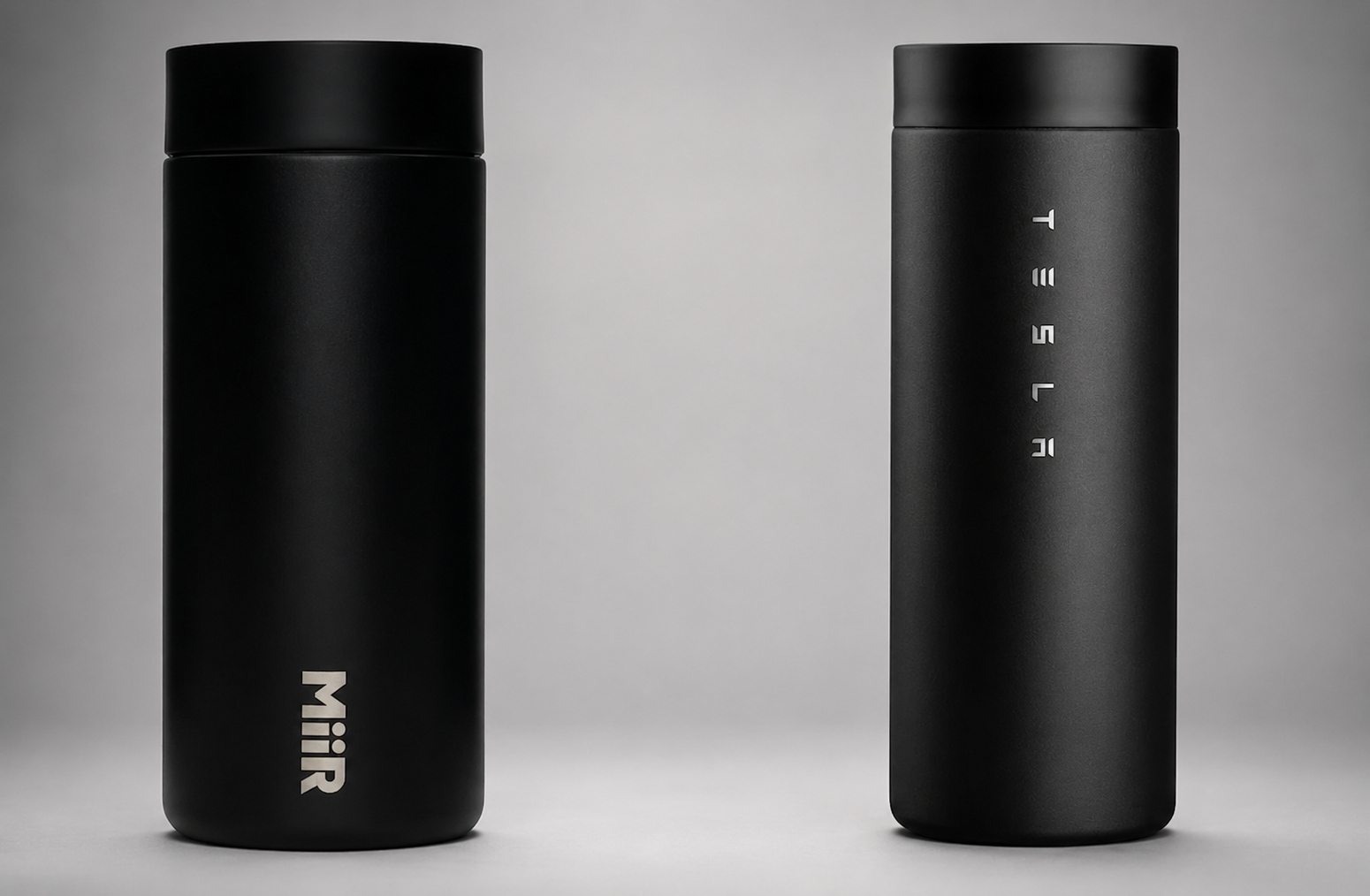
Seattle-based drinkware maker MiiR is suing Tesla for allegedly copying the lid design and overall look of its stainless steel tumbler. The lawsuit, filed May 28 in US District Court in Seattle, alleges Tesla’s On The Road Tumbler infringes a design patent covering MiiR’s tumbler lid and mimics the cylindrical shape, rounded base, and vertical logo placement of its 360 Traveler Tumbler.

MiiR accuses Tesla of choosing to “substantially copy” its design rather than “innovate and develop its own unique style.” The company says Tesla was already aware of MiiR’s products because it had previously purchased or considered purchasing them.

At the centre of the case is MiiR’s lid, described in the patent as a “solid, saucer-shaped circular lid” whose circumference sits perpendicular to the sides of the container. The US Patent and Trademark Office granted the patent in February 2024. MiiR argues an ordinary observer would be deceived into thinking the two lids are the same or substantially similar.

Advertisement

MiiR also takes issue with Tesla’s logo placement. MiiR has used a distinctive vertical orientation of its etched brand name on drinkware since at least 2011. It says Tesla copied that same orientation on its tumbler rather than developing its own visual identity for the product.

The products are similar in size and price. MiiR’s 16-ounce 360 Traveler sells for $34 in eight colours. Tesla’s 14-ounce version is listed at $32 in three colours. Tesla sells the tumbler through its online shop and retail locations as part of a broader lifestyle merchandise line that includes apparel and accessories.

MiiR, founded in 2010, has won design awards from the Industrial Designers Society of America and donates a percentage of revenue from every product to environmental and community causes. It operates a production and warehouse facility in Marysville, Washington, north of Seattle. The company is represented by K&L Gates.

MiiR is seeking a permanent injunction to stop Tesla from selling the tumbler, damages, an accounting of Tesla’s profits from the product, and attorney fees. It is also asking the court to find that Tesla’s infringement was willful, which could result in enhanced damages. A separate claim under the Washington Consumer Protection Act alleges Tesla misled consumers into believing the tumbler was affiliated with or approved by MiiR.

Advertisement

Tesla has not publicly responded to the lawsuit. It is not the first time the company has faced intellectual property disputes over its product designs.

Source link

Advertisement
Continue Reading

Tech

Steam is ending gift cards because scammers were raising too much hell

Published

on

Valve is pulling physical Steam gift cards from retail stores, bringing an end to a program that has been around since 2012. The company confirmed, as spotted via SteamDB, that it will no longer send new stock of Steam gift cards to retailers once current supplies run out.

Digital Steam gift cards are not going away. Valve says users will still be able to buy them directly through Steam, and existing physical cards can still be redeemed whenever users choose. Retail stock, however, is expected to disappear by the end of 2026.

Why Valve is cutting off retail gift cards

Valve says the decision comes after years of scam-prevention efforts. The company says it worked with retailers and law enforcement, added prominent scam warnings, limited cards by currency, restricted availability, and removed cards from sale when unusual activity appeared. Unfortunately, scammers still adapted.

The issue is not limited to Steam. Scammers prefer gift cards because they are fast, widely available, and difficult to reverse once redeemed. A victim can buy one at a normal retail store, read out the code and PIN over the phone, and lose the money without ever handing over the physical card. Unlike a card payment or bank transfer, there is usually no simple chargeback process once the value has been claimed. Since no bank details are involved, it becomes much harder for victims or authorities to follow the money.

Who scammers target, and how the scam works

Gift card scams often target the elderly, isolated people, users who are less familiar with digital payments, and anyone who can be frightened into acting quickly. The setup usually starts with a phone call, email, text, or social media message.

Advertisement

Scammers may pretend to be government officials, tech support workers, debt collectors, utility companies, romantic partners, employers, or relatives in trouble. Although the story changes, the pressure tactic is usually the same. They insist on immediate payment, tell victims to keep the situation secret, and discourage them from ending the call.

Victims are often told exactly which card to buy and where to buy it. Once they share the number and PIN from the back of the card, the money can be drained remotely.

Valve is currently the only major company taking this step with physical gift cards. But if gift card scams keep growing, other companies may also decide that selling them in stores is no longer worth the risk.

Source link

Advertisement
Continue Reading

Tech

Apple got parental controls right but it does not matter

Published

on

Apple’s efforts to expand parental controls are a good start, and legally required soon. Like all safety systems, it’s only as strong as its weakest link.

On Monday, Apple spent 30 minutes of the WWDC 2026 discussing its latest updates to Child Accounts. These updates are designed to make using iPhone, iPad, and Mac safer for users under 18.

But how good are these features, really? Let’s break down what each one is, how it works, and why a lot of it ultimately doesn’t matter.

Communication Safety now blocks violence and gore blocking

Communication Safety was introduced in iOS 15.2 to protect children from viewing or sending images containing nudity. Communication Safety is enabled by default for all accounts under 18.

Advertisement

However, at some point, Apple realized that nudity isn’t the only kind of harmful content minors can be exposed to. That’s why, in iOS, iPadOS, and macOS 27, Messages will also block images and videos depicting gore and violence.

Smartphone screen showing a content warning dialog about potentially graphic media, with a small preview icon, explanatory text, and two large buttons labeled Not Now and Yes, Continue

A new safety warning pops up for violence and gore in iOS 27

The feature works across multiple Apple device features, including Messages, AirDrop, Contact Posters, FaceTime calls and video messages, shared photo albums, and some third-party apps.

When sensitive content is detected, Communication Safety blurs the photo or video before the child can view or send it. It also presents multiple interventions before viewing or sending potentially illicit content.

Advertisement

If a child account is registered to a user under 13 with a Screen Time password enabled, the child will be unable to view sensitive content without the family organizer’s express permission.

Personally, I think this is a fantastic place to start. As I’ve said before, I don’t have kids, but I certainly am not short on friends who do.

I suspect, however, that this feature may be somewhat limited. Many kids don’t communicate primarily through FaceTime or Messages; instead, they use social media platforms like Instagram or catch-all apps like Discord.

Apple does make some of these features available to third-party developers, which I’ll discuss more below, but there’s no guarantee they will choose to integrate them.

Advertisement

Better control over who kids talk to with Communication Limits

Previously, Communication Limits allowed parents to manage when kids could communicate with others via Phone, FaceTime, and Messages. This meant you didn’t need to worry about your kids staying up super late to text their friends on school nights.

Now, in iOS 27, Communications Limits will require parents to approve any new contacts added to a child’s account. This is infinitely better, because now parents know exactly who is in their child’s contact list without needing to actively go through their phone.

Ask to Browse

One of Apple’s more underrated features is Ask to Buy. It requires a family organizer to sign off on purchases made by a child’s account.

Apple introduced the predecessor to Ask to Buy in 2011, a 15-minute time limit between requiring another password entry after purchasing in-app purchases.

Advertisement

Then, in 2014, Apple officially launched Ask to Buy, which gave parents a way to approve or decline purchases via the Family Sharing section in Settings. It would receive a second update in 2022 with iOS 16.2, integrating requests into the Messages app, eliminating the need to check Settings first.

iPad and iPhone side by side; iPad shows a parental permission prompt in Safari, while iPhone displays a child requesting permission to browse a website through Messages

Ask to Browse will require parents to approve websites for children under 13, and optionally for children under 18

Now, Apple is taking it a step further with Ask to Browse, set to debut in iOS 27. Ask To Browse will alert parents via Messages when a child wants to view a new website and allow remote approval.

Honestly, it’s surprising that Apple took this long. The feature should, at the very least, have been introduced in 2022 alongside the Ask to Buy Messages integration.

Advertisement

A better Screen Time experience

This fall, iOS 27 and its iPad and Mac counterparts will get an overhauled Screen Time experience.

Time Allowances will give parents more flexibility over how kids spend time in apps across categories. These categories, for example, might include Entertainment, Games, and Social Media.

iPhone screen showing Screen Time Time Allowances settings, with a slider set to 1 hour and categorized app limits listed below for Entertainment, Games, Social Media, and other activities

Expanded Time Allowance controls make it easier to set up healthy screen time limits

Parents can set an overall time limit, such as two hours, for a child’s screen time. Then they can further customize how much time a child spends in each category, such as one hour on entertainment, half an hour on games, and half an hour on social media.

Advertisement

I like this quite a bit, especially because the interface is large and not intimidating, suggesting that it would be pretty easy to use for nearly anyone. It’s even better because it utilizes expert research to suggest appropriate screen time limits.

Help for parents, too (but only sort of)

One of the other things Apple mentioned was a brand new Child Safety guidance website. The website, which is live now, serves as a quick primer on all the safety features available to parents.

I’m putting extra emphasis on quick, by the way. It really doesn’t explain anything more than, say, any other Apple feature page.

Sure, it explains which features exist and which are coming soon, but that’s about it. There isn’t much information about what is inside the apps, what steps you’ll be expected to take, or why Apple suggests them.

Advertisement

Instead, it tells you that you can enable Find My on the Apple Watch for a child account. It tells you that Screen Time is a thing, sure, but not how to use it.

If I were in charge of the website, and I’m not, I would have, at the very least, linked out to the Apple User Guide or Support pages for each feature. At least then, a parent could know where to find each feature and how to customize it for their child.

Developers can participate, but don’t have to

To Apple’s credit, it’s trying to make it easier for developers to incorporate these safety features into their own apps.

For example, Apple offers the ScreenTime Framework to developers, giving them the tools to help parents supervise how much time their children spend in the app.

Advertisement

PermissionsKit, Apple’s developer framework that powers this process, allows third-party app developers to utilize the same Communication Limits Apple uses in FaceTime and Messages.

I think this could be huge for apps like Discord or Instagram. Whether those developers choose to do so is another matter entirely.

Tablet and smartphone screens showing a messaging app, with contact list on the left and a conversation asking to approve a new person via a security prompt in the center

Communication Limits, used here in Messages, can be integrated into third-party apps via PermissionsKit

The SensitiveContentAnalysis framework helps check for and blur nudity in third-party apps. This feature should probably be utilized by apps like Instagram, Snapchat, and Discord as soon as possible.

Advertisement

Again, these are opt-in features made available to developers. Because there is no requirement to utilize them, certain apps will likely still pose a risk to minors.

It’s a good start, but it’s not there yet

One of the bigger problems with these safety features is that many are opt-in. A safety net only works if it’s being used.

Child Accounts for users under 13 automatically enable additional protections, such as Communication Safety, Ask to Buy, and Sensitive Content Warnings. When it launches in the fall, Ask to Browse will also be enabled for users 12 and under.

In iOS 27, Communication Safety will also be automatically enabled for users aged 13 through 17. This is a solid move, especially knowing that a significant portion of CSAM is actually self-generated or otherwise passed around by minors themselves.

Advertisement

But things like Ask to Browse and Ask to Buy are opt-in for children aged 13 and older. While there is a reasonable expectation that, say, a 17-year-old could deduce whether they should visit a website, I’m not sure the same logic applies to a 13-year-old.

Screen Time limits, which can be used to limit a young person’s exposure to social media, are currently opt-in, regardless of the child’s age. And not only is it opt-in, but it also requires a family organizer to sit down and undergo a not-insubstantial setup process.

That’s a big ask for some people. Doubly so if the parents aren’t aware of these features in the first place, or aren’t entirely sure how they work.

I don’t know how to make this situation better. Apple isn’t responsible for what third-party developers make available, and a parent may not realize the dangers of social media or instant messaging apps.

Advertisement

It’s certainly not illegal for a 13-year-old to have an Instagram account. What they come across on it isn’t Apple’s responsibility; it’s Meta’s.

Perhaps the answer is a more robust setup process for child accounts. Make parents opt out of features like Ask to Browse and Ask to Buy for all minors, rather than opt in.

We won’t know exactly how many of these features work until they’re fully implemented in the public releases. Child accounts under 13 are not eligible to participate in Apple’s beta tests.

Hopefully, though, they are at least another tool parents can utilize. Lord knows they need all the tools they can get.

Advertisement

Parenting isn’t easy, and the omnipresent internet certainly hasn’t made it easier. I suspect this will be an eternally ongoing process, and unfortunately, until we find the gaps in the current system, we may not know what is causing harm.

As always, my advice, and the advice of AppleInsider, is as follows: If you know someone who isn’t particularly tech-savvy, take the time to offer help.

If you know a parent who is getting their kid their first iPhone, offer to show them how to set it up safely. And if you are a parent, I personally suggest having an open, honest dialogue with your kids about how to stay safe online.

Advertisement

Source link

Continue Reading

Tech

Tumbler tussle: Seattle’s MiiR sues Tesla, alleging copied cup design

Published

on

The beverage tumblers from MiiR, left, and Tesla that are being compared in a lawsuit. (MiiR, Tesla Images, GeekWire Composite Image)

MiiR, the Seattle-based maker of drinkware and other accessories, is suing Tesla, alleging the Elon Musk-led company copied its tumbler lid design and appearance.

In a lawsuit filed May 28 in U.S. District Court in Seattle, MiiR alleges Tesla’s On The Road Tumbler infringes on a design patent covering MiiR’s tumbler lid and copies the overall look of its stainless steel 360 Traveler Tumbler, including its cylindrical shape, rounded base, and vertical logo placement.

MiiR accuses Austin-based Tesla of choosing to “substantially copy” its design rather than “innovate and develop its own unique style,” according to a court filing, and says Tesla was aware of MiiR’s products because it had previously purchased or considered purchasing them. (Read the full complaint below.)

MiiR, founded in 2010, has built a portfolio of design patents and trade dress rights around its drinkware products, which have won awards from the Industrial Designers Society of America and other organizations. The company also donates a percentage of revenues from every product it sells to environmental and community causes.

The company previously ran a flagship retail location and coffee shop in Seattle’s Fremont neighborhood next to the Brooks Running headquarters. It now operates a production and warehouse facility north of Seattle in Marysville, Wash.

Advertisement
The tumbler lids for MiiR, left, and Tesla drinkware as seen on the company’s websites. (MiiR, Tesla Images)

While widely known for its line of electric vehicles, Tesla also sells a range of lifestyle merchandise — including apparel, accessories, and drinkware — through its online shop and retail locations.

MiiR’s 16-ounce 360 Traveler Tumbler sells for $34 on its website and comes in eight colors. Tesla’s 14-ounce version is listed for $32 on its site and comes in three colors.

At the heart of the case is MiiR’s tumbler lid, which was issued a patent by the U.S. Patent and Trademark Office in February 2024. The company describes it as a “solid, saucer-shaped circular lid” whose circumference sits perpendicular to the sides of the cylindrical container. MiiR argues its drinkware is “radically different” from what came before, with a “clean linear style” that made its products immediately associated with the brand.

MiiR says Tesla’s tumbler lid copies that patented design, arguing that an ordinary observer would be deceived into thinking the two lids are the same or substantially similar based on their shape, silhouette, and configuration.

The Tesla tumbler lid compared to patent drawings for the MiiR lid, as seen in court documents. (Image via U.S. District Court complaint)

MiiR also takes issue with how Tesla positioned its logo on the tumbler. MiiR says it has used a distinctive vertical placement of its etched brand name on its drinkware since at least 2011, and argues Tesla copied that same orientation on the On The Road Tumbler.

MiiR, which is represented by Seattle law firm K&L Gates, is seeking a permanent injunction to stop Tesla from selling the tumbler, along with damages, an accounting of Tesla’s profits from the product, and attorney fees. The company is also asking the court to find that Tesla’s infringement was willful, which could result in enhanced damages.

Advertisement

The suit also includes a claim under the Washington Consumer Protection Act, alleging Tesla’s conduct misled consumers into believing its tumbler was affiliated with or approved by MiiR.

GeekWire reached out to MiiR and Tesla for comment and we’ll update this story when we hear back.

Read MiiR’s full complaint against Tesla:

MiiR Holdings LLC vs. Tesla Inc. by Kurt Schlosser

Advertisement

Source link

Continue Reading

Trending

Copyright © 2025