Connect with us
DAPA Banner
DAPA Coin
DAPA
COIN PAYMENT ASSET
PRIVACY · BLOCKDAG · HOMOMORPHIC ENCRYPTION · RUST
ElGamal Encrypted MINE DAPA
🚫 GENESIS SOLD OUT
DAPAPAY COMING

Tech

What does EHS look like in today’s working landscape?

Published

on

Amgen’s Helena Mulvihill explores how organisations in 2026 are navigating issues of environment, health and safety in the workplace.

“I often hear EHS (environment, health and safety) described as a broad discipline, but it really comes down to protecting people while supporting safe and reliable operations,” explained Helena Mulvihill, an EHS manager at biotech Amgen. 

She told SiliconRepublic.com, “It brings together environmental compliance, occupational health and safety, and in practice connects every part of the site. That means working closely with operations and support teams, often across multiple departments in the same day.” 

Her work largely involves the implementation of EHS management systems such as risk assessments, incident management, training, auditing and performance metrics; a big part of the role is also communication, making sure expectations are clear and that teams feel supported in applying EHS principles.

Advertisement

She said, “There isn’t really a typical day, which is something I enjoy. While I can plan my week, priorities often shift depending on operational needs. That balance between planned and reactive work keeps things varied and means I need to stay adaptable.”

How important is it to involve everyone in EHS and does that work in practice?

Involving everyone is essential because EHS cannot operate in isolation. It must be embedded across all levels of the organisation, from leadership to the people carrying out day-to-day tasks. I’ve found that the colleagues closest to the work have the clearest understanding of how tasks are actually performed. They’re making real-time decisions, so their input is critical.

While EHS teams provide guidance and structure, it’s important that individuals take ownership of applying those principles in practice. That’s what makes procedures meaningful.

I build that through collaboration and engagement. I spend time in operational areas, listen to feedback and learn about challenges from different perspectives. When people feel involved and see the reasoning behind decisions, EHS becomes part of how work is done rather than something separate.

Advertisement
What does a strong EHS culture feel like when you’re part of it?

You really notice it in the everyday decisions people make. Safety and operational impact are considered as part of the task, rather than something that’s addressed afterwards. It also comes down to trust. People need to feel comfortable raising concerns, asking questions or even stopping work if something doesn’t seem right. That openness is what allows issues to be picked up and addressed early.

When that culture is in place, you see people take responsibility, look out for one another and think about the wider impact of what they’re doing. Over time, that consistency makes a real difference to both safety performance and how effectively the site operates.

How can employees support EHS in their day-to-day roles, even if it’s not their main focus?

Supporting EHS often comes down to simple, consistent behaviours. One approach used at Amgen is ‘Take Five’, which encourages people to pause before starting a task and assess the situation. That might mean reviewing the environment, thinking through the task, identifying potential risks and choosing the safest way to complete the work. It also involves putting the right controls in place and communicating clearly with anyone who could be affected.

I’ve seen how effective that can be in practice. It helps people stay aware of their surroundings and think about the impact of their actions. Even if EHS isn’t their main role, those small actions make a real difference in reducing risk and supporting a safer workplace.

Advertisement
How does the work you do in EHS contribute to wider organisational goals at Amgen?

My role focuses on implementing the EHS management system onsite, which supports wider organisational goals by helping the site operate safely, consistently and in line with regulatory expectations. A key part of the role is anticipating and controlling risks before they lead to incidents, while working closely with different teams to identify and implement improvements effectively. Strengthening the EHS management system, while helping to build an inclusive, high-performing safety culture, supports reliable manufacturing operations and continuous improvement. 

What kind of opportunities are there for people working in this field?

One of the most appealing things about EHS is the range of opportunities it offers. You have the chance to specialise in areas like safety, environmental compliance, industrial hygiene or process safety, depending on where your interests lie. It also gives you exposure to various parts of the business from manufacturing and laboratory environments to supply chain and supporting functions. That helps build a broader understanding of how everything connects, and over time, many people move between these areas to develop a well-rounded skill set. You also get the chance to collaborate with global colleagues and learn from other sites, which brings fresh perspectives and helps you continue developing over time.

What skills are best suited to professionals in this space?

I’ve come to realise that adaptability and patience are core skills because priorities can change quickly and you’re often responding to different situations. Being able to adjust and stay focused is key. Communication is just as important. A large part of the role involves listening, asking questions and understanding how work is conducted in practice so risks can be identified early. It also means explaining things clearly, so expectations are aligned.

Curiosity and initiative are also central. Taking the time to engage with people, understand processes and build relationships makes a real difference. Combined with a willingness to keep learning, these skills help you develop in a field that is constantly evolving.

Advertisement

Don’t miss out on the knowledge you need to succeed. Sign up for the Daily Brief, Silicon Republic’s digest of need-to-know sci-tech news.


Source link

Advertisement
Continue Reading
Click to comment

You must be logged in to post a comment Login

Leave a Reply

Tech

Ask Hackaday: What Ever Happened To The Hero Nerd?

Published

on

Knowing absolutely nothing about you other than the fact that you’re currently reading Hackaday, I can predict with a high degree of certainty that we’re both fond of at least a few of the same movies. That’s not to say they’re necessarily our favorite works of art. Indeed, in some cases they may even be objectively bad films. But the memory of them has stuck with us — and by extension nearly everyone else in the hacker and maker community — for decades.

Even if you don’t remember all the little details, you’ll never forget the names: movies like WarGames, Ghostbusters, Back to the Future, and Short Circuit. Stories that showed smart people using their intellect and a bit of cobbled together hardware to triumph over the bad guys. The tech wasn’t always believable, sometimes it was downright farcical. But they made it seem real, and by the end of the story when they won the day using brains and a soldering iron rather than fists or a gun, the minutia of how it all worked wasn’t really that important anyway.

It’s not a stretch to say that films such as these helped put many of us on a path towards science and technology. For those with an interest in more cerebral pursuits, seeing a scientist or an engineer save the day was hugely influential. How many engineers got their start watching Scotty frantically eke just a bit more power out of the Enterprise?

But as we recently discussed some of these classic movies behind the scenes here at Hackaday, it struck us that all of the best examples we could come up with were now 20, 30, or even 40 years old. That’s not to say there aren’t a few contemporary standouts, but they mostly seem to be biopics or other historical dramatizations which don’t quite scratch the same itch. Even so, none of them appear to have had the cultural impact necessary to stand the test of time in the same way their predecessors have.

So where have all of Hollywood’s heroic nerds gone, and what does it mean for future generations if these niche role models are no longer represented?

Advertisement

Evil Geniuses and Thick Glasses

Before we get lost down memory lane, we should acknowledge that there’s undoubtedly an element of survivorship bias at play here. We naturally identify with the examples that put techie types on a pedestal, and tend to forget about the less flattering portrayals. In truth, it seems that there’s was only a short period of time in which the classic “nerd” characters got promoted from comedic sidekick roles to protagonists. Before that, and arguably after, it’s a different story.

In the early days, the archetype of the “Mad Scientist” was extremely pervasive. From the 1940s up until the 60s or so, you’d be hard pressed to find a drive-in that wasn’t showing the latest hideous creature pieced together by an unscrupulous doctor. But it wasn’t a concept limited to horror and science fiction. After all, MI6 wasn’t in the habit of dispatching James Bond to defeat drooling imbeciles. Whether they knew how to build killer robots or were titans of industry, the smartest person in the room was often seen as the most dangerous.

In a way, that was still less insulting than the alternative. If a scientist wasn’t trying to forcibly transplant somebody’s brain, they probably had a pocket protector, horn-rimmed glasses, unkempt hair, and buck teeth. My sincere apologies to any readers who may currently meet that description. They might not have been the “bad guy” in the traditional sense, and may even have ended up helping out the heroes in their own way, but nobody was looking at the screen and wishing they were the one with the lisp and the lab coat.

A particularly notable case is The Nutty Professor, in which Jerry Lewis portrays the quintessential nerd who uses his knowledge of chemistry to create a confident and suave alter-ego for himself in the style of Jekyll and Hyde. To be fair, the movie ultimately makes a statement about being true to yourself and the importance of what’s on the inside. But ironically, more than 60 years later, the imagery of Lewis hamming it up as a socially awkward intellectual is undeniably the film’s most indelible element.

The Era of Golden Geeks

At the dawn of the 80s, things started to change. You still had the classic bespectacled nerd, but increasingly films started to put greater focus on their skills and abilities. The “geeks vs jocks” trope became very popular, perhaps most famously exemplified by the Revenge of the Nerds franchise which managed to wring four films out of the concept.

Advertisement

Now a new breed of nerd started to emerge in film that was young, charismatic, and handsome. The only thing that identified Matthew Broderick’s character in WarGames as anything other than a normal teenager in 1983 was the fact that he had a computer in his bedroom and knew how to program it. Steve Guttenberg played a heartthrob roboticist in Short Circuit, and they really screwed the curve up for the rest of us when they cast Val Kilmer as a laser prodigy in Real Genius. The nerds even started to find love, and one wonders how many young men spent their evenings furiously flipping switches on the front panel of their IMSAI 8080 in hopes that a breathless Ally Sheedy might appear in their doorway with an urgent mission that needed their unique expertise. I don’t know about anyone else, but I still haven’t given up hope.

Find somebody that looks at you the way Val Kilmer looks at a six-megawatt excimer laser.

Even school-age kids were getting in on the action. In 1985, Explorers featured a trio of youngsters who built their own spacecraft after assembling a circuit board based on a schematic they collectively dreamt about. The same year saw the release of The Goonies, and while only one of the kids was a tech wiz, they were all clearly meant to be somewhat off-center socially.

Of course, the most famous and culturally relevant example of 1980s nerds using their tech skills to save the day is Ghostbusters. Three 30-something scientists not only determine the physical properties of supernatural entities through empirical research, but also design and construct the equipment necessary to combat them. The resulting “Proton Pack”, which brilliantly captured the look and feel of a piece of hardware hastily thrown together from scavenged parts, became what is arguably the most iconic prop in cinema history. Not only has it been lovingly and reverently recreated by hackers and makers countless times since the movie’s release in 1985, but not a Halloween goes by that you won’t see at least one strapped to the back of a child.

What’s a Nerd, Anyway?

There’s little question that the 1980s represent the high-water mark for nerds in media, but it’s not as if somebody flipped a switch and it all ended at once. There are a few standouts from the early 1990s, with Sneakers coming immediately to mind. It not only meets all of the criteria we’ve discussed here, it’s legitimately an excellent film with an incredible cast. If you haven’t already, please go watch Sneakers.

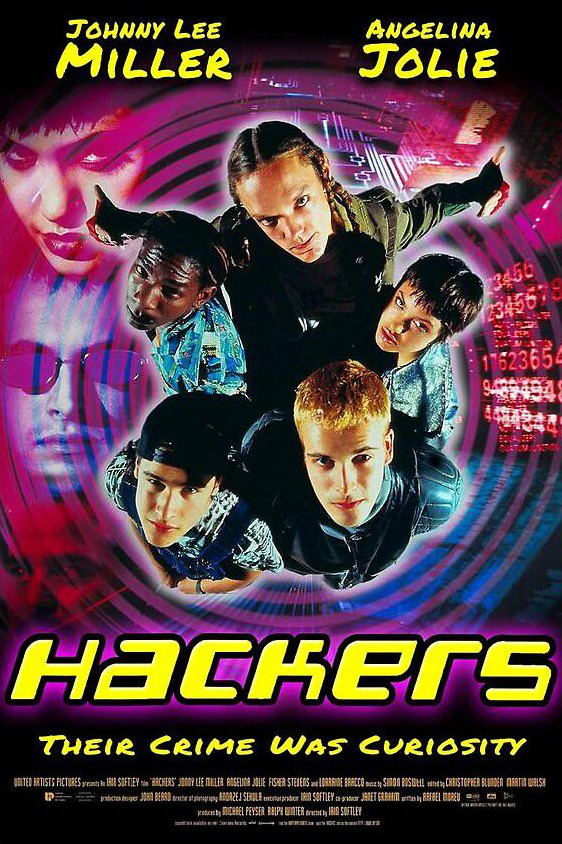
But for all the hate it’s gotten over the years, I’d also give the nod to Hackers. With a reminder that technical accuracy was never one of the criteria, it absolutely ticks the proper boxes when it comes to young, competent people using their technical skills for good. Plus, if Kilmer raised the bar for hot hackers in film, Angelina Jolie sent it into orbit.

Advertisement

Although the aesthetic benefit that Jolie’s character brings to the film is beyond contestation, it’s important to note that Hackers presents her as exceptionally skilled, with abilities that meet or exceed those of her male peers. The fact that those abilities are accepted by every character in the film without question is a testament to how the audience’s expectations were changing at the dawn of the 2000s. The boys in Revenge of the Nerds might have been able to get away with a panty raid in 1984, but by 1995, the girls were popping shells with the best of them.

That said, those evolving standards may be the reason these type of movies seem to be so uncommon today. Given the expectations and the technical proficiency of the average moviegoer in 2026, what exactly would a nerd hero actually look like? The nerd stereotypes from the Nutty Professor era would be all but completely unrecognizable to modern audiences, and while one could argue that the likes of Elon Musk and Jeff Bezos are getting uncomfortably close to real-life Bond villains, that’s taking us in the wrong direction.

The reality is, it will take more than a teenager with a computer to captivate audiences today. Or to put it another way, if everyone in the theater is at least a little bit of a nerd to begin with, it’s much more difficult to create that mystique on the screen without taking the story to fantastical lengths.

Or at least, that’s one possibility. We’d love to hear your thoughts on the past, present, and future of nerds in the media. Will we ever see the likes of Real Genius and WarGames again, or has the world simply moved on? Are nerds normal?

Advertisement

Source link

Continue Reading

Tech

Samsung’s top-end Galaxy XR headset is finally coming to the UK

Published

on

Samsung has finally opened pre-orders for the high-end Galaxy XR headset in the UK ahead of release on 8th July, following its release in the States in October 2025.

The launch marks Samsung’s first major step into mixed reality hardware, with Galaxy XR developed in partnership with Google and Qualcomm. It is also the first device to ship in the UK with Android XR, Google’s new extended reality platform, which means tight integration with familiar Google services as well as compatibility with existing Android apps.

The headset runs on Android XR and centres its feature set on multimodal AI interactions that allow users to navigate virtual and real environments through voice, vision and gesture controls. Samsung says the software experience will feel familiar to existing Galaxy users too, with an interface influenced by One UI.

Google’s suite of services sits at the core of the experience, with Gemini available as an in-headset assistant for contextual queries, Google Maps offering immersive 3D exploration with personalised location suggestions, and YouTube providing access to a library of 180 and 360-degree VR content alongside a spatial tab for 3D-converted videos.

Advertisement
Samsung Galaxy XR headset front-onSamsung Galaxy XR headset front-on
Image Credit (Trusted Reviews)

Advertisement

You can also use apps such as Chrome, Gmail, Netflix and Paramount Plus in floating windows, giving the headset a broader productivity and entertainment pitch than simple VR content consumption.

A Circle to Search feature extends that discovery layer into the physical world, letting users draw a circle in the air around any real-world object in pass-through mode to trigger an instant search result without removing the headset. Gemini integration also goes beyond simple voice assistance, with the ability to ask questions about what you are seeing around you or to use AI-guided help while exploring places in Google Maps.

The Galaxy XR is built around dual 4K Micro-OLED displays, with Samsung saying each panel is roughly postage-stamp-sized. It runs on Qualcomm’s Snapdragon XR2 Plus Gen 2 platform, which the company says delivers around 20% faster CPU performance and roughly 15% stronger GPU performance than the standard XR2 Gen 2 chip. Samsung has also equipped the headset with 16GB of memory and 256GB of storage, while support extends to 4K per eye at up to 90fps.

For mixed reality use, the headset includes two world-facing cameras for full-HD colour passthrough, six hand-tracking cameras and four eye-tracking cameras, allowing for controller-free navigation in many situations.

Advertisement

Samsung Galaxy XR is available for pre-order now on the Samsung website, with general sale beginning on 8th July. It will also be available in select Samsung stores in London and Manchester, as well as the KX store.

Pricing starts at £1,699 for the headset itself, while the optional XR controllers cost £249, the travel case is priced at £249, and the smart keyboard costs £90.

Advertisement

Source link

Advertisement
Continue Reading

Tech

Xbox: A Mess, Moving Back To Exclusivity Deals, & The Layoffs Microsoft Promised Wouldn’t Happen

Published

on

from the chaos dept

There’s something going on over in Microsoft’s Xbox division and it isn’t good. Don’t take my word on that. Apparently the bosses over there are circulating an email to staff talking about how properly fucked everyone is if something doesn’t change soon.

Xbox CEO Asha Sharma and Xbox Game Studios head Matt Booty just sent an email out to all Xbox employees with a clear, yet terrifying message: “this cannot continue.”

Shared publicly via Xbox Wire, the email paints a picture of a broken division, bogged down by the weight of both years of unsuccessful investments and unchecked excess, and battered by the winds of outside economic forces. Sharma, now having been in charge for 100 days, has made it clear that what she is spearheading is indeed going to be a hard reset, complete with hard decisions that will make or break the division and ripple out through the lives of its thousands of employees.

The letter itself attempts to paint a rosy picture at the outset, but then lays out the challenges. The Xbox division has a 3% margin, which is laughably low. The crises in pricing and availability of computer component parts is out of control and likely to get much worse, thanks in no small part to the bumbling buffoons who currently run the country. Complex internal and vendor relationships have led to communication issues and speed-to-market deficiencies throughout the division. Pretty much everyone agrees that there are mass layoffs coming to the Xbox division as a result of the above. And then there’s this:

 We expanded our studio system when we needed a pipeline of content to meet multiple strategies across subscription, streaming, and devices. In the process, we have found ourselves over extended as we executed on changing strategies in a landscape of more readily available content. We are the fortunate stewards of industry-defining franchises that have enormous potential and player demand, but we have not adequately funded them to compete and win. At the same time, as we saw this past weekend at Showcase, a reliable pipeline of first- and third-party exclusives and new IP are critical to our success. We need to reassess the balance between these and our investment priorities for the next 5 years.

There are two, separate things being stated here. Let’s take them in order, because both are important.

Advertisement

The expansion of the studio system being a problem is absolutely hysterical. Xbox does indeed have a hefty portfolio of studios operating under its ownership. More than half of those studios came over to Microsoft in the Zenimax and Activision Blizzard acquisitions. Both acquisitions came with regulatory challenges, the latter being far more involved from the FTC. Both acquisitions also got past regulators in the courts specifically by being positioned as vertical acquisitions rather than horizontal acquisitions, meaning that there wouldn’t be “efficiency layoffs” as a result of bringing them on board, and that the acquisition would lead to lower prices, better games, and faster development for the gaming public.

Here is the Xbox people themselves saying that it isn’t working and that the sprawl of the studio system itself is having a negative effect on game production.

Oh, and about those layoffs that wouldn’t happen? They began happening in January of ’24, leading the FTC to point out to the court that it had been lied to. Then came the Zenimax studio layoffs in May of ’24 and more Xbox layoffs in July of ’25. All while the current, new Xbox bosses complain that they are overextended in terms of their studio sprawl? Cool.

Then there’s the second half of the quote, in which it appears that the Xbox strategy will return once more to a strategy built in part of stupid, dumbass console exclusives to try to entice people to buy Xbox devices. Matt Booty, Xbox Chief Content Officer, elaborated on this recently in an interview.

Advertisement

“[We] want people to have a reason to get on board with Xbox,” Booty said. “We want them to have a reason to buy an Xbox reason to be an Xbox fan. At the same time we want to reward all our players that have been with us for a long time. We know that exclusives are important. That’s why we got Gears coming in 2026, Clockwork in 2027.”

He continued, “We also want to be clear, our big multiplayer games, live service, games are going to continue to be multiplatform. If we’ve promised something to players already, we’re going to honor that promise, right? And then we’re going to really, I think Asha said it, we’re going to make the right decision, not the fast decision.”

The Xbox team has never been able to get its story straight on console exclusives. But when you’re clearly running in third place in a console war that consists of 3 consoles, and you’re not particularly competitive at that, trying to coerce your way into console success by holding games hostage to your platform is a recipe for destroying gaming franchises and still losing the console wars.

There’s a very good reason that the trend over the past decade or so has been one of less exclusivity, not more. Getting games out there, particularly when you’re directly publishing a bunch of games because of that same studio sprawl we talked about earlier, is the most important thing for the bottom line. Xbox should want all the games it publishes itself to be on every platform everywhere, in order to maximize sales. Spending money on third-party exclusives makes little sense, either, particularly when you clearly have a console series in decline.

I imagine it must be a very uncomfortable time to be an Xbox employee. And that’s too bad. I have no doubt there are a ton of good people working there and at their studios. But I’m not going to pretend to be surprised that Xbox overall as a platform is not doing well, considering all the lies, the acquisitions that probably shouldn’t have been allowed, and the chaos in messaging that has come out of that group.

Advertisement

Of course, that discomfort apparently applies directly to some of the top execs who reported directly to Booty, who have started to get out before the situation gets even worse.

Filed Under: asha sharma, exlusives, layoffs, matt booty, xbox

Companies: microsoft

Source link

Advertisement
Continue Reading

Tech

Craving Ice Cream at a Moment’s Notice? The InstantChill Delivers Fresh Scoops Without Any Overnight Prep

Published

on

Instant Pot InstantChill Ice Cream Maker
Cravings rarely check the calendar. Most ice cream makers force a long pause because their bowls need a full night in the freezer before anything can happen. That single requirement turns an impulse into a project and leaves the machine collecting dust more often than it gets used. The Instant Pot InstantChill removes that barrier with a built-in compressor and cold plate that start working the moment the machine turns on.


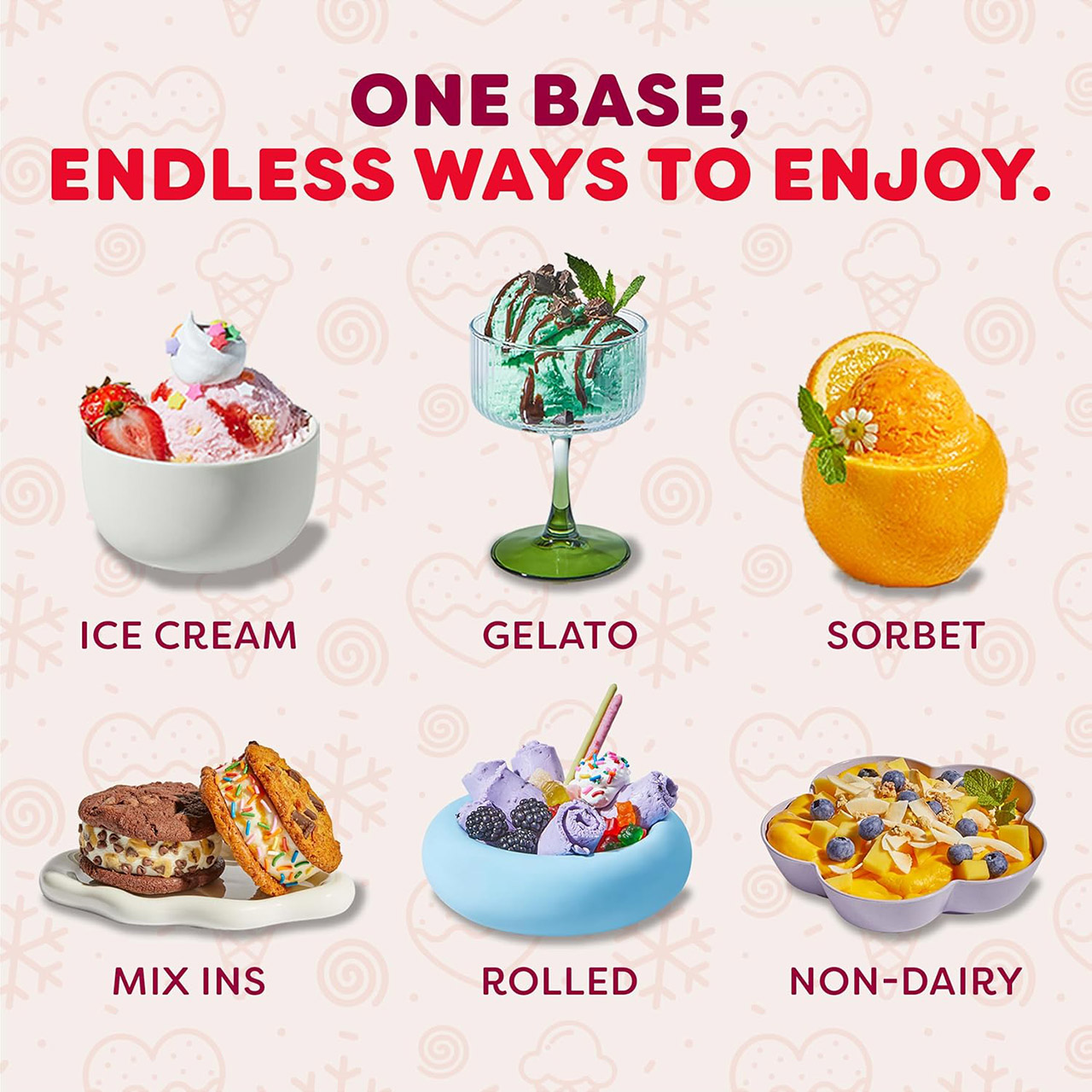
Mix together a simple base of cream, milk, sugar, and flavorings, then pour it into the machine, which will immediately freeze and churn. In most cases, you can get soft serve consistency in around twenty minutes. The benefit is that you don’t need to plan ahead of time, you don’t have to take up a lot of freezer room with a hefty bowl, and you don’t have to wait until the next day. Six one-touch apps cover the usual suspects, with a few extras to try. Ice cream, gelato, and sorbet each have their own setting that produces the desired texture and overflow every time. A non-dairy program automatically handles plant-based milks including coconut cream. The rolled ice cream mode allows you to simply pour the mix directly onto the cool plate, spread it thinly with the provided paddles, and produce those gorgeous swirly ribbons that end up as neat tiny cylinders, making dessert more of a show.


Instant Pot InstantChill Ice Cream Maker with Built‑In Compressor, No Pre‑Freezing, Real Ice Cream in…
  • NO PRE‑FREEZING, ICE CREAM IN MINUTES*: Built-in compressor and cold plate system rapidly freezes and churns ultra-smooth fresh ice cream, gelato…
  • BUILT‑IN COLD PLATE FOR FASTER RESULTS: Churn in the bowl or pour directly onto the cold plate for even faster freezing. Roll, or scoop—your…
  • 6 ONE-TOUCH PROGRAM MODES: (6) precision pre-set programs deliver the ideal balance of speed and timing for perfect results every time. Make Ice…


A smart alarm will sound when it is time to add the mix-ins. Chocolate chips, berries, cookie bits, and almonds are all added at the appropriate moment, resulting in an equally distributed mixture rather than sinking or becoming mushy. That small detail can make a huge difference in texture and saves you a lot of trial and error with other machines.


The finished batch yields roughly two pints, which is ideal for feeding two to four people or experimenting with new flavor combinations without wasting anything. Because the machine does not need to be re-frozen between batches, you may run numerous batches in succession, which is ideal for a long afternoon of creating different flavours without the normal downtime. Some early testers have even reported producing three distinct flavors in a single session without the customary breaks.

Advertisement

Instant Pot InstantChill Ice Cream Maker
The machine is quiet enough to use in an apartment or in the evening while watching a movie in the next room. The control panel is straightforward to operate, with clear icons on the display, and you can see what’s going on via the transparent lid without opening it. It’s also a relatively tiny machine, being approximately eighteen inches long, twelve and a half inches broad, and nine inches tall, and weighing nearly twenty pounds, so it won’t get banged around on your counter.

Instant Pot InstantChill Ice Cream Maker
Cleaning up is also simple because the churning paddle can be washed in the dishwasher, the bowl rinses quickly, and the cold plate only requires a damp towel. You don’t have to disassemble it or get into any weird positions; just a quick clean and it’s done. Some early response has emphasized the creamy results (whether you’re making dairy or non-dairy), the consistent time, and the fact that people want to use it on weeknights rather than just special events.

Source link

Continue Reading

Tech

I Live in Massachusetts, and the Tartan Army Is the Best Thing to Hit My News Feed

Published

on

Up until a few weeks ago, I had never heard of the Tartan Army (despite being one-quarter Scottish and having an actual family tartan of my own!). But now that the World Cup has begun and the Scotland fans known as the Tartan Army have descended on my home state of Massachusetts, they’re inescapable. And that’s not a bad thing. 

Full disclosure: I live in a suburb outside Boston, so I haven’t had any firsthand experiences with any of these kilted soldiers, but I have been following their exploits in the news and on social media, and I’m so glad they’re here. (If I were in a neighboring house to visiting tourists who were playing bagpipes throughout the day, it’s possible I’d feel differently.)

The Tartan Army has been going viral over the past week or so, partly due to their sheer numbers — it’s estimated up to 40,000 Scottish fans have traveled to Massachusetts for the group stage of the tournament — and partly because of the festive atmosphere they’ve brought to places like Fenway Park. Upwards of 10,000 fans attended a Red Sox game last weekend, and on the streets, they’ve marched while wearing their signature kilts and playing the bagpipes. And they’ve done their research as tourists, too. 

Advertisement

They know that the real tourist attractions in Boston are Dunkin’ and the Cop Slide, a slide at the playground on Boston’s City Hall Plaza known for causing injuries because some people accelerate so fast. The slide went viral when a police officer attempted to use the slide and… it didn’t go well. (We can laugh now because he’s OK.) But this is why we now have a video of a man playing the bagpipes while descending the Cop Slide.

I don’t know if anyone thought that would be one of the byproducts of hosting the World Cup, but this World Cup has provided us with so many unexpected and delightful moments. The Cape Verdean goalkeeper, Vozinha, who went from virtual unknown to worldwide legend during his team’s 90-minute match against Spain, is another story that’s sparking joy, along with yet another viral police officer video, this time of Boston cops joyfully dancing with fans after the Cape Verde-Spain match. All these little dopamine hits really add up.

Bostonians and most New Englanders have a reputation for not being warm. It’s a remnant of the Puritanical and stoic values imported by our earliest settlers and that have lingered for centuries — this can make us seem standoffish and aloof at times, when really it’s more an innate reservedness that some of us can’t shake, no matter how hard we try. But the Scots are cracking our tough outer shell, at least temporarily.

A scroll through TikTok will turn up dozens of videos of gratitude, both from the Scots, thanking Boston for the warmth they’ve been shown, and from locals who have been charmed by the exuberant and joyful visitors. Fans and pundits alike keep talking about how the World Cup really has become the great unifier we need right now, and the influx of Scottish tourists in our state feels like it has lifted the local mood. 

Advertisement

But alas, we won’t get to call the Tartan Army ours for long. The team and their fans will stick around for one more match on June 19 against Morocco before traveling down to Miami for their final group-stage match against Brazil on June 24. Sure, Miami has beautiful beaches, and we’ll probably get a viral video of a bagpiper on a jet ski out of this, but we’ll miss the Tartan Army when they’re gone. At least we’ll always have Cop Slide.

Source link

Advertisement
Continue Reading

Tech

CNN Resident Fact Checker Disappeared From Air As Company Waited For Trump Merger Approval

Published

on

from the building-state-TV dept

CNN brass have been waiting to get federal approval of their problematic $111 billion merger with Paramount. As we’ve detailed exhaustively, the high debt load from the CBS/Paramount and Warner Brothers merges is going to result in mass layoffs, higher consumer prices, and sagging quality control at the resulting company. It’s what always happens. It’s not really a debate.

Curiously, while CNN has been waiting for regulatory approval, their resident fact checker, Daniel Dale, appears to have curiously disappeared from the company’s cable TV schedule:

“In late February, Daniel Dale appeared on CNN to dismantle the more than 20 false or misleading claims that he identified during Donald Trump’s State of the Union address…But that appearance, more than three months ago, marked the last time Dale was seen on CNN’s air for his trademark rapid-fire fact checks.”

Shortly after the Status story popped up, Dale just as curiously appeared on air again. Along with a statement of denial from CNN that they’d ever try to court regulatory favoritism by dampening their journalism:

“There is no truth to this. Daniel is a multiplatform reporter whose regular fact checks of the President are an important part of CNN’s political coverage. Like all CNN reporters, his on-air appearances are determined by the news of the day — any suggestion otherwise is false.”

Maybe that’s true. Maybe it’s not. Nothing we’ve seen from major corporate media outlets during Trump’s tenure should indicate they’re deserving of any benefit of the doubt. Last Friday the Trump DOJ approved the deal, falsely claiming it will be great for competition and labor. CNN brass almost certainly already knew approval was coming before they put Dale back on the air.

Advertisement

One thing of note. There’s been a lot of hushed reverential commentary about what’s potentially happening to CBS and CNN. As if these corporate journalism outlets hadn’t been steadily degraded for years by corporate ownership. As if CNN and CBS didn’t go well out of their way to hire more lying on-air authoritarians as a direct act of appeasement to Trumpism even before the mergers.

That said terrible U.S. media can always get worse; and recall the reporting from last fall that Larry Ellison personally met with Trump to carve out which CNN analysts they’d have fired post-acquisition.

Like the CBS Ellison acquisition (where we saw Skydance execs making management decisions before the ink was dry), not yet having a signed deal won’t prevent companies like this — in a country with no working regulators — from getting a running head start on their ambitious censorship plans.

Filed Under: censorship, consolidation, daniel dale, donald trump, fact checking, first amendment, larry ellison, media, mergers, propaganda, state television

Companies: cbs, cnn, paramount

Advertisement

Source link

Continue Reading

Tech

Windows and Linux users: The deadline to update Secure Boot keys is near

Published

on

In 2012, a new form of bootkit was demonstrated. Instead of targeting machines through the BIOS or master boot record, one such bootkit attacked Mac OS X systems by infecting the EFI, a package of firmware that started the boot process. A second very primitive bootkit targeted Windows 8 machines by infecting the​​ UEFI bootkit, the predecessor to the UEFI. Around 2013, a researcher demonstrated a more advanced UEFI bootkit for Windows named Dreamboat.

The first known case of a real-world attack targeting the UEFI came in 2018 with the discovery of malware dubbed LoJax. A repurposed version of legitimate anti-theft software known as LoJack, it was created by the Kremlin-backed hacking group tracked under names including Sednit, Fancy Bear, and APT 28. The malware was installed remotely using malware tools that can read and overwrite parts of the UEFI firmware’s flash memory.

In 2020, researchers unearthed the second known instance of real-world malware attacking the UEFI. Each time an infected device rebooted, its UEFI checked whether a malicious file was present in the Windows startup folder and, if not, installed it. Researchers from Kaspersky, the security provider that discovered the malware, named it “MosaicRegressor.” Researchers have yet to determine how the compromised UEFIs became infected. Since then, a handful of new UEFI bootkits have come to light. They are tracked under names including ESpecter, FinSpy, and MoonBounce.

Necessity is the mother of invention

In response to the more menacing threat of UEFI bootkits, Microsoft worked with device makers to develop Secure Boot, an industry-wide standard that uses cryptographic signatures to ensure that each piece of firmware loaded during startup is trusted by a computer’s manufacturer. Secure Boot is designed to create a chain of trust that prevents attackers from replacing the intended bootup firmware with malicious firmware. If a single link in the startup chain isn’t recognized, Secure Boot will prevent the device from starting.

Advertisement

Source link

Continue Reading

Tech

SanDisk Packs 8 Terabytes Into a PlayStation 5 Drive Built for Owners Who Hate Deleting Games, Costs Nearly $3K

Published

on

SanDisk Optimus GX Pro 850P NVMe SSD PS5 8TB
SanDisk designed its latest storage expansion with a very specific group in mind. PlayStation 5 and PS5 Pro owners who have watched their internal space fill up quickly now have an official way to add serious room without constant file management. The Optimus GX Pro 850P arrives as an 8TB M.2 NVMe drive that carries full Sony licensing and a custom heatsink shaped to drop straight into the console’s expansion slot.


SanDisk Optimus GX Pro 850P NVMe SSD PS5 8TB
Installation is simple because the drive has already been modified to match Sony’s basic criteria for the PS5 family. It’s just the standard M.2 2280 size, connects via the blisteringly fast PCIe 4.0, and has a top-tier cooling to keep the temperature under control, all within the sealed bay. You also don’t have to deal around with any extra parts or changes. Owners simply pop the side panel, slip it in, and the console will automatically configure itself for immediate use on either a conventional PS5 or a PS5 Pro.


PlayStation®5 console – 1TB
  • PlayStation 5 Console – 1TB, includes wireless controller, 1TBSSD, Disc Drive, 2 Horizontal Stand Feet, HDMI cable, AC power cord, USB cable, printed…
  • 1TB of Storage, keep your favorite games ready and waiting for you to jump in and play
  • Ultra-High Speed SSD, maximize you play sessions with near instant load times for installed PS5 games

Performance is also exceptional, with sequential reads reaching a stunning 7,200 megabytes per second and writes coming up close at 6,600 megabytes per second on the 8TB version. Random read/write operations exceed an eye-watering 1.2 million IOPS (input/output operations per second) in both directions, resulting in flawless game streaming and lightning-fast loading, even with enormous open-world titles or numerous installs running.

Capacity is perhaps the main draw here, as the 8TB disk can store approximately 200 games with an average file size of 36 gigabytes each. So, whether you have a large back catalogue or are a completionist who buys every big release, you don’t have to worry about which previous games to retire to make way for something new. Furthermore, the drive works just as well in a Windows desktop with an open M.2 slot if you wish to switch systems later.


SanDisk backs up its claims with a 4,800 TBW (terabytes written) durability rating and a robust 5-year warranty. The homemade heatsink even bears the PlayStation logo and fits inside the console’s height constraints, which is quite useful. So, both power draw and thermal performance can withstand extended gaming sessions inside the PS5 chassis.

Advertisement

Now, the price is currently around $2,960. That includes Sony’s official licensing costs and the price of the high-capacity memory itself, as well as all of the additional labor and testing required for console approval. Similar high-end computer drives are expected to be much cheaper, although they will most likely lack the fancy heatsink and Sony certification.

Source link

Advertisement
Continue Reading

Tech

Databricks says it solved the decades-old data pipeline problem that’s been slowing AI agents

Published

on

For decades, data professionals have struggled with the challenge of managing both operational and analytical databases in a unified approach that doesn’t introduce latency and performance degradation.

Agents made the problem structural. A system that reasons continuously and acts on live data cannot tolerate a pipeline between itself and the information it needs to act on.

At the Data + AI Summit on Tuesday, Databricks announced two products aimed at collapsing that infrastructure. Lakehouse//RT delivers millisecond query latency directly on governed Delta and Iceberg tables, eliminating the dedicated real-time serving tier that enterprises have maintained alongside their lakehouses. LTAP, short for Lake Transactional/Analytical Processing, stores Postgres-native transactional data in Delta and Iceberg format from the point of write, removing the ETL pipelines that have connected operational and analytical systems for decades.

Reynold Xin, co-founder of Databricks, described a simpler data stack as “the holy grail for agents” in a briefing with VentureBeat, arguing that as users vibe code more applications, the agents reasoning analytically on top of those apps need the underlying infrastructure out of the way to move fast. 

Advertisement

“The agents really prefer a much simpler stack, because they can move way faster,” he said.

LTAP bets on storage-layer unification where HTAP tried engine convergence

Many vendors have tried various approaches over the decades to unify analytical and transactional data.

Back in 2014, analyst firm Gartner coined the term HTAP, an acronym that stands for Hybrid Transactional/Analytical Processing as a way to describe  vendors that attempted to unify the two types of databases. Vendors including MemSQL (now known as SingleStore) SAP HANA and Oracle’s MySQL Heatwave are among many HTAP vendors in the market.

LTAP is Databricks’ answer to HTAP, using the Lakebase architecture to unify data at the storage layer rather than the engine level. Lakebase is Databricks’ serverless cloud-based PostgreSQL database service that became generally available in February.

Advertisement

“HTAP to us is kind of more of a failure of the industry rather than a success,” Xin said. 

The LTAP approach goes to the storage layer instead of the query layer. Lakebase previously stored Postgres data in Postgres format on object storage, requiring conversion before the Lakehouse’s analytical engines could use it efficiently. With LTAP, transactional data lands directly in Delta or Iceberg format, sharing the same copy that analytical workloads read. Postgres remains the transactional engine. Spark and the Lakehouse remain the analytical engine.

“The whole point is, hey, you use the best tool for the job at the query engine level, we just make sure underlying storage is a single copy of the data,” Xin said.

The central engineering challenge is latency. Object storage carries response times in the seconds range, far too slow for OLTP workloads that require sub-millisecond performance. Lakebase handles this through a caching layer between Postgres compute instances and object storage. The key design decision is where the column conversion happens: idle CPU capacity in that caching layer performs the row-to-column conversion before data lands in object storage. 

Advertisement

“When you convert data from row to column, it compresses more than 10 times, typically, so now you substantially reduce the network cost of that basic caching layer between that caching layer and the object stores,” Xin said.

Lakehouse//RT delivers millisecond query latency on live lakehouse data without a separate serving tier

Lakehouse//RT is Databricks’ answer to the dedicated real-time serving tier — the separate system enterprises have maintained alongside their lakehouses to handle low-latency queries, at the cost of data copies, split governance and pipeline complexity agents cannot work around. Key capabilities of Lakehouse//RT include:

Reyden compute engine: Built specifically for high-concurrency, low-latency serving, Reyden queries Delta and Iceberg tables directly without moving data out of the lakehouse.

Latency and throughput: Lakehouse//RT delivers sub-100ms latency at 12,000 queries per second, with response times as low as 10ms on smaller datasets and up to 16x better performance than existing dedicated serving stacks.

Advertisement

Governance and data access: Every query runs within Unity Catalog’s governance framework with no separate permissions layer, no data copies and no ingestion pipelines.

VB Transform · July 14–15 · Menlo Park · Agentic context layers

Your agents are only as good as the data they can reach.

Sessions at Transform cover the RAG architectures powering agentic systems at scale — including how enterprises are connecting agents to live genomics, clinical, and enterprise data.

Advertisement

See the full agenda →

Analysts see the agentic framing and open format approach as the real differentiators

The problem both products address is well-documented among enterprise data teams, but analysts draw a distinction between the pain point and the specific claim Databricks is making.

“Enterprises have had HTAP, streaming, cloud warehouses, and operational stores for years,” Stephanie Walter, Practice Leader for AI Stack at HyperFRAME Research, told VentureBeat. “What is different is the agentic AI framing.”

Walter noted that agents need live operational data, historical context, governance, retrieval, and write-back in the same workflow. 

“That is a strong architecture argument, but Lakebase still has to prove it can meet the latency, reliability, and operational maturity CIOs expect,” she said.

Advertisement

Mike Leone, analyst at Moor Insights and Strategy, said the path to genuine differentiation is more specific than the unification concept itself. He also noted that open analytics on a data lake is table stakes now, with many vendors providing some sort of service.

“The less common move is letting the transactional writes land in open formats too, so the operational database isn’t sitting in a proprietary box while only the analytics half is open, “Leone told VentureBeat. 

He added that the open format approach, paired with Lakehouse//RT querying live data directly off the lake, is what gives the architecture a credible case for retiring a whole row of specialized systems.

The technical claim that will face the most scrutiny is also the most central one. “The piece I’d still want their engineers to walk through is how both engines truly share one copy without a quiet conversion step doing the syncing in the middle,” Leone said.

Advertisement

What this means for enterprises

For data engineers evaluating their stack for agentic workloads, the question is no longer which best-of-breed tool to run for each job — it’s whether running separate tools at all is still defensible.

Enterprises that built separate operational databases, real-time serving tiers and analytical lakehouses could previously treat the gaps between them as a maintenance burden. Agents surface those gaps as an operational risk: a system reasoning across governance boundaries will find the inconsistencies faster than any human team.

The market is moving away from specialized serving layers faster than most vendor roadmaps anticipated. According to VB Pulse Q1 2026, a three-wave longitudinal survey of 100-plus employee organizations, hybrid retrieval intent tripled from 10.3% to 33.3% across the quarter while standalone vector database adoption declined across every tracked vendor. The same consolidation logic is now hitting the real-time serving tier.

The traditional approach — best-of-breed tools for each workload type, pipelines between them — was built for human-speed analytical consumption. Agent workloads don’t tolerate that architecture.

Advertisement

“The pain they’re pointing at, all the copying and syncing between operational and analytical systems, is real and expensive, and anyone running this at scale feels it,” Leone said.

Source link

Continue Reading

Tech

Collecting robot training data is dirty, unglamorous work. Some AI labs are already paying XDOF to do it

Published

on

Two weeks ago, OpenAI said it would relaunch the robotics program it shuttered in 2021 — the latest signal that the biggest AI labs are racing to teach machines to operate in the physical world. But building capable robots requires something the AI industry doesn’t yet have, which is the training data to match that used for language models.

That gap is creating a new kind of infrastructure business. Unlike LLMs that were trained on a vast sea of publicly available text, robots need data that captures physical interaction, and that kind of data barely exists. YouTube videos and footage captured by gig workers are low-fidelity and hard to reconcile with the physical world.

XDOF (pronounced “ecks-doff”), emerging from stealth today, is betting that the next great bottleneck in AI isn’t models or chips, but the data feedback loop needed to teach robots how to interact with the physical world.

The startup aims to build the data pipelines, collection tools, and annotation systems that frontier labs and robotics companies can’t easily build themselves — and has raised $70 million from Thrive Capital, Spark Capital, a16z, Lux, and WndrCo to do it. Co-founder and CEO Philippe Wu says XDOF, which has about 60 employees, is already working with 20 customers including several frontier AI labs, but cannot name them.

Advertisement

“All of the top labs are trying to pursue robotics,” Wu said. “We’ve already seen some of the downfalls of falling a little bit behind in the language model race … you don’t want to be in this type of situation where you pursue this technology too late, and everyone is in this boat where physical AI is the next frontier.”

Wu ran into this problem himself as a PhD student at UC Berkeley. His focus was on enabling robots to learn skills from large-scale data sets. There was just one problem.

“We didn’t have large-scale data to work with,” he told TechCrunch. “There was this chicken-and-egg problem — we first needed to actually collect data before we could even ask how to train a foundation model for robotics.”

Wu and his future XDOF co-founder and CTO, Fred Shentu, worked on a project called GELLO, a low-cost teleoperation system that lets a human operator control a robotic arm to generate training data. “It ended up becoming a very influential paper in robotics, because a lot of people had similar needs and bottlenecks, and many started leveraging this type of device for data collection,” Wu said.

Advertisement

Spotting the opportunity, Wu, Shentu, and third co-founder and Chief Operating Officer Nemo Jin launched XDOF in October 2024 to provide a data ecosystem for companies pursuing robotics models. Mindful that data provision alone can be a dead-end business, the company is also focused on data cleaning, tooling, and annotation — creating a self-reinforcing feedback loop for robot trainers.

As a starting point, the company is partnering with UC Berkeley’s AI Research lab to release what it believes is the largest collection of high-quality robot training data ever assembled, dubbed ABC. It includes 130,000 trajectories of robot manipulation data, 300 hours of simulation, and 100 hours of evaluations. That kind of scaled-up pre-training data has never been available to academia before.

“We’ve seen in language, image generation, and other fields, that when models and data are released, the community achieves things that you wouldn’t necessarily have expected,” David McAllister, a Berkeley PhD student who helped organize the release, told TechCrunch.

The team has already used the data to train robots on benchmark tasks like folding T-shirts and flattening boxes, or loading AirPods into their cases.

Advertisement

Unlimited degrees of freedom

The company plans to work across three tiers of a data pyramid. The most valuable tier is teleoperation data collected on the actual robot being deployed; next comes teleoperated robots gathering more general data, as with GELLO; and finally “egocentric” data gathered by humans performing everyday tasks, for which XDOF plans to build its own wearable sensors.

“Your camera choice is going to affect the quality of your data — which is going to affect how your hand-tracking algorithm performs,” Wu said. “If you don’t design the hardware well from the start, the data you collect might have very specific problems that you didn’t anticipate.”

The company plans to hire and train armies of teleoperators and egocentric data operators around the world — a labor-intensive model that raises an obvious question: Why aren’t the major labs doing this data production work themselves?

“You need a warehouse of hundreds of thousands of square feet with hundreds of robots,” Wu said. “You need to maintain these robots, calibrate their physical parameters, and properly train operators.”

Advertisement

It’s a build-out that requires focus, capital, and operational scale that most AI labs would rather outsource — which is precisely the market XDOF is betting on.

The name XDOF is a play on the robotics term “degrees of freedom,” which describes the number of independent motions a robot can perform. Your arm, from shoulder to wrist, has seven degrees of freedom. Humanoid robotics company Figure.AI’s latest robot has 30. The X in the company’s name captures its ambition: “Arbitrary degrees of freedom, unlimited degrees of freedom,” Wu says.

When you purchase through links in our articles, we may earn a small commission. This doesn’t affect our editorial independence.

Source link

Advertisement
Continue Reading

Trending

Copyright © 2025