Connect with us
DAPA Banner
DAPA Coin
DAPA
COIN PAYMENT ASSET
PRIVACY · BLOCKDAG · HOMOMORPHIC ENCRYPTION · RUST
ElGamal Encrypted MINE DAPA
🚫 GENESIS SOLD OUT
DAPAPAY COMING

Tech

Mistral AI launches Vibe, expands into industrial AI and announces data center push to challenge OpenAI

Published

on

Mistral AI used its inaugural conference on Wednesday to announce a sweeping expansion into industrial manufacturing, a new inference data center south of Paris, and a rebranding of its consumer-facing assistant — moves that collectively signal the three-year-old French startup’s ambition to become the enterprise AI provider of record for companies that refuse to hand their most sensitive data to American hyperscalers.

At the AI NOW Summit, held at a venue in central Paris, co-founder and CEO Arthur Mensch took the stage alongside CTO Timothée Lacroix and Chief Scientist Guillaume Lample to lay out a strategy that stretches from bare-metal GPU clusters to physics simulations for aircraft wings. The company disclosed that it now employs 1,000 people and is targeting €1 billion ($1.17B USD) in revenue for 2026 — a figure that, if achieved, would be an extraordinary growth trajectory for a company that began with 15 employees collaborating with its first customer, BNP Paribas, in 2023.

“We have two convictions at Mistral,” Mensch told the audience. “The first is that in order to deploy AI in the enterprise, you actually need, as an AI provider, to own the full stack.” He described Mistral’s business as fundamentally about “transforming electrons into tokens and intelligence,” arguing that physical infrastructure control matters as much as model quality.

The announcements come at a pivotal moment for Mistral and for the broader European AI ecosystem. The company has raised at least $3.9 billion across nine funding rounds, according to Clay’s funding tracker, including a massive €1.7 billion Series C led by Dutch semiconductor equipment maker ASML in September 2025 at an €11.7 billion valuation, and an $830 million debt financing round in March 2026 from a consortium of seven banks to fund data center construction. Mistral now finds itself in a peculiar competitive position: too large to be dismissed as a research lab, but still dwarfed by the resources of OpenAI, Google DeepMind, and Anthropic.

Advertisement

Its answer, articulated across nearly an hour of presentations Wednesday, is vertical depth — going industry by industry, workflow by workflow, and building the infrastructure to keep everything on premises.

Why Mistral is betting that physics AI will reshape how Airbus and BMW design products

The centerpiece announcement was Mistral for Industrial Engineering, a fully integrated AI stack that combines Mistral’s large language models with physics simulation capabilities acquired through its purchase of Emmi AI, completed earlier in May 2026. The platform targets the aerospace, automotive, and semiconductor industries with tools for accelerating product design, validating simulations, and optimizing production.

The launch came with headline partnerships. Mistral announced it is working with Airbus across its commercial aircraft, helicopter, defense, and space divisions, implementing AI from initial design through to on-board capabilities. For BMW Group, Mistral is serving as a central partner for what the automaker calls its “Large Industry Model” initiative, focused on multimodal reasoning models for crash simulation and other complex engineering tasks. ASML, already Mistral’s largest shareholder, is also an early adopter.

Mensch framed the industrial push as addressing a fundamental gap in how AI is currently deployed. “AI is great today at automating tasks for knowledge workers and for people that are doing software engineering,” he told the summit audience. “But once you move to all the kind of engineers, well, they are underserved.”

Advertisement

The reason, he explained, is structural. Simulating the behavior of a wing or a factory process requires compute-intensive physics solvers that can take hours or weeks per design variant. Traditional simulation creates a bottleneck that makes AI-assisted iteration impractical. 

Mistral’s answer is what it calls “physics AI” — data-driven models trained on solver outputs that can predict physical behavior in seconds rather than hours, running on a single GPU. As Mistral’s own blog post on the technology acknowledges, physics AI is “not a replacement for first-principles solvers in every regime” — it is a throughput accelerator for the majority of design-loop iterations, with traditional solvers reserved for verification and edge cases.

“We now have both the language intelligence and the physical intelligence models, and by combining them together we are building delegation loops that allow us to create better tools, that allow us to create better objects that actually have an impact on the physical world,” Mensch said.

The ASML partnership offered a concrete illustration. In a video testimonial shown at the summit, an ASML representative described how the company’s lithography machines run around the clock at customer fabrication plants, and field service engineers need to diagnose issues as rapidly as possible. By combining ASML’s internal engineering expertise with Mistral’s models, “we were able to develop a solution that’s 120 times faster with a similar accuracy as we have today,” the representative said. Another ASML speaker described AI agents acting as “an always-on code reviewer” to catch software defects before they reach customers.

Advertisement

Inside Mistral’s €4 billion infrastructure gamble to build Europe’s most powerful AI data centers

Mistral’s full-stack ambitions extend all the way down to the physical layer. Launched in June 2025, Mistral Compute is a €4 billion ($4.66B USD) investment in data centers in France and Sweden, with a stated roadmap of 200 MW of capacity by 2027 and 1 GW by 2030.

Lacroix described the company’s existing 40 MW facility at Bruyères-le-Châtel, south of Paris, which was built in collaboration with Eclarion and has been training models since early 2026. “It’s been very interesting to see how we can transfer rigor, which is one of our company values, into down to the hardware layer,” he said, describing the process of “fixing compute trays and fixing fibers, allowing us to reach the very best speeds possible on that hardware for training.”

On Wednesday, Mistral announced a new 10 MW facility at Les Ulis in the Essonne department, also south of Paris, dedicated to inference operations and scheduled to open in Q3 2026. Lacroix also referenced a site in Borlänge, Sweden, planned for development through 2027, which will host NVIDIA’s next-generation Vera Rubin GPUs. “One of the benefits for us of owning the hardware layer is also that it lets us be at the very bleeding edge of what infrastructure provides,” he told the audience.

The infrastructure push is funded in part by the $830 million debt financing round announced in March 2026, which Clay’s funding tracker attributes to a consortium of seven banks: Bpifrance, BNP Paribas, Crédit Agricole CIB, HSBC, La Banque Postale, MUFG, and Natixis CIB. And this infrastructure ownership is not merely a hedge against GPU scarcity — it is central to Mistral’s pitch to security-conscious enterprise and government customers. The company’s February 2026 acquisition of serverless platform Koyeb has been integrated into Mistral Studio to support both hosted and on-premises deployments, giving customers a choice between running inference on Mistral’s hardware or their own.

Advertisement

“More and more, the compute world has been getting supply constrained,” Lacroix told the audience. “One of the reasons we’ve been doing all of this and developing all of this data center capacity is to secure compute capacity not only for ourselves but also for our customers.”

Le Chat is dead, long live Vibe: How Mistral’s new agent platform takes aim at enterprise productivity

In a consumer-facing rebrand with significant enterprise implications, Mistral announced that Le Chat — its conversational AI assistant launched in February 2024 — is being renamed Vibe and reimagined as a unified agent platform for enterprise productivity and software development.

“We are transitioning Le Chat to the Vibe family,” Lacroix told the audience, explaining that the evolution was driven by the growing power of agentic models, particularly the new Mistral Medium 3.5. As the team used Vibe’s coding CLI internally with increasingly complex tasks, “we realized that this really didn’t need to be bound to the CLI, it didn’t need to be limited to code, and we could do a lot more with it,” he said.

Vibe encompasses two primary modes. Vibe for Work is a web and mobile agent that connects to enterprise tools — Google Workspace, Outlook, SharePoint, Slack, GitHub — to perform multi-step tasks such as summarizing emails, analyzing spreadsheets, drafting reports, and scheduling recurring workflows. Vibe for Code is a coding agent available through a web interface, a new VS Code extension, and the existing CLI, capable of building features, fixing bugs, refactoring code, and shipping pull requests. Critically, the same underlying agent powers both modes. “When you access it through our web app or through the CLI, you have access to the same connections, the same tools, the same understanding of who you are, what you do, and what you’re trying to achieve,” Lacroix said.

Advertisement

Pricing starts at free for basic use, $14.99 per month for Pro, $24.99 per user per month for Teams, and custom pricing for Enterprise deployments. Alongside Vibe, Mistral also launched Search Toolkit, an open-source framework for building production search pipelines already in use by shipping giant CMA CGM, which uses it alongside Voxtral to process audio from multiple data sources and return alerts within 15 seconds.

Mistral’s model strategy signals a new phase: fewer products, more capabilities per model

Chief Scientist Guillaume Lample used his portion of the keynote to describe a philosophical shift in Mistral’s model strategy: consolidation of capabilities into fewer, more versatile models rather than maintaining separate specialized products.

Mistral Medium 3.5, the company’s current flagship, absorbs capabilities that previously required distinct models. Pixtral (image processing), Magistrale (reasoning), and DevStral (coding) have all been deprecated as standalone products, with their capabilities folded natively into Medium 3.5. “Now all our models are natively multimodal,” Lample said. “We no longer have Magistrale. This model is deprecated, because all our models will natively be doing reasoning.”

The company is also working on Mistral Large 4, which Lample said would arrive “in a couple of months at most, during the summer,” with expanded capabilities in industrial applications such as fluid dynamics, computational chemistry, computer-aided design, and cybersecurity. On the smaller end of the spectrum, Lample highlighted Mr. Lossier, a 1-billion-parameter OCR model that can process thousands of pages per minute on a single GPU, and the Voxtral speech model family, which has expanded from automatic speech recognition to include text-to-speech with voice cloning. A “duplex” model for real-time conversational speech is planned for release within months.

Advertisement

Lample also made the case for open-weight models becoming more — not less — important in the agentic era. “Today we are building these agentic workflows, these models are running in the background, they are doing a lot of actions, a lot of tool calls, so they are extremely token-hungry, much more than before,” he said. “What we are seeing today is actually a comeback of this small model and the efficient model.” Upcoming models will be trained on more than 200 languages, a multilingual strength now powering a partnership with Amazon to improve non-English interactions on Alexa+.

How Mistral’s enterprise playbook stacks up against OpenAI and Anthropic

Mistral’s positioning stands in sharp contrast to the strategies of its most prominent American rivals. While OpenAI and Anthropic have each attracted hundreds of millions of consumer users and derive significant revenue from subscription products, Mistral has leaned almost entirely into enterprise and government deployments. As TechCrunch reported in March when Mistral announced its Forge customization platform at Nvidia GTC, CEO Mensch has described the company as being “on track to surpass $1 billion in annual recurring revenue” — a figure driven largely by corporate clients.

The Forge platform, which lets enterprises train custom models on their own data rather than simply fine-tuning or applying retrieval-augmented generation to existing models, represents the foundation on which the company’s industry-specific solutions are built. As Mistral’s head of product, Elisa Salamanca, told TechCrunch, Forge “lets enterprises and governments customize AI models for their specific needs.” Early partners include Ericsson, the European Space Agency, Italian consulting company Reply, and Singapore’s DSO and HTX, alongside ASML.

Mistral has also built an expanding network of systems integration partnerships to drive enterprise adoption. In February 2026, Accenture and Mistral announced a multi-year strategic collaboration, with Accenture itself becoming a Mistral customer. Mauro Macchi, Accenture’s CEO for Europe, Middle East, and Africa, said at the time that the partnership brings together “sovereign models and the capability to scale technology across industries, geographies and business functions.”

Advertisement

The BNP Paribas relationship offers the most detailed public case study. In a video testimonial at the summit, a BNP Paribas representative described deploying Mistral’s models on-premises to satisfy strict security requirements, developing AI agents for KYC processes that reduced incomplete files from 80% to 10% and compressed processing time from weeks to days. The bank’s LLM platform at its Corporate and Institutional Banking division has now rolled out to 65,000 users. Mensch noted the significance: “We started to collaborate in 2023 where we were 15 people, so that was, I think, really a leap of faith at the time.”

The industrial vertical is also being extended to government clients. Mistral disclosed that it is working with France, Luxembourg, Singapore, Morocco, Greece, and Slovakia to build citizen-facing AI services — from deploying agents that help job-seekers through France Travail to building models that understand Moroccan Darija and Amazigh languages. “We think that AI needs to be specialized and understand structural nuances,” Mensch told the audience. “It needs to speak languages as good as it speaks English.”

The road ahead for Europe’s most ambitious AI company

For Mistral, Wednesday’s announcements amount to a declaration that the company intends to compete not by matching American AI giants on any single dimension, but by assembling capabilities none of them are willing or able to offer in combination: open-weight models, owned infrastructure, on-premises deployment, physics simulation, and deep vertical customization — all under a single roof.

The strategy demands execution on multiple fronts simultaneously, each requiring enormous capital and specialized talent. The competition is formidable and accelerating. OpenAI has been rapidly expanding its enterprise offerings. Anthropic, backed by billions from Amazon, is building its own corporate AI practice. Google, Microsoft, and Amazon all offer AI platforms deeply integrated with cloud infrastructure that most enterprises already use.

Advertisement

But Mistral is wagering that the world’s most consequential AI deployments — the ones governing how aircraft get designed, how banks process compliance, how governments interact with citizens — will ultimately go to providers that offer sovereignty over data, models, and compute. “AI is too strategic to be left in the hands of a few,” Mensch said, echoing the conviction he described from Mistral’s founding three years ago.

Three years in, the company that started as a Paris research lab with a handful of employees now trains models in its own data centers, simulates physics for the manufacturers that build the world’s planes and cars, and is rewriting its assistant into an agent that can file your pull requests and summarize your inbox in the same conversation. Whether that sprawling ambition coheres into a durable business or stretches Mistral too thin is the €11.7 billion ($13.6B USD)  question. The 1,000 people now working there are betting that in enterprise AI, owning the full stack is not a liability — it is the product.

Source link

Advertisement
Continue Reading
Click to comment

You must be logged in to post a comment Login

Leave a Reply

Tech

Nintendo quietly launched a new game that’s just like WarioWare, and you can try it for free

Published

on


  • Nintendo has released a new mobile game
  • It’s called Pictonico! and it’s a minigame collection similar to the WarioWare titles
  • The game is free to start and available for both iOS and Android devices

Nintendo has launched a new mobile game out of the blue, and it’s pretty similar to the WarioWare series.

The game is called Pictonico! and it’s a minigame collection that uses photos of people from your phone’s gallery in up to 80 rather amusing minigames. These range from chomping on dragging on someone’s mouth to force them to devour fruit to plucking their nose hairs.

Source link

Continue Reading

Tech

iPhone leaks, Apple Vision Pro gaming, and the Ferrari Luce

Published

on

You thought the Apple Vision Pro was expensive, but now you could choose between buying 180 of the headset, or one Ferrari Luce designed by Jony Ive. Or you could just enjoy the good, the bad, and the sometimes silly iPhone rumors that came out this week, on the AppleInsider Podcast.

It is the run-up to WWDC and it’s also not really that long until the launch of the iPhone 18 range, so as always we’re now bombarded with rumors and leaks. Some of them are actually likely, though, and some of them look rather good.

Here’s how to sort out the good leaks from the poor or even the downright silly. Plus forget leaks, there’s news for gamers on Apple Vision Pro and it’s something you can play right now.

That’s not something you can say for the Jony Ive-designed Ferrari Luce car. It’s the talk of the week, for its design, for how the Pope was shown one, and for its price.

Advertisement

But even if you happen to have a spare $640,000, you can’t buy Ferrari’s first-ever electric vehicle yet. It will be out sometime by the end of the year, so you’ll have to wait a while before you can go from 0 to speeding ticket in 2 seconds.

BONUS: Subscribe via Patreon or Apple Podcasts to hear AppleInsider+, the extended edition. This time, we’re a pixel away from WWDC, so this is what we’re crossing our fingers for with iOS 27, iPadOS 27, and watchOS 27.

More AppleInsider podcasts

Tune in to our Smart Home Insider podcast covering the latest news, products, apps, and everything HomeKit related. Subscribe in Apple Podcasts, Overcast, or just search for HomeKit Insider wherever you get your podcasts.

Podcast artwork from Basic Apple Guy. Download the free wallpaper pack here.

Advertisement

Those interested in sponsoring the show can reach out to us at: [email protected].

Subscribe to AppleInsider on:

Keep up with everything Apple in the weekly AppleInsider Podcast. Just say, “Hey, Siri,” to your HomePod mini and ask for these podcasts, and our latest HomeKit Insider episode too. If you want an ad-free main AppleInsider Podcast experience, you can support the AppleInsider podcast by subscribing for $5 per month through Apple’s Podcasts app, or via Patreon if you prefer any other podcast player.

Advertisement

Source link

Continue Reading

Tech

The best Mac-friendly monitors in Samsung’s lineup fix Apple flaws

Published

on

A new wave of Samsung monitors is targeting Mac users with OLED panels, Thunderbolt 5 connectivity, and workstation features that Apple still doesn’t offer in its own display lineup.

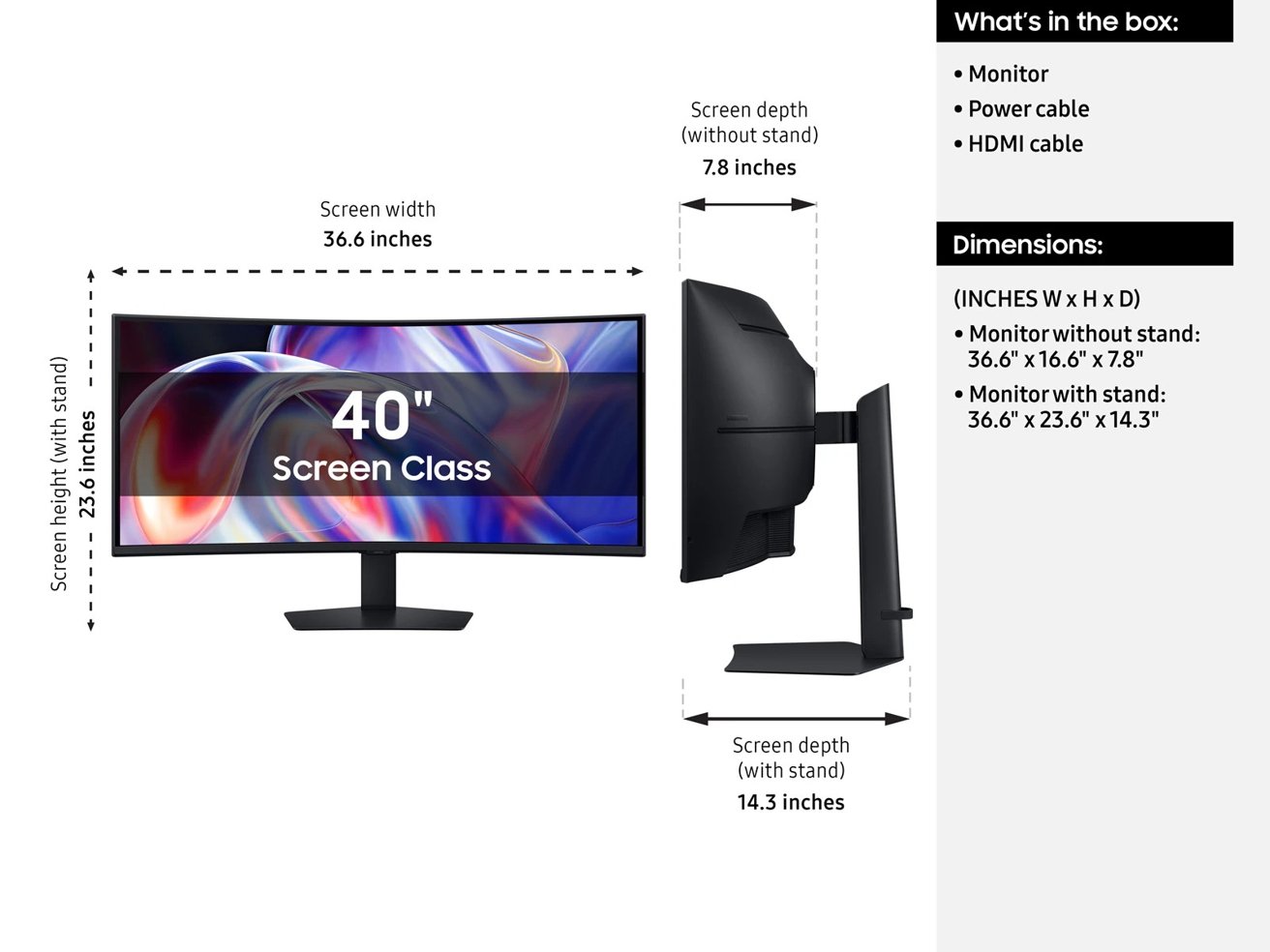
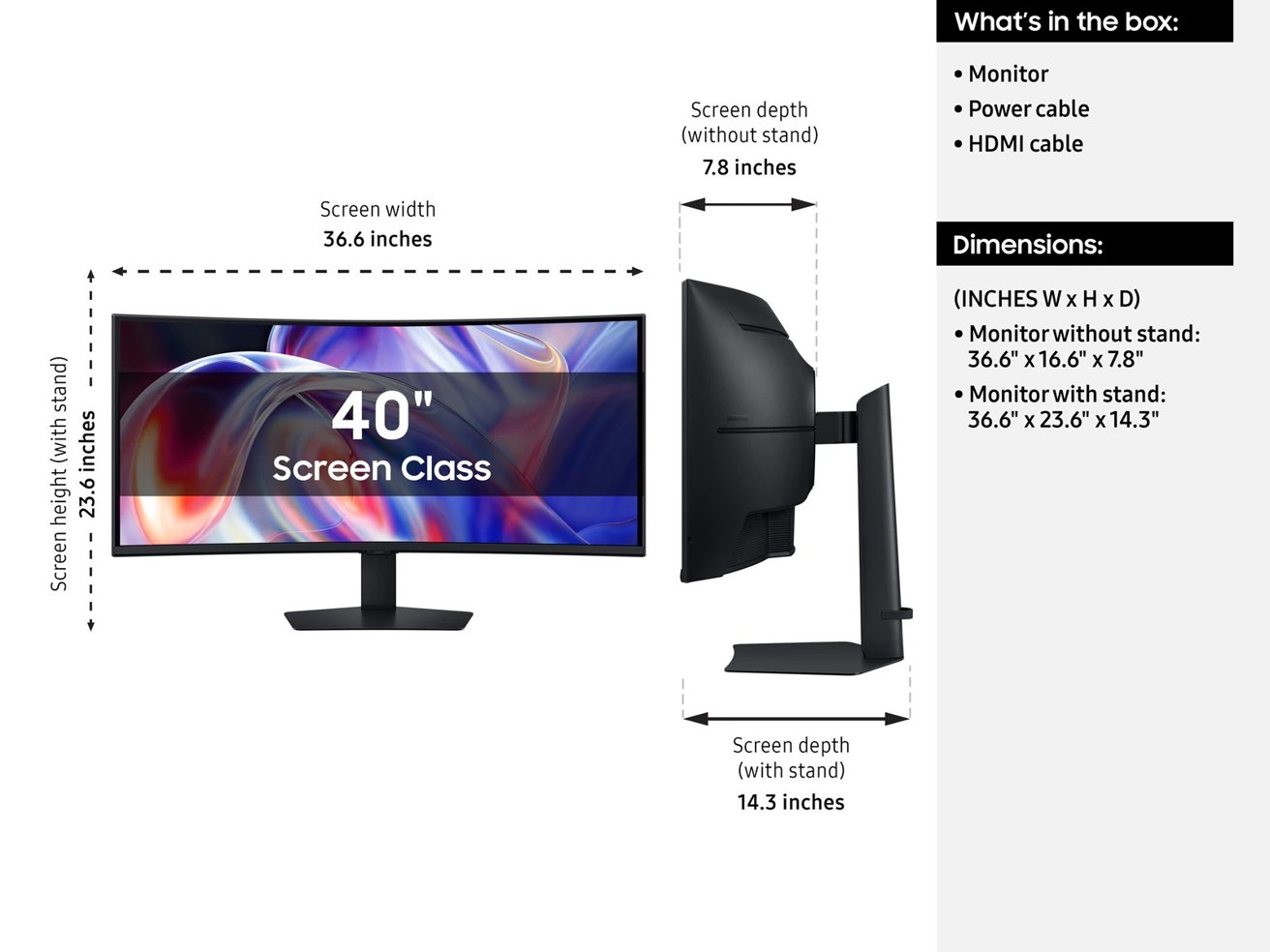
Samsung’s new lineup includes the 40-inch ViewFinity S8 S85TH, the 32-inch Odyssey OLED G8, and the 27-inch Odyssey OLED G8. The company built the displays for productivity and gaming, while adding features that fit naturally into MacBook, Mac mini, and Mac Studio setups.

Together, the monitors target capabilities Apple still doesn’t offer across its own display lineup.

Apple’s desktop display lineup remains limited to the Studio Display and Pro Display XDR. Apple doesn’t sell an OLED desktop monitor, an ultrawide display, or a monitor with integrated KVM switching and Thunderbolt 5 docking. Samsung’s latest displays target each of those categories.

Advertisement

ViewFinity S8 combines a large workspace with Thunderbolt 5

The 40-inch ViewFinity S8 S85TH is built around a curved 5K2K WUHD panel with a 144Hz refresh rate. The extra horizontal resolution creates room for multiple apps and documents without relying on a second display.

Thunderbolt 5 sits at the center of the design. The connection supports up to 80Gbps data transfers and up to 140W charging through a single cable, allowing a MacBook Pro to handle power, video, and data simultaneously.

40-inch widescreen curved monitor on stand, shown front and side, with measurements for width, height, and depth, plus text listing box contents and overall product dimensions40 Inch ViewFinity S8 S85TH 5K2K Curved Monitor (2026)

Samsung built docking features directly into the monitor instead of relying on separate accessories. The display includes Ethernet, USB-C, USB-A, HDMI, and DisplayPort connections, along with built-in speakers.

A built-in KVM switch also lets users control multiple computers with a single keyboard and mouse. For Mac users building a desktop workspace around a notebook, the display can replace a dock, Ethernet adapter, and KVM switch while providing more screen space than Apple’s Studio Display.

Samsung prices the 40-inch ViewFinity S8 S85TH at $1,399.99.

Advertisement

32-inch Odyssey OLED G8 pairs OLED image quality with creator-focused features

The 32-inch Odyssey OLED G8 combines a 4K QD-OLED panel with a 240Hz refresh rate, a 0.03ms response time, USB-C charging up to 98W, and DisplayPort 2.1 connectivity. The specification sheet reads like a gaming display, but several features extend well beyond gaming.

Pantone validation gives the monitor support for more than 2,100 Pantone colors and 110 SkinTone shades. VESA DisplayHDR True Black 500 certification and peak HDR brightness of up to 1,000 nits push the display beyond gaming.

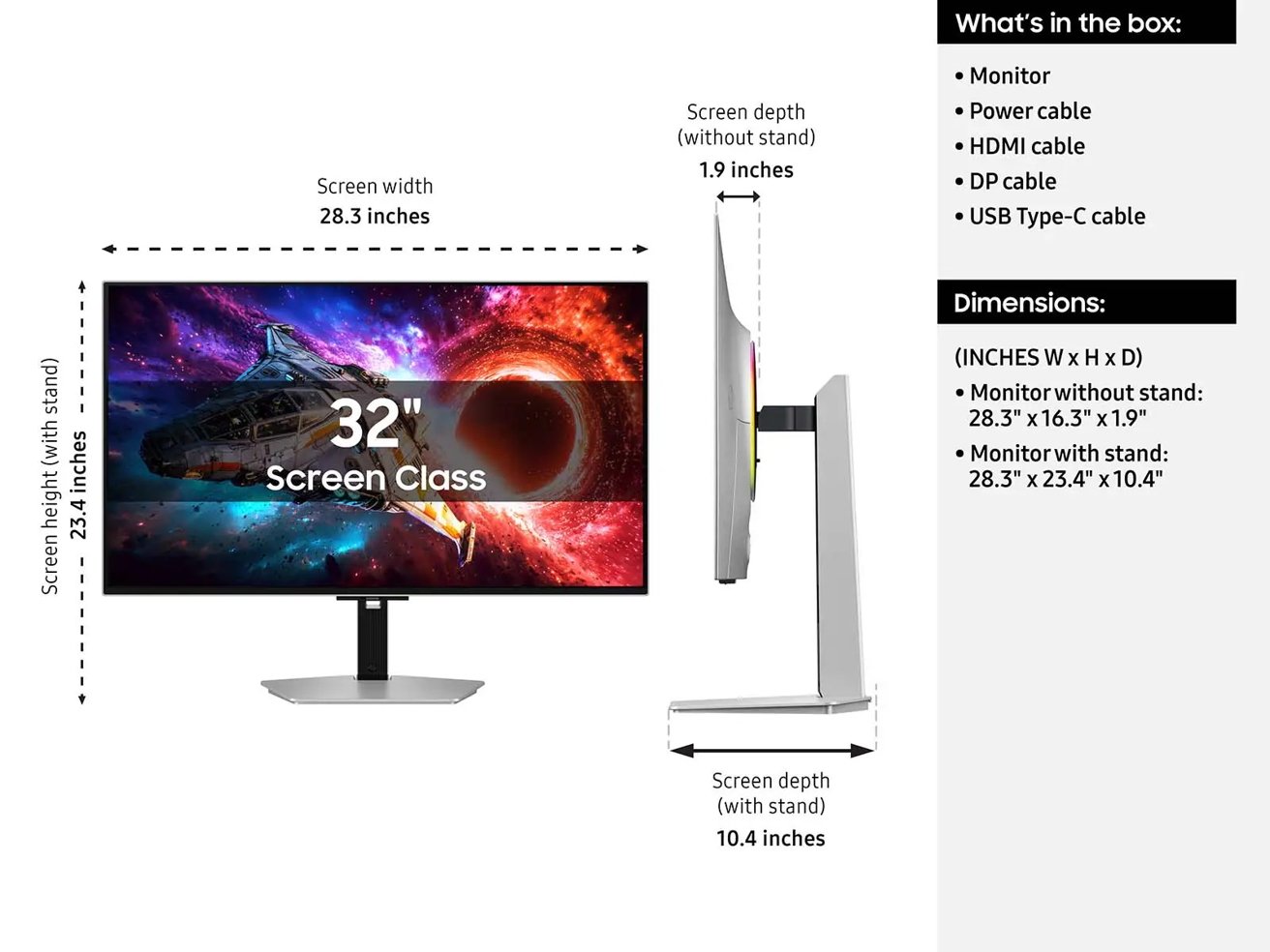
32-inch computer monitor with thin bezel, space-themed screen, shown front and side. Dimensions and depth labeled, plus list of included items: cables, stand, and monitor.32 Inch Odyssey OLED G8 G80SH 4K Gaming Monitor (2026)

The combination makes the monitor a viable option for photo editing, design work, and video production.

Apple doesn’t offer an OLED desktop monitor. The Odyssey OLED G8 brings OLED contrast and per-pixel lighting control to a category Apple still serves exclusively with LCD displays, while adding refresh rates far beyond Apple’s monitors.

Samsung also includes a glare-reduction coating and support for AMD FreeSync Premium Pro and NVIDIA G-Sync Compatible technologies. The 32-inch Odyssey OLED G8 is priced at $1,299.99.

Advertisement

27-inch Odyssey OLED G8 brings OLED technology to a familiar size

The 27-inch Odyssey OLED G8 brings many of the same technologies as the larger model to a size familiar to Studio Display users. Samsung pairs a 4K QD-OLED panel with its Glare Free coating and OLED Safeguard+ protection features.

The display’s 166 pixels-per-inch density helps it stand out from many gaming-focused competitors. Its higher pixel density also produces a sharper image that’s better suited for productivity and creative work.

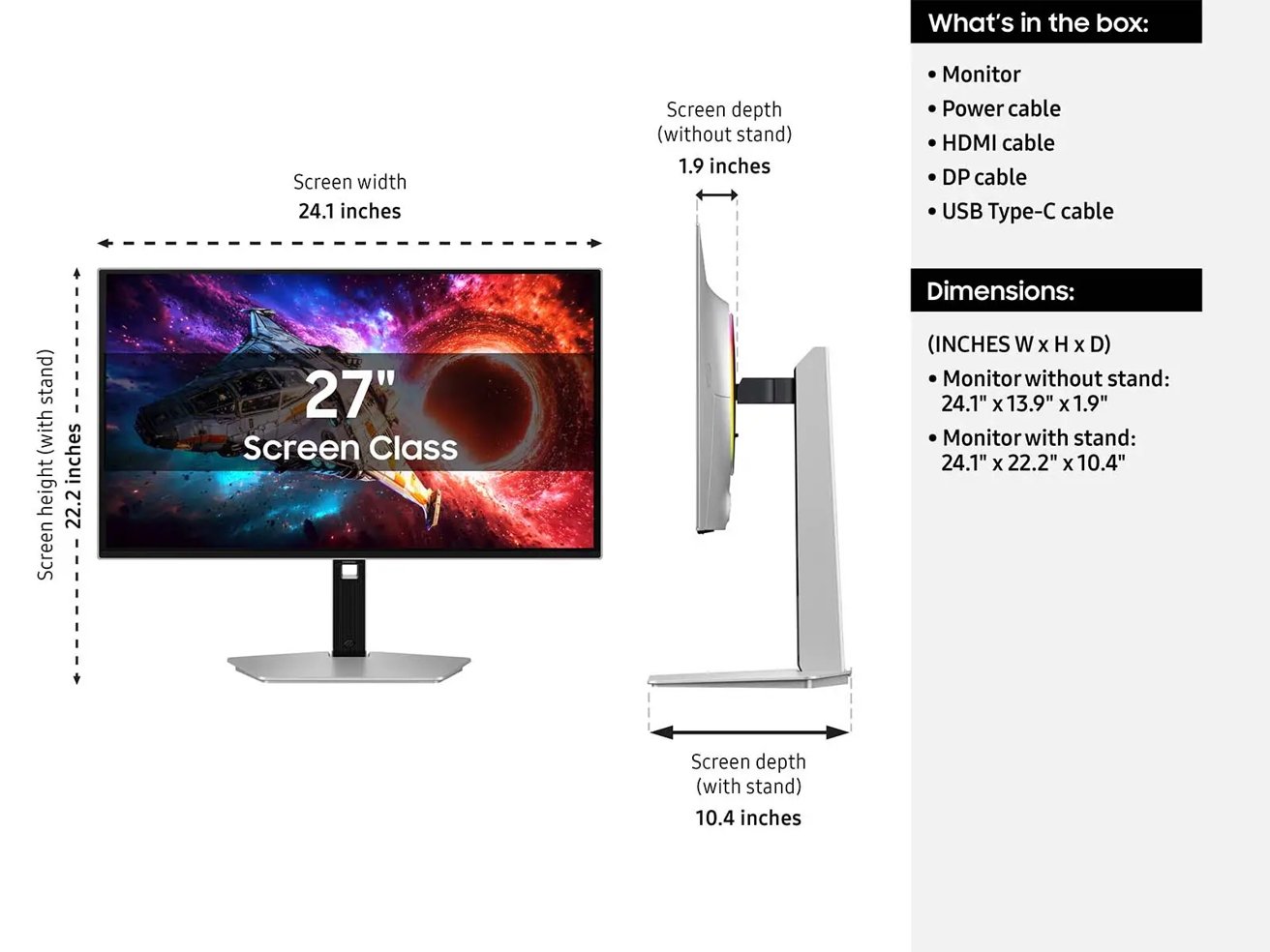
27-inch computer monitor showing colorful space scene, front and side views with labeled dimensions, plus text listing included cables, stand depth, and overall monitor width, height, and depth.27 Inch Odyssey OLED G8 G80SH 4K Gaming Monitor (2026)

The 27-inch size also fits naturally into workspaces already designed around Apple’s displays. Users interested in OLED technology without moving to an ultrawide or larger-format monitor may find the smaller Odyssey OLED G8 easier to integrate into an existing setup.

Like the 32-inch model, the display combines OLED image quality with a 240Hz refresh rate and modern laptop connectivity. Samsung prices the 27-inch Odyssey OLED G8 at $1,099.99.

Advertisement

Source link

Continue Reading

Tech

Investigating how hormones affect brain health

Published

on

UL’s Prof George Barreto discusses his research and how it could help form new treatments for treating and protecting the brain.

Prof George Barreto is a professor in cell biology/immunology at the University of Limerick (UL), and a neuroscientist.

Outside the lab, Barreto is the assistant dean for equality, diversity and inclusion (EDI) in UL’s Faculty of Science and Engineering.

“And I teach,” he tells SiliconRepublic.com. “I run some courses for our undergraduate and master’s students, mostly on how the body works, how medicines work (pharmacology) and how cells behave (cell biology).

Advertisement

“So my job is really a mix of three things – running my research lab, teaching the next generation of scientists and helping build a better academic culture.”

Here, Barreto tells us more about his work.

Can you tell us about your current research?

My lab studies how the hormones in our bodies, the ones we usually link to being male or female, affect the brain, and how that differs between men and women. We pay special attention to a tiny part of every cell that acts like its battery or power plant. These are called mitochondria, and these little batteries do not just give our cells energy. They also help decide whether our cells stay healthy or die.

Our hormones have a big influence on how well these powerhouses work in the brain. A key point is that those hormone levels naturally drop as we get older. I believe that is possibly one of the main reasons why diseases like Alzheimer’s are more common in women than in men.

Advertisement

So, our lab works on a few connected questions. Why does the ageing brain go from being resilient to being vulnerable? How do hormones keep brain cells healthy, and why does that protection fade with age? How does a head injury throw the body’s hormones out of balance and cause harmful inflammation in the brain?

And finally, I think the part I find most hopeful, can we take drugs that already exist (and are FDA-approved) and use them in a new way to protect the brain?

What drew you to this area/subject?

It came from a question I just could not let go of – why are women hit harder by Alzheimer’s and similar diseases, and why does that risk seem to change around the time of menopause? For a long time, medical research either ignored the differences between men and women or treated them as a minor detail. The more I looked, the more I felt this was not a small detail at all, it was right at the heart of the problem.

And then there are the brain’s support cells, the astrocytes. They have fascinated me since my very first steps in research, back in Brazil and later in Madrid, and now in Ireland, and honestly, they still do.

Advertisement

People used to dismiss them as the glue that just holds the brain together, but I came to see them as real decision-makers. They have a big say in whether the brain heals after damage or not. Once I put that together with hormones, which fade so differently in men and women, and with those tiny batteries that hold the power of life and death over a cell, I finally felt I had a way to actually explain these differences, instead of just pointing at them.

Why is this research important?

I think there are two reasons. The first is very simple – as people live longer, more of us will face diseases like dementia, and women carry more of that burden. If we can really understand why the loss of hormones makes the female brain more vulnerable, we can start to design treatments that fit a person’s biology, rather than treating everyone the same way, which is mostly what we still do today.

The second reason is more about the bigger picture. When those little cell batteries start to fail, it is not a problem unique to one disease. We see it in ageing, in brain injury, in inflammation, in dementia. So, if we can find ways for hormones to keep those batteries running, we have found something that could help in many situations at once.

That is exactly why we focus on drugs that already exist and are already known to be safe. Taking an approved drug and giving it a new purpose is a much faster, cheaper way to reach patients than developing one from scratch. And for people who are suffering now, speed matters.

Advertisement
What has been the most surprising insight/discovery in your research?

The biggest surprise has been just how much sex matters, right down to a single cell.

We tend to assume a drug does roughly the same thing in everyone. But when we studied a hormone-based drug called tibolone, we found it acted differently in cells taken from females than in cells taken from males.

The cells responded in their own distinct ways, and the drug even restored their natural cleaning-up ability differently depending on whether they were male or female. The idea that a cell sitting in a dish still ‘knows’ whether it is male or female and reacts to the very same drug differently because of it is striking, and it is still something a lot of people do not fully understand.

What surprised me even more was that this difference goes right down to those tiny batteries (mitochondria) inside the cell that I mentioned earlier.

Advertisement

We discovered that, in the brain’s support cells (astrocytes), mitochondria from females were tougher and coped far better than the ones from males when we exposed them to high levels of saturated fat, the kind of stress the body goes through in obesity.

In other words, the female brain cells’ energy systems were simply more resilient under that pressure. That was a real eye-opener for me, because it suggests these male/female differences are not just small details, but they are built deep into how a cell powers itself and protects itself. And it reinforces why we cannot keep designing treatments as if one size fits all.

What are your thoughts on Ireland’s research landscape? What improvements would you suggest?

I think Ireland is at a really interesting turning point. In 2024, the Government brought its two main research funding bodies together into one, now called Research Ireland, which now funds work across every subject, from science and engineering to the arts and social sciences. I see that as a good move. Before, some subjects were not properly included in the funding system, which put Ireland a step behind other countries. For me, whose work crosses several fields at once, a system that genuinely supports that kind of crosstalk between different areas is very much welcome!

There is real ambition behind it too. Ireland plans to invest in its universities and wants to support thousands of new PhD students and researchers who are early in their careers. And for such a small country, what strikes me most is the talent and the genuinely close links between academia, industry and pharma. That combination is honestly quite unique in the world, and it is part of what made me want to build my lab here.

Advertisement

That said, there are a few things I would push on. First, I would love to see steadier, more predictable money for fundamental research. Applied work matters enormously, but the truly big breakthroughs so often start as curiosity-driven science with no obvious (and long-term impact) commercial angle. My own tibolone work began exactly like that.

Second, we have to look after our younger researchers, the PhD students, the postdocs, the research assistants and the new group leaders. The ambition to train thousands of them is wonderful, but only if we then value them and build real ways to keep them here, instead of losing them abroad.

Third, our infrastructure. Modern biomedical research needs advanced imaging, computing power, data science and shared facilities, and that needs continued investment.

And fourth, and this one is close to my heart given my EDI role, I would like to see equality, diversity and inclusion treated as part of research excellence, not as a box-ticking exercise on the side. For me, they are the same thing. Broader participation, inclusive teams, and fair structures simply produce better science.

Advertisement

My own field is the proof. Ignoring the differences between men and women held the science back for decades. This is not acceptable.

Finally, I think Ireland is perfectly placed to connect academia, healthcare, industry, policy and communities. For areas like dementia, women’s health and menopause, the real progress will come from people working across those boundaries. Ireland is small enough that you can actually get those people into a room quickly, and ambitious enough to lead the world if we support those connections properly.

Don’t miss out on the knowledge you need to succeed. Sign up for the Daily Brief, Silicon Republic’s digest of need-to-know sci-tech news.

Advertisement

Source link

Continue Reading

Tech

WWDC 2026 is shaping up to be all about on-device AI

Published

on

Apple’s big yearly software event looks set to focus a lot on on-device AI, with reports suggesting the company’s in-house chip architecture will give it a key advantage over rivals.

WWDC 2026 kicks off on 9 June, with iOS 27 for iPhone and software updates for iPad, Mac, Apple Watch, and Apple Vision Pro all expected to be previewed at the event, and AI is widely anticipated to be integrated into pretty much every new feature Apple introduces.

The shift toward on-device processing addresses a core limitation of most AI implementations, where queries travel to remote data centres and back before a result reaches the user, introducing latency that depends entirely on network quality and connection speed.

Apple’s silicon lineup, which powers everything from the iPhone through to the Mac, carries enough processing headroom to handle AI inference locally, cutting out that round trip entirely and keeping the workload on the device itself.

Advertisement

Privacy and cost implications

That architectural difference carries particular weight on the privacy front, since on-device processing means user data never leaves the hardware, removing the exposure point that cloud-based AI systems create when queries pass through third-party infrastructure.

Advertisement

Running AI on-device also removes the per-query cost of data centre processing, a significant consideration as Apple scales Apple Intelligence features across hundreds of millions of active devices worldwide.

According to The Information, Apple is working with a version of Google’s Gemini model as a reference point for training a smaller, locally-capable model, and the company is also reportedly evaluating acquisitions of firms with expertise in models optimised for on-device deployment.

Advertisement

Whatever Apple announces on 9 June, the features themselves will not reach users immediately; software updates across all platforms are expected to follow the standard testing cycle ahead of a likely September release.

Source link

Advertisement
Continue Reading

Tech

An answer to the datacenter energy crisis

Published

on

Partner Content This
year, the global build-out of datacenters has become impossible to
ignore, with the debate spilling into national media, local
newspapers, and community council meetings alike. From Arkansas to
Southern California, Nevada, Pennsylvania, West Virginia, and most
recently Box Elder, Utah, communities are weighing the economic
promise of datacenter expansion against mounting concerns over
energy, infrastructure, and residential impact. The same dynamic is
playing out in the UK, where OpenAI’s “Stargate UK” project
has been partly shelved
amid energy consumption concerns and regulatory pressure.

Drop media element here …

Advertisement

A typical new hyperscale datacenter can face grid-connection
bottlenecks of up to seven
years
in certain markets, well before the necessary
transmission, substations, generation capacity, and transformers are
in place. McKinsey, meanwhile, estimates that global datacenter
spending could reach $7
trillion by 2030
– a figure comparable to the size of a
top-12 global economy.

AI intelligence at scale now dominates enterprise strategy and
global politics because the promise of the technology is matched only
by the infrastructure required to deliver it. Energy consumption is
unavoidable in this new world, and the bet enterprise leaders are
making is that the value AI creates will outstrip the cost of the
power feeding it. That trade-off has produced a new equation for
executives: intelligence
per watt
.

Advertisement

Is your agentic ambition constrained by energy?

AI-driven datacenters already account for
roughly 1.5 percent of global electricity consumption, and the IEA
expects that demand to more
than double
by 2030, approaching three percent of global
electricity use. That’s more than many major industrial sectors,
including agriculture.

The pressure will compound over the next three years, with IDC
projecting onebillion
agents running 217 billion daily actions
by 2029. From
Seattle to Barnsley in the UK, the race to build more datacenters
close to energy sources is now a daily occurrence.

If the right datacenter, grid, and power infrastructure for the
first billion agents takes up to seven years to build, supporting
two, three, or even eight billion agents implies timelines the
industry has yet to cost. The mismatch between enterprise intent and
energy capacity is widening.

For enterprise leaders, this is a defining moment of decision.
With 95
percent
of global enterprises intending to become their
own AI and data platforms in less than 780 days, AI, data, and energy
can no longer be treated as separate priorities; they are now
interconnected parts of a single platform strategy. The harder
question is how executives can pursue those AI ambitions while
managing energy efficiently at agentic scale.

Advertisement

BFSI might be showing us the way forward

Banking, financial services, and insurance
(BFSI) enterprises have traditionally invested more heavily in
technology than any other major sector. McKinsey estimates banking IT
spending typically runs at between
six and 12 percent of revenue
, compared with 3.75 percent
to five percent for the next-highest sector.

The pressure to deliver new technology value, particularly through
AI and agentic systems, is creating an operating language shared by
CIOs, CTOs, and business leaders alike. AI and data are increasingly
framed as the new competitive moat, yet the energy costs associated
with maintaining that moat introduce a fresh dynamic into technology
decision-making.

The 13
percent of global enterprises
winning with AI and agentic
systems are more likely to build their data strategies around
control, efficiency, and sustainability. The common pattern is
repatriation: pulling AI and data out of single-hyperscaler silos and
into their own control planes, where they can govern and manage
information across clouds, on-premises environments, and systems they
own.

The pattern recurs among agentic AI leaders across EMEA, North
America, Singapore, and Japan. The principle is straightforward:
bring AI to the data, because the two must work together across the
front lines and back offices of the business rather than operating as
separate concerns.

Advertisement

That logic explains why BFSI leaders such as Wells Fargo,
Mastercard, HSBC, JPMorgan Chase, Bank of America, Citigroup, Goldman
Sachs, BNP Paribas, ING, Crédit Agricole, UBS, and NatWest have made
public carbon-neutrality commitments alongside ambitious plans to
become their own sovereign AI and data platforms.

AI and data sovereignty in Postgres wins on OpEx, environment, and
ROI

Agents operate at the data layer, which
means energy must be managed at the same layer, since this is where
much of the work happens. The alternative is the equivalent of
turning on the heat while leaving every window open in the middle of
winter. Only by controlling the data layer, agents, and broader data
estate can enterprises build the foundation for managing energy
consumption.

Energy efficiency has to begin where enterprise operations already
run, which is why PostgreSQL®, the world’s most widely used database
among developers, is well suited to the challenge. EDB
Postgres AI
is built specifically to address the
energy-intensive nature of modern datacenters by improving database
and AI efficiency at the point where workloads execute.

By shrinking core usage requirements and tightening data-intensive
agentic operations such as search, retrieval, and vector indexing,
EDB Postgres AI can cut datacenter energy consumption by up to 81
percent and reduce emissions by as
much as 87 percent
.

Advertisement

The ambition to become an AI and data platform carries one
foundational requirement: AI and data sovereignty. Organizations that
adopt this model not only achieve 5x
ROI and deploy 2x more AI and agentic AI systems
; they
also gain more control, greater efficiency, and a smarter way to
design and operate datacenters for the agentic era.

The formula for success is sovereignty in Postgres — the most
practical path to achieving more intelligence per watt.

Contributed by EDB.

Source link

Advertisement
Continue Reading

Tech

Windows BitLocker exploit sparks messy feud between Microsoft and the researcher who exposed it

Published

on


The issue centers on a zero-day exploit called “YellowKey,” published earlier this month by a security researcher known as Chaotic Eclipse, also known online as Nightmare-Eclipse. The proof of concept demonstrates a method for accessing BitLocker-encrypted drives on Windows 11 using a USB device.
Read Entire Article
Source link

Continue Reading

Tech

An Atic Atac Minimap For The ZX Spectrum

Published

on

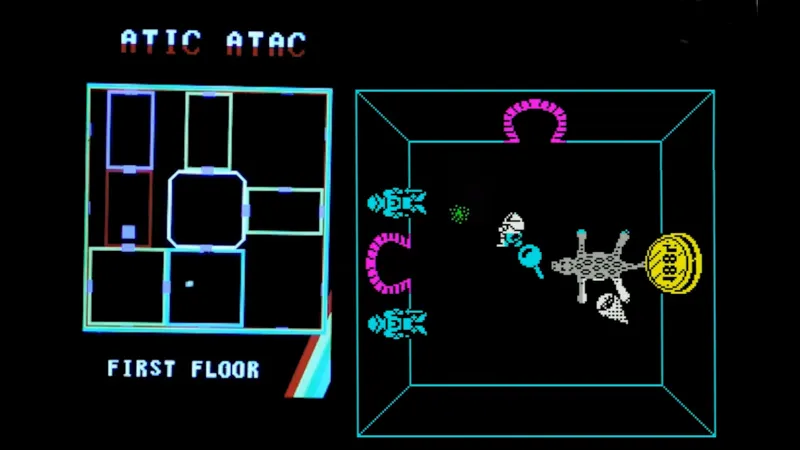
The use of modern microcontrollers as add-on peripherals for 1980s home computers has delivered significant benefits and capabilities unimaginable in the days when those machines were new. A great example come from [Happy Little Diodes], who’s using a Pi Pico based peripheral for a Sinclair ZX Spectrum to provide something that looks far more modern, a hardware minimap for the iconic Spectrum game, Atic Atac.

The ZX expansion port provides all the bus signals from the Z80 microprocessor, and the peripheral uses a latch to capture Spectrum memory writes. Because the game’s operation is well known it can easily watch out for updates to the in-memory variable that contains the game room ID. It’s then a case of drawing the map with the player centered on the room the are in, for a much more 21st century game interface component.

Having been around when both the ZX and this game were new, we like this add-on, a lot. We can imagine it could relatively easily support other games, too.

Advertisement

Haven’t got a Spectrum? Never fear, you can make yourself one!

Advertisement

Source link

Continue Reading

Tech

Autodesk buys MaintainX for $3.6bn to push from design into operations

Published

on

Autodesk has spent four decades selling the software that engineers and architects use to design buildings, factories and machines. With its latest acquisition, it is buying its way into what happens after those things are built.

The company has agreed to acquire MaintainX, a maintenance and operations platform, for about $3.6 billion in cash.

The deal, announced on 28 May, is an all-cash transaction Autodesk plans to fund with cash on hand and new debt. Closing is targeted for as early as 3 August, subject to regulatory and customary conditions.

Alongside the headline price, Autodesk said it would issue $150 million in restricted stock to MaintainX employees, the standard retention sweetener that signals the buyer wants the team, not just the product.

Advertisement

MaintainX is the kind of company that is invisible until something breaks. Founded in San Francisco in 2018 and led by chief executive Chris Turlica, it makes mobile-first maintenance software, a modern take on the computerised maintenance management systems, or CMMS, that factories and facilities use to track work orders, assets and repairs.

Advertisement

More than 500,000 frontline workers use it, and the company was last valued at around $2.5 billion privately, on annual recurring revenue reported near $115 million.

At roughly $3.6 billion, Autodesk is paying a clear premium to that last private mark, which is the going rate when a strategic buyer wants a category leader rather than a turnaround.

The number also looks large against MaintainX’s revenue, the kind of multiple that only makes sense if the buyer is pricing the strategic fit rather than the current financials.

That fit is the whole rationale. Autodesk frames its strategy as converging “design, make and operate,” the idea that data should flow continuously from the moment something is designed to the years it spends in service. It has the design and the make; operations was the gap.

Advertisement

MaintainX slots into a new division Autodesk is calling Autodesk Operations Solutions, giving it a foothold in the daily work of the maintenance teams who keep its customers’ physical assets alive.

There is an AI logic underneath the org chart. Maintenance data, every work order, every breakdown, every part replaced, is exactly the kind of structured operational record that trains useful predictive models, and Autodesk has been pushing its own generative-AI design tools.

Owning the operate layer gives it a data stream it did not have, at a moment when every enterprise-software company is racing to turn its workflows into AI features.

For MaintainX, a $3.6bn cash exit is a clean outcome for its backers and a fast one for a company not yet a decade old.

Advertisement

For Autodesk, the harder work begins after August: integrating a mobile-first frontline product into a design-software giant, and proving that “design, make and operate” is a platform customers will buy as one thing rather than a slide that explains an acquisition.

Source link

Advertisement
Continue Reading

Tech

PS4 and Xbox One players are getting booted from Call of Duty Warzone soon

Published

on

Call of Duty players on previous-generation consoles can’t seem to catch a break. First, Activision announced that the next Call of Duty, which we now know is Call of Duty: Modern Warfare 4, will not be released on PS4 and Xbox One. Now, the company is also taking Call of Duty: Warzone away from both older consoles.

The publisher has confirmed that Warzone support on PS4 and Xbox One will be reduced in stages before ending later this year. The first step begins on June 4, when Warzone will be removed from the PlayStation 4 and Xbox One digital storefronts. After that, new downloads will no longer be available on either platform.

Warzone’s last-gen exit starts in June

Players who already have Warzone in their library will still be able to install and play the game for a limited time. Activision says the game will remain playable on PS4 and Xbox One through the end of Season 06 for Call of Duty: Black Ops 7.

The next major change arrives on June 25, when the Warzone in-game store will be removed from both last-gen versions. COD Points can still be redeemed in the store until then, and gameplay will continue to count toward Battle Pass progression. Players without the paid Battle Pass can still unlock free-tier rewards, including new weapons, during the remaining Black Ops 7 seasons.

The final cutoff comes with Modern Warfare 4 Season 1. Once that season begins, Warzone will no longer be playable on PS4 or Xbox One.

Advertisement

Upgrading may sting for PS4 holdouts

For PlayStation players, the timing is awkward. Sony’s Days of Play 2026 sale is live, but the PS5 console itself does not appear to be getting a discount. The upside is that players who do upgrade can still pick up discounted PS5 games, accessories, and PlayStation Plus memberships while the sale runs through June 10.

Activision says players will not lose their Warzone progress if they move to PS5, Xbox Series X|S, or PC using the same linked Activision account. Items bought with COD Points will also carry over. However, unused COD Points stay tied to the same console family, so PS4 players can use them on PS5, and Xbox One players can use them on Xbox Series X|S.

Warzone gave PS4 and Xbox One players a long runway after the current-gen consoles arrived. That runway is now almost over, and anyone who wants to keep playing Call of Duty’s battle royale after this season will need to move to newer hardware soon.

Advertisement

Source link

Continue Reading

Trending

Copyright © 2025