Peranakan heritage food biz Tiap Tiap began selling on a Facebook group, now it’s a full-fledged shopfront
Most food businesses start with a business plan. Peranakan heritage food brand Tiap Tiap started with a pandan cake and friends who wouldn’t stop asking Sophia Yeow to cook for them.
Six years on, what began as a two-product home-based operation during Singapore’s circuit breaker has grown into a brick-and-mortar shopfront on East Coast Road in Joo Chiat. It’s a fitting location for the brand, rooted in the Peranakan heritage of the neighbourhood where Sophia grew up.
Vulcan Post spoke with Sophia, 55, and her daughter, Nicole Lian, 29, about how a small family business grew into a brick-and-mortar brand, and what it took to get there.
An accident that changed everything
Sophia cooking at home./ Image Credit: Tiap Tiap
Sophia launched Tiap Tiap in 2020 when an accident sent her to the hospital and prompted a reckoning with what she actually valued in life.
She had previously spent two decades in senior marketing and communications roles alongside running a child enrichment centre in Bukit Timah with a friend.
Advertisement
What was important to me was family. So I stepped away from everything.
Sophia Yeow
Sophia sold the enrichment business, gave six months’ notice at her corporate job, and spent time travelling with her parents and cooking for people she loved.
With encouragement from her friend, Sophia began posting in a Facebook group called Singapore Home-cooked Delights. She started with just three products: a pandan chiffon cake, radish kueh, and yam kueh. She wasn’t sure anyone would buy.
Tiap Tiap’s pandan chiffon cake./ Image Credit: Tiap Tiap
To her surprise, strangers not only placed orders but also shared reviews in the group, helping word spread organically.
Soon, banks and other organisations looking to support home-based businesses during the pandemic began placing orders. At one point, Sophia was coordinating deliveries to 150 locations across Singapore over two days, juggling production and logistics on her own.
Advertisement
Today, Tiap Tiap has set up a 500 sq ft central kitchen in Bedok, while its production capacity has increased by 500% from its early pandemic days.
A mother-daughter business
In 2021, MediaCorp, having spotted her Instagram account where she shared food, travel and snippets of daily life, reached out to ask if she’d consider joining MasterChef Singapore.
Despite having no experience, she did it anyway, reaching the top 24. The experience led her to a subsequent cooking competition for home cooks, the Lee Kum Kee Supreme Chef Cooking Competition II, which Sophia won that same year.
Screengrab from Lee Kum Kee
The competitions gave Sophia greater visibility, but to her daughter, Nicole, her talent had never been in doubt.
Nicole grew up watching her mother set the family table differently from everyone else. Sophia would host themed dinners regularly. Indonesian night meant banana leaves and matching crockery; a trip to Athens meant Mediterranean food for a week, served on pieces Sophia had brought back specifically for the occasion. Besides the food, the whole experience surrounding the food was equally important to the family.
Advertisement
“As a kid growing up, I kind of knew there was something special in her cooking,” Nicole said.
So when Sophia started Tiap Tiap, Nicole naturally recommended the brand to friends and colleagues—she already believed in what her mother was making.
(L to R): Nicole and her mother, Sophia./ Image Credit: Tiap Tiap
After COVID-19, Nicole noticed that while many home-based businesses fell away as restrictions eased, Tiap Tiap’s orders kept coming. This pushed Nicole to leave her corporate career in 2024 to join Tiap Tiap as Managing Director.
Nicole brought operational structure to what her mother had been running on instinct and craft by creating a system of orders that made organising and fulfilling orders simpler.
Sharing Peranakan heritage
By that point, Tiap Tiap had grown beyond cakes.
Advertisement
The brand also hosts Butterfly Table, a private dining experience held in Sophia’s home.
Image Credit: butterfly.table via Instagram
The weekly three-hour dinner combines Peranakan cuisine, storytelling and Sophia’s collection of antique crockery, giving guests a deeper appreciation of the culture behind the food.
Butterfly Table was born after a senior executive who had tasted Sophia’s cooking invited her to cater for Temasek and its board of directors for a month.
That opportunity led to her first private dining session at home—a Peranakan tok panjang for the current Singapore Ambassador to China, Peter Tan, who later told her it felt like coming home.
A measured expansion
Tiap Tiap’s Ondeh Ondeh cake and Kaya spread./ Image Credit: Tiap Tiap
Opening a physical store wasn’t an impulsive decision.
Before committing to a permanent retail space, Sophia and Nicole spent two years testing demand through pop-ups, allowing them to gauge customer interest and learn how to scale the business without taking on significant overhead.
Their first pop-up at Takashimaya in 2025 regularly sold out within 10 minutes of each restock, with customers queuing for the next batch of cakes to arrive from Tiap Tiap’s central kitchen.
At Boutiques Singapore, vendors from around the venue reserved cakes before the doors even opened, leaving little stock for the general public by 10AM.
The pop-ups confirmed what years of online orders had already suggested: demand for Tiap Tiap had outlasted the pandemic. Today, around 40% of its customers are repeat buyers who have supported the brand since its home-based days.
With that validation established, the team spent time at the central kitchen refining SOPs, building the team, and working out how to scale production reliably before making the retail commitment.
The shopfront at 374 East Coast Road eventually opened in late Jun 2026. Actual costs came in just under S$500,000—entirely self-funded, with no external investors.
Advertisement
Taking it one step at a time
Nicole and Sophia at their physical store on East Coast Road./ Image Credit: Tiap Tiap
Today, Tiap Tiap’s East Coast Road store operates as a takeaway concept, offering a range of sweet and savoury Peranakan fare.
The sweet treats are made on-site, while the savoury range and delivery orders continue to be prepared at the brand’s central kitchen in Bedok.
Although Sophia and Nicole still drop by the shop almost every day, Nicole’s immediate goal is to build the business to a point where it can operate without either of them being physically present.
After six years, neither mother nor daughter romanticises the leap from corporate life into entrepreneurship. Passion, Sophia said, is important—but it has to be matched with an understanding of what customers want.
Passion without appreciating what the market wants will eat you up very quickly.
Content access, governance, and platform flexibility are emerging as the dividing lines between AI leaders and laggards, according to the new State of AI in the enterprise report from Box, which surveyed 1,640 IT decision makers across the US, UK, France, and Japan. One of the report’s major findings is the speed of the shift: the combined share of organizations describing themselves as advanced or leading edge soared from 8% to 64% just over the past year, while the share calling themselves early stage or not yet started collapsed from 53% to just 9%. Eighty percent of organizations reported a notable return on their AI investment, defined in the survey as an improvement of at least 10%, and more than half saw measurable business impact within six months of getting a project approved.
The swing is largely due to how enterprises are now organizing their AI use rather than to any single technical breakthrough, says Olivia Nottebohm, COO of Box.
“We’ve moved from standalone experimentation that lived at the individual level into systematized, integrated agentic operations, agents that are in production and can be used in a repeatable manner,” Nottebohm says. “That’s where the impact is coming from.”
Advertisement
Why AI leaders get higher ROI than early-stage companies
The divide between tiers is a matter of execution. Significantly, half of leading-edge companies reported AI-driven ROI above 25%, compared with just 11% of early-stage companies, with the advanced (33%) and developing (16%) tiers falling steadily in between. But Nottebohm says the real differentiator was not whether companies adopted AI, but how rigorously they integrated and managed it.
“What separates the leading edge is the operating muscle they’ve built: the right teams to deploy agents, formal governance to control them, and consistency in the content layer those agents work from,” she explains. “Earlier stage companies are approaching it in a much more ad hoc, experimental way, letting people play around with it without the same intent or structured design.”
Content access is the biggest barrier to enterprise AI ROI
Content, rather than model quality, is the defining bottleneck of 2026. Ninety-six percent of organizations say agents need access to company-specific content, yet only 36% have connected agents to trusted content across many use cases. It’s an issue of trust rather than raw capability.
“We started this journey assuming enterprise AI was about access to the latest model,” Nottebohm says. “But the question now is whether agents have access to the right content, and whether that content is protected, because those agents are only as good as the content they can reference, and only as safe as the security around it.”
Advertisement
Getting that content layer right has a second benefit beyond safety, since it’s also what finally lets agents work across departments that previously operated in isolation from one another. And while roughly a quarter of organizations point to data fragmented across systems, 24% cite difficulty integrating AI into existing systems, 21% say they lack adequate permissions and access controls, and 18% describe their content as too unorganized to make accessible at all. Among the most mature organizations, 63% now treat unstructured documents, contracts, and reports as a competitive advantage rather than dead weight sitting in a digital filing cabinet.
Reducing common AI data exposure incidents
Nearly half of all organizations say they have already experienced an AI-related data exposure incident. That figure rises to 60% among leading-edge companies, which may face greater exposure from more agents and connected systems — but may also be better equipped to detect it.
The share of organizations reporting established or advanced governance frameworks rose from 24% in 2025 to 73% this year, but real gaps remain in instrumentation: only 39% have comprehensive visibility across sanctioned and unsanctioned AI use, 34% have formal standards for how agents access company data, and 27% still describe their governance as ad hoc. But those incidents function as a forcing mechanism rather than a setback, Nottebohm says.
“Governance used to be seen as something that slowed people down, but 93% of respondents told us better governance is actually what let them move faster,” she explains. “It makes scaling AI survivable. Once content is secured and highly permissioned, you can run multiple agents across multiple processes and get a real multiplier effect.”
Advertisement
One practical consequence of that shift is that permission structures built for human employees are now being revisited with agents in mind, a process most enterprises are only partway through.
“The permissions enterprises set up two years ago need to be reviewed,” she explains. “Until fairly recently, people weren’t setting permissions on a document with how an agent might use it in mind, but now they’re much more deliberate about that. It leaves them with a whole corpus of unstructured data to go back through and either clean up or repermission.”
That’s part of a broader move away from governance designed for people and toward governance designed for agents from the start.
“Enterprises need to make the transition from governance that’s retrofitted from human workflows to governance that’s built specifically for agents,” Nottebohm says. “That means tracking what an agent has touched, whose permissions were applied, and which sources were used, and all of that is now shaping how governance gets applied.”
Advertisement
Enterprises need to avoid lock-in to a single AI vendor
“The days of token-maxing are already gone,” Nottebohm says. “It’s now about the responsibility of delivering efficient AI. Organizations want to use the cheapest model that meets the quality bar they need, not necessarily the most expensive one, because different model families keep leapfrogging each other and companies want to preserve that choice.”
That means enterprises are avoiding lock-in more than ever. Sixty-eight percent say they’re concerned about depending on a single AI provider, the average number of officially adopted AI tools has climbed to 3.3, and 79% now consider it important or critical that agents operate headlessly, connecting directly to systems and APIs without a human interface in between.
It’s a trend similar to the shift toward multi-cloud infrastructure, and driven by a similar reluctance to hand any one vendor outsized negotiating power.
“A flexible architecture is built on platform interoperability,” Nottebohm says. “It runs on multiple models, operates headlessly, and keeps every part of the AI stack swappable, so organizations don’t have to bet on which individual tool wins, and that’s part of the broader shift away from defaulting to the biggest, most expensive model available.”
Advertisement
The next steps to AI success
Over the next three years, businesses should prioritize organizing, classifying, and cleaning up unstructured content, actively hiring and building teams around emerging roles, and adopting a hybrid token compute budget model, where IT owns the core infrastructure and token budget while business units own the application-level spend. And right now, it’s easy to get up to speed fast.
“You don’t have to start at early maturity and slowly work your way up,” Nottebohm says. “If you build in the governance, the content layer, and the multi-model system from the start, you can enter as a leading company and capture that same outsized impact.”
Sponsored articles are content produced by a company that is either paying for the post or has a business relationship with VentureBeat, and they’re always clearly marked. For more information, contact sales@venturebeat.com.
At the center of the device is Thunderbolt 5’s 120 Gbit/s bandwidth ceiling. That throughput is enough to support dual 8K displays or up to four 4K monitors from a single dock. While Thunderbolt 5 laptops are still relatively uncommon, more systems are beginning to ship with the standard, and… Read Entire Article Source link
At VentureBeat’s recent AI Impact event, where the discussion centered on what separates enterprises that scale agentic AI from those that stall in pilot mode, Brian Gracely, senior director of portfolio strategy at Red Hat, detailed what companies actually run into once agents reach production.
He dove into cost discipline, the security blind spots unique to autonomous systems, and the organizational friction that determines whether agent adoption spreads beyond early champions.
Enterprises are overestimating how far behind they are on AI agents
Many enterprise leaders, especially those following industry keynotes and AI announcements, worry that they’re already falling dangerously behind competitors deploying agents at scale. But according to Gracely, much of that anxiety reflects a misconception about how quickly organizations learn once they begin building. Teams often move up the learning curve far faster than they expect.
Advertisement
That rapid progress creates a different challenge, however. As agent usage expands, AI costs rise just as quickly, turning cost management from an engineering concern into a recurring boardroom discussion.
Agentic AI usage is orders of magnitude higher than during the chatbot era, making AI costs a growing concern for enterprises. At the same time, organizations are becoming increasingly aware of their dependence on a small number of model providers. According to Gracely, that combination is driving many enterprises to explore alternatives that give them greater control over costs and infrastructure.
“The two or three top providers are already telling the market that they’re losing money, and they’re trying to go public to make up those gaps,” he explained. “At some point, the dependency on that means you’re either going to buy at a very high-cost level, or you’re going to figure out alternatives to control what you’re doing.”
Right-sizing AI models is the fastest lever for cutting agent costs
The biggest cost issue is that enterprises overspend by defaulting to the most capable model available regardless of task complexity.
Advertisement
“If I’m simply trying to resolve an insurance claim, I don’t need to know about the history of Western civilization in my model, I don’t need to know World Cup soccer scores,” Gracely said.
Semantic routing is the mechanism many companies use to make that judgment automatically, classifying requests and sending each to a model sized for the task without requiring users to choose, while infrastructure techniques like caching repetitive queries cut how often a request needs to reach GPU compute at all. Together, he said, these tools remove the assumption that efficiency and innovation pull in opposite directions.
“There’s a lot you can do at a GPU infrastructure level, and quite a bit you can do in terms of flexibility of models,” he explained. “Those give excellent choices in terms of the levers you’re trying to pull, whether you need efficiency or you need innovation. That shouldn’t be a binary choice.”
The financial discipline needed for token spend is similar to the FinOps practices that took years to mature in order to take control of cloud compute spending. Those underlying frameworks will transfer even as the vocabulary changes, Gracely said, especially as organizations push for internal education on model selection so teams stop defaulting to the most prominent option for tasks that don’t need it.
Advertisement
“The same way we first had to teach the financial people what an EC2 instance is and what an S3 bucket is, you’re going to have to start explaining tokens to them,” he said. “We don’t always need a Rolls-Royce. We don’t always need caviar, because we’re trying to do basic types of things.”
Patch speed is now critical as AI tools find vulnerabilities faster
AI-powered vulnerability discovery is forcing enterprises to rethink how quickly they can identify, validate and deploy patches. Long-established patch management cycles may no longer be fast enough in an environment where AI can uncover — and attackers can exploit — new vulnerabilities much more quickly.
“Most companies are probably going to have a window of somewhere between seven and 14 days to stay ahead,” he said. “There are groups, Red Hat included, that are going to build patches for these, but the embargo window is going to be short.”
AI is also changing what defenders need to look for. Rather than simply uncovering isolated critical flaws, AI security tools can identify combinations of seemingly minor vulnerabilities that become dangerous only when chained together. As both software complexity and vulnerability discovery accelerate, Gracely argued that the ability to rapidly manage and update software is becoming a strategic capability rather than simply an operational one.
Advertisement
Subject matter experts and compliance teams decide whether agents scale
In the end, organizational adoption comes down to the need for deep, sustained involvement from the subject matter experts whose knowledge the agent is meant to encode, which makes earning their buy-in a prerequisite rather than an afterthought.
“You have to think about the incentives, what you do for people who participate in this work so they don’t feel threatened that it’s going to take away their job, and how you incentivize people in the long run to cooperate with that innovation,” he said.
Sponsored articles are content produced by a company that is either paying for the post or has a business relationship with VentureBeat, and they’re always clearly marked. For more information, contact sales@venturebeat.com.
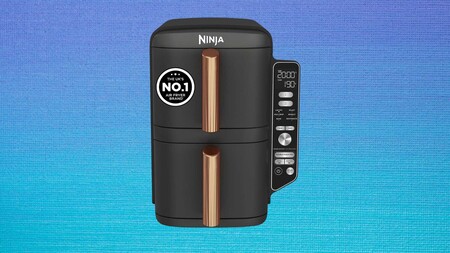
A 9.5-litre air fryer capable of cooking four layers of food simultaneously solves the one problem that has always made air frying frustrating for households feeding more than two people.
That drop in price comes on a machine built around two independent drawers, each able to run its own cooking programme, while a stacked meal rack adds a second level inside each drawer.
Advertisement
That four-level layout means a family roast and a tray of vegetables can finish cooking at exactly the same moment, feeding as many as eight people from one compact unit.
That capacity matters less if the food takes an evening to cook, which is why the Double Stack XL runs up to 55% faster than a conventional fan oven, while that same air fry function cuts fat by up to 75% compared with deep frying, letting weeknight chips and chicken thighs arrive genuinely crisp without a fryer.
Advertisement
Beyond air frying, six cooking functions cover roasting, baking, reheating and dehydrating, so the same drawers that crisp fries one night can dry fruit or bake a tray of cookies the next.
Despite that range of functions, the unit stands 30% slimmer than Ninja’s previous AF400 model and measures just 38.5cm tall, low enough to fit beneath most kitchen cabinets.
The trade-off is that a 9.5-litre double-drawer air fryer still needs a decent stretch of real counter space, and this particular version comes only in grey with no alternative colour options currently listed.
For anyone currently juggling a single-drawer air fryer at mealtimes, or cooking a full roast dinner in frustrating batches, the Ninja Double Stack XL at £199 removes that entire bottleneck.
Every drawer, crisper plate and stacked meal rack is fully dishwasher safe, which matters given how much more surface area this unit generates compared with a far more typical single-basket machine.
Advertisement
Advertisement
Ninja also backs the Double Stack XL with a free two-year guarantee once it has been registered, adding a layer of reassurance to a purchase that the discount alone already justifies.
Meta has a new AI model out, this time dedicated to generating and editing AI images. And yes, you can use it on Instagram. But if you have a public account, you need to change your settings now to avoid ending up the unwitting subject of anyone’s AI creations.
The model, called Muse Image, is the first creative model from the new family of Muse Spark models made by Meta’s superintelligence labs. The company said in a blog post that it’s built to handle more complex requests, create composite photos and edit existing images. It’s available now on the Meta AI app, Instagram and WhatsApp, with plans to eventually bring it to Facebook, Messenger and advertisers.
CEO Mark Zuckerberg showed off the new model on his Instagram on Tuesday. He showed some of the 30 new AI editing effects the model is powering for Instagram Stories, including images of numerous Zuckerberg clones, a 360 camera view with AI lead Alexandr Wang and an exposure portrait mode with Andrew Bosworth, Meta’s chief technology officer.
Advertisement
CEO Mark Zuckerberg demonstrates the new AI model’s editing abilities in Instagram stories featuring Alexandr Wang (center), Andrew Bosworth (right) and many AI clones of himself (left).
Mark Zuckerberg/Screenshot by CNET
This isn’t the first time an AI company has tried to entice people to use its creative AI by offering to place you and your friends into the AI scenery. That was OpenAI’s pitch when it launched its ill-fated Sora video app in 2024. But OpenAI still drew ire from regular people and celebrities for its role in easily creating deepfakes. Meta’s new AI model poses the same risk.
Let’s momentarily step aside from the fact that this new model will probably lead to even more AI slop on Instagram. And that the pictures you upload to the Meta AI app are used to improve Meta’s services. There’s an important detail in the settings everyone with a public Instagram account should know. If you’re over 18 and have a public account, anyone with a Meta AI account can “tag” you in their AI image prompts and create hyperrealistic AI images including your likeness — otherwise known as deepfakes.
Advertisement
How to prevent yourself from being deepfaked
I gave the new model a spin to see just how easy it could be to create deepfakes. My CNET colleague Abrar Al-Heeti has a public Instagram account, and I was able to make an AI image of her as a pirate in less than a minute by including her Instagram username in my prompt. When I tried the same for myself, tagging my private Instagram account, Meta AI couldn’t complete the request.
While Meta AI and I didn’t need to get my colleague Abrar Al-Heeti’s permission to make this AI-generated image of her as a pirate, I did get her consent before including it in this story.
Created by Katelyn Chedraoui using Meta AI
Meta confirmed to CNET that creators with a public Instagram account can block people from creating AI content with their likeness with a setting toggle. Go to Instagram Settings > Sharing and reuse > Toggle off “Allow people to reuse your content on Instagram and with AI features atMeta.” You can adjust this control for posts and reels. Private accounts automatically don’t have their content accessible for anyone to remix or create with. (After our testing, Al-Heeti turned off this permission.)
Advertisement
You can also limit your risk of being deepfaked when tagging yourself in an image request for the first time in the Meta AI app. It will walk you through some steps to help the app recognize you. That includes taking a picture of your face and, optionally, uploading three photos of yourself. In this process, you can choose who is allowed to use your likeness, including only yourself, followers you approve, mutuals or everyone. You can adjust this in the app by going to Settings > Your likeness.
These controls will be essential for professional creators and influencers, whose names and likenesses are their brand and therefore their livelihood. Meta says its models have built-in protections to prevent the model from creating illegal, abusive or defamatory content. But like we saw with Sora, motivated bad actors can get around a model’s safeguards. We will have to wait and see if Meta’s are up to the challenge.
In some parts of Canada, you’ll rarely hear someone use the phrase “whatever paddles your canoe” instead of the more usual “whatever floats your boat”– and apparently, at least for one Swede, that’s steam power. The video, linked and embedded below, is a detailed tour of a canoe equipped with a small boiler and an outboard motor that has been converted to run using steam pressure by [Kenneth Karlsson].
The canoe itself appears to be a Grumman of the “prospector” type, wide in body to hold all the gear you’d need for extended wilderness trips– or, in this case, a small boiler. Amidships is the ideal place, as it won’t affect the balance of the boat. Amidships is an odd place to put an outboard– in the North American homeland of the canoe, if you aren’t moving under your own power, it is more common to cut off the curved stern of the canoe and mount the outboard to the newly-made transom. [Karlsson]’s choice to put the outboard off one side will be less maneuverable than a stern mount, but saves the need to modify the canoe and makes for much shorter steam lines. Shorter steam lines means less hose to potentially leak and scald the occupants, as well as fewer losses, so we can’t really argue with the tradeoffs.
The engine is an old two-stroke outboard that has a single steam cylinder retrofitted to it, along with a heat exchanger to warm up lake water with exhaust steam before it heads the boiler. The water is filtered first, of course, but we do hope the new owner– who posts on YouTube with channel “Steam Canoe” is diligent about cleaning the boiler. It doesn’t look like super high pressure steam, but the vapour phase of water is always something to be respected.
Advertisement
If the potential of scalding steam leaks and boiler explosions put you off, but you still won’t pick up a paddle, canoes can be rigged with sails— or you can just hand the paddle to a robot arm. Though given this is Hackaday, maybe you’d rather skip the canoe and climb aboard the good ship Benchy instead.
Doom developer id Software is reportedly laying off about half its staff as part of Microsoft’s broader Xbox cuts. The reported layoffs potentially affects around 90 employees. Engadget reports: While neither Microsoft nor id Software have formally acknowledged the layoffs, one former member of the studio’s staff, Michael Maynard, has echoed the 50 percent figure on LinkedIn. According to at least one of Game Developer’s sources, that could translate to around 90 job cuts, though it’s so far unclear what departments at id Software have been hit hardest.
[…] Bloomberg reported yesterday that as part of the “reset” at Xbox, ZeniMax Media, the parent company of id Software, will be focusing on its biggest franchises — like The Elder Scrolls, Fallout, Wolfenstein and Doom — going forward. It’s possible that motivated the cuts to id Software, but the developer at least outwardly appears to be already heavily focused on Doom. The studio launched Doom: The Dark Ages in 2025 and an expansion to the game on July 7, 2026. Whatever the reason, the cuts at Xbox aren’t over: While Microsoft eliminated 1,600 roles alongside the announcement that Xbox is restructuring, it still plans to lay off another 1,600 employees over the coming months.
For much of the past decade, Xbox had one big idea: be the Netflix of gaming. Under Phil Spencer, Microsoft invested tens of billions of dollars into Game Pass, bought some of the industry’s biggest publishers, and pushed the idea that subscriptions, not consoles, would define gaming’s future. According to a new report from Bloomberg, that vision is now being rethought.
A new direction for Xbox
Rather than centering Xbox around subscriptions, Microsoft’s gaming business is reportedly beginning to place renewed emphasis on hardware, first-party games, and flagship franchises.
WomenWeAdmire
Bloomberg reports that Asha Sharma, who recently took over leadership of Xbox, is steering the business toward a more traditional strategy: one that focuses on selling consoles, building must-play exclusives, and treating Xbox hardware as a priority again instead of simply another way to access Game Pass.
Unsplash
The shift reportedly extends beyond consoles. Rather than pursuing ever-larger acquisitions, Microsoft’s gaming business is said to be leaning more heavily on its biggest existing brands, with Minecraft and King becoming increasingly central to Xbox’s long-term plans. Bloomberg notes that Minecraft’s steady profits had effectively been helping fund much of the wider Xbox business, a role that has only grown alongside King’s massive mobile business following the Activision Blizzard acquisition.
Gaming was never going to be Netflix
Bloomberg suggests the subscription-first strategy ultimately ran into a simple reality: people don’t consume games the way they consume movies or TV shows. Even after spending billions on Bethesda and Activision Blizzard, Game Pass never became the universal subscription service Microsoft had envisioned. Internally, executives also reportedly questioned whether putting blockbuster franchises like Call of Duty onto Game Pass on day one was the right long-term business decision, given how much revenue those games traditionally generate through full-price sales.
Microsoft / Xbox
That doesn’t mean Game Pass is disappearing. It’s still expected to remain a major part of Xbox’s ecosystem. But according to Bloomberg, it may no longer be the centerpiece of Microsoft’s gaming strategy. If anything, the report suggests Xbox is coming full circle.
After years spent trying to redefine what the platform should be, the company now appears to be rediscovering something the gaming industry has known all along: great hardware sells consoles, great exclusives sell hardware, and subscriptions work best when they support that ecosystem, not replace it.
Ready to choose your new ereader? Let’s get started…
Amazon Kindle Colorsoft vs Paperwhite: similarities & differences
Advertisement
In this section, I’ll be discussing the standard Kindle Paperwhite and Colorsoft models, as well as the Signature editions, but not the Kindle Scribe Colorsoft.
Let’s start with the similarities. Regardless of whether you buy a Colorsoft or Paperwhite, you’ll be getting a seven-inch, glare-free screen, IPX8 waterproofing, and an option of either 16 or 32GB of storage. All offer 300ppi resolution when used in black and white.
The big difference to know is that the Paperwhite models only display in black-and-white, whereas the Colorsoft Kindles can also display in color (at 150ppi, which is standard for a color ereader). This has a knock-on effect on battery life: Amazon says the Colorsoft models will last eight weeks on a single charge, whereas the Paperwhite can go up to 12 weeks. That’s based on half an hour of reading per day, on a brightness level of 13, which is just below halfway.
It also has an effect on price — regardless of if you opt for a Signature or standard model, at list price the Paperwhite Kindles are cheaper than the Colorsoft models.
Advertisement
Kindle Paperwhite models
There are two main Paperwhite models: the regular Paperwhite and the Paperwhite Signature. The only difference is that the Signature has double the storage (32GB compared to 16GB for the standard model).
Advertisement
Kindle Colorsoft models
There are three main Kindle Colorsoft options: the standard model, the Signature edition, and the Kindle Scribe Colorsoft. The first two are basically the same, except the Signature packs twice as much storage (16GB compared to 32GB). The Scribe Colorsoft offers writing capabilities alongside color reading, and it’s different enough that I’ve relegated it to the ‘Other options’ section of this article.
Amazon Kindle Colorsoft vs Paperwhite: which should I buy?
The only real reason to choose a Colorsoft over a Paperwhite is for its color display potential. Aside from that, the specs are either the same or better on the Paperwhite, and Paperwhite models are cheaper, too.
Advertisement
So how good is the color? Our tester was extremely impressed. You can get the full low-down in the Display section of our Kindle Colorsoft review, but the short version is that panning and zooming is smooth and speedy, with no ghosts or artifacts popping up, and refresh is “nearly undetectable”.
On the subject of picture quality, our tester had this to say: “The Kindle Colorsoft lights the color and black pixels evenly, and color pages look fantastic. They look like paper, as they should… Get an iPad if you want bright and saturated.” You can get a taster of what to expect in the carousel of images below.
Image 1 of 5
(Image credit: Philip Berne / Future)
(Image credit: Philip Berne / Future)
(Image credit: Philip Berne / Future)
(Image credit: Philip Berne / Future)
(Image credit: Future / Lance Ulanoff)
You can use color to highlight text in different hues, which could be useful to students, for example. However, the obvious market for a device like this is graphic novel fans. On this point, be aware that because the Kindle Colorsoft can’t run third-party apps, you’ll be limited to the titles available via Amazon’s own ComiXology platform. This offers a decent selection of comic books, but is more limited than the likes of Marvel Unlimited and DC Universe Infinite.
Note that you can read graphic novels on a Paperwhite, but they’ll just be in black and white. Just like on the Colorsoft, there’s a Panel view feature that expands each individual frame on the page — see it in action on a Paperwhite below.
Advertisement
(Image credit: Sharmishta Sarkar / TechRadar)
If that has convinced you that color is something you’ll want to make use of, buy a Colorsoft model. If not, pick up a Paperwhite and enjoy the cheaper cost and longer battery life.
Other Kindle options
If you’re in the market for a black-and-white ereader, you also have the option of a standard Kindle, which has a smaller screen than the standard Paperwhite and Colorsoft ereaders, is cheaper and lighter in weight too. There are a few concessions you’ll need to make, though: the battery life is on the shorter side, and it’s not waterproof.
There’s also the Kindle Scribe and Kindle Scribe Colorsoft, which you can use for writing as well as reading. Both have larger (11-inch) screens, and neither are waterproof. Note that if you go for a Scribe Colorsoft, you can’t use the two parts in tandem — so you can’t take notes on a color page — which weakens the proposition somewhat.
Amazon and B&H are competing for your business by offering a $150 discount on Apple’s current 15-inch MacBook Air with an M5 chip.
You can pick up the M5 MacBook Air 15-inch at the discounted price of $1,349 when you opt for the sleek Midnight finish at Amazon and B&H.
At $150 off, this is the lowest price available on the standard model with 16GB of RAM and 512GB of storage per our 15-inch MacBook Air M5 Price Guide, but you can also shop blowout specials on remaining M4 inventory at B&H, which we’ve included below.
Considering Apple raised prices across the latest M5 models, a closeout configuration can provide you with additional storage and/or memory at a lower price point than comparable models in the 2026 M5 line.
Our MacBook Air Price Guide is home to dozens more deals across the 13-inch and 15-inch product lines, with every configuration eligible for a discount.





































































You must be logged in to post a comment Login