
Business
GameStop Shares Dip Modestly as Retailer Navigates Post-Meme Era Challenges

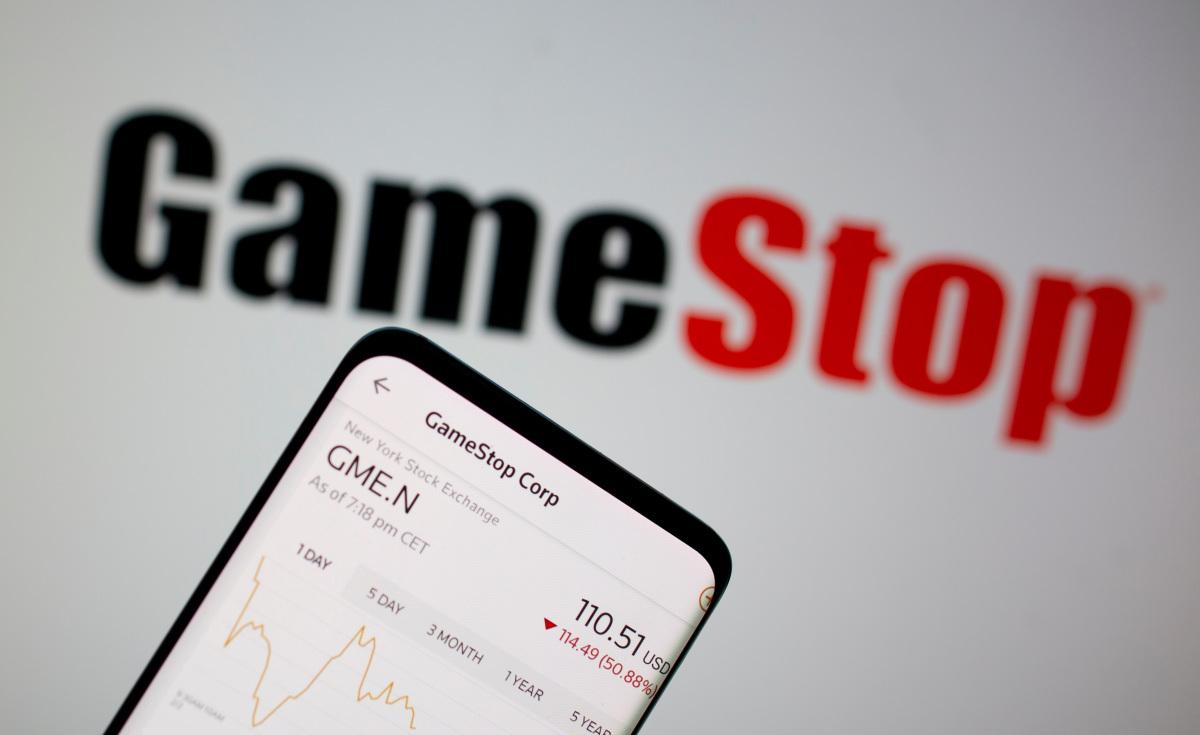
GameStop Corp. shares traded lower Tuesday, reflecting ongoing volatility for the video game retailer as it continues its evolution from brick-and-mortar mainstay to a more diversified player in a rapidly changing industry.
The stock fell about 1.34%, or 31 cents, to $22.42 in morning trading. The modest decline came amid broader market fluctuations and as investors monitored the company’s strategic initiatives following years of intense public attention tied to its meme stock status.
GameStop has been working to transform its business model amid declining physical game sales and the rise of digital downloads. Under leadership including Chairman Ryan Cohen, the company has explored e-commerce enhancements, potential acquisitions and cost-cutting measures to improve profitability. Recent reports indicate active pursuit of larger opportunities, including interest in platforms like eBay, as it seeks to leverage its brand and customer base.
The retailer still operates hundreds of stores across North America and Europe, serving enthusiasts with new and used games, consoles, accessories and collectibles. However, industry shifts toward cloud gaming, subscription services and direct-to-consumer models have pressured traditional retail footprints. GameStop has responded by closing underperforming locations, investing in online capabilities and expanding into areas like PC gaming and esports merchandise.
Financial results in recent quarters have shown mixed progress. While revenue has faced headwinds from reduced hardware cycles, efforts to stabilize margins through inventory management and private-label initiatives have yielded some positive results. The company maintains a sizable cash position, providing flexibility for strategic moves but also inviting scrutiny over capital allocation.
GameStop’s journey captivated markets in 2021 when retail investors on platforms like Reddit drove a massive short squeeze, sending shares from under $20 to nearly $500 at peaks. That episode highlighted the power of coordinated online communities and reshaped conversations around market mechanics, short selling and retail participation. Though the frenzy subsided, the stock has remained more volatile than peers, occasionally spiking on news or social media sentiment.
Analysts continue to debate the company’s valuation and prospects. Some see potential in a loyal customer base and opportunities in gaming-adjacent businesses, while others cite structural challenges in physical retail and question the sustainability of non-core ventures. The stock’s price-to-sales multiple reflects expectations of successful pivots, but execution remains key.
Chairman Ryan Cohen, who rose to prominence through his involvement with Chewy and subsequent stake in GameStop, has influenced direction toward technology and efficiency. His vision emphasizes customer experience, digital transformation and prudent financial management. Recent governance changes and adjusted financial targets underscore efforts to professionalize operations.
The broader video game industry faces its own dynamics. Major publishers like Microsoft, Sony and Nintendo navigate console cycles, while mobile and PC gaming expand. GameStop’s partnerships with these players remain important, but competition from Amazon, Best Buy and direct digital storefronts intensifies.
For investors, GameStop represents a high-risk, high-reward proposition tied to meme culture and turnaround potential. Short interest, though lower than 2021 peaks, persists as some bet against full recovery while others anticipate catalysts from new initiatives. Trading volume often surges with news, reflecting its dedicated following.
The company has explored diversification beyond gaming retail. Speculation around technology investments, e-commerce platforms or even entertainment ventures has surfaced periodically. Any major acquisition could significantly alter its trajectory and market perception.
GameStop’s balance sheet strength provides a buffer. With substantial cash reserves and minimal debt in recent periods, it has avoided the distress faced by some traditional retailers. However, prolonged unprofitability could erode that advantage if strategic bets fail to generate returns.
Community sentiment on social media remains a factor. The “ape” investor movement that fueled earlier rallies still monitors developments closely, though influence has waned compared to 2021. Management has focused on fundamentals over short-term hype.
Looking ahead, the holiday season and new console releases could provide tailwinds for core sales. Back-to-school periods and major game launches typically boost traffic. Success in online fulfillment and loyalty programs will be critical for competing in omnichannel retail.
GameStop’s history dates to its founding in 1984 as a small software retailer. It grew into a category leader through acquisitions and mall-based expansion. The shift to digital disrupted that model, prompting multiple turnaround attempts over the past decade.
Current leadership emphasizes agility. Store associates receive training for enhanced customer service, while technology investments target better inventory visibility and personalized marketing. The company has also ventured into collectibles and merchandise, capitalizing on pop culture trends.
Regulatory and market structure issues stemming from 2021 continue influencing broader discussions. GameStop’s experience highlighted settlement cycles, payment for order flow and short-sale transparency, prompting some regulatory reviews though major overhauls remain pending.
For employees and franchisees, the company’s path forward carries direct implications. Store rationalization has reduced the workforce, but investments in remaining locations aim to create more sustainable operations. Community events and in-store experiences help differentiate from pure online competitors.
Analysts’ price targets vary widely, reflecting uncertainty. Bullish cases cite undervaluation and optionality from cash reserves and brand strength. Bearish views point to secular decline in physical media and execution risks in new ventures.
Tuesday’s trading fit a pattern of relatively contained moves amid low immediate catalysts. With earnings not imminent, focus remains on operational updates and industry trends. Any news on acquisitions or partnerships could quickly shift momentum.
GameStop’s market capitalization hovers around $10 billion, making it a mid-cap name with outsized attention. Its inclusion in certain indices and ETFs ensures steady institutional interest alongside retail flows.
As the gaming industry evolves toward immersive experiences, metaverses and cross-platform play, GameStop must position itself as more than a product seller. Potential roles in events, content creation or technology services could open new revenue streams.
The company’s story resonates beyond finance. It symbolizes retail disruption, investor empowerment and adaptation challenges in legacy businesses. For many, GameStop evokes memories of discovering games in physical stores, a cultural touchpoint undergoing digital reinvention.
Investors will watch for signs of strategic clarity. Successful navigation could reward patient shareholders, while missteps might pressure the stock further in a competitive landscape.
In the near term, modest movements like Tuesday’s reflect digestion after earlier volatility. Broader market sentiment toward consumer discretionary stocks also influences performance amid economic data and consumer spending trends.
GameStop’s legacy includes pioneering loyalty programs and trade-in models that shaped industry practices. Preserving customer relationships while modernizing remains central to its strategy.
As shares traded around $22, the market weighed transformation potential against retail headwinds. The coming months may bring clarity through operational results and any transformative announcements.



Dhierin-Perkash Bechai is an aerospace, defense and airline analyst.
Dhierin runs the investing group The Aerospace Forum, whose goal is to discover investment opportunities in the aerospace, defense and airline industry. With a background in aerospace engineering, he provides analysis of a complex industry with significant growth prospects, and offers context to developments as they occur, describing how they might affect investment theses. His investing ideas are driven by data informed analysis. The investing group also provides direct access to data analytics monitors.
Learn more.
Analyst’s Disclosure: I/we have no stock, option or similar derivative position in any of the companies mentioned, and no plans to initiate any such positions within the next 72 hours. I wrote this article myself, and it expresses my own opinions. I am not receiving compensation for it (other than from Seeking Alpha). I have no business relationship with any company whose stock is mentioned in this article.
Seeking Alpha’s Disclosure: Past performance is no guarantee of future results. No recommendation or advice is being given as to whether any investment is suitable for a particular investor. Any views or opinions expressed above may not reflect those of Seeking Alpha as a whole. Seeking Alpha is not a licensed securities dealer, broker or US investment adviser or investment bank. Our analysts are third party authors that include both professional investors and individual investors who may not be licensed or certified by any institute or regulatory body.


I’m a passionate investor from the Netherlands with 12 years of stock market experience. My articles usually contain a good overview of important investment criteria. A stock for my portfolio is of interest to me if the company has the following characteristics:1. Companies that are growing in both revenue, earnings and free cash flow.2. Companies that have excellent growth prospects.3. Stocks with favorable valuations.I prefer steadily growing companies with high free cash flow margins, dividend stocks and stocks with generous share repurchase programs.Disclaimer: My articles do not provide financial advice, they reflect my own findings and insights.
Analyst’s Disclosure: I/we have no stock, option or similar derivative position in any of the companies mentioned, and no plans to initiate any such positions within the next 72 hours. I wrote this article myself, and it expresses my own opinions. I am not receiving compensation for it (other than from Seeking Alpha). I have no business relationship with any company whose stock is mentioned in this article.
Seeking Alpha’s Disclosure: Past performance is no guarantee of future results. No recommendation or advice is being given as to whether any investment is suitable for a particular investor. Any views or opinions expressed above may not reflect those of Seeking Alpha as a whole. Seeking Alpha is not a licensed securities dealer, broker or US investment adviser or investment bank. Our analysts are third party authors that include both professional investors and individual investors who may not be licensed or certified by any institute or regulatory body.


The Trend Investing group includes qualified financial personnel with a Graduate Diploma in Applied Finance and Investment and well over 20 years of professional experience in financial markets. They search the globe for great investments with a focus on trending and emerging themes. The current focus is on electric vehicles, the EV metals supply chain, stationary energy storage and AI.They lead the investing group of the same brand name, Trend Investing. Features of the service include: Access to the Trend Investing portfolio, 7 monthly news updates, a monthly macro trends update, stock watchlist, CEO interviews, and direct access to the community and group leaders in chat.
Analyst’s Disclosure: I/we have a beneficial long position in the shares of TESLA (TSLA), BYD CO [HK:1211], GEELY AUTOMOBILE HOLDINGS LTD. [HK:0175], XIAOMI CORPORATION [HK:1810], ZHEJIANG LEAPMOTOR TECHNOLOGY CO., LTD [HK:9863], CHERY AUTOMOBILE [HK:9973], BAIDU [HK:9888], GOOGL, APTERA MOTORS (SEV), CONTEMPORARY AMPEREX TECHNOLOGY CO [HK:3750] either through stock ownership, options, or other derivatives. I wrote this article myself, and it expresses my own opinions. I am not receiving compensation for it (other than from Seeking Alpha). I have no business relationship with any company whose stock is mentioned in this article.
This article is for ‘information purposes only’ and should not be considered as any type of advice or recommendation. Readers should “Do Your Own Research” (“DYOR”) and all decisions are your own. See also Seeking Alpha Terms of Use of which all site users have agreed to follow. https://about.seekingalpha.com/terms
Seeking Alpha’s Disclosure: Past performance is no guarantee of future results. No recommendation or advice is being given as to whether any investment is suitable for a particular investor. Any views or opinions expressed above may not reflect those of Seeking Alpha as a whole. Seeking Alpha is not a licensed securities dealer, broker or US investment adviser or investment bank. Our analysts are third party authors that include both professional investors and individual investors who may not be licensed or certified by any institute or regulatory body.
Business
GAIL India shares tumble 5% despite Q1 net profit doubling to Rs 4,665 crore. Buy, sell or hold?

Sequentially, the surge in profit was even sharper, rising more than 214% quarter-on-quarter (QoQ) from the Rs 1,485 crore reported in the January-March quarter of FY26. The company’s shares tumbled to Rs 172.71 apiece on Monday morning.
The gas company’s revenue from operations rose nearly 17% year-on-year (YoY) to Rs 41,350 crore in Q1 FY27, from Rs 35,429 crore reported in the corresponding quarter of FY26. EBITDA stood at Rs 7,573 crore, versus Rs 2,703 crore in the previous quarter.
During Q1 of FY27, the company recorded a capex of Rs 6,176 crore, as against the annual planned capex of around Rs 11,500 crore, in line with its long-term growth strategy. “The sequential increase in natural gas transmission and LHC production underscores the strength of GAIL’s core infrastructure and liquid hydrocarbon operations, while lower gas marketing and polymer volumes reflect the impact of external disruptions during the quarter,” it added.
JM Financial on GAIL share price
JM Financial said GAIL’s EBITDA was significantly higher than estimated, led by substantially higher gas trading EBITDA. That said, this was largely a one-off driven by high margin in JCC crude-linked LNG and extra margin earned in 20–25% open-ended US HH volume, the brokerage noted. However, earnings beat was also aided by better EBITDA in the gas transmission segment, LPG, OHC and petchem segment, it further said, adding that LPG pipeline segment’s EBITDA was slightly lower.
During the conference call, JM Financial noted that GAIL India’s management reiterated gas trading PBT guidance of Rs 45 billion for FY27, while guiding for FY27 gas transmission volume at 123 mmscmd assuming the Middle East tensions continue. All in all, the brokerage raised FY27–29 EBITDA estimates by 3–4%, factoring in Q1 FY27 results and management guidance.

“Furthermore, gas trading profitability is likely to remain robust for GAIL over the medium term given high spot LNG prices and oil-linked prices, while US HH gas price outlook shall stay moderate given expectations of strong growth in the US domestic gas output,” it added.
Also read | High dividend yield stocks: Vedanta, Coal India among 15 largecap stocks with high dividend yields. Do you own any?JM Financial reiterated its ‘Buy’ call on the shares of GAIL India, and raised its target price to Rs 210 apiece, implying nearly 16% upside potential from the stock’s previous closing price.
GAIL share price
GAIL India shares have gained more than 1% YTD, but have recorded marginal losses in a week, month and a year.
In the longer term, the stock has delivered 50% returns over three years and 82% returns over five years.
Also read | Why is the market rising today?
(Disclaimer: Recommendations, suggestions, views and opinions given by the experts are their own. These do not represent the views of The Economic Times)

Premier Roger Cook has faced a grilling over a decision to block Labor’s candidate for Secret Harbour from speaking to the media on the day of the state government’s biggest by-election announcement.
Business
KOSPI Falls More Than 5% as Investors Lock In Profits After Friday’s Record-Breaking Rally Across Seoul

South Korea’s benchmark KOSPI index fell 5.36% on Monday, dropping 353.68 points to trade at 6,241.77, as investors locked in profits following the index’s historic single-day surge just two trading sessions earlier.
The index opened sharply lower Monday, initially falling 3.6% before extending losses to as much as 4.25%, dropping 280.05 points to 6,315.4 shortly after 9:15 a.m. local time, according to the Korea JoongAng Daily. The pullback continued through the morning session, pushing the decline past 5% by early afternoon.
Monday’s retreat came directly on the heels of Friday’s record-breaking rally, when the KOSPI surged 17.91% in a single session, the largest one-day percentage gain in the index’s history, following blockbuster earnings from Microsoft, Amazon and Meta Platforms that had eased broader concerns about the sustainability of artificial intelligence infrastructure spending. That Friday rally itself followed a brutal three-session stretch in which the KOSPI had plummeted more than 17%, at one point falling roughly 40% from its June peak.
Notably, Monday’s decline came even as Wall Street posted a positive session heading into the new trading week, with robust earnings from Amazon continuing to fuel investor optimism toward the broader artificial intelligence sector. That divergence between a positive US session and a sharply negative Korean one underscored how much of Friday’s historic rally had been driven by profit-taking and short-covering dynamics specific to the Korean market, rather than a durable, fundamentals-driven shift in sentiment toward Korean chip stocks.
The current bout of extreme volatility fits a broader pattern that has defined South Korean equity markets throughout 2026. The Korea Exchange has repeatedly triggered trading halts, including both sell-side sidecars, which temporarily suspend program sell orders, and circuit breakers, which pause all trading entirely, on numerous occasions this year. By late June, the exchange had already logged close to 30 sidecar activations and five circuit breakers for the year, a pace that had already surpassed the KOSPI’s prior annual record of 26 sidecar halts, set during the 2008 global financial crisis.
Much of the extreme volatility has been driven by the outsized weighting of Samsung Electronics and SK Hynix within the index. The two chipmakers together account for roughly half of the KOSPI’s total market capitalization, meaning sharp swings in either stock, in either direction, tend to translate directly into equally dramatic swings for the headline index. Both companies have repeatedly whipsawed between steep declines and sharp rebounds in recent weeks, tracking a broader global reassessment of artificial intelligence-related chip demand and valuations that has played out across markets in the United States and Asia alike.
Frank Benzimra, head of Asia equity strategy at Societe Generale in Hong Kong, pointed to the concentrated nature of the recent selling pressure when South Korean markets first began plunging in late July. “If you look at what is falling in the market, it has been the stocks in which you have the most leverage,” Benzimra said, according to Al Jazeera, highlighting how heavily leveraged positions tied to chip and technology stocks have amplified the scale of the market’s swings in both directions.
The scale of the recent turbulence has been extraordinary even by the standards of a market that had posted extraordinary gains over the prior 18 months. South Korean equities surged roughly 75% during 2025, driven substantially by the global boom in artificial intelligence and semiconductor demand, before extending those gains with another roughly 50% climb earlier in 2026 as global capital continued flowing into the country’s technology sector. That backdrop of extraordinary prior gains has left the index unusually vulnerable to sharp reversals whenever sentiment toward AI-related chip demand shifts, given how significantly valuations across the sector had climbed during the preceding rally.
South Korean regulators have moved to address the underlying volatility directly in recent days. New cash-deposit requirements for investors using leveraged exchange-traded funds took effect July 31, a change specifically designed to reduce the kind of mechanically amplified trading swings that have repeatedly gripped both the KOSPI and the smaller KOSDAQ index throughout the year.
With the KOSPI now retreating sharply from Friday’s historic gain, market analysts continue to caution against reading too much into any single day’s move given the scale of the index’s recent whipsaw trading. Investors are likely to remain focused in the coming sessions on further earnings reports from major global technology companies, along with any additional developments involving Samsung and SK Hynix specifically, as key factors determining whether South Korean equity markets can find a more stable footing following one of the most volatile stretches in the exchange’s history.


I am an individual investor that is now fully focus on managing my own capital that I have saved up over the years. My investing background spreads across a wide spectrum as I believe there are merits to each approach, for instance: Fundamental investing [Bottoms-up etc.], Technical investing [historical charts analysis], and to some extend momentum investing [share price reaction post earnings etc.]. Over the years, I have used the positive aspects of each approach to hone my investing process. The reason to write on SeekingAlpha is to use this platform as a tracker for my investing ideas performance, and also to connect with like-minded investors that have the same investing interest.
Analyst’s Disclosure: I/we have no stock, option or similar derivative position in any of the companies mentioned, and no plans to initiate any such positions within the next 72 hours. I wrote this article myself, and it expresses my own opinions. I am not receiving compensation for it (other than from Seeking Alpha). I have no business relationship with any company whose stock is mentioned in this article.
Seeking Alpha’s Disclosure: Past performance is no guarantee of future results. No recommendation or advice is being given as to whether any investment is suitable for a particular investor. Any views or opinions expressed above may not reflect those of Seeking Alpha as a whole. Seeking Alpha is not a licensed securities dealer, broker or US investment adviser or investment bank. Our analysts are third party authors that include both professional investors and individual investors who may not be licensed or certified by any institute or regulatory body.

Microsoft Just Silenced The AI Skeptics, Why I See 20%+ Upside
Business
Meghan Markle Wanted to Ensure “Family Harmony” as Her Kids Met King Charles, a Royal Expert Suggests

Meghan Markle’s decision to join Prince Harry and their two children for last month’s private reunion with King Charles III at Highgrove House was aimed at presenting a unified family front to Archie and Lilibet, according to veteran royal commentator Jennie Bond.
The Duchess of Sussex traveled to Britain alongside Harry, Archie and Lilibet for the meeting at Highgrove, the king’s private Gloucestershire estate, marking the first time Charles had seen his two grandchildren in person in more than four years and the first time Meghan had returned to the UK since 2022. Buckingham Palace confirmed the gathering shortly after it occurred but released no further details or photographs.
Bond, a former BBC royal correspondent, told the Mirror that Meghan’s presence at the reunion served an important purpose for how the children experienced the visit. “It’s a good thing that [Meghan] was part of the family reunion at Highgrove a few weeks ago,” Bond said. She argued that excluding Meghan from the gathering would have complicated the experience for Archie and Lilibet. “The children deserve to see some family harmony: it would have been damaging to have to explain that their mother wasn’t invited,” Bond said.
Bond also offered her own read on where Meghan’s broader focus currently lies, suggesting the duchess’s attention remains centered on the family’s life away from royal duties. “I think her eyes are firmly set on their lives in California, their children and her business ventures,” Bond said.
The Highgrove meeting followed a gradual, incremental thaw in relations between Harry and his father that had been building for months beforehand. In September 2025, Harry and Charles held a private tea at Clarence House, their first in-person meeting in 19 months, which Buckingham Palace also confirmed at the time. That earlier meeting came after Harry told the BBC in May 2025 that his father would not speak to him “because of this security stuff,” while expressing hope for reconciliation. “I would love reconciliation with my family,” Harry said in that interview. “There’s no point in continuing to fight anymore. Life is precious.”
Harry and Meghan stepped back from official royal duties in 2020 and relocated to California, a decision that ended Harry’s automatic entitlement to UK police protection and has remained a persistent point of tension between the couple and the royal family. Harry has pursued legal challenges over his security arrangements in the years since, losing his most recent appeal earlier this year. That unresolved dispute shaped much of the planning around the Highgrove visit, with reports beforehand questioning whether it would be safe for Meghan and the children to travel given the lack of state-funded protection.
The relationship between Harry and the rest of the family has remained strained well beyond the security dispute, particularly following the 2023 publication of Harry’s memoir, “Spare,” in which he made pointed and personal claims about tensions with his brother, Prince William, and other family members. Notably absent from the Highgrove reunion were William and Catherine, Princess of Wales, who instead appeared together at a separate public event in Windsor the same day. Royal editor Roya Nikkhah of The Sunday Times has reported that William and Harry have not seen or spoken to each other since Queen Elizabeth II’s funeral in 2022, writing that William is unlikely to welcome his father’s outreach to the Sussexes.
The Highgrove visit was not the only significant milestone in the family’s recent reconciliation efforts. Prior to the meeting, reports had indicated King Charles was open to allowing Harry and Meghan to stay at Highgrove during future UK visits, a gesture some royal watchers interpreted as an effort to offer the couple greater privacy compared with staying at more heavily scrutinized royal residences. Meghan and the children had not previously visited the UK together with Harry since the funeral of Queen Elizabeth II in September 2022.
Bond’s comments reflect one interpretation among several that have circulated among royal commentators regarding the significance of Meghan’s inclusion in the Highgrove gathering, with observers broadly divided over whether the visit signals a meaningful and lasting shift in relations between the Sussexes and the wider royal family or represents a more limited, one-off gesture tied specifically to allowing Charles time with his grandchildren.
As of early August, neither Buckingham Palace nor representatives for the Sussexes have provided additional public comment on the Highgrove meeting beyond confirming that it took place, and no further details have emerged regarding whether additional visits or meetings between the two branches of the family are being planned in the near future.

Yen’s to-do list gets harder from here

Sunday in the Park With George Reacts to Ariana Grande’s Break

Cowboys Legend Dez Bryant Reveals His ‘Face of the WNBA,’ and It’s Not Caitlin Clark, Paige Bueckers, or Angel Reese

Meta straps on a ‘Kick Me’ sign by mistakenly taking down video by India’s prime minister


-

 Business4 days ago
Why Trees Belong on the Risk Register
-

 Fashion3 days ago
Weekend Open Thread: Wit & Wisdom
-

 Politics2 days ago
Meta enters AI-training agreement with far-right ‘propaganda rag’ Newsmax
-
 Entertainment5 days ago
‘Stargate’ Creator’s New Sci-Fi Series Returns for Season 3 Tomorrow
-

 Politics7 days ago
Luke Littler dismantles Gerwyn Price to retain title in Blackpool
-

 Crypto World2 days ago
MicroStrategy Post-Earnings CLARITY Act Push Could Add New Catalyst for Its Stock
-

 Politics6 days ago
The Part of the Electric Transition Nobody Wants to Discuss
-

 Business5 days ago
Major shareholder moves on Canyon
-

 Crypto World2 days ago
XRP Ledger v3.3.0 brings five institutional features
-

 News Videos4 days ago
Bitcoin Enters the 3rd Stage of the Bear Market
-

 Crypto World5 days ago
Kraken Enables Retail Access to Jersey Mike’s IPO via Tokenized Shares
-

 Tech6 days ago
New macOS Sequoia & Sonoma security updates for older Macs
-

 News Videos5 days ago
Claude: Build Financial Dashboards in Minutes (2026)
-

 Politics4 days ago
Luke Littler’s dominance sparks GOAT debate
-

 Business5 days ago
Johnson & Johnson agrees to $5.5B settlement over talc cancer claims
-

 Sports3 days ago
Seema Kaliramna Wins Discus Throw Bronze, Takes India’s CWG Medals Tally To 17
-

 Crypto World20 hours ago
Crypto PAC spending tops $2M in Michigan House race
-

 Business3 days ago
Trump Announces Hamas Disarmament Agreement as Iran Strikes Kuwait Air Base and US Attacks Pause Overnight
-

 Tech5 days ago
Gemini can now summarize the messiest comment threads in Google Docs
-

 Tech1 day ago
ESET tracks rise in malicious AI skills and adaptable malware
You must be logged in to post a comment Login