Jury selection begins Monday in Musk v. Altman, the federal trial over whether OpenAI’s nonprofit-to-profit conversion constitutes unjust enrichment and breach of charitable trust. Musk dropped fraud claims Friday to sharpen focus on the two remaining counts. The most damaging evidence is Greg Brockman’s 2017 diary entry calling the nonprofit commitment “a lie.” Judge Gonzalez Rogers found “ample evidence” and rejected nearly every dismissal attempt. The advisory jury will hear testimony from Musk, Altman, Nadella, Murati, and Sutskever, but the judge alone decides remedies, which could include $150 billion in damages and the unwinding of the conversion.
Jury selection begins Monday in Oakland federal court for the trial that will determine whether OpenAI’s conversion from a nonprofit to one of the most valuable companies in the world was a breach of charitable trust. Elon Musk, who co-founded OpenAI in 2015 and donated at least $38 million to it, is suing Sam Altman, Greg Brockman, and OpenAI on two remaining claims: unjust enrichment and breach of charitable trust. He wants up to $150 billion in damages directed to the nonprofit arm, the ouster of Altman and Brockman from leadership, and a court order unwinding the for-profit conversion. On Friday, Musk voluntarily dropped his fraud and constructive fraud claims, narrowing the case from 26 claims to two but sharpening the focus on the question that has defined the dispute since it began: did OpenAI’s leadership promise a nonprofit and build a $852 billion company instead?
Advertisement
The evidence
The most damaging piece of evidence in the case is not an email from Sam Altman. It is a diary entry from Greg Brockman, OpenAI’s co-founder and president, written in 2017: “I cannot believe that we committed to non-profit if three months later we’re doing b-corp then it was a lie.” Judge Yvonne Gonzalez Rogers, who is presiding over the case and who will make the final ruling on remedies if the jury finds liability, cited that entry directly in her January 15 ruling that sent the case to trial. She found “ample evidence” supporting Musk’s claims and rejected “nearly every attempt by OpenAI and Microsoft to make the lawsuit disappear.” The ruling was a 28-page signal that the court considers the case serious enough for a jury to hear, which in itself is a significant validation of the underlying allegations.
Musk’s legal team has also produced a 2017 email in which Altman claimed he remained “enthusiastic about the non-profit structure” after Musk threatened to cut off funding, a statement that Musk’s attorneys frame as a misrepresentation designed to keep donations flowing while leadership privately planned a different path. Hundreds of pages of discovery materials unsealed from depositions in the autumn of 2025 include emails, texts, and Slack messages that Musk’s team says show leadership “said one thing publicly and planned something completely different privately.” A February 2023 text from Altman to Musk, sent after Musk had publicly criticised OpenAI, read: “You’re my hero and that’s what it feels like when you attack OpenAI.” The witness list reads like a Silicon Valley tell-all: Musk, Altman, Microsoft CEO Satya Nadella, former OpenAI CTO Mira Murati, co-founder Ilya Sutskever, and Shivon Zilis.
OpenAI has called the lawsuit “baseless” and described it as a “harassment campaign that’s driven by ego, jealousy and a desire to slow down a competitor.” The competitor is xAI, the AI company Musk founded in 2023 and recently merged with SpaceX in an all-stock transaction valuing the combined entity at $1.25 trillion.Musk’s own AI venture was folded into SpaceX in a $1.25 trillion all-stock dealthat raised its own corporate governance questions, a fact OpenAI’s defence team will use to argue that Musk’s motivations are competitive rather than charitable. OpenAI contends that Musk left the board in February 2018, reneged on a larger planned donation, and has no standing to dictate the organisation’s structure years after his departure. Judge Gonzalez Rogers herself noted that “this country likes competition,” flagging the potential self-interest in Musk’s claims.
The structural defence is that OpenAI’s conversion was reviewed by attorneys general in both California and Delaware, that the nonprofit entity now operates as the OpenAI Foundation holding approximately 26% of the company’s valuation, roughly $130 billion, and that the Foundation retains oversight of mission alignment and the ability to appoint members of the for-profit board.The $25 billion commitment the Foundation announced when OpenAI completed its recapitalisationmakes it one of the most well-endowed philanthropic organisations in the world. OpenAI argues this structure preserves the charitable mission while enabling the scale of investment required to pursue artificial general intelligence. Altman, Brockman, and Microsoft have all denied wrongdoing.
The structure
The trial structure is unusual. The nine-member jury’s verdict on liability will be advisory only. Judge Gonzalez Rogers, not the jury, will make the final determination on both liability and remedies. Opening arguments are expected Tuesday. The liability phase runs through mid-May. If OpenAI is found liable, the remedies phase begins May 18, where the court will consider Musk’s requests for damages, the ouster of leadership, and the unwinding of the conversion. The advisory jury format means that even a unanimous jury verdict does not bind the judge, but a strong jury consensus would carry significant moral authority in the judge’s deliberations.
Advertisement
Musk’s decision to drop the fraud claims on Friday was strategic, not a concession. Fraud requires proving intentional deception, a higher evidentiary bar that would have diverted the trial into arguments about Altman’s state of mind. Unjust enrichment and breach of charitable trust focus on outcomes rather than intent: did the conversion enrich insiders at the expense of the charitable mission, and did it violate the trust under which the nonprofit’s assets were held? These claims are easier to prove because the facts are largely undisputed. OpenAI was founded as a nonprofit. It converted to a for-profit. Its leaders hold equity in the for-profit entity. The question is whether that sequence constitutes a legal violation, not whether anyone intended it to be one. In his April 2026 amendment, Musk asked that Altman and Brockman be required to hand over “all equity and other personal financial benefits they obtained as a result of OpenAI’s for-profit operations” to the OpenAI charity.
OpenAI quickly stepped in to fill Anthropic’s Pentagon contract with no usage restrictionsafter Anthropic refused the military work on principled grounds, a contrast that has become part of the broader governance debate about whether OpenAI’s “benefit all of humanity” charter survived the conversion. Eyes on OpenAI, a coalition of more than 60 California nonprofits, has separately argued that the restructuring deal is “full of holes” and could establish a precedent for startups to use nonprofit status for tax advantages before converting to for-profit. Public Citizen and the San Francisco Foundation have urged the California attorney general to ensure that conversion payments go to a new, independent charitable enterprise rather than one controlled by the same leadership that approved the conversion.
The trial is not only about OpenAI. It is about whether the nonprofit-to-profit conversion model is legally sustainable in AI. OpenAI was not the first technology organisation to start as a nonprofit and accumulate enormous value. Mozilla did. Wikipedia resisted. The question the Oakland courtroom will address over the next month is whether the people who built OpenAI with charitable donations and a stated commitment to benefit humanity can legally convert that work into an $852 billion for-profit enterprise and keep the equity. Musk says they cannot. Altman says the conversion serves the mission better than the original structure ever could. Brockman’s diary says it was a lie. The jury will hear all of it, and the judge will decide what it means.
As a gamer, I’m enjoying the current renaissance of video game adaptations. Whether it’s the new 3D-animated Super Mario Galaxy Movie or Sonic movies or award-winning TV series like The Last of Us, Fallout and Cyberpunk: Edgerunners, Hollywood is now filled with creators who are actually fans of the games they’re adapting, a shift from the 1990s when licenses were often purchased just to cash in on younger audiences.
On Monday, A24 revealed the cast of the live-action adaptation of the Elden Ring movie, which will be directed by Alex Garland (Civil War, Annihilation) and released on March 3, 2028. While this looks promising on paper, it’s hard to ignore the scale of the challenge to adapt a game known for its personality-less protagonist, cryptic lore and multiple endings. Still, there is reason to believe this could become one of the most successful video game adaptations.
To start, A24, the studio behind the production, is known for acclaimed films such as The Brutalist, Moonlight and Everything Everywhere All at Once — all very different films following unique, humanistic visions. While the studio typically produces smaller films with budgets under $50 million, the Elden Ring movie is reportedly set to exceed a $100 million budget.
Advertisement
Filming is already underway, and leaked set photos show what appears to be an almost perfect recreation of locations and scenes from the game. On Wednesday, a video uploaded to YouTube showed a crowd cheering during the hanging of a character known as the Dung Eater, closely mirroring a moment from the game’s opening intro cinematic.
Watching that short clip of a character who isn’t central to the story, yet is depicted with such accuracy, is astonishing. My biggest concern, though, is Elden Ring’s story. Unlike some other adaptations in development, such as Death Stranding, The Legend of Zelda and Resident Evil, Elden Ring is just one game with one DLC (Shadow of the Erdtree) and one multiplayer spinoff (Nightreign). That’s it.
Even so, developer FromSoftware packs an immense amount of lore into the game, though not in the traditional sense through dialogue or readable documents. Instead, as in its other titles, the studio distributes background details about characters and the world through descriptions of items, weapons, armor and spells.
Advertisement
This approach to world-building, which FromSoftware first used in 2009’s Demon’s Souls, is like a jigsaw puzzle. But instead of assembling pieces to form a picture, it’s about taking two or three sentences and building an entire book. Literally, fans who create YouTube videos about the game’s lore are now publishing a 400-page book.
Not only is there a vast amount of lore to dig into, the Elden Ring’s sheer scope is immense. The game’s main story follows the player character’s journey to become an Elden Lord in the Lands Between, a god over mysterious undying lands. That quest is shaped by wars and betrayals that occurred long before the events of the game. It unfolds like a season of Game of Thrones, which is fitting given that George R. R. Martin helped develop Elden Ring’s story.
— 🧸 JustGavinBennett 🧸 (@JustGavNBennett) April 22, 2026
Fortunately, there’s hope that director Alex Garland understands the assignment when it comes to adapting Elden Ring. Unlike earlier video game adaptations, where screenwriters were often tasked with making sense of stories from games they hadn’t played and forcing them into a 90-minute structure, this production is being led by a fan of the game.
Advertisement
A New Yorker article about A24 last year recounted an anecdote involving Garland and Noah Sacco, the studio’s head of film. Sacco visited Garland, who had been enthusiastic about the game, and proposed a film adaptation. Sacco approved the idea, and Garland went on to write a 200-page script that includes 40 pages of visuals. The two later traveled to Japan to seek approval from the game’s director, Hidetaka Miyazaki. Miyazaki was reportedly impressed with Garland’s knowledge of the game, which came from completing it at least seven times — a sizable feat considering it takes 60 hours or more to beat.
We still don’t know which time period the Elden Ring movie will explore. One assumption is that it could serve as a prequel, focusing on the Shattering, the in-game historical event that set the stage for the game’s present-day story. Extensive lore surrounds those events, and because FromSoftware leaves many details open to interpretation, there’s room for Garland to develop a compelling narrative while staying true to the source material.
Looking at all the elements of this production, the pieces are in place for a successful film. An award-winning studio is making one of its largest investments in a video game adaptation, led by a director who is a devoted fan. He has the approval of the game’s creator, who was not quick to grant licensing rights, and Martin is also involved as a producer. The Elden Ring movie has the potential to be not just a worthy adaptation, but one of the best video game adaptations ever made.
It appears that all of life is becoming one big subscription fest. There’s Netflix, Spotify, Xbox Game Pass, PlayStation Plus, food order subscriptions, Duolingo, Amazon, and YouTube. Can you believe there’s even a subscription for buying socks? Look, the list could go on, but I don’t want to bore you or myself.
Subscription services are here to stay, and there’s nothing you or I can do about it. As much as we hate them draining our money every month, if we want the goods, we must accept that, in return, we have to part with our hard-earned cash.
Even though we can’t avoid subscriptions, there is an easy way to manage them, and it’s called Orbit. Yes, the irony is not lost on me. In an attempt to get a grip on our subscriptions, I’m recommending subscribing to another app. It’s just the way it is, I’m afraid.
Advertisement
Article continues below
Homescreen heroes
This is part of a regular series of articles exploring the apps that we couldn’t live without. Read them all here.
Advertisement
Orbit is a beautifully designed subscription tracker app that is designed to solve the growing problem of subscription creep. It acts as a financial watchdog that uncovers every bill draining your account and centralizes them into one elegant interface. This all but eliminates the stress of surprise charges and helps you reclaim control over your wallet.
(Image credit: Future / Paul Hatton)
Adding subscriptions was easier than I thought
I was expecting to have to add each individual subscription manually, and even though this functionality is present in the app, there’s actually a much smarter way to load all your subscriptions into Orbit.
It’s called Magic Import, and it simplifies the tedious task of manual entry by capturing financial information directly from screenshots, bank statements, CSV files, or PDFs.
Advertisement
This is made possible through a mix of very clever AI and OCR (Optical Character Recognition), and I have to say it’s very good indeed. I uploaded a number of different files and found Orbit reliably picked up what I needed it to.
Sign up for breaking news, reviews, opinion, top tech deals, and more.
On the very odd occasion that Orbit interprets specific details of subscriptions incorrectly, it’s easy enough to dive into that particular subscription and adjust any number of data fields, including its billing cycle, which list you want it in, and whether it’s a free trial or not. These changes can be made when you import a subscription or further down the line if you spot a mistake.
(Image credit: Future / Paul Hatton)
Advertisement
Tracking subscriptions like a pro
The main homescreen lets you see your subscriptions in a list format, but the calendar view shows you when the money is actually going to leave your pocket. This helps you spot heavy payment days or times of the month where multiple subscriptions are bunched together. Armed with this type of information, you can plan ahead to make sure you’ve got the money set aside in your bank account.
The calendar view also includes readouts for the total cost of subscriptions throughout the month as well as a live countdown of how much money you still need to account for before the month ends. I process information visually and have found the calendar invaluable for tracking my own personal subscriptions.
There are also notifications that act as a proactive defense and are designed to bridge the gap between knowing you have a subscription and acting before you are charged. This is maybe most critical when you add a service marked as trial. Orbit will calculate the expiration date and send you a notification, usually 24–48 hours, before the trial period ends.
Advertisement
It’ll also send you renewal reminders for recurring bills. This is incredibly useful for cash flow management, especially for services that cost a lot of money. No one likes being surprised by a sudden large financial deduction, and notification reminders minimize the chances of it happening.
(Image credit: Future / Paul Hatton)
Go premium for the full experience
So, if you’ve ever subscribed to a service only to realize that a number of months down the line, you’re no longer using the service but you’re still paying for it, Orbit is designed just for you. It’s for those people who have anxiety around the build-up of bills and want a simple one-app solution for managing it all.
The free version is extremely limited, so I’d recommend paying the lifetime fee of $24.99 / £24.99 to gain access to the full range of premium features. These include unlimited tracking, magic import, iCloud backup, custom lists, and support for multiple currencies.
Advertisement
Orbit has a number of soon-to-be-released features that include family sharing, a dedicated Mac app, and advanced spending insights. With these new additions, Orbit will go from strength to strength and become increasingly helpful to users who want complete control over their spending.
As it vies to catch up with rivals like OpenAI and Anthropic, SpaceX has done a deal to enable purchase of the fast-growing AI coding start-up Cursor.
In a post on X, SpaceX said the companies were “now working closely together to create the world’s best coding and knowledge work AI” and that “Cursor has also given SpaceX the right to acquire Cursor later this year for $60bn or pay $10bn for our work together”.
In its own statement, Cursor confirmed it was partnering with SpaceX “to accelerate our model training efforts”, which it said had been stymied by lack of compute.
“With this partnership, our team will leverage xAI’s Colossus infrastructure to dramatically scale up the intelligence of our models,” it said.
Advertisement
Cursor had been widely reported to be raising a $2bn round at a $50bn valuation in recent days, as it sought investment to increase compute, but that raise will now be halted as the SpaceX deal will offer it all the capacity it needs to expand, according to Bloomberg sources.
It is likely that the reason SpaceX has bought the rights to purchase Cursor, rather than acquiring it immediately, is that the space tech and AI giant is keen to win the race to IPO, and any acquisition of such a size would require it to refile for IPO.
Reports have suggested a SpaceX IPO between April and June, which means it would precede speculated listings by rival AI giants OpenAI and Anthropic in the near future.
Elon Musk has consolidated various businesses over the past year to arrive at a mooted $1.75trn valuation. In February, SpaceX acquired xAI, which in March 2025 had acquired X.
Advertisement
Revenue growth from SpaceX’s Starlink satellite broadband service is widely and largely credited for the foundation of the valuation. Starlink currently dominates the global satellite internet service industry, with more than 9,000 satellites in orbit and roughly 9m customers.
The February merger deal valued xAI at around $250bn, but preceded the departure of all 11 of Musk’s co-founders from that company. Now Musk looks set to buy in the talent he believes he needs to compete with his major rivals.
Cursor is one of the fastest-growing AI start-ups right now, and well-regarded, boasting some very high-profile investors, including Nvidia, Andreessen Horowitz, Google – and indeed, OpenAI’s venture fund. It remains to be seen whether the expensive acquisition goes ahead, or whether both companies could take up the agreed alternative within the deal to pay $10bn for their collaborative work.
Don’t miss out on the knowledge you need to succeed. Sign up for the Daily Brief, Silicon Republic’s digest of need-to-know sci-tech news.
This holder works for Kindles and tablets alike, and even my Nintendo Switch. The clamp base lets you attach it to tables and furniture, and it’s easy to position in front of or even above you if you wanted to lie down and read.
Lamicall
Tablet Pillow Stand Holder
If you want something that’s freestanding, this pillow tablet stand holder works great for a Kindle. I use it on the couch, and I can sit up or lounge back and adjust the stand arm to suit my position. There are also two built-in cup and snack holders. Lamicall says they’re food safe, but I just use it to hold my tea mug and phone.
Advertisement
A Freestanding Charger
Looking to keep your Kindle charged without adding another cord to the floor of your desk or bedside table? Same. Here’s a more stylish solution if you have one of the Signature editions.
Anker
Wireless Charging Dock for Kindle
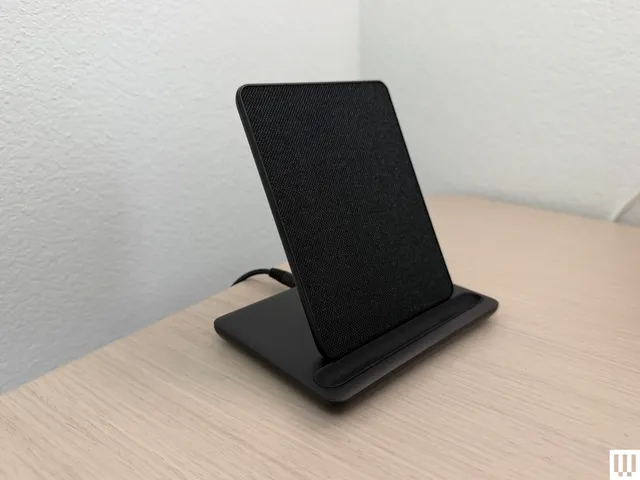
This wireless charging dock is made by Anker for Kindles, specifically for Kindle Paperwhite and Colorsoft’s seven-inch Signature editions. Those versions have wireless charging capabilities, and this stand takes advantage of that with charging coils that line up with the back of the Kindle, where the wireless charging is. You’ll want to take off any MagSafe cases; leaving mine on made the little light on the charging dock flash until I took it off.
A Kindle Page Turner
Advertisement
The hottest new item to get as a Kindle lover is a page turner. They’re especially handy for holders like the ones above, where your hands aren’t already on the device, and can make for a great accessibility accessory for readers with different needs.
My biggest irritation with these devices so far is that you have to charge them both individually, and if one runs out of battery, the whole thing is useless. I also don’t love that the turner does tend to block at least one letter while I read, and you can’t place it on the lower or upper margins since it’ll activate the menus instead of turning the page. Still, it makes reading ultra comfortable, especially for my strained wrists.
Here’s my favorite one so far, that’s been solid at holding a charge, and next I’m testing this remote ($15) with a wearable ring clicker instead of a remote.
Baby Yoda famously snitched (and later barfed up) some blue cookies in a scene from the hit Disney Plus show The Mandalorian. The folks at Burger King are about to release some Mandalorian and Grogu fast-food menu items and kids’ meals, and they’d probably rather you not think about the barfing part.
The show’s spin-off feature film, Star Wars: The Mandalorian and Grogu, opens in theaters on May 22. Burger King is releasing its Mando-themed kids’ meals on April 28 and the adult meals on Star Wars Day, May 4.
Other than themed packaging, the kids’ meals are pretty standard, except for the real treasure, a Mandalorian-themed toy. The meal itself consists of a hamburger or four chicken nuggets, applesauce, kids’-size fries and your choice of milk or apple juice.
Advertisement
The toys include two versions of Grogu, two of The Mandalorian himself, a Stormtrooper, an AT-RT driver, the Mandalorian’s ship the Razor Crest and the Lasat rebel Zeb Orrelios.
The kids’ meals come with Mandalorian-themed toys.
Burger King
The menu items that arrive on May 4 aren’t in meals, so they don’t come with toys, which seems like a missed opportunity. However, you can nab one of four collectible cups by ordering one of three combos. The cups come in maroon, black, green and navy.
Advertisement
There’s a BBQ Bounty Whopper (burger with Swiss cheese, bacon, lettuce, tomato and barbecue sauce), Grogu’s Garlic Chicken Fries with garlic dipping sauce, and Imperial Cheddar Ranch Tots.
But the item I’m most excited for is Grogu’s Blue Cookie Shake, which blends soft-serve with blue sugar cookie syrup and tops it off with blue cookies. Maybe don’t suck one down and then go for a bumpy, breakneck ride in the Razor Crest.
The platform will offer ‘bite-sized online courses’ that are 30 minutes or less and can be accessed using a tablet or laptop.
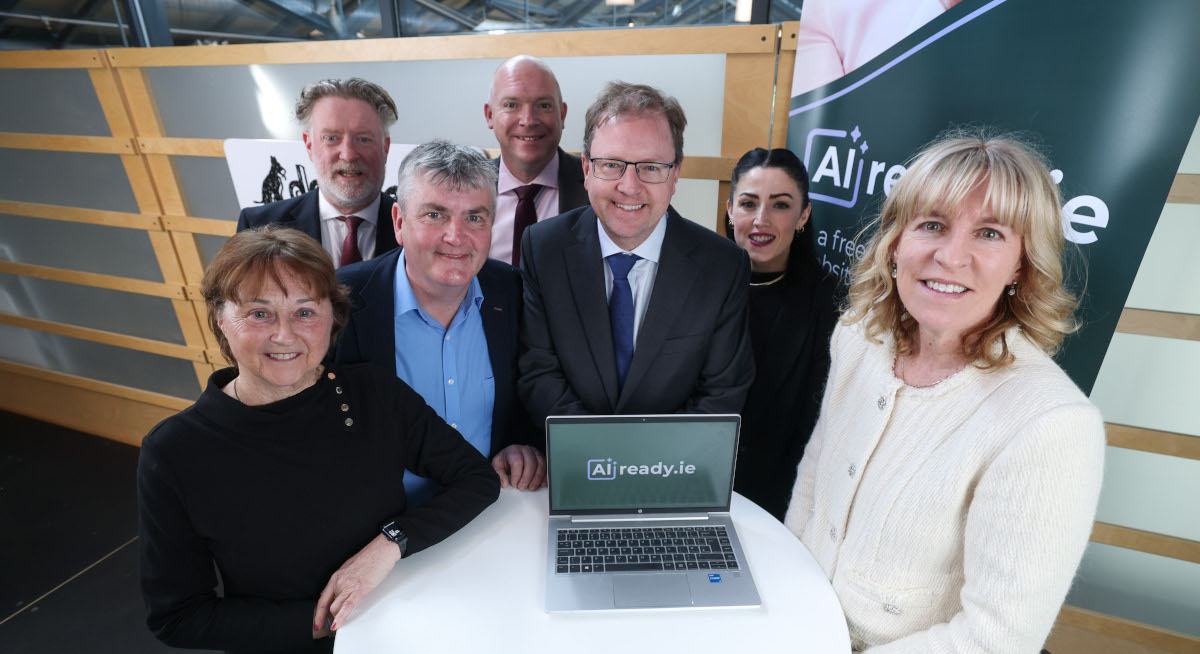
Irish Minister for Further and Higher Education, Research, Innovation and Skills James Lawless, TD has today (23 April), launched AIReady.ie, a new Governmental, national AI skilling platform, designed to provide people across Ireland with the means to learn essential AI skills.
Developed by Solas, in partnership with the National Skills Council, the initiative is free and suited to learners of all abilities. It teaches the fundamentals of AI and can be engaged with at the user’s own convenience via flexible “bite-sized online courses” that are 30 minutes or less and can be accessed using a tablet or laptop.
The curriculum is designed to support people as they work to develop the in‑demand skills needed for work, study and everyday life, regardless of their prior experience or technical background, with the current content focused on building foundational AI literacy and practical digital capability.
Advertisement
To start, the programme will offer four short courses tailored to older people, small businesses such as sole traders and farmers, and those returning to the workforce. The initiative aims to upskill 1m people in AI, which the platform said is “one of the Government’s most ambitious responses to the rapid emergence and impact of artificial intelligence to date”.
Commenting on the launch, Lawless said: “Artificial intelligence is rapidly reshaping how we work, learn and live and ensuring people are ready for that change is one of the most important challenges we face. I strongly believe that everyone should have the opportunity to understand AI and to use it with confidence.
“We are now at a point where AI readiness is no longer optional, it is essential. Being ‘AI‑ready’ is about more than technology, it is about giving people the skills, confidence and understanding they need to participate fully in an AI‑enabled society. AI skills are for everyone, not just experts or specialists.”
Dr Kevin Marshall, the chair of the National Skills Council, added: “I welcome the launch of AIReady.ie, which will support the development of AI skills. We know the biggest risk today isn’t AI, it’s being unprepared to use it.
Advertisement
“We want people to feel like AI is accessible to them, regardless of their background or stage in life and this new platform delivers exactly that, a simple entry point for anyone looking to start their journey with AI. With the launch of AIReady.ie today, we are laying the foundations to build the AI skills our economy and society needs for the future.”
Don’t miss out on the knowledge you need to succeed. Sign up for the Daily Brief, Silicon Republic’s digest of need-to-know sci-tech news.
Apple is at a transformational point in its product history. The company is making a record amount of money with a rich product portfolio, fumbled its AI strategy, and just had a leadership change.
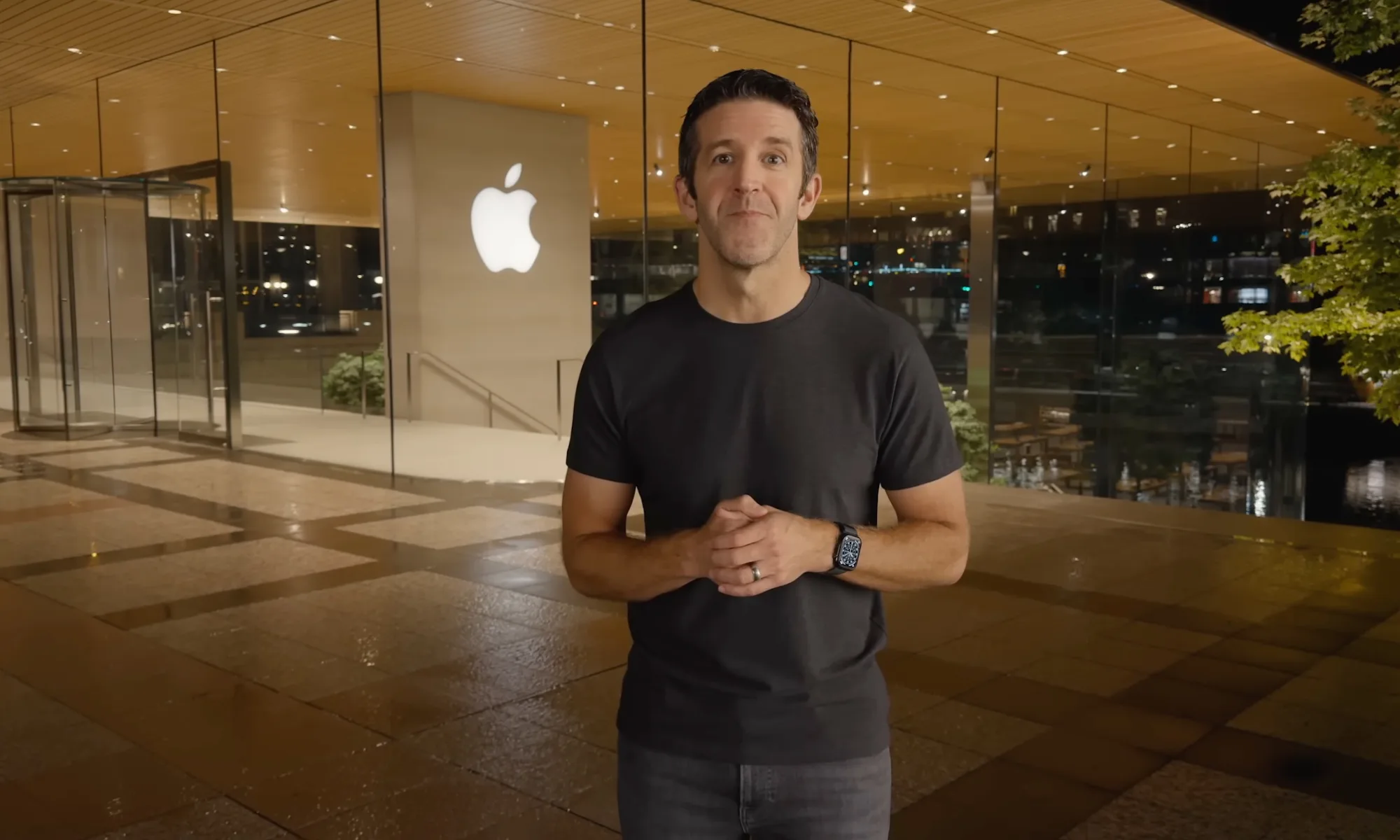
Tim Cook is out as the CEO, and engineering veteran John Ternus is taking over the chief role. Interestingly, it seems Apple is also making the biggest shift in its product development history, with no less than ten categories of devices planned for the coming years.
Apple
What’s next from Apple?
It seems Apple planned the leadership change at a crucial point in its product development phase, with the focus being on Ternus delivering some knockout products early in his leadership tenure. According to Bloomberg, the first of these buzzy product reveals is going to be the iPhone Fold (or the iPhone Ultra), the first foldable smartphone by the company.
Apple is years late to the race, but the excitement around the upcoming “pocketable but not pocket-friendly” phone is pretty high. “Ternus is poised for an even bigger flood of products. Including the foldable iPhone, Apple will enter roughly 10 new product categories within the next few years. That means Ternus could quickly eclipse his predecessor by this measure,” says the report.
The launch of ten product categories is pretty ambitious, as Cook’s tenure only witnessed the launch of three new segments, two being mass-market wearables (AirPods and Apple Watch) and one XR hardware in the misfiring Vision Pro.
Advertisement
iPhone Fold CAD-based renderAI Visualization
A truly transformational roadmap
Apple has played it relatively safe with its wearables, but it seems the company is going all-in across the board. Starting with the AirPods, the company is reportedly planning to launch a camera-equipped version, dramatically boosting their health potential as well as understanding of the world around them using multi-modal AI. Think of Visual Intelligence, but instead of pointing your iPhone’s camera, the earbuds in your ears do the job.
It’s an immensely promising idea that will also be pretty hard to execute. Yet, if products like the Meta-Ray Ban AI glasses are anything to go by, Apple can execute it. And it’s not an outlandish idea, either. Experts at the University of Washington recently showcased the VueBuds, packing cameras on off-the-shelf earbuds that are capable of world-understanding and assisting with translation, among other AI-powered tricks. And let’s not forget Apple’s partnership with Google, which essentially puts Gemini at the foundations of Apple’s AI revival plans.
AI-generation concept of Apple smart-glasses with a holographic display.Gemini AI
Aside from the earbuds, the following is the list of other product categories that are reportedly in development at the company, many of which have been delayed due to Apple’s hobbled AI efforts:
While the iPhone Fold is nearing launch, the future of the often-rumored folding iPad is still in question, as it may never actually make it to consumer hands.
What a large folding iPad could look like – Image Credit: AppleInsider
The rumor mill has been infatuated by the idea of the folding iPhone, which is widely believed to be on the way later in 2026. However, Apple has also been working on another foldable device with less chance of becoming a reality. Writing in Sunday’s “Power On” newsletter for Bloomberg, the foldable iPad is a real thing being developed behind closed doors. Described as a tablet with a super-sized 20-inch display, it has been a priority of incoming CEO John Ternus while in his hardware chief role. Rumor Score: 🤔 Possible Continue Reading on AppleInsider | Discuss on our Forums
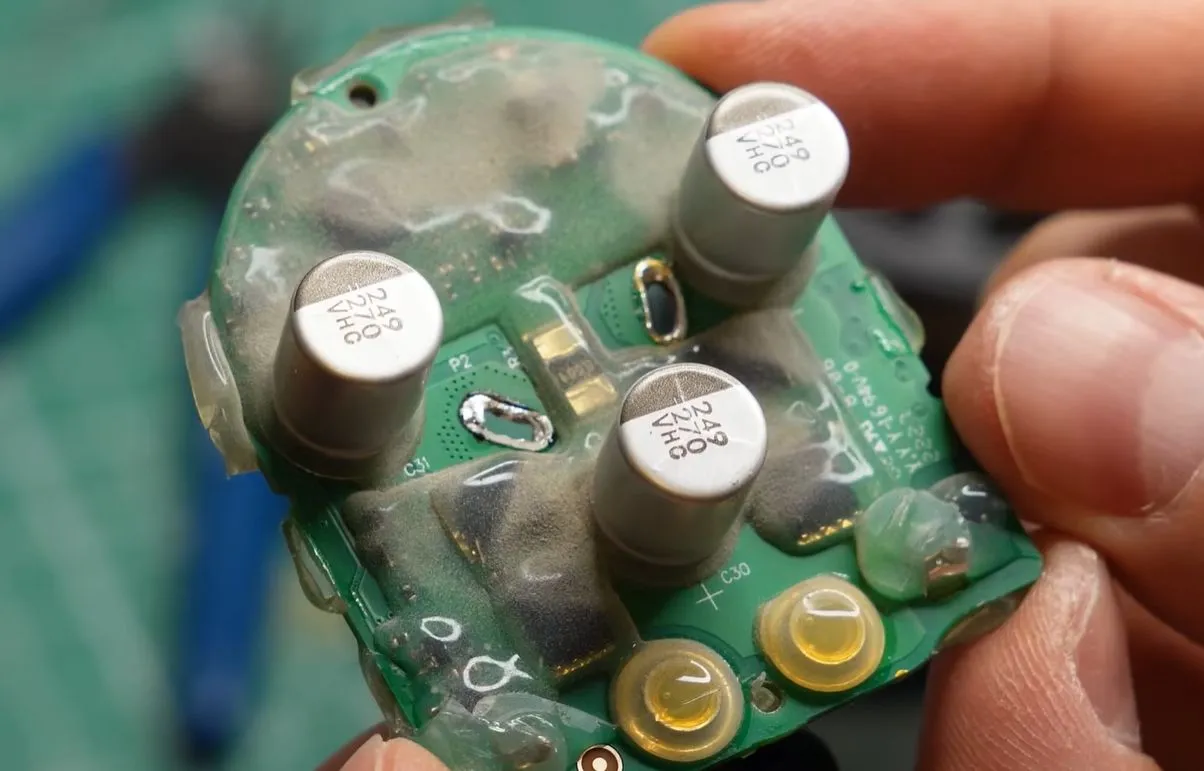
It seems to be becoming a bit of a theme that consumer electronics are dying not due to some critical fault, but due to Cooked Capacitor Syndrome (CCS). Case in point, Dyson handheld vacuums and the capacitors on its driver board. After having his $800 Dyson V15 handheld vacuum die after two and a half years of regular use, [LeftyMaker] found himself elbows-deep in the dusty innards of the vacuum just to replace some capacitors.
After initially trying a new battery and other common troubleshooting steps, he found that lots of people were having the same flaky behavior with their Dyson vacuums, all with the same underlying cause. On the driver board for the DC brushless motor, there are a couple of capacitors that seem to cause issues across models, with the standard response by Dyson being to ‘buy a new body’.
While it’s definitely possible to tear down the vacuum to get to the driver board, you’ll be doing effectively a full disassembly, all to see the capacitors located right next to the hot motor in a very confined space. [LeftyMaker] confirmed a very high ESR on the old capacitors before replacing them with 125℃ rated Rubycon 35PZF270MT810X9 polymer capacitors for $1 a pop.
Advertisement
Unsurprisingly, the vacuum worked fine after that fix, but it shows a trend where CCS has become so commonplace that it’s no wonder that the phrase ‘planned obsolescence’ is being uttered alongside it. For this particular series of Dyson vacuums, the issue is apparently so bad that [Hasan] created a custom driver board that might be superior in multiple ways. Maybe we need an OSHW vacuum cleaner, just to avoid such shenanigans.
Both left and right-wing accounts claimed, without evidence, that the attack was staged.
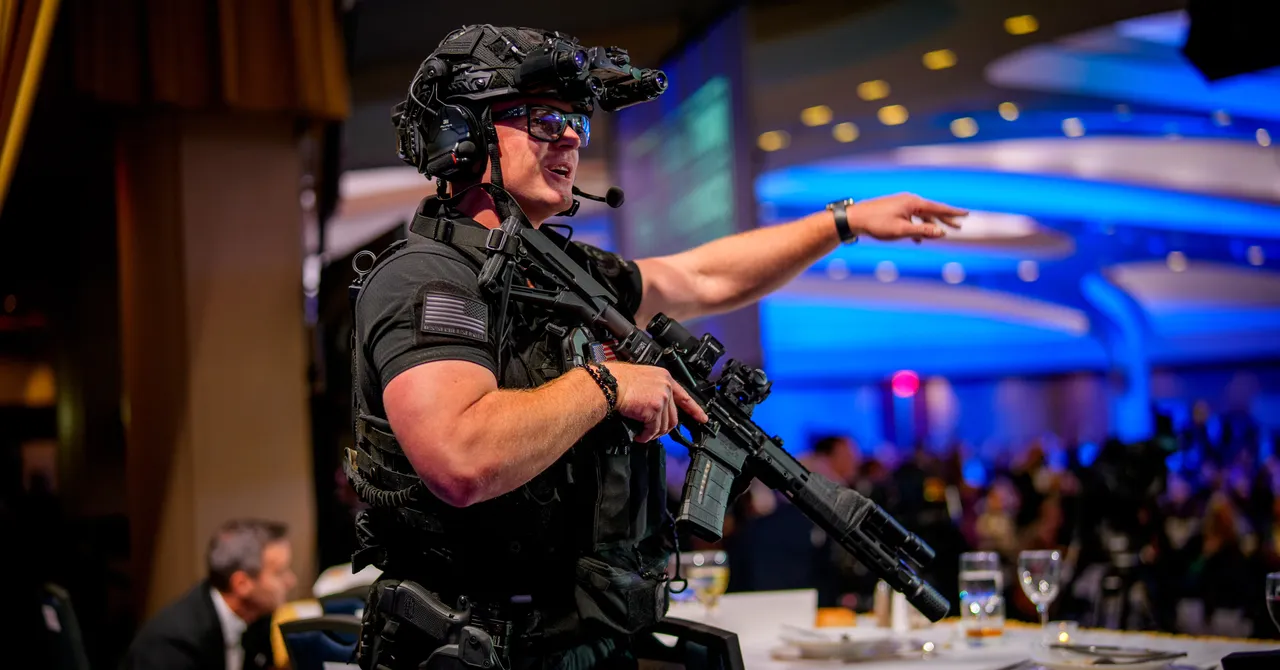
President Donald Trump, Vice President JD Vance, and dozens of other high-profile administration officials and journalists were attending the dinner at the Hilton hotel in Washington, DC, when a suspect, later identified by media reports as Cole Tomas Allen from California, allegedly ran past security towards the event. He was detained by law enforcement while the president and vice president were evacuated. Police said that they believe Cole acted alone, but did not expand on who his intended target was or what his motive may have been. “We believe the suspect was targeting administration officials,” acting attorney general Todd Blanche told NBC’s Meet the Press on Sunday morning.
On Bluesky, which has a predominantly left-leaning user base, many people simply wrote the word “STAGED” over and over again, echoing the response to the Trump assassination attempt in Butler, Pennsylvania in 2024.
Advertisement
On X, many claimedthe shooting was staged as a way to bolster support for Trump’s plan to build a new ballroom in the White House. The president referenced the ballroom in a press conference after the incident and a Truth Social post on Sunday morning. Many prominent online Trump boosters echoed the need for the ballroom, including far-right podcaster Jack Posobiec, Libs of TikTok creator Chaya Raichik, and Tom Fitton, the right-wing activist who runs Judicial Watch.
Their quick response, conspiracy theorists claimed, was evidence of a coordinated campaign following the shooting. “Is this another staged event,” one X user asked in a post that has been viewed more than 5 million times.
Other social media users who claimed the incident was staged pointed to a Fox News clip that featured the station’s White House correspondent Aishah Hasnie speaking from the Hilton hotel. Hasnie told viewers that prior to the shooting, press secretary Karoline Leavitt’s husband allegedly told her “you need to be very safe,” before the call was cut off.
“Fox News just cut one of their reporters off as they seemed to indicate the shooting was a pre-planned false flag,” one X user wrote in a post that has been viewed more than 2 million times. Hasnie later clarified in an X post that her cell service had cut out in a location with notoriously bad service, adding: “He was telling me to be careful with my own safety because the world is crazy. He was expressing his concern for my safety.”
Advertisement
“I don’t want to be fomenting conspiracies,” wrote Angelo Carusone, the chair and president of Media Matters, on Bluesky about the Fox News interview. “But I mean…this was super weird. Super weird.”
Leavitt herself was also the focus of conspiracy theories after she said “shots will be fired” in an interview ahead of the dinner, referring to the jokes Trump was scheduled to deliver. Following the attack, X users claimed the comment was “strange,” “sus,” or a “curious choice of words,” while sharing memes that suggested the shooting was staged. At least one mainstream outlet appeared to amplify the conspiracy theory as well, describing Leavitt’s comment as “eerie” and “bizarre.”

















































You must be logged in to post a comment Login