Security teams log 54% of successful attacks and alert on just 14%. The rest move through your environment unseen.
The Picus whitepaper shows how breach and attack simulation tests your SIEM and EDR rules so threats stop slipping by detection.


N-able is warning customers that hackers are exploiting an authentication bypass vulnerability (CVE-2026-18577) affecting both hosted and on-premises N-central servers.
The company on Sunday released hotfix 2026.3.1.7 to address the security issue, which affects all versions of N-central before 2026.3.
On August 1st, the vendor disclosed that it detected active exploitation and launched an investigation that uncovered additional security concerns affecting all versions of N-central, its flagship Remote Monitoring and Management (RMM) platform.

In an update the next day, the company announced the hotfix and strongly recommended all customers to upgrade immediately to the new release.
Hosted deployments already received the update, while customers of on-premises instances need to install it manually.
N-central is a remote monitoring and management (RMM) platform used by managed service providers (MSPs) and corporate IT departments to manage large clusters of multi-OS systems and network devices.
Because of this, compromising these servers allows threat actors to extend the attack beyond N-able’s direct customers.
The product was also targeted last year, in zero-day attacks that prompted CISA to issue an urgent alert.
In the past, threat actors compromised other notable RMM/MSP platforms, including Kaseya VSA, ConnectWise ScreenConnect, SimpleHelp, and SolarWinds Orion.
CVE-2026-18577 is the result of an incomplete patch for CVE-2026-18576, a vulnerability described as an “authentication bypass using an alternate path or channel, which affected all N-central versions through 2026.1. Both vulnerabilities could be exploited for administrative account takeover.
N-able has not shared any technical details about the security issue or provided information about the number of customers targeted or compromised through CVE-2026-18577.
The vendor provided indicators of compromise on the hotfix download page, including four specific IP addresses, a registered service named ‘Cloudflared,’ and ‘svchost.exe’ in the users’ documents folder.
If any of these are found, customers are advised to contact N-able support immediately and engage their own security team.
It should be noted that attackers frequently abuse Cloudflared, the legitimate tunneling utility from Cloudflare, to create outbound tunnels that expose compromised machines or provide remote access without opening inbound firewall ports.
The vendor also says that agents do not need immediate updates to mitigate CVE-2026-18577, but the action is recommended to get the latest fixes and features.
N-able’s status update “strongly recommends” that customers remain vigilant and monitor their environments closely, while the company also promised to share more updates as quickly as possible.

Security teams log 54% of successful attacks and alert on just 14%. The rest move through your environment unseen.
The Picus whitepaper shows how breach and attack simulation tests your SIEM and EDR rules so threats stop slipping by detection.

Apple is doubling down on its lawsuit against OpenAI over claims of intellectual property theft, and has now asked the courts for a preliminary injunction that could delay the ChatGPT firm’s AI device.
While OpenAI has turned to the court of public opinion in this case, Apple has now gone to a US judge. According to Reuters, on August 3, 2026, Apple asked for a preliminary injunction, and inspired OpenAI’s post that didn’t say that much.
Specifically, it asked for this injunction to bar OpenAI and two former Apple employees from acquiring or using allegedly confidential information. In a separate motion, it also asked the judge to require OpenAI to produce documentation relating to the defendants.
“Apple will be irreparably harmed absent a preliminary injunction,” said the company’s filing. Apple further wants depositions to be taken from multiple OpenAI representatives and in particular three ex-Apple employees.
Those include the previously named Chang Liu and Tang Tan, plus now Yu-Ting (“Alyssa”) Peng. The full filing also refers repeatedly to an ex-Apple employee it only calls “Individual No. 1.”
Most of the details in the filing refer to previously revealed accusations such as Apple’s claim that ex-employee Tan accessed confidential information. Similarly, the filing repeats the accusation that OpenAI asked job candidates to bring information to interviews.
It is more specific in that this filing alleges that such candidates were directed “to bring Apple prototypes and CAD designs and artifacts for ‘show and tell’.” Apple also claims that a suppler was induced “to perform an Apple proprietary metal-finishing process.”
Alongside these claims against people who have mostly been named before, though, Apple now says it has “serious concerns” about eleven other OpenAI employees. It accuses unnamed employees of meeting with OpenAI to discuss unannounced Apple products, for instance, and another of taking screenshots of confidential documents.
“And, after Apple filed its complaint, multiple former Apple employees now working at OpenAl reached out to discuss returning Apple-issued work devices they kept when they left Apple,” says the filing. “Thus, there are multiple now-OpenAl employees who appear to have witnessed some of the events in question and to have used, acquired, and/or retained proprietary Apple information after their own departures from Apple.”
A judge in the US District Court for the Northern District of California will be considering Apple’s filing. That filing does specify that a hearing should be held on October 1, 2026, at 9:00 a.m. Pacific.
The judge may have already informed Apple that this date is possible, or it could be that Apple has established that there is an open slot in the court’s calendar. Either way, it’s possible that the court will reschedule.
It’s not clear, though, how Apple believes an injunction against acquiring or using confidential information can be enforced, other than to add damages later. If the OpenAI employees did as Apple accuses, they already have and will already have used that information.

Tang Tam – Image Credit: mit.gelstagram/Instagram
What’s most likely is that this is a requirement of filing this particular type of lawsuit. Apple’s aim really appears to be solely to expedite the discovery process and so get the lawsuit moving as quickly as possible.
That could be beneficial to OpenAI too, though, depending on how the final case is resolved. While it remains embroiled in this suit, it’s possible that its first AI hardware device may have to be delayed.
Reports claim that this first AI device will essentially be an Apple-like HomePod. Consequently, OpenAI may have to prove that it was made without the use of Apple’s trade secrets.
It’s hard to prove a negative, but should it be able to, OpenAI may then be able to launch this device. The company needs to be launching multiple AI devices and soon, because its finances are such that it only has a couple of years before it will begin to run out of money.
Update: August 4, 11:50 Updated with details from Apple’s new filing, which is embedded in full above.
I was in third grade when I started to fear math. Division and fractions gave me the worst anxiety. Every day when my teacher asked for my math homework, I’d say, “I put it on your desk,” knowing full well I hadn’t done it.
My siblings had no problem with math, but it was so hard for me that I wondered if I had a learning disability.
In college, I decided to become a teacher after discovering my love for working with kids at a daycare center. I began my first year teaching in the fall of 2024. I felt excited to teach fourth grade, but I also worried I wouldn’t understand all the math content I was supposed to teach and that I’d pass on my math anxiety to my students.
When the fourth-grade teaching team met prior to the start of the 2024-25 school year, I confessed to my colleagues, who were all math whizzes, that I wasn’t very good at math and that it scared me. Instead of making me feel silly or stupid, they were so gracious and supportive. They said, “We’ve got you,” and they did.
As it turned out, we were all nervous because our district was rolling out a new curriculum. As we looked through the materials, I found it comforting to know that we’d all be learning and finding our way together. For once, I didn’t feel so alone in math. Being honest created a sense of connection with my colleagues. It helped us approach the new school year as a team.
Even with my colleagues’ support, I was scared when I taught the first math lesson. I remember leaving that day, feeling like I had completely bombed it. But the next day, I realized I was the only one who thought so. My students loved it and couldn’t wait to jump back in. The problem wasn’t math; it was my self-doubt. I just had to have the same confidence in myself that I had in my students.
As the weeks went by, math actually started to feel fun. We did hands-on activities. We played math games online and in centers. Students collaborated, talking through their thinking and teaching each other. It was incredible to watch them enjoy a subject that had caused me so much stress.
My biggest “aha” moment came when I realized that there isn’t just one way to solve a math problem. Growing up, I thought math was rigid — one method, one answer — and that if I didn’t get it, that was on me. I was surprised to discover that there are many different ways to solve problems, and that exploring and comparing strategies is beneficial to students’ learning.
In my classroom, I noticed that using multiple strategies to approach problems made math more accessible for my students. Even those who struggled found methods that made sense and worked for them.
That approach sparked a new kind of excitement about math. During a lesson on different division methods, my students ran outside for recess and wrote division problems all over the concrete. Then they’d jump up and say, “Look at how I solved this!”
Fractions were another story. Research shows that many children have trouble with fractions, and my students were no different. I even brought in candy bars and broke them into pieces to make the abstract concept tangible, but I was met with blank stares.
I thought back to what I needed as a student and decided to be completely transparent. I admitted that I had struggled with fractions at their age and that it took me a while to learn them. Hearing that made my students feel so much better. They knew they could ask me questions and admit their confusion without judgment. My openness about my own math struggles made it safe for them to share theirs.
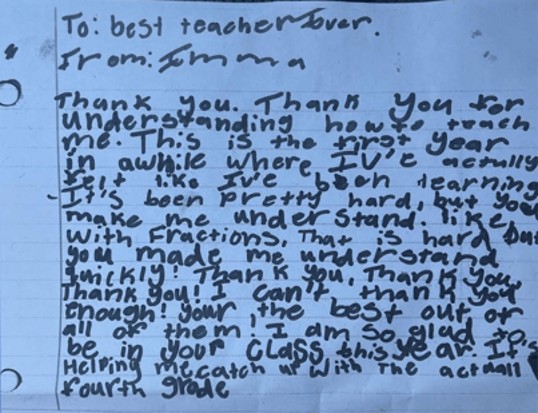
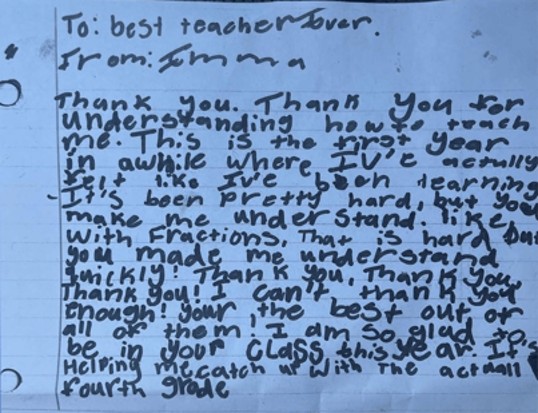
The next morning, one student handed me a note, thanking me for helping her understand fractions. I cried when I read it and realized that I had reached her in a way that not only helped her grasp the math but also helped her believe in herself.
I feel like I have become a more confident teacher through all of this, but I’m still figuring out how to reach kids who struggle (the kind of kid I used to be). Sometimes it does not click for them once in a lesson. It is a challenge because not all students respond the same way. Some kids need one-on-one support when learning a new skill. That’s hard for a teacher who has more than 20 kids in a classroom. My school added an interventionist this past year, and that was truly a blessing. She and I communicated consistently, and she was able to pull those who struggle and reach them in a different way. As a new teacher, I hope to learn and become better on how I can implement extra guidance inside the classroom on my own if there’s ever a day I don’t have the help from an interventionist.
A thank you note for Brenna Kirkpatrick
I also talked openly with my students about how productive struggle in math is part of the learning process. When I was in school, I was so afraid of making mistakes on my math homework that I didn’t even try. But mistakes can play a powerful role in learning if we are brave enough to make them.
Students’ mistakes also provide a window into their thinking. I like to tell my students, “If I don’t see your mistakes, then I won’t know where to help.”
One day, I found one of my strongest students crying because she couldn’t solve a problem. I told her, “I’m not expecting you to leave here today knowing how to do this. I just need you to try.” She did, and afterward she said, “I thought I couldn’t do this. You told me I could if I kept trying, and I got an A on the test.”
When students feel safe enough to take risks and persevere, it not only builds their skills but also their confidence.
At the end of the school year, I literally gasped when we received our West Virginia General Summative Assessment scores. My class had the highest math scores of all the fourth-grade classes at my school.
I used to be ashamed of my math struggles, but I’ve learned how to turn my biggest weakness into my superpower. I’m now teaching third grade, the same grade where my math fears began. It’s amazing to think that I used to feel so lost, but now I’m the one helping students find their way. My students love learning math, and that has made me love teaching it.
If I could share one piece of advice with other new or aspiring teachers, it would be to have confidence in yourself. Math is not so scary. It’s actually fun when you believe in yourself. Take a deep breath and say, “I can teach this lesson. I can do this.”
It’s equally important to believe in our students and actively encourage them every day. When my students are working through problems, I tell them, “Great job! I love seeing your work.” When they get the correct answer, I say, “Fantastic! You did such a good job.” If I see students struggling, I tell them, “Good work! Let’s try that one again. You’ve got this.”
Those words of encouragement — for our students and ourselves — keep us motivated and excited to do our best every day. Whether we’re teaching or learning math, we all want to feel capable and supported. When we set high expectations and believe we can succeed, amazing things can happen.

Elon Musk wants you to believe Tesla is no longer a car company, even if it’s still shaped like one. The company shipped nearly half a million cars last quarter and made 70% of its money from car sales.
Still, Musk has spent the last few years making the case that Tesla is really an AI and robotics company, even if some of the AI happens to live in cars. And whatever the company financials suggest, Musk’s attention has been moving decisively to the AI parts of the company — projects like the Optimus robot and fully autonomous robotaxis— as the everyday concerns of a carmaker get pushed to the side.
To show how that shift happened, TechCrunch teamed up with Hudson Labs, a New York-based financial research firm, to map what Musk and Tesla’s other executives have spent the last seven years talking about on the company’s quarterly earnings calls.
The startup sourced transcripts of the calls from S&P Market Intelligence dating back to 2019 and used its Co-Analyst — an AI tool purpose-built for high-precision financial research — to determine a topic for each sentence, before counting their frequency.
The data shows that Musk now speaks about artificial intelligence, along with robotaxis and Full Self-Driving software, nearly 50% of the time he opens his mouth. That’s up from prior years, like in 2022, when he typically spent 15%-20% of the time on those efforts.
Over the same period, Musk was often making the case that autonomy justified the company’s soaring value.
“If you value Tesla as just an auto company – fundamentally, it’s the wrong framework,” Musk said on the Q1 call in 2024. “If somebody doesn’t believe Tesla is going to solve autonomy, I think they should not be an investor in the company.”
Talk of robotics has shot up sharply in the last three years, too.
Tesla revealed it was working on a humanoid robot known as Optimus in 2021. In the year that followed, Musk only spent around two percent or less of his time talking about the project. Over the past year, though, he’s spent at least 10% of his remarks talking up Optimus, with it occupying nearly a third of his focus on the third-quarter call in 2025.
Musk ramped up how often he talks about these futuristic ideas at the same time that Tesla’s core automotive business stopped growing. As a result, he now spends less than a third of his time on earnings calls talking about cars and manufacturing. On that same third-quarter call last year, Musk spent less than 20% of his time talking about the automotive business.
The other Tesla executives who appear on the company’s earnings calls, like chief financial officer Vaibhav Taneja and vice president of engineering Lars Moravy, have been much slower to shift their focus. Even on some of the most recent calls, they have spent around 30% of the time focusing on the automotive business, with their next-most common topics being AI, robotaxi, and Full Self-Driving.
Their attention has shifted, but they are lagging behind Musk’s enthusiasm for AI and robotics, most likely because those efforts aren’t yet generating any real returns.
These other Tesla executives used to spend nearly 50% of their time on these calls (or more) talking about making and selling cars. That all changed in 2024 as the car business started to suffer thanks to increased competition from legacy automakers and new Chinese entrants.
But when they do join Musk in talking up the future, they match the lofty rhetoric of their boss, the world’s richest man.
“The path to amazing abundance is ever challenging and requires making bold bets,” Taneja said on the Q2 call this year. “Our progress will be non-linear. The future is going to be great.”
When you purchase through links in our articles, we may earn a small commission. This doesn’t affect our editorial independence.
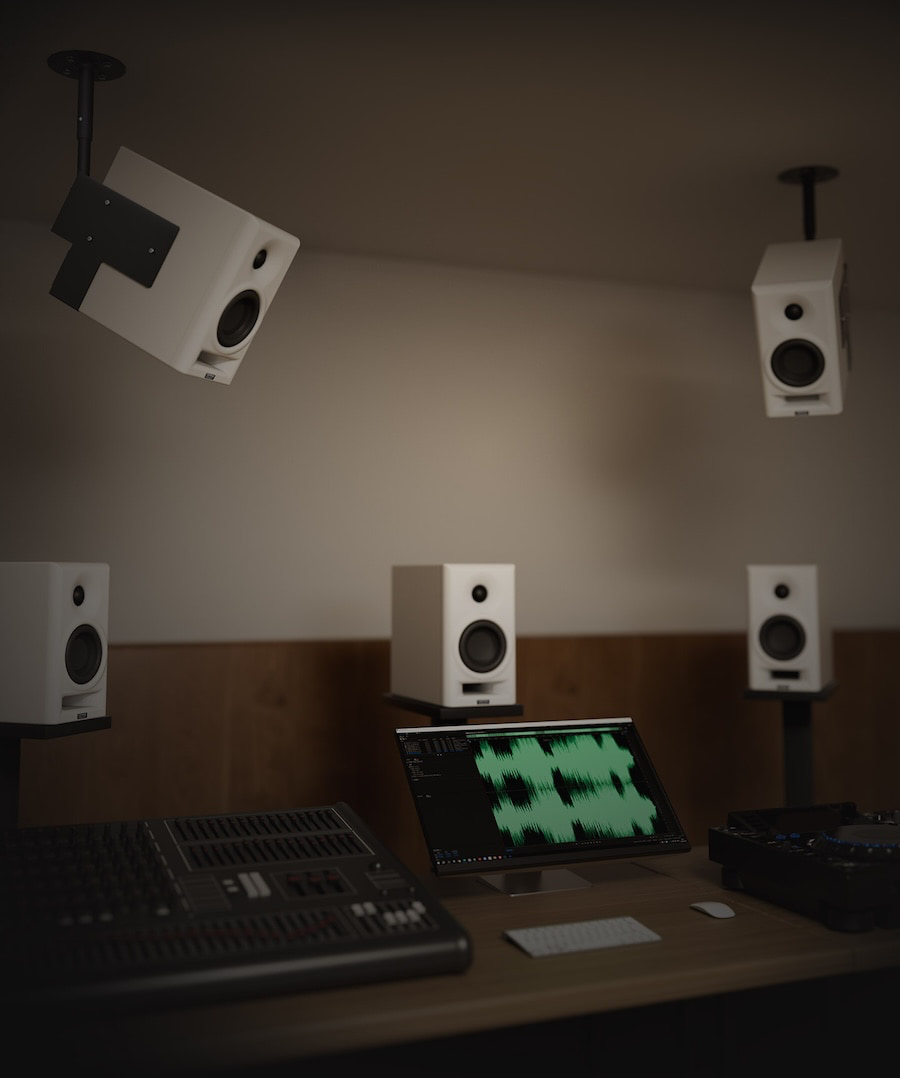
TOPPING has built its reputation on measurement-driven DACs, headphone amplifiers, and desktop audio gear that usually arrive with spec numbers strong enough to make the ASR crowd reach for a sedative before moving on to the next component they may or may not actually listen to. Now the company is moving that philosophy into active speakers with the TOPPING MA4, a compact two-way active studio monitor aimed at desktop listeners, creators, and small-room setups.
TOPPING launched the MA4 Active Studio Monitor globally on July 14, 2026. The company’s professional-audio site now lists the MA4 as an active studio monitor, with the product page and user manual available through TOPPING Professional for anyone in need of some late-night reading.
The timing was also useful. CanJam London 2026 took place July 18-19 at Park Plaza Westminster Bridge, with eCoustics’ London-based Headphone Columnist and Reviewer James Fiorucci covering the show throughout the weekend. TOPPING is usually part of the desktop and headphone conversation, and while the MA4 is not a headphone product, it shows the company trying to extend its measurement-first identity into the powered-speaker market.
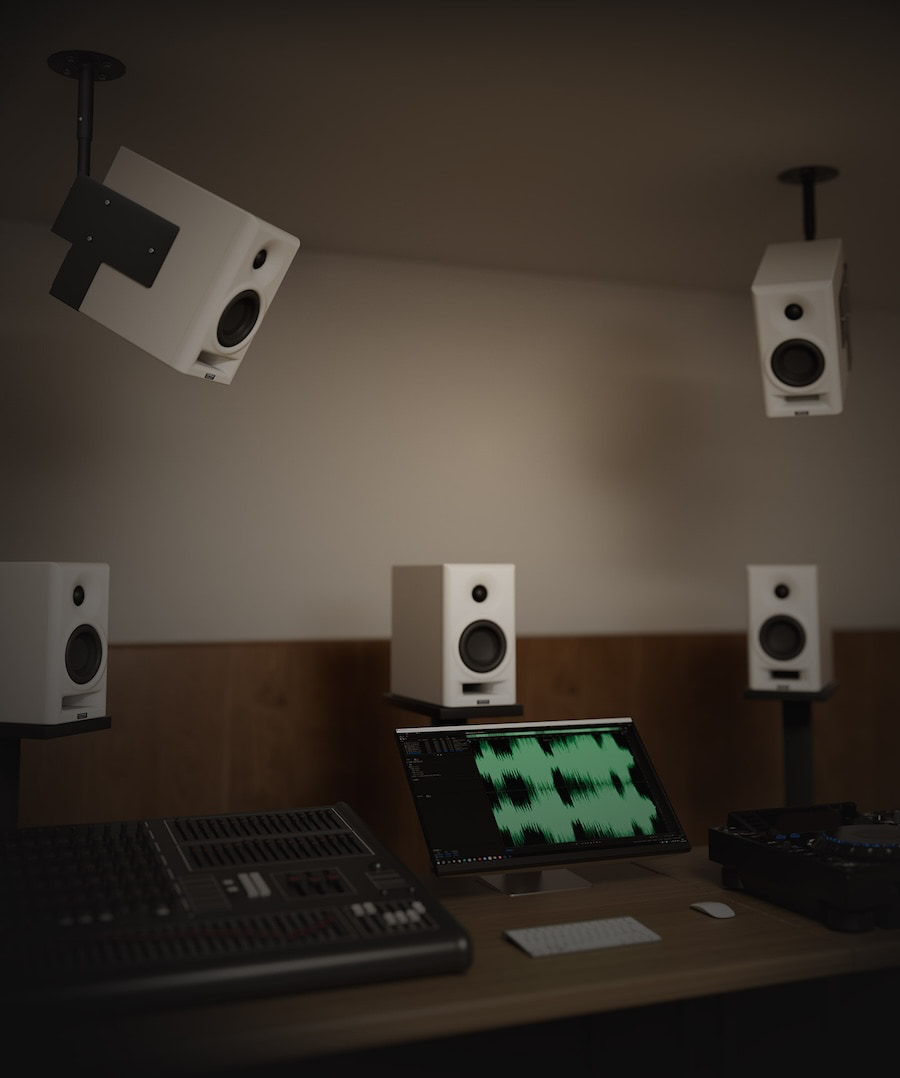
The MA4 is a compact, two-way active monitor sold as a stereo pair. Each speaker uses a 4-inch woofer and 1-inch tweeter, with Class D bi-amplification rated at 50 watts plus 25 watts RMS. The claimed frequency response is 49Hz to 20kHz ±3dB, with a maximum SPL of 105dB at 1 meter.
The design is refreshingly direct. The MA4 uses an analog crossover, a front-firing bass reflex port, and TOPPING’s Opti-Wave waveguide for tweeter directivity control. The design architecture avoids digital processing, which makes the MA4 different from many modern desktop monitors that lean on DSP, app control, USB input, Bluetooth, and room compensation to broaden their appeal.
That choice cuts both ways. A simpler analog signal path may appeal to users who want a straightforward balanced monitor connected to an audio interface or DAC. But it also means the MA4 looks more traditional than some of its desktop rivals. No USB-C. No Bluetooth. No app. No HDMI. No “please download our software before the speaker agrees to play a hi-hat.” Depending on the buyer, that is either a relief or a limitation.
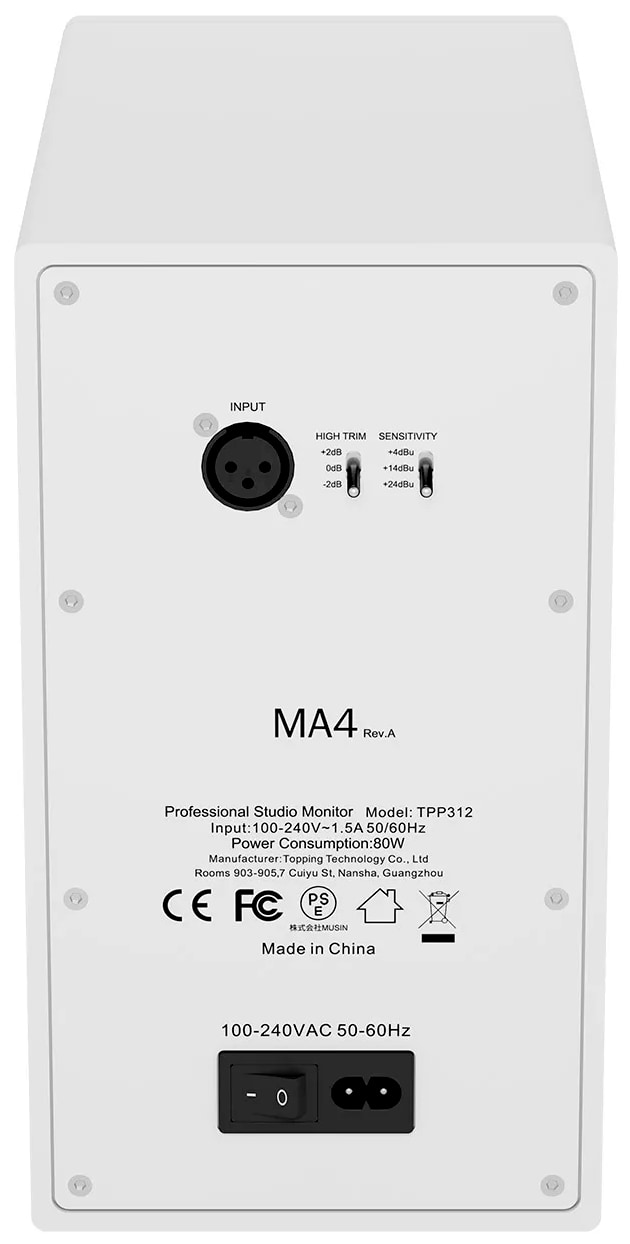
The MA4’s connectivity is narrow: one XLR input. That makes sense for studio and interface-based setups, but it is less flexible for general desktop audio users who may want RCA, TRS, USB-C, Bluetooth, optical, or a front-panel headphone jack.
That also matters because the competition has become much more versatile. Kali Audio’s LP-UNF, for example, includes USB-C, Bluetooth 5.1, RCA, and TRS inputs, while ADAM Audio’s D3V offers USB-C and balanced TRS inputs. Yamaha’s HS3/HS4 compact monitors include combo XLR/TRS, RCA, and stereo mini inputs.
TOPPING appears to be betting that a focused monitor with controlled directivity, balanced input, and measured acoustic behavior will appeal to users who already have the front end sorted. That is a reasonable audience, but it is not the same audience shopping for a plug-and-play powered speaker that can jump between a laptop, phone, turntable, TV, and game console before lunch.
The MA4 lands in a crowded category. The most obvious competitors include the Edifier MR5, Edifier MR4, Kali Audio LP-UNF, ADAM Audio D3V, Yamaha HS4, and JBL 305P MkII.
The Edifier comparison is especially relevant for our readers. The Edifier MR5 impressed us because it delivered near-neutral accuracy, deeper bass, LDAC support, and a three-way active design for $350. The older Edifier MR4 remains one of the better entry-level powered monitor options for listeners who want clean, inexpensive desktop sound.
Against those models, the MA4’s strengths appear to be its controlled acoustic design, XLR input, analog crossover, and claimed SPL for its size. Its weakness is obvious: fewer inputs and no modern wireless or digital convenience features. In 2026, that is either admirable focus or a self-inflicted handicap, depending on the desk it lands on.
TOPPING is not some random speaker brand appearing out of the fog with a white cabinet and a dream. We have covered TOPPING’s desktop electronics for years, including the DX1 II, A90, D30Pro/A30Pro, and D90LE. The recent DX1 II review found that TOPPING is still pushing aggressive value in compact desktop audio, with a $119 DAC/headphone amp offering balanced headphone output, PEQ, optical I/O, headset support, and console compatibility.
That history is why the MA4 is worth attention. TOPPING has spent years selling the idea that clean engineering and strong measurements should not require luxury pricing. Moving into active monitors is a logical step, but loudspeakers are a different kind of problem. A DAC can measure beautifully on a bench. A speaker has to deal with drivers, cabinets, ports, directivity, distortion, placement, reflections, and the charming reality that most desks are acoustic crime scenes with a keyboard in the middle and a plethora of poor food and beverage choices.

The TOPPING MA4 is an interesting move from a brand best known for desktop DACs, headphone amplifiers, and measurement-first electronics. Its compact two-way design, Class D bi-amplification, analog crossover, front-firing port, Opti-Wave waveguide, and claimed 105dB output suggest TOPPING is taking the active monitor category seriously.
The questions are just as important. Will the MA4’s acoustic performance be strong enough to overcome its limited connectivity? Will U.S. pricing make sense against Edifier, Kali, Yamaha, ADAM, and JBL? And will TOPPING’s engineering reputation translate from electronics into loudspeakers, where the room and placement get a vote whether anyone invited them or not?
The MA4 is not the most feature-packed desktop speaker of 2026. That may be the point. TOPPING appears to be aiming at users who want a compact, balanced-input monitor built around acoustic fundamentals rather than app-based convenience.
Where to buy: $319.46 at AliExpress


For many enterprises, virtualization has become so foundational that its strategic importance is easy to overlook.
Hypervisors, management tools, and the surrounding infrastructure stack quietly support the systems that run finance, operations, customer engagement, supply chain and other business-critical processes.
When that layer changes, the impact is rarely confined to IT.
Latest Videos FromTechRadar
It can affect cost, resilience, agility and the organization’s ability to set its own technology roadmap.
SVP and chief technology officer at Rimini Street.
That is why the latest shift in the VMware ecosystem deserves close attention from technology leaders.
With vSphere 7 reaching the end of general support and newer platform models emphasizing bundled, subscription-based private cloud architectures, many organizations are being pushed into a compressed decision cycle.
The question is no longer simply which version to upgrade to. It is whether a vendor-driven platform shift aligns with the business, operating and financial outcomes the organization is trying to achieve.
That distinction matters. A version upgrade is a technical project, but a virtualization strategy is a business decision.
And business decisions should be guided by requirements, value and timing, not simply by changes in a vendor’s roadmap.
Support deadlines have a way of focusing attention. They also have a way of narrowing choices. When a critical platform approaches the end of vendor support, the instinct is often to move quickly toward the recommended next step. In some cases, that may be the right decision. In others, it can lead to organizations into unnecessary cost, disruption and loss of flexibility before they have fully evaluated the alternatives.
The risk for IT leaders is treating the vendor product roadmap as if it were automatically the enterprise roadmap. The two may align, but that alignment should be proven, not presumed. A vendor’s timeline is not, in itself, a business case for broad infrastructure change.
A vendor’s priorities are shaped by product strategy, recurring revenue, portfolio simplification and platform consolidation. An enterprise’s priorities are shaped by uptime, security, cost control, application performance, operational continuity and business agility. Those priorities can overlap, but they are not identical and treating them as interchangeable can result in decisions that solve for the vendor’s direction more than the customer’s needs.
This is where CIOs and infrastructure leaders need to step back and ask a more fundamental question: what business outcome are we trying to achieve, and does this change materially advance it?
If the answer is improved resilience, better automation, simplified management, stronger security or a more cloud-like operating model, then modernization may be justified. But, if the answer is simply maintaining continuity or preserving support status, organizations should examine the full range of viable paths before committing to a major platform shift. The right response is not always the most disruptive one.
Pricing changes often capture the most attention, but the true cost of an infrastructure change extends well beyond the license or subscription line item. In many cases, the larger costs are organizational: the time, risk and disruption that accompany a broad platform transition.
Virtualization platforms sit at the center of complex environments. A major change can trigger downstream work across storage, networking, backup, monitoring, disaster recovery, security tooling, compliance processes and application dependencies. Even when the technical migration appears manageable, the operational validation can be extensive, and the burden on teams can be significant.
Organizations should consider the full cost of change, including staff time, retraining, integration testing, potential downtime, consulting support and hardware implications. Just as important is the opportunity cost. Every major platform transition consumes budget, leadership attention and skilled talent that could otherwise be directed toward security improvements, automation, AI initiatives, customer-facing innovation or other strategic priorities. A more bundled platform may simplify some parts of the stack, but it can also introduce new commercial and architectural constraints.
This is particularly important for enterprises running stable, heavily integrated environments. Many virtualization estates have been tuned over the years to support specific workloads, service levels and operational requirements. Stability is not a weakness to be corrected by default; in many cases it is a business asset. Replacing or restructuring that environment should be justified by measurable business value, not just by pressure to conform to a new delivery model.
Most organizations facing a virtualization decision have three broad options, and the right answer may differ by workload, business priority and time horizon.
The first is to migrate. This could mean moving to the vendor’s latest platform, shifting workloads to a hyperscale cloud provider, adopting an alternative hypervisor or pursuing a hybrid architecture. Migration may be the right choice when the current environment no longer supports business needs, when hardware refresh cycles align with broader transformation goals, or when the organization has a clear cloud operating model, budget and execution plan for the next state. But migration should be a deliberate strategic move, not a reflexive response to a platform event.
The second is to modernize in place. This approach keeps the core environment intact while improving the capabilities around it. That may include stronger automation, better observability, improved security controls, more resilient backup and recovery, tighter cost management or more intelligent workload placement.
For many enterprises, modernization does not require a wholesale migration. It requires identifying the gaps that matter most and addressing them with targeted investments. Modernization and migration are not the same thing, and organizations should be careful not to treat them as if they are.
The third is to maximize the existing environment. This option is often overlooked because it sounds less transformational, but it can be the most rational business decision when a platform is stable, secure, performant and well understood. Extending the value of an environment that continues to meet requirements is not inertia; it is intentional lifecycle management. If the platform remains fit for purpose, the better decision may be to maintain it effectively while redirecting budget and talent toward higher-value initiatives.
The right answer may include elements of all three. Some workloads may be ready for cloud migration. Some may benefit from in-place modernization. Others may be best left alone because they are stable, cost-effective and do not justify major reinvestment. The goal should not be uniformity for its own sake, but alignment between each workload and the business value it is expected to deliver.
Before committing to any virtualization path, CIOs should bring the conversation back to business requirements. What systems does the platform support? What uptime is required? Which workloads are growing, and which are stable or declining?
What regulatory or compliance obligations must be met? Where does the business need more agility, and where is predictability more important than change? Those are the questions that should shape the roadmap.
From there, organizations can conduct a practical assessment:
1. Which systems truly need to change now for security, compliance, performance or support reasons?
2. Which workloads can remain in place with the right resilience, security and operational controls?
3. Which applications are real candidates for cloud migration, and which are not?
4. Where would this decision increase lock-in or weaken negotiating leverage?
5. Which investments will deliver measurable business value over the next three to five years?
6. What strategic initiatives will be delayed if budgets and talent are redirected to this transition?
This kind of analysis helps technology leaders avoid making decisions based on urgency, assumption or vendor pressure. It also gives CFOs, boards and operating leaders a clearer view of the trade-offs, including where change is necessary, where it is optional and where it may create more disruption than value.
The vSphere 9 era is part of a broader shift in enterprise technology: vendors are consolidating platforms, simplifying portfolios and steering customers toward subscription-based operating models.
That approach can offer advantages, including more integrated tooling, simplified procurement and a more standardized operating model. But it can also come with trade-offs, including higher costs, reduced flexibility and greater dependency on a single vendor’s pace and direction of innovation.
Virtualization remains too important to be managed as a reactive upgrade cycle. It underpins mission-critical operations and increasingly shapes hybrid cloud strategy, resilience planning and long-term infrastructure economics. Enterprises should treat it with the same strategic discipline they would apply to any other decision that affects business continuity, cost structure and future flexibility.
As infrastructure models evolve, the message for CIOs is simple: don’t let a support deadline become your strategy. Use it as the moment to define one based on business requirements, financial reality and the level of change the organization needs.
We’ve reviewed, rated, and ranked the best cloud backup services.
This article was produced as part of TechRadar Pro Perspectives, our channel to feature the best and brightest minds in the technology industry today.
The views expressed here are those of the author and are not necessarily those of TechRadarPro or Future plc. If you are interested in contributing find out more here: https://www.techradar.com/pro/perspectives-how-to-submit

It’s hard to not have noticed that a key enabler of U.S. authoritarianism was our consolidated corporate media, which (with scattered exception) was more than happy to throw the entirety of journalistic integrity in the toilet for a chance to please a mad, idiot king. In large part because our press is increasingly owned by a handful of rich, white, old, right wing men keen on tax cuts and deregulation.
It’s very hard to also ignore that if we’re going to avoid more Donald Trumps, the country is in desperate need of media reform. Greater antitrust enforcement, the restoration of media consolidation limits, media ownership diversity requirements, improved media literacy standards (see: Finland), the restoration of U.S. public media, a refusal to amplify or validate the trolling of racist opportunists, and creative new funding models for real journalism are all essential.
Unfortunately Democrats and Republicans alike pay a lot of empty lip service to this sort of stuff, before immediately doing whatever makes our biggest corporations happy.
Case in point: California Governor Gavin Newsom for some reason thought it would be a good idea to try and quietly pressure California (and 11 other states) to drop their antitrust lawsuit against Paramount and David Ellison’s $111 billion merger with Warner Brothers.
Why? According to the Wall Street Journal (non-paywalled archive link) Newsom is trying to argue that blocking the unpopular deal will somehow harm California employment:
“In recent weeks, Newsom has told people involved in the matter that if the deal is blocked as a result of the suit, state employment would suffer, the people said. Newsom’s office has encouraged Attorney General Rob Bonta’s office, which has independent authority to file such suits, to find a resolution out of court, the people said.”
That’s simply not a fact-based claim. There are 100 years of very hard evidence showing that media consolidation repeatedly results in massive layoffs and higher prices for consumers. It’s simply not a debate. Warner Brothers, in particular, has a quarter century of hard evidence showing that every deal the company has been involved with ends in mass layoffs, higher prices, and shittier overall product.
We literally just went through this very thing with the AT&T/Discovery/DirecTV/Warner Bros mergers, which resulted in 50,000 people losing their jobs (this stark human tally is, curiously, memory holed when it comes to most corporate press coverage of the latest round of mergers).
California and eleven other states filed an antitrust lawsuit to block Paramount’s latest merger last month, correctly pointing out that the high debt load of the deal will result in significantly more layoffs for an already reeling U.S. entertainment industry. The courts have agreed to delays, which has justifiably worried Paramount given looming ticking fees ($7 million daily paid to investors starting in October) and Ellison’s/Oracle’s precarious financial footing on AI.
So the company is applying pressure wherever they can, and has found a helpful ear in folks like Gavin Newsom, Ari Emanuel, and James Cameron. The fact that Newsom is doing this behind closed doors and refuses to own the position or publicly comment to the press indicates he knows just how unpopular it is.
Newsom has no direct authority to pressure the AG on the deal, but it does shine a light on the kind of media policies you can expect under a Gavin Newsom presidency. Newsom has already found himself under fire for repeatedly hosting assorted white supremacists and right wing propagandists on his podcast, demonstrating a lack of modern media understanding and a tendency toward rank opportunism.
Newsom isn’t alone in being terrible when it comes to U.S. media policy. Democrats have historically spent the last quarter century tripping over their own asses when it comes to meaningful media reform policies, and the impact has not been subtle.
As a result, Republicans increasingly dominate everything from AM radio and local broadcast news, to Twitter and whatever’s left of cable news. Larry Ellison actively supports fascism; and he’s very clearly hoovering up outlets like CBS and CNN with an eye on making already saggy U.S. journalism much worse. Placating Larry Ellison doesn’t create jobs; it creates more fascism.
There is no bridging with or debating fascism. There’s no conversation to be had with it. It’s something that’s either destroyed or left to metastasize. A cornerstone of right wing U.S. authoritarianism has been extremely racist propaganda seeded across a feckless consolidated corporate media. Presidential hopefuls keen on dislodging fascism from the body politic — and avoiding a repeat with a younger, smarter version of Trump — shouldn’t be making the problem worse.
Filed Under: antitrust, competition, disinformation, gavin newsom, jobs, journalism, larry ellison, media consolidation, mergers, propaganda, rob bonta
Companies: paramount, warner bros.

Airtable’s valuation plummeted from $11.7bn in 2021 after generative AI exploded onto the scene.
Italy’s Bending Spoons has agreed to buy US automation company Airtable at an equity value of around $2.25bn in its first acquisition deal after going public last month. The deal implies an enterprise value of $1.28bn.
Founded in 2013 – well before the explosive popularity of generative AI – Airtable enables teams to build custom applications without code or engineering. The company says its platform is used by more than 500,000 organisations, including 80pc of the Fortune 100.
The software start-up was last valued at $11.7bn following a $735m round in 2021, which brought the business up to profitability for the first time. Company CEO Howie Liu said, at the time, that Airtable intended to go public in a few years.
However, the advent of tools such as ChatGPT and Claude have clawed back Airtable’s market share by providing similar and more advanced capabilities. Still, Airtable has managed an annual recurring revenue growth of more than 20pc year-over-year to approximately $480m as of June this year, the company said.
“Partnering with Bending Spoons gives us the resources and the long-term commitment Airtable needs to pursue that vision even more boldly as we build the AI-native platform of the future,” said Liu, in a joint statement with Bending Spoons announcing the acquisition.
Bending Spoons, led by Matteo Danieli, Luca Ferrari, Francesco Patarnello and Luca Querella, acquires and revamps struggling digital businesses. Its 50-plus portfolio includes Evernote, WeTransfer, Eventbrite and AOL.
The company’s public listing raised around $1.68bn at a rough $18.4bn valuation, and comes at a time when investor attention is largely turned to AI. In a recent government filing, Bending Spoons said that it identified more than 1,000 businesses as potential acquisition targets for the future.
“We’re committed to investing in Airtable for the long run, and doubling down on its core strength: bringing teams and workflows together in one flexible workspace,” said Ferrari. “We plan to expand what can be done across the full spectrum of work and make Airtable even more valuable to customers at every scale.”
Don’t miss out on the knowledge you need to succeed. Sign up for the Daily Brief, Silicon Republic’s digest of need-to-know sci-tech news.

Apple is now seeking a preliminary injunction in its trade secrets case against OpenAI, which aims to stop the AI model maker from moving forward with developing an AI device or other products based on Apple’s technology. The iPhone maker also claims that more of its former employees may be involved with the trade secrets theft.
In a new filing, Apple is requesting expedited discovery from the accused OpenAI employees, senior systems engineer Chang Liu and Chief Hardware Officer Tang Yew Tan; OpenAI, and its foundation; and io, the device startup co-founded by Apple’s former lead designer Jony Ive.
Apple also notes that its continued investigation has so far revealed 11 other former Apple employees beyond Liu and Tan may have been witnesses or otherwise involved in the case, and others who were previously named in the original complaint, like OpenAI employee Yu-Ting Peng.
The filing marks an escalation in Apple’s legal battle with OpenAI, as it suggests Apple has uncovered new evidence that the misconduct goes beyond the former employees named in the original complaint.
“For example, another former Apple employee seems to have met with Mr. Liu and Ms. Peng in advance of Ms. Peng’s interview at OpenAI and discussed with them during that meeting Apple proprietary information relating to unannounced products,” the filing states. “Yet another former Apple employee took screenshots of confidential Apple documents relating to an unannounced Apple product before an interview at OpenAI.”
“And, after Apple filed its complaint, multiple former Apple employees now working at OpenAI reached out to discuss returning Apple-issued work devices they kept when they left Apple,” Apple claims, suggesting there were more who were possibly involved with the scheme.
Apple is pushing the court to allow for expedited discovery because it believes it has good cause to suspect that there are others involved in the theft of its intellectual property. The company noted that its motion for a preliminary injunction is also pending.
OpenAI responded publicly to Apple’s latest, saying in a blog post that Apple’s request for a preliminary injunction is “both based on false information and completely unnecessary because we do not have, nor want, any of their trade secrets.”
“We’re much more interested in building innovative products and technologies that push the frontier,” OpenAI’s statement reads.
The AI model maker also pointed to earlier mistakes Apple made, which had been reported, including that Apple emailed the wrong person when it made contact with OpenAI after confusing two similar surnames. OpenAI also alleges that Apple lied about discussing matters with its general counsel. And, the company said that Apple didn’t admit to the claim that the “residual access” allowing former employees to access Apple’s system was the result of poor security procedures on Apple’s part.
When you purchase through links in our articles, we may earn a small commission. This doesn’t affect our editorial independence.
A malware campaign is using fake Zoom updates and business files to install ScreenConnect, giving attackers remote control through software that can resemble legitimate IT activity. And now, it’s come to Mac.
Securonix researchers detailed the campaign, named Smoke#Screen, in an August 4 report. They traced Windows scripts, compiled loaders, an HTML phishing page and a macOS package named “ZoomUpdateInstaller.pkg” to shared infrastructure.
ScreenConnect is legitimate remote monitoring and management software published by ConnectWise and commonly used by IT departments. The campaign configures genuine ScreenConnect clients to contact attacker-controlled relay servers rather than an authorized company system.
Once connected, the software can give an attacker remote desktop and management capabilities. The resulting activity may resemble ordinary technical support, making the intrusion harder to identify without examining how the software arrived and where it connects.
The macOS package contacted the same primary relay server as several Windows payloads, tying it to the wider operation. However, Securonix did not identify how the Mac installer was distributed or report any confirmed Mac infections.
The report also didn’t say whether the macOS package was signed and notarized by Apple. The discovery therefore establishes that the campaign’s infrastructure included a Mac payload, but not that attackers successfully delivered it to Mac users.
The finding adds to a series of campaigns using fake installers and familiar software brands to persuade Mac users to run malware. In this case, the strongest evidence of completed infection chains comes from the Windows payloads analyzed by Securonix.
Securonix documented four social engineering themes involving Zoom updates, Adobe updates, business document reviews and system maintenance checks. Each observed attack path tried to persuade the victim to open a file that installed ScreenConnect.
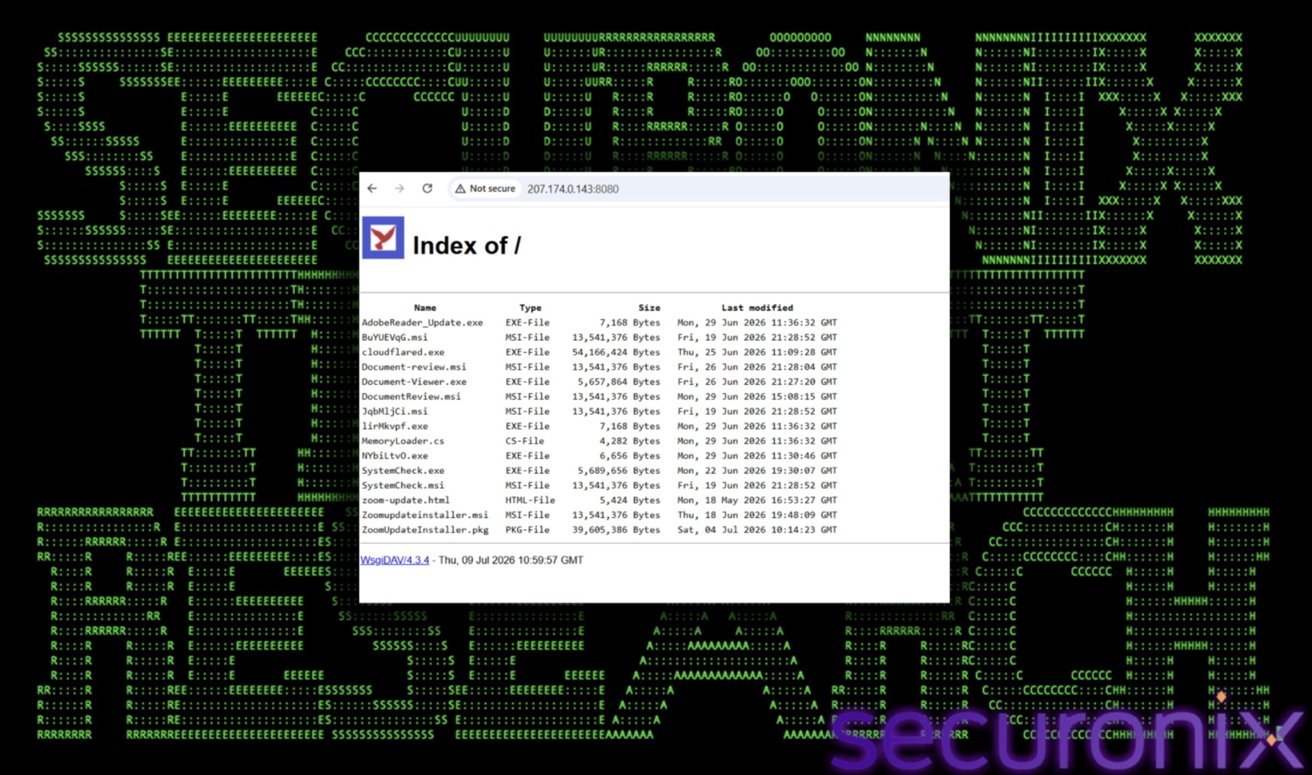
 A live WsgiDAV server running at 207.174.0.143:8080, a Python-based WebDAV implementation commonly used for local file sharing and development. Image credit: Securonix
The investigation began with a Windows VBScript file named “zoom-update.vbs” that appeared in Securonix telemetry. Researchers followed its network activity to an accessible staging server containing 15 payloads, including the macOS Zoom installer.
Other files included ScreenConnect installers named “SystemCheck.msi” and “Document-review.msi.” The server also hosted Windows executables posing as Adobe Reader updates and document viewers.
The files used different names and delivery methods, but they served the same purpose. Each installed an unauthorized ScreenConnect client configured to contact attacker infrastructure.
Researchers identified three ScreenConnect relay clusters, each using a separate RSA key pair. The primary server also hosted the campaign’s payloads, allowing it to distribute files and manage infected computers.
Other parts of the campaign used Dropbox and a Cloudflare Quick Tunnel to deliver payloads or conceal supporting infrastructure. Downloads involving familiar cloud services may attract less attention than traffic from an unknown domain, although security tools can still detect suspicious commands and installations.
Separate relay servers could also make the campaign more difficult to disrupt. Identifying or shutting down one cluster would not disable clients configured to contact the others.
The Windows samples show that the campaign changed its methods during Securonix’s investigation. Initial loaders relied on obfuscated VBScript, encrypted commands and environmental checks intended to complicate automated analysis.
One script stopped running when it found less than 2 GB of physical memory, a condition associated with some lightweight virtual machines and malware sandboxes. It also searched for Wireshark, Process Monitor, VirtualBox services and VMware Tools before continuing.
Other loaders used batch files and compiled .NET programs to attack Windows security controls before installing ScreenConnect. The commands attempted to disable Microsoft Defender protections, change SmartScreen settings and add antivirus exclusions.
 JqbMljCi.msi is one of the randomly named files hosted on the staging server and is one of three files confirmed to be identical. Image credit: Securonix
The loaders also tried to remove Mark of the Web data from downloaded files. Windows uses that marker to identify files obtained from the internet and apply additional security warnings.
One loader added the root of the C: drive to Microsoft Defender’s exclusion list. It also attempted to change the Windows Defender service’s startup configuration.
Securonix said the sequence could leave a computer with weakened protections even if the later ScreenConnect download failed. The broad exclusion could also make it easier for additional malware to avoid antivirus scanning.
The campaign later changed direction. Researchers found a newer loader that removed the aggressive Defender-tampering sequence and instead waited three minutes between installing ScreenConnect and starting its service.
The delay appeared designed to separate related events inside endpoint detection logs. Securonix also found a source-code comment that referred specifically to breaking Elastic event correlation.
The finding supports the researchers’ conclusion that the operators adjusted their tools in response to commercial security products. However, the report does not establish when each loader entered circulation or whether all versions were used sequentially.
The analyzed Windows attack paths ultimately installed legitimate ScreenConnect MSI packages signed by ConnectWise through a valid DigiCert certificate chain. Signed remote-management software may receive less scrutiny than an unknown executable, although a valid signature does not make an unauthorized installation safe.
Attackers have used similar remote access capabilities in previous Mac malware campaigns because they provide continuing control without requiring a custom backdoor. Smoke#Screen instead deploys a genuine enterprise management client that may already be familiar to corporate security teams.
The report does not identify the people operating Smoke#Screen or connect the campaign to a known hacking group. Shared servers, encryption keys and payload development link the analyzed files, but they do not reveal the operators’ identity, location or motive.
The attack paths documented by Securonix required a victim to open a file presented as an update, document or maintenance utility. Software such as Zoom and Adobe Reader should be updated through built-in tools or installers downloaded directly from the developer.
Mac users should treat unexpected installer packages as suspicious, even when the filename refers to familiar software. Previous campaigns have shown that signed or even notarized apps can still begin a malicious installation.
Organizations should inventory approved remote management tools and identify ScreenConnect agents that contact unknown servers or raw IP addresses. Defenders should also examine how the software arrived, which process launched it and whether the installation was authorized.
The ScreenConnect name and its valid digital signature are not enough to establish that an installation is safe. The relay destination and surrounding activity provide the context needed to separate approved support software from an attacker’s remote-access tool.
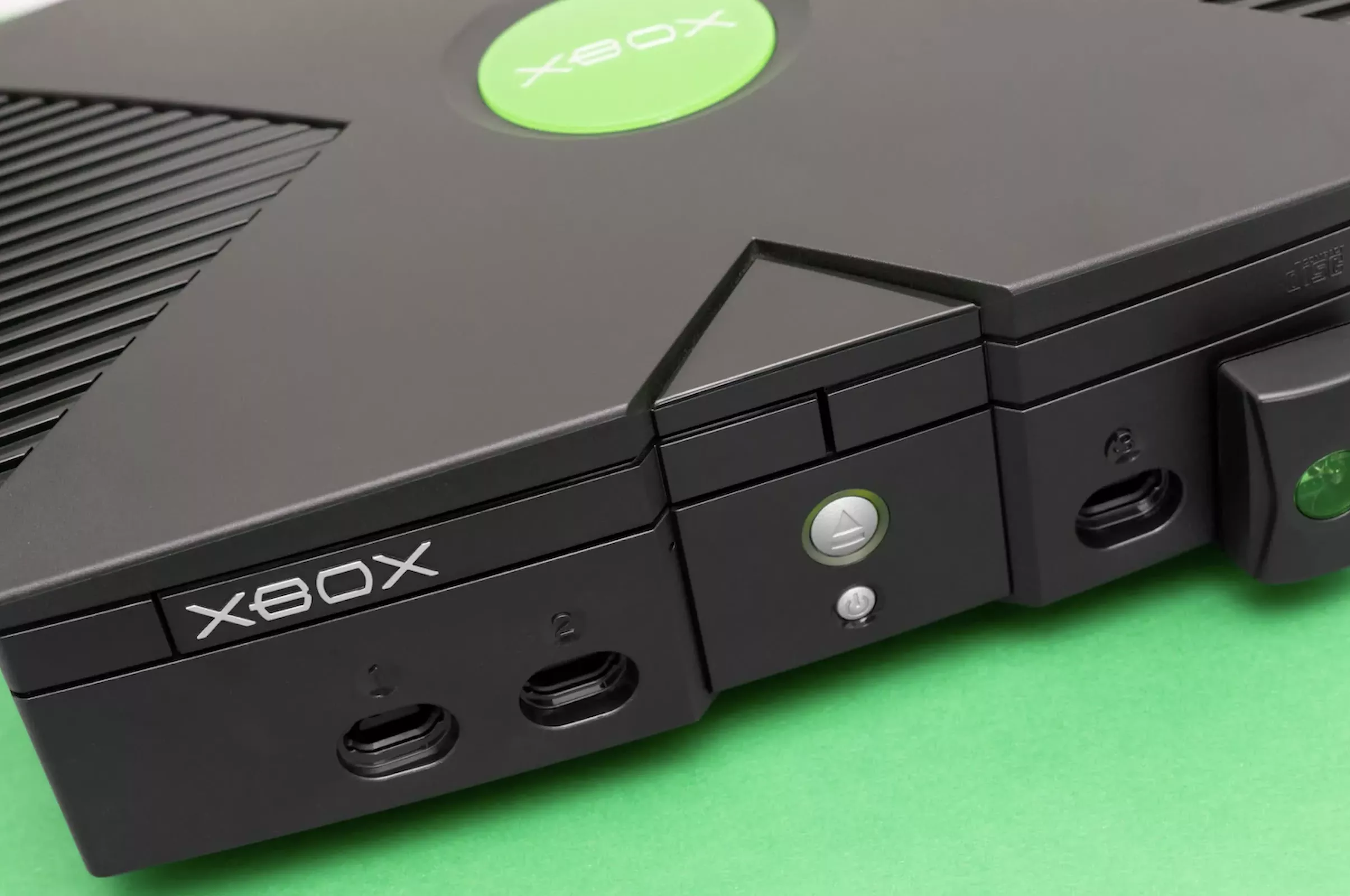
Something to look forward to: Microsoft is expanding how older Xbox games are played, with new plans that would bring Xbox 360 titles to PC and a wider range of devices. The effort, outlined in a document sent to developers, points to a broader push to make Xbox games work across consoles, PCs, and handheld systems.
According to the document seen by The Verge, Xbox 360 games will be able to run not only on Microsoft’s upcoming Project Helix console, but also on “Xbox PCs” and handheld devices. That follows earlier signals that Helix will support PC games, suggesting Microsoft is building a system where the same titles can move more easily between different types of hardware.
The goal appears to be a more unified Xbox ecosystem. By extending older games to PC, Microsoft can grow its overall library and make it accessible beyond traditional consoles. It’s also part of a longer-term shift toward digital distribution, where games are tied to accounts rather than physical formats or specific devices.
Developers will decide whether to make their Xbox 360 titles available through the backward compatibility program. They will also control pricing and whether those games are included in Game Pass. That flexibility could help Microsoft bring more titles into the program without forcing publishers into a single model.
The rollout for Xbox 360 compatibility is expected to happen gradually between 2027 and 2028 across next-generation devices. Ahead of that, Microsoft is planning a full launch of its original Xbox games on PC in October 2026. That program was introduced earlier this year with just four titles, suggesting a phased approach.
The same document also sheds light on Microsoft’s efforts to connect physical and digital ownership. The company is working on a system that would let players convert certain disc-based games into digital licenses. If a user inserts an Xbox One or Series game disc into a compatible console, they would receive a digital license tied to both the disc and their account.
That license would carry across devices, allowing players to access the game without needing the disc each time. However, ownership would still be linked to the physical copy. If the disc is sold or transferred, the digital license would move with it, and the original owner would lose access. This setup is designed to keep resale and trade-ins possible while limiting duplicate use.
Microsoft had planned to test this feature with Xbox Insiders in July, with a wider rollout expected in August. The beta has been delayed, and it is unclear whether the original timeline still applies.




Why Trees Belong on the Risk Register


Weekend Open Thread: Wit & Wisdom


Meta enters AI-training agreement with far-right ‘propaganda rag’ Newsmax

‘Stargate’ Creator’s New Sci-Fi Series Returns for Season 3 Tomorrow


MicroStrategy Post-Earnings CLARITY Act Push Could Add New Catalyst for Its Stock


Reform UK betrays West Mids residents by running from party pledges


Major shareholder moves on Canyon


XRP Ledger v3.3.0 brings five institutional features


Bitcoin Enters the 3rd Stage of the Bear Market


Kraken Enables Retail Access to Jersey Mike’s IPO via Tokenized Shares


Luke Littler’s dominance sparks GOAT debate


Seema Kaliramna Wins Discus Throw Bronze, Takes India’s CWG Medals Tally To 17


Claude: Build Financial Dashboards in Minutes (2026)


New York sues Kalshi over prediction market gambling


Crypto PAC spending tops $2M in Michigan House race


Zack Polanski: an incitement to murder Nigel Farage?


Johnson & Johnson agrees to $5.5B settlement over talc cancer claims


Trump Announces Hamas Disarmament Agreement as Iran Strikes Kuwait Air Base and US Attacks Pause Overnight


Gemini can now summarize the messiest comment threads in Google Docs


ESET tracks rise in malicious AI skills and adaptable malware



You must be logged in to post a comment Login