
Security teams log 54% of successful attacks and alert on just 14%. The rest move through your environment unseen.
The Picus whitepaper shows how breach and attack simulation tests your SIEM and EDR rules so threats stop slipping by detection.


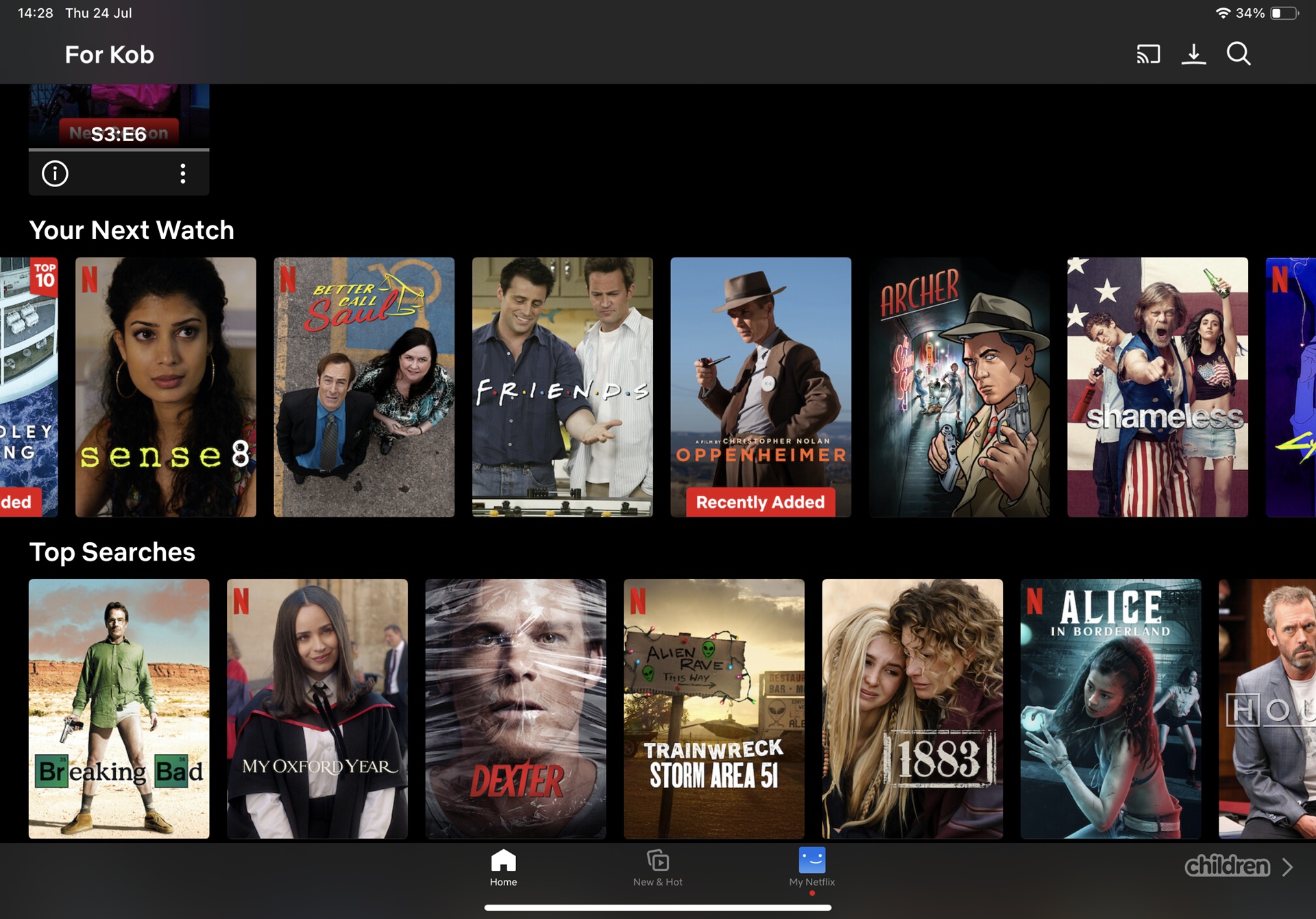
Netflix is reportedly spending $500 million to keep The Walking Dead on its platform. It does so despite no longer holding exclusive streaming rights to the franchise.
The new five-year licensing agreement will see the zombie saga shared between Netflix and AMC+ from 2027. This marks a rare move for the streaming giant.
According to AMC, the deal covers 371 episodes across the original The Walking Dead series and six spin-offs. These include Fear the Walking Dead, The Walking Dead: Daryl Dixon, Dead City, The Ones Who Live, World Beyond and Tales of The Walking Dead.
The agreement also significantly expands Netflix’s reach beyond the US. Alongside renewing its domestic rights, the streamer has secured international distribution in markets including the UK, Italy and Australia. This will give subscribers in those regions access to the full franchise from 2027.
Perhaps the more surprising part of the deal is that AMC+ will also stream the original series for the first time. Previously, Netflix has held exclusive streaming rights to The Walking Dead since 2011, despite AMC Studios producing the franchise. However, under the new arrangement, both services will carry the flagship show simultaneously.
For Netflix, paying half a billion dollars for a non-exclusive licence is an unusual strategy. The company has historically favoured exclusive rights to high-profile content, making this shared agreement stand out. However, the numbers suggest The Walking Dead continues to perform strongly on the platform. This is more than a decade after it first arrived.
“Audiences have discovered and loved The Walking Dead on Netflix for nearly 15 years and the show continues to attract new fans,” said Lori Conkling, Netflix’s Vice President of Licensing.
AMC also believes the expanded partnership will help introduce the franchise to new audiences. “This deal creates a global destination for this universe – all shows, all episodes – making the franchise more accessible than ever to fans around the world,” said AMC CEO Kristin Dolan.
The agreement highlights Netflix’s continued willingness to invest heavily in proven franchises. While the streamer has increasingly focused on original programming, it has also spent heavily on established hits such as Friends and The Office. In addition, with The Walking Dead continuing to attract viewers years after its debut, Netflix appears to have decided the franchise remains worth a sizeable investment. This is the case even if it now has to share it.

More than 81% of Australian children ages 10 to 15 were still using social media three months after the country’s under-16 ban took effect, with roughly half saying platforms never checked their age. Reuters reports: In a study published on Friday, eSafety also found most children aged between 10 and 15 were using social media just as frequently in March as they had before the ban came into force on December 10 last year, while parental awareness of their habits decreased. Children’s continued social media use took place even as account ownership declined to 42% from 52%, with “statistically significant” reductions across YouTube, Snapchat and TikTok in particular, the report said.
“Most under-16s who had social media accounts before commencement were able to either retain them or create new ones at the three-month mark, with social media platforms’ failure to implement effective age assurance measures cited as the main reason,” eSafety said in a statement […] Before the ban, nearly 86% of children surveyed reported using at least one age-restricted platform. Three months later, that figure remained above 81%, the report said. About 58% of teenagers reported using social media daily or more often, barely down from roughly 60% before the ban, it found. The report showed minimal change in “sports and physical activity, arts and music, spending time with friends and family, and attendance at community events.”
Around half the children who retained their accounts said platforms had not checked their age, the most common reason they were able to stay on the services. Others said their accounts listed them as aged 16 or older or that age-checking systems had incorrectly determined they were older. The findings broadly matched snapshot data eSafety published in late March.

Major record labels including Universal, Sony, and Warner have proposed excluding AI-generated songs from official charts unless they are “substantially human made,” properly labeled, legally produced, and free from manipulation concerns. The Verge reports: The proposal goes quite a bit further than a labeling proposal put forth by the RIAA, the International Federation of the Phonographic Industry (IFPI), SAG-AFTRA, and others. That would create a set of standardized labels for AI-generated and AI-assisted music. The labels’ proposal would require songs be clearly labeled, but it would also keep them off international charts unless they met specific criteria, including being “substantially human made.”
To be eligible, the songs would also have to respect the terms of service of whatever AI service was used, the model would have to have the rights to any data it was trained on, and “not raise stream or chart manipulation concerns.” What sort of concerns and what constitutes “substantially human made” are currently vague. Sony Music, UMG, and Mom+Pop Music did not immediately respond to a request for clarification. The IFPI has thrown its weight behind the labels’ proposal, though no charting organization has signaled any immediate plan to adopt the rules […].


We may receive a commission on purchases made from links.
When you think of a chainsaw, you might envision a massive cutting tool making short work of thick forest vegetation. While you can still find those among forestry crews, mini chain saws are scaled down versions that have become popular with homeowners. Professionals are recommended for bigger jobs such as felling a full-grown tree, which isn’t cheap, but hiring a crew for smaller trimming jobs can still run hundreds of dollars.
Meanwhile, the The mini chainsaw, a cordless battery-powered handheld tool that’s offered at lengths of six to ten inches. This is just one of the adorable mini tools you can get at Home Depot, which provide some space saving benefits over larger options. Some manufacturers insist on calling these “pruning saws,” or “garden pruners,” but they are functionally similar enough to the larger tool to warrant the title of mini chainsaw.
When deciding whether a mini chainsaw is actually worth it or not, you’ll need to factor in price and understand the limitations in terms of what you can cut through. For instance, the 8-inch Milwaukee M18 Fuel Hatchet Pruning Saw can handle thickness up to 7.5 inches in diameter. Ryobi made a mini pruning chainsaw with a 12V internal battery that features a 6-inch bar, but with both less voltage and a shorter cut than the Milwaukee, it can only handle something up to 4 inches in diameter. So, you could easily get through a variety of thicker branches or even fell some smaller, younger trees that don’t exceed the tool’s maximum cut diameter.

If you wanted to remove a stump, you might be able to but only when dealing with the remnants of a thin and narrow tree. There are far better options for removing a large stump. Choosing to use a mini chainsaw on a stump will come with inherent limitations.
The tool simply isn’t designed for this kind of work, especially if a stump is thicker in diameter than what a mini chainsaw can handle. However, you might be able to get away with it if the interior of the tree is hollowed out, allowing the limited cutting length of a mini chainsaw to make progress. You can use a mini chainsaw to cut through some of the smaller roots, as long as you have removed the soil completely around the cutting area, as dirt and rocks can damage the tool.
Thickness isn’t your only limiting factor, as you’ll need to account for battery life as well. For example, the Ryobi 12V 6-inch pruning chainsaw promises a fully charged battery can provide over 30 cuts. Depending on the size of the stump and considering typical removal of these requires substantial effort, 30 cuts may not be enough.
You also have to consider that hardwoods like hickory require more power and might be too much for a mini chainsaw to handle. Finally, when dealing with a stump, you might work the mini tool beyond its capability, potentially causing the motor to overheat or suffer damage.
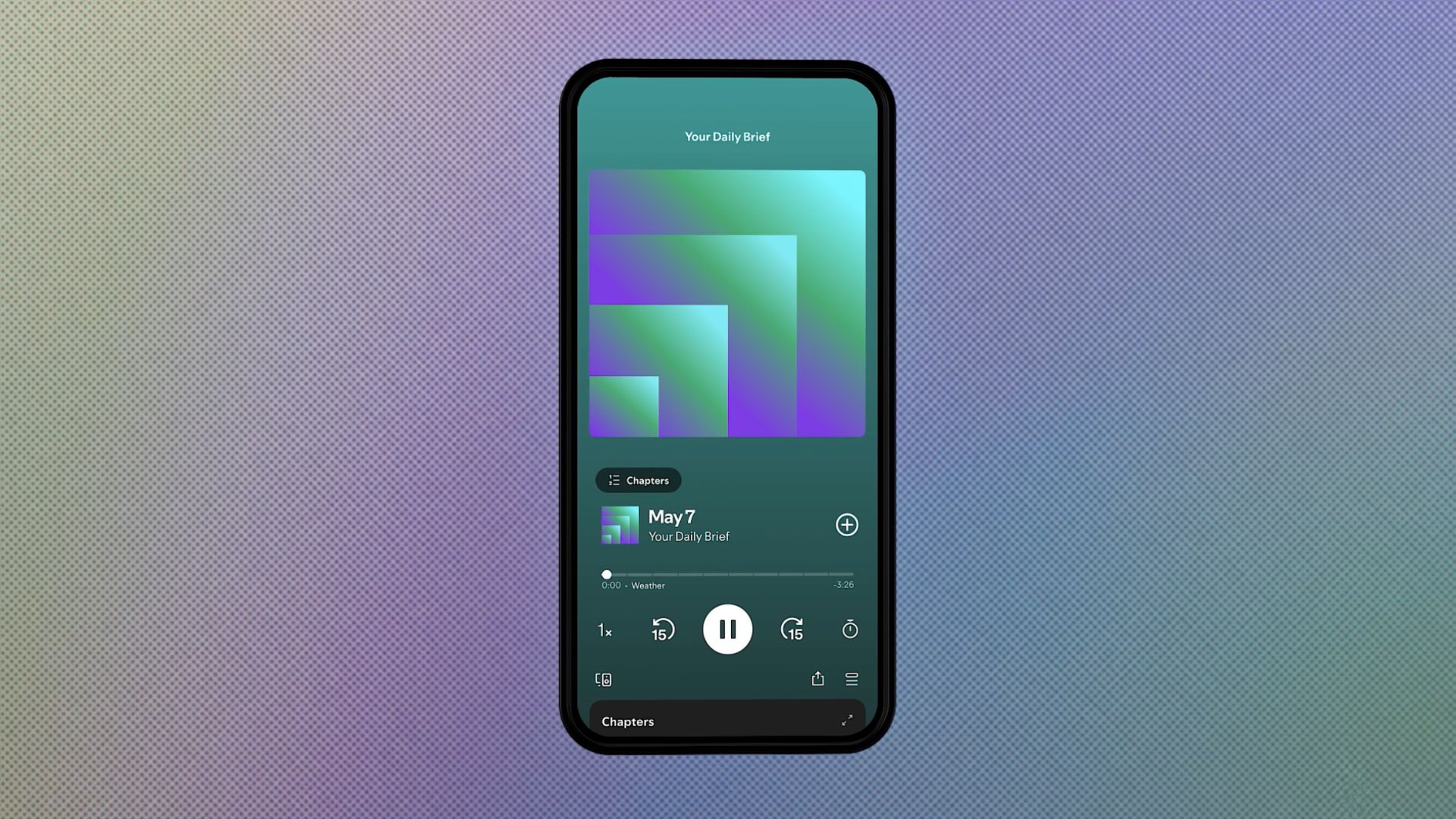
Spotify is expanding its fitness offering with a new set of running-focused features for Premium subscribers.
The headline addition is Running Mode, a new section that generates AI-powered playlists based on the type of run you’re planning.
Users can choose from 25 preset workout options spanning different training styles and music genres. You can then customise the experience further by selecting the exact workout you want.
Rather than shuffling songs together, Running Mode lets users pick from sessions such as steady runs, interval training and pyramid workouts, before setting an exact workout duration. Spotify also offers optional BPM matching, allowing tracks to better align with your running cadence.
Once everything is selected, Spotify automatically builds a playlist designed around those preferences. The company describes this as “seamless transitions” between songs, which help maintain the desired pace during a workout.
The feature builds on Spotify’s growing use of AI to personalise music discovery. According to the company, fitness has become one of the most frequently requested themes for its AI-generated Prompted Playlists.
Long-time Spotify users may find the feature familiar. The music service previously offered a tempo-matching running mode that adjusted songs to match a user’s pace, but it was discontinued in 2018. However, this new version takes a different approach by leaning on AI-generated playlists and additional workout customisation. It does this rather than automatically tracking a runner’s speed.
The launch also continues Spotify’s wider push into fitness. Earlier this year, the company partnered with Peloton to bring guided workout classes to Premium subscribers within the Spotify app. This broadens the service beyond music streaming.


Pharmaceutical company Amgen says it suffered a data breach after threat actors stole corporate data and patient information stored in multiple cloud systems operated by third-party service providers.
Amgen is a California-based biotechnology company that develops and manufactures medicines for serious illnesses, including cancer, cardiovascular disease, inflammation, and rare diseases.
The company said it detected the unauthorized activity in July 2026 and responded by activating its cybersecurity response plan, implementing containment measures, and hiring independent forensic experts to investigate the incident.

The investigation found that the attackers stole sensitive data from the cloud environments.
“The Company has since learned that some of its data, including proprietary data, patient protected health information, and other information, has been exfiltrated from these cloud environments,” Amgen said in a Form 8-K filing with the SEC.
The company is still determining whether additional information was accessed or stolen, including confidential business information, intellectual property, research and development data, and other patient information.
Amgen has not disclosed which third-party cloud providers were involved, how the environments were compromised, how many people may have been affected, or whether the attack was linked to a known threat actor.
On July 29, the company determined that the incident was material after evaluating the volume of potentially impacted files and the possibility that they contained sensitive information.
However, Amgen currently does not believe the incident is reasonably likely to materially affect its financial condition or operating results.
The company said it is continuing to investigate the breach with the assistance of third-party cybersecurity experts.
Amgen added that it is evaluating legal and regulatory notification requirements and will notify impacted patients where required.
BleepingComputer contacted Amgen to ask whether the breach involved a vishing attack targeting an employee’s single sign-on account, which cloud services were affected, and whether the company has been contacted or extorted by threat actors claiming to be ShinyHunters.
A response was not immediately available.

Security teams log 54% of successful attacks and alert on just 14%. The rest move through your environment unseen.
The Picus whitepaper shows how breach and attack simulation tests your SIEM and EDR rules so threats stop slipping by detection.
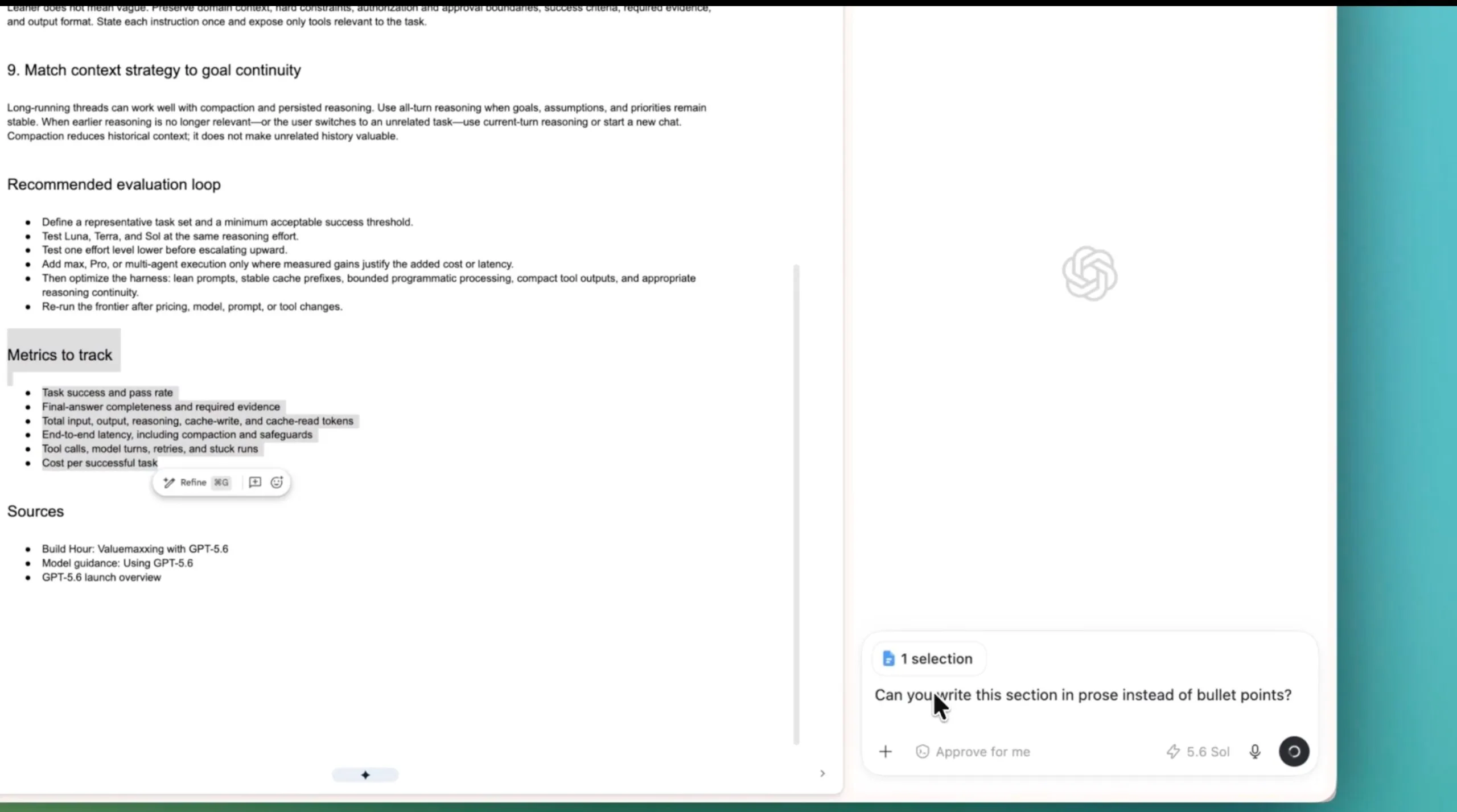
ChatGPT just got a lot better at understanding what you’re actually looking at. OpenAI has rolled out updates to its Chrome extension and desktop app that let ChatGPT read your open tabs, react to highlighted text, and answer questions about YouTube videos. The update arrived shortly after OpenAI shelved its standalone Atlas browser to shift its focus toward tools people already use.
Inside Side Chat, you can now reference your open tabs directly, so ChatGPT already has context without you having to explain anything. Highlighting text on a page works too, letting you ask a question about that exact section instead of describing it yourself.
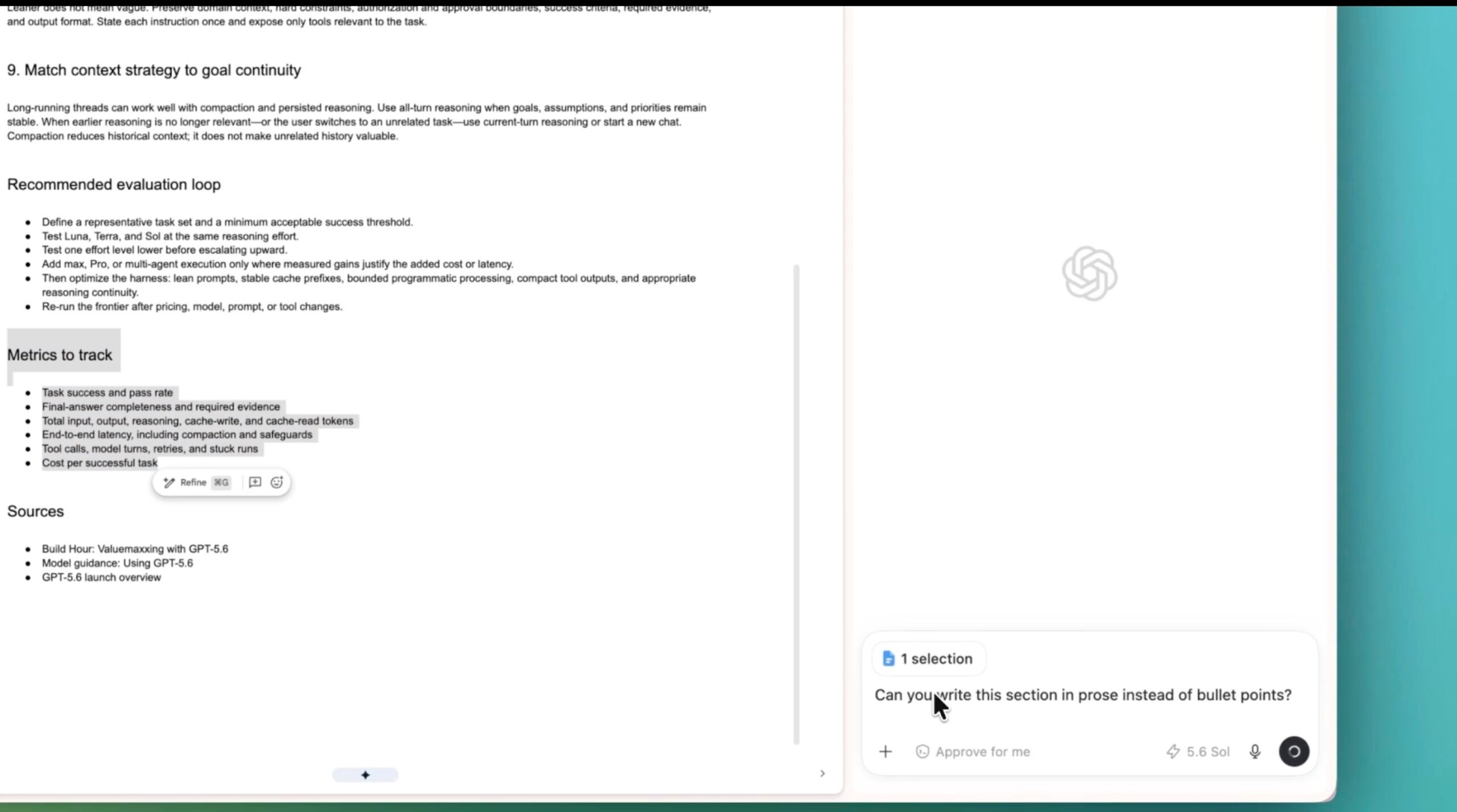
If you ask about any YouTube video, ChatGPT will read it directly without requiring a manual summary request. There’s also a quicker shortcut built right into your browser. You can right-click anywhere on a page, select Ask ChatGPT, and the sidebar opens automatically.
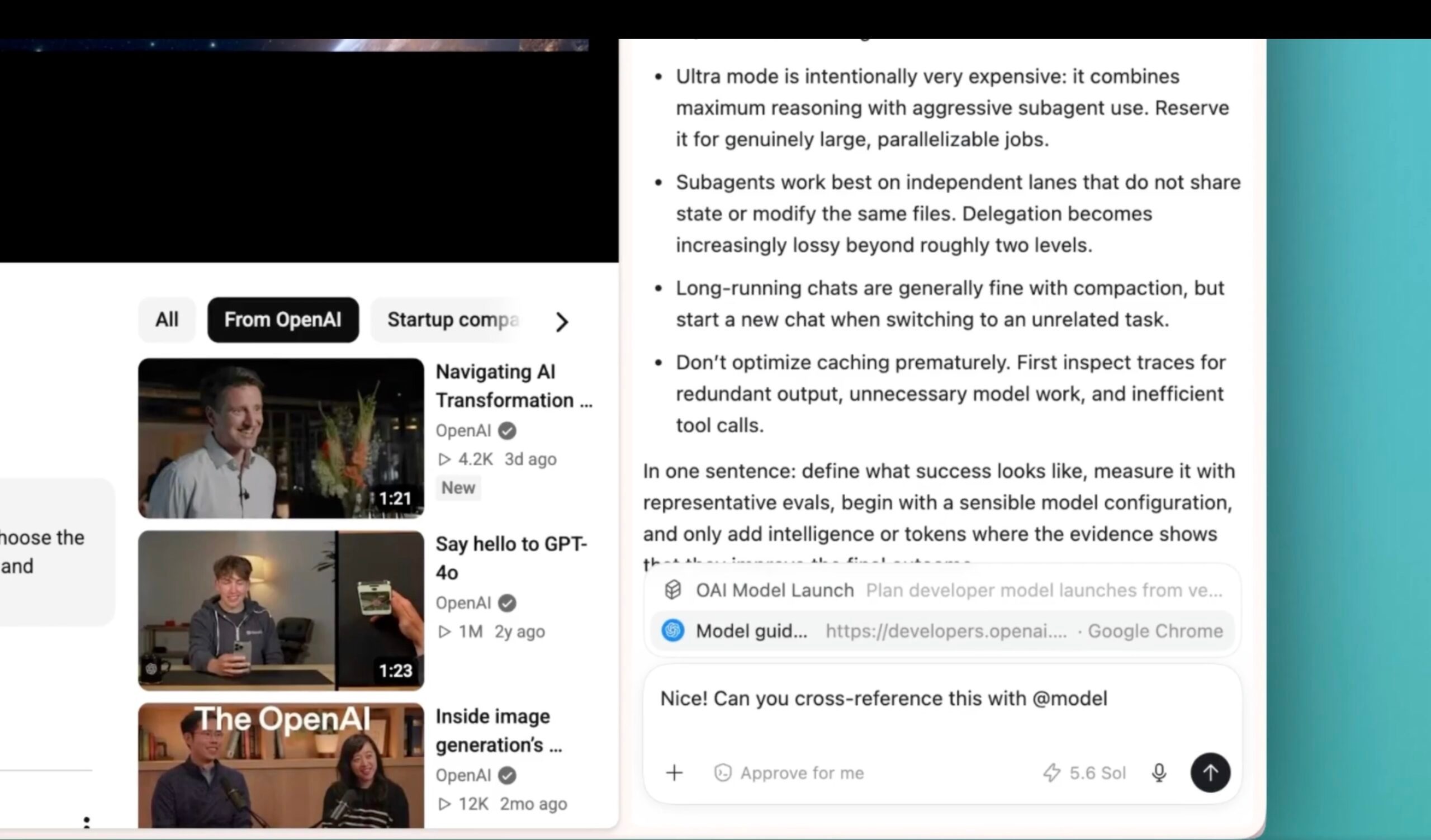
The desktop app now suggests URLs as you type, and works like a normal browser address bar. You can also dig back through your browsing history from Settings, and ChatGPT can search that history whenever a task calls for a page you visited earlier.
OpenAI also rolled out a couple of smaller updates in the latest release. A new Activity view in the sidebar shows which chats you’ve engaged with recently and which ones still need your attention.
Reviewing code across multiple repositories in one project just got simpler, and generated images now open in an expanded viewer where you can leave comments before requesting edits. If you already use ChatGPT while researching online, these updates should make that workflow feel faster.
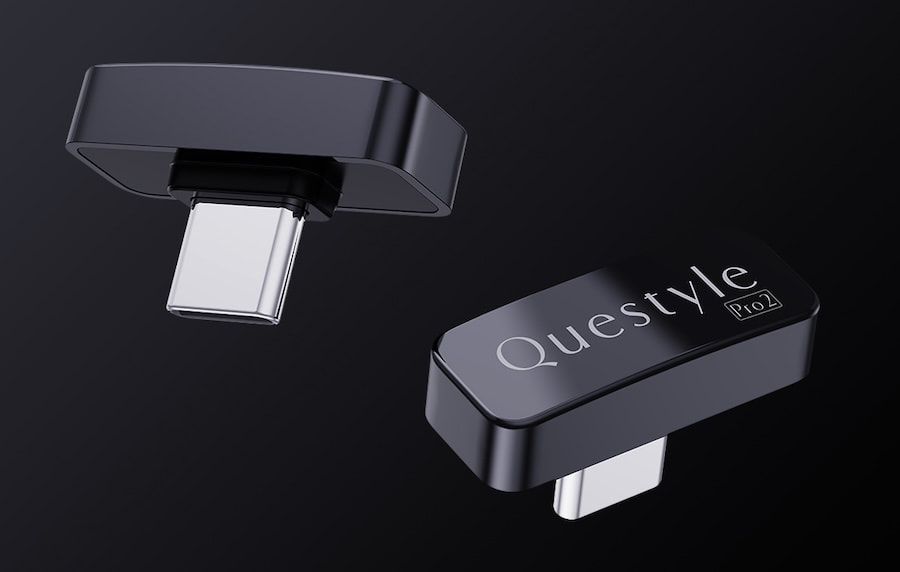
Bluetooth audio has come a long way, but your phone, computer, or game console may still lack support for the latest codecs and features built into your headphones. Building on its QCC and QCC Pro dongles, Questyle’s flagship QCC Dongle Pro2 is designed to close that gap with broader compatibility, lower latency, and more reliable wireless performance across Apple devices, PCs, and gaming consoles.

Native platform limitations have restricted access to high-end Bluetooth audio. Even the latest iPhones support only SBC and AAC codecs, while PC platforms are known for inconsistent specifications that can compromise performance and stability. Console gamers are often forced to avoid Bluetooth altogether because most systems lack native support for low-latency codecs capable of delivering the precise audio-video synchronization required for a natural gaming experience.
Questyle designed the QCC Dongle Pro2 to bypass native Bluetooth codec limitations using an external plug-and-play transmitter. This allows owners of premium Bluetooth headphones to enjoy low-latency, high-resolution audio with PCs, the PS5, Nintendo Switch, Xbox, and even wired hi-fi devices such as Questyle’s own M18i Max.
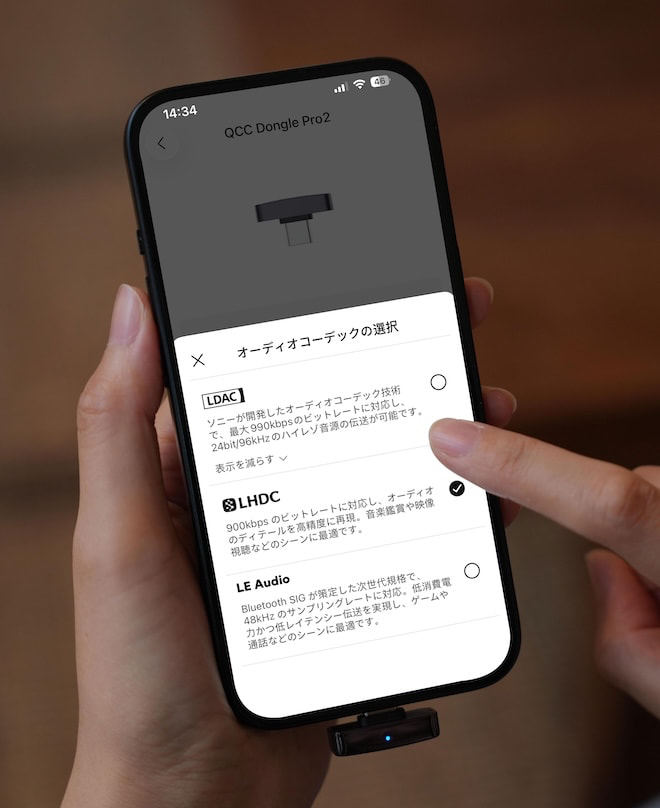
The QCC Dongle Pro2 also reflects Questyle’s commitment to the Apple ecosystem, with which it shares a similar design philosophy: technology should work quietly in the background and make products easier to use. The Dongle Pro2 significantly expands the Bluetooth capabilities of Apple devices without compromising the streamlined experience users expect.
Apple MFi certification further supports stable connectivity, efficient power management, and long-term ecosystem compatibility, positioning the QCC Dongle Pro2 as a reliable wireless audio gateway for sending high-resolution audio to premium Bluetooth headphones.
Bluetooth 6.1: The incorporation of Bluetooth 6.1 supports more reliable connectivity while ensuring compatibility with next-gen listening devices.
More Codecs: The inclusion of LHDC and LC3 (LE Audio) codecs expands ecosystem support and introduces a new power-efficient audio standard. LHDC-V5 and LC3 also join the list of supported codecs that includes aptX HD, aptX Adaptive, aptX Lossless, and LDAC, further expanding the already robust protocol coverage the original QCC Dongles were known for.
Apple MFi Certified: The QCC Dongle Pro 2 is optimized for iPhone, iPad, and Mac devices, providing a reliable foundation for Apple ecosystem compatibility, power management, and long-term iOS support
Multi-Device Connectivity: With Auracast, the QCC Dongle Pro 2 can broadcast Bluetooth audio from a single source to multiple compatible receivers. This makes sharing audio at home, the office, or in public spaces easy.
Proven Audio Quality Standards: The QCC Dongle Pro 2 carries both Sony LDAC and Snapdragon Sound certifications.
Easy App-Based Management: With the Questyle App, users can conveniently manage connected devices, view real-time status, change audio codecs, and perform firmware upgrades.
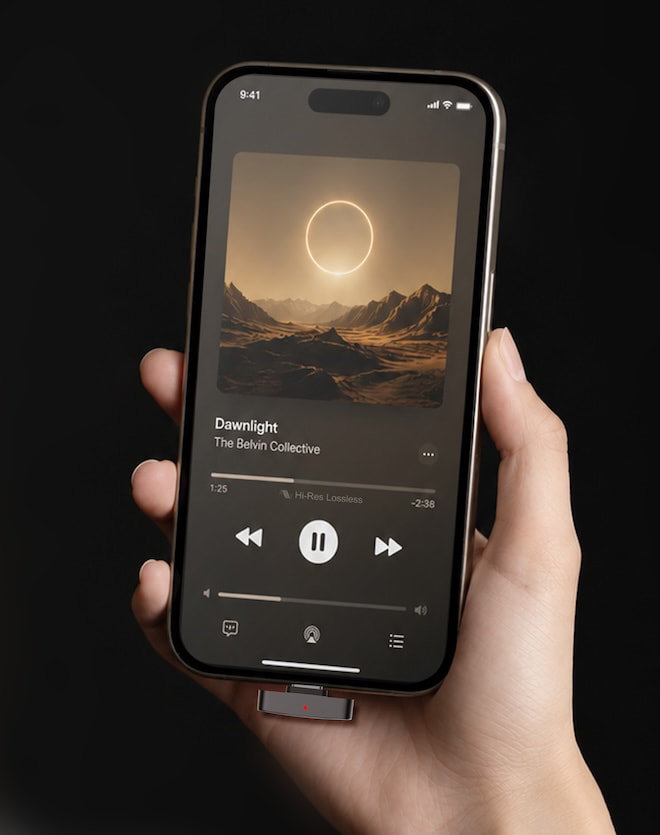
The QCC Dongle Pro2’s enhanced performance is made possible by Bluetooth 6.1, which is designed to reduce wireless interference, improve connection stability, increase power efficiency, and deliver more precise synchronization.
Another significant addition is Auracast, a broadcast system that allows audio from a single source to be streamed to multiple compatible listening devices, making the QCC Dongle Pro2 useful for sharing audio at home, in the office, or in public spaces. Actual codec support, latency, Auracast, and LE Audio performance will depend on the receiving device and wireless environment.
“At Questyle, we aim to make advanced audio technologies more accessible to everyone. The QCC Dongle Pro2 expands on the promise of its predecessors to break down the barriers that typically prevent listeners from enjoying the best Bluetooth audio on their favorite devices, all with the ease of plug-and-play.” – Jason Wang, Questyle CEO
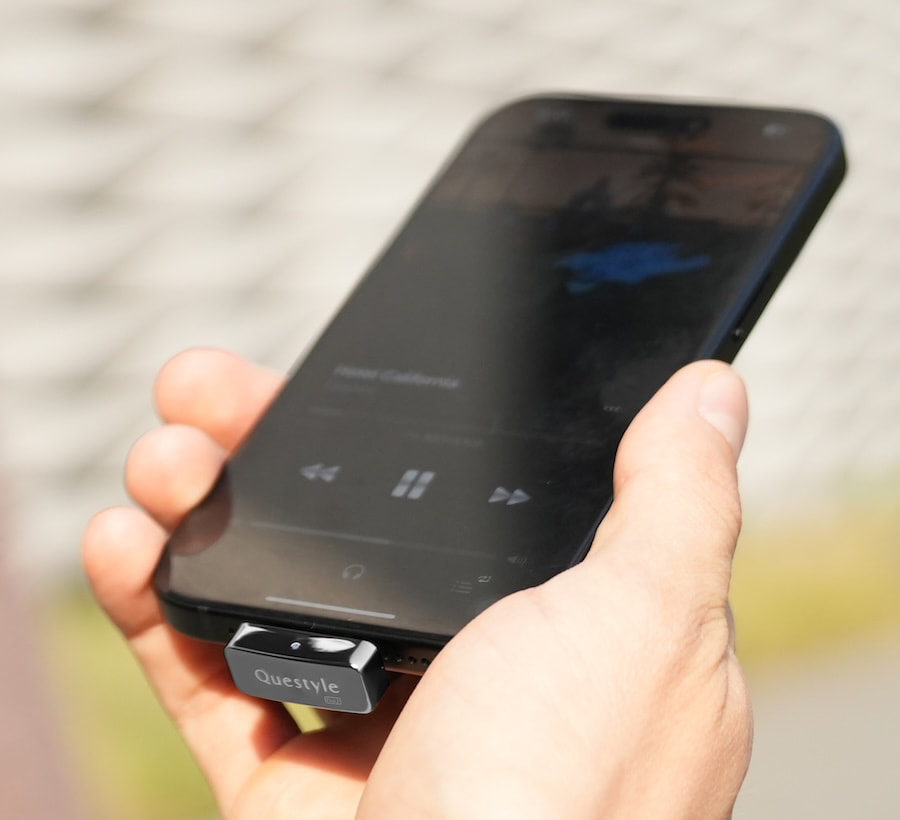
The QCC Dongle Pro2 is designed for listeners who want to access the best Bluetooth audio their headphones can deliver without worrying about native codec compatibility, laggy synchronization, or dropped connections.
With its compact design, low power consumption, and simple plug-and-play operation, the Dongle Pro2 is a practical everyday solution for hi-fi enthusiasts, casual listeners seeking better wireless sound, and gamers who want the convenience of Bluetooth without game-breaking latency.
The Questyle QCC Dongle Pro2 is more than a routine update, but it does not make the company’s earlier transmitters obsolete. The QCC Dongle and QCC Dongle Pro use Bluetooth 5.4 and already support the aptX family of codecs, while the Pro adds LDAC. The Pro2 retains those capabilities and adds Bluetooth 6.1, LHDC, LC3, LE Audio, and Auracast, making broader compatibility and multi-device broadcasting its most meaningful upgrades. Apple MFi certification is not new, because all three models carry it.
The Pro2 makes the most sense for Apple users whose headphones support codecs unavailable natively on the iPhone, along with PC and console gamers seeking more stable connectivity and lower latency. It is also the obvious choice for anyone who wants Auracast or better support for emerging LE Audio products. Existing QCC Dongle Pro owners who rely primarily on LDAC or aptX may have less reason to upgrade unless those newer features matter.
The QCC Dongle Pro2 will not magically improve every pair of Bluetooth headphones. What it can do is stop an otherwise capable source device from preventing premium headphones from using the features printed on the box, which is a surprisingly common problem in 2026.
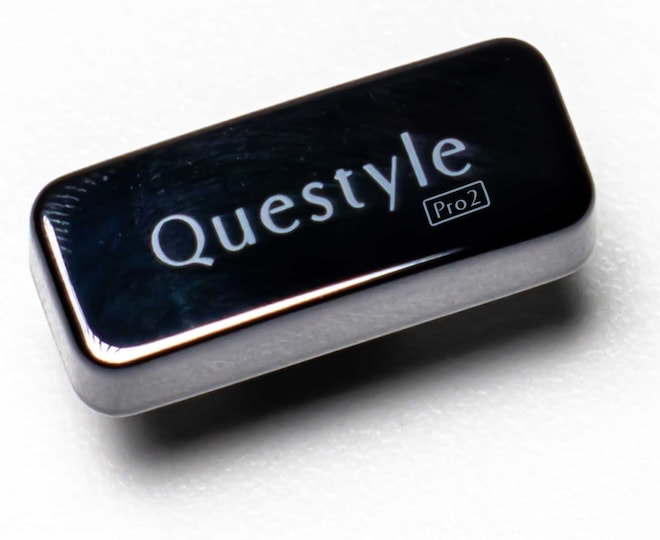
The QCC Dongle Pro2 is available now for $99 at Amazon and is already shipping worldwide.

Much has been made of the incident in which one of OpenAI’s agents broke out of its sandboxed test environment and proceeded to hack the AI hosting platform Hugging Face. OpenAI has since launched an investigation into how the incident occurred, which is still ongoing.
Now, anonymous sources have told Reuters that more of OpenAI’s agents are believed to have escaped their sandboxes. However, one source downplayed the severity, saying that with those escapes, the agents didn’t appear to leave OpenAI’s network to hack into another company’s. TechCrunch reached out to OpenAI for more information.
AI programs acting in bizarre ways has apparently become a weird, almost bragging point for companies. The same week, Anthropic also announced that it had discovered not one, but three instances in which its agents had escaped test environments and hacked other organizations.
AI companies have also been accused of using such incidents for marketing purposes — as they generate considerable attention and may underscore how powerful the companies’ products are. The flip side of that is that these disclosures are also ramping up discussions of government regulations.

If you’ve been uploading fully AI-generated videos on Snapchat in hopes of earning rewards, it might be time to rethink your strategy. Snapchat has announced changes to Spotlight that prioritize authentic, original creativity over content created entirely by artificial intelligence. The company says its recommendation system will now favor videos made by real creators, while fully AI-generated submissions will no longer qualify for monetization.
Starting this month, fully AI-generated videos are no longer eligible for recommendation on Spotlight, Snapchat’s public feed for vertical content. That rule applies even if AI use is disclosed, since Snapchat’s updated guidelines state that human-made content gets prioritized over AI content regardless of transparency labels.
Snapchat isn’t cutting AI out completely, though. Videos edited or enhanced using Snapchat’s own AI creative tools remain eligible, and those will carry visible indicators showing AI played a role. Snap says unique Spotlight contributors are up more than 120% from last year, a number it points to as proof people are already choosing to create original content.

The rise of AI slop has become a growing challenge across social media platforms. They are quick to produce, easy to flood the recommendation feeds, and often crowd out original creators. Snapchat says its latest changes are meant to improve the viewing experience while ensuring creators who invest time and effort have a better chance of reaching an audience.
Snapchat joins a growing list of platforms tightening their AI policies recently. LinkedIn rolled out a button letting users flag posts as AI slop, and YouTube updated its monetization rules to block payouts on generic or template-based AI content. Meta pulled a controversial Instagram AI photo tool after backlash too, though its CEO has continued pushing for more AI driven personalized content elsewhere.
With the latest move, Snapchat is betting that authenticity, not automation, is what keeps pulling people back to the platform.

Joni Mitchell’s 1974 smash hit Court and Spark has occupied a prominent place in the audiophile universe almost since the day it was released. A fantastic album from start to finish, it features iconic tracks such as “Free Man in Paris” and the Top 10 single “Help Me.”
The album earned four Grammy nominations and won Best Arrangement Accompanying Vocalist(s) for “Down to You.” It reached No. 2 in the United States and No. 1 in Mitchell’s native Canada, eventually achieving double-platinum sales of more than two million copies. Frequently included on lists of the greatest albums of all time, Court and Spark was inducted into the Grammy Hall of Fame in 2004.

Back in the day, this spectacular recording was a go-to demo disc for audio enthusiasts and mass-market retailers showcasing the era’s popular high-end stereo components. The opening 30 seconds of “Help Me,” featuring John Guerin’s still-stunning, drumhead-bending tom-tom run, became a particularly popular test for new loudspeakers.

While Court and Spark has been reissued countless times over the years, audiophile-oriented vinyl editions have been surprisingly scarce. A search of Discogs suggests that, after the 1980 Nautilus Half-Speed Mastered “SuperDisc” edition, another major audiophile pressing did not appear until Mobile Fidelity’s 2024 Original Master Recording UltraDisc One-Step 180-gram, 45 RPM 2LP box set ($104.86 on Amazon) which I have yet to hear.
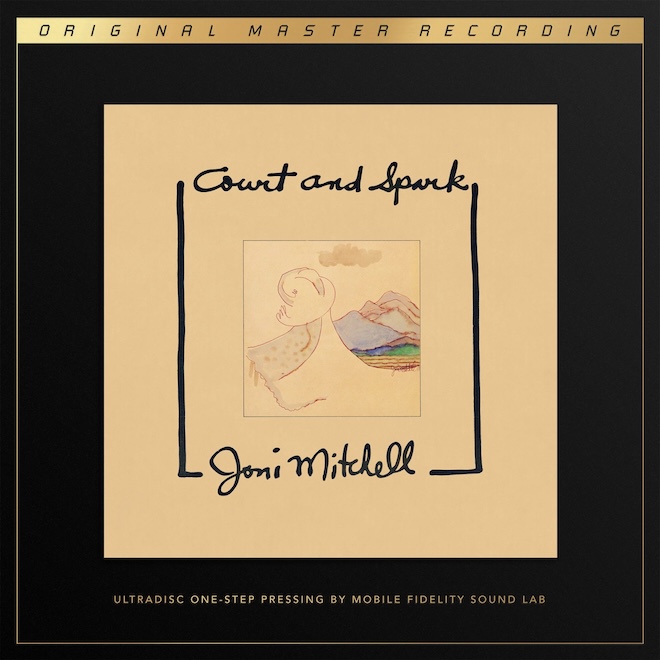
For those of us who love this album but would prefer a more affordable single-disc edition, the new Rhino High Fidelity pressing may be just the ticket. Available exclusively through Rhino’s website, it sells for $39.98.
Featuring all-analog mastering, with lacquers cut by the esteemed Kevin Gray at Cohearent Audio, the new edition was pressed at Germany’s Optimal Media, one of the world’s most respected vinyl manufacturing facilities.
So, how does it sound? In a word: fantastic. It is all in the details. Instrumental separation is more precise, while the wider soundstage feels natural rather than exaggerated.
On “Trouble Child,” the buzzing resonance of Joni’s acoustic guitar strings sounds bigger and rounder. Drummer John Guerin’s widely panned rimshots on Joni’s cover of Lambert, Hendricks & Ross’s “Twisted” are more distinct on this new Rhino edition, while her rich, double-tracked, open-tuned acoustic guitars on “People’s Parties” sound simply gorgeous.

This edition is far better than most stock original pressings, and for good reason. The mid-1970s oil crisis frequently resulted in noisier vinyl as manufacturers cut corners, with petroleum serving as a key raw material in vinyl production. Quality control on Warner, Elektra and Asylum releases could also be inconsistent, making annoyingly off-center pressings fairly common—as is the case with my current original copy.
The new Rhino edition also easily bests my Nautilus SuperDisc pressing, presenting the music with greater warmth and less compression. By comparison, the Nautilus sounds thin and overly bright.

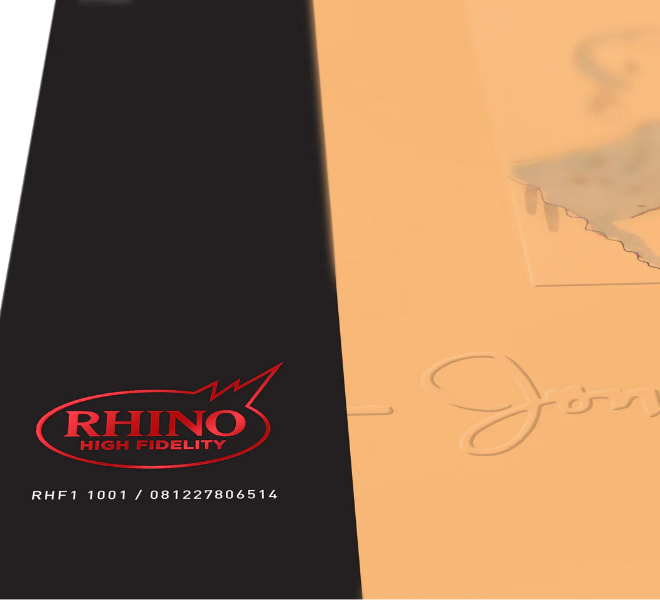
My only quibble with the new edition is that Rhino did not recreate the soft matte finish, bas-relief-style raised lettering and textured presentation of Joni’s cover painting found on original copies. Instead, it opted for a glossy, laminated flat-art approach.
It is a minor detail, I realize, but one that will keep my original pressing in the collection alongside this new edition. The pristine Nautilus copy, however, can start packing.

Again, you can get the Rhino High Fidelity edition of Court And Spark at Rhino’s website for $39.98 (click here).
★★★★★★★★★★ Music
★★★★★★★★★★ Sound Quality
★★★★★★★★★★ Pressing Quality
Mark Smotroff is a deep music enthusiast / collector who has also worked in entertainment oriented marketing communications for decades supporting the likes of DTS, Sega and many others. He reviews vinyl for Analog Planet and has written for Audiophile Review, Sound+Vision, Mix, EQ, etc. You can learn more about him at LinkedIn.



Commonwealth Games boxing: Jadumani Singh seals dominant 5-0 win over Pakistan’s Sumama Rehman to enter quarter-finals | Commonwealth Games News


Why Trees Belong on the Risk Register


Intel is reversing course and bringing hyper-threading back to its server chips


Weekend Open Thread: Wit & Wisdom


Meta enters AI-training agreement with far-right ‘propaganda rag’ Newsmax


Ripple bought a bank in pieces. The $4 billion audit


Luke Littler dismantles Gerwyn Price to retain title in Blackpool


The Part of the Electric Transition Nobody Wants to Discuss


BITCOIN JUST ENTERED THIS CRITICAL ZONE…


XRP Ledger adds $2.6B as RWA inflows rank second

‘Stargate’ Creator’s New Sci-Fi Series Returns for Season 3 Tomorrow


Major shareholder moves on Canyon


Spain sweeps the board at 2026 World Cup with individual awards


Bitcoin Enters the 3rd Stage of the Bear Market


Sara Gilson Killed By Husband After Viral “Pedophile” TikTok Video


Kraken Enables Retail Access to Jersey Mike’s IPO via Tokenized Shares


Anthropic launches Claude Opus 5, a cheaper AI model for coding, agents and enterprise workflows


New macOS Sequoia & Sonoma security updates for older Macs


Claude: Build Financial Dashboards in Minutes (2026)


Luke Littler’s dominance sparks GOAT debate


You must be logged in to post a comment Login