Connect with us

Tech

New Research Suggests That A Neutrino Laser Is Impossible

Published

on

As cool as it would have been to wield lasers that produce a beam of neutrinos, recently two papers were published by MIT researchers that seem to dampen the likelihood of such lasers being at all possible. In a review paper by [Ana Maria Rey] et al. these two papers are investigated in more detail.

Although the concept behind a neutrino laser is rather simple, using the same superradiance effect involving a Bose-Einstein condensate (BEC) that allows for stimulation by photons to result in a synchronized direction of emitted photons, the idea of using a BEC of radioisotopes that naturally emit neutrinos in this fashion has now been effectively shot down.

The problem lies in taking the leap from photons with a BEC and applying this to a BEC of radioisotopes. Whereas photons are relatively slow and low-energy at a mere 1 eV, a neutrino is extremely fast and at 1+ MeV correspondingly has a much greater kinetic effect on the particle that emitted it. Unlike a photon emitted by an atom, this leaves precious little time for the other particles in the BEC to be affected.

Advertisement

This first scenario is covered in the (paywalled) paper by [Yu-Kun Lu] et al. with their calculations showing that superradiance cannot occur with neutrinos in a BEC and thus a laser is impossible. In the (also paywalled) second paper by [Hanzhen Lin] et al. the question is asked whether the assumption that a BEC of a radioisotope will at all enhance radioactive decay, to which the answer is a curt ‘no’.

Although it’s impossible to prove a negative with the scientific method, these two studies have slammed close a couple of doors on the concept of a neutrino laser.

Advertisement

Source link

Continue Reading
Click to comment

You must be logged in to post a comment Login

Leave a Reply

Tech

These Drones Could Cover Up To 98 Percent Of The World’s Oceans By 2028

Published

on

New ocean-sensing drones are being built to withstand the deepest depths of the ocean.

More than 70 percent of our planet is covered by the ocean, but the vast majority of it remains unexplored — an increasingly urgent blind spot as climate change raises water temperatures and. Autonomous underwater drone floats could soon close that gap, with a growing fleet set to cover more than 98 percent of ocean volume by 2028.

Advertisement

Exploring new depths

Today, the vast majority of ocean data is generated by members of the Argo Program — an international collaboration launched in 1999 that deploys 4,000 data-collection floats worldwide. The majority of Argo drones (like the one pictured above) descend between 2,000 and 4,000 meters into the ocean, but 10 percent of ocean warming occurs below these depths, marking a major gap in data collection.

This year, Ifremer — the French state ocean agency — reported its two Deep-6000 prototypes had completed five dives of 6,000 meters (nearly 20,000 feet) between January 11 and February 2 of this year, collecting crucial data on the abyssal zone. These successful missions make France the third country in the world, following China and the United States, to develop Argo floats capable of reaching these depths.

Ifremer said that by 2028, 30 more deep-sea floats will join the existing Argo-led international fleet of 4,000 devices, allowing researchers to explore more than 98 percent of the ocean.

Advertisement

The US currently operates more than 100 deep-sea floats and China operates more than thirty.

How do the dives work?

More than 90 percent of the ocean is considered deep ocean, reaching 200 meters (656 feet) deep or more — and of the entire ocean, only five percent has been explored. The lack of research on the deepest ocean areas — or abyssal zones — is largely due to technical constraints. At these depths, the ocean puts an enormous amount of pressure on machinery — approximately one atmosphere for every 10 meters of depth.That means at 6,000 meters, the pressure is approximately 600 times greater than that at sea level.

Advertisement

“The main challenge was to design a system that could withstand the pressures of the deep sea, be self-sufficient in terms of energy to remain operational for seven years, and keep costs under control,” Xavier André, head of profiler technology development at Ifremer, said in a press release.

To accommodate for the massive amounts of pressure, Ifremer constructed the hulls of its Deep-6000 prototypes with composite materials other than pure titanium. At 88 pounds, the devices weigh approximately twice as much as a typical Argo float, allowing it to better withstand the intense pressure.

The float missions for these Argo devices run on ten-day cycles: the float is dropped from a boat, descending to a “drift” depth where it stays for nine days, then further descending to a “profile” depth for approximately three hours. The float then ascends back to the surface, where it sends data it has collected to a satellite. This process is repeated until its battery dies — usually around 150 cycles over three to five years.

Advertisement

What information do the drones collect?

The floats collect information on water salinity, temperature, oxygen and pressure to help scientists at weather and climate centers better understand how the ocean is behaving as climate change warms the waters. Argo data can be used to improve forecasts of major climate phenomena like monsoons, ocean warming, sea level rise and ocean circulation. The 4,000 floats that exist globally produce more than 100,000 temperature and salinity profiles per year, and all Argo data is free online to access and use.

Virginie Thierry, a physical oceanographer at Ifremer, said in a press release that the new Deep-6000 floats will allow the French organization to track ocean warming all the way through abyssal depths.

“We will also be able to obtain information on deep ocean circulation,” she said, “which contributes to the storage of climate signals such as heat and carbon in the deep ocean, and refine ocean prediction models. Argo is an example of truly remarkable international cooperation, with more than 60 countries contributing to it.”

Advertisement

Source link

Advertisement
Continue Reading

Tech

The Metric Is Not The Mission: History Rarely Announces Itself

Published

on

The Metric Is Not the Mission is a ten-part examination of how Big Tech moved from building and expanding the open internet to increasingly shaping it around its own metrics, incentives and assumptions. Across the series, the argument follows the evolution of the platform economy—from the optimism of the early internet to the growing tensions around power, prediction, geopolitics, accountability and the future of digital life.

The series will be published in two parts each week over five weeks, with each installment building on the one before it. At the end of the series, the complete essay will be brought together in a single PDF edition, providing the full argument in one place.

Part I — History Rarely Announces Itself

The series begins with a simple question: are we witnessing a collection of problems with Big Tech, or a deeper change in the role these companies play in our lives? Part I sets out the argument that the most important transformations are often the ones we recognise only in retrospect.

There is a peculiar habit that history shares with nature. Neither announces profound change with the drama we imagine when looking back. Revolutions rarely begin on the day they enter textbooks, and civilizations do not wake one morning to discover that they have entered decline. Instead, transformation arrives quietly, almost politely, concealed beneath the reassuring continuity of everyday life. Markets continue to function, institutions retain their familiar names, and people carry on believing that tomorrow will resemble yesterday because, on the surface, it usually does.

Advertisement

Only later do historians perform the act of compression that history itself resists. They identify the battle that changed an empire, the financial crisis that exposed an economic model, the speech that captured a political era, or the invention that divided one age from another. Looking backwards, the narrative appears inevitable but living through it is altogether different. Those who inhabit moments of profound transition rarely experience them as decisive. They experience them as a succession of disconnected events whose significance is impossible to measure because the larger pattern has yet to reveal itself.

The French historian Fernand Braudel devoted much of his career to challenging precisely this tendency. History, he argued, unfolds across different scales of time. There are events, the spectacular moments that dominate newspaper headlines and collective memory, but beneath them lie slower currents that shape societies over generations. These structural transformations are difficult to perceive precisely because they unfold so gradually. They resemble continental drift more than earthquakes. Entire worlds rearrange themselves while the people living within them continue to believe that the landscape is essentially unchanged.

Climate science has taught us a remarkably similar lesson that weather is immediate. We notice storms, floods, heatwaves and droughts because they interrupt the ordinary rhythm of life. Climate, by contrast, is almost invisible. It changes through accumulation rather than spectacle. A fraction of a degree each decade scarcely registers in human experience, yet over time it alters migration patterns, agricultural systems, coastlines and ecosystems with a force that no single storm could ever achieve. Focusing exclusively on weather can obscure the far more consequential transformation taking place beneath it.

The digital world has developed its own version of this confusion. Every few months another controversy erupts around one of the major technology companies. A privacy scandal dominates the headlines. A whistleblower reveals troubling internal research. Governments announce new competition investigations. Another election raises familiar questions about algorithmic amplification and political manipulation. Artificial intelligence arrives as the latest object of both fascination and anxiety. Each episode generates its own cycle of commentary before gradually dissolving into the background noise of an industry that seems permanently suspended between innovation and controversy.

Advertisement

It is tempting to interpret these episodes as isolated crises, each demanding its own explanation. Yet taken together they begin to resemble something else entirely. They suggest that we may have been paying attention to the weather while overlooking the climate.

The story, in other words, is probably not about content moderation, or data protection, or recommendation algorithms, or artificial intelligence, even though each of these matters enormously. Those are symptoms of a deeper transformation whose outlines are only now becoming visible. What appears to be a succession of corporate controversies may, in retrospect, come to be understood as the slow exhaustion of an idea that shaped the first quarter of the twenty-first century: the belief that a small number of private technology companies could become the primary architecture through which humanity communicates, learns, debates, connects, entertains itself and increasingly understands the world.

The remarkable thing about this idea is not simply that it became commercially successful. It became culturally invisible. Platforms ceased to feel like products and instead became environments. Like roads, electricity or running water, they receded into the background of everyday life. Their ubiquity created the illusion of permanence. It became difficult to imagine social life without them, just as it had once been difficult to imagine commerce without railways or politics without newspapers. Every era eventually mistakes its dominant infrastructure for a natural feature of the landscape.

History suggests otherwise.

Advertisement

The nineteenth century was convinced that the telegraph would permanently eliminate misunderstandings between nations. Journalists described it as a technology that would bind humanity together by making ignorance impossible. A century later, television was heralded as the medium that would create an informed democratic citizenry by exposing millions of people to the same events simultaneously. The early internet inherited that same optimism, although in a more ambitious form. It would not simply transmit information more efficiently. It would redistribute power. Hierarchies would flatten. Gatekeepers would disappear. Geography would matter less. Knowledge would become universally accessible. Participation itself would become the defining characteristic of public life. For a while, the optimism seemed entirely justified.

It is easy, with the benefit of hindsight, to forget how extraordinary the early internet felt. To describe it merely as a technological innovation is to misunderstand the scale of the cultural shift it represented. The internet altered our relationship with distance, authority and possibility all at once. Suddenly, a teenager in Athens could collaborate with a programmer in São Paulo, learn from a professor in California, debate politics with someone in Nairobi and publish an idea that might reach readers in Tokyo, all without asking permission from anyone. The network did not simply connect computers; it dissolved assumptions that had shaped communication for centuries.

This openness was not accidental. It reflected the philosophy embedded within the Internet’s architecture. Unlike earlier communication systems, the internet was designed around protocols rather than ownership. No single company controlled email. No one owned the web itself. Innovation occurred at the edges because the center remained deliberately thin. Anyone who understood the protocols could build something new. Permission was replaced by interoperability; central planning by distributed experimentation. The Internet’s greatest achievement was not any particular application. It was creating conditions under which applications could proliferate without requiring approval from whoever had built the network in the first place.

That distinction is easy to overlook today because we have become accustomed to experiencing the internet through platforms rather than protocols. Increasingly, our digital lives unfold inside environments that are carefully designed, privately governed and algorithmically curated. We enter through an application rather than a browser. We consume what is presented rather than wandering where curiosity might otherwise lead. We spend hours online without ever really encountering the web as earlier generations understood it.

Advertisement

This transformation did not happen suddenly, nor was it imposed upon unwilling users. Quite the opposite. People embraced these platforms because they solved genuine problems. They simplified complexity, reduced friction and made participation effortless. They arrived at precisely the moment when the Internet’s overwhelming openness had begun to create its own challenges. Search engines helped us navigate an expanding web. Social networks made finding people easier than remembering email addresses. Video platforms lowered the barriers to publishing. Recommendation systems rescued us from abundance.

Good technologies almost always begin this way. They reduce uncertainty, they make difficult things easier and, they solve problems that people actually have. The difficulty comes later, when the solution gradually becomes the environment itself.

There is a moment in the life of every successful system when it stops merely serving society and begins quietly reorganizing society around its own internal logic. Railways changed where cities grew. Highways reshaped suburban life. Electricity transformed working hours. Financial markets altered corporate governance. Technologies rarely remain neutral infrastructure for long; their assumptions seep into the cultures that adopt them.

The question, then, is not whether digital platforms became too powerful. That observation has become almost banal. The more interesting question is whether they have reached the point that every dominant system eventually encounters: the moment when the conditions that produced their success no longer resemble the conditions of the world they helped create.

Advertisement

Empires have reached this moment. Economic doctrines have reached it. Political ideologies have reached it. Entire civilizations have discovered, often too late, that success can become a form of intellectual inertia. The institutions that once understood society begin instead to interpret society through assumptions that are increasingly outdated. They continue to optimize for a world that no longer exists.

There are reasons to think that something similar is happening now. Not because the platforms are collapsing. They are not. Not because people have abandoned them. They have not. But because, perhaps for the first time since the commercial internet emerged, it has become possible to ask whether the companies that mediate so much of our digital lives still understand the societies they claim to connect or whether they have become so immersed in their own models of human behavior that they have begun to mistake prediction for understanding.

Konstantinos Komaitis, PhD, is a veteran of developing and analysing Internet policy to ensure an open and global Internet.

Filed Under: big tech, history, metric not mission, open internet, platform economy

Advertisement

Source link

Continue Reading

Tech

Muse, Meta’s extraordinarily privileged AI assistant, has a serious 0-day

Published

on

Meta founder and CEO Mark Zuckerberg has gone to great lengths to hype the security of its new AI assistant Muse, claiming it is “built from the ground up for privacy and security.” A zero-day vulnerability that gives locally run apps and terminal commands complete control of the agent raises serious doubts. Further raising questions, Amazon on Sunday began blocking Muse from its site.

Meta introduced Muse a few weeks ago. The assistant “books appointments, fills out forms and handles customer service,” “proactively takes tasks off your plate,” and can “make purchases, generate images, create documents, and connect with your favorite apps and services.” The macOS app (curiously, there’s no Windows version) also works with a user’s WhatsApp, email, calendar, and social media accounts. When a task requires a tool that doesn’t exist, Muse creates one on the fly.

Meta doth hype Muse security too much

Of course, for Muse to do any of these things, users must first give it access to their accounts. This includes authenticating the assistant to each service and, because the app runs on macOS, giving it permissions to a broad range of operating system-restricted device resources like writing files to disk, accessing the mic and camera, and monitoring location and calendars. Apple has spent years developing these defenses to prevent installed apps or commands entered into the terminal from accessing these resources, clearly because the company considers them a security threat. Muse completely undoes these default measures.

The zero-day allows any app or terminal command to gain access to the token that authenticates users to their Muse account. Meta developers designed the assistant so that any locally installed app or executed code, regardless of the macOS permissions it has, can change a long list of undocumented settings. Most of them are fairly innocuous, such as controlling dark mode. One setting, however, is anything but innocuous. It allows processes to change the endpoint where transcription occurs. Normally, it’s a server address operated by Meta. Attackers can exploit this flaw by changing the location to their own endpoint. Once that happens, the attackers have the token that gives complete control over the Muse account.

Advertisement

Source link

Continue Reading

Tech

Cold TAKE: Amazon’s New Encryption Method Still Doesn’t Deliver Real Privacy

Published

on

from the take-it-back dept

Amazon recently debuted a new feature for its Ring cameras that the company is calling Throw Away the Key Encryption (TAKE). The idea is to cut back on the amount of video content available to the company, and thus potentially available to law enforcement. But while it might technically add a speed bump to accessing full video content, it doesn’t deliver nearly the level of privacy we should be demanding from video doorbells and other security cameras.

TAKE introduces a new way for Ring to manage encryption keys, where the user’s device has its key, then the company holds encryption keys temporarily within its own cloud infrastructure. Ring’s servers receive the keys temporarily so it can offer a variety of the features it says it can’t offer when a user chooses to use end-to-end encryption, like video descriptions, smart alerts, video search, and more, then deletes the key after 24 hours. 

This differs from how it works now, where footage is encrypted in transit and at rest, then decrypted by Ring, which always has access to the footage, to process those features. 

Comparatively, this is an improvement to the default settings Ring has now, because it at least puts some restrictions on historical footage, but it has some serious holes worth exploring.

Advertisement

Ring Gets Access to Unencrypted Video for a Short Period

Ring has designed its service so many of its camera features, including smart alerts and video search, need cloud processing to work. That means to provide those features, Ring needs to decrypt the footage while it’s stored in Ring’s cloud servers. 

With TAKE, in order to decrypt footage to offer these features, Ring gets access to footage stored in the cloud for 24 hours. TAKE adds some small measures using secure enclaves to make base key material harder to directly export, but keys are still released to services that can be modified. With access to the keys, the cloud processing does its thing and delivers the requested feature to the user. The key is then deleted 24 hours later—until the user wants to watch an old video or use other so-called “smart” features, at which point the keys are sent back to the server. 

In practice, that makes the system as a whole barely different from encryption at rest where the server holds the keys. The client device essentially takes the place of a hardware security module (HSM), including making those keys available to the server whenever they’re needed. The end result is an improvement from the status quo, but still not even close to the privacy protections of end-to-end encryption

The company says it does not keep backups of the keys and there’s no way for a Ring employee to access footage. It also claims that any decrypted content is deleted from its servers. 

Advertisement

But that doesn’t mean much when user actions send the keys back to the server. And making features like “Video Search” and “Smart Video Descriptions” available to the device owner means that while the footage can’t be seen by Ring, descriptions are readily available to the company. In response to a question about capability, Ring responded to us that, “As Ring continues to expand and further strengthen TAKE’s protections, video descriptions will be included.”

Plus, account recovery keys are stored in the camera itself by default. When that’s paired with the fact that currently, indices of video contents are available to the company, it means that TAKE isn’t even a protection against mass surveillance. Law enforcement could request a mass search across cameras for certain terms, then delve into further details by seizing cameras of interest from the device-owner, decrypting account backups, and using that information to decrypt encrypted videos. 

Law Enforcement May Still Seek to Compel Access to Footage

Because of the ways the access and key rotations work, it’s technically still possible for Ring to alter its current practice if compelled to do so by law enforcement, in much the same way as other existing encryption-at-rest systems where the company holds the keys. For example, Ring could receive an order that demands they save content encryption keys or unencrypted videos from memory to disk, which would mean they’d retain some level of access. 

In an email to EFF, Ring stated, “By design, under TAKE, Ring will not be able to provide encryption keys or decrypted content. With TAKE, Ring will only preserve and provide encrypted video files in response to valid legal process. It has been and continues to be Ring’s policy to object to overbroad legal requests.” EFF specifically asked about the possibility of complying with law enforcement orders to modify existing practice to turn over or preserve unencrypted video, which appears to be technically possible, but the company did not address it.

Advertisement

End-to-end encryption works to maintain trust by its user base because the company that employs it never has access to the keys at any point, making it impossible for itself to access the encrypted contents. This also means law enforcement can’t demand the service retain keys or choose not to rotate them. As described, this level of protection isn’t offered with TAKE.

Ultimately, Ring is the one managing this software and its implementation, and beyond a white paper, “trust us” is the only level of verification they’re offering outside observers. While it doesn’t fix the issues, at the bare minimum, the company needs to open the entire infrastructure up to third-party auditors to verify its claims. Ring seems to agree, as they told us that, “Ring conducts rigorous security reviews of all products before launch and critical components of TAKE’s infrastructure underwent independent security testing prior to launch. We are exploring options for further independent review.”

TAKE is not end-to-end encryption, where Ring would never have access to the keys, and the company thankfully doesn’t claim it as such. Ring already offers the option for end-to-end encryption, and turning that on by default would offer the real sorts of privacy improvements we all want from video doorbells. 

Republished from the EFF’s Deeplinks blog.

Advertisement

Filed Under: doorbells, encryption, surveillance

Companies: amazon, ring

Source link

Advertisement
Continue Reading

Tech

GM confirms CarPlay still isn’t coming back to its EVs

Published

on

GM has cleared up confusion over its CarPlay plans, confirming that its EV lineup will remain off-limits to Apple’s in-car interface.

GM hasn’t offered CarPlay in electric vehicles for three years, and apparently it’s not planning on starting anytime soon. There was a bit of confusion earlier after it was learned that the company would keep CarPlay for its gas-powered 2027 Chevrolet Silverado and GMC Sierra trucks.

GM confirmed its plans to Joanna Stern.

Apple is allegedly part of the retention as far as GM’s gas-powered vehicles are concerned.

It’s an interesting move by the company, which has stood firm in spite of notable public backlash. Rather than include CarPlay, GM would use an in-house infotainment system built on Android Automotive OS.

The company initially called the decision “Jobsian,” claiming that this was a win for privacy. However, what it really did was make a move to own the digital relationship with its customers.

Advertisement

The accidental CarPlay experiment

GM has performed an unintentional A/B test with the Chevy Blazer EV and Honda Prologue EV. The two vehicles share the same GM-developed platform and much of the same underlying technology.

They also differ in several key ways, notably that the Honda has CarPlay and the Chevy does not. The CarPlay-equipped Prologue outsold the Blazer by 43% in 2024, 73% in 2025, and more than 165% in the first half of 2026.

CarPlay isn’t the only variable: the Prologue also has a lower MSRP, and factors like incentives and brand loyalty can affect sales. Still, the widening sales gap between two closely related vehicles suggests GM’s decision to remove CarPlay may have contributed to weaker Blazer EV sales.

Advertisement

Source link

Continue Reading

Tech

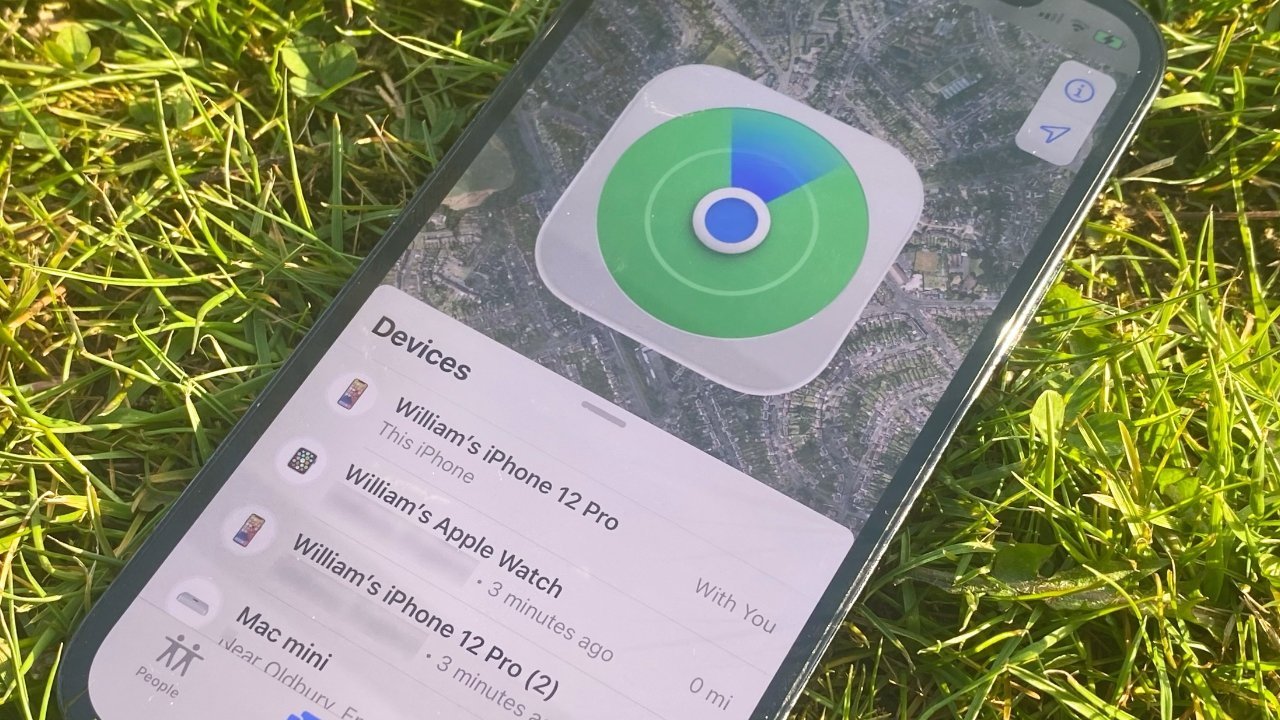
iOS 27.2 beta reveals iPhone anti-theft AutoLock

Published

on

Apple is testing an iPhone security feature designed to recognize snatch-and-grab theft and lock the device before the thief can exploit it.

There’s a name for snatching someone’s smartphone from their hands in a brazen theft attempt: Apple picking. And Apple’s been working on a way of protecting its customers from the act.

In May, it was learned that Apple had been working on a new set of security features that will automatically lock an iPhone when it detects that it’s been snatched from its owner’s hands. Now, the new iOS 27.2 Beta 2 gives us a better look at what that entails.

The feature, spotted by 9to5Mac, is called “AutoLock” internally, and it uses multiple signals to determine whether or not the device has been taken from its owner. This includes

Advertisement
  • Sudden, sharp acceleration
  • A paired Apple Watch remaining unreachable
  • Loss of connection to a paired Apple Watch
  • Prolonged loss of network connectivitgy
  • The device remaining unlocked beyond a certain interval

Of course, any one of these could theoretically give a false positive, so Apple is also working on safeguards to prevent errant lockdowns. These could include biometric authentication, app activity, and a backoff mechanism that suppresses locks after lock events.

As 9to5Mac mentions, the feature is still in the works. Users on the iOS 27.2 beta 2 cannot access the feature for testing.

Instead, Apple has enabled the feature in the background and chosen to keep the actual locking component disabled. This may be Apple’s way of gathering data to further test the feature.

Apple has good reason to keep working on anti-theft features, too. In places like London, iPhones have become particularly attractive targets for thieves, with some criminals going so far as to reject Android devices in favor of Apple’s more lucrative hardware.

Advertisement

Source link

Continue Reading

Tech

What is the release date for Stuart Fails to Save the Universe episode 10 on HBO Max?

Published

on

For Stuart Fails to Save the Universe viewers who have been waiting for things to feel exactly like The Big Bang Theory… your moment has arrived.

Sure, we’ve had a whole host of cameos from the original show (though three notable faces have yet to turn up), but zipping from unhinged universe to unhinged universe has been a world away from the science sitcom we know and love.

Source link

Continue Reading

Tech

Why Is Your Laptop Fan So Loud?

Published

on

Here’s how to know whether it’s cause for concern.

Whether you’re a hardcore gamer or a hardworking student, you probably know that the best laptops for gaming and schoolwork can get monstrously loud. There are several reasons why your portable PC’s fans are driving you to distraction with their constant din, but thankfully there are also steps you can take to reduce the noise levels they generate.

It’s important to note that aggressively loud laptop fans shouldn’t necessarily make you worry. In most cases, especially with gaming laptops, the fans are working so hard because they need to ventilate the heat that your machine’s CPU and GPU are generating. The more demanding the game or processing task you throw at your laptop, the faster its fans have to spin to prevent system-wide overheating.

Sure, the constant whirr of laptop fan noise can detract from gaming experiences, but it’s a better solution than suffering through regular crashes owing to an overheated GPU. There are situations where loud fan noise should concern you, and we’ll guide you through those below. In a lot of cases, though, noisy laptop fans shouldn’t give you sleepless nights. But if they do, we’ve got tips on how to make them quieter.

Advertisement

Why does my laptop sound like a jet engine?

Most likely because you’re putting the poor thing under seriously heavy load. The best gaming laptops can get obnoxiously noisy when running demanding modern titles. When games like Crimson Desert are putting a lot of strain on both the GPU and CPU, your laptop’s fans have to run at extremely high speeds to dissipate heat from these two crucial components. Prosumer workstations that have been designed with intensive productivity tasks in mind (like 4K video rendering) can also get seriously noisy when GPU usage shoots through the roof.

At the time of writing, we consider the ASUS ROG Zephryus G14 to be the best gaming laptop around. I’m actually writing this up on the beastly RTX 5080 configuration. Trust me when I say that my eardrums know the pain of excessive fan noise all too well. Like many high-end laptops, the G14 has a Turbo mode that squeezes maximum performance out of modern games, at an exceptionally loud cost. In terms of noise output, my G14 can reach in excess of 50 dB (that’s a super-distracting amount of decibels). Unless you play in an FPS-slaying quiet mode, most gaming laptops are going to drum up a whole lot of din.

Having a bunch of background processes running can be taxing on your laptop’s fans too, so it’s worth opening the task manager, checking CPU usage and closing any programs you don’t actively need. Blocking effective ventilation to your laptop’s fans will also increase noise output, while dust accumulation can clog fan blades, making them even louder, which we’re about to touch on.

Advertisement

Is it okay to use a laptop with a noisy fan?

In most instances, absolutely. If you’re in the middle of playing a demanding AAA game — particularly one that supports advanced ray tracing features like Cyberpunk 2077 — loud fan noise is sadly par for the course. That doesn’t mean your laptop is bricked, though. Far from it. Instead, your portable PC’s fans are merely doing their job by helping to reduce the thermal levels of your system’s internal components. In short, a distractingly noisy fan when your laptop is under heavy load is completely normal and, crucially, safe.

Admittedly, there are cases where noisy fans could point to issues with your laptop. Fans whirring at consistently high speeds are generally nothing to fret over provided your laptop is performing demanding tasks. Yet if your machine sounds like a jumbo jet taking off when you’re merely swapping between tabs in your favorite browser, that’s more concerning.

Should you find that fans are running at full pelt even when your laptop’s GPU and CPU usage levels are low, that could be a sign of dust build-up. When debris accumulates inside your laptop, it can cause dust to cover your system’s fan blades, restricting airflow. If you’re worried your fans are clogged, it’s best to take your laptop to a repair specialist, who will likely remove the lower case of your PC and use compressed air to clean its fans.

Advertisement

Rattling or buzzing noises emanating from your laptop’s fans should be even more worrying. If you are hearing these irregular noises, the fan’s internal bearing may well be damaged. A fan that’s not providing proper cooling can cause serious overheating problems, leading to erratic crashes and shutdowns. Concerned about irregular sounds coming from your laptop’s fans? Definitely take your system to an expert or contact the manufacturer.

How can I make my laptop fan quieter?

Excessive fan noise is generally more common on gaming laptops than it is on standard workstations. Regardless of whether your laptop is a portable powerhouse or is primarily used to watch cat videos on YouTube, you can get the best battery life for your Windows laptop by changing these settings. Improving battery performance is often tied to boosting power efficiency, which in turn can lower fan noise.

One of the easiest methods to reduce fan speeds is by swapping to a quieter power mode. On a Windows laptop, go to Settings > System > Power & battery > Power mode, then select Best power efficiency. Alternatively, if you own a dedicated gaming laptop, there’s a decent chance it will have manufacturer-specific software to help you set or reduce fan speed. In the case of my Asus Zephyrus G14, I can quickly select the Quiet profile through its Armoury Crate app, drastically reducing decibel levels.

Advertisement

Staying on noisy gaming laptops, a good way to reduce the din of rapidly whirring fans is to lower in-game settings and cap frame rates. With the latter, capping the PC games to a 60 FPS limit can significantly reduce performance demands compared to running titles at uncapped frame rates, in turn helping to reduce fan noise. Turning off high-end features like ray tracing and lowering a game’s internal resolution will also put less strain on your laptop’s GPU, allowing your system to run quieter.

It’s also worth considering what conditions you’re using your laptop in. In the height of summer, your laptop’s fans have to work harder to ventilate the warmer surrounding air. If you’re worried about ventilation, place your laptop on a flat surface like a desk, as propping your system on a bed or even, yes, your lap, can block airflow to the fans.

Advertisement

Source link

Continue Reading

Tech

Meta’s AI agent has been blocked from using Amazon.com

Published

on

Sunday night, users of Meta’s AI assistant Muse started getting a strange error message when they tried to buy goods on Amazon. As spotted by GeekWire, the error message read: “Continued access by an unauthorized AI agent violates Amazon’s Conditions of Use, to which our customers have agreed.”

In other words, Muse isn’t welcome as a shopper — and anyone trying to buy something on Amazon through the AI agent will have to find it somewhere else.

It’s easy to see the block as a tête-à-tête between tech giants. Amazon has its own cohort of foundation models, after all, along with one of the most popular inference platforms on the internet. As long as they’re under no legal obligation to open the doors to Muse, why would they?

But there are also substantive reasons Amazon might not want to be in the agentic commerce business just yet. If Muse makes a bad order, Amazon is going to be the one to clean it up — dealing with both the angry customer and the angry vendor. Muse has one of the lower hallucination rates, as AI models go, but it’s still pretty far from zero. Even if Amazon sees an opportunity in agent-driven commerce, they may want to wait a few more release cycles before rolling anything out.

Advertisement

Source link

Continue Reading

Tech

5 Appliance Brands Consumers Regret Buying Most

Published

on


Not all appliances are created equal, and knowing which brands to stay away from can save you both hundreds of dollars and a major headache. Based on rankings from Consumer Reports and ConsumerAffairs, along with user reviews and overall value for price across several key factors, the five appliance brands to avoid are Haier, Electrolux, Viking, JennAir, and Dacor. If you’re wondering what Consumer Reports ranks as the most reliable kitchen appliance brand, it’s actually Gaggenau, which recently overtook the previous leader, LG.

As for those toward the bottom of the list, it’s important to note that they’re not typically poor quality across the board. For example, a brand may fare poorly on refrigerator reliability but excel at making premium dishwashers. So if you don’t mind mixing and matching appliance brands, it often makes sense to pick and choose based on brand reliability and overall feature set for each appliance type.

With that said, reliability isn’t the only factor to keep in mind when buying a new appliance. Shoddy customer service, complicated repairs, underwhelming feature sets, and inflated price tags can all make otherwise capable appliance brands tough to recommend. Some brands on this list stand out for specific problem areas, while others simply struggle to deliver the overall reliability you would reasonably expect for the price.

Advertisement

1. Haier

Haier is one of the world’s most well-known appliance manufacturers, but it’s not always known for the right things. Negative reviews don’t usually highlight a lack of features or inflated prices – they usually complain about poor reliability and what happens when something goes wrong. Haier currently has a bleak 1.2 out of 5 rating on Trustpilot, based on more than 2,000 owner reviews. Refrigerators, washing machines, and other appliances failing prematurely — sometimes out of the box — paired with lengthy waits for repairs and issues sourcing replacement parts are common customer complaints.

Haier’s refrigerators, in particular, draw negative attention. ConsumerAffairs’ Haier refrigerator reviews, which average 1 star across 190+ reviews, include complaints about faulty compressors, inconsistent cooling, control board failures, and appliances becoming prohibitively expensive to repair after just a few years of operation. Head to Reddit for first-person user reports, and you’ll see that many Haier owners have reported refrigerators failing within six months and difficulty getting satisfactory service.

Advertisement

That doesn’t mean every product Haier produces is poor quality, of course. Many customer reviews and anecdotes also say owners use Haier appliances for several years with only minor issues you would expect from any appliance (like general wear and tear). In other words, Haier certainly isn’t a bad choice across the board, but it’s important to research the specific appliance you’re thinking of purchasing to see how owners fare with reliability and repairs.

Advertisement

2. Electrolux

Electrolux makes some truly outstanding appliances, but its laundry machines, in particular, have received poor reviews for longevity. ConsumerAffairs currently gives Electrolux washers and dryers just 1.2 out of 5 stars, with most of its 230 ratings at one star. Read through user complaints, and you’ll see everything from dryers needing several cycles to properly dry clothes to premature failures and costly repairs. The Electrolux Reviews page on ConsumerAffairs tells a similar story, with many owners reporting appliances like washers, dryers, and refrigerators needing repairs or full replacements shortly after purchase.

Owners have also criticized some frustrating design decisions. In one Reddit thread comparing Electrolux and LG (and another thread discussing Electrolux front-load washers), users warned of the difficult-to-access drain filter found on some Electrolux washer units. What’s more, Electrolux recently issued one of the largest refrigerator recalls in history, affecting over 380,000 units.

With that said, keep in mind that Electrolux isn’t a brand to write off entirely. Many of its appliances offer uniquely useful features, and a large number of owners mention years of trouble-free service — the previously mentioned Reddit discussion on Electrolux front-load washers includes owners praising their machines for quiet operation, impressive cleaning performance, and longevity without major issues. So if an Electrolux appliance catches your eye, it may still be worth considering, but questionable laundry reliability for certain units and a high number of negative owner reviews make researching the model you’re interested in especially important.

Advertisement

3. Viking

Viking is one of those brands that looks amazing on paper but doesn’t perform well due to poor reliability. In fact, Consumer Reports ranks Viking dead last of 24 major kitchen appliance brands, with an average reliability score of just 30 out of 100. CR also rates Viking cooking ranges particularly poorly for reliability — its survey data found that 19% of Viking wall ovens had trouble heating properly, compared with an average of just 9% across all brands.

If Viking’s appliances were more affordable, this wouldn’t be as much of an issue — but seeing as how you’re paying premium prices for Viking hardware, you should get premium reliability in return. Meanwhile, Viking refrigerators currently carry a 1.3-star rating from 1,695 reviews on ConsumerAffairs, with owners reporting inconsistent cooling, ice makers that don’t make ice, and expensive, repeated repairs. Viking range reviews from CA (1.2 stars from over 2,200 ratings) see similar complaints about unreliable components, sporadic temperature control, and frequent repairs.

In one Reddit thread titled “PSA: Avoid Viking at all costs,” several commenters criticize the brand’s out-of-box quality and customer support, while another Viking refrigerator owner reported spending more than $10,000 on a refrigerator that had problems with the cooling system, freezer fan, and ice maker from the very first day and wasn’t properly fixed even after 20 service calls. So while Viking appliances offer professional aesthetics, powerful burners, and premium customization, poor reliability makes its steep asking prices hard to justify compared with competitors.

Advertisement

4. JennAir

JennAir is Whirlpool’s luxury appliance brand (and is actually one of several major appliance brands owned by Whirlpool), offering high-end designs, built-in appliances, and premium features — but the user experience doesn’t always match the price tag. It’s currently rated just 1.1 out of 5 stars across more than 500 reviews on ConsumerAffairs, with many owners complaining about frequent repairs and lackluster customer service. You’ll find everything from failed control panels on $5,000 ovens to refrigerators needing more than five service appointments in two years.

In fact, you’ll find that JennAir refrigerators often land themselves in customer review crosshairs. ConsumerAffairs’ JennAir refrigerator reviews include complaints about expensive, repeated repairs, rust buildup, and malfunctioning water dispensers, with some owners even warning others to “run away from JennAir.”

Advertisement

The need for frequent repairs matters more with JennAir than with a typical freestanding appliance brand because it sells a lot of built-in appliances like refrigerators, wall ovens, cooktops, and downdraft systems that are integrated into walls, cabinets, or countertops. Repairing or replacing one can quickly turn into an involved home improvement project and can often leave you with a dilemma: pay to keep an expensive appliance running, or pay to modify your kitchen and accommodate the replacement.

Advertisement

5. Dacor

Dacor is another luxury appliance brand where the high cost of entry can make reliability problems especially difficult to justify. Dacor currently holds a 1.0 out of 5-star rating on ConsumerAffairs, based on 600 reviews. Complaints span the company’s entire lineup of appliances — including refrigerators, ranges, ovens, and dishwashers — with owners reporting the usual suspects: vital component failures early on, frequent service calls, complicated repair processes, and difficulty with customer support.

Like JennAir, these appliances carry high price tags. Dacor competes in the same premium segment as brands like Miele, Sub-Zero, and Thermador, and some owners report spending thousands on individual appliances only to run into problems early in their lifespan. One Dacor range owner (and baker) reported paying more than $5,000 for a range whose hinges failed over time, were replaced, and then failed again shortly after service.

You may have had positive experiences with Dacor in the past, or heard different things about the brand altogether; that’s because today’s Dacor isn’t quite the same company that built its reputation decades ago. Samsung acquired Dacor in 2016, and the companies married Dacor’s luxury-kitchen focus with Samsung’s manufacturing.

Advertisement

How we listed these brands

To select these brands, we first did broad research on the most respected and reliable appliance brands. We aggregated user and expert reviews from sources like ConsumerAffairs and Consumer Reports, Reddit, and retail sites including Walmart, Amazon, and Best Buy. We also reviewed SlashGear’s best-of roundups and buying advice, including which washing machine brand is the most reliableevery major refrigerator brand ranked from worst to best, and more.

We also specifically scanned 1-, 2-, and 3-star reviews for repeated issues with quality control, customer service, reliability, and repair simplicity. While massive brands like LG and Samsung have a considerable number of negative reviews, this is to be expected due to their far larger customer base and demand to ship a greater number of units than the brands on this list — these manufacturers were considered, but ultimately provide a better overall owner experience on average and often have much easier repair procedures thanks to simple part sourcing.

Advertisement


Source link

Continue Reading

Trending

Copyright © 2025