



Over the past couple of decades we’ve witnessed a whirlwind of cultural changes in the music industry, but also major changes in terms of how we find and listen to music. And there’s arguably one entity that has contributed to these shifts more than any other: Spotify — which was founded 20 years ago today (April 23). Feel old yet? I sure do.
For many music lovers out there, myself included, Spotify was their introduction to music streaming, and over the last 20 years it’s climbed to the top of the ladder, amassing over 750 million users and cementing its position as one of the best music streaming services — and in the eyes of many, the daddy of them all.
Article continues below
Let’s go back to the beginning

As with so many of today’s tech behemoths, from Apple to Amazon, Spotify had to start small, and Garmark remembers the unpredictable nature of the industry at the time it was founded. “The music industry was in free-fall, and it was kind of a dire time,” he tells me. “So the challenge in the beginning was to turn this around.”
In an age where piracy was rife, this became the catalyst for founders Daniel Ek and Martin Lorentzon to kick-start what was then a small business. “Daniel and Martin’s wild idea was trying to compete with piracy by forming partnerships with the industry, with labels and publishers, to create an entirely new business model for music to convince users that, actually, there was something better than free,” Garmark continues. “It ultimately also made people realize that music was worth paying for.”
These were the days before the modern smartphones really took off — the first iPhone was launched in January 2007 — which Garmark believes is the key to understanding Spotify’s early struggles in terms of scaling its business.
“This was a world of PCs and the iPod,” he says “The key innovation in the beginning was the ‘freemium’ model, and us believing that music was worth paying for, which most people didn’t at the time. Freemium was the way to get there, to give away a really fantastic free product, and we did that on the PC.” However, when the smartphone revolution kicked off, this opened up a gap in the market, and Spotify immediately aimed for it.
Garmark has played a major role in developing Spotify’s mobile experience, and he says of those early years, before he came on board: “After the iPhone launched, the company said ‘oh, go mobile’, then you pay a subscription. So that was the business model, mobile just took off and PC sales weren’t the thing, so we had to totally reinvent ourselves to really reimagine how the whole business model worked.”
It all started with the playlist

One area where Spotify continues to have an advantage over its rivals, is its range of addictive product features, which in themselves have contributed to the cultural shifts in music consumption and discovery. Beloved tools like Spotify Wrapped and Discover Weekly have hooked subscribers and reeled them in, but for Garmark, there’s one feature that’s truly iconic; the playlist.
“It’s such a basic feature that it almost feels like you just assume it’s there,” he says. “If you go back to before Spotify, a playlist was something you had on your own MP3, but you couldn’t share it. I think (the playlist) is the core innovation, because we built so much on top of it.”
When you think about it, the basic foundation of the playlist has served as the basis for pretty much all of Spotify’s unique product features over the last 20 years. It paved the way for Collaborative playlists and Prompted playlists, and even for fun tools like Daylist, but Spotify also prides itself on its editorial playlists, curated collections of songs put together by Spotify employees who Garmark refers to as “the taste-makers”. But not all of Spotify’s ideas for new features have seen the light of day.
“There are so many”, says Garmark. “There are two ways to do product development. You look at what other people do and copy that. The other thing is you imagine things that you’d want in the world, but which don’t exist. We are firmly the latter. It’s our job to make bets and come up with ideas and believe that, if we build this thing, people are going to love it. They might not always be asking for it, but once they’ve experienced it, they’re never going to look back.”
Music discovery is forever

There’s no doubt that the playlist has been a powerful asset to Spotify’s user experience, but I’d argue that the algorithm has been a monumental development, shaping how we find new music, and also how it finds us. The issue of tastes becoming homogenized remains a concern for many and is still a hot topic — but Garmark believes otherwise.
“I think it’s totally the other way around,” he tells me.“You have a new user come in on Spotify, and if they’re a little bit older, they tend to just listen to the music that they fell in love with in their formative years. Then things get frozen in time, and that’s what people tend to listen to for their whole life. But it also means that they fall out of love with music in a way, and discovery is so important to kind of keep falling in love with music over again.
“The algorithms that we have really enable that. What we see with our users coming in as we follow them on their journeys, is that the variation of what they listen to isn’t wrong. When they come in they explore more, and they get to discover more, and it never ends. It’s this wonderful machinery of just discovering more wonderful, talented artists that people just keep falling in love with.”
Despite Spotify’s vast list of achievements over the years, in terms of both innovating and growing its user base, it feels like, for Garmark, this is just the beginning, and my senses tell me that it has a lot more tricks up its sleeve for the next 20 years and beyond. And sure enough, Garmark leaves me with a tease: “At Spotify, we are full of ideas.”

Follow TechRadar on Google News and add us as a preferred source to get our expert news, reviews, and opinion in your feeds.










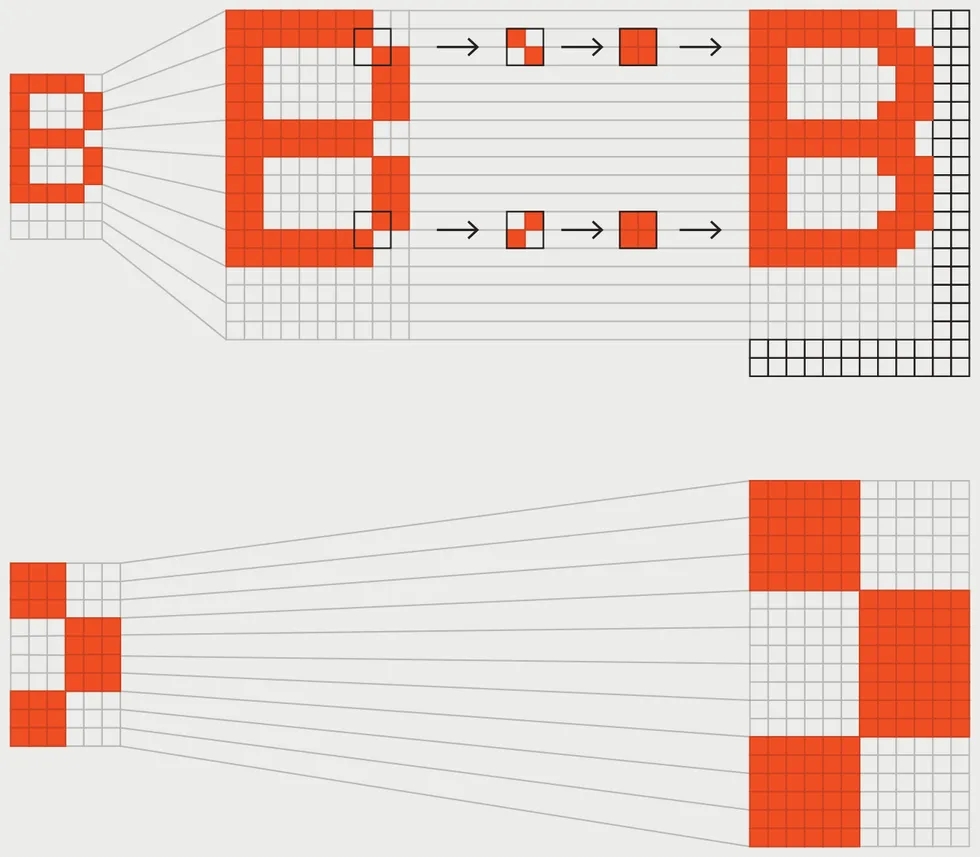
 Teletext created unusually legible text in the 8-bit era by enlarging alphanumeric characters and interpolating new pixels by looking for existing pixels touching diagonally, and adding







































You must be logged in to post a comment Login