A new NYT Strands puzzle appears at midnight each day for your time zone – which means that some people are always playing ‘today’s game’ while others are playing ‘yesterday’s’. If you’re looking for Friday’s puzzle instead then click here: NYT Strands hints and answers for Friday, April 17 (game #775).
Strands is the NYT’s latest word game after the likes of Wordle, Spelling Bee and Connections – and it’s great fun. It can be difficult, though, so read on for my Strands hints.
Want more word-based fun? Then check out my NYT Connections today and Quordle today pages for hints and answers for those games, and Marc’s Wordle today page for the original viral word game.
Advertisement
SPOILER WARNING: Information about NYT Strands today is below, so don’t read on if you don’t want to know the answers.
Article continues below
NYT Strands today (game #776) – hint #1 – today’s theme
What is the theme of today’s NYT Strands?
• Today’s NYT Strands theme is… Not too much
NYT Strands today (game #776) – hint #2 – clue words
Play any of these words to unlock the in-game hints system.
Advertisement
CHIVES
BARN
STEAL
BUNG
CHEER
RAVEN
DOES
NYT Strands today (game #776) – hint #3 – spangram letters
How many letters are in today’s spangram?
• Spangram has 10 letters
NYT Strands today (game #776) – hint #4 – spangram position
What are two sides of the board that today’s spangram touches?
First side: top, 3rd column
Last side: bottom, 3rd column
Advertisement
Right, the answers are below, so DO NOT SCROLL ANY FURTHER IF YOU DON’T WANT TO SEE THEM.
Advertisement
NYT Strands today (game #776) – the answers
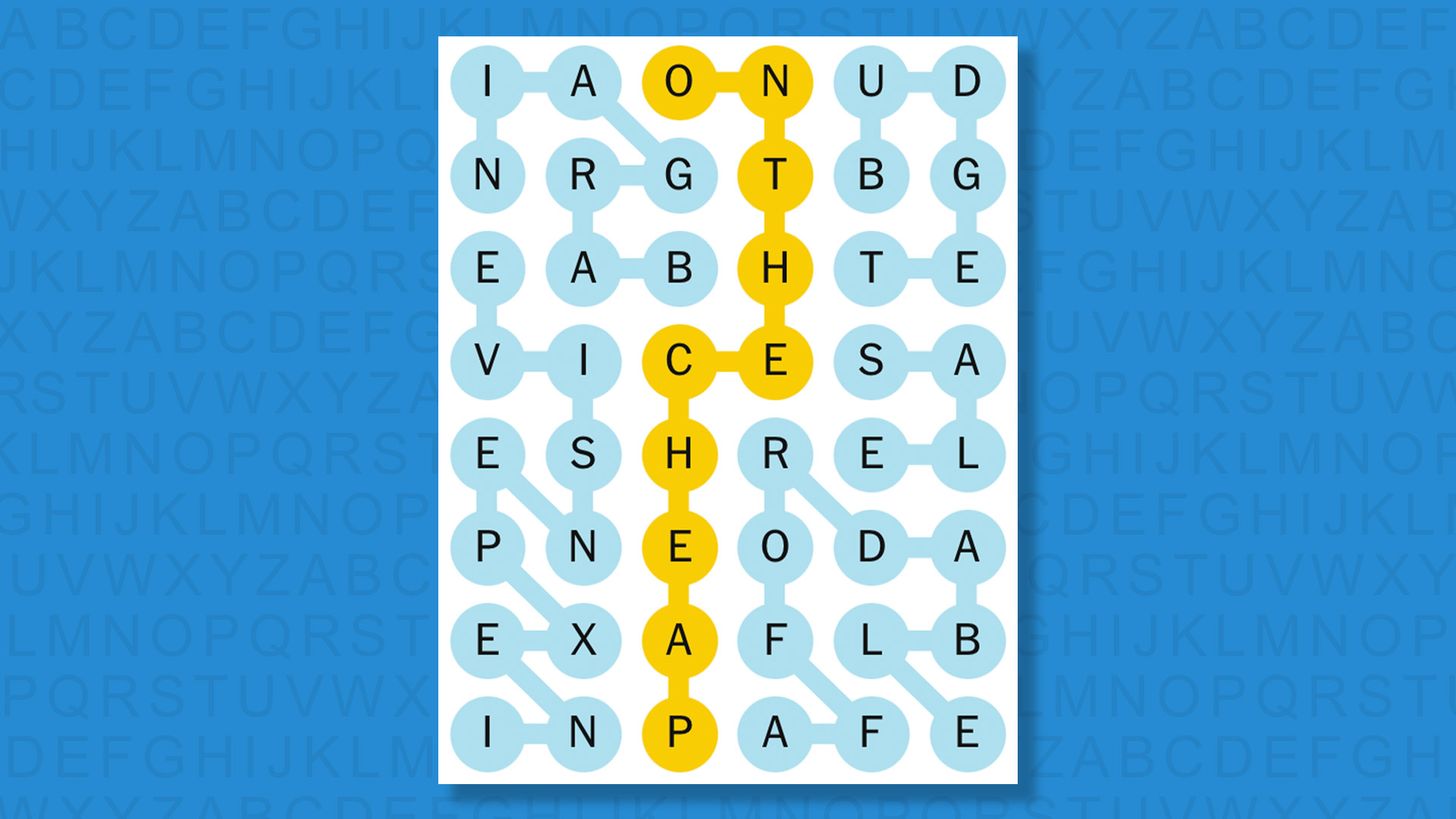
(Image credit: New York Times)
The answers to today’s Strands, game #776, are…
BUDGET
BARGAIN
INEXPENSIVE
AFFORDABLE
SALE
SPANGRAM: ONTHECHEAP
My rating: Easy
My score: Perfect
I know it’s becoming something of a Strands trend but I’m always a little thrown when the spangram isn’t the longest word in the game.
Sign up for breaking news, reviews, opinion, top tech deals, and more.
Thankfully, both INEXPENSIVE and AFFORDABLE were easy enough to spot and connect. As for the spangram, I’m sure I wasn’t alone in spotting “cheap” and being puzzled when it failed to turn blue.
Beyond these very minor quibbles this was a straightforward game with some easy corner spots.
Advertisement
Yesterday’s NYT Strands answers (Friday, April 17, game #775)
OYSTER
CLAM
CONCH
ABALONE
LIMPET
MUSSEL
SCALLOP
SPANGRAM: MOLLUSK
What is NYT Strands?
Strands is the NYT’s not-so-new-any-more word game, following Wordle and Connections. It’s now a fully fledged member of the NYT’s games stable that has been running for a year and which can be played on the NYT Games site on desktop or mobile.
I’ve got a full guide to how to play NYT Strands, complete with tips for solving it, so check that out if you’re struggling to beat it each day.
We’ve been covering Brendan Carr’s censorial ambitions for a long time now. When Trump first picked him to chair the FCC, we warned people that the “free speech warrior” branding was a total sham. We later dug into the letter from a massive coalition of 80+ legal scholars, former FCC officials, and civil liberties groups detailing how Carr’s threats fly in the face of the First Amendment. Hell, just this morning Karl wrote about how Carr is still plotting to punish Jimmy Kimmel for mocking President Trump. Meanwhile, Carr has responded to the criticism with smirking emojis and culture-war memes on X, treating the whole thing as performative trolling for an audience of one.
But now, First Amendment lawyer Bob Corn-Revere has published an open letter to Carr that is, frankly, one of the most devastating things I’ve read in years. And you really should go read the whole thing.
While Carr has mostly laughed off or ignored criticism of his many First Amendment violations, a letter from Corn-Revere (beyond the incredible prose of the letter) may hit a bit different given his stature within the First Amendment world. He has famously spent decades fighting in the trenches of the hardest, most politically uncomfortable First Amendment cases in the country. He represented Larry Flynt’s Hustler Magazine in the landmark Hustler v. Falwell case. He defended 2 Live Crew in the obscenity prosecution over As Nasty As They Wanna Be. He was counsel in FCC v. Fox Television Stations, the Supreme Court case that effectively ended the FCC’s broadcast indecency regime. There are many more famous cases on his resume as well. This is someone who has spent his entire career defending speech, including in cases where it was genuinely offensive, deeply unpopular, and legally novel — because that’s what actual First Amendment commitment requires.
Oh, and he served as Chief Counsel to former FCC Chairman James Quello, so he knows how the FCC works from the inside.
Advertisement
So when this person tells Brendan Carr that he has betrayed his professed values, it carries a weight that Carr’s thumbs-down emojis can’t dismiss. The letter opens by pointing to the cautionary tale of Pam Bondi’s sudden firing as Attorney General:
Pam Bondi’s sudden and ignominious end as Attorney General is an important cautionary lesson about what happens to officials in this administration who over-promise in order to curry favor with the man they see as their boss, but who under-perform because of the limits of their authority.
Bondi promised the President she would prosecute his political enemies and failed miserably. The President rewarded her misplaced loyalty by denying her the graceful exit she sought, and instead fired her during a cross-town limo ride to watch a Supreme Court argument.
You have recently threatened to revoke the licenses of broadcasters who air what you call “fake news,” which apparently includes any skeptical reporting about the war in Iran—something you know you cannot do legally.
My advice? Don’t get into a car with the president anytime soon.
That line sets the tone for everything that follows — a pointed warning from someone who’s been inside the institution and watched Carr’s transformation up close, not someone lecturing from a safe distance.
From there, Corn-Revere walks through exactly how Carr has become the precise opposite of the person he used to claim to be, quoting Carr’s own prior statements back at him:
Advertisement
As you may recall, shortly after you were named to head the Federal Communications Commission, I offered you some unsolicited advice in the form of an open letter entitled “A Plea for Institutional Modesty.” I suggested you should be circumspect in your assertions of power over broadcasters because “you don’t have as much power as you may think,” and flexing your regulatory muscles would conflict with both the Communications Act and the Constitution.
But as was clear from your initial acts as chairman and statements you made while campaigning for the job, your quest for political advancement overrode any previous commitment to First Amendment values. Gone were the days when, as a commissioner, you said things like “a newsroom’s decision about what stories to cover and how to frame them should be beyond the reach of any government official, not targeted by them,” or that “inject[ing] partisan politics into our licensing process” is “a deeply troubling transgression of free speech and the FCC’s status as an independent agency.”
I never expected you would heed my gratuitous advice, but had no idea how thoroughly you would betray your former (professed) values. Instead, you emerged as a Bizarro World caricature of yourself, threatening owners of broadcast networks with summer stock Don Corleone impressions and devoting much of your social media activity to jawboning. It is as if you set out to prove that the real mental health crisis in America isn’t about teens on Instagram, but public officials on X.
If someone of BCR’s stature said any of that about me, I might log off the internet forever.
The letter is full of these moments where Corn-Revere combines deep legal knowledge with rhetorical skill matched by very few. Take his description of Carr’s reliance on the long-dormant “news distortion” policy — a regulatory zombie that only exists because the FCC never formally killed it off after eliminating the Fairness Doctrine decades ago:
The news distortion policy is like a phantom limb after the FCC amputated the fairness doctrine—it is not really there in substance, but you still seem to feel you can walk on it.
Your smug social media posts about how broadcasters will be held to their public interest obligations “on your watch” ignores this history, but your claim that “the opposition to holding broadcasters accountable to the public interest comes increasingly from those unfamiliar with longstanding FCC precedent” is even worse, because you know it is a bald-faced lie.
The letter also hammers home a point we’ve made repeatedly: the actual, messy consequences of Carr’s performative bullying, and shows how spectacularly it has backfired over and over again. After Carr strong-armed Disney into suspending Jimmy Kimmel Live:
Protesters picketed outside the gates of the Magic Kingdom, and an estimated 7.1 million people cancelled subscriptions to Disney-owned streaming services Disney+ and Hulu over the controversy—at about twice the usual churn rate.
ABC affiliate group owners Sinclair Broadcasting and Nexstar Media Group, who had business before the Commission, and who dutifully followed your demand, also lost money. It turns out that advertisers will not pay as much for spots during reruns of Celebrity Family Feud as during Jimmy Kimmel Live!, and Sinclair revenue dropped a reported 16 percent for the quarter. Nexstar also suffered losses, although the amounts were not disclosed.
The result? The suspension ended a little more than a week after it began and Kimmel triumphantly returned to the air to his highest viewership in over a decade. Kimmel’s comeback garnered 6.3 million broadcast viewers and roughly 20 – 26 million views on social media within 24 hours.
His attempt to manipulate equal opportunity rules to silence Stephen Colbert went even worse:
Advertisement
In January, you caused the FCC staff to reinterpret whether candidate interviews on certain talk shows were exempt from the equal opportunities rule, reversing decades of precedent.
You apparently were miffed that candidate interviews on certain TV shows did not trigger “equal time” requirements for their opponents under exemptions to the rule Congress adopted in 1959. Yet mysteriously, you said there was no need to apply your reinterpretation to conservative talk radio interviews.
But your main target of this move, Stephen Colbert, outsmarted you. He ridiculed your reinterpretation of the equal opportunities rule on air, and gleefully transmitted his interview with Texas Senate candidate James Talarico on The Late Show’s YouTube channel, which is beyond the FCC’s jurisdiction. The interview got over seven million views overnight (more than three times the on-air viewership), Talarico immediately received $2.5 million in campaign contributions, and won his primary.
Carr’s tactics are unconstitutional and tactically stupid. He keeps creating the very outcomes he’s supposedly trying to prevent — even as some less strong-willed news orgs buckle under his threats or pre-censor themselves to avoid his performative wrath.
But the part of the letter that really sticks with me is the section on Carr’s legal knowledge — specifically, the massive gap between what Carr actually knows and what he pretends to believe. Corn-Revere lays out the full chain of Supreme Court precedent cutting back on the FCC’s assumed authority over broadcast content — and then lands this:
But you know all this. Just as you know the FCC eliminated the fairness doctrine four decades ago, which is the regulatory progenitor of the “news distortion policy” you now love to cite (but only against broadcasts you perceive as critical of this administration).
This matters because it removes the escape hatch of ignorance. When politicians misstate the law, you can at least entertain the possibility they just don’t know better. Carr has been an FCC commissioner for nearly a decade. He practiced communications law. He knows what he’s doing is legally indefensible, and he knows his smug social media posts about “the law is clear” are, as Corn-Revere puts it, “a bald-faced lie.”
The letter ends by looking at what all of this does to Carr’s legacy, and it lands with a quiet brutality that no amount of trolling can deflect:
Advertisement
Your recent appearance before the Conservative Political Action Conference is a prime example, where you explained the president is “winning” against the media by listing several media personalities who have left their jobs, including (as you put it) “sleepy eyed Chuck Todd.” I should not have to remind you of this, but it is a poor and pathetic leader who measures “winning” by what he thinks he has destroyed rather than by what he has managed to build.
And:
As I wrote in my first open letter, selling out your (professed) values represents short-term thinking. I noted that “officials who have tried to muzzle the press for short-term political gain have not been treated well by history,” and “if I were your adviser, this is not how I would want history to remember you.” Now, to the extent you will be remembered at all, it will most likely be mainly as a South Park character.
I wish you had listened.
Carr will likely ignore this, much like he brushed off the coalition letter, his own past statements, and basically every legal guardrail he’s encountered since taking the chair. That’s his whole game — the threats, the memes, the emojis, the audition tape for whatever comes next.
Still, the record is there now, written by someone whose First Amendment track record makes Carr’s look like a cheap Halloween costume. And unlike Carr’s social media posts, this letter will age well.
There’s a lot more in the letter. Go read the whole thing. You won’t regret it, even if Brendan Carr would likely wish to censor it like he wishes to censor Jimmy Kimmel.
We spend hours testing every product or service we review, so you can be sure you’re buying the best. Find out more about how we test.
Sony Inzone H6 Air: two-minute review
True to its name, the new Sony Inzone H6 Air wired gaming headset is incredibly lightweight. Coming in at just 7oz / 199g (and only slightly more with the detachable cardioid microphone attached), it’s among the lightest gaming headsets on the market.
This isn’t just impressive on the spec sheet either; when paired with the wonderfully soft earcups, it easily creates one of the most comfortable headsets I’ve tested. You can wear the Sony Inzone H6 Air for hours at a time with minimal fatigue. In fact, it’s easy to forget that you’re even wearing it at all.
Advertisement
Sony hasn’t made many compromises to achieve that impressively slight weight either. The overall design is very similar to the equally superb Sony Inzone H9 2, albeit with numerous holes in the aluminum outer earcup shells to create an open back. Under the hood, the Sony Inzone H6 Air packs the same drivers as Sony’s open-back MDR-MV1 studio monitor headphones, which is known for excellent sound. Studio monitor headphones are generally quite flat, but the drivers have been specifically adapted for gaming with enhanced bass.
The sound is far from unbalanced, though, and I’d argue that the default profile is pretty much perfect for almost all uses. The open-back design creates a lovely, wide soundstage that adds a real depth to gaming audio. Every time I fired a weapon in a match of Battlefield Redsec, the soft clink of spent bullet casings was impressively life-like and sounded just like it existed in a real 3D space.
Advertisement
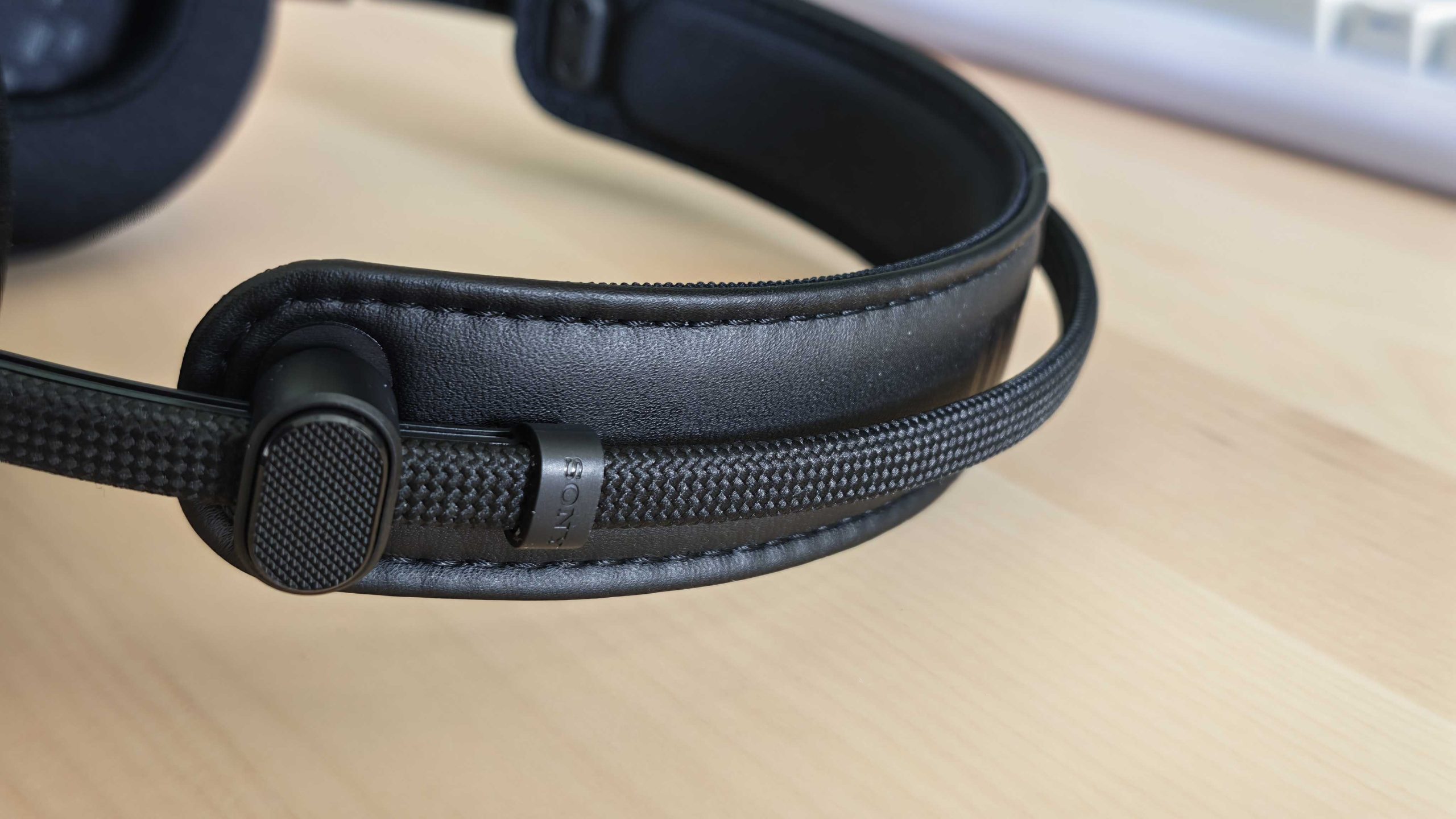
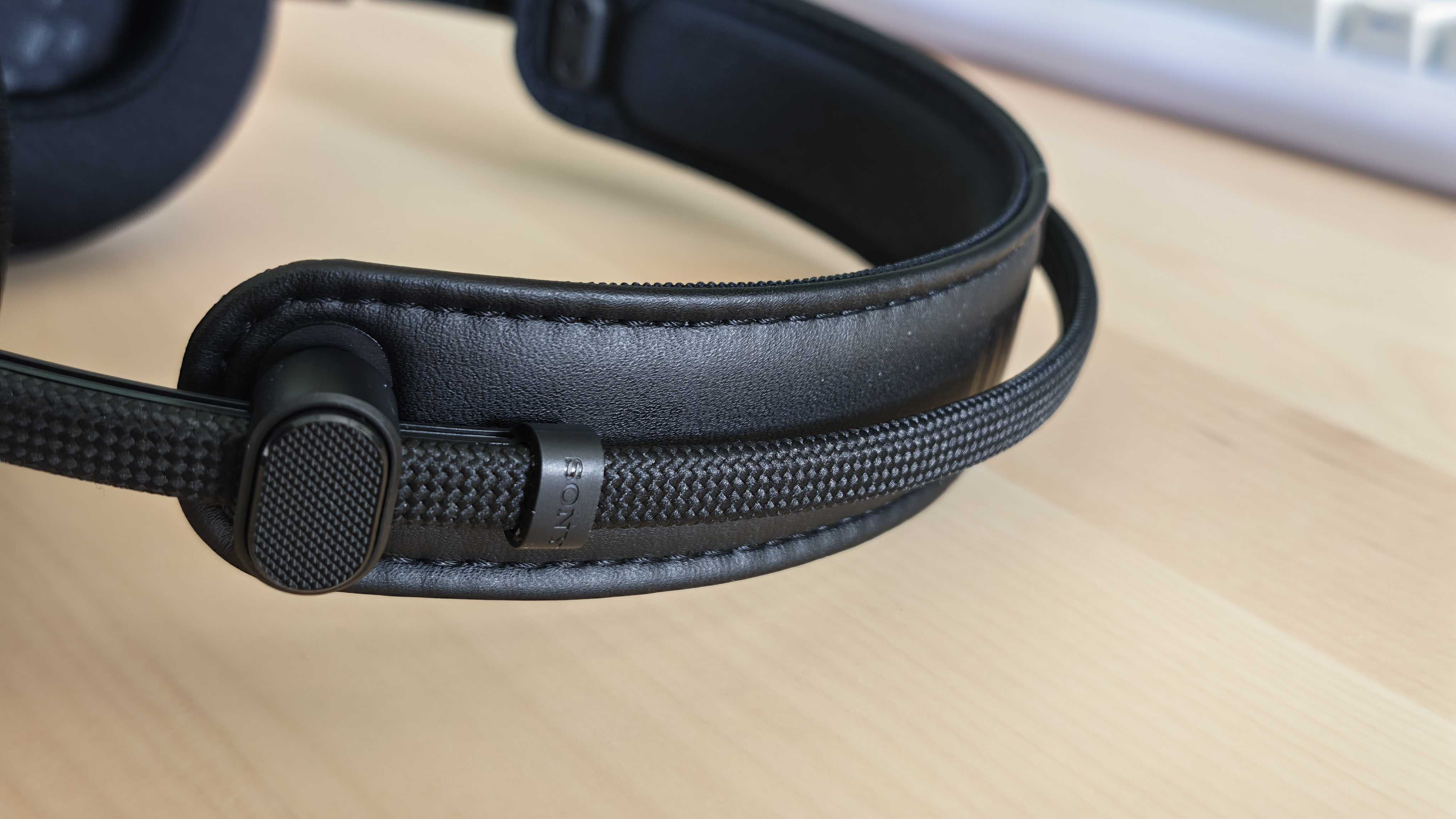
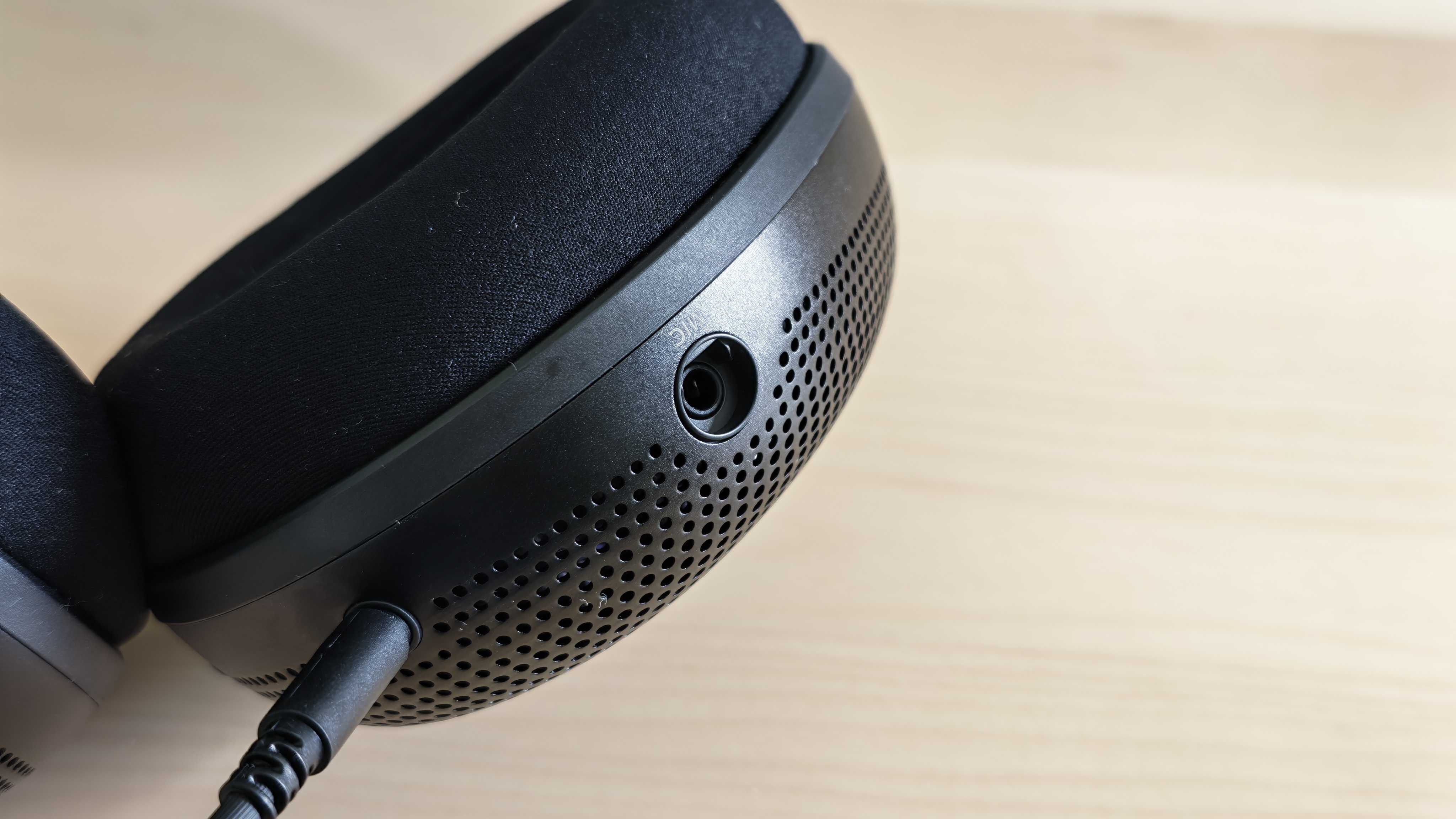
Image 1 of 3
(Image credit: Future)
(Image credit: Future)
(Image credit: Future)
The Inzone H6 Air is still good for music listening and more general use, too, as the bass isn’t overly strong in its default configuration. Jumping into the compatible Inzone Hub software lets you customize the equalizer (EQ) profiles and save them to the included USB-C audio box for use across console platforms.
Although I stuck with the default settings for the most part (finding them to be by far the most balanced), the ‘RPG/Adventure’ profile (designed in collaboration with the PlayStation Studios team) is a highlight — enabling an immersive spatial effect that’s perfect for getting lost in vast virtual worlds.
Sadly, this is pretty much the only reason to touch the software, as the few other features it offers aren’t particularly compelling. The aggressive bass boost mode is frankly unlistenable, while the dedicated first-person shooter (FPS) settings seem a tad unnecessary when the strong directional sound already gives you a decent advantage in competitive settings. The software’s dedicated 360 spatial mode is also highly unpleasant, creating an unconvincing surround effect at the cost of rendering all sound incredibly tinny and weak.
Sign up for breaking news, reviews, opinion, top tech deals, and more.
These software shortcomings are only minor gripes, though. At the end of the day, you’re still getting absolutely amazing audio right out of the box.
Advertisement
Sony Inzone H6 Air review: price & availability
$199 / £175 / around AU$330
Mid-range price for high-end components
Strong value proposition
The Sony Inzone H6 Air is priced at $199 / £175 / around AU$330, putting it in the mid-range market segment. It is slightly more expensive than the Turtle Beach Atlas Air — another open-back model designed for gaming, which costs $179.99 / £159.99 / AU$299 but lacks the premium materials of the Sony headset.
Sharing its studio-grade drivers with the MDR-MV1, the Sony Inzone H6 Air also has significantly stronger audio chops. Better still, Sony’s Inzone offering is roughly half the price of its MDR-MV1, making for a strong value proposition.
Sony Inzone H6 Air review: specs
Swipe to scroll horizontally
Price
Advertisement
$199 / £175 / around AU$330
Weight
7oz / 199g
Compatibility
Advertisement
PC, Xbox, PlayStation, Nintendo Switch, Mobile
Connection type
Wired (3.5mm / USB Type-C)
Battery life
Advertisement
N/A
Features
Detachable cardioid mic, spatial sound
Software
Advertisement
Inzone Hub
Sony Inzone H6 Air review: design and features
Similar design to the Sony Inzone H9 2
Intuitive controls
Premium materials
There’s a tendency for particularly lightweight products to feel cheap, but that’s far from the case with the Sony Inzone H6 Air. Its design is similar to the sleek and stylish Sony Inzone H9 2, maintaining the same overall shape and a winning headband that offers a good level of adjustment. The main difference between the two is the perforated shells on the outside of the H6 Air’s earcups, which are constructed from a premium, sturdy-feeling aluminum.
These holes are what make the H6 Air an open-back headset and allow for a much wider, more natural-feeling soundstage than closed-back designs. There are some caveats inherent with all open-back models, though, namely the tendency for background noise to seep through. Sound also leaks out of the headset through these holes, so it’s not a design you’ll want to wear in a public setting.
The on-board controls are very basic but highly intuitive, with everything located on the left earcup. There’s a big clicky microphone mute button (with a distinct bumpy texture that makes it easy to find without looking), volume dial, 3.5mm audio input, and a 3.5mm port for the detachable cardioid microphone. My headset came with the volume dial cranked down all the way to mute, so don’t panic if your model doesn’t make any sound when you first plug it in — fiddle around with it for a moment and set it to your desired level.
Advertisement
The headset comes bundled with a USB-C audio box — a little dongle that can save any settings you create in the Inzone Hub software and allow you to bring them over to your console or phone. It seems to be the same audio box included with the Inzone E9 in-ear gaming headphones, which offer similar functionality.
(Image credit: Future)
Sony Inzone H6 Air review: performance
Pristine audio
Ideal for gaming and audio listening
Background noise can be an issue
Unlike most gaming headsets, the Sony Inzone H6 Air has quite a neutral sound profile. There is some level of punchy bass, but unlike some gaming models, it’s never overpowering.
Clarity and directionality seem to have been the goal for Sony here, and the Inzone H6 Air excels on both fronts. This is most obvious when listening to music, as the impressively wide soundstage allows for excellent instrument separation.
In a gaming context, every individual sound effect is clearly defined, even in moments of intense action. Dropping into a match of Call of Duty: Black Ops 7on the hectic Nuketown 2025 map, I was pleased to find that enemy footsteps were easy to track despite an abundance of gunfire, explosions, and other loud audio cues.
Advertisement
The same was true in a few matches of Battlefield Redsec, where the clean, crisp sound gave me a newfound appreciation for the game’s high-fidelity weapon effects.
(Image credit: Future)
It’s not just great for FPS titles, either; the Sony Inzone H6 Air excels at a wide variety of genres. Modern open-world role-playing games (RPGs) are a particular treat, especially ones that already benefit from strong sound design.
Wandering 16th-century Japan in Assassin’s Creed Shadowsshowcased this well; the game’s strong atmosphere was elevated by perfectly reproduced details like the faint trickle of running water from nearby rivers and the subtle rustlings of trees in the wind. Enabling the ‘RPG/Adventure’ profile in the Inzone Hub software kicks all of this into overdrive, adding an extra layer of directionality to the sound.
The included microphone is great too. It won’t replace a premium standalone model, but it captures your voice and does a decent job of drowning out background noise. You still won’t want to use this headset in loud environments, though, as it lets in a lot of background sound.
Advertisement
You can hear your own voice clearly while chatting with friends, keyboard taps, and any passing sirens. This is an inevitable trade-off in any open-back model. I think the sound quality on offer more than makes up for it here, but it will make the Sony Inzone H6 Air a poor choice for some.
If you need strong noise cancellation, consider the Sony Inzone H9 2 (which boasts some effective ANC) instead.
(Image credit: Future)
Should I buy the Sony Inzone H6 Air?
Advertisement
Buy it if…
Don’t buy it if…
Sony Inzone H6 Air review: also consider
Here are two other great headsets to consider alongside the Sony Inzone H6 Air.
Swipe to scroll horizontally
Row 0 – Cell 0
Sony Inzone H6 Air
Advertisement
Turtle Beach Atlas Air
Sony Inzone H9 2
Price
$199 / £175 / around AU$330
Advertisement
$179.99 / £159.99 / AU$299
$348.00 / £299.00 / around AU$489
Weight
7oz / 199g
Advertisement
10.6oz / 301g
9.2oz / 260g
Compatibility
PC, Xbox, PlayStation, Nintendo Switch, Mobile
Advertisement
PlayStation, PC, Nintendo Switch, Mobile
PC, PS4/PS5, Xbox Series X/S (wired only), iOS/Android, Switch, Switch 2, Steam Deck
Connection type
Wired (3.5mm / USB Type-C)
Advertisement
Wireless 2.4GHz / Bluetooth 5.2 / Wired
2.4 GHz Wireless, Bluetooth, USB Wired, 3.5mm Analog
Battery life
N/A
Advertisement
50 hours
30 hours
Features
Detachable cardioid mic, spatial sound
Advertisement
Flip to mute high-bandwidth mic, floating ear cups, 40mm drivers
Detachable mic
Software
Inzone Hub
Advertisement
Swarm II app
Inzone Hub
How I tested the Sony Inzone H6 Air
Used for over a week
Tested with a wide range of games
Compared to other gaming headsets
I tested the Sony Inzone H6 Air ahead of its official reveal, going hands-on with a unit for more than a week. During that time, I used it extensively for work (that meant plenty of meetings), play, and music listening.
I tried the headset with a wide range of games from a variety of genres, including racing in Forza Horizon 5and Need for Speed Unbound, FPS with Call of Duty: Black Ops 7 and Battlefield Redsec, and RPG in Assassin’s Creed Shadows.
Advertisement
Although the majority of my time spent with the headset was on PC, I also used it with my PlayStation 5, mobile phone, Xbox Series X, and Nintendo Switch 2 to assess its compatibility.
Valve has released a new beta version of Proton, the company’s official compatibility layer for improving Linux gaming. Proton 11.0-beta1 is a notable update for several reasons, including improved support for running classic games from the 90s. The release also lays the groundwork for further improvements expected in the near… Read Entire Article Source link
Despite the term muscle car being used so often by car enthusiasts, journalists, automotive historians, and industry marketing teams, the exact definition of what is or isn’t a muscle car has always been a bit ambiguous. Is every two-door American coupe with a V8 engine a muscle car? Do V8 pony cars like the Camaro and Mustang also count as muscle cars? Can a true muscle car be from any era or only from a certain time period? Is there such a thing as a non-American muscle car?
You’ll probably get differing answers to these questions depending on who you ask, but most agree that the original American muscle car era officially started in 1964 with the debut of the Pontiac GTO, and lasted for approximately one decade before tightening emission rules and the oil crisis brought an end to the party.
While V8 performance was a huge draw of those original muscle cars, cool looks and cool names were an equally important part of the formula that helped these cars win over the youth market. The 1960s were filled with cool-looking muscle cars that have gotten even better as they’ve aged. What about the 1970s? Even though this decade represents the tail end of the muscle car era, the cars from that period are just as cool. While looks will always be subjective, here are five 1970s muscle cars that we feel look even cooler today.
Advertisement
1971-1973 Ford Mustang Mach 1
Sue Thatcher/Getty Images
When most people picture a classic Ford Mustang, it’s most likely a 1960s variant — maybe an early Mustang convertible, a ’65 Shelby GT350, or a 1969 Boss 302. When they think of a 1970s Mustang, they might picture the controversial, and often-loathed Ford Mustang II. However, in between those aforementioned classics and the downsized Mustang II, sits one of the coolest and most muscular-looking Mustangs that Ford has ever built — the 1971-1973 Mach 1.
Beneath the bodywork, the ’71-’73 Mustangs are still on the original first-generation Mustang platform, but Ford restyled the Mustang so significantly for 1971 that it basically looks like a new generation. Larger than the earlier cars, the 1971 Mustang has a dramatically long hood that, when combined with the fastback roofline, gives this generation less of a pony car feel and more of a macho, muscle car look.
Advertisement
Add in the Mach 1’s scooped hood and spoilers, and you get a vibe that’s quite far removed from the more svelte Mustangs of the 1960s. Ford would continue to sell this final iteration of the first-gen Mustang until 1974, when it was replaced by the completely redesigned and downsized Mustang II. This body style of Mustang would also earn silver screen fame as the star of the original, cult classic car chase film “Gone in 60 Seconds”.
Advertisement
1971-1972 Plymouth Road Runner/GTX
Kenmo/Getty Images
The Plymouth Road Runner is one of the most popular Mopar muscle cars of all time, not just because of its cartoon-derived model name, but for its budget-friendly price tag that won over tens of thousands of muscle car buyers upon its debut in 1968. For 1971, the Plymouth Satellite, which the Road Runner, and the more expensive Plymouth GTX were based on, got a dramatic redesign.
The new car had what was called fuselage styling, and the two-door Satellite, Road Runner, and GTX had a wider and more pronounced coupe look compared to the boxier models that came before. Other styling features that differentiated this distinctly 1970s design from the earlier cars was its dual-pronged bumper, which was integrated into the bodywork.
This same basic body style would continue through 1974, but the later cars would adopt a less distinct front-end design. When they came out, the styling of these early ’70s Plymouth muscle cars was polarizing, but the early ’70s Road Runner and GTX have proven to be desirable even for generations born long after the original muscle car era. A Plymouth GTX of this body style was even driven by one Dominic Toretto in 2017’s “The Fate of the Furious”.
Advertisement
1970-1973 Camaro
Tomeng/Getty Images
When it comes to classic Chevrolet Camaros, you can always expect the first generation 1967-1969 cars to rank among the best of the Camaro breed. However, the second-generation models, particularly the early ’70s variants, are not to be overlooked. The second-generation Camaro arrived later in the 1970 model year and represented a significant change, especially in terms of styling.
The new Camaro was slightly larger than before, and had a fastback roofline compared to the more upright look of the first-generation car. It also had distinct new rounded taillights, and a stylish and unique split front bumper option that’s long been a favorite of Camaro fans. As with most muscle cars, second-gen Camaro horsepower numbers had begun to decline from their peak, but early ’70s Camaros still enjoyed potent engine options like the LT-1 small block in the Camaro Z/28, and through 1972, the iconic big block Chevy V8.
Chevy would give the second-gen Camaro several styling updates over its lifespan, and this body style of Camaro would continue all the way until the introduction of the third-generation Camaro in 1982. However, many enthusiasts prefer the classic look of the early ’70s models along with their performance options that were truer to the original muscle car era.
Advertisement
1970-1973 Pontiac Trans Am
Gestalt Imagery/Shutterstock
The Pontiac Trans Am first debuted during the 1969 model year as a special, limited production version of the Firebird, but it wasn’t until the early ’70s that the Trans Am became an American icon. Like the Chevy Camaro it shared its platform with, the second-generation 1970 Firebird arrived with a distinct new look — and the high-performance Trans Am variant took things even further.
Among the styling elements that arrived on the second-generation Trans Am was the iconic Pontiac shaker hood scoop and, later, the memorable hood decal. These options looked cool, but the early ’70s Trans Ams also had the horsepower to back up their aggressive looks, first with Pontiac’s Ram Air 400 cubic-inch V8s and then with the even larger 455 HO Pontiac V8 and its massive torque numbers.
The second-generation Trans Am would continue to evolve through the rest of the 1970s and into the 80s, reaching even higher levels of cultural stardom thanks to movies like “Smokey and the Bandit”. Under the hood, however, later cars lacked some of the performance options that defined the earlier cars. When it comes to the combination of muscle and that iconic ’70s attitude, it’s the early second-generation Trans Ams that are king.
Advertisement
1971-1974 Dodge Charger
Heritage Images/Getty Images
The Dodge Charger is a model that needs absolutely zero introduction for muscle car fans. The Charger first debuted for the 1966 model year and would go through many evolutions during its long history – but most would agree the second-generation 1968-1970 models are the most recognizable. Not to be overlooked, though, is the third-generation Charger sold between 1971 and 1974 — which has a unique muscle car vibe all its own.
When the new, long-hooded Charger arrived for 1971, it came with styling that was a big departure from the earlier cars, although its general Coke Bottle shape carried over, and options like concealed headlights were still available. Across the auto industry, muscle car performance had mostly passed its peak by 1971, but the third-generation Charger continued to offer engines like 440 big block and, in certain ultra-rare 1971 models — the 426 HEMI V8.
Advertisement
This version of the Charger also had a lot of success on the race track, including in NASCAR, where it was driven by the legendary Richard Petty. Sure, the third-generation Dodge Charger may not have the same widespread “Dukes of Hazzard” and “Fast and the Furious” fame that earlier Charger models enjoy, but that doesn’t stop it from being one of the coolest muscle cars of the 1970s.
We may receive a commission on purchases made from links.
Spring can be one of the best times of the year. The flowers are blooming, birds are chirping, and the first butterflies emerge to flit about the fields, as the cold weather gives way to summer sunshine. But the fading of winter also often comes with some obligations.
Maybe you’ve been putting off cleaning your garage for too long, maybe you’re helping an aging parent, relative, or neighbor who can’t do it anymore, or maybe you’ve moved into a new home, and the previous tenant left the place a mess. There are countless reasons you might need to clean the garage, but it’s probably not a job you’re looking forward to.
Advertisement
If you’re planning to clean your garage this spring, these affordable Walmart gadgets could make the chore a bit easier. Of course, SlashGear isn’t recommending you go out and buy all of these products, but one or two might take some of the sting out of your chores.
Advertisement
Casabella power spin scrubber
The Casabella Power Spin Scrubber is an all-purpose scrubber for cleaning dirt and grime on various surfaces. It’s a telescoping scrubber that compresses down to 27 inches and extends up to 47.5 inches.
The scrubbing brushes spin at 420 RPM and feature medium-strength bristles to balance scraping away dirt and grime while minimizing damage to whatever you’re cleaning. It’s safe to use on tile, linoleum, windows, and more, and is designed to help you clean up messes inside and outside your house. So when you’re done cleaning out the garage, you can take it inside to streamline your weekend chores.
The extended form not only helps you scrub high, hard-to-reach places, but it also allows you to save your back by eliminating the need to crouch to scrub. The scrubber comes with two flat brush attachments, an angled brush, and a dome brush. Spinning at roughly seven revolutions per second, these implements can clean up messes without putting in so much elbow grease. It takes about 3 hours to charge using the included charging cable, and you’ll get about 100 minutes of powered scrubbing.
Advertisement
Swiffer dusters with extension pole
While dust has a way of gathering in our homes, it has an even easier time getting into your garage. Swiffer dusters have become a popular alternative to a feather duster, a spray cleaner, or towels for cleaning all kinds of surfaces.
Gone are the days when you had to balance on a kitchen stool to dust hard-to-reach surfaces. These Swiffer dusters have a handle that extends up to 6 feet. At one end of the handle, you’ll find a brush coated in 360 degrees of grabbing fibers. When those fibers encounter dust, they snatch it up and hold it tight.
Advertisement
The head swivels and locks into one of four positions to meet different cleaning needs, and it comes packaged with three heavy-duty duster refills. If you’re using a Swiffer duster to clean out your garage, there’s a good chance you’ll need all those refills and then some. When they’re gone, you can save your handle and buy more replacement dusters.
Advertisement
Platinum series deep cleaning pressurized handheld steamer
The steam engine used to power the world before being replaced by more efficient systems. Today, steam is used for fewer tasks, but it can be a great solution for cleaning floors, fabrics, vents, tools, and more without needing to use cleaning compounds or caustic chemicals.
The Platinum series deep cleaning pressurized handheld steamer holds up to 11.5 ounces of water and reaches a maximum temperature of 375 degrees Fahrenheit. The steamer heats to a working temperature in about 4 minutes, producing hot, pressurized steam for cleaning and sanitizing.
A steam cleaner can be used to clean floors, fabrics, vents, and tools. You can use it to loosen sticky adhesives, strip away dirt, grease, and grime, and deep clean carpets and upholstery. It comes with nine attachments for completing different tasks, including two different spray nozzles, an extended connecting nozzle, an upholstery brush, a door and window wand, a microfiber cover, and more. Clean like it’s the 18th century with the power of steam.
Advertisement
Rubbermaid cordless power scrubber
Unlike other powered scrubbers, the Rubbermaid cordless power scrubber is small and ideal for finer details, such as cleaning grout between tiles. It’s basically an electric toothbrush for your house and belongings.
While its primary job might be cleaning grout and grime in your bathroom and kitchen, you can also use it to scrub the tiny crevices of your tools or around the faucets of your workshop sink, if you have one. If you’ve still got some detail work to do after getting most of your garage clean, it’s likely that this can help you get the job done.
Advertisement
The scrubber is designed to cut your cleaning time in half when compared to manual scrubbing. It’s water-resistant and features an ergonomic design with rubberized molding for increased comfort and grip. You can choose between pulsed cleaning or continuous scrubbing with the flip of a switch. The kit includes a powered handle, a grout-cleaning head, and a multi-purpose head. Even batteries are included.
Advertisement
20 rubber flex blade floor squeegee
One of the nice things about cleaning the garage is that you can be a little more cavalier than you might be inside your home. Instead of pushing around a push broom and kicking up a bunch of dust, you can spray the whole area down with a garden hose. Of course, a wet garage floor can be a hazard, so you’ll probably need a way to drain the water again.
The Libman No 1241 high-power 20-inch squeegee is designed for this exact task. It can move a lot of water quickly and relatively easily. And it can be pretty fun, at least for a little while.
The actual squeegee portion is a 20-inch rubber blade attached to a steel frame. That frame then attaches to a red steel handle with a built-in hanging hole for storage. The handle extends an additional 6 inches, bringing it to a full 5 feet, and it has a powder coating to protect it from rust.
Advertisement
Hyper Tough 5 gallon wet/dry vacuum
A wet/dry vacuum, otherwise known as a shop vacuum, can be incredibly helpful when cleaning up your garage and other big jobs, and it can also be used to clean up wet messes. It can be a go-to tool for your garage and home, not just in the spring but all year long.
As the name suggests, the Hyper Tough 5-gallon wet/dry vacuum can hold up to 5 gallons of solid debris and liquid messes, and a 12-foot power cord gives you plenty of reach. It can deliver up to 4 horsepower to tackle big messes. It’s lightweight and compact, standing just 14 inches tall and weighing 11.9 pounds.
Advertisement
In addition to the vacuum itself, you’ll also get a 1.25-inch hose, three extension wands, a floor nozzle for cleaning a larger area on the ground, a crevice nozzle for getting into nooks and crannies, a gulper nozzle for picking up hardware and other small objects, a foam filter, a reusable dry filter with clamp ring, and a dust bag.
Advertisement
Dirt Devil robot vacuum cleaner
The robots are taking over … our chores. Often, a big part of cleaning up the garage is clearing away dust, dirt, and debris on the floor. Fortunately, a robot vacuum cleaner can take some of the effort out of cleaning almost any space, including your garage.
The Dirt Devil robot vacuum cleaner runs for up to 110 minutes before the battery runs low, and then returns to the charging dock until next time. Using a built-in gyroscope, the robot charts a zigzagging route through your garage, clearing a 6.25-inch-wide path.
An app and Wi-Fi connection let you check on your vacuum, schedule cleaning, and even control it manually. It has a built-in HEPA filter, and its slim design might allow it to get under low shelves in your garage, as long as there’s a little floor clearance. A robot vacuum can’t clean your whole garage for you, but it could take some of the prep work out of the job. Just make sure to close the garage door so it doesn’t escape into the neighborhood.
Advertisement
Electric corded 3-in-1 leaf blower
As the name suggests, leaf blowers are often used to clean fallen leaves from your yard, instead of using a rake. Likewise, a leaf blower can be used to move other small pieces of debris out of your garage. It probably won’t take all of the work out of your spring cleaning, but this electric corded leaf blower could knock off a few steps.
The blower moves a lot of air, and fast, up to 400 cubic feet of air per minute, and delivers air speeds up to 250 miles per hour. You can also kick it down to a lower speed if the task at hand doesn’t need so much power. It weighs just 7.5 pounds, so you can haul it around longer without too much strain or fatigue.
Advertisement
In addition to blowing away dust and debris, the blower tube can be replaced with a vacuum tube, which you can use to suck up debris. After your garage is clean, you can take the blower into the backyard to suck up and mulch debris. The mulching function boasts a 16-to-one mulching ratio, meaning that what would normally take up 16 bags is reduced to a single bag after being mulched. It even comes with a bushel bag for collecting the mulch. When winter comes around, you can use a blower to clear your driveway of snow, so it could come in handy all year.
Advertisement
Libman 18 high power push broom
Sweeping up is probably one of the first and last steps in any garage spring cleaning, helping to clear the way at the beginning and providing a clean finish at the end. You could always use the same broom you use inside your house, but that’s not very efficient. That’s what push brooms are for.
The steel handle of the Libman 18″ high-power push broom is powder-coated to help prevent rusting, and it has a hanger hole at one end for storage. At the other end, you’ll find an 18-inch length of 3-inch bristles. The broom mixes firm and flexible fibers (made from recycled water bottles) so it can push a range of debris at once. It can catch everything from sawdust to nuts and bolts, and everything in between. A good push broom can turn a tedious chore into something much more manageable.
Advertisement
Netgear – AC750 WiFi range extender and signal booster
It wasn’t very long ago that you had to tie up your home phone line and listen to an array of bizarre sounds to get on the internet. A direct Ethernet connection to your router is usually stronger and more reliable, but that would mean moving your router to the garage or running a cable through your house. Besides, wireless internet connectivity is one of the great conveniences of modern life. If you want to enjoy some tunes, podcasts, or streaming while cleaning, you may need to extend your Wi-Fi range.
A Wi-Fi range extender can help by acting as a relay. You plug the extender into an electrical outlet inside your router’s coverage range. The extender then repeats the signal, like a digital game of telephone, allowing it to reach farther than it otherwise would.
The NETGEAR – AC750 WiFi range extender and signal booster can deliver speeds up to 750 Mbps, provided your internet speeds are already that fast. A repeater can’t make your internet connection faster than it already is. For that, you’ll need a Wi-Fi booster. A Wi-Fi range extender probably won’t directly help you clean your garage in the same way a good broom can, but it can give you access to music, communication, reference materials, and more, which could make the job a little easier and a lot more pleasant.
Advertisement
Lasko 20 classic box fan
One of the best things about springtime is that it’s finally getting warmer, but that can also be one of the worst things, especially if you’re planning on getting your heart rate up with a good cleaning project.
Advertisement
A box fan doesn’t have the same cooling effects as an air conditioner or a swamp cooler, but it does help to circulate air, which helps your body cool off on its own while you’re busy sweeping, scrubbing, and organizing inside a stuffy garage. The Lasko 20″ classic box fan has three fan speeds and top-mounted controls. The 20 inches in the name refers to the length of the fan blades, not the dimensions of the fan box.
The durable steel box can be placed on the floor, onto a higher surface, or in a window within reach of the 6-foot power cord. And the motor is water-resistant, so you probably don’t need to worry about a little contact with moisture during your cleaning frenzy.
Advertisement
3-piece magnetic pick-up retrieval tool set
A lot of picking up is about just picking things up off the ground. In a garage, where so much of the debris is metal (screws, nails, washers, nuts and bolts, and the like), a magnetic pick-up tool set can help you retrieve fallen or unreachable metal objects without the bending, straining, and craning.
The Hyper Tough 3-Piece Magnetic Pick-Up and Retrieval Tool Set gives you two ways to retrieve objects. Either use the telescoping wand with a magnet at the end or a steel claw with four retractable wires for grabbing small objects that the magnet can’t pick up. The magnetic pick-up has a maximum lifting capacity of 2 pounds.The third piece in the set is a 3-inch magnetic tray to help keep metal items secure while you poke around the garage.
For the times when you’ve dropped something behind a shelf or down a narrow hole, this three-piece retrieval set could come to the rescue.
Advertisement
Methodology, how we made our choices
alexgo.photography/Shutterstock
When writing this article, we thought about the times we’ve had to clean out the garage, both as kids and adults, and the sorts of gadgets and gizmos we wish we’d had. Additionally, we considered instances in which a particular one of these products came in handy for solving a problem that would otherwise have been more difficult.
We also gave preference and special consideration to products that could be used again outside the garage. While things like a push room or oversized floor squeegee probably won’t come in handy for your regular in-home cleaning, there are scrubbers, dusters, steamers, vacuums, and more that you can use for more than this specific job.
Advertisement
In many cases, these products have been used successfully either by the author or other SlashGear authors. In every case, we also considered the wisdom of the crowd, looking at the products people are buying and liking enough to leave a positive review. The value of these products is supported by at least 100 reviews (often significantly more) and a rating of at least 4.0 stars.
Back in January, we covered Trump’s audacious lawsuit demanding $10 billion from his own IRS over the 2019-2020 leak of his tax returns by IRS contractor Charles Littlejohn (who is currently serving a five-year prison sentence for the leak, meaning the system that Trump claims failed him actually worked just fine). It’s also worth remembering that every major party presidential nominee since Nixon had voluntarily released their tax returns — Trump was the exception, not the rule, and the “harm” he suffered was exposure to the same transparency his predecessors embraced without incident.
The original piece laid out why the whole thing was a scam: Trump is the plaintiff, the IRS and Treasury are the defendants, and the DOJ defending those defendants is stocked with Trump’s former personal attorneys who have made clear they still consider themselves his personal attorneys — a problem that has only gotten worse with Todd Blanche now serving as acting AG. The fix was obviously in. The only real question was how brazenly the parties would go about it.
We now have an answer, and it turns out the answer is: extremely brazenly, and in writing, on the public docket.
Good cause exists to grant an extension in this matter while the Parties engage in discussions designed to resolve this matter and to avoid protracted litigation. This limited pause will neither prejudice the Parties nor delay ultimate resolution. Rather, the extension will promote judicial economy and allow the Parties to explore avenues that could narrow or resolve the issues efficiently.
[…]
The Parties are engaging in discussions and need time to work through how to ensure those discussions can take place productively to avoid protracted litigation. This brief period will allow the Parties to initiate and structure those discussions in a manner that best serves the interests of all Parties and the Court.
Read that the normal way you’d read any consent motion, and it’s mundane. Two adversarial parties are exploring settlement. Courts love this. Judicial economy! Everyone wins.
Now read it again with the actual parties in mind.
The plaintiff is the sitting President of the United States. The defendants are two agencies of the executive branch that the plaintiff (again, the President of the United States) runs. The lawyers representing those defendants report, through a chain of command, to Trump’s former personal lawyers. “The Parties are engaging in discussions” means Trump’s lawyers are negotiating with Trump’s other lawyers over how much of your money Trump gets to take home. The “interests of all Parties” reduces, functionally, to the interests of one guy. The phrase “avoid protracted litigation” means “skip the part where a judge or a jury or any actual adversarial process might interfere with the predetermined outcome.”
Real negotiations require two sides with opposing interests. This is just a man haggling with his own wallet over how much of your money to take.
Advertisement
The filing notes that there hasn’t even been an attempt at a defense from the government yet:
None of the Parties will suffer prejudice: the case is newly filed, no scheduling order has issued, and the Government has not yet answered or otherwise responded on the merits. An extension will conserve judicial and party resources and avoid piecemeal litigation that could arise if the Parties are forced to proceed without first exploring these discussions.
The consent motion even includes, with a straight face, the boilerplate certification that plaintiff’s counsel ‘conferred in good faith’ with the very people he effectively works for:
Pursuant to Southern District of Florida Local Rule 7.1(a)(3), Daniel Epstein, co-counsel for Plaintiffs, certifies that he conferred in good faith with counsel for Defendants on April 15, 2026 by telephone regarding the relief sought in this motion. Defendants consent to the requested extension.
The only party with an actual adverse interest here — the American public — has no seat at the table and no lawyer in the room.
The structure of the scam is clear. Step one, filed back in January: sue your own government that you control for $10 billion over something that wasn’t its fault, using a complaint so flimsy it quotes the leaker himself saying Trump suffered “little harm” — and demanding damages for being exposed to information that every other modern presidential candidate simply released voluntarily. Step two, filed this week: get the defendant you control to agree with you that litigation should pause so you can work out a deal. Step three, coming soon to a docket near you: announce a “settlement” in which the taxpayers cut a check to the president for some eye-watering sum, with the DOJ loudly proclaiming that this was the responsible outcome that avoided wasteful litigation.
Advertisement
At each step, the paperwork will look perfectly normal, indistinguishable from thousands of other consent motions on other dockets. The corruption lives entirely in the gap between what the documents say and who is actually on each side of them.
This is worth naming plainly: what’s happening here is exactly the kind of self-dealing abuse of public office that the impeachment clause was written to address. Hamilton, in Federalist 65, defined impeachable offenses as those:
A well-constituted court for the trial of impeachments is an object not more to be desired than difficult to be obtained in a government wholly elective. The subjects of its jurisdiction are those offenses which proceed from the misconduct of public men, or, in other words, from the abuse or violation of some public trust.
If a sitting president negotiating a multi-billion dollar taxpayer-funded payout to himself — through agencies he controls and lawyers loyal to him personally, over damages he demonstrably did not suffer (he is richer than he has ever been and won re-election after the leak) — does not qualify as an abuse of public trust, then the phrase has no meaning.
But none of that matters, because the political machinery that would be required to act on any of this has been thoroughly captured or cowed. Congress has largely abdicated. The Supreme Court, as noted in January, has made it clear there’s not much the courts can do about presidential self-dealing. The DOJ is, for these purposes, Trump’s law firm. And so the scheme proceeds on schedule, in plain sight, with everyone involved politely pretending that “the Parties are engaging in discussions” describes something other than what it is.
Advertisement
We’ll almost certainly be back for part three when the inevitable settlement drops. You already know roughly what it will look like. The only real variables are the size of the number and how straight a face whoever is serving as Attorney General at that point manages to keep while announcing it.
The iPhone has been a mainstay in my daily tech life for over eight years now. During that time, I’ve come to realize that it’s not the latest chip or camera sensors that define its utility for me — it’s the apps created by thousands of developers that give the iPhone its signature identity. Whether it’s the refined design language, the UI interactions, or the cross-device perks linked to your Apple account, it’s the apps that do the heavy lifting.
Now, the easiest way to discover awesome apps is the annual list of App Store award winners. Digging a bit deeper, you can sift through the “Popular Apps” section on the App Store. Then there are lists curated by experts, like our compilation of the best free iPhone apps you should install ASAP. Reddit is another great spot for discovering iPhone apps, but it can quickly get messy with sneakily promoted software and the sheer barrage of recommendations that can pull you into a confusing rabbit hole.
I am a member of numerous such communities, often talk to developers, and test these apps for a living. If you use an iPhone as your daily driver, the following is a selection of apps that will make a meaningful difference in how you use Apple’s smartphone or help you get more out of it.
Advertisement
1. Wispr Flow
Nadeem Sarwar/SlashGear
This entire article was written by AI. Or to put it more specifically, voice AI. Now, speech-to-text apps aren’t a fresh breakthrough. But if you’ve ever tried dictating a message to Siri, the spelling and grammar errors will make you want to pull your hair out. The situation with Google’s Gboard isn’t too different, though it’s a tad better. Wispr Flow feels like an evolution, for multiple reasons. The concept is pretty simple. If you find it tiring to write long emails, or just need something quick to note down an idea in the heat of the moment — but typing it all feels like a drag — this app is a Godsend for you.
I can recommend this app for multiple reasons. First, it’s eerily accurate. And I’m not just talking about spellings, but also the appropriate placement of punctuation in the written text, which corresponds to the breaks and flows in your narration. Second, it’s pretty good at deciphering accents. I have a decidedly strong Asian accent, and I often pronounce words in a significantly different way than an average American or British person. Wispr Flow handled it pretty well, and the built-in auto-formatting function is a great bonus.
Advertisement
Another reason I love Wispr Flow is that it saves you from the chore of sending voice notes as a text response, which can be a bit uncomfortable for both parties. It almost feels magical, and is one of the truly useful AI products I’ve used in a while. But what about privacy? While the transcription itself is processed in the cloud to ensure speed and accuracy, enabling privacy mode ensures a strict zero-retention policy. As soon as transcription is done, all the dictation and voice data is instantly removed from the servers. It’s a no-retention policy, and none of your data is ever used for AI model training.
Advertisement
2. Adobe Indigo
Nadeem Sarwar/SlashGear
Adobe introduced Indigo as a test project midway through 2025, and since then, I have used it more than the default camera app on the iPhone for multiple reasons. The biggest draw of this app is that it aims to offer a more natural, SLR-like look to the pictures you take with your iPhone, with the flexibility to get those images in the usual JPEG and RAW formats simultaneously, so you can edit them later. The key focus, as I mentioned earlier, is to give you a natural picture that mimics what you actually see with your eyes.
For example, if you sit in a dark room and there is a strong light outside, what the iPhone does is it takes multiple frames, underexposed and overexposed, and then it merges those frames to give you a final image that is pretty well-lit for the objects outside, as well as those that are dimly lit in the room. In reality, you wouldn’t see those shadowed objects as clearly, and Indigo preserves this natural contrast instead of artificially brightening the room.
Project Indigo relies on on-device AI rendering that focuses heavily on achieving a natural look in the frame. In many cases, these images look visibly different from what the default iPhone camera captures. The app also offers a fairly fleshed-out pro mode that lets you use a whole bunch of tools to get more creative control over the final image. But my favorite feature in Project Indigo is the super-resolution system, which combines multiple frames to give you a final picture that is sharper, less grainy, and looks much better than the iPhone’s native digital upscaling, especially for zoomed-in shots. It performs dramatically better in low-light scenarios than the iPhone’s built-in night camera mode.
Advertisement
3. Focus Friend
Nadeem Sarwar/SlashGear
I often find myself switching to focus mode on my phone or Do Not Disturb just to avoid the constant chatter from app notifications. But it also comes at the cost of missing important notifications, such as text message alerts from friends and family members or notifications from workplace apps like Slack or Microsoft Teams. And let’s not forget the pull, especially from the social media apps. You might pick up your phone to answer a text message, but that one notification from Instagram or another social media app eventually pulls you into a doomscrolling loop, wasting plenty of your productive time.
This is where Focus Friend, an app developed by Hank Green, comes into the picture. Instead of an average productivity app that binds you with a timer or imposes harsh restrictions on app activity, Focus Friend takes a more playful approach, assigning you a virtual buddy that tags along on your work journey. This virtual companion feels almost like an accountability partner where your distractions actually take a toll on your virtual buddy’s activities and missions. It’s almost a gamified version of the well-known Pomodoro system for timer and productivity apps.
On the functional side, you can block apps, especially if you enable deep focus mode. There are also systems available for enabling break timers. On the more playful side of things, you get access to different kinds of bean skins, room decorations, and live activity progress so that you don’t even have to unlock your iPhone. But the best part about Focus Friend is that it turns the entire task of staying focused at work into something playful and emotional, blending it all with a beautiful design you would want to revisit.
Advertisement
4. Showcase
Nadeem Sarwar/SlashGear
Showcase is one of the best tools for keeping track of the best streaming apps that I have discovered through Reddit. If you are subscribed to multiple streaming platforms and have a running library of TV shows and movies you are locked into, or just leaving on the watch list, this is the app to get. At its core, Showcase is a tracking app that also features smart alerts, a discovery system, and a sharing feature — all wrapped in a beautifully designed user interface.
But the app actually goes above and beyond just serving as a tracking app for your streaming content. For example, there is a calendar syncing system where you can check the release date of a particular film or TV show and add it directly to your personal calendar on the iPhone. It also solves the dilemma of finding content online by telling you which streaming service is currently hosting a desired film or TV show. And to make sure you don’t miss any upcoming releases you’re planning to watch, the app also lets you set up home screen widgets.
There is also a hide-and-snooze system that lets you remove content from your library that you are not interested in. And while you are discovering new content to watch, the app also has a detailed info segment that offers the same kind of information you would otherwise look up in databases like IMDb. Another aspect that sets this app apart is the discovery function, which is actually curated by human experts instead of just being an algorithmically driven feed that is personalized based on your watch history. And yes, you can go totally ad-free, as well.
NIST is narrowing how it handles CVEs in the National Vulnerability Database (NVD), saying it will only automatically enrich higher-priority vulnerabilities. “CVEs that do not meet those criteria will still be listed in the NVD but will not automatically be enriched by NIST,” it said. “This change is driven by a surge in CVE submissions, which increased 263% between 2020 and 2025. We don’t expect this trend to let up anytime soon.” The Hacker News reports: The prioritization criteria outlined by NIST, which went into effect on April 15, 2026, are as follows:
– CVEs appearing in the U.S. Cybersecurity and Infrastructure Security Agency’s (CISA) Known Exploited Vulnerabilities (KEV) catalog. – CVEs for software used within the federal government. – CVEs for critical software as defined by Executive Order 14028: this includes software that’s designed to run with elevated privilege or managed privileges, has privileged access to networking or computing resources, controls access to data or operational technology, and operates outside of normal trust boundaries with elevated access.
Any CVE submission that doesn’t meet these thresholds will be marked as “Not Scheduled.” The idea, NIST said, is to focus on CVEs that have the maximum potential for widespread impact. “While CVEs that do not meet these criteria may have a significant impact on affected systems, they generally do not present the same level of systemic risk as those in the prioritized categories,” it added. […]
Changes have also been instituted for various other aspects of the NVD operations. These include: – NIST will no longer routinely provide a separate severity score for a CVE where the CVE Numbering Authority has already provided a severity score. – A modified CVE will be reanalyzed only if it “materially impacts” the enrichment data. Users can request specific CVEs to be reanalyzed by sending an email to the same address listed above. – All unenriched CVEs currently in backlog with an NVD publish date earlier than March 1, 2026, will be moved into the “Not Scheduled” category. This does not apply to CVEs that are already in the KEV catalog. – NIST has updated the CVE status labels and descriptions, as well as the NVD Dashboard, to accurately reflect the status of all CVEs and other statistics in real time.
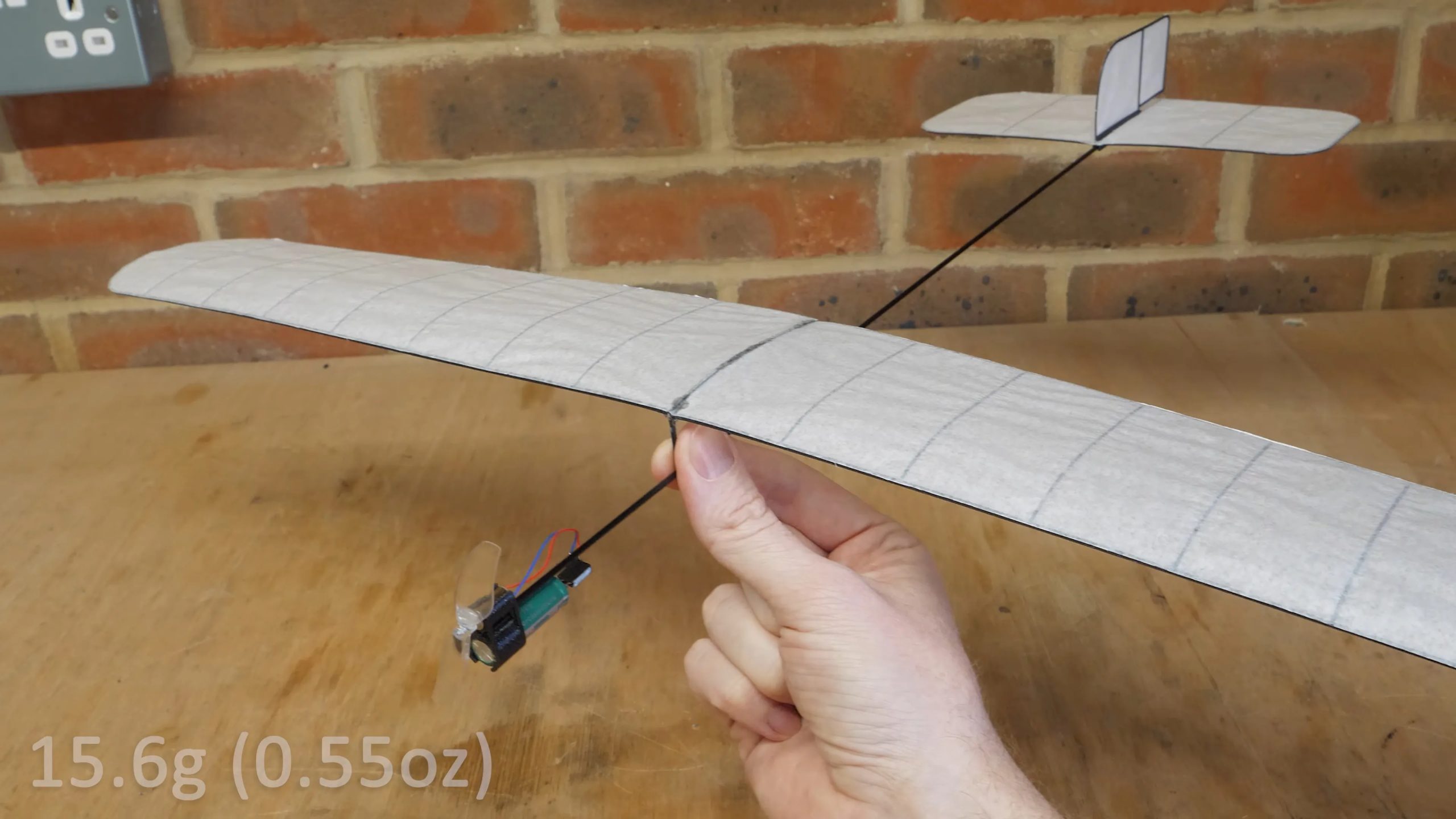
There’s something to be said for a simple wind-up, free flight model airplane. With no controls, it must be built very well to fly well, and with only the limited power of a rubber band, it needs a good, high-lift design without much superfluous drag to maximize flight time. There’s also something to be said for modernity though, and prolific hacker [Tom Stanton] puts them together with this supercapacitor plane.
If that sounds familiar, it’s because [Tom] did this before back in 2023. But for that first attempt he converted a commercial R/C toy rather than a plane optimized for low-power free flight. Just like with the best rubber-band machines, his goal for the new production is more flight time than winding time. Plus lots of views on YouTube, but that goes without saying.
Thus this machine is smaller and lighter than the previous iteration. Rather than balsa and tissue like the free-flight aircraft of our youths, [Tom] is using 3D printed plastic for the structure. But he’s got a neat hack built in: he’s printing the wings and control surfaces directly onto tissue paper, eliminating the bonding step. Of course that means his wings are printed flat, but a bit of heat and some bending and he has a single-surface airfoil. Single-surface airfoils are normal in this application, anyway: closed wings add too much weight for too little gain. If you want to try the technique, he’s got files on Printables.
Another interesting factoid [Tom] discovered is that the energy density of supercapacitors decreases sharply below 10 F. As you might imagine by the square-cubed law, bigger is better, but the sharp drop-off dictated he use a single 10 F cap for this build, along with a micro motor. Using the wind-up generator from his previous build, he’s able to get 45 seconds of flight out of just 4 seconds of cranking, a good ratio indeed.
Looking for the most recent Strands answer? Click here for our daily Strands hints, as well as our daily answers and hints for The New York Times Mini Crossword, Wordle, Connections and Connections: Sports Edition puzzles.
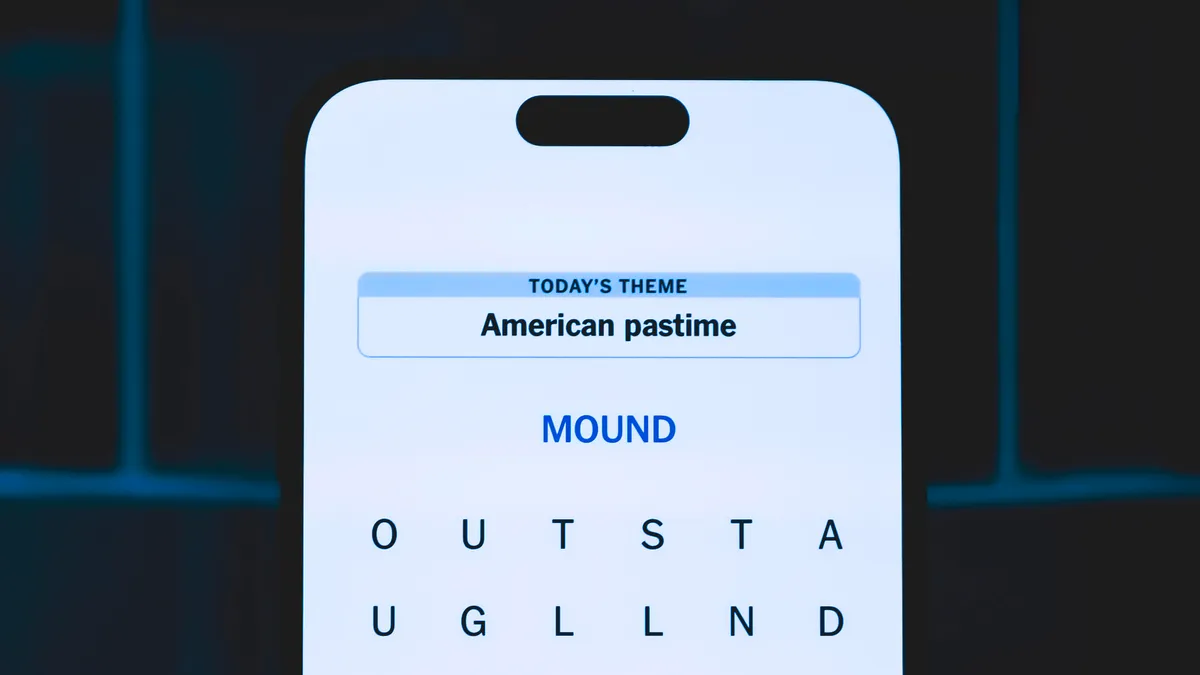
Today’s NYT Strands puzzle has a fun topic, but get ready to do some serious unscrambling of lengthy answers. If you need hints and answers, read on.
If that doesn’t help you, here’s a clue: Is it on sale?
Clue words to unlock in-game hints
Your goal is to find hidden words that fit the puzzle’s theme. If you’re stuck, find any words you can. Every time you find three words of four letters or more, Strands will reveal one of the theme words. These are the words I used to get those hints but any words of four or more letters that you find will work:
These are the answers that tie into the theme. The goal of the puzzle is to find them all, including the spangram, a theme word that reaches from one side of the puzzle to the other. When you have all of them (I originally thought there were always eight but learned that the number can vary), every letter on the board will be used. Here are the nonspangram answers:
SALE, BUDGET, BARGAIN, INEXPENSIVE, AFFORDABLE
Today’s Strands spangram
The completed NYT Strands puzzle for April 18, 2026.
NYT/Screenshot by CNET
Today’s Strands spangram is ONTHECHEAP. To find it, start with the O that’s three letters to the right on the top row, and wind down.
Advertisement
Toughest Strands puzzles
Here are some of the Strands topics I’ve found to be the toughest.
#1: Dated slang. Maybe you didn’t even use this lingo when it was cool. Toughest word: PHAT.
#2: Thar she blows! I guess marine biologists might ace this one. Toughest word: BALEEN or RIGHT.
#3: Off the hook. Again, it helps to know a lot about sea creatures. Sorry, Charlie. Toughest word: BIGEYE or SKIPJACK.














































You must be logged in to post a comment Login