












Today, we take ice for granted. But having ice produced in your home is a relatively modern luxury. As early as 1750 BC, ancient people would find ice on mountains or in cold areas and would harvest it. They’d store it, often underground, with as much insulation as they could produce given their level of technology.
By 500 BC, people around Egypt and what is now India would place water in porous clay pots on beds of straw when the night was cold and dry. Even if the temperature didn’t freeze, the combination of evaporation and radiative cooling could produce some ice. However, this was elevated to a high art form around 400 BC by the Persians, who clearly had a better understanding of physics and thermodynamics than you’d think.
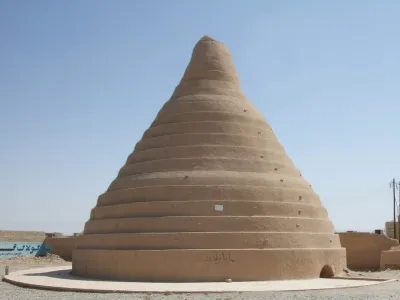
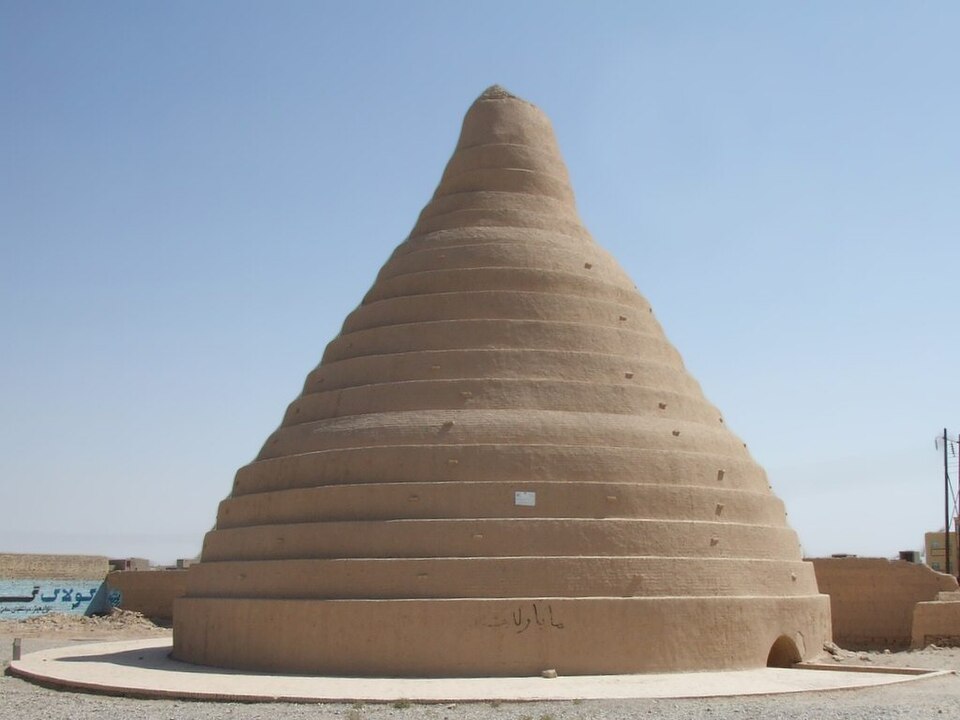
The key to Persian icemaking was yakhchāls. Not all of them were the same, but they typically consisted of an underground pit with a conical chimney structure. In addition, they often had shade walls and ice pits as well as access to a water supply.
Solar Chimney
The conical shape optimizes the solar chimney effect, where the sun heats air, which then rises. The top was typically not open, although there is some thought that translucent marble may have plugged the top to admit light while blocking airflow. yakhchālThe solar chimney produces an updraft that tends to cool the interior. The underground portion of the yakhchāl has colder air, as any hot air rises above the surface.
Insulation and Shade
The structure uses a water-resistant mortar made of sand, clay, egg whites, lime, goat hair, and ash. This has good insulating properties, although how the Persians found this recipe is a mystery. Many also had windcatcher towers that allowed for evaporative cooling in the dry air.
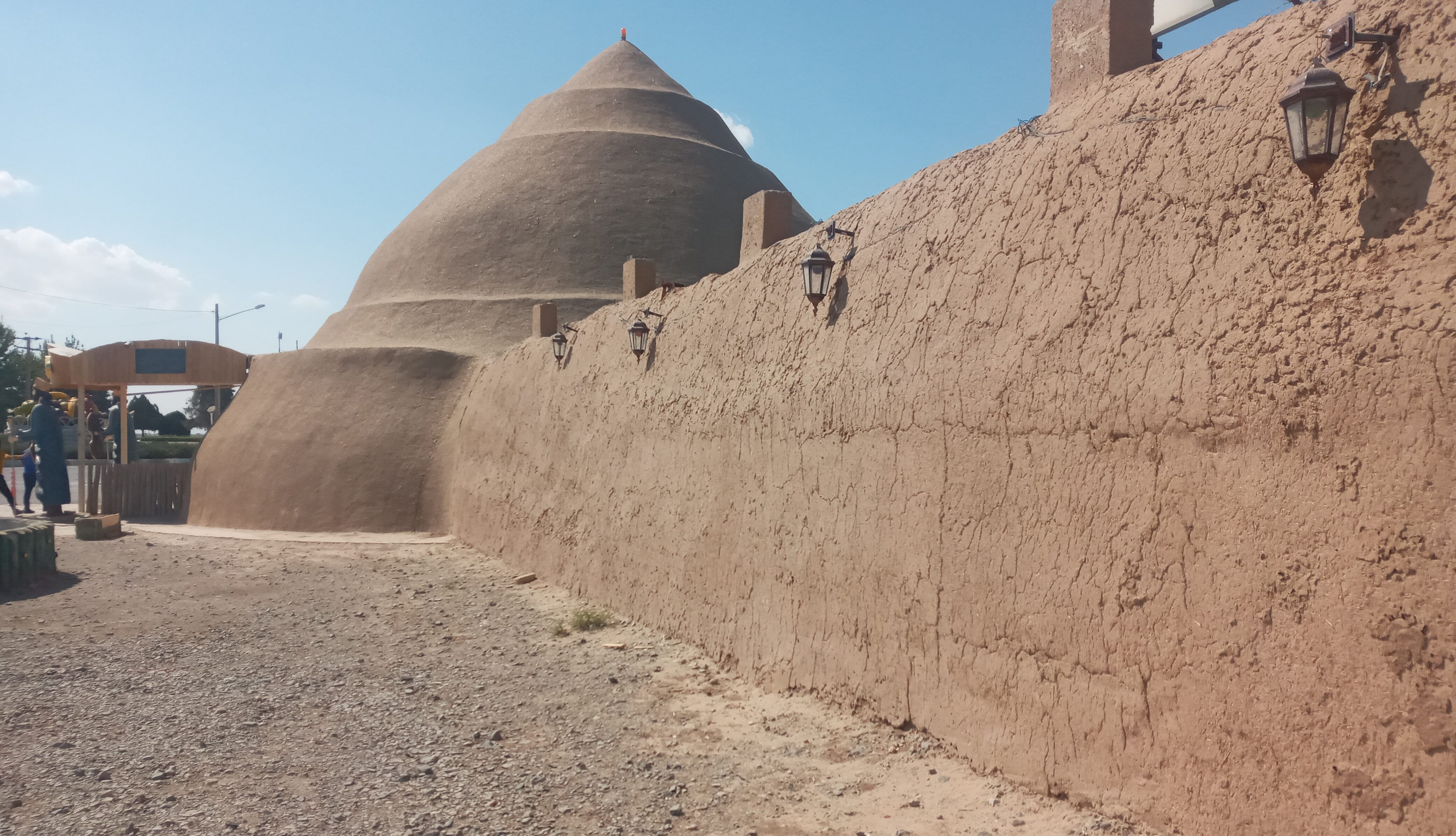
Adjacent to the yakhchāl was often a shallow ice pool protected by a shade wall to block the sun. The shade wall minimized heating from the sun. Just as the Egyptians leveraged evaporative and radiative cooling to create ice, cold nights could produce ice in the pool, which workers would harvest and store inside the yakhchāl. They could also, of course, store ice harvested from elsewhere. Even with the shade wall, though, workers had to harvest ice before sunrise.
You could think of the whole system as an RC circuit. The dome and the soil around the pit form a resistance, while the ice, cold stone, and air inside form a thermal capacitor. Thick insulating walls make a large R, and tons of ice and stone make a big capacitor. The dome shape gets less solar radiation most of the time. With a big resistor and capacitor, bleeding off charge (in this case, leaking in heat) takes a long time.
Meanwhile, ice melting effectively absorbs leftover or leaking heat. Sure, you lose some ice, although with the ice pits, on a cold and dry night, you might be able to recover at least some of it.
Why?
The Persians wanted ice for the same reasons everyone else did. They preserved food, created frozen beverages (sharbat), and even a dessert, faloodeh, that combined noodles, rose syrup, lime, and ice. There were also medical uses. Of course, having ice in the hot desert was also a status symbol.
Other Tech
In China, around 600 AD, they used saltpeter to produce ice chemically instead of simply harvesting and storing it. It would be 1748 before [William Cullen] would demonstrate producing ice using artificial means. While [Oliver Evans] described a fairly modern refrigerator in 1805, nothing like it was built until [Jacob Perkins] did it in 1834. Australian [James Harrison] was probably the first commercial ice makaer in the mid 1800s.
These days, we don’t usually ship ice around, but we still have to ship cold things. And of course, refrigerators ended the ice harvesting business.
Featured image: “kosar” by [Elyaskb]