Security teams log 54% of successful attacks and alert on just 14%. The rest move through your environment unseen.
The Picus whitepaper shows how breach and attack simulation tests your SIEM and EDR rules so threats stop slipping by detection.



Threat actors are increasingly abusing Shop, the order-tracking app from Shopify, by adding fake purchase receipts in users’ order histories to trick them into providing sensitive data or installing remote access software.
The Shop digital shopping assistant serves as a centralized platform where users can track orders from multiple online retailers, access receipts and shipping updates, and discover and purchase products from merchants that use Shopify.
The app is very popular in North America, where support and purchasing options are more substantial. It has 50 million downloads on Google Play and 7 million ratings in Apple’s App Store.

According to cybersecurity company Gen Digital, scammers are inserting fake orders that appear alongside legitimate purchases, impersonating brands such as Norton, McAfee, Apple, and PayPal.
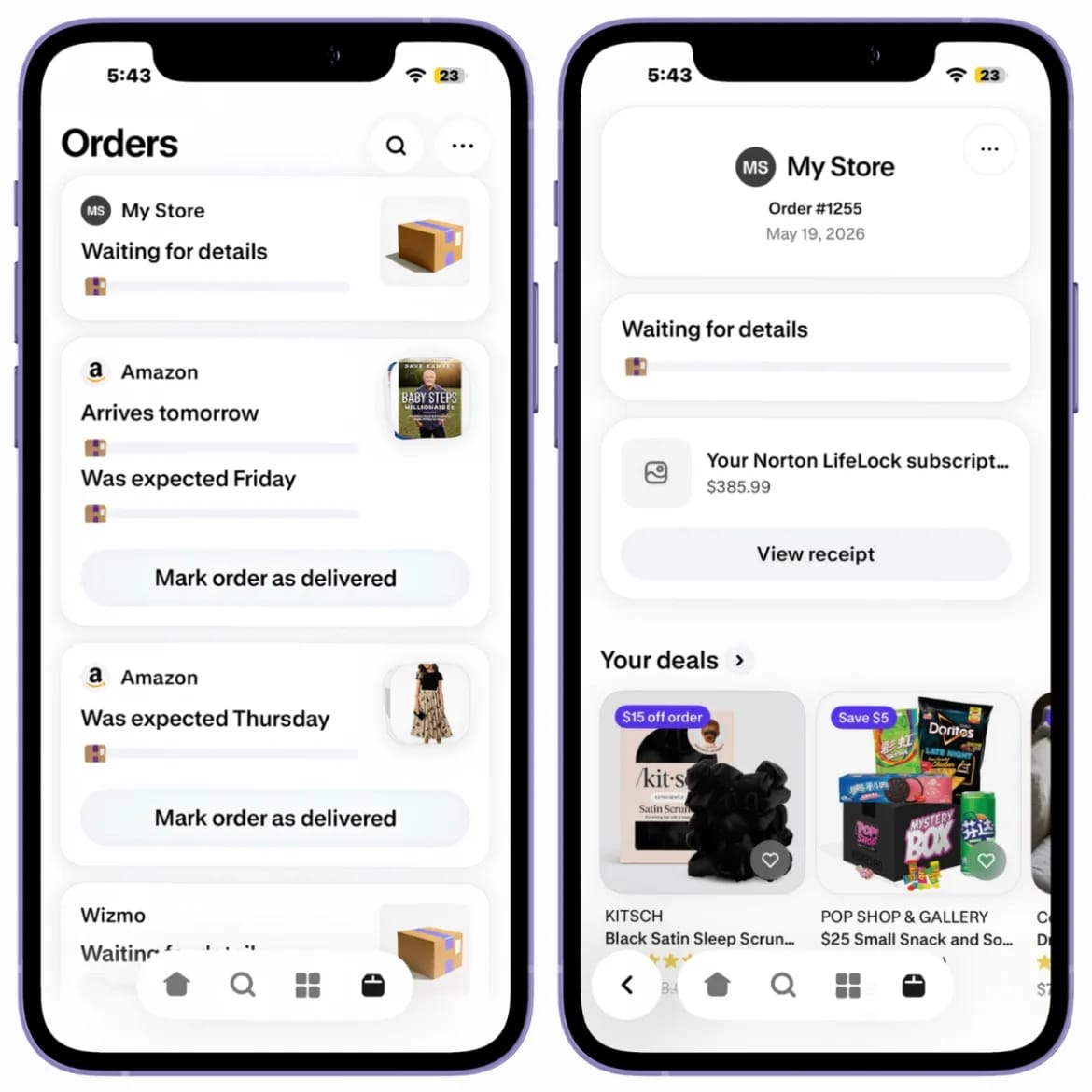
The threat actor also listed a phone number in the digital receipts that users can call to dispute purchases. However, at the other end is a scammer posing as a support agent.
Using social engineering tactics, the fraudster tries to convince the victim to disclose account credentials, payment card details, and temporary authentication codes (OTPs).
In some cases, the researchers say that victims are tricked into installing software that grants remote access to the device.
Gen Digital researchers note that inserting the fake receipts in the Shop app is a more effective method than using email to deliver fraudulent purchase notifications, a more common technique known as callback phishing.
Shop is a legitimate shopping app, and users inherently trust it, so orders that appear there are far more likely to prompt responses from unsuspecting users.
However, the researchers say that many of the false receipts contain poor grammar, which is an obvious red flag. Nevertheless, users may miss the mistakes when they see an invoice for a large purchase.
Despite the observed wave of fraudulent invoices, it is unclear how they are inserted into the Shop app.
The researchers say that Shop can populate orders from multiple sources, including email parsing, account association, and order workflows, but no particular one could be confirmed as the delivery channel for the fraudulent notifications.
Gen Digital underlines that they found no evidence that Shop, Shopify, or any of the impersonated companies were compromised.
BleepingComputer has reached out to Shopify with related questions, but we have not received a response as of publishing.
Until the situation clears up, users who see receipts for orders they didn’t place on Shop are advised not to call the phone number listed on them, but instead to verify any alleged charge directly with their bank.
Those who have already contacted the scammers and disclosed sensitive information should immediately reset their account passwords and contact their card issuer for cancellation.

Security teams log 54% of successful attacks and alert on just 14%. The rest move through your environment unseen.
The Picus whitepaper shows how breach and attack simulation tests your SIEM and EDR rules so threats stop slipping by detection.


Imagine what a scammer could do with your personal data in six months. Depending on what data was mined, a scammer could open credit accounts in your name, drain your bank account, and even share your information on the dark web. It’s a potential nightmare that would take you years to resolve, and yes, it could happen to you. The average number of days it takes a company to detect a data breach is a staggering 181, and it then takes, on average, another 60 days to contain it. Meanwhile, you’re guessing who accessed your data and what they plan to do with it.
Three million Texas license buyers have been left wondering just that after a data breach involving a vendor associated with the Texas Parks and Wildlife Department license system. The leak was detected by Texas Cyber Command and involves customers of the hunting and fishing license program in the Lone Star State. While their Social Security numbers were not compromised, an unauthorized person was able to access driver’s license information, email addresses, phone numbers, residential addresses, and even passport numbers. Birth dates and credit card details were reportedly not exposed, but that may be little consolation to those involved.
Texas Parks and Wildlife assured the public that no customers under the age of 18 were affected by the breach, and it has put additional security measures in place. It’s also working with the vendor to ensure such a breach doesn’t happen again, but some customers are questioning why so much personal data is necessary for a hunting or fishing license.

These breaches are incredibly frustrating for Americans because we expect our information to be secured. Today, the only surefire way to avoid becoming a victim is to completely opt out of sharing personal data — an impossibility in modern life. When a simple application for a fishing or hunting license can lead to data breaches, what can we do to protect ourselves?
State agencies are a common target for malicious actors. Last year alone, there were thousands of incidents involving these agencies and associated vendors. In Texas, affected customers are being offered one year of free credit monitoring, but there are also steps you can take before a data leak occurs that will help protect your sensitive data.
First, keep your own accounts secure. Use strong, unique passwords, and don’t share passwords across multiple accounts. Change your passwords regularly. Update apps and software to ensure that you’re taking advantage of critical security updates, and enable two-factor authentication when possible. To protect against identity theft, don’t carry your Social Security card with you, but store it somewhere safe and secure. Shred any documents that contain personal information, and regularly review your financial statements and credit reports for irregularities. You can also request a security freeze that restricts access to your credit reports, and if you think you’re at risk, a fraud alert will require lenders to take extra steps to confirm your identity.
Apple spent a lot of time talking about artificial intelligence at WWDC this year, including how Apple Intelligence is getting a boost from Google’s Gemini models. Apple unveiled Siri AI, a major overhaul of its voice assistant that can hold longer conversations, answer questions about what is on your screen and pull relevant information from your messages, emails and photos.
Siri AI is only one part of iOS 27. Apple also announced more advanced photo-editing tools, expanded parental controls, updates to its Liquid Glass design and several performance improvements intended to make the iPhone feel faster and more responsive.
Some of the most immediately useful changes, however, are much smaller. After installing the iOS 27 developer beta, I noticed new features tucked inside apps you already use every day: a faster way to pull up your Safari tabs, a separate alarm-volume setting, new tools for saving and organizing photos, and a Custom EQ option for AirPods.
The iOS 27 developer beta is available now, with a public beta expected in July and the full update arriving this fall. Developer betas can be buggy and may affect battery life, app compatibility and everyday performance, so you should avoid installing them on your primary iPhone unless you are comfortable dealing with unfinished software.
Here are some of the less obvious iOS 27 features worth checking out.
The Photos app is getting a new Extend tool that can expand an image beyond its original borders. You can use it to straighten a crooked horizon, change the aspect ratio of a photo or give your subject more breathing room in the frame.
Photos’ new Extend tool can expand an image beyond its edges.
Extend uses generative AI to create the additional parts of the image, similar to generative-expand tools already available in some photo-editing apps. Apple has also added a Spatial Reframing feature, that allows you to touch and drag to adjust the perspective of an image.
The Shortcuts app can be powerful, but building an automation from scratch requires some patience. In iOS 27, you can simply describe what you want a shortcut to do, and the app will assemble the required steps for you.
You could ask it to create a shortcut that texts someone when your phone is about to die or go into Focus mode when you arrive at work. You may still need to make a few adjustments, but you no longer have to start from scratch.
Shortcuts can now build an automation from a simple description.
AirDrop is also getting a speed boost. Apple says some AirDrop transfers can be up to 80% faster in iOS 27, making it quicker to send photos and files to someone nearby.
There is some fine print, though. Apple tested the improvement by transferring multiple photos totaling 30MB between nearby contacts while the phones were not connected to a Wi-Fi network. Your own results will depend on what you’re sending and the conditions around you, but any improvement should be noticeable if you regularly use AirDrop to share large batches of photos.
Low Power Mode can help stretch your battery when your iPhone is running low, but it can also make parts of the phone feel slower. In iOS 27, Apple says the Camera app launches faster when Low Power Mode is turned on.
That is a small improvement, but it matters when you are trying to quickly capture something before the moment passes and your phone dies
I always have issues in that moment of limbo when I’m leaving my apartment and too far away to have good Wi-Fi service, but not far enough for my phone to automatically disconnect. It always ends up disrupting whatever I’ve got going on my phone, like a download, stream or FaceTime call, and then I end up having to disable Wi-Fi.
In iOS 27, Apple says the phone can more seamlessly transition between Wi-Fi and cellular data as you move around, without you having to open the Control Center and manually turn off Wi-Fi.
Sending a large video through Messages can be annoying when you have a weak connection. Until the file finishes uploading, the conversation is pretty much on hold, because text messages are sent in order.
A new continuous-send feature lets you keep sending texts while a large photo or video is still being delivered. Messages also adds a send indicator to each outgoing message, making it easier to see what has already gone through and what’s still in progress.
Dual Capture in FaceTime lets you stream video from your front and rear cameras at the same time during a one-on-one call. That means the other person can see your face while you show them what is happening in front of you.
It could be useful when you are giving someone a tour, showing them a view or asking for help with something in front of you without constantly flipping the camera back and forth. There is one limitation: Apple says Dual Capture is available only on the iPhone Air and iPhone 17 lineup.
The Photos app now lets you save a single frame from a video as a photo with a tap. That means you no longer need to pause a clip at exactly the right moment, take a screenshot and crop out the video controls afterward.
There’s already a feature to take stills while you’re shooting a video, which I use when I’m recording a live concert, but it’s nice to have the feature for after, especially when there’s a great still image buried somewhere inside them.
Selection View gives you a faster way to review and modify a group of photos after selecting them in your library. You can also manage included metadata, such as location information.
This should make it easier to clean up a batch of pictures before sharing them, rather than opening each one individually and making the same changes over and over again.
If your photo library is overflowing with thousands of images, iOS 27 gives you another way to organize the ones you really care about. You can now assign photos and videos a rating from one to five stars.
Once you have rated your photos, you can filter your library and collections by rating. That could make it easier to narrow down a set of pictures for Instagram or keep track of the images you still need to edit.
Photos also includes an option to prioritize syncing new images and videos to iCloud for one day, even if it comes at the expense of battery life or system performance.
Normally, your iPhone may delay some syncing to conserve power or handle other tasks. The new setting is useful when backing up your photos matters more than preserving battery life, like after a photo shoot or an event where you captured something you don’t want to lose.
AirPods are getting a Custom EQ setting that lets you adjust the lows, mids and highs. That gives you more control over how your music sounds without relying on a broader EQ setting.
You could boost the bass, pull back the high end or make smaller adjustments based on your own preferences. It is not a replacement for a full professional equalizer, obviously, but it should be more than enough for people who want their AirPods to sound a little more personalized.
This feature should’ve been available on the iPhone a long time ago: You can set your alarm volume independently from the rest of your system volume.
That means you can keep videos, music and other audio relatively quiet without worrying that your alarm will also be too soft to wake you up. I’ve had times when I’ve missed an alarm because the volume was at zero, but hopefully, no more.
Widgets can now take up an entire Home Screen page if you want them to. Apple calls them extra-large widgets, with support for apps including Calendar, Photos and Music.
A full-page Calendar widget could make it easier to see your schedule at a glance, while a Photos widget could turn one page of your Home Screen into something like a digital photo frame. I don’t think I want a widget to take up my entire screen (isn’t that what apps are for?), but it could make sense for the apps you check often but only quickly want to glance at.
Safari has a small change that makes it much easier to see all the tabs you have open. Instead of double tapping on the tab button, you now only have to tap once to view all your tabs. It’s a minor interface tweak, but it removes some of the friction from jumping between webpages, especially if you regularly keep hundreds of tabs open at once, like me.
For more from WWDC, check out some of the biggest announcements and how to download the iOS 27 developer beta.

Notion announced that it will shut down its email client on September 22. The company says more than half of users already manage email through Notion’s AI agents without opening their inbox, so it is shifting its focus from a traditional email client to agent-run workflows. Engadget reports: It has published an FAQ for users to make sure that they don’t lose any messages or data in the transition. Most emails will still exist in a Gmail inbox, but customers will need to manually export their drafts, scheduled emails, snippets and auto label instructions. Notion first began offering Notion Mail after acquiring startup Skiff in 2024.
Tonight is your last chance to save up to $190 on your pass to TechCrunch Founder Summit 2026. Early Bird pricing ends today, at 11:59 p.m. PT, after which rates increase.
Founders rarely scale alone. The fastest path to growth comes from learning from founders who’ve already done it, connecting with peers tackling similar challenges, and building relationships with investors who can help accelerate your next stage of growth.
On November 4 in Boston, more than 1,000 founders and investors will gather for a highly curated day of tactical learning, candid conversations, and meaningful networking designed to help founders make smarter decisions and grow faster.
Don’t wait until prices increase. Register before 11:59 p.m. PT tonight to save up to $190. Bringing your team? Groups of four or more can save up to 30%.

Every session, discussion, and networking opportunity is designed around the real challenges founders face as they build, fund, and scale their companies.
You’ll connect with:
Whether you’re preparing to raise capital, refining your go-to-market strategy, or planning your next growth milestone, Founder Summit creates opportunities for conversations that can change the trajectory of your business.
Founder Summit focuses on the decisions that define a startup’s future. Through breakout sessions and roundtable discussions, you’ll gain practical guidance on topics including:
These founder-led conversations deliver practical takeaways you can apply immediately.
Past speakers have included:
Additional speakers have represented Sequoia Capital, NFX, Glasswing Ventures, Wing Venture Capital, Construct Capital, Greylock, Precursor Ventures, and more.
The 2026 agenda is coming soon, with additional founders, operators, and investors to be announced. Check the event page for agenda updates.
Interested in leading a discussion? Submit a roundtable or breakout session topic for a chance to be voted onto the agenda by the TechCrunch audience.
The deadline is in less than 24 hours. Early Bird pricing ends tonight at 11:59 p.m. PT. Join the founders, operators, and investors shaping the next generation of startups. Gain practical insights, build valuable relationships, and leave with strategies you can put into action immediately.
Register before 11:59 p.m. PT tonight to save up to $190 on your pass and up to 30% when registering as a group.
Interested in exhibiting at TechCrunch Founder Summit 2026? Reserve your exhibit table and connect directly with founders, investors, and startup decision-makers.

When you purchase through links in our articles, we may earn a small commission. This doesn’t affect our editorial independence.


Industrialized factories changed how the world produced physical goods: more output, lower costs, faster than anything that came before. Now a similar shift is happening with software.
LLMs have lowered the barrier to writing code, increased individual output, and pushed organizations to think about software development as a production system. The standard software development lifecycle and CI/CD practices that have held for decades won’t hold up under that pressure. That’s where the software factory comes in — and like physical factories, it needs more than speed to actually work.
The idea of a “software factory” started to solidify over the past year. Luca Rossi’s “The Era of the Software Factory” made the case plainly: AI is not just changing how fast people write code — it’s changing the whole production system around software.
The concept can mean different things: a collection of coding agents and skills files; faster CI/CD; better review systems; or more automation around software delivery. A better frame is to think of it less as a tool category and more as a set of principles. A software factory can’t just be a loose collection of prompts, agents, and plugins. It needs a platform that defines how work moves through the system and how code is generated, reviewed, tested, traced, deployed, and improved when something goes wrong.
Otherwise all you’re doing is putting yet another one-off machine into an empty room and calling it a factory.
There are a few forces all hitting at the same time.
Companies have always wanted more software than engineers can produce. That’s why tools like Excel exist: They often fill in the gap for a lot of the software that many companies wish they could make.
AI has also lowered the barrier of entry to creating code, and this is the part everyone focuses on. Code creation is now easier, though not always cheaper or better, as evidenced by many high-profile companies fretting over their high AI bills. The barrier to writing functional code has effectively collapsed.
More importantly, a single engineer can generate more code than they could just a few years ago. That changes the bottleneck: it’s no longer “How fast can someone write this?” or even, in some cases, “Can someone understand how to code?” Instead it becomes, “Should this be written?”
More importantly, can we actually create end products that are durable and reliable and don’t just build tech debt? Or are we just putting out more AI slop faster than ever? That’s where the danger lies.
All of this sounds great. Factories, after all, made production faster and more consistent.
They made it possible to build more cars and products, less expensively, which led to more people being able to afford cars and products. Putting environmental impacts aside, you could argue this was positive.
But like many things in engineering, there are always tradeoffs, and in this case, there are new risks.
When you increase the output of one person with machinery, digital or otherwise, you also increase the mistakes that can be made either by the individual or the machinery. The speed at which code can now be put out is on an industrial scale. Even smaller organizations can suddenly have code bases ballooning up to the size of tech company code bases a decade ago.
The data is already showing problems. Faros AI found that while task throughput per developer is up 33.7% and PR merge rate is up 16.2%, the incidents-to-PR ratio has risen 242.7% and bugs per developer are up 54%. Google’s DORA research found that more AI adoption was actually associated with worse delivery stability.
As a fractional head of data, I’ve been brought in to fix these exact issues. In the past year alone, I’ve worked on two projects where AI-generated data infrastructure slowly started to morph over time.
Between multiple engineers trying to move quickly and a lack of standards, these projects became unruly. Code bases tend to go through some level of evolution, but as different styles blend, the LLMs in turn start to create their own mutations. Codebases developed five to six different styles within months — a process that previously took years. Layer by layer, the engineers would slowly stop understanding exactly what was going on.
The pattern echoes what happened a decade ago with self-service tooling: early productivity gains that masked downstream complexity.
And that’s why the software factory can’t just be about speed.
There are several key principles to consider when building a software factory.
Platform over tools: Many teams are slowly implementing AI into their coding workflows at the edges — adding a PR review agent or a skills file into their repos. But building an actual software factory requires a platform, not a collection of tools at the edges. A platform provides a unified foundation where tools aren’t scattered in separate corners. Instead, they actively share data, talk to each other, and work as a single cohesive system — standards, processes, and the work itself all connected.
Rerunability and traceability: A real platform requires the ability to go back into any run, identify what went wrong, and rerun it — which is why one-off agents don’t make a factory. The system needs to support taking a serial ID, looking it up, and tracing exactly how it got to the output it produced. This is why state machines make more sense than loops for AI workflows: they make it far easier to rerun a process and understand what happened at each step.
Safety and guardrails: Factories are not safe places. Neither is a software factory. As more people develop on these platforms, better guardrails and safety measures need to be built in. Testing and quality control need to be pushed to the front of the process — catching bugs at the lowest possible stage reduces the cost to fix them and limits the blast radius.
Standardization: At the enterprise level, every codebase has its own flavor. Layering a code assistant on top without standards produces an amalgamation of styles. Standardization has to be built into the process from the start.
Quality control: In older manufacturing models, quality control happened at the end of the line. The product was built, inspected, defects found, and fixed later. Toyota’s approach was different. Quality was pushed into the process itself — workers were expected to stop the line when something was wrong. The goal wasn’t to catch defects at the end; it was to prevent them from flowing downstream in the first place.
The same is true for the software factory. QC needs to be baked into the entire process, starting with how the spec is written. That means integrating static code analysis that catches obvious errors and providing templates to LLMs so they know the structure the code should follow. Without that, the bottleneck becomes the final review — or teams just push out more AI slop.
Improving the speed of your code output is not actual productivity if the downstream issues aren’t managed. A company is not more productive because it produces millions of cars, only to see them all fall apart within 100 miles. It’s also not more productive if all it does is produce an endless stream of proofs-of-concept that never enter production.
Actual productivity is when the software factory takes ephemeral tokens and turns them into durable outputs. It’s easy to talk about lines of code and how much faster your team is moving.
The software factory that wins isn’t the one that generates the most code. It’s the one that generates the fewest defects downstream.

The NotePin S AI wearable, seen here on the wrist of CNET’s Katie Collins, could be really useful for my job. And it’s on sale for Prime Day.
I took over the role of CNET’s editorial leader earlier this year, and while I’ve participated in Prime Day sales as a TV reviewer and general deals editor here for (literally) decades, this is my first Prime Day as EIC. In case you’re wondering what purchases a person like me is considering this time around, here’s a sampling.
iPad 11-inch A16 ($300): My artistic daughter has been asking for an iPad and if my wife approves, I’ll likely get her this basic version, our top pick for most people. I’d also get her the Apple Pencil (on sale for $60). We’d save both of these for Christmas presents.
Belkin Portable Charger Bank ($38): My family and I always need portable chargers. Half our devices call for Lightning and the other half for USB-C. This does both and I like the built-in cables.
Plaud NotePin S AI Notetaker ($152): In my new role I take more meetings than ever, and I also have plenty of valuable face-to-face conversations in the office and beyond. I currently depend on the Otter app on my phone and Gemini+Google Meet recordings at work to take notes (with appropriate permission, of course). This AI wearable could be my “secret weapon” to consolidate everything in one place.
JBL Go 4 Bluetooth Speaker ($38): I actually bought this one a few days ago when it was $40 – still a great deal, but now even better. It’s no longer one of our best Bluetooth speakers but it’s good enough for my (other) daughter, who wants one for the beach. At this price, I won’t be too annoyed if (when?) it gets destroyed by sand and surf. And yes, I got her the pink one which I know she’ll love. We’re saving this for her birthday.
Anker Solix F2000 portable power station ($749): I own a travel trailer and upgraded to solar with an inverter, but at a recent (shady) campsite, I still had to break out my loud, annoying propane generator. Sure, I could just add more standard 12V LiPo4 batteries, but this portable power station is so much more versatile. It includes a 30A RV outlet, and the wheels make it worth the extra $50 over the Bluetti AC200L. No way my wife approves this one, but it stays on the list anyway because I’m camping tech obsessed.


The social media checks implemented in Australia after the country banned their use for teens under 16 have shown little evidence of being effective, according to a study by the University of Newcastle. Published in the British Medical Journal, the study surveyed participants between 12 and 17 years old before and three months after the law was introduced. It specifically looked at the participants’ use of TikTok, X, Facebook, Instagram, YouTube and Snapchat.
Based on the information they gathered, more than 85 percent of teens under 16 continued using those social media apps, despite two-thirds of them reporting that they had encountered age checks. Approximately 54 to 68 percent of responders under 16 just kept on using their accounts. How, you ask? Well, the most common age check the Australian teens encountered was to self-declare their age, a method criticized by authorities in the country, as well as in other countries considering implementing the same law, due to its limited effectiveness. Among the responders, 24 to 39 percent encountered self-declared age verification, while 13 to 27 percent got through checks by uploading a selfie.
That said, the study also showed that affected teenagers found other ways to keep using social medial. Around 15 to 19 percent of the responders said they used fake accounts to access the platforms, while 9 to 29 percent reported going on social media using someone else’s account. Approximately 11 percent of the teens said they used private browsers to get around the restrictions. There were very few teens who reported using a VPN.
Overall, the study found that social media use remained the same among the 12 to 13 year olds after the law took effect. It declined among the 14 to 15 year olds, but it grew among the responders aged over 16.
While the researchers admit that it’s early days and the sample size was small and relied on self-reporting, an accompanying editorial of the study stresses that the results are early signals worth tracking.
“What these figures collectively describe is a partially implemented policy, one in which the mechanism intended to restrict access was not reliably activated,” said Dr. Amrit Kaur Purba, an assistant professor in the Faculty of Public Health and Policy at the London School of Hygiene & Tropical Medicine. “Australia’s experience shows that legislating a restriction is not the same as enforcing one: when age assurance relied on self-declared age, most adolescents continued to access restricted platforms. Countries now adopting similar measures – including the UK, which has committed to comparable restrictions and has tasked its regulator with defining effective age assurance before implementation – will need those mechanisms in place from the outset, rather than retrofitted once circumvention is already widespread. As governments across Europe, North America, and elsewhere consider similar approaches, Australia’s experience suggests that implementation may matter as much as legislation, and that lesson may prove as consequential as any headline result.”

Wireless charging on a power bank has always meant accepting a speed penalty, and for most people that trade-off is invisible right up until the moment they actually need to charge in a hurry.
That gap is exactly what the INIU SnapGo Air is built to close, and at $49.49 down from $54.99 this Prime Day, saving you 10%, it is the slimmest Qi2.2-certified magnetic power bank available.
Qi2.2 certification pushes wireless output to 25W, which is how the SnapGo Air gets an iPhone 17 Pro from flat to 50% in 33 minutes compared with 63 minutes on a standard 7.5W wireless pad.
That half-hour gap compounds fast when you are in an airport, a meeting room, or anywhere else where five minutes of charging has to stretch into something that actually moves the needle on your battery percentage.
When wireless is not fast enough, the attached USB-C GoCord delivers 45W wired output and takes an iPhone 17 Pro from 20% to 78% in 25 minutes, without needing a separate cable retrieved from anywhere.
Recharging the SnapGo Air itself through the same GoCord takes 1.8 hours, which means plugging in before bed gives you a full 10,000mAh bank by morning rather than a partial one that runs out by early afternoon.
The 13N magnetic grip holds it locked flush against any iPhone 12 through 17 series device, and at 0.5 inches thick the SnapGo Air adds no meaningful bulk to a phone sitting in a jacket or front pocket.
A side-mounted digital display gives an exact percentage readout of remaining charge, and TempGuard 3.0 monitors temperature 3.2 million times per day to keep output stable as the battery drains toward empty.
For iPhone owners who have settled for slow wireless charging because nothing thinner existed at a sensible price, the INIU SnapGo Air at $49.49 through June 26th on Amazon is the answer that has been missing.
Foldable phones have really matured in recent years, and my time with the Motorola Razr Fold really cemented that idea. Apart from the novelty of having a flexible screen, brands are baking in unique features that really take advantage of the foldable mechanism and laptop-like orientations.
Now, Android 17 might look past just productivity and offer a new way to experience video games. A sneak peek shared on Reddit by Mishaal Rahman shows a new foldable gaming mode. It is a platform feature coming with Android 17. Simply unfold your phone, launch a compatible game, and Android can split the screen into two halves. The top half runs the game itself, while the bottom half turns into a dedicated virtual gamepad. If this reminds you of old handheld gaming devices like the Nintendo DS, you’re spot on!
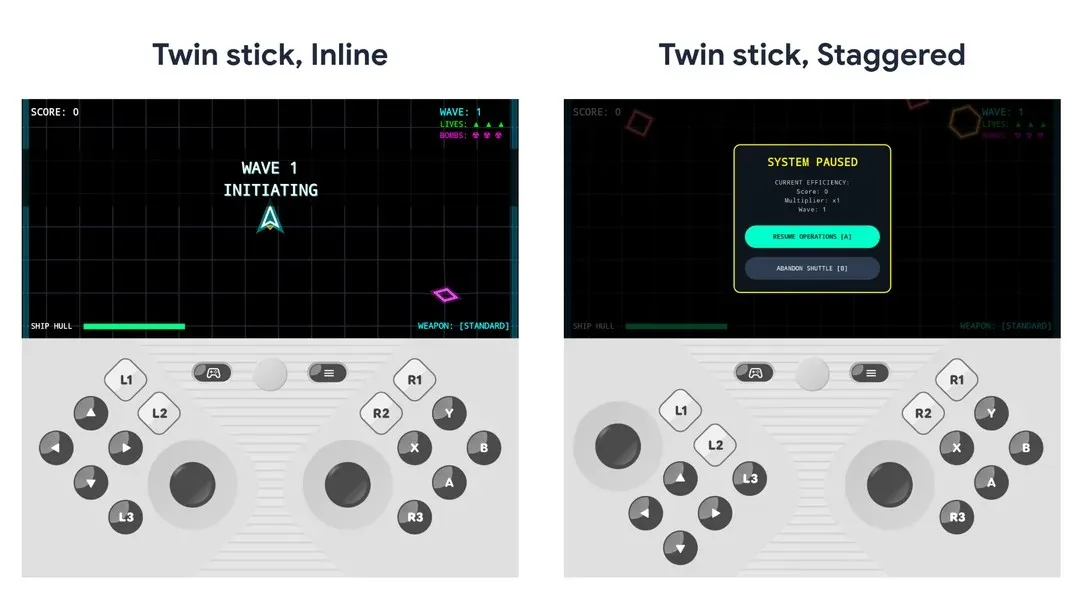
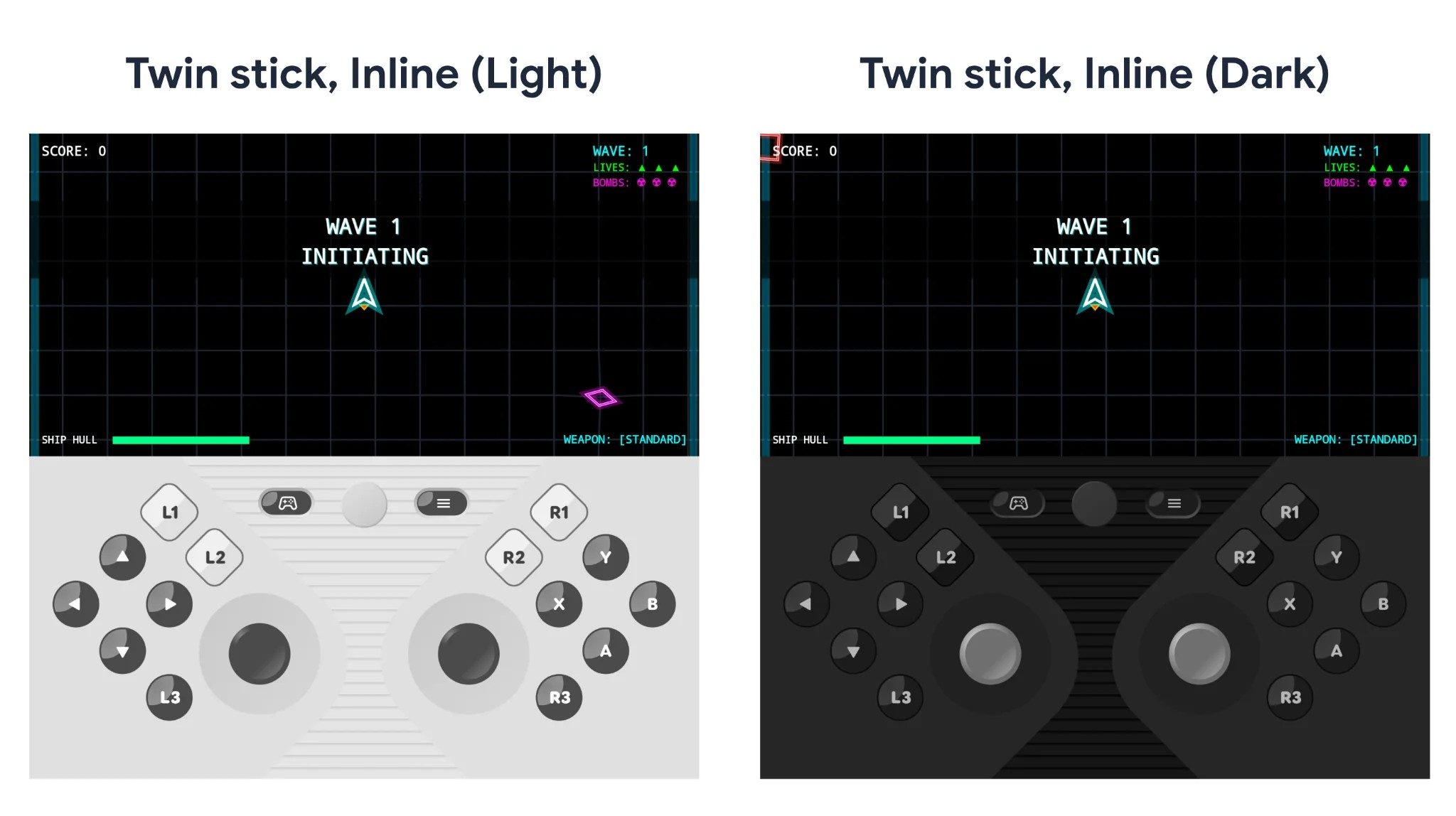
The virtual gamepad is designed to emulate physical controller inputs at the system level. So it should work with games that already offer controller support, without developers needing to build a custom touch layout from scratch. The current button setup includes a D-pad, left and right thumbsticks, A/B/X/Y buttons, L1/L2/L3, R1/R2/R3, and Start. Android 17 also includes a few customization options, including different twin-stick layouts, small/medium/large sizing, light and dark themes, and a toggle for haptic feedback.
The controller can also hide itself when not needed. If you connect a physical controller over Bluetooth or USB, the virtual gamepad is designed to disable automatically. Touch-only games can also continue using the full unfolded screen without forcing the controller layout.
The catch is that games still need to be adaptive to properly use the 50/50 layout when the device is unfolded. Also, for now, users cannot adjust the game-to-controller split or make the controls transparent as an overlay, though device makers could add their own changes because the feature is part of AOSP.
In other words, Samsung, Google, OnePlus, Honor, and other foldable makers could potentially tailor the experience to their own hardware. A Galaxy Z Fold, Pixel Fold, or other large-screen foldable could each treat the feature a little differently. This isn’t an immediate replacement to gaming enthusiasts that prefer a physical controller, but for many casual gaming sessions, it does add more convenience–and a hint of nostalgia.
YouTube just rolled out four updates for Shorts, and they cover everything from long-requested quality-of-life fixes to changes that are going to divide opinion.
Starting with the good stuff, YouTube is adding a Clear Screen mode that strips away every overlay from the Shorts player, letting the video fill the full screen without clutter.
Shorts are also getting 2x playback speed (by pulling down on the screen), something that long-form content consumers have enabled by default, especially for podcasts. I can see people using 2x speed for Shorts that are closer to the maximum duration: 3 minutes.
Rounding out the useful additions are an easier mute option (tap to pause, then tap the mute icon) and the ability to set a Shorts timer, including to zero if you want to cut yourself off entirely.
To me, it looks like YouTube has borrowed several pages from Instagram’s playbook, as three out of these four upgrades are already live for Reels.
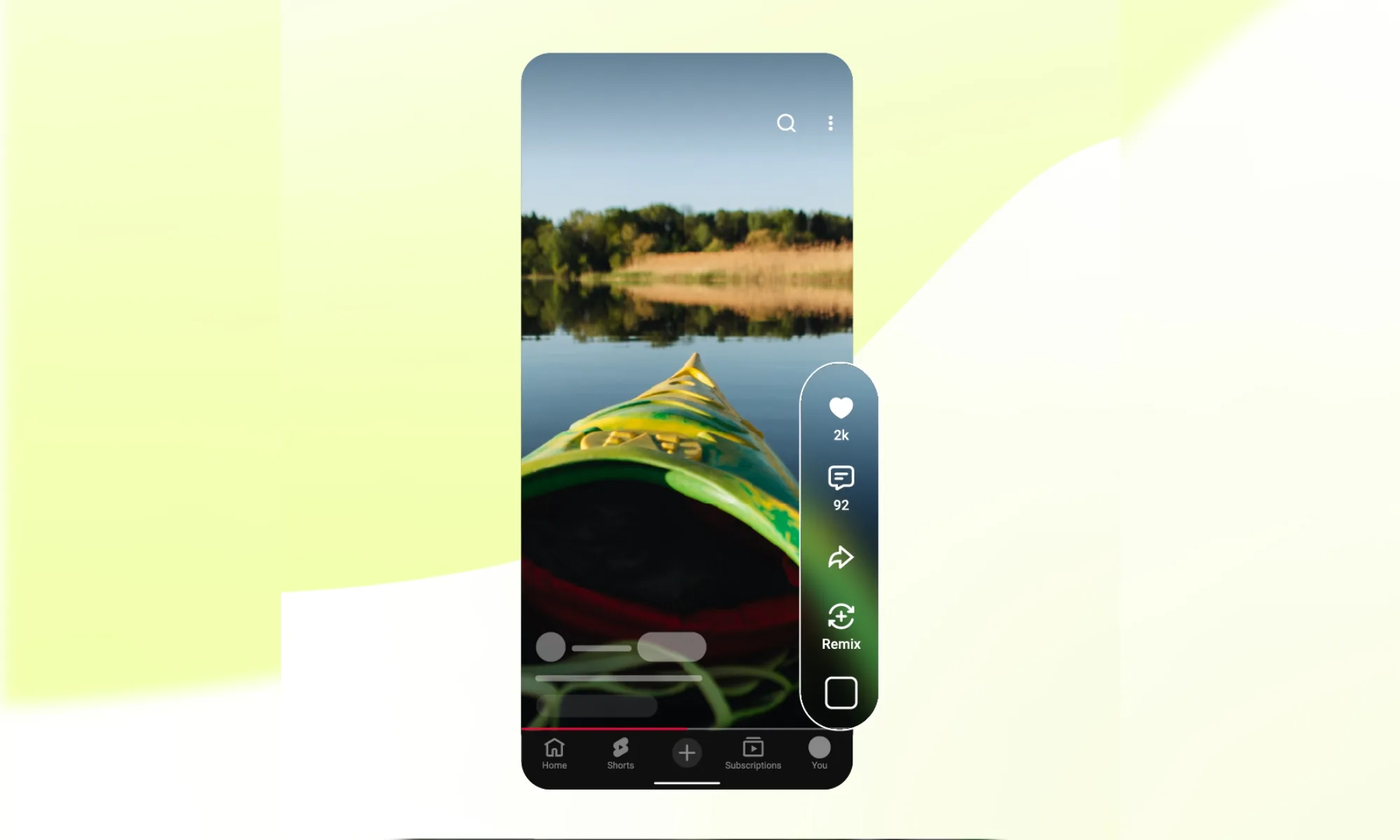
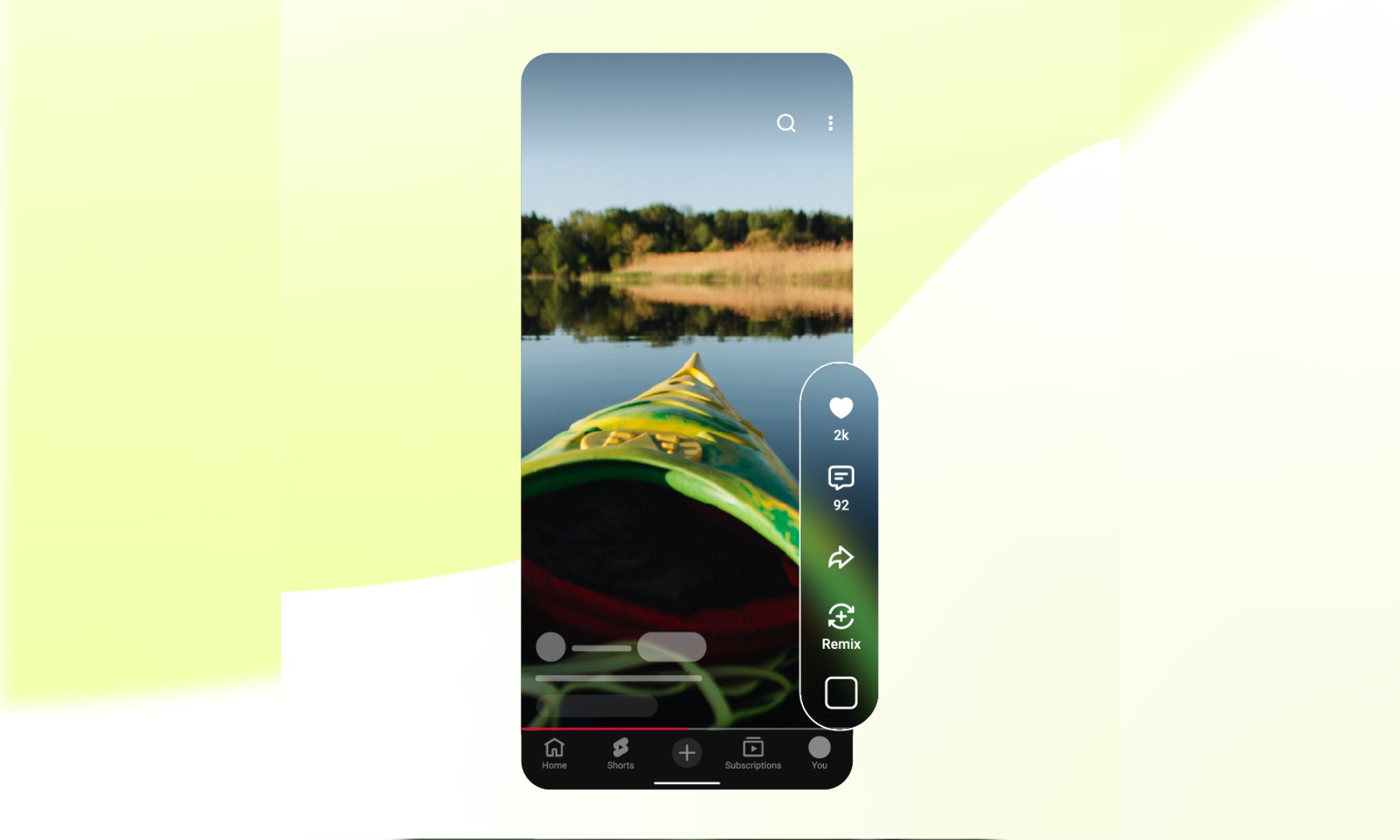
Then there’s the part that might spark a few conversations. YouTube is changing the thumbs-up icon into a heart, which is a cosmetic change that’s perfectly fine.
However, it’s also removing the dislike button from Shorts entirely (similar to how it hid dislike count in 2021). So, you’ll no longer see the dislike or the thumbs-down button between the thumbs-up and the comment button toward the right side of the screen.
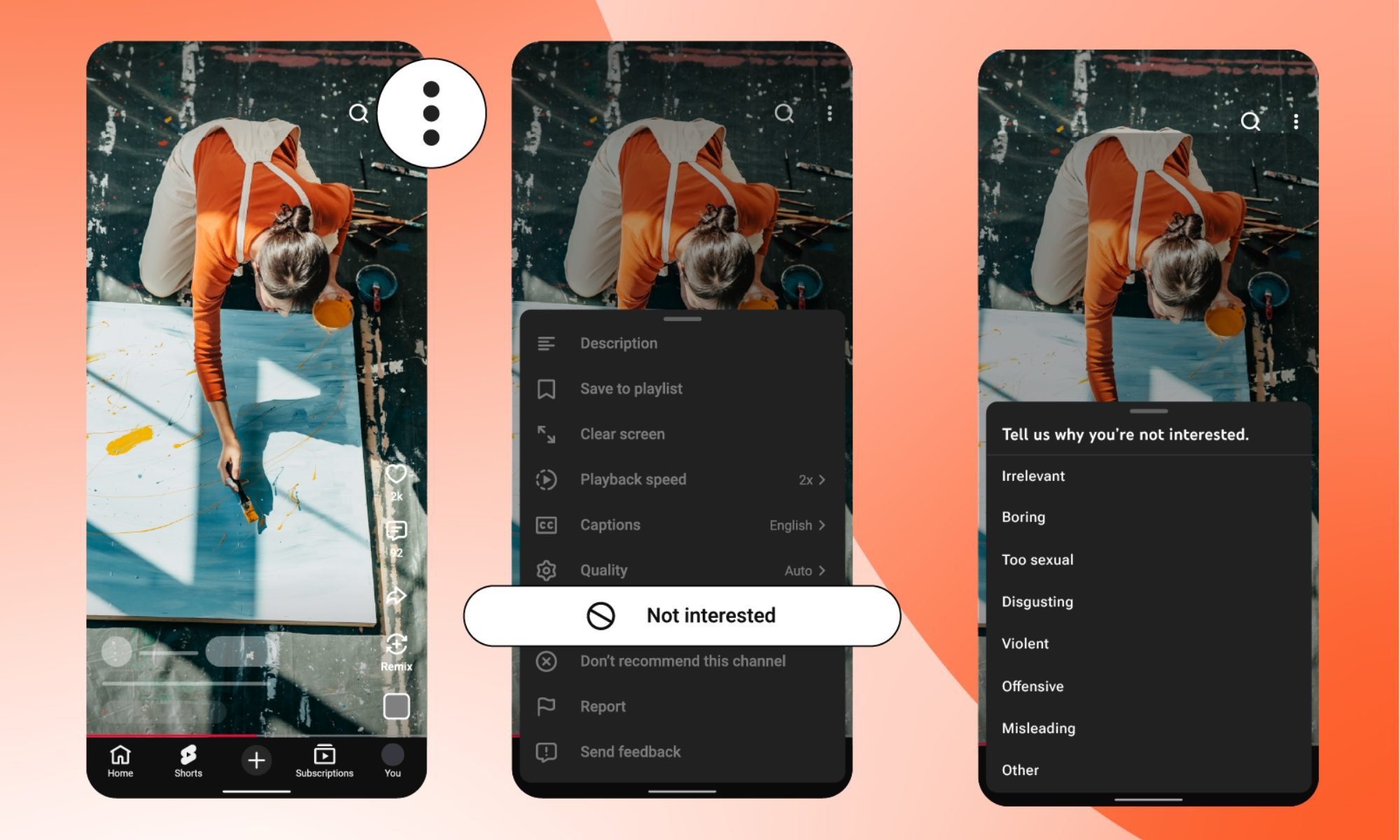
That overlay menu will step down from five to four controls. If you don’t like what you see, you can still tap on the three-dot button at the top right and then select the “Not Interested,” “Don’t Recommend This Channel,” and “Report” buttons.

The explanation sounds believable at first. YouTube says there could be numerous reasons someone dislikes a Short, from bad audio to it not being their genre, and that the available options give viewers better control over their feed.
That logic isn’t wrong, but the dislike button has historically been one of the few ways viewers can push back on low-effort content. All updates are rolling out gradually and may take time to reach all users.





Weekend Open Thread: Miami – Corporette.com


Renter of Home in Anne Heche Crash Denies Settlement With Son

Two goals and an assist by sheer aura: Cristiano Ronaldo just entered the World Cup chat


Microsoft accidentally kills epic Outlook email threads


Soccer-U.S. defends Iran World Cup travel restrictions, says discussions ongoing


The House | Manchesterism won’t survive the painful trade-offs unless it gets citizens on board


Potential 2028er World Cup attendee leaderboard


Andy Burnham and the meaning of Makerfield


Keir Starmer Allies Question His Chances For No 10


A Look At A Gaggle Of Transputer Boards
Bitcoin (BTC) Dips Below $62K, Ethereum (ETH) Plunges 6% Daily: Market Watch


Securitize Wraps Roubini's SEC-Registered ETF as Dubai VARA Digital Security

Dell (DELL) Shares Tumble Over 5% Following Analyst Downgrade to Hold
Entergy settles forward sale agreements, raises $672 million in cash proceeds

Wall Street Week Ahead: Investors see Micron earnings as pulse check of AI rally momentum

Can Charles Hoskinson Really Rescue Cardano?


Jose Alvarado Wants Taylor Swift at More Knicks Games


HIVE shares jump as $220M AI deal speeds Bitcoin mining pivot


Jake Chervinsky accuses CME of protecting derivatives monopoly


India vs Bangladesh LIVE Score, Women’s T20 World Cup: Bangladesh Opt To Bat; India Enter ‘Do-Or-Die’ Stage As Semi-Final Race Heats Up


You must be logged in to post a comment Login