Connect with us
DAPA Banner

Tech

Oura Adds More Detailed Hormonal Health Insights To Its Series 3 And 4 Rings

Published

on


Oura just announced a couple of new features that keep an eye on hormonal health for women. The pre-existing Cycle Insights feature, which tracks menstrual cycles, will now take hormonal birth control methods into consideration. The smart ring maker says that this “first-of-its-kind experience” will help users see how these methods can impact overall biometric data.

This has been designed to provide “personalized guidance during complex hormonal changes,” so it can integrate data from over 20 combinations of birth control methods. These include pills, patches, IUDs and implants. Users should be able to use Cycle Insights to gauge whether or not these methods are impacting temperature patterns, sleep and recovery, in addition to keeping an eye on bleeding and various potential side effects.

Advertisement

There’s also a partnership component here. Oura has teamed up with virtual health platform Twentyeight Health. The pair developed a portal within the smart ring app that users can tap to “seamlessly connect” with a licensed health provider to discuss birth control options, and they can provide new prescriptions.

This is, however, a post-Roe v. Wade United States. There are valid fears that period-tracking data could be used in court cases. In other words, there are more than a few reasons why people might consider keeping this kind of stuff private and away from the prying eyes of tech companies.

Oura has also announced a new Menopause Insights feature that tracks quality of life across 22 potential symptoms. The app includes a questionnaire that provides a “fully personalized, on-demand explanation of results, based on personal response and longitudinal biometric data.” The company promises this can give users “actionable results” that can inform lifestyle changes.

Both of these tools will be available globally, with a rollout beginning on May 6. There is a spot of bad news here, however, as these features are only for Oura Ring 3 and 4. The Oura Ring 4 is likely the best smart ring out there, for those considering wading into the wearable waters.

Advertisement


Source link

Advertisement
Continue Reading
Click to comment

You must be logged in to post a comment Login

Leave a Reply

Tech

Microsoft now lets admins choose pre-installed Store apps to uninstall

Published

on

Windows 11

Microsoft has updated a Windows 11 in-box app removal policy introduced in October to include a dynamic list that lets IT admins choose which preinstalled Store apps to uninstall.

The updated RemoveDefaultMicrosoftStorePackages policy enables admins to remove any preinstalled MSIX/APPX app by referencing its Package Family Name (PFN) using Group Policy Object (GPO) or a custom OMA-URI for mobile device management (MDM).

“IT admins, you can now simplify Microsoft Store app management with dynamic removal on more devices across your enterprise. Use policy to remove any preinstalled MSIX/APPX app by referencing its Package Family Name (PFN),” Microsoft said on Thursday.

To get this new feature, admins must ensure that their devices have at least the April 2026 Windows non-security update deployed. Windows Insiders can get it after installing the March 13, 2026, builds in the Dev and Beta channels.

Advertisement

To make it work using Group Policy, admins have to:

Microsoft has also extended support for the RemoveDefaultMicrosoftStorePackages policy to systems running Enterprise and Education editions of Windows 11 24H2. Microsoft introduced the policy in October 2025, but it was only made available on devices running Windows 11 25H2 or later.

“The updated app removal policy is now extended to Windows 11, version 24H2 Enterprise and Education editions. Originally, you could only use this feature on devices running Windows 11, version 25H2 or newer,” Microsoft added. “If your organization has standardized on the 2024 release, you can benefit from policy-driven app management without a full OS version upgrade.”

The complete list of supported apps and detailed guidance on applying the policy to a single device via the Local Group Policy Editor or to multiple Active Directory-joined devices are available here.

Advertisement

While the Intune entry for this policy does not include the dynamic list option, Microsoft has said it will become available in the coming months.

“When this feature becomes generally available in Intune, search for ‘Remove Default Microsoft Store packages’ in the settings picker to locate it,” it noted.

Earlier this month, Microsoft also announced that IT admins can now uninstall the AI-powered Copilot digital assistant from enterprise devices using the new RemoveMicrosoftCopilotApp policy setting after installing the April 2026 Patch Tuesday cumulative updates.


article image

AI chained four zero-days into one exploit that bypassed both renderer and OS sandboxes. A wave of new exploits is coming.

At the Autonomous Validation Summit (May 12 & 14), see how autonomous, context-rich validation finds what’s exploitable, proves controls hold, and closes the remediation loop.

Advertisement

Claim Your Spot

Source link

Continue Reading

Tech

This is Why You Won't Buy a Steam Machine in 2026

Published

on

Valve’s Steam Machine was supposed to be an affordable gaming PC for the living room. Rising memory and storage prices have turned that dream into a pricing nightmare.

Read Entire Article
Source link

Continue Reading

Tech

Daily Deal: The Photography Master Class Bundle

Published

on

from the good-deals-on-cool-stuff dept

Capture emotions and tell stories through photography with the Photography Master Class Bundle. Transform your skills with six diverse courses, including Portrait Photography, DSLR Photography, Wedding Photography, Off Camera Flash photography, and more. Whether you’re a beginner or experienced, this bundle offers a wealth of knowledge and techniques to enhance your craft. It’s on sale for $40.

Note: The Techdirt Deals Store is powered and curated by StackSocial. A portion of all sales from Techdirt Deals helps support Techdirt. The products featured do not reflect endorsements by our editorial team.

Filed Under: daily deal

Source link

Advertisement
Continue Reading

Tech

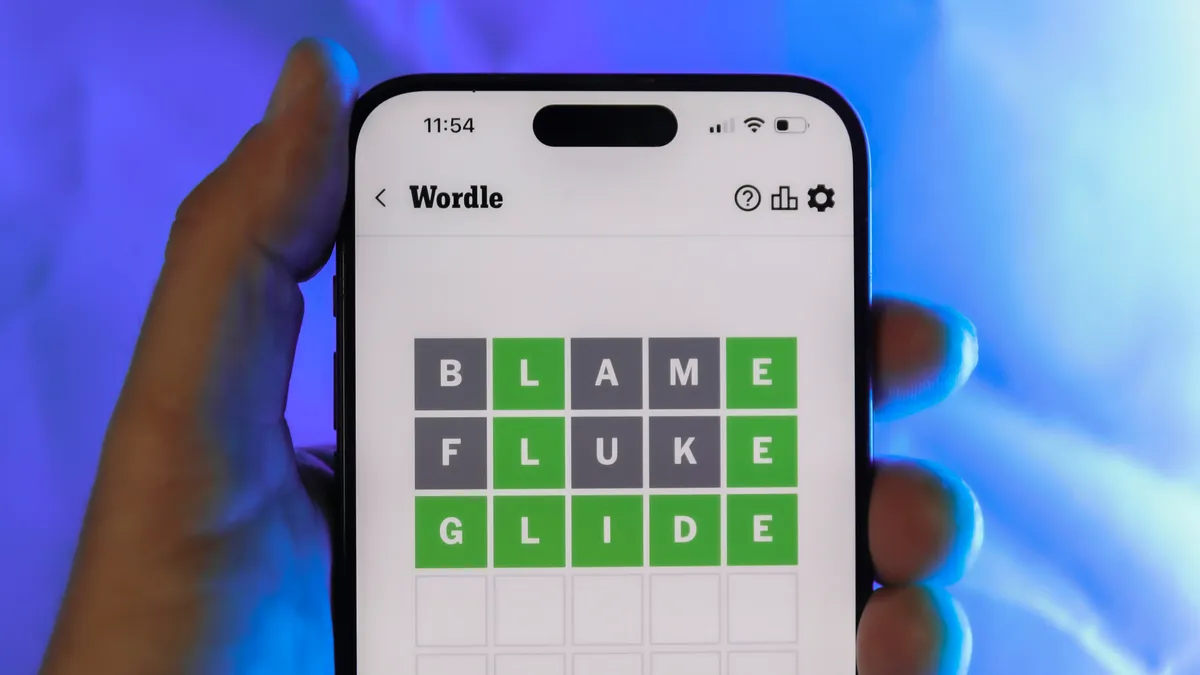
Today’s NYT Wordle Hints, Answer and Help for May 3 #1779

Published

on

Looking for the most recent Wordle answer? Click here for today’s Wordle hints, as well as our daily answers and hints for The New York Times Mini Crossword, Connections, Connections: Sports Edition and Strands puzzles.


Today’s Wordle puzzle is a tricky one, with a double letter that could trip you up. If you need a new starter word, check out our list of which letters show up the most in English words. If you need hints and the answer, read on.

Read more: New Study Reveals Wordle’s Top 10 Toughest Words of 2025

Advertisement

Today’s Wordle hints

Before we show you today’s Wordle answer, we’ll give you some hints. If you don’t want a spoiler, look away now.

Wordle hint No. 1: Repeats

Today’s Wordle answer has one repeated letter.

Wordle hint No. 2: Vowels

Today’s Wordle answer has one vowel and one sometimes vowel.

Wordle hint No. 3: First letter

Today’s Wordle answer begins with P.

Advertisement

Wordle hint No. 4: Last letter

Today’s Wordle answer ends with Y.

Wordle hint No. 5: Meaning

Today’s Wordle answer can refer to something with a swollen or inflated appearance.

TODAY’S WORDLE ANSWER

Today’s Wordle answer is PUFFY.

Advertisement

Yesterday’s Wordle answer

Yesterday’s Wordle answer, May 2, No. 1778, was BRING.

Recent Wordle answers

April 28, No. 1774: QUACK

April 29, No. 1775: RURAL

April 30, No. 1776: CROCK

Advertisement

May 1, No. 1777: PLUME

Source link

Advertisement
Continue Reading

Tech

How to Buy a Bike That’s the Right Size for You

Published

on

Riding a properly fitting bike can not only be the difference between comfort and discomfort (which is perhaps the most major factor in how much you want to ride). It can also mean the difference between whether or not you injure yourself, as spending huge amounts of time on a bike that is too big or too small for you can lead to a variety of maladies.

Whether you’re riding all the time or just getting into cycling, there are a few tips you can follow to make sure you’re buying the right sized bike and dialing it to your body in a way that will give you endless pain-free hours in the saddle. Because a bike that fits you well shouldn’t hurt at all.

If you’re experiencing pain, discomfort, or numbness anywhere, your bike fit is off. Of course, the pain and numbness in your butt after a 60-, 70-, or 100-mile ride is unavoidable and has nothing to do with fit. But riding a bike any distance shouldn’t result in pain or discomfort in your joints, neck, back, or anywhere else.

If you’re intending to spend a ton time in the saddle and/or dropping serious coin on a new bike, the best option is always to get a professional bike fit, which is a process where an expert fitter will analyze your body type, your riding style, even your ambitions, and dial your bike incrementally, that it perfectly fits you. My colleague Joe Ray can offer advice on getting a professional fit.

Advertisement

It’s also important to note that the rules for finding the best fit are different based on what style of bike you want, what your transportation needs are, and how much you intend to ride. If you want a drop-bar bike such as a road or gravel bike, a mountain bike, or a hybrid bike, the handlebar setup will affect other factors like the frame size and saddle height. Also, as men and women tend to be built differently, the design of bike frames and their components should be taken into account. Some brands such as Liv or Juliana are designed specifically for women, who tend to have narrower shoulders and shorter torsos relative to their legs than men.

Size Matters

It’s easy to wander deep into the weeds, but there are some basic things you can do to ensure you’re riding a properly fitting bike. Following these tips should help you make the most important decisions.

Start with the biggest thing! That is, your frame. There is no bigger single part of a bike than its frame. It’s also one of the only parts of a bike that is not adjustable. Your frame will always be the same shape and size, and there’s no changing that. So you want to start with the proper frame before anything else.

Most manufacturers size their frames using the small, medium, and large paradigm (with some brands offering XXS through XXL) or using measurements in centimeters. Typically, off-road bikes come in S, M, L, whereas road bikes use centimeters.

Advertisement

A good place to start is by researching a height chart. Considering not all bikes are built equally—not everyone’s “large” frame is the same size, for example—it’s especially helpful if you can find a chart from the brand you intend to buy.

Here’s a good example from the mega-brand Specialized. If I, at 76 inches, were interested in an Aethos model, I’d probably want to get a 61 cm frame.

If you can’t find a chart for the bike you’re interested in, you can just as easily find the bike itself at a local shop and swing your leg over a few different sizes. The general rule of thumb is that you should be able to fully stand over a bike with both feet flat on the ground with about 1 inch of clearance between your body and the bike’s top tube. Smaller bikes and bikes with compact designs have sloping top tubes; with those, you want to look for around two inches of space.

Source link

Advertisement
Continue Reading

Tech

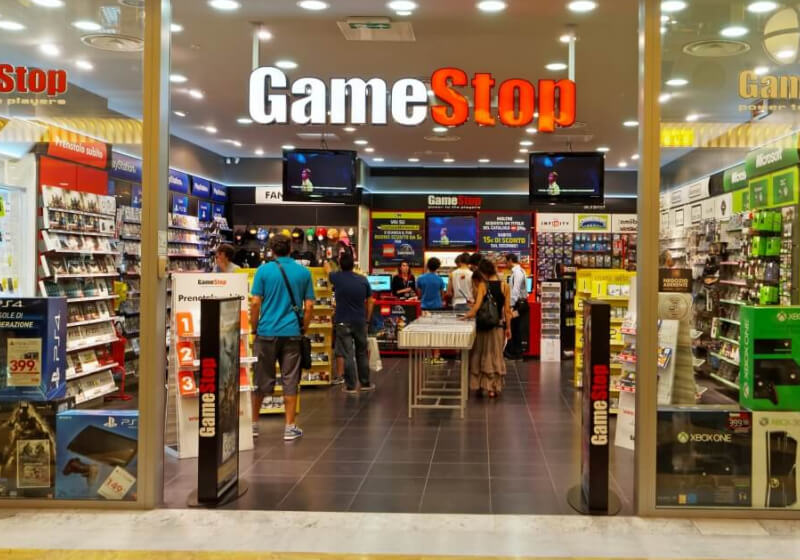
GameStop wants to buy eBay in an aggressive pivot to e-commerce

Published

on


The size mismatch is hard to overlook. GameStop carries a market value of around $12 billion; eBay sits closer to $46 billion. Despite that gap, GameStop has already been quietly building a stake in eBay ahead of a potential bid – a signal that Cohen is willing to swing big…
Read Entire Article
Source link

Continue Reading

Tech

How to watch World Snooker Championship 2026 Final for FREE

Published

on

Watch World Championship final live streams to see whether Shaun Murphy can lift the crown for the second time or if Wu Yize can follow to in the footsteps of last year’s champion Zhao Xintong.

Source link

Advertisement
Continue Reading

Tech

Castlery Promo Code: 15% Off in May 2026

Published

on

Since launching as a direct-to-consumer furniture brand in 2013, Castlery has built a reputation for design-forward products that look good and perform even better. Castlery’s aesthetic leans mid-century modern, favoring earthy tones, rounded edges, and natural wood finishes that outlast fleeting trends. But it’s the functionality that won WIRED over. Think: Hidden storage compartments, modular layouts, multi-functional pieces, and performance fabrics that can withstand everyday use. We also care about sustainability, and Castlery’s furniture is made to last. Many products are responsibly sourced and safe from heavy metals, allergenic dyes, and other harmful chemicals. You can read more about the brand’s sustainability practices here.

I adore my Castlery Auburn Storage Bed; it gives my room a clean Scandinavian feel and hides my suitcases and whatever else I can fit underneath. I also have the Auburn Sectional, and I love it for similar reasons. It’s upholstered in the same PFAS-free polyester fabric as the bed frame. It does a brilliant job at camouflaging stains, makes cleaning spills easy, and it’s surprisingly resilient against my cats. It’s not completely claw-proof, but it outperforms every other couch I’ve had.

If you’re furnishing a room—perhaps you just moved or are due for a seasonal refresh—Castlery is a hard-to-beat recommendation. And with a bunch of Castlery discounts and Castlery promo codes available, it’s a little easier to justify the upgrade.

$500 Off Memorial Day Castlery Sale

One of the biggest ways to save if you’re looking to upgrade your home decor and furniture this season is to shop during the Memorial Day Castlery Sale, where you can get $120 off purchases of $1,500 or more; $230 off $2,500; and $500 off purchases of $4,500 or more. Plus, Castlery members get early access to the sale, 4500 off sitewide, and up to 40% off sale items. So whether you want to maximize space with a storage bed or want to upgrade your living room furniture, now’s the time to save big.

Advertisement

Unlock Your Castlery Promo Codes

This spring, Castlery is offering up to $450 off sitewide. New subscribers can also take an extra $80 off orders of $1,500 or more with code SPRING80. On the sale page, you’ll find bed frames, dining sets, and sectionals discounted by an additional 5% with Castlery promo code EXTRAOFF. It may not sound like much, but it’s enough to shave hundreds off big-ticket pieces.

Score up to 15% Off Furniture Sets Instantly

Castlery’s collections are stunning and, sometimes, surprisingly durable. Fortunately, the brand makes it easy to bundle pieces for a discount when you’re furnishing an entire room, right now with up to 15% off furniture sets. You can mix and match across living room setups, outdoor furniture, dining sets, and bedroom bundles that include matching nightstands. I’m especially partial to the Auburn line, which has held up impressively well against my cats. Castlery also offers white-glove delivery, so you don’t have to do any of the heavy lifting.

Claim Free Shipping on all Orders $999+ Today

In select major cities, Castlery customers can qualify for free US shipping on orders of $999 or more—or $1,199, depending on your location. This offer applies automatically at checkout once the minimum spending amount is met. Keep in mind that shipping is charged per shipment, not per order. If your items ship separately, you may see multiple delivery fees tied to a single purchase. For full details, check Castlery’s delivery page.

Don’t Miss this Castlery Coupon for Your First Order

First-time shoppers can score a Castlery discount by signing up for Castlery’s newsletter, which sends a unique promo code for $50 or $80 off your first order (depending on the promotional period). It’s also the best way to stay in the loop on new product drops and early access to sales.

Advertisement

Maximize Your Savings With the Castlery Club Rewards

Join the Castlery Club, the company’s free loyalty program, and earn credits on every dollar you spend. Those credits can be redeemed for future discounts and member-only perks throughout the year. There are also a few low-effort ways to rack up credits without even buying anything. For example, you’ll get 10 credits for signing up for emails, 10 for following Castlery on Instagram, 20 for updating your profile, 75 for leaving a product review, and 100 for referring a friend, which amount to a Castlery discount down the line.

Unlock Special Financing Options to Upgrade Your Home

Castlery understands that furniture is a major investment, so it offers flexible financing options to ease the upfront cost. Through Affirm, you can split your purchase into manageable monthly payments, with low or even 0% APR available depending on your credit and any current Castlery promo codes. The application is straightforward and happens at checkout.

Source link

Advertisement
Continue Reading

Tech

Microsoft fixes Remote Desktop warnings displaying incorrectly

Published

on

Windows

Microsoft has fixed a known issue causing newly introduced Windows security warnings to display incorrectly when opening Remote Desktop (.rdp) files.

This known issue affects all supported Windows versions, including Windows 11 (KB5083768 & KB5083769), Windows 10 (KB5082200), and Windows Server (KB5082063), on devices with multiple monitors and different display scaling settings.

Microsoft addressed the bug in the optional KB5083631 preview cumulative update for Windows 11, released on Thursday, along with 34 other changes.

“This update addresses an issue that affects the Remote Desktop Connection security warning dialog. The dialog could render incorrectly in multi-monitor scenario when the monitors had different scaling set,” Microsoft said. “This might occur after installing the April 2026 (KB5083769) security update.”

Advertisement

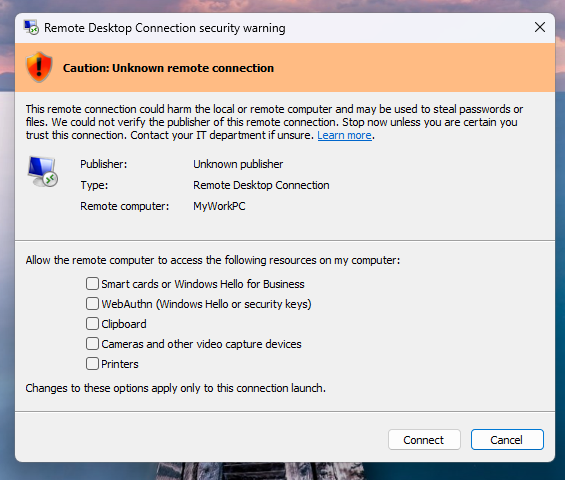
As Microsoft explained when it acknowledged the bug on Wednesday, the security warnings appearing when opening RDP files may not display correctly. On affected Windows systems, the buttons in the alert windows are misaligned or partially hidden, and the text is hard to read, making it difficult, and in some cases impossible, to interact with the security dialog.

These warnings were introduced on Windows systems with the April 2026 cumulative updates to disable risky shared resources by default as a defense against phishing attacks that abuse Remote Desktop connection (.rdp) files.

Remote Desktop Connection security warning
Remote Desktop Connection security warning (Microsoft)

​RDP files are commonly used to connect to remote systems in enterprise environments because they can be preconfigured to automatically redirect local resources to a remote host. However, threat actors have also increasingly abused them in phishing campaigns, including the Russian APT29 cyber-espionage group, which has used them to steal documents and credentials from victims’ devices remotely.

After installing the April security updates, a one-time educational prompt will appear when opening an RDP file for the first time, warning about the associated risks.

Afterward, a security dialog is displayed before any connection is made when opening RDP files, showing whether the file is signed by a verified publisher, the remote system’s address, and all local resource redirections (including drives, clipboard, or devices), with every option disabled by default.

Advertisement

If RDP files are not digitally signed, Windows displays a “Caution: Unknown remote connection” warning, with the publisher labeled as unknown. However, if they are digitally signed, Windows will warn users to verify their legitimacy before connecting.

According to user reports, the KB5083769 security update also breaks third-party backup apps from multiple vendors on Windows 11 24H2 / 25H2 systems due to a VSS (Volume Shadow Copy Service) timeout.

Last month, Microsoft also released out-of-band (OOB) updates to fix multiple Windows Server issues that caused restart loops and update installation failures after installing the April 2026 security updates.


article image

AI chained four zero-days into one exploit that bypassed both renderer and OS sandboxes. A wave of new exploits is coming.

At the Autonomous Validation Summit (May 12 & 14), see how autonomous, context-rich validation finds what’s exploitable, proves controls hold, and closes the remediation loop.

Advertisement

Claim Your Spot

Source link

Continue Reading

Tech

With First Choice Women’s Centers V. Davenport, The Supreme Court Managed To Do At Least One Helpful Thing: Further Protect Anonymous Speech

Published

on

from the a-little-constitutionalism,-as-a-treat dept

Shortly before the Supreme Court inflicted enormous damage on the Voting Rights Act, the Reconstruction Amendments of the Constitution, any pretense of constitutionally guaranteed Equal Protection, the civil rights movement, its credibility, and our democracy writ large with its Alito-penned decision in Louisiana v. Callais, it released a separate decision in First Women’s Choice Resource Centers v. Davenport.

In terms of overall substance, this latter case was one where an anti-choice plaintiff got a win, which perhaps is why there was little trouble in the Court reaching a unanimous result in its favor. But it is just a procedural win, allowing its case to go forward, rather than a judicial validation of its actual viewpoint. (“This case presents a narrow question. We are not asked to decide the merits of First Choice’s federal lawsuit, only whether it may proceed.” [p. 5]). And, more importantly, it is a strong First Amendment win, with language that will be useful in later cases, including ones where more liberal positions have been impacted by government overreach. (“We have recognized […] that associational rights carry
special significance for political, social, religious, and other minorities. With the freedom to associate, minorities can ‘show their numerical strength,’ influence policy, and ‘stimulate competition’ in the marketplace of ideas. But take that freedom away and ‘dissident expression’ stands particularly vulnerable to marginalization or outright ‘suppression by the majority,’ leaving all of society poorer for it.” [p. 7]). And it will be useful in cases in federal and state courts all over the country, where it is binding precedent, and not just at the Supreme Court, which can blow with the wind depending on whose case is before it.

In other words, it is a decision that is likely to matter, and in a way that is good news for the First Amendment and the rights it protects, particularly with respect to associative freedom, the anonymity such expressive relationships depend on, and the standing needed to be able to challenge government intrusions on either, including by way of subpoenas.

In this case the plaintiff, First Women’s Choice Resource Centers, Inc., is what is sometimes referred to as a crisis pregnancy center. Despite the plaintiff’s name invoking “choice” such places are not about informing pregnant women about the full range of choices available to them. They instead steer them towards avenues that do not include the medical care needed to potentially terminate their pregnancy. The issue however is not that those running these centers don’t wish to support abortion but that they may be deceptively ensnaring vulnerable women who think they are getting more comprehensive advice about their choices than the limited information these centers offer, which has led some states, like New Jersey, to investigate whether they are indeed duping people.

Advertisement

But in this case New Jersey—the defendant in this case—as part of its investigation tried to subpoena the plaintiff for names of its donors (“Effectively, that demand required First Choice to provide personal information about donors who gave through two other websites, through the group’s various social media pages, by mail, in person, or by any other means.” [p. 2-3]). The stated rationale for seeking this data was to ensure that no donor had similarly been deceived as to the services the plaintiff delivered. [p. 3]. The plaintiff’s attempt to avoid the subpoena led to litigation in both state and federal courts, with the state seeking to enforce the subpoena in the former and the plaintiff bringing a civil rights lawsuit in the latter, alleging that the subpoena violated its First Amendment rights.

A federal law—42 U. S. C. §1983—authorizes suits against any person who, under color of state law, deprives another of his federal constitutional rights. First Choice filed a complaint under that statute, arguing, among other things, that the Attorney General’s demand for information about its donors violated its First Amendment rights. Specifically, First Choice observed that the First Amendment “prohibits the government from discouraging people from associating with others” “in pursuit of many political, social, economic, educational, religious, and cultural ends.” And, First Choice alleged, the Attorney General’s subpoena had just that impermissible effect. For its donors, the group represented, “anonymity is of paramount importance,” and its inability to guarantee that anonymity in the face of the Attorney General’s demands injured the group by discouraging donors from associating with it. [p. 3-4]

The federal district court dismissed the suit, largely on the grounds that because the state litigation had not yet resulted in the subpoena being enforced the plaintiff hadn’t suffered an injury it could sue over, [p. 4-5], and the Third Circuit upheld the dismissal. [p. 5]. With this decision, however, the Supreme Court has now allowed the federal lawsuit to go forward, finding that the plaintiff indeed has the standing to challenge how the subpoena affects its First Amendment rights.

“Standing” has to do with whether a party is eligible to bring a certain lawsuit. Courts can only hear legitimate “cases and controversies,” [p. 5], and standing helps ensure that the litigation put before it meets that criteria by ensuring that the parties bringing it are entitled to. [p. 5-6]. They are only entitled to if they have an “injury in fact,” caused by the defendant, and the litigation is capable of redressing it. [p.5].

This case focused on whether the injury-in-fact element was satisfied. [p. 6]. It can only be satisfied when the litigation involves “an injury that is concrete, particularized, and actual or imminent.” [p. 6]. And here the Court found that there was such an “actual and ongoing” injury, caused by the subpoena itself. [p. 6]. In fact, even though the state litigation had not yet resulted in the subpoena being enforced made no difference; it was the very existence of the subpoena that was so chilling to the plaintiff’s First Amendment rights. (“Even if a subpoena targeting First Amendment activity is never enforced in court, [it] will give its targets a very good reason to clam up [and] give the target organization’s members and supporters a very good reason to abandon the cause.” [p. 12]).

Advertisement

The reason is that the plaintiff is allowed to hold its anti-abortion views. And others who share those views are allowed to associate with the plaintiff, including by giving it support. But if those others had to fear the government showing up at their door to discuss their views, they would be reluctant to continue their association with the plaintiff. And that reluctance would result in harm to the plaintiff, now unable to associate with others as freely as they should have been able to and would have been able to if the subpoena had not given rise to the fear that their donors’ identities would be discoverable by the government.

Finally, consider First Choice’s two unrebutted declarations. In the first, several donors represented that “[e]ach of us would have been less likely to donate to First Choice if we had known information about the donation might be disclosed” to the Attorney General. The donors added that they submitted their declaration anonymously because they feared what they called the Attorney General’s “record of hostility toward pro-life groups.” I the second declaration, First Choice’s executive director stated that the Attorney General’s demand threatened to “weaken [the group’s] ability to recruit new donors . . . as prospective partners would be hesitant to risk the revelation of their personal information through government investigation.” All this is more than enough to establish injury in fact under our precedents. An injury in fact does not arise only when a defendant causes a tangible harm to a plaintiff, like a physical injury or monetary loss. It can also arise when a defendant burdens a plaintiff ’s constitutional rights. […] All this occurs not just when a demand is enforced, but when it is made and for as long as it remains outstanding. [p. 11-12]

As the Court reminded, associative freedom is protected by the First Amendment.

The First Amendment guarantees all Americans the rights to speak, worship, publish, assemble, and petition their government freely. Each of these rights, this Court has “‘long understood,’” necessarily carries with it “‘a corresponding right to associate with others.’” […] Appreciating all this, we have held that government actions tending to “curtai[l] the freedom to associate” warrant “the closest scrutiny” under the First Amendment. […] We have also held that “compelled disclosure of affiliation with groups engaged in advocacy” can “constitute a[n] effective . . . restraint on freedom of association.” [p. 6-7]

As is the anonymity that expression, including associative expression, often requires.

[In NAACP v. Alabama we observed] the “vital relationship” between “privacy in one’s associations” and the “freedom to associate.” Strip away the ability of individuals to work together free from governmental oversight and intrusion, and the freedom to associate may become no freedom at all—individuals deterred, groups diminished, and their protected advocacy suppressed. [p. 8]

[…]

Since NAACP v. Alabama, we have faced many cases along similar lines. In them, one state authority or another has demanded private donor or member information. And in one case after another we have subjected those demands to heightened First Amendment scrutiny. Throughout, we have emphasized the critical role “‘privacy in . . . associatio[n]’” plays “‘in preserving political and cultural diversity and in shielding dissident expression from suppression.’” We have acknowledged, too, that demands for private donor information “inevitabl[y]” carry with them a “deterrent effect on the exercise of First Amendment rights.” [p. 9]

Yet here was a subpoena now threatening both.

Advertisement

Each of these strands tightens the braid into one conclusion. From its allegations and declarations, and given our many and longstanding precedents in the area and reasonable inferences about third party behavior, First Choice has established that the Attorney General’s demand for private donor information injures the group’s First Amendment associational rights. [p. 13]

It is conceivably possible that on remand the lower courts might find the rationale behind the subpoena “’sufficient to justify the deterrent effect’ associated with the disclosure demand, [p. 8], and narrowly-tailored enough, [p. 10], such that there was in fact no actual intrusion on the plaintiff’s First Amendment rights stemming from its issuance. This decision by the Supreme Court does not resolve the question; it only determined that the question could be brought before the courts. But the same analysis that allowed the Supreme Court to identify a likely constitutional injury, enough for the plaintiff to be able to bring the case before the courts to seek a remedy, may yet be employed to find there indeed was an injury that requires redressing—here, by quashing the subpoena.

But regardless of what ultimately happens to the plaintiff’s case, this decision by the Supreme Court has broader implications. First, it doubles-down on prior precedent protecting freedom of association and the anonymity it depends on, and second—and perhaps more practically—it directly ties these First Amendment interests to the discovery instruments propounded by government actors, often too casually, seeking to unmask people. It makes clear that the intermediaries receiving these unmasking demands have their own cognizable First Amendment rights in being able to preserve the anonymity of those who associate with them, with the standing to challenge when those rights are trampled. And although this case addressed organizations and their donors, it is but a small analytical step to apply the same or similar reasoning to Internet platforms seeking to protect the identities of their users from seeking to unmask anonymous speakers, especially in concert with McIntyre v. Ohio Elections Commission, regarding the First Amendment protection for anonymous speech, and Moody v. NetChoice, regarding the First Amendment’s protection of platforms’ editorial and associative discretion. Per this decision, those unmasking attempts can amount to a constitutional injury to the platforms themselves, which they now have compelling new precedent to use to fight them.

Filed Under: 1st amendment, anonymity, anonymous donors, associational rights, crisis pregnancy centers, donors, free speech, supreme court

Companies: first women’s choice resource centers

Advertisement

Source link

Continue Reading

Trending

Copyright © 2025