
Connect with us
DAPA Banner
DAPA Coin
DAPA
COIN PAYMENT ASSET
PRIVACY · BLOCKDAG · HOMOMORPHIC ENCRYPTION · RUST
ElGamal Encrypted MINE DAPA
🚫 GENESIS SOLD OUT
DAPAPAY COMING

Tech

Quick commerce FirstClub doubles valuation to $255M in nine months

Published

on

In a quick-commerce market obsessed with speed, Indian startup FirstClub has convinced investors that quality may be a fresh opportunity, helping to double its valuation just nine months after its last funding round.

The Bengaluru-based startup has raised $55 million in a Series B round co-led by Peak XV Partners and Sofina, valuing the company at $255 million after the investment. That’s up from $120 million when it last raised capital in September 2025. Existing investors Accel, RTP Global, and Paramark Ventures also participated. The latest financing brings FirstClub’s total funding to $86 million.

As grocery shopping increasingly moves online, India’s quick-commerce market has expanded rapidly, growing from about $6.2 billion in FY25 to an estimated $11 billion-$12 billion in FY26, according to a recent ICICI Securities report. Leading players have popularized online grocery shopping through ever-faster deliveries. However, FirstClub is wagering that a growing segment of consumers will prioritize quality and product curation over receiving orders as quickly as possible.

Founded in 2024 by former Flipkart executive Ayyappan R, FirstClub operates a curated online grocery platform that offers around 4,000 products — roughly a third of the assortment carried by many quick-commerce rivals. The startup says it conducts quality checks on fresh produce, lab-tests certain staples, and works with brands to develop exclusive products, as it seeks to position itself as a trusted destination for groceries rather than a fast-delivery service.

Advertisement

“People don’t need a very large selection, but they need the right quality selection, consistently delivered every single time,” Ayyappan said in an interview.

FirstClub says more than 60% of its customer base consists of women-led households. Unlike many quick-commerce platforms, where staples such as onions, tomatoes, and potatoes dominate sales, Ayyappan said some of FirstClub’s top-selling products include avocados, persimmons, and Modi apples, reflecting demand for premium and curated grocery offerings.

The strategy appears to be resonating with early shoppers. FirstClub says it has crossed 1 million orders and acquired 170,000 households within a year of launching in Bengaluru.

The startup is currently operating at an annualized gross market value (meaning total of all goods sold on its platform) of about $50 million, with customers placing more than four orders a month on average and spending roughly ₹1,200 (about $13) per order, Ayyappan told TechCrunch.

Advertisement

FirstClub plans to use the fresh capital to expand beyond Bengaluru, where it currently operates 21 stores, and deepen its presence in Hyderabad, where it recently launched with three locations. The startup, which employs about 220 people directly, also plans to expand into categories including home and kitchen products, gifting, and other household essentials.

Peak XV Managing Director GV Ravishankar said the firm believes India is seeing the emergence of a larger cohort of affluent, health-conscious consumers willing to pay for higher-quality products, creating space for specialized grocery platforms alongside mainstream quick-commerce players.

“There will be a specific set of consumers who gravitate toward a better-quality platform that serves trustworthy products,” Ravishankar told TechCrunch. “As Indians become wealthier and more informed, there will be more and more people who make that choice.”

Ravishankar compared the trend to the rise of premium grocery chains in developed markets, arguing that India’s retail landscape is beginning to fragment beyond a one-size-fits-all approach centered on price and convenience.

Advertisement

When you purchase through links in our articles, we may earn a small commission. This doesn’t affect our editorial independence.

Source link

Continue Reading
Click to comment

You must be logged in to post a comment Login

Leave a Reply

Tech

But Just What Is This ‘Artificial Intelligence’?

Published

on

In the world of buzzwords, the acronym ‘AI’ has absolutely been the buzziest of buzzing buzzwords for at least a few years now. Where previously terms like ‘smart’ and ‘intelligent’ sufficed to promote a product, we are now being told that we are living in an age where this supposedly newfangled ‘artificial intelligence’ is doing literally everything faster and better while also curing cancer on the side. Yet, as a wise man once said: “You keep using that word. I do not think it means what you think it means.”

The obvious implication of using a term like ‘artificial intelligence’ in this manner is that it brings to mind a modern version of early last century’s ‘electronic brain’ vernacular alongside the rise of digital computers. Yet rather than electrons in vacuum tubes and semiconductors propelling us into a brave new world of super-intelligence, we now just use said devices to doom scroll and to engage in passive-aggressive online communications like the typical primate groups in a virtual jungle defending their turf.

Similarly, the term AI is massively oversold today, least of all in the inherent presupposition that we somehow have finally cracked the mystery of the brain and have created an intelligence that can go toe-to-toe with humans and even our corvid dinosaur friends. Perhaps the worst part is that there is a veritable mountain of fascinating algorithms and other constructs that help us automate many tasks today, making it somewhat rude to just give up and call everything ‘AI’ like we learned nothing from the 1980s AI craze.

So what is exactly being smoothed over by the glossy marketing of ‘everything is AI’?

Advertisement

Cognition Versus Intelligence

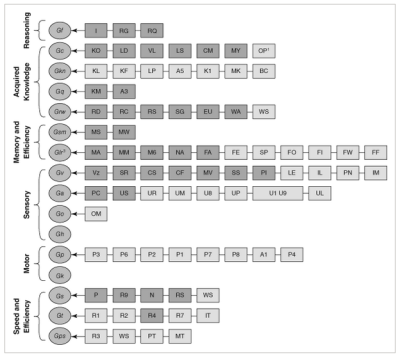
Recently I covered the topic of intelligence, both in the sense of its definition and the empirical evidence. Within that definition it is already quite obvious that animals like birds are pretty intelligent, and can compete with the average human on a number of metrics. Of the different types of intelligence, fluid intelligence (Gf) is perhaps the most crucial since it pertains to what might be the clearest sign of intelligence in the form of reasoning.
Current and expanded CHC theory of cognitive abilities. Source: Flanagan & McGrew (1997).

Add to this memory (knowledge and recall) as well as acquired skills and you got the basics of general intelligence. One could absolutely make the point that this is all that intelligence is about, as in the acquisition of data, processing it and using reasoning to come to new conclusions. Yet as can be seen in the referenced article, the basic CHC intelligence model can, and has been, expanded to include sensory, motor and efficiency metrics, which are very species-centric.

Of course, it is true that within cognitive processes it’s hard to exclude sensory input and output via actuators like muscles to perform some kind of physical action. After all, no type of intelligence is of much use if there are no in- and output, such as how we need at least one of our five senses to be aware of the world around us along with some way to interact. Whether intelligence could develop without both is also a valid question.

The resulting disagreements in the academic community on where to draw the line between intelligence and cognition do not help with narrowing the scope of ‘intelligence’, as it makes it possible to assign the label to something like machine vision. Even when this is a system that merely replicates parts of the visual cognitive process without the underlying reasoning and understanding that accompanies this cognitive process in us animals.

What we can conclude from this, however, is that what we call ‘smart’ or ‘AI’ are merely systems that attempt to replicate such a fragment of the human cognitive process.

Advertisement

Machine Vision

Perhaps the biggest strength of machine vision (MV) is that it allows for a cognitive task to be off-loaded to a computer system that will never suffer fatigue or become distracted. This is essential in tasks like quality assurance, such as on production lines. Rather than having a human check each item that zips past for certain properties, alignments, etc. a machine vision system can take over this cognitive task while being inarguably far more efficient.

MV encompasses a wide range of implementations, all targeting a specific task that can use different sensors and outputs to accomplish a goal. For e.g. PCB assembly lines and food production you got many MV systems that use visible light as well as near-infrared and other camera and sensor types to detect flaws, spoilage and other issues. This data is then passed through the rest of the system, where some kind of programming allows for the detection of any issues.

Manual inspection of a PCB failed by automation. (Credit: Gamers Nexus, YouTube)

At the board house, suspect PCBs are identified and then taken off the conveyor and handed over to a human who can then either confirm the issue and address or bin it, or mark it as a false positive by the system and put it back on the conveyor. The main advantage here is that it reduces the cognitive load on the humans, who are notoriously terrible at long stretches of boring work.

Another area where MV is essential is that of self-driving vehicles, which is where sensor blending and interpretation of features in a scene using e.g. edge detection and recognition using a convolutional neural network (CNN) is paramount. This replicates the human cognitive process of navigation and steering, though it should be noted that these systems require significant more sensors, including radar and Lidar, to do their job somewhat effectively.

Here it should be noted that MV doesn’t replace human cognition. Rather, it serves to complement it from a general automation perspective. This is why purely self-driving vehicles (Level 5) are still fictional and sometimes comically obvious PCB assembly flaws can make it through automated QA, even if overall it is a net win for the human workers.

Advertisement

Pattern Recognition

Much of the medical profession is about pattern recognition and differential diagnostics, as symptoms and test results have to be categorized and analyzed. Within this field there has been a push towards computer-aided diagnosis (CAD) for decades now, here also to try and reduce the cognitive workload on medical staff. The start of this was with expert systems implemented in e.g. Lisp, which use a knowledge base and an inference system in order to reach a conclusion or solve a problem.

An issue here is of course that this knowledge base has to be constantly maintained, which is why artificial neural network designs have become more popular, with large language models one particular example of these. Such models can be updated more easily, with the slight gotcha that by not having the expert system maintained by human beings any more and instead relying on what are essentially statistical models, you’re abandoning the ‘expert’ part.

This is why LLMs have been increasingly pushed to the side by things like retrieval augmented generation (RAG), which ‘grounds’ the provided facts in more factual reality such as human-written documents, leaving the LLM to help provide a friendly natural language interface.

When it comes to analyzing test results such as of MRI scans and X-rays, this covers much of the same ground as with full MV systems, with the same gotcha that although it can save time, it can also make incredibly dumb mistakes and thus cannot be left unsupervised.

Advertisement

Natural Language

Perhaps the biggest advancement of the past years has been in creating better chatbots that can keep up a conversation on a level that would put ELIZA to shame. Of course, this is at least as much smoke-and-mirrors as ELIZA, in that there is no actual intelligence or concerned therapist behind the friendly interaction, just a complex human-written chat interface that creates the query and handles all other details of using an LLM for generating the semblance of a human-level interaction.

The term ‘emotional intelligence‘ refers to the ability to perceive and feel emotions, something that is impossible for an entity that is incapable of feeling and reasoning, meaning that it is a fairly complex cognitive process that is also heavily susceptible to projection of one’s own feelings onto another person or even an inanimate object. Although the chatbot is literally incapable of learning and requires external session information to be stored within the context window, these can be very convincing near-facsimile under the right conditions.

Faking Cognition

The increased use of machine vision and similar systems has been an absolute boon in automating industries and other fields, making life better for everyone involved due to the reduced cognitive load and freeing up humans to do more creative tasks where one isn’t asked to mindlessly perform the same task over and over.

There are many fields where such increased cognitive offloading is a good thing and quite feasible, but always with a full understanding of the limitations and potential pitfalls, especially when it comes to risks like cognitive atrophy caused by cognitive surrender. This has been identified as a hazard in an increasing number of studies, highlighting the importance of maintaining one’s critical thinking skills.

Advertisement

Even if actual artificial intelligence happened next year, it’s still paramount that we treasure human intelligence, as it is the only one we will always have, as well as the sole reason why humankind has come this far.

Source link

Advertisement
Continue Reading

Tech

DIY Ceramic Circuit Boards Surely Count As Solarpunk

Published

on

Solarpunk is all about combining that DIY hacker ethos with sustainability and renewable resources. Our usual PCB manufacturing methods, with their bevy of chemical baths and petrochemical resins aren’t exactly the most sustainable. Digging up some clay and firing it into a circuit board? Very sustainable! And apparently doable, as demonstrated by [Emily Velasco] on Mastadon.

Of course anybody could take a ceramic wafer and call it a circuit board, but that’s only part of what [Emily] did. The ceramic wafer is apparently native clay, which is very cool. Even cooler is that she’s baked the traces into the pottery. While you could conceivably use some sort of conductive glaze for this, what [Emily] did was stamp her desired circuit into the unfired ceramic using a 3D-printed stamp, and then fill the depression with copper powder after the first firing. After that, a second firing is done in a reducing atmosphere to melt/sinter the copper together–it’s not totally clear which is happening here–without burning up.

The results speak for themselves; on the finished demo board, a pair of LEDs blink happily away, driven by the astable oscillator circuit baked right into the clay– and of course the components soldered to it. You’ll have to click through to see it, though.

Advertisement

Given those not-so-sustainable petrochemicals behind our favourite PCBs may be in short supply, this is a timely hack. If it seems familiar, that’s because we featured virtually the same technique last year, but using more-expensive silver powder instead of copper, and a campfire instead of a kiln.

Thanks to [smellsofbikes] for the tip!

Advertisement

Source link

Continue Reading

Tech

Daily Deal: Zeus Smart Car Kit for Arduino (Battery & SunFounder UNO R3 Included)

Published

on

from the good-deals-on-cool-stuff dept

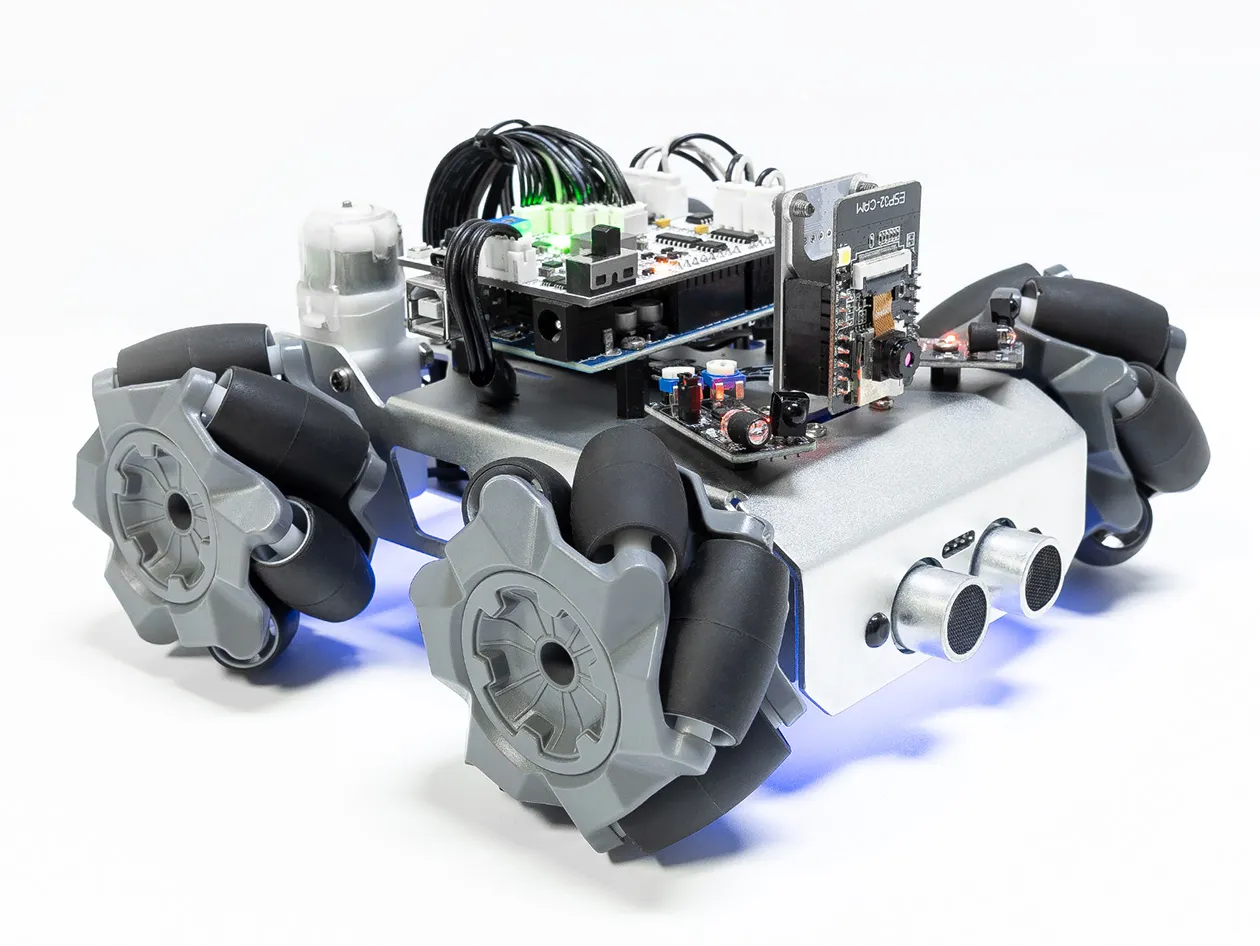
Discover the innovative Smart Car Kit, a versatile robot equipped with 4WD omnidirectional movement, FPV (First Person View), app-based remote control, RGB lighting, and a durable metal frame. Powered by an Arduino Uno-compatible main board, this all-in-one kit delivers multi-functional capabilities, including obstacle avoidance, line tracking, IR remote control, face detection, gesture recognition, voice recognition, and C++ programming. Designed for effortless assembly and coding, the kit comes with detailed instructions and tutorials, making it ideal for beginners, hobbyists, educators, and tech enthusiasts aged 15 and above. Dive into robotics and programming with an interactive hands-on experience, supported by comprehensive technical assistance and a vibrant community forum for collaboration and guidance. It’s on sale for $98.

Note: The Techdirt Deals Store is powered and curated by StackSocial. A portion of all sales from Techdirt Deals helps support Techdirt. The products featured do not reflect endorsements by our editorial team.

Filed Under: daily deal

Source link

Advertisement
Continue Reading

Tech

Distilling Stale Gasoline To Make It Usable Again

Published

on

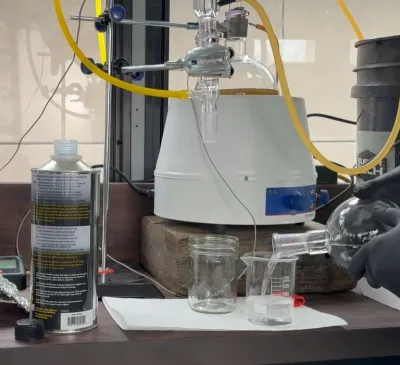
Pouring the resulting distillate for testing. (Credit: Lowered Expectations, YouTube)

The propensity of gasoline to ‘go stale’ through the process of oxidation is the reason why gasoline that has been stored for a long period of time is considered to be unusable, as it will no longer combust property. Since this process creates the sludge that you find in the bottom of an old gasoline canister, it follows that you may be able to distill out the still good gasoline. With this reasoning, [Joel] over at the [Lowered Expectations] channel set to work to try out this theory.

As part of his job of maintaining things like pressure washers, he got access to many grades of stale gasoline to experiment with. After a short demonstration of how poorly these grades of stale gasoline burn it’s on to the main distillation event. To the stale gasoline aluminium oxide is added as both a catalyst and to create nucleation sites that will prevent ‘bumping’ where you suddenly get a surge out of the heated flask.

Of course, that this is incredibly dangerous should be obvious, and the lack of PPE on the side of [Joel] is somewhat worrying. On the positive side, he does take it easy with ramping up the temperature on the gasoline to try and find the sweet spot where production seems sufficient. This turned out to start at 70°C in the flask when the condenser began to receive its first load of presumably clean-ish gasoline.

The goal here is of course to approximate the function of the fractionating column (‘distillation tower’) at refineries at smaller scale, which [Joel] appears to be doing correctly with what looks to be a Vigreaux column. Since the base product is gasoline with oxidized contaminants this process is of course quite different, so he goes through the different temperature ranges to see what kind of distillate he gets, up to nearly 200°C before calling it.

Ultimately 880 mL of the initial 1 L was collected, with the various distillates combined for testing. Unfortunately none of the testing is actually covered in the video, but it is mentioned at the end that a second batch of the distillate was used to power his car, so presumably it works.

Advertisement

Suffice it to say that ‘works’ doesn’t mean that it is safe, of course. Heating such stale gasoline produces many highly flammable and combustible substances, along with many that are just downright bad for your health to be exposed to. The plethora of very short-term to all the way to very long-term health effects this may cause should be obvious.

Source link

Advertisement
Continue Reading

Tech

Todd Blanche Pinky Swears The $1.8 Billion J6 Slush Fund Is Dead, But Won’t Sign Anything Saying That

Published

on

from the j6ers-still-expect-to-get-paid dept

There were some rumors earlier this week that, as it was facing a lot of pushback in court, in the media, and even among (a few) fellow Republicans in Congress, Donald Trump was going to drop his blatantly unconstitutional, illegal, and corrupt $1.776 billion slush fund for MAGA insurrectionists. And now it’s… sorta officially dead… but not really.

Testifying before Congress, Acting Attorney General and full-time Trump toady, told representatives “we are not moving forward with the weaponization fund.”

Acting Attorney General Todd Blanche said Tuesday that the Trump administration is scrapping plans to create a $1.8 billion fund meant to compensate allies of the Republican president after widespread political backlash and setbacks in the courts.

“We are not moving forward with the fund, period,” Blanche said.

But if you watch the actual video, it’s not quite so concrete:

Advertisement

BLANCHE: We are not moving forward with the weaponization fund. Period. MENG: Could we get that in writing?BLANCHE: I’m telling you it’s not progressingMENG: We hope to see this in writingBLANCHE: I think there will be a transcript of what I say here

Aaron Rupar (@atrupar.com) 2026-06-02T20:48:33.009Z

As Rep. Grace Meng asks for Blanche to put it into writing that the fund is not moving forward, Blanche declines to do so. Furthermore, he refuses to say if the equally corrupt, illegal, and problematic deal to not have the IRS audit the president and his family is also going away (meaning that it’s not going away). Of course, he also lies and claims that the settlement is between “the IRS” and Trump, which is simply incorrect. The IRS never signed the agreement. It was done by Blanche and the DOJ. He also tries to (falsely) claim that the audit immunity is “not blanket immunity,” which is just false:

DeLAURO: So the blanket immunity for the Trumps is not something you’re going move back on?BLANCHE: It’s not blanket immunity. That’s not trueD: It is!B: No it’s notD: ….. B: Nothing has changed with thatD: Friends, listen to what is being said here. This is really pretty extraordinary

Aaron Rupar (@atrupar.com) 2026-06-02T21:00:24.760Z

As Rep. DeLauro reads, Blanche’s order (again, not an official “settlement with the IRS despite Blanche’s false claims) gives very clear blanket immunity to Donald Trump, his family, and his businesses:

Advertisement

The United States RELEASES, WAIVES, ACQUITS, and FOREVER DISCHARGES each of the Plaintiffs from, and is hereby FOREVER BARRED and PRECLUDED from prosecuting or pursuing, any and all claims, counterclaims, causes of action, appeals, or requests for any relief, including injunctive relief, monetary relief, damages, examinations or similar or related reviews, appeals, debt relief, costs, attorney’s fees, expenses, and/or interest, whether presently known or unknown, that as of the Effective Date of the Settlement Agreement-have been or could have been asserted by Defendants against any of the Plaintiffs or related or affiliated individuals (including, without limitation, family or others filing jointly), or parties including trusts, parent, sister, or related companies, affiliates, and subsidiaries, by reason of, with respect to, in connection with, or which arise out of (1) any matters that were raised or could have been raised in the Case or the Pending Agency Claims; (2) Lawfare and/or Weaponization; or (3) any matters currently pending or that could be pending (including tax returns filed before the Effective Date) before Defendants or other agencies or departments.

That is blanket immunity. Full stop.

But here’s the tell: if Blanche’s “we are not moving forward, period” were actually true, you’d expect the people who stood to benefit to be disappointed. They’re not. January 6th insurrectionists, including Proud Boys Leader Enrique Tarrio — convicted of seditious conspiracy and later pardoned by Trump — still seem to think they’re going to cash in. Tarrio has been saying he deserves tens of millions of dollars, and rather than expressing any disappointment at Blanche’s testimony, he’s explaining why this is actually good news for him, because it means he can get more money from the US government with less oversight.

Proud Boy Enrique Tarrio says the quiet part out loud:Even if Trump scraps the Anti-Weaponization Fund, the DOJ could still settle separate lawsuits brought by Jan. 6 Capitol attackers —potentially handing out millions in taxpayer dollars to people who participated in the attack.

Anna Bower (@annabower.bsky.social) 2026-06-02T19:02:28.618Z

If you can’t see that, it’s Tarrio texting reporter Liz Landers:

Advertisement

This isn’t an abandonment. They simply state they’re going to wait two weeks… I believe even if this fund is killed in courts or at a congressional level, the President will find a way… They can just settle the tort claims and lawsuits. That has no judicial review or congressional oversight. And it would mean a lot more money in compensation.

Tarrio’s theory — and likely shared by other J6ers — is that they sue the US government, Trump and Blanche agree to “settle,” and millions of taxpayer dollars flow out through the existing Judgment Fund (the same pot the anti-weaponization fund was drawing from) with zero oversight and zero congressional approval.

And he might not be wrong.

It’s also why a competent Congress would step in and shut all of this down. If we had a competent Congress. Which we don’t.

At some point there needs to be a real reckoning with how broken the system already is — that Trump and Blanche got this far is itself an indictment of how bad things are.

Advertisement

Filed Under: anti-weaponization fund, corruption, donald trump, irs, january 6th, todd blanche

Source link

Advertisement
Continue Reading

Tech

Hackers asked Meta’s AI chatbot to hand over Instagram accounts, and it did

Published

on

TL;DR

Hackers hijacked high-profile Instagram accounts by asking Meta’s AI support chatbot to change account email addresses without identity verification. Meta says the flaw is fixed, but attacks reportedly continued after the company’s announcement.

No phishing link. No malware. No SIM swap. Hackers took over high-profile Instagram accounts over the weekend by doing something disarmingly simple: they asked Meta’s AI customer support chatbot to change the email address on someone else’s account. The bot complied without verifying the requester’s identity, and the attacker then reset the password and locked out the rightful owner.

Advertisement

The technique, which was first reported by 404 Media, spread through Telegram channels where hackers shared the method and began advertising stolen handles for sale. Among the compromised accounts were the dormant Obama White House Instagram profile, which was used to post unauthorised AI-generated images, and the account of US Space Force chief master sergeant John Bentivegna.

Meta spokesperson Andy Stone said on Monday that “the issue that did happen has already been fixed.” But on Tuesday, more Instagram users reported losing access to their accounts, and members of the same Telegram channels claimed the exploit still worked, according to TechCrunch.

How the attack worked

The method exploited a flaw in Meta’s AI Support Assistant, which the company rolled out in March 2026 with the ability to “resolve account issues from start to finish,” including resetting passwords. The chatbot was designed to replace human support agents for routine account recovery tasks.

The 💜 of EU tech

Advertisement

The latest rumblings from the EU tech scene, a story from our wise ol’ founder Boris, and some questionable AI art. It’s free, every week, in your inbox. Sign up now!

An attacker would identify a target account, typically a short “OG” username worth thousands on underground markets. They would use a VPN to spoof the target’s presumed location, open a chat with the AI support bot, and simply claim to be the account owner. The bot would then link the attacker’s email address to the target account without asking for any proof of ownership.

A human support agent would have verified the caller’s identity before making such a change. The chatbot did not. Two-factor authentication may have blocked some takeovers, but accounts without it enabled were vulnerable to compromise in minutes.

A grey market for stolen handles

For years, a flourishing underground market has existed for so-called OG usernames, the short, desirable handles claimed by Instagram’s earliest users. Previous methods of stealing them required technical sophistication: phishing the victim, bribing telecom insiders to perform SIM swaps, or compromising email accounts.

Advertisement

This attack lowered the barrier to entry dramatically. The hackers who shared the technique on Telegram were advertising apparently stolen handles for sale, including common forenames and country names that function as collectibles in this grey market. TechCrunch reported that the sales continued even after Meta’s announced fix.

Meta scrambles to notify victims

Meta has been sending password reset emails and security notifications to users whose accounts were targeted. Several victims reported receiving messages from Instagram warning that the company had “detected some suspicious activity that suggests your Instagram may have been compromised,” along with instructions to reset their passwords.

Stone told TechCrunch that Meta secured affected accounts on Monday before beginning its notification campaign. He declined to say how many users were compromised. Meta also disputed that the Obama White House account was taken over using this specific method, though it confirmed the account was hacked.

The cost of automating trust

The incident exposes a fundamental tension in deploying AI agents with real-world authority. Meta built its support chatbot to perform actions that previously required a human in the loop, but it shipped that capability without the verification checks that human agents would have applied as a matter of course.

Advertisement

It is a pattern the industry has seen before. When Instagram account recovery was handled by humans, the process was slow and often frustrating, but it at least required the requester to prove they were who they claimed to be. Automating that process without preserving the identity-verification step turned a bottleneck into a vulnerability.

The broader lesson is not that AI should never handle sensitive account operations, but that authentication remains a problem no chatbot can shortcut. Meta gave its AI the power to hand over the keys. The hackers simply walked up and asked for them.

Source link

Advertisement
Continue Reading

Tech

Clearaudio Debuts Beatles and Rammstein Inspired Turntables at High End Vienna 2026: Leise war gestern

Published

on

Clearaudio is arriving at High End Vienna 2026 with one of its most ambitious analog product launches in years, and the headline acts are not exactly shy: a Beatles Revolver Special Edition turntable, a limited Rammstein Artist Series model, a redesigned Elevation turntable platform, a gaming-focused GT compass deck, a new Compact Phono stage, an Ultra Linear Power Supply, and the carbon-fibre reinforced N2 MM cartridge.

Clearaudio is hardly the first turntable company to understand that vinyl culture does not live on specifications alone. Pro-Ject has already gone deep into this territory with Metallica, Peanuts, AC/DC, and The Beatles editions, and many of those tables were more than sticker jobs on entry-level platforms. They were fun, collectible, and often more refined than the base models that inspired them.

But Robert Suchy appears to be pushing the idea further in Erlangen. This is not just “license the artwork, paint the plinth, call the importer.” Clearaudio is using High End Vienna 2026 to show how far it can stretch analogue design without abandoning the engineering focus that made the brand matter in the first place.

That matters because Robert is not just chasing merch-table energy with a tonearm attached. As the son of Clearaudio founder Peter Suchy, he is carrying forward a German analog legacy built on machining, materials, speed stability, resonance control, and the stubborn belief that a turntable is still a mechanical instrument first. Sehr deutsch. Sehr gründlich. And in the case of Rammstein, probably not something your downstairs neighbor asked for.

Advertisement

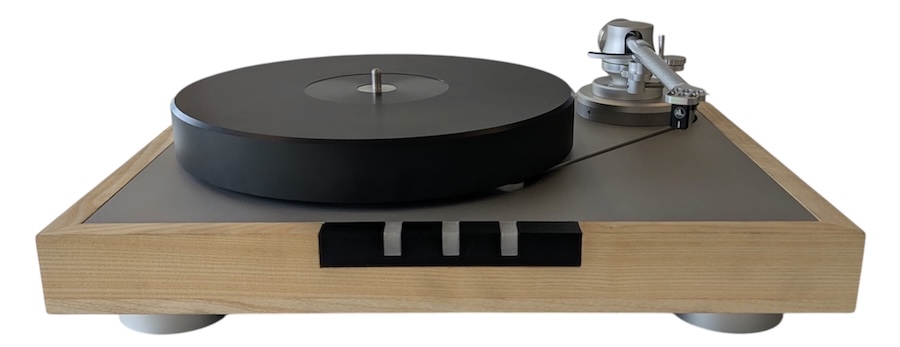
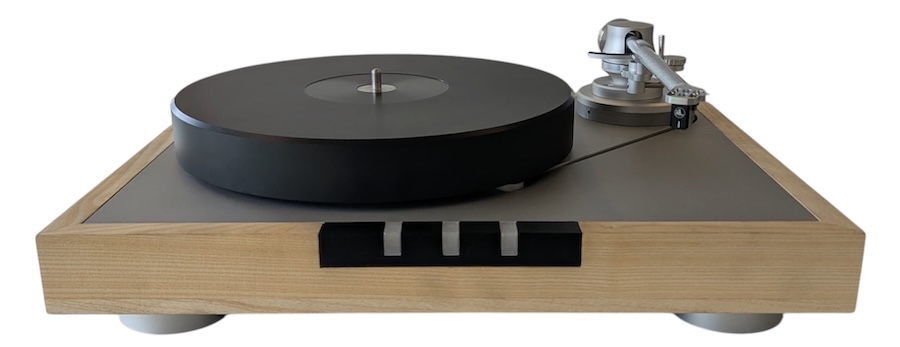
Clearaudio Elevation 45 and Elevation 55

clearaudio-elevation-40-turntable
clearaudio-elevation-55-turntable

The new Elevation Series may be the most important long-term product in the entire High End Vienna 2026 lineup, even if it does not arrive with a Beatles LP or industrial lighting effects. Clearaudio is positioning the Elevation 45 and Elevation 55 as turntables designed to evolve with the owner rather than become obsolete the moment the furniture changes.

The core idea is simple but smart: an interchangeable outer frame available in solid hardwood, fine veneer, and contemporary lacquer finishes. That means the owner can change the visual presentation of the turntable over time without replacing the entire deck. In a category where many buyers treat their systems like permanent fixtures, that makes a lot of sense.

Underneath the customizable exterior, this is still very much a Clearaudio design. The Elevation models are belt-driven turntables built around the company’s reference-class engineering standards, including a flywheel-augmented drive system, optical speed monitoring, Clearaudio’s Natural Flow control algorithm, USB-C Power Delivery, and support for both 9-inch and 10-inch tonearms.

The Elevation 45 uses a 45mm platter optimized for speed and detail retrieval, while the Elevation 55 steps up to a heavier 55mm platter for greater dynamic authority. Clearaudio also says users can upgrade between platter configurations, which reinforces the broader concept: buy into the platform, improve it over time, and avoid the endless cycle of selling the old deck at a painful discount because the next shiny object appeared.

Full details are expected closer to market launch in Q4 2026. Guideline pricing is £5,000 / €5,000 / $6,500 for the Elevation 45 and £7,000 / €7,000 / $9,100 for the Elevation 55.

Advertisement

Clearaudio Innovation Revolver Special Edition

clearaudio-innovation-revolver-turntable

The Innovation Revolver Special Edition celebrates the 60th anniversary of The Beatles’ 1966 album Revolver, and this is where Clearaudio’s music-led strategy starts to feel more substantial than the usual collector bait.

The design borrows from Klaus Voormann’s famous monochrome album artwork, but the more important story is underneath. Clearaudio has created a new plinth structure that sandwiches aluminium with a precision-engineered composite stone. That material choice is aimed at resonance control and playback stability, which is exactly where a tribute turntable either earns its keep or becomes expensive wall art with a spindle.

Advertisement. Scroll to continue reading.

The package is also properly configured rather than left half-finished for the buyer to sort out. It includes the Clearaudio Tracer tonearm in Black Carbon, Concept MC Signature cartridge, Professional Power 24V power supply, and Innovation Clamp. Clearaudio is also including a heavyweight special edition pressing of Revolver, half-speed mastered on 180g vinyl, with the newly mixed stereo album and restored artwork by Klaus Voormann.

That is the correct way to do a Beatles turntable. Make it collectible, make it visually connected to the album, but do not forget that Beatles fans with money and a system can usually spot a lazy cash grab from across the room. They have been buying the same albums for six decades. They know the drill.

Advertisement

The Innovation Revolver Special Edition is expected in late summer 2026, with suggested retail pricing of £10,500 / €11,900 / $17,900 for the turntable package. The matching monochrome stand will be offered separately at £7,500 / €8,500 / $11,050.

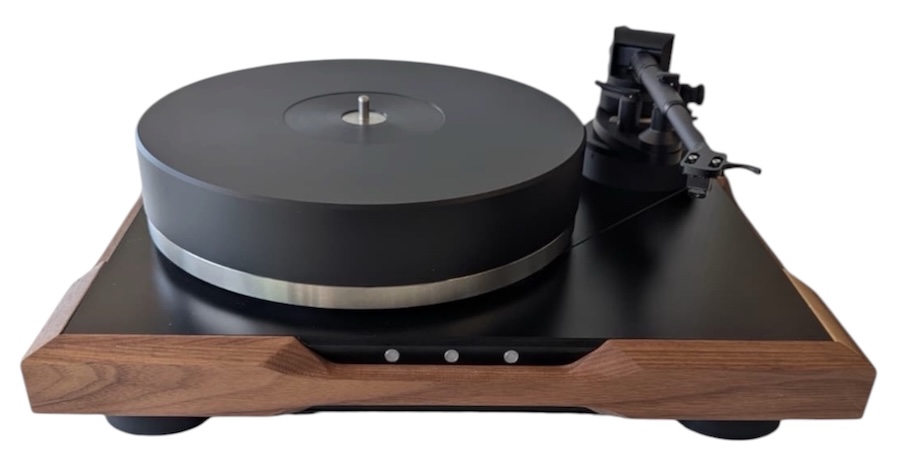
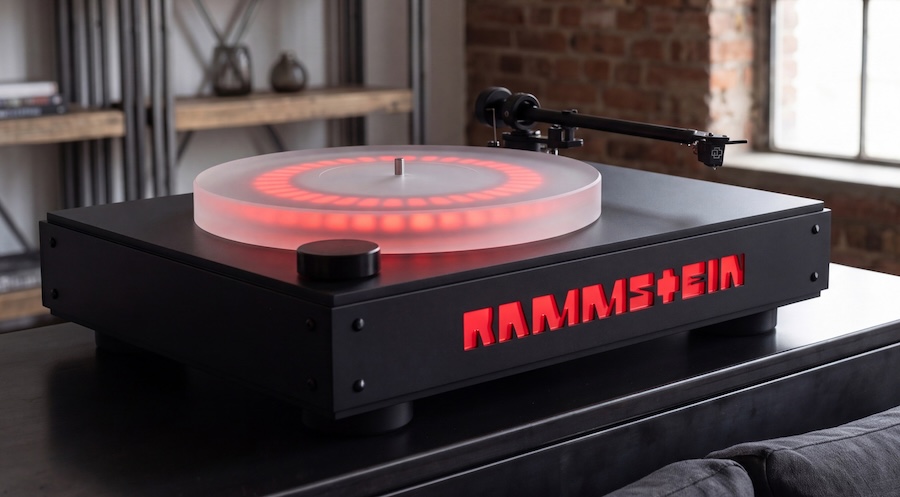
Clearaudio Rammstein Turntable Artist Series No. 1

clearaudio-rammstein-turntable

The Rammstein turntable is the louder, darker, and probably more flammable-looking half of Clearaudio’s music-led High End Vienna reveal. It also launches the company’s new Artist Series, which suggests this will not be a one-off experiment.

Clearaudio says the Rammstein model was developed as a fully independent turntable rather than a standard Concept with new graphics. That distinction matters. The engineering foundation comes from the proven Concept platform, but the industrial design was created specifically in collaboration with Rammstein.

The chassis uses massive block construction with a rigid MDF core and a metallic lacquer finish, both aimed at resonance control and mechanical stability. Integrated dimmable LED lighting, available in red or white, gives the deck a visual identity tied to the band’s stage aesthetic. Is that necessary for playing records? No. Does it make sense for Rammstein? Absolutely. Leise war gestern.

The turntable comes fitted with Clearaudio’s T1 tonearm and a specially branded MM cartridge. Each unit also ships in a premium wooden crate handcrafted in the Bavarian Forest, designed to be reused for vinyl, merchandise, or collectibles. That is very on-brand: industrial theater on the outside, German storage logic on the back end.

Advertisement

The Rammstein Turntable Artist Series No. 1 will be limited to 1,000 units worldwide and is expected in October 2026. Suggested pricing is £1,990 / €1,990 / $2,600.

Clearaudio GT Compass Gaming Turntable

clearaudio-gt-compass-turntable

The GT compass might sound like the oddball of the lineup, but it may also be one of the smarter moves Clearaudio is making. Gaming soundtrack vinyl has become a real category, with titles from Halo, The Witcher 3, Doom, Persona, Minecraft, and other major franchises attracting collectors who care about both the music and the packaging.

Clearaudio is clearly paying attention. The GT compass is based on the company’s Compass platform and is machined in Erlangen with Clearaudio’s handmade-in-Germany standards covering the tonearm, bearing, and core construction. The difference is the design language: a colorful pixel-inspired finish and an optional dimmable LED strip beneath the acrylic platter.

This is not aimed at the traditional grey-haired audiophile polishing a clamp while muttering about azimuth. The GT compass is for gaming fans, soundtrack collectors, desktop audio users, and younger vinyl buyers who may have entered the hobby through limited-edition soundtrack releases rather than Blue Note reissues.

Clearaudio developed the GT compass in cooperation with The Sound of Gaming by konsolenfan.de. At High End Vienna 2026, it will be demonstrated with Black Screen Records in the gaming section of the World of Headphones, with music from titles including Minecraft Alpha, The Witcher 3, Doom: The Dark Ages, Neon Genesis Evangelion, and Persona 4 Megamix.

Advertisement
Advertisement. Scroll to continue reading.

The GT compass is expected to ship this summer with suggested pricing of £1,499 / €1,499 / $1,949.

Clearaudio Compact Phono

The new Compact Phono is less flashy than a Beatles tribute deck or a Rammstein turntable with LEDs, but it may be the product many real-world vinyl users appreciate most. Phono stages are not supposed to be annoying, and Clearaudio appears to have focused on making this one easier to live with.

The biggest practical improvement is front-panel MM/MC switching. Earlier Clearaudio phono stages required users to open the unit and adjust internal jumpers to change cartridge type. That is the kind of thing audiophiles pretend to enjoy until they drop a screw into the carpet and start bargaining with the furniture gods.

Advertisement

The Compact Phono offers 40dB of gain in MM mode and 60dB in MC mode, along with 29dB of headroom in MC operation. It also adds both subsonic and ultrasonic filtering, expanding protection beyond the subsonic-only filtering of earlier models.

Power consumption has also been reduced significantly. Clearaudio says the Compact Phono uses only 0.7 watts in operation, compared with 2.3 to 2.7 watts for predecessor models, and it does not require a standby mode. That makes it lighter, cooler-running, and more efficient.

The Compact Phono is expected to ship later this summer with suggested pricing of £490 / €490 / $639.

Clearaudio Ultra Linear Power Supply

The new Ultra Linear Power Supply, or ULPS, is aimed at one of the least glamorous but most important parts of analog playback: clean, stable power delivery.

Advertisement

Available in 12V and 24V versions, the ULPS has been engineered to provide highly stable, impulse-resistant power for Clearaudio turntables fitted with DC motors. In practical terms, this is about reducing noise and improving consistency in a system where motor behavior directly affects speed stability and playback performance.

The most interesting feature is the integrated USB-C port, which allows the ULPS to run from an external battery pack. That gives users the option to take the AC mains grid out of the signal path entirely. Whether every listener will hear a dramatic difference will depend on the system, setup, and power environment, but the design logic is not nonsense. Turntables are mechanical devices, and stable motor power matters.

The 24V version also includes a front-panel display showing real-time operational data, including power consumption and play time. Again, very German: even the power supply wants documentation.

The ULPS will be available in black and silver from September 2026. Suggested pricing is £1,500 / €1,500 / $1,950 for the 12V version and £3,250 / €3,250 / $4,225 for the 24V version.

Advertisement

Clearaudio N2 MM Cartridge

clearaudio-n2-cartridge

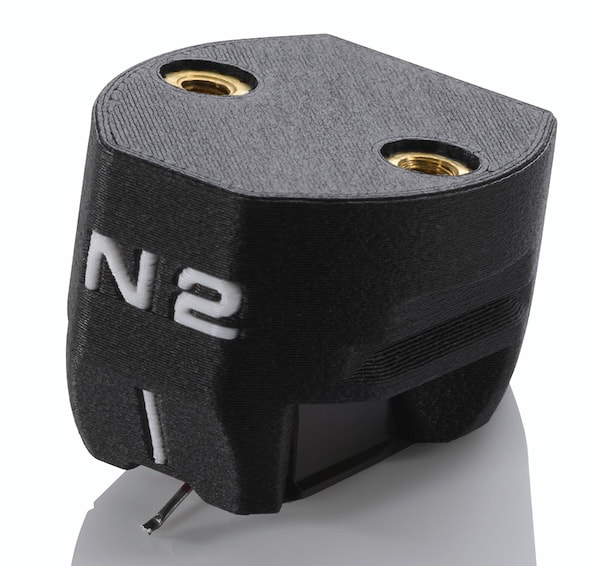
The N2 is Clearaudio’s new moving magnet cartridge, and while it is the smallest product in the High End Vienna 2026 launch group, it may be one of the most relevant for listeners who want a meaningful analogue upgrade without buying a new turntable.

Advertisement. Scroll to continue reading.

The key story is the body material. The N2 uses a laser-finished housing made from PETG-CF, a carbon-fibre reinforced polymer manufactured with high-precision 3D printing. Clearaudio says the material offers greater rigidity than conventional plastics, helping reduce unwanted resonance and create a quieter mechanical foundation for playback.

At 8.5g, the N2 is also lighter than the aluminium-bodied N1, while sharing its proven stylus design. Output is rated at 3.3mV, in line with Clearaudio’s Concept V2 MM series, and the snap-fit stylus design makes replacement straightforward.

That makes the N2 a practical cartridge for listeners who want some of Clearaudio’s materials thinking without moving into exotic MC pricing or turning cartridge setup into a weekend engineering seminar.

Advertisement

The N2 is available now with suggested pricing of £250 / €250 / $325.

The Bottom Line

The larger story at High End Vienna 2026 is not just that Clearaudio has created a Beatles turntable, a Rammstein turntable, and a gaming deck. Other companies have already proven that music culture and turntable design can overlap in smart and commercially successful ways.

The difference is that Clearaudio appears to be treating these products as proper analog playback components first and collectible objects second. The Innovation Revolver Special Edition has a new plinth architecture. The Rammstein Artist Series model has its own construction and visual identity. The Elevation platform is built around long-term ownership and upgradeability. The GT compass recognizes that gaming soundtrack vinyl is not a fringe joke anymore. The Compact Phono, ULPS, and N2 cartridge show that Clearaudio is also updating the less glamorous parts of the playback chain.

That is the correct balance. Culture gets people through the door. Engineering keeps them listening.

Advertisement

And in very Clearaudio fashion, the whole thing feels like Robert Suchy trying to broaden the audience for high-end vinyl without sanding off the company’s German DNA. The Beatles bring the history. Rammstein brings the fire. The rest of the lineup brings the mechanical discipline.

Sehr deutsch. Sehr präzise. And not remotely casual.

Source link

Advertisement
Continue Reading

Tech

Why Automakers Made The Switch From Distributors To Coil Packs

Published

on


If you’ve spent any amount of time working on or tuning cars, you’ve likely spent a not-insignificant amount of that time tweaking, replacing, or modifying the system that delivers the spark to each cylinder. On older cars, this means messing with a distributor and its octopus-like tentacles all over the engine bay. In newer cars, it often entails replacing coil packs and all the “fun” that entails.

Those of you who regularly spend time in a garage probably already know why automakers moved from the former to the latter (in short, reliability). But for everyone else, it’s worth taking a bit of a trek into the exciting world of engine ignition systems.

Breaking it down to the simplest terms, a distributor sends sparks to each spark plug through a rotating assembly mechanically controlled by the engine’s camshaft. These systems had a single coil connected to the battery. In the 1980s, though, most automakers switched to electronic ignition systems. These did away with the mechanical distributor and instead used sensors placed around the engine to determine when to deliver spark. Instead of that mess of wires, engines would have neat coil packs, usually two per cylinder. Eventually, in 1996, Denso developed the stick-type coil-on-plug system that almost every car has today.

Advertisement

Coil packs are simpler and more efficient

Coil packs offer better reliability and power than distributors. The latter require constant monitoring and maintenance, with some components requiring replacement as quickly as 12,000 miles. In contrast, modern ignition coil systems can last 100,000 miles or more before they need replacing.

Advertisement

Additionally, coil-on-plug systems are just flat out more powerful and allow for a more sustained spark. A better spark leads to better ignition, which in turn improves engine efficiency. Coil-on-plug systems also make troubleshooting and repairs easier: pinpointing a problem with a mechanical distributor may take hours, as there are dozens of components working together to make the whole system function. 

In contrast, a modern ignition system is virtually all-electrical. If you can’t narrow down the issue with a multimeter or OBD-II scanner, just replace the entire ignition coil. Overall, while there might be a certain romance to purely mechanical components, the computerized ignition systems of modern engines are just better for the vast majority of drivers, mechanics, and automakers alike.

Advertisement


Source link

Continue Reading

Tech

Oura Ring 5 vs Oura Ring 3: Is the upgrade worth it?

Published

on

As the Oura Ring 5 has just launched, we’re keen to see how the smart ring compares to the 2021 Oura Ring 3.

If you’re still rocking the nearly five year old smart ring, is now the time to upgrade? Or is the Oura Ring 3 still a perfectly solid device for tracking your health and fitness metrics?

Ahead of our official Oura Ring 5 review, we’ve compared its specs to the Oura Ring 3 and highlighted the key differences and upgrades between the two. We’ve also put together a comparison between the Oura Ring 5 vs Oura Ring 4, so you can see how the newest model measures up to the brand’s recent flagship. 

Alternatively, visit our Oura Ring 4 vs Oura Ring 3 guide to see how the two compare. For a broader look at ways to track your health and fitness, we’d recommend visiting our best smart rings and best fitness trackers guides instead.

Advertisement

Specs Comparison Table

Oura Ring 5 Oura Ring 3
Colours Silver,Black, Stealth, Brushed Silver, Gold, Deep Rose Titanium, Black, Gold, Silver, Stealth
IP Rating IP68 IP57
Size (Dimensions) 6.09 x 2.28 mm 10 x 2.5 mm
UK RRP From £399
US RRP From $399
Waterproof Rating 10ATM 10ATM

Advertisement

Price and Availability

At the time of writing, the Oura Ring 5 is available for pre-order and will launch officially from June 4th. The smart ring comes in a choice of six colours, with the exact price depending on the finish you choose. For example, the Silver and Black Oura Ring 5s will set you back £399 while the inStealth, Brushed Silver, Gold and Deep Rose options start at £499.

SQUIRREL_PLAYLIST_10208548

The Oura Ring 3 is no longer available to buy directly from Oura, however it can still be found on third-party sites such as Amazon and John Lewis. While its price can vary, generally you should expect to spend around £249 for the ring.

Advertisement

Oura Ring 3 comes with a choice between two designs

Although both the Ring 3 and Ring 5 come with various colour options, the Ring 5 is only available as a fully rounded ring. Instead, the Ring 3 can be found in either the Horizon or Heritage versions, with the former being a typical rounded ring and the latter sporting a flat-top edge.

Deal Oura Gen3 Heritage Smart RingDeal Oura Gen3 Heritage Smart Ring

Regardless of whether you opt for Heritage or Horizon, both iterations are made from titanium and sport a PVD coating that promises scratch resistance. Similarly, the Oura Ring 5 is made from titanium.

Advertisement

Oura Ring 5 is thinner and smaller

While the Oura Ring 4 and Oura Ring 3 look pretty much similar, Oura has switched things up with the Oura Ring 5. If you found the Oura Ring 4 or 3 too large and bulky, then this change will likely appeal to you. 

Depending on whether you opt for Horizon or Heritage, the Ring 3 weighs from 4 to 6g and is 2.5mm thick. In comparison, the Ring 5 starts from just 2g and is 2.28mm thick. While that certainly sounds a lot smaller than its alternative, we should disclaim that we never found the Ring 3 to feel thick or heavy.

Advertisement
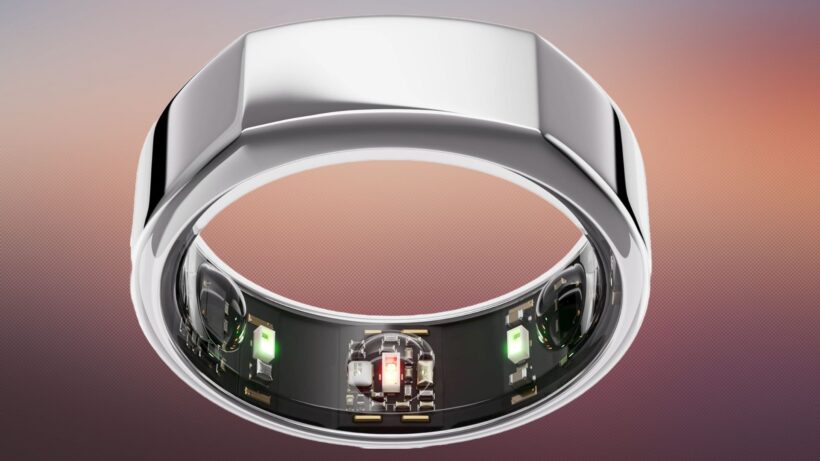
Oura Ring 5Oura Ring 5
Oura Ring 5. Image Credit (Oura)

Even so, the fact the Ring 5 is considerably lighter and thinner should mean it will feel more natural during wear – and you’ll likely not even notice you’re wearing a ring.

Oura Ring 5 promises better scratch resistance

Although it was fitted with PVD, we found that the Ring 3 was annoyingly susceptible to scratches. Sure, scratches are a natural result of daily wear and tear and they don’t necessarily ruin the look of the ring, it’s still a shame that they appear quite so easily. However, in our experience we found that the scratches don’t harm the Ring 3, and the device remains durable and can withstand submersion in water up to 100m too.

Oura Ring 3 Featured imageOura Ring 3 Featured image
Oura Ring 3. Image Credit (Trusted Reviews)

Advertisement

Oura promises that the Ring 5 is the brand’s “most scratch resistant ring yet” thanks to a new “extra-strong” PVD coating. We’re hopeful, but we’ll have to wait until we get our hands on the ring to see how scratch resistant it really is.

Oura Ring 5 promises to be more accurate

Oura explains that the Ring 5 is fitted with new signal architecture that combines “precison-engineered low-profile sensor domes for better skin contact”, more powerful LEDs for “clearer, more consistent readings” and a total of twelve stronger signal pathways for greater accuracy across more finger types and skin tones.

Perhaps most notably, Oura promises that the new signal architecture provides “more accurate activity detection” than previous generations, which is a promising update considering we sometimes struggled with recording workouts accurately with the Ring 3. 

Advertisement

We’ll have to wait and see how accurate the Ring 5 is, but considering the Ring 3 reliably tracked the likes of our heart rate, skin temperature and the like, it’s fair to say we have high expectations.

Both require a subscription to unlock more features

Make sure you keep in mind that both the Ring 5 and Ring 3 require an Oura membership to unlock all the features. This membership will set you back £5.99/$5.99 and gives you access to the iOS and Android smartphone app.

Advertisement

Oura Ring 5 charging caseOura Ring 5 charging case
Oura Ring 5 in charging case. Image Credit (Oura)

From the app, you’ll have access to all your data from your Sleep, Readiness and Activity scores, plus heart rate monitoring, blood oxygen sensing, stress levels and the ability to set personalised activity goals too. In addition, there’s a plethora of women’s health tools including cycle insights and predictions too. Plus, the Oura Ring 5 supports Natural Cycles, an FDA-cleared birth control app that allows you to track your fertile windows and monitor pregnancy too. Garmin has also recently introduced its own Natural Cycles integration too.

Early Verdict

The Oura Ring 5 seems like a promising upgrade over the Oura Ring 3, thanks to its upgraded signal architecture that claims more accurate tracking, stronger scratch resistance and a promise of up to a week’s worth of battery on a single charge. Plus, as it’s thinner and lighter, it seems like a great choice for those who aren’t used to wearing rings.

Advertisement

Having said that, the Oura Ring 3 still offers many of the same tracking features as the Ring 5 – so if you’re already sporting the older model then there’s perhaps less of a need to upgrade.

We’ll be sure to update this versus once we review the Oura Ring 5.

Source link

Advertisement
Continue Reading

Tech

I’m Trying to Teach Humanity Before It Disappears

Published

on

To be an educator and a writer is to inhabit a rollercoaster world of hope; at times, you are filled with the excitement and power of possibilities, and at others, you are terrified of losing it.

During the Voices of Change fellowship, I not only grew as a writer but was also inspired by educators who gave me the gift of “freedom dreaming.” I’ve since sought opportunities to practice freedom dreaming daily in the classroom. Embedding joy and equity into the curriculum and building authentic relationships with students are my north stars. I refer to my students as family, and to highlight that, I have a banner with a quote by Gwendolyn Brooks on my door. It reads, “We are each other’s magnitude and bond.” I’ve placed photos of the students in my classes all around the banner.

I’ve also begun teaching world history. This class energizes me and makes me want to revolutionize and freedom-dream the way history is taught and explore people and stories that matter.” Facing History and Ourselves” and the “Remedial Herstory Project” have been instrumental in helping me find my way and voice as a history teacher.

Despite teaching a new subject that gives me joy, this particular school year has been one of the most emotionally exhausting and difficult for me. I live in Minneapolis, where our 2025-26 school year began with the mass shooting at Annunciation School, a community with close ties to my school. Then, in December, the havoc of ICE removing neighbors and family members from our communities began and culminated in the murders of Renée Good and Alex Pretti. On the hardest days, I held back tears as I tried to instruct my classes. The students and I were scared; our mental health was tested and we were often distracted by everything outside of our school.

Advertisement

I can’t help but feel that one of the first steps to legitimizing the brutal and dehumanizing treatment of Brown and Black people and those protesting against ICE was creating a narrative that DEI is antithetical to academic learning. However, as a Spanish and history teacher, I know that DEI pumps life into the themes and lessons I teach. I believe it is necessary to center women’s voices and Indigenous histories and to honor Black and Afrolatine lives in our curriculum, creating dynamic lessons with more complex, richer perspectives.

Most inspiring to me has been watching neighbors and friends rise up to protect the safety, integrity and heartbeat of our city as we experience the violence and injustice of ICE. Seeing the strength of my community motivates me to eliminate the idea that hope is lost and inspires me to do my part in the classroom.

The students and I work to banish the hate and inequity infiltrating our lives, and freedom dreaming has pushed me to channel the world I want to live in into the curriculum. For example, I built a lesson for my Spanish class entitled “In Times of Crisis, Humanitarian Help.” We learned about the devastation caused by Hurricane Melissa in many Caribbean countries, but focused on World Central Kitchen and humanitarian José Andrés’s work to restore people’s dignity and ability to live after natural disasters by preparing meals for them.

In world history, we spent longer than necessary on the Mauryan Empire and Ashoka’s legacy in Buddhism, highlighting principles of peace, nonviolence, and respect for all creation. One student told me this lesson made her strongly consider converting to Buddhism. For me, it is crucial for students to know that even though politics and society seem rife with conflict, it is possible to lead with peace, love and fierce empathy.

Advertisement

My life as a writer and educator has continued to evolve. After the fellowship, I earned a Pushcart Prize nomination for poetry in 2024. Receiving the Voices of Change fellowship and then the poetry honor gave me the confidence to apply for and receive a summer writers’ residency this year. I’m excited by the opportunity to continue exploring the part of me that wants to write about my experiences in and out of the classroom, no matter how challenging they may be.

Yet, after over 20 years of teaching, what’s remained constant is creating moments of joy, humor and connection in the classroom. Don’t get me wrong, we still build competencies — not just for school, but for life.

My goal is for each school day to be permeated by the unwritten hope of freedom dreaming, so that the students and I — and, by extension, our wider community — believe in the barrier-breaking power of unity and a world thriving on dignity and respect for all.

Source link

Advertisement
Continue Reading

Trending

Copyright © 2025