Connect with us
DAPA Banner
DAPA Coin
DAPA
COIN PAYMENT ASSET
PRIVACY · BLOCKDAG · HOMOMORPHIC ENCRYPTION · RUST
ElGamal Encrypted MINE DAPA
🚫 GENESIS SOLD OUT
DAPAPAY COMING

Tech

Rivian boss says Level 4 autonomous driving is “much closer than people think”, but Tesla is struggling to convince its own employees that the technology is reliable

Published

on


  • Rivian’s boss believes we will have eyes-off driving within 18 months
  • It will be the “most disruptive feature we’ve seen”, according to RJ Scaringe
  • But a new report suggests Tesla engineers and staff don’t trust the technology

Rivian’s boss and CEO, RJ Scaringe, believes that we will see increasing levels of autonomous driving arriving in the coming months.

Speaking to Top Gear during a test drive of the upcoming R2, which the company hopes will be its first electric SUV with true mass appeal, Scaringe revealed that he thinks we will move from level two to three, which includes hands-off and eyes-off autonomous driving, within “the next 18 months”.

Source link

Continue Reading
Click to comment

You must be logged in to post a comment Login

Leave a Reply

Tech

Silo season 3 is finally going to tell us how the world ended

Published

on

Apple TV‘s hit sci-fi series is back, and the new Silo season 3 trailer makes it clear that the show is finally ready to answer its biggest question: how did the world end?

The 10-episode third season premieres on July 3, with new episodes dropping every Friday through September 4. And if this trailer is anything to go by, the wait has been worth it.

Juliette is back, but she’s not quite herself

Rebecca Ferguson’s Juliette survived the incinerator at the end of season 2, but she didn’t walk away unscathed. She’s lost all her memories, and that’s where things get truly exciting.

Advertisement

Camille Sims (Alexandria Riley) has been feeding her a false narrative for three months, and mysterious pills spotted in the trailer appear to be playing a role in keeping those memories buried. A voice identified only as The Algorithm confirms it, telling Camille that Juliette has had no memories other than the ones she was given.

There’s even a cryptic note warning Juliette not to take the mysterious pills, so someone out there wants her to remember. This memory manipulation is a bold departure from Hugh Howey’s Wool novels, and it adds another layer of tension.

The trailer also suggests that Juliette will become the mayor of the silo in season 3, settling into a powerful role she has no memory of earning. On top of all that, a countdown in the trailer hints that the silo itself is running out of time.

As one character ominously puts it, the amount of panic, if people knew how little time they had left, would be unthinkable. Meanwhile, Steve Zahn also makes a welcome return as Solo, whose fate was left uncertain at the end of season 2.

The past timeline is where Silo season 3 gets really interesting

While Juliette’s arc drives the present-day story, the trailer’s most exciting reveal is its deep dive into the past. Journalist Helen Drew (Jessica Henwick) and Congressman Daniel Keene (Ashley Zukerman), who were briefly introduced in the season 2 finale, are now central characters.

Their storyline is set centuries before the events of the silo and draws heavily from Shift, the second book in Howey’s trilogy. The two uncover a conspiracy involving what appears to be a radiological weapon attack, a chain of events that ultimately forced humanity underground. As the trailer tagline puts it, “the truth lies in the past.”

Joining the cast this season are Laura Innes, Jessica Brown Findlay, Morven Christie, Reed Birney, Matt Craven, and Colin Hanks. Silo season 3 looks like the show has rediscovered everything that made season 1 so gripping – the paranoia, the mystery, and that nagging sense that nobody can be trusted.

With an origin story that goes back centuries now in play, this is shaping up to be its most ambitious chapter yet. If you haven’t started watching, now is the perfect time to catch up before July 3.

Advertisement

Source link

Continue Reading

Tech

Amazon’s ‘Tomb Raider’ reboot gets a new trailer and release date at Sony’s State of Play

Published

on

(Official PlayStation image)

This week marks one of the biggest events on the modern video game calendar, as studios from around the world bring their newest projects to the annual Summer Game Fest event in California. This includes a new look at Amazon Game Studios’ impending reboot of the long-running Tomb Raider franchise, coming in early 2027.

Tomb Raider: Legacy of Atlantis is a ground-up “reimagining” of the original 1996 Tomb Raider, which celebrates its 30th anniversary in October. Once again, it follows British archaeologist Lara Croft (Alix Wilton Regan) on an expanded look into her journey to collect the scattered pieces of an artifact from the lost civilization of Atlantis. Along the way, she’ll solve puzzles, navigate treacherous labyrinths, and fight dinosaurs, as one does.

The original Tomb Raider’s story and environments have been rebuilt with Unreal Engine 5 for Legacy of Atlantis, which turns the game into less of a series of vaguely connected puzzle boxes and more of an open-ended area that you can freely explore. It’s currently planned for release on Feb. 12, 2027.

Legacy of Atlantis is a co-production between the Polish studio Flying Wild Hog (Hard Reset, Shadow Warrior) and Crystal Dynamics, which maintains offices in Texas, California, and Bellevue, Wash.

It’s also the first step in Amazon’s planned franchise reboot of Tomb Raider, which was first announced back in 2022. Legacy will lead directly into a brand-new game, Catalyst, which is planned for release later next year and is a direct follow-up to 2008’s Tomb Raider: Underworld.

Advertisement
(Official PlayStation image)

The new Legacy of Atlantis trailer premiered as part of Sony’s semi-regular State of Play, a livestreamed showcase of new and upcoming games for the PlayStation platform.

Other Pacific Northwest gaming news out of the State of Play included the official debut of Marathon’s second “season” of content, Nightfall, which resets players’ progress in order to present them with new challenges and an even playing field.

Source link

Continue Reading

Tech

One Step Forward, Two Steps Back: CA’s AB 1856 Exempts Open Source But Expands Age-Gating

Published

on

from the age-gating-is-still-bad dept

After public outrage, California lawmakers are moving closer to exempting open-source operating systems from the sweeping age-bracketing regime mandated by last year’s Digital Age Assurance Act (AB 1043). Nonetheless, the current bill still jeopardizes internet users’ speech, privacy, and security.

While the open source exemption, if passed, would improve the law, the remaining amendments proposed by AB 1856 would require all web browsers and websites to request and collect users’ ages. This is an expansion of last year’s AB 1043’s age-bracketing system that compounds its constitutional harms to users’ speech, privacy, and security. As AB 1856 moves on to the Senate, EFF will continue fighting for amendments that reduce those harms.

AB 1856 Extends AB 1043’s Age-Gating Regime

Last year, California passed AB 1043, which requires all operating systems and app stores to create age-bracketing systems that segment users based on their ages. As we’ve written, that regime is a recipe for censorship: it creates unnecessary and unconstitutional barriers to accessing lawful online speech, threatens our right to anonymity, and pressures online services to collect troves of valuable and sensitive user data. On top of that, A.B. 1043’s wide-sweeping compliance burdens impose disproportionate harms on the open-source ecosystem that underpins much of the modern web. 

Given these flaws, lawmakers introduced AB 1856 this year as a supposed “clean-up” bill for AB 1043. But instead of sticking to fixing AB 1043’s unique and serious harms (like its impact on open-source operating systems), AB 1856 also expanded the regime even further—extending its age-bracketing requirements beyond operating systems and app stores to browsers and websites. 

Advertisement

EFF opposed AB 1856 on two grounds, which we explained in our opposition letter to the Assembly: 

  1. The harms that age-gating regimes pose to users’ speech, privacy, and anonymity; and
  2. The disproportionate harms that this particular regime imposes on open-source developers. 

Open Source Concerns Somewhat Alleviated By Amendment

On May 28th, AB 1856 passed the Assembly in a nearly unanimous vote (68-1). 

Before that vote, however, AB 1856 was amended to relieve the compliance burden on open-source operating systems. This is a meaningful improvement and a welcome relief for open-source developers, who have been loud and clear about how much of an existential threat A.B. 1043’s age-gating mandate would pose.

The new exception reads:

“Operating system provider” does not mean a person or entity that distributes an operating system or application under license terms that permit a recipient to copy, redistribute, and modify the software.”

EFF understands this amendment to exempt open-source operating systems from the requirement to collect and transmit users’ age-bracket data. That is a definite win for open-source developers. The bill is narrower now than it was before, and lawmakers clearly responded to concerns raised by EFF and the broader open-source community. 

Advertisement

Some important questions still remain—for example, it is unclear how the law would apply when an open-source operating system is incorporated into a commercial product or service. And, given the structure of where the exemption is placed under the “operating system provider” definition, lawmakers could stand to clarify that the exemption applies to open-source operating systems and applications.

Nonetheless, that ambiguity aside, this amendment does substantially reduce the threat that AB 1043 could have on many open-source developers. 

AB 1856 Still Expands the Problematic Age-Bracketing Regime

Don’t get us wrong—if this bill passes, we will be very happy that AB 1043 does not pose nearly the amount of harm to our friends behind open-source operating systems. But even after these amendments, EFF remains opposed to AB 1856 because it ultimately expands California’s sweeping age-bracketing framework far beyond the original scope of AB 1043. 

In AB 1856 and its amendments, the Assembly failed to address the core problem with AB 1043’s age-bracketing regime: mandated age-gating systems threaten users’ speech, privacy, anonymity, and security. 

Advertisement

Even though AB 1043 does not explicitly require companies to perform age verification, it nonetheless imposes a liability structure that strongly pressures companies to verify users’ ages anyway. In practice, that could lead to more ID checks, more biometric scanning, more invasive data collection and risk of breach, and more barriers to adults’ and young people’s lawful speech.

In fact, instead of narrowing AB 1043’s wide net, AB 1856 expanded it to add browser providers and website operators to the list of entities that must comply with its age-bracketing requirements. This dramatically broadens the scope of AB 1043 and pulls more services, developers, and users into an anonymity- and privacy-destroying data collection framework that has not yet been implemented or evaluated. The result would make it nearly impossible for regular internet users to avoid AB 1043’s age gates.

The Fight Moves to the Senate

On those grounds, EFF will continue to oppose AB 1856. Though it has passed the Assembly, the fight is not over. As the bill moves through the Senate, we’ll continue to push for amendments that actually “clean up” and narrow the scope of AB 1043, and offer more protection to users from the harms of age-gating systems.

Republished from the EFF’s Deeplinks blog.

Advertisement

Filed Under: ab 1043, ab 1856, age verification, california, open source, operating systems, websites

Source link

Advertisement
Continue Reading

Tech

Mathematicians Warn of AI Threats to Profession As Industry Encroaches

Published

on

A new Leiden Declaration, endorsed by the International Mathematical Union and published on June 2, 2026, warns that AI could undermine mathematics by flooding the field with plausible but flawed proofs, weakening attribution, shifting incentives, and giving tech companies too much influence over research priorities. “Mathematicians should find it quite striking that tech companies are suddenly interested in their work,” said Kevin Buzzard, a mathematician at Imperial College London, in a statement. “The Leiden Declaration is a well-thought-through response to what is currently happening, as AI continues to disrupt this space.” Ars Technica reports: The Leiden Declaration, which has already drawn hundreds of signatories, warns that recent AI developments are threatening “characteristic values” of mathematical research, “often in ways that disproportionately affect students and early-career mathematicians, and hence the long term future of the discipline.”

First, it points out how AI models can “produce plausible but unreliable (or even incorrect) arguments which are difficult to distinguish from correct mathematical proofs.” Such developments put reviewers under increasing pressure and are “jeopardizing our ability to implement traditional standards for the correctness, transparency, and independent verifiability of proof,” the declaration warns. “Inaccurate AI-generated drafts are cheap to produce, and there is a risk of cluttering the literature with claimed results that are simply wrong,” said Leslie Ann Goldberg, head of computer science at the University of Oxford, in a statement. “Once that happens, the errors are likely to propagate as new results are built on faulty foundations.”

Second, the declaration highlights how “models trained on published works frequently return outputs that do not properly cite the human works they synthesize,” while also pointing out that many current AI models were trained on data obtained through “exploiting licenses and access arrangements” or “simply violating copyright protections.”

Third, the declaration describes how the use of AI “may become incentivized for its own sake, disrupting our mechanisms for hiring, funding and recognition” while leaving out researchers who lack access or are “unwilling to use technologies controlled by organizations whose values they do not share.”

Advertisement

Fourth, the declaration warns against mathematics research “communicated through informal channels such as press releases or blog posts, often without any research paper or other disclosure of information necessary for scientific evaluation.” Such communication strategies can lead to “oversimplification” in media reporting that overemphasizes AI tools’ significance at the expense of prior human contributions, and “misleadingly uses specific mathematical tasks as metrics for the general reasoning capacities of commercial products.”

Fifth, the declaration describes “increasing involvement of technology companies in mathematical research” as threatening the “autonomy of mathematics,” especially as university budgets are under pressure and researchers may feel greater professional incentive to collaborate with technology companies on “asymmetric terms.” This also raises the risk that mathematics research questions amenable to AI-driven techniques may be prioritized. What can mathematicians do about this? The Leiden Declaration urges them to treat AI as a tool, not a substitute for human responsibility. Individual mathematicians should disclose AI use, remain accountable for the correctness of their work, continue crediting human authors, and use AI tools only when they align with the declaration’s values.

It also warns that mathematics can be applied to “warfare, oppression, mass surveillance, and the undermining of democracy,” so mathematicians should weigh the ethics of tech-industry partnerships carefully. Professional organizations are encouraged to develop AI-use guidelines for publication and review, protect researchers from having their work used as training data without consent, support peer-reviewed publishing, and “actively prepare to become involved if major mathematical results are claimed using unconventional means.”

For policymakers, the recommendations are blunt: “protect the rights of authors,” “regulate the artificial intelligence industry,” and “invest in public computational infrastructure.” The declaration also urges people to “don’t believe the hype,” warning that tech companies have “a strong commercial incentive… to overstate the capabilities of their products.”

Advertisement

Source link

Continue Reading

Tech

‘A new approach’: Microsoft CEO claims its “AI Superfactory” will use the same amount of water each year as a neighborhood restaurant

Published

on


  • Microsoft CEO looks to ease data center environmental fears
  • A “new approach” will help the company’s facilities address concerns, Nadella says
  • Microsoft’s Azure cloud business now covers more than 500 data centers in 80 regions

Microsoft CEO Satya Nadella has looked to reassure those concerned about the effect data centers are having on the environment.

Speaking during his keynote address at Microsoft Build 2026, Nadella outlined how the company is working on “a new approach” to its data centers, with plans to improve cooling systems and reduce water use

Source link

Advertisement
Continue Reading

Tech

Hostinger builds Agentic Mail so AI agents can finally run email workflows without waiting on outdated human systems

Published

on


  • Email systems were never designed for autonomous machine workflows
  • Hostinger introduces webhook-first email for real-time automation processing
  • AI agents now trigger actions immediately when emails arrive

AI agents can process data and execute actions within milliseconds, yet many automated systems still depend on tools originally built for human users.

That mismatch has become increasingly noticeable as businesses attempt to connect AI-driven workflows with traditional email systems, never designed for machine-to-machine interactions.

Source link

Advertisement
Continue Reading

Tech

Blue Origin CEO pledges to repair ruined launch pad and return to flight by the end of the year

Published

on

The SkySat satellite image at left shows Blue Origin’s launch pad in Florida on May 20, before the New Glenn rocket explosion. The satellite image at right shows the pad on May 31, three days after the blast. Click on the image for a larger version. (Credit: Planet Labs PBC)

Jeff Bezos’ Blue Origin space venture aims to repair the damage done last week by a launch-pad rocket explosion and return to flight before the end of the year, the company’s CEO says.

In a post to X, CEO Dave Limp laid out a schedule that was more optimistic than what was expected immediately after last Thursday’s fiery destruction of a New Glenn rocket during a static-fire test. CNBC quoted NASA Administrator Jared Isaacman as saying that it would “take some serious time” to restore Launch Complex 36 at Cape Canaveral Space Force Station.

In his post, Limp said he had “a bit of good news” to share after inspecting the pad and the complex’s integration facility.

“The propellant farm, oxygen, liquid hydrogen and LNG tanks are all in good shape. This is good luck because these are very long lead items,” he said. “The water tower is also good. The big support tower is damaged, but it can be repaired in place rather than torn down and replaced. The booster ‘Never Tell Me The Odds’ and the three GS-2s [upper stages] that were onsite in the integration facility also look good.”

Limp said the pad would be rebuilt to accommodate the current 7×2 New Glenn configuration, which offers a 7-meter-wide fairing powered by two BE-3U rocket engines, rather than immediately transitioning to the next-generation configuration with a 9-meter fairing.

Advertisement

“Rate manufacturing of 7×2 is going well, and we’re going to continue that at pace as planned and store the stages for use,” he explained. “In addition, we had already been working for some time on eliminating our transporter-erector in favor of an alternative vertical conop [concept of operations], and we’ll now go directly to that; so we don’t need a new transporter-erector.”

If New Glenn returns to flight this year, that would be relatively good news for NASA and Blue Origin’s other customers. NASA had tapped New Glenn and Blue Origin’s Blue Moon Mark 1 lander to deliver a set of payloads to the moon this fall, and to send the space agency’s VIPER rover to the moon’s south polar region in 2027.

A crew-capable version of the Blue Moon lander was slated to have its first flight test in low Earth orbit as early as next year during NASA’s Artemis 3 mission. And just this month, NASA awarded Blue Origin a contract worth up to $468 million to deliver two lunar terrain vehicles, or LTVs, to the moon in the 2028 time frame. All those opportunities depend on having New Glenn and its launch pad back in operation.

New Glenn also figures prominently in the plans of another company founded by Bezos: Amazon. Blue Origin, a private venture that’s separate from publicly traded Amazon, was due to launch 48 satellites for the Amazon Leo broadband internet constellation as early as this week. The rocket that exploded — nicknamed “No, It’s Necessary” — was being tested in preparation for taking on that task.

Advertisement

Rajeev Badyal, vice president of Amazon Leo, told his team in an internal memo obtained by Business Insider that it was still too early to speculate on the cause of the explosion or its potential effects.

“I’ve been in this business for a long time and it’s worth saying: Spaceflight is hard, and setbacks happen,” he wrote in the memo.

Amazon has reserved scores of launches with other providers, including United Launch Alliance, Arianespace and SpaceX — and the satellites that were earmarked to ride on New Glenn can be shifted to those other companies’ rockets. United Launch Alliance delivered 29 Amazon Leo satellites to orbit with an Atlas 5 launch last Friday, boosting the constellation’s count to 331.

“New Glenn is just one vehicle in our lineup,” Badyal wrote. “Our mission hasn’t changed, our commitment to our customers and delivering service hasn’t changed.”

Advertisement

For an interactive look at Blue Origin’s Launch Complex 36 before and after the New Glenn explosion, check out this presentation of Planet Labs imagery on SpaceFromSpace.com, and be sure to use the “Transparency” slider to compare the before-and-after views.

Source link

Continue Reading

Tech

Noble Osprey Wireless Earbuds Debut at High End Vienna 2026: Entry-Level Price, Noble DNA

Published

on

Noble Audio is using High End Vienna 2026 to expand its true wireless lineup with the new Osprey, an entry-level earbud aimed at listeners who want the Noble house sound without wandering into $300-plus wallet damage. Priced below $200, the Osprey gives Noble a more accessible option in a category it already knows well, combining everyday wireless convenience with the brand’s focus on balanced tuning, musicality, and a more refined presentation than most budget true wireless earbuds can usually manage.

Construction & Exterior Design

noble-osprey-wireless-earbuds-with-case

The Osprey follows the design language Noble Audio has used across its true wireless lineup, with a distinctive marbled faceplate that gives the earbuds a more finished look than the usual plastic black-bean approach. It is a small touch, but a useful one in a crowded category where most affordable wireless earbuds look like they were issued by the same factory committee.

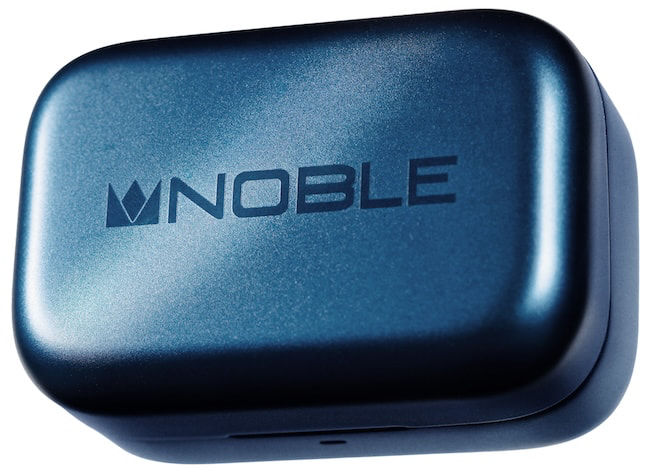
Noble also includes a compact aluminum charging case, which should give the Osprey a more durable and premium feel without making it bulky. The goal here is practical: a lower-cost Noble earbud that still looks and feels like it belongs in the family.

noble-osprey-wireless-earbuds-case

The Osprey uses an ergonomic earbud shell designed to sit securely in the ear without feeling bulky. A proper fit should improve passive isolation, which matters more than most people admit with true wireless earbuds.

Noble includes multiple eartip sizes to help users find the best seal for comfort, stability, and consistent sound quality over longer listening sessions.

Drivers

The Osprey uses a hybrid dual driver configuration, pairing a 10mm dynamic driver with a custom balanced armature. In theory, that gives Noble more room to divide the workload: the dynamic driver handles low frequency weight and impact, while the balanced armature supports midrange and treble detail.

Advertisement

That does not automatically guarantee magic. This is still an earbud under $200. But it does give the Osprey a more ambitious driver platform than many entry level true wireless models. The goal is controlled bass, clear mids, and better high frequency separation without pushing the sound into something thin or etched.

High-Resolution Wireless Connectivity

noble-osprey-wireless-earbuds-in-ear-side

Powered by an Airoha 1571 Bluetooth chipset, the Osprey supports noise cancellation (ANC) and Bluetooth multipoint pairing for seamless device switching. With Bluetooth 5.4 and TrueWireless Mirroring, the Osprey provides a stable, low-latency connection whether you’re streaming high-resolution audio or making calls.

Clear Phone Calling

For calls and virtual meetings, the Osprey employs a dual-microphone array with Qualcomm cVc noise suppression. This technology minimizes background noise while preserving the natural tone and dynamics of your voice, ensuring speech remains clear and intelligible in both professional and everyday environments

The Osprey includes Active Noise Cancellation and a Hearing Through mode, giving listeners some flexibility when moving between commuting, office use, calls, and street noise. Integrated cVc noise reduction is also included to help improve voice pickup during calls, although real world results will still depend on wind, background noise, and microphone placement.

Battery life is rated at up to 7 hours with ANC turned off, or up to 5 hours with ANC enabled. The 500mAh charging case extends total playback time, and Noble claims a 10 minute quick charge can provide roughly 2 hours of listening. 

Advertisement
Advertisement. Scroll to continue reading.
noble-osprey-wireless-earbuds-lifestyle-side-angle

Battery Life

The Osprey includes a 500mAh wireless charging case, which extends playback beyond the earbuds themselves. Noble rates battery life at up to 7 hours with ANC turned off, or up to 5 hours with ANC enabled. A 10 minute quick charge provides roughly 2 hours of listening.

Those figures are suitable for daily use, especially given the Osprey’s under $200 price point, ANC support, hybrid driver design, and wireless charging case.

Companion App

For ease of use, the Osprey is compatible with the Noble Audio app, which offers EQ and OTA software updates, keeping the Osprey relevant for as long as you use them. 

Comparison

noble-wireless-earbuds-comparison
Noble Model Opsrey (2026) FoKus Prestige Encore (2025) FoKus Rex5 (2024) FoKus Amadeus (2025) FoKus Prestige (2023)
Product Type TWS – True Wireless Stereo Earphones TWS – True Wireless Stereo Earphones TWS – True Wireless Stereo Earphones TWS – True Wireless Stereo Earphones TWS – True Wireless Stereo Earphones
Price  $199 $699 $449 $320 $599
Design Marbled exterior on earbuds with an aluminum charging case CNC-machined from solid wood – no two Encores look alike Aluminum and acrylic Shells: Glossy black resin.

Faceplates: Red celluloid.

Advertisement

Charging Case Body: Matte black aluminum.

Charging Case Lid: Crimson red aluminum.

Plastic (with CNC-machined wooden body and case)
Driver system 10mm dynamic driver, custom balanced armature 1 × 8mm Dynamic, 2 × BA, 1 × 6mm Planar Magnetic 1 × 10mm Dynamic, 3  × BA, 1 × 6mm Planar Magnetic 8.3mm custom triple-layer dynamic diaphragm 1 x 8.2mm Dynamic Driver, 2 x Knowles Balanced Armature Drivers
Chipset Airoha 1571  Qualcomm® QCC3091 Qualcomm® QCC3091 Qualcomm QCC3091 Not Indicated
Bluetooth 5.4 with TrueWireless Mirroring and multipoint support 5.4 with TrueWireless Mirroring and multipoint support 5.4 with TrueWireless Mirroring and multipoint support 5.4 with TrueWireless Mirroring and multipoint support 5.2
Bluetooth Codecs SBC / AAC / LDAC  aptX Lossless, aptX Adaptive, LDAC, AAC, SBC SBC, AAC, aptX Adaptive, LDAC SBC, AAC, aptX Adaptive, LDAC SBC, AAC, aptX Adaptive, LDAC
Noise control Active Noise Cancellation (ANC) + HearThrough mode Hybrid Active Noise Cancelling + HearThrough mode Active Noise Cancellation (ANC), Transparency, and Basic modes Active Noise Cancellation + Transparency Mode Not indicated
Phone Calling Dual-mic cVc™ noise suppression Dual-mic cVc™ noise suppression Dual-mic cVc™ noise suppression Dual-mic cVc™ noise suppression Dual-mic cVc™ noise suppression
Battery life 7 hours (ANC off)

5 hours (ANC on) 

Advertisement
10h (ANC off)

7h (ANC on)

Up to 35h total with case

7h (ANC off)
Advertisement

5h (ANC on)

Up to 40h total with case

12 hours (ANC off)

Up to 8 hours (ANC on)

Advertisement

Up to 42 hours total with the case

Up To 10 Hours (ANC on/off not specified)
Charging 10min quick charge = 2h playback USB-C + Qi wireless charging; 10min quick charge = 2h playback USB-C + Qi wireless charging; 15min quick charge = 2h playback USB-C & Qi wireless charging 10 minutes = ~2 hours playback USB-C; 17min quick charge = 70 minues playback
Personalization Not Indicated Audiodo per-ear calibration with on-device storage Audiodo per-ear calibration with on-device storage Audiodo per-ear calibration with on-device storage No
App Custom EQ, touch mapping, OTA updates, multilingual interface Custom EQ, touch mapping, OTA updates, multilingual interface Custom EQ, touch mapping, OTA updates, multilingual interface Custom EQ, touch mapping, OTA updates, multilingual interface Custom EQ, touch mapping, OTA updates, multilingual interface
noble-osprey-wireless-earbuds-inside-case

The Bottom Line 

The Noble Osprey gives Noble Audio a more affordable entry point in true wireless without turning it into a stripped down budget model. For $199, the Osprey offers the styling Noble is known for, a hybrid dual driver design, ANC, Hearing Through mode, Bluetooth 5.4, Multipoint connectivity, app support, and a wireless charging case. That combination gives it a stronger identity than many wireless earbuds in this price range, especially for listeners who already like Noble’s tuning approach but do not want to spend FoKus money.

The tradeoffs are clear. The Osprey does not carry the FoKus name, and codec support appears more limited with no aptX formats listed, and no indicated support for Dolby Atmos or Spatial Audio. That matters because the $179 to $249 earbud category is crowded with models from LG, Beats, Sony, Status Audio, and aggressive value brands like SOUNDPEATS, which are pushing features such as LDAC, aptX Lossless, hybrid ANC, and app based EQ at even lower prices.

What makes the Osprey interesting is not that it wins the spec sheet war. It probably does not. The appeal is Noble bringing its design language, hybrid driver experience, and app supported true wireless platform below $200. The question is whether buyers in this range care more about Noble’s sound and styling, or whether they will chase the longer codec list and feature overload offered by lower priced competitors.

noble-osprey-wireless-earbuds-lifestyle-side

Price & Availability

The Noble Audio Osprey will be available for pre-order from nobleaudio.com and selected retailers worldwide starting June 4th, 2026, priced at $199 / £199 / €225. Shipping is expected to begin by the end of June 2026

Advertisement

The Osprey launch will coincide with Noble’s appearance at HIGH END Vienna 2026, where attendees can try it out for themselves.

Source link

Advertisement
Continue Reading

Tech

Report: School IT Officials Worried About AI Adoption, Cybersecurity

Published

on

While schools have made progress in technology adoption — from artificial intelligence guidelines to vetting education technology — they still struggle with the lack of resources, funding and expertise, according to a new report.

The annual State of EdTech report from the Consortium for School Networking polled roughly 600 chief technology officers for K-12 schools. One of the biggest takeaways, according to CoSN CEO Keith Krueger: AI adoption is higher than ever. According to the report, nearly three-quarters (79%) of school districts have AI guidelines in place, up from 57% in 2025.

“Given how many school districts we have, given how many small and rural ones there are, it’s shocking at how quickly at least the guidance around responsible use of AI is,” Krueger says. “As a foundational step, we’re seeing movement.”

But respondents repeatedly stated they are running into roadblocks of insufficient staffing and funding.

Advertisement

“There’s never going to be enough training, and we have to make sure the training is quality and meeting administrators with what they want and need,” Krueger says, adding it’s not just about training on a specific tool, but “helping them think in new ways how to use the tools.”

Most of the districts polled are in favor of AI guidelines, either set by the districts themselves or state education agencies, but do not want state or federal mandates. Typically, mandates are formed, then approved, by a board — something that is time-consuming and does not lend itself well in the fast-moving world of AI.

“This week, this month, this year is changing rapidly,” Krueger says. “It doesn’t mean we change fundamental beliefs of what’s cheating (with AI), for example, but things are moving rapidly. You don’t want to have too many solidly, board-approved things which can get locked in when you need to evolve.”

The most common AI initiative among districts is training staff on the use of instruction-focused generative AI tools, with 7 out of 10 respondents saying they do so. Productivity-focused measures focused on instructional staff and teachers followed, with 54% and 53%, respectively, deploying those initiatives. One of the largest jumps was the amount of districts having initiatives focused on AI’s operational purposes, from 37% in 2025, to 64% in 2026.

Advertisement

Less than half (41%) of initiatives focus on using AI for teaching and learning.

“I would say the low hanging fruit is on the operational and teacher productivity side,” Krueger says. “We should continue to explore and think through the great uses that are in the classroom. But, overnight we shouldn’t just wildly go trying to do those things when it’s going to take time to figure out the instructional piece.”

The CoSN State of EdTech Report showcases districts’ AI initiatives.

Source: Consortium for School Networking

Cybersecurity

The largest concern about AI use: cybersecurity attacks. According to the report, nearly all respondents (98%) are concerned that AI can bring in new forms of cyber attacks, with just 2% stating they are “not at all concerned.” That same percentage also has concerns on student data and AI’s effect on its privacy.

Advertisement
The CoSN annual EdTech Report shows districts are concerned about AI fast-tracking more cyber attacks in coming years.

Source: Consortium for School Networking

While the concern over cybersecurity is strong, two-thirds of respondents state they have insufficient staffing and budget to address those challenges.

Cybersecurity concerns continue to cause schools woe, most recently with the Instructure attack in May that caused several schools to pay a ransom and shut down one of the world’s largest digital education platforms.

“The high visibility breaches and attacks that we’ve seen underscore the real cost to our school system by not investing in better cybersecurity,” Krueger says.

Advertisement

After 17 years of utilizing the State of EdTech report, Krueger says he believes a tipping point may have finally been reached on addressing cyber concerns.

“Certainly those in charge of technology have been yelling loudly that cybersecurity is a problem,” he says, adding the issue has become more well-known among superintendents and school board members. “I think they will start to say, ‘We can’t just have these broadband networks and not have them safe and secure.’ But it’s a huge challenge, given the lack of human capacity in schools for cybersecurity.”

EdTech

Another major finding from the report is an issue that has been bubbling beneath the surface in both tech evangelist and oppositional circles: vetting educational technology.

Edtech vetting has been under consideration amid the screen-time backlash in classrooms, with some states pushing for better review of the vetting process. Oftentimes, schools rely on the vendors’ own data and are unequipped to review the software themselves to ensure children’s safety.

Advertisement

“There is nobody right now that is confirming these products are safe, effective and legal,” Kim Whitman, co-lead for Smartphone Free Childhood US, said in a previous interview with EdSurge. “It should not fall on the district’s IT director; it would be impossible for them to do it. And the companies should not be tasked with doing it — that would be like nicotine companies vetting their own cigarettes.”

According to the report, most schools now have a process for vetting free edtech tools before they’re used in schools, either through IT or a list of approved vendors.

But that process still has some gaps: only 29 percent require information about if the product is inclusive and accessible for all learners. That is particularly worrisome for accessibility advocates who already fear they are being left out of the conversation.

“Parents with children who have a disability must have a seat at the table,” Sambhavi Chandrashekar, global accessibility lead for D2L, an online learning platform, said in a previous EdSurge interview. “Blanket rules that are blind to fundamental human differences will do more disservice than good to students at the margins.”

Advertisement

And while more than half (55%) of the edtech processes require vendors to provide information about safety, that leaves roughly 45% not addressing safety concerns.

“It’s a huge warning sign; there’s a whole lot of progress and work that has to happen in this area,” Krueger says.

He suggested reviewing the five quality indicators for edtech and AI products, with districts benchmarking their current status and set it as a priority to push forward.

“One of the biggest powers we have is procurement, so getting serious about how we buy them, and when,” Krueger says. “Whether or not we move forward will depend on if we set it as a priority and get serious about the awareness, the training and the policies.”

Advertisement

Source link

Continue Reading

Tech

From Scrappy Pallet Wood To Fancy Tea Tray

Published

on

Pallets are a wonderful way to package goods and move them around, but especially the wooden ones have a very finite lifespan. This means that many of them are discarded every day, even though there is still good wood on them. Even if it’s not the highest quality wood, you can still use it for some nice wooden items, like the tea tray that [GR Woodworking] recently put together.

The reclaimed wood is the typical fast-growing, soft type, with the suspicion of it being paulownia here. Of course, wooden pallets use a wide variety of wood varieties, so not all reclaimed wood is equally suitable for applications like this, and identifying the type can be a challenge in itself.

In the video it’s shown how the wood is planed to make it smooth and straight, before the joints are created and it is married to the poplar or aspen base plate. Of note is that absolutely no power tools or bulky things like router tables are used here, just basic hand tools that should make this kind of woodworking accessible to people even without that kitted-out woodworking shop.

After assembly it’s finished with Vararhana oil-based stain to give it a darker look and really bring out the grain. Naturally, since it’s a tea tray it has to be commissioned with a proper tea ceremony, which it passes with flying colors.

Advertisement

Source link

Advertisement
Continue Reading

Trending

Copyright © 2025