Tributes have flooded in to remember a ‘one of a kind’ dad who was tragically found dead inside a car in Oldham. Christopher Neary, 58, was found on Monday (June 1) days after being reported as missing from his flat.
Advertisement
A search was launched after reports Christopher had last been seen on Lees New Road on Thursday (May 28). At the time, his family said it was believed he was travelling in his silver Ford Focus.
In a tragic update on Tuesday, Greater Manchester Police confirmed the body of man found in a car that had was found having left the carriageway on Lees New Road was that of Christopher. Police, paramedics and fire crews had first been called to the scene on Monday night to reports of the car near an embankment.
Click here to get the biggest stories straight to your inbox in our Daily Newsletter
It is not known exactly when or how the collision happened, with investigations now ongoing by the Serious Collision Investigation Unit (SCIU). Anyone with information is being urged to contact the force, including anyone with CCTV or dashcam footage from the area, from around 6.50pm on May 28 until Monday, June 1.
Advertisement
Following the news, tributes were paid in posts on social media describing Christopher as ‘one of a kind’ and a ‘lovely man’. Sarah Murphy penned: “R.I.P Chris. You were a lovely man with a lovely family. Sending lots of love to them all.”
Meanwhile, Demi Leigh wrote: “RIP Chris you was one of a kind sleep tight angel never forgotten.” In another post, Gordon Haigh penned: “So sad, rest in peace Chris, my old school Buddy.”
Detective Inspector Clare Harrison, from GMP’s Oldham district, said: “Firstly, I want to extend my condolences to Christopher’s family and friends – this is a tragic outcome and I want to ensure that we provide them with the answers they deserve.
Advertisement
“We are working hard to establish the circumstances that led to his death – including his movements in the days preceding, and in which he was reported missing, as well as the exact cause of the collision.
“If anyone has any information they can share, I would urge them to do so. Even the smallest amount of detail could greatly benefit our investigation.”
You can contact police via 101 or the Live Chat service at gmp.police.uk, quoting log 3165 of 01/06/26. Alternatively, you can contact the independent charity Crimestoppers, anonymously, on 0800 555 111.
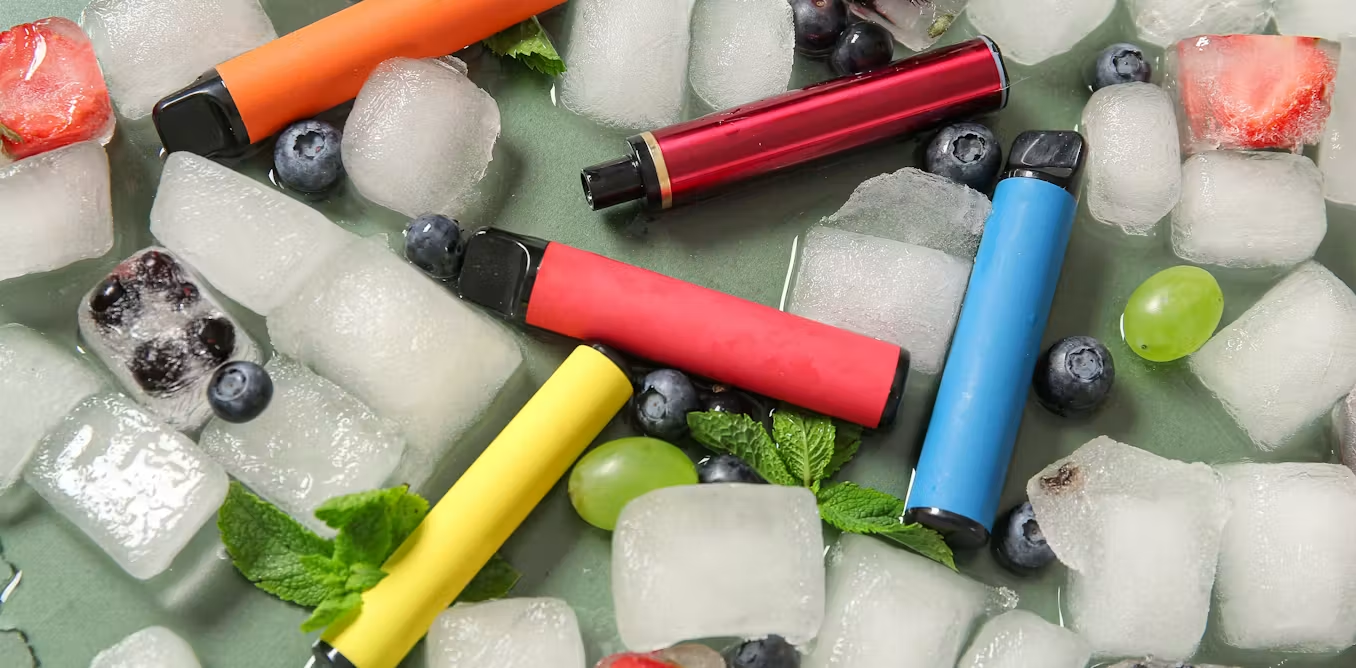
For years, flavour additives in e-cigarettes have been largely viewed as a secondary concern compared with nicotine. Research and regulation have focused on addiction, nicotine delivery and, more recently, the respiratory effects of vaping. But as evidence accumulates researchers are increasingly asking whether certain flavouring ingredients have health effects of their own.
Among the compounds attracting attention are menthol and synthetic cooling agents that create the refreshing sensation associated with popular “ice” flavours. These additives now appear in everything from mint-flavoured products to fruit and confectionery blends – and research suggests they may be doing more than simply enhancing the vaping experience.
The cooling sensation is often created by menthol or menthol-inspired synthetic compounds such as WS-3 and WS-23. These substances do not actually cool the air entering the lungs. Instead, they activate a receptor called TRPM8 – the body’s cold sensor – tricking the brain into registering cold even though the temperature of the inhaled aerosol is unchanged. The effect can make vaping feel smoother and less irritating, potentially encouraging deeper inhalation and more frequent use.
Scientists once assumed these compounds acted only within the sensory system, but TRPM8 receptors are found throughout the body. A recent study in mice found that menthol-containing e-cigarette aerosols raised heart rate and blood pressure and increased the occurrence of ventricular premature beats — usually harmless irregular heartbeats that can signal stress on the heart’s electrical system.
Advertisement
The study also found higher levels of epinephrine, the hormone behind the fight-or-flight response. Some of these effects persisted after exposure ended, with changes in heart rhythm regulation still detectable weeks later.
Researchers are now asking whether similar effects extend to the blood vessels themselves.
Blood vessels are lined with cells that help control blood flow, inflammation and clotting. Laboratory studies suggest that some chemicals used to flavour e-cigarettes can damage these cells, increasing inflammation and other forms of cellular stress while making the cells more likely to die. Some of these effects have been seen even in the absence of nicotine.
Damage to the cells that line blood vessels is considered one of the earliest signs of cardiovascular disease. This suggests that cooling agents could affect not just the heart but the entire circulatory system.
The concern is growing as manufacturers increasingly use synthetic cooling chemicals that create a strong cooling sensation without a minty taste. This allows fruit-, candy- and beverage-flavoured vapes to deliver the icy feeling many users enjoy, even though the health effects of some of these compounds remain poorly understood.
Being safe to eat does not mean something is safe to inhale. Chemicals absorbed through the lungs reach the bloodstream far more directly, and new formulations can reach the market long before comprehensive safety studies are completed.
This does not mean cooling flavours have been proved to cause heart disease – that would require larger studies in humans. But growing evidence suggests these compounds are not biologically inactive, as was once assumed. What started as research into flavour has become a wider effort to understand how these additives affect the body, and the findings are more complex than expected.
New research also found people sometimes have to travel outside of Wales to be diagnosed
Ellie Gosley Reporter and Lucinda Cameron Press Association Scotland
13:23, 15 Jun 2026
Some patients in Wales with certain conditions are waiting up to 21 years to be diagnosed, according to a new study. The study has found that people with hypermobility conditions are waiting longer to be diagnosed in Wales compared to elsewhere in the UK.
A large proportion of people who took part in the research reported having to travel outside of Wales to get their diagnosis. The study also found that people with hypermobile Ehlers-Danlos syndrome (hEDS) and hypermobility spectrum disorders (HSD) face fragmented healthcare, while it can have a major impact on their mental health, education and employment.
The conditions affect connective tissue throughout the body and are associated with joint hypermobility, chronic pain and fatigue, alongside neurological, gastrointestinal and psychological symptoms.
Advertisement
The Welsh Government said NHS Wales is working to improve the experience of people with hypermobility spectrum disorders.
The University of Edinburgh-led study of more than 2,000 people, said to be the largest of its kind in the UK, found patients waited an average of 19 to 21.7 years for diagnosis, while many respondents travelled outside of their home nation to be diagnosed.
More than a third of Welsh respondents (37.3%) and 39% of those in Northern Ireland reported leaving their country for diagnosis, as did 17.4% of people in Scotland. People in England were most likely to receive a diagnosis within their country of residence, at 97.6%.
Respondents from Wales reported the longest “diagnostic journey”, waiting on average 21.7 years between symptom presentation and diagnosis by a healthcare professional, while it was 21.1 years for Northern Ireland, 19.5 for Scotland and 19 for England.
Advertisement
The study was conducted using an online survey co-developed with patients, clinicians and Ehlers-Danlos Support UK between September 2023 and January 2024.
It found 83.9% of patients reported chronic pain, while 73.8% experienced partially dislocated joints and 66.3% had gastrointestinal symptoms. Researchers found 70.8% reported anxiety, while depression was reported by 63.3%, and migraines by 53.5%.
Almost half of respondents (45.6%) were unemployed, 55.9% reported disrupted education, and 47.9% received disability-related benefits. The study also found 20.4% of respondents reported having autism spectrum disorder, 18.1% ADHD, and 15.3% dyslexia.
Experts said their findings suggest low awareness of the conditions among healthcare professionals and limited care pathways are leaving patients without timely diagnosis or co-ordinated support. Stay informed on the latest health news by signing up to our newsletter here
Advertisement
Kathryn Berg, trial and research manager at the university’s Institute of Genetics and Cancer, said: “This study highlights the profound impact hEDS and HSD can have across every aspect of life. Our findings show the urgent need for equitable, multidisciplinary care pathways that recognise the complex and multisystemic nature of these conditions.”
Researchers said hEDS and HSD should be understood as complex multisystem conditions rather than disorders defined only by joint hypermobility.
They are now calling for formalised care pathways, better professional awareness, and multidisciplinary services integrating rheumatology, pain management, physiotherapy, occupational therapy and psychological support, alongside co-designed approaches reflecting neurodivergent needs.
A Welsh Government spokesperson said: “NHS Wales is working to improve the experience of people with hypermobility spectrum disorders and Ehlers-Danlos syndrome, who can face long and complicated journeys to diagnosis.
Advertisement
“A draft community health pathway has been developed with clinical experts across rheumatology, physiotherapy, and primary care, alongside Ehlers-Danlos Support UK, to help people receive more consistent care, closer to home, with access to specialist expertise where needed.
“Work is ongoing with partners to secure formal agreement so the pathway can be put into place with the appropriate clinical endorsement.”
A UK Government spokesperson said: “People living with hypermobile Ehlers-Danlos syndrome and hypermobility spectrum disorders deserve to have their symptoms recognised and taken seriously, and we know long waits for a diagnosis can have a significant impact on patients and their families.
“A toolkit developed by the Royal College of General Practitioners, in partnership with EDS Support UK, has been made available to clinicians to support them to recognise and manage these complex conditions by improving awareness and consistency of care.
Advertisement
“To improve access to care for patients, we have recruited 2,000 more GPs and will open 250 neighbourhood health centres by 2035, as we shift care from hospital to community as part of our 10-Year Health Plan.”
Get daily breaking news updates on your phone by joining our WhatsApp community here. We occasionally treat members to special offers, promotions and ads from us and our partners. See our Privacy Notice
Your child’s small, delicate, chalk-white baby teeth fall out. In their place grow yellowish-brown, fragile teeth – much to everyone’s surprise.
This is the dental condition molar incisor hypomineralisation (MIH), a condition that is almost as common as tooth decay, though hardly known about outside of dentistry – and even then it can often be misdiagnosed.
The condition affects how certain adult teeth form in early childhood. It isn’t caused by lack of brushing, sugar or poor dental habits, but by something that disrupts the enamel formation before the teeth even erupt.
In our work at the teaching clinic at the University of Copenhagen dental hospital, we see many children and young people needing help for this condition.
Advertisement
It affects around 28% of children in Scandinavia and is one of the most widespread dental conditions. Studies show that it’s very common across Europe, while it appears to be less of an issue across Africa and Asia.
Researchers are still trying to figure out why this is the case, though it’s suspected to be largely due to differences in diagnosis and reporting, along with the prevalence of early childhood illnesses and genetic factors.
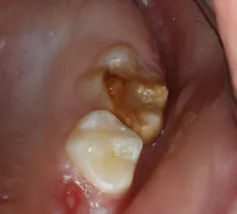
Teeth with MIH. Department of Dentistry, University of Copenhagen, Author provided (no reuse)
At the moment, MIH is still something of a puzzle for dentistry. We know it affects a significant number of children and can leave their adult teeth permanently weakened and discoloured.
But we don’t fully understand why some children develop it while others don’t. What is clear, though, is that it’s more common than many people realise.
Advertisement
Here’s what we know so far based on the current research.
What is MIH?
Enamel is the thin outer layer of our teeth and the hardest material in the body. But in children with MIH, the development of the tooth enamel has been disrupted, leaving it with fewer minerals.
This disruption occurs early in a child’s life, while the teeth are forming inside the jaw. Typically, this happens from around birth until about the age of two.
Molar tooth with MIH. Department of Dentistry, University of Copenhagen, Author provided (no reuse)
As a result, the teeth look different and can break more easily.
Most often, the enamel on the first permanent molars, the so-called six-year molars, and the front teeth are affected.
As well as the visible signs, children may also avoid brushing their teeth because it hurts – and can find that cold and hot food or drinks cause tooth sensitivity.
Research points to five possible causes of MIH. This includes:
What can parents do?
First off, it’s important to know that, with the knowledge we have today, MIH itself cannot be prevented. So, as parents, there’s nothing you can actually do to stop the condition from occurring.
Advertisement
That said, there are things you can do to help. The most obvious one is tooth brushing and the use of fluoride toothpaste. This is extremely important because the tooth enamel is softer in young children, so the teeth are harder to keep clean and are at greater risk of cavities.
Molar teeth with brown and yellowish markings from MIH. Department of Dentistry, University of Copenhagen, Author provided (no reuse)
It’s also important to help your child develop a good relationship with the dentist. It helps to speak positively about what dentists do for teeth: namely, helping to protect them better so they do not hurt or break. It’s also important to tell your child that they should say where and how a tooth hurts, if it does.
What can the dentist do?
If your child does have MIH, the dentist will assess how extensive the condition is and classify the affected teeth as mild, moderate or severe.
A molar that has crumbled away. Department of Dentistry, University of Copenhagen, Author provided (no reuse)
Molars with mild MIH are treated with concentrated fluoride gel or sealed with a transparent plastic coating to help protect them from cavities, or both.
Molars with moderate MIH will receive temporary fillings and because the tooth is very sensitive, anaesthesia is needed.
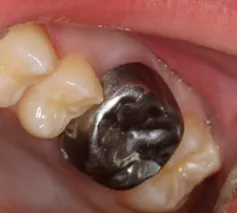
Molars with severe MIH receive fillings and, in the most serious cases, a stainless steel crown. This is a kind of foil cap that protects the tooth from breaking and from cavities and pain.
Advertisement
In rare cases, the dentist may suggest removing the tooth altogether if its long-term prognosis is too poor. This typically happens between the ages of eight and ten.
Steel crown, which is intended to protect a vulnerable tooth. Department of Dentistry, University of Copenhagen, Author provided (no reuse)
Front teeth usually only have mild to moderate MIH and so are often not treated initially.
When children with MIH get a little older, they often ask for a more aesthetic treatment. This will typically involve whitening combined with a newer type of treatment in which a thin, fluid resin can be infiltrated into the enamel.
The resin will fill the empty spaces in the enamel structure and so the apparent discolouration will disappear, leaving a tooth with a normal, smooth crown colour.
In adulthood, severely affected molars may benefit from a crown or a porcelain inlay.
Advertisement
What now?
To really tackle this condition and its effect on children’s teeth, we first need a clearer picture of how widespread it actually is. That means stronger, more consistent studies — and a better agreement across the profession on how the condition is diagnosed and recorded.
At the same time, researchers are still working to answer some of the most basic questions: what are the key triggers? And why do some children develop it while others don’t?
In the long run, more research will not only improve treatment but also help prevent the condition from causing long-term dental problems, thus reducing the need for repeated, often difficult dental care in children (and adults).
This article was commissioned as part of a partnership between Videnskab.dk and The Conversation, where articles are also published in Danish.
Having played her first ever festival show at Barcelona’s Primavera Sound at the weekend (the perks of an already-famous name), Delevingne is back on home turf tonight for the second of two debut London shows. She might have switched up her medium, but the crowd that populates Waterloo’s pop-up railway arch venue 26 Leake Street have clearly been lured by her established credentials. In the blue-lit, smoke machine-blasted live room, a mix of quirky influencer types, a few excited young girls and a hefty whack of celebrity peers (Lola Young, Little Simz, Paris Paloma) all turn the space into a sort of off-grid London Fashion Week party, only with a louder soundtrack.
Sir Keir Starmer has announced under-16s will be banned from social media in a “big moment for our country”.
The Prime Minister said earlier today that the UK will follow Australia in prohibiting teenagers from using apps like TikTok, Instagram and Snapchat.
Announcing the sweeping reforms at a Downing Street press conference, the PM said the ban was “the right step for Britain” and the best way to keep children safe online.
The ban will come into force in the early part of next year.
Advertisement
Here’s everything you need to know about the under-16s social media ban:
What social media platforms will be banned?
Snapchat, TikTok, YouTube, Instagram, Facebook and X, will all be banned under the government’s new plan.
An exhaustive list of platforms has not been released, but the government said it would apply to those which encourage social interaction and allow users to post and share material.
Advertisement
Under the new measures, children will be prohibited from live-streaming, including on gaming platforms.
Any apps that give users the option to speak with under-16s they do not know will also be blocked and restrictions will be in place by default for under-17s.
The government also said it was looking into overnight curfews and breaks in infinite scrolling for those under the age of 18.
AI romantic ‘chatbots’, which encourage sexual relationships or roleplay, will have to enforce a minimum age of 18.
Advertisement
And, AI chatbots more widely will have to restrict “intimate functionalities” for under-18s.
What platforms are not included in the social media ban?
Messaging apps like WhatsApp and Signal will not be included in the social media ban, the government says.
When will the ban come into place?
Advertisement
The government plans to pass the regulations before Christmas, which would allow the measures to be introduced in early 2027.
The government has said “highly effective age reassurance” will be used to enforce its social media ban, though it’s yet unclear what that will be.
It suggests the age verification process, which is already in place under the UK’s Online Safety Act, could be hardened or modified.
This has already been put in place to prevent under-18s from accessing pornography and other harmful content.
Advertisement
But, the requirements have been criticised by digital and civil rights campaigners who warned against people having to hand over their ID or biometrical data.
Ofcom will carry out a rapid study to identify the best ways to verify if someone is over the age of 16, the government says.
How have parents reacted to the ban?
According to a government survey, 9 in 10 parents said they would support a social media ban for children under 16.
Advertisement
But the announcement has been met with mixed views from parents and adults online, with some highlighting concerns about how a ban would be enforced.
One woman said: “This isn’t unlike the seat belt rule, or eating when you’re driving. How do you enforce it? You need compliant parents who will use parental controls, and who won’t allow their children to access these sites. And while social media and other sites may be a truly bad influence on people, old and young alike, this is not the only root of a very complex degradation of behaviour by some – far from all – young people.”
Another user showed his support for the ban, saying: “We are raising a generation that has been exposed to more pressure, negativity, comparison, and harmful content than any generation before them.
“Social media was originally designed to connect people, but for many young children it has become something entirely different. It has become a place where self-worth is measured in likes, where bullying follows children into their own bedrooms, and where harmful trends can spread across the world in a matter of hours.”
Advertisement
Another person highlighted the role of big tech, adding: “Maybe it’s just easier to pick on the kids and their parents than sort out the real issue with big tech? After all it’s not kids who allow dangerous or inhuman content to be aired and shared.”
Another parent shared her concerns about the impact on neurodivergent children, as social media can be a “lifeline” for them.
“Whilst I see completely where the government are coming from, security, cyberbullying […] it’s also a massive lifeline for neurodivergent children. A lot of neurodivergent children don’t like face to face communication. It’s really difficult for them. Social situations are hard, especially for autistic kids.”
The Prime Minister said that the proposals will take “world-leading action on gaming services and live-streaming platforms”.
Advertisement
He warned social media was having an impact on children’s happiness and mental health and that it was clear to him that “a full ban is the right choice”.
“This is not something I do lightly,” he said, “and I will not present it as cost-free, as if social media has brought no benefits to young people, because clearly that is wrong.
“But government is always about choices, and it’s clear to me that a full ban is the right choice.
“I come to it as a parent myself. I know exactly the fears that we all feel when we’re thinking about this issue.
Advertisement
“All I’ve ever wanted for my own children, hand on heart, is for them to be happy and for them to be safe, and I think that’s what any parent wants, but I ask the question now, ‘do we truly believe that social media creates a happy environment for our children?’
“Do we truly believe that it’s a place where they can feel safe? I don’t think I even need to answer those questions, do I?
“Every parent can see it with their own eyes. Social media is making children unhappy.”
With referees under as much scrutiny as ever with a number of high profile incidents throughout the 2026 season, the performance of one official has been praised
12:29, 15 Jun 2026Updated 12:33, 15 Jun 2026
Gabriel Bannigan hailed the performance of referee Paul Faloon after his side coasted to a nine-point victory over Roscommon in Clones on Saturday.
With referees under as much scrutiny as ever with a number of high profile incidents throughout the 2026 season, Paul Faloon drew praise from Bannigan for letting the game flow as much as possible.
Indeed, Jack McCarron’s free on 66 minutes was the first and only free scored in the entire game with just two yellow cards issued.
Advertisement
When asked if he preferred Faloon’s no-nonsense style, Bannigan replied: “100 per cent.
“This is Championship football. We’re all reared on Championship football.
“The players want the game to flow. I think Paul is an excellent referee. Paul will pull what has to be pulled, but he’s not going to be whistling every little thing and he’s consistent.
“He does the same for both teams. That’s what players want, that’s what management want, that’s what supporters want. So fair play to Paul.
Advertisement
“I didn’t know he (Jack McCarron) was the only one. Monaghan and Roscommon are two footballing teams. There’s not much need to blow the whistle too much.”
The Farney raced into a five-point lead playing with the wind with Stephen Mooney finding the net.
After becoming accustomed to chasing games, Monaghan were controlled and assured in possession as they closed the game out in ruthless fashion as a Roscommon fightback never materialised.
“Look, we targeted getting off to a better start than we did against Mayo,” added Bannigan.
Advertisement
“We were very disappointed with our first half performance against Mayo. I think we definitely brought a lot of the learnings from that game out there today, particularly the way we defended in the second half against the breeze, because that was the problem in our first half performance against Mayo the last day.
“We didn’t defend well against the breeze and Mayo kicked six two-pointers in the first half. “That gave us a mountain to climb in the second half, which we nearly climbed because of the character that we have in that dressing room and the quality we have in the team. But we were unlucky not to get over the line the last day.
“So we took that hurt out there today and we targeted a 70-minute performance. I was very happy we got a 70-minute performance.”
Want to see more of the stories you love from Belfast Live?Making us your preferred source on Googlemeans you’ll get more of our exclusives, top stories and must-read content straight away. To add Belfast Live as a preferred source, simplyclick here.
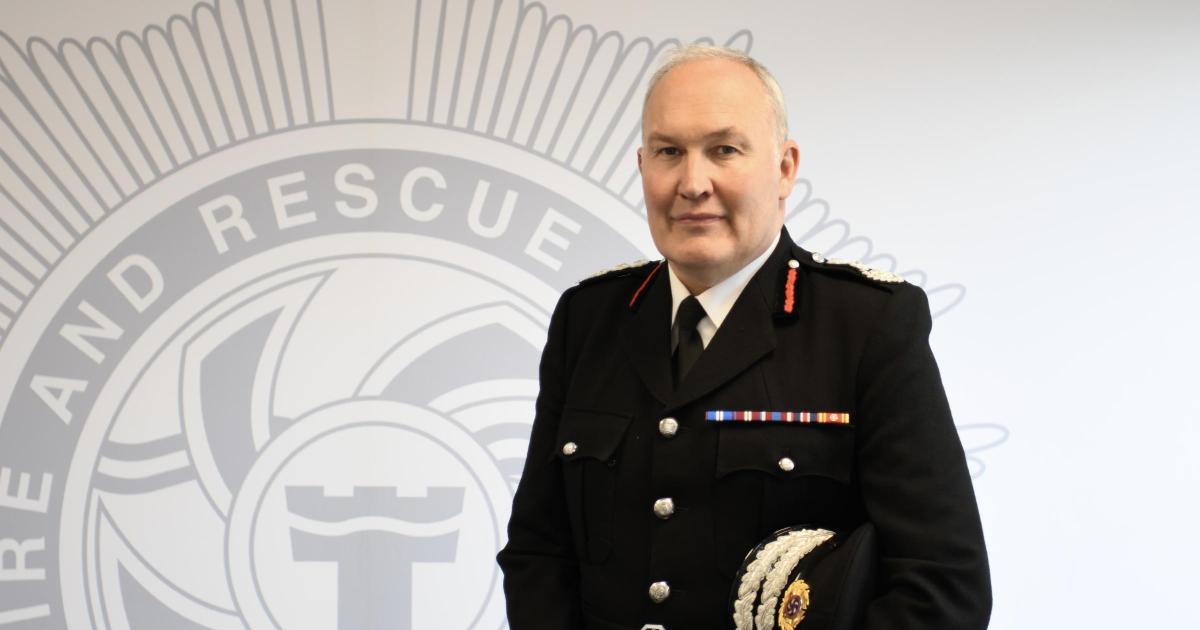
Stewart Nicholson, Chief Fire Officer of the Tyne and Wear Fire and Rescue Service, has been awarded the King’s Fire Service Medal.
The experienced firefighter, who has worked on both sides of the England/Scotland border, described the “great privilege” of receiving, “such a prestigious honour”.
Tyne & Wear’s Chief Fire Officer, Stewart Nicholson, awarded the King’s Fire Service Medal in the King’s Birthday Honours (Image: TWFRS)
Mr Nicholson said: “I will be accepting the King’s Fire Service Medal on behalf of my family and my fire and rescue service colleagues, whom I have been proud to serve alongside for more than 32 years.
Recognition for Stewart Nicholson’s 32 years as a firefighter and now senior fire officer (Image: TWFRS)
“My journey has taken me from serving as a firefighter in North and South Yorkshire Fire and Rescue Services to, three decades later, leading Tyne and Wear Fire and Rescue Service as Chief Fire Officer, with senior leadership roles in Scotland along the way.
“The blue light community has provided me with an incredible platform to support people in need across communities in both England and Scotland.
“Through my work with the National Fire Chiefs Council, I hope to continue sharing my experience and help to inspire and support future generations of firefighters.”
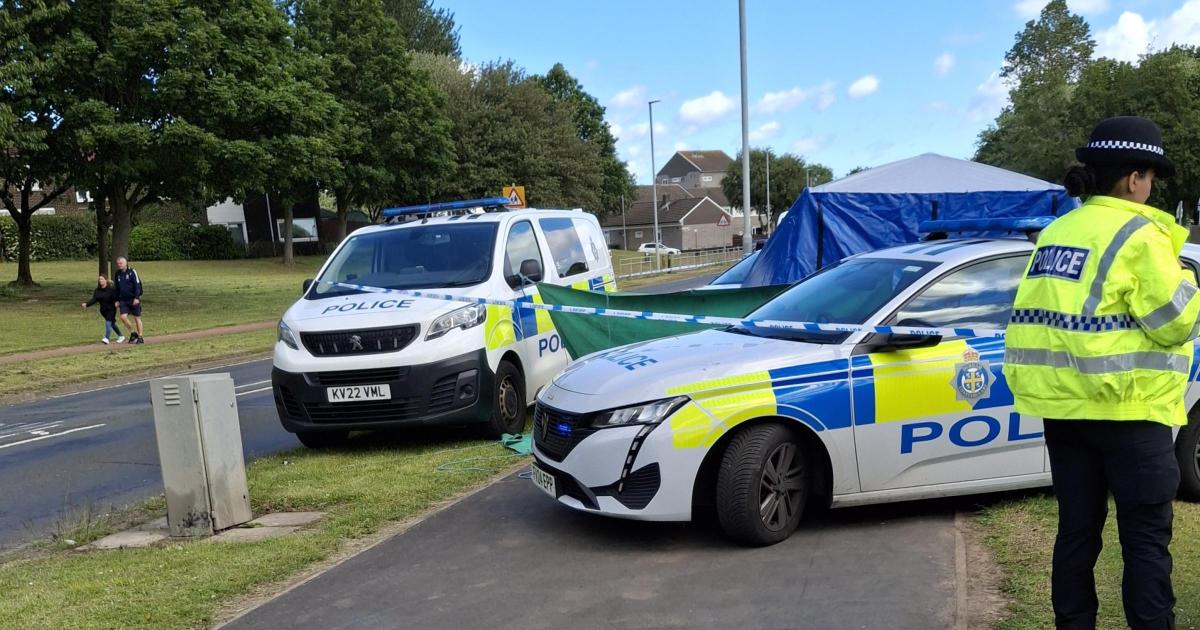
A cordon was erected on Passfield Way, in Peterlee, on Saturday morning after a woman was found unresponsive.
Durham Police said sadly, the woman was pronounced dead at the scene but confirmed they are not treating the death as suspicious.
(Image: THE NORTHERN ECHO)
A force spokesperson said: “Police were called just before 7.05am on Saturday (June 13) following reports that a woman had been found unresponsive on Passfield Way, in Peterlee.
“Paramedics were also called, but sadly the woman, who is in her fifties, was pronounced dead at the scene.
Advertisement
“Her death is not being treated as suspicious, and a file will be prepared for the coroner.”
(Image: THE NORTHERN ECHO)
Pictures show three police vehicles at the scene on Saturday morning .
The three vehicles surrounded a blue tent, which was erected on the path.
Police taped off the area around the cars, as officers were seen standing beside the blue and white cordon.
Advertisement
At the time, a North East Ambulance Service (NEAS) spokesperson said: “We were called to an incident on Passfield Way, Shotton shortly after 7am on 13 June.
“We dispatched a double crewed ambulance, a clinical team leader, a rapid response paramedic and a specialist paramedic.”
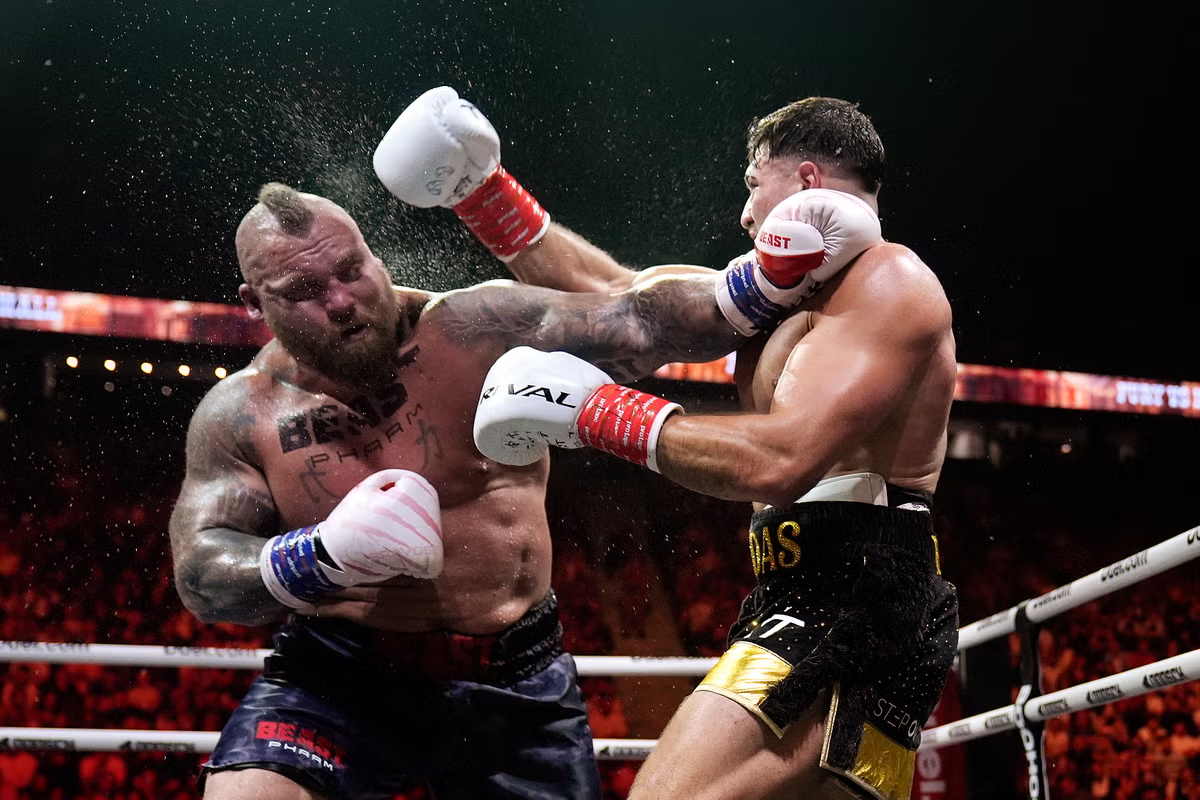
It’s is hard to know where to start and where to end when talking about the Misfitsboxing circus on Saturday night in Manchester.
There is an image of little Tommy Fury avoiding the lunges of Eddie Hall, with his 80 inch chest, and of Big Stacks, the “Hardest Man in Britain”, turning away after four rounds of body sparring, or perhaps the moment when the rapper, Jordan McCann, got hit for the first time and also turned away in utter confusion. Take your pick.
It was crude, ugly, shameful in parts, but addictive in all sorts of ways. A crowd of nearly 20,000 left throwing wild punches, laughing and vowing to return. Misfits, the business, knows its audience.
Eddie Hall lost to Tommy Fury by decision in a Misfits exhibition bout (PA)
Fury’s real boxing experience was more than enough to beat Hall; it was rudimentary, but it was enough. The Stacks and McCann fights were ridiculous – it has to be said. It is not a criticism, just a fact: all four of the men in involved would have struggled to win a fight at the Haringey Box Cup, which took place over the same weekend.
Big Stacks is also known as Charlie Roberts and is perhaps best known as the self-proclaimed “Hardest Man in Britain”. Now, that is a serious title and Stacks, thankfully, has a sense of humour; I hope he does. His fight with Armz Korleone – the best name of the weekend – was nearly called off when McCann slapped Stacks at the press conference. The slap caused a cut, there were stitches, the doctors said “no fight”, a deal was done for the pair to hit each other to the body. It was dismal; Stacks, who claimed he was out all night, saved himself in the fourth. The rematch is coming soon.
Advertisement
McCann was fighting the viral sensation, Ibiza Final Boss (his real name is Jack Kay); you will know him as the man with the odd haircut, dancing to music at clubs in Ibiza. Honest, that’s his fame; McCann threatened violence all week and then was hit after a few seconds and his body stiffened; he was, for a moment, out on his feet. He showed guts to stick with it; he found out that rapping about fighting and fighting are two very different vehicles. At the end of a thousand swings and four rounds, the man with the pudding-bowl haircut and immaculate teeth got the nod. The crowd loved it.
Ibiza Final Boss gets cracked by a punch from Jordan McCann (Getty)
In another fight, a boxer called Anthony Taylor dropped to his knees in frustration, claiming a substance had been rubbed into his eyes. It was dramatic and then he raced at his opponent and tried to rugby tackle about ten men. It was not the first and it will not be the last chaotic end to a Misfits fight. The crowd came for the skirmishes and they know that Taylor, a serial offender, often delivers a bit of anarchy.
When Misfits started in 2022, with KSI as one of the founding members, it had a fresh quality, an innocence in some ways. It was not a threat to the real boxing business. The thinking at the time was that traditional boxing could learn from the influencers, learn about having a social media presence, learn about marketing. That was a convenient theory.
Enjoy 185+ fights a year on DAZN, the Global Home of Boxing
Never miss a fight from top promoters. Watch on your devices anywhere, anytime.
ADVERTISEMENT. If you sign up to this service we will earn commission. This revenue helps to fund journalism across The Independent.
Advertisement
On Saturday, Misfits pushed right up to the thin crossover line between boxing and the glory days of wrestling. It’s not a threat to boxing, but the carnival on Saturday was not very dignified. They might not be very good at boxing but they are still judged as boxers and so is the event. Great business, not a great image for the sport.
Under new laws set to come into force later this month, North Yorkshire Council will remove councillors’ usual residential addresses from its website by default.
The changes follow the recent passing of new laws, which scrap the decades-old requirement for politicians to publish where they live.
The move comes amid mounting national concerns over councillor safety.
Advertisement
Previously, members had to apply on a case-by-case basis to have their addresses redacted as a “sensitive interest” if they feared intimidation.
In North Yorkshire alone, 19 councillors have already withheld their home addresses under these safety rules.
Now, the authority’s standards and governance committee is set to meet on June 19 to rubber-stamp changes to its code of conduct to reflect the law.
Under the new rules, a councillor’s address will only be made public if they explicitly request it.
Advertisement
Without that permission, the online register will simply state that the information is “withheld from publication”.
However, politicians must still register their addresses confidentially with the council’s monitoring officer to maintain transparency.
Barry Khan, the council’s monitoring officer, said in a report prepared ahead of the meeting: “The legal change aims to improve councillor safety, reduce risks of harassment, modernise transparency rules and ensure that personal data is handled proportionately.”
Parish and town councils in North Yorkshire are also being encouraged to review their codes of conduct regarding addresses.
Advertisement
Officials say the change represents a modern, proportionate approach to personal data that prioritises the safety of elected officials without compromising local democracy.
























































You must be logged in to post a comment Login