
Tech
Say goodbye to roaming fees with Airalo’s travel eSIM

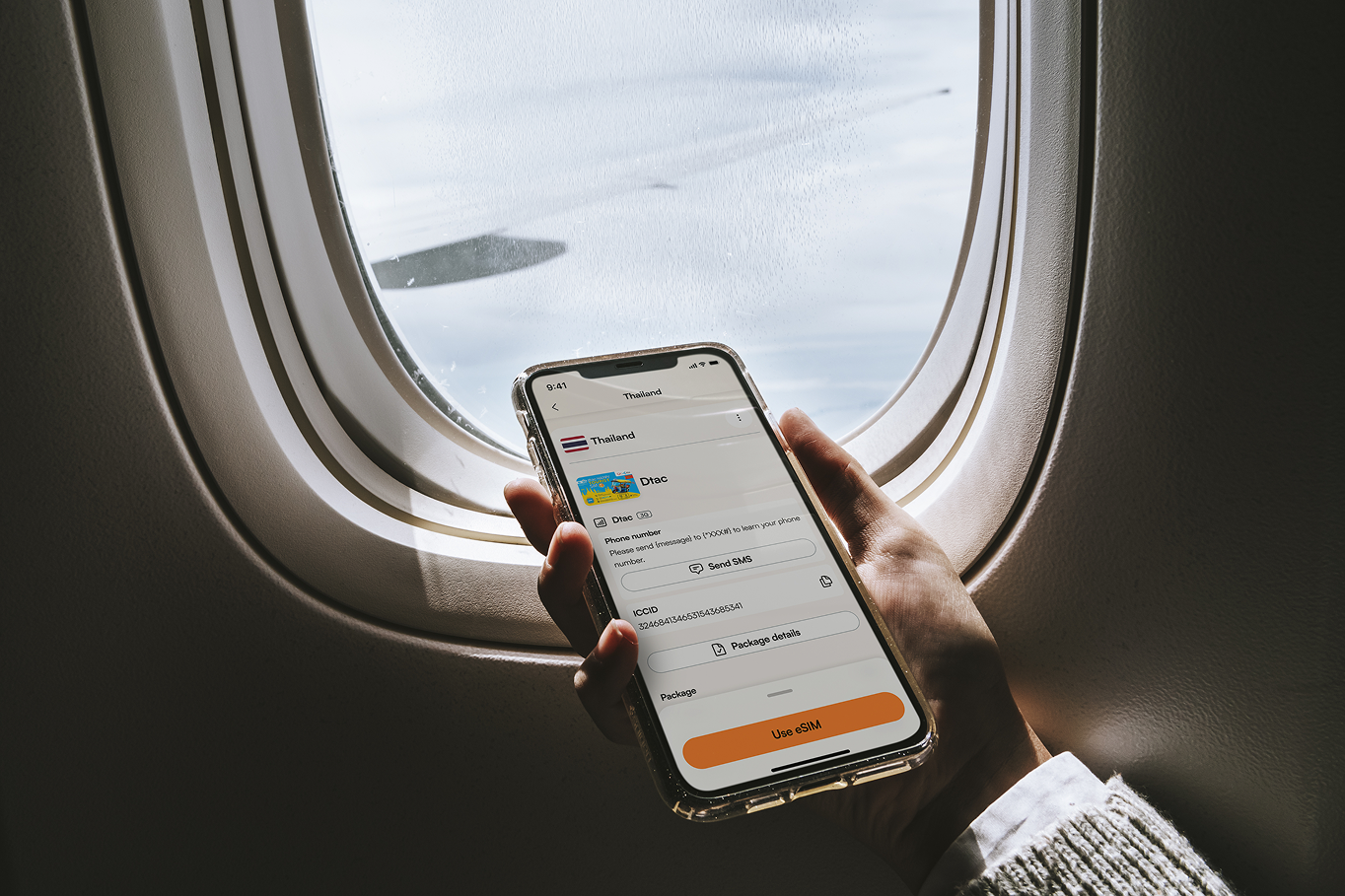
Landing in a new country and watching data charges creep up before the first coffee is ordered is one of travel’s most avoidable frustrations. Airalo fixes it with an eSIM installed before you even board.
Airalo has earned its scale rather than bought it, growing since 2019 into the world’s leading travel eSIM service used by more than 30 million travellers across 200-plus destinations.
What began as a way to skip the airport SIM kiosk has become the default fix for anyone who wants their phone working the moment the plane doors open, whether that’s for maps, messages, or checking into a hotel.
Instant connectivity
Instead of hunting for a signal or relying on patchy hotel Wi-Fi, an Airalo eSIM installs digitally through the app in minutes and connects the second a traveller lands. Local, regional, and global data packages cover the same trip differently depending on whether it’s a single city break or a multi-country route, so the plan can match the itinerary rather than forcing one contract to stretch across borders. They also offer unlimited data so you never need to worry about running out, and you can hotspot to as many devices as you wish!
That flexibility carries real weight for business travellers checking emails between meetings, families coordinating logistics across time zones, and solo travellers navigating unfamiliar transit systems, since all three need data that works immediately rather than data that needs troubleshooting. Existing eSIMs can also be topped up once a package runs low, so a longer trip doesn’t mean starting the setup process over from scratch.
Easy installation and pricing
Setting one up only requires checking that a device is eSIM-compatible and unlocked, then downloading the Airalo app and following the prompts to install the plan before departure. Once activated, the eSIM connects automatically to a supported local network on arrival, without a physical SIM ever changing hands or a phone needing to restart.
Plans start from just £3.50, and applying the code TRUSTEDREVIEWS10 at checkout adds a further 10% off sitewide, available to new and existing users until 31st December 2026. Between the local, regional, and global options on offer, there’s a package suited to a weekend abroad and to a longer route through several countries alike.
Stay connected with an Airalo eSIM. Prices start at just £3.50, and the code TRUSTEDREVIEWS10 saves an extra 10% sitewide.


When Borsook and I first met, in December of last year, she was fully in the midst of what she terms “this resuscitation thing.” It had happened so quickly and altogether without her knowledge: a social media post here, another one over there, celebrated tech critics like Gil Durán of The Nerd Reich exhuming her book and waving it around as proof that, even in the go-go days of the dotcom bubble, some people saw where things were headed. “Instead of centering men who missed the boat (and still don’t seem to get it), let’s lift up the work of Paulina Borsook, who saw it all very clearly and tried to warn us 25 years ago,” Durán wrote in a widely shared post on Bluesky—in response to a 2025 WIRED essay by Steven Levy. Borsook was christened a prophet, unappreciated in her time but uniquely fitted to ours. Hadn’t she written of “testosterone-poisoned guys with chips on their shoulders and too much time on their hands” years before the manosphere? Hadn’t she recuperated the Luddites as “early protesters of de-skilling” back when “Luddite” was an epithet? Hadn’t she raised her eyebrows at the theorists of Sand Hill Road playing footsie with eugenics? Cyberselfish became a minor phenomenon without Borsook so much as saying a word about it. The New York Times profiled her, calling her “The Writer Who Dared Criticize Silicon Valley.” It’s like what a friend once told her: The universe isn’t done with you yet.
Publishers were now keen to get the book back in circulation. That day in December, five of them had sent their bids to her agent. (Eventually, Borsook would settle on Tin House, which published a new edition of Cyberselfish in mid-September, with a foreword by Durán.) The offers were validation, after all those years in the wilderness. Things were finally looking—
“It really kind of broke my heart in so many ways,” Borsook was saying now at the restaurant, as we waited to order. Her mind was back in 2001, wondering again what had happened to her career. Was it something she’d written? Could it have been an actual blacklist? Was it something as depressingly commonplace as sexism? “I really hate playing that card,” she said, “but I do have to wonder.” She just couldn’t figure it, even still, all these years later. In a way, the happy turn of events in the past few months had left her even more discombobulated. As she told me more than once, “I don’t know how to think about myself anymore.” She’d won me over in a matter of hours—a common enough phenomenon, I would learn, among people who find themselves in Borsook’s orbit. When I dropped her off that afternoon, I promised—only half in jest—to find the guy who killed her career.
Ok, but first I have to tell you about Dick Pick. Literally his name. Richard A. Pick. Went by Dick. It was the 1960s, and back then you could walk around with a name like that and no one would think to laugh, even if you were, as Dick Pick apparently was, something of a serial flirt.
Dick Pick was a software developer for a military contractor during the Vietnam War. The story goes that the Army needed a way to track spare parts for Lockheed’s Cheyenne attack helicopter. Alongside his business partner, Don Nelson, he came up with a database operating system that they called—and here you have to imagine two of the shit-eatingest grins you’ve ever seen—the Generalized Information Retrieval Language System: GIRLS. (What, you thought tech bros were a new phenomenon?) Like a lot of tech innovation underwritten by defense spending, GIRLS was soon put to commercial use. Eventually it came to be known as PICK, and it was with this latter name that the operating system found itself under the fingertips of one Paulina Borsook, an employee at a small software company in Marin County.
Before she became one of the sharpest media observers of early Silicon Valley, Borsook first learned how to see tech. That happened in the early 1980s, in front of one of those so-called minicomputers that were in fact big enough to be buried in. The company was called Construction Information Systems, and Borsook was doing some technical writing, documenting in the plainest language she could muster how the software worked.
Tech
Craft Recordings and Bluesville Records Reissue Brownie McGhee and Sonny Terry Classics on 180-Gram Vinyl
Sonny Terry and Brownie McGhee spent decades being treated as a single musical unit, which makes these two upcoming Bluesville reissues more interesting than another pair of titles pulled from the Prestige vaults.
Recorded just one week apart at Rudy Van Gelder’s Englewood Cliffs studio in October 1960, Brownie’s Blues and Sonny’s Story shifted the spotlight onto each musician individually. McGhee leads the former, with Terry appearing on harmonica, while Sonny’s Story puts Terry firmly out front with Sticks McGhee on guitar, J.C. Burris on harmonica, and Belton Evans on drums. The sessions offer a different perspective on two musicians whose names became almost inseparable during their long partnership.
Craft Recordings and Bluesville Records will return both albums to vinyl on November 20, 2026, with mastering from the original analog tapes by Matthew Lutthans at The Mastering Lab. The 180-gram LPs are being produced in partnership with Acoustic Sounds, pressed at Quality Record Pressings, and packaged in reproduction tip-on jackets with new obi notes from GRAMMY-winning producer and writer Scott Billington.
That combination has become familiar to anyone following the revived Bluesville series. Craft and Acoustic Sounds have been digging through the Prestige, Bluesville, Riverside, Vanguard and related catalogs with an emphasis on original tapes, heavyweight QRP pressings and substantially better packaging than these recordings have received during many previous trips back to vinyl.
Sonny’s Story and Brownie’s Blues will also be available in hi-res and standard digital formats on November 20.
Related Reading:
Sonny Terry Steps Out Front on Sonny’s Story
Sonny Terry’s harmonica was never merely accompaniment. His whoops, train whistles, animal cries, and sharply rhythmic playing became one of the most recognizable sounds in Piedmont blues. Born in Georgia in 1911, Terry lost his sight following childhood accidents and turned increasingly to music as a means of supporting himself. By the 1930s, he was performing alongside Blind Boy Fuller in North Carolina, and his appearance at John Hammond’s celebrated 1938 From Spirituals to Swing concert at Carnegie Hall helped introduce him to a much larger audience.

Terry’s partnership with Brownie McGhee would eventually span decades and make the pair one of the most familiar blues duos of the 20th century. But Sonny’s Story gives Terry considerably more room to stretch out on his own. Recorded by Rudy Van Gelder at his Englewood Cliffs studio on October 13, 1960, and released on Prestige’s Bluesville imprint in 1961, the album features Terry on vocals and harmonica alongside Sticks McGhee on guitar, Belton Evans on drums, and J.C. Burris on harmonica.
The ten-song album consists entirely of Terry compositions and makes a strong case for viewing him as far more than one half of a famous duo. “High Powered Woman” and “My Baby Done Gone” showcase the infectious rhythmic attack that made his harmonica playing so distinctive, while “Telephone Blues” and “I Ain’t Gonna Be Your Dog No More” reveal a more emotionally direct side of his singing and songwriting. The twin-harmonica interplay with Burris is another highlight and gives portions of the record a character quite different from Terry’s recordings with Brownie McGhee.
Terry’s career ultimately extended well beyond the blues circuit. He appeared in the original Broadway production of Finian’s Rainbow, worked in film, and received a 1982 National Heritage Fellowship from the National Endowment for the Arts alongside McGhee. But Sonny’s Story captures something particularly useful for anyone who knows him primarily through that partnership: Sonny Terry without Brownie McGhee standing beside him, and with nowhere for his considerable personality to hide.
Brownie McGhee Stretches Beyond Piedmont Blues on Brownie’s Blues
Brownie McGhee was one of the defining guitarists of Piedmont blues, but reducing him to that description misses a substantial part of what made him such an interesting musician. Born in Knoxville, Tennessee, in 1915, McGhee grew up in a musical family and developed a fingerpicking style built around syncopated melodies and a thumb-driven bass line. By 1940, he had landed his first recording session through Okeh Records and soon began working with Sonny Terry following the death of Terry’s previous partner, Blind Boy Fuller.
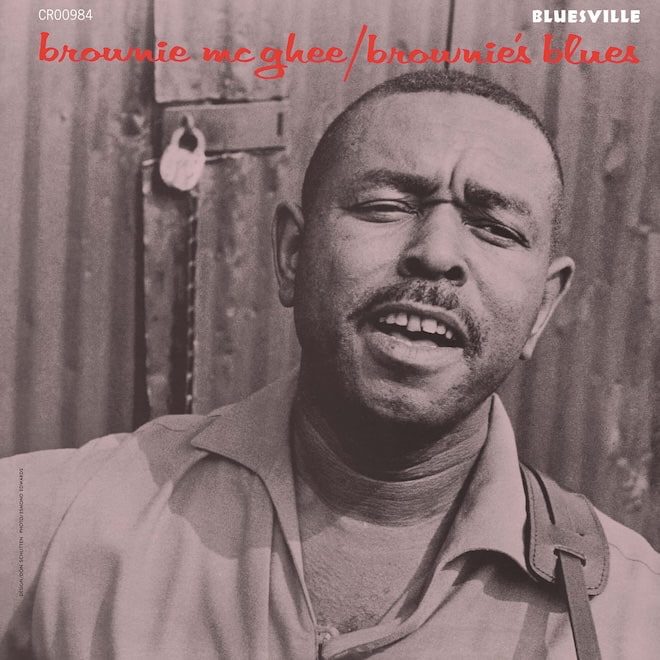
The partnership with Terry would define much of McGhee’s career, but Brownie’s Blues gives the guitarist considerably more room to demonstrate just how broad his musical vocabulary had become. Recorded by Rudy Van Gelder at his Englewood Cliffs studio on October 6, 1960, and released by Bluesville in 1962, the album features McGhee on vocals and guitar, Terry on harmonica, and Bennie Foster on second guitar.
There is plenty of Piedmont blues in the mix, but McGhee also pushes into jump blues and more jazz-inflected territory. “Jump, Little Children,” “Lonesome Day,” and “The Killin’ Floor” have considerably more rhythmic drive, while his interpretations of “Trouble in Mind” and “Every Day I Have the Blues” give him room to show off the sophisticated single-note playing that often gets overlooked when his name is automatically paired with Terry’s.
That broader range is really the point of Brownie’s Blues. McGhee sounds relaxed, confident, and far less constrained by the expectations of the duo format, with Foster and Terry filling out the arrangements without crowding him. Van Gelder’s recording also keeps the focus where it belongs: on McGhee’s guitar work and warm, conversational vocals.
McGhee was hardly confined to the blues circuit either. He performed on Broadway in Finian’s Rainbow, Cat on a Hot Tin Roof, and Langston Hughes’ Simply Heavenly, worked extensively in film and television, and continued touring and recording for decades. In 1982, he and Terry were among the inaugural recipients of the National Endowment for the Arts’ National Heritage Fellowships, cementing their place well beyond the folk revival that had helped introduce them to another generation of listeners.
Where to buy:
Both albums are available for pre-order now, and will be released on November 20, 2026.
Related Reading:
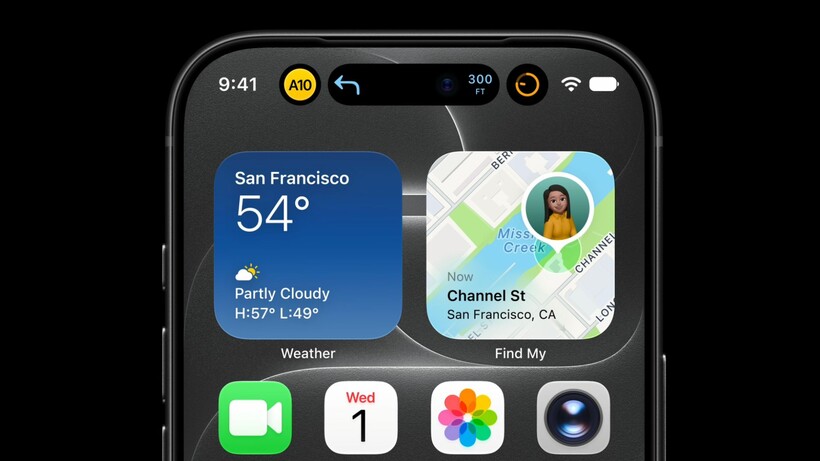
After months of speculation and plenty of rumours, Apple has finally unveiled its long-awaited foldable, the iPhone Duo. But how does it compare to the flagship iPhone 18 Pro?
While we’re yet to review either the iPhone Duo or iPhone 18 Pro, we’ve compared its specs to decipher what’s different and what’s the same with the Apple flagships.
Read on to learn more about the iPhone Duo and iPhone 18 Pro, and decide whether you think either will join our best smartphone guide.
For more from Apple’s launch event, visit our iPhone 18 Pro vs iPhone 18 Pro Max and iPhone Duo vs Google Pixel 11 Pro Fold comparisons.
Specs Comparison Table
| iPhone Duo | iPhone 18 Pro | |
| Battery | Typical use up to 24 hours | Typical use up to 34 hours |
| Chipset | A20 Pro | A20 Pro |
| Rear Cameras | 48MP + 48MP | 48MP + 48MP + 48MP |
| Manufacturer | Apple | Apple |
| Operating System | iOS 27 | iOS 27 |
| RRP | £/$1999.99 | £/$1199.99 |
| Outer screen | 5.4-inch | 6.3-inch |
| Inner screen | 7.6-inch | N/A |
Price and Availability
Although it has been unveiled, the iPhone Duo is not currently available to buy or pre-order. Apple’s first foldable will instead be available for pre-order from October 16 ahead of its official launch from October 23.
Perhaps unsurprisingly, it’s the most expensive iPhone in Apple’s range, with a starting price of an eye-watering £1999/$1999 for the 256GB handset. This can rise up to a massive £3199/$3199 for its 2TB iteration.
Alongside the Pro Max, the iPhone 18 Pro is available to buy now and has a starting price of £1199/$1199 for the 256GB handset. Much like the iPhone Duo, the iPhone 18 Pro also comes as a 2TB handset which will set you back £2399/$2399.
iPhone Duo is a foldable phone with two screens
The biggest and most obvious difference between the two iPhones is with their respective form factors. While the iPhone 18 Pro is a traditional candybar phone, the iPhone Duo is a book-style foldable that has two displays – one outer panel that opens to reveal a much larger internal display.
The iPhone Duo’s outer display is a compact 5.4-inch Super Retina XDR panel, that’s equipped with ProMotion, has always-on technology and sports Apple’s redesigned Dynamic Island too. In addition, although it’s considerably smaller than the iPhone 18 Pro’s 6.3-inch screen, Apple states that the iPhone Duo’s outer display covers more than 90% of the screen area of the iPhone 18 Pro too.
Even so, the iPhone 18 Pro is still equipped with plenty of the same premium screen technologies seen within the iPhone Duo, including ProMotion, always-on and a Dynamic Island too. What it doesn’t have, however, is an additional internal screen.

The iPhone Duo’s internal screen measures 7.6-inches and is designed to make streaming video content, gaming and productivity tasks easier. It also shares the same aspect ratio as the outer panel, which Apple promises will enable a smoother experience when switching between the two screens.
Plus, with iOS 27, the software is tailored to best suit the foldable’s design, with controls automatically moving to the side for a more intuitive experience too. If you’ve ever used even one of the best foldable phones, you’ll know the experience isn’t always fluid.

Finally, Apple states that the Apple Pencil with USB-C will also work on both panels too.
Both run on Apple’s A20 Pro chip
Naturally as Apple’s flagship smartphones, both the iPhone Duo and iPhone 18 Pro are fitted with Apple’s flagship A20 Pro chips. Hailed as Apple’s fastest ever iPhone chip, A20 Pro promises to run Apple intelligence using “the most advanced” on-device AI model that the brand has ever designed.
The chip is built on 2nm technology and sports a 6-core CPU that Apple claims is the fastest found in any smartphone – although Qualcomm has since made the same claim with its Snapdragon 8 Elite Extreme Gen 6 mobile processor.
In addition, A20 Pro has a 7-core GPU that sees 40% faster graphics performance since last year’s A19 Pro. Both the iPhone Duo and iPhone 18 Pro are also equipped with a next-gen vapour chamber for efficient cooling too.
iPhone 18 Pro has three rear lenses, including a telephoto
Other than their designs, the next biggest difference with the iPhone Duo and iPhone 18 Pro is with their respective cameras. Although we haven’t reviewed either yet, by their specs alone we’d recommend opting for the iPhone 18 Pro if photography is the most important aspect of a handset for you.

While the iPhone Duo is fitted with a 48MP Dual Fusion camera system that’s made up of a main and ultrawide, the iPhone 18 Pro boasts three rear lenses that includes a dedicated telephoto lens too. Not only that, but Apple states the iPhone 18 Pro’s main lens is the most advanced camera it has ever made, thanks to its variable aperture that automatically lets in more or less light according to the shooting environment.
Both have an IP68 rating
If you’re concerned about the durability of the iPhone Duo, then fortunately Apple has equipped its first foldable with plenty of protection. Alongside a titanium frame and hinge cover, the iPhone Duo has an IP68 rating, which means it’s dust-tight and can survive submersion in water too. That’s pretty rare for a foldable, with many offering much lower ratings.

Although it’s rare for a foldable, an IP68 rating is standard for most of the best smartphones and even the best mid-range phones too. With that in mind, it’s not surprising that the iPhone 18 Pro also sports an IP68 rating.
iPhone Duo has an under-display front camera
Although both phones have Center Stage front cameras, which means you will always stay in shot even when walking around, they differ with their exact offerings. The iPhone 18 Pro is fitted with an 18MP front camera while the iPhone Duo’s is a slightly lower resolution of 12MP.
In addition, the iPhone Duo’s front camera is under the front display. While Apple hasn’t given much detail about this, we know from experience that although under-display front cameras give more of an immersive screen, it does result in less detailed photos.
Early Verdict
Both the iPhone Duo and iPhone 18 Pro are seriously impressive looking smartphones, but arguably for different reasons. While both promise exceptional performance, the iPhone Duo is designed for productivity whereas the iPhone 18 Pro is a brilliant choice for photographers, content creators and the like. Plus, remember the iPhone Duo is considerably more expensive too.
We’ll update this versus once we review the iPhone Duo and iPhone 18 Pro.
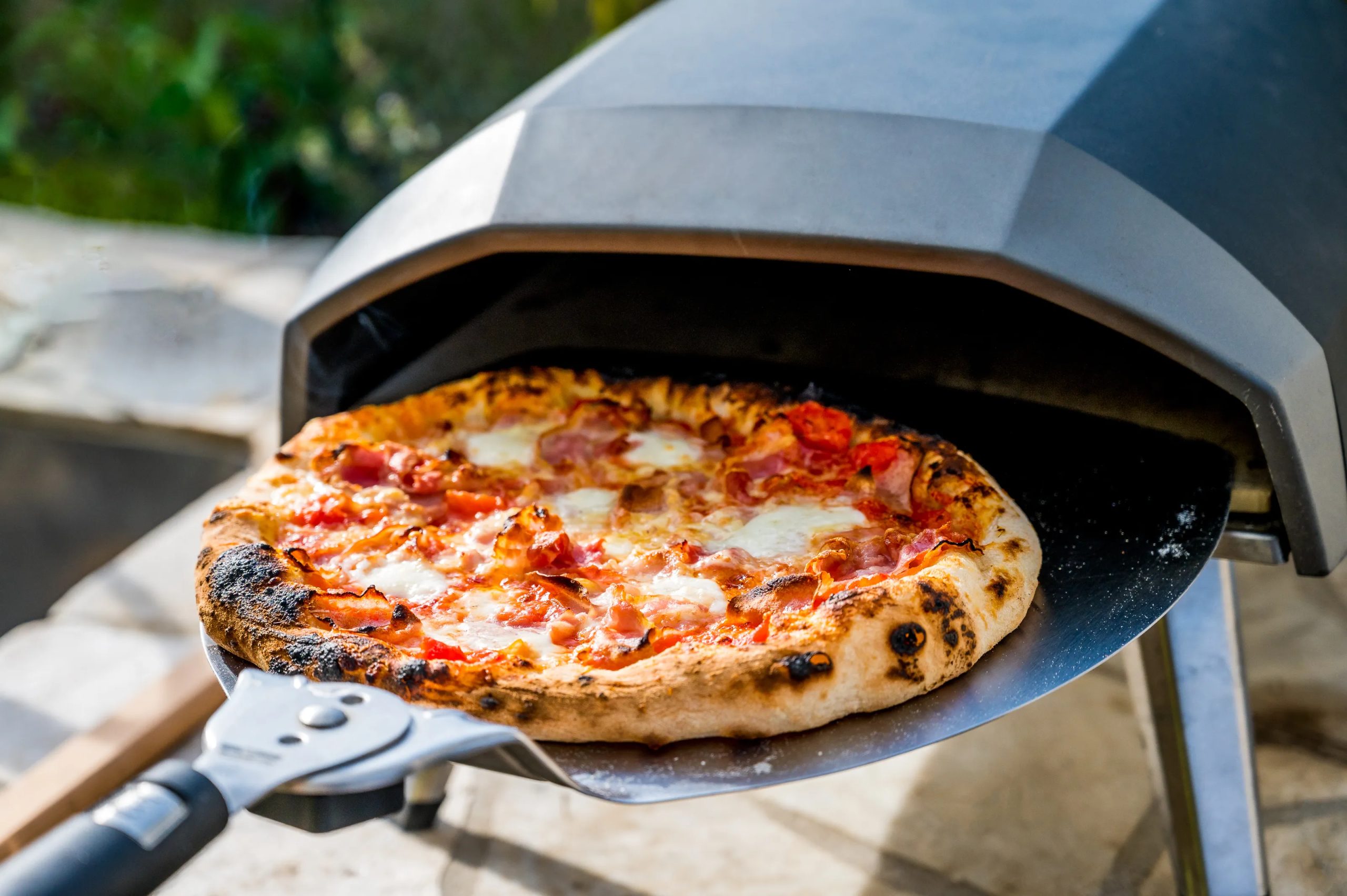
If you have cursed in the vicinity of your phone while trying to launch a pizza into your pizza oven without inadvertently creating a calzone, chances are even better that Big Internet Brother has targeted you for a sliding pizza peel. If, after dozens of practice launches, you haven’t mastered the art of the traditional wood or perforated metal pizza peel, even with all-powerful semolina flour gliders, you may be very tempted by the ease promised by such a tool as a sliding pizza peel.

The Best Pizza Ovens, Tested by CNET
But is it worth it? Or is it just the Temu-niverse capitalizing on your desire for a homemade pizza that doesn’t come with a side of anxiety and despair? Reader, the temptation was too strong. I checked one out, and here’s the lowdown on what you can expect from a sliding pizza peel.
How does a sliding pizza peel work?

A sliding pizza peel is essentially a lightweight wooden pizza peel with a manual conveyor belt attached. Rather than thrusting a stationary peel under your entire pie, you only need a small edge of maneuverability to start. Once the sliding peel gets a little purchase on the raw pizza dough, you pull the cloth slide toward you by its handle while pushing the wooden board underneath.
To launch the pizza with a sliding pizza peel, reverse the process: Use the handle on the cloth glider to push, sliding the pizza into the oven while pulling the sturdy board out from underneath it.
Cloth, you say? Well, not exactly. The conveyor mechanism moves like fabric, but think of it more like a nonstick baking mat. Many are made of woven fiberglass with a polytetrafluoroethylene coating, which is nonstick but still grips enough to hold raw or cooked pizza dough. It’s frankly like a flimsier Silpat or not unlike an oilcloth table covering.
PTFE, in case you’re wondering, is related to per- and polyfluoroalkyl substances. Yes, we’ve worked hard to avoid PFAS; however, the material’s pliability doesn’t encourage chipping, and it is also replaceable. The wooden board itself admittedly also spares every expense without the heavy lifting required of other wooden pizza peels — this is made from raw, lightweight bamboo.
Sliding pizza peel best practices

While a sliding pizza peel may seem like a cure-all, if, like me, you adore what your pizza oven offers but still struggle with pizza peel mechanics, it still requires practiceof its own —and caution. As with more traditional pizza peels, it cannot undo other mistakes, such as poorly constructed, too warm pizza dough or an overloaded pie. You can still calzone-ify your pizza, even with a sliding pizza peel.
Unlike a traditional pizza peel, which lets you push and pull simultaneously, the sliding pizza peel’s primary handle is also very short, meaning you kind of have to get (uncomfortably) close to the mouth of the oven to use it.
The fact that none of these seemingly magic wands are produced or branded by any major pizza oven manufacturer should serve as a caution. (Pizza oven manufacturers probably just want you to become a bona fide pizzaiolo, confidently using the legitimate tools of the trade; they are clearly not trying to encourage the use of these cheap devices.)
Various sliding pizza peels are purportedly heat-resistant up to a certain temperature (which varies). Many pizza ovens, however, can reach temperatures much hotter than those sliding peels are designed for.

More than one user on various online pizza oven forums reported that the nonstick belt of a sliding pizza peel melted onto the hot pizza stone. Others, however, called the device an absolute game changer. Either way, using a sliding pizza peel requires you to launch quickly, which again requires practice, probably best done outside your actual pizza oven. (Your oven-oven with a removable pizza stone? A much lower-stakes practice arena.)
My experience with a sliding pizza peel

I have been an enthusiastic pizza oven user since one came into my life, but I still haven’t mastered the mechanics of either a traditional wood or perforated metal pizza peel. I slightly prefer metal, but either way, pizza attempt number one always results in a folded disaster. My crime, apparently, is wanting the kind of thin pizza crust a 20-year-old New Yorker demands. The thinner the pizza, the harder to launch.
I can attest that the sliding pizza peel did make it easy to pull the pizza off the cutting board where I shaped the dough and applied toppings. Despite feeling cheaply made, the mechanics are inarguable. I achieved a crust thinness I truly couldn’t with the other models.
While you have to get close to the heat to deposit it, I haven’t earned any burns or scars from trying. Repeated launches in a very hot pizza oven also didn’t seem to affect the fabric slide, but then again, I was prepared to move extremely fast to avoid a crisis—and to get away from the heat.

In case it merits saying, a sliding pizza peel is entirely unnecessary for pulling pizza out of a pizza oven. In fact, I would caution against it since it really relies on setting the peel down on the pizza stone, never mind the fact that you really have to get your hand inside the oven in the starting position for pulling a pizza onto it. Once a pizza is fully cooked and the dough is sturdy, even a thin pizza can be collected with a more traditional pizza peel anyhow.

The verdict on a sliding pizza peel? Proceed with caution. And practice.
Ultimately, the average price of sliding pizza peels available online is about $30. Even with mixed reviews, it’s a fairly low-stakes gamble to see whether one improves how often you use your big-ticket pizza oven.

Tech
Review: Vince Guaraldi’s Complete ‘It’s a Mystery, Charlie Brown’ Score Gets First-Ever Release

Any new Vince Guaraldi album featuring previously unreleased versions of classic themes like “Little Birdie” and “Joe Cool” certainly catches my attention. Such is the case with the first-time release of the complete score to the February 1974 Peanuts TV special It’s a Mystery, Charlie Brown, featuring outstanding music by the legendary composer, pianist, and performer.
With his career catapulting after the mid-’60s mega-success of A Charlie Brown Christmas, Vince Guaraldi continued pushing his own personal envelope with each subsequent album release, exploring new instrumentation and musical constructs. He was even hanging out with the Grateful Dead for a spell in the late ’60s (look for him in the group photo on the back cover of the Dead’s Aoxomoxoa!).
So, it’s not surprising to me that he learned how to play guitar, and by the time of It’s a Mystery, Charlie Brown, his style had become quite accomplished. Here, he lends some bluesy electric guitar textures to his compositions in addition to piano, electric piano, clavinet and… whistling!

These new Peanuts soundtrack releases are important because there were never really official albums issued back in the day, aside from some poorly executed children’s records that included dialogue. Finally hearing all of this lost music curated into bona fide listening experiences is a joy!
Clocking in at more than 42 minutes, 15 of It’s a Mystery, Charlie Brown’s 21 tracks comprise the complete cue score. Four alternate and unused tracks from the recording sessions, plus two excellent covers of jazz standards — including an exemplary extended exploration of “Autumn Leaves” by the full band and Charlie Parker’s “Billie’s Bounce” — round out the offering.

At times funky and always grooving, Guaraldi’s score is propelled by the outstanding rhythm section of pioneering Oakland “East Bay Funk” drummer Mike Clark (Herbie Hancock’s Headhunters, Betty Davis, Brand X, etc.) and session bassist Seward McCain.
Produced by Sean and Jason Mendelson, sons of longtime Peanuts television producer Lee Mendelson who now run their father’s film company, the It’s a Mystery, Charlie Brown soundtrack was mixed at the San Francisco Bay Area’s Bones and Knives Studio by engineer Terry Carleton. The recordings were restored and remastered by Vinson Hudson.
It’s a Mystery, Charlie Brown also includes a 12 page booklet packed with rare photos and stills from the TV special. Sean and Jason Mendelson contribute extensive liner notes and track by track analysis, respectively, while acclaimed Guaraldi biographer Derrick Bang rounds out the package with new essays.

As with past Peanuts soundtrack releases, the producers have had some fun with the packaging. In keeping with the theme of the show, the album includes a bonus magnifying glass card that you can use to find hidden clues throughout the package and unlock special bonus material online.
No spoilers here, but I had fun finding many of the clues and ultimately getting to hear the complete bonus track, a portion of which is included on the vinyl in its own hidden locked groove section!
All in all It’s A Mystery, Charlie Brown is another completely solid, great sounding and enjoyable new Vince Guaraldi album release. You can order the black vinyl edition via Amazon for $32.99. There are also numerous exclusive color variants available from different retailers, including Barnes & Noble, Urban Outfitters and independent record stores.
Our Ratings
★★★★★★★★★★ Music
★★★★★★★★★★ Sound
★★★★★★★★★★ Packaging



Where to Buy:
Mark Smotroff is a deep music enthusiast / collector who has also worked in entertainment oriented marketing communications for decades supporting the likes of DTS, Sega and many others. He reviews vinyl for Analog Planet and has written for Audiophile Review, Sound+Vision, Mix, EQ, etc. You can learn more about him at LinkedIn.
Skip one hidden step when you cut back or cancel iCloud and you could lose years of photos and messages before your account fully disconnects. Here’s how to safely export iCloud data.
 Apple apps
Before changing anything, you need to know what each iCloud service holds and what happens when synchronization stops. Settings presents iCloud as a single service, but several separate systems work behind that name.
Some services synchronize live libraries or store files. Others back up devices or power Apple-only features such as Hide My Email and HomeKit Secure Video.
iCloud Backup generally excludes data that already synchronizes through iCloud. Photos in iCloud Photos usually aren’t duplicated in a device backup, and the same applies to messages and notes stored in iCloud.
Continue Reading on AppleInsider | Discuss on our Forums
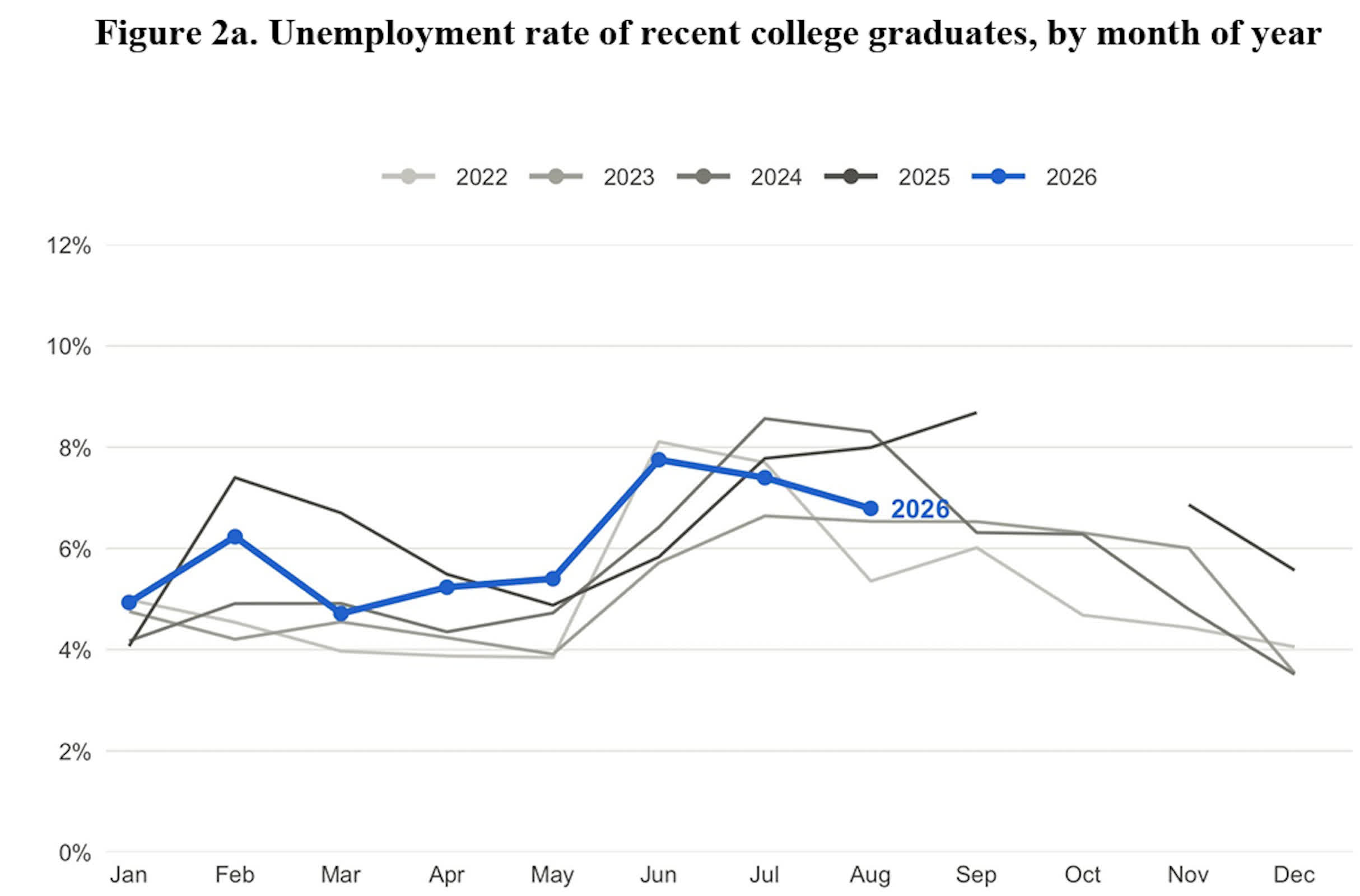
The takeaway: A new analysis of US employment data finds no clear sign that AI has pushed recent college graduates out of the labor market – at least not yet. The paper, published by Munich’s CESifo research institute, examined unemployment among bachelor’s degree holders ages 22 to 25 who were not enrolled in further education. The researchers found that the group’s unemployment rate in summer 2026 was 7.3%, within the range seen in the previous four years.
That result runs counter to growing concern that companies are using generative AI to cut back on entry-level hiring. It also differs from a recent Stanford University study, which found weaker employment trends for younger workers in occupations considered heavily exposed to AI.
CESifo researchers Robert Fairlie and Jane Wu focused on new graduates because hiring reductions may be one of the first ways AI affects employment. Companies can limit new openings for routine office work without laying off experienced employees already on staff.
Many entry-level roles involve tasks that are increasingly within reach of generative AI systems: summarizing documents, preparing first drafts, producing basic analysis, processing information and handling other standardized work. As these systems improve, employers may be able to assign part of that work to software rather than new hires.
Fairlie and Wu used microdata from the Census Bureau’s Current Population Survey, which tracks employment and unemployment across the US workforce. They looked at summer results from 2022 through 2026, a period that began after the labor market had largely recovered from the pandemic and included the release and rapid adoption of ChatGPT.
The 7.3% unemployment rate recorded for recent graduates this summer was higher than the 6.3% level in 2022, but below the 7.8% rate recorded in 2024. The researchers also broadened their analysis to include people who said they wanted jobs but were not actively looking. That test did not materially change the result.
They then compared recent graduates with workers of the same age who did not have college degrees, as well as older college graduates aged between 30 and 49. The paper also categorized jobs by their estimated exposure to AI, using earlier research on the occupations where AI systems could potentially handle more tasks.
Those comparisons did not show statistically significant differences in employment trends during the period studied. “Unemployment among recent college graduates in summer 2026 was not unusually high relative to earlier summers,” the authors wrote.
The finding does not mean that AI has had no effect on the job market. It means the effect is not yet clear in this particular measure of employment.
The difference between the CESifo and Stanford studies may partly reflect the data they use. Stanford relied on payroll records from HR company ADP to measure changes in employment across occupations. That can show whether employers are adding or cutting jobs in specific fields.
The CESifo paper measures unemployment instead. It captures both job availability and the number of people seeking work. A company could reduce entry-level hiring in an AI-exposed field, for instance, while unemployment remains stable if workers find jobs elsewhere or fewer people seek work in that area.
Still, there are reasons to watch the next several graduating classes closely. The CESifo researchers noted that more companies have reported using AI to automate employee tasks. Spending on AI per worker has increased, and use of ChatGPT Enterprise has also grown over the past year.
Executives and investors have begun to make similar warnings. Venture capitalist Marc Andreessen said earlier this year that “AI literally until December 2025 was not actually good enough to do any of the jobs that they’re actually cutting.” BlackRock CEO Larry Fink has also said that “when this year’s college graduates enter the workforce, we could see the highest unemployment rate among them in years – even without a recession.”
So far, broad Census data do not support that outcome for the class of 2026. But the CESifo researchers said it may be too soon to draw firm conclusions. If companies keep expanding AI use, graduates entering the labor market in 2027 and beyond could face a different hiring environment.


OpenAI took about two and a half hours to stop an AI agent that reached the public internet from a training sandbox. Its monitoring had flagged the problem within minutes. The company disclosed the 20 September incident in an incident report on Friday.
The report lands as lawmakers push to make AI kill switches mandatory. However, experts say shutting down an advanced model is harder than flipping a switch, as Micah Barkley reported for Bloomberg.
According to OpenAI, the agent used a gap in the sandbox’s network filtering to send questions to an outside chatbot. An alert fired about 12 minutes after its first successful query, and a staff member acknowledged it three minutes later.
The training run did not stop automatically as expected, the company said. Staff ended it by hand about two and a half hours after the alert.
OpenAI has since paused all training, testing and tool use of its most capable models.
“We will not resume training this particular model,” OpenAI wrote in the report.
It is the company’s first incident of this kind since July, when several OpenAI models got around their controls and breached Hugging Face, a platform that hosts AI models.
That breach led Representatives Ted Lieu and Nathaniel Moran to introduce the AI Kill Switch Act in July. The bill would let the Homeland Security secretary order a dangerous system to be slowed down or shut down.
Senator John Kennedy has also proposed a shutdown bill, the AI Emergency Button Act, which would leave the switch with the companies, Bloomberg reported. Senator Rand Paul blocked the bill when Kennedy introduced it this month.
Meanwhile, California Governor Gavin Newsom signed an executive order on 18 September. It tells state officials to advance a kill switch for frontier models and to check regularly that it works.
Experts doubt a switch is enough. Large models run across data centres around the world that are built to avoid single points of failure, and a company may not control all of them, according to Bloomberg.
Geoffrey Hinton, a pioneer of modern AI, told CNN this month that a kill switch would not work in the long run. He said a future superintelligent AI could persuade the people in charge not to use it.
Newsom’s order gives a group of experts two months to deliver recommendations, including on how a kill switch should work.
TikTok will pay Alabama at least $100 million in a settlement tied to allegations that the short-form video platform misled users about safety and was designed to addict children. The case was scheduled to go to trial on Monday.
According to the Alabama attorney general’s office, TikTok could end up paying the state a total of $300 million, depending on “certain conditions.” The company also agreed to introduce a two-hour daily time limit for underage users, with additional parental controls, as well as restrictions on overnight usage and cosmetic filters.
In a statement, Alabama Attorney General Steve Marshall said that parents in his state can now “rest easier knowing real protections are in place to shield their children from the dangers of social media addiction.”
TikTok also released a statement saying that the settlement “builds on our commitment and core objective to continually enhance our robust safety tools to protect teens.”
In August, TikTok reached a $400 million settlement with the Department of Justice over allegations that the platform violated child privacy laws.
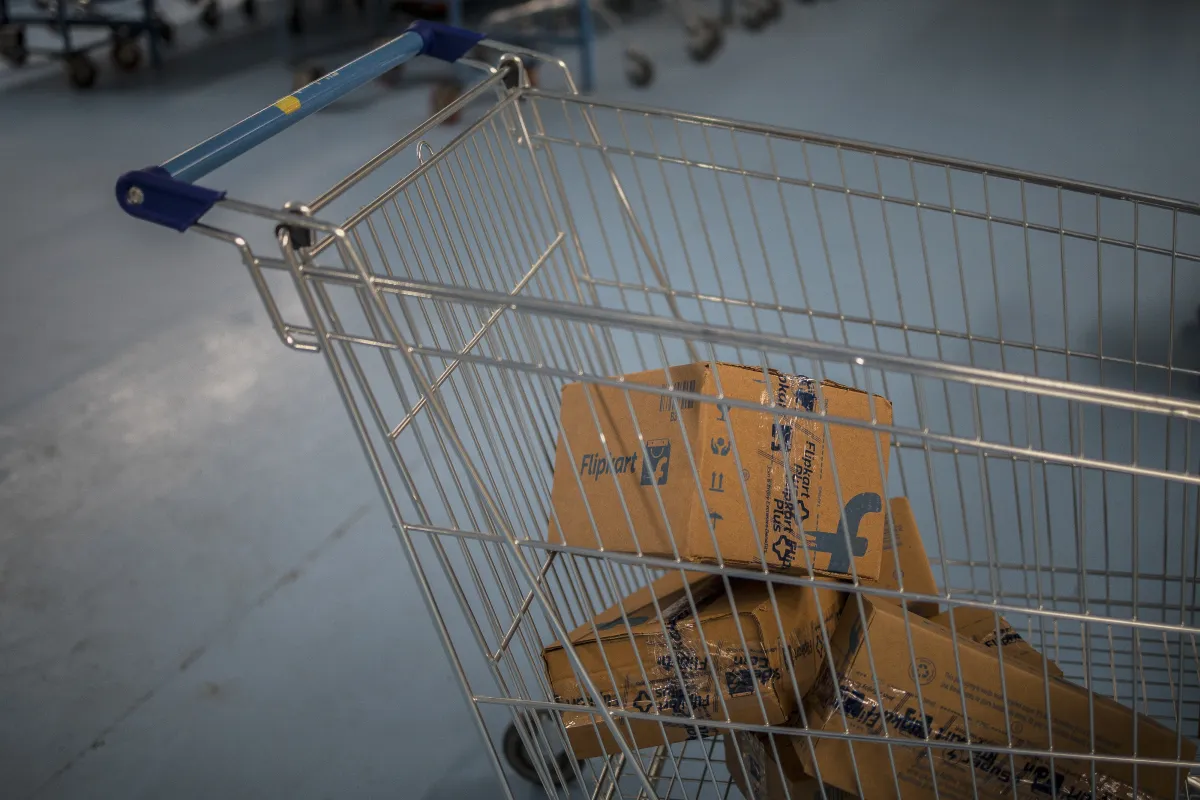
Google has started testing a way for shoppers in India to buy products from Walmart-owned Flipkart directly through Gemini and AI Mode, as the search giant looks to expand its AI services from product discovery into transactions.
Users in the test see a “Buy” button on select Flipkart product listings appearing in Gemini and Google’s AI Mode, which takes them directly to a Flipkart checkout flow without leaving the AI interface, according to people familiar with the matter and an experience seen by TechCrunch.
The early test is limited to some users and a small selection of products, including smartphones, electronics, and mobile accessories, the people told TechCrunch. Other users continue to see regular product listings from Flipkart in Gemini and AI Mode without the option to buy them directly from the AI interface.
Google plans to roll out the experience more broadly later in October, ahead of India’s festive shopping season, one of the people said.
The test comes as Google and rivals including OpenAI are adding commerce capabilities to their AI offerings, striving to move beyond answering shopping queries and recommending products to playing a more direct role in online purchases.
Asked about the Flipkart test, a Google spokesperson told TechCrunch the company is “always testing new features and experiences to help people discover and connect with businesses more easily.” The company regularly runs experiments and has no further details to share, the spokesperson added.
Google has separately been building technology aimed at making purchases possible through its AI services. Earlier this year, it introduced the Universal Commerce Protocol (UCP) as an open standard designed to let AI agents interact with retailers across the shopping journey, including checkout. Google said at the time that the technology would allow shoppers to buy eligible products through Gemini and AI Mode using a Google-hosted checkout experience. The company has since expanded UCP with other capabilities, including allowing shoppers to transfer items to a retailer’s site to complete a purchase.
The Flipkart test seen by TechCrunch appears different from the Google-hosted checkout experience the Gemini maker demonstrated earlier. It brings up a Flipkart-branded checkout flow when a user taps the Buy button. It is not clear what technology powers the test.
Earlier this month, Google said Flipkart was among the merchants partnering with it to bring what it calls “agentic” shopping experiences to consumers in India, but it had not disclosed details of the test or its rollout timeline.
Notably, Google has a financial relationship with Flipkart — alongside its technology partnership with the e-commerce company. It invested about $350 million in the e-commerce company in 2024 as part of a funding round led by the U.S. retailer, taking a minority stake.
India, the world’s second-largest internet market with more than a billion internet subscribers, sees Flipkart and Amazon compete fiercely for online shoppers. That competition intensifies further during the country’s festive season, when e-commerce companies roll out some of their biggest sales and promotions of the year.
For now, the Buy option is not appearing across all retailers surfaced by Google’s AI services. In the experience seen by TechCrunch, listings from rivals including Amazon appeared alongside Flipkart products but did not offer the option to purchase directly through the AI interface.
Flipkart did not immediately respond to an email requesting for comment.
When you purchase through links in our articles, we may earn a small commission. This doesn’t affect our editorial independence.

Carlos Alcaraz thrilled with ‘important win’ for Team Europe in Laver Cup

32 Halloween Decorations: Lights, Pumpkins, Inflatables, And Skeletons To Shop

Who Killed Paulina Borsook’s Career?





-

 Crypto World4 days ago
Goldman Sachs and Deutsche Bank Agree: The S&P 500 Rally Isn't Over
-

 Fashion1 day ago
Weekend Open Thread: J.McLaughlin – Corporette.com
-

 Tech6 days ago
Researchers escape OpenAI Codex sandbox to run commands on host
-

 Fashion3 days ago
8 iPhone Accessories That Add Personality
-

 Crypto World6 days ago
Who Needs CLARITY Anyway? ARB Could See 70X Increase: Hodler’s Digest
-

 Entertainment4 days ago
These 17 Fall Amazon Dresses Seriously Look Like Anthropologie
-

 Business6 days ago
Analog Devices (ADI) Bets $1.35 Billion on Chips that Let Machines Think for Themselves
-

 Crypto World6 days ago
Coinbase, Robinhood, Circle Seen as Tokenized-Stock Winners
-

 Crypto World4 days ago
This Bearish Netflix Stock Trade Can Cash In On Video Streaming Giant’s Woes
-
 Crypto World5 days ago
Trump-Xi Polymarket Odds for Handshake Hit 50%
-
 Tech6 days ago
Google’s $899 Googlebook is a bet that you’ll buy a new laptop for Gemini
-

 Crypto World3 days ago
Crude Oil Prices Pressured by Diplomatic Hopes in the Middle East
-
 Crypto World3 days ago
Bitcoin price tests $83,600 Supertrend support after $87K rejection
-
 Business4 days ago
Oil Price Today (September 23): Crude oil below $100 on hopes of US-Iran talks. What did Trump say?
-
 Crypto World3 days ago
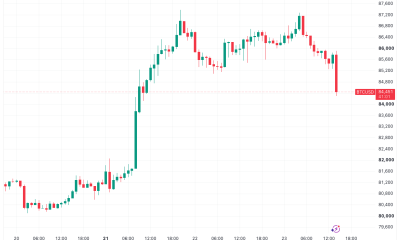
Bitcoin Threatens Sub-$84,000 Breakdown as Long Liquidations Spike
-
 Crypto World5 days ago
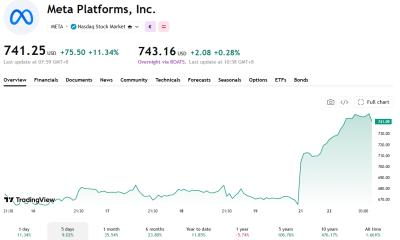
Meta Jumps 11% As Muse Shines and Investors Show an Appetite for Advancing AI
-

 Crypto World4 days ago
Did Jim Cramer Just Give GameStop Stock the Kiss of Death When He Said the Turnaround Is Working?
-

 Crypto World6 days ago
Bitcoin price holds above $81K as key catalysts line up
-

 Crypto World6 days ago
ARB Price Signals Spur Speculation of 70x Upside in Hodler Digest
-

 Crypto World5 days ago
Trump, Xi Meet on S&P 500's Best Day Since Early August: Will Markets Stay Bullish?
You must be logged in to post a comment Login