
Tech
Seattle startup Arkero expands English soccer reach, landing historic club as latest AI customer

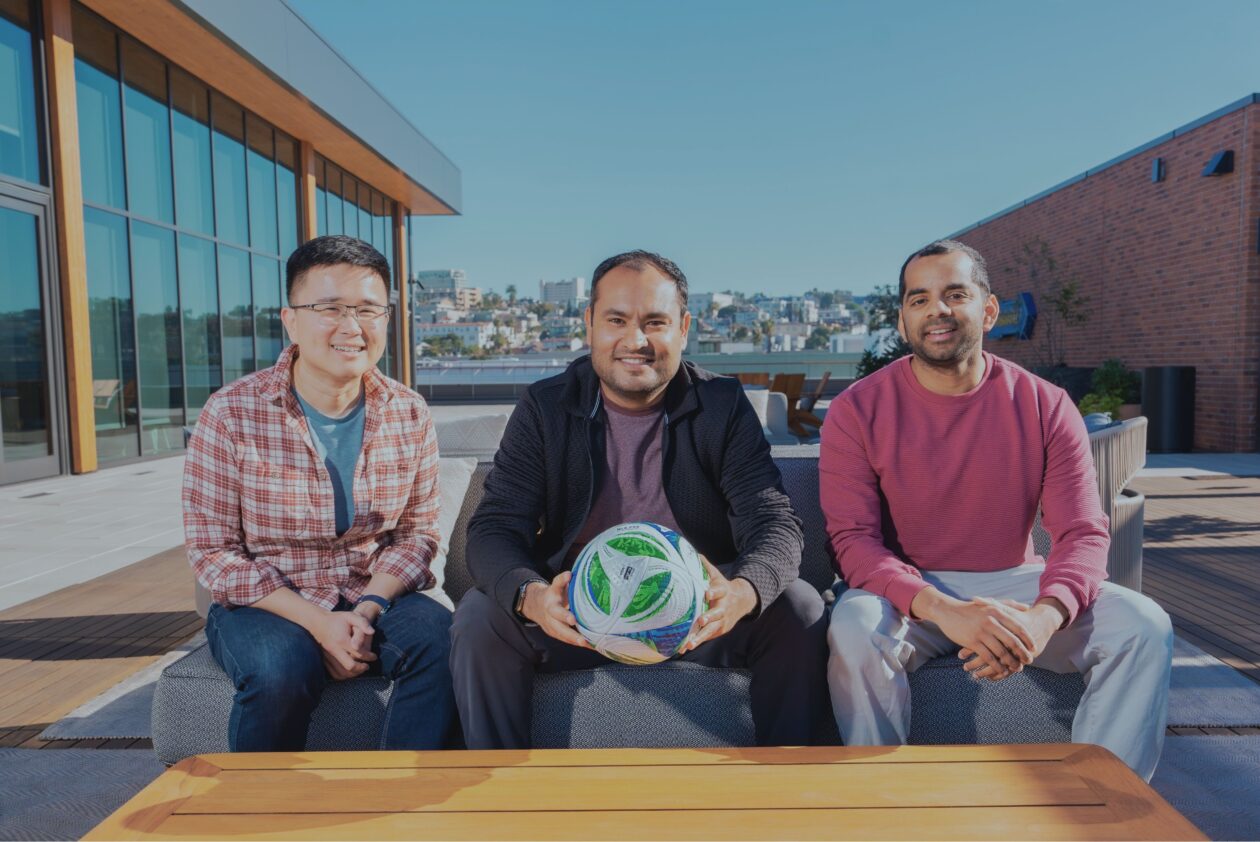

Arkero, a Seattle-area startup leveraging AI to help professional sports teams streamline business operations, has expanded its reach in English soccer by landing Bolton Wanderers FC as its latest client.
The agreement builds on momentum for Arkero, which was launched last fall by the co-founder of Seattle digital remittance company Remitly and raised $6 million at the start of this year.
Bolton Wanderers — which earned promotion back to the English Championship in May — joins a client roster that includes Major League Soccer’s Seattle Sounders FC, NWSL’s Seattle Reign FC, MLS expansion team San Diego FC, and fifth-tier English side Southend United.
The project with Bolton centers on a three-month effort to overhaul the team’s data infrastructure and build a custom “club intelligence layer.” Designed to connect directly to Bolton’s internal data, systems, and workflows, the platform centralizes organizational knowledge so staff across business and football operations can query information and deploy practical AI tools and agents.
“AI transformation does not begin with a chatbot. It begins with a club’s data, systems, knowledge and workflows,” said Shivaas Gulati, founder and CEO of Arkero, in a news release on Friday. “The future football workplace will bring experienced people and AI systems together. Bolton has approached this work with real ambition.”
Gulati’s drive to apply AI to sports comes directly from his own ties to the game. He serves on the ownership group of Southend United and previously acted as a technical advisor to Sounders FC on its tech and AI strategy.
“We get to see the real problems inside sports teams given our access to Southend United,” Gulati told GeekWire. “Clubs have been doing things the same way for a long time, and with AI they can truly re-imagine how their workforce operates and adapts to the demands of a modern enterprise.”
A longtime angel investor, Gulati co-founded Remitly in 2011 and left in 2022. He launched Arkero with help from Vamsi Narla, who leads product and engineering, and Daniel Shi, who oversees business operations. The startup has eight full-time employees.
@media (max-width: 600px) {
aside.callout { float:none !important; max-width:100% !important; margin-left:0 !important; margin-right:0 !important; }
aside.callout .callout-img { display:none !important; }
}
Based in Greater Manchester, Bolton Wanderers boasts a rich legacy as one of the 12 founding members of the English Football League in 1888. Originally formed in 1874 as Christ Church F.C., the historic club has won four FA Cups and spent over 70 seasons in English football’s top flight.
Bolton CEO David Ray said the club is making a long-term investment to ensure it isn’t “playing catch-up” as technology reshapes the sports industry. The club aims to use Arkero’s platform to drive revenue, streamline administrative tasks, and better engage fans — joining teams like the Sounders and Reign, which project over 50% efficiency savings in matchday planning using the startup’s tools.
Arkero says interest in its deep AI integration model is accelerating across the sports world. The startup is currently in discussions with multiple English Football League clubs as well as professional sports teams and leagues across Europe and North America, as leadership teams seek to move beyond generic AI tools and connect AI directly to their proprietary data and daily workflows.
“There is a window right now for forward-thinking clubs to build a meaningful advantage,” Gulati said. “In a few years, working alongside AI will simply be how professional sports organizations operate.”


What just happened? A federal judge has ordered the Trump administration to rescind its designation of Anthropic as a supply-chain risk, ruling that the government violated the AI company’s First Amendment rights. The decision found the designation was not supported by evidence of a genuine national-security threat and instead stemmed from Anthropic’s objections to Pentagon plans for using its AI models.
US District Judge Rita F. Lin ruled late Thursday that the government failed to show Anthropic posed a national-security threat. Instead, she found that officials acted against the company after it publicly challenged the Pentagon’s plans for using AI.
“Defendants’ contemporaneous words and deeds confirm that the challenged actions were based on a desire to make a public example out of Anthropic for its ‘arrogance’ in criticizing the government,” Lin wrote.
The ruling requires the government to withdraw guidance, directives, and other communications that blacklisted Anthropic or labeled it a supply-chain risk.
Anthropic sued the administration in March after talks with the Pentagon over military use of its AI models broke down. The company had asked for limits on the use of its technology in fully autonomous weapons and domestic surveillance. The Pentagon wanted an agreement allowing the military to use Anthropic’s models for any legal purpose.
The dispute centered on whether Anthropic could place limits on how the government used its models after making them available to federal agencies. The Pentagon viewed Anthropic’s proposed restrictions as too narrow for military operations. Anthropic said the limits were needed for high-risk uses of AI.

Government lawyers argued that the Pentagon was allowed to choose vendors it considered reliable. They said Anthropic could make undisclosed changes to its models that might affect military operations.
“The Department of War needs to trust that its AI vendors are going to be forthright and honest with the department,” government attorney James Harlow said during court arguments.
Lin questioned that position during the case. At a July hearing, she called the government’s argument that it could retaliate against a contractor for criticizing the administration “really troubling” and “quite extreme.”
The designation had immediate business consequences for Anthropic. The company said the government action led to hundreds of millions of dollars in canceled, shortened, or delayed contracts. Documents filed in the case showed rivals, including OpenAI, were preparing to replace Anthropic in parts of the federal government.
The decision also comes as Anthropic’s technology remains in use across the US government. Claude has been used by the military, including in the January raid in Venezuela and the war with Iran. Other federal agencies continue to use Anthropic products, including Fable and Mythos.
Lin said that continued government use undercut the Pentagon’s claim that Anthropic was a national-security risk. She had previously issued a preliminary injunction in March that blocked parts of the designation while the case moved forward.

Anthropic and the administration reached a separate agreement in June that allowed the company to release Fable and Mythos following a shutdown tied to security concerns. That agreement did not resolve the lawsuit over the blacklist.
The Defense Department did not immediately respond to a request for comment. The administration could appeal Lin’s decision. A separate case involving Anthropic remains before a federal appeals court in Washington, which denied the company’s request in April to block other parts of the designation.
Everyone’s waiting for Nvidia to confirm this week’s most interesting tech deal: A reported $13 billion acquisition of Hugging Face, a platform for sharing open-weight AI models and benchmarks.
Now best known as the target for a team of reward-hacking OpenAI agents, Hugging Face is at the center of the ecosystem of developers building and deploying LLMs that aren’t owned by frontier labs. Think of it as a kind of GitHub for the AI era.
Rumors of that deal come after Nvidia struck a $6 billion agreement with Poolside, an open-weight model builder, that will see most of its employees move to the chip-making giant. And two weeks ago, Stripe acquired OpenRouter, the top provider of open-weight models to businesses, for more than $7 billion.
That’s a lot of capital pouring into a sector based on giving stuff away, and it reflects the latest trends in the AI sector.
For Nvidia, there’s a need to avoid further dependence on its deals with the major hyperscalers and frontier labs. That’s particularly the case when major AI model builders like OpenAI and Google are also building their own inference chips, like OpenAI’s Jalapeño, whose capabilities were announced this week. If model builders are making chips, Nvidia wants a chunk of the model-making business.
Nvidia already builds its own Nemotron family of open-weight models, but their uptake hasn’t been huge. By taking control of the largest U.S. developer space for open models, the company will have access to a mass of users it can drive to its chips and standards.
There are also growing questions about the cost of AI inference, which has companies exploring cheaper models built by Chinese companies like Moonshot, DeepSeek, and Alibaba. Right now, adoption is relatively small but growing — just 6% of companies use open-weight models, according to a survey of spending data by Ramp, or just 2% of software engineers measured by Jellyfish, which makes tools for developers.
Nik Albarran, the AI product lead at Jellyfish, told TechCrunch that open-weight models are primarily used by companies whose products rely on repeated inference workloads, like those providing customer service chats. Because these are high-volume tasks with a lot of repetition, an open-weight model can be tuned to answer the questions cheaply.
That’s certainly how Stripe has framed its OpenRouter acquisition. “Tokens are the central currency for companies building with AI, and it’s clear that the real-world economic potential will depend on making good use of scarce compute resources,” Patrick Collison, Stripe’s co-founder and CEO, said in a statement.
For coding and agentic tasks, however, varying requests and more reasoning mean that frontier models often win out, in part because the proprietary labs provide easier access, and in some cases a token subsidy. Albarran says that as companies dial in AI workflows, it will be easier to turn to open models. Still, the main reason companies look to those models now is for control and configurability, not because of spending concerns.
“There are not many companies where that is the case yet … [but] if the prices continue to go up from the frontier labs, more and more companies will be forced to at least consider it,” Albarran told TechCrunch. “When your AI-driven workflows are much more mature, that’s when it makes sense to invest in self-hosting models.”
Lin Qiao is the CEO of Fireworks, a leading open-weight models router and host for corporate users that is often discussed as a potential acquisition for a tech giant. Qiao says her company processes 40 trillion tokens a day, more than either of Gemini’s or OpenAI’s APIs.
Fireworks’ bet is on model diversity: As LLMs proliferate and improve, it will be easier for companies to train them specifically for their needs. “Every single app company should consider hiring an in-house researcher,” she told TechCrunch last week. “They can use their product and product data to build their own model. The future is actually specialized intelligence. Literally, every single company should have their own model per use case, and that will happen automatically.”
It’s easy to forget how early we are in the development of AI as a tool and a business. The dominance of OpenAI and Anthropic, however, isn’t inevitable. As the tech giants look to hedge their bets on the biggest labs, the allure of open technology is proving tough to resist.
When you purchase through links in our articles, we may earn a small commission. This doesn’t affect our editorial independence.
We have entered the age of biohacking now. And no, I am not talking about the extreme cases like Bryan Johnson, who is spending millions of dollars on ambitious health and de-aging goals. The average audience for wearables is now asking for more. They are feeding the sensing data collected by smartwatches, bands, and rings to AI agents, and pulling in more insights about their bodies. I created one such dashboard for myself using Claude in less than 10 minutes to make sense of the data collected by my smart ring.
But there is only so much you can do with these wearables. And that’s owing to the limitations of the underlying light-based sensor. These sensors started with measuring heart rate, and in a decade, they made impressive advancements and can now measure ECG, blood pressure changes, temperature fluctuations, and blood oxygen saturation levels. They can’t, however, dig into the biochemical side of things, the kind of stuff that requires a hospital visit or sophisticated medical gear.
When it comes to health and wellness, light-based analysis of the human blood is not the holy grail. Far from it, actually. There are a bunch of other fluids that are a treasure trove of health data. Saliva, urine, tears, and cerebrospinal fluid are among them. But in the realm of wearables, sweat has long been seen as the next big avenue for biosensing, especially for mass-market wearables. The challenge? It’s an entirely different kind of engineering challenge.
But why sweat?
We are dealing with fluids here, and to perform a chemical analysis, one needs nothing short of a mini lab. Microfluidics is the field that has been trying to create these mini labs. Caltech researchers recently made a skin patch that can measure cholesterol levels using a sweat sample. The folks over at Pennsylvania State University also developed a similar patch back in 2023. But cramming all that sensing kit into something as small as a ring that enables continuous monitoring (and that too, for multiple chemicals at the same time) has been a daydream, so far.
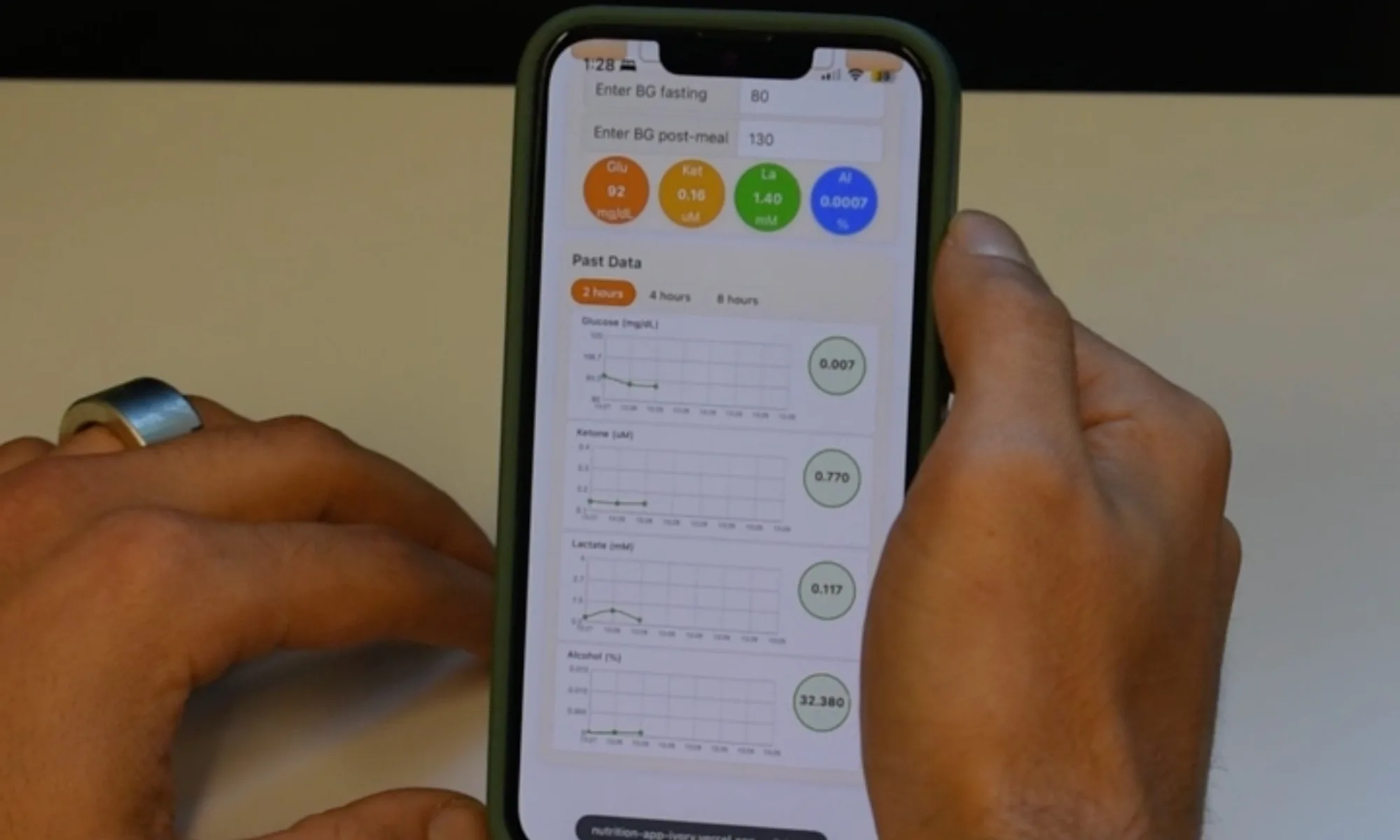
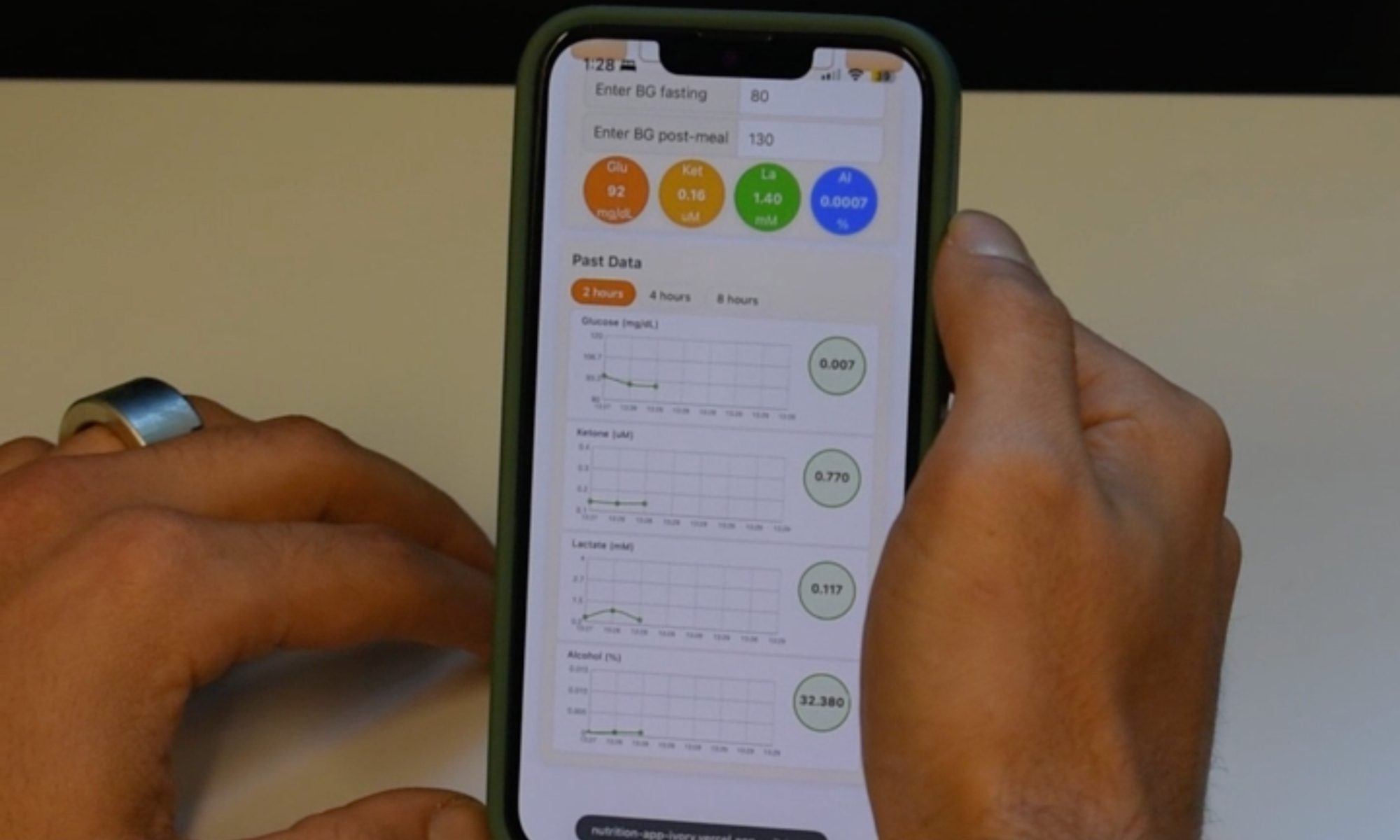
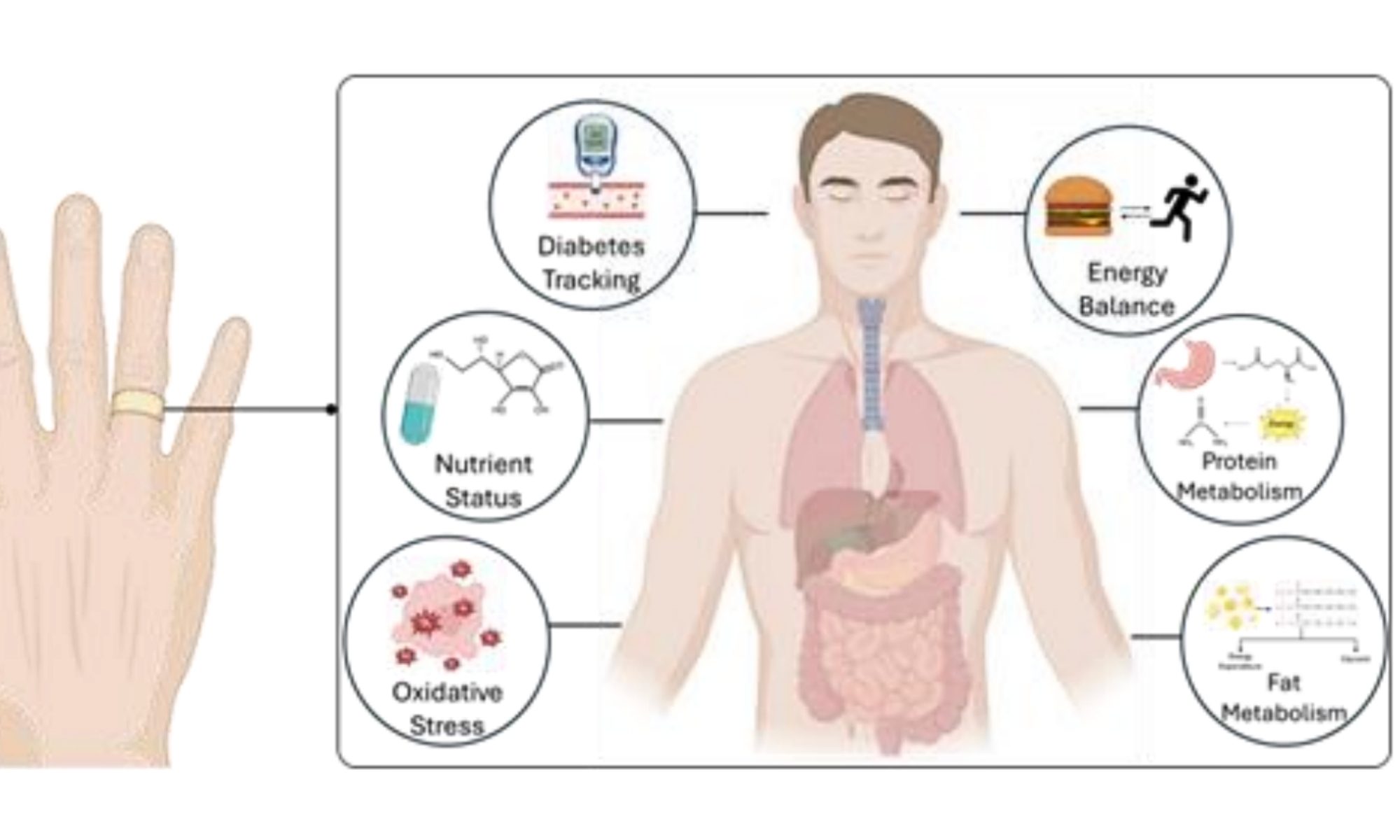
Enter Tamoghana Saha, whose team at the University of California San Diego has developed a smart ring that can keep an eye on glucose, ketones, vitamin C, uric acid, lactate, and even alcohol levels by reading a sample of your sweat. And it’s not a one-off analysis. The ring, which the team calls the Continuous Health Analyzing Ring Module (CHARM), can perform continuous sweat analysis for a spell of 12 hours per charge, and maintain its calibration for a spell of two months.
It’s a huge milestone that just needs some time and polish.
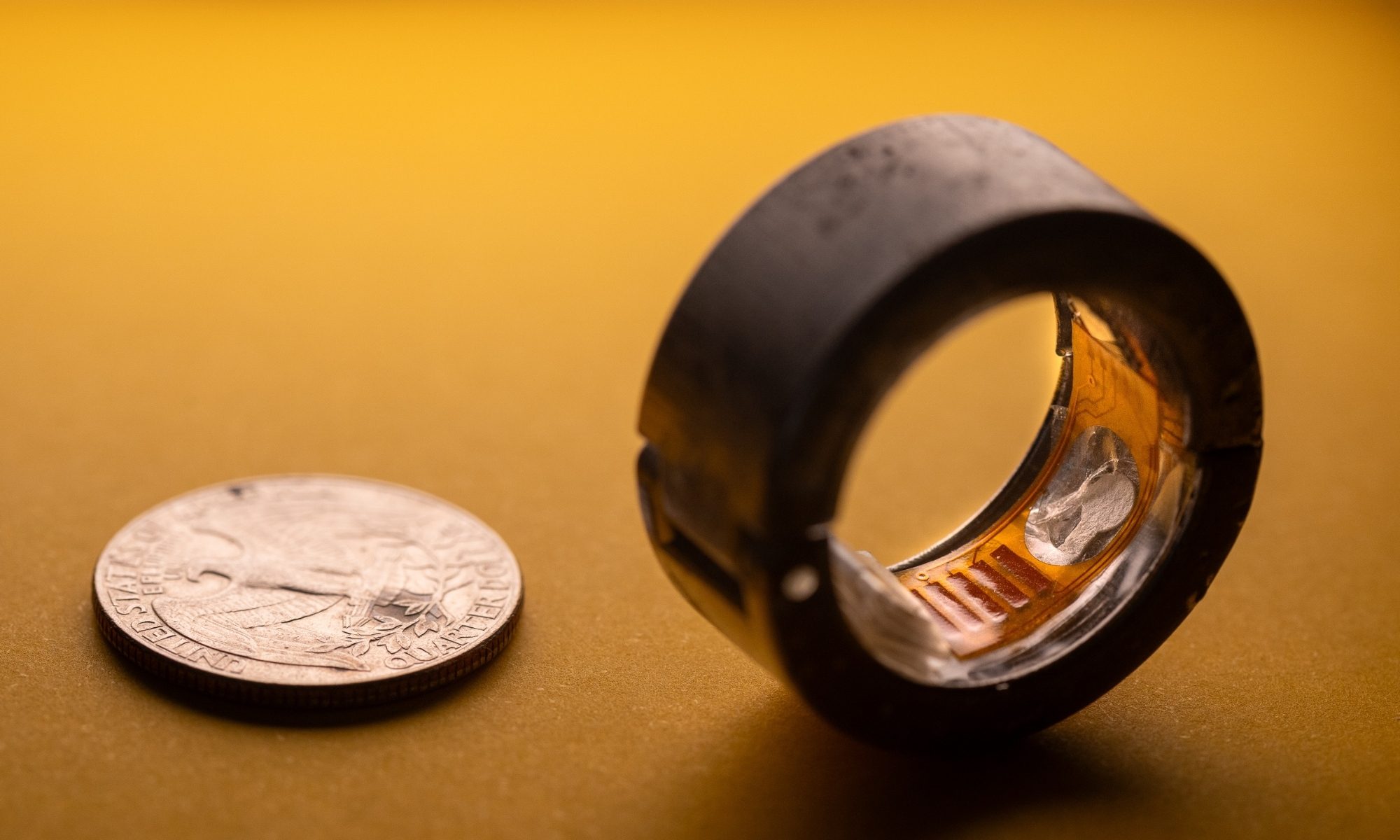
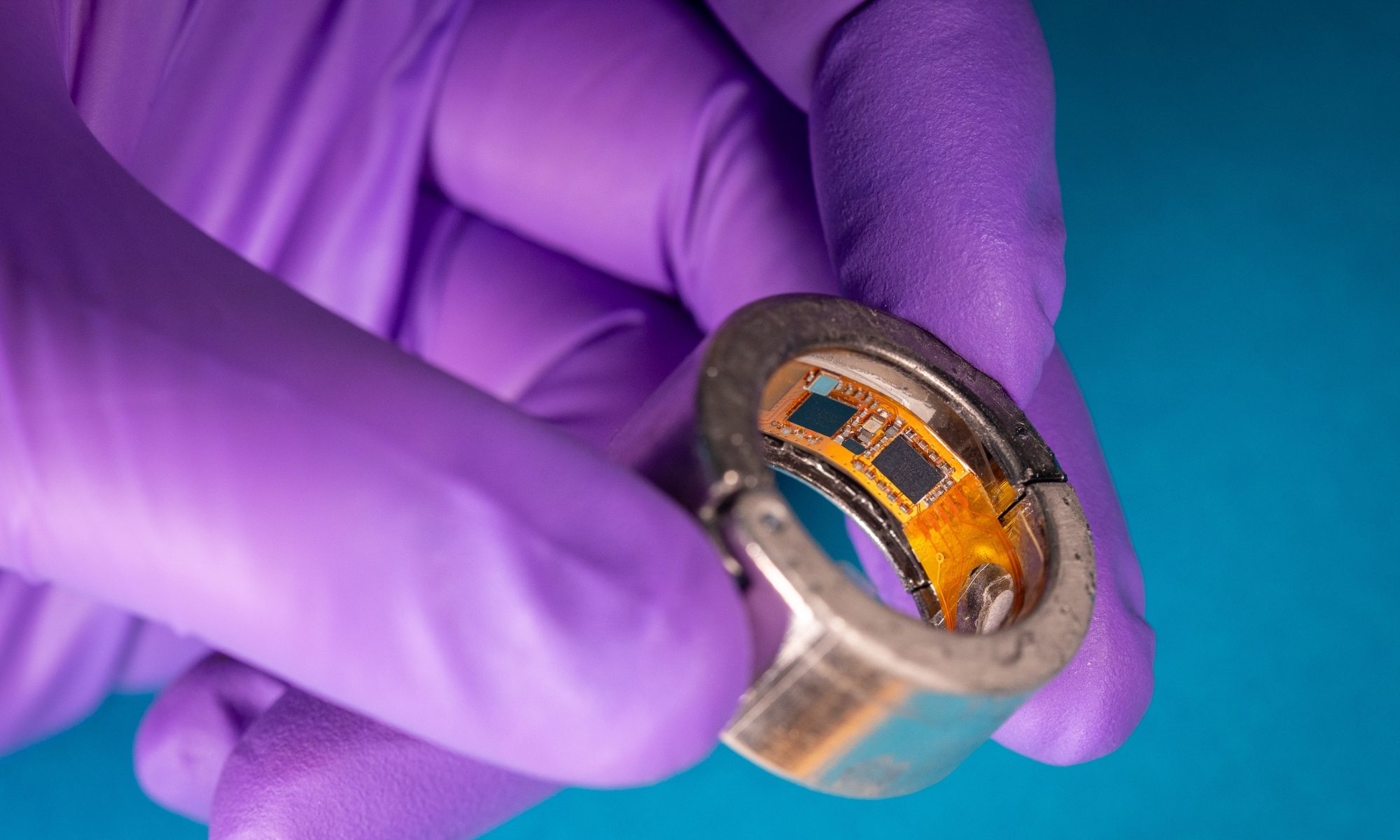
The ring is bulky. It’s not waterproof. It has not been validated in clinical settings on human subjects. It can’t do multi-day monitoring. But it’s still a ring, with upgradability and repairability as a key design principle. But above all, it’s living proof that chemical analysis of your sweat is now possible right on your index finger. And it’s going to be far more versatile than a typical smart ring that can only perform a proxy light-based analysis of the blood flowing in the vessels under your skin.
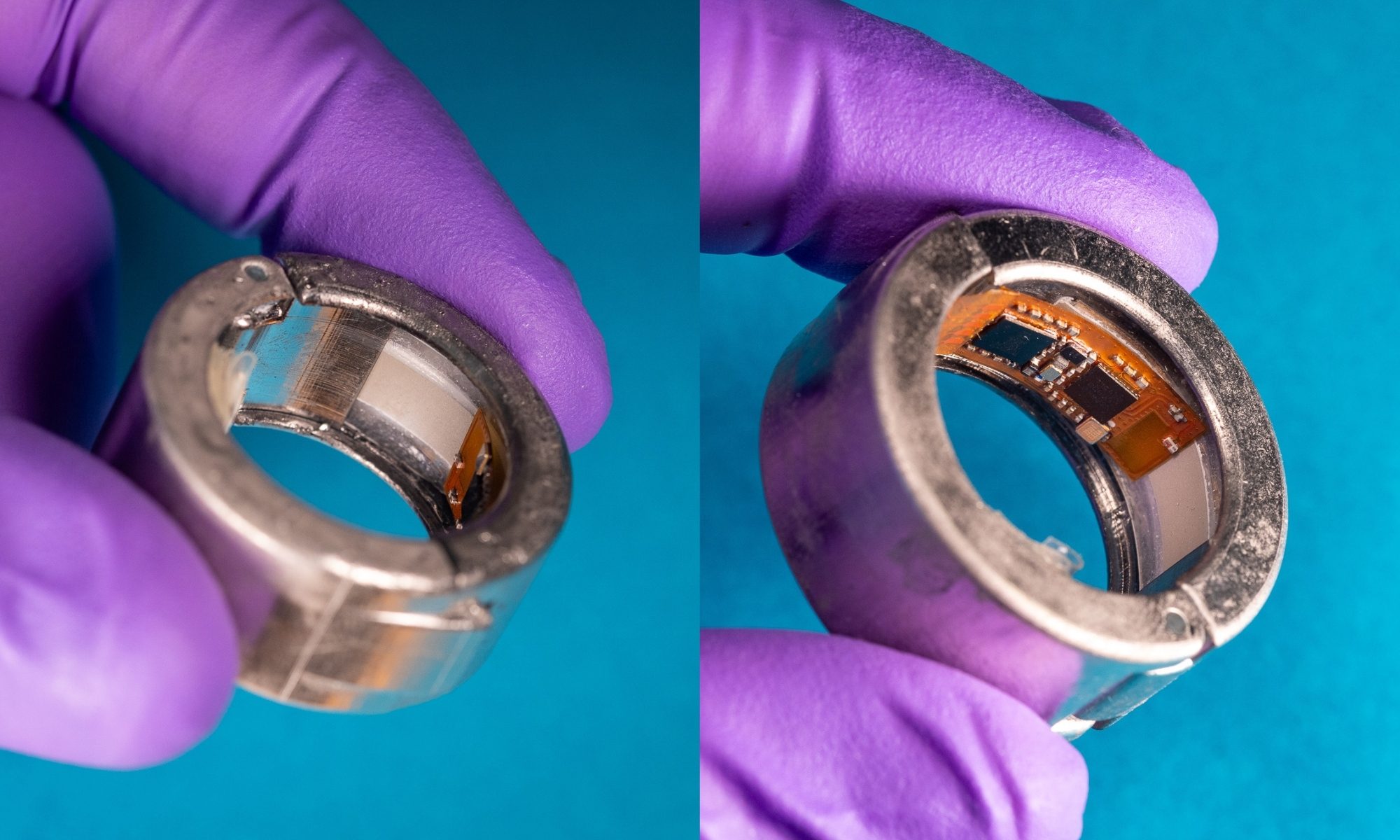
Digital Trends sat down for an interview with Saha to discuss the CHARM ring, the challenges, and what it says about the future of smart rings. Let’s start with the basics. The CHARM smart ring is capable of measuring glucose, ketones, vitamin C, uric acid, lactate, and alcohol levels from your sweat. That’s a sizeable selection of biomarkers, and what they can reveal about your health and fitness levels is even more diverse.
Check out this brief overview of what an analysis of these chemicals can reveal about body health and recovery in response to medication, diet changes, and workouts in general:
| Glucose | • Type 1 & Type 2 Diabetes: Linked to glycemic excursions (postprandial hyperglycemia, hypoglycemia).
• Metabolic Syndrome & Insulin Resistance: Flags impaired fasting glucose and early metabolic dysfunction. |
| Ketones | • Diabetic Ketoacidosis (DKA): Linked with dangerous acid accumulation in insulin-deficient states.
• Nutritional Ketosis: Helps track fat oxidation during ketogenic diets, fasting, or endurance exercise. |
| Vitamin C | • Nutritional Status: Helps identify dietary insufficiency, hypovitaminosis C, and scurvy risk.
• Immune & Tissue Health: Assesses antioxidant status, collagen synthesis, and wound-healing support. |
| Uric Acid | • Gout & Hyperuricemia: Monitors purine metabolism dysfunction and inflammatory flare risks.
• Cardiorenal Health: Serves as a marker for chronic kidney disease (CKD) risk and hypertension. |
| Lactate | • Athletic Performance: Identifies anaerobic threshold, exercise intensity zones, and muscle fatigue.
• Clinical Hypoxia: Detects systemic tissue hypoperfusion, shock, and metabolic acidosis. |
| Alcohol | • Intoxication & Sobriety: Tracks transdermal ethanol excretion and estimated blood alcohol concentration (BAC).
• Liver & Behavioral Health: Aids alcohol-related liver disease risk assessment and addiction recovery. |
Here’s the most encouraging bit. What you see in the table above is just surface-level analysis. Once you combine it with data collected from other wearables — let’s say a smartwatch or fitness band — the potential is nearly endless. Interestingly, that’s also a long-shot goal for the team at UC San Diego.
It’s a whole new lab
But why not just focus on the current crop of light-based sensors you get on the likes of the Apple Watch Series 11 or Oura Ring? Why explore sweat instead of taking an optical peek at the blood vessels?
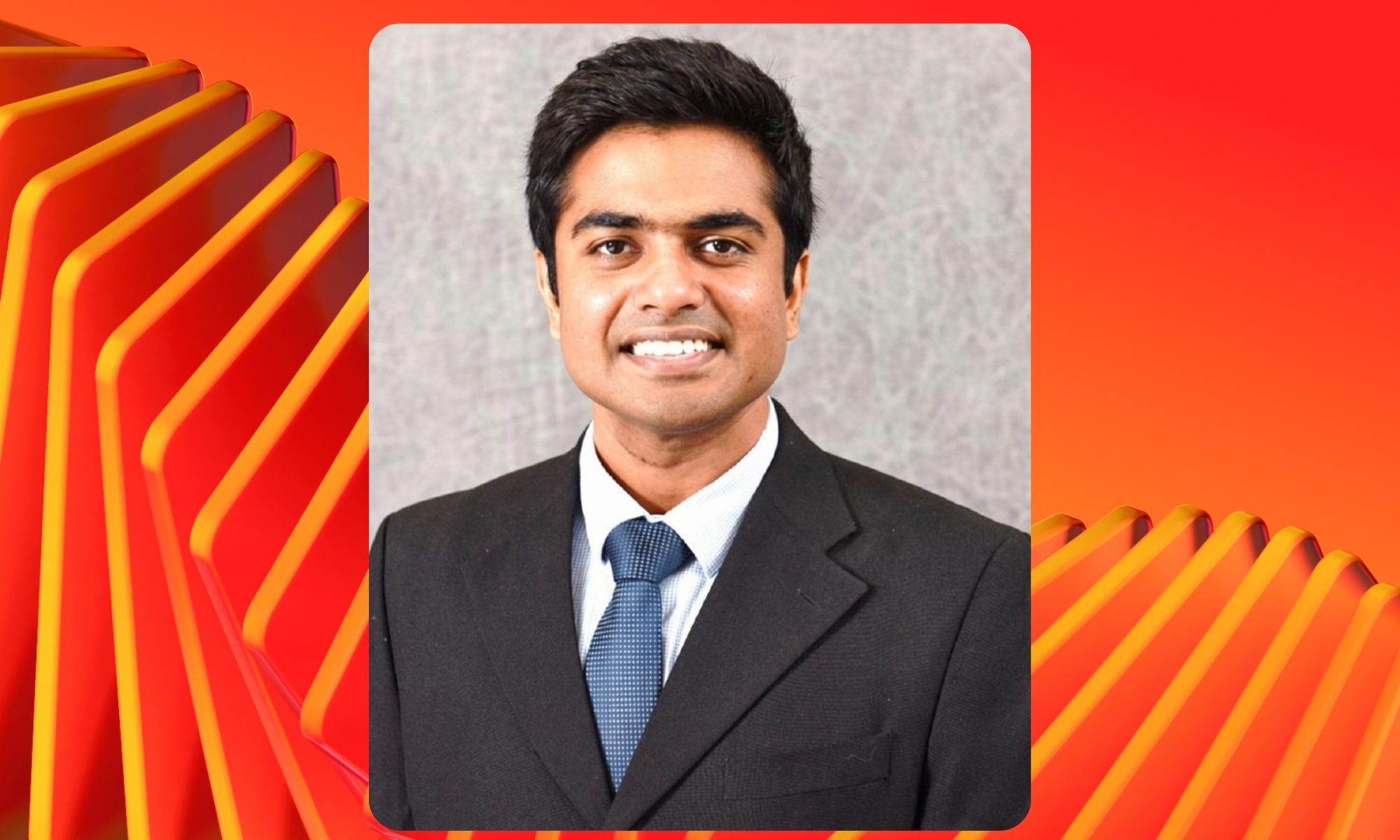
“We wanted to target nutrition and diabetes in general, because if you take the individual biomarkers, their sensing mechanisms are quite well established,” Saha tells Digital Trends. “This project was mostly about showing that if you miniaturize everything, you can integrate the necessary sensors, and you can shove everything into a small form factor like that of a ring.”
It wasn’t just the technical feasibility that was a crucial victory here. The team also demonstrated that a small portion of our finger was enough for sweat analysis, and that you don’t necessarily have to stick a sensor patch on a wider area like your biceps, thighs, or back.
“I think, through this paper, we conveyed that, first of all, your ring location area, which is called the proximal phalanx, is a viable location to do sweat sensing, which people hadn’t done. I think this was a major, major message that we wanted to send out to everyone who works in these fields.”
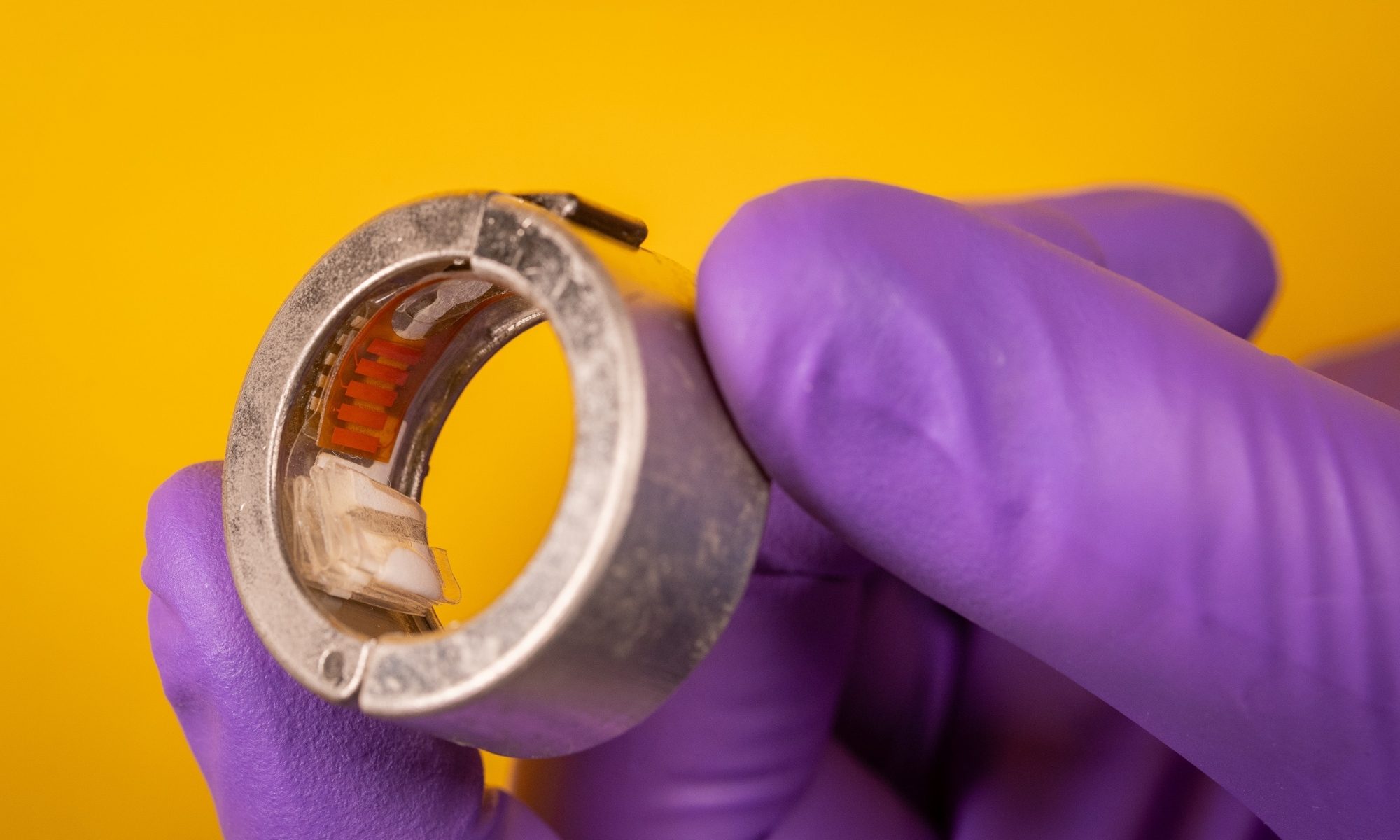
And finally, it’s the convenience of having a non-invasive, low-effort system to analyze sweat without you even noticing it. “Unlike other existing sweat-based wearables, which mostly function with exercise, or use chemical stimulation (they inject a drug that makes you sweat), we work with passive sweat.”
That means you won’t have to exercise to generate sweat, or worry about a chemical acting in your body to pull sweat on your skin. Instead, the team relied on a compact circular slot on the ring that contains hydrogel, which uses osmotic pressure difference to draw out sweat from the skin.
“So that’s the unique part, and the thing is completely passive. The hydrogel is acting like a pump. There is no power consumption in sweat extraction,” Saha tells me. Talking about power consumption, the team created its own rechargeable battery that lasts up to 12 hours per charge.
Trust and versatility
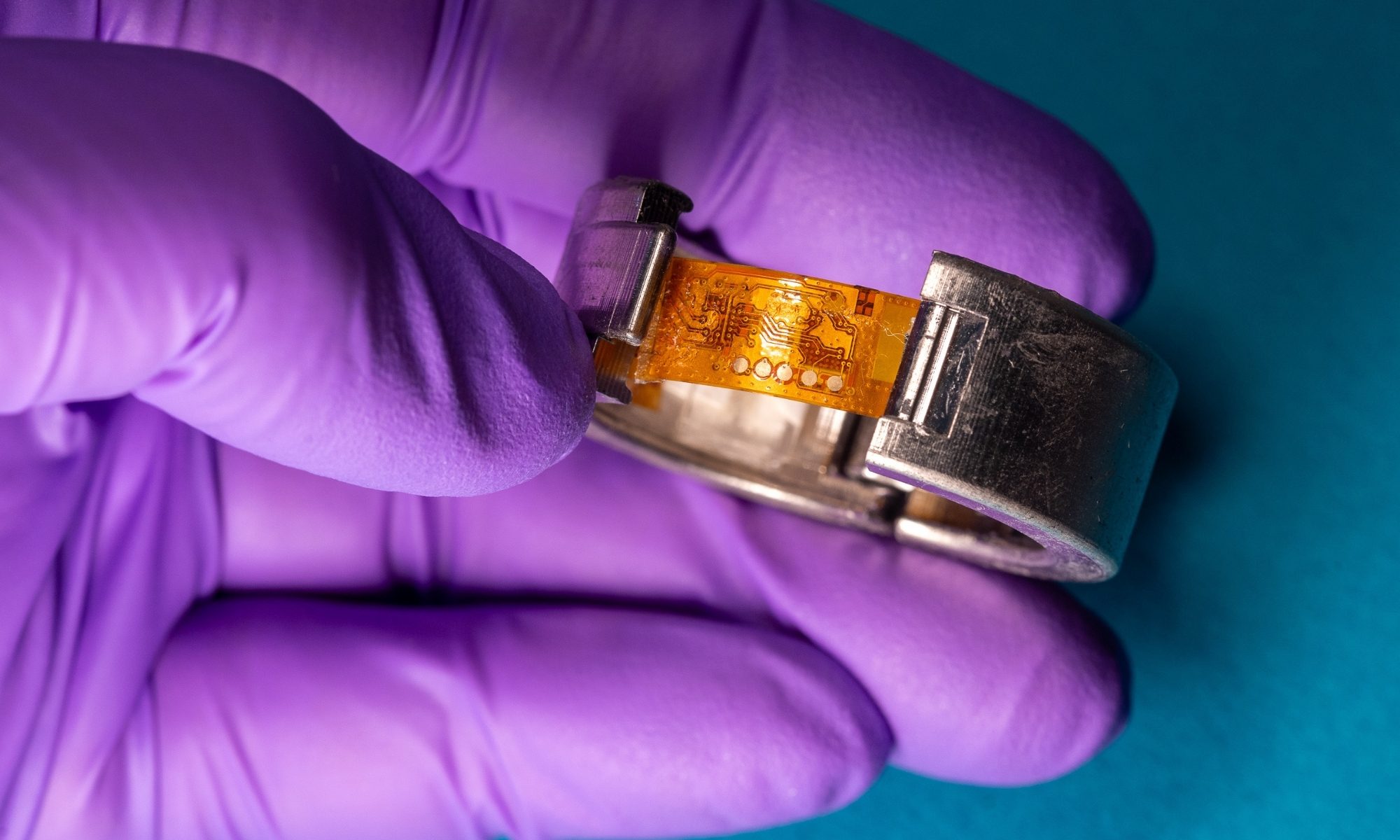
The biggest victory is the versatility. The CHARM ring can measure four biomarkers simultaneously. Additionally, the sensing system, which is based on a sensor–microfluidic assembly, can maintain its stability for two months, which means you won’t have to frequently calibrate it based on the readings you get from a traditional blood-based test.
But what about the accuracy? Saha says the team measured the ring’s accuracy against commercially available blood meters and continuous glucose monitors (CGMs), and the accuracy was analyzed across multiple metrics. Readings were taken in different scenarios, such as after alcoholic drink consumption, having a candy, and post-dinner, in order to measure the rise and fall in biomarker levels such as glucose, lactate, and alcohol.
When compared against devices that are used in clinical settings, the CHARM ring impressed with a low error range and high reliability in measuring the spikes and drops in biomarker levels. Additionally, all the data points collected by the ring fell in the A and B Zones (as per the Clinical Error Grid accuracy metric used by the US FDA), which means the results are either accurate or they are safely within a range where they won’t cause any harm if the readings are slightly off.
The team also went with paper-based microfluidics instead of the traditional microfluidic channel architecture. Saha tells me that conventional microfluidics is susceptible to fouling, with one of the core issues being salt accumulation. Using paper also proved to be the more cost-effective choice, while the hydrogel acts like a passive pump to draw out sweat without using any energy.
It’s still a work in progress. Beyond the engineering challenges, there’s the long process of clinical validation, which can easily take years, before the underlying tech makes it to the market. Why not just put it out there with a disclaimer? The likes of Google, Apple, and Samsung make it clear that their watches and rings can measure heart rate and sense blood pressure, but they are not meant as a replacement for medical-grade devices for measuring biomarkers, even though these mass-market wearables offer a high degree of accuracy.
For now, Saha’s team has no such plans, but there are a few bright prospects. When asked where he envisions the device to be a better fit — at home or in a hospital setting — he tells me it could be suitable for both.
“I would say that such a form factor, to be honest, is applicable everywhere, even in a hospital setting. For example, if a person is septic. Now, lactate is a key biomarker for septic patients, and sepsis is a slow process where your blood lactate levels are very high, and then they become extremely high over a period of time,” he explains. “So, I think if a patient comes to the clinic, instead of hooking up wires or bulky devices, a smart ring like CHARM can give information about their well-being by continuously recording their blood lactate levels and warning them about any worrisome spikes.”
Fixing historical flaws
I also asked about the repairability and upgradability aspects, because these happen to be the biggest weak spots of modern-age smart rings, and even smart watches with a fused sensor assembly. They can handle splashes, but if anything goes awry, the only option left is an expensive replacement. Repairs are simply out of the question. For the CHARM team, it is “a key consideration,” Saha tells me.
The team is currently focused on fixing a few underlying problems. Making the ring waterproof is one of the key areas of improvement. The ring currently has an open hinge-lock design, but the team hopes to achieve a fully enclosed architecture, like the current crop of smart rings. Replaceable modular components are a key objective, alongside a rechargeable battery format and sustained multi-day biosensing.
The team also aims to conduct clinical tests among a wider pool of patients with different tiers of diabetic ailments, and hopes to add more biomarkers to the support pool. How about merging a light-based sensor with a microfluidic-based sensing module on the same ring?
“That is possible,” Saha tells me, adding that we might see such an all-in-one model in a year or two. The CHARM team refers to that vision as a multimodal chemo-physical hybrid ring. The ultimate goal is to develop a “practical, user-friendly multi-biomarker wearable monitoring platform” that looks like a ring.
It’s an extremely ambitious idea, but Saha is also extremely cautious about giving a definitive roadmap. Biosensing is a field that has been built atop decades of work, and measuring biomarkers is not a straightforward lab-to-body journey. The painstakingly monitored clinical analyses and external validation are the real litmus test. It takes years, if not decades, before one can confidently push an entirely new kind of multi-biomarker wearable device.
You don’t want a repeat of what Oura is going through right now, after all!
Thankfully, CHARM is in the hands of an academic institution, and not a corporate entity hell-bent on maximizing profits riding atop zealous claims. Saha notes that the CHARM ring is a proof-of-concept with promising results. It would, however, take some time before we see a ring with the underlying tech appear in a retail shop. The future of wearable sensing, nonetheless, is full of possibilities.

Looks like Xbox is developing more than one next-gen console.

Shortly after she was named CEO of Xbox, Asha Sharma announced “Project Helix,” which she said was the code name for the brand’s next-generation console. Now, in a new interview with BBC News at gamescom 2026, Sharma said that Xbox has been hard at work developing a “great family of devices” for Helix, indicating that it’s working on not just one console.
Sharma didn’t reveal more details about the devices’ development, but she promised that Xbox will be sharing more soon. The CEO also said that Xbox will “continue to push the boundaries of performance” and reiterated that Helix will be able to play both console and PC games, though it’s unclear now if she means all of the devices in the lineup will be capable of doing so.
As The Verge has noted, she made that statement in response to being asked whether the next Xbox will be a discless device. If you’ll recall, Sony announced last month that the PlayStation will go full digital and will stop making disc-based games by 2028. Sharma didn’t answer that question. Xbox is planning to ship the alpha versions of the Helix console — or perhaps consoles, if Xbox truly is making more than one — to developers starting next year.
from the good-deals-on-cool-stuff dept
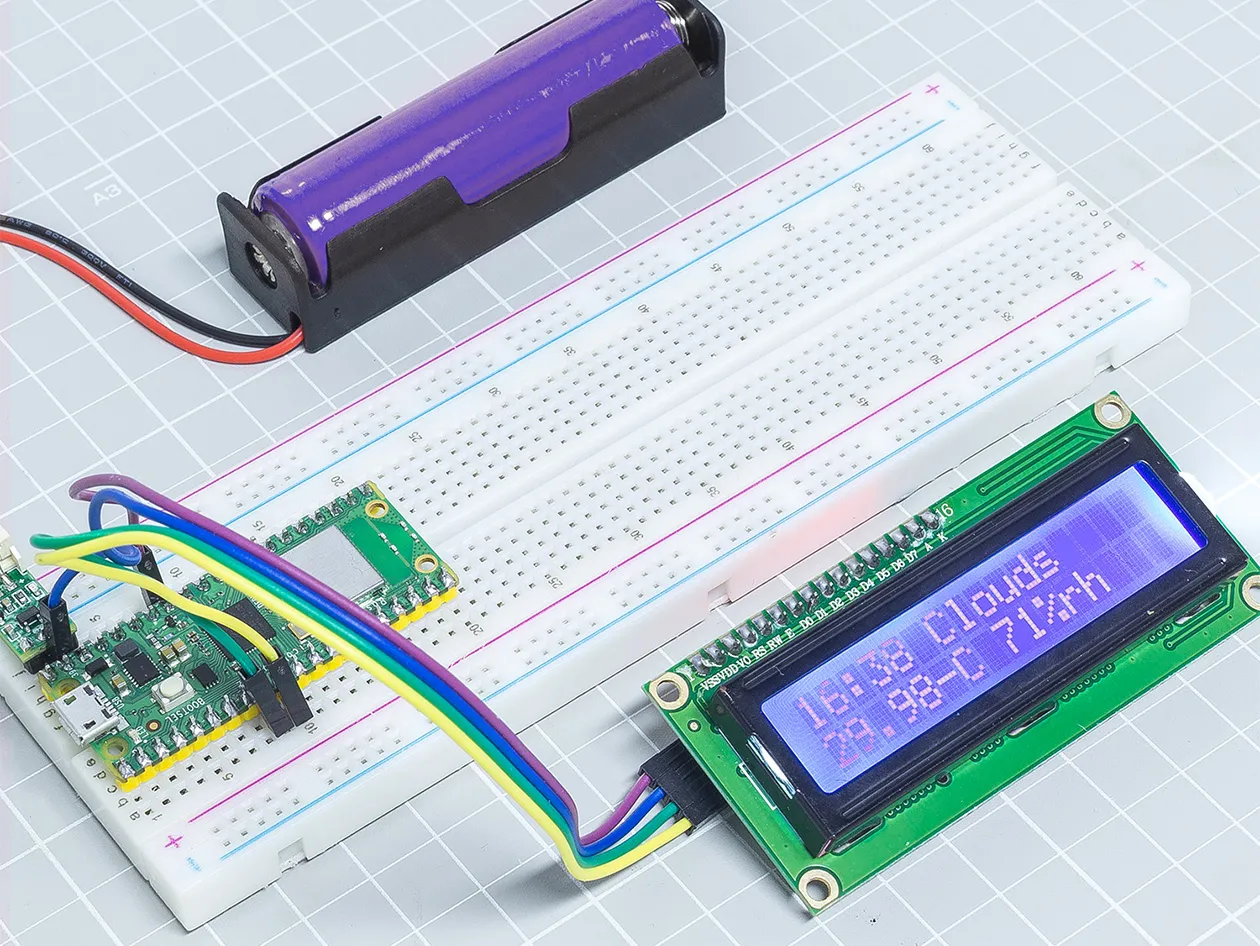
The SunFounder Raspberry Pi Pico With the Ultimate Starter Kit offers a rich IoT learning experience for beginners aged 8 and up. With over 450 components, 117 projects, and expert-led tutorials, this kit makes learning microcontroller programming and IoT engaging and accessible. It also features 27 video lessons by renowned educator Paul McWhorter, simplifying microcontroller programming and IoT concepts. Packed with diverse hardware, including sensors, actuators, LEDs, and LCDs, it enables endless experimentation and creativity. Supporting three programming languages, MicroPython, C/C++, and Piper Make, the kit caters to varying skill levels while fostering coding versatility. With dedicated technical support and a vibrant online community, this all-in-one starter kit ensures a seamless, hands-on journey into the world of IoT. It’s on sale for $65 for a limited time.

Note: The Techdirt Deals Store is powered and curated by StackSocial. A portion of all sales from Techdirt Deals helps support Techdirt. The products featured do not reflect endorsements by our editorial team.
Filed Under: daily deal

Preorder deals are in effect on the just-announced M6 Mac mini at Amazon. Pick up the 2026 desktop for as low as $879.99.
Save $20 on Apple’s brand-new M6 Mac mini that was announced this week, bringing the price of the standard model down to $879.99. This configuration has the new M6 chip with a 12-core CPU and 12-core GPU, along with 16GB of memory and 256GB of storage.
Buy M6 Mac mini 256GB for $879.99
If you want the flexibility of additional storage, the 512GB Mac mini with the same 12-core M6 chip is $30 off, bringing the price down to $1,069.99.
Buy M6 Mac mini 512GB for $1,069.99
These are the lowest preorder prices available, according to our M6 Mac mini Price Guide, with the compact desktop officially launching on Sept. 22.
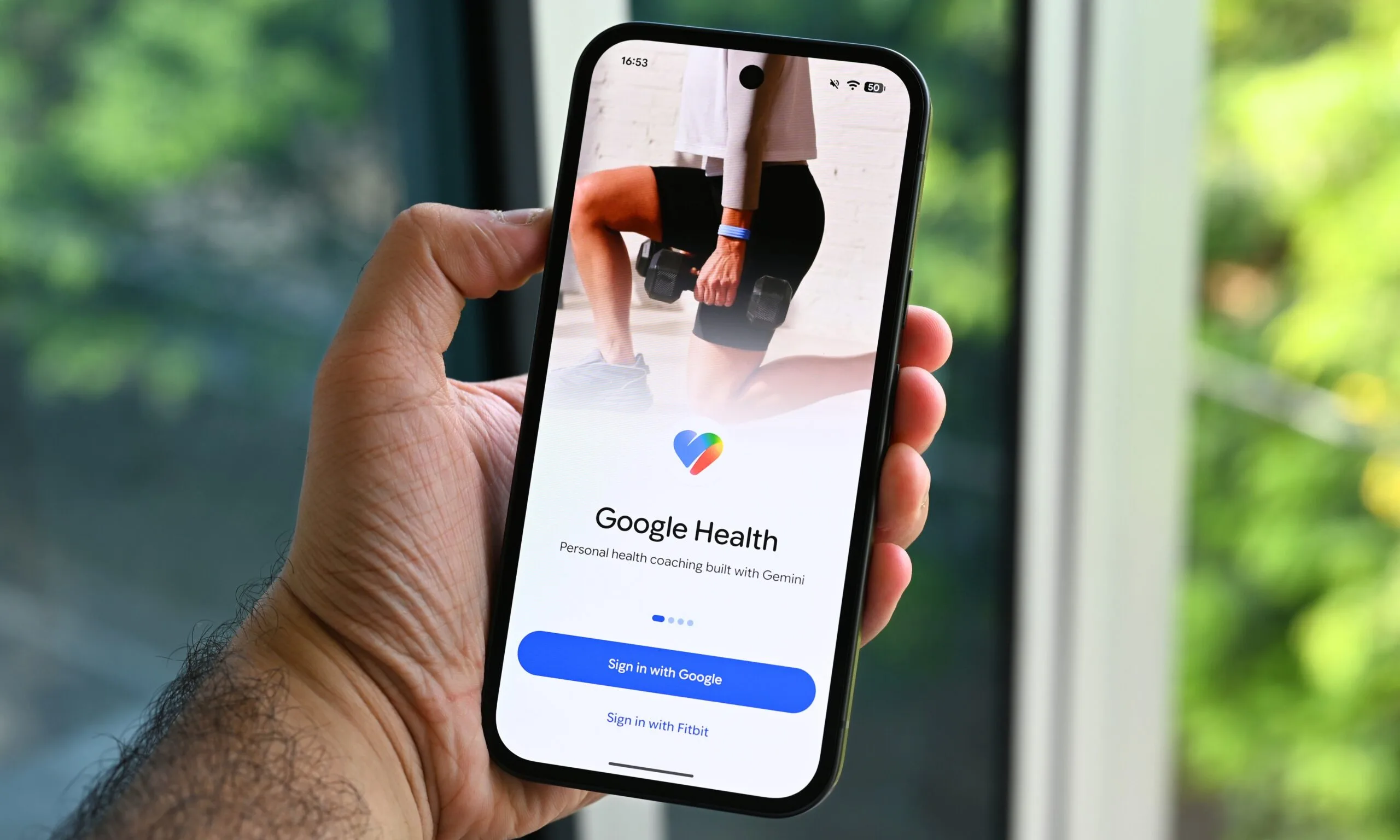
Google Health 5.07 is rolling out with a number of changes to how the app records and displays your workout and health data. Trail and incline runs will now count toward your Running Distance totals, manually logged workouts can include more information, and Google has fixed an issue that could cause Health Connect to disconnect for some Android users.
The update is rolling out on Android and iOS starting today and should reach more devices over the next week. It follows version 5.05, which added two-way Apple Health syncing and Smart Health Links, and version 5.06, which gave users the option to remove the Health Coach’s lengthy guidance from the Today tab.
More of your workout data should show up properly
For users who manually log their workouts, Google Health will now let you add and adjust more metrics. Google also says that any changes you make should show up in workout summaries more quickly.
Swimming workouts are getting a similar change. Users will be able to record more metrics when switching between pool and open-water swimming. Google is also fixing something that should have been counted already. Trail runs and incline runs will now be included in your Running Distance totals, giving you a more complete figure if either activity is part of your regular workouts.
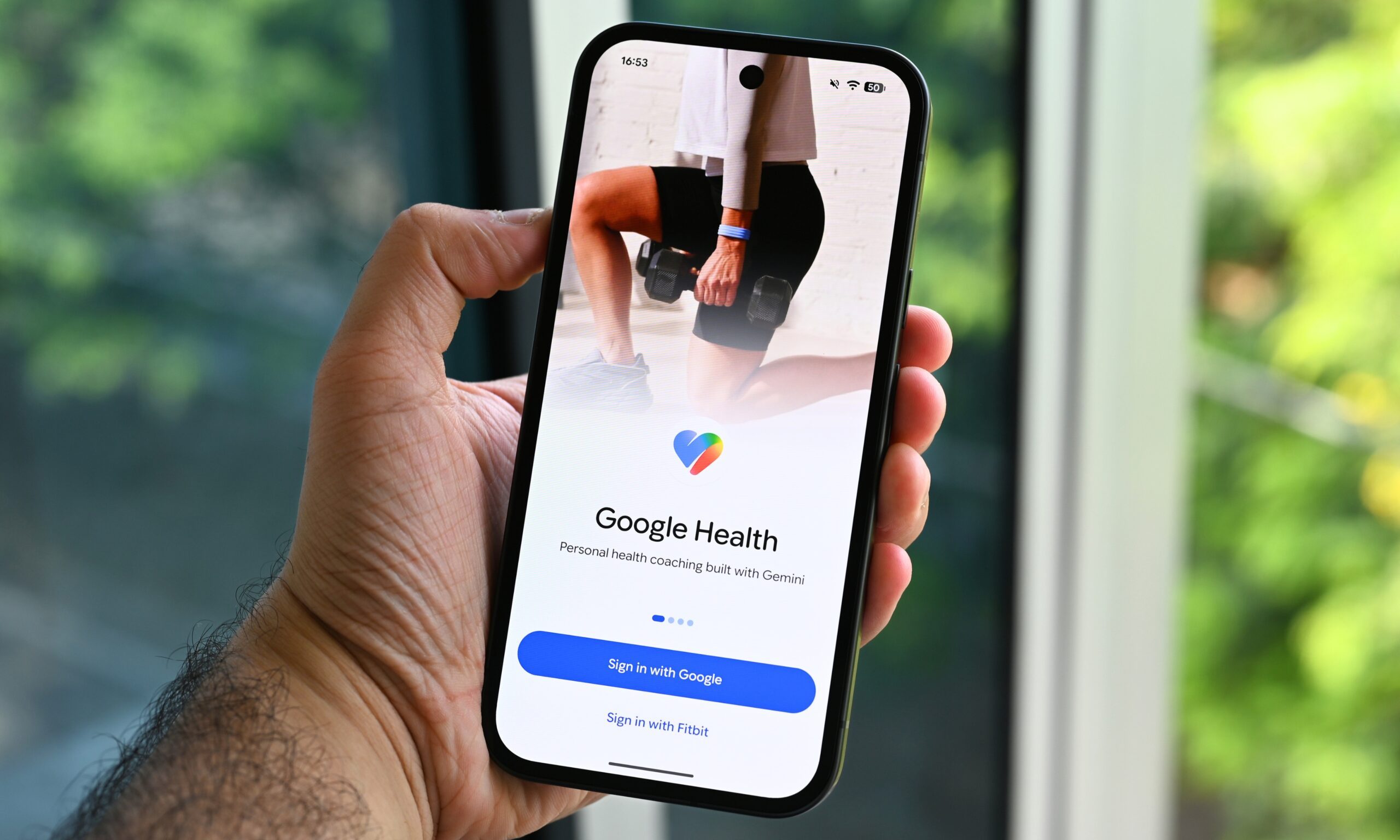
Maps are getting some attention as well. Google says they should load faster and render more smoothly. An issue that could occasionally cause maps to disappear when using your phone to track a run, walk, or bike ride has also been fixed.
Health Connect gets a much-needed fix
Some Android users have been running into an issue where Health Connect would lose its connection with Google Health. Version 5.07 fixes the problem. If you were affected, Health Connect should now appear under Partner Apps in the Connections screen. Google has also recalibrated the dynamic minimum and maximum range of the weight graph. The change should make weight trends and changes easier to see at a glance.
Google Health has received several larger additions since replacing the Fitbit app in May. Version 5.07 is a much smaller update, but most of its changes deal with making sure the workout and health information already in the app is recorded and displayed properly.
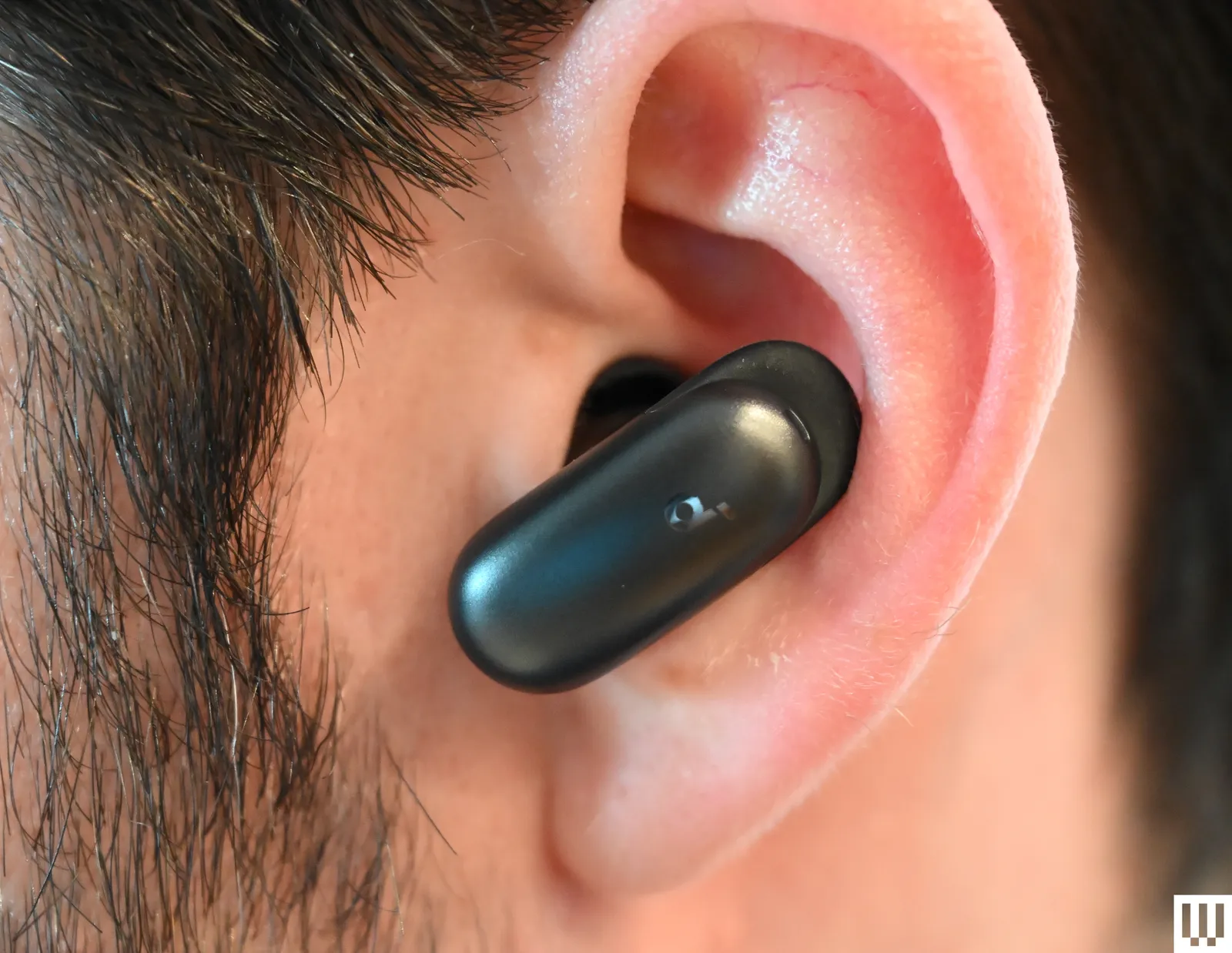
Noise canceling is also top-tier. The buds have the standard noise cancellation, transparency, adaptive, and off modes, and you can fine-tune ANC strength (from one to five) using the case or Soundcore app. The only earbuds that noticeably canceled more noise were the Bose QuietComfort Ultra Earbuds (2nd Gen) and Sony WF-1000XM6.
Video: Harry Rabinowitz
Video: Harry Rabinowitz
Out of the box, the sound profile (called Soundcore Signature) isn’t an immediate slam dunk like call quality and ANC are. It’s bass-heavy, so much so that I would bet even an untrained ear would notice the bass boost, especially compared to other earbuds from Apple or Bose. There are five preset sound profiles (I preferred Soundcore Balance), an eight-band custom equalizer to play with, and a personalized HearID mode, which tunes the profile to your preferences based on an audio quiz where you select which clip you prefer.
Using the Soundcore Balance or custom HearID profile, the Liberty 5 Pro sounds great. Again, it’s not quite as detailed as AirPods Pro 3 or QuietComfort Ultra Earbuds, but it’s close enough to be enjoyable for most people, especially given the significantly lower price.
Daily Versatility

Photograph: Harry Rabinowitz
It’s not often that a new pair of earbuds becomes my go-to. The convenience of the Apple ecosystem usually means AirPods Pro 3 are, begrudgingly, my earbuds of choice. But I’m still using the Liberty 5 Pro; I’m using them as I write this review. The Liberty 5 Pro is comfortable, sounds good, has great ANC, works well on iPhone and Android devices, and fits securely, making it well suited for almost any task. An IP55 rating means the earbuds should hold their own against dust and light rain. Most importantly, it offers such dramatically better call quality that I enjoy phone calls more, even with my mumbling and NYC street noise.
Sure, sound clarity isn’t perfect. Yes, the buds are a bit large. But when those are the only complaints I have about earbuds that cost nearly $100 less than most of my other top recommendations, that’s a big deal. In 2026, the Liberty 5 Pro might be the best value earbuds you can get.
OpenAI is ending its contract to supply models to Cursor following SpaceX’s $60B acquisition, with access shutting off on 12 November and its forthcoming Astra model withheld. Cursor and SpaceXAI shipped Grok 4.5 together in July, which is available in Cursor on every plan.
OpenAI is ending its contract to supply models to Cursor. The shutoff date is 12 November, the company said on Saturday.
The reason given is unusually direct. OpenAI said it cannot be confident SpaceX will use its technology within its terms of service, “based on our experience with Elon Musk’s companies violating contracts“.
Bloomberg reported it first. OpenAI published the same notice on X and on its own website.
Two grounds are named, both about earlier conduct. SpaceX’s acquisition of Twitter breached OpenAI’s terms, the company said, and xAI violated them in a way Musk admitted under oath this year.
The buyer completed its purchase this month. SpaceX closed the $60B all-stock acquisition of Cursor after agreeing it in June.
OpenAI says it gave the maximum notice its contract allows, about two and a half months. Astra, its next model, will not be supplied to Cursor at all. It added that it is ready to go above and beyond to support developers moving off.
The leverage in that is thinner than it looks. Cursor and SpaceXAI shipped Grok 4.5 together in July, a model Musk called Opus-class, available in Cursor on every plan.
So OpenAI is removing a supplier from a company that now owns a frontier lab. The gesture costs Cursor less than it would have in June, when the deal had only been agreed.
What it costs developers is real. Europe wrote rules for exactly this dependency, and since September 2025 cloud customers have been able to switch on two months’ notice and port their assets within 30 days. From January 2027 the provider cannot charge for any of it.
Whether those rules reach this is unresolved. The definition sweeps in as-a-service models broadly, and nobody has ruled on whether a model API counts as one.
There is a further gap in them. The switching rules protect a customer who wants to leave a provider, not a customer whose provider decides to leave. Nobody drafted for a supplier walking out.
Which is where European developers on Cursor now sit. Seventy-five days of notice, granted by a contract they never saw, with nothing statutory underneath it.

Apple’s latest Mac mini and Mac Studio models are reportedly set to ship with macOS Golden Gate, rather than macOS Tahoe.
The upcoming software appears to be mentioned on the product pages for both new Macs, giving us an early indication that Apple plans to have its next-generation operating system ready before the computers arrive.
According to Daring Fireball’s John Gruber, the new Mac mini and Mac Studio are “slated to ship” with macOS Golden Gate. Apple’s product pages already reference features coming with the next version of macOS, including Siri AI, further suggesting that the software will be installed on the machines from launch.
Apple itself also refers to the upcoming operating system in its announcement for the new Mac mini, saying that the computer will launch with “the upcoming macOS 27”. The company highlights Siri AI, Apple Intelligence features and improvements designed to make the Mac more responsive and reliable.
There’s some additional evidence behind the claim, too. FCC documents and other findings reported by MacRumors reportedly point towards macOS Golden Gate being pre-installed on the new Macs.
That also gives us a fairly narrow window for when Apple needs to release the software. Apple says the new Mac mini and Mac Studio will be released on Tuesday, September 22, meaning macOS Golden Gate would need to arrive before then if customers are to receive the machines with the new operating system already installed.
Apple hasn’t confirmed an exact release date for macOS Golden Gate yet, but its previous release patterns provide a reasonable clue. The software could arrive during the week beginning Monday, September 14, giving Apple enough time to get it onto the new Macs before they start shipping.
For existing Mac owners, this means the launch of Apple’s latest hardware could also mark the arrival of the next major macOS update. However, Apple has yet to officially confirm the release date, so we’ll have to wait for further details before treating that timing as final.
it seemed odd that Apple announced these new Macs, and then said it wouldn’t ship them until late next month.
However, this makes a lot more sense now. Apple probably also wants to get these out (at least the official launch of them) before the real fun stuff starts to arrive, like the firxt foldable iPhone.
Opinion


When the maidans disappear, where does the nation go to play? | More sports News

Judge strikes down Anthropic blacklist, says government retaliated over Pentagon criticism

Samson Mow’s New Model Puts Bitcoin at $750,000





-

 Crypto World4 days ago
SpaceX stock could rise 75% to $240, JPMorgan says
-

 Crypto World2 days ago
Bitcoin’s 22% rally now needs real demand to outlast Treasury liquidity boost
-

 Business7 days ago
Musk’s Tesla, SpaceX Confirm $16.8 Billion ‘Terafab’ Chip Plant as World’s Largest Building in Texas
-

 Fashion19 hours ago
Weekend Open Thread: Maeve – Corporette.com
-

 Crypto World5 days ago
A $30 Billion AI Fund Implodes, Now the SEC Is Investigating Wall Street’s Role
-

 Crypto World3 days ago
Warsh Jackson Hole keynote puts financial innovation first
-

 Business1 day ago
Salesforce Stock Soars 19% as Blowout Earnings and Agentforce AI Growth Silence Software Skeptics
-

 Crypto World3 days ago
Did Trump Just Move SpaceX Stock With One Truth Social Post?
-

 Business6 days ago
Mystery AI Model ‘Ox Alpha’ Draws Developers With Free Access as Chinese Lab Origins Remain Debated
-

 Business3 days ago
Walmart takes aim at younger shoppers with new fashion brand
-
 NewsBeat3 days ago
Lindsay Clancy jury braces for closing arguments as judge tells court: ‘You’ve heard all the evidence’ – Live updates
-

 Business5 days ago
Moderna CEO warns China is pouring state money into mRNA technology
-

 Crypto World3 days ago
Elon Musk Grok Bot Promise: We Will Make You Whole if AI Loses Your Money
-

 Business5 days ago
NVIDIA Stock Drops Nearly 2 Percent to $210 on Seventh Losing Day Ahead of Critical AI Earnings
-

 Crypto World2 days ago
NVIDIA revenue hits $96.2B as AI demand doubles
-

 Business21 hours ago
iPhone 18 Pro Pre-Orders Could Shift to Saturday as Apple Reportedly Avoids September 11 Anniversary
-

 Business4 days ago
Thailand’s Eastern Economic Corridor Capital City (EECiti): Key Developments and Investment Opportunities
-
 Crypto World5 days ago
$92 Billion Nvidia Earnings Could Make or Break the AI Trade
-

 Business6 days ago
Where Will Kevin Durant Play in 2027? Rockets Hold Player Option Key to His Future With Houston via Deal
-

 Sports6 days ago
Deshaun Watson fires back at Browns fans after being booed: ‘It’s a disrespectful thing’
You must be logged in to post a comment Login