Connect with us

Tech

Sony Music and Warner Chappell sue Anthropic over song lyrics in Claude’s training data

Published

on

Sony Music Publishing and Warner Chappell have sued Anthropic in California over song lyrics allegedly taken from pirate archives, naming Dario Amodei and Benjamin Mann personally and seeking up to $150,000 per composition. A Munich court ruled in November 2025 that memorising lyrics inside a model is reproduction and that the text and data mining exception does not cover it.

Sony Music Publishing and Warner Chappell have sued Anthropic in a Northern California court. Dario Amodei and Benjamin Mann are named personally, Business Insider reported.

The language is not restrained. The publishers allege a “brazen campaign of illegally torrenting, scraping, and downloading copyrighted works on a massive scale“.

The works named are familiar. Eye of the Tiger, Hallelujah, September, Livin’ On a Prayer and Great Balls of Fire are among them, alongside Mariah Carey and Taylor Swift compositions.

Advertisement

The route alleged is one Anthropic has been here for before. The complaint points to Library Genesis and Pirate Library Mirror, the same archives behind the $1.5B settlement it reached with authors.

The publishers want a jury and statutory damages. Up to $150,000 for each composition used in training, which is the statutory ceiling for wilful infringement rather than a figure any court has awarded.

Set that against what the last case paid. Authors received about $3,000 a title, split with their publisher, leaving roughly $1,500 each side.

The gap between those two figures is the whole negotiation. One is a number two sides agreed on, the other is an opening demand in a case nobody has answered yet.

Advertisement

A European court has already answered a version of this question, and it was about song lyrics too. The defendant was a different company.

The Regional Court of Munich ruled against OpenAI in November 2025, finding that memorising lyrics inside a model is reproduction, and that outputs reciting them are communication to the public.

It also found the text and data mining exception did not cover it. Permanent memorisation goes beyond transient analysis, and the rightsholder had opted out. The judgment is not final.

Europe’s exception carries a second condition that matters more here. It applies only to works the miner had lawful access to, and a pirate library is never lawful access.

Advertisement

On top of that sits the AI Act. General purpose model providers must keep a copyright policy and publish a summary of their training data, policed by an enforcement unit in Brussels.

Which is the asymmetry worth naming. American rightsholders go to court to find out what was taken from them, and European ones are entitled to be told.

Source link

Advertisement
Continue Reading
Click to comment

You must be logged in to post a comment Login

Leave a Reply

Tech

The Internet Archive just made decades of vintage AI playable in your browser, and it’s fascinating

Published

on

The Internet Archive has a habit of preserving unique things, ones that nobody else thought about, and its newest collection is the best example yet. I’d say it’s one that every AI historian should bookmark.

Curated under the title “Vintage Artificial Intelligence,” the collection contains decades of software that tried to convince people that they were talking to a thinking machine (though with wildly varying success).

So what exactly is in this new collection?

Created by Jason Scott, the new collection gathers emulated software from the 1970s through the 1990s. All of them are playable directly in a browser. While none of them actually think in any real sense, the idea is how convincing these decades-old programs can be at simulating the experience of talking to a real person

Out of all the entries in the collection, ELIZA anchors the set. Joseph Weizenbaum’s DOCTOR script, which was originally built to mimic a therapist, worked so well that early users reportedly opened up to it as if it were a real person, a trick that still deserves some credit even decades later. 

The software was rewritten so many times that the archive holds dozens of versions. Then there’s Racter, a commercial chatbot from 1985 that went well beyond conversation. It generated full passages of prose, and some of them were so strange that they ended up in published work. Consider it an eerie prequel to what LLMs can do today. 

Advertisement

How do you actually try it?

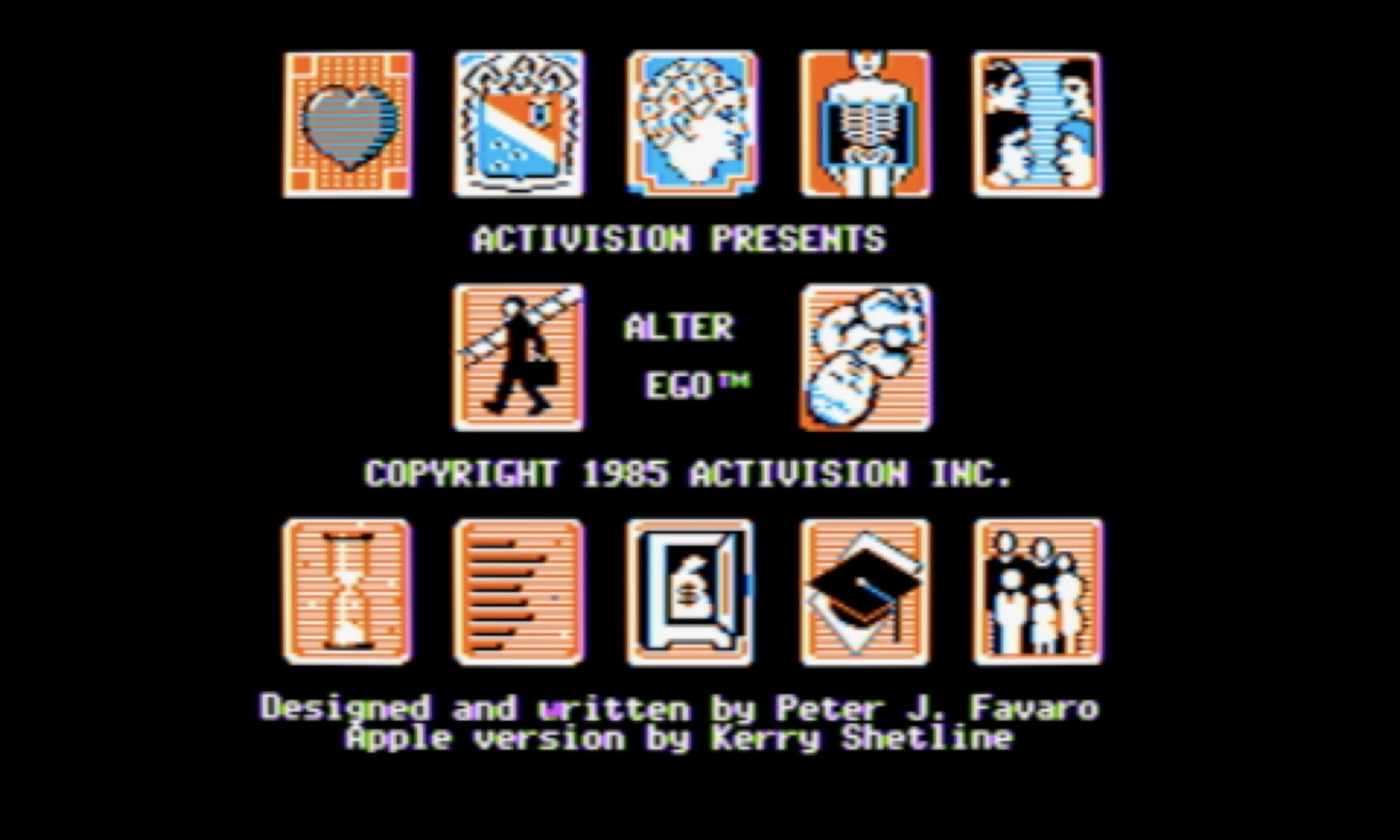
Beyond the chatbots, Activision’s Alter Ego walks you through simulated life stages as a psychologist-designed decision game. On the other hand, Little Computer People, built by Pitfall! creator David Crane, imagines what it would be like if tiny people were secretly living inside your machine. If you ask me, it was oddly ahead of its time. 

Suspended splits a cryogenically frozen player’s mind across six separate robots. Each one handles a different task alone, a structure that feels startlingly familiar today. The collection also pays homage to early autonomous agent games like Robot War, where players pre-programmed warriors to battle automatically.

If you’re curious, just poke around the collection directly on Internet Archive’s site right now. It doesn’t require any downloads or setup. Everything runs through in-browser emulation. It’s a genuinely fun way to trace how today’s AI conversations started decades before they got complicated, and well worth losing an afternoon to.

Source link

Advertisement
Continue Reading

Tech

Hackaday Links: August 30, 2026

Published

on

The big news today is, of course, the successful launch and deployment of NASA’s Nancy Grace Roman Space Telescope earlier this morning. The space agency’s latest observatory lifted off at 7:26 AM Eastern from Launch Complex 39A at Kennedy Space Center aboard a SpaceX Falcon Heavy, and by 8:00 AM it was separated from the rocket’s upper stage and flying on its own.

While the sound and fury of launch is exciting, it’s just the beginning of the journey for Roman. It will take several months for the spacecraft to complete its roughly 1.5 million-kilometer trek out to Earth’s second Lagrange point (L2), where it will set up shop near — in cosmic terms, anyway — the James Webb Space Telescope (JWST). Along the way, it will switch on and test various systems and components, with its primary 300 megapixel infrared camera scheduled to power up in three weeks or so.

There’s a lot to cover about the Roman Space Telescope. Built from spy satellite spare parts donated by the National Reconnaissance Office and featuring a field of view 100 times greater than that of Hubble, its launch is widely considered to be one of the most important scientific milestones of the decade. We’ll be bringing you more about the past, present, and future of this flagship mission as it progresses.

From real space missions to virtual ones, this week the developers of EVE Online announced that 2.4 million lines of code that keep the massively multiplayer online role-playing game running would finally be making the switch to Python 3. Given the immense complexity of the codebase, it’s been stuck at Python 2.7 since their last overhaul back in 2010, a situation which has become increasingly difficult to manage as time goes on.

The announcement goes into a surprising amount of depth about the state of Python in EVE. We imagine most players couldn’t care less, but naturally the developers have strong feelings about the situation and perhaps thought it would benefit others in a similar situation to get their thoughts out there.

While there’s certainly an argument to be made that the only justification they really need for making the migration is that 2.7 hit end-of-life back in 2020, the developers explain that the more immediate problem for them was that various tools and libraries they wanted to use were no longer compatible with the Python 2.x series. They also point out hopes that speed improvements made in the latest version of Python will eventually translate into better game performance down the road.

Advertisement

In more terrestrial news, this week the necessary regulatory amendments were passed to make plug-in solar systems legal in the United Kingdom. Assuming the wiring meets the necessary requirements, consumers can pick up the hardware and install it themselves without involving an electrician, although they may still need to contend with landlords and local ordinances that may limit their ability to physically mount the panels. The rules as they stand now allow each residence to have four panels with a total combined output rating of no more than 2,000 watts, although critically, the system is only allowed to generate a maximum of 800 watts at the inverter. As the government and consumers get more comfortable with plug-in solar systems, these numbers will likely increase over time.

Solar isn’t the only area where DIY approaches are moving into the mainstream. This week, Citrix pitched a “different approach to endpoint resiliency”: an isolated Linux-based operating system called UniconOS that users can boot into should the computer’s primary Windows installation become compromised or otherwise inoperable. The idea is that an independent, read-only backup OS kept on its own partition will reduce downtime, since the computer can still be used while IT figures out what the hell happened.

This solution will sound suspiciously familiar to anyone who’s booted a live Linux system from CD/DVD/USB in the last few decades. Try not to keep yourself up all night wondering why you never pitched the idea to some hungry venture capitalists in exchange for a yacht in the Bahamas.

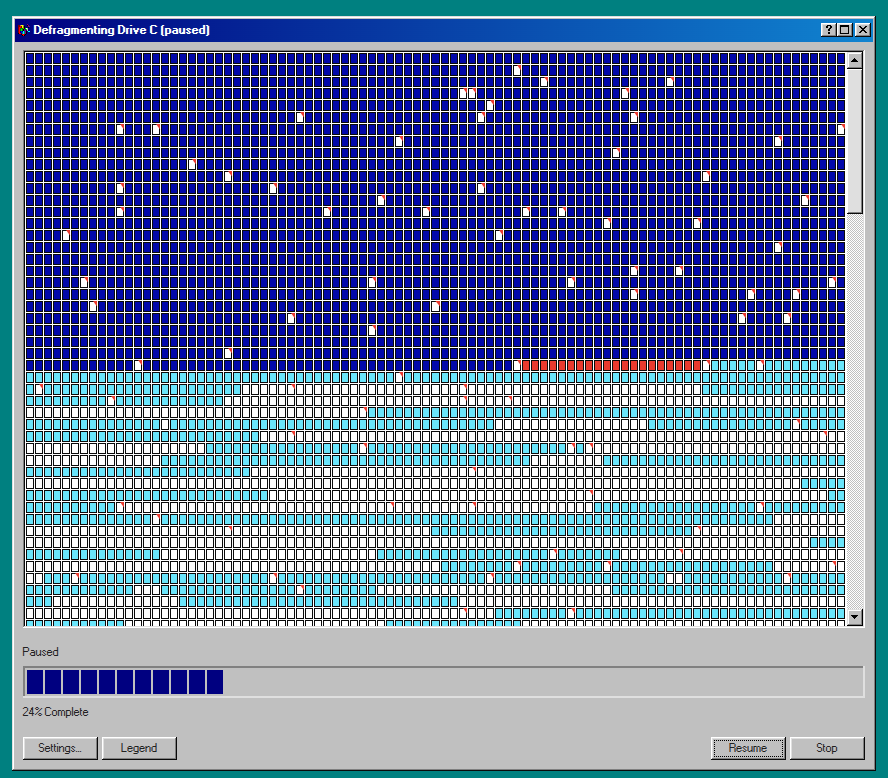
Finally, on the theme of new technology embracing the old ways, we bring you Defrag98, a web reincarnation of Microsoft’s dial-up era Disk Defragmenter tool. While it won’t actually improve the performance of your modern solid-state drive, you may find your own mood boosted by the wave of nostalgia when you see — and hear — the classic tool go to work.

That’s right, not only do the blocks dutifully flip from red to blue just like you remember, but all the while you’ll be treated to the unmistakable whirs and clicks of a spinning hard drive circa the turn of the millennium. Never forget what they took from us.

Advertisement

See something interesting that you think would be a good fit for our weekly Links column? Drop us a line; we’d love to hear about it.

Source link

Advertisement
Continue Reading

Tech

You worry about AI taking your job because you know too much about AI, research finds

Published

on

If you have been paying close attention to artificial intelligence, you may have noticed your worries about job security growing instead of shrinking. According to the AI Monitor 2026 from TU Darmstadt, the more you understand AI, the more you worry it’ll take your job, not less. Based on a representative survey of over 2,000 people in Germany, the study breaks the long-held belief that fear comes from ignorance.

The more you know, the more you worry

Almost half of people with very strong AI knowledge, around 43%, expect AI could soon take over their work. That number drops sharply among people who understand AI less. Professor Peter Buxmann, who led the study, called this both remarkable and worrying, since most debates assume concerns stem from a lack of information.

His data says otherwise. People who understand AI best also see its disruptive potential most clearly. What matters even more than industry is whether your actual output can be digitized. If your job produces text, analysis, reports, code, or presentations, you’re far more exposed than someone whose work depends on physical presence. However, daily AI use at most workplaces still remains fairly limited for now.

A knowledge gap making things worse

Despite how disruptive AI already feels to many, most people haven’t been trained to handle it. Just 15% of respondents have participated in any kind of AI training so far, revealing a real skills gap in AI usage. The concerns people actually have are also surprisingly grounded.

AI hallucinations and data privacy top the list of worries, while only four in ten respondents consider a future superintelligence even likely. Younger workers reported more job anxiety than older ones, and overall concern about job security climbed across every occupational group compared to last year.

Advertisement

The fix isn’t telling people to calm down

Buxmann pushed back against simple reassurance as a fix. People who lose jobs lose more than income, they lose social connection and a sense of purpose too. Rather than dismissing these concerns, he argues they should be addressed through better training and honest conversations about how work is changing.

While generative AI will create new kinds of jobs, he says, it’s unlikely to replace disappearing roles on a one-to-one basis. So the real takeaway for policymakers and employers is that preparation matters more than reassurance ever will.

Source link

Advertisement
Continue Reading

Tech

TechCrunch Mobility: The hidden human cost of robotaxis

Published

on

Welcome back to TechCrunch Mobility, your hub for the future of transportation and now, more than ever, the role AI is playing in it. To get this in your inbox, sign up here for free — just click TechCrunch Mobility!

Proponents of autonomous vehicle technology have long argued that robotaxis and other self-driving vehicles will reduce crash incidents and make roads safer. And there is some evidence of that. But that doesn’t mean there hasn’t been a cost to those who are working (or have worked) for the companies developing that tech. 

Sean O’Kane, senior reporter, special projects, dug into data submitted to the Occupational Safety and Health Administration and found that test drivers for Waymo and Zoox sustained more than two dozen injuries in 2024 and 2025 from hard braking or other sudden movements made by the autonomous vehicles. In some cases, these workers were sidelined for months after sustaining injuries like whiplash when the AVs stopped abruptly, and hard.

Check out his full story, which includes interviews with former and current workers. 

Advertisement

There is one important item to consider. You might ask yourself, well what about the other AV developers? Surely, this isn’t a problem isolated to Waymo and Zoox? And you’re probably right. It’s likely that test drivers for other AV developers are also getting injured, but the companies they work for may be exempt from OSHA’s reporting requirements.

Got a tip for us on this story or others? Email Kirsten Korosec at kirsten.korosec@techcrunch.com or my Signal at kkorosec.07, Sean O’Kane at sean.okane@techcrunch.com.

Deals!

money the station
Image Credits:Bryce Durbin

I’ve been writing about Gatik, the autonomous vehicle startup known for its self-driving box trucks, since 2019 when it came out of “stealth.” At the time, I wasn’t sure if the startup would survive. The hype cycle was already chewing up and spitting out AV startups and no one seemed close to commercializing their tech. 

Gatik has not only survived, but it has also crossed over from R&D lab to commercial operator, albeit at a small-scale compared with traditional human-driven delivery companies. (The company’s box trucks are driverless and deliver freight from distribution centers to retails stores like Walmart.) And now, with $200 million in fresh funding, it’s pushing to scale. The round was led by Qatar Investment Authority and Koch Disruptive Technologies, with participation from Millennium Management, ARK Invest, and Intact Private Capital. 

This is Gatik’s largest funding to date. But I might argue that its multiyear commercial agreement with PepsiCo, which was signed in June and is part of $600 million in contracted revenue, is the bigger deal here. 

Advertisement

Other deals that got my attention …

Airbound, an Indian startup building autonomous drones, raised $37 million in a Series A round led by Greenoaks with participation from DoorDash, Lachy Groom, Lightspeed, and Humba Ventures.

Mubadala Capital, the alternative asset management arm of Mubadala Investment Company, agreed to acquire a majority equity interest in Arrive Logistics, a truckload brokerage based in Austin.  

Regent Craft, a Rhode Island electric startup developing and manufacturing electric seagliders, raised $120 million in a Series B round co-led by Mare Liberum and AE Ventures. (The seaglider is a class of vehicle called a wing-in-ground effect vehicle, or WIG.) Regent also secured about $120 million debt capital provided by Erebor Bank, which was launched by Anduril Industries founder Palmer Luckey. One note about Regent, a company I have followed for a while: The startup, which recently completed its 255,000-square-foot seaglider factory, is clearly pushing deeper into the defense sector, probably because there is money and partnerships to be had.  

Advertisement

Vista Global Holding, a private aviation group based in UAE, is considering a European IPO that could raise more than a $1 billion, Bloomberg reported.

Notable reads and other tidbits

Image Credits:Bryce Durbin

According to a recent YouGov survey, more Americans oppose police license plate cameras than support them. Do you? Shoot me an email and share your opinion. 

Any, an electric two-wheeler startup out of Belgium, is placing a bet on cargo space

General Motors is facing increased scrutiny from U.S. safety regulators after hundreds of incidents, more than 20 crashes or fires, and at least six injuries involving brake problems in its EVs.

Ford has hired Dave Carroll as president of the company’s energy business. Carroll, who previously worked at ENGIE North America, will succeed long-time executive Lisa Drake.

Advertisement

Rivian CFO Claire McDonough is resigning from her position and will leave at the end of October. Her tenure at Rivian came during a tough, and exciting (ahem IPO), period for the company. And her departure comes at another critical moment for Rivian as it takes on some of its biggest projects to date, including the robotaxi deal with Uber and scaling production and sales of its R2 SUV. 

Uber is launching a new live video streaming feature that will allow parents to keep track of their children during rides. 

Waymo shared 10 lessons it has learned after its vehicles had driven more than 200 million autonomous miles. The first lesson — that multimodal sensors are indispensable — received the most attention because it is in direct opposition to Tesla’s camera-only approach. But there were other lessons that got my attention, including Waymo’s promotion of vision language models (an area that is starting to get a lot of attention). 

Meanwhile, Waymo is making more inroads overseas. The company announced that it plans to launch in Munich, Germany

Advertisement

One more thing …

One important clarification on what I wrote about last week. You might recall that Waymo shared information about its custom silicon chip — specifically a 5 nm ASIC chip that is designed to handle the massive influx of raw data before it reaches the core “brain” of the self-driving system. Waymo stated in its blog post:

“While these ASICs alone deliver over 1,000 TOPS of ML performance dedicated to front-end processing and ML models, we optimize across the full stack to maximize achieved performance, especially in the low-batch regimes we often operate.”

That line led me, and others, to believe that its one chip can deliver 1,000 TOPs (trillions of operations per second) of computing performance. I compared it to Nvidia’s Drive AGX Thor automotive processor, noting it was about the same performance. 

But alas, one eagle-eyed reader reached out with some questions, which prompted me to turn to Waymo for official answers. A Waymo spokesperson told me, “It’s for the system, not a single chip.”

Advertisement

That’s an important distinction.

When you purchase through links in our articles, we may earn a small commission. This doesn’t affect our editorial independence.

Source link

Advertisement
Continue Reading

Tech

Epson LifeStudio Grand Projector review: a new name hides a meager side-grade

Published

on

Why you can trust TechRadar


We spend hours testing every product or service we review, so you can be sure you’re buying the best. Find out more about how we test.

Epson LifeStudio Grand Projector: One-minute review

The new Epson LifeStudio Grand UST projector may not ring any bells. But its rebranding hides the fact that it’s little more than a minor update to the Epson EpiqVision Ultra LS650. That was a decent projector when it came out, but not an amazing one.

With the LifeStudio Grand, Epson has made some improvements. The Google TV operating system works well, and there’s an extra HDMI port where its predecessor offered just two. It also doesn’t have whiny fans. But the image is still a little soft and not as dazzlingly colorful as RGB laser projection. The projector’s motion interpolation also needs a lot of work. And Epson’s switch from Yamaha to Bose for sound tuning hasn’t made the audio better.

Advertisement

With competitors improving considerably over the past year, the LifeStudio Grand is in troubled waters. If you can’t see the DLP rainbow effect and don’t mind drawing the curtains from time to time, you can get a much better projector for your money by shopping elsewhere.

Latest Videos FromTechRadar

An overhead shot of the Epson LifeStudio Grand projector with its remote on the top

(Image credit: Future)

Epson LifeStudio Grand review: Price & release date

  • Release date: October 2025
  • Price: $2,699 / £1,749.99 / AU$4,399

Source link

Advertisement
Continue Reading

Tech

How To Improve Your Audio Quality On Apple CarPlay

Published

on

CarPlay is great for listening to music on the go, but a few tweaks will help it sound even better in your car.

Apple CarPlay gives you an easy solution for playing your favorite music from Spotify or Apple Music in your vehicle. However, it isn’t guaranteed to give you the best sound your car can produce. Your iPhone might feed the stereo a lower-quality stream than you expect, with settings that sound great through your headphones but awful through your car speakers.

There’s no magic solution for this, given how much variance there is between car speakers. The quality of the original music will obviously play its part, but the way your iPhone connects to your car has an impact, too. Rather than upgrading your speaker system right away, you can try some straightforward changes to improve the audio quality when using Apple CarPlay.

Advertisement

Wired CarPlay gives you lossless audio

Wireless CarPlay is the most convenient option for most people. You don’t even have to get your iPhone out of your pocket for your car to connect and start playing your favorite songs. Unfortunately, it isn’t the best option for those who demand the best music quality.

Take it from Apple: wired is best for your music. Apple’s guidelines for Apple Music through CarPlay confirm that only a wired USB connection will allow you to play lossless audio. Lossless audio is compressed without throwing away any of the original audio data, meaning you’re not losing detail. A wired connection means you can switch to lossless streams, as long as you have an active Apple Music subscription and have enabled this option.

Technically, it’s all down to the codec. Apple uses LPCM for audio on wired CarPlay connections, but switches to AAC-LC when using wireless CarPlay. LPCM carries uncompressed digital audio, so a lossless ALAC track from Apple Music can be passed to your car without lossy compression. Wireless CarPlay has to encode the audio into AAC-LC first, using lossy compression to reduce the bitrate and discarding some of the original audio data in the process.

The end result is lower-quality audio, but that doesn’t mean wireless CarPlay automatically sounds bad. Whether you hear the difference will depend on your car’s sound system and your ears. The speakers and amp (if your car has one) have a huge influence here. Plus, other distractions, like road noise, are never going to provide the perfect environment for listening to music.

Advertisement

Download high-quality music before you drive

A wired connection can only preserve the quality it receives in the first place. When you’re streaming from Apple Music or Spotify while driving, your mobile connection isn’t going to be perfect. You’re regularly shifting between cell towers and dipping in and out of cellular coverage. Drops in connection mean drops in quality: CarPlay can’t counter that, even over USB.

This problem is easily fixed by downloading your regular playlists to your iPhone before you set off. Apple Music lets you choose your preferred quality setting for downloads, including lossless at 24-bit/48kHz. This, while using wired CarPlay, will give you the best possible sound quality over the platform. If you’ve downloaded your music at a lower quality before, Apple recommends deleting it from your phone and downloading it again to get the lossless version. 

You can listen to lossless audio on other platforms too, including Spotify, which allows Premium subscribers to download lossless audio at 24-bit/44.1kHz using FLAC. Otherwise, Spotify will automatically adjust your streaming quality per your connection; downloading your playlists will stop this from happening. 

Advertisement

Because lossless audio files will take up significantly more storage than compressed equivalents, make sure you’ve got plenty of space available. Another benefit of downloading your music is preserving your data plan, since lossless streaming uses a huge amount of data.

Check the equalizer and volume settings on your iPhone

The audio settings for your chosen streaming app are another area to review. Volume control and equalizer settings can help if your music sounds tinny, strangely thin, or heavy on bass.

Apple Music has its own equalizer settings, which you can access through Settings > Apps > Music > EQ. You might have already chosen a preset; if so, turn the EQ off and listen again to see how it compares. A preset that works well with headphones probably won’t sound the same while you’re listening to music through a car’s speaker system.

Advertisement

Apple Music also has a Sound Check mode, which is a normalization feature that automatically adjusts playback volume. If a song is too quiet or too loud, Sound Check will try to equalize the volume based on its own measure of perceived loudness. You can set this by tapping Settings > Apps > Music and toggling Sound Check on or off. Other music apps might have their own equalizer or volume normalization settings that you’ll need to check, too.

After every change you make, it’s best to check the impact immediately by listening to your music again. You don’t want to compare after changing several different options, as you won’t be able to accurately compare it to the original settings you used and, if needed, switch it back as easily.

Advertisement

Watch out for this unusual CarPlay bug

If CarPlay usually sounds OK but suddenly loses its bass, volume, or clarity, then an odd audio ducking bug might be the cause. CarPlay has to lower the volume whenever Siri or your maps app is speaking, and people have reported music can sometimes get stuck in this state afterwards.

A common workaround, mentioned in this long-running Reddit thread over the last few years, suggests a workaround. Try activating Siri using your steering wheel control, then immediately hitting the button again to dismiss it. The thread includes reports from Mazda, Porsche, Subaru, Ford, Toyota, and other owners suggesting that this restored their music to normal.

Other bugs may also crop up; in these cases, it’s worth removing your device and re-pairing it if Apple CarPlay isn’t working properly. A fresh connection will often reset any conflicting settings and restore normal working order. You can do this at Settings > General > CarPlay, selecting your car, then tapping Forget This Car.

Advertisement

Give CarPlay the best source you can

If you want the best audio quality in your car, you’re going to need the highest-quality source audio. A wired CarPlay connection works best, but you’ll still need to switch to lossless playback in Apple Music or Spotify to eliminate quality-reducing compression. Avoid the variability of streaming by downloading the files in lossless format before you set off. Any audio settings you’ve configured, especially custom EQs in streaming apps, are worth double-checking. 

There’s a limit to what you can achieve with just a few tweaks to your settings, though. Your speaker setup, including your amplifier, will have a big impact on quality. The acoustics in your car as you’re driving have a major effect, too. Experimentation is your best bet here: make one change at a time and listen carefully to see if it makes a big enough difference.

Source link

Advertisement
Continue Reading

Tech

Musk’s faster path to more gas turbines comes with pollution problem

Published

on

Elon Musk says he’s found a way to solve one of AI’s biggest bottlenecks by making a hard-to-manufacture turbine part himself.

On Saturday, Musk confirmed what a secret foundry SpaceX has been building in Bastrop, Texas, is for — an apparent response to a story that was already closing in on the details. Earlier in the day, The Information published a report citing job listings that explicitly mention a “blades and vanes foundry,” plus findings from Corey Trinetti, a due diligence specialist who authors detailed reviews of AI infrastructure sites in his newsletter and who’d reported that SpaceX had bought roughly 830 acres near its existing Starlink factory in Bastrop between March and June.

“SpaceX and Tesla are each building 100GW/year of solar production capacity as fast as possible,” Musk wrote on X on Saturday, “but natural gas will still be needed to supplement and bootstrap solar for several years. The limiting factor for nat gas turbine production is casting the blades & vanes. By doing in-house casting at SpaceX, we can accelerate nat gas turbines coming online by up to 18 months, which is a profound game-changer.”

The “why” of all this goes back to one of the biggest challenges facing the AI industry right now. GPU shortages are still an issue — Nvidia’s newest Blackwell chips are still running lead times of several months, for example — but a second constraint has emerged alongside it, which is the physical power grid. The International Energy Agency projects global data center electricity use will roughly double by 2030, and gas turbine maker GE Vernova says it’s essentially sold out of production capacity through 2030 due largely to AI infrastructure demand.

Advertisement

That shortage is why building private gas-fired plants next to data centers, instead of waiting on the grid, has become a ubiquitous strategy for so-called hyperscalers, including Amazon, Google, Meta, OpenAI, and Microsoft. After years of prioritizing wind and solar, they’re all now betting on natural gas to get data centers online faster.

As for the casting bottleneck specifically, according to The Information, the blades inside a gas turbine’s hottest section run at temperatures around 3,000 to 3,600 degrees Fahrenheit, which is roughly 800 degrees hotter than the melting point of the very metal alloy they’re made from. That’s only possible because of the blades’ internal cooling channels and thermal-barrier coatings, plus the specific way each blade is cast. Just four companies worldwide have mastered the casting process well enough to produce them at industrial scale, and all of them are tapped out right now.

What makes the whole thing especially difficult is that each blade has to be cast as a single, unbroken crystal, grown slowly inside a vacuum furnace, without the microscopic seams that let ordinary cast metal crack under stress. It’s a tricky process even for the smaller blades used in jet engines; the blades in power-plant turbines are considerably larger, which makes producing them at that scale and without defects even harder.

If SpaceX pulls this off — and it’s easier said than done, of course — it would mean a Musk-controlled entity holds a manufacturing capability that every other AI infrastructure builder currently depends on a tiny oligopoly for, giving SpaceXAI an edge that’s difficult for any well-funded but non-manufacturing competitor to copy quickly.

Advertisement

But it would also mean more gas turbines coming on fast, and turbines in the ground are already drawing federal lawsuits and peer-reviewed health research over the pollution they emit.

In Memphis, where SpaceXAI has run gas turbines to power its Colossus data centers since 2024, the NAACP has repeatedly accused the company of operating turbines without the permits or pollution controls required by federal law. The organization’s concern is that turbines like these emit smog-forming compounds and hazardous chemicals like formaldehyde, pollutants linked to asthma, respiratory disease, and certain cancers. (The site sits near neighborhoods that already face heavy industrial pollution, and University of Memphis researchers said that in their own admittedly limited analysis, air pollution grew “slightly worse” because of the data center.)

But Memphis just happens to be the most visible case. The same fight is playing out anywhere gas turbines have become the default fix for data center power shortages. In Virginia’s “Data Center Alley,” a study commissioned by the Piedmont Environmental Council, using the EPA’s own COBRA health-impact model, found that emissions from a single facility’s eight full-time gas turbines could reach more than 2.5 million people across multiple counties — with the heaviest impact landing on already-marginalized communities — and cause an estimated 3.4 to 6.5 additional premature deaths a year, translating to $53 million to $99 million in annual health-related damages.

When you purchase through links in our articles, we may earn a small commission. This doesn’t affect our editorial independence.

Advertisement

Source link

Continue Reading

Tech

AI agents need their own identity before they need a gateway

Published

on

Enterprise AI has entered a new era. Organizations are rapidly moving beyond assistants that answer questions to autonomous agents capable of reasoning, invoking tools, accessing enterprise applications, coordinating with other agents, and completing multi-step business workflows with minimal human intervention.

This shift represents a fundamental change in how software operates. Traditional applications execute predefined logic written by developers. AI agents, however, dynamically determine how to achieve an objective. They decide which tools to use, which APIs to call, what information to retrieve, and how to sequence actions based on context. That flexibility unlocks enormous business value, but it also introduces a new class of security risks.

Much of today’s AI security discussion focuses on prompt injection, model vulnerabilities, and data leakage. These are important concerns, but they represent only part of the challenge. Once an AI agent has successfully authenticated and begins acting autonomously, traditional security controls provide very little visibility into whether it continues to operate safely.

This is where enterprises need to adopt a new security mindset: runtime trust.

Advertisement

Authentication establishes identity, not trust

Enterprise security has traditionally relied on three foundational questions: Who are you, what can you access, and what actions are you authorized to perform. Identity providers, multi-factor authentication (MFA), role-based access control, and zero trust architectures answer these questions effectively for human users and conventional applications, and NIST’s zero trust guidance remains a solid reference point for how those principles are meant to work (NIST SP 800-207).

AI agents introduce a different problem. An AI agent may legitimately authenticate using an enterprise identity, receive valid API credentials, and be granted access to systems like Microsoft 365, ServiceNow, Salesforce, or GitHub. From an identity perspective, everything appears correct. The real challenge begins after authentication: During execution, the agent continuously reasons, interprets objectives, invokes tools, retrieves information, and adapts its behavior based on new context, and security teams must determine whether those actions remain aligned with the user’s intent and organizational policy. Authentication verifies who an AI agent is. Runtime trust continuously verifies what it is doing.

Enterprise AI is becoming an autonomous workforce

Modern AI agents increasingly interact with large language models (LLMs), Model Context Protocol (MCP) servers, retrieval-augmented generation (RAG) systems, vector databases, enterprise APIs, SaaS platforms, and internal knowledge repositories, as well as other AI agents. This interconnected ecosystem enables sophisticated automation but dramatically expands the attack surface: A single compromised tool, poisoned knowledge source, overly permissive API, or manipulated prompt can influence downstream decisions across an entire workflow, and unlike traditional software, these risks evolve during execution rather than being fixed at deployment.

That expanding surface is exactly what a handful of runtime threats exploit.

Advertisement

Goal drift happens when an agent begins with a legitimate objective but gradually deviates from the user’s original intent while attempting to optimize outcomes. An agent tasked with preparing a customer report, for instance, might autonomously retrieve unrelated confidential information because it incorrectly determines that additional context would improve the response.

Excessive tool invocation is what happens when autonomous agents with access to numerous enterprise tools call unnecessary APIs, modify configurations, access sensitive repositories, or perform administrative actions simply because the model believes those actions are useful, absent any runtime controls to stop it.

Memory poisoning exploits the persistent memory that improves personalization: Attackers can intentionally insert misleading instructions into long-term memory or retrieval systems, causing future decisions to be influenced by malicious or outdated information.

Context manipulation takes advantage of how heavily LLMs depend on context: If attackers influence retrieved documents, system prompts, conversation history, or external data sources, they can indirectly steer autonomous behavior without ever compromising the underlying model. MITRE’s ATLAS framework catalogs this kind of adversarial behavior against AI systems in useful detail.

Advertisement

Multi-agent amplification emerges as organizations deploy specialized AI agents that collaborate: If one agent behaves incorrectly, downstream agents may trust and amplify those actions, creating cascading failures across enterprise workflows.

Introducing runtime trust

Runtime trust extends security beyond authentication by continuously validating AI behavior throughout execution. Rather than assuming authenticated agents remain trustworthy indefinitely, it continuously evaluates whether autonomous decisions remain aligned with organizational policy. A runtime trust architecture rests on several complementary capabilities.

Intent validation evaluates, before executing sensitive actions, whether proposed behavior still matches the user’s original objective: Is this action necessary? Is it expected? Does it exceed the requested scope? Would a reasonable human perform the same action?

Behavioral monitoring observes tool usage, API activity, reasoning patterns, execution frequency, delegated actions, and abnormal workflows, so unexpected behavior becomes immediately visible rather than remaining hidden inside model reasoning.

Advertisement

Policy enforcement means enterprise policies govern what AI agents can do, not merely what they can access — blocking financial transactions above approval thresholds, preventing privilege modifications, restricting administrative operations, limiting sensitive data retrieval, and requiring approval for high-risk actions. These controls function much like application firewalls for autonomous decision-making.

Least-privilege execution means AI agents receive only the capabilities necessary for the current task. Instead of granting permanent access to dozens of enterprise tools, organizations should dynamically issue short-lived permissions based on runtime context, an approach that OWASP’s guidance for agentic applications increasingly emphasizes (OWASP GenAI Security Project).

Human oversight recognizes that not every decision should be autonomous — high-impact operations, including financial approvals, identity changes, regulatory actions, or customer-impacting decisions, should require explicit human confirmation before execution.

Protecting the enterprise AI ecosystem

Runtime trust also extends beyond individual agents. As MCP adoption accelerates, enterprises should verify trusted servers, authenticated tools, approved capabilities, monitored interactions, and policy enforcement. RAG knowledge repositories require document integrity, source validation, access control, retrieval auditing, and poisoning detection. Persistent AI memory should implement lifecycle management, expiration policies, integrity verification, access logging, and sensitive data protection.

Advertisement

Building operational visibility

One of the biggest challenges in enterprise AI is observability. Security teams need visibility into why an agent selected particular tools, which data influenced its decisions, how it reached its conclusions, what actions it executed, whether policies were triggered, and which safeguards prevented unsafe behavior. Runtime logging, audit trails, and behavioral analytics are becoming essential components of enterprise AI operations, not optional add-ons.

A practical roadmap

Organizations do not need to rebuild existing security programs. Instead, they should extend them by incorporating runtime trust into existing governance processes. Practical first steps include inventorying AI agents and their capabilities, applying least-privilege access to tools and APIs, classifying high-risk autonomous actions, implementing runtime policy enforcement, monitoring behavioral anomalies continuously, protecting memory and RAG data sources, requiring human approval for critical operations, and integrating AI runtime telemetry into existing SOC workflows.

Looking ahead

Enterprise AI will continue evolving toward increasingly autonomous systems capable of collaborating, planning, and executing complex business processes. Security strategies must evolve alongside them. The question is no longer whether an AI agent successfully authenticated. The more important question is whether it continues to behave safely throughout its entire lifecycle. Organizations that adopt continuous runtime governance today will be significantly better positioned to deploy autonomous AI responsibly, reduce operational risk, and build the confidence necessary for large-scale enterprise AI adoption.

The future of AI security will not be defined solely by stronger models or better authentication. It will be defined by our ability to establish, measure, and continuously verify trust while intelligent systems are making decisions in real time.

Advertisement

Ravindra Annam is a cyber security architect.

Welcome to the VentureBeat community!

Our guest posting program is where technical experts share insights and provide neutral, non-vested deep dives on AI, data infrastructure, cybersecurity and other cutting-edge technologies shaping the future of enterprise.

Read more from our guest post program — and check out our guidelines if you’re interested in contributing an article of your own!

Advertisement

Source link

Continue Reading

Tech

AI's 'Creepy' Crawlers Criticized by Linux Foundation's IT Infrastructure Director

Published

on

The Linux Foundation’s director of IT infrastructure says they now spend more CPU cycles “rendering commits for scrapers than we spend on all other kinds of legitimate access.”

At any one time, across 5 geo-distributed nodes, there are 14 CPU cores doing nothing but rendering git commits as html….

[W]hen a source is guaranteed to be LLM-free, like the entire history of kernel commits, it’s worth its weight in gold as a source of training data… At the time of writing, linux.git is about 1.48 million commits. Oh, and we have about 922 forks of it on git.kernel.org — but don’t worry, it’s actually extremely efficient on the backend, since it’s mostly the same objects in every fork. Unless, of course, you’re a scraper, in which case you have, oh, several BILLION valid URLs you can scrape, only to get 922 duplicates of the same 1.48 million commits — which is exactly what the scrapers are doing. But wait, it’s not just commits itself. You can also ask for patches, plain renders, diffs between arbitrary commits — cgit is happy to let you, which was perfect for the times when the Internet was for humans or crawlers who obeyed robots.txt, and is AWFUL right about now, because we can generate 1.2 METRIC BAJILLION valid URLs just for a single fork of linux.git.

Initially, this was the solution — look through the logs, find out which IPs are obvious scraper bots, and fail2ban them. At first, this was easy, because the bots helpfully told you who they were via their user-agent. Then, they wised up and started pretending that they were random vanilla browsers. So, we started banning them by IP — after all, it’s easy to figure out that an IP that is trying to grab every possible commit in a 8-year-old abandoned fork of linux is not really some lone Chrome on Windows user who is just furiously clicking every link that comes across their screen. The bots then started fanning out to entire subnets, but this was still meh, because obviously an IP coming from Google Compute is just pretending to be a Firefox user…

Advertisement

And… that’s when things turned really, really ugly. Suddenly, the crawlers were coming from millions of random residential or mobile IPs, all pretending to be random modern browsers. An IP like that would make 4-5 requests and then never show up in the logs again… They descended like swarms of locust, hit hard and fast until the system fell over and then moved on to the next target until you recovered. Then, they returned. Rinse. Repeat. They still do that — welcome to the wonderful world of “proxy SDK monetization.” It’s big business, and your TV is probably doing it…

Today, git.kernel.org receives about 6M daily requests demanding to see random commits. Of these, 66% are still immediately batted away with the Anubis challenge, but 33% are now solving the math and getting through to the main site — because apparently what we have to offer is worth spending a ton of cycles to calculate the Anubis challenge… With a bunch of generous assumptions, legitimate requests are only about 2% of git.kernel.org traffic — everything else are scrapers…

[W]e’re turning off features to reduce the number of crawlable URLs and to gate off actions that are expensive for us to run. Expect to lose some functionality, at least when accessing our resources anonymously. Trust me, we hate it just as much as you, but at this point it’s a necessity… [W]e promise to still offer all of our data for download to anyone who asks. You just may have to jump through more hoops to get it.
Sorry.

Read more of this story at Slashdot.

Advertisement

Source link

Continue Reading

Tech

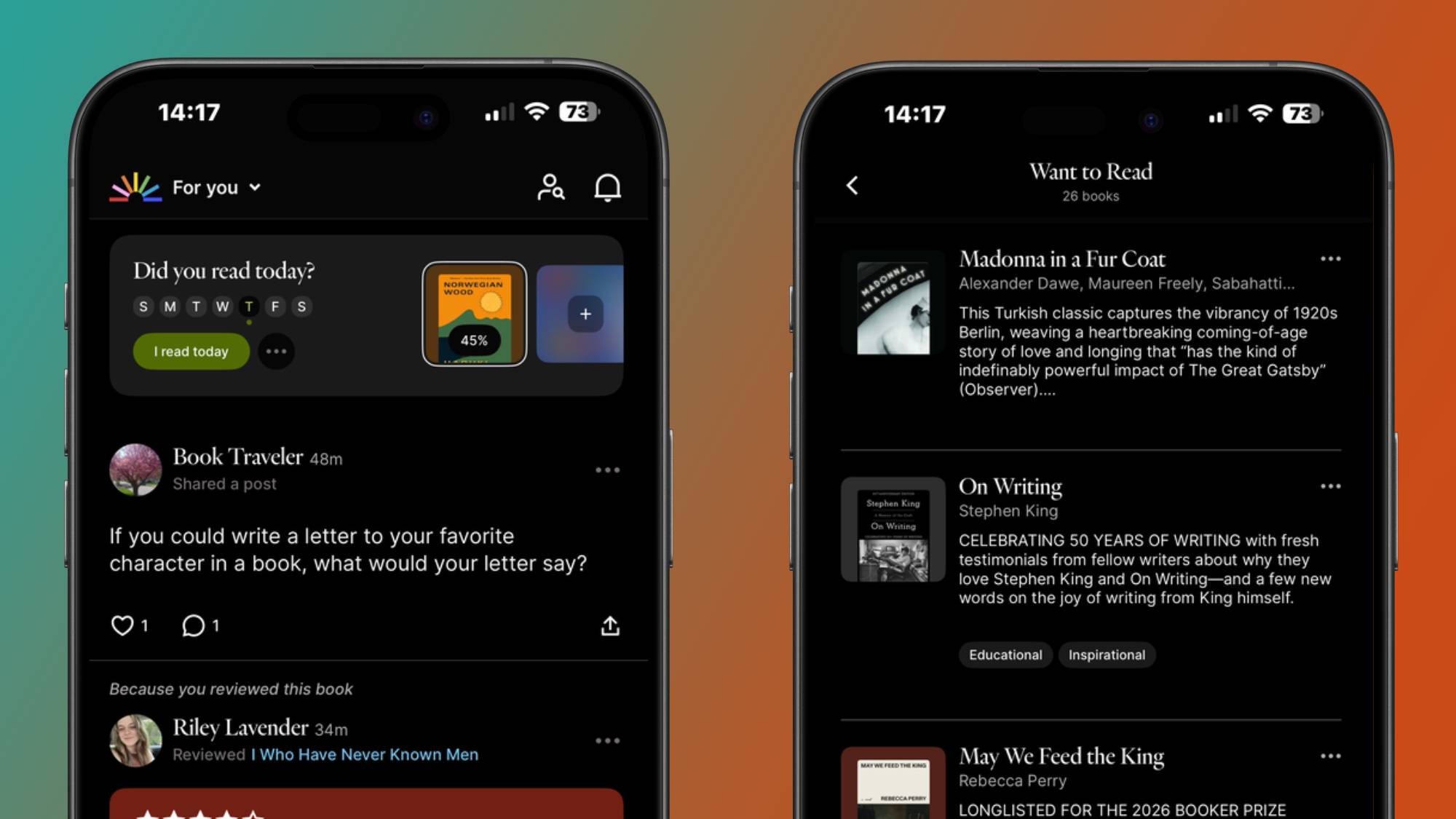
I switched from Goodreads to Fable for tracking all of my favorite books, and it’s one of the best digital migrations I’ve made yet

Published

on

Homescreen Heroes

This is part of a regular series of articles exploring the apps that we couldn’t live without. Read them all here.

For someone who has a degree in journalism and a master’s in English, I should read more than I actually do.

But movies are my thing, and apps like Letterboxd encourage me to broaden my cinematic horizons. That said, there’s one app that’s lifted me out of my years-long reading slump — and no, it’s not Goodreads.

Advertisement

Source link

Continue Reading

Trending

Copyright © 2025