

Tech
Sony REON POCKET PRO Plus Wearable Cooling and Heating Device Works Anywhere

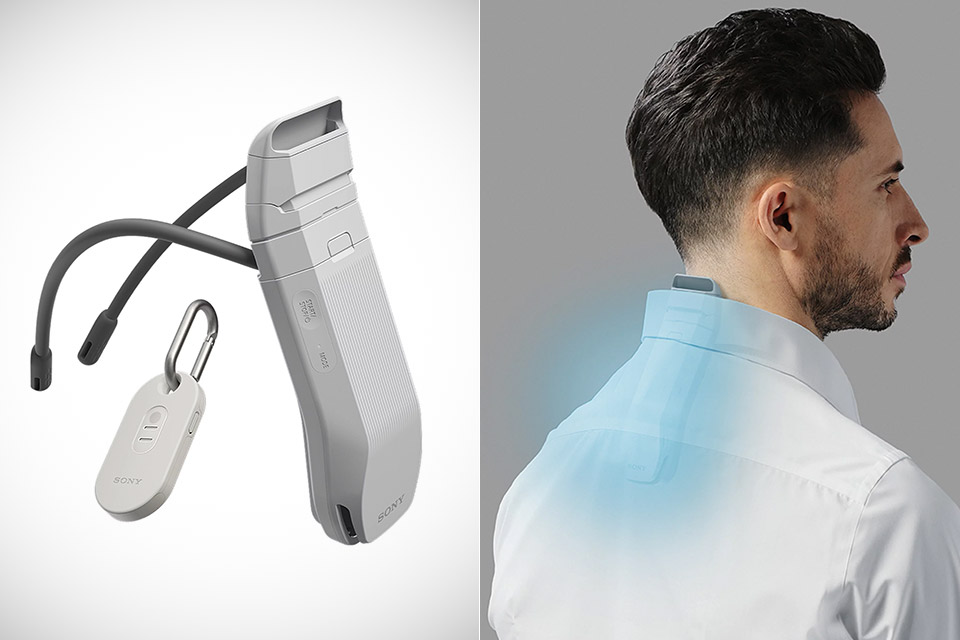
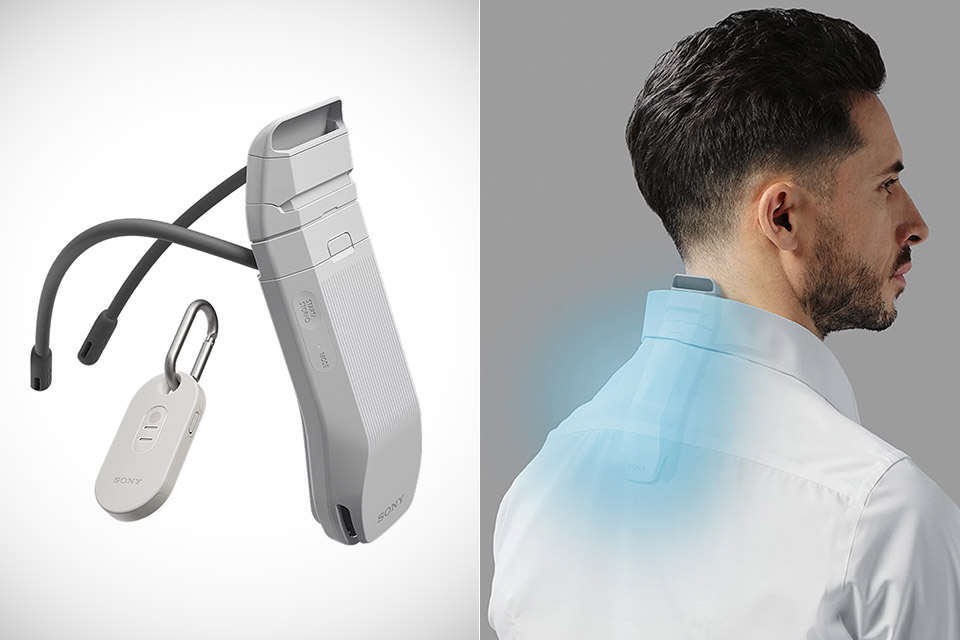
Sony refines its wearable cooler for stronger everyday comfort. Summer heatwaves push people to seek relief that travels with them, and Sony answers with the latest version of its REON POCKET series. Wearers place the REON POCKET PRO Plus around their neck so a stainless steel plate rests gently against the skin between the shoulders. Electricity passes through special materials inside to cool or heat that plate directly. Blood flow then carries the temperature shift across the body, delivering noticeable comfort without touching core body heat.
Users turn it on for congested commutes, stuffy offices, or chilly evenings when they just want to get through the day without bother. Sony focused on improving the fit so that it stays in contact on a consistent basis. They strengthened the tubing in the neckband to keep the device stable even when you’re walking or just pottering around, preventing those minor motions that can degrade performance. An adjustable vent now extends and points upwards, allowing heated air to escape and clear your collar or shirt.
Sale

JISULIFE Handheld Fan Pro Series – High Speed Airflow: 1-100 Speed Scroll Wheel, Metal Body, Digital…
- Brushless Motor – Super Power: The combination of a three-phase brushless motor and a 5000mAh battery significantly improves the wind speed, power…
- Scroll Switch – Customizable Wind Speed: This small fan adopts a scroll switch design, and the wind speed can be adjusted steplessly. The portable fan…
- Fashionable Design – Metal Body: The body of this handheld fan is made with advanced oxidation technology, giving it a metal-like texture. Its smooth…
The technology has also advanced significantly, with the cooling plate now two degrees Celsius colder, allowing it to get the job done in a deeper way and increasing overall production by around 20%. The item has a sensor that monitors your skin’s temperature in real time. To top it off, a little independent unit clamps onto your bag or belt loop and reads the air and humidity in the room, sending the results back to the system.
Of course, the companion app now provides you with numerous additional possibilities to play with on your phone. In smart mode, you can specify a preferred temperature range, and the device will take care of the rest, keeping you at the proper temperature without your intervention. If you want to make a quick modification, you may utilize the physical buttons on the unit itself, eliminating the need to dig out your phone. There is no fan inside, so it remains silent enough to be used in offices, on trains, or in meetings.
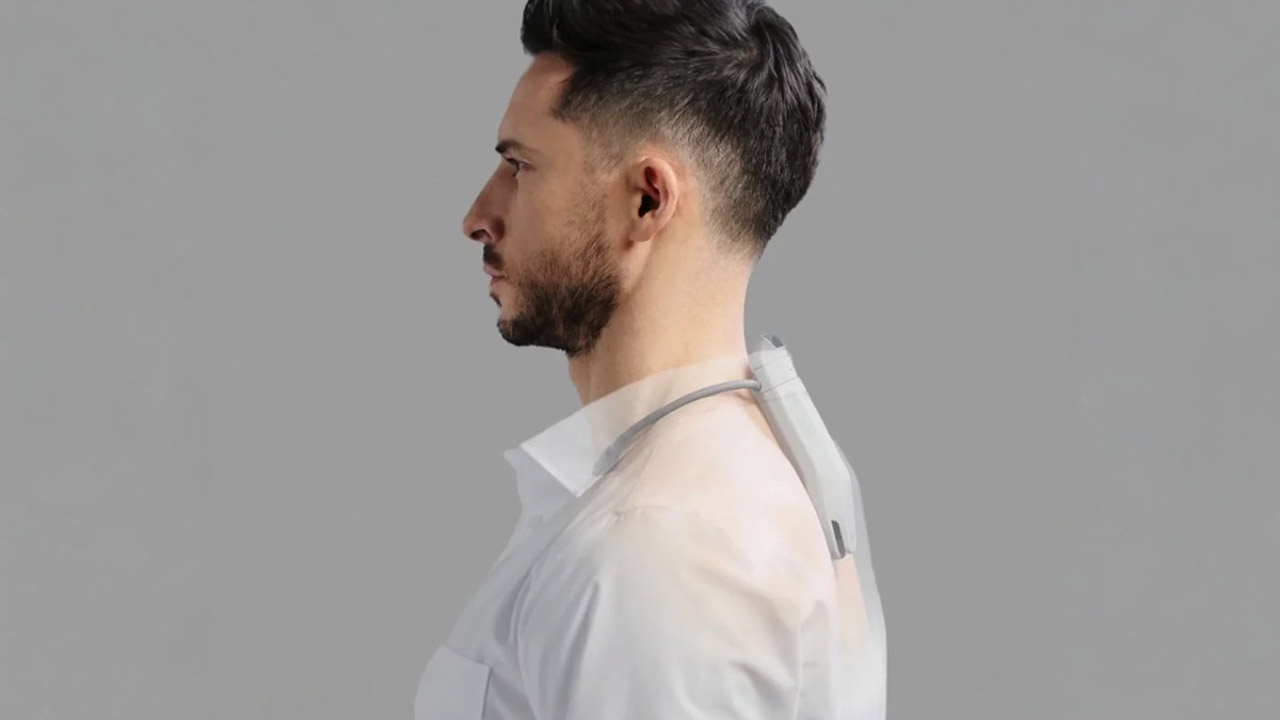
The battery life is more than enough for a full day, as the lowest cooling setting can operate for up to 34 hours, while higher intensities will last slightly less, 27, 18, 10, or 5.5 hours at maximum, with smart cooling mode lasting 15 hours on average. A full charge will take a little more than three hours from zero. The total set weighs little over 9 ounces and is small enough to wear under everyday clothing, however it does show up a little under thin shirts, so keep that in mind.
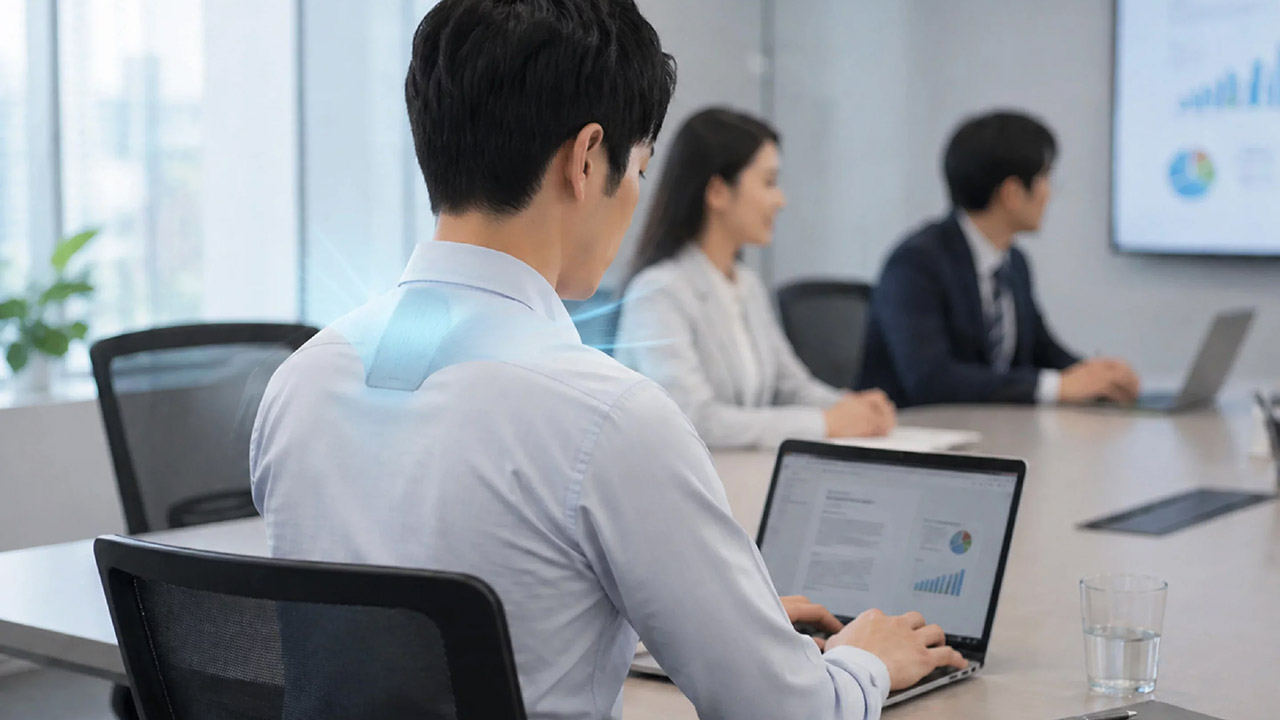
Sony was the first to introduce wearable thermal devices to the Japanese market years ago, and they’ve been constantly enhancing the range with each subsequent release. This PRO Plus version improves stability and power while keeping the fundamental principle at its core. You’ll probably be able to acquire one in the United States this summer, as it will be available through Sony’s online store. Prices hover about $270, and the sensing tag is included in the kit.
[Source]

Tech
Jeff Bezos describes his $38B startup Prometheus for the first time: ‘Nothing to do with robotics’
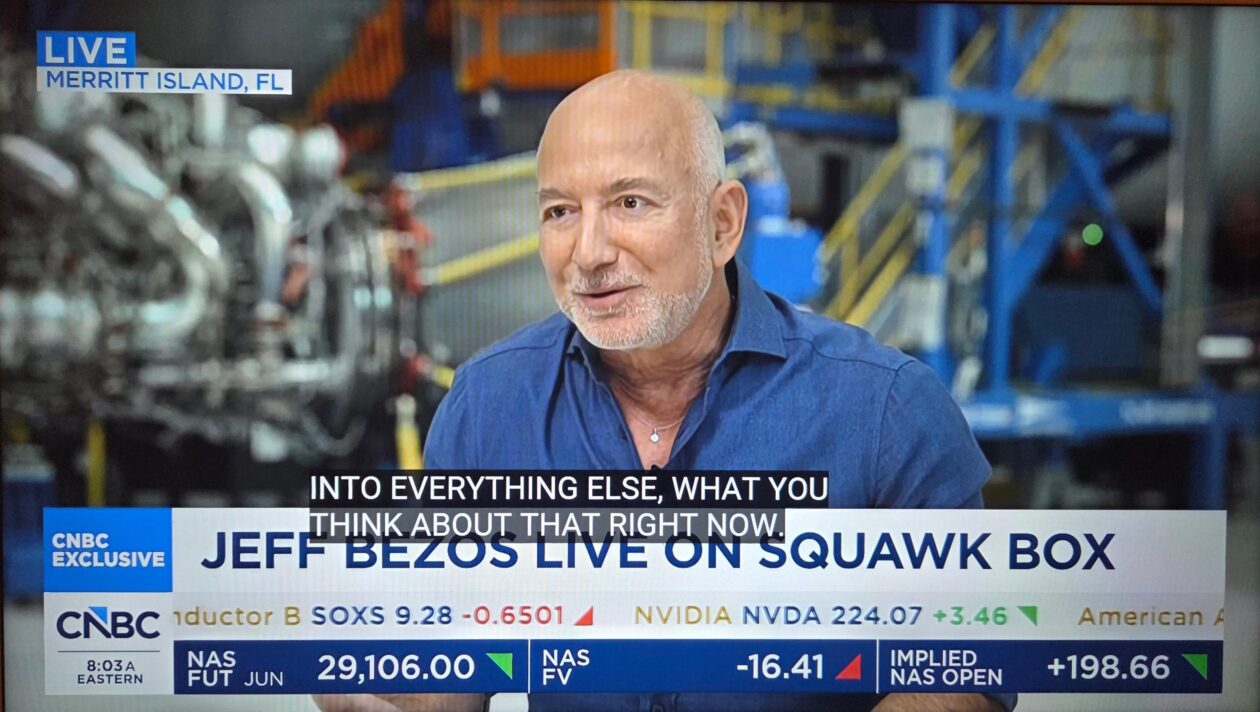

When CNBC’s Andrew Ross Sorkin described Jeff Bezos’ startup Project Prometheus as being “really about AI robotics” in an interview on Wednesday, the Amazon founder interrupted with a correction.
“It’s a little premature for me to talk about it, but we are not — we have nothing to do with robotics,” Bezos said. He went on to offer the most detailed public description yet of the secretive startup, for which he is co-CEO: Prometheus is developing an “artificial general engineer,” he said, building next-generation tools for designing physical objects.
Bezos called it “a very, very modern version” of CAD, or computer-aided design, adding that he is “really oversimplifying here,” and reiterating that it’s premature for him to give much detail.
He said Prometheus is “something I got so excited about that I became the co-CEO of the company, putting a lot of time into it, a lot of energy into it.”
The tools Prometheus is building will “help companies like Blue immensely,” Bezos added, referring to his space venture Blue Origin. However, he said, the company “deserves its own special focus” as “its own big idea” rather than being housed inside Amazon or Blue Origin.
His comments mark a rare hint of what’s happening inside a company that has operated almost entirely in stealth since news of its formation was reported in November 2025.
Project Prometheus launched with $6.2 billion in funding, led by Bezos and Vik Bajaj, a former Google X executive. Bloomberg reported in April that the company closed a $10 billion round at a $38 billion valuation, with JPMorgan and BlackRock among the investors.
The company has hired roughly 120 employees from firms including OpenAI, DeepMind, Meta and xAI, and operates out of San Francisco, London and Zurich.
Much of the outside reporting on Prometheus has characterized it as focused on robotics and manufacturing automation, which came in part from analyzing LinkedIn profiles of its hires. Bezos’ description Wednesday as a design-tools company focused on engineering physical objects suggests a different ambition, or at least a more specific one.

Rhode Island joins other states that have taken similar legal action.

Rhode Island is the latest state to challenge prediction markets on the legality of sports betting within its jurisdiction. As reported by The Providence Journal, opposing lawsuits from the state’s attorney general, Peter Neronha, and Kalshi were filed against each other earlier this week. Neronha sued both Kalshi and Polymarket, accusing the platforms of circumventing the state’s regulations that only allows sports gambling through a singular state-sponsored platform.
However, Kalshi proactively filed its own legal action against Rhode Island arguing that its event contracts, including those predicting the outcomes of sports events, can only be regulated on a federal level by the US Commodity Futures Trading Commission (CFTC). Still, Rhode Island’s attorney general is looking for a permanent court-ordered ban that prevents Kalshi and Polymarket from offering “sports-related events contract” in the state.
“There is no substantive difference between sports betting and ‘events contract’ in this context,” Neronha said in a press release. “Kalshi and Polymarket know that, and we know that.”
While the dual lawsuits only cover the legality in Rhode Island, its eventual ruling could create a major precedent on how prediction markets operate in other states. Before Rhode Island’s lawsuit, Nevada and New Jersey also sent cease-and-desist letters to prediction market platforms, only to end up in similar legal battles. More recently, Minnesota passed a bill that includes a ban on prediction markets operating in the state, which will likely be contested by the CFTC.

“Think Olympics on steroids. Literally,” quips the BBC, describing Sunday’s controversial Enhanced Games event in Las Vegas featuring dozens of athletes “using performance-enhancing drugs to try and break world records in track, weightlifting and swimming.
Some $25m (£18.6m) in prize money is up for grabs — with cash prizes for winners… The drugs they use must be legal, and approved by the Federal Drug Administration. But substances like testosterone and human growth hormone — banned by the World Anti-Doping Agency — are not only celebrated here, they’re encouraged and for sale…
Health experts warn that anabolic steroids and growth hormones can cause strokes and cardiovascular damage, among other risks. Event organisers claim Enhanced will push the limits of human performance while critics, especially in the Olympic movement, dismiss it as an affront to the spirit and founding principles of competitive sport…
Earlier this month, the Enhanced Group — the company behind the competition — began trading on the New York Stock Exchange. And the competition is seemingly being treated as an opportunity for Enhanced to sell performance-enhancing medicine and supplements online.
“The project was founded by entrepreneurs Aron D’Souza and Maximilian Martin in 2023,” the artidcle points out, “and has attracted backing from prominent investors including billionaire Peter Thiel and Donald Trump Jr.”
And NPR adds that “Most of the participating athletes trained for the competition in Abu Dhabi, as part of Enhanced’s own study.”
Enhanced did not break down what specific athletes used which drugs, but they announced on Wednesday in the lead-up to the event that 91% of the athletes competing used testosterone or testosterone esters, 79% used human growth hormone, and 62% used stimulants, such as adderall…
The games have been largely panned by outside medical experts and sports governing bodies. Multiple recent studies assess the harm surrounding the Enhanced Games. Travis Tygart, the CEO of the U.S. Anti-Doping Agency, called the games a “dangerous clown show that puts profit over principle” in a statement. The International Olympic Committee said the games are a “betrayal of everything that we stand for.” The World Anti-Doping Agency (WADA) last year urged U.S. authorities to stop the games. The International Federation of Sports Medicine said in 2024 that they see the medical oversight as “insufficient” to support the
athletes.
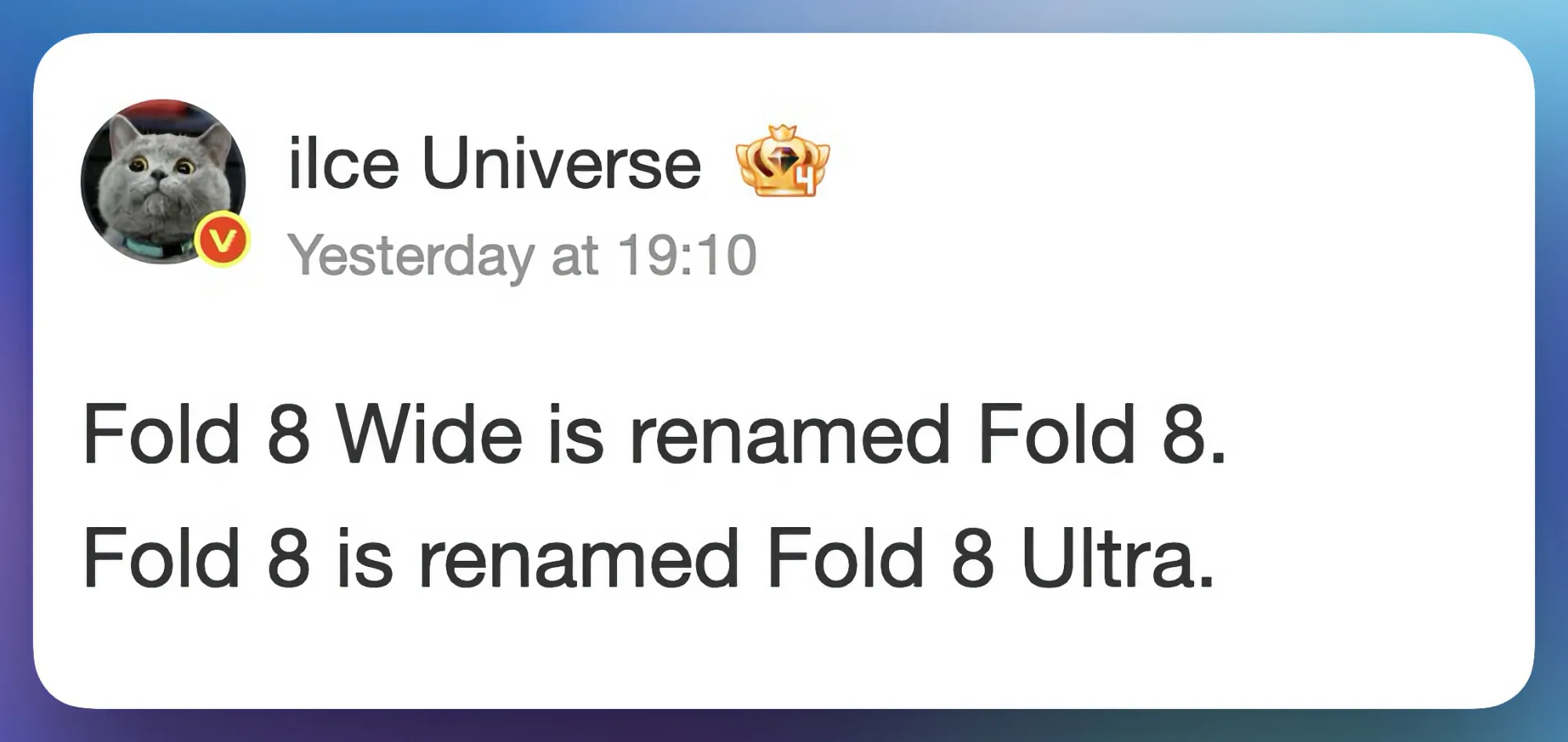
Samsung is getting ready to launch two new foldable phones in July, and if a recent leak is accurate, the company is about to flip its naming convention completely, and it’s going to confuse a lot of people.
Tipster Ice Universe has claimed on Weibo that the phone we have been calling the Galaxy Z Fold 8 Wide will actually launch simply as the Galaxy Z Fold 8. The device we expected to be the standard Galaxy Z Fold 8 will instead become the Galaxy Z Fold 8 Ultra.

While I can see why Samsung is considering the new naming scheme, there’s no denying it’s going to cause a whole lot of confusion.
Does the name change actually make sense?
I don’t think so. Yes, the wider Galaxy Z Fold 8 Wide is supposedly packing only dual rear cameras and a 4,800mAh battery, and the regular Fold 8 (which will be renamed to Ultra) will pack a triple rear camera system and a bigger battery. So on paper, the better-specced device getting the Ultra name is logical enough.
But the problem is that anyone who has followed the Galaxy Z Fold lineup will walk into a store expecting the Galaxy Z Fold 8 to be a direct successor to the Galaxy Z Fold 7. Instead, they are getting a wider, passport-style device that is a completely different form factor. That is not an upgrade; that is a different product wearing a familiar name.

Samsung is essentially asking buyers to unlearn years of brand familiarity, and that rarely goes smoothly. Many people will be confused at the point of purchase, and that confusion could easily cost Samsung sales.
Is the Galaxy Z Fold 8 Ultra worth the name?
The Ultra name carries serious expectations, and Samsung better deliver. Rumors only suggest a small spec bump with better cameras and a bigger battery. In fact, leaks suggest that the Galaxy Z Fold 8 will miss out on a number of new features, so Samsung will have to surprise us with something extraordinary to earn the Ultra moniker.
Networks
After making a medical clinic’s network rather ill, she ‘kept working until I somewhat knew what I was doing’
WHO, ME? Welcome once again to “Who, Me?” –
The Register’s Monday column in which we celebrate the
things you get wrong at work, and your skill at emerging unscathed.
This week, meet a reader we’ll
Regomize as “April,” who told us that early in her career, she worked for a
company that operated several medical clinics.
April admitted she did not feel
she was a great candidate for the job as she had recently completed her CompTIA
A+ certification – one of the most entry-level certs – and had only tangential experience
supporting doctors as they struggled to use a single application.
That résumé was enough to score a
job imaging new PCs, deploying them, and handling whatever other tasks popped up.
“One day I received a task to
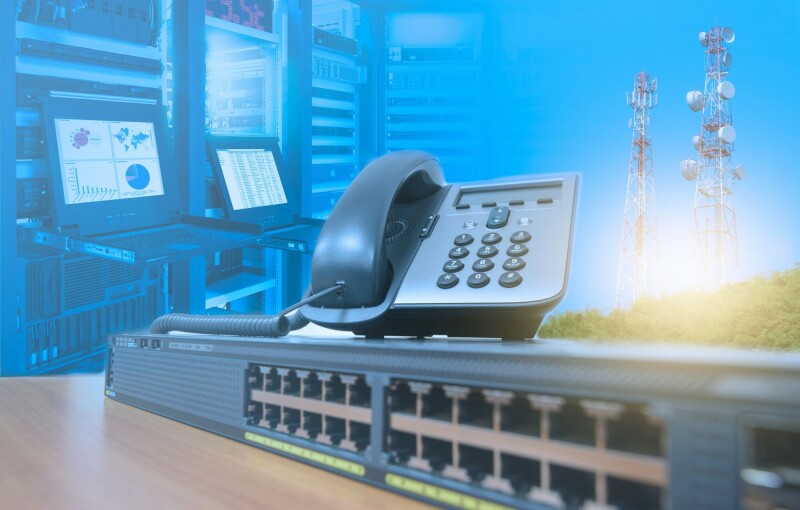
convert an unused space into offices, so I loaded an armload of PCs and a dozen VoIP
phones into my car and drove the 45 minutes to the clinic,” April wrote.
“The deployment went
smoothly – or so I thought – because at each of the desks one of the people who
knew what they were doing had already put two network drops, one for the phone
and one for the PC.”
April was therefore able to
methodically get through the job, then slow down to tackle the slightly tricky
elements.
“Some of the desks needed two
computers,” she wrote. “On those, I was expected to use the secondary Ethernet
port on the phones to get internet to those PCs.”
April hooked everything up with time
to spare and decided to put her feet up for the 15 minutes that remained until 5pm – meaning she would glide into an unusually early end to her working day.
“My paid respite was interrupted
quickly by a nurse who found me and let me know none of the computers in the
entire clinic could access the internet,” April wrote.
“I wasn’t trusted with any tasks
that could actually break anything, so I was convinced that something major had
happened like a fiber line getting cut, or an outage with our ISP,” she told
Who, Me?
She investigated anyway and found
pings produced no results, so in a panic called head office and hoped
colleagues hadn’t already left for the day.
“I spent maybe an hour running
around frantically searching for anything with one of my superiors giving me
commands over the phone until someone who knew what they were doing could get
to the site and take a look in person,” she wrote.
That person eventually arrived and
quickly spotted the problem: April had made a single mistake by plugging both of
one phone’s Ethernet ports into the network, which disrupted every other
connection.
“They unplugged one and everything
came back up almost instantaneously,” she confessed. “I was genuinely surprised
they weren’t absolutely furious. They just clapped me on the back and said: ‘Well,
you won’t do that again.’”
April was so upset by her mistake
that she amended her timesheet to record that she finished work at 5pm. “If
anyone deserved an hour and a half of OT, it wasn’t me,” she wrote, adding that
she soon took it upon herself to acquire a networking certification at her own
expense.
“I kept working there for a few
more years until I became one of the people who at least somewhat knew what
they were doing,” she said.
Have you been asked to
tackle a task you weren’t properly trained to complete? Or been hired without
all the necessary skills? In either case, feel free to demonstrate your
storytelling competence by clicking here to share your tale with Who, Me? Let’s shine a light on the shoddy bosses who dumped
you into these messes! ®


The €33-per-share proposal lands at a slight discount to Friday’s price, but with Uber already sitting on a quarter of the company and DoorDash circling, the bid is the start of the negotiation, not the end of it.
Delivery Hero confirmed on Saturday that Uber has tabled a formal takeover offer for the Berlin-based food-delivery group, at €33 a share.
The price is, awkwardly for Uber, a 1.76% discount to where Delivery Hero closed on Friday, and it arrives roughly a month after Uber almost tripled its stake in the company to 19.5%, with another 5.6% held through derivatives. On any reasonable measure, this is the opening bid.
The numbers, according to the company’s statement, are an indicative proposal of €33 per share to all shareholders. The Financial Times put the implied price tag at about $11bn (€10bn). Uber’s chief executive Dara Khosrowshahi flew to meet Delivery Hero’s supervisory board chair Kristin Skogen Lund in person before the bid was filed, the FT reported.
Delivery Hero, for its part, said only that it remains “fully focused” on the strategic review already underway and declined to disclose further terms.
The strategic review is the reason any of this is happening on this timeline. Several of Delivery Hero’s largest shareholders have been pressing for it for months, and chief executive Niklas Östberg, who co-founded the company in 2011, announced last week that he would step down once a successor is in place.
The succession is targeted for the end of 2026, no later than March 31, 2027. The board has appointed advisors and opened the process; Uber has now put a number on the table inside it.
It is not the only number. DoorDash, sources told the FT, has explored a full takeover of its own and has separately expressed interest in Delivery Hero’s Middle Eastern business, Talabat.
Some shareholders have been arguing for a price closer to €40 a share. The combination of a slight-discount offer, a sitting blockholder, a parallel competing approach, and an ongoing succession review is the structural setup of a deal that gets renegotiated in public over the next several weeks.
For Uber, the logic for going hostile-adjacent is straightforward. Delivery Hero operates in more than 60 countries across Europe, the Middle East, Asia, Africa, and Latin America, through brands including Foodpanda, Glovo, Talabat, and South Korea’s Baedal Minjok.
It is the largest non-US food-delivery footprint in the world and, with DoorDash already absorbing Deliveroo last year and Just Eat Takeaway having sold to Prosus for $4.3bn, it is also the last one of scale that has not been claimed.
A full acquisition would give Uber Eats a delivery network across the markets where DoorDash now competes most directly with it.
Uber’s capital allocation in 2026 has otherwise been pointed elsewhere. The company has committed roughly $10bn to its robotaxi programme, including a $1.25bn investment in Rivian for a fleet of up to 50,000 autonomous R2 vehicles, alongside partnerships with Wayve, Nissan, Lucid, Nuro and MOIA.
Khosrowshahi has framed the strategy, in successive earnings calls, as building “everyday utility” across mobility, delivery, and commerce.
Q1 2026 results showed gross bookings up 25% year on year and autonomous trips up tenfold. Bolting Delivery Hero onto the delivery leg fits the framing.
Whether it fits at €33 is the open question. Uber shares slipped 1.6% on Friday after Bloomberg first reported the talks. The 1.76% discount to Delivery Hero’s Friday close gives investors arguing for €40 a clear rhetorical wedge, and gives the German board cover to ask for more.
Tech
Lab of UW Nobel winner cracks challenge of creating roomier protein cages to deliver genetic medicines

Medical experts use gene therapies for a variety of ailments — treating hemophilia with a clotting-factor gene or dosing a cancer patient with therapeutic DNA or RNA.
But doctors need a means of delivering that curative gene to a target in a patient’s body. Their solution has been harnessing viruses to shuttle the material, but the treatments are very expensive, limited in how much genetic material can be delivered and can trigger negative reactions.
Now researchers in the lab of Nobel laureate David Baker at the University of Washington’s Institute for Protein Design have created a way to build virus-like protein cages that could one day serve as delivery capsules for life-saving payloads.
Two strategies for engineering the protein cages are described in back-to-back papers published today in the journal Nature.
The discoveries open new possibilities for designing proteins from scratch, said Shunzhi Wang, a former Baker Lab postdoctoral scholar. He is now an assistant professor at New York University’s Grossman School of Medicine. Wang was a lead author on the papers, joined by Sangmin Lee, David Chemielewsk, Baker and others.
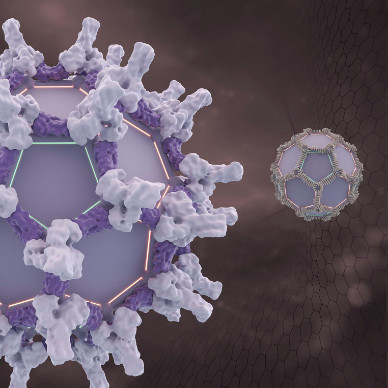
To visualize the new protein cages, imagine a soccer ball, which is built from pentagons and hexagons in a repeating pattern described as “quasisymmetry” because the subunits are identical but have different neighbors.

Scientists could previously make symmetrical protein cages from one or two types of building blocks, but that limited their overall size. During a casual Friday afternoon conversation, Wang, Lee and Baker hatched the idea of mixing building blocks by swapping partners from previous protein configurations.
“It was actually a serendipitous discovery,” Wang said.
The process didn’t go smoothly at first with proteins often assembling into globs. But by accounting for different geometric features and running many experiments, the scientists developed instructions that produced proteins with a curvature. As those curved proteins came together, they sensed a more crowded environment and responded by forming a mix of pentagons and hexagons to create a roomier configuration.
The resulting quasisymmetrical cages were two to three times larger than those formed by a single shape, bringing the scientists closer to the complex designs found in naturally occurring viral structures and making space for larger genetic payloads.
“These papers show that protein design is beginning to capture some of the architectural principles that nature uses to build at very large scales,” Baker said in a statement.
Additional studies are needed before the protein cages would be ready for human research and treatments. That includes tests of their immunogenicity — the immune response they might trigger if the body perceives them as dangerous invaders.
Farther down the line, Wang envisions the structures operating like a computer motherboard on which essential, modular components can be layered. In this case, that could include adding binding sites for directing the protein cage to a specific cellular target.
“That’s the beauty of this,” he said. “We can make tailored capsules for building and making more precise genetic medicines.”
The Nature papers are titled: “Design of one-component quasisymmetric protein nanocages” and “De novo design of quasisymmetric two-component protein cages.” Institutions leading the research were the IPD, NYU’s Langone Health, and South Korea’s Pohang University of Science and Technology. Collaborators included the Holt Lab at NYU’s Grossman School of Medicine, and the DiMaio and Veesler labs at the UW.
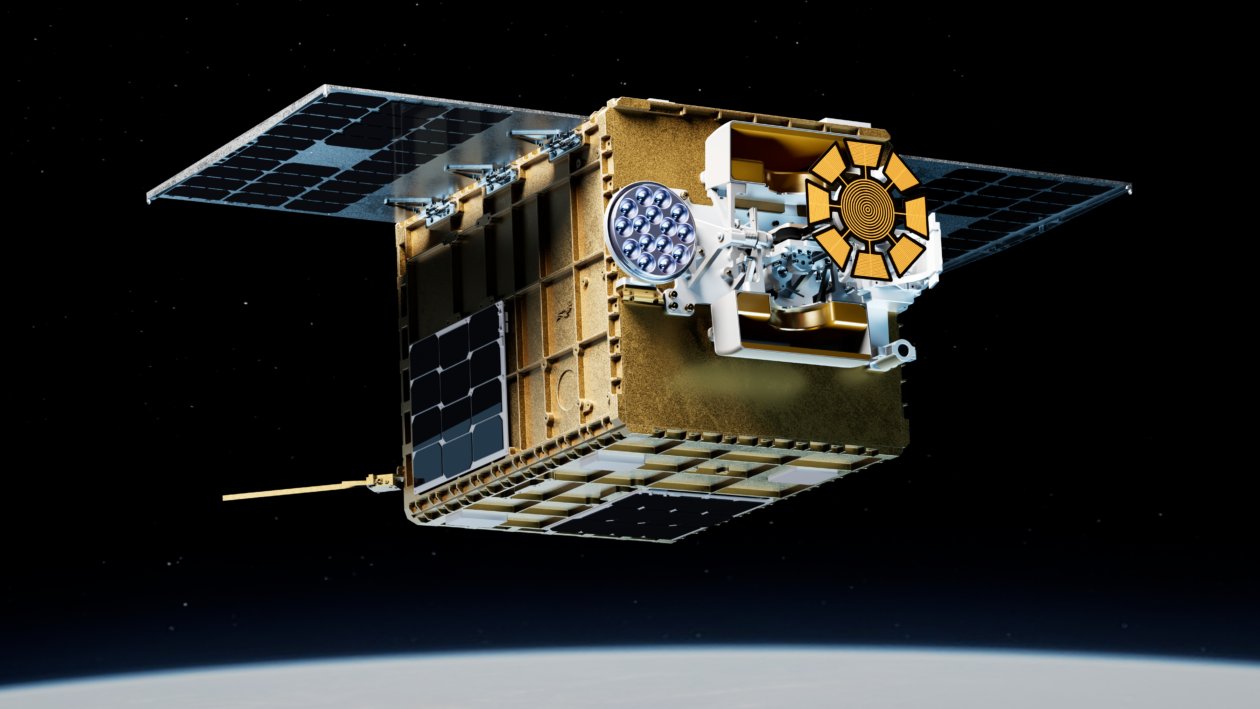

Eleven months after launch, Starfish Space’s Otter Pup 2 satellite is finally kicking its test mission into high gear, closing in for a rendezvous with a newly designated target.
If all goes according to plan, Otter Pup 2 will dock with Australia-based Gilmour Space’s ElaraSat satellite sometime in the next few months. ElaraSat became the new target after earlier plans to connect with a D-Orbit ION satellite were scrubbed for undisclosed reasons.
Trevor Bennett, one of the founders of Tukwila, Wash.-based Starfish Space, said ElaraSat was launched on the same SpaceX satellite rideshare mission that sent Otter Pup 2 into orbit last June. Gilmour Space was “more than willing and excited to jump on and do something a little bit ambitious and crazy with us,” he told GeekWire.
Mark Grimminck, Gilmour Space’s head of satellites, said in an emailed statement that his company was “excited to support Starfish Space on this pioneering mission.”
“Autonomous rendezvous and docking are capabilities that will transform the future of sustainable space operations,” Grimminck said. “Congratulations to the Starfish team on this important milestone.”
The goal for Otter Pup 2 is to test the technologies and procedures for Starfish’s full-scale Otter spacecraft, which is meant to rendezvous with other satellites for inspection, servicing or safe disposal. The first Otter Pup prototype ran into logistical difficulties shortly after its launch in 2023 and wasn’t able to execute a satellite docking, but it did manage to demonstrate some of the technologies that Starfish developed for proximity operations.
An orbital test that was conducted last year in partnership with Impulse Space proved that Starfish’s software suite for guidance, navigation and control could be used on a different company’s satellite to make an autonomous approach to another spacecraft in orbit. Now, Otter Pup 2 is ready to take on the crucial satellite docking.
Bennett said the satellite is still in good health even though it was launched nearly a year ago. “Our goal is to continue to take the actions as we have to keep the vehicle healthy — for a whole year at least — and continue to do so for the next few months as we go through some of these critical, critical next steps all the way up to docking,” he said.
The ability to switch targets from D-Orbit’s satellite to ElaraSat is “a testament to how we’ve designed Otter Pup and some of our core technologies,” Bennett said.
“We can just go switch clients and orbits, and go chase them down, and have both the onboard capacity and the vehicle health and the opportunity through our core technologies that allow us to just go dock with an unprepared spacecraft,” he said.
Over the past couple of months, the Starfish team has been maneuvering Otter Pup 2 into the proper orbit to catch up with ElaraSat. The next phase will be to close the gap between the two satellites to about 6 miles (10 kilometers). Then Otter Pup 2 will transition into an acquisition phase. “Acquisition is the stage for us where Otter Pup’s onboard cameras start taking pictures of a large satellite regularly — lock onto it, if you will — and start maneuvering much, much closer,” Bennett said. “This is what will bring us down to the kilometer-type range.”
Otter Pup 2 will fly itself around ElaraSat for a thorough inspection and calibration of Otter Pup’s sensors and control system. Then the satellite will close in to attach itself to ElaraSat using an electrostatic docking mechanism.
“Our intention is to livestream this, the docking phase of the mission, and actually show the process as we move into docking,” Bennett said. The real-time view will probably be a computer-generated animation based on telemetry received from Otter Pup 2. In that scenario, actual imagery from the encounter would be downlinked later, Bennett said.
“We’ll share information as we’re able to through that whole process,” he said. “The spacecraft is really going to prioritize being safe and docking, so we’ll make sure that what we can share, we will share. … It’ll be an exciting time to show real telemetry, real data, both visual and positional.”
Then what? “Making good contact at one point for even a short period of time is what we’re targeting as the larger goal here,” Bennett said. “After that, if we still have a healthy vehicle and we are sobered up from celebrating, then I think it’s a great opportunity to think about what more we could do with that spacecraft.”
Starfish has been funding the Otter Pup missions internally to gather the data needed to develop the full-scale Otter. Bennett declined to discuss the current status of the Otter development effort but said he “will definitely have more to share” in the days to come.
The company already has won several contracts for Otter’s on-orbit services, including:
- A $37.5 million contract from the U.S. Space Force for a satellite docking demonstration, plus a $54.5 million contract for a follow-up mission.
- A $52.5 million Space Development Agency contract for disposal of military satellites.
- A $15 million NASA contract to inspect defunct satellites.
- A commercial contract with SES to provide satellite life extension services.
Starfish was founded in 2019 by Bennett and Austin Link, both of whom are alumni of Jeff Bezos’ Blue Origin space venture. The startup has raised more than $150 million in total investment, including a $111.7 million Series B funding round that was reported last month.
You gotta pump up those download numbers somehow.
The Trump administration is planning to automatically install its White House app on government employees’ work phones, according to a report from Government Executive. The report detailed that at least one agency will start installing the official White House app onto government devices as soon as next week, but the scope spans across “all government-furnished mobile phones in the executive branch,” according to internal emails seen by Gov Exec.
The Trump administration released the White House app two months ago, with the promise of offering “unfiltered, real-time upgrades straight from the source.” When going through the app, users will find press releases and official media, along with selective news articles and statistics. The app even gives you an option to “Text President Trump,” which ultimately leads to signing up for a marketing blast. It’s not clear if the app will offer more capabilities to federal employees, but Gov Exec reported that the app being installed on government work phones will be the same exact app that the public has access to. Olivia Wales, a White House spokesperson, told the outlet that “government devices typically include pre-installed apps that provide value to government employees’ day-to-day work.”
However, the White House app could provide for privacy risks instead, according to some cybersecurity experts. Following the app’s release in March, early reports found that the app used location tracking and raised concerns about how it could share personal data with third-party sources. Now that the app will be found on government employee phones, it could introduce even more security vulnerabilities.

A woman has credited her iPhone with saving her life after it automatically called emergency services when her car left the road and slid 330 feet down a mountainside.
The woman lost control of her vehicle on a winding road in scenic Denbighshire, UK. It then rolled down the hill before bursting into flames moments after she was able to escape.
Emergency services arrived at the scene 20 minutes later, including a mountain rescue team and firefighters. Both had been alerted to the accident by the woman’s iPhone and its automatic Crash Detection feature.
“I’m grateful to Apple for what the iPhone did,” the woman told the BBC. “I don’t think that I would have been able to get help that quickly.”
Unfortunately, the rescue was just the beginning of a long road to recovery. The driver spent four months in the hospital and required multiple surgeries as a result of the crash. She was left with life-changing damage to her ankle and her spine.
iPhone to the rescue
Crash Detection is a feature built into all modern iPhones and Apple Watches, and has been saving lives for years. It was first introduced alongside the iPhone 14, Apple Watch Series 8, and Apple Watch Ultra.
The feature uses sensors to detect severe car crashes and then sounds an alarm and displays an on-screen alert for 10 seconds. If the alert is not dismissed, Crash Detection automatically places a call to emergency services.
What makes the feature so vital is its ability to send first responders right to the crash site. Crash Detection shares the device’s location and the device owner’s Medical ID if one has been set up.
Crash Detection has proven to be particularly important in crashes where the driver has been rendered unconscious. In these instances, Crash Detection has been able to summon emergency services long before they might otherwise be called.

5 Forgotten Clint Eastwood Movies That Are Almost Perfect
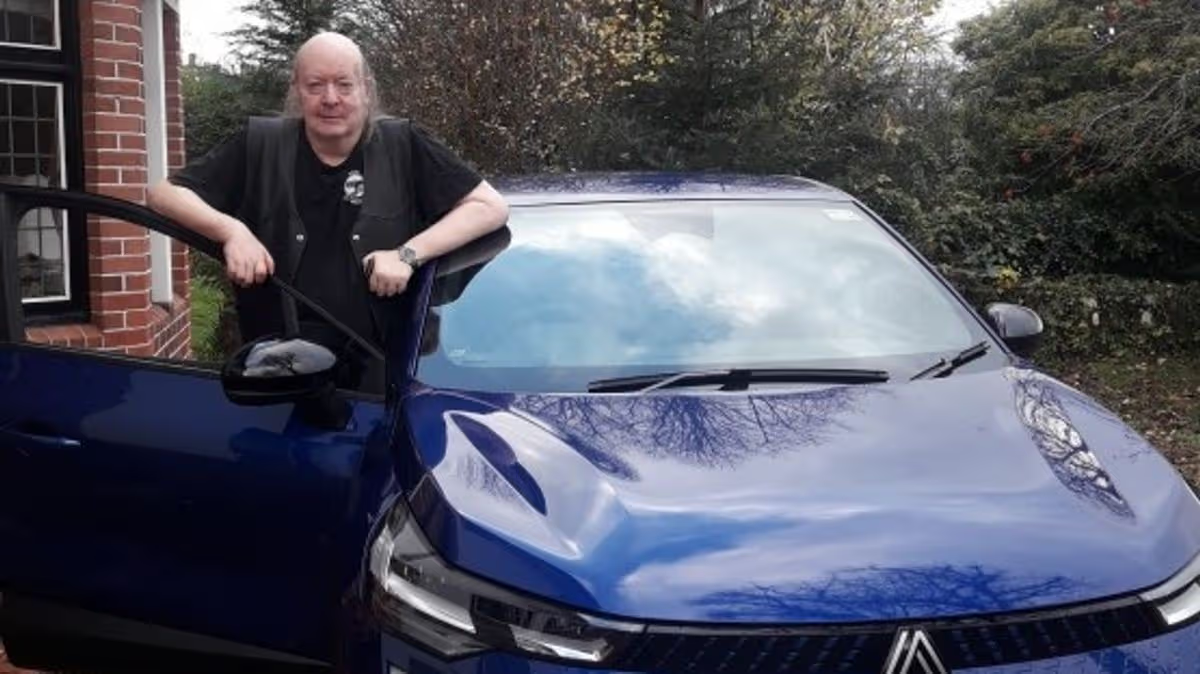
Disabled Ayrshire man claims motability car is a ‘death trap’

GDX: The Bull Case For Gold Miners


-

 Crypto World4 days ago
Blockchain.com files with SEC for U.S. IPO
-

 Fashion3 days ago
Holiday Weekend Open Thread – Corporette.com
-

 Crypto World3 days ago
Bitcoin Accumulation Weakens as BTC Realized Losses Hit $600M
-

 Business3 days ago
Dell Technologies DELL Stock Surges 15% on AI Server Momentum and Analyst Upgrades in 2026
-

 Crypto World3 days ago
Space X IPO Is ‘Bad News’ for Tech Stocks: But What About Bitcoin?
-

 Politics3 days ago
Makerfield: a tale of two social-media histories
-

 Crypto World2 days ago
Robinhood crypto COO Tanya Denisova exits
-
 Crypto World3 days ago
MicroStrategy’s Saylor Says Miners No Longer Set Bitcoin Price, Another Force Has Taken Over
-

 Business16 hours ago
NYT Strands Answers May 24 2026 Revealed for Puzzle No. 812 Theme Summer Essentials
-
 Tech3 days ago
A 0.12% parameter add-on gives AI agents the working memory RAG can’t
-

 Crypto World3 days ago
AI infrastructure race heats up as IREN pitches full-stack strategy, WhiteFiber lands $160M deal
-

 Tech3 days ago
WhatsApp ads could make Irish debut after discussions with DPC
-
 Tech3 days ago
You Can Now Add ChatGPT To PowerPoint
-
 Business3 days ago
Trump Invests $1M-$5M in Kura Sushi USA Chain With 27 California Locations
-
 Crypto World7 days ago
Revolut Launches Dogecoin Debit Card Across UK and EU
-
 NewsBeat4 days ago
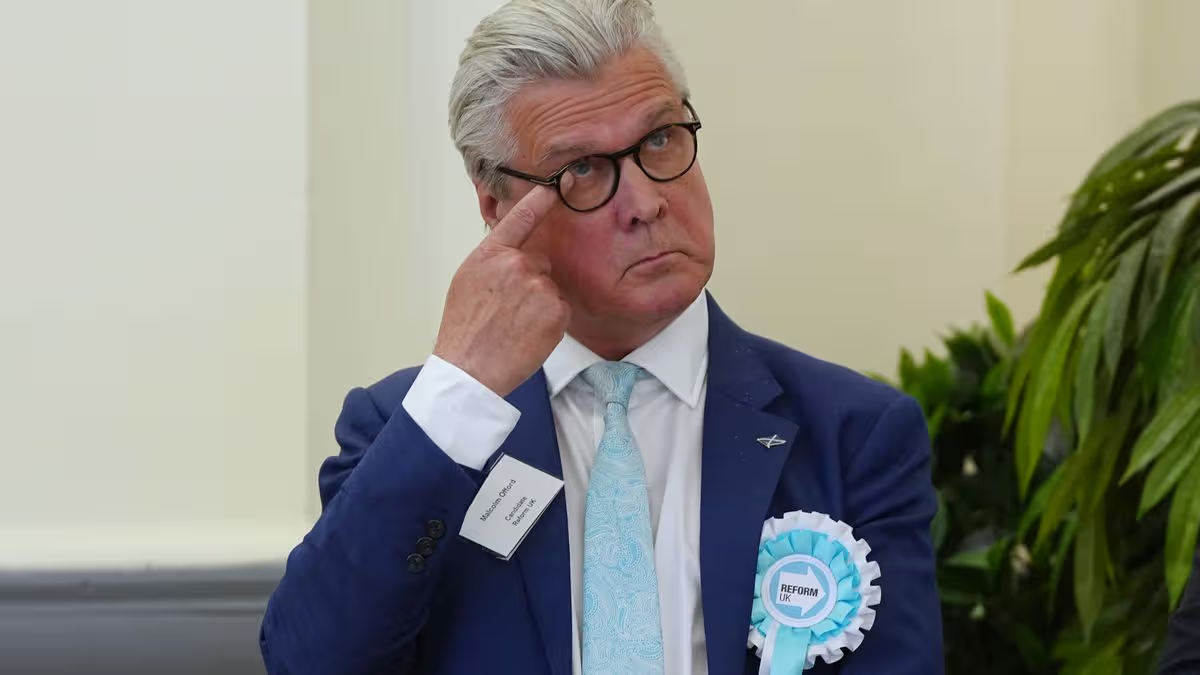
Charity run by Reform leader Malcolm Offord accused of ‘law breaking’ over Scottish registration
-

 Sports3 days ago
2026 CJ Cup Byron Nelson leaderboard: Brooks Koepka finds putting stroke in Round 1
-
Business3 days ago
Goldman Sachs reinstates Ageas stock coverage with neutral rating
-

 Crypto World5 days ago
Exa Labs raises $250 million in funding led by a16z
-
 Crypto World3 days ago
Trump Media’s Bitcoin Stash Shrinks Again as 2,650 BTC Lands on Crypto.com
You must be logged in to post a comment Login