

Tech
Sony Xperia 1 VIII vs Xperia 1 VII: What’s new?


Sony has just announced its latest flagship Android with the Xperia 1 VIII, but how does it measure up to last year’s?
We’ve compared the specs of the new Xperia 1 VIII to the VII and highlighted the key differences and updates between the two. Keep reading to see what’s really new with the Sony Xperia 1 VIII compared with the Xperia 1 VII and decide whether it’s worth updating or not.
For more options, visit our best Android phones, best smartphones and best camera phones guides instead.
Specs comparison table
| Sony Xperia 1 VIII | Sony Xperia 1 VII | |
| Colours | Graphite Black, Garet Red, Iolite Silver (256GB only) Native Gold (1TB only) | Moss Green, Orchid Purple, Slate Black |
| Dimensions | 162 x 74 x 8.3mm | 162 x 74 x 8.2mm |
| Display | 6.5-inch FHD+ | 6.5-inch FHD+ |
| IP Ratings | IPX5, IPX8 and IP6X | IPX5, IPX8 and IP6X |
| Front Camera | 12MP | 12MP |
| Rear Cameras | 48MP + 48MP + 48MP | 48MP + 48MP + 12MP |
| Battery | 5000mAh | 5000mAh |
| UK RRP | £1399 | £1399 |
| Weight | 200g | 197g |
Price and Availability
At the time of writing, the Sony Xperia 1 VIII is available for pre-order and will launch from mid-June. The handset has a starting RRP of £1399/€1499 for the 256GB iteration, which rises to an eye-watering £1849/€1999 for the 1TB Native Gold version.
Although the Sony Xperia 1 VII shares the same starting RRP of £1399/€1499, we would expect this price to drop as its successor starts to roll out.
Sony Xperia 1 VIII has a new AI Camera Assistant
Sony has unveiled the new AI Camera Assistant within the Xperia 1 VIII which is designed to make “photography even more enjoyable”. Powered by Xperia Intelligence, Sony’s AI technology, the AI Camera Assistant will automatically recognise a scene on camera and suggest different options for your image. It does this by assessing what the subject actually is, plus the weather or lighting conditions to provide suggestions for colour tones, lens effects and bokeh expressions.
The Xperia 1 VII also uses AI within its camera set-up with AI Camerawork, which ensures your subject always remains in focus. As part of this, there’s Posture Estimation that anticipates human movement while Subject Position Lock maintains a subject’s position in frame.

Xperia 1 VIII’s telephoto sensor is around four times larger than the VII’s own
Speaking of photography, one of the reasons to opt for a Sony Xperia is undoubtedly its camera set-up. In fact, their predecessor the Sony Xperia 1 VI has a spot on our best camera phones guide.
One of the biggest upgrades with the Xperia 1 VIII is with its telephoto camera, which now sports a four times larger sensor than the VII’s own at 1/1.56-inches. This, according to Sony, will deliver clear and detailed images “even in low-light conditions”.
Sony also explains that all lenses will see RAW multi-frame processing which expands dynamic range (HDR) and performs noise reduction in low-lighting too.

Xperia 1 VIII’s speakers promise better overall sound quality
Both the VIII and VII are equipped with a 3.5mm headphone jack – which is something of a rarity in modern smartphones. The jack supports high-quality audio with wired headphones and claims to offer “exceptional sound quality inherited from Walkman”.

However, the VIII also benefits from newly developed speaker units for further advances in stereo performance. The speakers are designed to produce deeper bass, more extended high frequencies and to create a wider and deeper soundstage too.
Sony says that voices and instruments will be reproduced with greater clarity and richness for a more immersive and engaging audio experience. We’ll have to wait until we review the handset to determine how well the speakers really perform.
Snapdragon 8 Elite Gen 5 vs Snapdragon 8 Elite
Unsurprisingly for a 2026 Android flagship, the Xperia 1 VIII runs on Qualcomm’s Snapdragon 8 Elite Gen 5 chip. Found in many of the best Android phones, we’ve found that Snapdragon 8 Elite Gen 5 offers both a brilliant everyday performance and copes admirably with more intense tasks like gaming or even video editing. In comparison, the Xperia 1 VII runs on last year’s Qualcomm flagship chip, Snapdragon 8 Elite.

Sony promises that the Xperia 1 VIII sees a 20% improvement in processing speed and performance. Having said that, Snapdragon 8 Elite remains a solid chip that performs well within the Xperia 1 VII, and you’re unlikely to realistically notice much of a difference in everyday use.
Even so, both handsets promise decent efficiency with a two-day battery life.
Xperia 1 VIII houses its cameras in a revamped square bump
Flip the Xperia 1 VIII and VII over and you’ll notice how different their rears are. While the VII looks somewhat reminiscent of the Samsung Galaxy S26, albeit with its three rear cameras in a raised bump, the VIII’s own trio are housed in a square bump instead.
Otherwise, both handsets are equipped with the dedicated camera shutter button that mirrors dedicated cameras and improves shooting.
Sony Xperia 1 VIII
Sony Xperia 1 VII
Early Verdict
With a flagship processor, larger telephoto lens and new design, the Sony Xperia 1 VIII is a promising overall upgrade over its predecessor. However, with a hefty £1399/€1499 starting price, it’s one of the more expensive options currently on the market.
With this in mind, if you’re still sporting the Xperia 1 VII then there’s really little reason to upgrade. While its design isn’t quite as sleek as its successor, the VII still benefits from a decent chip and a promise of two-days battery too. Plus, now that it’s been succeeded, the year-old Xperia 1 VII is likely to see a decent price drop in the coming weeks – making it a more appealing and affordable option.


Design Within Reach carries some of the best and coolest home decor you can find, from modern couches to fantastic office chairs and fun designers like Herman Miller and Dusen Dusen. It’s not a cheap store to shop at, though, which is what makes these coupons something to jump on. Unlock online-exclusive discounts of up to 50%, free shipping, plus 20% off featured brands and 15% off office furniture bundles with Design Within Reach promo codes and Summer 2026 sale events. Save on hundreds of stylish items, including our favorite Design Within Reach office chairs, plus some other fantastic home gear we’ve earmarked for testing.
30% Off Design Within Reach Memorial Day Sale
The Design Within Reach Memorial Day Sale is one of the best ways to save on major furniture purchases to upgrade your home. During the Design Within Reach Memorial Day Sale, you’ll get up to 30% off in-stock furniture, like outdoor, sofas, dining sets, and other decor. This includes a 25% discount on the timeless Eames Lounge Chair and Ottoman, and a favorite office chair, the Aeron Chair (also for 25% off).
Get 15% Off Furniture With Design Within Reach Promo Codes
On Design Within Reach’s website, you’ll see an expansive catalogue with a huge range of furniture to revamp any room—from couches and credenzas to coffee tables and bar stools for way less than normal designer prices. Flos lamps, known for mixing functionality and style, are now 20% off for a limited time. These colorful table lamps start at $255, with wall sconces, pendants, and more on sale.
Summer’s here, and it’s better late than never to get some great outdoor furniture. During Design Within Reach’s outdoor sale event, you can get up to 30% off great outdoor furniture essentials, like outdoor sectionals, chaise lounge chairs, benches, and outdoor tables. You can get bonus savings with sitewide Design Within Reach promo codes during this time. But you can still save thousands of dollars, on top of 50% off markdowns. If you’ve been eyeing the Eames Lounge Chair, Aeron Chair, or Noguchi table, this is your chance to save over $1,500.
One of the easiest ways to get a design within reach coupon is by signing up for their emails. When you sign up for DWR’s email list, you’ll get 15% off your first order, plus, you’ll be the first to know of flash sale events and discount codes when the updates are sent straight to your inbox.
You can ditch the delivery fees with Quick-Ship free shipping offers. You can save up to $699 and get complimentary shipping sitewide on orders of $2,000 or more. Explore the many items with quick-ship and free shipping offers, including sofas, storage pieces, coffee tables, and more iconic furniture. Check out their New to Sale deals too, with 40% off select bar stools, 20% off sectionals, and decor for 50% off. Design Within Reach’s end-of-season sales are some of the best times to save big on those pricier purchases, but you’ll be surprised to find that many new arrivals will go on sale too. While you’re browsing the Sale section, you can use the filter button to organize by category, specific designers, brands, and even price. Unleash your inner interior designer and go wild.
Shop up to 50% Off Design Within Reach Clearance Sale Deals
Buying furniture and other household items can be one of the biggest purchases one makes in their life. Luckily, Design Within Reach has some great furniture deals, with clearance deals that are even steeper than their usual sale discounts. These deals include last-chance furniture discounts, with up to 50% off on all home categories and decor—including light fixtures, tables, ottomans, furniture cushions, and more. Check out Design Within Reach clearance deals and take advantage of the final sale prices, where furniture items are at their lowest prices yet—before they go out of stock.
More Ways to Save on Design Within Reach Furniture
Design Within Reach is also here for small business owners and design industry professionals, to help them jumpstart and elevate their businesses in style. They can apply to the free DWR Trade program, where they will receive sitewide discounts every day, a dedicated Account Executive, exclusive promotions only available to Trade members, and exclusive and discounted Trade pricing across Design Within Reach’s 200 premium design brands in one place.
Our Favorite Design Within Reach Gear
Design Within Reach has a huge range of designers and home pieces, from massive couches to decor and chargers. They carry Herman Miller pieces we love from our guide to the Best Office Chairs, plus chargers from Courant that we recommend in our Best Wireless Chargers guide. We’ve also got our eye on couches and sheets from designers like Hay and Dusen Dusen to test too that you can find at Design Within Reach.


A zero-day exploit circulating online allows people with physical access to a Windows 11 system to bypass default BitLocker protections and gain complete access to an encrypted drive within seconds.
The exploit, named YellowKey, was published earlier this week by a researcher who goes by the alias Nightmare-Eclipse. It reliably bypasses default Windows 11 deployments of BitLocker, the full-volume encryption protection Microsoft provides to make disk contents off-limits to anyone without the decryption key, which is stored in a secured piece of hardware known as a trusted platform module (TPM). BitLocker is a mandatory protection for many organizations, including those that contract with governments.
When one disk volume manipulates another
The core of the YellowKey exploit is a custom-made FsTx folder. Online documentation of this folder is hard to find. As explained later, the directory associated with the file fstx.dll appears to involve what Microsoft calls the transactional NTFS, which allows developers to have “transactional atomicity” for file operations in transactions with a single file, multiple files, or ones that span multiple sources.
The steps for carrying out the bypass are simple:
- Copy the custom FsTx folder from the Nightmare-Eclipse exploit page to an NTFS- or FAT-formatted USB drive
- Connect the USB drive to the BitLocker-protected device
- Boot up the device and immediately press and hold down the [Ctrl] key
- Enter Windows recovery
There are at least two ways to accomplish the third step. One way is to boot into Windows, hold down the [Shift] key, click on the power icon, and click restart. Another is to power on the device and restart it as soon as Windows starts booting.
In either case, a command (CMD.EXE) prompt appears. The prompt has full access to the entire drive contents, allowing an attacker to copy, modify, or delete them. In a normal Windows Recovery flow, the attacker would need to enter a BitLocker recovery key. Somehow, the YellowKey exploit bypasses this safeguard. Multiple researchers, including Kevin Beaumont and Will Dormann, have confirmed the exploit works as described here.
It’s unclear what in the custom FsTx folder causes the bypass. Dormann said that it appears to be related to Transactional NTFS, which itself uses command-log file system under the hood. Dormann further noted that by looking at the Windows fstx.dll, one will see code that explicitly looks for \System Volume Information\FsTx in the FsTxFindSessions() function.”

Looking for the most recent Mini Crossword answer? Click here for today’s Mini Crossword hints, as well as our daily answers and hints for The New York Times Wordle, Strands, Connections and Connections: Sports Edition puzzles.
Need some help with today’s Mini Crossword? It’s not too tough, but 7-Across and 8-Across go together, and I always find paired clues difficult to solve. Read on for all the answers. And if you could use some hints and guidance for daily solving, check out our Mini Crossword tips.
If you’re looking for today’s Wordle, Connections, Connections: Sports Edition and Strands answers, you can visit CNET’s NYT puzzle hints page.
Read more: Tips and Tricks for Solving The New York Times Mini Crossword
Let’s get to those Mini Crossword clues and answers.
The completed NYT Mini Crossword puzzle for May 15, 2026.
Mini across clues and answers
1A clue: Baseball stat hidden in “super big hit”
Answer: RBI
4A clue: Hi, in Hawaii
Answer: ALOHA
7A clue: With 8-Across, start running or going to the gym
Answer: GETIN
8A clue: See 7-Across
Answer: SHAPE
9A clue: Opposite of NNE
Answer: SSW
Mini down clues and answers
1D clue: Opposite of riches, in a saying
Answer: RAGS
2D clue: “Ew, gross”
Answer: BLEH
3D clue: Tiny bits
Answer: IOTAS
5D clue: Where the hands are placed when “Hey, Macarena!” is sung
Answer: HIPS
6D clue: All over again
Answer: ANEW

from the rudderless-ship dept
We’ve complained a great deal about RFK Jr.’s stint running HHS and its effects on the health of Americans in the short and long term because, well, there’s a lot to complain about. His anti-vaxxer stances have begun infecting national vaccine policy, of course, and his stance of essentially ignoring an ongoing 17 month measles outbreak have generated national headlines. Regarding measles cases, by the way, the official case count in America is at roughly 80% of the total of last year already, which was itself the highest case count in several decades. I’ll take this moment to remind you that it’s May, not even half way through the year.
But there has also been an insane amount of chaos at HHS and its child agencies under Kennedy. And that chaos isn’t slowing down, it seems, with the announcement that FDA chief Marty Makary will be resigning his post. And, because this is the dumbest of timelines in which we live, the reason behind it appears to be Trump’s push to allow for flavored e-cigarettes to entice the nation’s youth.
Makary’s insiders said the former Johns Hopkins University cancer surgeon resigned after Trump forced his hand on authorizing fruit-flavored e-cigarettes. Makary had reportedly been resisting the sign-offs out of concern that the kid-friendly flavors could again entice youth use and addiction—something public health officials and experts have for years worked to combat. But Makary’s stance was in conflict with Trump’s “save vaping” campaign promise—and with the tobacco industry’s interests.
Earlier this month, The Wall Street Journal reported that Trump had called Makary over a weekend to scold him for not moving fast enough to authorize flavored vapes, particularly menthol, mango, and blueberry flavors from the Los Angeles manufacturer Glas. The FDA authorized those flavored products days later and issued a new policy that would make it easier to market flavored vapes.
The ArsTechnica post goes on to note that Makary had pissed off a bunch of lobbyists for tobacco, pharma, and biotech firms, all while health professionals have been complaining about his participation in Kennedy’s anti-vaxxer nonsense at the FDA as well. He essentially managed to piss off everyone, courting zero allies, which is a remarkable achievement itself.
But the larger story here is that HHS is suffering from a rather damning lack of leadership. Not by performance, but through vacancies of Senate-confirmed people to actually run things.
The firing or resignation of Food and Drug Administration Commissioner Marty Makary is more intra-MAHA chaos at a beleaguered and battered Department of Health and Human Services.
When you don’t have a CDC Director, an FDA Commissioner, or a Surgeon General, the obvious question is: Why do you have this HHS Secretary? Robert F. Kennedy, Jr., is the cause of much of the chaos that has resulted in these job vacancies. HHS is rotting from the head.
It really is incredible to realize that those three positions, important as they are, are currently being helmed by acting leadership members at best. There’s a reason those positions exist. They’re not unimportant. But currently, we have essentially temp employees filling them.
Does anyone really believe that American health is a ship that can be successfully steered without a rudder? That’s what’s happening right now, because Trump and Kennedy can’t seem to get anyone across the finish line in the Senate for these roles. And if the ship crashes, we’re all going to pay for it.
Filed Under: e-cigarettes, fda, flavored vapes, health & human services, hhs, maha, marty makary, rfk jr.
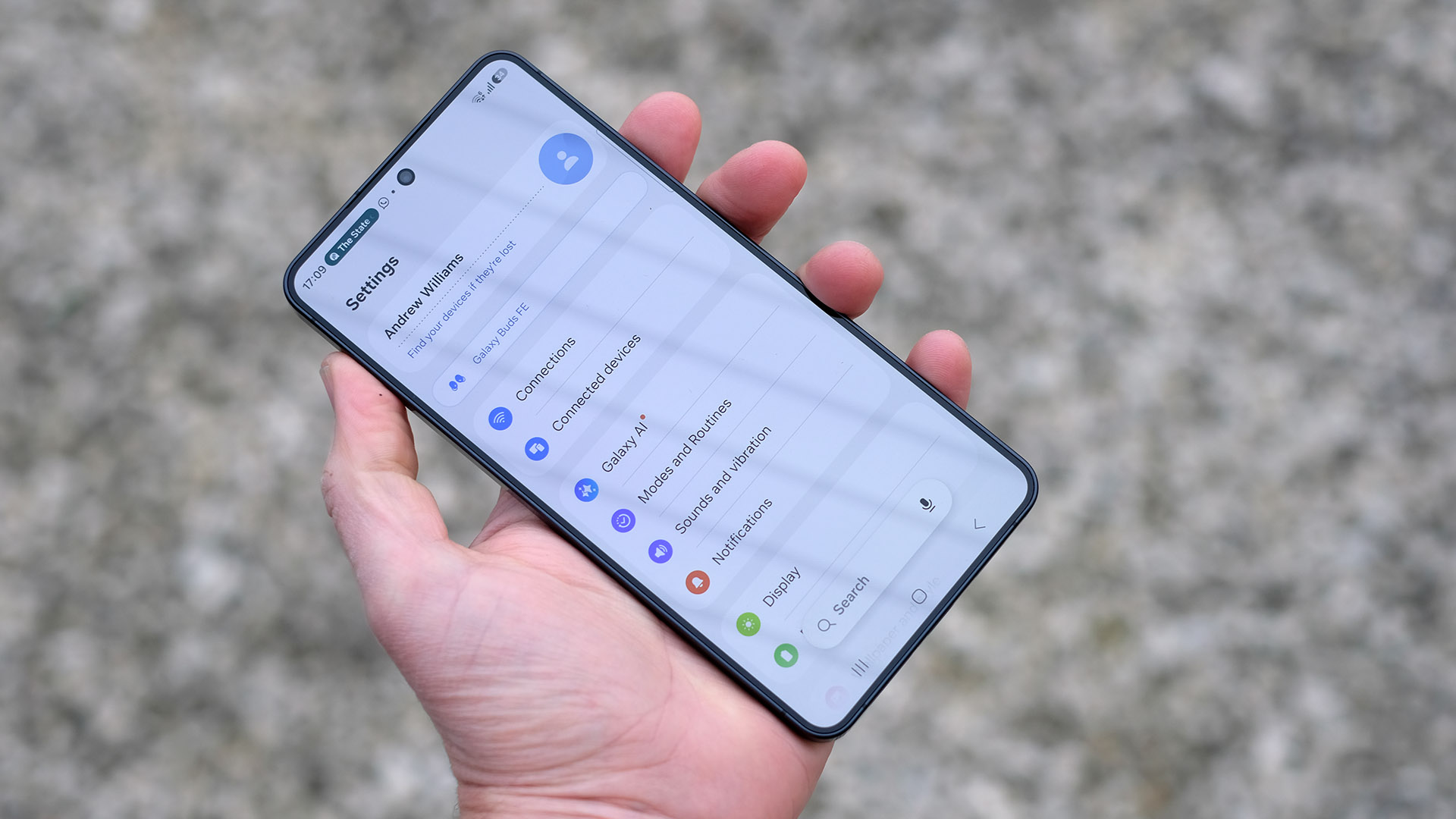
Samsung looks set to take Digital Wellbeing a step further in One UI 9, with a new feature designed to actively reduce app distractions by cutting off internet access for selected apps.
The feature has been spotted in early beta code for the Android 17-based update currently rolling out to the Galaxy S26 series. This suggests it’s still in development, but already quite far along.
The feature, reportedly called “Network management for concentration,” goes beyond the usual app timers found in Samsung’s existing wellbeing tools. Instead of just limiting screen time, it appears to block or restrict internet access for specific apps entirely. This makes them far less useful for time-wasting activities like social media scrolling, video streaming, or gaming.
Leaked screenshots shared by Android Authority show a dedicated “Network restriction” settings page. On this page, users can manually select which apps should lose connectivity, a key difference compared to current Digital Wellbeing tools that typically shut apps down after a set usage limit but still provide access to online content.
Samsung also appears to be adding more control and security around the feature. Code strings suggest users will be able to set a six-digit PIN, preventing others from disabling restrictions without permission. That could make it especially useful for parents managing children’s device usage, where bypassing limits is often too easy today.
Another notable addition is a “Downtime” scheduler, which would allow users to automatically activate restrictions during set hours. That means instead of manually turning the feature on and off, users could have it kick in during work hours, study sessions, or bedtime routines. It would then switch off again automatically afterwards.
In practice, this puts One UI 9 closer to a system-level focus mode rather than a simple timer-based restriction tool. For example, even if a user has downloaded videos offline, blocking internet access would still limit the core functionality of apps like YouTube once restrictions are in place.
That said, the feature is still in its early stages, and there’s no guarantee it will make it into the final release of One UI 9. Samsung will refine several parts of the update before launch. This could include changes or even the removal of this tool.
If it does arrive as described, though, it could become one of Samsung’s most aggressive and useful digital wellbeing features yet.
We may receive a commission on purchases made from links.
Sometimes it feels like Amazon is no longer the surefire way to save money when shopping online. While there are a couple of tricks that can help deal with the store’s quirks, the platform’s prices keep increasing for users and for sellers. As a result, many users have gone back to getting their stuff from specialized websites and physical stores like Home Depot (even if saving money from Home Depot isn’t always easy).
Having said that, it’s not impossible to find some Amazon products that are flat-out cheaper and better than what you can find from a home improvement retailer. We’ve found some Amazon picks that outshine Ace Hardware in the past, and we’re about to give you a few that will put Home Depot’s massive inventory to shame.
Speaking of massive inventories, Amazon and Home Depot offer so much choice that it would be impossible to compare the two in their entirety, even when talking about specific kinds of tools. Instead, we’re going to give you four solid products you can get on Amazon that beat Home Depot’s most popular alternatives in both price and quality.
Amazon Basics by Skil 4V Cordless Stick Screwdriver
Made by Skil and sold by Amazon Basics, this 4V Cordless Stick Screwdriver is a lightweight (10.6 ounces) driver that comes with nine of the most common bits you’ll ever use, plus a bit holder/extender. It has a compact body, measuring about 1.4 x 1.4 x 7 inches, which is ideal for when you need to work in cramped spaces. The tool’s only potential downside is that the battery is not replaceable, but according to the over 3,000 mostly positive user reviews on Amazon, the battery lasts a long time and doesn’t seem to degrade very rapidly.
Of all the many, many popular cordless screwdrivers at Home Depot, the only one that is in the same category as the Amazon Basics is the Ryobi USB Lithium Screwdriver Kit with a pivoting head. But while the pivoting head may be useful in some specific circumstances, it doesn’t necessarily help the product fit into small spaces, since the end of the screwdriver is pretty thick. This product is also not as versatile as the one by Skil and Amazon, as it doesn’t have torque control or a bit extender, the latter being very useful when working in awkward spaces.
Talking about price and stats, Amazon’s model is half as expensive as the $50 Ryobi, but there’s no clear winner for speed and strength: Amazon’s model has a faster 300 RPM speed, while Home Depot’s has a better torque of 55 in-lbs. Ultimately, the Amazon Basics is the best choice for, well, basic tasks, with a faster speed and a respectable 22 in-lbs of torque, for a much lower price.
Roxon CM1349 Spark Multi Tool
Deep inside the Amazon listings of popular, affordable multi-tools, you’ll find the Roxon Spark CM1349. A 14-in-1 multi-tool, the Spark is pretty much a Swiss Army-style Knife for everyday use, and according to almost 3,500 user reviews, it plays its role really well — there’s a reason why it’s one of our favorite cheap hand tools you can buy on Amazon. There are a million reasons why you might want a multi-tool: a one-stop solution for basic tasks in your garage, the finishing touch for that mini tool set you got on Amazon, or a small gift for tinkerers. This tiny, half-pound model includes a saw, a can opener, a flint stone, and a whistle, making it a good choice as an emergency mini tool for outdoor use.
Home Depot sells a lot of multi-tools, including some that have a bunch of functions, some aimed at outdoor use, and a number of cheap options under $30. It doesn’t seem to have any popular options that happen to be all three of these things at once. The closest it gets is the DeWalt MT21 Multi-Tool, but even this model lacks a flint stone and a whistle, and the can opener shares a space with the bottle opener. In other words, it’s not an outdoors emergency tool, so it doesn’t really compete in the same category as the Roxon Spark.
WorkPro Precision Screwdriver Kit 69-piece
Do you need 69 bits for your multi-bit screwdriver? Probably not, but having too many bits never hurt anyone, especially if, as is the case with the WorkPro Precision Screwdriver Kit, you get a nice case to keep everything in place. Plus, the “pieces” in the product’s name aren’t just precision driver bits but include an extension bar and a magnetizer/demagnetizer tool. The magnetizer alone sells for about $7 at Home Depot, while on Amazon, you can get this whole set for just $6.27.
There’s no way Home Depot can compete with this price, even if it does try. The Anvil 36-piece Precision Repair Tool Kit is the closest it gets. With a price of about $10, it’s not exactly as cheap, but it’s close enough to consider. However, going with Home Depot’s option comes with some serious shortcomings. Its fabric pouch has been replaced with a plastic case that likely won’t last as long, and there’s no magnetizer tool included. The bit count has gone down, too, from 60 to just 36. You may argue that Anvil is a well-known brand, even if it isn’t especially popular, but WorkPro easily wins on name recognition, and it has an excellent warranty to boot.
Kitevich Four-pack Telescoping Magnet Pick-up Tool Set

This Kitevich four-pack telescoping magnet pick-up tool set is nearly identical to the kit that made it into our list of handy gadgets for your garage, but a pickup tool can always come in handy. With this kit, you have enough to distribute them around the house or keep them in a dedicated drawer. And if the $10 price tag for the four of them sounds like too good to be true, consider that magnets and metal rods aren’t especially expensive materials. Sure, $2.50 each is a very good price, but it’s not so suspiciously cheap that you should run away.
This pack includes a portable, telescoping, magnetic pickup tool plus a bigger version of that same tool that can hold up to 10 pounds of metal, a flexible magnetic tool, and a longer flexible tool with a hand crane of sorts on its end. You will simply not find a bundle like this at Home Depot for a comparable price. You can find a nearly-identical set for $57, but frankly, three out of the four items appear to be exactly the same; they’re just overpriced. Alternatively, you could spend $9 to get a single, fancy-looking pickup tool branded Powerbuilt that comes with an integrated light but a lower max load than the Amazon option.
Let’s be honest, there’s virtually no reason to go with Home Depot in this case. The only exceptions would be if you need something with a very specific form factor, like a strong pickup tool with wheels, or if you enjoy spending money to have a big brand name printed on your cheap tools.
Methodology
This list is made entirely of Amazon products that are cheaper than the alternatives we found on Home Depot, while outshining them in some area or another — power, versatility, portability, etc. We couldn’t realistically compare these picks to every similar product sold by Home Depot, since there are just too many, so we stuck with the most popular options of similar price and functionality. We found these popular options by organizing Home Depot’s search page by “Top Sellers” and “Top Rated Products.” The Amazon products we selected had to have at least 100 reviews with a four-star average, but most of those that made it onto the list have far more reviews and over 4.5 stars.
Tech
Trump’s Tech Posse in China, Who’s Winning in Musk v. Altman, and Hantavirus Conspiracy Theories

Brian Barrett: Our best and brightest.
Leah Feiger: Yeah. And so I’m just like, no, no, no, this is clearly not just about tech. This is about showing very specifically who Trump’s allies are and being able to position himself in front of a country and leader that he hasn’t spent a lot of time with recently.
Zoë Schiffer: Since we’re still talking about the people that he is going to China with, what do we know about why Jensen Huang was left off the list and then re-added last minute? Because my though when I saw it was, oh, this is about export controls and they think it’s going to be kind of weird and complicated to have him on the trip. But then obviously he is now on the trip.
Leah Feiger: So someone I cannot name, someone said to me, “Oh, I think the President may have just forgotten him,” to which I laughed.
Zoë Schiffer: Oh, you remembered Brett Ratner and you forgot?
Leah Feiger: No, I was like, “This is not true.” It’s just not even sort of true to the point where I was like, “I’m sorry, you’re expecting me to entertain this right now?”
Zoë Schiffer: I would absolutely buy that Trump forgot this man, but I’m like, “Trump has other people around him.”
Leah Feiger: This team didn’t forget this man.
Zoë Schiffer: Yes, please.
Leah Feiger: No, there’s no way on earth. I was very much just like, “Uh-huh. Yeah, yeah, yeah. Keep it moving.” And obviously guys, we have to talk about the Musk of it all. I know that Elon has been making his appearances back at a variety of White House or White House adjacent events, but this does feel like such a big moment for him to be on the international stage again by Trump’s side.
Zoë Schiffer: Did you know that Elon Musk’s mother is like low-key a celebrity in China?
Brian Barrett: Maye Musk, international model, Maye Musk.
Leah Feiger: Wait, new information. Say more.
Zoë Schiffer: People are obsessed with her there.
Leah Feiger: What?
Zoë Schiffer: Just a little fun fact.
Brian Barrett: I want to take a moment too not to get away from Maye Musk. We can talk and talk about Maye Musk all day long. About a year ago when the Pentagon set up Musk for a war briefing about what would happen if the US went to war. Do we remember this?
Leah Feiger: I do.
Zoë Schiffer: Oh, my gosh, I fully forgot about this. Yes.
Brian Barrett: The Pentagon invited Musk over to check out what the war plans would be if we went to fight China over Taiwan and that got scuttled apparently before he went. This was a New York Times report, but it is how far we’ve come and how not far. I don’t know. If I’m China, I don’t think I want to see Musk anywhere near this coalition. And if I’m Musk, I’m feeling pretty great about the level of influence I now have. Again, and then maybe I get a chance to look at those war plans again. Maybe I can sweet talk Pete Hegseth.
Tech
Sony shows off AI-touched Xperia 1 VIII camera samples. It’s an epic self-own that I can’t digest

Sony has a camera legacy that most brands, regardless of whether they make cameras or smartphones, dream of. The company rewrote what full-frame sensors could do with its Alpha series.
That particular rendering of skin tones, that restraint with saturation, the commitment to accurate white balance; the company’s color science is precisely why cinematographers, videographers, and photographers like me, in the consumer tech space, swear by its color science and camera hardware.
So when the official Sony Xperia X account posted “Origin vs. AI Camera Assistant” side-by-side comparisons, particularly to promote the Xperia Intelligence on the company’s new Xperia 1 VIII, I kept staring at my screen for minutes. Not in admiration, but in genuine disbelief. I’d say this bluntly: whoever approved those samples has either never used a Sony Alpha series camera, or never spoken to someone who does.

What exactly is Sony’s Xperia Intelligence actually doing to these images?
Let me walk you through this in technical terms, because what’s happening in those pictures deserves a discussion. In the first portrait shot, Sony’s Xperia Intelligence has boosted mid-tone exposure so aggressively that it has clipped the highlights across the grass and the subject’s face.
The details are blown away, while the dynamic range is all messed up. Similarly, in the shot with the vase, the new AI-based algorithm has crushed the shadows so hard that the floor loses all its texture. While the original picture has some depth and visible wood grain, the edited one looks like it has a flat, high-contrast filter applied, with the intensity slider dragged all the way up.

Then there’s the sandwich. I genuinely can’t figure out what Sony’s AI saw when it decided those reds and greens needed to be desaturated. Seriously, it looks like someone tuned up the exposure and brightness sliders on the picture, without realizing that they’re blowing up the finer details and the colors.
Across all three samples, the AI introduces a forced yellow-orange warmth, in different intensities, an artificial white-balance shift that moves every shot away from neutral or natural colors toward what looks like an Instagram or Snapchat filter. They all looked like they were captured from a sensor pushed way past its native ISO ceiling, with plenty of noise.
I’d say that all the pictures looked better the way they were, but Sony’s AI Camera Assistant or Xperia Intelligence fixed them in a way that’s beyond any post-production repairs. And mind you, the pictures have been posted to promote the exceptional photography results that buyers can achieve with the new Xperia 1 VIII.

Sony can’t afford an identity crisis
The Xperia 1 series has always been Sony’s answer to the question: what if a smartphone camera behaved like the one on a camera? However, what Xperia Intelligence appears to be doing is chasing the aggressively and unnecessarily processed, high-vibrance aesthetic, that, I’d say, looks worse than what a Samsung, Google, or Apple smartphone would have processed.
While the originals in the tweet are genuinely well-exposed, have natural-looking colors, and a decent amount of dynamic range, the AI versions look like the Xperia’s camera got bored with being too good. For those who are buying the Xperia 1 VIII for its camera, and that’s almost certainly the reason why they would, get comfortable with the settings menu early; that’s all I have to say.


Today’s pickup truck buyers tend to favor models with rear seats that seat up to six passengers. These models have evolved over the years into two primary categories: crew cab and extended cab. While there are differences between crew cab and extended cab pickup trucks, both cab configurations provide extra space behind the front seats to accommodate additional passengers or cargo.
Dodge introduced the first extended cab two-door pickup truck, known as the Dodge Club Cab, for the 1973 model year. It had an extra pair of small windows located behind the doors, and offered just enough room for two additional passengers.
While the rear passenger accommodations weren’t exactly luxurious by today’s standards, the opposing jump seats offered a more comfortable place to sit than the pickup bed. When extra passenger seating wasn’t required, the jump seats folded against the rear cab walls. This allowed maximum space when carrying cargo, keeping it better away from the pickup bed’s wind and weather exposure.
Ford was next in the extended cab pickup market, launching its SuperCab option in 1974. The early SuperCab versions only had two doors, like the Dodge Club Cab. Newer Ford SuperCab and Crew Cab trucks offer a number of differences, starting with more doors for easier access.
Crew cab pickups actually came before extended cab versions
The larger-cab option for pickup trucks debuted in 1957 with the introduction of the Travelette, a three-door pickup featuring a full-size rear bench seat that seated up to six passengers across two bench seats. Don’t worry if you’ve never heard of or seen a Travelette. They were designed and marketed as work trucks meant to haul workers and materials to job sites, and built by International Harvester.
International Harvester is a brand best remembered for its school buses, though some may recall the Scout. This early 4×4 SUV was one of the coolest trucks of the 1970s, and it ultimately became the last consumer vehicle produced by International Harvester before the company ended light-duty production in 1980.
That same year, a third-party contractor began up-fitting Dodge pickups with larger cabs, a relationship that lasted a few years until Dodge began rolling them off the assembly line in 1964. Ford debuted its four-door Crew Cab pickup in 1965, and Chevy and GMC waited until the 1970s to offer their versions.

Meta’s decision to track employee keystrokes and mouse data is causing an uproar within the company. “Selfishly, I don’t want my screen scraped because it feels like an invasion of my privacy,” wrote an engineer in an internal post seen by nearly 20,000 coworkers this week. “But zooming out, I don’t want to live in a world where humans—employees or otherwise—are exploited for their training data.”
The message aimed to rally support for a petition circulating inside the company since last Thursday that demands an end to what Meta calls the Model Capability Initiative. It’s a piece of mandatory software that Meta began installing on the laptops of US employees last month. The tool records employees’ screens when using certain apps with the goal of collecting “real examples of how people actually use” computers, including “mouse movements, clicking buttons, and navigating dropdown menus,” according to Reuters. Meta has yet to say whether the initial data is paying off.
“I’m mixed on Al. On one hand, I really enjoy using it to write software. On the other hand, I’m really nervous about its impact on the world,” the engineer wrote in an internal forum for coders. “And what kind of norms are we establishing about how the technology is used, and how people are going to be treated?”
The petition, also seen by WIRED, states that “it should not be the norm that companies of any size are permitted to exploit their employees by nonconsensually extracting their data for the purposes of Al training.”
In the US, employers generally have wide latitude to monitor workers’ devices for security, training, evaluation, and safety purposes. But using these tools to build datasets that instruct AI systems on navigating computers without human supervision appears to be a new tactic—and one that doesn’t sit right with many Meta workers. Over the past few years, several companies have jumped into the race to develop agentic AI models. But when gathering data, they have typically tapped volunteers, sometimes paid, who are willing to have their computer activity recorded.
Meta’s decision to move forward with its tracking tool despite weeks of protest from employees has become one of the leading reasons for what 16 current and former employees recently described to WIRED as record-low morale. It’s also the leading driver of an employee unionization effort at Meta’s UK offices.
“The workplace surveillance and training AI models is the number one thing,” says Eleanor Payne, a representative of United Tech and Allied Workers, which is helping organize Meta employees. She declined to specify the number of employees seeking to form a labor union but called it “significant” and unprecedented.
While only US employees are currently subjected to tracking, UK employees are concerned for their colleagues and the potential for expansion of the program. “I think of it pretty much as a breakdown of trust,” Payne says. New laws that eased unionization in the UK have encouraged employees about the chances of success, she adds.
In Meta offices in California and New York, workers have been posting flyers in cafeterias and other communal areas pointing colleagues to the petition. Two employees, speaking on the condition of anonymity because they were not authorized to speak to the media, say the company has removed some posters, with those on bathroom walls seemingly staying up longer.

Design Within Reach Promo Codes: 30% Off | 2026

How Big Celebrity Buys GOLD Safety Tips #finance #shorts

Elon Musk Calls Out Farage Over Donation Allegation

Manchester United reach agreement with Casemiro over contract clause amid transfer speculation

US brings back mandatory military draft registration

Steven Gerrard disagrees with Gary Neville over ‘shock’ Chelsea and Arsenal claim | Football
![[CONFIRMED] Bitcoin Holders...This is BIG!](https://wordupnews.com/wp-content/uploads/2026/05/1778822840_maxresdefault-80x80.jpg)

-
 Crypto World7 days ago
HarrisX Poll Found 52% of Registered Voters Support the CLARITY Act
-

 Fashion6 days ago
Weekend Open Thread: Marianne Dress
-

 Fashion3 days ago
Coffee Break: Travel Steam Iron
-

 Fashion4 days ago
What to Know Before Buying a Curling Wand or Curling Iron
-

 Tech5 days ago
Auto Enthusiast Carves Functional Two-Stroke Engine from Solid Metal
-

 Politics3 days ago
What to expect when you’re expecting a budget
-
 Business6 days ago
Ignore market noise, India’s long-term story intact, say D-Street bulls Ramesh Damani and Sunil Singhania
-

 Politics6 days ago
Politics Home Article | Starmer Enters The Danger Zone
-

 Tech4 days ago
GM Agrees To Pay $12.75 Million To Settle California Lawsuit Over Misuse Of Customers’ Driving Data
-

 Crypto World6 days ago
PROS explodes 48% as Upbit and Bithumb listings ignite demand
-

 Crypto World5 days ago
CZ says US crypto rivals tried to block Trump pardon
-

 Tech3 days ago
GM agrees to $12.75M California settlement over sale of drivers’ data
-

 Entertainment6 days ago
YNW Melly Denied Bond Again Ahead Of Double Murder Retrial
-

 Sports7 days ago
Bayern Munich vs PSG UEFA Champions League SF2 live match time, streaming | Football News
-
Tech7 days ago
The Most Exciting Apple Products In The Pipeline For 2026 And Beyond
-
Crypto World7 days ago
The Hantavirus Danger: Can a Potential Outbreak Spark a New Meme Coin Frenzy?
-

 Crypto World6 days ago
Kraken Parent Seeks OCC Charter, Signaling Regulated Banking Access
-

 Politics7 days ago
David Attenborough ‘Overwhelmed’ By Love Shown Ahead Of 100th Birthday
-

 Sports6 days ago
After Waka Waka, Shakira now drops first teaser for FIFA WC 2026 song | FIFA World Cup 2022
-
 Crypto World6 days ago
Solana UFO Meme Coins Surge After Pentagon Reveals Alien Files
You must be logged in to post a comment Login