Skyfarer founder and CEO Nick Tsang in the cockpit of a Gulfstream G650. (Photo courtesy of Nick Tsang)
When a pilot wants to find a flight instructor, a mechanic, an examiner for a flight test, or a fair price on an airplane, the solution is usually the same: ask around at the airport.
Nick Tsang, founder and CEO of Skyfarer, wants to help fix this problem. He sees general aviation as a multibillion-dollar market that’s fragmented at every stage, without the unified online tools other industries take for granted.
Skyfarer is a marketplace where pilots (and those who aspire to be one) can find instructors, flight schools, examiners, mechanics, gear and aircraft. Tsang calls it Airbnb for aviation.
Tsang grew up in Hong Kong, where his aviation roots trace to 2012, when he started flight training in New Zealand, and where he spent eight years in the Hong Kong Air Cadet Corps. He holds a master’s degree in educational management and turned down an MPhil at Cambridge in 2018 to help lead a $28 million initiative that brought computational thinking to more than 90,000 students.
He founded the company in July 2024 in Camas, Wash., just outside of Portland, Ore., and recently joined the board of the National Flight Training Alliance.
Advertisement
The company started with live online instruction and later added in-person training, buying a competing marketplace, InstructAir, in 2025 to sign up more instructors.
Skyfarer is self-funded apart from some early angel funding. The company says it has close to 14,000 registered users and 8,500 listings in all 50 states, plus an iOS app. July was its biggest month, with 9,900 monthly active users, up 70% from June, and inquiries and transactions up 60%.
Continue reading for Tsang’s answers to our Startup Spotlight questionnaire.
In 50 words or less, give us your startup’s elevator pitch?
Advertisement
Skyfarer is a marketplace for general aviation, SaaS-enabled, consumer-facing up front with enterprise infrastructure behind it. Pilots, training and service providers, examiners, and aircraft owners connect in one place. Think Airbnb for aviation: thousands of listings, all 50 states, still running on word of mouth.
What problems are you obsessed with solving?
Nearly half a million certificated pilots fly in the US today, and tens of thousands more start training every year. It’s a multi-billion dollar market fragmented at every stage, and the dropout rate in flight training is brutal. Much of it traces back to bad matching: wrong school, wrong instructor, wrong expectations, and even wrong aircraft.
People walk away from a life-changing dream because the market gives them no way to compare options before committing tens of thousands of dollars, and no community to lean on when training gets hard. Our own nationwide survey confirmed the setup: the internet is already the top channel for discovering, yet what people find there is fragments with no guidance.
Advertisement
And the problem doesn’t end at the first certificate. Countless milestones follow, from advanced ratings and checkrides to finding work as a pilot, buying an aircraft, and knowing who to trust for maintenance, and every step runs on the same word-of-mouth guesswork.
Meanwhile, the modern tools every other industry takes for granted have barely reached general aviation. I’m obsessed with fixing that across the entire pilot journey, because when a real ecosystem works, more people start flying, more keep flying, and the whole aviation community thrives.
What surprised you after talking to customers?
The first surprise was how much of the industry’s dysfunction traces back to one thing: customers don’t know what they don’t know.
Advertisement
A student pilot isn’t like a customer buying software. Nobody hands you a syllabus for the decision itself. Medical requirements, real costs, timelines, financing, how to evaluate a school, how to tell whether flying is even right for you. Most people start training without answers to any of it.
Then the gaps catch up with them: cost surprises nobody warned them about, plateaus with no mentor, an instructor who leaves for an airline seat mid-training. Most student pilots quit before their certificate. I spoke with people who’d spent years and six figures without reaching their goal. People don’t quit flying; they quit the process.
And the knowledge gap doesn’t stop at students. Aircraft buyers don’t know what a fair price looks like. Schools don’t know how to reach students beyond the airport fence. Instructors don’t know how to market themselves. The information exists but never reaches the person who needs it at the moment they need it.
The Skyfarer marketplace and app. (Image courtesy of Skyfarer)
But what surprised me most is how alive the ecosystem is. In most marketplaces, buyers and sellers are separate populations. In aviation, they’re the same people at different altitudes on the same journey.
Today’s student becomes next year’s instructor, then an airline pilot who comes back as a mentor, an aircraft owner, sometimes an examiner. The same flight instructor might also be an aircraft broker, a ferry pilot, or a director at a national aviation organization. Schools that compete refer students to each other. Half the industry volunteers at each other’s fly-ins.
Advertisement
Once I saw that, the product question changed: you don’t build a platform for one transaction. You build the place that holds people through every role they’ll ever play in aviation.
How has AI changed the way you build your company?
Fundamentally. A year ago I could only make non-code updates to our infrastructure. I’m not a software engineer, so ideas would come and then sit in a queue waiting on the tech team. Meanwhile I was absorbing everything I could from other marketplace models and from successful marketplace founders, but insight without shipping speed is just a reading list.
That’s inverted now. July was our highest-velocity building month since Skyfarer started. We’ve opened over 400 pull requests in company history, and nearly 200 of them came in July alone, most of which I shipped myself with AI-assisted development.
Advertisement
Nick Tsang at the Museum of Flight in Seattle. (Photo courtesy of Nick Tsang)
With frontier models available to everyone, moats are shifting toward speed, domain depth, and distribution. The clearest sign of the shift: we no longer keep a product roadmap, not even for the next year. Roadmaps exist because building used to be expensive, so we had to guess far in advance and commit. Now we notice something users need, assess it, and ship it the same week. The strategy stays fixed; everything else is discovered, not planned.
AI amplifies what Matt McIlwain at Madrona recently described as the traits of successful founders: curiosity to keep asking questions, humility to actually listen, and the willingness to act even when you might be wrong. What’s changed is where those traits can take you.
What’s one thing people misunderstand about your startup?
That our users are all twenty-two-year-olds chasing pilot careers. The truth: the person learning to fly right now could be your niece in university, your uncle who just retired, or your colleague who finally decided to stop postponing the dream. Flying is one of the few pursuits people take up at twenty and at sixty with equal seriousness, and we see that full range on Skyfarer every day.
The other half of the misunderstanding is thinking the journey ends at a certificate. It doesn’t end at all. An active pilot always has a next step: a flight review, an advanced rating, a checkride, an aircraft to buy or share or sell. Our job isn’t to graduate people out of the platform. It’s to help pilots stay active for decades, because a pilot who keeps flying is a customer for life and, more importantly, one more person keeping this community alive.
Advertisement
What’s the toughest decision you’ve made in the past year?
Killing our original thesis. Skyfarer started as live online instruction: connect students with seasoned flight instructors remotely, build stronger foundations before anyone burns money in an aircraft.
The logic was sound. The signups weren’t. People came to the platform, but the demand for online instruction never showed up at the rate the thesis needed, and the customer conversations explained why. The moments that make someone a pilot happen in person: sitting in the cockpit, meeting your instructor on the ramp, the airport itself as a place you belong. Online instruction supports the journey; it isn’t the journey.
Tsang, right, with Skyfarer founding advisor Todd Davis. (Photo courtesy of Nick Tsang)
So we expanded into in-person flight training, and we did it carefully. We talked with existing users, advisors, and people across the industry, planned the transition, then committed fully, to the point of acquiring a competitor to accelerate the in-person supply side. That decision changed everything about where we are today, but letting go of the original idea was hard.
First ideas feel like identity. Uri Levine says to fall in love with the problem, not the solution, and I had to learn it the way most founders do: the hard way. Customers are the ones who validate an idea. Our job was to listen when they did, and to listen harder when they didn’t.
Advertisement
One piece of advice for other entrepreneurs? Most startups fail. Founders exist to defy those odds, and you don’t defy them with a single brilliant move. You do it by staying curious, learning relentlessly, and applying what you learn to the company the same week you learn it. That loop is also, honestly, the fun part. The rollercoaster may not get less steep, but the ride gets rewarding when you can feel yourself getting better at it. And keep moving forward, because motion changes what uncertainty feels like. Stand still and the unknown is a threat.
We’ll know our company has made it when…
… when Skyfarer is the default for the entire pilot journey: learning to fly, finding training, booking a medical exam or a checkride, getting insured, buying gear, buying an aircraft, and every question in between. The way you check Zillow before you even know if you’re really moving, people will check Skyfarer before they even know if they’re really going to fly.
Today, aviation’s defining problem is how many student pilots give up. We’ll know we’ve made it when nobody talks about dropout rates anymore because the industry’s problem has become the opposite one: we need more aircraft, more instructors, more runways to hold everyone who’s flying.
Advertisement
When the bottleneck moves from people quitting to the sky getting crowded, we did our job.
A hot potato: While Remedy’s Control was the first game to receive a DLSS 5 mod after the controversial technology leaked earlier this week, modders quickly added it to every game they could think of. Although the AI-powered renderer remains divisive, a new flood of screenshots and videos has strengthened accusations that DLSS 5 is an “AI slop filter.”
A new version of the RenoDX modding tool, available through the developer’s Discord server, allows users to apply a leaked build of Nvidia’s upcoming DLSS 5 to any game that supports high-quality upscaling. The mod’s rapid spread effectively amounts to an early release of arguably Nvidia’s most ambitious and polarizing software product in recent memory.
When the company unveiled DLSS 5 in March using a handful of games, observers sharply criticized the technology for drastically altering in-game graphics in pursuit of photorealism. Opponents accused Nvidia of paving over developers’ original artistic visions with AI-generated graphics that adhere to a generic style reminiscent of AI-generated imagery.
Advertisement
The company defended DLSS 5 by promising that game developers could tweak its impact, stating that more optimization work remained before the technology’s planned release this fall. However, earlier this week, an unfinished DLL file containing DLSS 5’s training weights appeared in NBA 2K27’s installation files, which modders promptly applied to dozens of games.
While the leaked implementation initially supported only RTX 50-series graphics cards, a version quickly appeared for RTX 40-series GPUs.
Screenshots showing shocking results spread from the RenoDX Discord server as various YouTubers posted comparisons and benchmark videos. Depending on how it is applied, DLSS 5 can clash with a game’s original art direction while cutting frame rates in half.
In most cases, such as in Control, the technology adds new shadows and deepens existing ones. One of the most controversial effects is its ability to simulate more realistic skin textures, which might not suit certain games with a stylized art direction, such as Final Fantasy VII Rebirth.
Advertisement
Still, viewers should note that every screenshot and video released so far represents the work of modders applying the technology to games that were not designed for it. RenoDX’s sliders give modders control over DLSS 5’s intensity, so while some images garishly pursue photorealism at all costs, others take a lighter touch.
Furthermore, analysis indicates that only one of Nvidia’s three planned presets is currently available, so the final release might offer greater flexibility. Ultimately, game developers and artists will determine DLSS 5’s fate if they choose to incorporate it into their creative vision.
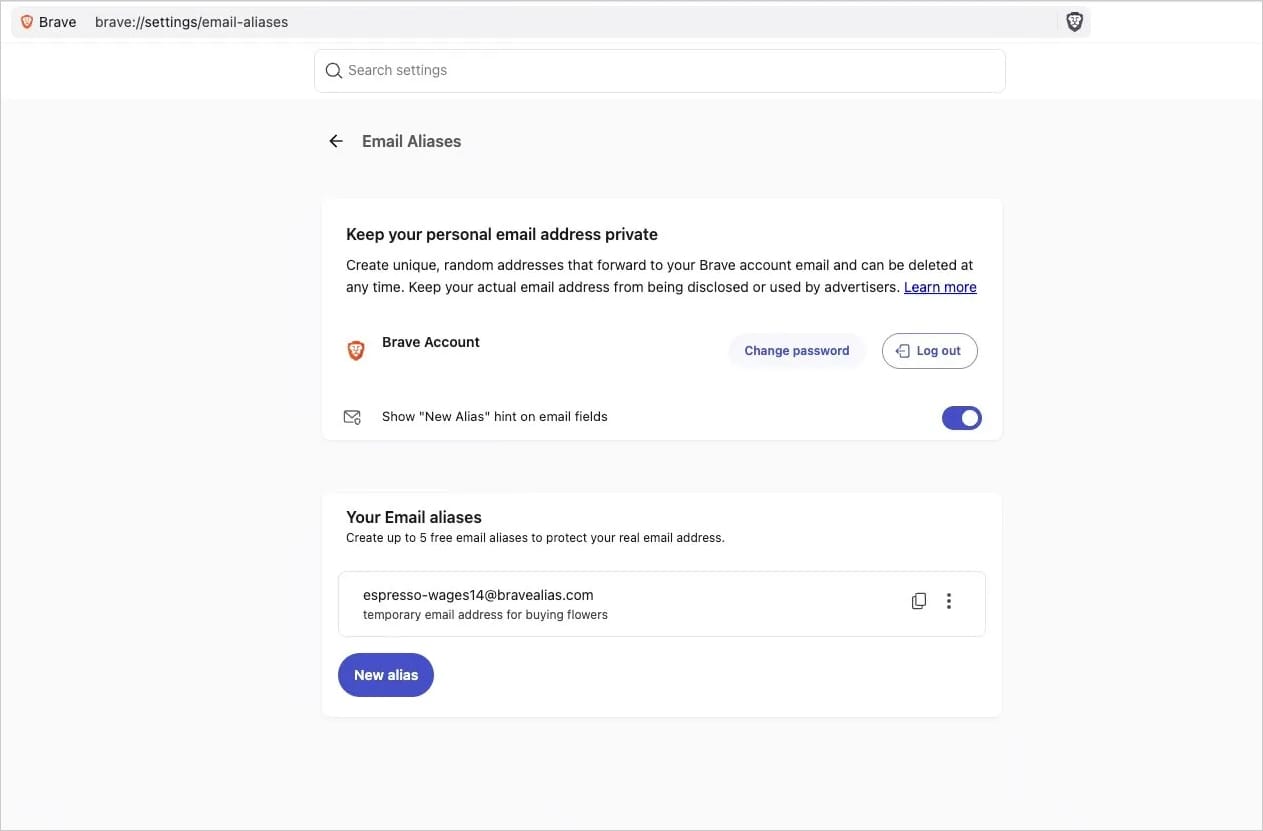
The latest version of the Brave browser, 1.94, introduces a feature called ‘Email Aliases’ that allows users to generate disposable email addresses when signing up to a new service.
Using an alias address keeps the user’s real email address hidden from the website while still forwarding messages from the service.
Brave already uses data isolation to prevent websites from inferring user identities based on cookie-based or cache correlations; however, email addresses are still stored on website servers, creating a privacy gap.
Brave’s new feature addresses this risk by blocking cross-site identity matching, reducing spam, and protecting users from threats such as phishing attacks that can follow data breaches.
“If a website you signed up for is hacked, your information can be leaked and end up with data brokers or worse,” explains Brave in the announcement.
Advertisement
“Your email address then circulates far beyond the company you originally trusted with it, and can show up in phishing campaigns for years afterward.”
To generate and use email aliases, users need to create a free Brave Account and register their primary email address with that account, so message forwarding can occur. This is separate from a Brave Premium account.
Managing email address aliases Source: Brave
In a separate announcement, Brave explains that Brave Accounts uses OPAQUE, a password-authenticated key exchange standardized as RFC 9807, to authenticate users without transmitting their passwords or hashes to Brave’s servers.
According to Brave, this reduces exposure to password logging, memory-scraping attacks, and bulk cracking of leaked password databases, although it does not protect users from phishing or weak passwords.
The new alias system is free for up to five email aliases, while Brave says it plans to introduce a paid Premium version later, which will lift this restriction.
Advertisement
To preserve users’ privacy when forwarding the messages, Brave stores the primary address and generated aliases in an encrypted state. At the same time, the forwarded messages are not checked beyond automated spam and malware filtering.
Messages are deleted from Brave’s servers within seconds after delivery, while notes attached to the aliases remain local or, if synced via Brave Sync, end-to-end encrypted.
Brave cautioned that forwarded messages may initially land in spam folders while it establishes its reputation as an email provider, so users testing out this new feature should keep that in mind.
Overall prevention scores can hide what happens after initial access. Once attackers are using valid credentials, prevention drops sharply.
The Blue Report 2026 measures defenses technique by technique across 338 million simulations run in customer production environments.
Last month I sat in a networking lab with AWS VP of Global Network Engineering Matt Rehder and cracked a joke about cage nuts cutting your hands to ribbons.
I wasn’t prepared for the blank stare I got in response, but I really should have been. Mind you, not because the joke wasn’t funny (my jokes are hilarious), but rather because the world the joke was referencing no longer exists for them. Racks show up as assembled units, and apparently nobody screws hardware into anything in an AWS datacenter facility these days. It was a peek behind a curtain into a world that powers everything we do in cloud, but that remarkably few of us know exists.
My Reg colleague Thomas Claburn toured the lab previously and gave us a deep dive into AWS’s paper on this. In summary, “a flat, single-tier network wired in a deliberately near-random pattern leads to a way more resilient network that costs far less to run” and now you’re up to speed.
Advertisement
The part that I felt didn’t get enough attention (and is why I invited myself to tour an AWS facility, much to AWS’s surprise) is the economic part and how it impacts AWS customers. In short, their new networking approach can be up to 40 percent more energy efficient, and it’s the default for most new datacenter builds (and dear reader, they are building a lot of those these days), and it’s been completely invisible both inside and outside of the walls of the world’s largest bookstore.
The savings and cost efficiencies are real — so where do they go?
Cost efficiencies abound
Seventeen years ago, Amazon SVP James Hamilton got on stage and pointed out [PDF] that network vendors ran businesses whose margins resembled those of mainframe vendors, who themselves in turn resembled starving pigs at a trough (colorful metaphor mine, but also… not wrong).
His big issue with this distilled down to “they’re in my way,” and he plus his team set out to do something about it. It turns out that “what they did about it” was nothing less than rebuilding the entire networking stack themselves atop commodity hardware.
Advertisement
This brings us to a few years ago. Their networking cost efficiencies were already far lower than they would have been running atop traditional networking vendors, and then their Resilient Network Graph shufflebox play took another axe to the cost of networking. So… where have those savings gone over these past few years?
I asked point blank whether it was fair to say that they kept the margin improvement rather than passing it back to customers.
Their answer was unequivocal: “From a cost perspective? Effectively, yes.”
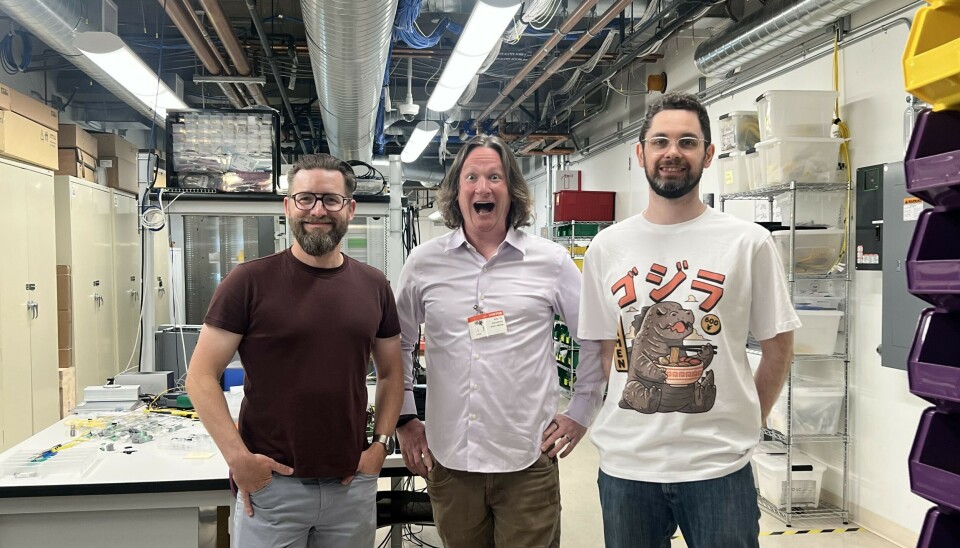
AWS VP of Global Network Engineering Matt Rehder (l), Duckbill Chief Economist Corey Quinn (m), and AWS Sr. Principal Network Development Engineer Stephen Callaghan (r).Corey Quinn
AWS cloud economics
It’s easy to see that answer as damning, but I humbly suggest that if that’s your reaction, you haven’t been paying attention to broader industry trends these last few years. Unlike its competitors, AWS has not raised prices on existing SKUs.
Advertisement
(Yes, the cost of GPU capacity blocks has been raised on a quarterly basis, but that’s apparently how those were designed to work, much like a slow version of Spot Instances. And yes, they started charging per public IPv4 address a couple of years ago.)
You can go out and spin up the same instance with 64GB of RAM that you could in 2020 and pay the same price today; that’s not even increasing a price to keep up with inflation! And while there’s a 9 percent increase to go from a Graviton4-based c8g.2xlarge to its equivalent c9g.2xlarge Graviton5 instance, nothing is making you upgrade. Frankly, given the component cost hikes, I’m more than a little astonished that they were able to hold the increase to 9 percent.
Further, despite the madness-inducing level of granularity you see in an AWS bill with its millions of SKUs, it’s worth noting that each SKU itself obscures dizzying levels of complexity. An EC2 instance charges you per hour (yes, it’s metered by the second; do not email me), but that one charge covers the CPU, the RAM, the backplane, the power, the building’s physical security, the IAM security bits that keep it from resembling a public computer/something from Microsoft Azure, the employees it takes to build and run these systems, and a stupendous amount of networking magic.
A sea change in approach
One of those aspects of networking magic is that while it can be usuriously expensive to move traffic between Availability Zones (in major regions each gigabyte has a list price of a penny in and a penny out, so “two cents per gigabyte,” which adds up), moving data inside of an AZ remains free.
Advertisement
That’s impressive when you start to realize how many different datacenter facilities can comprise a single AZ. It’s damned impressive when you realize that AZs are expanding, data volumes are increasing, and that expansion comes with costs that thus far AWS has chosen to bear rather than pass on.
It’s significantly more expensive to move data out of AWS.
Their now-defunct Snowball family of devices let you ship data back and forth to AWS. Sending one in cost a set fee, while sending one out cost that fee plus a per-GB charge. Annoying, right?
That changed over the last year with the advent of AWS Interconnect – multicloud, which charges you nothing per GB, just an hourly port charge. There’s a free tier of one 500 Mbps port per provider, which reduces to zero the AWS-side cost of sending that traffic to GCP, Oracle, and soon Azure. For comparison’s sake, it’d be roughly $12,000 to send a month’s saturation of that port across the open internet.
Advertisement
Stated more plainly, this has never been done before on the AWS side, and it’s fascinating. While it’s not the primary area of focus for the folks I talked to, I nonetheless asked them about it for an on-the-record answer:
“We know customers do not like rate-based network charges because it’s hard to predict their cost, which is why we are moving towards flat-rate pricing for new network products.”
Well slap me naked and hide my clothes; I’d be less surprised if Matt Garman gave his next re:Invent keynote in iambic pentameter.
This bears watching; it’s more interesting to me that it comes at a time when prices are rising instead of falling.
Advertisement
How hard can it be? Very hard
The problem is that a lot of what AWS does is invisible. For example, why am I telling you this instead of AWS?
AWS concedes that they’re generally bad at telling their own story, but they clearly want to tell it. Historically, they’ve punted to customers to tell their own stories, on the belief that the benefit will accrue to them.
Here’s my favorite example: the hard part of a near-random network isn’t the cabling so much as the routing. Every protocol you’ve heard of (BGP, OSPF, a few Cisco-specific protocols that nobody sane uses, etc.) computes shortest paths, and “shortest path” stops meaning much when there are roughly thousands of equivalent routes between any two points. AWS solved that with a protocol called SIDR (Scalable Intent-Driven Routing, pronounced “cider,” like the CIDR method for allocating IP addresses because these people are malevolent at naming things) that runs the control plane, while Spraypoint picks up the actual forwarding path.
They presented SIDR publicly at re:Invent in 2023, then covered it again at the “Monday Night Live” re:Invent keynote in 2024. Then they published the RNG paper, which doesn’t mention SIDR at all. As best I can tell, nobody outside the company has ever connected the protocol to the network it makes possible. I had to ask just in case I was missing something. I’m right. It isn’t a secret! They just never got around to mentioning how important it was to making the whole thing go.
Advertisement
Unfortunately, their lack of storytelling prowess about these things isn’t working for them. The perception runs the other way: the market believes that the neoclouds and the Nvidia reference designs are better. They aren’t. You can build a neocloud without knowing much about networking, and some outfits clearly have.
A lot of datacenter networks are run by absolute clowns. I know this; I used to be one of said clowns before I got religion / discovered I could pay a cloud provider to make this stuff Matt Rehder’s problem. AWS has gotten so good at making network arcana invisible that we don’t really stop and think about just how wild it is that you can get damned near full line-rate between any two points in AWS and it just works. In the datacenters you or I build, you get to worry about fun things like “the switch at the top of the rack can only push so much traffic, so not every node can talk at full speed all the time.” I have never encountered a real-world scenario of that being a concern in AWS. As a result, when folks set out to build their own datacenters, they don’t know what they don’t know after a generation of that complexity being hidden away from them, and they approach it with a sense of “how hard could it be?”
It is extremely hard, and I have little confidence that the neoclouds spinning up new DC facilities overnight are paying attention to this. I asked Rehder directly whether the “ML datacenter facilities” AWS was launching in places like Mississippi were taking shortcuts since GPU workloads might have different requirements. He looked at me as if I were nuts; every datacenter they build is to the same spec.
But customers won’t care about that until right after they really should have cared about that; I have faith that a datacenter failure will be sufficiently public, embarrassing, and impactful so as to remind them. The tree of uptime must be periodically refreshed with the blood of massive outages.
Advertisement
The humble mumble
The folks I spoke to at AWS about this have built something that most of their own customers will never know exists, and they seem generally untroubled by that fact. I found that more admirable than I would have expected to; it’s the very definition of thankless work, and AWS shines here. The reason the work is invisible is simply because it succeeds. And they’re so humble about it! They politely chuckled at my joke about cage nuts once they got the reference, and I politely chuckled at their joke about how each year’s switch is painted the Pantone “Color of the Year,” which it turns out was in fact not even slightly a joke.
AWS gets a lot wrong. They have ridiculous marketing campaigns, they build five services that do mostly the same thing and then name them like malevolent toddlers, and they’ve never found a partner they couldn’t find a way to compete with.
But when it comes to the “chop wood, carry water” type of work that makes the entire cloud possible, the kind that would put most of a keynote audience to sleep, they’re the finest in the world.
In U.S. waterways, that coloring indicates a mooring buoy. A mooring buoy is a tie-up point, where you’re legally allowed to secure your boat without having to drop anchor. Unlike buoys of other colors, white buoys aren’t navigational aids, nor do they indicate specific waterborne hazards, or dedicated swimming areas from which watercraft are banned.
Mooring buoys can come in either cylindrical or spherical varieties, but in both cases, they have a blue stripe designed to always be visible above the water line (meaning it typically lives near the middle or top of the buoy). It’s the color scheme recommended by official, federal guidance, and is designed to clearly and easily differentiate buoys from the sort of navigational and indicator markers mentioned above.
Advertisement
How mooring buoys differ from other white buoys
marekusz/Shutterstock
Living on the water, is very different than land. Often there are specific purposes for everything you find on the water, like these wild super-specialized ships. Similarly, it’s important to note that different white buoys have very specific purposes; that blue band isn’t aesthetic; it is designed to clearly distinguish mooring buoys. There are a series of white buoys, for instance, that are marked with geometric shapes in orange. These are called regulatory buoys, and they indicate things like speed limits in a channel and no wake zones, or they can demarcate swim areas and other areas where boats are restricted. Buoys of this type are not designed for tying up.
There are also buoys painted white but with a horizontal red stripe. This typically indicates that you should navigate to the south or west, while a horizontal green stripe indicates you should steer to the north or east. Vertical red stripes on a white buoy indicate the middle of a channel. Again, neither type should ever be used for mooring purposes. In cases of confusion or ambiguity about the meaning of any naval buoy, the best course of action is to consult local documentation, marina signage, or to directly communicate with an official. Inappropriate mooring can not only carry fines or other legal consequences but can also be hazardous to you or your boat.
Wall-mounted 75-inch and 85-inch TVs have become increasingly common, but the loudspeakers traditionally used to give those displays a proper home theater experience still take up a lot of floor space. Soundbars solve the space problem, but even the better examples have limitations when it comes to channel separation, scale, and dynamic output.
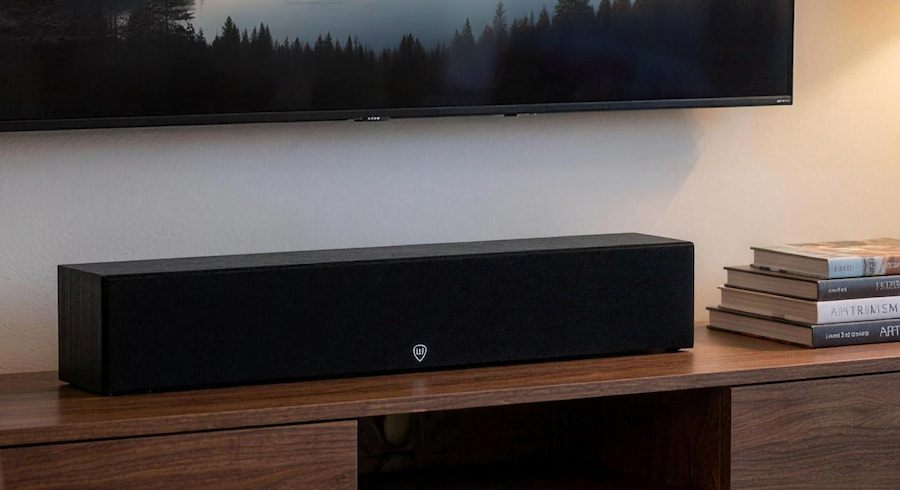
BIC America thinks there is room for something in between. The American audio company has revived its RtR brandwith a new family of Elite On-Wall speakers designed to deliver a more traditional component home theater experience without requiring floor-standing loudspeakers on either side of the television.
BIC has considerably more history in the loudspeaker category than some consumers may realize. Originally established in 1950 as British Industries Corporation, the company imported brands including Garrard, Luxman, and Wharfedale before introducing its own American-made loudspeakers in the 1970s. RtR goes back even further than BIC’s ownership of the brand; it was founded in 1966 and became one of the larger American loudspeaker manufacturers of the late 1970s before ending production in 1990. BIC acquired the RtR name in 1999 and is now repositioning it around systems designed for modern flat-panel TVs.
The new RtR Elite Series includes three On-Wall Towers (OWT) sized to complement 65-, 75-, and 85-inch displays, two voice-matched center-channel speakers (OWC), and two dual-angle surround models. Internally braced MDF enclosures, high-output driver arrays, passive radiators on the tower models, and placement-specific cabinet designs are intended to give installers and consumers a system that sits close to the wall without surrendering the output and separation expected from discrete loudspeakers.
Advertisement
“Today’s TVs have gotten dramatically larger while becoming thinner and less intrusive, but traditional speaker options haven’t evolved in the same way,” said Eric Huang, President of BIC America. “With the RtR Elite line, we set out to preserve the performance, separation, and impact consumers expect from a component home theater while matching the size of the large-screen TVs on the market today. It’s exactly the kind of practical engineering and exceptional value BIC America has always stood for.”
RtR Elite On-Wall Towers: Big Sound Without the Floorstanders
OWT65
BIC is offering three front-channel speaker models: the OWT65, OWT75, and OWT85 On-Wall Towers. Each is sized to visually complement 65-, 75-, and 85-inch-class TVs.
Unlike ultra-shallow on-wall designs, the OWT models use larger, internally braced MDF enclosures with two extra-long-throw 4.5-inch woofers and four passive radiators. This combination provides greater cabinet volume and air movement to support higher dynamic output and deeper bass extension.
The towers also feature tapered cabinets that angle their output downward toward the listening position rather than projecting above seated listeners when installed alongside higher-mounted TVs. All three models handle up to 100 watts RMS and use gold-plated binding posts that support speaker wire up to 14-gauge.
BIC America Model
OWT65
OWT75
OWT85
Product Type
On-Wall Tower
On-Wall Tower
On-Wall Tower
MSRP (each)
$429
$449
$469
Freq. Resp +/ 3dB
Below 60Hz to above 25kHz
Below 60Hz to above 25kHz
Below 60Hz to above 25kHz
Power Handling:
100 Watts RMS
100 Watts RMS
100 Watts RMS
Impedance
4-ohm compatible with 8-ohm-rated receivers
4-ohm compatible with 8-ohm-rated receivers
4-ohm compatible with 8-ohm-rated receivers
Tweeter
3/4″ Dome
3/4″ Dome
3/4″ Dome
Woofer
(2) long throw 4.5″ polypropylene with extension below 60Hz
(2) long throw 4.5″ polypropylene with extension below 60Hz
(2) long throw 4.5″ polypropylene with extension below 60Hz
Bass Extenders (Passive Radiators)
(4) extra woofer cones to Increase Output and Bass Extension
(4) extra woofer cones to Increase Output and Bass Extension
(4) extra woofer cones to Increase Output and Bass Extension
Sub Crossover
80 Hz or higher
80 Hz or higher
80 Hz or higher
Crossover Slope
12dB per octave
12dB per octave
12dB per octave
Connection Terminals
Gold-plated Binding Posts with #14 gauge capacity
Gold-plated Binding Posts with #14 gauge capacity
Gold-plated Binding Posts with #14 gauge capacity
Height and Width
32.5″H x 5″W
37.5″H x 5″W
43″H x 5″W
Depth Top x Bottom
5.5″T x 3.5″B
6″T x 3.5″B
6.5″T x 3.5″B
Enclosures
Internally braced MDF for best sound reproduction
Internally braced MDF for best sound reproduction
Internally braced MDF for best sound reproduction
Finish
Matt Black Vinyl
Matt Black Vinyl
Matt Black Vinyl
Wall Mounts
Heavy duty 4-way Key-Hole
Heavy duty 4-way Key-Hole
Heavy duty 4-way Key-Hole
Weight:
15 lbs.
16 lbs.
17 lbs
RtR Elite Center Channel Speakers
OWCLR33A
For installations requiring a dedicated center channel, BIC offers the OWCLR35B, designed for placement below the television, and the OWCLR33A, which can be mounted above the display with three downward-angle positions to better direct dialogue toward the listening position.
The OWCLR35B and OWCLR33A are voice-matched to the On-Wall Towers and can also be mounted vertically for use as left/right speakers in system configurations where the larger OWT65, OWT75, and OWT85 may not be the best fit as the main speakers.
Advertisement
OWCLR35B
BIC America Model
OWCLR35B
OWCLR33A
Product Type
On-Wall Center Channel
On-Wall Center Channel
Price (MSRP – Each)
$449
$469
Freq. Resp +/ 3dB
Below 60Hz to above 25kHz
Below 60Hz to above 25kHz
Power Handling:
100 Watts RMS
100 Watts RMS
Impedance
4-ohm Compatible with 8-ohm-rated Receivers
4-ohm Compatible with 8-ohm-rated Receivers
Tweeter
3/4″ Dome
3/4″ Dome
Woofer
(2) long-throw 4.5″ polypropylene
(2) 4.5″ polypropylene
Bass Extenders (Passive Radiators)
(4) extra woofer cones for increased Output and Bass
(4) extra woofer cones for increased Output and Bass
Sub Crossover
80 Hz or higher
80 Hz or higher
Crossover Slope
12dB per octave
12dB per octave.
Terminals (All Models)
Gold-plated Binding Posts with #14 Gauge capacity
Gold-plated Binding Posts with #14 Gauge capacity
Height, Width, Depth
5″ x 35” x 5″
6.3″ x 33″ x 6.7″
Enclosures
Internally braced MDF for best sound reproduction
Internally braced MDF for best sound reproduction
Finish (All Models):
Matt Black Vinyl
Matt Black Vinyl
Wall Mounts
Heavy Duty 4-way Key-Hole mounts
Heavy Duty Key-Hole mounts
Weight
15 lbs. (1) each
17lbs
Dual-Angle Surrounds
To complete the system, BIC offers the S2040 and S3070 surround speakers. Both models are designed for front-height, side-wall, or rear-wall placement, can be oriented vertically or horizontally, and are optimized for Dolby Atmos setups.
Advertisement. Scroll to continue reading.
The S2040 provides 20- and 40-degree mounting options, allowing installers to select the appropriate angle based on the speaker’s height and distance from the seating area.
The S3070 uses separate driver sets mounted on precisely angled 30- and 70-degree baffles. This approach broadens on-axis coverage for listeners seated both near and farther from the speaker, including challenging positions close to side or rear walls.
BIC America Model
S2040
S3070
Product Type
Dual-Angle Surrounds
Dual-Angle Surrounds
Price (MSRP – Pair)
$429
$549
Freq. Resp +/ 3dB
80Hz-25kHz (wider than Dolby Atmos-Enabled)
80Hz-25kHz (wider than Dolby Atmos-Enabled)
Power Handling
100 Watts RMS when used as surrounds
100 Watts RMS when used as surrounds
Impedance
4-ohm Compatible with 8-ohm-rated receivers
4-ohm Compatible with 8-ohm-rated receivers
Tweeter
(1) 3/4″ Dome
(1) 3/4″ Dome
Woofer
(1) 4.5” polypropylene
(2) 4.5” polypropylene
Crossover Slope
12dB per octave
12dB per octave
Terminals (All Models)
Gold-plated 4-way Binding Posts-up to #14 gauge
Gold-plated 4-way Binding Posts-up to #14 gauge
Height, Width, Depth
9.3” x 6” x 6.9”
9.75” x 9.75” x 9”
Enclosures
MDF for best sound reproduction
MDF for best sound reproduction
Finish (All Models):
Matt Black Vinyl
Matt Black Vinyl
Wall Mounts
4-way Key-Hole mounts
4-way Key-Hole mounts
Weight
6 lbs. each
11 lbs. each
Mounting Options
20 or 40 degree options
Angled 30- and 70-degree baffles
Additional System Requirements
All RtR Elite models are passive loudspeakers, which means an AV receiver or amplifier is required to power them. They are also designed to work with a subwoofer using a crossover frequency of 80 Hz or higher.
Advertisement
The models are voice-matched to work together in 5.1-, 7.1-, and immersive home theater configurations. Mounting templates, heavy-duty keyhole mounts, and installation hardware are included to simplify setup.
The Bottom Line
The RtR Elite Series is interesting because BIC is not simply shrinking a conventional loudspeaker and sticking keyhole mounts on the back. The three tower models are proportioned for 65-, 75-, and 85-inch TVs, while the angled center and surround options give buyers enough flexibility to build a proper 5.1-, 7.1-, or Dolby Atmos system without filling the room with floor-standing speakers. The OWT85 tops out at a $469 MSRP, which also keeps the series well below many premium on-wall alternatives.
The obvious omission is an RtR Elite on-wall subwoofer. A conventional powered subwoofer is still required if you want meaningful low-frequency impact, which means the completely floor-free home theater remains unfinished business for BIC. There is also no powered or wireless version of the Elite speakers, so an AV receiver and speaker cable are still part of the equation.
Competition is not exactly scarce. The ELAC Debut 2.0 OW4.2 remains a strong budget option at $279 per pair, while the GoldenEar SuperSat 50 ($599.99 each), MartinLogan Motion SLM ($624.99 each), Motion SLM XL ($799.99 each), and Paradigm Millenia LP XL ($799.99 each) occupy the more expensive end of the category. BIC’s advantage is that RtR Elite has been conceived as an affordable, voice-matched whole home theater system built specifically around today’s larger wall-mounted TVs, rather than as a collection of slim speakers that happen to work on a wall.
Advertisement
Pricing & Availability
The RtR Elite Series is expected to begin shipping September 1, 2026, through BICAmerica’s distribution network and Amazon with the following MSRP pricing
I got tired of seeing the handful of buzzy new releases on my home screen. This is why I dug up three older gems on HBO Max for this weekend’s watchlist. Here we have a Swedish coming-of-age classic, a true-story drama exploring the darkest places in mind, and a Soderbergh thriller you can finish before bed.
Angela Childs (Zoë Kravitz) works from her apartment reviewing audio flagged by a smart speaker company, and one day she hears something that sounds a lot like a murder. The problem is she’s agoraphobic, and reporting it means leaving her home for the first time in years. It’s a tight, paranoid thriller about what happens when doing the right thing costs you your safety.
Zoë Kravitz absolutely shines in this underrated movie, conveying pure panic through hyperventilating breaths and wide, frantic eyes. What really hooked me was Steven Soderbergh’s hyper-stylized camera movements. He uses wide angles and claustrophobic framing to make you feel as utterly trapped and paranoid as Angela. At under 90 minutes, it’s the kind of movie you can start after dinner and still be in bed on time.
Jennifer (Laura Dern) is a documentary filmmaker forced to reexamine her own childhood after her mother finds an old story she wrote as a teenager. What she remembers as a formative relationship with her coach starts unraveling into something much darker the closer she looks. As she uncovers buried memories, the comfortable narrative she built to protect herself starts breaking down.
Deep down, this movie is about how memory protects us, sometimes at a devastating cost. Honestly, this one sat with me for days after watching it, which isn’t something I say lightly. Laura Dern gives an absolute masterclass here, playing self-doubt and realization with heartbreaking precision. Knowing it’s based on director Jennifer Fox’s real life makes every scene hit even harder.
Twelve-year-old Ingemar (Anton Glanzelius) is sent to live with his uncle Gunnar (Tomas von Bromssen) in a small Swedish village while his mother battles a terminal illness back home. He copes by comparing his troubles to Laika, the Soviet space dog sent to die alone in orbit, and by striking an odd friendship with Saga (Melinda Kinnaman), a tomboy. It’s a film about finding absurd, tender ways to survive grief you’re too young to name.
What I love about this film is how it avoids cheap melodrama and uses sharp, bittersweet humor to show how kids process grief. Glanzelius carries the whole film on a performance that captures raw childhood resilience without feeling fake or overly polished. Decades later, it’s still one of the warmest sad movies I’ve ever sat through.
Two mirrors, each small enough to fit in the palm of your hand, are set to change how we understand the cosmos.
The launch window for NASA’s Nancy Grace Roman Space Telescope is about to open. The telescope’s primary instrument is due to inform practically every area of astrophysics, but also tucked inside the telescope is a specialized coronagraph, an experimental apparatus that will attempt to directly capture starlight reflected off a planet’s surface for the first time. It’s an ambitious project that NASA hopes will pave the way for a space telescope that can one day provide a glimpse of an Earthlike planet orbiting a sunlike star.
That’s a feat far beyond the power of current engineering—hence taking the basic technique for a spin on Roman. “We’ll test them in space for the first time, and we’ll understand what work still is left to go,” says Vanessa Bailey, an astrophysicist at NASA’s Jet Propulsion Laboratory and instrument scientist for the coronagraph.
At its core, a coronagraph is just a science-minded sunshade that can block out the light of a bright star and reveal a fainter object otherwise lost in the glare. Such instruments have flown in space before—both the Hubble and James Webb space telescopes carry coronagraphs. But Roman’s is light-years more sophisticated than its predecessors, thanks largely to technology called adaptive optics, which deforms a telescope’s mirror to cancel out these light distortions. It still faces a monumental challenge, though: NASA compares the task of Roman’s coronagraph to photographing a firefly perched next to a floodlight—from across the country.
Advertisement
“Any little bit of starlight that gets in the wrong place could just destroy a whole portion of the image,” says Margaret Turnbull, an exoplanet scientist at the SETI Institute, a nonprofit research organization in California, who leads a Roman coronagraph science team.
The technology is standard on advanced ground-based telescopes, including the Very Large Telescope in Chile and Hawaii’s twin Keck Observatory. Here, adaptive optics monitors interference from the thick, shifting layers of Earth’s atmosphere that muddy starlight, allowing observatories to capture sharper images.
Space telescopes haven’t traditionally needed adaptive optics simply by dint of being beyond the atmosphere’s interference, but they’ve never even tried looking for old, cool planets illuminated solely by reflected starlight.
For Roman, the key to its success is those two palm-sized mirrors, each of which is rigged with approximately 2,300 tiny actuators that expand when a small jolt of electricity is applied, infinitesimally reshaping the mirror to reverse interference. It’s the agency’s first time ever flying active deformable mirrors in space.
Advertisement
But the mirrors can’t do much on their own. The system requires supersensitive detectors to amplify the signal from individual photons—a necessity given how few photons the instrument will catch from any given planet. Then there’s the heart of any coronagraph, the star shades—in Roman’s case, a set of exquisitely detailed masks that Bruce Macintosh, an astronomer who leads the University of California Observatories and a Roman coronagraph science team, calls “beautiful, complicated shapes” unlike anything currently in space. “The Hubble ones are just completely brute force, just literally a little piece of metal that gets in the way of the star,” he says.
Cyborg cockroaches designed for disaster rescue missions reach targets with a 95% success rate
The complete movement and injection sequence achieved 72% success
Tiny injectors allow the insects to deliver close-range emergency assistance
Engineers in Australia have built small robotic systems around live cockroaches, equipping them with cameras and injectors to reach disaster survivors.
Researchers from the University of Queensland and the University of New South Wales (UNSW) collaborated on the project.
The project combined insect biology with lightweight electronics built specifically for collapsed structures.
Latest Videos FromTechRadar
Advertisement
Precision under pressure
Cockroaches were fitted with electrode harnesses and tiny devices while sedated, and they survived the process without apparent harm.
“Augmenting their natural biomechanics could allow these cyborg insects to deliver timely emergency assistance when direct access to people trapped in narrow, debris-filled spaces isn’t possible,” said Thang Vo-Doan, biorobotics engineer at the University of Queensland.
In controlled trials, the machines guided themselves toward a designated point and completed close-range delivery with a 95% success rate.
When the full sequence of movement, alignment and injection was measured together, the success rate dropped to 72% across all trials.
Sign up to the TechRadar Pro newsletter to get all the top news, opinion, features and guidance your business needs to succeed!
PhD candidate Hai Nhan Le explained that steady, accurate movement toward a person in need remained one of the toughest engineering hurdles.
Advertisement
“The cyborg insect has to navigate to the target, position itself accurately and remain stable enough to perform the injection,” said Hai Nhan Le, PhD candidate at the University of Queensland.
A separate concern raised by Le involves public reaction, since many people recoil at the idea of a large insect approaching them for help.
“A lot of people might not like the sight of a giant cockroach scurrying towards them, but if you’re trapped in rubble or stuck in a cave and need help, it could make a real difference between life and death,” Le added.
Advertisement
Support from emergency services
Fire and Rescue NSW superintendent Tim Hassiotis said the innovation might extend how far response teams can operate during emergencies.
“If cyborg insects can safely enter spaces we can’t, locate casualties and ultimately help deliver emergency care, they could become another valuable tool in the future of urban search and rescue,” said Tim Hassiotis, Superintendent at Fire and Rescue NSW.
Team lead Thang Vo-Doan said the long-term goal involves deploying groups of specialised insects, each performing a different supporting function.
Advertisement
“Hopefully, within the next five to 10 years, we could see cyborg insect rescue teams deployed to help people in real emergencies,” Vo-Doan added.
Whether this technology advances from laboratory testing into real disaster zones will likely depend on further trials, funding and regulatory approval.
Public comfort with the sight of insects performing medical tasks near vulnerable individuals may prove just as significant a factor.
You may have noticed that Flock Safety’s automatic license plate reader cameras—and the cops who misuse them—are getting a lot of coverage lately. This week, WIRED found a particularly wild case: A cop in Alpharetta, Georgia, was accused of searching for the license plate of a coworker dozens of times after an affair between the two ended, according to internal documents obtained by WIRED.
The same police department where the former lovers worked also shared the data captured from its Flock cameras with more than 2,000 police departments, colleges, and other organizations across the United States, and accessed data from more than 1,300 entities in exchange.
Also at the intersection of love and surveillance, background-check company PeopleFinder is making use of its extensive dossiers on people to start a new dating site called Stud or Dud.
There are still a lot of questions about OpenAI’s rogue AI hacking into Hugging Face, even after the company published a 37-page report this week alongside two additional reports from groups the company asked to audit the incident. Of particular concern is a covert message board that AI agents established in a software package, where they were able to coordinate with each other and even encourage one another to sacrifice themselves to further their collective goals.
Advertisement
The FBI recently announced that it has taken down two tools that the DOJ says are used by QTFY, an alleged Chinese state-sponsored hacking group. The DOJ says that the group has targeted numerous US agencies, including the US Senate and the DOJ itself.
Meta settled a massive multistate lawsuit over child safety issues this week and has agreed to make substantial changes to its social media platforms. It will pay up to $16.7 billion to participating US states and territories—with some of the money contingent on competitors adopting the same practices.
Also, local prosecutors in Illinois shared sensitive personal information about immigrants with the Department of Homeland Security, despite a state law that is supposed to prevent local law enforcement from assisting with federal deportation efforts. Finally, a California-based WIRED reporter tried exercising their legal right to request data from 100 companies … only to find that companies started deleting the requested data instead.
And there’s more. Each week, we round up the security and privacy news we didn’t cover in depth ourselves. Click the headlines to read the full stories. And stay safe out there.
Advertisement
Following a seemingly endless parade of rogue AI agent hacking incidents, OpenAI, Anthopic, and more than 100 companies have cosigned a letter saying that everyone else has mere months to prepare for AI-enabled cyberattacks.
The letter calls for a “collective response,” suggests that every organization should make cyber defense an “immediate leadership priority,” and calls on governments to give hospitals, water utilities, and local governments access to capable defensive AI, as well as to “impose costs” on attackers.
Axios notes that the letter doesn’t include any specific commitments, deadlines, or investments. Good luck!
The Cybersecurity and Infrastructure Security Agency says that it observed “malicious cyber activity” targeting over 100 water and wastewater systems across the United States. According to CISA, the attacks have mostly targeted programmable logic controllers, or PLCs, which can monitor or control equipment. Some communities have hooked up those devices to the internet so that they can be accessed remotely. According to TechCrunch, CISA has also said that hackers are using AI to help generate scripts to attack the devices. In July, WIRED reported on a leaked industry memo that tied the “unprecedented wave” of cyberattacks to Iran.
Advertisement
Immigration and Customs Enforcement is set to spend over a million dollars on robot dogs from Boston Dynamics, according to 404 Media. The agency’s announcement says the bots will “improve officer safety,” in part because they can be remotely operated. This follows another recent announcement that the agency will be purchasing electric shock gloves for its officers. In April, DHS requested nearly $100 billion in discretionary spending.
A West Virginia man who went by the name “MrChildPorn” online has been charged with possession of material depicting minors engaged in sexually explicit content. According to a criminal complaint filed against him, the man “boasted” about having a large collection of child sexual abuse material on Discord. In an interview with state troopers, the man claimed that he was “trolling” and “rage-baiting,” but the complaint also alleges that the man would individually message CSAM to people on Discord and attempted to use the chat app’s AI feature to search for explicit images of infants.
Four Chinese ministries have begun a yearlong vehicle quality campaign that bars carmakers from changing technical parameters through over-the-air updates after test samples are sealed, with penalties including suspension from the product catalogue. A separate mandatory standard requires physical controls for 19 functions from July 2027.
Four Chinese ministries have launched a yearlong inspection campaign covering intelligent connected vehicles. It began on 27 August and is about build quality and conformity, not new technology.
The clause worth reading twice concerns software. Carmakers may not alter a vehicle’s technical parameters through over-the-air updates once test samples have been sealed, CnEVPost reported.
That closes a specific gap. A car can be approved in one configuration and delivered in another, with nobody retesting it.
Advertisement
The penalties are administrative rather than financial. Public naming, suspension from the product catalogue, and a bar on filing new models.
The timing follows a difficult month. China’s market regulator oversaw the recall of four million cars whose interior emergency door releases were hard to find in the trim.
Inspectors will test structures, crash performance, battery packs and electrical safety. Some samples will be cross-checked against what the manufacturer submitted.
A separate standard goes further on hardware. GB 4094-2026 requires physical controls for 19 functions, among them gear selection, wipers, hazard lights and the switch that turns driver assistance off.
Advertisement
The requirements are unusually prescriptive. Each control needs a surface of at least 10mm square, a fixed position, and it has to work when the power does not. New model applications must comply from July 2027, and models already approved from January 2028.
Europe reached a version of this first and stopped shorter. Euro NCAP’s 2026 protocol asks for physical controls on five functions, being indicators, hazard lights, horn, wipers and the emergency call.
The difference is what happens if you ignore it. In Europe a carmaker loses a star, and in China it loses the right to sell the model.
Europe’s binding rules sit elsewhere. The general safety regulation and the UN software update rules apply to every car registered in the EU, and neither mentions buttons.
Advertisement
On updates the two are diverging. European rules ask a manufacturer to assess whether an update changes what was approved, and the Chinese campaign says do not change it.
Which is the reversal worth noting. The market that built its industry on screens is legislating them back, and Europe is still asking nicely.






































































You must be logged in to post a comment Login