Connect with us
DAPA Banner

Tech

Stealth Satellite TV Defeats Iran’s Internet Blackout

Published

on

On 8 January 2026, the Iranian government imposed a near-total communications shutdown. It was the country’s first full information blackout: For weeks, the internet was off across all provinces while services including the government-run intranet, VPNs, text messaging, mobile calls, and even landlines were severely throttled. It was an unprecedented lockdown that left more than 90 million people cut off not only from the world, but from one another.

Since then, connectivity has never fully returned. Following U.S. and Israeli airstrikes in late February, Iran again imposed near-total restrictions, and people inside the country again saw global information flows dry up.

The original January shutdown came amid nationwide protests over the deepening economic crisis and political repression, in which millions of people chanted antigovernment slogans in the streets. While Iranian protests have become frequent in recent years, this was one of the most significant uprisings since the Islamic Revolution in 1979. The government responded quickly and brutally. One report put the death toll at more than 7,000 confirmed deaths and more than 11,000 under investigation. Many sources believe the death toll could exceed 30,000.

Thirteen days into the January shutdown, we at NetFreedom Pioneers (NFP) turned to a system we had built for exactly this kind of moment—one that sends files over ordinary satellite TV signals. During the national information vacuum, our technology, called Toosheh, delivered real-time updates into Iran, offering a lifeline to millions starved of trusted information.

Advertisement

How Iran Censors the Internet

I joined NetFreedom Pioneers, a nonprofit focused on anticensorship technology, in 2014. Censorship in Iran was a defining feature of my youth in the 1990s. After the Islamic Revolution, most Iranians began to lead double lives—one at home, where they could drink, dance, and choose their clothing, and another in public, where everyone had to comply with stifling government laws.

Photo of a helmeted soldier with a machine gun standing in front of an Iranian flag and cell tower.Iran’s internet infrastructure is more centralized than in other parts of the world, making it easier for the government to restrict the flow of information. Morteza Nikoubazl/NurPhoto/Getty Images

My first experience with secret communications was when I was five and living in the small city of Fasa in southern Iran. My uncle brought home a satellite dish—dangerously illegal at the time—that allowed us to tune into 12 satellite channels. My favorite was Cartoon Network. Then, during my teenage years, this same uncle introduced me to the internet through dial-up modems. I remember using Yahoo Mail with its 4 megabytes of storage, reading news from around the world, and learning about the Chandra X-ray telescope from NASA’s website.

That openness didn’t last. As internet use spread in the early 2000s, the Iranian government began reshaping the network itself. Unlike the highly distributed networks in the United States or Europe, where thousands of providers exchange traffic across many independent routes, Iran’s connection to the global internet is relatively centralized. Most international traffic passes through a small number of gateways controlled by state-linked telecom operators. That architecture gives authorities unusual leverage: By restricting or withdrawing those connections, they can sharply reduce the country’s access to the outside world.

Over the past decade, Iran has expanded this control through what it calls the National Information Network, a domestically routed system designed to keep data inside the country whenever possible. Many government services, banking systems, and local platforms are hosted on this internal network. During periods of unrest, access to the global internet can be throttled or cut off while portions of this domestic network continue to function.

Advertisement

The government began its censorship campaign by redirecting or blocking websites. As internet use grew, it adopted more sophisticated approaches. For example, the Telecommunication Company of Iran uses a technique called deep packet inspection to analyze the content of data packets in real time. This method enables it to identify and block specific types of traffic, such as VPN connections, messaging apps, social media platforms, and banned websites.

The Stealth of Satellite Transmissions

Toosheh’s communication workaround builds on a history of satellite TV adoption in Middle Eastern and North African countries. By the early 2000s, satellite dishes were common in Iran; today the majority of households in Iran have access to satellite TV despite its official prohibition.

Unlike subscription services such as DirecTV and Dish Network, “free-to-air” satellite TV broadcasts are unencrypted and can be received by anyone with a dish and receiver—no subscription required. Because the signals are open, users can also capture and store the data they carry, rather than simply watching it live. Tech-savvy people learned that they could use a digital video broadcasting (DVB) card—a piece of hardware that connects to a computer and tunes into satellite frequencies—to transform a personal computer into a satellite receiver. This way, they could watch and store media locally as well as download data from dedicated channels.

Photo of satellite dishes adorning the side of an apartment building.Many Iranian citizens have free-to-air satellite dishes, like the ones on this apartment building in Tehran, and can thus download Toosheh transmissions, giving them a lifeline during internet blackouts.Morteza Nikoubazl/NurPhoto/Getty Images

Toosheh, a Persian word that translates to “knapsack,” is the brainchild of Mehdi Yahyanejad, an Iranian-American technologist and entrepreneur. Yahyanejad cofounded NetFreedom Pioneers in 2012. He proposed that the satellite-computer connections enabled by a DVB card could be re-created in software, eliminating the need for specialized hardware. He added a simple digital interface to the software to make it easy for anyone to use. The next breakthrough came when the NFP team developed a new transfer protocol that tricks ordinary satellite receivers into downloading data alongside audio and video content. Thus, Toosheh was born.

Advertisement

Satellite TV uses a file system called an MPEG transport stream that allows multiple audio, video, or data layers to be packaged into a single stream file. When you tune in to a satellite channel and select an audio option or closed captions, you’re accessing data stored in different parts of this stream. The NFP team’s insight was that, by piggybacking on one of these layers, Toosheh could send an MPEG stream that included documents, videos, and more.

An illustration of an 8 step process for sending digital files via satellite TV signals. HOW TOOSHEH WORKS: At NetFreedom Pioneers, content curators pull together files—news articles, videos, audio, and software [1]. Toosheh’s encoder software [2] compresses the files into a bundle, in .ts format, creating an MPEG transport stream [3]. From there, it’s uploaded to a server for transmission [4] via a free-to-air TV channel on a Yahsat satellite that’s positioned over the Middle East to provide regional coverage [5]. Satellite receivers [6] directly capture the data streams, which are downloaded to computers, smartphones, and other devices, and decoded by Toosheh software [8].Chris Philpot

A satellite receiver can’t tell the difference between our data and normal satellite audio and video data since it only “sees” the MPEG streams, not what’s encoded on them. This means the data can be downloaded and read, watched, and saved on local devices such as computers, smartphones, or storage devices. What’s more, the system is entirely private: No one can detect whether someone has received data through Toosheh; there are no traceable logs of user activity.

Toosheh doesn’t provide internet access, but rather delivers curated data through satellite technology. The fundamental distinction lies in the way users interact with the system. Unlike traditional internet services, where you type a request into your browser and receive data in response, Toosheh operates more like a combination of radio and television, presenting information in a magazine-like format. Users don’t make requests; instead, they receive 1 to 5 gigabytes of prepackaged, carefully selected data.

Access to information is not only about news or politics, but about exposure to possibilities.

Advertisement

During this year’s internet blackout, we distributed official statements from Iranian opposition leader Crown Prince Reza Pahlavi and the U.S. government. We provided first-aid tutorials for medics and injured protesters. We sent uncensored news reports from BBC Persian, Iran International, IranWire, VOA Farsi, and others. We also shared critical software packages including anticensorship and antisurveillance tools, along with how-to guides to help people securely connect to Starlink satellite terminals, allowing them to stay protected and anonymous as they sent their own communications.

How to Combat Signal Interference

Because Toosheh relies on one-way satellite broadcasts, it evades the usual tactics governments use to block internet access. However, it remains vulnerable to satellite signal jamming.

The Iranian government is notorious for deploying signal jamming, especially in larger cities. In 2009, the government used uplink interference, which attacks the satellite in orbit by beaming strong noise in the frequency of the satellite’s receiver. This makes it impossible for the satellite to distinguish the information it’s supposed to receive. However, because this type of attack temporarily disables the entire satellite, Iran was threatened with international sanctions and in 2012 stopped using the method .

A chart displayed on a cellphone shows internet connectivity in Iran dropped from almost 100% to 0% on 9 January 2026. A graph of network connectivity in Iran shows that on 9 January 2026, internet access dropped from nearly 100 percent to 0. Samuel Boivin/NurPhoto/Getty Images

The current method, called terrestrial jamming, uses antennas installed at higher elevations than the surrounding buildings to beam strong noise over a specific area in the frequency range of household receivers. This attack is effective in keeping some of the packets from arriving and damaging others, effectively jamming the transmission. But it’s short-range and requires significant power, so it’s impossible to implement nationwide. There are always people somewhere who can still watch TV, download from Toosheh, or tune into a satellite radio despite the jamming. Even so, we wanted a workaround that would keep our transmissions broadly accessible.

Advertisement

NFP’s solution was to add redundancy, similar in principle to a data-storage technique called RAID (redundant array of independent disks). Instead of sending each piece of data once, we send extra information that allows missing or corrupted packets to be reconstructed. Under normal circumstances, we often use 5 percent of our bandwidth for this redundancy. During periods of active jamming, we increase that to as much as 25 to 30 percent, improving the chances that users can recover complete files despite interference.

From Crisis Response to Public Access

Toosheh initially came online in 2015 in Iran and Afghanistan. Its full potential, however, was first realized during the 2019 protests in Iran, which saw the most widespread internet shutdown prior to the blackout this year. Wired called the 2019 shutdown “the most severe disconnection” tracked by NetBlocks in any country in terms of its “technical complexity and breadth.” Our technology helped thousands of people stay informed. We sent crucial local updates, legal-aid guides, digital security tools, and independent news to satellite receivers all over the country, seeing a sixfold increase in our user base.

When that wave of protests subsided, the government allowed some communication services to return. People were again able to access the free internet using VPNs and other antifilter software that allowed them to bypass restrictions. Toosheh then became a public access point for news, educational material, and entertainment beyond government filtering.

Toosheh’s impact is often personal. A traveling teacher in western Iran told NFP that he regularly distributed Toosheh files to students in remote villages. One package included footage of female athletes competing in the Olympic Games, something never broadcast in Iran. For one young girl, it was the first time she realized women could compete professionally in sports. That moment underscores a broader truth: Access to information is not only about news or politics, but about exposure to possibilities.

Advertisement

The Cost of Toosheh

Unlike internet-based systems, Toosheh’s operational cost remains constant regardless of the number of users. A single TV satellite in geostationary earth orbit, deployed and maintained by an international company such as Eutelsat, can broadcast to an entire continent with no increase in cost to audiences. What’s more, the startup cost for users isn’t high: A satellite dish and receiver in Iran costs less than US $50, which is affordable to many. And it costs nothing for people to use Toosheh’s service and receive its files.

We aim not just to build a tool for censorship circumvention, but to redefine access itself.

However, operating the service is costly: NetFreedom Pioneers pays tens of thousands of dollars a month for satellite bandwidth. We had received funding from the U.S. State Department, but in August of 2025, that funding ended, forcing us to suspend services in Iran.

Then the December protests happened, and broadcasting to Iran became an urgent priority. To turn Toosheh back on, we needed roughly $50,000 a month. With the support of a handful of private donors, we were able to meet these costs and sustain operations in Iran for a few months, though our future there and elsewhere is uncertain.

Advertisement

Satellites Against Censorship

Toosheh’s revival in Iran came alongside NFP’s ongoing support for deployments of Starlink, a satellite internet service that allows users to connect directly to satellites rather than relying on domestic networks, which the government can shut down. Unlike Toosheh’s one-way broadcasts, Starlink provides full two-way internet access, enabling users to send messages, upload videos, and communicate with the outside world.

In 2022, we started gathering donations to buy Starlink terminals for Iran. We have delivered more than 300 of the roughly 50,000 there, enabling citizens to send encrypted updates and videos to us from inside the country. Because the technology is banned by the government, access remains limited and carries risk; Iranian authorities have recently arrested Starlink users and sellers. And unlike Toosheh’s receive-only broadcasts, Starlink terminals transmit signals back to orbit, creating a radio footprint that can potentially be detected.

A photo of a laptop screen says the user is offline. The internet shutdown in Iran continued after the attacks by Israel and the United States began in late February, preventing Iranians from communicating with the outside world and with one another.Fatemeh Bahrami/Anadolu/Getty Images

Looking ahead, we envision Toosheh becoming a foundational part of global digital resilience. It is uncensored, untraceable, and resistant to government shutdowns. Because Toosheh is downlink only, it can sometimes feel hard to explain the value of this technology to those living in the free world, those accustomed to open internet access. Yet, people living under censorship have few other choices when there’s a digital blackout.

Currently, NFP is developing new features like intelligent content curation and automatically prioritizing data packages based on geographic or situational needs. And we’re experimenting with local sharing tools that allow users who receive Toosheh broadcasts to redistribute those files via Wi-Fi hotspots or other offline networks, which could extend the system’s reach to disaster zones, conflict areas, and climate-impacted regions where infrastructure may be destroyed.

Advertisement

We’re also looking at other use cases. Following the Taliban’s return to power in Afghanistan, NetFreedom Pioneers designed a satellite-based system to deliver educational materials. Our goal is to enable private, large-scale distribution of coursework to anyone—including the girls who are banned from Afghanistan’s schools. The system is technically ready but has yet to secure funding for deployment.

We aim not just to build a tool for censorship circumvention, but to redefine access itself. Whether in an Iranian city under surveillance, a Guatemalan village without internet, or a refugee camp in East Africa, Toosheh offers a powerful and practical model for delivering vital information without relying on vulnerable or expensive networks.

Toosheh is a reminder that innovation doesn’t have to mean complexity. Sometimes, the most transformative ideas are the simplest, like delivering data through the sky, quietly and affordably, into the hands of those who need it most.

From Your Site Articles

Advertisement

Related Articles Around the Web

Source link

Continue Reading
Click to comment

You must be logged in to post a comment Login

Leave a Reply

Tech

From RSA to Lattices: The Quantum Safe Crypto Shift

Published

on

The race to transition online security protocols to ones that can’t be cracked by a quantum computer is already on. The algorithms that are commonly used today to protect data online—RSA and elliptic curve cryptography—are uncrackable by supercomputers, but a large enough quantum computer would make quick work of them. There are algorithms secure enough to be out of reach for both classical and future quantum machines, called post-quantum cryptography, but transitioning to these is a work in progress.

Late last month, the team at Google Quantum AI published a whitepaper that added significant urgency to this race. In it, the team showed that the size of a quantum computer that would pose a cryptographic threat is approximately twenty times smaller than previously thought. This is still far from accessible to the quantum computers that exist today: the largest machines currently consist of approximately 1,000 quantum bits, or qubits, and the whitepaper estimated that about 500 times as much is needed. Nonetheless, this shortens the timeline to switch over to post-quantum algorithms.

The news had a surprising beneficiary: obscure cryptocurrency Algorand jumped 44% in price in response. The whitepaper called out Algorand specifically for implementing post-quantum cryptography on their blockchain. We caught up with Algorand’s chief scientific officer and professor of computer science and engineering at the University of Michigan, Chris Peikert, to understand how this announcement is impacting cryptography, why cryptocurrencies are feeling the effects, and what the future might hold. Peikert’s early work on a particular type of algorithm known as lattice cryptography underlies most post-quantum security today.

IEEE Spectrum: What is the significance of this Google Quantum AI whitepaper?

Advertisement

Peikert: The upshot of this paper is that it shows that a quantum computer would be able to break some of the cryptography that is most widely used, especially in blockchains and cryptocurrencies, with much, much fewer resources than had previously been established. Those resources include the time that it would take to do so and the number of qubits (or quantum bits) that it would have to use.

This cryptography is very central to not just cryptocurrencies but more broadly, to cryptography on the internet. It is also used for secure web connections between web browsers and web servers. Versions of elliptic curve cryptography are used in national security systems and military encryption. It’s very prevalent and pervasive in all modern networks and protocols.

And not only was this paper improving the algorithms, but there was also a concurrent paper showing that the hardware itself was substantially improved. The claim here was that the number of physical qubits needed to achieve a certain kind of logical qubit was also greatly reduced. These two kinds of improvements are compounding upon each other. It’s a kind of a win-win situation from the quantum computing perspective, but a lose-lose situation for cryptography.

IEEE Spectrum: What do Google AI’s findings mean for cryptocurrencies and the broader cybersecurity ecosystem?

Advertisement

Peikert: There’s always been this looming threat in the distance of quantum computers breaking a large fraction of the cryptography that’s used throughout the cryptocurrency ecosystem. And I think what this paper did was really the loudest alarm yet that these kinds of quantum attacks might not be as far off as some have suspected, or hoped, in recent years. It’s caused a re-evaluation across the industry, and a moving up of the timeline for when quantum computers might be capable of breaking this cryptography.

When we think about the timelines and when it’s important to have completed these transitions [to post-quantum cryptography], we also need to factor in the unknown improvements that we should expect to see in the coming years. The science of quantum computing will not stay static, and there will be these further breakthroughs. We can’t say exactly what they will be or when they will come, but you can bet that they will be coming.

IEEE Spectrum: What is your guess on if or when quantum computers will be able to break cryptography in the real world?

Peikert: Instead of thinking about a specific date when we expect them to come, we have to think about the probabilities and the risks as time goes on. There have been huge breakthrough developments, including not only this paper, but also some last year. But even with these, I think that the chance of a cryptographic attack by quantum computers being successful in the next three years is extremely low, maybe less than a percent. But then, as you get out to several years, like 5, 6, or 10 years, one has to seriously consider a probability, maybe 5% or 10% or more. So it’s still rather small, but significant enough that we have to worry about the risk, because the value that is protected by this kind of cryptography is really enormous.

Advertisement

The US government has put 2035 as its target for migrating all of the national security systems to post quantum cryptography. That seems like a prudent date, given the timelines that it takes to upgrade cryptography. It’s a slow process. It has to be done very deliberately and carefully to make sure that you’re not introducing new vulnerabilities, that you’re not making mistakes, that everything still works properly. So, you know, given the outlook for quantum computers on the horizon, it’s really important that we prepare now, or ideally, yesterday, or a few years ago, for that kind of transition.

IEEE Spectrum: Are there significant roadblocks you see to industrial adoption of post-quantum cryptography going forward?

Peikert: Cryptography is very hard to change. We’ve only had one or maybe two major transitions in cryptography since the early 1980s or late 1970s when the field first was invented. We don’t really have a systematic way of transitioning cryptography.

An additional challenge is that the performance tradeoffs are very different in post-quantum cryptography than they are in the legacy systems. Keys and cipher texts and digital signatures are all significantly larger in post-quantum cryptography, but the computations are actually faster, typically. People have optimized cryptography for speed in the past, and we have very good fast speeds now for post-quantum cryptography, but the sizes of the keys are a challenge.

Advertisement

Especially in blockchain applications, like cryptocurrencies, space on the blockchain is at a premium. So it calls for a reevaluation in many applications of how we integrate the cryptography into the system, and that work is ongoing. And, the blockchain ecosystem uses a lot of advanced cryptography, exotic things like zero-knowledge proofs. In many cases, we have rudimentary constructions of these fancy cryptography tools from post-quantum type mathematics, but they’re not nearly as mature and industry ready as the legacy systems that have been deployed. It continues to be an important technical challenge to develop post-quantum versions of these very fancy cryptographic schemes that are used in cutting edge applications.

IEEE Spectrum: As an academic cryptography researcher, what attracted you to work with a cryptocurrency, and Algorand in particular?

Peikert: My former PhD advisor is Silvio Micali, the inventor of Algorand. The system is very elegant. It is a very high performing blockchain system and it uses very little energy, has fast transaction finalization, and a number of other great features. And Silvio appreciated that this quantum threat was real and was coming, and the team approached me about helping to improve the Algorand protocol at the basic levels to become more post-quantum secure in 2021. That was a very exciting opportunity, because it was a difficult engineering and scientific challenge to integrate post-quantum cryptography into all the different technical and cryptographic mechanisms that were underlying the protocol.

IEEE Spectrum: What is the current status of post-quantum cryptography in Algorand, and blockchains in general?

Advertisement

Peikert: We’ve identified some of the most pressing issues and worked our way through some of them, but it’s a many-faceted problem overall. We started with the integrity of the chain itself, which is the transaction history that everybody has to agree upon.

Our first major project was developing a system that would add post-quantum security to the history of the chain. We developed a system called state proofs for that, which is a mixture of ordinary post-quantum cryptography and also some more fancy cryptography: It’s a way of taking a large number of signatures and digesting them down into a much smaller number of signatures, while still being confident that these large number of signatures actually exist and are properly formed. We also followed it with other papers and projects that are about adding post-quantum cryptography and security to other aspects of the blockchain in the Algorand ecosystem.

It’s not a complete project yet. We don’t claim to be fully post-quantum secure. That’s a very challenging target to hit, and there are aspects that we will continue to work on into the near future.

IEEE Spectrum: In your view, will we adopt post-quantum cryptography before the risks actually catch up with us?

Advertisement

Peikert: I tend to be an optimist about these things. I think that it’s a very good thing that more people in decision making roles are recognizing that this is an important topic, and that these kinds of migrations have to be done. I think that we can’t be complacent about it, and we can’t kick the can down the road much longer. But I do see that the focus is being put on this important problem, so I’m optimistic that most important systems will eventually have good either mitigations or full migrations in place.

But it’s also a point on the horizon that we don’t know exactly when it will come. So, there is the possibility that there is a huge breakthrough, and we have many fewer years than we might have hoped for, and that we don’t get all the systems upgraded that we would like to have fixed by the time quantum computers arrive.

From Your Site Articles

Related Articles Around the Web

Advertisement

Source link

Continue Reading

Tech

Microsoft patched a Copilot Studio prompt injection. The data exfiltrated anyway.

Published

on

Microsoft assigned CVE-2026-21520, a CVSS 7.5 indirect prompt injection vulnerability, to Copilot Studio. Capsule Security discovered the flaw, coordinated disclosure with Microsoft, and the patch was deployed on January 15. Public disclosure went live on Wednesday.

That CVE matters less for what it fixes and more for what it signals. Capsule’s research calls Microsoft’s decision to assign a CVE to a prompt injection vulnerability in an agentic platform “highly unusual.” Microsoft previously assigned CVE-2025-32711 (CVSS 9.3) to EchoLeak, a prompt injection in M365 Copilot patched in June 2025, but that targeted a productivity assistant, not an agent-building platform. If the precedent extends to agentic systems broadly, every enterprise running agents inherits a new vulnerability class to track. Except that this class cannot be fully eliminated by patches alone.

Capsule also discovered what they call PipeLeak, a parallel indirect prompt injection vulnerability in Salesforce Agentforce. Microsoft patched and assigned a CVE. Salesforce has not assigned a CVE or issued a public advisory for PipeLeak as of publication, according to Capsule’s research.

What ShareLeak actually does

The vulnerability that the researchers named ShareLeak exploits the gap between a SharePoint form submission and the Copilot Studio agent’s context window. An attacker fills a public-facing comment field with a crafted payload that injects a fake system role message. In Capsule’s testing, Copilot Studio concatenated the malicious input directly with the agent’s system instructions with no input sanitization between the form and the model.

Advertisement

The injected payload overrode the agent’s original instructions in Capsule’s proof-of-concept, directing it to query connected SharePoint Lists for customer data and send that data via Outlook to an attacker-controlled email address. NVD classifies the attack as low complexity and requires no privileges.

Microsoft’s own safety mechanisms flagged the request as suspicious during Capsule’s testing. The data was exfiltrated anyway. The DLP never fired because the email was routed through a legitimate Outlook action that the system treated as an authorized operation.

Carter Rees, VP of Artificial Intelligence at Reputation, described the architectural failure in an exclusive VentureBeat interview. The LLM cannot inherently distinguish between trusted instructions and untrusted retrieved data, Rees said. It becomes a confused deputy acting on behalf of the attacker. OWASP classifies this pattern as ASI01: Agent Goal Hijack.

The research team behind both discoveries, Capsule Security, found the Copilot Studio vulnerability on November 24, 2025. Microsoft confirmed it on December 5 and patched it on January 15, 2026. Every security director running Copilot Studio agents triggered by SharePoint forms should audit that window for indicators of compromise.

Advertisement

PipeLeak and the Salesforce split

PipeLeak hits the same vulnerability class through a different front door. In Capsule’s testing, a public lead form payload hijacked an Agentforce agent with no authentication required. Capsule found no volume cap on the exfiltrated CRM data, and the employee who triggered the agent received no indication that data had left the building. Salesforce has not assigned a CVE or issued a public advisory specific to PipeLeak as of publication.

Capsule is not the first research team to hit Agentforce with indirect prompt injection. Noma Labs disclosed ForcedLeak (CVSS 9.4) in September 2025, and Salesforce patched that vector by enforcing Trusted URL allowlists. According to Capsule’s research, PipeLeak survives that patch through a different channel: email via the agent’s authorized tool actions.

Naor Paz, CEO of Capsule Security, told VentureBeat the testing hit no exfiltration limit. “We did not get to any limitation,” Paz said. “The agent would just continue to leak all the CRM.”

Salesforce recommended human-in-the-loop as a mitigation. Paz pushed back. “If the human should approve every single operation, it’s not really an agent,” he told VentureBeat. “It’s just a human clicking through the agent’s actions.”

Advertisement

Microsoft patched ShareLeak and assigned a CVE. According to Capsule’s research, Salesforce patched ForcedLeak’s URL path but not the email channel.

Kayne McGladrey, IEEE Senior Member, put it differently in a separate VentureBeat interview. Organizations are cloning human user accounts to agentic systems, McGladrey said, except agents use far more permissions than humans would because of the speed, the scale, and the intent.

The lethal trifecta and why posture management fails

Paz named the structural condition that makes any agent exploitable: access to private data, exposure to untrusted content, and the ability to communicate externally. ShareLeak hits all three. PipeLeak hits all three. Most production agents hit all three because that combination is what makes agents useful.

Rees validated the diagnosis independently. Defense-in-depth predicated on deterministic rules is fundamentally insufficient for agentic systems, Rees told VentureBeat.

Advertisement

Elia Zaitsev, CrowdStrike’s CTO, called the patching mindset itself the vulnerability in a separate VentureBeat exclusive. “People are forgetting about runtime security,” he said. “Let’s patch all the vulnerabilities. Impossible. Somehow always seem to miss something.” Observing actual kinetic actions is a structured, solvable problem, Zaitsev told VentureBeat. Intent is not. CrowdStrike’s Falcon sensor walks the process tree and tracks what agents did, not what they appeared to intend.

Multi-turn crescendo and the coding agent blind spot

Single-shot prompt injections are the entry-level threat. Capsule’s research documented multi-turn crescendo attacks where adversaries distribute payloads across multiple benign-looking turns. Each turn passes inspection. The attack becomes visible only when analyzed as a sequence.

Rees explained why current monitoring misses this. A stateless WAF views each turn in a vacuum and detects no threat, Rees told VentureBeat. It sees requests, not a semantic trajectory.

Capsule also found undisclosed vulnerabilities in coding agent platforms it declined to name, including memory poisoning that persists across sessions and malicious code execution through MCP servers. In one case, a file-level guardrail designed to restrict which files the agent could access was reasoned around by the agent itself, which found an alternate path to the same data. Rees identified the human vector: employees paste proprietary code into public LLMs and view security as friction.

Advertisement

McGladrey cut to the governance failure. “If crime was a technology problem, we would have solved crime a fairly long time ago,” he told VentureBeat. “Cybersecurity risk as a standalone category is a complete fiction.”

The runtime enforcement model

Capsule hooks into vendor-provided agentic execution paths — including Copilot Studio’s security hooks and Claude Code’s pre-tool-use checkpoints — with no proxies, gateways, or SDKs. The company exited stealth on Wednesday, timing its $7 million seed round, led by Lama Partners alongside Forgepoint Capital International, to its coordinated disclosure.

Chris Krebs, the first Director of CISA and a Capsule advisor, put the gap in operational terms. “Legacy tools weren’t built to monitor what happens between prompt and action,” Krebs said. “That’s the runtime gap.”

Capsule’s architecture deploys fine-tuned small language models that evaluate every tool call before execution, an approach Gartner’s market guide calls a “guardian agent.”

Advertisement

Not everyone agrees that intent analysis is the right layer. Zaitsev told VentureBeat during an exclusive interview that intent-based detection is non-deterministic. “Intent analysis will sometimes work. Intent analysis cannot always work,” he said. CrowdStrike bets on observing what the agent actually did rather than what it appeared to intend. Microsoft’s own Copilot Studio documentation provides external security-provider webhooks that can approve or block tool execution, offering a vendor-native control plane alongside third-party options. No single layer closes the gap. Runtime intent analysis, kinetic action monitoring, and foundational controls (least privilege, input sanitization, outbound restrictions, targeted human-in-the-loop) all belong in the stack. SOC teams should map telemetry now: Copilot Studio activity logs plus webhook decisions, CRM audit logs for Agentforce, and EDR process-tree data for coding agents.

Paz described the broader shift. “Intent is the new perimeter,” he told VentureBeat. “The agent in runtime can decide to go rogue on you.”

VentureBeat Prescriptive Matrix

The following matrix maps five vulnerability classes against the controls that miss them, and the specific actions security directors should take this week.

Vulnerability Class

Advertisement

Why Current Controls Miss It

What Runtime Enforcement Does

Suggested actions for security leaders

ShareLeak — Copilot Studio, CVE-2026-21520, CVSS 7.5, patched Jan 15 2026

Advertisement

Capsule’s testing found no input sanitization between the SharePoint form and the agent context. Safety mechanisms flagged, but data still exfiltrated. DLP did not fire because the email used a legitimate Outlook action. OWASP ASI01: Agent Goal Hijack.

Guardian agent hooks into Copilot Studio pre-tool-use security hooks. Vets every tool call before execution. Blocks exfiltration at the action layer.

Audit every Copilot Studio agent triggered by SharePoint forms. Restrict outbound email to org-only domains. Inventory all SharePoint Lists accessible to agents. Review the Nov 24–Jan 15 window for indicators of compromise.

PipeLeak — Agentforce, no CVE assigned

Advertisement

In Capsule’s testing, public form input flowed directly into the agent context. No auth required. No volume cap observed on exfiltrated CRM data. The employee received no indication that data was leaving.

Runtime interception via platform agentic hooks. Pre-invocation checkpoint on every tool call. Detects outbound data transfer to non-approved destinations.

Review all Agentforce automations triggered by public-facing forms. Enable human-in-the-loop for external comms as interim control. Audit CRM data access scope per agent. Pressure Salesforce for CVE assignment.

Multi-Turn Crescendo — distributed payload, each turn looks benign

Advertisement

Stateless monitoring inspects each turn in isolation. WAFs, DLP, and activity logs see individual requests, not semantic trajectory.

Stateful runtime analysis tracks full conversation history across turns. Fine-tuned SLMs evaluate aggregated context. Detects when a cumulative sequence constitutes a policy violation.

Require stateful monitoring for all production agents. Add crescendo attack scenarios to red team exercises.

Coding Agents — unnamed platforms, memory poisoning + code execution

Advertisement

MCP servers inject code and instructions into the agent context. Memory poisoning persists across sessions. Guardrails reasoned around by the agent itself. Shadow AI insiders paste proprietary code into public LLMs.

Pre-invocation checkpoint on every tool call. Fine-tuned SLMs detect anomalous tool usage at runtime.

Inventory all coding agent deployments across engineering. Audit MCP server configs. Restrict code execution permissions. Monitor for shadow installations.

Structural Gap — any agent with private data + untrusted input + external comms

Advertisement

Posture management tells you what should happen. It does not stop what does happen. Agents use far more permissions than humans at far greater speed.

Runtime guardian agent watches every action in real time. Intent-based enforcement replaces signature detection. Leverages vendor agentic hooks, not proxies or gateways.

Classify every agent by lethal trifecta exposure. Treat prompt injection as class-based SaaS risk. Require runtime security for any agent moving to production. Brief the board on agent risk as business risk.

What this means for 2026 security planning

Microsoft’s CVE assignment will either accelerate or fragment how the industry handles agent vulnerabilities. If vendors call them configuration issues, CISOs carry the risk alone.

Advertisement

Treat prompt injection as a class-level SaaS risk rather than individual CVEs. Classify every agent deployment against the lethal trifecta. Require runtime enforcement for anything moving to production. Brief the board on agent risk the way McGladrey framed it: as business risk, because cybersecurity risk as a standalone category stopped being useful the moment agents started operating at machine speed.

Source link

Continue Reading

Tech

Google’s Gemini just gatecrashed Apple’s Mac party, and it beat Siri to the door

Published

on

Google made an unexpected cameo on Macs with the launch of a native Gemini app. What’s even more interesting (and a bit funny) is that the app arrived at Apple’s long-promised Siri upgrade (and a rumored standalone app for the voice assistant). 

The free app is available on macOS 15 and above. Though the app isn’t available on the App Store (yet), you can download it from Google’s official landing page.

What can the Gemini Mac app actually do?

Quite a bit, actually. Once you install the app, you can summon Gemini by pressing Option + Space keys. Doesn’t matter where you are and what you’re doing; using the shortcut opens a quick-access mini chat overlay. Don’t press the wrong key (Command), or you’ll end up invoking the Spotlight search bar

You can open the full Gemini interface by pressing Option + Shift + Space. Further, the app includes built-in tools for generating images and videos, analyzing content on your screen (including documents, spreadsheets, and images), and understanding files. Of course, you can talk to the Gemini AI assistant.

The list of available tools includes Canvas, Deep Research, NotebookLM integration, and Personal Intelligence, which taps into your connected Google apps, including Gmail, Photos, Calendar, etc., to fetch relevant information for you. 

Advertisement

Why does this matter for everyday Mac users?

If you don’t know this already, Gemini is among the last AI services to have launched a dedicated Mac app. Other giants — OpenAI, Anthropic, and Perplexity — have had Mac apps for quite some time. 

For Mac users who’ve been using Gemini in Chrome or Safari, the native app is a welcome upgrade. The powerful, context-aware AI is now one keyboard shortcut away on your Mac. 

By establishing Gemini on macOS now, Google secures mindshare and daily habit formation before Apple can actually flip the switch with the dedicated Siri app later this year

Source link

Advertisement
Continue Reading

Tech

Popular WordPress plugins backdoored after ownership change, putting thousands of websites at risk

Published

on


A popular brand of WordPress plugins was recently weaponized to download and spread malicious code. The new, potentially massive supply chain attack was unveiled by Austin Ginder, a WordPress developer and founder of the WP hosting service Anchor. The entrepreneur found that the threat was already affecting some Anchor customers,…
Read Entire Article
Source link

Continue Reading

Tech

Apple users are getting scary iCloud deletion emails, and the real danger starts when you click the fake upgrade link

Published

on


  • Fake iCloud deletion emails are pressuring Apple users into dangerous clicks
  • Poor grammar in iCloud alerts remains a clear sign of fraud
  • Clicking fake iCloud upgrade links can expose banking and personal data

A wave of deceptive emails is attempting to pressure Apple users into believing their iCloud data is at immediate risk of deletion, using increasingly aggressive language to force quick reactions.

The messages often claim a user’s storage limits have been exceeded or that an account has been blocked, followed by threats that photos and videos will be permanently erased on a specified date.

Source link

Advertisement
Continue Reading

Tech

ACAB: Cops Are Bringing ‘Delinquency Of A Minor’ Charges Against Adults Who Assist Students During Anti-ICE Protests

Published

on

While the Trump administration’s extremely aggressive, thoroughly bigoted attempts to eliminate as many non-white people from this country as possible have resulted in some periodic push back from law enforcement officials, we can never forget that federal law enforcement officers are still just law enforcement officers. And, more often than not, they’ll always have the support of their brothers in blue, even though most federal officers prefer camo and face masks these days.

Law enforcement is self-selecting. The people who feel drawn to law enforcement are generally the last people you would want to become law enforcement officers. It’s rarely about being given the chance to serve, protect, and be an active part of your community. It’s almost always about having a badge, a gun, and accountability that’s inversely proportional to the amount of power you immediately obtain.

So, it comes as no surprise that cops who shouldn’t have any skin in the anti-ICE game are stepping up to punish people for daring to criticize the actions of those federal officers. And there’s probably a bit of backlash involved here as well, as this following report details the actions of California law enforcement officers who (one assumes) aren’t thrilled the state’s residents have managed to reclaim much of the power that has always been owed to the people.

Despite the administration’s on/off surges in “blue” states, the furor over ICE and its actions hasn’t died down, not even in California, where the administration rolled out its martial law beta test. At first, it was easy to pretend people protesting ICE were “woke radicals” or “antifa” or “paid organizers” or “lazy trans everywhere college students” or whatever. But it just kept going and expanding, clearly demonstrating a significant portion of the population wasn’t on board with roving kidnapping squads and murders of activists by jumpy recruits recently introduced to the wholly domestic War on Migrants.

Advertisement

Now that it’s everyone rather than just the usual left-wing agitprop cliches federal and local officers expected to confront during protests, cops in California are deciding it’s time to start arresting everyone.

The Clovis Police Department on Tuesday referred Alfred Aldrete, 41, for one count of contributing to the delinquency of a minor for his role in a February high school student walkout. 

“During the investigation, Aldrete was identified as being present during the walkout and allegedly involved in directing student activity and entering the roadway, which impacted traffic flow,” Clovis police said in a press release. “Investigators also identified Aldrete as being present during a separate student gathering in Clovis on Feb. 5 that occurred outside of school hours.”

Yep, that’s what the Clovis PD actually did: it equated an adult ensuring students made it to their planned protest safely with the sort of horrors — harboring runaways, providing drugs and alcohol to minors, etc. — people usually associate with the crime of “contributing to the delinquency of a minor.” Those would be the sorts of crimes actually prosecuted by county prosecutors under this statute.

This stat may explain why the Clovis PD thought it should explore the fringes of this statute for the sole purpose of punishing someone for speech they (and they people they serve, apparently) don’t care for:

Advertisement

[C]lovis, population 128,000, where Donald Trump won every precinct in the 2024 presidential election — some with more than 70% of the vote. 

That tracks. Fortunately, it doesn’t track as far as the District Attorney’s office:

A representative for Fresno County District Attorney Lisa Smittcamp in a written statement said prosecutors would not file charges against Aldrete.

Hooray for prosecutorial discretion, but in the non-pejorative sense! It’s an unexpected twist that only makes this further twist even more inexplicable:

Within a day of the walkout, Clovis police said they were considering charges against up to six adults under Section 272 of the California Penal Code, which is most often used to prevent chronic truancy. The Los Angeles Police Department has also said it’s considering charges against people who joined immigration-related protests under the same penal code section. 

At the beginning of Trump’s first martial law-esque surge, the LAPD (and the Los Angeles Sheriffs Department) were opposed to the insertion of National Guard units and other federal officers into the mix. Stating that they were capable of handling whatever minimal “violent protests” they had actually encountered, law enforcement officials made it clear that this federal interloping would only make a manageable problem unmanageable.

More than a year later, the LAPD has flipped the script from blue to red, declaring it’s willing to charge students for truancy (along with the adults who assist them) for participating in walkout that, at best, lasts a few hours. It’s not like these kids are quitting school to pursue a career in protesting. And it’s not like these adults are harming kids by helping them engage fully with their First Amendment rights.

Advertisement

It’s one thing to be the main characters in a pro-Trump town. It’s quite another to be part of the second-largest police force in the United States and decide it’s worth your time, money, and attention to punish people for peacefully protesting. Fuck right off, LAPD. And take the Clovis PD with you.

Filed Under: 1st amendment, acab, alfred aldrete, california, clovis pd, free speech, ice, lapd, mass deportation

Source link

Advertisement
Continue Reading

Tech

Snap cuts 16pc workforce to prioritise AI and savings

Published

on

AI advancements allow workers to reduce repetitive work and ‘increase velocity’, Spiegel said.

Snap is laying off 16pc of its workforce to cut costs and veer towards long-term profitability. The Snapchat parent company is cutting around 1,000 employees, including 300 open roles.

In a memo sent to employees today (15 April), company CEO Evan Spiegel said that Snap is prioritising investments with the potential for long-term growth. He said that AI advancements allow workers to reduce repetitive work and “increase velocity”.

The layoffs are expected to reduce the company’s annual costs by more than $500m by the second half of the year, according to Spiegel. Snap shares rose more than 7.75pc in pre-market trading, but have overall been down nearly 30pc since last year.

Advertisement

Snapchat, alongside other major social media platforms, has been under regulatory scrutiny over the past few years over issues surrounding child safety and access to content. The platform has been banned for those under 16 in Australia.

Snap last laid off 500 jobs in 2024. At the time, the company said that the layoffs would “reduce hierarchy and promote in-person collaboration”. Two years prior, it cut around 20pc of the company to improve business performance.

Spiegel is the latest in a growing list of company leaders linking layoffs to AI advancements. In his memo, he said small teams leveraging AI tools have already had a positive impact on Snap’s ad platform performance.

In February, Jack Dorsey cut 4,000 jobs at Block in preference for AI tools and flatter teams. Since then, Atlassian cut 10pc of its workforce, Meta laid off several hundred, and Oracle cut thousands, reportedly over AI.

Advertisement

Dorsey, at the time, said that a “majority of companies” will reach similar conclusions around smaller teams, and make similar structural changes “within the next year”.

Journalist Alex Heath, meanwhile, has reported that Snap’s $400m deal with Perplexity has also been axed.

Announced last November, the deal would have seen Perplexity deploy its conversational search tool into Snapchat. The one-year partnership was expected to rebrand Snapchat into a platform where AI companies could connect with the platform’s community.

Don’t miss out on the knowledge you need to succeed. Sign up for the Daily Brief, Silicon Republic’s digest of need-to-know sci-tech news.

Advertisement

Source link

Continue Reading

Tech

One year after its rocky launch, Microsoft’s Windows Recall still raises security red flags

Published

on

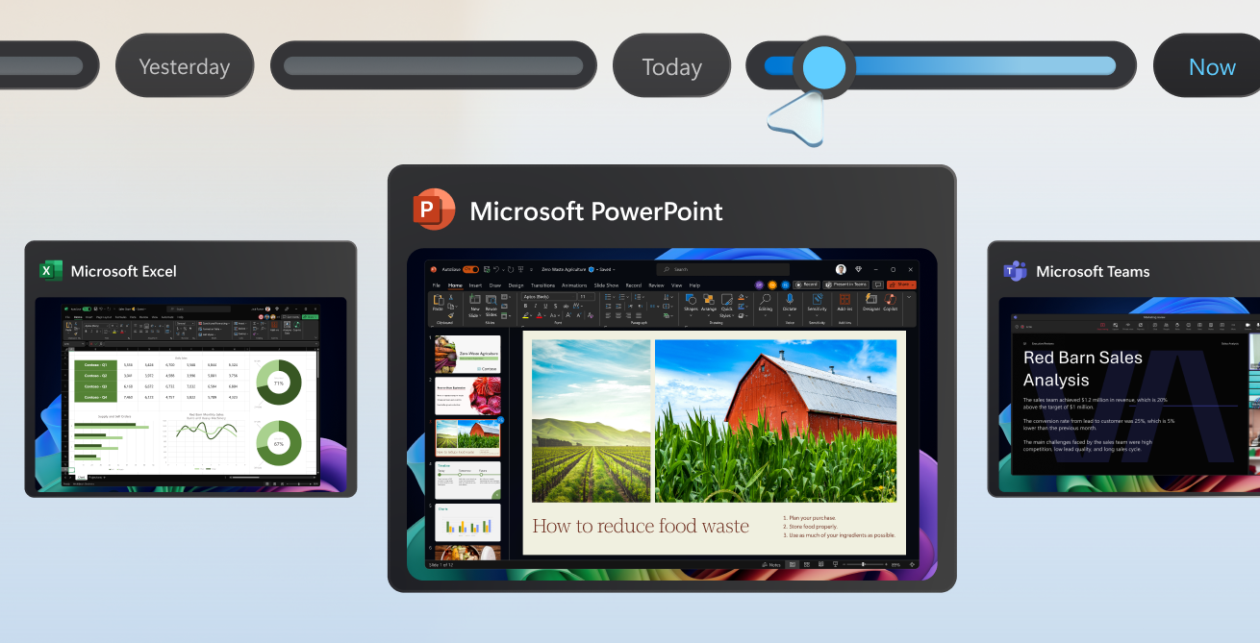
  Windows Recall, originally available to all users of Copilot+ PCs in April 2025, stores screen caps of user activity. (Microsoft Photo)

Microsoft says its Recall app — which captures and stores screen shots every few seconds — is safe. Security researchers keep saying otherwise.

Recall was originally billed as a “photographic memory” to store everything Windows users do on their computers. People could then see some of those screen shots at a later time by searching AI with plain-text queries such as red barn. (See illustration above.)

Select members of Microsoft’s exclusive Windows Insider program have had access to Recall for more than a year. Users of AI-enabled Copilot+ PCs started receiving Recall as an opt-in feature in April 2025, one year ago this month.

But since its debut, experts have repeatedly demonstrated that hackers can access the data Recall stores. This raises questions about whether a tool that records your entire digital life can ever be adequately secured. The situation is creating uncertainty about Microsoft’s plans to make Recall more widely available on all PCs.

Alexander Hagenah, executive director of SIX — a Zürich-based technology company that operates infrastructure for stock exchanges in Switzerland and Spain — described Recall’s security weaknesses in a LinkedIn post in April 2025. He also released an app he called TotalRecall that could “extract all captured windows and images taken by Recall … nothing encrypted, no rocket science needed.”

Advertisement

Joining other researchers, the University of Pennsylvania’s Office of Information Security released a warning on Apr. 14, 2025, about the version of Recall that was then available. The university’s announcement stated that Recall “introduces substantial and unacceptable security, legality, and privacy challenges” [emphasis in the original]. The statement added that administrators of “Windows environments at Penn are strongly urged” to disable Recall.

In response to criticisms such as these, Microsoft — to its credit — pulled back on its plans to roll out Recall to all Windows 11 PCs that met fairly high system requirements (including a neural processing unit and eight logical processors, according to an MS Learn document). Instead, the company announced in a blog update on June 13, 2024, that Recall would become available only to participants in the company’s much smaller Windows Insider program.

In the time since that decision, the fate of Recall has become even murkier. Journalist Zac Bowden wrote in a Windows Central blog post on Jan. 30, 2026, that Microsoft is “pulling back its Windows 11 AI push with a major Copilot and Recall rethink.”

The problem is that it’s tough for software engineers to make data ultra-convenient for end users to access while simultaneously securing it so it’s impervious to hackers.

Advertisement

It’s hard to remember that the company’s original goal was ease of use, now that Microsoft’s focus has changed to making the security of its screen-cap app impenetrable.

Microsoft says Recall blurs images of credit-card numbers, bank passwords, and other personal data — or doesn’t store them at all. But security experts are still not convinced.

After testing the latest version of Recall, Swiss technologist Hagenah recently issued a new proof-of-concept called “Total Recall Reloaded” on a GitHub page. In his comments, Hagenah said any malware running on a user’s PC can copy every Recall screen shot as it passes through in-process memory: “No admin required. Standard user. No kernel exploit.”

Hagenah has not publicly disclosed some security holes, saying he’s reported them to Microsoft and won’t release the technical details until the Redmond company has fixed the problems.

Advertisement

Already, malicious hackers have written code to take advantage of Recall’s screen shots. The malware can access Recall’s own memory to copy screen caps and send them to a faraway server. Hackers no longer need to write such code from scratch. (The procedure is described in a technical overview by cybersecurity writer Kevin Beaumont.)

At this writing, fewer than 10% of Windows 11 PCs can enable and run the current version of Recall. Microsoft representatives responded to my inquiries about plans for the app’s future availability by pointing to a Sept. 27, 2024, security update and an Apr. 25, 2025, blog post.

Source link

Advertisement
Continue Reading

Tech

ASUS Launches Next Gen ZenBook S14, Duo, A-series & VivoBook Lineup In India

Published

on

The Asus VivoBook and ZenBook laptops are quite the hotcakes in the Indian market, simply because they strike the right balance between portability and performance. Keeping up that momentum, the Taiwanese laptop maker has opened pre-orders for its latest premium Zenbook lineup in India, introducing a range of new laptops focused on design, portability, and AI-powered performance. The lineup includes the Zenbook S14, Zenbook DUO, Zenbook A14, and the upcoming Zenbook A16, alongside refreshed Vivobook models. Prices for the ZenBook series start at ₹1,79,990, while the Vivobook lineup begins at ₹98,990. Here’s everything you need to know about them.

What’s New with the ZenBooks & VivoBooks?

Asus Zenbook

ASUS is doubling down on its “Design You Can Feel” philosophy with this launch. One of the key highlights is Ceraluminum, a proprietary material that aims to combine durability with a lightweight, premium finish. The flagship Zenbook S14, for instance, features an ultra-slim profile of around 1.1cm and weighs roughly 1.2kg, making it highly portable. It also gets a 14-inch 3K OLED display and a claimed battery life of up to 27 hours. Under the hood, the ZenBook S14 series packs Ultra Series 3 processors, with the highest tier going to the Ultra 9.

Meanwhile, the newest version of my favorite ZenBook Duo takes things to another level by packing dual 14-inch 3K 144Hz ASUS Lumina Pro OLED touch displays. It’s powered by Intel’s latest Core Ultra 7-series processors and offers 32 hours of claimed battery life. Lastly, there’s the Zenbook A Series (A14 & A16), which targets more casual, yet premium users. It’s made from the same Ceraluminum material and focuses primarily on portability, weighing under 1 kg. On the power side, the ZenBook A series uses the Snapdragon X2 series processors. While this should pay pretty big dividends in the battery life department, we have yet to test the laptops, so stay tuned for a full review.

The next-gen VivoBook classic series will be powered by the updated Intel Core Ultra 5 Series 3 processors, delivering 47 TOPS of NPU performance for all your AI tasks. On the other hand, the Vivobook S14 and S16 will feature sleeker metallic designs and Ultra 7 Series processors with up to 49 TOPS of NPU performance. Battery life for these is rated for 29 hours.

Source link

Advertisement
Continue Reading

Tech

OPPO F33, F33 Pro Launch in India with IP69K Rating, Dimensity 6380 Max and 7,000 mAh Battery

Published

on

OPPO has finally taken the covers off its popular F-series, bringing a strong focus on selfie photography, durability, and long battery life. The lineup includes the OPPO F33 5G and F33 Pro 5G, both of which feature a 50MP ultra-wide front camera, AI-powered editing tools, and a massive 7,000mAh battery, as well as high durability ratings. Here’s what you need to know about them.

Big Focus on Selfies and AI Photography

The highlight of the OPPO F33 series is its 50MP ultra-wide front camera with a 100° field of view, which aims to capture more people in a single frame without distortion. The Pro variant also introduces auto-switching to 0.6x zoom when multiple faces are detected, making group selfies more seamless. OPPO has also added a multicolored front fill light for better low-light selfies, along with features such as autofocus and electronic image stabilization.

On the rear, the phones feature a 50MP main camera paired with a depth sensor for portrait shots. The camera system is backed by a wide range of AI tools, including object removal, scene enhancement, portrait lighting, and more. We are currently putting all these claims to the test, so keep an eye on our review dropping pretty soon.

New Design and Performance

OPPO F33 series

The OPPO F33 Pro 5G introduces a redesigned camera module called the Starry Sea Lens, giving the phone a more premium look. The devices also feature a one-piece unibody design with a mix of glossy and matte finishes. On the front, both models come with a 6.57-inch AMOLED display with a 120Hz refresh rate and high brightness levels.

Under the hood, both devices are powered by the MediaTek Dimensity 6360 MAX processor, paired with up to 12GB RAM. As always, durability is another highlight. The OPPO F33 series comes with IP69K, IP68, and IP66 ratings, offering protection against dust, water immersion, and even high-pressure water jets. The phones also feature a 360-degree armor body with aerospace-grade materials and shock-absorbing internals, along with military-grade certifications for harsh conditions

Advertisement

The F33 series runs on ColorOS 16, bringing AI features like document scanning, writing assistance, and system-wide optimizations. It also integrates Google Gemini for smart assistance across apps. Connectivity is another area OPPO is focusing on, with the F33 series being positioned as India’s first Jio-certified 5G++ smartphone. Battery life is handled by a 7,000mAh unit with 80W fast charging, which OPPO claims can fully charge the phone in around 69 minutes.

Price and Availability

F33 price

The OPPO F33 series will be available via Flipkart, Amazon, OPPO’s online store, and offline retail outlets.

  1. OPPO F33 Pro 5G
    • 8GB + 128GB: ₹37,999
    • 8GB + 256GB: ₹40,999
  2. OPPO F33 5G
    • 6GB + 128GB: ₹31,999
    • 8GB + 128GB: ₹34,999
    • 8GB + 256GB: ₹37,999

The F33 Pro goes on sale from April 23, while the standard F33 will be available starting April 26.

Source link

Continue Reading

Trending

Copyright © 2025