


Connect with us
DAPA Banner
DAPA Coin
DAPA
COIN PAYMENT ASSET
PRIVACY · BLOCKDAG · HOMOMORPHIC ENCRYPTION · RUST
ElGamal Encrypted MINE DAPA
🚫 GENESIS SOLD OUT
DAPAPAY COMING

Tech

TechCrunch Mobility: A new robotaxi scorecard shows China’s dominance

Published

on

Welcome back to TechCrunch Mobility — your central hub for news and insights on the future of transportation. To get this in your inbox, sign up here for free — just click TechCrunch Mobility!

Today is Juneteenth, a U.S. federal holiday marking the end of slavery in the United States. 

About 10 years ago, there was a lot of chatter about who was winning the self-driving car race. One of the problems with that debate — besides assuming there would be just one winner — was that no one had a reliable way to measure it. This was an early era filled with a lot of demos and capital, but little substance — at least what the public, and folks like myself, had access to. 

Advisory and research startup Autnmy AI has developed a generative AI platform to create a benchmarking system that evaluates and ranks autonomous vehicle companies in an effort to answer that question in real time. And this week, the startup released its Road to Autonomy Index, which searches relevant global public databases, including federal and state reports, SEC documents, public exchanges, and other data. The system weighs the company’s operations, scale, revenue, commercial partnerships, manufacturing, and safety record based on that data and provides an update every 12 hours. There are four indices that rank robotaxis, autonomous driving licensing companies, autonomous trucks, and delivery bots.

Advertisement

One important note, per Autnmy AI co-founder Rob Grant, the AI platform doesn’t just scrape information off the internet. “We agreed early on, we don’t scrape information,” he said. “If it’s publicly available or if it’s available under a Creative Commons license, we will use that information. We do have some license data that we pay folks for, and under that agreement too.”

The indices take a global approach, which produces some interesting results. One of the initial takeaways that made an impression on Grant was China’s stronger ranking across multiple categories.

As of Friday, the robotaxi leader was not Waymo. It was China’s Baidu Apollo Go program — just barely. Waymo was in the secondary position, followed by Chinese companies Pony.ai and WeRide. Tesla was in the fifth position. 

A little bird

blinky cat bird green
Image Credits:Bryce Durbin

I was reminded recently by a little bird to keep an eye on the Texas automated vehicle tracker tool that launched in May. And I am glad they did; looks like Tesla, Waymo, and Zoox are building up their respective fleets in the state. Reminder: This doesn’t mean every one of these are being used commercially. Zoox, for instance, cannot operate commercially until it receives an exemption from the federal government. It currently has the ability to give rides in its custom-built robotaxi but cannot charge customers.

As of May 28, Waymo had 577 autonomous vehicles registered in the state. It now has 620 of them, about a 7.5% increase in less than a month. Tesla now has 69 registered autonomous vehicles, a 64% increase from the 42 it had on May 28. Zoox, which had 35 registered autonomous vehicles last month, now has 43.

Advertisement

Avride, Nuro, and Volkswagen subsidiary MOIA are holding steady at 317, 47, and 12, respectively. 

Got a tip for us? Email Kirsten Korosec at kirsten.korosec@techcrunch.com or my Signal at kkorosec.07, or email Sean O’Kane at sean.okane@techcrunch.com.

Deals!

money the station
Image Credits:Bryce Durbin

Cargofy, a logistics company that uses AI to automate freight operations, raised $11 million in a Series A funding round led by u.ventures, Toloka, and Movens Capital. Des Traynor, co-founder of Intercom, and several angel investors, also participated. 

Carro, the Singapore-based online car marketplace, acquired Australian used-car platform CarPlace, Reuters reported. Terms were not disclosed.

Gatik, a startup that has developed self-driving trucks for short hauls, announced a multi-year partnership with PepsiCo. The companies wouldn’t share the value of this deal, but it does signal PepsiCo’s commitment to Gatik, which is already operating driverless trucks for the food and beverage giant across Arkansas, Arizona, and Texas. 

Advertisement

QuantumScape announced a joint research agreement with Honda R&D Co. to accelerate solid-state battery development and associated manufacturing processes.

Automaker Stellantis, self-driving startup Wayve, and ride-hailing giant Uber struck a deal to jointly develop and deploy driverless robotaxis.

XDOF, a startup focused on robot training data, raised $70 million from Thrive Capital, Spark Capital, a16z, Lux, and WndrCo.

Notable reads and other tidbits

Image Credits:Bryce Durbin

A video posted on Reddit showed a driver running a stop sign and hitting an autonomous vehicle in Dallas. TechCrunch confirmed it was an Avride robotaxi, which was hailed via the Uber app. An Avride spokesperson said no injuries were reported and that data from the incident is being reviewed “to continuously refine our technology and processes, as part of our standard procedures.” When asked about the reaction of the self-driving system and the human safety operator who was behind the wheel, Avride said, “Our safety review is currently ongoing, so we cannot provide more precise details at this time.”

Tesla owners in China have discovered a workaround to the vehicle’s distracted driving monitor: tiny plastic heads.  

Advertisement

Over on X, folks spotted a Tesla with an authorized limousine permit sticker for San Francisco County and the San Francisco International Airport. A spokesperson for SFO told TechCrunch that “Tesla has been issued a limousine permit to operate at SFO. This is for traditional limousine operations, meaning the vehicles have a human driver. Tesla has not been issued a permit for any autonomous operations at SFO.”

Mobileye, which has pitched itself as an autonomous vehicle technology supplier, is now making moves to become a robotaxi operator. The company plans to launch a robotaxi service in an unnamed U.S. city in 2027. History lesson: Mobileye founder and CEO Amnon Shashua told me back in 2020 that to crack the holy grail of passenger car autonomy, you needed to pursue robotaxis first.  

Uber plans to launch a premium robotaxi service in Houston by mid-2027, making it the second U.S. market under its partnership with EV maker Lucid and autonomous vehicle startup Nuro.

Waymo recalled its fleet of nearly 4,000 robotaxis to stop them from driving into highway construction zones. Waymo took its robotaxis off the freeways weeks ago and has identified at least 13 instances of its robotaxis driving into highway sections that were closed for construction. Here is a detail worth noting: The software fix is “under development,” which means this issue is not resolved.

Advertisement

When you purchase through links in our articles, we may earn a small commission. This doesn’t affect our editorial independence.

Source link

Continue Reading
Click to comment

You must be logged in to post a comment Login

Leave a Reply

Tech

Cops Keep Getting Arrested for Using Flock’s Cameras to Stalk People

Published

on

404 Media remembers how a Florida police office looked up his ex-girlfriend’s license plate in the Flock automated license plate reader system at least 69 times in 2024 — even searching for her mom’s license plate at least 24 times. The police office was charged with stalking and hacking-related offenses, serving one day in prison with five years of probation — but his case “was not a one-off.” [Alternate link via Bruce Schneier]

Local news reports from around the country repeatedly detail police abusing the Flock surveillance system in order to stalk their partners or ex-partners. The contours of each story are much the same, with the police officer in question using their access to the system to repeatedly track a specific person over the course of weeks or months. The cases highlight the fact that Flock can be used to track the whereabouts of individual people, that police do not get a warrant in order to use the system, and that, if they have access to the system, they have the technical ability to look up any license plate they want for any reason they want. An April study by the civil rights group Institute for Justice found that at least 18 police officers have been caught around the country using Flock to stalk a romantic interest in the last few years; another database, called the ALPR Abuse Library, has documented 20 specific cases of “stalking/targeting” around the country.

The known cases of police stalking are almost certainly a vast underreporting of the overall abuse, because they largely include only cases in which the behavior was so egregious that it led to police officers being fired, arrested, or both. Flock told 404 Media that it is “aware of 15 incidents of abuse, each surfaced because of the transparency and accountability features deliberately built into our platform…. There are also 140,000 monthly active users of Flock, so the relatively rare instances of abuse, while obviously wrong and awful, are exactly that — rare,” a Flock spokesperson told 404 Media. [One in 10,000.] “Humans are fallible; unlike most tools society provide law enforcement, Flock ensures that in the instances when our technology is misused, the evidence used to hold responsible parties accountable, is right there in our system. We also encourage all our customers to have a usage policy, regular training, and to implement our Audit Assistance tool, which proactively flags unintended use….”

But it is also the case that Flock has strenuously fought against lawsuits and potential regulations that are seeking to require police to get a warrant to use the system. And many cases of abuse have not been detected by police departments themselves but by those private citizens, journalists, and stalking victims who have found patterns of abuse in public records files they have obtained from their local police departments. In most cases of Flock-related stalking reviewed by 404 Media, the abuse occurred over the course of months or years, and the victims were subjected to dozens or hundreds of lookups. Other abuse cases have been discovered using the website HaveIBeenFlocked.com, a website that compiles Flock searches released via public records requests and turns them into a searchable database. Flock has repeatedly tried to get that website taken down, as we have previously reported.

Advertisement

Source link

Continue Reading

Tech

The social media ban might be coming, but you still need parental controls, here are my top tips

Published

on

Whether you’re for it, against it or indifferent to it, the social media ban for under-16-year-olds is due to come into force next year.

Regardless of how that might work, the ban is not a substitute for parental controls on devices and your home network. With two kids of my own, here’s what I’ve learned.

Talk to your kids

Parental controls are there as a safeguard to protect kids from the harms that the internet has to offer. As kids get older, the number of restrictions you have will reduce, but you’ll still most likely want something in place.

All restrictions should be clearly stated and you should talk to your kids about why restrictions are in place and what you expect from them when they’re using devices. Then, you can put restrictions in place.

Advertisement

Use the provided parental controls

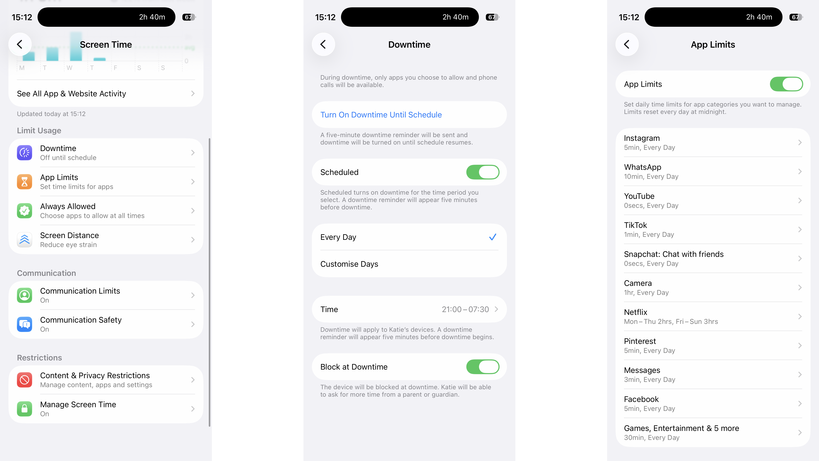
Whether or not your kids have Apple or Android phones, there are free parental controls available for both platforms: Screen Time for iOS and Family Link for Android.

Advertisement

These both need to be tied to a child’s account, but once installed, they both give a similar set of controls: you can make kids request apps before installing them, you can set app time limits, control the contacts they can add, and you can put phones into downtime to prevent use (either manually or scheduled).

Screen Time in iOSScreen Time in iOS
Image Credit (Trusted Reviews)

Family Link for Android phones is available on iOS and Android, but for Screen Time you need another Apple device.

If your kids have Amazon tablets or Kindles, then parental controls are available there, too, controllable through the parents’ dashboard online. Again, you get a similar level of control, including time limits.

Advertisement

The one thing that’s annoying about Amazon’s parental controls are that they stop a child joining a different Wi-Fi network, and you have to do this with a parent’s profile on the device itself. On the one hand, this is a safety feature, but if a child goes off to stay with grandparents, for example, they can’t connect to Wi-Fi without you being present.

Windows has its own controls, with Microsoft Family Safety. MacOS devices can use Screen Time, just like the phones.

Advertisement

Game consoles have their own set of controls that you need to set up individually.

Advertisement

Most social networks have parental controls of varying quality, but require that any account your child sets up be monitored by you as a parent using the provided controls.

My advice is to always set every device up with the controls available, but to try and restrict the number of manufacturers you have.

For example, if your child has an iPhone and an iPad, the same settings and time limits apply to both; if they have an Android tablet, a Windows PC, and an iPhone, you have to set limits and controls on each.

Invest in a router with proper parental controls

It’s essential, in my view, to have parental controls running on your home network. I use Eero at home and have Eero Plus. With this, I can create profiles for each child and associate their devices.

Advertisement

Each profile can have its own scheduled downtime, turning off at bedtime, for example, and you can filter the internet in an appropriate way for different-aged children. Eero also allows me to block specific services across all devices, say turning off Discord, YouTube or Snapchat.

Advertisement

Eero Parental controlsEero Parental controls

But be careful. To identify a device, Eero (and other routers) use a device’s MAC address. Phones and tablets can create a private MAC address, which can change frequently. It’s for privacy to stop public hotspots spying, but when a MAC address changes, your router thinks it’s a new device.

Disable this setting on your child’s devices (turning it off or setting it to Fixed, rather than Rotating) and, if your router supports it, turn on notifications for new devices. That way, you’ll get a pop-up on your phone if the router spots a new device, which covers MAC address changes and any children bringing other unlocked devices home.

Mac address controls in iOSMac address controls in iOS

Also be aware of devices with more than one network connection. A PC with Wi-Fi and Ethernet will appear as two different devices, and you need to add both to a profile for full protection.

Home network controls should not be used in place of on-device controls, but alongside them. When your child leaves home with a device, such as an iPhone, they’re no longer protected or restricted by the home network. Make sure mobile devices are set up with restrictions similar to those on your home network, so your kids remain protected when they’re using a mobile connection or on another network.

Advertisement

Advertisement

Protect your passwords and PINs

Most parental controls will require a PIN or password when you want to make changes, so don’t use the same ones that you’d use on your own phone, as your kids probably know what this is. I use random PINs and passwords, and save them in a secure note on my phone.

Be aware of different access routes

Just because a phone’s locked down or restricted in a certain way, it doesn’t mean that your kids can’t get around the controls you have. Take Snapchat, for example: kids can simply log in on someone else’s phone or via a web browser, bypassing time limits that you might have set.

If a service that your child has access to has the option of two-factor authentication (where you need a code to login), set this up, but add the code to your phone, such as through the Google Authenticator app. Sign out of all sessions on the service on your child’s phone, and then sign them back in. They’ll need the authentication code to do so, so it’s fine to give out that one-time code.

Advertisement

However, now if they try and log in via another phone or the web, they’ll need a code that they can’t get, so you can ensure that they’re safe. This doesn’t stop them from creating new accounts on many services.

Advertisement

It’s also worth blocking web access to services on their phone and your home network, just for safety. For example, if you have time limits on WhatsApp, you’ll want to block WhatsApp.com, as the web version allows a child to pair their account and switch to a web browser when they run out of time.

WhatsApp web imageWhatsApp web image
Image Credit (Trusted Reviews)

Blocking social media sites’ web addresses prevents kids from bypassing time controls in apps or creating new accounts to circumvent restrictions.

Advertisement

Source link

Continue Reading

Tech

Sunday Reboot: The right marketing, the wrong changes

Published

on

In this week’s “Sunday Reboot,” Beats subverts the World Cup, and GymKit and Malcolm’s gym are updated in opposite ways.

Young man wearing large black headphones with a small white strip on the side, looking over his shoulder toward the camera, dressed in a dark hoodie against a plain background
Jamal Musiala with some taped Beats – Image Credit: Instagram/Beats/Jamal Musiala

Sunday Reboot is a weekly column covering some of the lighter stories within the Apple reality distortion field from the past seven days. All to get the next week underway with a good first step.
This week, current Apple CEO Tim Cook warned of price increases, Brazil adopted EU-style App Store rules, and supply chain assembler Tata is accused of contaminating the water supply in India. Also, leakers are worried we could have another colorgate issue this fall.
Continue Reading on AppleInsider | Discuss on our Forums

Source link

Continue Reading

Tech

Plastic waste could soon fuel aircraft as researchers develop cheaper jet fuel from discarded materials using a new reactor system

Published

on


  • Plastic waste can now be converted directly into usable jet fuel
  • A tandem reactor system breaks plastic down at 460 degrees Celsius
  • Ruthenium catalyst sites delivered far better selectivity than commercial alternatives

Researchers at Nanjing Forestry University and Tsinghua University have demonstrated a new method for converting plastic waste directly into usable jet fuel, with estimated production costs ranging from $1.0 to $1.8 per kilogram.

The work comes as airlines, governments, and fuel producers continue searching for alternatives that could reduce dependence on conventional fossil-derived jet fuel.

Source link

Continue Reading

Tech

Ubisoft co-founder Claude Guillemot dies in plane crash

Published

on

Claude Guillemot, co-founder of French video game company Ubisoft, died Friday at the age of 69.

According to French media (via Bloomberg), Guillemot died in a plane crash in the French resort town of La Baule. He was one of two people aboard the plane, both of whom died.

Guillemot founded Ubisoft with his four brothers in 1986. Since then, the company has published the Assassin’s Creed, Far Cry, Prince of Persia, and Tom Clancy video game franchises, as well as many other titles. The family retains control of Ubisoft, and Guillemot’s brother Yves is still CEO.

Guillemot was also chairman of Guillemot Corp., which makes gaming and audio accessories.

Advertisement

“Ubisoft was deeply saddened to learn of the death of Claude Guillemot, co-founder of the group and chairman of Guillemot Corp., in an accident,” Ubisoft said in a statement. “Our thoughts are with his family and loved ones during this difficult time. No further statements will be made at this time.””

Source link

Continue Reading

Tech

Doom Composer Bobby Prince Has Died

Published

on

Prince also worked on Wolfenstein and Duke Nukem games.

Video game composer and sound designer Bobby Prince has died. An obituary states that Prince died on June 16 at the age of 81 following an illness. Developer id software shared the news of Prince’s passing.

Prince was perhaps best known for his pioneering work on the Doom series. The Library of Congress inducted his soundtrack for the original game into the National Recording Registry just last month.

Advertisement

“Despite the limitations of the 1993-era sound card drivers, Prince composed the perfect riff-shredding accompaniment for the game’s demon-slaying journey to hell and back,” the Library of Congress stated. “Taking advantage of his knowledge of MIDI, Prince even worked to ensure that the sound effects he created could cut through the music by assigning them to different MIDI frequencies.”

Prince also worked on games such as Wolfenstein 3D, Rise of the Triad and Duke Nukem 3D. In 2006, the Game Audio Network Guild honored Prince with a lifetime achievement award.

“Everyone at Romero Games is deeply saddened to learn of the passing of Bobby Prince,” Doom co-designer and id Software co-founder John Romero wrote on X. “He left an incredible mark on games and on my life.”

Advertisement

Source link

Advertisement
Continue Reading

Tech

If You’re Searching for a New Skillet, Consider Stainless Steel

Published

on

If you’ll excuse the pun, skillets seem to always be a hot topic.

More than in other sections of cookery, there is a continual quest to find the best one, or at least the best one you can afford. I’ve seen cycles of fetishization come and go for copper, cast-iron, and carbon steel.

At the Mall of New Hampshire in the 1980s, I remember watching a miraculous cooking-store demonstration of omelettes effortlessly sliding out of a Teflon pan. Then, only a few years ago, the industry pretty much dropped the whole Teflon category like a hot potato due to the pans’ propensity to give off harmful fumes if they get too hot. Less durable ceramic immediately filled the void, and we’re already realizing how quickly it can lose its nonstick magic.

All this time, stainless-steel pans have been waiting in the wings. They are durable, and lighter and less fussy than cast iron and carbon steel. They’re not nonstick, but that’s often fixed with a pat of butter. They sear well, and with a bit of TLC, they’re built for a lifetime of hard work.

Advertisement

All-Clad has been one of the great brands in stainless for years, but I wondered if other slightly more expensive skillets were worth a look, particularly as some are new to the market and others have been flying under the radar. Along with a 10-inch All-Clad, I called in similar-sized pans from Hestan, Viking, and Heritage Steel. Testing all these sounded like fun at first, but things got weird and stayed weird for a while, and only with a bunch of hands-on data gathering and time at the stove did I understand which pans I could recommend.

Pans Labyrinth

A smart and easy cheat for someone like me is to use All-Clad’s 10-inch D3 Fry Pan as a baseline. (“Fry pan” and “skillet” are used interchangeably in this category.) The D3 has been an America’s Test Kitchen and Wirecutter darling for years, with advocates seeking out traits like uniform heating across its surface, a comfortable handle, and cladding (layers of different metals). It’s $170 with a lid and $150 without, which is a good chunk of change, but it feels like a fair price for buy-it-for-life durability.

I own and love one of All-Clad’s 4-quart D5 Essential Pans, which is like a high-sided skillet, and it has a perfectly flat cooking surface. But the cooking surface on the D3 skillet All-Clad sent to me for this story was a bit domed–high in the center and low around the outside—not horribly so, but surprising to me, and among the dozen or so pans I called in, it was among the furthest out of whack. I also noticed that the rivets that hold the handle to the pan weren’t fully squished on there. It felt fine and didn’t wobble, but an All-Clad representative confirmed this wasn’t right. They sent another pan, and the rivets were as they should be on that one, but the bottom was pretty much the same. I learned that this amount of doming is within All-Clad’s tolerance range, but not within mine. What can I say? I like flat pans, I thought, looking wistfully at my perfect D5.

I had a similar level of trouble with another pan I had high hopes for. The new 10-inch Viking Pure Glide Pro, which I had seen at my favorite trade show, has a textured titanium layer for the cooking surface above an aluminum core and stainless-steel bottom layer. Impressively, this combination of materials created a capable nonstick competitor that I’d be a lot more excited about if it was part of a better, sturdier pan. The Viking had some temperature management issues that I’ll get to in a moment, and it either warped or arrived warped to the point that heating oil would form a moat around the center of the pan. If Viking fixes this, the Pure Glide Pro has the potential to be a hell of a pan, but it’s not there yet.

Advertisement

Source link

Continue Reading

Tech

Podcast: LOEWE TVs & Headphones at AXPONA 2026

Published

on

Recorded from the show floor at AXPONA 2026, this episode features Kendall Costello, Sales Operation Analyst at Loewe, and Amir Hejazi, Senior Engineer at Loewe. Topics covered include details about Loewe’s latest Stellar TVs and Leo headphone lineup, along with their return to the U.S. market. The conversation focuses on design priorities, key features, and how Loewe is positioning its products in a competitive premium market, with insight into how engineering and product strategy come together across both categories.

Sponsors: Thank you SVS for sponsoring this episode, along with Audeze for supplying all guests LCD-S20 Headphones, and Loewe and T10 Bespoke for sharing lounge space at AXPONA 2026.

This episode was recorded on April 12, 2026 (the third day of AXPONA 2026).

Where to listen:

On the Panel:

  • Kendall Costello, LOEWE Sales Support Manager
  • Amir Hejazi, LOEWE Sr. Engineer
  • Chris Boylan, eCoustics Editor-at-Large
  • Brian Mitchell, eCoustics Founder & CEO (Host)

AXPONA 2026 Podcasts:

Credits:

Advertisement. Scroll to continue reading.
Advertisement

Source link

Continue Reading

Tech

BMPS 2026 Grand Finals Rankings After Day 3: GodLike Qualify For EWC in Paris

Published

on

The BMPS Grand Finals have just concluded, and what an action-packed three days they were. We saw the rise of new titans like Divine Gaming, who, up until today, were the favorites to win the title. Sadly, veteran GodLike had other plans, who just had a stellar day in every single match. Another big surprise was the return of OG, who also qualified for the EWC in Paris by defeating SouL in the overall team standings. Here’s what the final BMPS rankings look like.

BMPS Grand Finals Rankings After Day 3

Rank Team WWCD Finish Points Position Points Total Points
1 GODL 2 104 58 162
2 DIVINE 2 96 56 152
3 VS 2 79 54 133
4 GDR 1 93 35 128
5 TAG 2 95 28 123
6 iQOOxOG 1 78 41 119
7 iQOOxTT 1 78 38 116
8 VASISTA 2 76 37 113
9 iQOOORGE 2 68 43 111
10 NBE 1 73 34 107
11 iQOO8BIT 0 73 30 103
12 GENS 0 70 29 99
13 iQOOSOUL 1 66 30 96
14 7GODS 1 64 31 95
15 iQOORNTX 0 67 19 86
16 MYTH 0 50 13 63

Source link

Continue Reading

Tech

Apple’s era of wearable intelligence begins in 2027 and cameras will be a big part of it

Published

on

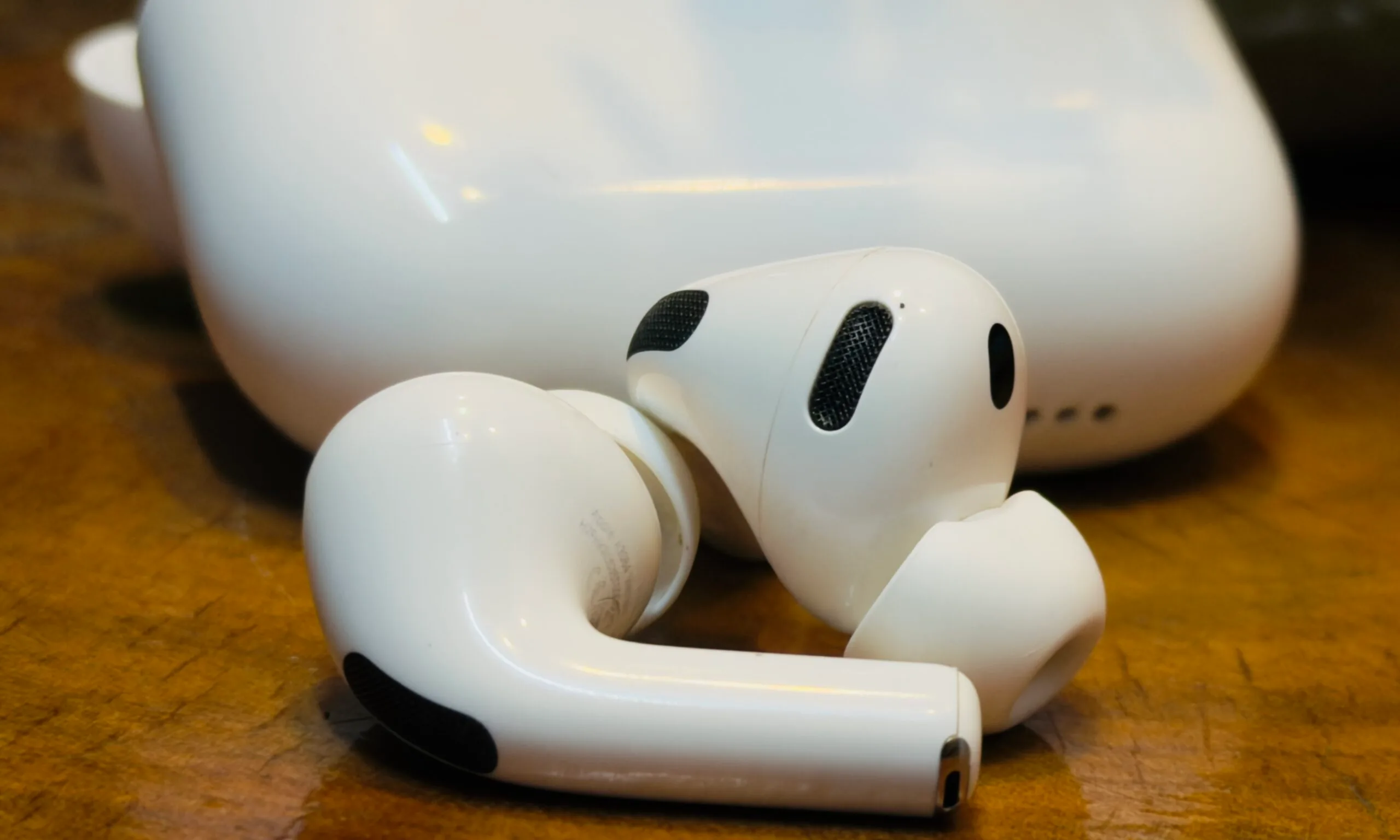
Apple’s wearable future is starting to come into focus, and cameras appear to be at its center. Bloomberg’s Mark Gurman reports that camera-equipped AirPods and Apple’s first smart glasses are currently on the roadmap for 2027. While they may look like ordinary accessories on the surface, both products could play a crucial role in helping Apple Intelligence understand the world around its users in real time.

Your AirPods might start paying attention

When most people think of AirPods, they think of music, podcasts, and phone calls. Cameras aren’t exactly high on the wishlist. But Apple has a different vision. The cameras wouldn’t be there for recording videos. Instead, they’d help gather information about the world around you and feed that data into Siri and Apple’s AI systems.

Imagine asking Siri about a building you’re looking at, identifying an object in front of you, or getting contextual information without ever pulling out your phone. So, your AirPods could become another set of eyes for Apple’s AI; that’s a dramatically different role from what earbuds do today.

Glasses to see, not just display

Then there’s Apple’s smart glasses, arguably one of the company’s most anticipated future products. Unlike the bulky Vision Pro headset, smart glasses could bring AI into a form factor people might actually wear all day. While details remain scarce, cameras are expected to play a crucial role, helping the device understand its surroundings and deliver real-time, useful information.

What’s particularly interesting is how these products fit into Apple’s broader AI strategy. Most companies are trying to make AI more useful through apps and chatbots. Apple appears to be exploring something more ambient — AI that observes the world around you and responds when needed. Whether consumers are ready for camera-equipped wearables is another question entirely. But if Gurman’s report is accurate, 2027 could be remembered as the year Apple stopped thinking about AI as software and started turning it into something you wear.

Advertisement

Source link

Continue Reading

Trending

Copyright © 2025