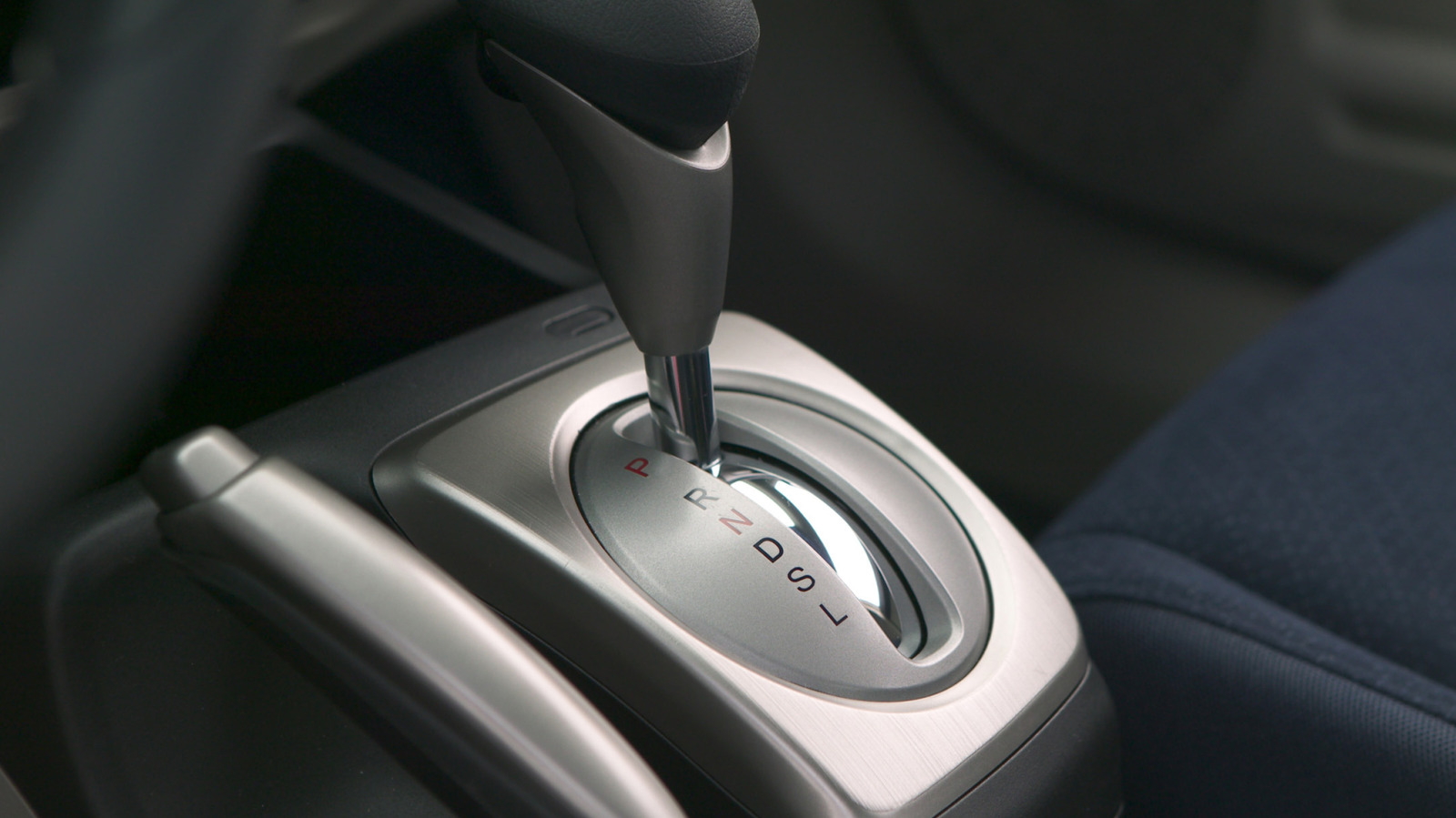
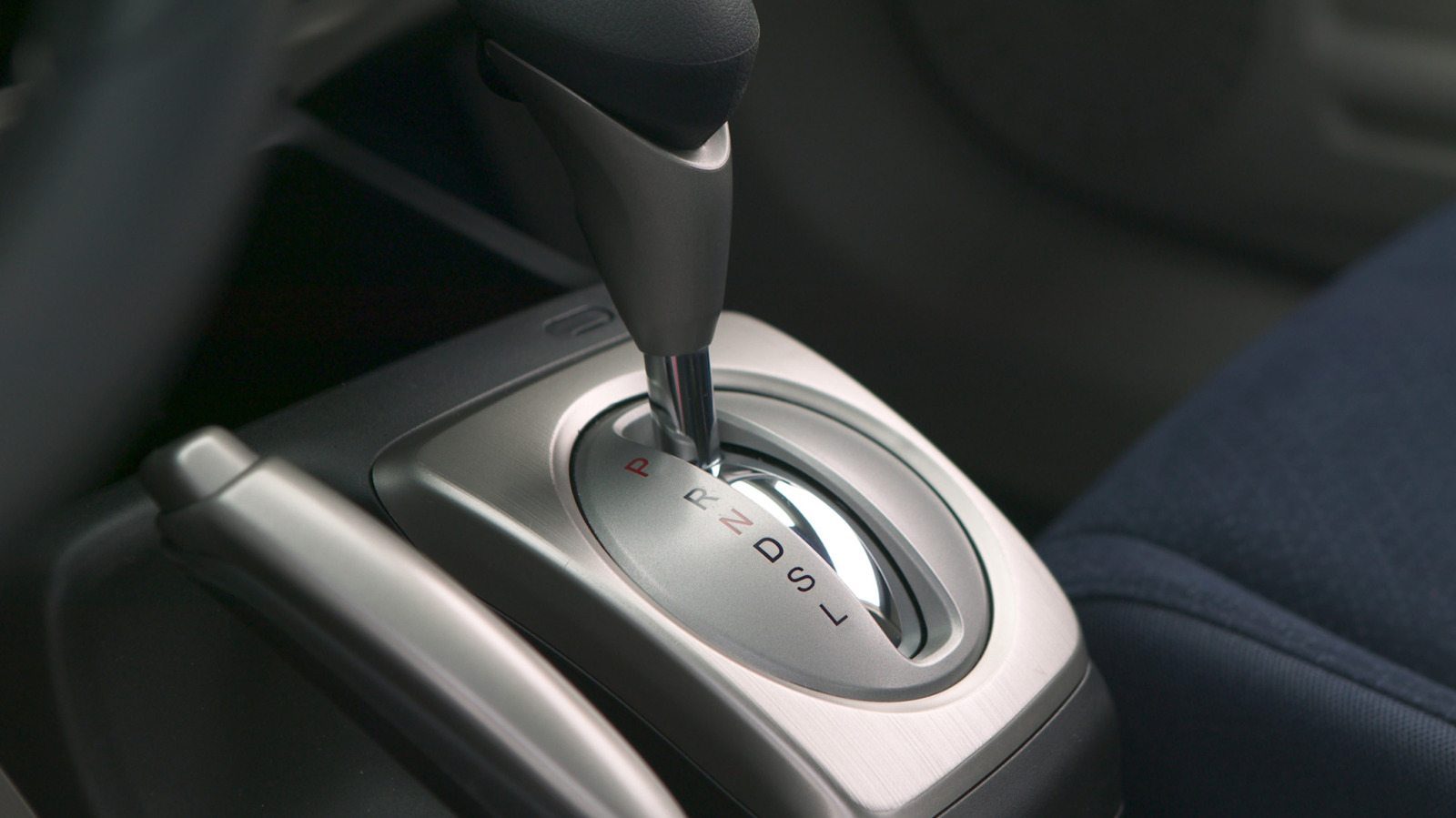
Chances are, you’ve looked at the gear selector in your car and realized that you know what P, R, N, and D stand for, but ‘L’ may not be familiar. You aren’t alone and there’s a good chance you’ve never used it, or at best you’ve shifted into “L” by accident, before throwing the selector back into drive.
Really, “L” refers to low gear. It allows your transmission to utilize more torque towards the lower end of the gearing. In practice, it often means restricting the transmission to stay in first gear (although some manufacturers use a different gear).
Advertisement
In the days of eight, nine, or even 10-speed automatic transmissions, “L” is still sometimes used, but in some cases, it has been replaced with a “+/-” or “S,” or “M,” indicating that you can manually select the gear you want. On sportier cars, the gear selection is done by paddle shifters behind the steering wheel.
Advertisement
When you need lower gears
Going back to the simple “L,” when is going into low gear needed? CarFax notes that going up a hill and going down a hill are times when shifting into “L” might help you out. The lower gearing helps your car attain and maintain enough torque to climb a steep hill. Additionally, while descending, it allows engine braking to take over, reducing wear on your brakes. It can also give you more torque for towing.
Modern automatic transmission are complex bits of machinery that give drivers a lot of flexibility when behind the wheel. Advanced, bleeding edge transmissions in new hybrids and mild hybrids even utilize the instant torque from an electric motor built into the transmission, like in the now-discontinued Jeep Wrangler 4xe giving the low gear more grunt. The electric motors in plug-in hybrids and electric cars do away with the need for selectable lower gear entirely. The motor decides for you.
Still, for people who like and drive older cars, there’s something nostalgic and even a little heartwarming about seeing “PRNDL” on a gear selector. There’s no mechanical wizardry involved.
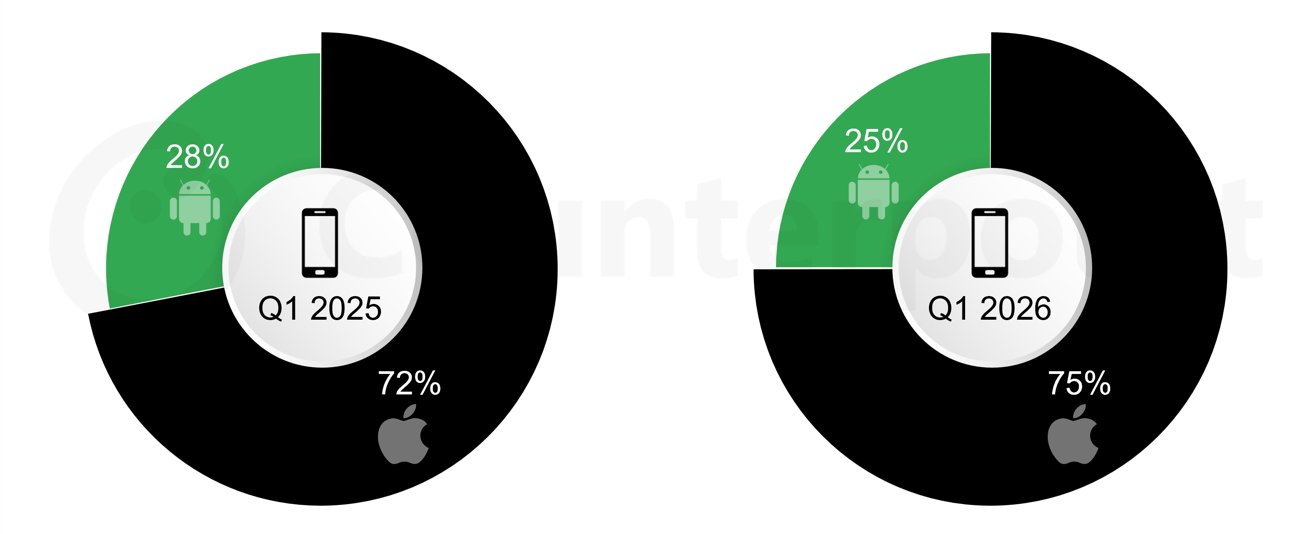
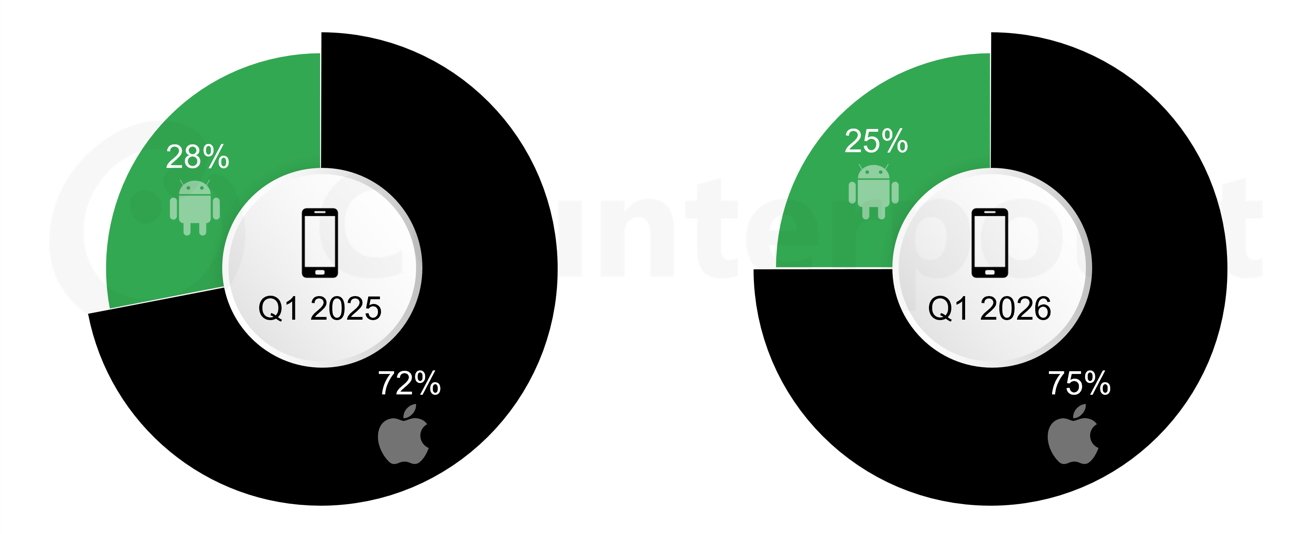
Apple grew iPhone sales in the United States during the first quarter of 2026 even as the broader smartphone market declined, fueled both by strong iPhone 17 demand and Samsung’s delayed Galaxy S26 launch.
US iPhone sales volume rose 1.3% year over year during Q1 2026, according to Counterpoint’s US Monthly Smartphone Channel Share Tracker. The US smartphone market declined 5.7% during the same period, while Android smartphone sales fell 14.4% year over year.
Apple gained share across AT&T, T-Mobile, and Verizon during the quarter. Verizon showed the largest shift, with Apple reaching a 77% share of smartphone sales in Q1 2026.
Supply constraints during the 2025 holiday quarter continued limiting iPhone availability into early 2026, extending demand for the iPhone lineup through much of the first calendar quarter. Counterpoint said the base iPhone 17 model also saw stronger demand than expected during Q1 2026.
Advertisement
Apple increased its share of smartphone sales across the three largest US wireless carriers during Q1 2026. Image credit: Counterpoint Research
Samsung delayed the Galaxy S26 launch until mid-March, creating a wider opening in the premium smartphone market during Q1 2026. The US premium smartphone segment remains heavily concentrated around Apple, Samsung, Google, and Motorola.
Launch timing matters more in that kind of market because flagship devices drive a large share of upgrade activity.
Apple’s pricing and carrier strategy continue strengthening its position
Carrier relationships remain one of Apple’s biggest advantages in the US smartphone market. Verizon showed the largest shift during Q1 2026, with Apple reaching a 77% share of smartphone sales.
Apple’s advantage extended beyond Samsung’s delayed Galaxy S26 launch. The company kept iPhone 17e pricing relatively stable while increasing entry-level storage to 256GB.
Rising memory costs pushed competing smartphone makers toward higher prices during the same period. Carrier incentives, financing offers, and ecosystem retention increasingly shape purchasing decisions alongside hardware specifications.
Advertisement
Apple also strengthened its promotional position across devices priced above $600 in US postpaid channels during the quarter, outperforming Samsung in Counterpoint’s Smartphone Promotional Index. Apple’s pricing and carrier strategy place greater emphasis on keeping users inside the iOS ecosystem and expanding long-term services revenue.
The report said that strategy may limit hardware margin growth in some segments. Smaller Android vendors may struggle to match the company’s pricing consistency, carrier support, and marketing scale as component costs continue rising.
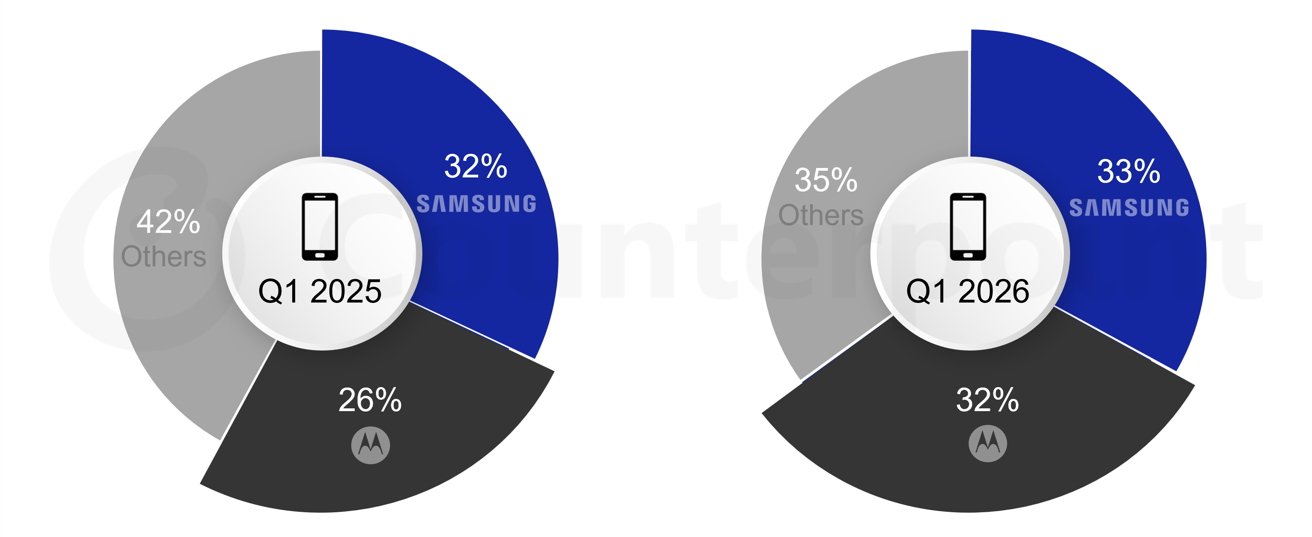
Samsung and Motorola gained share in prepaid and national retail smartphone sales during Q1 2026. Image credit: Counterpoint Research
Prepaid and low-cost smartphone segments continued weakening across the US market during Q1 2026. Higher gas prices and debt payments offset the impact of larger tax refunds, leaving lower-income consumers under continued economic pressure during tax season.
Sales weakness was particularly severe below the $100 smartphone tier, where rising memory costs and shrinking margins are putting pressure on smaller Android brands. Samsung and Motorola gained share across prepaid channels such as Cricket and Metro.
Brands including TCL, HMD, Maxwest, Orbic, and Blu lost share, delayed refresh cycles, or struggled to maintain marketing support during the quarter. Those shifts point toward a more consolidated US smartphone market as smaller brands lose ground.
Advertisement
The US smartphone market is becoming more consolidated, with Apple strengthening its position in premium devices while Samsung and Motorola absorb more of the shrinking low-cost segment.
There is a version of this story that writes itself.
Consider how AI tools have shaken up the creative process, streamlining repetitive and mundane tasks, accelerating production timelines, and empowering more people than ever before to visualize their ideas (if imprecisely).
These are fascinating developments. But the more interesting conversation is what these trends in creative operations now signal for leaders navigating AI, brand strategy and enterprise decisions.
Advertisement
Latest Videos From
Phil Garnham
Executive Creative Director at Monotype.
Advertisement
The human-AI collaboration in typography
Right now, AI is doing two things to the creative industry. It is compressing the time it takes to produce work, and in doing so, it is exposing which parts of that work require human expertise.
In that sense, AI is an iterator, not a replacement for creative judgment. It is generating options, compressing exploratory cycles, and surfacing new formal directions faster than any team could manually. But the key decisions – what works, what fits the brand, what communicates a specific intent to a specific audience, which cultural context it fits – contain nuances where human intuition remains indispensable.
In type design and technology specifically, seemingly small decisions matter enormously. Proportion, rhythm, contrast, spacing and personality are not considerations one can hand off to an AI model and expect production-ready results. But AI can and is helping teams make faster and more informed decisions by compressing exploratory cycles and surfacing formal directions faster than any person could manually.
Similarly, AI is extending type systems into broader language coverage more efficiently. Latin has historically dominated type design, and expanding into Arabic, Devanagari, Chinese and other scripts have required significant time and specialist expertise. For global businesses, that has often meant inconsistent brand expression across markets.
Advertisement
Sign up to the TechRadar Pro newsletter to get all the top news, opinion, features and guidance your business needs to succeed!
AI is now helping close some of that gap, but it does not reduce the need for local knowledge. Language carries culture, history, regional expectations, and visual norms that demand human oversight. The better model is AI helping experts in graphic design with stronger support behind them, rather than replacing the local experts who makes global brand expression work.
Recent research supports these examples: 62% of surveyed organizations using AI and automation reported boosts in both efficiency and creativity, which suggests the two are not in tension so much as they are increasingly dependent on each other.
Advertisement
Typography as operational infrastructure
As organizations use AI to generate content faster and at greater scale, they also need stronger typographic systems to hold that content together. Think of font licensing, version control, language support, consistency across channels and markets – these are all questions that used to live in back-office conversations but are now firmly strategic.
Additional research shows that 82% of creatives cite typography as one of the top three components in their decision-making, and 85% view choosing a distinctive font as critical to shaping a brand’s identity.
At a moment when AI is accelerating content production across every channel, those numbers reiterate that the typographic decisions underpinning the content carry more weight than they are often credited for in boardroom conversations.
Advertisement
Importantly, a business generating marketing assets or product interfaces with AI cannot afford typographic inconsistency. Brand coherence breaks down quickly when different teams and tools start pulling from different font sources without any governance in place.
The volume and speed that AI unlocks makes that problem significantly prominent and harder to manage without a system to support it.
Typography is increasingly functioning as the operational layer that determines whether faster content production can truly be deployed at scale.
Advertisement
How creative teams find and deploy type is changing
Beyond production, AI is also shifting how creative and brand teams discover type. Historically, font search has been constrained by names, categories and broad stylistic labels. The industry is now moving toward search by emotional intent, tone of voice, and communicative effect.
Describing what a piece of communication needs to feel like, rather than navigating rigid filter systems, makes type selection faster and more aligned to the outcomes that creative teams are trying to express. For businesses managing large-scale brand systems, that is a meaningful workflow improvement.
Risks and considerations to look out for
These opportunities sound exciting, but any business leader evaluating AI creative tools should remember that generative image tools frequently hallucinate typography.
Advertisement
The letterforms look plausible at first, but designers making decisions using AI-generated type mock-ups are often working from something that cannot be built or deployed at scale.
The practical solution is insisting on workflows where actual fonts are tested in real contexts, with real outputs, before any creative direction is committed to.
The real competitive divide is behavioral
For business technology leaders, the competitive divide will be in how AI tools are embedded into daily workflows in ways that genuinely improve speed and quality of decision-making.
Advertisement
The systems underneath, including typography, enable that output to stay on-brand and scalable.
For designers and creative businesses serious about AI, getting that infrastructure and governance right is where the work starts.
This article was produced as part of TechRadar Pro Perspectives, our channel to feature the best and brightest minds in the technology industry today.
Advertisement
The views expressed here are those of the author and are not necessarily those of TechRadarPro or Future plc. If you are interested in contributing find out more here: https://www.techradar.com/pro/perspectives-how-to-submit
A report has outlined some of the changes coming in iOS 27, some new, some rehashed, none surprising. Among them are elements affected by Apple Intelligence upgrades and a customizable Camera app.
It seems Apple’s recent hire of pro camera app Halide co-founder Sebastiaan de With will yield near-immediate results in iOS 27. Tuesday’s latest rumor is a continuation in a series of reveals of otherwise obvious feature updates coming soon.
According to the latest update from Bloomberg, Apple’s iOS update will touch Camera, Weather, Safari, Image Playground, and the system tab bar.
Even the keyboard is reportedly getting a new animation when it slides up.
Advertisement
For those that have been following Apple for years, these rumored changes aren’t surprising. Apple tweaks UI features and adds elements with each OS upgrade.
There are some details that could only be guessed at before. So, here’s a list of what’s coming.
A customizable Camera app with selectable widgets for each camera mode
A Siri app that lists recent conversations with the user
A new Siri animation that lives in the Dynamic Island
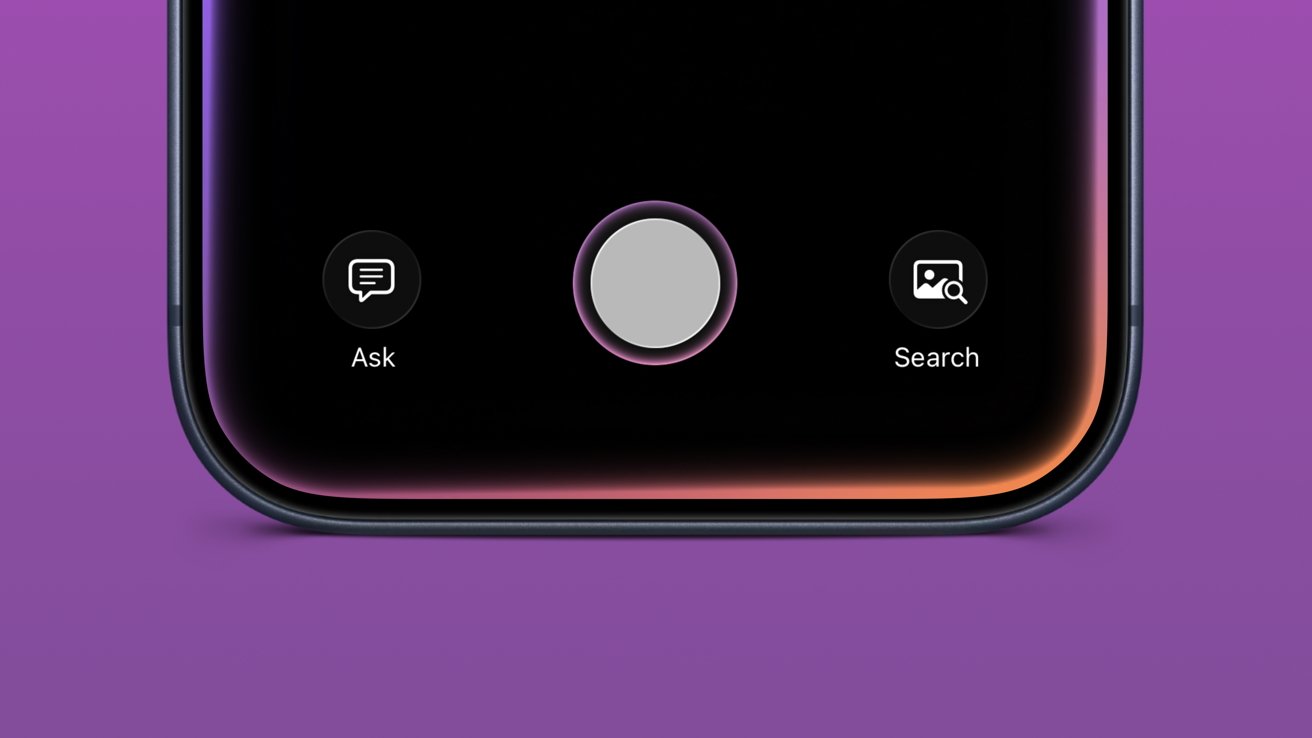
A swipe-down from the top gesture that summons a new AI-powered “Search or Ask” bar in the Dynamic Island
A long-press on the search bar will let users swap AI models
Safari gets a new Start Page with four tabs for accessing favorites, bookmarks, a reading list, and browsing history
Weather gets a new Conditions panel in the main interface that used to require a separate menu
Image Playground is being redesigned with a new “describe a change” option and upgraded models that produce more lifelike results
Search will be reintegrated with the bottom tab bars across apps similar to how it looks in the App Store today
Previous rumors also indicated various Siri changes, like the new standalone app. Apple moving Siri to the Dynamic Island also seems obvious since it’ll be anthropomorphized as a character you’re interacting with rather than it being an ambient rainbow color.
That said, it appears that Apple will still be keeping Siri and AI tucked away until summoned. That’s the opposite approach of Google, which announced an AI cursor that waits for you to gesture at anything to bring up an AI feature.
Apple Photos is getting new features powered by Apple Intelligence, like the ability to extend a background or automatically enhance an image. We’ve also heard of Apple Wallet getting a custom pass generator, which was leaked via code previously.
Advertisement
These extra details might have been easy to arrive at with some simple guesswork, but now they’re confirmed by a reliable source. Of course Sebastiaan de With would bring a custom camera interface, Siri would get a vastly new UI, and Liquid Glass would see some tweaks.
Now let’s wait and see if someone can tell us something we don’t know. Or actually, maybe it’ll be a surprise for once.
We don’t have to wait long, as Apple will reveal iOS 27 during WWDC 2026 on June 8. Expect more leaks in the meantime, even if they aren’t difficult to predict or groundbreaking.
A range of sensory cues can cause mosquitoes to pick one human over another — mainly the smell and heat our bodies give off, and the carbon dioxide we exhale. Female mosquitoes — which are the only ones that bite — detect these signals with finely tuned receptors, then choose their target accordingly. “We have known for over 100 years that mosquitoes are attracted by the carbon dioxide that we exhale — this is the first signal that triggers their behavior” when they are dozens of meters away, Swedish scientist Rickard Ignell told AFP. Within around 10 meters, “mosquitoes will start detecting our odor, and in combination with carbon dioxide,” this attracts them even more, said the senior author of a recent study on the subject. As they get closer, body temperature and humidity make particular humans even more enticing.
[…] For Ignell’s recent study, the researchers released Aedes aegypti mosquitoes — known for spreading yellow fever and dengue — on 42 women in a lab, to see which ones they preferred. “We have shown that mosquitoes use a blend of odorous compounds (we identified 27 that the mosquitoes will detect, out of the possible 1,000) for their attraction to us,” Ignell said. The woman the mosquitoes most liked to bite — which included pregnant women in their second trimester — produced a large amount of a particular compound made by a breakdown of the skin oil sebum. That even a small increase of this compound — called “1-octen-3-ol”, or mushroom alcohol — made a difference came as a surprise, Ignell emphasized.
Frank Castle got a well-deserved solo outing during Marvel’s Netflix era, introducing Jon Bernthal as the antihero in Daredevil first before a two-season series run that ended in 2019. As a fan, I missed this take on The Punisher/Castle and was excited for his return in season 1 of Daredevil: Born Again. Driven by revenge and a sort of righteous rage, he’s a tortured soul whose precision in combat and carnage is the reason people watch. The Punisher: One Last Kill has every ounce of the brutal badassery — and tragic figure aspects — you want from Bernthal’s character, but the short story may not be enough if you want something with more narrative bite.
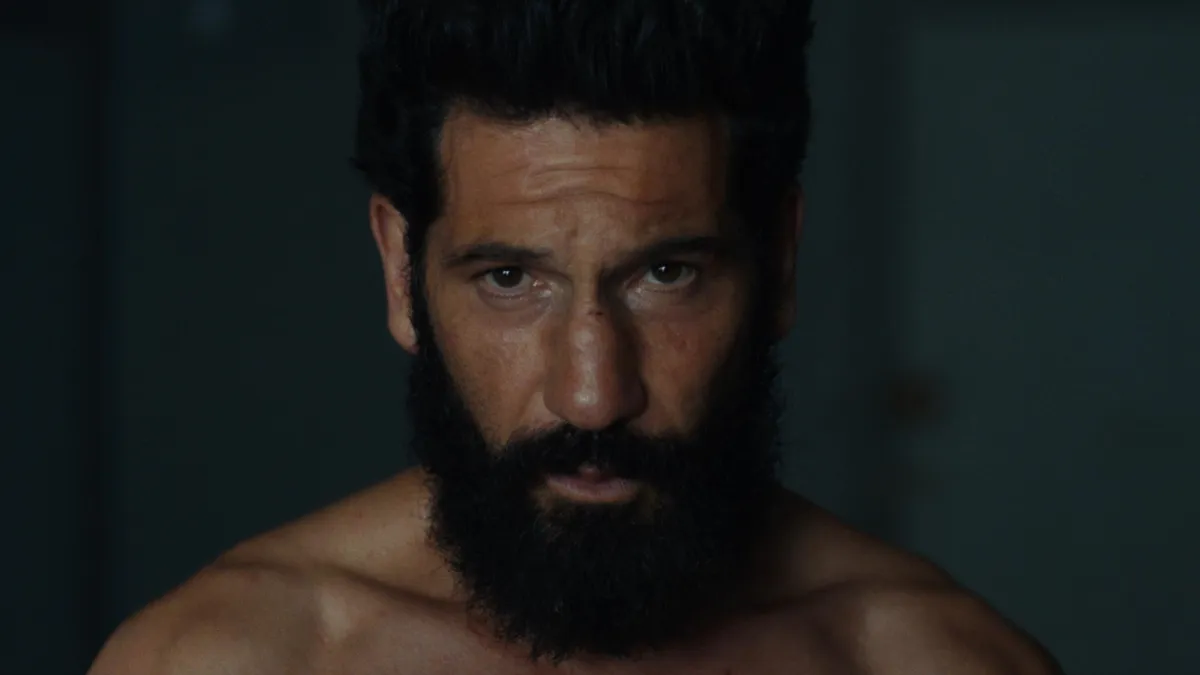
Arriving Tuesday night on Disney Plus, the 48-minute Marvel special also stars Judith Light and Jason R. Moore, who’s reprising his role as Curtis Hoyle. This isn’t a movie, but more of an interlude to explain what Punisher has been up to since the end of Born Again’s first season. It opens with Frank working out in a dimly lit apartment, where a kill board with strategically placed red X’s lives. Guess he’s been busy pursuing his personal goals, which, coincidentally, sets off a chain of violence that plagues Little Sicily, where the story is set. No one is safe here. No one and nothing.
Hearing Frank recite the Marines’ Reconnaissance Creed 5 minutes into the show signaled this was about to be something serious. Haunted by ghosts from his past, Frank is experiencing psychological challenges that justify the on-screen crisis hotline support message posted for the audience. This unfolds over the first 20 minutes before he’s tossed into a John Wick 3 scenario with a free-for-all bounty on his head. Then the bloody action begins — and ends.
Advertisement
Frank’s dealing with painful memories from his past in The Punisher: One Last Kill.
Marvel
Make no mistake, this Punisher/Frank is suffering and conflicted. Viewers walk with him on this personal journey that takes him outside of his dim room and outside of his mental discomfort. Bernthal’s performance is as gritty as ever, exposing Frank’s emotional vulnerability, giving his softer side a chance to shine while delivering a vicious sequence of him facing off against adversaries.
I’ve said before that it’s a treat watching Frank Castle beat people up. The no-nonsense, fearless on-the-spot destruction is his trademark, and is as entertaining to watch as any Jason Statham movie, or fictional killers like the aforementioned Wick, Power’s Tommy Egan or Klaus Mikaelson (IYKYK). That’s what most fans sign up for when watching Marvel’s Punisher on TV — or in the upcoming Spider-Man: Brand New Day.
Advertisement
It’s great to catch up with Frank in this way as season 2 of Daredevil: Born Again played out, and before we see him with Spidey; that’s what this episode seemingly intended to do. The intensity and rough-and-tumble raw action in The Punisher: One Last Kill is superb, and by the end, we’re reminded of exactly who the Punisher is, but the story leaves one wanting much more.
The special debuts tonight on Disney Plus at 6 p.m. PT/9 p.m. ET.
I’m nearing the end of another trip to Tokyo, and up until a few days ago had been lamenting a busy schedule and a lack of Jazz Kissa visits. Then a free Thursday popped up, and I decided to make the most of it.
Tokyo trips have become more frequent for me over the past year, ever since my wife, aka Mrs. Audiolove, moved back to Japan last summer as the advance guard for our planned retirement there. I’ll follow in a couple of years when I stop “working.”
Jimbocho is a convenient destination from her place as it’s a one-train ride on the Denentoshi/Hanzomon line (one line becomes the other) from Yokohama. One of my goals this trip was to finally visit Eigakan in Hakusan (only three stops from Jimbocho) so I planned my day with that in mind.
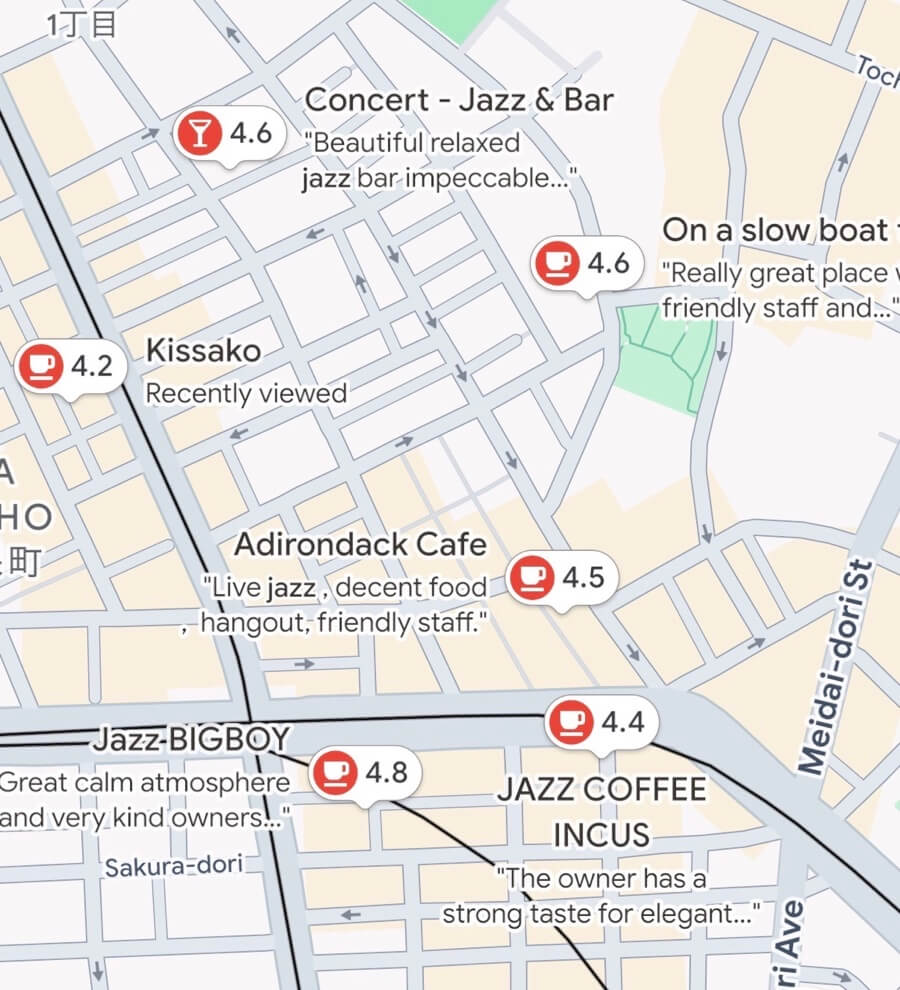
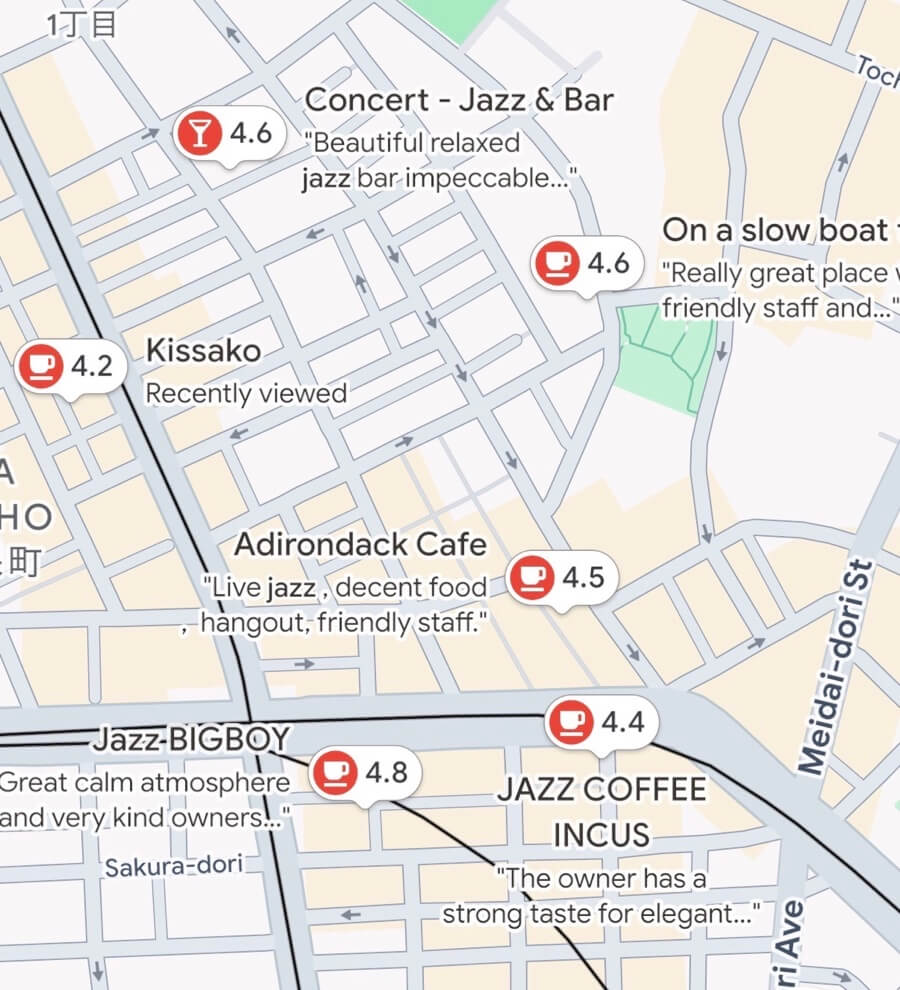
Some of the Jazz Kissas around Jimbocho Station.
Jimbocho is also something of a Jazz Kissa hotbed. I’ve visited Jazz Big Boy and Adirondack multiple times (I included both a couple of years ago in an article on my favourite Tokyo Kissas), but had several other joints in the area on my wish list, so this day would be a perfect opportunity to scratch a couple of itches before heading to Hakusan.
Advertisement
I picked a couple of new places – Incus and Kissako – figuring I’d have lunch at one of them, and grabbed the noon train into town.
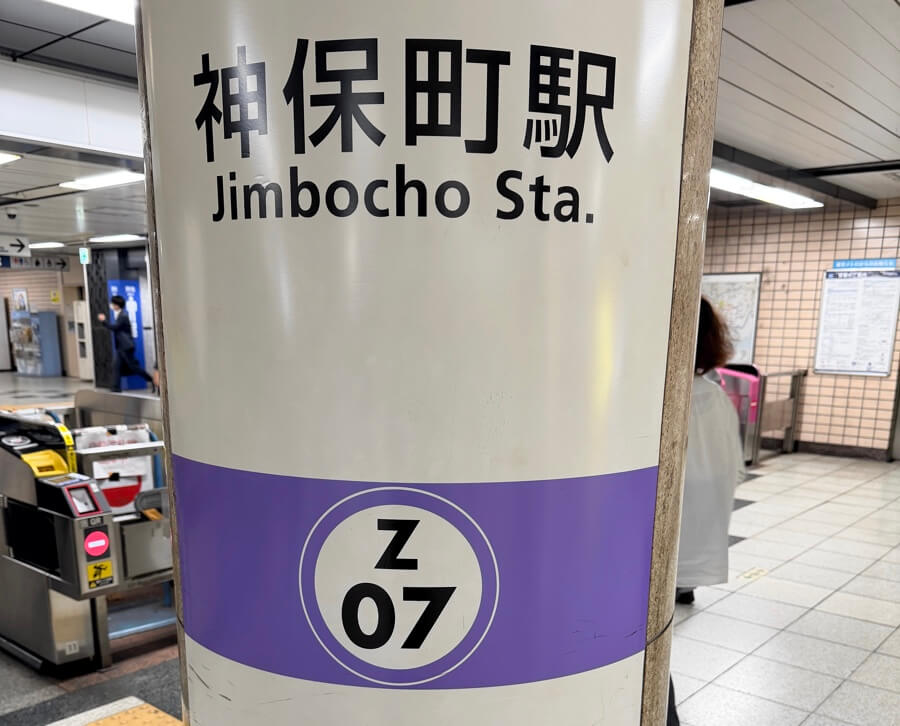
Welcome to Jimbocho.
Incus
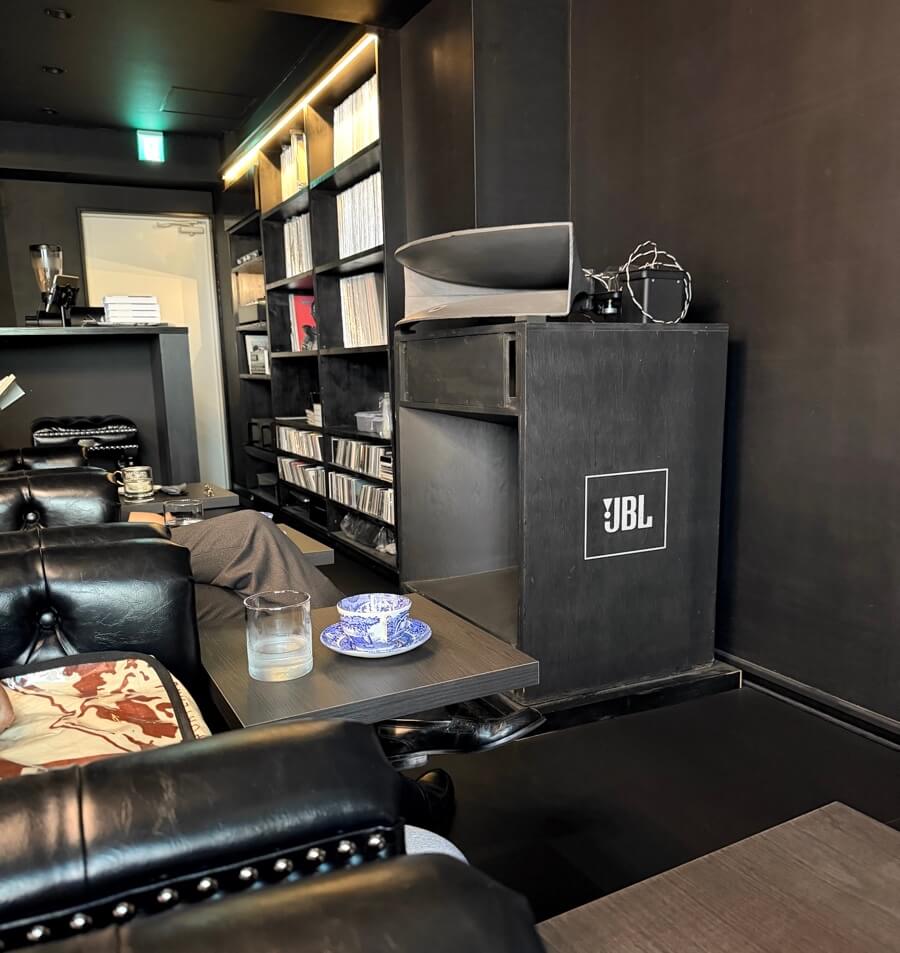
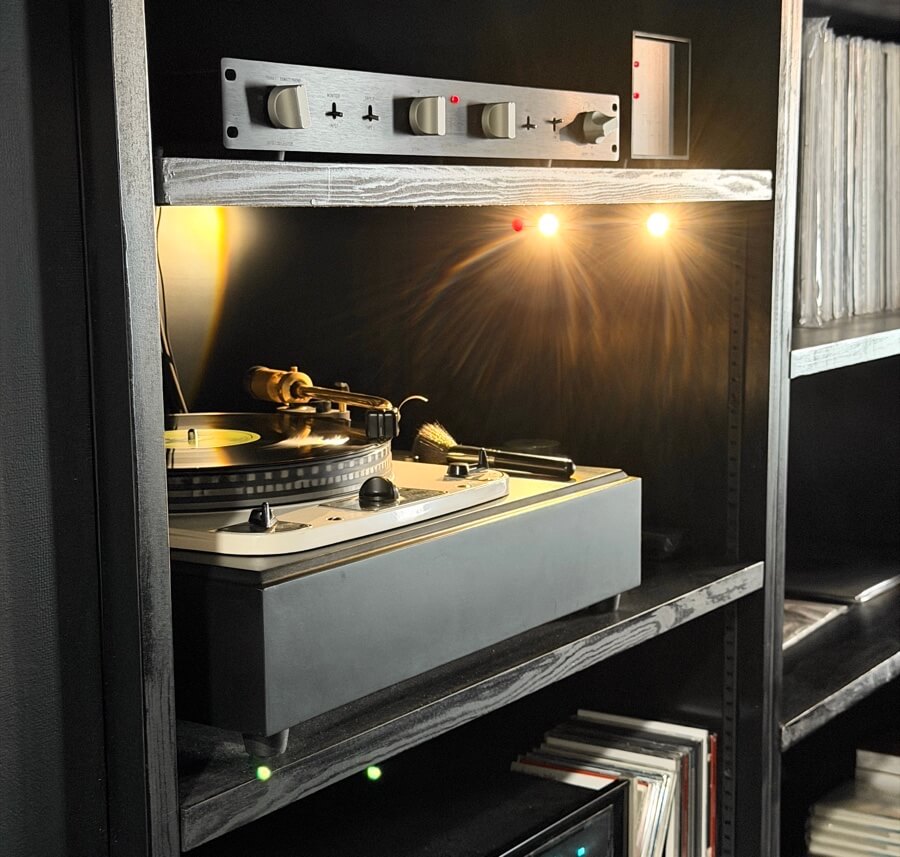
The first Jazz Kissa of the day could not have been more different than the other destinations I’d visit later. Incus is a sparse, modern, all black, minimalist space featuring huge JBL Professional Series speakers, Garrard 301 turntable and Mark Levinson amplification. Sound produced has wonderful clarity, depth and space.
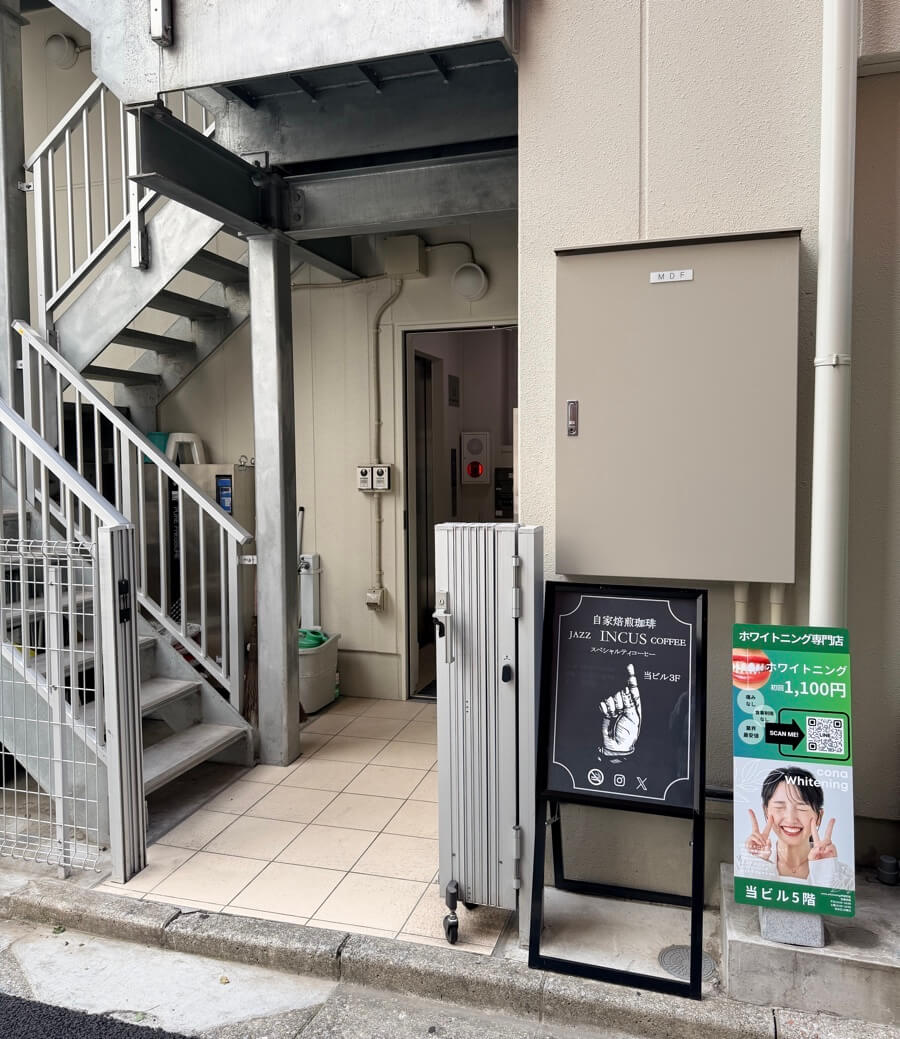
Incus entrance off a side alley. Elevator up to the 3rd floor.
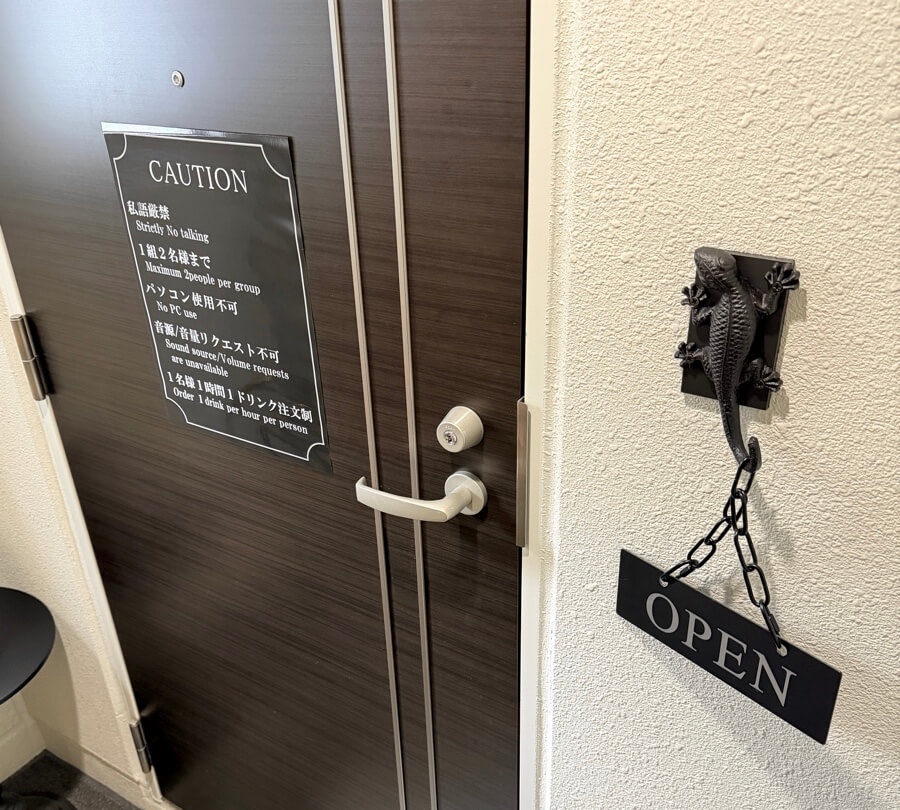
Incus has a lot of rules; in fact it’s probably the strictest Kissa I’ve visited until now. There’s absolutely no talking, and a one-order-per-hour rule (no sitting on a single coffee for hours on end). Maximum party size of two patrons.
Caution! Please follow the rules.
And if that’s not enough… No computer use (though phones and tablets, and photos, are allowed; the issue seems to be keyboard noise interfering with musical enjoyment). No music requests and no album “bring-ins.” And no kids under junior-high-school-age.
Advertisement
I have no problem with guidelines like this though as it ensures enjoyment, free of distractions. You have been warned.
View from my listening chair. Are those speakers big enough?
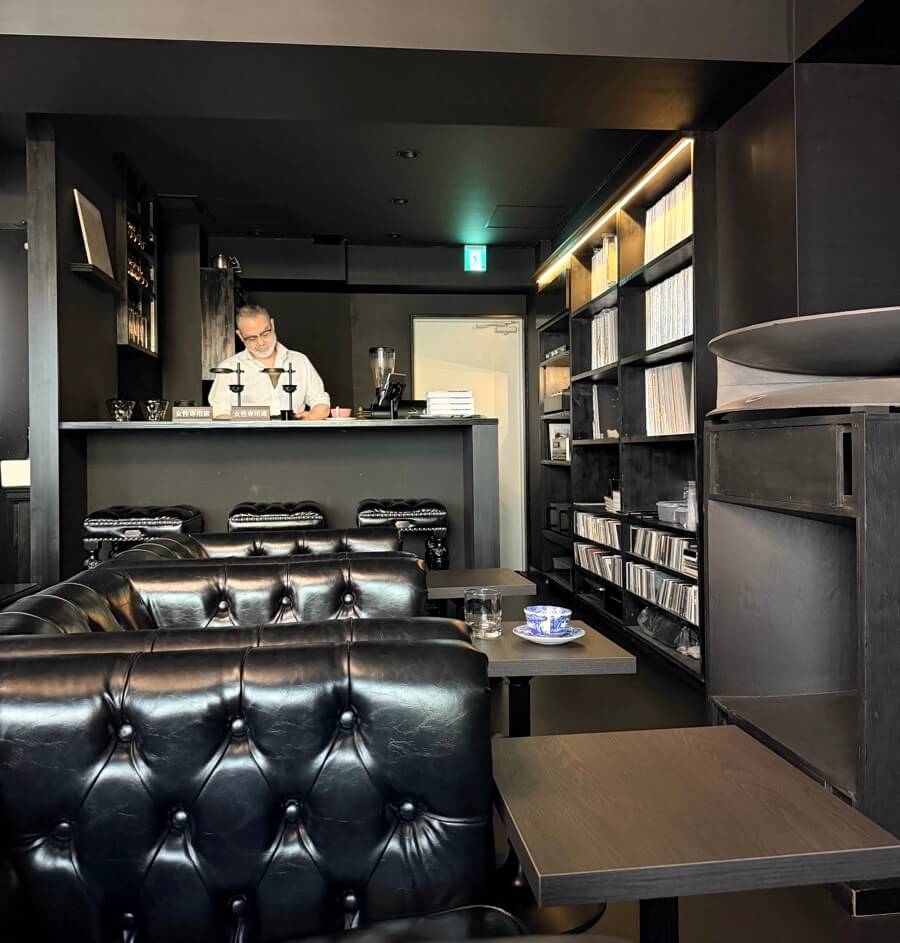
The shop, equipment and record collection are meticulously organized and cared for. There’s seating for 8 in two rows of four plush chairs, plus 3 stools at the counter for overflow if there is any.
It all starts here.
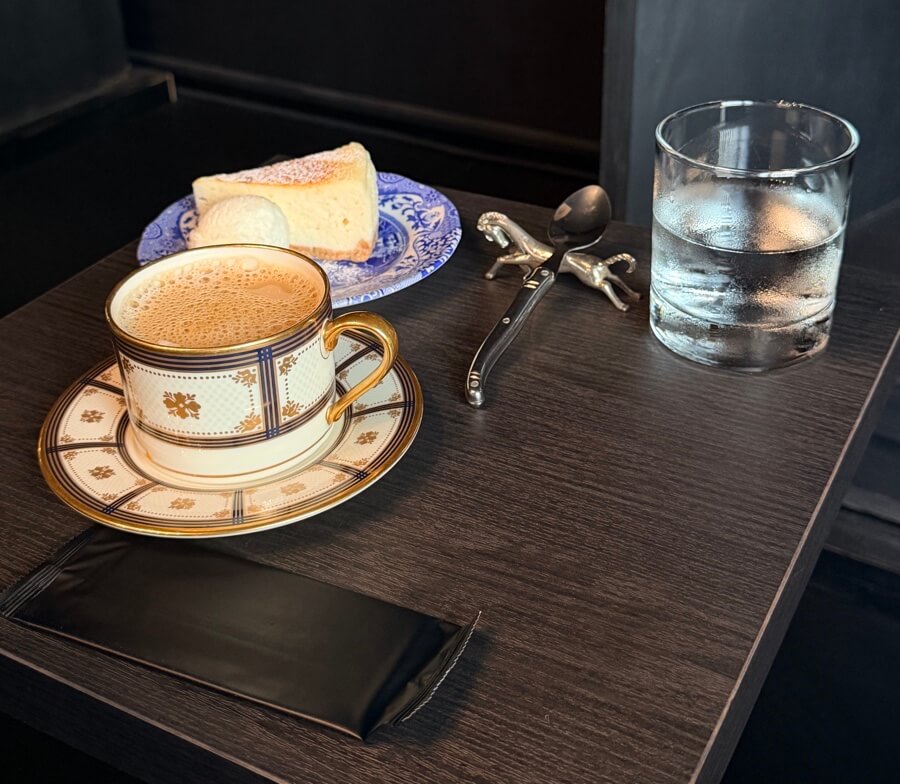
The menu features specialist, gourmet coffees, teas and desserts, with no other food on offer. Lunch would have to wait. I had Cafe au Lait, and cheesecake (ice cream on side), both of which were top-notch delicious.
Advertisement. Scroll to continue reading.
Advertisement
Coffee and cheesecake. Lunch will wait.
Music I heard in my hour-ish stay included Benny Bailey, Cosmic Tones Research Trio, and Masabumi Kikuchi & Masahiko Togashi (all very fitting of the vibe).
The Master of all he surveils.
Highly recommended for focused listeners and coffee afficionados.
Kissako
After leaving Incus I wandered over to Kissako, a quaint, casual, cozy space down a side alley a few minutes from the main book-selling area (and what Jimbocho is most famous for).
Such a welcoming entrance at Kissako.
The blue exterior, take out window, narrow street and potted plants lining the front give Kissako a French country cafe feel as you approach.
They even do take out.
Inside the shop there’s a tiny kitchen area and counter housing the turntable to the left of the door as you enter.
Advertisement
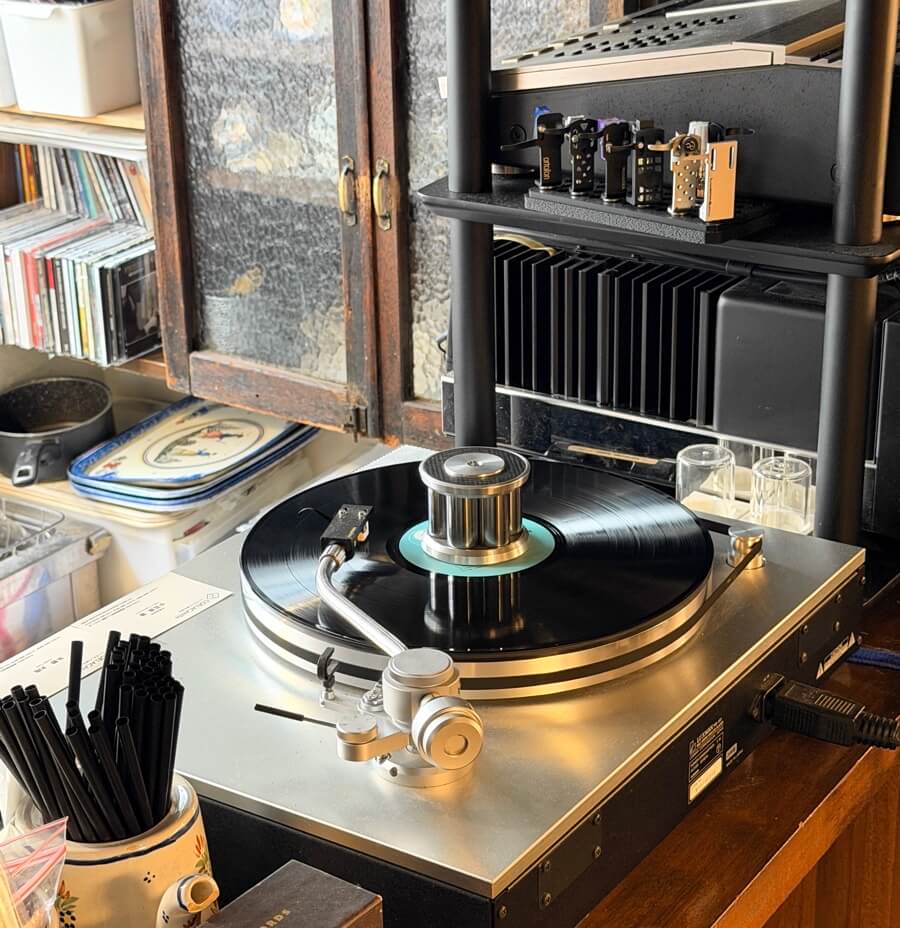
Luxman turntable, and LOTS of spare cartridges.
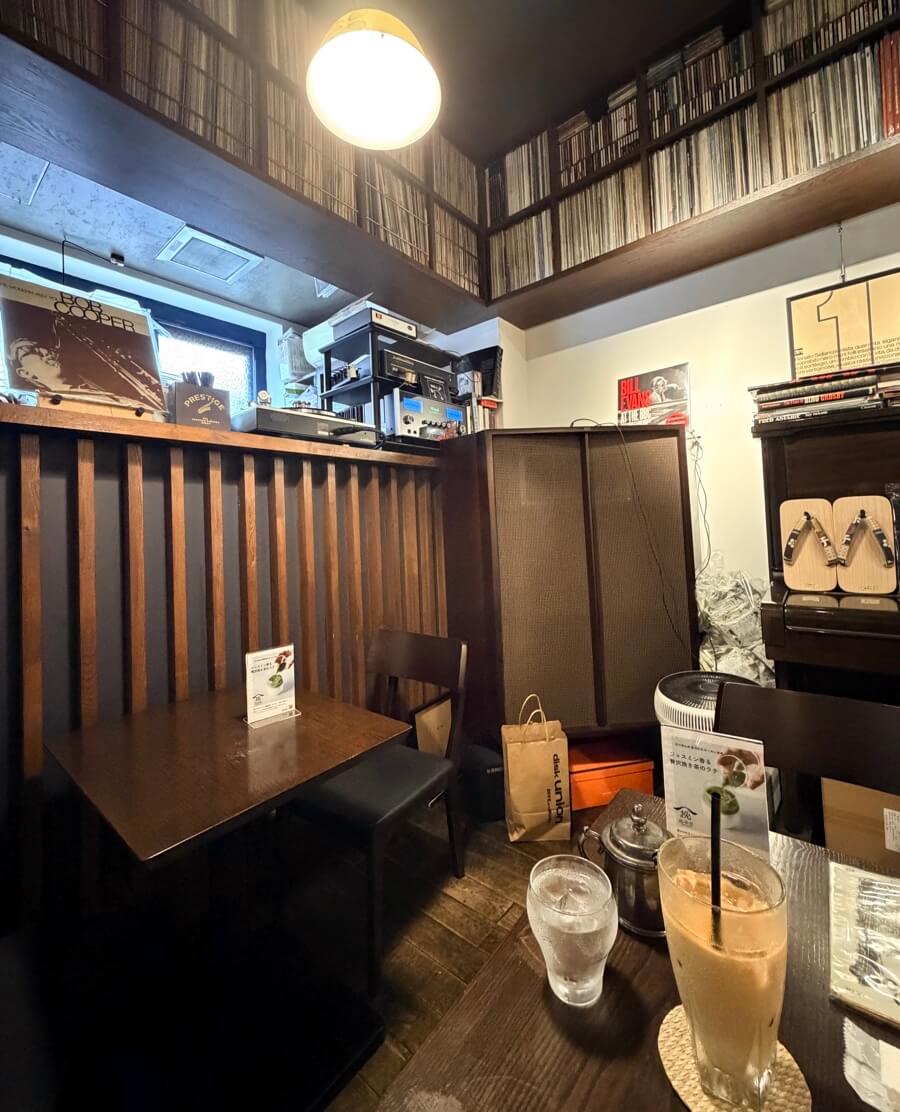
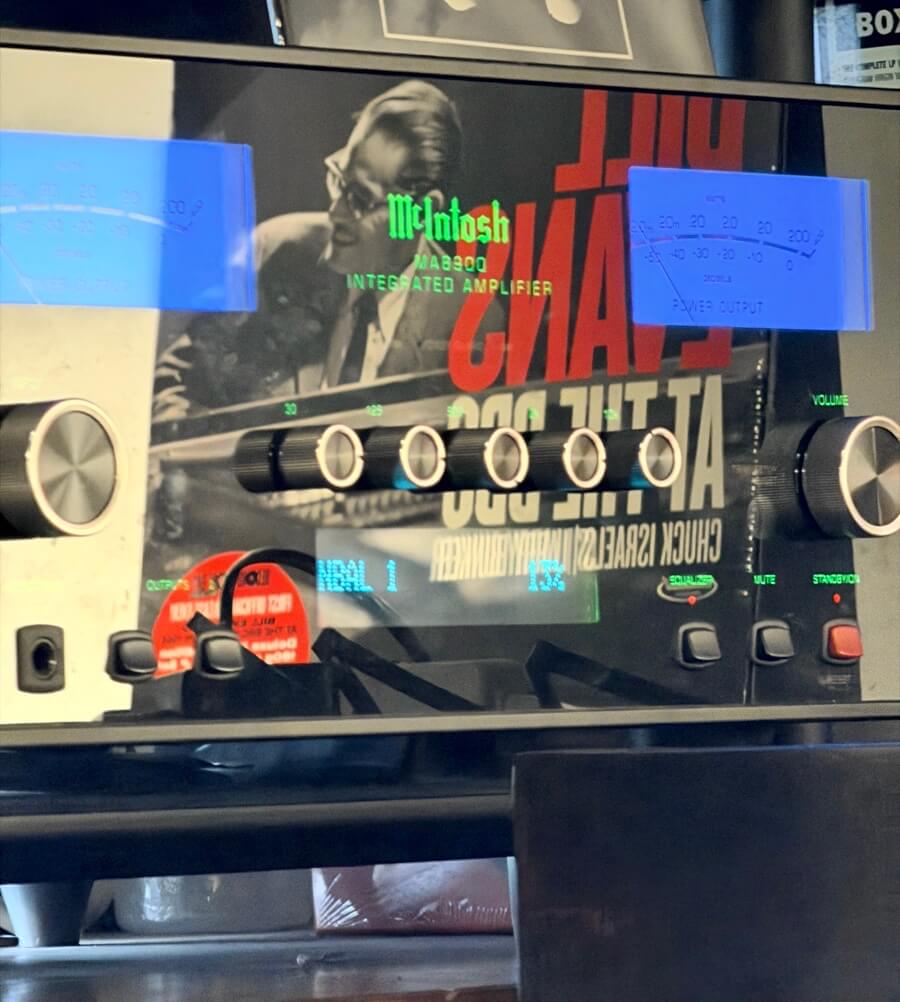
Seating is tight with space for about 15 surrounding two large Altec 820 horn-loaded corner speakers driven by a McIntosh MA-8900 amp, with Luxman PD-151 belt drive turntable as source. Records are stored up high, 360° around the room, with the day’s selected disks kept behind the counter.
Tight and cozy.
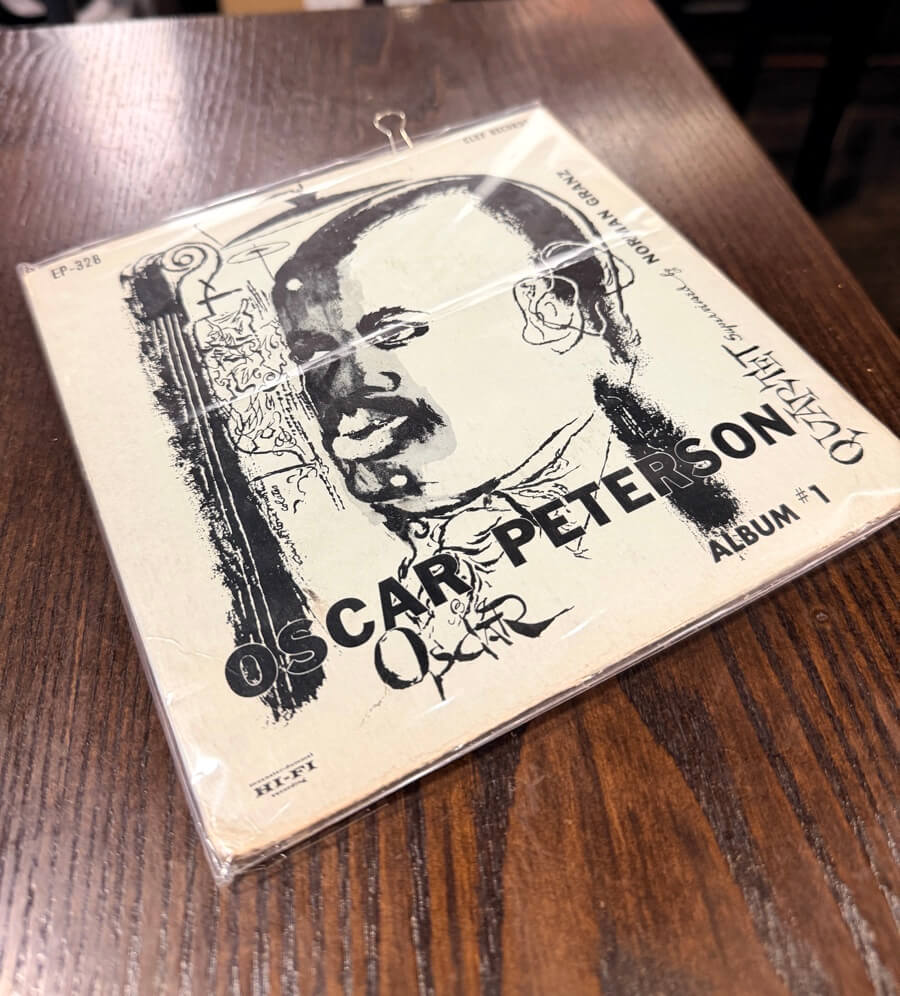
Menus are unique, enclosed between 7” record covers. I didn’t notice if all menus are the same, but my menu was held between two reinforced Oscar Peterson record covers.
Menu inside.
Like Incus this is a desserts and drinks only establishment, and I had an excellent Ice Cafe Latte. Lunch would again have to wait, but the Incus cheesecake was keeping me going.
Talking is okay here at low volumes and music is loud enough that surrounding chatter doesn’t interfere with enjoyment.
Advertisement
McIntosh and Bill Evans. What could be better?
I didn’t stay here too long but heard sides from Bill Evans at the BBC and Bob Cooper’s Milano Blues.
Ella & Louis
My original plan for this day was to visit Incus and Kissako as “appetizers,” and then head three stops up the Mita Line to Hakusan to cap the day off with Eigakan as the “main course”.
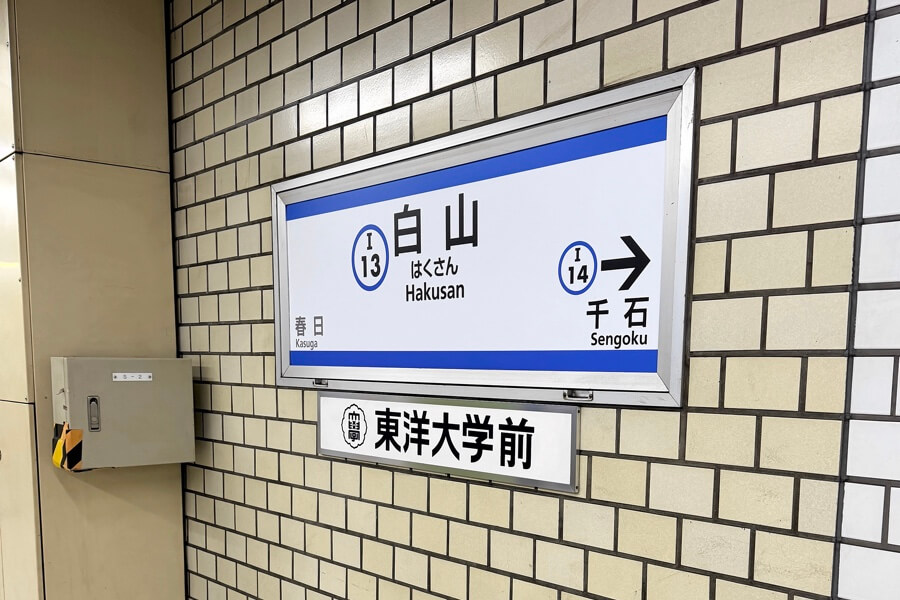
We are now arriving at Hakusan Station. I-13. The next stop after Hakusan will be Sengoku…
Eigakan opens at 4:00 and I arrived at Hakusan station with about an hour to spare. I pulled up Google Maps to see if there was a spot nearby to kill some time and found Retro Cafe Ella & Louis.
Advertisement. Scroll to continue reading.
Advertisement
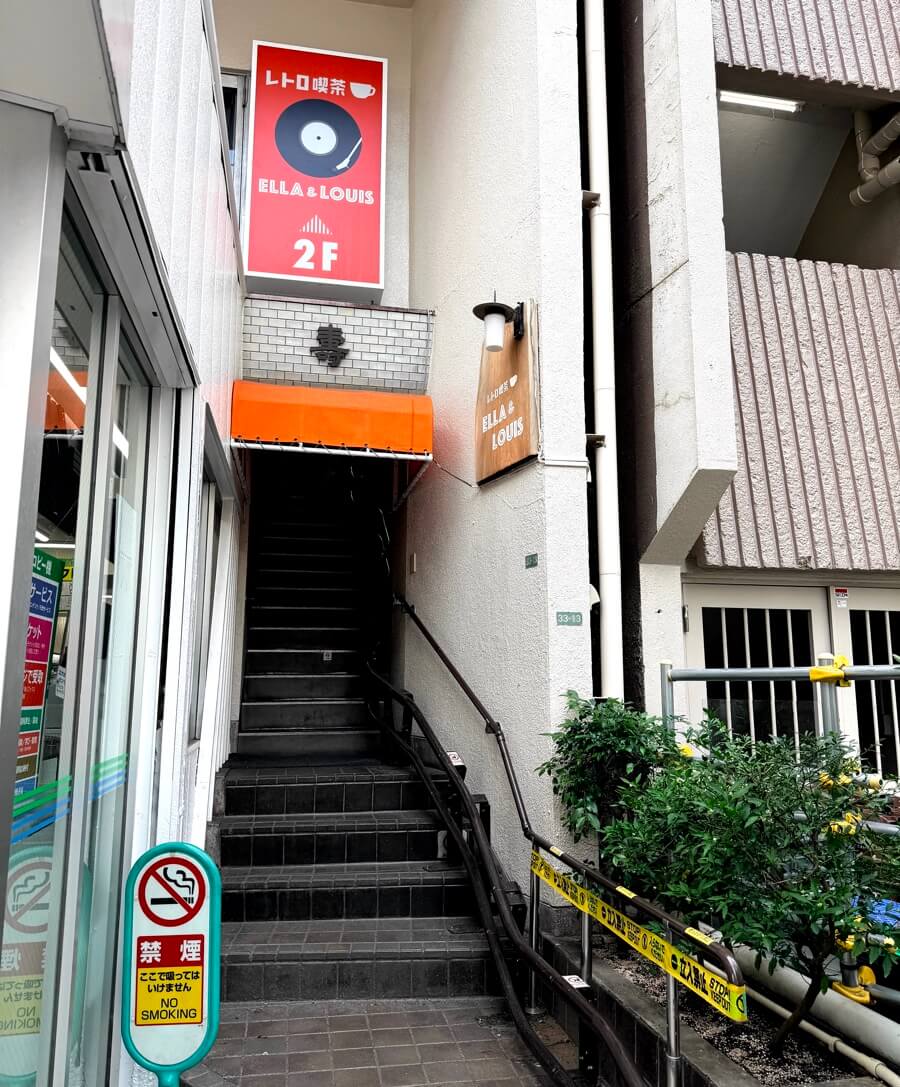
The place looked quaint and as a bonus they serve food. From the name I assumed they’d be vocal jazz focused, and I decided to stop in for a bite and listen.
One flight up.
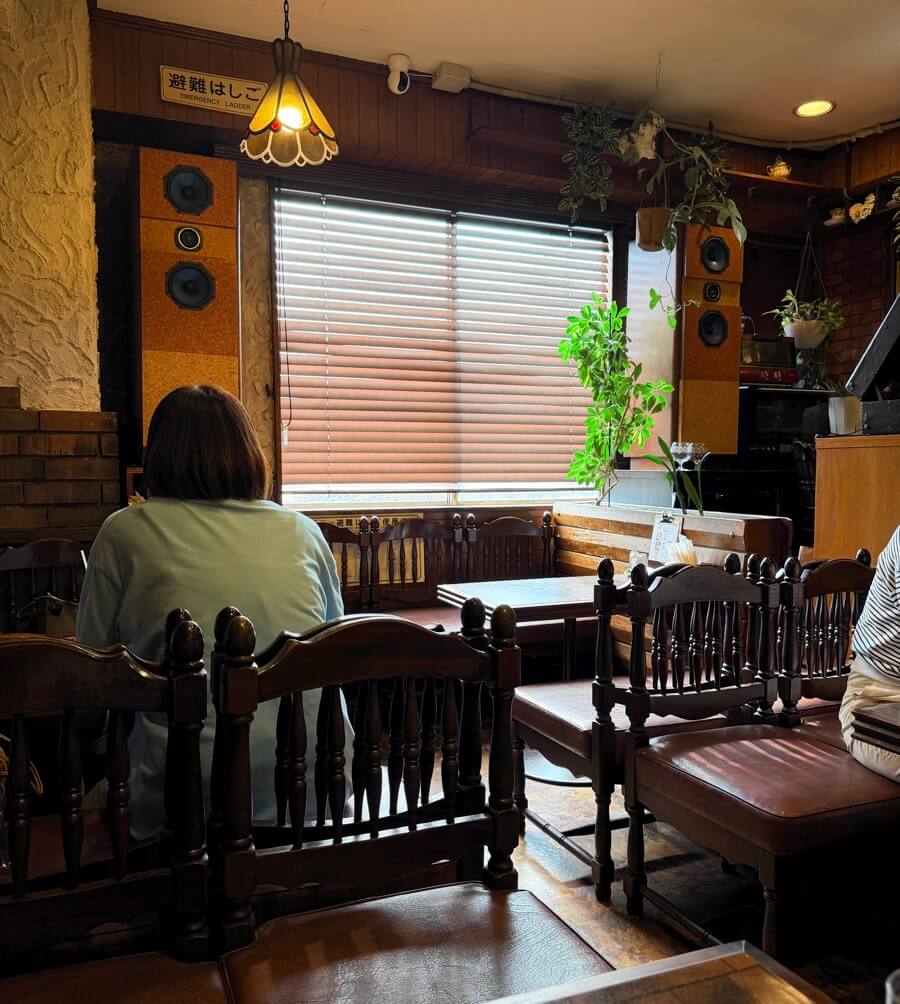
As advertised, Ella & Louis is rustic and casual with a full-on “Showa” vibe. Showa was the era from 1926 to 1989 corresponding with Emperor Hirohito’s reign, including World War II and the boom/bubble economy period of the ‘70s and ‘80s; most traditional jazz kissas opened in the post-war era and feature period-typical design and furnishings.
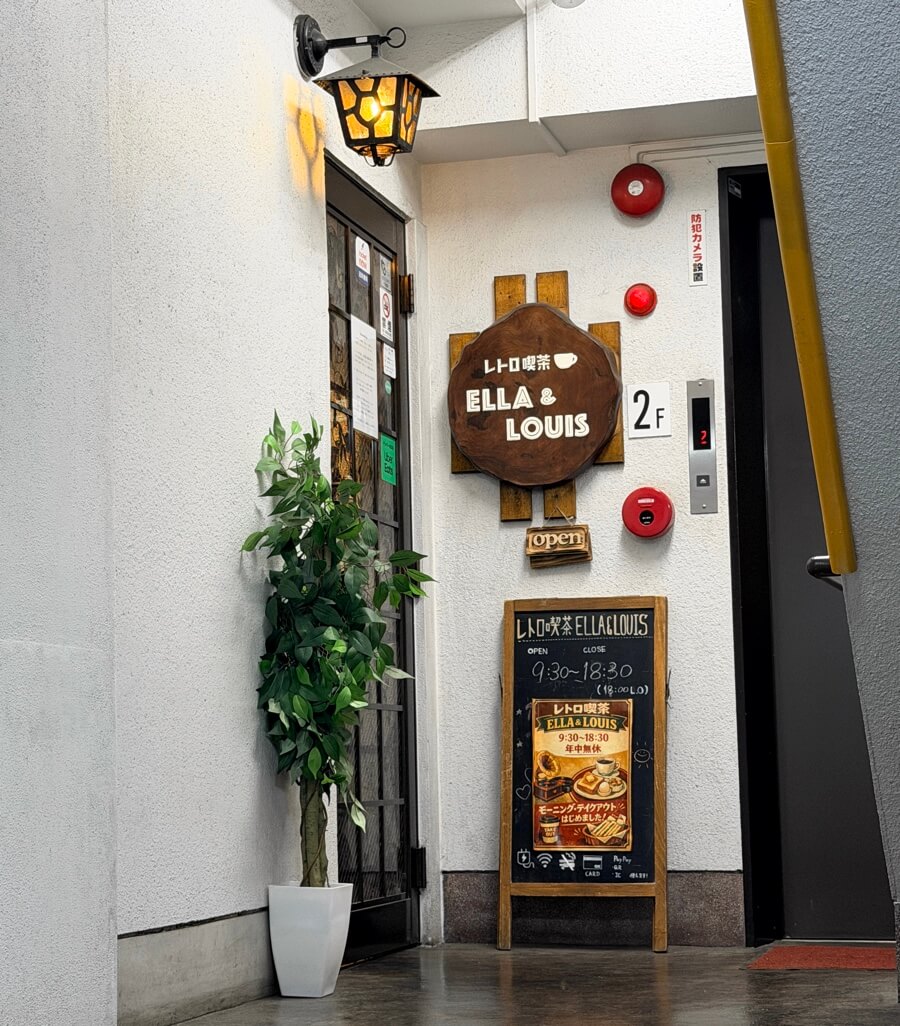
Enter here.
Ella & Louis was a regular coffee shop for 48 years and was taken over post-pandemic by a young Okinawan woman who shifted the cafe to more of a Jazz Kissa.
Showa vibes.
The shop is quite spacious with seating for about 30. It was quite busy for 3:00 in the afternoon, half full with mostly pairs of woman friends chatting quietly and sipping tea or coffee.
Advertisement
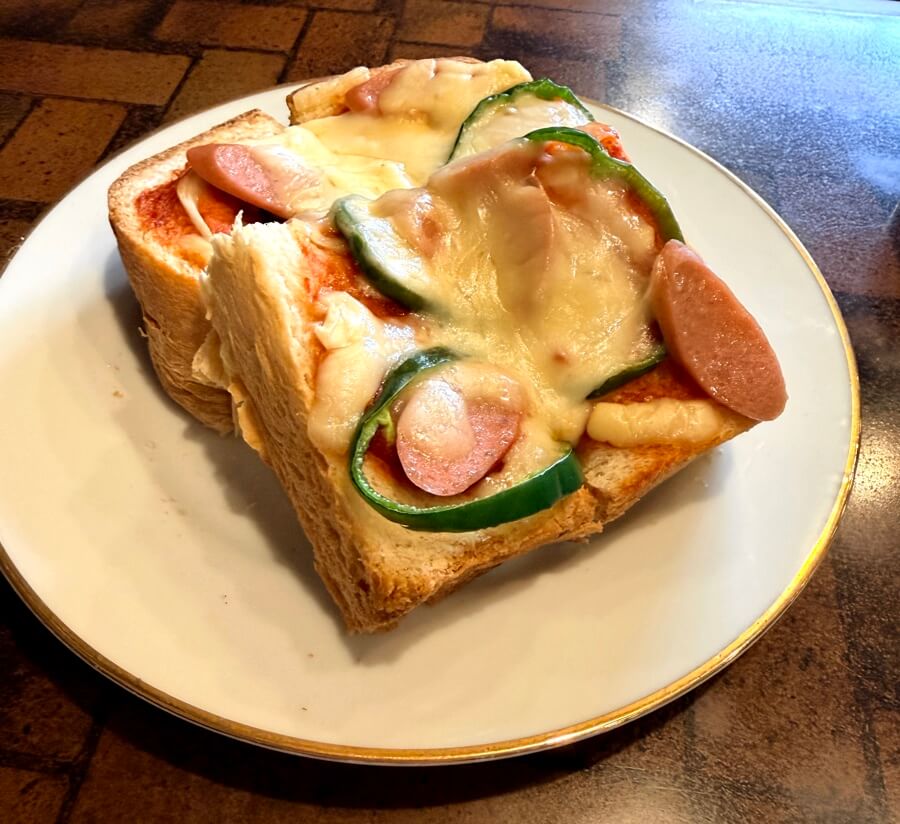
I took a seat and finally ordered a Japanese cafe-staple lunch of pizza toast: thick-sliced, hyper-refined white toast with tomato sauce, green pepper, sausage and melted processed cheese. Pizza gourmets may raise their eyebrows, but it went down a treat!
Pizza toast. Don’t knock it ’til you try it!
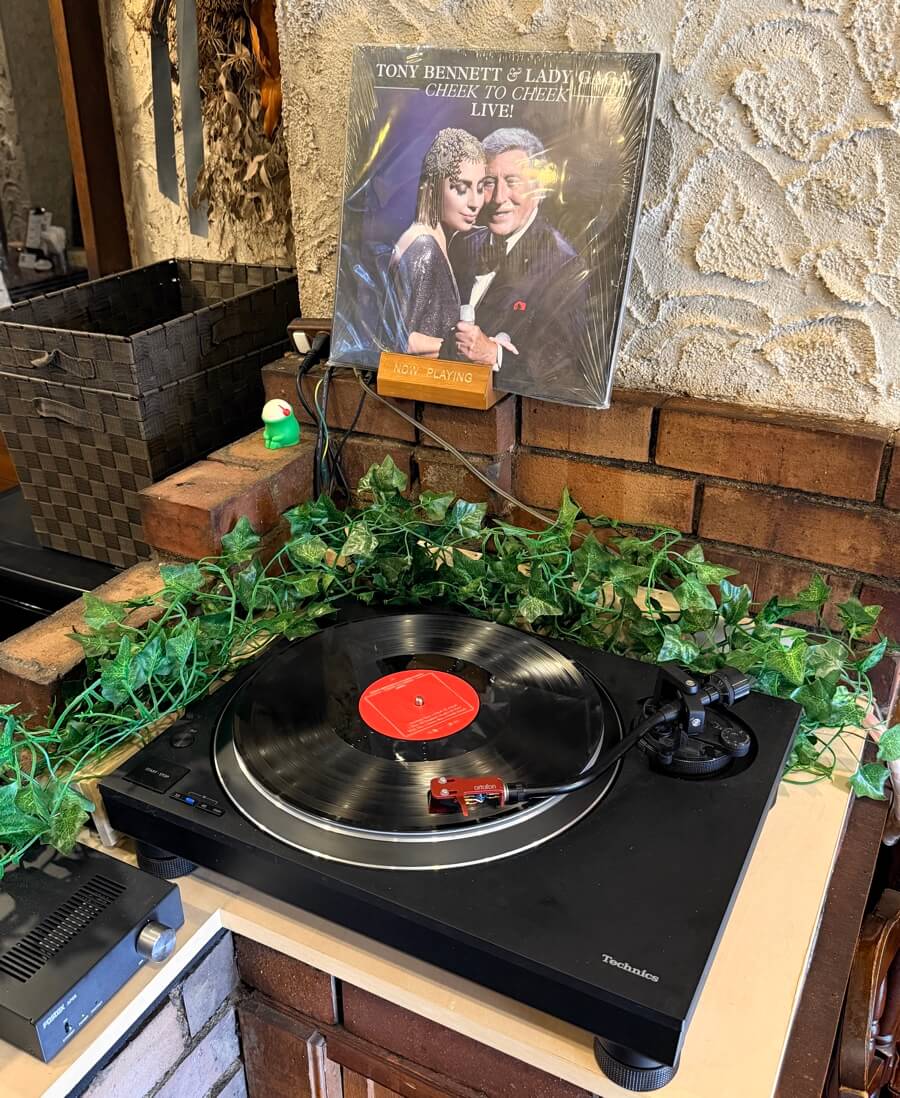
Music wasn’t too loud, and more background to conversation than focused listening. The audio system is simple, with custom-built speakers, a Fostex AP25 “personal amplifier” (one input and speaker outputs), entry-level Technics SL-100C turntable and a small Luxman 5-band equalizer.
Yes, we like vocal jazz.
Staff seemed in a Tony Bennett kinda mood this day and I heard a side of Tony Bennett classics followed by a side from his collaboration album with Lady Gaga. Not necessarily my preference, but it was pleasant enough.
Keeping things simple.
While the music and sound weren’t overwhelming, this is a lovely relaxing spot, and I enjoyed my visit immensely. Pizza toast consumed, the hour was approaching so I paid my bill and made my way to Eigakan.
Advertisement
Eigakan
Oh my. Where does one start with Eigakan? If there is a list of top “historical landmark” jazz kissas in Tokyo, this combination music/movie museum is most definitely up there.
Heaven awaits just a few steps down.
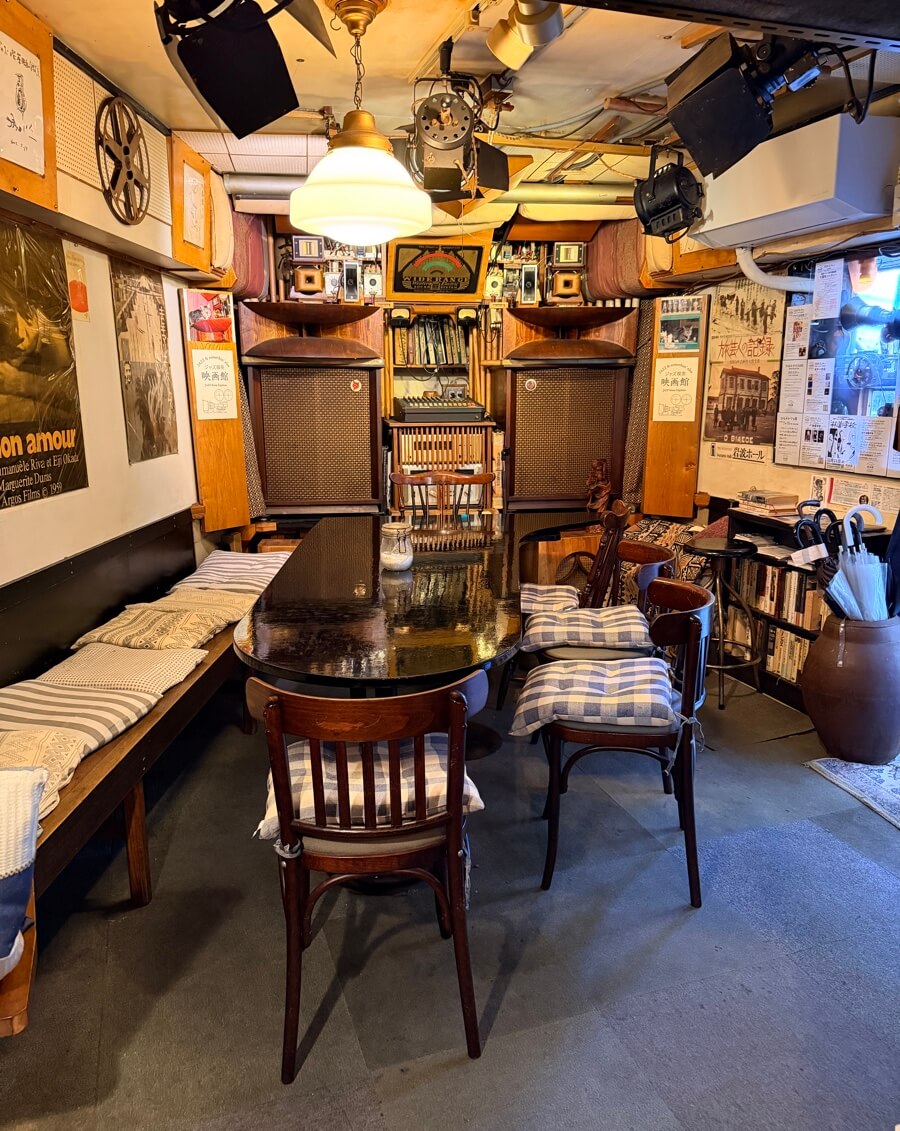
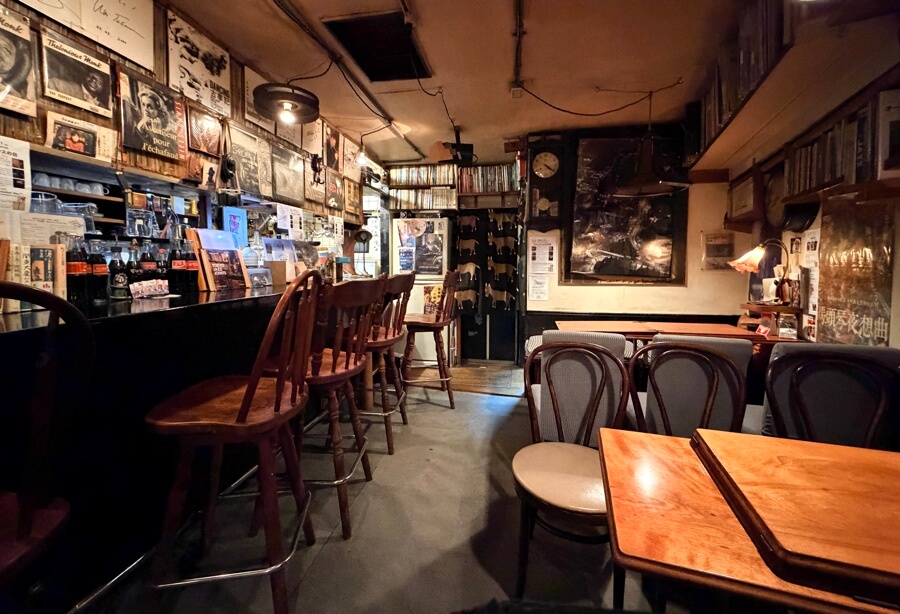
The space is wedge-shaped with speakers placed in the narrow end. The vibe is woody and rustic, with low lighting.
Where the magic happens.
The sound was remarkably clear and articulate, with bass that reached way down without turning the room into a demolition site. The music was loud, but not obnoxiously so. Enveloping, not invasive.
Sonic marvels.
Seating is spread out with room for 30-ish including a communal area at the front, chairs and tables for 2-6 in the rear, and stools down one side along the bar. Low volume talking is okay, and smoking is allowed.
Advertisement
Advertisement. Scroll to continue reading.
View of the cheap seats.
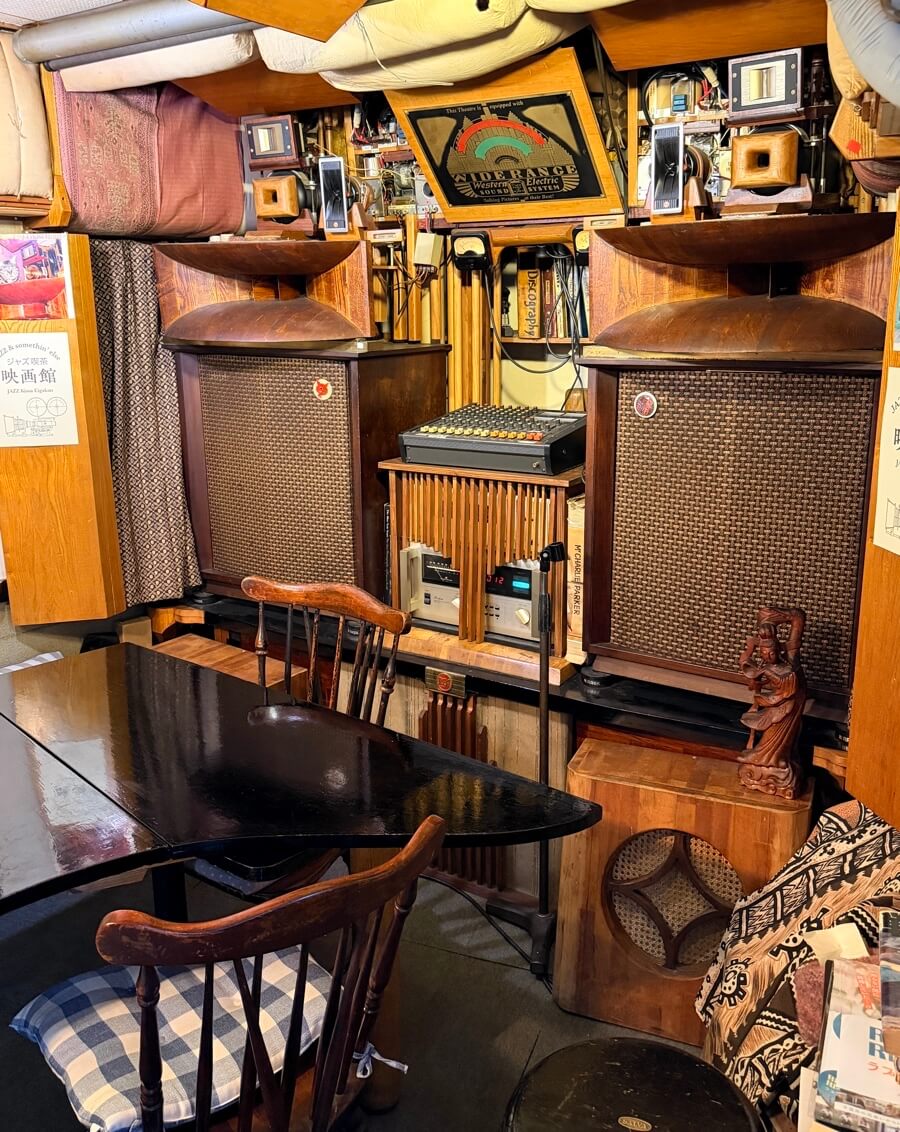
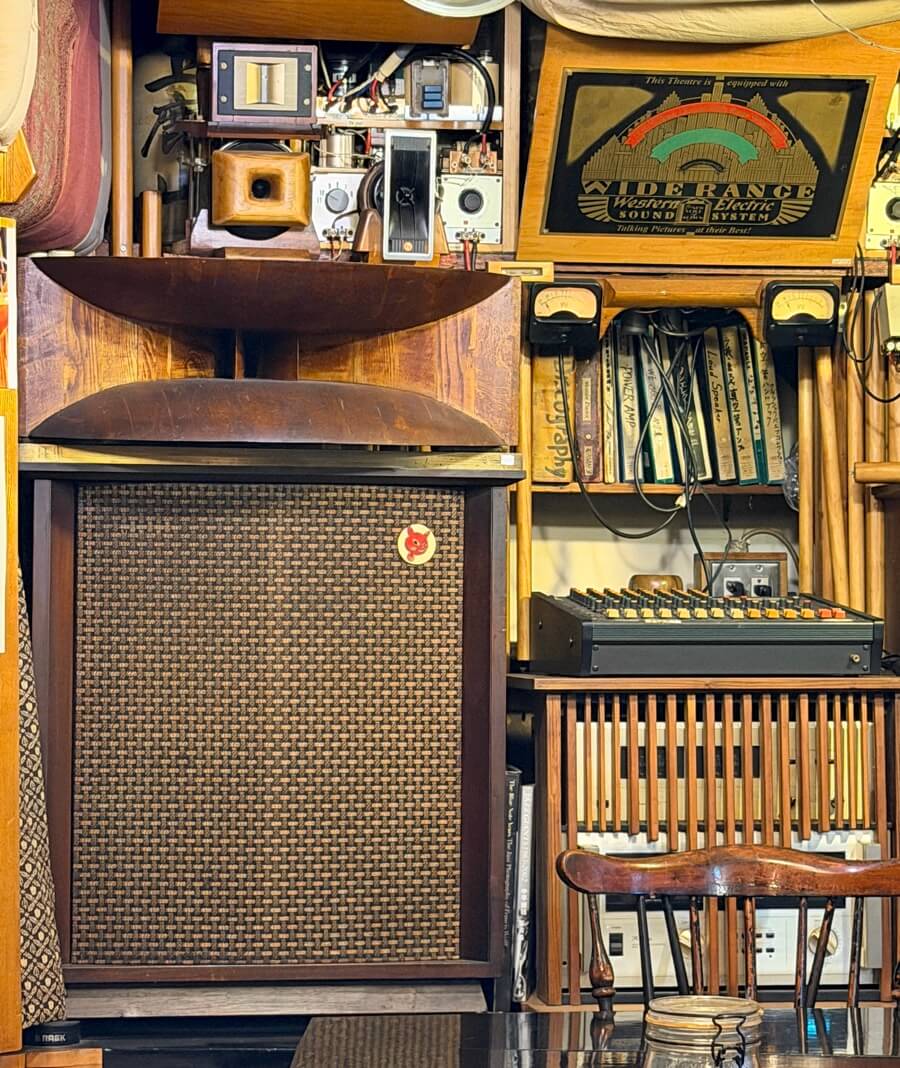
The audio system has been customized and tweaked over the decades into an auditory work of art. Main speakers are based on Western Electrics with custom made Hokkaido-sourced Tamo-wood horns and high-pitch super tweeters, and tube amps are customized from Dynaco kits (thanks for details to @djproben).
That tweeter set-up though!
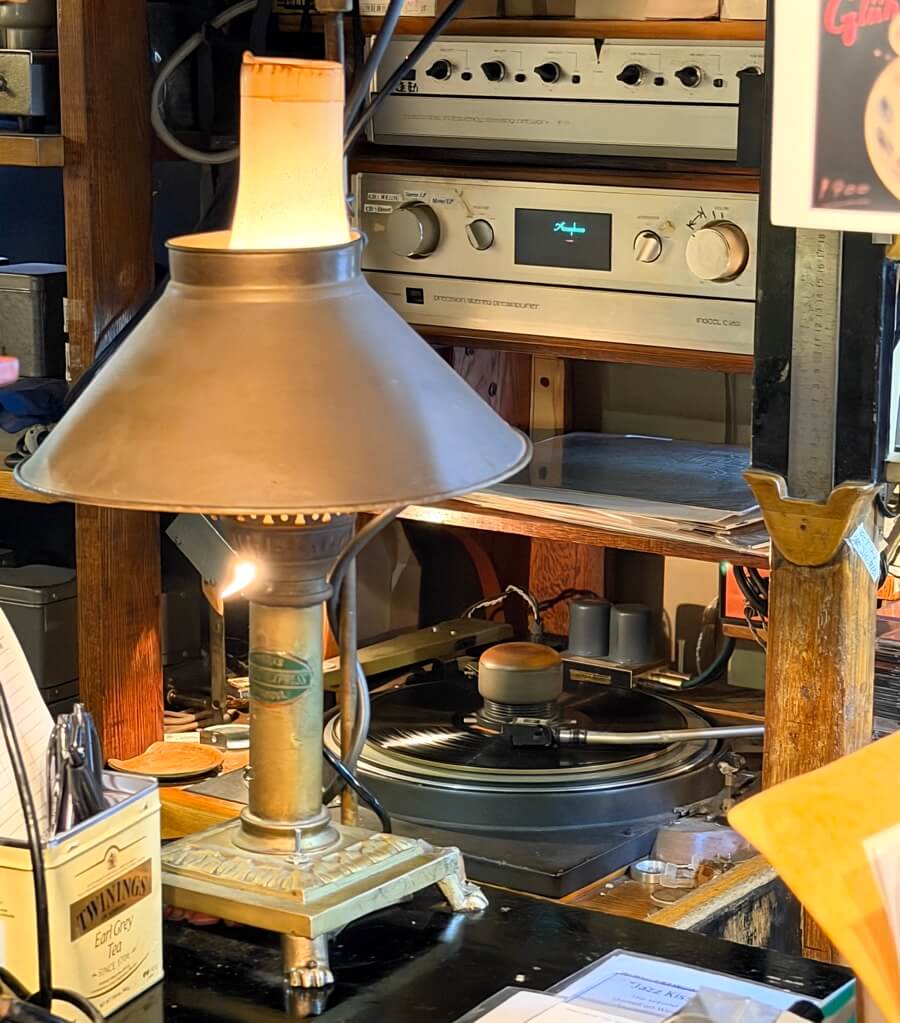
Am not sure what the Franken-turntable is, but perhaps someone who’s been to Eigakan can enlighten me in the comments. The pre-amp (not sure if this has been customized in any way, but it wouldn’t surprise me) is an Accuphase C-280.
Elvin on the Frankentable.
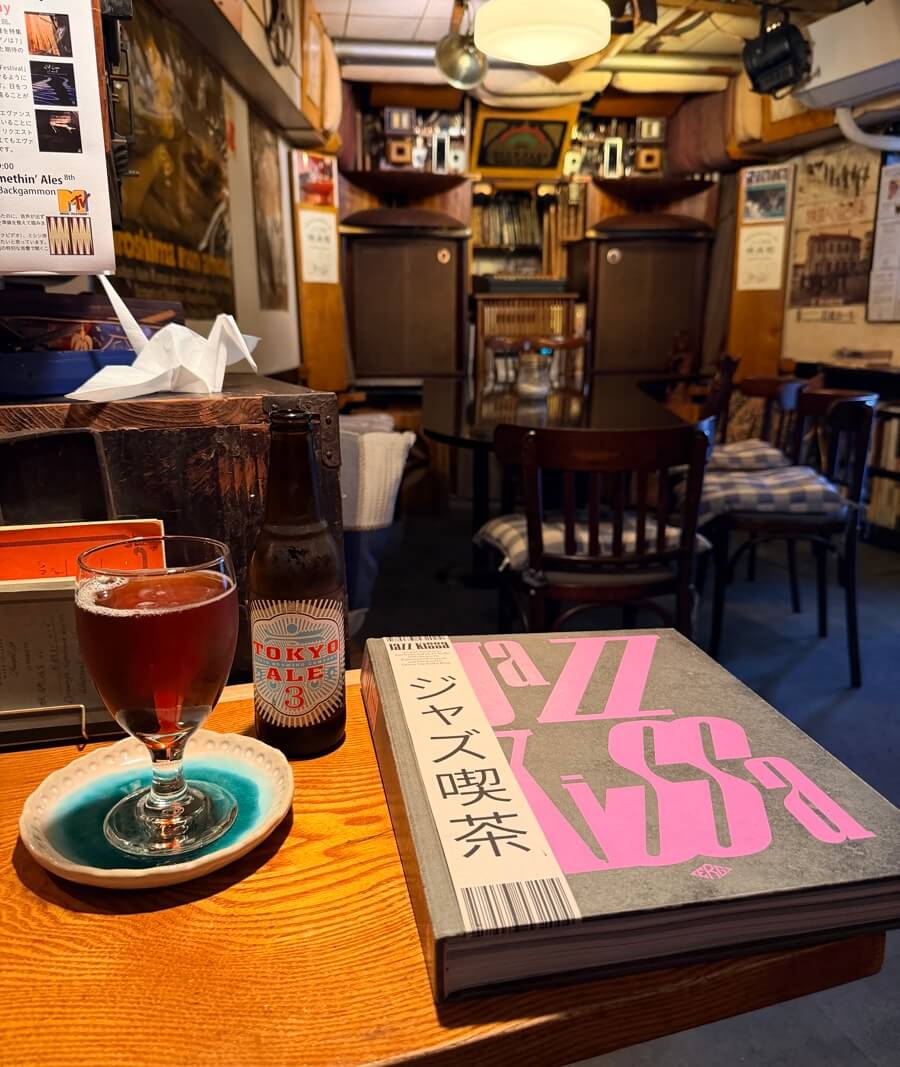
Eigakan is a feast not only for the ears but also the eyes, with shelves and racks of reading materials. I spotted (and leafed through) the ERG Media Jazz Kissa book, the Tokyo Jazz Joints picture book, and the recent kissa-focused National Geographic.
Books ‘n’ beers.
Being late afternoon when I arrived, I switched from coffee to beer with a tasty craft-brewed Tokyo Ale. It seems the brewery and Eigakan have a special relationship, with the Tokyo Brewing Company sponsoring events from time to time at the shop.
Advertisement
Musical accompaniment for my visit came from Elvin Jones (Dear John C), June Christy (Something Cool) and Gary Peacock (December Poems).
Tubes everywhere, including the front window.
Eigakan will certainly go down as one of the highlights of this Tokyo visit, and I’m sure to return often in the years to come.
Addendum: Jazz Olympus!
Had I not visited a week before, and if I’d gotten my act together a couple of hours earlier for this marathon day, I could have done a lot worse than to start the adventure at Jazz Olympus.
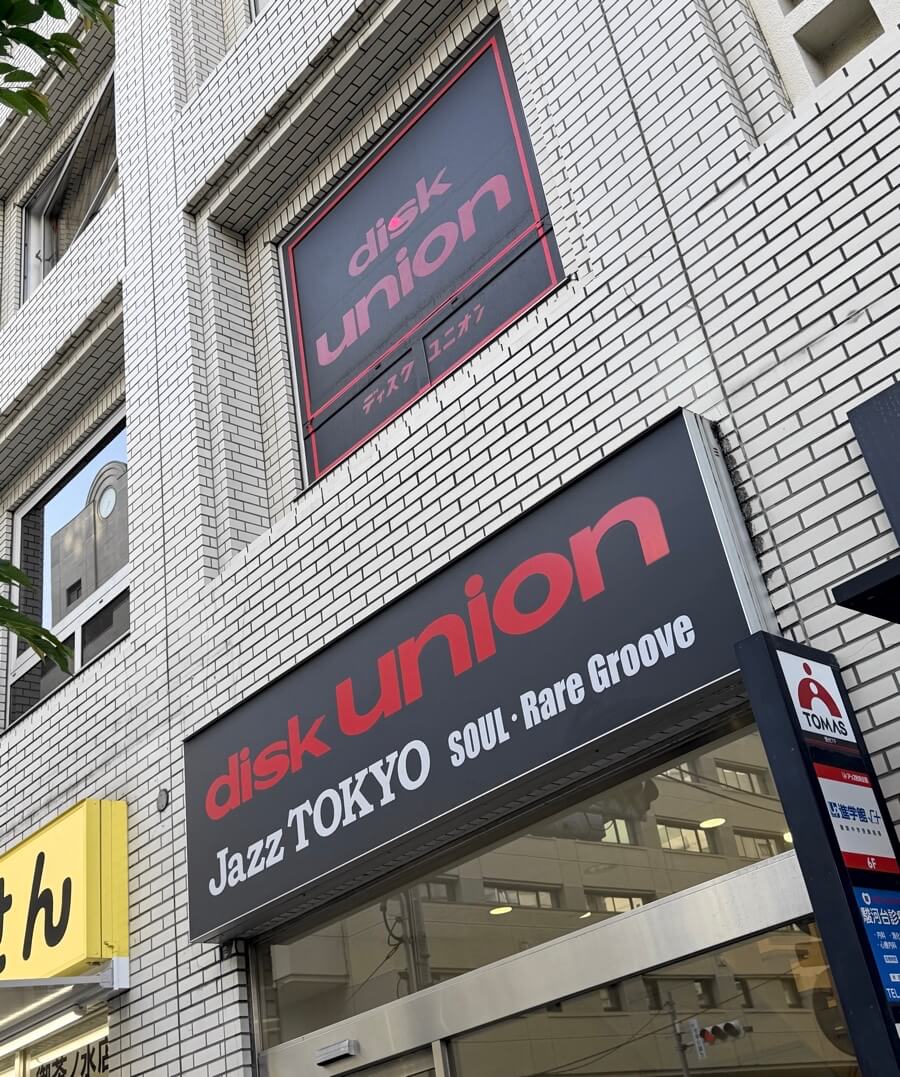
My first full day in Tokyo typically sees me heading to Ochanomizu to hit the Disk Unions (Jazz and Classical) and usually one or two of the Jimbocho Kissas.
Advertisement
Disk Union Jazz TOKYO in Ochanomizu.
For some reason though I’d never hit Jazz Olympus! on an open day. I’ve either made the attempt to visit on a Sunday or Monday (their regular closing days) or during one of the big, one-week Japanese holiday periods when almost all Jazz Kissas close (Golden Week in early May, O-bon in August, and at New Year).
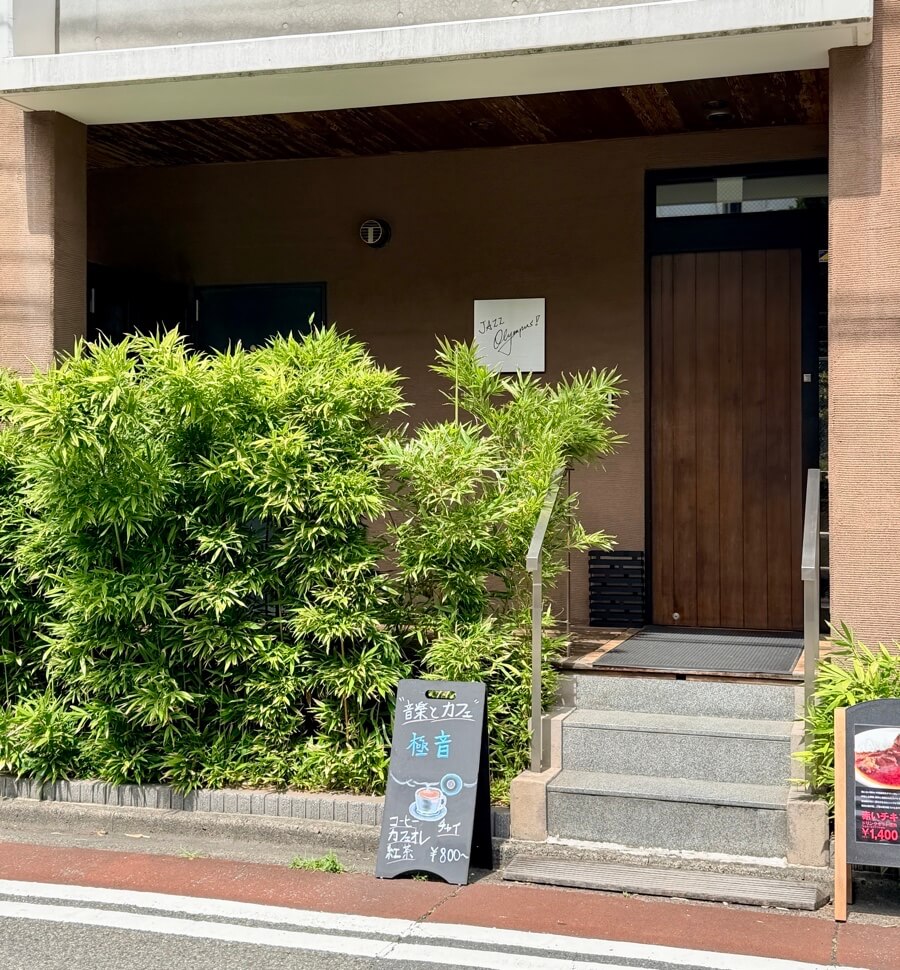
Jazz Olympus! And the exclamation mark is earned!
As it turns out, Olympus! closed down in the spring of 2025, underwent some renovations and a system changeover, and reopened under new ownership in November 2025.
Olympus is not officially in Jimbocho but is so close (just across the street in Ochanomizu) that it might as well be.
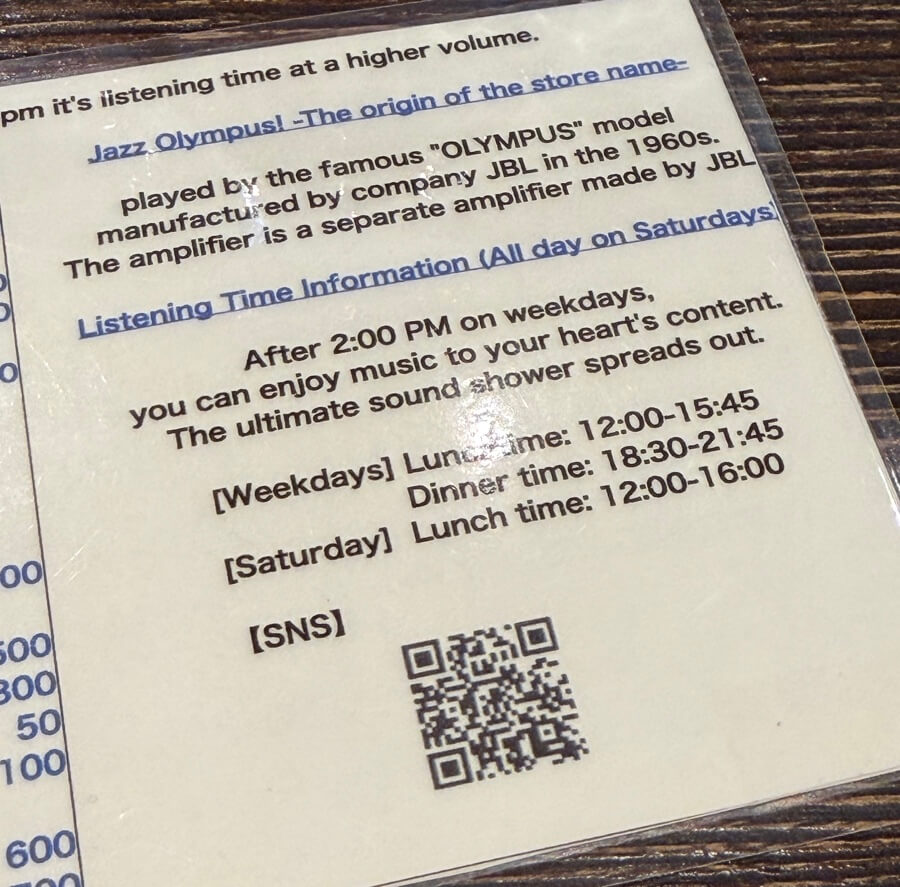
In case you wondered how the Kissa got its name…
This time around I checked ahead to see if Olympus! was open before visiting, and it was worth the wait. You can also make reservations, which is unusual for a Jazz Kissa.
Advertisement
Advertisement. Scroll to continue reading.
The non-smoking space is quite large and modern, but also welcoming and comfortable. There’s seating for 24 at six 2-tops down both sides of the room and a long communal table down the middle for singles.
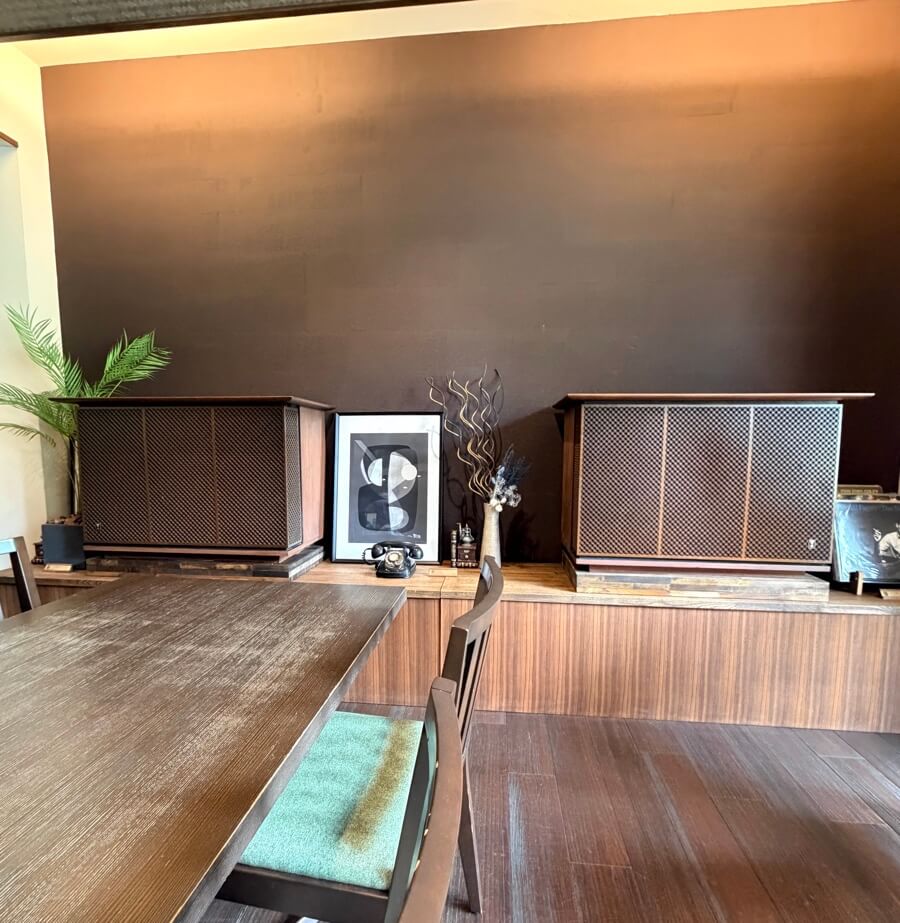
That is one serious system.
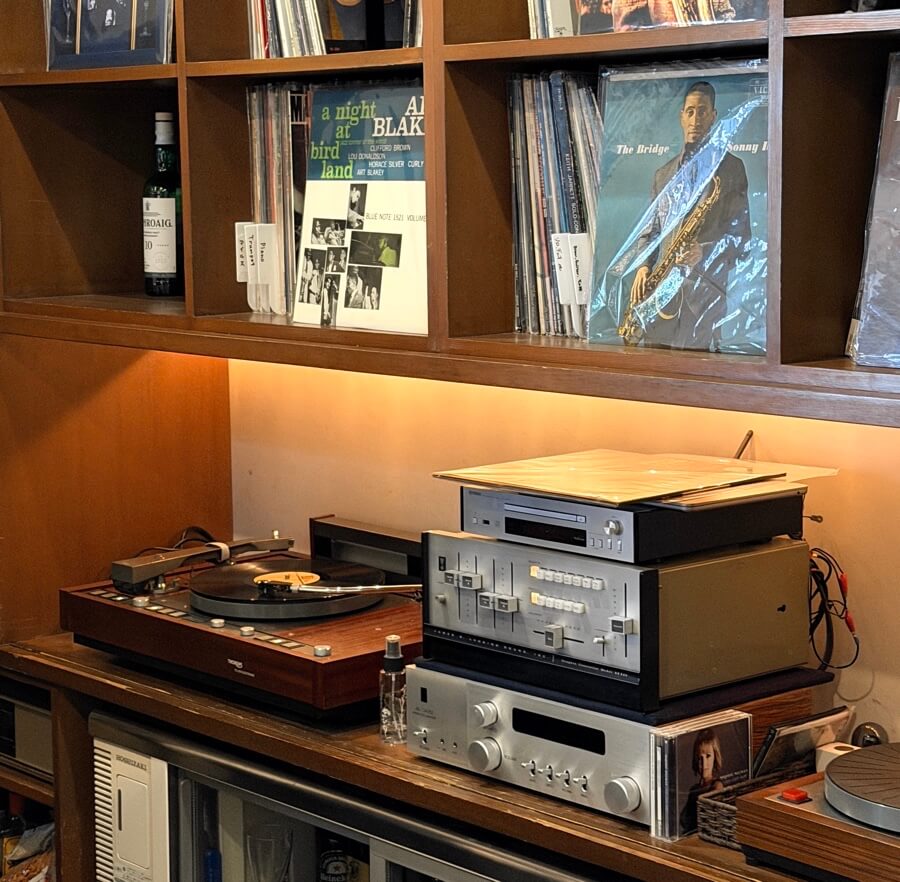
The big JBL Olympus speakers sound superb with amplification (power and pre) also by JBL, with Thorens TD-126 Mk. II turntable as source, and the vibe was perfect.
Shop system explained.
They play Western music from opening (noon) to 12:45, then jazz. Quiet talk is okay through lunch, and volume goes up from 2:00 for “listening time.” They also serve dinner from 6:30 in the evening.
Advertisement
Jazz Kissa serving curry, or curry shop playing jazz?
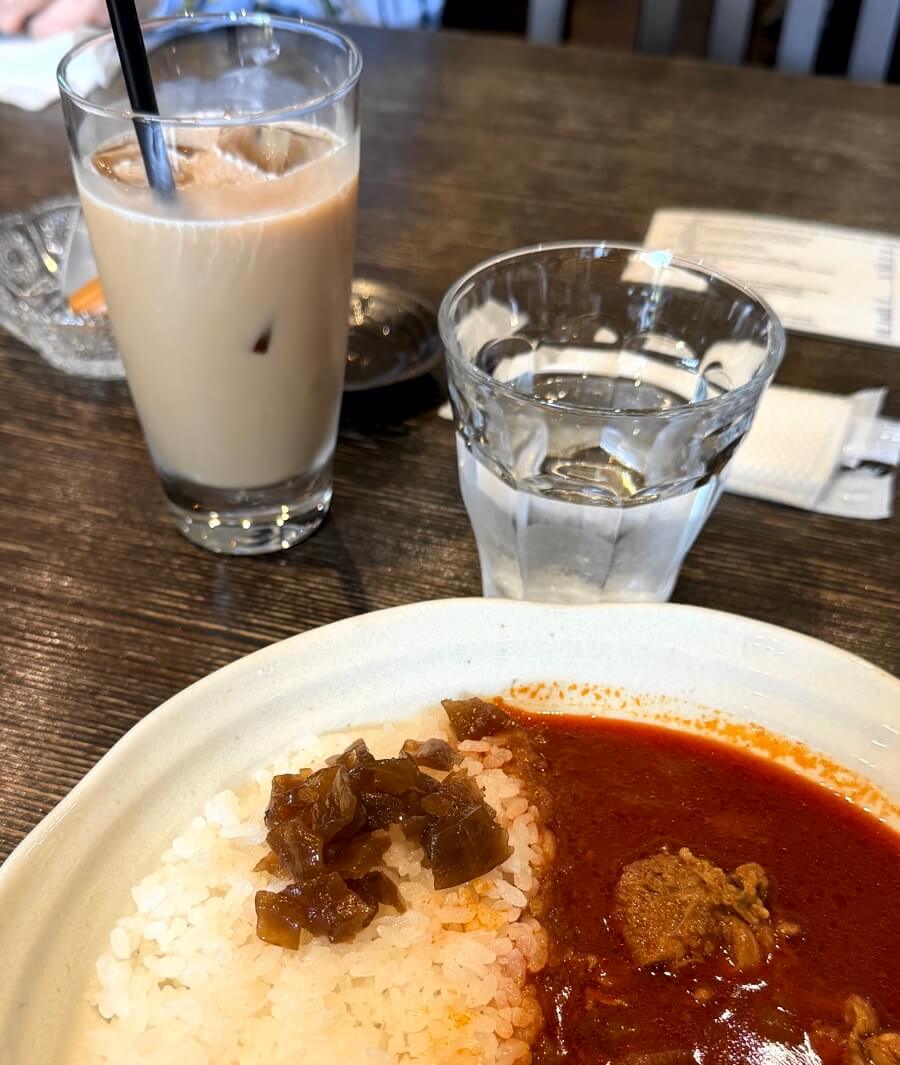
The Spicy Chicken Curry lunch set with drink, in my case iced coffee, was delicious. Olympus! is known for it’s curry to the point where some question if this is a Jazz Kissa that serves curry or a curry shopthat plays jazz. For ¥300 more I could have had a larger portion of curry, but that would have been gilding the lily.
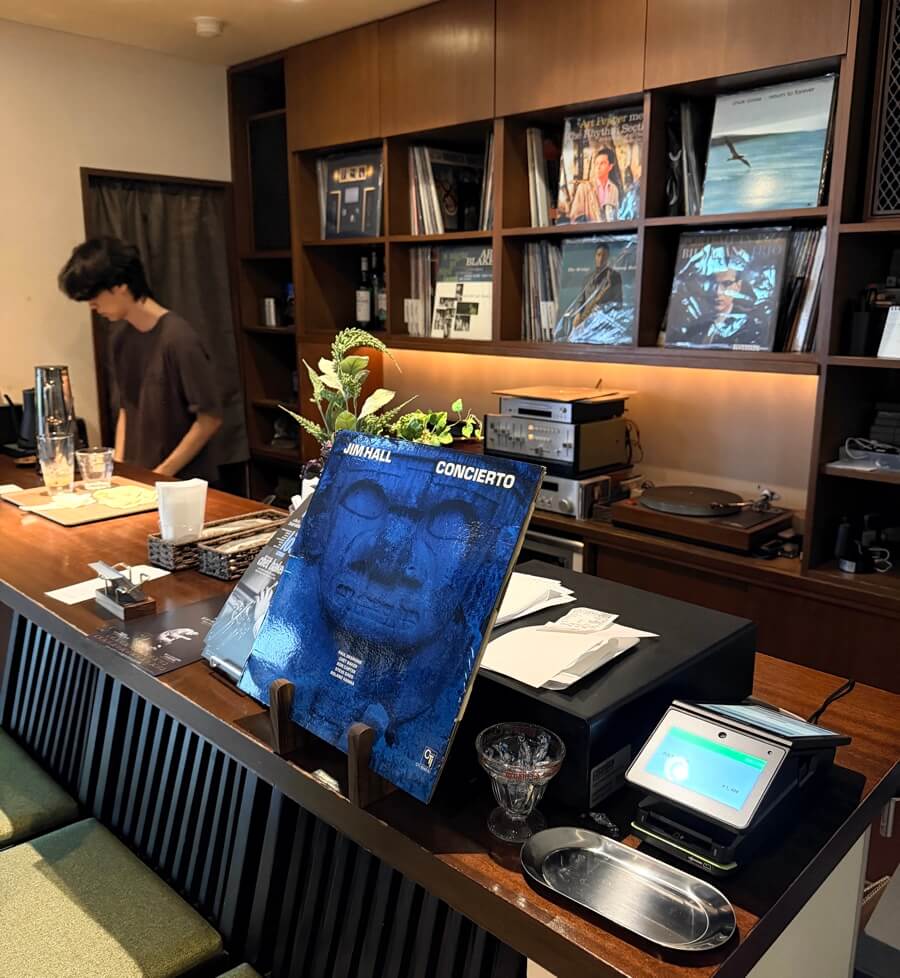
Control centre and serving hub.
I stuck around for several record sides including Dave Brubeck (Take Five), Art Blakey (Live at Birdland), McCoy Tyner (Nights of Ballads & Blues) and Jim Hall (Concierto).
Closing
This really was a great day. Four Kissas in a day could easily have been five, and it wouldn’t have been a huge stretch to add one or two of the other Jimbocho shops – Big Boy and/or Adirondack, or one of the places I’ve yet to visit, like On A Slow Boat, Ladrio or Naru (also Ochanomizu) – to make a bumper day of jazzing.
Final Eigakan view…
If you’ve visited any of these places, or do so in the future, I’d love to hear about it in the comments or by DM on Instagram at @audioloveyyc.
Nio says it has performed more than 100 million battery swaps since 2018
The technology is hailed for its ease and speed
Slower on-site charging also reduces the strain on the grid
The history of EV battery swap technology is as long and as complicated as the electric vehicle itself, with numerous manufacturers attempting to create networks that would allow owners to drive in and have a fresh battery inserted in minutes.
Renault worked alongside the Better Place network with its early Fluence Z.E. model back in 2011 to push battery swap technology, and even Tesla had a stab at it, finally scrapping the idea due to a lack of interest.
But Chinese manufacturer Nio has continued to push forward with battery swapping technology, stating that during China’s recent May Day travel rush, its Power Swap business completed over 1 million battery swaps in a single week, according to Inside EVs.
Latest Videos From
Nio’s all-electric sub-brand Onvo currently operates 2,491 stations across China but is targeting more than 3,300 by the end of the year. This is in addition to Nio’s own 3,843 Power Swap stations.
Advertisement
Nio said that on its busiest day, May 1, the company swapped out 170,585 batteries across its entire network. On average, each site swaps out around 40 batteries a day, slowly recharging the spent cells and replacing them in a different vehicle once fully charged.
From May 1 until May 5, Nio says it provided 15.4 gigawatt-hours of energy, which it claims was around 16.3% of all energy delivered to EVs in China over the same period, according to Inside EVs.
Analysis: a standardized system is needed
(Image credit: Nio)
There are so many benefits of battery swapping technology, with the most obvious being speed. It takes around three minutes to swap a battery pack, while even the fastest chargers on the planet still take around ten minutes.
Advertisement
Sign up for breaking news, reviews, opinion, top tech deals, and more.
For most, the public EV charging experience takes at least 20 minutes, if not 45 or more.
Another plus point is that the spent battery cells are charged at a much slower rate on-site, meaning there is far less demand on local grids than an entire bank of ultra-fast-charging outlets delivering 1.5MW of power to multiple cars.
That said, battery swap technology is also very expensive, with a huge investment required from a manufacturer or provider to not only build the sites, but also ensure there are enough battery packs available to service an entire fleet.
Advertisement
This is why Nio’s Power Swap technology is limited outside of China, with a handful of stations operating in Europe. Although the number is steadily increasing.
On top of this, there is a distinct lack of standardization in the automotive battery industry, meaning Nio’s battery swap tech only works with Nio or its Onvo models.
However, the Chinese marque has been working with the country’s leading battery supplier, CATL, to both standardize and deploy battery-swapping technology that could see it open to rival manufacturers, such as Chery and Geely.
Advertisement
This is likely to make Chinese car design even more homogeneous, as vehicles will have to be built around the battery-swapping hardware, but it is a great way to make EV charging more convenient and lower the cost of EV ownership.
In most cases, customers simply lease the battery pack (one of the most expensive parts of an EV) on a monthly basis, which means manufacturers can lower the sticker price and encourage budget-savvy consumers to make the switch.
Britain spent nearly £1.5 billion shutting down renewable electricity generation last year
Smart meter households can now receive free electricity during surplus renewable generation periods
Octopus customers have already saved millions through experimental free electricity flexibility sessions
The UK is generating more renewable electricity than ever, but its grid often cannot use it all – as when the wind blows hard, or the sun shines bright, and demand is low, demand can fall below what is being produced.
Instead of putting that surplus power to wider use, the system has routinely paid wind farms to turn turbines off while paying gas plants to stand by, a payout practice which has cost the country almost £1.5 billion in a single year – with early 2026 figures suggest the bill is still piling up rapidly.
Now, Octopus Energy is looking to change this with a new expansion to its scheme to provide free electricity to its users across the UK.
Latest Videos From
Advertisement
What Octopus Energy is already doing
Octopus Energy has run its own version of this idea for several years through a system it calls Saving Sessions.
Going forward, the company will let its 8 million customers use more electricity when wholesale prices plummet.
This approach has already saved customers £4.6 million through free electricity sessions, and Octopus has also paid out £5.8 million to customers who cut down during peak times.
The firm stated, “the changes made to the DFS scheme mean customers can benefit from using more energy when renewables are high.”
Advertisement
Sign up to the TechRadar Pro newsletter to get all the top news, opinion, features and guidance your business needs to succeed!
British Gas already runs a separate scheme called PeakSave with half-price electricity on Sunday afternoons.
NESO said it may need to use more of its tools more often than in previous summers to manage low demand.
More than 36,000 Brits have expressed interest in joining Octopus Fan Club tariffs near local wind turbines.
Advertisement
Joining the Fan Club means that your electricity unit rates can be reduced by up to 50% when a local wind turbine is spinning and generating power.
The scheme will not fix the grid bottleneck on its own, but it offers a practical way to reduce waste immediately.
Octopus says it is “buzzing” about the change, and the company has a genuine track record of making these sessions work for its customers.
Advertisement
How the grid is changing its rules
Several energy companies are now testing schemes that pay households to use more power when renewable generation is high.
The National Energy System Operator (NESO) has also updated its Demand Flexibility Scheme (DFS) such that it proffers a solution.
The update allows power suppliers to encourage customers to run appliances, charge vehicles, or otherwise raise their consumption during periods of surplus.
Advertisement
Households with smart meters can be offered free or cheaper electricity at certain times, or rewards such as points that convert into gift cards.
The grid operator decides when the scheme runs and pays the supplier if it delivers the required change in demand.
Whether other suppliers will deliver the same level of engagement remains uncertain.
Free electricity for weekend washing is a real benefit, but the deeper problem of congested power lines still requires billions in new infrastructure spending.
Advertisement
For now, smart meter households with participating suppliers can claim a small win against a very large and wasteful problem.
Looking for the most recent Mini Crossword answer? Click here for today’s Mini Crossword hints, as well as our daily answers and hints for The New York Times Wordle, Strands, Connections and Connections: Sports Edition puzzles.
Need some help with today’s Mini Crossword? Read on. And if you could use some hints and guidance for daily solving, check out our Mini Crossword tips.
If you’re looking for today’s Wordle, Connections, Connections: Sports Edition and Strands answers, you can visit CNET’s NYT puzzle hints page.



























































You must be logged in to post a comment Login