
Security teams log 54% of successful attacks and alert on just 14%. The rest move through your environment unseen.
The Picus whitepaper shows how breach and attack simulation tests your SIEM and EDR rules so threats stop slipping by detection.




Amazon’s carbon footprint jumped 16% last year after several years of little or no increase. The company emitted nearly 80.9 million metric tons of carbon dioxide equivalent in 2025. By comparison, that’s slightly higher than the nation of New Zealand’s emissions.
Amazon disclosed its climate-related data in its most comprehensive sustainability report to date, which includes a breakdown of its carbon sources, water use and other environmental impacts.
Not surprisingly, energy use showed the biggest rate of increase in the 2025 carbon tally as Amazon and other tech companies are working to rapidly expand their data center capacity to meet AI computing demand.
For the first time since 2019, the company also reported an uptick in its “carbon intensity” — a measure of how much carbon was emitted relative to each dollar of revenue. Amazon has promoted this metric as a sign that it can decouple its growth from its climate impacts.

Despite emissions moving in the wrong direction and ongoing data center-driven challenges, the Seattle-area company remains committed to its pledge of net-zero carbon emissions by 2040.
When it comes to that goal, “I remain confident and optimistic in the overarching vision and the long-term progress we continue to make toward it,” said Kara Hurst, Amazon’s chief sustainability officer, in the foreword to the company’s annual report.
The report highlights areas of success that include:
The company also reported improvements in reducing packaging and plastic use in delivered items; increasing use of low-carbon building materials in data center construction; and progress toward becoming water positive at its data centers, meaning it aims to replenish more water to communities than it uses.
@media (max-width: 600px) {
aside.callout { float:none !important; max-width:100% !important; margin-left:0 !important; margin-right:0 !important; }
aside.callout .callout-img { display:none !important; }
}
The Amazon-backed Climate Pledge — an effort to get other organizations to commit to net-zero carbon emissions by 2040 — has grown to 656 signatories after adding 107 companies this year. It marks a notable increase at a time when companies are growing quieter about climate commitments, with some stepping back from earlier goals.
But the surge in data center investment shows little sign of slowing, which will keep complicating Amazon’s path to lower emissions. CEO Andy Jassy said Amazon expects to spend a record $200 billion in capital expenditures this year, including “AI, chips, robotics, and low-Earth orbit satellites.”
Not all reactions to that buildout have been positive — even within the company. Members of Amazon Employees for Climate Justice this month testified before the Seattle City Council in favor of data center requirements for renewable energy and labor protections, though Amazon doesn’t operate any data centers within city limits.
In response to the sustainability report, the employee group was critical of the increased emissions and accused the company of pressuring carbon accounting standards bodies — including the Greenhouse Gas Protocol and the Science-Based Targets Initiative — to adopt weaker rules.
More than 1,000 employees have signed an open letter drafted last year criticizing Amazon’s “warp-speed approach” to its AI development, the group added.
In the report, Amazon CSO Hurst acknowledged that AI-fueled advances could catalyze sustainability solutions or slow progress toward climate goals.
“But what alternative do we have,” she said, “but to continue to invest, learn, and move forward to try to solve one of the world’s most challenging issues?”
Editor’s note: Story updated at 11:56 a.m. with comment from Amazon Employees for Climate Justice.
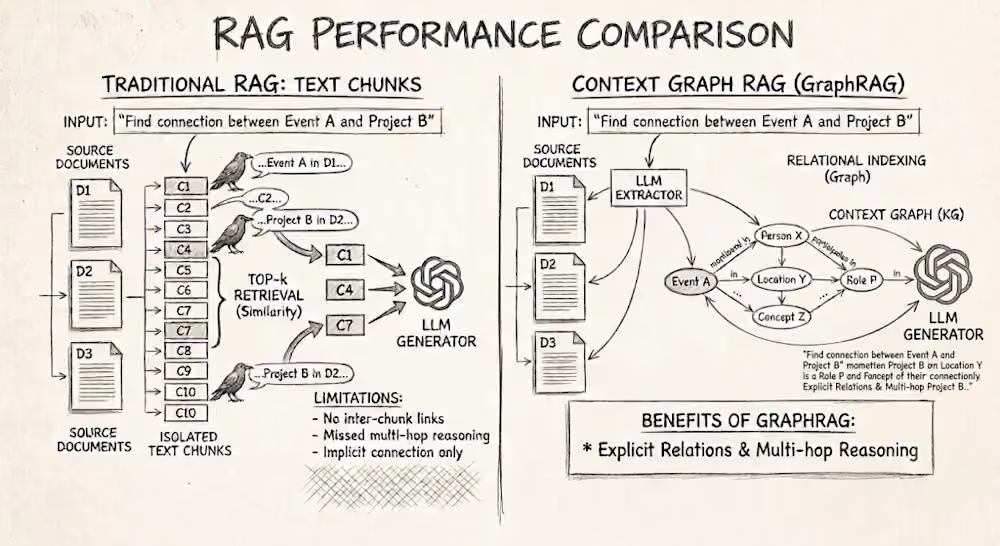

If you have built anything with retrieval-augmented generation (RAG) in the last two years, you have lived its central frustration: You chop your documents into chunks, embed them, retrieve the top few that look similar to the question, and hand them to the model. For “What was our Q3 refund policy?” This works beautifully. For “What are the recurring themes across two years of customer complaints?” it falls flat — because no single chunk contains the answer.
The fashionable fix is GraphRAG: Instead of feeding the model isolated snippets, you first build a knowledge graph of the entities and relationships in your corpus, then use that structure as context. The pitch is seductive. But seductive pitches deserve scrutiny, so I went through the evidence — the original Microsoft paper plus four independent benchmark studies — to answer a simple question: When you swap text chunks for a context graph, do answers actually get better?
The short version: Yes, substantially — but only for the right kind of question, and not for free. Let me show you the receipts.
Standard vector RAG retrieves the k passages most similar to your query. That design has three structural blind spots:
It can’t connect the dots. When an answer requires joining facts that live in different passages through a shared entity, chunks embedded in isolation never reveal the link.
It’s blind to global questions. “What are the main themes?” needs the whole corpus, but similarity search only returns the handful of chunks that superficially resemble the question.
It severs context at chunk boundaries. The relationships and hierarchy that complex reasoning depends on are exactly what chunking throws away.
Microsoft Research framed this crisply when they introduced GraphRAG: Baseline RAG “struggles to connect the dots” and performs poorly when asked to “holistically understand summarized semantic concepts over large data collections.”
GraphRAG attacks the problem before any question is asked. During indexing, a large language model (LLM) reads every chunk and extracts entities, relationships, and claims, assembling them into a weighted knowledge graph. It then runs community detection (the Leiden algorithm) to cluster the graph into a hierarchy of related topics, and pre-writes a natural-language summary for each community.
At query time, those summaries do the heavy lifting. Each relevant community drafts a partial answer (the “map” step), the partials are ranked and merged (the “reduce” step), and the model synthesizes a final response grounded in structure rather than in a few cherry-picked snippets. Variants like HippoRAG take a different route, using the graph plus a Personalized PageRank walk to find the right passages — but the core idea is the same: Let relationships, not just cosine similarity, decide what context the model sees.
Microsoft pitted GraphRAG head-to-head against naïve RAG on global, “make sense of the whole corpus” questions over million-token datasets, with an LLM acting as judge across three axes: Comprehensiveness, diversity, and empowerment.
GraphRAG won 72 to 83% of comprehensiveness comparisons and 62 to 82% of diversity comparisons against vector RAG. Its highest-level summaries used up to 97% fewer tokens than processing the source text directly.
That is not a rounding-error improvement. On exactly the kind of question that breaks text-chunk RAG, the graph wins two out of three times or better.
The second piece of evidence is about retrieval quality: Does the right supporting passage even make it into the top results? On the standard multi-hop QA benchmarks (MuSiQue, HotpotQA, 2WikiMultiHopQA), graph-guided retrieval lifts Recall@5 dramatically:
Average Recall@5 climbs from 73.4% (naïve RAG) to 87.8% (graph-guided), a +19.6 point gain.
The biggest jumps come on the hardest, cross-document sets: +31 points on MuSiQue and +28 points on 2Wiki.
HippoRAG reports up to a 20% accuracy improvement on multi-hop QA, at 10–20× lower cost and 6–13× faster than iterative retrieval methods.
Here is where the story gains nuance. A 2025 study from Michigan State and Meta ran RAG against four GraphRAG families under one unified protocol — identical chunking, embeddings, and generation — and found no single winner. The two approaches are complementary:
On single-hop, factual lookup (natural questions), plain RAG edged ahead (F1 64.8 vs. 63.0 for the best graph method).
On multi-hop reasoning (MultiHop-RAG), graph-guided retrieval pulled in front (70.3 vs. 67.0 overall accuracy).
The lesson: A context graph is not a universal upgrade. It is a specialized one that pays off precisely when questions demand reasoning across pieces.
The most recent benchmark, GraphRAG-Bench (ICLR 2026), set out to answer “In which scenarios do graph structures provide measurable benefits?” Its accuracy-by-task numbers map the boundary cleanly:
Simple fact retrieval: Text chunks 60.9 vs. graph 60.1 — effectively a tie. The graph’s structure is overhead the query doesn’t need.
Complex reasoning: Graph 53.4 vs. chunks 42.9 — a +10 point graph win.
Contextual summarization: Graph 64.4 vs. chunks 51.3 — a +13 point graph win.

Read top to bottom, the pattern is unmistakable: The graph’s advantage grows with the reasoning depth of the question, while text chunks hold their ground on isolated facts.
Two caveats keep this from being a slam dunk, and ignoring them is how teams end up disappointed.
Building the graph is expensive. Having an LLM extract entities and relationships from an entire corpus isn’t cheap. One analysis put index construction at roughly $48 against GPT-4o for a moderate corpus, far above a vanilla vector index. (Microsoft’s own follow-up, LazyGraphRAG, defers extraction to query time and cuts that to around 0.1% of the cost – a tacit admission that the original budget is impractical for many deployments.)
Many of the wins are judged by another LLM — and LLM judges are biased. An independent audit found systematic flaws in this evaluation style: position bias (swapping which answer appears first can swing the win-rate by more than 30 points), length bias, and trial bias (identical comparisons disagree across runs). After correction, one popular method’s reported 66.7% win rate fell to about 39% — below the 50% break-even line.
The takeaway is not “the research is wrong.” It is that the large gains — the +20% multi-hop accuracy, the +15-to-30-point recall jumps — are robust, while narrow comprehensiveness margins deserve a skeptical second look with reference-based metrics.
Strip away the hype and the decision is refreshingly practical.
Use a context graph when: Your questions are multi-hop, global, or sensemaking in nature; you need comprehensive, multi-perspective answers; and your corpus is richly interconnected (research libraries, case files, incident histories, knowledge bases).
Stick with text chunks when: Your queries are mostly single-fact lookups; your corpus is small or flat; and indexing cost, latency, and operational simplicity outweigh a marginal quality bump.
Best of all, go hybrid: The systematic studies converge on the same recommendation: route each query to the right method, or fuse evidence from both. Combining graph and chunk retrieval consistently beats either one alone. You don’t have to choose a religion; you have to build a router.
A context graph is not magic, and it is not snake oil. It is a targeted instrument. Hand it a question that requires connecting scattered facts or synthesizing a whole corpus, and it will outperform text chunks decisively. Hand it “what’s the phone number on page 3,” and you’ve paid for indexing you didn’t need.
The teams that win with GraphRAG in 2026 won’t be the ones who graph everything. They’ll be the ones who know which questions deserve a graph — and build pipelines smart enough to tell the difference.
Dattaraj Rao is an R&D architect at Persistent Systems
Welcome to the VentureBeat community!
Our guest posting program is where technical experts share insights and provide neutral, non-vested deep dives on AI, data infrastructure, cybersecurity and other cutting-edge technologies shaping the future of enterprise.
Read more from our guest post program — and check out our guidelines if you’re interested in contributing an article of your own!
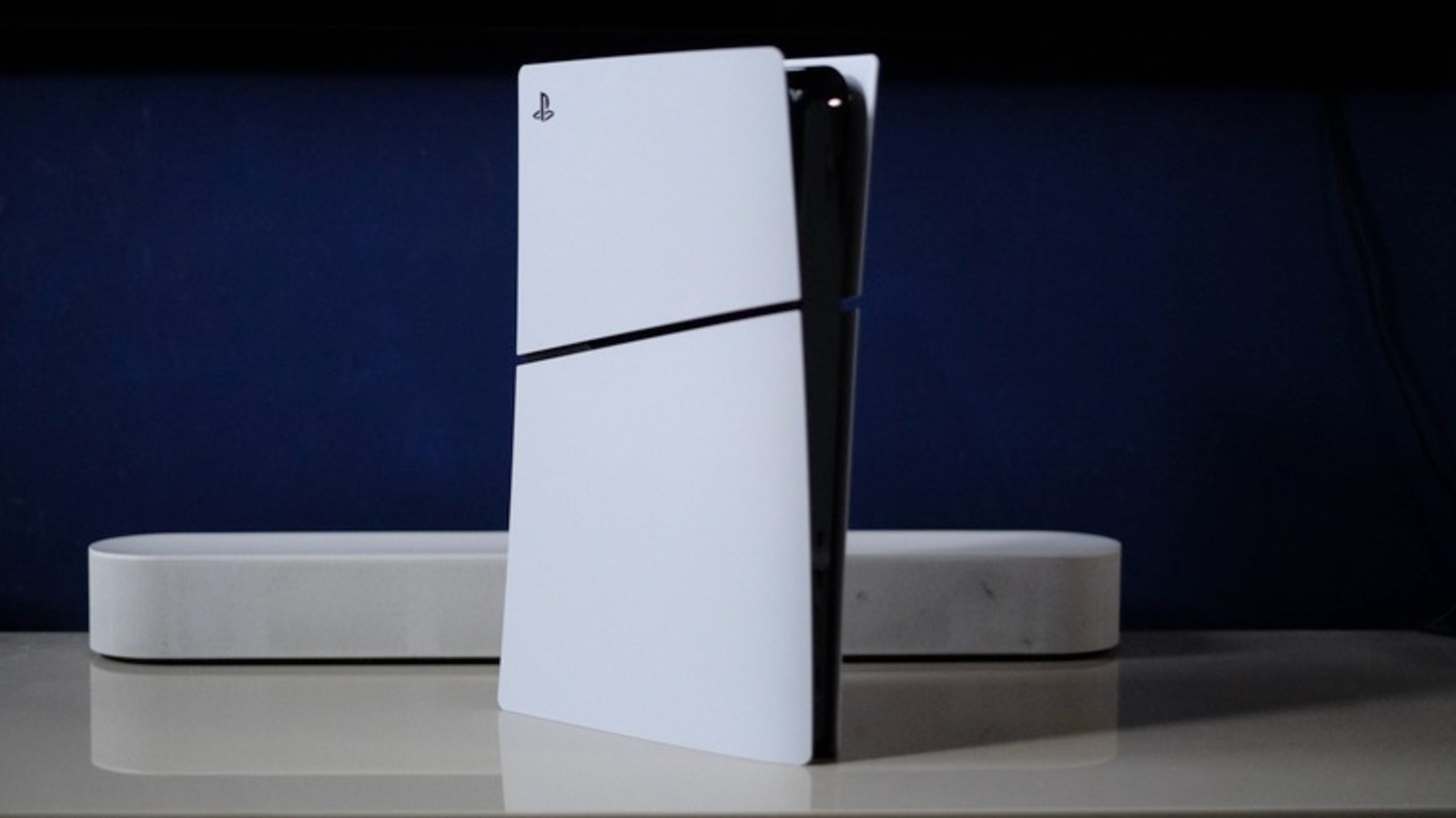
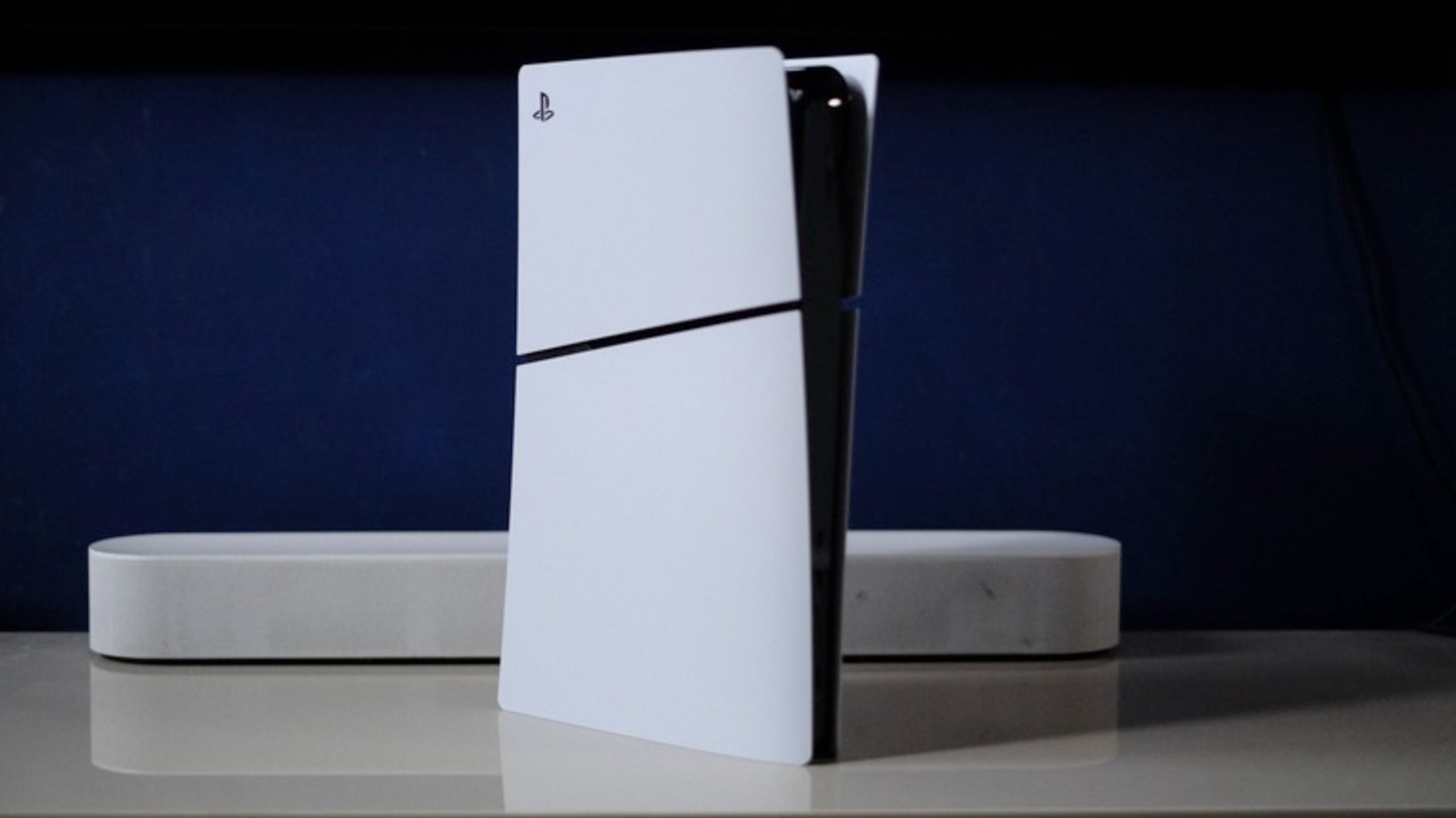
The best way to answer this question is to look at the precedent Sony has already set. The PS4 originally launched in 2013, and to this day the console still semi-regularly receives firmware updates, with the most recent patch rolling out just last month.
Granted, it amounted to little more than a few security fixes, but the fact that Sony still considers a 13-year-old console worth bothering about at all bodes well for the PS5. The PS4 also still functions just as well as it did when the PS5 replaced it in 2020, and despite unconfirmed reports last year that some of the console’s features would be sunsetted in 2026, you can turn on a PS4 today and expect it to work perfectly.
A new console generation replacing an old one almost always involves considerable software overlap for at least the first few years of the newer console’s life. In Sony’s case, this has been true since the very first PlayStation, with a number of PS1 titles still launching well into the PS2’s life, and it’s been the same story with every subsequent console the company has released.
Even today, the PS4 is still getting plenty of new games, even if the AAA side of things moved on a while ago. Incredibly popular games like Fortnite and Roblox still thrive on the last-gen Sony console, and it’s not unusual to see newly released indie games popping up on PS4 either at launch or a little while after.
Nothing lasts forever, though, and at some point those last remaining clingers-on will get a big old nudge towards newer hardware. Call of Duty: Warzone is being shut down on PS4 and Xbox One later this year, and it does feel like 2026 is something of a final twilight year for last-gen machines. And while it has published a few games on the PS4, the last notable first-party release on the console from Sony was probably 2022’s God of War: Ragnarok, which was the final big cross-generation game.
So what does this all mean for the PS5 and eventual PS6? It’s hard to predict Sony right now, as its first-party releases have dramatically decreased this generation. The longer development times and significantly higher cost of developing AAA games mean we haven’t had a single brand new game from Naughty Dog since the PS5 launched, and at this rate it wouldn’t be a huge shock if Intergalactic: The Heretic Prophet skipped the current generation altogether.
In all likelihood, the popularity of the PS5 means Sony will continue to support it in the same way it has done with all of its previous consoles, especially if the PS6 is as obscenely priced as some fear it could be. Just don’t expect any cross-generation releases to come on a disk, as Sony is ending support for physical games in 2027.

“A major scientific review is challenging the idea that more protein is always better,” reports ABC News:
The review, led by pathologist and biomedical researcher Dudley Lamming and published in the journal Cell Press Blue, examined more than 350 studies involving humans, mice, insects, yeast, and other organisms. The review found that eating less protein, or less of certain amino acids that make up protein, may turn on body processes linked to healthier aging, as well as metabolism, the process by which the body turns food and drinks into energy…
For adults who already get enough, eating more protein may offer little benefit, while some research suggests that eating less protein could support healthier aging… Lamming reviewed the effect of reducing protein in many body processes. One of the processes involves a hormone called FGF21. “There’s an increase in a hormone called FGF21 that promotes energy expenditure [when protein intake is reduced],” Lamming said. “It essentially increases thermogenesis in your adipose tissue, so you don’t just store fat, but actually burn it as fuel.” This may help explain why some studies connect lower-protein diets with less body fat, better blood sugar control and a healthier metabolism. Eating less protein may also affect signals that tell cells when to grow, repair damage or recycle old cell parts. These jobs may play a role in aging.
However, protein restriction is not the same as protein deficiency. The goal is not to deprive the body of an essential nutrient. Instead, the research raises the possibility that avoiding unnecessary excess could benefit some people who already consume enough… Before reaching for another high-protein product, a better question may be: How much protein does my body actually need?

A few days ago, Apple introduced a new “Upgrade” program that is essentially a lease program for buying Apple hardware. Instead of paying the full cost up front, you space the monthly installments (12, 24, and 36 month spells), and at the end of the lease period, you can choose to return the device, upgrade to a new one, or pay the remainder cost and keep it forever.
The broad idea is simple. Instead of taking a thousand-dollar hit on the wallet, you space the hit across small monthly payments. For a flagship iPhone, that broadly comes down to a dollar per day, and for budget phones such as the iPhone 17e, it’s just half a dollar each day, if you do the breakdown. At least Apple is looking at it that way.
“It’s a way to get into a product on a fairly affordable basis, particularly for those customers who want to upgrade on some kind of schedule,” outgoing Apple chief Tim Cook said during the company’s recent earnings call. The timing of the launch is no coincidence.

Bloomberg says Apple has been working on the program for years, but only decided to launch it in 2026. You know what else is happening in 2026? A price hike for iPhones. As per analyst estimates, the iPhone 18 Pro duo could see a price hike that’s as generous as $300 for the flagship.
Imagine paying close to $1400-1500 for an iPhone. And yes, the hikes are imminent, if Apple’s own comments are to be believed. Look no further than the price surge that was announced for the Mac and iPad hardware merely a few weeks ago. And oh, let’s not forget the elephant in the room — the foldable iPhone.
This one is going to cost north of $2,000, as per multiple reports, including reliable sources such as Bloomberg. Samsung already sells its latest Galaxy Z Fold 8 Ultra starting at $2,100, so it won’t be surprising to see Apple crossing that sticker price barrier.

I know half a dozen people in my close circle who own a foldable phone. None of them paid for it in one go. Forking close to two thousand dollars — on a phone — simply doesn’t make sense. Plus, a person who is willing to spend that amount on a phone is clearly a tech-savvy person, and they will most likely switch to a shiny new model in a year, or two.
That’s exactly what Apple is targeting. “If you look at the Apple Upgrade, what it’s all about is making it easier for customers to get their hands on our latest products with a leasing plan that’s right for them,” Cook said during the earnings call.
Apple is not only giving customers a more affordable (in the short-term, at least) option to own an iPhone, but also readying the field for its obviously premium foldable iPhone that arrives this fall.
Even in developing countries like India, a huge majority of iPhone users rely on local financing schemes to buy those devices. And considering the fact that Apple’s Upgrade program offers unlocked devices, the target audience will likely lap it up.

I won’t mince words here. Leasing and owning are entirely different things. With the Upgrade program, Apple essentially wants to trap you in its walled garden. You don’t technically own the device. You either let Apple take it back at the end of the lease period, or you exchange it with a new iPhone. Or Mac. Or Apple Watch. Or iPad.
If you do maths on the back of a napkin, you aren’t really in for a rewarding deal unless you love tech upgrades but don’t want to pay hundreds of dollars each time you want to experience a new iPhone. But there is a third route that can actually be a winning proposition for many.
At the end of the lease period, you can just pay off the remainder amount, convert the lease into full ownership, and subsequently sell the device in the second-hand market. The benefit? The depreciation on iPhones is dramatically lower than that of any rival brand’s competing product out there.
Apple knows that too well, and even its CEO is mildly nudging the target audience to take this route. “Of course, as you know, the residual values on Apple products are generally much higher than the residual value on several of our competition,” Cook was quoted as saying during Apple’s Q2 earnings call.
It’s a reality I’ve witnessed year after year. And it applies not just to iPhones, but also Macs, iPads, and Apple Watches. Apple’s just making the best of a status quo it has built over decades, and it’s finally in a position to reap rewards that are simply not feasible for its rivals.
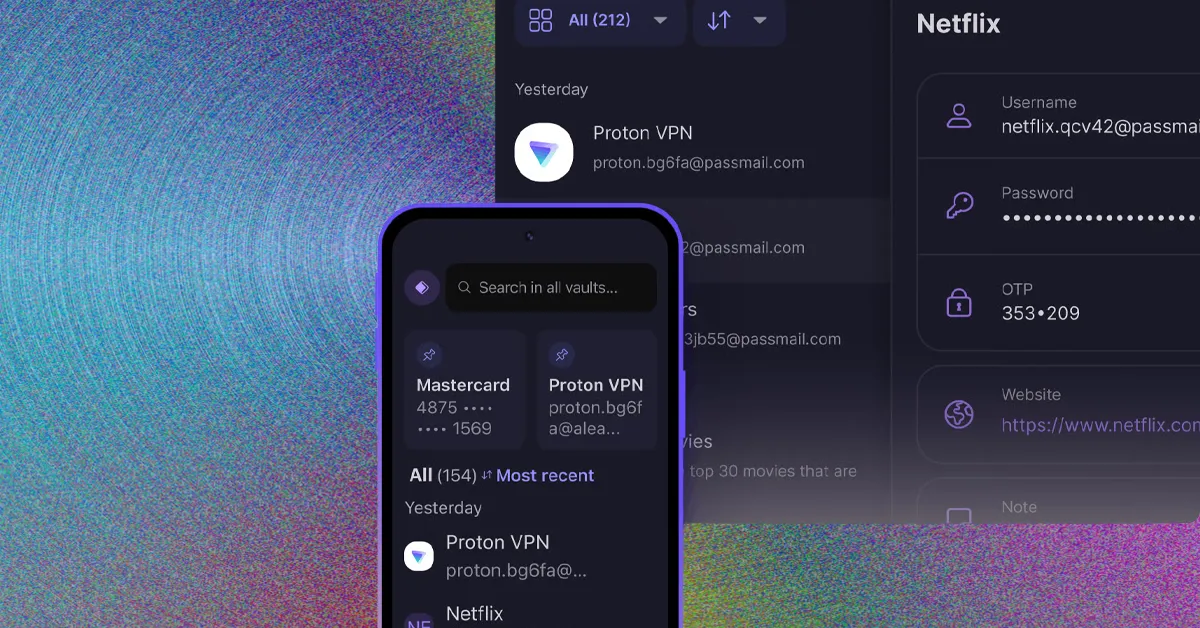
The downside of KeePassXC is that it doesn’t have official mobile clients. However, third-party apps are available for iOS and Android. KeePassXC is a fork of KeePass that offers better cross-platform support, but there are a handful of other forks available, as well.
Download the desktop app for Windows, macOS, or Linux and create your vault. There are also extensions for Firefox, Edge, and Chrome. The project does not offer apps for phones. Instead, it recommends KeePass2Android or Strongbox for iPhone.
Password managers are not a one-size-fits-all solution. Our top picks cover most use cases and are the best choices for most people, but your needs may be different. Fortunately, there are plenty of good password managers out there. Here are some more we’ve tested.
Google Password Manager (Free): Google has offered a password manager within Chrome for years, but it recently broadened with a dedicated Android app. Although storing passwords in your browser has a few security concerns, Google offers top-notch encryption, the option to turn on on-device encryption, and integration with biometric authentication on Android and Windows. It can even store passkeys. For most people, I recommend a third-party password manager, but if you aren’t using a password manager at all, Google Password Manager is a good option.
RoboForm ($30 Per Year, $48 Per Year for a Five-User Family Plan): RoboForm has most of the same features as the rest on this list, but it lacks some of the things that differentiate our top picks, like Bitwarden’s open source aspect and 1Password’s travel features. I’ve been testing the free plan for a while and haven’t run into any problems. There are apps for every common platform, and it’s easy to use. RoboForm recently completed an independent security audit and came out looking good.
Pass (Free): Pass is a command-line wrapper around GPG (GNU Privacy Guard), which means it is only for the nerdiest users. It supports managing encrypted .gpg files in Git, and third-party mobile apps are available. It’s not for everyone. For years, this was my password manager of choice, but eventually, Bitwarden’s ease of use won me over.
Most password managers are decent. Some are more secure than others, but the top password managers largely compete on features and pricing. Security is a prerequisite. However, there are a couple of password managers you should avoid for various reasons.
ExpressKeys by ExpressVPN: ExpressKeys is from ExpressVPN (formerly Keys by ExpressVPN that I tested, but it’s the same product), which ranks among the best VPN services on the market. But ExpressKeys doesn’t live up to the same standard. It’s secure, but I struggled to get it to work with any consistency. The browser extension requires the desktop ExpressVPN app to work, and closing either will force you to sign back in all over again. Worse, ExpressKeys wouldn’t recognize that I was signed into my ExpressVPN account about half the time. It needs some serious fixes before I can recommend it. —Jacob Roach


Google is preparing a new Chrome security feature that would block policy-installed extensions from hijacking the New Tab page or changing the default search engine.
BleepingComputer spotted the protection in a chain of work-in-progress Chromium Gerrit changes. It has not shipped yet, but Google plans to enable it by default once the changes are approved.
“In low-trust environments (unmanaged consumer devices), enterprise policy force-installs and recommendations are abused to lock in search engine or new tab page hijackers,” Anunoy Ghosh, who works at Google, wrote in a post.
“This CL enables the kBlockDseNtpOverrideExtensionsOnUnmanagedDevices feature flag by default, activating the end-to-end blocking defense on unmanaged Windows and macOS devices.”
Right now, Chrome allows organizations to use enterprise policies to force-install extensions and control browser settings.
It’s not exactly bad on properly managed work devices connected to a domain or mobile device management system, but malware has been abusing the same feature on regular consumer PCs.
A malicious program can add local Chrome policy keys without your permission and force-install an extension that replaces the New Tab page, changes your search engine, or redirects searches to suspicious websites.
Chrome may then believe that the extension was installed by an administrator, which prevents you from removing or disabling it.
In some cases, Chrome also displays the confusing “Managed by your organization” message, even though the PC is not actually owned or managed by an organization.
Google describes these consumer PCs as “low-trust” environments because Chrome is reading policies stored locally without confirmation from a trusted authority, such as a domain or MDM service.
Under the proposed protection, Chrome would block attempts to install policy-controlled extensions that override the New Tab page or default search engine.
The installation would be canceled, and Chrome would save the extension ID in a blocked-extension preference.
Chrome would also stop trying to download the same blocked extension during future policy checks, which should prevent repeated installation attempts and unnecessary network activity.
An extension that you installed manually would no longer be converted into a locked, policy-controlled extension. It would remain under your control, so you could still disable or remove it.
If a previously managed device loses its trusted management status but still has local policy keys, Chrome would automatically uninstall affected New Tab and search-engine override extensions.
Google is adding metrics to measure how often these policy-based hijackers appear and how frequently Chrome blocks them.
Legitimate administrators would also have access to an escape-hatch policy that disables the protection when a required enterprise extension overrides the New Tab page or search engine.
The Gerrit changes are still under review, so the feature is not available in stable Chrome yet.

Security teams log 54% of successful attacks and alert on just 14%. The rest move through your environment unseen.
The Picus whitepaper shows how breach and attack simulation tests your SIEM and EDR rules so threats stop slipping by detection.
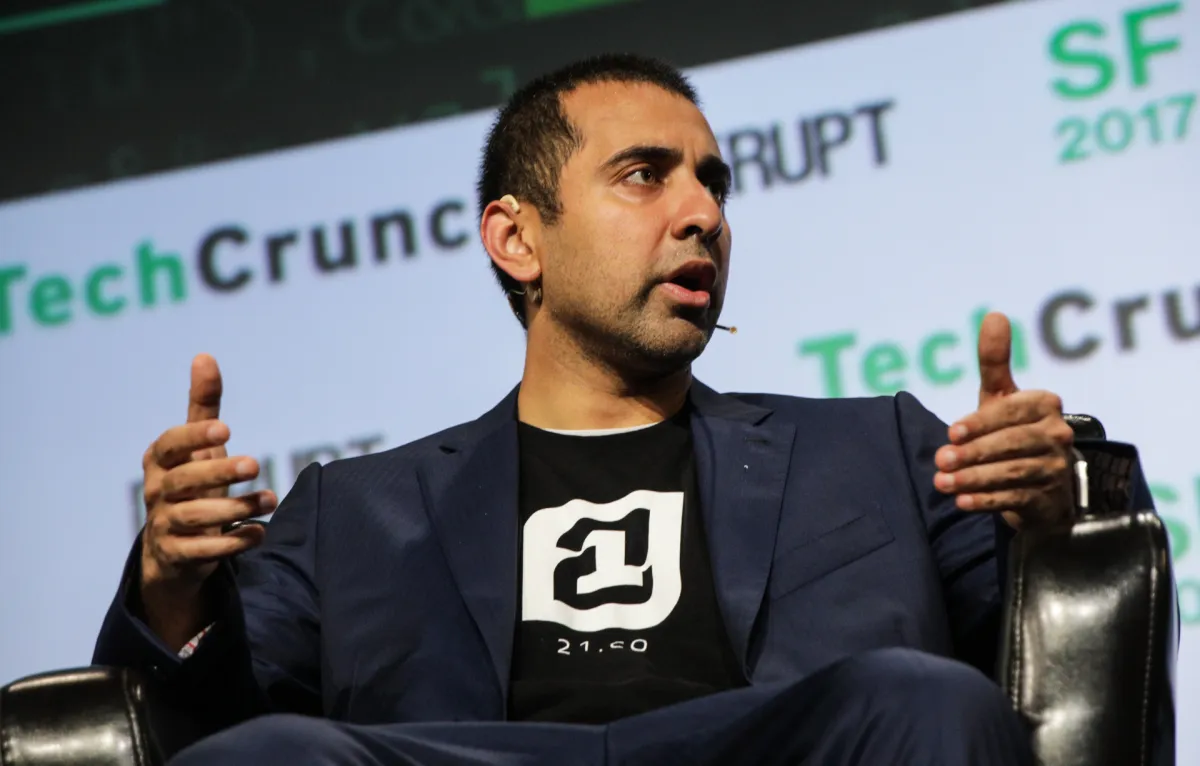
The Malaysian government has ordered the shutdown of a startup-centric community called the Network School, according to The Wall Street Journal.
Billing itself as “a frontier community for techno-optimists,” the Network School reportedly grew out of entrepreneur and investor Balaji Srinivasan’s conviction that the United States is in irreversible decline; Srinivasan has said his goal is “to start a new country.”
So the Network School is supposed to represent the first step in a seven-stage plan (outlined in Srinivasan’s book “The Network State”) for building a new society. Based in an abandoned Malaysian hotel, the WSJ described the program as “part tech incubator, part self-improvement retreat.” Attendees, however, complained about moldy rooms, as well as a dearth of women and nightlife.
After receiving questions from the WSJ, Srinivasan – who apparently renounced his American citizenship in 2023 — published a lengthy post on X declaring himself “a proud Singaporean” and complaining that the WSJ was working on a “hit piece” that would make him look like “an odd duck […] as opposed to an early adopter.”
And although the current Malaysian campus will reportedly need to shut down due to licensing issues, Srinivasan recently announced a new agreement for a campus in Kazakhstan.

“When a group of teenagers set out to hike British Columbia’s famed Howe Sound Crest Trail in early July, Google Maps suggested the trek would take about five hours,” reports SFGate.
“Instead, the hike stretched deep into the night, leaving the group exhausted, dehydrated, injured and in need of a helicopter rescue…”
Although the approximately 18-mile route with a 6,000-foot elevation gain can be completed by experienced trail runners in a day, search and rescue officials generally recommend hikers treat it as a two-day backpacking trip. The teenagers, all 17 years old, believed Google Maps’ estimate that the route would take about five hours. The printed directions they were carrying, which were shared publicly by Lions Bay Search and Rescue, gave simple instructions for two legs of the trail, but didn’t account for the terrain or elevation. “[Google Maps] is calculating the time that you’re walking a straight road on pavement,” [said Maria Masiar, training officer and search manager with Lions Bay Search and Rescue]. “When you get into outdoor terrain, that no longer holds true.”
Expecting only a short outing, each hiker carried about half a liter of water and limited food. There are no reliable water sources along the trail, meaning hikers must carry enough supplies for the entire route. As the group climbed, they began suffering from dehydration and muscle cramps but continued onward despite falling dramatically behind schedule. Eventually, the group made the decision to turn back and abandon making it to the end of the trail — and as the sun began to set and the group started to descend, fatigue took its toll. According to Masiar, members of the group had already stumbled and fallen several times while trying to race the coming dark, and only one hiker had a headlamp. Eventually, another hiker slipped about 10 feet off a boulder, injuring his tailbone badly enough that he could no longer continue. Search and rescue crews responded, ultimately evacuating him by helicopter.
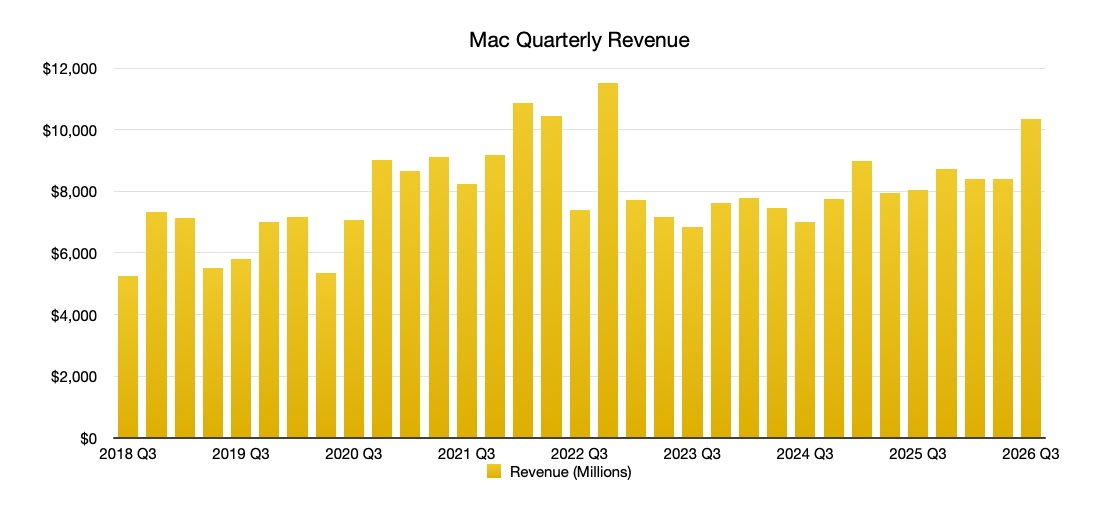
Apple’s Mac sales rose by more than 25% in the last quarter, compared to the same time period in 2025, solely on the back of the MacBook Neo that incoming CEO John Ternus championed.
Shortly before John Ternus was announced as Apple’s next CEO, it was noticeable that he was the one championing the MacBook Neo instead of Tim Cook. As well as part of handing over the reigns, though, this was because the MacBook Neo project was driven by Ternus.
Now according to figures from Apple’s latest earnings call, the company’s Mac revenues climbed by 28.66% over the last quarter. This is mostly due to the only new product available just prior to the quarter, the MacBook Neo.

Mac quarterly revenue, as of Q3 2026
Apple reports that during the quarter ended June 27, 2026, it sold $10.35B worth of Macs. That compares to $8.05B for the same quarter in 2025.
Significantly, though, there were no new Macs released during this quarter at all — but the MacBook Neo ramped up to full availability. The quarter also saw steep price hikes across the whole Mac lineup, including adding $100 to the price of the MacBook Neo.

Mac quarterly revenue change year-on-year, as of Q3 2026
The timing of that price rise won’t have been chance, though, as it was announced on June 25, 2026. That means that the MacBook Neo only saw the higher price for two days of the quarter.
Consequently there’s no indication of whether the MacBook Neo can continue this huge success in the next quarter. But it’s a measure of how the lower-cost MacBook Neo was an immediate boost to Apple’s bottom line.

Enterprise demand for high-capacity hard drives continues accelerating as artificial intelligence generates expanding datasets requiring reliable, affordable storage throughout increasingly complex cloud environments.
That growing appetite for storage has intensified competition among cloud providers building artificial intelligence infrastructure, keeping enterprise hard drives firmly within long-term investment plans.
Seagate‘s recent fiscal fourth-quarter and full-year 2026 financial results indicate continued demand from cloud data center customers despite no disclosure of future HDD allocation commitments.
Latest Videos FromTechRadar
AI relies heavily on enormous storage capacity because valuable data must remain available long after computations are done.
As organisations deploy larger AI models, the amount of stored information grows alongside computing requirements.
This significantly increases the dependence on enterprise hard drives for economical long-term retention.
Unfortunately, HDDs are becoming harder to secure, with manufacturers already booking long-term supply commitments years in advance.
Many HDD manufacturers have locked in contracts extending into 2028 and 2029, meaning customers wanting drives that far out may already be shut out of available slots
Seagate said robust cloud data center demand kept driving business growth, tying stronger storage purchases to AI infrastructure expanding across global markets.
“As AI accelerates data generation and its value, we see durable long-term demand for mass capacity storage,” said Dave Mosley, Seagate’s chair and chief executive officer.
Seagate expects strengthening exabyte demand through its Mozaic platform and differentiated HAMR technology roadmap as enterprise deployments continue expanding worldwide.
While Mosley did not explicitly say customers are reserving Seagate’s hard drive production through 2029, his remarks make clear that enterprise demand now sits at the core of the company’s strategy.
Seagate’s latest financial results provide additional evidence supporting enterprise storage demand.
Its annual revenue increased during fiscal 2026, while Q4 performance exceeded company expectations for revenue.
Operating cash flow reached $3.7 billion during fiscal 2026, while free cash flow totalled $3.1 billion after fourth-quarter operating cash flow reached $1.3 billion.
Seagate also reduced total debt by $1.4 billion during fiscal 2026, including $302 million during the fourth quarter, ending with outstanding debt of $3.6 billion.
Cash and cash equivalents reached $1.7 billion, while ordinary shares outstanding totalled 227 million and directors approved a quarterly dividend of $0.74 per share.
Seagate expects first quarter fiscal 2027 revenue near $4.1 billion alongside non-GAAP diluted earnings per share of approximately $7.30, subject to stated variations.
“Seagate’s strong fourth quarter exceeded our expectations for revenue and non-GAAP EPS, capping a fiscal 2026 in which we grew,” Mosley said.
“Our performance is being driven by robust cloud data center demand and disciplined execution, and we see the momentum continuing in 2027.”
Seagate’s rival, Micron, already made the move that Seagate is currently hinting at. It exited its Crucial consumer RAM businesslin 2025 to redirect supply toward enterprise customers.
Micron said the shift was meant to “improve supply and support for our larger, strategic customers in faster-growing segments,” cutting consumer buyers off from a manufacturer they had relied on for years.
Seagate has not gone that far with hard drives, but Mosley’s insistence that cloud demand is driving the business suggests it could prioritise enterprise demand if current trends continue.
Via TechPowerUp

Follow TechRadar on Google News and add us as a preferred source to get our expert news, reviews, and opinion in your feeds.
![Macias - MONEY [Official Music Video]](https://wordupnews.com/wp-content/uploads/2026/02/1770256831_maxresdefault-80x80.jpg)



Commonwealth Games boxing: Jadumani Singh seals dominant 5-0 win over Pakistan’s Sumama Rehman to enter quarter-finals | Commonwealth Games News


Why Trees Belong on the Risk Register


Weekend Open Thread: Wit & Wisdom


Intel is reversing course and bringing hyper-threading back to its server chips


Meta enters AI-training agreement with far-right ‘propaganda rag’ Newsmax


Luke Littler dismantles Gerwyn Price to retain title in Blackpool


MicroStrategy Post-Earnings CLARITY Act Push Could Add New Catalyst for Its Stock


The Part of the Electric Transition Nobody Wants to Discuss

‘Stargate’ Creator’s New Sci-Fi Series Returns for Season 3 Tomorrow


BITCOIN JUST ENTERED THIS CRITICAL ZONE…


Major shareholder moves on Canyon


Bitcoin Enters the 3rd Stage of the Bear Market


XRP Ledger v3.3.0 brings five institutional features


Kraken Enables Retail Access to Jersey Mike’s IPO via Tokenized Shares


New macOS Sequoia & Sonoma security updates for older Macs


Luke Littler’s dominance sparks GOAT debate


Claude: Build Financial Dashboards in Minutes (2026)


Seema Kaliramna Wins Discus Throw Bronze, Takes India’s CWG Medals Tally To 17


Johnson & Johnson agrees to $5.5B settlement over talc cancer claims


Crypto PAC spending tops $2M in Michigan House race


You must be logged in to post a comment Login