




Connect with us

Tech

The enterprise AI land grab is on. Glean is building the layer beneath the interface.

Published

on

The battle for enterprise AI is heating up. Microsoft is bundling Copilot into Office. Google is pushing Gemini into Workspace. OpenAI and Anthropic are selling directly to enterprises. Every SaaS vendor now ships an AI assistant. 

In the scramble for the interface, Glean is betting on something less visible: becoming the intelligence layer beneath it. 

Seven years ago, Glean set out to be the Google for enterprise — an AI-powered search tool designed to index and search across a company’s SaaS tool library, from Slack to Jira, Google Drive to Salesforce. Today, the company’s strategy has shifted from building a better enterprise chatbot to becoming the connective tissue between models and enterprise systems.

Advertisement

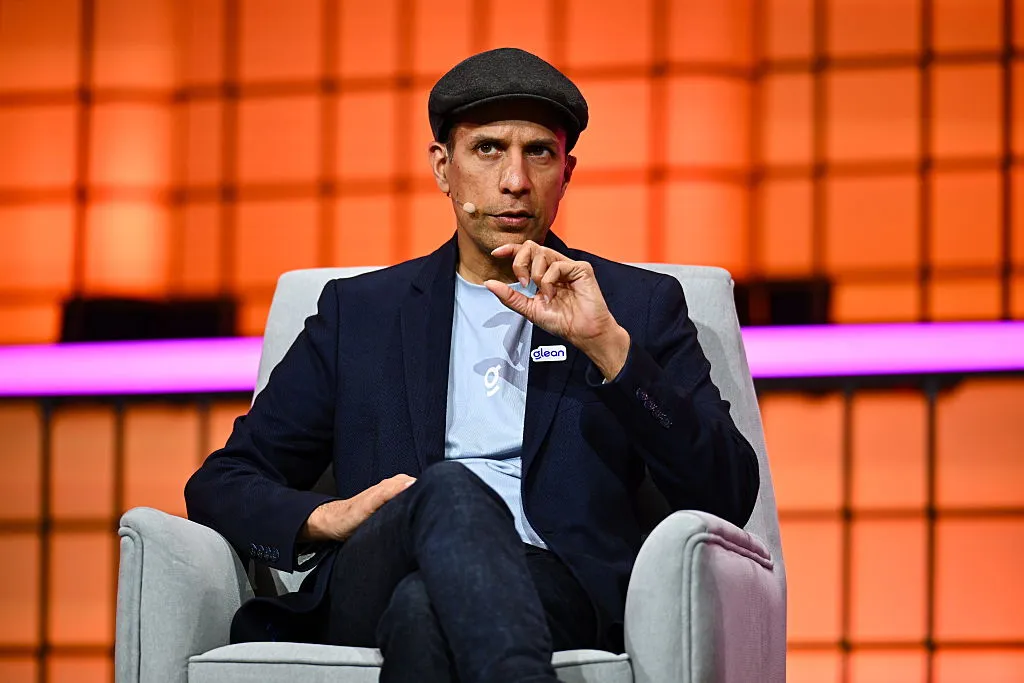
“The layer we built initially – a good search product – required us to deeply understand people and how they work and what their preferences are,” Jain told TechCrunch on last week’s episode of Equity, which we recorded at Web Summit Qatar. “All of that is now becoming foundational in terms of building high quality agents.”

He says that while large language models are powerful, they’re also generic. 

“The AI models themselves don’t really understand anything about your business,” Jain said. “They don’t know who the different people are, they don’t know what kind of work you do, what kind of products you build. So you have to connect the reasoning and generative power of the models with the context inside your company.”

Glean’s pitch is that it already maps that context and can sit between the model and the enterprise data. 

Advertisement

The Glean Assistant is often the entry point for customers — a familiar chat interface powered by a mix of leading proprietary (ie, ChatGPT, Gemini, Claude) and open-source models, grounded in the company’s internal data. But what keeps customers, Jain argues, is everything underneath it. 

Techcrunch event

Boston, MA
|
June 23, 2026

Advertisement

First is model access. Rather than forcing companies to commit to a single LLM provider, Glean acts as the abstraction layer, allowing enterprises to switch between or combine models as capabilities evolve. That’s why Jain says he doesn’t see OpenAI, Anthropic, or Google as competition, but rather as partners. 

“Our product gets better because we’re able to leverage the innovation that they are making in the market,” Jain said. 

Advertisement

Second are the connectors. Glean integrates deeply with systems like Slack, Jira, Salesforce, and Google Drive to map how information flows across them and enable agents to act inside those tools. 

And third, and perhaps most important, is governance. 

“You need to build a permissions-aware governance layer and retrieval layer that is able to bring the right information, but knowing who’s asking that question so that it filters the information based on their access rights,” Jain said. 

In large organizations, that layer can be the difference between piloting AI solutions and deploying them at scale. Enterprises can’t simply load all their internal data into a model and create a wrapper to sort out the solutions later, says Jain. 

Advertisement

Also critical is ensuring the models don’t hallucinate. Jain says its system verifies model outputs against source documents, generates line-by-line citations, and ensures that responses respect existing access rights. 

The question is whether that middle layer survives as platform giants push deeper into the stack. Microsoft and Google already control much of the enterprise workflow surface area, and they’re hungry for more. If Copilot or Gemini can access the same internal systems with the same permissions, does a standalone intelligence layer still matter?

Jain argues enterprises don’t want to be locked into a single model or productivity suite and would rather opt for a neutral infrastructure layer rather than a vertically integrated assistant.

Investors have bought into that thesis. Glean raised a $150 million Series F in June 2025, nearly doubling its valuation to $7.2 billion. Unlike the frontier AI labs, Glean doesn’t need massive compute budgets.

Advertisement

“We have a very healthy, fast-growing business,” Jain said.

Source link

Continue Reading
Click to comment

Leave a Reply

Your email address will not be published. Required fields are marked *

Tech

How to watch The Madison season 1 online from anywhere

Published

on

Contrary to popular belief, The Madison is not another Yellowstone spinoff. The neo-Western drama, which stars Michelle Pfeiffer and Kurt Russell as Clyburn family matriarch Stacy and patriarch Preston, was created by Taylor Sheridan and is set predominantly in Montana, but that’s where the similarities end.

You can watch The Madison season 1 online from anywhere with a VPN.

Swipe to scroll horizontally

Source link

Advertisement
Continue Reading

Tech

You’ll now have to fork out for an additional subscription if you want to watch 4K content on Prime Video

Published

on

Amazon is the price of its ad-free Prime Video subscription and locking 4K UHD streaming behind this new tier. Starting April 10 for US customers, a rebranded Prime Video Ultra subscription will cost $5 per month, up from $3 per month.

For that extra $2, you get a download capacity increase from 25 to 100, and you can now run five streams concurrently instead of three. Whether those “Ultra” upgrades are worth the $24 annual hike will probably depend on how many boxsets you like to plough through on a long flight, or how many devices are using your Prime Video account.

The changes are most galling for Prime members who automatically qualify for Prime Video with ads through their membership, as Amazon has decided to remove 4K streaming from the standard tier. That means that, despite already paying $15 per month or $139 per year for Amazon Prime, you’ll be stuck with 1080p shows and movies unless you sign up to Prime Video Ultra.

Amazon has thrown in Dolby Vision support for the first time, as well as upping the concurrent stream and download count on its free tier as well, but you’re losing the privilege of UHD content that has been available to all Prime Video members for years. Dolby Atmos remains exclusive to the $5 tier too.

Advertisement

Amazon is the latest streamer to put its prices up, following similar recent hikes to , and . If you don’t want to give the company any more of your hard-earned, you have just under a month to binge your way through the second season of  in all of its irradiated UHD glory.

Source link

Continue Reading

Tech

Report: TerraPower leadership faces tough questions about Gates, Myhrvold and Epstein ties

Published

on

TerraPower signage. (TerraPower Photo)

Employees of the nuclear power company TerraPower questioned CEO Chris Levesque on Thursday about connections between convicted sex offender Jeffrey Epstein and company board leaders Bill Gates and Nathan Myhrvold.

Levesque called the ties a “troubling situation” in a town-hall meeting with staff, The Seattle Times reported, but said there were no links between the Bellevue, Wash.-business and either Epstein or his money.

Gates, the Microsoft co-founder and former CEO, and Myhrvold, former Microsoft CTO, launched TerraPower in 2006 out of Intellectual Ventures, the Bellevue-based firm founded by Myhrvold that supports the development of innovative technologies. Gates is currently chairman of TerraPower’s company board while Myhrvold serves as vice chair.

In the town-hall meeting, an employee asked how women could feel safe and respected if presenting at future board meetings, the Times reported.

Details of Epstein’s relationships with prominent elected and business leaders were revealed in the millions of pages of unsealed court documents that include emails, notes, flight logs, photos and videos and financial records associated with the deceased pedophile.

Advertisement

Gates apologized last month to Gates Foundation staff for his past interactions with Epstein, acknowledging in an internal town hall that the situation puts the global health foundation’s reputation at risk, according to a Wall Street Journal report.

Gates met with Epstein multiple times from 2011 to 2014, years after the financier had pleaded guilty to soliciting a minor for prostitution, according to the WSJ report. 

In the meeting with foundation employees, Gates acknowledged two extramarital affairs (with a Russian bridge player and a Russian nuclear physicist) that Epstein later discovered through a mutual connection. Gates insisted he didn’t participate in or witness any of Epstein’s crimes, WSJ reported, telling staff, “I did nothing illicit. I saw nothing illicit.”

Gates has not been accused of wrongdoing by any of Epstein’s victims.

Advertisement

The Seattle Times has separately reported on deeper ties between Myhrvold and Epstein, including emails showing the two met regularly in Seattle and New York from 2010 through 2018, and correspondence that appeared to show Myhrvold visiting Epstein’s private island. 

Myhrvold was also listed as a “friend” in Epstein’s 2003 birthday book and contributed a personal letter to the project, as GeekWire previously reported

A spokesperson for Myhrvold said previously that he knew Epstein “from TED conferences and as a donor to basic scientific research” and “regrets that he ever met him.”

On Thursday, Levesque acknowledged, “Some of the news is troubling, but again there’s no evidence of any wrongdoing,” the Times reported. “This is stuff that we’ll continue to work through with our board,” he added.

Advertisement

Reached by GeekWire, a company spokesperson said via email: “TerraPower has no additional comments outside of what was shared directly with employees.”

TerraPower last week became the first company in the nation to receive federal approval for construction of its next-generation nuclear power plant. The Nuclear Regulatory Commission (NRC) issued a unanimous decision allowing work on its Wyoming demonstration plant to take essential next steps.

The company is engineering a new model of smaller, less expensive nuclear reactors that can be produced in three years from fabricated components — instead of the past approach of constructing giant, one-off structures that take a decade to erect. The reactors will be able to generate 345 of power around-the-clock, plus bursts of power provided by molten salt batteries.

New energy sources including TerraPower reactors are in high demand as tech giants seek renewable power to electrify their data center and AI operations.

Advertisement

Source link

Continue Reading

Tech

Uber relaunches Motional robotaxis in Las Vegas

Published

on

Two years after a brutal restructuring gutted Motional’s workforce and halted its commercial operations, the Hyundai-backed AV company is back on the Strip, still with a safety operator for now, but promising to remove one by the end of 2026.


Uber and Motional have relaunched a commercial robotaxi service in Las Vegas, making all-electric Motional IONIQ 5 vehicles available to riders across key locations on and around the Strip from 13 March 2026.

The service marks a significant milestone for Motional, which two years ago paused its commercial operations entirely, cut roughly 40% of its workforce, and was left fighting for its survival after co-founder Aptiv pulled its funding.

The relaunch is not yet fully driverless. Initially, Motional’s IONIQ 5 robotaxis will carry a human vehicle operator monitoring the road from the driver’s seat.

Advertisement

The company says it expects to remove the safety operator and begin a fully driverless service by the end of 2026, delivering on the target it set during its 2024 restructuring.

How the service works

Riders who request an UberX, Uber Electric, Uber Comfort, or Uber Comfort Electric may be matched with a Motional IONIQ 5 at no additional cost. When matched, a notification appears in the app giving riders the option to accept the autonomous vehicle or switch to a conventional ride.

Users who want to maximise their chances of getting an AV can opt in via the Ride Preferences section in their Uber app settings.

Once a robotaxi arrives, the vehicle can be unlocked and the trip started entirely through the Uber app.

Inside, audio cues prompt riders to close doors and fasten seatbelts. If support is needed at any point, a human assistance team is reachable through the Uber app.

Advertisement

At launch, the service covers designated rideshare zones along Las Vegas Boulevard at Resorts World Las Vegas and Encore at the Wynn, plus Westgate Las Vegas Resort & Casino, curbside locations in Downtown Las Vegas, and the Town Square shopping district near the airport.

Both companies say they plan to expand the operating area but did not give specifics.

The vehicle: SAE Level 4, FMVSS-certified

The IONIQ 5 robotaxi was co-developed by Motional and Hyundai Motor Group and is custom-built for ride-hail operations. According to Uber, it is one of the first SAE Level 4-capable autonomous vehicles to be certified under US Federal Motor Vehicle Safety Standards (FMVSS), the federal regulatory framework for motor vehicle equipment.

SAE Level 4 means the vehicle can handle all driving functions within a defined operational design domain without human intervention, though it does not require the capability to operate in all conditions everywhere.

Advertisement

“This milestone reflects our shared commitment to introduce autonomous vehicles in a way that prioritizes safety, increases reliability, and expands access to more ride options for our customers,” said Sarfraz Maredia, President of Autonomous Mobility & Delivery, Uber

Motional’s road back: from near-collapse to relaunch

The relaunch is the culmination of a turbulent two-year recovery. Motional was founded in 2020 as a $4 billion equal joint venture between Hyundai Motor Group and automotive technology company Aptiv.

It ran pilot rides in Las Vegas via Uber and Lyft and deliveries in Los Angeles via Uber Eats, all with a human safety operator present, and accumulated more than 130,000 autonomous rides through those programmes.

The company’s troubles crystallised in early 2024, when Aptiv announced it would stop allocating capital to the venture, citing the high cost of commercialising robotaxi technology and an uncertain path to profitability. Aptiv had forecast a non-cash equity loss of around $340 million for 2024 alone.

Advertisement

With Aptiv’s withdrawal threatening to destabilise the entire company, Hyundai stepped in with a near-$1 billion commitment: $475 million invested directly into Motional and $448 million to buy out 11% of Aptiv’s common equity interest. The restructuring left Hyundai with approximately 85% of Motional’s common equity and Aptiv with 15%.

The funding came with painful conditions. Motional halted all commercial rides and deliveries, paused plans to launch its second-generation driverless service, and cut approximately 550 staff, around 40% of its total workforce, across teams in Las Vegas, Pittsburgh, California, and Massachusetts. T

he company pivoted to focus exclusively on improving its underlying autonomous technology, including a shift toward a more neural network-driven approach to autonomy, before attempting any new commercial deployment.

Motional returned to fundraising in August 2025 with a $550 million Series B round led by Aptiv and joined by Hyundai and Nuance Investments, which boosted its valuation to $6.5 billion. That capital, combined with the technology rebuild, underpins today’s relaunch.

Advertisement

A busy week for Uber’s autonomous ambitions

The Las Vegas launch is not a standalone announcement. In the same week, Uber confirmed a deal with Zoox, Amazon’s autonomous vehicle subsidiary, to deploy Zoox’s purpose-built robotaxis on the Uber platform, initially in Las Vegas from summer 2026, followed by Los Angeles in mid-2027.

Uber and Wayve also announced a collaboration with Nissan on a robotaxi pilot in Tokyo, targeted for late 2026, which would be Uber’s first autonomous vehicle partnership in Japan.

Uber says it is currently working with more than 25 autonomous vehicle partners across its Mobility, Delivery, and Freight divisions. The company announced earlier in 2026 that it plans to invest more than $100 million in charging infrastructure for autonomous vehicles.

Its autonomous solutions division, launched in February 2026 under Maredia’s oversight, is focused on helping AV technology companies commercialise their deployments faster by providing demand generation, rider experience, customer support, and fleet management services.

Advertisement

For Motional, the Las Vegas service is both a proof point and a pressure test. The company’s technology, rebuilt and retrained in the background since 2024, now faces its first sustained real-world commercial deployment with paying riders. 

Source link

Advertisement
Continue Reading

Tech

Onerep vs Incogni (2026): Which Data Removal Service Delivers Better Protection?

Published

on

Right now, deleting a couple of public listings of your personal information is hardly enough to reduce your digital presence in any significant way. What’s more, your data circulates not only across people-search sites but also in marketing networks, analytics firms, recruitment databases, or risk-profiling systems, and many of these sources you’re incapable of reaching on your own.

That’s why it’s worth investing in a reliable data removal service with its automation, recurring requests, and the breadth of broker coverage.

Incogni and Onerep are two established providers in the data removal service field. To help you decide, we compare them below, clarifying where each company stands today.

Quick Comparison (2026)

Feature Incogni Onerep
Pricing From $7.99/month (annual billing) From $8.33/month (annual billing)

Removal model Fully automated with recurring requests Mixed automation + manual handling
Broker coverage 420+ private and public brokers 300+ websites, mostly public people-search listings
Free tier 30-day money-back guarantee 5-day trial, 30-day money-back guarantee
Recurring removal cycles Every 60-90 days Monthly
Independent verification Deloitte Limited Assurance assessment None publicly reported
Customer support Email, live chat (subscribers), phone (Unlimited subscribers), Knowledge Base Email (plan-dependent), support tickets, dedicated privacy expert (higher tiers), phone, Help Desk

Onerep vs Incogni: Service Snapshot & Core Positioning

Incogni Onerep
Year founded 2021 2015
Company type Automated data broker removal platform People-search directory removal service
Primary scope Public and private broker ecosystem Public-facing, searchable directories
Automation structure Fully automated, recurring cycles Hybrid model: automation + privacy expert
Data reappearance prevention model Automated recurring legal re-requests every 60–90 days Monitoring and suppression of relisted directory entries
Editorial recognition Editors’ Choice Awards – PCMag and PCWorld No major 2026 editorial awards reported
Independent verification Limited Assurance Assessment by Deloitte Not publicly reported
Trustpilot 4.4/5 (2,000+ reviews) 4.7/5 (380+ reviews)
Global availability 34 countries Primarily US

Onerep vs Incogni: Pricing & Plans (March, 2026)

Incogni

Incogni starts at $7.99 per month when billed annually. If paid monthly, it’s from $15.98 per month. All its plans include automated removal across 420+ brokers and recurring processing by default. Higher tiers provide expanded support options or add prioritization.

Incogni is also bundled with other data protection ecosystems: with NordProtect or included in Surfshark One+ subscription. This allows users to expand their privacy toolkit and integrate data removal into a unified, broader suite.

Advertisement

Incogni doesn’t offer any free tiers or trials, but there’s a 30-day money-back guarantee. Family and enterprise options are available.

Onerep

Onerep’s cheapest plan is $8.33 per month if billed annually. Billed annually, the prices start at $14.95 per month. It offers a 5-day free trial and a 30-day money-back guarantee. Family and enterprise plans are available.

Onerep is a standalone subscription, not available combined with larger privacy suites.

Broker Coverage

Incogni Onerep
420+ brokers 300+ sites
Custom removals from an additional 2,000+ sites with Unlimited plans Public people-search directories focus
Public-search sites Opt-out requests sent to supported listing sites 
Marketing data brokers Monitoring and relisting suppression
risk and background profiling companies Not engaged with private marketing or profiling networks
Risk and background profiling companies
recurring requests every 60 days for public and 90 days for private listings
Recurring requests every 60 days for public and 90 days for private listings

As such, the difference between Incogni and Onerep when it comes to coverage lies less in whether removals occur at all and more in how broadly data sources are covered.

Transparency, Verification & Public Trust

Incogni

Incogni provides a clear dashboard with request logs and their statuses that you can track, but don’t have to for the system to work efficiently

Advertisement

The company has also undergone a Deloitte Limited Assurance Assessment that evaluated and confirmed different aspects of Incogni’s removal processes.

Incogni has received Editors’ Choice recognition from both PCMag and PCWorld and multiple positive reviews from industry experts.

Along with its excellent Trustpilot rating, reviews praise the provider’s ability to actually reduce spam with minimal user involvement.

Onerep

Onerep provides a clear, visible listing tracking within its supported directories. It allows its users to see exactly which sources were identified and what was removed. 

Advertisement

However, the company hasn’t published any independent third-party verification comparable to Incogni’s limited assurance assessment.

What’s more, the privacy and security industry has also been influenced by information from Krebs on Security about Onerep’s CEO, who was reported to be creating public people-search sites. It has certainly shaped public discourse on transparency.

While Onerep’s Trustpilot rating is high, it isn’t based on many reviews.

Final Words: Choosing the Right Level of Protection in 2026

Incogni and Onerep were both designed to solve similar digital privacy problems. 

Advertisement

Onerep is more about removing personal data from publicly visible directory listings, which helps users reduce exposure in search results.

Incogni, on the other hand, is built for broader suppression. It engages both public directories and private data brokers. It also repeats requests on recurring cycles, addressing not only what’s on the surface but also in the behind-the-scenes databases that actually fuel marketing, profiling, and data trading.

As data circulation becomes more complex and concerning in 2026, broker coverage matters more than ever. If your goal is long-term, vast privacy control, Incogni currently offers a more comprehensive solution.

FAQ

How does OneRep protect my real contact info during broker outreach?
Advertisement

OneRep utilizes dummy email addresses and disposable phone numbers when contacting brokers to ensure your actual information isn’t re-harvested during the opt-out process.

Are there any trust or reliability concerns I should consider?

As of 2026, some users remain cautious of OneRep due to reports regarding the founder’s ties to the data broker industry. Incogni maintains high trust through Deloitte’s independent limited assurance assessment.

Advertisement
Which platform is more effective for local US search results?

OneRep focuses exclusively on U.S.-based directories and people-search sites, making it highly efficient for domestic results. Incogni covers more brokers globally, but some of those may be less relevant to a US-only audience.

Advertisement

Source link

Continue Reading

Tech

Ramp buys Stockholm fintech Billhop

Published

on

The $32 billion US spend management platform acquires a licensed payments provider to launch corporate cards and finance tools in the UK and EU this summer.


The corporate spend management market just shifted its centre of gravity. On 13 March 2026, Ramp, the New York-based financial operations platform valued at $32 billion, announced the acquisition of Billhop, a Stockholm and London payments firm licensed to operate across the European Economic Area and the UK.

The deal gives Ramp the regulatory infrastructure it needs to onboard European and British businesses directly, something it plans to begin doing this summer.

The timing is not subtle. In January, Capital One announced a $5.15 billion deal to acquire Brex, Ramp’s long-time US rival and once the defining name in startup corporate cards.

Advertisement

The 💜 of EU tech

The latest rumblings from the EU tech scene, a story from our wise ol’ founder Boris, and some questionable AI art. It’s free, every week, in your inbox. Sign up now!

That deal is expected to close in the second quarter of 2026. Ramp’s move into Europe lands while Brex is navigating an acquisition by a traditional bank, and while the question of what happens to Brex’s product roadmap and founder-friendly positioning under Capital One remains unanswered.

The acquisition of Billhop is primarily a licensing and infrastructure play. Billhop, founded in 2012 and headquartered in Stockholm, is a payments infrastructure provider that enables businesses to pay invoices by credit card, even to suppliers that do not ordinarily accept card payments.

Advertisement

It holds a Swedish Payment Institution licence from Finansinspektionen, Sweden’s financial regulator, and is separately authorised and regulated by the UK’s Financial Conduct Authority.

Those licences give Ramp what it could not quickly build itself: the regulatory standing to process payments across EEA member states and the UK as two distinct jurisdictions.

As part of the acquisition, Ramp will open its first international offices in London and Stockholm. The company currently serves nearly half its customers with some form of international payment capability, it supports transactions in over 180 countries and offers local currency cards in Canada, Australia, Japan, Mexico, and Singapore, but all of those customers are US-headquartered businesses.

The Billhop acquisition makes it possible, for the first time, to sign up companies based in the UK and EU as primary customers.

Advertisement

“We’ve spent years building Ramp into something the most ambitious US companies rely on. This summer, for the first time, companies headquartered in the UK and EU will be able to use Ramp directly. In their first year, the median Ramp customer saves 5% and grows revenue 16%. Europe is home to extraordinary companies. We can’t wait to get to work.”

That was Eric Glyman, Ramp’s co-founder and CEO, in the company’s announcement.

Niklas Bothén, CEO of Billhop,  who was appointed to the role in a planned leadership transition in late 2024, having joined the company as COO in 2020, framed the deal as a scale-up of Billhop’s core mission.

“Our mission at Billhop has always been to remove friction from B2B payments and make it easier for businesses to manage their spend. Joining Ramp allows us to realise that vision at a much larger scale.”

Advertisement

Ramp’s broader platform, which combines corporate cards, expense management, vendor payments, procurement, travel booking, and automated bookkeeping, processes over $100 billion in purchases annually and is used by more than 50,000 customers.

The company says its customers have collectively saved over $10 billion and 27.5 million hours since its founding in 2019. It raised a $312 million Series E round in November 2025, which brought its valuation to $32 billion.

The context for all of this is a market in transition. Brex, which was valued at $12.3 billion in 2022, agreed to sell to Capital One for $5.15 billion, less than half its peak valuation, in January 2026.

The markdown reflects a period in which Brex’s core customer base of venture-backed startups sharply reduced spending as funding dried up, while Ramp, with a broader customer mix and a stronger focus on cost savings and efficiency tools, continued to grow.

Advertisement

Ramp surpassed $1 billion in annualised recurring revenue in October 2025. Brex’s exit leaves Ramp as effectively the dominant independent spend management platform in the US market.

The European market Ramp is entering is materially different from the one it has built its US business on. Corporate card penetration in Europe is lower, B2B payment infrastructure is more fragmented across national markets, and the regulatory requirements for operating as a payment institution vary significantly by jurisdiction.

Billhop’s model, specifically designed to bridge the gap between card-paying buyers and non-card-accepting suppliers across European markets, addresses exactly the structural friction that has historically made it difficult for US-centric spend management platforms to gain traction in the region.

Financial terms of the Billhop acquisition were not disclosed. No acquisition price has been published by either party.

Advertisement

Source link

Continue Reading

Tech

Running A PC Off AA Cells With Buck Converters Really Boosts Performance

Published

on

After the previous attempt of running a PC off AA cells got a lot of comments, [ScuffedBits] decided to do the scientifically responsible thing and re-ran the experiment with all the peer-reviewed commentary in mind. Although we noted with the previous experiment that only alkaline cells were used, [ScuffedBits] rectified this by stating that both carbon and alkaline AA cells were used the first time around.

For this second experiment a number of changes were made, though still both carbon and alkaline cells were put into the mix. To these a third string was added, consisting of NiMH cells, for a total of 64 cells with each of the three strings outputting around 25 VDC when fully charged. These fed a cheap buck regulator module to generate the 12 VDC for the DC-DC converter on the mainboard’s ATX connector.

Although it appears that the same thin Cat-5e-sourced wiring was used, with the higher voltage this meant a lower current, making it significantly less sketchy. Unlike with the first experiment, this time around the Core i3 530 based PC could run much longer and even boot off the DIY battery pack. After a quick game and pushing through a Cinebench run for 64 Watts maximum power usage, it turned out that there was still plenty of time for more fun activities, such as troubleshooting Minecraft and even playing it.

Advertisement

After a total runtime of 33 minutes and 19 seconds the voltage finally dropped too low to continue. A quick check of cells in each string, it turned out that the carbon cells were the most drained with significant terminal voltage drop. The alkaline cells had been pushed down to a level where they could still probably run a wall clock, but the NiMH cells showed a healthy 1.2 V, meaning that a fully NiMH battery pack could go a lot longer.

This probably isn’t too surprising when we look at the history of battery packs in laptops, where NiCd quickly got pushed out by NiMH-based packs for having significantly higher power density and none of the problems with recharging and disposal. Even today 1.5 V Li-ion-based AA cells do not have significantly more capacity than NiMH AA cells, making this chemistry still very relevant today. Even if you’re not trying to build your own battery pack for running a desktop PC off.

Advertisement

Source link

Continue Reading

Tech

Adobe CEO to step down after 18 years as investors question the company's next act

Published

on


Adobe shares fell about 7% in extended trading after the announcement, leaving the stock down roughly 23% so far this year and near a three-year low.
Read Entire Article
Source link

Continue Reading

Tech

Microsoft launches Copilot Health

Published

on

Microsoft has launched Copilot Health, a dedicated, secure space within its Copilot AI assistant that aggregates personal health data from wearables, electronic health records, and laboratory results, then applies AI to surface what the company calls a “coherent story” of a user’s health.

The product opened its waitlist on 12 March 2026 and is rolling out in phases, initially to English-speaking adults in the United States.

The launch marks Microsoft’s most direct entry into consumer health AI and places it alongside OpenAI, which introduced ChatGPT Health in January 2026, and Anthropic, which unveiled Claude for Healthcare the same month.

In the words of Dominic King, VP of Health at Microsoft AI: “2026 feels like an important year for consumer health.”

Advertisement

He told press briefing attendees that Microsoft’s consumer AI products, Copilot and Bing, already field more than 50 million health-related questions a day.

Copilot Health appears as a dedicated tab in the Copilot web interface and mobile app. Users create a health profile by entering basic details such as age and sex, then optionally connect data sources.

From there, the tool can analyse lab results, interpret wearable readings, surface connections across data streams, and help users prepare questions ahead of clinical appointments.

The data plumbing

Three connectors power the platform’s personal health layer. Wearable data, covering activity levels, sleep patterns, and vital signs, flows in from more than 50 devices, with Apple Health, Oura, and Fitbit cited as examples.

Electronic health records come through HealthEx, a US health data infrastructure provider whose network spans more than 52,000 healthcare organisations via direct FHIR-endpoint exchange, as well as TEFCA individual access services across more than 12,000 organisations. Lab results connect through Function, a venture-backed medical testing provider.

Advertisement

HealthEx confirmed the partnership in a separate press release issued on the same day. The company’s co-founder and CEO, Priyanka Agarwal, M.D., described the integration as giving users access to their health history “across labs, medications, conditions, clinical notes and more” with the ability to revoke access at any time.

Microsoft itself confirmed that users can disconnect any connector instantaneously and that health data in Copilot Health is not used for AI model training, a point the company has repeated prominently in all communications around the product.

For general health information, as opposed to personal data, Microsoft says it has elevated content from credible health organisations across 50 countries, with source selection verified by its clinical team using standards set by the National Academy of Medicine.

Responses include citations and source links. The platform also serves expert-written answer cards from Harvard Health and connects to real-time US provider directories, allowing users to search for clinicians by specialty, location, languages spoken, and insurance coverage.

Advertisement

The AI roadmap: towards ‘medical superintelligence’

Microsoft is framing Copilot Health as a step toward a longer-term goal it describes as “medical superintelligence”, a term the company has been using since at least late 2025. The vision is AI that can combine the breadth of a general physician with the depth of a specialist.

The vehicle most cited for this ambition is the Microsoft AI Diagnostic Orchestrator (MAI-DxO), a research-stage system the company says has produced strong results in clinical evaluation environments.

Microsoft says forthcoming publications will detail how MAI-DxO can be applied across a wider range of cases and conditions. The company states that any new AI features drawing on these research capabilities will only be released into Copilot Health after rigorous clinical evaluation and with clear labelling, a commitment that reads as a regulatory buffer as much as a product design principle.

“We truly believe we’re on the path to medical superintelligence that brings together both the wide-ranging knowledge of a family doctor or general physician as well as the deep domain expertise of a specialist,” said Dominic King, VP of Health, Microsoft AI.

Advertisement

Privacy, governance, and the HIPAA question

Microsoft has been careful on data governance. Copilot Health data and conversations are stored separately from general Copilot interactions, encrypted at rest and in transit, subject to stricter access controls, and not used for model training.

The product has achieved ISO/IEC 42001 certification, the international standard for AI management systems, which requires third-party verification of how an organisation builds, governs, and improves its AI services.

The platform has also been developed with an external advisory panel of more than 230 physicians from more than 24 countries, alongside consumer advocacy organisations including AARP, which serves 38 million older Americans, and the National Health Council, which represents over 180 patient advocacy groups.

However, a significant regulatory caveat emerged during press briefings. King confirmed that Copilot Health is not subject to HIPAA, the US federal law governing the privacy and security of patient health data,  because it operates as a direct-to-consumer service where users are sharing their own data, rather than as a covered healthcare entity.

Advertisement

King said: “HIPAA is not required for a direct-consumer experience like this when you’re using your own data,” while adding that Microsoft intends to announce updates on its HIPAA controls. He declined to specify what those updates would entail.

This distinction matters. HIPAA compliance obligates healthcare organisations to strict data handling, breach notification, and minimum necessary use standards.

Consumer health platforms that fall outside HIPAA, as Copilot Health does at launch, are not subject to the same enforcement regime. The FDA’s relaxation of rules around wearable clinical decision support at the start of 2026 adds further regulatory complexity: it means more AI-enabled health tools can reach consumers without pre-market FDA review.

The clinical reception

Initial expert reaction has been broadly cautious rather than hostile. Arjun Manrai, assistant professor of biomedical informatics at Harvard Medical School, told Healthcare Brew that the approach makes strategic sense, describing the use of personal context in AI health interactions as likely to become a defining trend in 2026. He called helping people prepare for doctor’s appointments a good target for large language models.

Advertisement

Physicians interviewed by the New York Times acknowledged that AI-assisted health tools could help people access health information at a time when care is becoming increasingly expensive and clinicians increasingly stretched.

But the same physicians flagged concerns about privacy risks from sharing records with large technology companies, and the potential for tools like Copilot Health to prompt unnecessary clinical visits by making users anxious about data patterns that may be clinically insignificant.

Microsoft’s standard disclaimer sits at the bottom of every Copilot Health communication: the product is not intended to diagnose, treat, or prevent diseases, and is not a substitute for professional medical advice.

Advertisement

Source link

Continue Reading

Tech

Higher Jet Fuel Prices Could Melt Your Summer Travel Plans

Published

on

The price of jet fuel has doubled since the Iran war began two weeks ago, as disruptions in vital shipping lanes limit the global trade of crude and refined oil. The airlines that run on it are racing to keep up. Jet fuel alone accounts for somewhere between 25 and 35 percent of airlines’ costs. The next stop is higher ticket prices.

It’s already happening, to some degree. Several airlines, including Air Asia and Hong Kong Airlines, have explicitly said they’re adding to their usual fuel surcharges. Domestic US ticket prices are up (though they were rising before the war too). “When [the oil price] goes up this rapidly, airfares go up,” United Airlines CEO Scott Kirby told The Wall Street Journal this week. “They also come down, by the way, when fuel goes back down.”

Because no one has a crystal ball, what this all means for travelers is up in the air. Travel and airline industry experts say it’ll take several more weeks of conflict and high fuel prices to really begin reshaping the economics of travel—or to know, even, whether it’s happening. Airlines set initial schedules, routes, and ticket prices months out, which means the money they’re losing today to high costs might only be recouped through ticket sales for flights well into the future.

Here’s what’s likely going on behind the scenes at airlines that will decide whether high fuel prices translate into scrambled travel plans.

Advertisement

Travel vs. Leisure

For now, airlines are likely tinkering around the edges of operations and ticketing plans, says Ahmed Abdelghany, who studies airline operations as a professor in Embry-Riddle Aeronautical University’s College of Business. Some of these changes likely won’t be perceptible to the average flier. To make flights more fuel-efficient, for example, and less expensive to operate, airlines have likely already gotten careful about how much fuel is being carried on each flight, he says—less weight, less fuel burned. Upping ticket prices is an easier lift logistically for airlines, but not an automatic move.

“We say the airlines have three devils: volatility in fuel price, volatility in demand, and volatility in weather,” Abdelghany says. “For airlines to raise the fare, it’s not an easy decision, because it’s going to affect demand.”

In fact, many airlines could shield regular vacationers from the brunt of price spikes, initially, because they believe some demand will stick around despite high fares. Since the disruptions that came with the Covid-19 pandemic, several major airlines have rejiggered their business models to focus on business fliers, who tend to be less price-sensitive as they travel on the company dime. “There’s more focus on premium travelers and increased upselling, as opposed to a model that was more domestically focused and had a larger share of business from the main cabin,” says Jarrett Bilous, the managing director for transportation, aerospace, and defense at S&P Global Ratings. Airlines could choose to pass on higher prices to spendier passengers first.

The tickets less affected by price hikes in the shorter term, then, might be the ones more likely to have leisure travelers aboard: trips that start and end on weekends, or last two weeks instead of a handful of days (which reads “business trip”).

Advertisement

But there’s no guarantee that airlines will stick to that strategy if the high fuel prices drag on, Bilous says. The newer theories about sustainable business traveler demand haven’t been tested during a real financial squeeze. “We really haven’t had either a sustained demand downturn or a price shock in quite some time,” he says.

A New World

If the jet-fuel price shock continues for weeks or even months, bigger changes—and inconveniences—might be headed to an airline near you. Airlines might cut their schedules, targeting less profitable routes to start. (They could also nix flights that pass through the unsettled airspace around the ever-widening conflict.)

During the last major and sustained fuel shock in 2008, airlines charged for checked and eventually carry-on bags. Though the aviation business has changed since then, it’s possible airlines could once again start experimenting with new ways to make extra money off fliers. “New ancillary revenues, fees, charges, maybe lowering the maximum weight of check-in bags—it’s possible,” Abdelghany says. But these sorts of new systems would take a while to implement.

Bilous, the analyst, stopped short of offering ticket-buying advice. “The risk of higher prices has certainly grown versus a few weeks ago,” he says. “Just how much higher, if at all, they go, it remains to be seen.”

Advertisement

Source link

Continue Reading

Trending

Copyright © 2025