Connect with us
DAPA Banner
DAPA Coin
DAPA
COIN PAYMENT ASSET
PRIVACY · BLOCKDAG · HOMOMORPHIC ENCRYPTION · RUST
ElGamal Encrypted MINE DAPA
🚫 GENESIS SOLD OUT
DAPAPAY COMING

Tech

The First F1 Race On Netflix Is This Weekend

Published

on

Catch the Canadian Grand Prix live on a service that isn’t Apple.

Heads up, racing fans. May 22-24 is the Formula 1 Canadian Grand Prix and for the first time, Netflix viewers in the US can tune in live to watch the high-speed action.

Streaming services are typically pretty protective of their exclusive deals, but Apple has taken a different approach with F1 programming. Even though Apple TV is the primary source for watching F1 content this year, in February the company agreed to grant Netflix the rights to air select races. The partnership makes sense, considering Netflix has seen success with its Formula 1: Drive to Survive documentary series, and this deal will allow Apple TV to also air that show’s eighth season.

Live events have become a bigger portion of Netflix’s programming in recent years, from Major League Baseball events to the return of BTS.

Advertisement

Source link

Advertisement
Continue Reading
Click to comment

You must be logged in to post a comment Login

Leave a Reply

Tech

NYC Health + Hospitals says hackers stole medical data and fingerprints during breach affecting at least 1.8 million people

Published

on

New York public health provider NYC Health + Hospitals says a months-long data breach that allowed hackers to steal personal data, medical records, and fingerprints scans affects at least 1.8 million people.

NYCHHC is the largest public health system in the United States and provides healthcare to over a million New Yorkers, the majority of whom are uninsured or receive state healthcare benefits, such as Medicaid.

The healthcare system reported the number to the U.S. Department of Health and Human Services, making it one of the largest healthcare-related data breaches of the year so far. Healthcare organizations have been repeatedly targeted by financially motivated cybercriminals in recent years in efforts to steal their vast banks of highly sensitive patients’ personal, medical, and billing information.

In a data breach notice on its website, NYCHHC said that it detected a cyberattack on February 2 and secured its network. The hackers had access to its network from November 2025 until February 2026, during which the hackers copied files from its systems.

Advertisement

The healthcare system said hackers broke due to a breach at a third-party vendor, which it did not name.

NYCHHC said that the exposed data varies by individual and includes patients’ health insurance plan and policy information, medical information (e.g., diagnoses, medications, tests, and imagery), billing, claims, and payment information. Other government-issued identity documents, such as Social Security numbers, passports, and driver’s licenses, were also compromised.

The breach notice also says “precise geolocation data” was taken in the breach, suggesting that the user-uploaded photos of their identity documents may have also contained the exact location of where the document was captured.

The breach is particularly sensitive because hackers stole biometric information, including fingerprints and palm prints, which affected individuals have for life and cannot replace. NYCHHC did not provide an explanation for storing biometric data. Prospective NYCHHC employees are generally required to enroll their fingerprints for criminal records checks. It’s not yet known if patients’ biometrics were also taken.

Advertisement

NYCHHC’s website was briefly offline as of Monday morning. A spokesperson for NYCHHC did not immediately respond to an email from TechCrunch with questions about the cyberattack. TechCrunch asked, among other things, why it took the organization months to detect the breach, and if it has received any communication from the hackers, such as a demand for payment.

It’s not clear if NYCHHC can receive email at the time of the website outage.

The incident appears to be unrelated to the data breach at National Association on Drug Abuse Problems (NADAP) earlier this year, in which over 5,000 NYCHHC patients had information taken in the cyberattack.

In the FBI’s latest annual report on cybercrime covering 2025, healthcare remained a top target for ransomware attackers — criminals who break into databases, steal a copy of the data while scrambling the victim’s servers, and threaten to publish the stolen data if the victim does not pay the hackers. A ransomware attack on UnitedHealth-owned health tech giant Change Healthcare allowed Russian-linked hackers to steal the medical and billing information of more than 190 million Americans, believed to be the largest theft of U.S. medical data in history.

Advertisement

When you purchase through links in our articles, we may earn a small commission. This doesn’t affect our editorial independence.

Source link

Continue Reading

Tech

Elon Musk has lost his lawsuit against Sam Altman and OpenAI

Published

on

Elon Musk’s claim that he was mistreated by his OpenAI co-founders failed after nine California jurors returned a unanimous verdict that his lawsuits had been filed too late.

Musk accused Sam Altman, Greg Brockman, OpenAI, and Microsoft of “stealing a charity” by creating a for-profit affiliate of the frontier AI lab. Jurors, however, found that any harms that Musk may have suffered came before the deadline for filing his claims under the law.

While the trial delved deeply into the melodramatic history of OpenAI and featured testimony from leading figures in Silicon Valley, it ultimately turned on fairly narrow questions of the law. The trial focused on whether and when Altman and the other defendants had made and broken promises to Musk, but his case failed to convince jurors that he had a valid claim.

In particular, OpenAI had advanced a statute of limitations defense, which sought to prove that any harms Musk sought to litigate had taken place before 2021. (The specific date varied by the charge: before August 5, 2021, for the first count; August 5, 2022, for the second count; and November 14, 2021, for the third count.) Ultimately, the jury found that argument persuasive, which made for a short deliberation period.

Advertisement

“There was a substantial amount of evidence to support the jury’s finding, which is why I was prepared to dismiss on the spot,” Judge Yvonne Gonzalez Rogers said after the verdict was delivered.

The end of the case means that one major threat to OpenAI — a possible restructuring — is now off the table ahead of its reported IPO.

“It did not take [the jury] two hours to conclude … that Mr. Musk’s lawsuit is nothing more than an after-the-fact contrivance that bears no relationship to reality,” OpenAI’s lead attorney, Bill Savitt, said after the verdict. “They kicked it exactly where it belongs — just to the side. This lawsuit is a hypocritical attempt to sabotage a competitor.”

Microsoft, which Musk sued for aiding and abetting OpenAI’s alleged breach of charitable trust, welcomed the verdict. A spokesperson for the company said it “remained committed to our work with OpenAI to advance and scale AI for people and organizations around the world.”

Advertisement

The verdict came in the middle of a hearing to determine the potential damages to Musk if the verdict had gone the other way. While that discussion is moot for now, the judge appeared unconvinced by the analogy Musk’s lawyers drew between his charitable contributions and investments in a for-profit startup.

“Your analysis seems to be devoid of connection to the underlying facts,” she told Dr. C. Paul Wazzan, the expert who came up with Musk’s estimate of OpenAI and Microsoft’s wrongful gains at his expense — some $78.8 billion to $135 billion.

In a tweet after the ruling, Musk appeared to take the procedural grounds of the dismissal as a moral victory. “There is no question to anyone following the case in detail that Altman & Brockman did in fact enrich themselves by stealing a charity. The only question is WHEN they did it!” Musk wrote. “I will be filing an appeal with the Ninth Circuit, because creating a precedent to loot charities is incredibly destructive to charitable giving in America.”

Reached for comment by TechCrunch, Musk’s lead counsel, Marc Toberoff, said, “One word: Appeal.”

Advertisement

When you purchase through links in our articles, we may earn a small commission. This doesn’t affect our editorial independence.

Source link

Continue Reading

Tech

Can EU AI Act actually regulate models like Mythos?

Published

on

Stress on organisations to patch vulnerabilities a ‘major concern’ for NCSC’s Joseph Stephens.

The European Commission and several EU member states, including Ireland, are in talks with Anthropic over Mythos, as countries worldwide scramble to protect their vulnerable critical infrastructure from cyber risks.

“We’ve had direct contact with them,” the National Cyber Security Centre (NCSC)’s director of resilience Joseph Stephens told SiliconRepublic.com, referring to Anthropic, whose European headquarters is based in Ireland.

“But we’re working through the European system because there’s more strength in having a coordinated approach.” Stephens was speaking to SiliconRepublic.com during the recent ZeroDayCon event in Dublin.

Advertisement

Mythos sent shockwaves through the industry following its limited launch to select big businesses more than a month ago. Anthropic’s move received much praise from experts, including from Stephens, who called on other frontier AI model providers to do the same.

Is control out of bounds?

Mythos’s development, Anthropic claims, was not intentional, but merely the result of a “downstream consequence of general improvements in code, reasoning and autonomy”.

And undoubtedly, states don’t wield much power when it comes to controlling technological advancements or managing how it is disseminated – at least initially.

The growing concern around AI-induced cybersecurity risks is by no means restricted to Mythos. Put together, these factors create a difficult environment for legislators as they attempt to catch up to new innovations in this space cropping up faster than ever before.

Advertisement

“We have to recognise what the Irish state can and cannot do,” Stephens said. “We can’t stop a company like Anthropic based in the US from releasing or not releasing a model.”

Mythos’s launch created such a ripple that the NCSC – for the first ever time – released a statement on a specific product release.

Meanwhile, nations worldwide, including the US, UK, Canada and Japan, were quick to invite Anthropic to discussions to potentially employ the model to bolster their critical infrastructure security.

However, governments and big businesses aside, start-ups and SMEs with limited resources to bolster their cybersecurity are particularly at risk.

Advertisement

“The major concern here right now is the stress that [Mythos] may place on organisations who are now going to have to patch all of their digital products and services,” Stephens said.

But ironic as it is, AI might come in handy for situations such as these.

Will the EU AI Act help?

Stephens called for a joint effort between states to come up with a common regulatory approach around such models.

“The AI Act allows us to ensure that products that come onto our marketplace are done in a secure and a safe way,” he said. “Europe has really pushed forward with the AI Act … [but] we can’t regulate our way out of it.”

Advertisement

The line between regulating and stifling innovation is one that the EU is arguably still in search of.

It is attempting to remedy some of this over-regulation by way of a simplified and consolidated set of rules. Earlier this month, the bloc adopted new provisional rules on the AI Act.

The AI Act applies to businesses that sell into the EU, or if the AI output is used in the EU. The landmark regulation attempts to balance managing the risks of this technology while letting the EU benefit from its potential.

According to law expert Dr TJ McIntyre, it is possible to regulate models such as Mythos with extraterritorial effect, but only if they are sold into the EU or if their outputs are sold into the region.

Advertisement

McIntyre is an associate professor in the Sutherland School of Law at University College Dublin.

“It’s not clear that the AI Act would apply if Mythos is geo-restricted for use outside the EU,” he explained.

However, the Act is “designed to address ‘offensive cyber capabilities, such as the ways in which vulnerability discovery, exploitation or operational use can be enabled’ as a type of systemic risk,” he said – so, “in theory”, the EU could take action under the AI Act.

Don’t miss out on the knowledge you need to succeed. Sign up for the Daily Brief, Silicon Republic’s digest of need-to-know sci-tech news.

Advertisement

Source link

Continue Reading

Tech

France’s Publicis bags LiveRamp for $2.2bn in agentic push

Published

on

Publicis acquired Irish-founded e-commerce analytics business Profitero for €200m in 2022.

French communications giant Publicis Groupe has acquired US data company LiveRamp for $2.2bn in a major push towards agentic advertising services.

The California-based data platform allows cross-collaboration between thousands of publisher, technology and data partners. It enables data co-creation – a process by which companies can connect multiple data sources across partners in a secure environment.

The acquisition will allow the 1926-founded Publicis to access new opportunities in AI services and expand its addressable market, it said, adding that for LiveRamp, the deal marks additional investment, and the opportunity to scale and expand its capabilities.

Advertisement

The all-cash deal is based on an acquisition price of $38.50 per share, adding a near 30pc premium to LiveRamp shares’ closing price on 15 May, Publicis said. The transaction also includes acquired net cash of $379m.

The deal is expected to close before the end of the year, following which LiveRamp will continue to be led by its current CEO Scott Howe. Howe will report to Publicis CEO and chairperson Arthur Sadoun.

“LiveRamp joining Publicis Groupe is the latest demonstration of our commitment to investing in new talent and innovation, ahead of market shifts,” said Sadoun.

“By building the future of data co-creation, we’re empowering our clients to generate new, exclusive and proprietary data, to build the smartest, most differentiated AI agents on top of the leading large language models.

Advertisement

“It will be valuable for our clients’ business growth and a new addressable market for Publicis.”

The company expects a 7-8pc growth in net revenue for 2027 and 2028 as a result of the acquisition.

Earlier this year, Sadoun told the Financial Times that the company has invested around €14bn in data and technology over the past decade.

Early investment in AI tools has helped the company expand business at a time when the media and creative industries are shrinking, he said.

Advertisement

The LiveRamp acquisition follows a $4.4bn purchase of data specialist Epsilon in 2019 – the French advertising giant’s largest ever. In 2022, the company snapped up Irish-founded e-commerce analytics business Profitero for €200m.

Don’t miss out on the knowledge you need to succeed. Sign up for the Daily Brief, Silicon Republic’s digest of need-to-know sci-tech news.

Source link

Advertisement
Continue Reading

Tech

Starbucks layoffs impact 252 jobs at Seattle support center, including VPs and other senior roles

Published

on

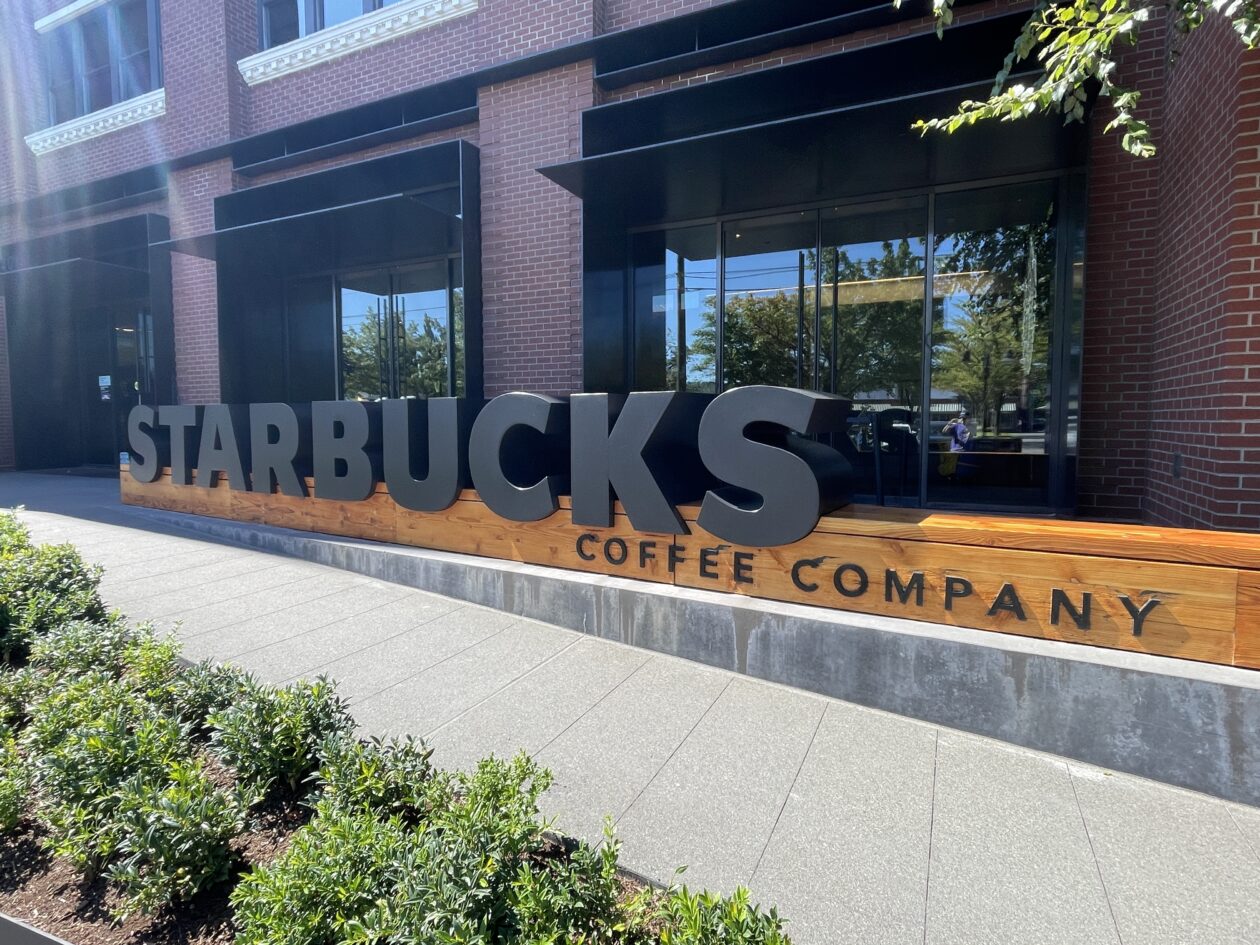
Starbucks headquarters in Seattle. (GeekWire File Photo)

Layoffs at a Starbucks support center in Seattle will impact 252 corporate jobs, including a number of vice presidents, directors and senior managers, according to a new state filing on Monday.

A Washington Worker Adjustment and Retraining Notification said that the cuts “will result in the relocation or contracting out of certain of the employer’s operations or the partners’ positions.”

Layoffs of 300 corporate employees at the coffee giant were first reported last week. They came on the heels of a previous WARN notice detailing the elimination of 61 tech roles in Seattle.

The cuts aim to “further sharpen focus, prioritize work, reduce complexity, and lower costs,” a spokesperson said by email on Friday.

The affected roles announced Monday skew toward mid-to-senior corporate positions, with nine vice presidents listed, directors across many functions, senior managers, and senior-level specialists and analysts throughout. Job functions span finance, legal, brand, tech, HR and operations.

Advertisement

Starbucks said in the filing that the expected date of the first separations will be July 17, with all separations completed by Feb. 1, 2027.

Starbucks did not announce any new store closures last week, but the company is shuttering select regional support offices in Atlanta, Burbank, Chicago and Dallas while maintaining its Seattle headquarters and offices in New York, Toronto and Coral Gables, Fla. The company is also opening a new office in Nashville.

The company cut nearly 2,000 corporate roles last year, according to past reports.

Source link

Advertisement
Continue Reading

Tech

2027 Volvo EX60 Arrives in US With $59,795 Starting Price and a Lot to Prove

Published

on

At an event in New York this week, Volvo’s upcoming EX60 midsize electric SUV finally made its North American debut, opening US orders for the 2027 model at a starting price of $59,795 ($58,400 plus the requisite $1,395 destination fee) with up to 400 miles of range, depending on trim. 

At first blush, those numbers look pretty good for an EV positioned at the premium end of its highly competitive class. Yet recent events have left the automaker in an unenviable underdog position for its most important new launch.

When Volvo pulled the wraps off the EX60 at the global debut earlier this year, I called it “the most important model in [the brand’s] growing family of electric vehicles.” The EX60 slots into the midsize premium SUV segment — the single largest automotive battleground in America, EV or otherwise — and follows in the footsteps of the combustion-powered XC60, which has long been the brand’s volume backbone. 

Advertisement

Volvo’s EV rollout has been rougher than the brand would like to admit: The EX30 was discontinued in March after market headwinds and shifting political conditions made its US viability untenable, and the flagship EX90’s inaugural year was plagued with issues

I noted in January: “This feels like a make-or-break moment for the brand’s EV ambitions.” That assessment hasn’t changed. What has changed is that we now have the numbers, and they’re promising.

2026 Volvo EX60 Unveiled, New Electric SUV Arrives Later This Year

See all photos

Up to 400 miles of range

The EX60 rides on Volvo’s new SPA3 platform, a dedicated electric architecture that introduces cell-to-body integration, next-generation in-house e-motors, megacasting and an 800-volt electrical system. That last point matters most at the charging station: The EX60 P6 rear-drive variant can add up to 155 miles in 10 minutes at a peak rate of 320 kilowatts, going from 10% to 80% in just 16 minutes. The AWD P10 and the P12 push that peak charging rate to 370 kilowatts. 

With the longest legs of the bunch, the P12 promises up to 400 miles of range — enough to drive from New York to Montreal without touching a charger, according to Volvo. The base P6 manages 307 miles, while the P10 AWD cruises for 322 miles. (Keep in mind, however, that all range and charging figures are estimates pending final EPA certification.)

Advertisement

Crucially, the EX60 is the first Volvo to ship with a native North American Charging Standard port, meaning that Tesla’s Supercharger network — with over 29,000 stations in North America — is accessible without an adapter. EX60 owners will still need a dongle to charge at roughly 13,000 to 17,000 public Combined Charging System ports across the US, but this remains a meaningful real-world advantage as the industry and infrastructure shift to NACS over the next few years.

2027 Volvo EX60 US Specs, Pricing

Trim Config Range (est.) Power Price (with Dest.)
P6 Plus Single Motor RWD 307 mi 369 hp $59,795
P6 Ultra Single Motor RWD 308 mi 369 hp $66,395
P10 AWD Plus Dual Motor AWD 322 mi 503 hp $62,145
P10 AWD Ultra Dual Motor AWD 322 mi 503 hp $68,745
P12 Dual Motor AWD 400 mi 670 hp TBD

Competitively priced

At launch, US buyers will have their choice of two powertrain options (P6 and P10 AWD) and two trim levels (Plus and Ultra) that dictate how well-equipped their EX60 will be. The entry P6 Plus comes in at $59,795 comes with Volvo’s Pilot Assist safety suite and a 21-speaker Bose system as standard. 

Advertisement

The P6 Ultra ($66,395) steps up to add ventilated Nappa leather seats and upholstery, a 28-speaker Bowers & Wilkins audio setup, an electrochromic panoramic roof and heated second-row booster seats integrated into the seat backs. Similarly equipped, but with more power and range, the P10 AWD Plus and Ultra open at $62,145 and $68,745, respectively. (All prices include the compulsory $1,395 destination fee.)

Pricing hasn’t been announced for the 670-horsepower EX60 P12 AWD — the most powerful variant and the range-leader — which will be configurable at a later date.

The sticker price is competitive. The BMW iX3 starts at $62,850, Audi’s Q6 e-tron at $65,795 and the upcoming electric Mercedes-Benz GLC is expected to start in the same ballpark. Volvo undercuts the competition meaningfully and goes toe-to-toe on range and charging speed. Whether that’s enough to claw back momentum after a stumbling start for the brand’s EV program is the real question.

The EX60 can be configured now at volvocars.com. First deliveries are expected later this year.

Advertisement

Source link

Continue Reading

Tech

Context architecture is replacing RAG as agentic AI pushes enterprise retrieval to its limits

Published

on

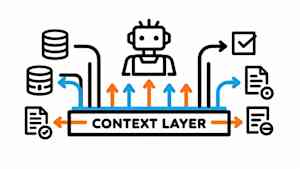
Redis built its name as the caching layer that kept web applications from collapsing under load. The problem it is targeting now has the same structure but is harder to solve: production AI agents failing not because the models are wrong, but because the data underneath them is scattered, stale and structured for humans rather than machines. Retrieval pipelines built for single queries cannot absorb the volume agents generate.

The gap Redis is targeting is structural: agents make orders of magnitude more data requests than human users, but most retrieval layers were built for the human-scale problem. Redis Iris, launched Monday, is the company’s answer: a context and memory platform that sits between an agent and the data it needs to act. The platform combines real-time data ingestion, a semantic interface that auto-generates MCP tools from business data models, and an agent memory server built on Redis Flex, a rewritten storage engine that runs 99% of data on flash at a tenth of the cost of in-memory storage alone.

The announcement lands as enterprise RAG infrastructure is in active transition. VentureBeat’s Q1 2026 VB Pulse RAG Infrastructure Market Tracker found buyer intent to adopt hybrid retrieval tripling from 10.3% to 33.3% between January and March. Retrieval optimization surpassed evaluation as the top enterprise investment priority for the first time. Custom in-house retrieval stacks rose from 24.1% to 35.6% as enterprises outgrew off-the-shelf options. Redis is not the only infrastructure vendor reading those signals — several data platform providers have repositioned around agent context layers in recent weeks.

The scale mismatch is the structural argument behind the launch.

Advertisement

“Companies will have orders of magnitude more agents than human beings,” Rowan Trollope, CEO of Redis, told VentureBeat. “Orders of magnitude more agents than human beings means orders of magnitude more load on back end systems.”

From cache to context

Trollope traces the parallel back to the mobile era: When legacy backends built for branch tellers suddenly had to serve a million smartphone users, Redis became the caching layer that absorbed the load without a full rebuild.

What is different this time is that agents cannot write their own middleware. In the mobile era, a developer would sit with a database administrator, identify the queries an application needed and hard-code the caching logic into a middleware layer. Agents cannot do that. They need to find the right data at runtime, through interfaces built for them in advance, or they stall.

“This is like the analogy of the grocery store in the fridge,” he said. “If every time you have to go make your sandwich, you have to run to the grocery store to get the food, that’s not very efficient. You put a fridge in every house, you store a little bit of food there. And that’s kind of where we still tend to exist in the infrastructure stack.”

Advertisement

What Redis Iris includes

Iris ships five components that together cover data ingestion, semantic access, memory and caching.

Redis Data Integration. Now in general availability. RDI uses change data capture pipelines to sync data from relational databases, warehouses and document stores into Redis continuously, with connectors for Oracle, Snowflake, Databricks and Postgres.

Context Retriever. Now in preview. Developers define a semantic model of business data using pydantic models and Redis auto-generates MCP tools agents use to query it directly, with row-level access controls enforced server-side. Trollope describes the shift from classic RAG as a directional inversion. “It’s just a flip to let the agent pull the data instead of presupposing and stuffing it into the pipeline,” he said.

Agent Memory. Now in preview. Stores short and long-term state across sessions so agents carry context without re-deriving it on each turn.

Advertisement

Redis Flex. A rewritten storage engine that runs 99% of data on SSDs and 1% in RAM, delivering petabyte-scale retrieval at sub-millisecond latencies.

Redis Search and LangCache. The retrieval and semantic caching backbone underneath the platform. LangCache reduces redundant model calls by caching prompt responses.

What analysts say

The data industry is generally heading in the same direction now. Every major database vendor is making a context layer argument. 

Traditional database vendors including Oracle are integrating context and memory layers to bring relational databases into the agentic AI era. Purpose-built vector database vendors including Pinecone are doing the same, building out a new knowledge layer for agentic AI context. Standalone context layers like Hindsight are also part of the emerging landscape.

Advertisement

Trollope frames Redis’s position as structurally different from that competition.

“For us to win, no one else has to lose,” he said. Many Redis deployments already run MongoDB or Oracle as the backend system of record. Iris reflects and caches from those systems rather than displacing them. Redis is launching Iris in the Snowflake marketplace with native connectors.

Stephanie Walter, Practice Leader for AI Stack at HyperFRAME Research, puts the market context plainly. “The market is converging on the same conclusion: agents don’t just need more tokens or better models. They need governed, current, low-latency context,” Walter said.

Her read on Redis’s differentiation focuses on where Redis already sits in the stack, which is close to runtime, latency-sensitive operational state, and real-time data., 

Advertisement

“The pitch is not ‘better RAG’ as much as ‘agents need live context, memory, and fast retrieval while they are actually working,” she said.

Whether it’s Redis or another vendor, every context layer technology will face a governance challenge to be successful.

“Agentic AI will not scale in the enterprise if every agent becomes a new cost center, a new data access risk, and a new governance exception,” she said. “The winning context layers will be the ones that make agents faster, cheaper, and safer to run.”

For real-time clinical AI, getting context wrong is not an option

Mangoes.ai is one company that has already had to answer those questions in production, under conditions where the cost of getting context wrong is measured in patient outcomes.

Advertisement

Amit Lamba, founder and CEO of Mangoes.ai, runs a real-time voice AI platform deployed across large healthcare facilities where patients and clinicians ask live questions about treatment, scheduling and case history. Mangoes.ai built its stack natively on Redis from the start. 

“Retrieval, memory, and session state all run through Redis, so we’re not stitching together separate tools and hoping they talk to each other,” Lamba said.

The problem Iris’s dynamic memory capability addresses is what happens across a complex session.

 “Think about a one-hour group therapy session,” Lamba said. “You need to know who said what, when, and be able to surface the right information to the therapist in the moment. That’s not a simple retrieval problem.”

Advertisement

The platform runs multiple specialized agents in parallel, one for entity identification, one for relationship reasoning and one for integrating case history.

“The dynamic memory capability maps almost perfectly to the problem we’re solving,” Lamba said.

What this means for enterprises

For enterprises that built their AI stack around RAG, the retrieval layer that got them to production is no longer enough to keep them there

The RAG era is giving way to context architecture. The classic RAG model pushed data into the agent before the model was called. Production deployments are flipping that: agents pull what they need at runtime through tool calls, treating the data layer as a live resource rather than a pre-loaded payload. Teams still optimizing RAG pipelines are solving last year’s problem.

Advertisement

The semantic layer is now production infrastructure. The model that defines business entities, their relationships and the access rules between them needs to be built, versioned and maintained with the same discipline as a data pipeline. Most organizations have not staffed or structured for that work. The enterprises that define their context architecture now are the ones that will not have to rebuild it when agent workloads scale.

Budget is already moving. VB Pulse Q1 2026 data shows retrieval optimization investment rising from 19% to 28.9% across the quarter, overtaking evaluation spending for the first time. Organizations that spent the previous year measuring their retrieval quality are now spending to fix it. The context layer is an active procurement decision, not a roadmap item.

“The first buyer question should not be ‘Do I need a vector database, long context, memory, or a context engine?’ It should be ‘What does this agent need to know, how fresh must that knowledge be, who is allowed to access it, and what does every retrieval cost?’” Walter said.

Source link

Advertisement
Continue Reading

Tech

GMC Sierra Vs Chevrolet Silverado: Which Truck Depreciates Faster?

Published

on


Trucks tend to hold their value well compared to passenger cars, but inevitably some hold their value better than others. While Toyota’s Tacoma and Tundra trucks depreciate slower than virtually any other truck on the market, brand loyalty and practicality considerations mean that most existing GM truck owners won’t be looking to switch to a Japanese brand. Instead, they’ll most likely be considering a truck from either Chevy or GMC, with the Silverado and Sierra respectively being each brand’s signature nameplates.

The Silverado and the Sierra are virtually identical under the hood, and they’re even built in the same factory. It therefore shouldn’t come as a surprise that their depreciation rates are very similar. Across every variant, the Sierra is forecast to hold slightly more of its value over the long run, although estimates of exactly how much extra value it might hold vary between sources.

Advertisement

Starting with the 1500 variants of both trucks, CarEdge says that the Silverado and Sierra will depreciate an identical 43% after five years on the road. After ten years, the GMC will hold around 1% more of its initial value, according to its data. Meanwhile, iSeeCars is slightly more positive about the predicted resale value of each truck, forecasting that the Silverado will lose 39.3% of its value while the Sierra will lose only 38.2% after five years.

Advertisement

A similar picture emerges with HD and EV models

Sierra also comes out on top for the 2500HD and 3500HD variants, with CarEdge forecasting that a Silverado will shed 31% of its initial value after half a decade, around 1% more than an equivalent Sierra.

It predicts the 3500HD trucks will lose an even smaller percentage of their value but again places the Sierra ahead in percentage terms. Estimates from iSeeCars tell the same story, giving high value retention estimates to the 2500HD and 3500HD variants of both models, but placing the GMC marginally ahead of its Chevy sibling by a couple percentage points.

Meanwhile, it’s notoriously difficult to predict the depreciation rates of EVs, because battery technology is still developing very fast and pricing structures for some models change regularly. Still, the 2026 GMC Sierra EV is forecast to hold onto a higher percentage of its value over an equivalent Chevrolet. According to iSeeCars, the GMC will lose 54.1% of its value over five years, while the Silverado EV will lose 56.2%.

Strangely, CarEdge suggests that the electric GMC will retain almost 20% more of its value than the Chevy over the same five years. It’s possible that this anomaly has been caused by GMC dropping the base price of the Sierra EV by $28,000 for the 2026 model year, which may have artificially deflated its average new MSRP and made its depreciation appear temporarily less severe than in reality.

Advertisement

GMC trucks cost more but hold value better

It’s impossible to predict what further price changes Chevy and GMC might make to their EV truck lineups over the next few years, so it’s worth taking any predictions about their future valuations with a few extra grains of salt. Both the Sierra EV and the Silverado EV are likely to suffer much higher levels of depreciation than their ICE cousins, regardless of the brand they’re sold by.

Advertisement

Leaving aside the turbulent EV market, the pattern for combustion-engine Sierras and Silverados is clear: GMC’s trucks retain a slightly higher percentage of their value than Chevy’s trucks as they age. But GMC buyers tend to pay more on average for their trucks in the first place.

To take an example, the cheapest new 2026 Silverado 1500 is a regular cab, standard bed model and starts from $39,695 (including a $2,795 destination fee) without incentives, while the cheapest 2026 Sierra 1500 starts from $41,095. At the other end of the range, a Silverado 1500 High Country with a crew cab costs at least $69,595, while an equivalent Sierra 1500 Denali retails for $73,190. Step up to a Sierra 1500 Denali Ultimate, and you’ll be paying at least $86,190. That’s a big investment by any metric.

Advertisement


Source link

Continue Reading

Tech

VMware quietly debuts Arm hypervisor tech preview

Published

on

VIrtualization

Supports Nvidia Grace and Ampere processors

VMware has quietly debuted a technology preview of its flagship ESX hypervisor that is capable of running on Arm processors and servers.

The virtualization giant teased its new tech in a Xeet which piqued our interest and led to the discovery of this document [PDF] on the public internet that explains the hypervisor supports guests running RHEL, Ubuntu, and SUSE, on servers from HPE and Gigabyte powered by Ampere processors, or Supermicro’s ARS-221GL model with an Nvidia Grace processor.

Advertisement

The document offers slightly contradictory advice to the effect that “Arm host clusters must be managed by a separate, standalone vCenter running on x86. We do not recommend managing x86 installations and Arm installations from the same vCenter.”

The tech preview appears to be a very basic affair, as it lacks support for vSAN hyperconverged storage, NSX virtual networking, and plenty of other features VMware offers in its x86 hypervisor and Cloud Foundation (VCF) private cloud suite.

VMware has also made it possible to access Arm guests from its desktop hypervisors. As disclosed last week in release notes for new versions of the Workstation and Fusion products that add “the ability to connect to remote ARM-based ESXi, allowing users to manage VMs on remote ARM servers directly from VMware Workstation or Fusion on any supported platform.”

Virtzilla is therefore making good on its promise to bring its hypervisor and VCF to the Arm architecture.

Advertisement

The Broadcom business unit is porting its products because it thinks customers will increasingly turn to Arm servers on the network edge, perhaps for AI workloads. VMware is also aware that Arm processors can be more energy-efficient than x86 CPUs, and must also know that its hyperscale partners AWS, Microsoft, and Google aggressively promote their home-brew Arm processors as delivering superior performance-per-watt.

In its announcement of its new desktop hypervisors, VMware offers another reason: “As development environments diversify, cross-architecture connectivity is essential.”

VMware hasn’t offered a timeline to get ESX on Arm ready for a full release, but the company has previously told us it’s in no rush because customers are currently Arm-curious rather than in a rush to shift workloads onto the architecture.

While VMware explores a new architecture, its rivals continue to prepare products they hope will prize away some users who feel Broadcom’s licensing regime isn’t to their liking.

Advertisement

Platform9 last week debuted “Platform9 OS”, a cut of Linux that encapsulates its Private Cloud Director in an appliance-like format so that users don’t need Linux administration skills to adopt its stack. Platform9 is going after VMware’s top 10,000 customers with a promise it won’t try to lock them in with licensing or restrictive hardware compatibility lists.

Australian outfit Netframe takes a similar approach with its wares and has chosen to walk down a well-worn path by creating a free version of its eponymous product that allows users to run up to three hosts. The company thinks that offering will attract home lab operators and small shops who will be sufficiently impressed by the product to upgrade and sign up for support. ®

Source link

Advertisement
Continue Reading

Tech

Samsung strike talks closing as global chip supply chains at risk

Published

on

All eyes are on South Korea today as officials bid to avert a strike by more than 45,000 Samsung workers that could impact global semiconductor supply chains.

With a planned walkout set to begin on 21 May, Samsung Electronics and its workers’ unions began what could be a final round of talks today (18 May), following the collapse last week of a first round of South Korean government-mediated negotiations, according to Reuters.

The threatened 18-day strike comes amid an already severe global shortage in memory chips – essential components in AI data centres, smartphones and laptops – that has fuelled massive profits at Samsung and its peers in recent months.

The dispute centres on Samsung’s performance-based bonus system. According to CNBC, the union is seeking bonuses equivalent to 15pc of Samsung’s operating profit, plus other measures, while Samsung’s management has countered with an offer of 10pc of operating profit.

Advertisement

The economic stakes could hardly be higher. CNBC quotes prime minister Kim Min-seok, who estimates direct strike losses at 1trn won ($664.7m), potentially rising to 100trn won if chip production disruptions force Samsung to scrap wafers already in production.

The company accounts for 22.8pc of South Korea’s exports and revenue equivalent to 12.5pc of GDP, according to CNBC. Kim described Monday’s talks as the last opportunity to avert the strike, warning that “the economic losses we will face will be beyond imagination”.

Pressure on the unions mounted further today when the Suwon District Court partially granted Samsung’s injunction request against two unions, ordering that staffing levels required for safety, facility protection and product quality must remain at normal levels during any industrial action.

The Financial Times cited corporate lawyer Hyeseop Sim, who said the ruling “will significantly weaken the scope of the strike and the negotiating power of the unions”, adding that chip production was therefore unlikely to be significantly disrupted.

Advertisement

Samsung chip division executives have also warned that key customers including Nvidia indicated they might temporarily halt shipments during a strike over product quality concerns, according to Reuters. President Lee Jae-myung called for balance on Monday, posting on X that “labour must be respected as much as corporations, and corporate management rights must be respected as much as labour rights”.

“Workers must be able to receive fair compensation for the labour they provide, and shareholders who have invested while bearing risks and losses have a share in corporate profits,” he continued.

Samsung chairperson Lee Jae-yong issued a rare public apology to customers worldwide on Saturday for causing “concern and anxiety”, according to local Korean media.

All eyes will be on the talks that are reportedly due to finish tomorrow, as the industry fears yet another hit to the global chip supply chain.

Advertisement

Don’t miss out on the knowledge you need to succeed. Sign up for the Daily Brief, Silicon Republic’s digest of need-to-know sci-tech news.

Source link

Advertisement
Continue Reading

Trending

Copyright © 2025