There’s a lot of health news going on in the country right now, in no small part to the absolutely pitiful and pathetic job RFK Jr. is doing heading up HHS. It is a near certainty that by the end of this week, the CDC will have published an updated case count for measles that is greater than last year’s total case count, which was itself the largest since the 90s. Pertussis is also surging. There’s that new outbreak going around where you apparently just shit your pants constantly, like some kind of minor South Park character or something.
And so it was something of a breath of fresh air when the Trump administration nominated Erica Schwartz to lead the CDC, all because she appeared to be well qualified for the role and hadn’t said anything crazy-pants about things like vaccines. That this has become the standard for a feel-good HHS story is telling, but it was welcome news all the same.
Commenting on the nomination, Kennedy said he wouldn’t commit to taking CDC advice on vaccines, nor would he commit to not directly interfering with CDC operations and policy making.
Kennedy’s response Tuesday suggested Schwartz could face an equally short tenure. His answer came amid an exchange with Rep. Raul Ruiz (D-Calif.) in a hearing of the House Committee on Energy and Commerce. Ruiz asked Kennedy: “If Dr. Schwartz is confirmed, will you commit on the record today to implement whatever vaccine guidance she issues without interference?”
Kennedy replied without hesitation: “I’m not going to make that kind of commitment.”
Advertisement
Which is part of what informed senators to ask Schwartz about resisting Kennedy’s fuckery in her confirmation hearings. Sadly, it appears that Schwartz refused to demonstrate that she in fact has a backbone.
[D]uring a hearing sometimes marked by heated exchanges, Dr. Erica Schwartz repeatedly declined to say whether she would resist political pressure from Health Secretary Robert F. Kennedy Jr. over vaccine policy.
Committee Chairman Bill Cassidy, R-La., repeatedly questioned Schwartz about whether she would have authority to make personnel and policy decisions without political interference from the Health and Human Services Department. Schwartz did not directly answer whether she could hire and dismiss CDC employees independently or whether she would refuse directives from Kennedy that conflicted with scientific evidence.
Asked by Sen. Maggie Hassan, D-N.H., whether she would carry out an order to discontinue a public campaign encouraging influenza vaccination, Schwartz replied, “I don’t speak in hypotheticals.”
And so, once again, the country will get to wonder whether the CDC really does have an actual director, or just some figurehead placed there to give Kennedy’s insanity the veneer of consensus. This is a very real problem given our current context and, frankly, these questions should not be terribly difficult to answer. For someone with integrity, at least, the answer should be something like, “As CDC’s Director, it would be my responsibility to refuse any order that would make the country less healthy, no matter who it comes from. And as CDC Director, I would have that authority by the nature of the position.”
Advertisement
All of that being said, Schwartz did at least reaffirm her sanity on the topic of vaccines.
Ranking Member Sen. Bernie Sanders, I-Vt., asked Schwartz if she would remove a webpage updated last November on the CDC’s website on autism and vaccines. The webpage states that a link between the two has been ignored despite many studies finding no such link.
Schwartz said she accepted there is “overwhelming evidence” vaccines don’t cause autism, but did not commit to removing the webpage.
“Senator, I have been in situations where I have had to go to my superiors in the military to have conversations, very difficult conversations, about things that may have been concerning to the troops or to the military personnel, and I will do the same with [Secretary Robert F. Kennedy Jr.],” she replied.
Once again, great that she is sane when it comes to vaccines, less great that she won’t commit to actually doing the right thing and removing the nonsense from CDC’s website.
Advertisement
I’m still relatively optimistic about Schwartz leading CDC. It may be that she didn’t want to publicly embarrass what would be her new boss if confirmed. It may be that she ends up pushing back hard on Kennedy’s attempts at interfering with her agency if confirmed, which will probably end up with her being fired. Even that would be fine by me, since it would be one more glaring data point of chaos at HHS under Kennedy.
If that led to Kennedy’s firing, it would be worth it.
Google has announced a limited-time opportunity for eligible Pixel users to purchase Pixel Care+ even after the usual enrollment period. The company normally allows users to add the protection plan within 60 days of buying a new Pixel phone. Google has reopened Pixel Care+ enrollment for a limited time, but only for US customers. Your phone must pass Google’s condition check before enrollment.
The company requires that the phone work properly and not be physically damaged. You can sign up until August 2, 2026. Compatible phones are: Pixel 9, Pixel 9 Pro, Pixel 9 Pro XL, Pixel 9a, Pixel 10, Pixel 10 Pro, Pixel 10 Pro XL, and Pixel 10a. The offer does not cover the Pixel 9 Pro Fold, Pixel 10 Pro Fold, Pixel 8 series, older Pixel devices, or Pixel Watch.
What Does Pixel Care+ Offer?
Pixel Care+ offers protection beyond Google’s standard warranty. It covers accidental damage, hardware failures, and eligible repairs. Google does not charge for eligible front screen, back glass, or battery replacements. The plan also includes next-day replacement and priority support from Pixel experts. Users can add Loss and Theft Protection with a higher-tier plan. Google allows up to two loss-or-theft claims each year. Pricing starts at $8 per month and goes up to $15 per month, while two-year plans cost $159 to $279.
There are a few conditions you must meet before you can purchase Pixel Care+. Google requires your phone to pass a detailed condition inspection. The device cannot have cracked glass, liquid damage, charging issues, faulty buttons, or a swollen battery. Other accidental repairs still include a $99 service fee. Loss and Theft claims require a deductible between $79 and $99. Google does not provide this feature in New York. You must enroll before August 2, 2026.
The agency also fined 21 HP resellers 35.2 million rupees (about $365,335).
In a separate order, the CCI said that WhatsApp records showed that HP and 16 of its Tier-2 reseller partners operated “in a collusive arrangement” and that the messages show the companies engaging in “bid rigging, including cover bidding, price fixation, and customer allocation during 2017–2020.” HP India played a central role, the regulator said.
Per the order, HP India said that high printing supply prices led some resellers to threaten to “shift to low-cost counterfeit products to compete on price.”
“HP India was commercially forced into a position where it had to support the collusive arrangement adopted by the Tier-2 resellers,” the order reads.
Advertisement
For its part, the order said that HP India “humbly objects to HP India’s role being characterized as a ‘kingpin’ of the entire collusive arrangement.”
Still, the revelation that some HP resellers are struggling with the exorbitant price of printer ink and toner underscores a problem many printer users face. The economic challenge is exacerbated by HP’s tendency to block third-party ink in already-purchased printers through firmware updates. At the same time, with even its own partners threatening to take their ink business elsewhere, HP is pressured to get more HP printer users to only use HP-brand ink and toner.
The CCI also ordered HP India and its channel partners to “cease and desist from anti-competitive conduct” and to hold competition compliance training programs within 60 days.
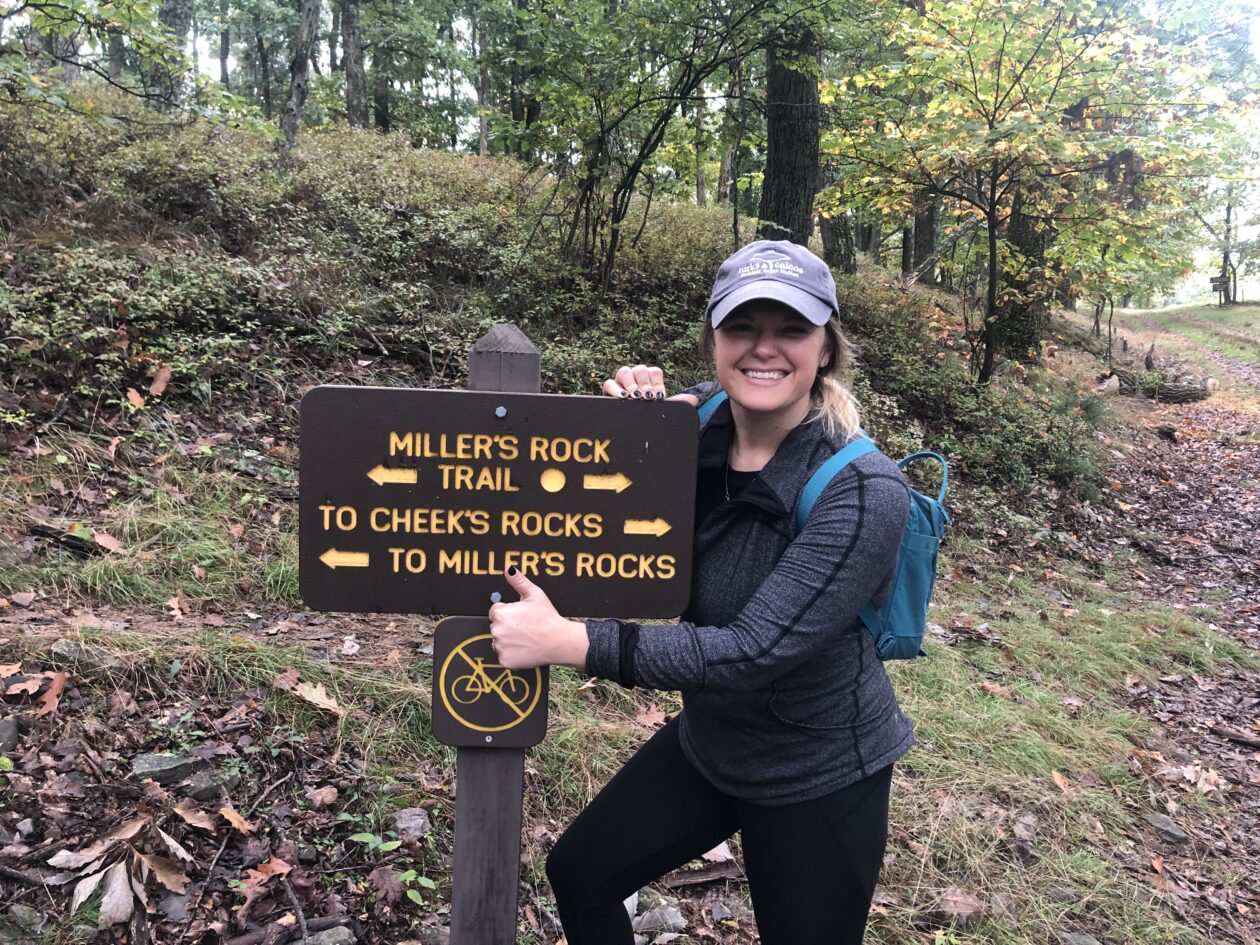
Meagan Breidert, Slalom’s senior director of sustainability and impact, taking a break outdoors. (Photo courtesy of Breidert)
While working for PwC in Jamaica early in her career, Meagan Breidert focused on international development clients. There, she learned about a Caribbean-wide initiative to make the region’s communities more resilient to climate change — adapting infrastructure and building warning systems to withstand stronger storms and rising sea levels.
Breidert left Jamaica with a new direction: a career in sustainability where she could tackle “big, challenging, complex problems,” she said.
Now senior director of sustainability and impact at Seattle-based Slalom, Breidert works out of the Washington, D.C.-area office for the global business and technology consulting firm. In her role, she leads Slalom’s internal climate programs and shapes how the company engages with community members and supports its employees.
Keep reading to learn more about Breidert’s sustainability journey. Her quotes have been edited for clarity and length.
What’s your biggest concern when it comes to addressing climate change?
Advertisement
I worry that the discussion and the divide are being driven by the language we use. If we speak in plain language, we’ll see we all want the same things. We want clean air, we want clean water, we want our kids to grow up healthy. We don’t want toxins in our backyard. It doesn’t matter where you fall on a political spectrum, we as humans want the same things for our families.
What gives you the most hope for the planet?
I’m going to paraphrase the convener and architect of the Paris Agreement, Christiana Figueres. She says, “I focus on the signals, not the noise,” and I really took that to heart. There’s this incredible economic benefit to supporting climate-positive practices and a more sustainable way of living. Renewable energy is more economical, new jobs are being created with the green economy. Companies are actually saving money, the air is cleaner, quality of life improves.
There’s just an abundance of upside, no matter what the motivation is. We’re seeing more and more renewable energy being used, and I think that’s a signal versus the noise.
Advertisement
Meagan Breidert, far right, speaking at the Trellis Impact 26 conference in June. (Slalom Photo)
What is a habit you’ve changed personally because of climate concerns?
My home has solar panels and I can cover my family’s energy load with them. Regardless of my beliefs, economically it’s beneficial and my bills have decreased. My kitchen and home goods are plastic-free to the extent possible, so all glass. And my family’s clothes are sustainable. My son is younger, so he has more churn on clothes — but my clothes are generally natural fibers and secondhand or vintage where possible. And we eat an abundance of beans and tofu.
If you could wave a wand and invent one climate solution, what would it be?
I would love to have ready-made, at-scale solutions for plastic pollution and single-use plastics. At Slalom, we have a plastics commitment on removing problematic and single-use plastics from our operations, especially in our kitchens and break rooms, but for me personally, plastic is a visual, physical problem. People see it on vacation, when they go to the beach, or in daily life, walking down the street.
I would love solutions — whether it’s better recycling mechanisms or advances with bacteria, enzymes, fungi, that are able to break down plastics, or plastics made from less harmful components like seaweed or sugarcane — I would love to see those things come to the market tomorrow.
Advertisement
If you could have coffee with any climate leader, past or present, who would you pick?
I would love to have coffee with the chief sustainability officer at Mars, Alastair Child. M&M’s, particularly peanut, are my favorite candy. But I think the interesting intersection is chocolate, coffee and vanilla grow together in tropical locations that are being the most affected by climate change and extreme weather. What is the plan to secure those supply chains and work with local and Indigenous communities on some of the traditional knowledge for growing those?
We all need to eat, and the planet is changing, and how our food grows, the price of commodities, the quality of those things are going to change. I would love to have this very deep-dive conversation around how my chocolate is going to continue, and my coffee and vanilla!
How do you approach this work and not get overwhelmed?
Advertisement
I really chip away at problems and usually start on the data side, start with the stakeholders and just chip away. My team is great because we like to celebrate the little things, like, “Hey, that stakeholder answered the phone today, that vendor that we’ve been asking for data got us this information.” Before you know it, you look up and you’re like, “Oh, I just talked to 50% of our supply chain and now they’re providing us data.” Those small pieces add up to a lot. We can’t do it alone. It’s an entire ecosystem issue, so one at a time, chipping away.
What impact do you hope your work has in 20 years?
I don’t want to say working myself out of a job because I need a job, we all need jobs, but I would say I look forward to sustainability no longer having to prove its business case. It’s on the checklist. It’s already in there. Nobody has to say, “We’re making a business decision — oh, did somebody check with the sustainability people?” It should just be, “Here’s a business decision. It’s all in here, it’s all embedded, and there’s no question about the sustainability pieces.” Once that happens, then we’ll start to see some of the real gains.
Having the information shown on the display of a digital multimeter also recorded off-screen can be incredibly useful, but unless the device exposes something like SCPI on a network interface, you will have to get creative. In the case of the budget ANENG AN870 digital multimeter (DMM), [Bits und Bolts] really wanted to show its display clearly as an overlay in OBS instead of just the camera view, but with said DMM not offering an easy way he had to resort to just copying the data sent to its multiplexed LCD.
The GitHub project page contains the background information, as well as the instructions if you too have this DMM. It might of course also be useful as the jumping off point for your own DMM modification. In total the project requires three modules: an RP2040 Zero and HC-12 433 MHz transceiver on the DMM side, and another HC-12 plus ESP32-C3 module on the receiving side. A boost module is also added to generate 3.3 V out of the 2.4 V – 3 V provided by the meter’s two AA cells.
To be able to read the LCD signal lines, a custom PCB was created that is installed inside the DMM. With the LCD’s segments mapped, this meant being able to send a perfect copy of the display’s state to the ESP32-C3 and from there making it available via WiFi.
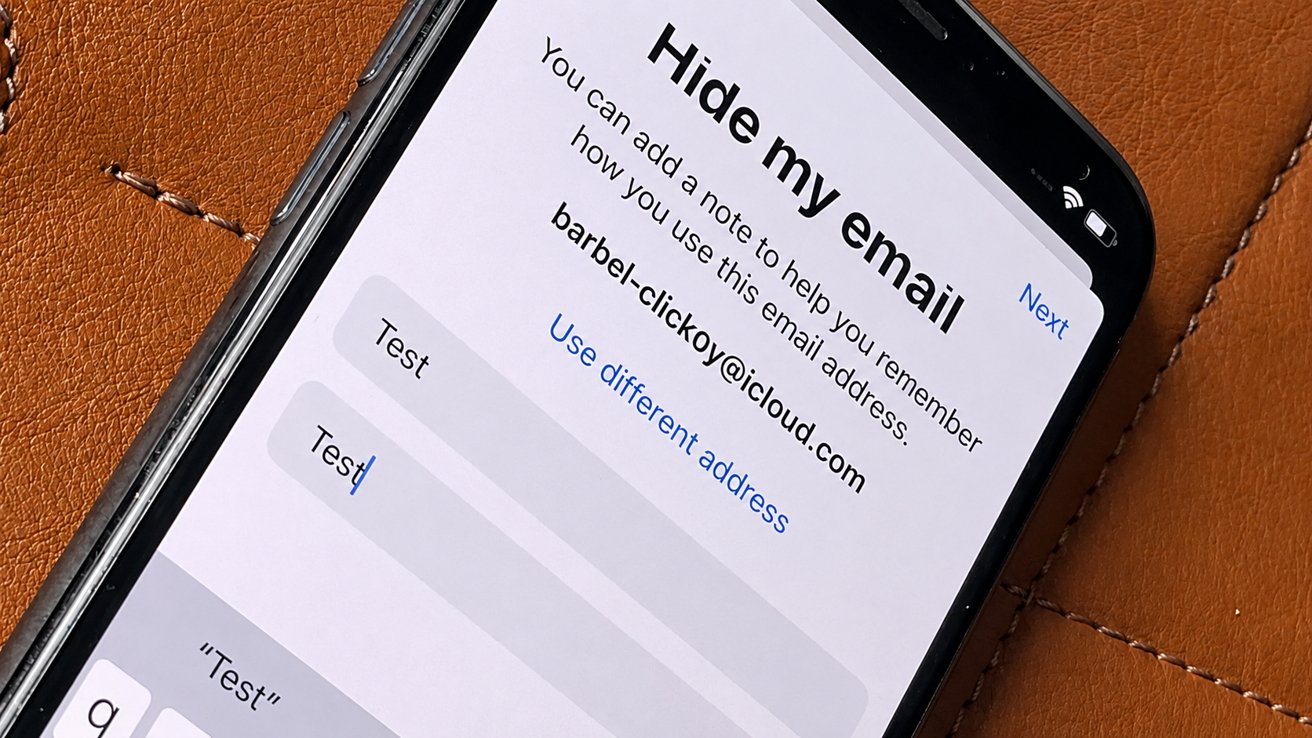
A proposed class action is trying to turn Apple’s unresolved Hide My Email flaw into a nationwide payout without alleging that the vulnerability was used in an attack or that the plaintiff’s email address was exposed.
Anthony Alvarez filed the lawsuit against Apple on July 15 in the U.S. District Court for the Northern District of California. The complaint accuses the company of false advertising, fraud, breach of contract, and other violations tied to its marketing of Hide My Email.
The filing argues that Apple sold customers privacy it couldn’t provide. The claims cover the full version included with paid iCloud+ plans and the more limited relay addresses generated through Sign in with Apple.
Alvarez seeks to represent four proposed classes covering U.S. Apple customers, including two California subclasses. The lawsuit seeks damages and an order requiring Apple to fix Hide My Email or clearly disclose its limitations.
Advertisement
The allegations haven’t been tested in court, and no class has been certified.
A real flaw, but no alleged attack
Security researcher Tyler Murphy discovered the flaw and reported it to Apple in June 2025. The vulnerability became public on July 1 after the problem remained unresolved for more than a year.
Apple said in March 2026 that a system change had addressed the issue, but Murphy’s testing showed that the vulnerability remained. Apple later told Murphy that it planned to address the problem through a future security update.
404 Media independently confirmed on June 29 that the vulnerability could connect a Hide My Email relay address with the real email account behind it. The publication withheld the technical details because the flaw could still be exploited.
Advertisement
Apple deserves criticism for apparently leaving the problem unresolved while continuing to advertise Hide My Email as a privacy feature included with iCloud+. A feature designed to conceal a personal address loses much of its value when another person can trace the relay address back to the account behind it.
However, neither the complaint nor the public reports identify a known malicious attack using the flaw. Alvarez doesn’t allege that anyone uncovered or misused his email address, sent him unwanted messages, or otherwise exploited the vulnerability against him.
Alvarez’s claimed injury is financial. The complaint says he bought an iPhone and subscribed to the 200GB iCloud+ tier on or around March 15, 2025, and that he wouldn’t have paid as much had he known Hide My Email could fail.
The lawsuit extends that overpayment theory to four proposed classes, including people who bought Apple hardware and used the bundled version through Sign in with Apple.
Advertisement
A narrow flaw becomes a sweeping damages claim
The iCloud+ theory is relatively straightforward because Apple explicitly includes Hide My Email with a paid subscription. Customers paying for that subscription can expect the feature to perform the function Apple advertises.
The hardware claim is more ambitious. The complaint, first reported by MacRumors, tries to attribute part of an iPhone or Mac‘s price to Hide My Email without explaining what the feature was worth or how a court could separate that value from everything else included with the device.
Apple markets privacy as a reason to choose its products, so a prominent privacy failure can damage customer trust even without a documented attack. However, the Hide My Email flaw doesn’t automatically prove that every affected customer overpaid for an entire Apple device.
The lawsuit arrived 14 days after the vulnerability became public. The broad proposed classes and the absence of any alleged attack against Alvarez make the case look like ambulance chasing.
Advertisement
Apple mishandled a real privacy flaw, and customers shouldn’t have to wait for an attack before the company fixes it. Still, the lawsuit looks more like an attempt to monetize a newly publicized risk than compensation for proven misuse.
TSMC said it will invest another $100 billion in Arizona after reporting a record 77.4% year-over-year jump in second-quarter profit. The expansion would bring its total U.S. investment to $265 billion and include new fabs for 2-nanometer production and advanced packaging to serve major U.S. customers. The Associated Press reports: As AI-related demand continues to jump and needs for computing power from data centers surge, TSMC has been expanding chip fabrication plants in the U.S., Japan and Taiwan. It said it is increasing its annual capital expenditure budget for this year to $60 billion-$64 billion, up from an earlier estimate of $52 billion-$56 billion.
TSMC, or Taiwan Semiconductor Manufacturing Co., is a key supplier to Nvidia and Apple. It had previously already committed $165 billion in the U.S. for building plants in Arizona, with six fabrication facilities planned. The extra $100 billion in investments are to “support the strong multiyear demand from our leading U.S. customers,” C.C. Wei, chairman and CEO of TSMC, said during the company’s quarterly earnings conference Thursday. An additional four fabrication plants in Arizona will likely be built with the new investments, TSMC said. They will focus on making some of the most advanced chips that are 2-nanometer and below.
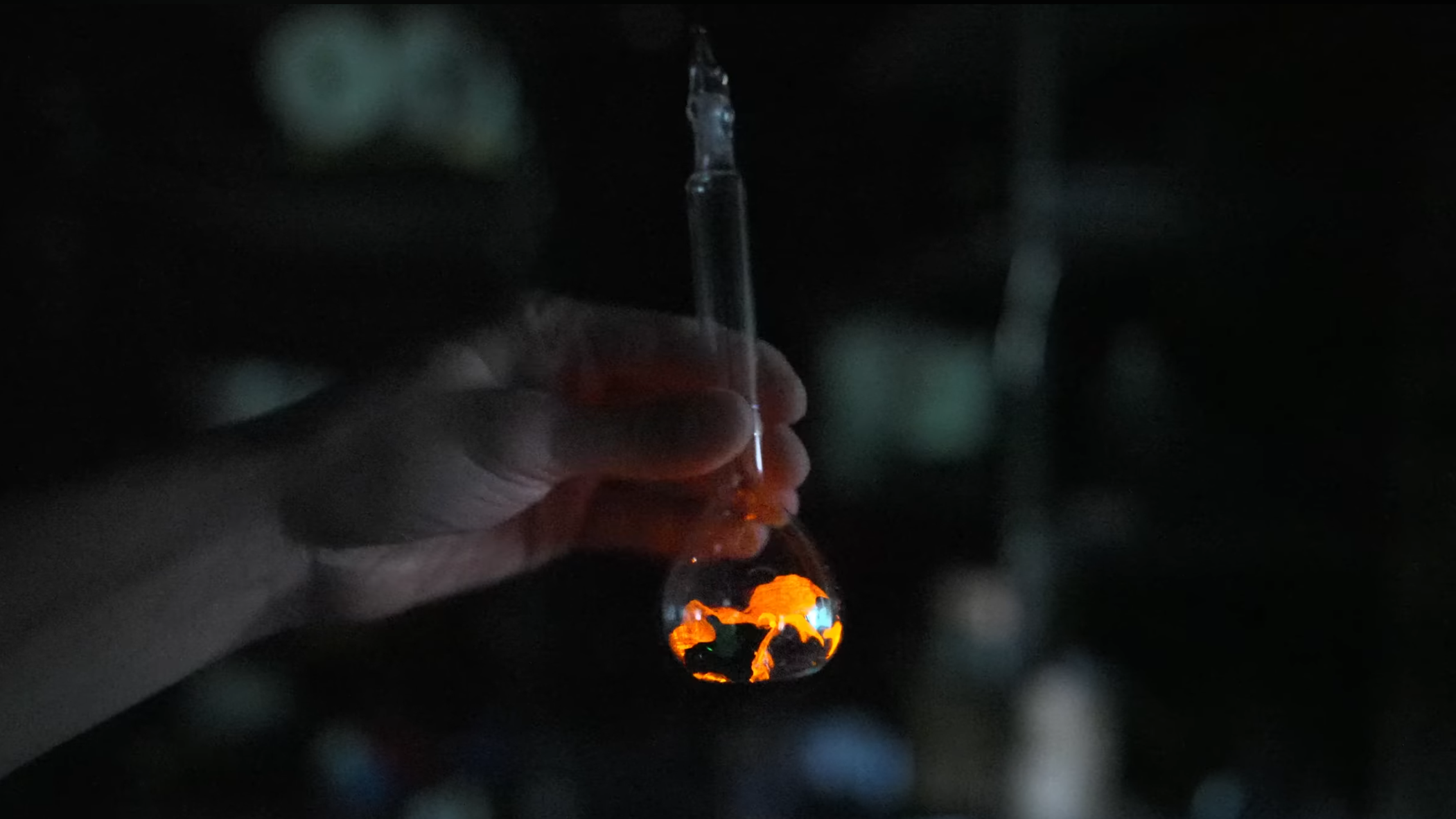
In 1675, while transporting a barometer by night, the astronomer Jean Picard noticed a glow inside its glass tube, just above the mercury. As the mercury sloshed and splashed across the surface of the glass, a static electric charge had built up, which was discharging by ionizing the residual gas molecules inside the evacuated tube. [Styropyro] recreated this effect, and found that the dim glow could be made much stronger by adding some noble gas to the tube.
It starts with a simple recreation: he took a volumetric flask, attached a narrow glass stem to the mouth, added some mercury to the flask, evacuated it with a vacuum pump, and sealed off the glass stem. This produced a faint glow when shaken, but it was only really visible under very low light. When [Styropyro] brought it near a Tesla coil, however, it did glow much more brightly.
Backfilling an identical flask with neon to about 40 millitorr produced a much more spectacular result (a low pressure in the tube is necessary, but moderate pressure variations don’t significantly alter the effect). When shaken even slightly, this neon-containing flask produced a bright orange-red glow just above the surface of the mercury. Points of obstruction, such as those in a zig-zag tube, produced a brighter glow. A krypton-containing tube glowed blue, but less brightly than the neon tube.
Since this is, essentially, a triboelectric effect, other materials besides mercury should work; [Styropyro] tested several materials, and found that pieces of Teflon produced a faint glow, and copper beads a somewhat brighter glow. Unfortunately, Galinstan, the obvious replacement for mercury, wets and coats glass, preventing a charge buildup.
Advertisement
Without an added noble gas, the standard glow of barometric light comes from the excitation of mercury vapors, a glow which can also be seen in mercury rectifiers, and which excites the phosphors of fluorescent light bulbs.
Astronomers have directly detected helium in the atmosphere of LHS 1140 b, a rocky exoplanet 48 light-years away that sits in its star’s habitable zone. The finding marks the first confirmed atmosphere around a rocky, Earth-like planet in the habitable zone, strengthening the case that some planets orbiting red dwarfs can retain atmospheres and potentially support liquid water. “We have actually detected directly the helium present in the atmosphere itself, and that’s the first direct detection for any rocky exoplanet, which is really exciting … and then there’s this added bonus that it’s in the habitable zone, which is super exciting for astrobiology and habitability and searching for life,” lead author Collin Cherubim, who recently earned his Ph.D. from Harvard University, told Space.com. “It feels kind of surreal.” From the report: This exoplanet, or planet outside of our solar system, was first discovered in 2017 by a team led by astronomer Jason Dittmann who is now a co-author on this new discovery. “This planet was found like 10 years ago, and we’re just now saying, okay, that’s an atmosphere,” Dittman told Space.com. “We’re slowly narrowing the gap and checking these boxes … we’re finding a planet that’s rocky, a planet that’s of the right temperature and now … it’s like okay, we finally found one that has an atmosphere.”
And being a rocky planet, “there’s definitely a surface … it’s made of rocks,” Dittman said. What does the planet’s surface look like? We can’t say yet, but the researchers who found this planet’s atmosphere think there’s a good chance it could have water. While it orbits a red dwarf star, which is smaller and cooler than the sun, it orbits closer than we do to our star, maintaining a temperature that keeps the planet in the “Goldilocks zone” where liquid water could exist on its surface. “It probably also has a lot of water,” Cherubim said. “If it has some amount of atmosphere that can provide a bit of a greenhouse effect, which we know that it does now … it will very likely be what we consider to be habitable conditions on Earth, and conditions that would likely support liquid water.”
So is it Earth-like? While it’s certainly not an Earth copy, this planet can be considered Earth-like in two main ways, Cherubim shared. One: its overall composition. The planet is rocky, likely with an iron core and (now we know) it has an atmosphere. And two: the planet’s temperature is just right for liquid water, which is necessary for life at least as far as we understand it on our planet. […] “I’m not claiming this planet has life,” Cherubim made clear. With further investigation, scientists could better understand what else might be in this planet’s atmosphere, and they could confirm if it has water. Further observations might not be able to confirm habitability or identify any life on the planet, but they could at least help us to better understand planets like this. The findings have been published in the journal Science.
On social media, videos show people clearing out their fridges, swearing off salads and debating whether it’s safe to eat cilantro. You might dub it “produce paranoia.”
It’s the frantic but expected internet response to the surge in cases of a diarrhea-causing parasite that’s rapidly spreading across the US, as health officials investigate what type of produce is contributing to the outbreak.
The gastrointestinal illness is caused by cyclospora, a foodborne pathogen that’s difficult to trace but has historically been linked to fresh produce such as berries and lettuce. For several weeks, no specific food, brand, grower or supplier was conclusively identified as the source of the outbreak, which has led to panicking and a whole lot of dark memes.
Advertisement
The CDC reported late Thursday that officials are investigating a link to shredded iceberg lettuce served at Taco Bell locations in Indiana, Kentucky, Michigan, Ohio and West Virginia. The agency advised consumers to avoid eating shredded lettuce from Taco Bell locations in those states. The CDC said Taco Bell is working to remove the contaminated produce from its locations and is also working with the supplier to determine whether any was sent to other locations.
With any health scare, bad advice and myths spread just as fast as the actual illness. So we turned to health care experts to learn the facts.
“I wouldn’t necessarily suggest that people avoid produce,” said Dr. John Openshaw, an infectious disease physician and medical epidemiologist at Stanford University. “Even though the number of people involved in the current outbreak or outbreaks seems large, overall the risk remains very low to most people.”
In the US, previous cyclospora outbreaks have frequently been associated with fresh produce, including bagged salad mixes, cilantro, basil, raspberries, snow peas and green onions. Any food that’s contaminated and eaten uncooked can theoretically transmit cyclospora.
Unlike some stomach illnesses, such as the norovirus, cyclosporiasis is unlikely to spread directly from one person to another. After the parasite leaves an infected person’s body, it generally needs at least one to two weeks in the environment before it becomes infectious.
Advertisement
Stomach cramps are a common sign of cyclosporiasis, an infection caused by the cyclospora parasite.
Jacob Wackerhausen
What are the symptoms of cyclosporiasis?
The most common symptom is watery diarrhea that can be frequent and, according to the CDC, sometimes “explosive.” Other unpleasant symptoms can include stomach cramps, nausea, loss of appetite, bloating and gas, fatigue, vomiting and a low-grade fever.
Unlike deadlier foodborne illnesses such as listeria or E. coli, cyclosporiasis isn’t usually life-threatening. The biggest risk right now during the hot summer months is dehydration. “People who are sick and are having trouble keeping hydrated should talk to a doctor,” Openshaw said.
Symptoms typically begin about one week after exposure, although they can appear anywhere from two days to two weeks or longer afterward. Dr. Timothy Henrich, professor of medicine at UCSF, said it’s typical for people to have “waxing and waning symptoms” over weeks to months. Others who are infected might have minimal or even no symptoms, he said.
Advertisement
Because symptoms can come and go, it’s important to get tested for cycolosporasis and talk with a doctor about treatment, which is generally well-tolerated and “may reduce the chances of further local fecal-oral spread,” Henrich said.
How high is the risk?
While cyclosporasis cases span a lot of the country, the outbreak’s highest concentration is in a small cluster of states, mostly in the Midwest. Jessica Steier, a public health scientist and CEO of Unbiased Science, said the risk remains low outside those areas, but that anyone who is “pregnant or immunocompromised might consider erring on the side of caution.”
The CDC says that only about 9% of people who contract the parasite require hospitalization, but the risk of severe illness and lasting complications is significantly higher for seniors, young children and others with weakened immune systems. The CDC said Tuesday that it had received no reports of deaths linked to the outbreak.
Advertisement
Health officials says it’s best to avoid bagged greens or precut mixes to stay safe during the current cyclospora outbreak.
Al Drago/Getty Images
How can you reduce your risk?
As of Tuesday, there was no nationwide recommendation to throw away lettuce. However, Michigan health officials have issued more specific guidance for lettuce during the current investigation, including buying whole heads of lettuce instead of bagged lettuce or premixed salad kits (then discarding the outer three layers of leaves) and cooking leafy greens when practical.
Though washing fresh produce might reduce your exposure to cyclospora and other foodborne contaminants, it can’t guarantee the parasite will be completely removed.
“Washing produce does not meaningfully decrease the risk of cyclospora, and heat remains the gold standard for risk reduction,” Steier said. Cooking vegetables at an internal temperature of 158 degrees Fahrenheit or higher is the only surefire way to kill the parasite.
Advertisement
Experts also warn against using soap, bleach or household disinfectants on produce. Fruits and vegetables can absorb soap and detergent, which may make you sick, and the CDC says routine chemical disinfection is unlikely to kill cyclospora.
Household tools or countertop items such as UV produce washers, ultrasonic cleaners or ozone devices won’t make contaminated food safe to consume, either. Steier confirmed that none of those methods have sufficient real-world evidence to support their use in killing the parasite.
What should you do if you have symptoms?
Experts advise contacting a health care provider if you develop persistent watery diarrhea, especially if it is severe, lasts longer than a week or goes away and then returns. Drinking fluids is also important because prolonged diarrhea can cause dehydration.
Diagnosing cyclospora requires special lab testing, and the parasite isn’t included in routine stool testing. The CDC says patients sometimes need to provide multiple samples because cyclospora can be difficult to detect.
Advertisement
The standard treatment is the prescription antibiotic combination trimethoprim-sulfamethoxazole, commonly sold under the brand names Bactrim and Septra. People who are allergic to sulfa drugs should discuss other options with a medical professional.
The CDC hasn’t found a single source linking the outbreak.
sshepard/Getty Images
Why is it so hard to identify the source of an outbreak?
It often takes weeks or longer to identify the source of a parasitic outbreak because investigators have to compare what sick people ate, then trace the foods back through the supply chain. For cyclospora, that process is especially difficult because symptoms often begin days after exposure.
Advertisement
Public health agencies have also faced staffing cuts and funding reductions in recent years, making it harder to identify outbreaks quickly and to tell people which foods to avoid. A recent study found that states with more CDC support reported more outbreaks than those without those programs, suggesting that federal funding improves detection and management.
“Tracing any outbreak like this requires trained staff and resources — any cut to those elements of a public health response would impede efforts to trace an outbreak to a specific food item and identify how a pathogen like cyclospora got into the food supply,” Openshaw said.
Heartstopper Forever ending explained: are Nick and Charlie still together, who breaks up, Easter eggs you might have missed and where the gang will end up next
It’s a mammoth task to bring a beloved IP like Heartstopper to a close, but creator Alice Oseman has done an incredible job with the new Netflix movie, Heartstopper Forever.
If you’re bummed out because we’re not getting a full fourth season, don’t be. As Nick (Kit Connor), Charlie (Joe Locke), and the gang all brace before going their separate ways to university, a feature film actually reflects their growing maturity and crises of confidence much more fittingly.
Advertisement
As our favorite friends brace themselves before heading their separate ways to start university (and more, but more on that later), emotions are running high.
Latest Videos From
But do our beloved relationships survive the final farewell, and what is everyone planning to do next? Here’s the full Heartstopper Forever ending breakdown that you’re looking for.
Do Nick and Charlie stay together?
(Image credit: Netflix)
Yes… but that isn’t without its challenges. We start Heartstopper Forever with Nick and Charlie as besotted and in love as they always have been, with the others gently roasting them as being the “perfect couple” while their own relationships experience problems.
But while Charlie embraces his newfound self-confidence through becoming Head Boy at Truham Grammar School, Nick is having a tougher time with his emotions. He’s decided that he wants to put Leeds University as his first choice on his application, and the thought of drifting apart from Charlie is weighing on his mind.
Nick starts to close himself off from Charlie, not fully explaining why he’s not feeling 100%. Charlie is left at a loss, only wanting to support Nick in the same way he’s always felt supported in return. This all comes to a head at a house party, where the boys get into an argument.
Sign up for breaking news, reviews, opinion, top tech deals, and more.
As Charlie tells Tori (Jenny Walser), Nick is trying to prevent a future problem that hasn’t presented itself yet… Charlie just doesn’t know exactly what that problem is. At the party, Nick complains that Charlie has been avoiding him the whole night, with Charlie responding that he thought Nick might want some space to talk through uni and future plans with his friends.
Advertisement
Nick, slightly drunk, lashes out by saying that the pair could probably use some space. “So you want to break up then?” Charlie asks, with Nick replying, “Well, it sounds like you want to break up.” With communication between them coming to a halt, that’s exactly what happens.
(Image credit: Netflix)
Cue endless moping while keeping to themselves. Charlie stops eating and refuses to get out of bed, with Elle (Yasmin Finney), Isaac (Tobie Donovan) and Tao (William Gao) all staging an intervention by taking Charlie to Truham Pride. All goes well until Charlie spots Nick talking to a girl on the dance floor at a local gay club.
From Nick’s perspective, he’s just looking for friends. Just like Charlie, he’s been unable to shake off the breakup, telling mum Sarah (Anna Maxwell Martin) that everything that has happened is his own fault, believing that it’s too late to be fixed.
Advertisement
The day of Truham Pride, Imogen (Rhea Norwood) introduces him to a friend, who offers to hook him up with someone if he wants a rebound. He refuses and moves away, which is when Charlie spots him.
Days later, Charlie leaves a pack of printed disposable photos at Nick’s door, asking him to meet at the beach. Charlie tells him that he thought that the pair could always talk to each other, but somewhere along the line, their communication has broken down.
Nick says that he envies the way that Charlie can express himself, as he often doesn’t understand how he’s feeling half of the time. The two make amends, promising to always look after each other. From there, it’s back to being as loved-up as ever, just in time for the Truham prom.
Advertisement
What about Elle and Tao?
(Image credit: Netflix)
Elle and Tao are the relationship that doesn’t survive Heartstopper Forever, as the pair get into an argument about their future plans. Elle wants to move to Berlin to become an artist, having a go at Tao for not frequently planning to visit.
Tao says that he can’t afford it, with their argument made worse by a drunk Nick claiming that everything with Charlie is perfect (hint: we know that’s not true).
The pair agree to a truce to help Charlie out of his funk post-breakup, and appear friendly at Truham prom. They have “one last dance” before things change for good, and are noticeably emotional at the thought of being apart.
However, there’s a silver lining on the horizon. In the very last scene of the pair, we see Elle at an art exhibition in Berlin, with Tao arriving to surprise her.
Advertisement
What’s next for the gang after they finish school?
(Image credit: Netflix)
Let’s start with Nick and Charlie. While Charlie stays local, Nick gets into Leeds. The final scene shows Charlie going to stay with Nick for the weekend, being introduced to all of his new friends, clubbing, and getting pancakes for breakfast.
They’re ready to write a new chapter in their relationship, and as they say, they feel as if they’re “different” from typical teen romance… they’re in it for the long haul.
Elle and Tao are accounted for, but it’s Tao’s video project at prom that lets us in on what’s to come next for the rest of the gang. Tara (Corrina Brown) has asked girlfriend Darcy (Kizzy Edgell) to go interrailing across Europe with her, deferring their places at uni for at least a year.
Advertisement
Tori has a more skeptical answer, telling Tao that she will “do nothing, then die.” However, things are going well with boyfriend Michael (Darragh Hand), having figured out the rhythm of their relationship.
Sahar (Leila Khan) tells Tao that the band, Queer Intentions, has broken up, but she’s going to try a solo music career and see what happens.
Don’t miss this epic Heartstopper Easter egg
Heartstopper Forever | Official Trailer | Netflix – YouTube
Just as Nick gets on the train to Leeds, he walks through the carriage and passes a young woman reading at a nearby table.
If you’re a Heartstopper fan, you’ll know that this is Alice Oseman, creator of the original graphic novel series. She’s also acted as the showrunner of seasons 1-3. She’s also written the script for Heartstopper Forever.






















































You must be logged in to post a comment Login