

Tech
The Rust Ecosystem Gets an AI Security Engineer in Residence


While the Rust Foundation has a Security Initiative to protect its ecosystem, “the threats have expanded,” they announced this week, “and so has the kind of help maintainers need.”
Much of this comes back to a single shift: Automated tooling (much of it now built on large language models) has gotten good enough to surface real vulnerabilities in open source code quickly and at scale. That is useful, and several large Rust projects have already received and fixed credible issues found this way. The same tooling has also made it trivial to generate vulnerability reports that look plausible and are worthless. Maintainers across the ecosystem are losing real hours sorting these from the reports that matter, and the noise tends to bury the signal.
So, with funding from the Alpha-Omega Project, the Rust Foundation is bringing on a full-time AI Security Engineer in Residence dedicated to the Rust ecosystem. This position is being funded with part of the $12.5M in open source security funding that the Linux Foundation announced in March.
The role exists to take pressure off maintainers. The person in this position will use a mix of human-led and AI-assisted methods to proactively review Rust itself and the crates the ecosystem leans on most and help us separate real, exploitable issues from false positives and low-signal noise before anything reaches a maintainer…
This role will run full-time for six months to start, with room to extend depending on what we learn and the funding available. Methods, playbooks, and prompts will be documented so the work doesn’t end with the contract. We are grateful that Rust is not embarking on this work in isolation. Several other ecosystems have received parallel Alpha-Omega grants for the same kind of work (e.g., the PHP Foundation and the Drupal Association) and we plan to share tooling, triage practices, and what we learn rather than duplicating work
A statement from Rust’s new AI Security Engineer in Residence acknowledges that “One of our next challenges is the wave of bugs discovered by the next generation of AI-powered developer tools.”


Claude Guillemot, co-founder of French video game company Ubisoft, died Friday at the age of 69.
According to French media (via Bloomberg), Guillemot died in a plane crash in the French resort town of La Baule. He was one of two people aboard the plane, both of whom died.
Guillemot founded Ubisoft with his four brothers in 1986. Since then, the company has published the Assassin’s Creed, Far Cry, Prince of Persia, and Tom Clancy video game franchises, as well as many other titles. The family retains control of Ubisoft, and Guillemot’s brother Yves is still CEO.
Guillemot was also chairman of Guillemot Corp., which makes gaming and audio accessories.
“Ubisoft was deeply saddened to learn of the death of Claude Guillemot, co-founder of the group and chairman of Guillemot Corp., in an accident,” Ubisoft said in a statement. “Our thoughts are with his family and loved ones during this difficult time. No further statements will be made at this time.””

Prince also worked on Wolfenstein and Duke Nukem games.

Video game composer and sound designer Bobby Prince has died. An obituary states that Prince died on June 16 at the age of 81 following an illness. Developer id software shared the news of Prince’s passing.
Rest in peace to the video game music pioneer Bobby Prince.
Your music lives on forever. pic.twitter.com/8LAT6CGZ5Y— id Software (@idSoftware) June 19, 2026
Prince was perhaps best known for his pioneering work on the Doom series. The Library of Congress inducted his soundtrack for the original game into the National Recording Registry just last month.
“Despite the limitations of the 1993-era sound card drivers, Prince composed the perfect riff-shredding accompaniment for the game’s demon-slaying journey to hell and back,” the Library of Congress stated. “Taking advantage of his knowledge of MIDI, Prince even worked to ensure that the sound effects he created could cut through the music by assigning them to different MIDI frequencies.”
Prince also worked on games such as Wolfenstein 3D, Rise of the Triad and Duke Nukem 3D. In 2006, the Game Audio Network Guild honored Prince with a lifetime achievement award.
“Everyone at Romero Games is deeply saddened to learn of the passing of Bobby Prince,” Doom co-designer and id Software co-founder John Romero wrote on X. “He left an incredible mark on games and on my life.”

If you’ll excuse the pun, skillets seem to always be a hot topic.
More than in other sections of cookery, there is a continual quest to find the best one, or at least the best one you can afford. I’ve seen cycles of fetishization come and go for copper, cast-iron, and carbon steel.
At the Mall of New Hampshire in the 1980s, I remember watching a miraculous cooking-store demonstration of omelettes effortlessly sliding out of a Teflon pan. Then, only a few years ago, the industry pretty much dropped the whole Teflon category like a hot potato due to the pans’ propensity to give off harmful fumes if they get too hot. Less durable ceramic immediately filled the void, and we’re already realizing how quickly it can lose its nonstick magic.
All this time, stainless-steel pans have been waiting in the wings. They are durable, and lighter and less fussy than cast iron and carbon steel. They’re not nonstick, but that’s often fixed with a pat of butter. They sear well, and with a bit of TLC, they’re built for a lifetime of hard work.
All-Clad has been one of the great brands in stainless for years, but I wondered if other slightly more expensive skillets were worth a look, particularly as some are new to the market and others have been flying under the radar. Along with a 10-inch All-Clad, I called in similar-sized pans from Hestan, Viking, and Heritage Steel. Testing all these sounded like fun at first, but things got weird and stayed weird for a while, and only with a bunch of hands-on data gathering and time at the stove did I understand which pans I could recommend.
Pans Labyrinth
A smart and easy cheat for someone like me is to use All-Clad’s 10-inch D3 Fry Pan as a baseline. (“Fry pan” and “skillet” are used interchangeably in this category.) The D3 has been an America’s Test Kitchen and Wirecutter darling for years, with advocates seeking out traits like uniform heating across its surface, a comfortable handle, and cladding (layers of different metals). It’s $170 with a lid and $150 without, which is a good chunk of change, but it feels like a fair price for buy-it-for-life durability.
I own and love one of All-Clad’s 4-quart D5 Essential Pans, which is like a high-sided skillet, and it has a perfectly flat cooking surface. But the cooking surface on the D3 skillet All-Clad sent to me for this story was a bit domed–high in the center and low around the outside—not horribly so, but surprising to me, and among the dozen or so pans I called in, it was among the furthest out of whack. I also noticed that the rivets that hold the handle to the pan weren’t fully squished on there. It felt fine and didn’t wobble, but an All-Clad representative confirmed this wasn’t right. They sent another pan, and the rivets were as they should be on that one, but the bottom was pretty much the same. I learned that this amount of doming is within All-Clad’s tolerance range, but not within mine. What can I say? I like flat pans, I thought, looking wistfully at my perfect D5.
I had a similar level of trouble with another pan I had high hopes for. The new 10-inch Viking Pure Glide Pro, which I had seen at my favorite trade show, has a textured titanium layer for the cooking surface above an aluminum core and stainless-steel bottom layer. Impressively, this combination of materials created a capable nonstick competitor that I’d be a lot more excited about if it was part of a better, sturdier pan. The Viking had some temperature management issues that I’ll get to in a moment, and it either warped or arrived warped to the point that heating oil would form a moat around the center of the pan. If Viking fixes this, the Pure Glide Pro has the potential to be a hell of a pan, but it’s not there yet.

Recorded from the show floor at AXPONA 2026, this episode features Kendall Costello, Sales Operation Analyst at Loewe, and Amir Hejazi, Senior Engineer at Loewe. Topics covered include details about Loewe’s latest Stellar TVs and Leo headphone lineup, along with their return to the U.S. market. The conversation focuses on design priorities, key features, and how Loewe is positioning its products in a competitive premium market, with insight into how engineering and product strategy come together across both categories.
Sponsors: Thank you SVS for sponsoring this episode, along with Audeze for supplying all guests LCD-S20 Headphones, and Loewe and T10 Bespoke for sharing lounge space at AXPONA 2026.
This episode was recorded on April 12, 2026 (the third day of AXPONA 2026).
Where to listen:
On the Panel:
- Kendall Costello, LOEWE Sales Support Manager
- Amir Hejazi, LOEWE Sr. Engineer
- Chris Boylan, eCoustics Editor-at-Large
- Brian Mitchell, eCoustics Founder & CEO (Host)
AXPONA 2026 Podcasts:
Related Links:
Credits:

The BMPS Grand Finals have just concluded, and what an action-packed three days they were. We saw the rise of new titans like Divine Gaming, who, up until today, were the favorites to win the title. Sadly, veteran GodLike had other plans, who just had a stellar day in every single match. Another big surprise was the return of OG, who also qualified for the EWC in Paris by defeating SouL in the overall team standings. Here’s what the final BMPS rankings look like.
BMPS Grand Finals Rankings After Day 3
| Rank | Team | WWCD | Finish Points | Position Points | Total Points |
|---|---|---|---|---|---|
| 1 | GODL | 2 | 104 | 58 | 162 |
| 2 | DIVINE | 2 | 96 | 56 | 152 |
| 3 | VS | 2 | 79 | 54 | 133 |
| 4 | GDR | 1 | 93 | 35 | 128 |
| 5 | TAG | 2 | 95 | 28 | 123 |
| 6 | iQOOxOG | 1 | 78 | 41 | 119 |
| 7 | iQOOxTT | 1 | 78 | 38 | 116 |
| 8 | VASISTA | 2 | 76 | 37 | 113 |
| 9 | iQOOORGE | 2 | 68 | 43 | 111 |
| 10 | NBE | 1 | 73 | 34 | 107 |
| 11 | iQOO8BIT | 0 | 73 | 30 | 103 |
| 12 | GENS | 0 | 70 | 29 | 99 |
| 13 | iQOOSOUL | 1 | 66 | 30 | 96 |
| 14 | 7GODS | 1 | 64 | 31 | 95 |
| 15 | iQOORNTX | 0 | 67 | 19 | 86 |
| 16 | MYTH | 0 | 50 | 13 | 63 |
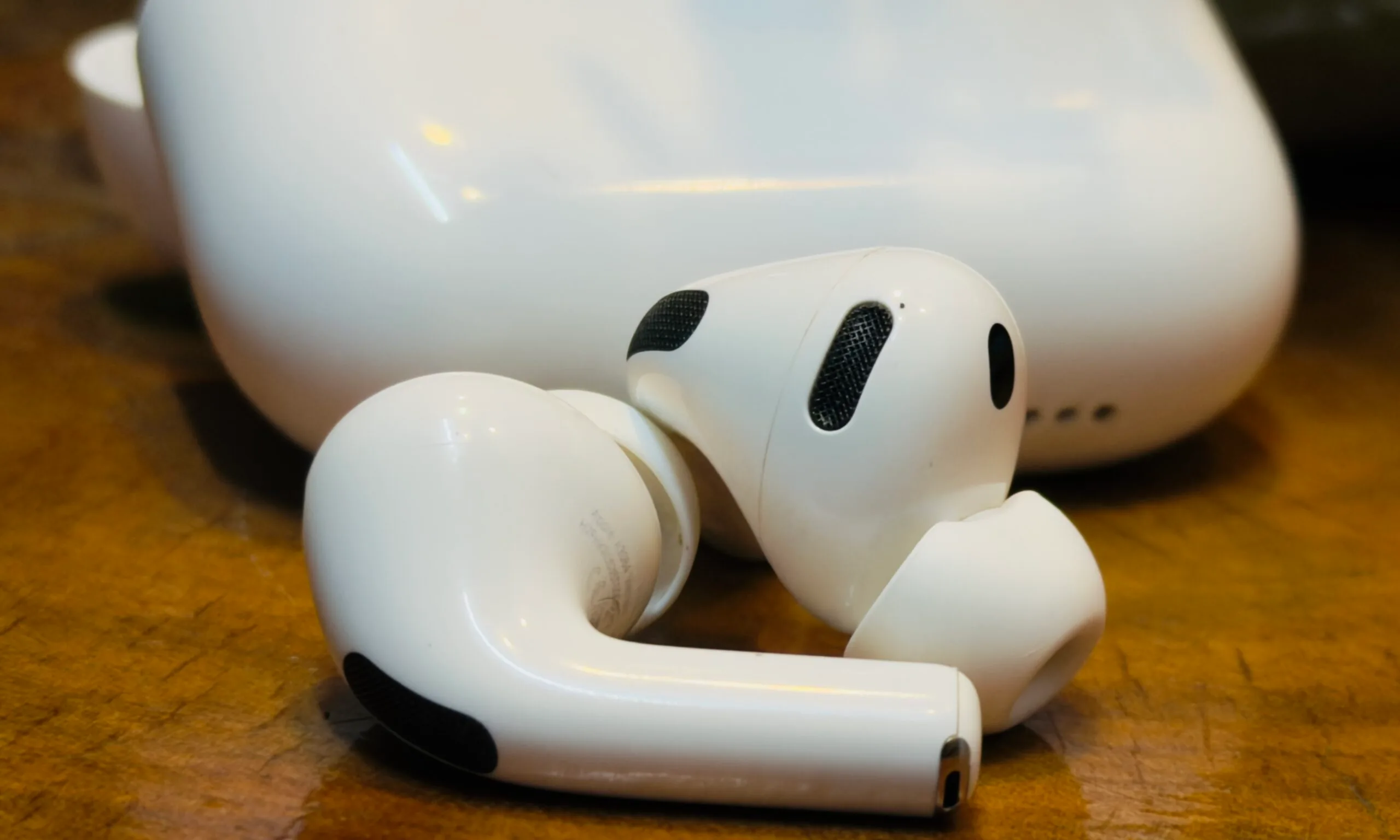
Apple’s wearable future is starting to come into focus, and cameras appear to be at its center. Bloomberg’s Mark Gurman reports that camera-equipped AirPods and Apple’s first smart glasses are currently on the roadmap for 2027. While they may look like ordinary accessories on the surface, both products could play a crucial role in helping Apple Intelligence understand the world around its users in real time.
Your AirPods might start paying attention
When most people think of AirPods, they think of music, podcasts, and phone calls. Cameras aren’t exactly high on the wishlist. But Apple has a different vision. The cameras wouldn’t be there for recording videos. Instead, they’d help gather information about the world around you and feed that data into Siri and Apple’s AI systems.

Imagine asking Siri about a building you’re looking at, identifying an object in front of you, or getting contextual information without ever pulling out your phone. So, your AirPods could become another set of eyes for Apple’s AI; that’s a dramatically different role from what earbuds do today.
Glasses to see, not just display
Then there’s Apple’s smart glasses, arguably one of the company’s most anticipated future products. Unlike the bulky Vision Pro headset, smart glasses could bring AI into a form factor people might actually wear all day. While details remain scarce, cameras are expected to play a crucial role, helping the device understand its surroundings and deliver real-time, useful information.

What’s particularly interesting is how these products fit into Apple’s broader AI strategy. Most companies are trying to make AI more useful through apps and chatbots. Apple appears to be exploring something more ambient — AI that observes the world around you and responds when needed. Whether consumers are ready for camera-equipped wearables is another question entirely. But if Gurman’s report is accurate, 2027 could be remembered as the year Apple stopped thinking about AI as software and started turning it into something you wear.
It’s virtually impossible to live in modern society and not be tracked in some way. Websites track you, the apps you need and use every day could be the worst offenders in privacy invasion, and the devices you use it is tracking you, too. And even if you turn off the phone and go outside, you could being watched by the widespread Flock cameras that might be in your neighborhood. We know that tracking devices are all around every single one of us, all the time, every day. But sometimes you don’t even realize a device can track you in the first place.
Now, to walk things back a bit. We’re not out to terrify you into thinking your smart toaster is equivalent to the “1984” telescreen. Oftentimes, tracking is inevitable and even benign. Most electronic devices connected to the internet and receiving updates need basic usage telemetry to help the manufacturer fix bugs and optimize performance. With that in mind, these are five everyday tech devices that might be tracking your activity — for better or for worse.
Wi-Fi routers
In recent years, we’ve seen a scary news headline that says that Wi-Fi routers can be used like sonars to “see” inside buildings. Sadly, it’s no exaggeration. A Wi-Fi router can be utilized to map its surroundings. The technology is so sensitive it could theoretically track someone’s gait when walking, and possibly their breathing, even in another room.
What’s worse, a bad actor wouldn’t even have to compromise the network or buy a $10,000 frequency analyzer tool to do it; They’d only need a cheap smartphone kept in the network’s vicinity. Victims wouldn’t know when they were being tracked, either, and the more devices victims have, the more accurate the tracking gets. We already have concerns about mass surveillance with cameras, but now imagine the thousands upon thousands of Wi-Fi networks in every city and state retrofitted into a tracking apparatus that has x-ray vision — and imagine what dark forces out there would love to get their hands on said apparatus.
Now for a dose of reality. We’ve seen that this works, in theory, but so far we haven’t found documented cases where this has been abused. There are certainly concerning trends in that direction, like court cases arguing that that authorities should be able to track you with WiFi-based location, and consumer devices made by shady companies that boast Wi-Fi motion detection. On the flip side, a lot of the research around Wi-Fi sensing has been focused on potentially good use cases. We’d probably all be okay if grandma’s Wi-Fi network was leveraged to alert us in the event she takes a fall. For the possible unsavory uses of the tech, it may be possible to mitigate them by polluting the real data with false data.
Smart TVs
Let’s not beat around the bush: your smart TV could be spying on you. It’s something most people never think of, and yet at the same time, it’s completely unsurprising. Tech companies are some of the biggest privacy abusers. Why wouldn’t they take the big screen situated in your living room, the locus of your home’s activity, and track its behavior? Consumer Reports explains how smart TVs use ACR (automatic content recognition) to track you. Basically, ACR is “watching” what you watch, compiling and analyzing that info, and then using it to recommend further content. That Consumer Reports article also has a guide on how to disable ACR in most major TV brands.
In the past, we’ve seen companies do all sorts of spooky things with smart TVs. Samsung was once caught saying that it would collect personal data unrelated to a voice command query over your microphone (the clause has since been removed from Samsung’s privacy policy). There was also that thoroughly dystopian UAB (unique audio beacon) tech that allowed advertisers to figure out who exactly was watching their ads by pinging nearby smartphones with inaudible, ultrasonic noise. Case in point, tech companies have stooped to some disturbing stuff before, and they might try again.
However, we’re not saying you should throw away your fancy OLED panel in favor of an old CRT. Just do some digital hygiene. Go into your smart TV’s settings and disable analytics and ACR; disable features you never use, like the microphone for voice commands; learn how to disable ads on your TV, if possible. If you do all your watching through a streaming box, then you might even disconnect the smart TV from Wi-Fi entirely, since the streaming box is the only thing that needs to be connected.
Smart glasses
Smart glasses with cameras seem like a cool way to film things hands-free… except when they enable loathsome individuals to secretly film others in public. We’ve already discussed at length where Meta Ray-Bans and their ilk should and shouldn’t be used, and laws are already in the pipeline to curb their misuse, but it’s not just unsavory people using the glasses for unsavory purposes — It’s the companies, like Meta. They’re not as concerned with filming other people as much as filming you, the user.
The Electronic Frontier Foundation reports how Meta’s smart glasses in particular don’t have any strictly-offline functionality. AI voice chats and media recordings get pumped into the cloud and may in some cases see employees annotating them for AI training. It would appear, according to a Svenska Dagbladet investigation, that users may not always control what’s recorded and uploaded. Imagine going to the bathroom with the glasses on — but not recording — and someone on the other side of the world seeing the whole thing. One of the workers quoted in the aforementioned report said that the stuff they see on a daily basis would unleash “enormous scandals.”
While you might think that the same privacy risk applies to a smartphone, it’s important to remember that a smartphone isn’t sitting on your face, pointed at your surroundings whether or not you’re using the camera. Smart glasses inherently introduce a new class of privacy risk. Considering Meta is up to its neck in a huge class action lawsuit as a result of everything we’ve mentioned, we’d say this is the one device on this list most should avoid entirely.
Doorbell cameras
It’s impossible to deny the benefits of a doorbell camera. You can see who’s at your door — even when not at home — as a security measure, a means to avoid unwanted visitors, and a way to keep tabs on anyone who’s entered your property line. As you can probably guess, however, having a camera in your home that’s owned by a tech company requires trusting that only you will be able to see the footage. We’re not just fearmongering baselessly. Ring — one of the most popular doorbell camera makers in the U.S. — was accused by the FTC of spying on users without their consent.
There’s also been growing concern in recent years that the Ring cameras belonging to your neighbors are surveilling and tracking you. We all know that one curmudgeon who makes everyone’s life miserable at the HOA meeting, who spends half their day with a drawn curtain in one hand and a phone dialed to 911 in the other. Now that curmudgeon has a camera that’s on even when they sleep, a camera which footage they can pass along to the police and get them involved even when you’re innocent. And there are probably a lot of these cameras in your neighborhood.
Again, we wouldn’t necessarily advocate for getting rid of your Ring camera. Instead, go into the settings and change a few. Some of the things we’ve mentioned — like Ring Neighbors — can be disabled entirely. Of course, Ring is just one company on the market making these doorbell cameras. It doesn’t matter which brand you’re using. Limit what privacy settings you can, and be wary of any camera-enabled device that’s filming continuously in the background, 24/7.
Smart home devices
Once you get used to controlling your lights verbally with your smartphone’s AI assistant, it’s painful to go back to the olden days of getting up off the couch and switching lights on manually. Now, you can fill your home with an army of smart devices that make things more secure and convenient — and affordably so. Once again, we extend a gentle reminder that these tech devices are made by companies that may not respect your privacy, or even adhere to their own privacy policy. There’s ample evidence to suggest they’re listening in constantly, gathering information, and potentially sharing it. And if they’re not listening, the devices themselves may be vulnerable to hackers.
First we’d say, use common sense. Don’t put an indoor camera in your bedroom, for example, and be careful what brands you buy from. You only have to Google a device’s manufacturer name paired with keywords like “security vulnerabilities” to quickly find the ones to avoid. Don’t make common Wi-Fi mistakes like using weak, outdated encryption for your home network, since it’s the bedrock of your smart home. Consider keeping some “dumb” devices, like a non-smart front door lock, to limit the attack surface.
In truth, most of this stuff is basic security practice that you should already be doing on your PC and smartphone anyway. Things like setting strong passwords for smart home platforms, like Google Home, and keeping all devices updated to the latest software. Hackers love an easy, low-hanging fruit, so even doing the bare minimum makes you a much less desirable target.

John Ternus has been talking about focusing on Apple’s core strength of design once he takes over as CEO, and a now a questionable report extrapolates that this means he’ll shake up the design team.
John Ternus is now best known for taking over as Apple CEO from Tim Cook, but as recently as January 2026, he took control of the firm’s design team. Now according to Bloomberg, far from leaving that because of other CEO duties, he is planning to continue working on Apple’s whole design philosophy.
Reportedly, Ternus told staff that under him, Apple will “keep focusing on design, because design is core to what we do in Apple.”
He said that Apple has brought “truly incredible design” to customers, and done so more than any other firm. Ternus claims that the best-designed item that most customers have, is an Apple product.
“We’re going to make sure that stays the case,” he said.
There are no further details, although the report echoes claims from January 2026 that Ternus plans a shakeup of the design teams. What is clear, though, is that this is going to mark a clear difference between Ternus and his predecessor, Tim Cook.
Cook was once criticized by Steve Jobs for not being a product person, in the way that Jobs or Jony Ive would obsess over them. It’s repeatedly been reported that Cook did not often visit the design teams, and now it’s said that Ternus has already devoted a lot of his time to the design division.
The first products to come out under Ternus’s aegis will be the iPhone 18 range in September 2026, the month he officially takes over. It’s said that Apple is aiming to mark the 20th anniversary of the original iPhone with a series of new devices, including a new iPhone Fold, and AirPods with cameras, in 2027.
Even those, though, are already at the testing stage. So while Ternus has been involved with them, it could take a couple of years before Apple releases a device that was made entirely on his watch.

This week the Ubuntu desktop’s director of engineering announced they’re bringing speech-to-text dictation to Ubuntu Desktop, aiming for an experience “that feels like a natural part of the desktop while respecting user privacy and running entirely on local hardware.”
“Speech recognition has become a common feature on modern platforms, and we think it should be a first-class experience on Ubuntu Desktop as well.”
More details from the blog It’s FOSS:
For Ubuntu 26.10, the initial version of Myna is expected to be a desktop dictation tool built around GNOME on Wayland with a push-to-talk mechanism gatekeeping when your microphone accepts input. Using it means holding a hotkey, speaking, and letting go. A small activity indicator shows while it is listening, and the transcribed text lands wherever the cursor was sitting when dictation started.
Recognition itself happens inside a sandboxed component called the Canonical Inference Snap, while a Speech Orchestrator manages the session and an Audio Adapter handles whatever the microphone picks up, denoising and chunking it before it ever reaches the model… Speech recognition will happen locally, and an internet connection is not needed once the appropriate model is installed… The audio data won’t be sticking around either, being stored in a small in-memory buffer that gets discarded the moment the session ends. Features like dictation into password fields, wake words, continuous listening, voice assistants, voice commands, translation, speaker identification, and automatic language detection are all off the table…
You should also know that Canonical is looking for feedback before the specs for Myna are finalized, especially from people who already rely on dictation or assistive tools on Linux.

If you bought an iPhone 16 or iPhone 15 when they launched, you may be able to claim some of the money from a class action lawsuit against Apple. It’s all tied to the new Apple Intelligence features the company previewed during launch — features that ultimately didn’t arrive on time, but were finally unveiled more extensively this month at WWDC 2026.
Apple settled a shareholder lawsuit in May, agreeing to pay $250 million to customers who bought the iPhone 16 and some iPhone 15 models during a specified period. The lawsuit alleged that Apple misled customers by promising AI features that didn’t ship when the new devices did. Payouts between $25 and $95 per eligible device are expected.
In a statement to CNET Managing Editor David Lumb, an Apple spokesperson said, “Apple has reached a settlement to resolve claims related to the availability of two additional features. We resolved this matter to stay focused on doing what we do best, delivering the most innovative products and services to our users.”
Why is there a lawsuit over Apple Intelligence?
When Apple advertised its new iPhone 16 lineup, it emphasized how they were optimized for AI features such as an enhanced Siri that could act as an intelligent agent. When the phones did arrive, Apple Intelligence wasn’t yet ready; its first features didn’t arrive until iOS 18.1, five weeks later.
According to the proposed settlement, “Apple allegedly saturated the market with deceptive ads, inducing consumers to purchase iPhones based on the promise of certain enhanced Siri features.”
Some features of Apple Intelligence did ship soon after the introduction of the iPhone 16 and iOS 18, including Visual Intelligence, Live Translation, Writing Tools, Genmoji and Clean Up. But those weren’t the advanced features Apple highlighted.
Who is eligible for the $250 million settlement?
Customers who purchased one of the following devices between June 10, 2024, and March 29, 2025, are eligible to receive a settlement payment:
- iPhone 16
- iPhone 16E
- iPhone 16 Plus
- iPhone 16 Pro
- iPhone 16 Pro Max
- iPhone 15 Pro
- iPhone 15 Pro Max
The iPhone 15 Pro and iPhone 15 Pro Max are included because they had the processor and memory to run Apple Intelligence features.
It’s estimated that there are approximately 36 million customers eligible for this settlement.
Watch this: What iPhone Users Actually Want From the New Google-Powered Siri
How to claim your portion of the settlement
For now, you need to wait.
As set forth in the settlement, Apple will provide a list of eligible customers and their contact information to a settlement administrator.
After the data has been verified, the company Verita will send email and postal notices to those customers directing them to a settlement website. That site has not yet been created. The deadline for filing your claim will be 90 days after your notice arrives.
When can you expect to receive a settlement payment?
According to the settlement, Apple must provide the information about affected customers within five days of the settlement approval, which was scheduled for June 17, 2026.
When the data is provided and verified, a 45-day notice period begins to inform potential consumers that they’re eligible for a payment.
The actual payment of claims will occur within a 60-calendar-day window after the final details, such as exclusions and objections, have been worked out. That puts the first checks or deposits arriving sometime after September 2026, depending on court dates and possible extensions.

Purse, payout breakdown, winner’s share

Ubisoft co-founder Claude Guillemot dies in plane crash

Rod Stewart given oxygen on stage after ‘nearly fainting’ at US concert


-
 Crypto World7 days ago
Zimbabwe Requires Crypto Businesses to Register Annually Under New FIU Regulations
-

 Fashion2 days ago
Weekend Open Thread: Miami – Corporette.com
-
 Business2 days ago
Wall Street Week Ahead: Investors see Micron earnings as pulse check of AI rally momentum
-
 Crypto World6 days ago
Crude Oil Plunges Over 4% as US-Iran Agreement Reopens Hormuz Strait
-

 Crypto World2 days ago
HIVE shares jump as $220M AI deal speeds Bitcoin mining pivot
-

 Tech7 days ago
Over 400 Arch Linux packages compromised to push rootkit, infostealer
-

 Tech5 days ago
The Adder At The Heart Of Intel’s 8087 FPU
-
 Tech7 days ago
Microsoft Updates Six Windows’ Apps. ‘Photos’ Gets Watermarks for Copilot Images (Off by Default)
-

 Sports3 days ago
FIFA World Cup 2026: Canada beat 9-men Qatar 6-0 to register first ever win | FIFA World Cup 2026
-

 Tech7 days ago
Etzioni on AI: Backlash against AI-generated text mirrors the anti-GMO movement
-

 Business22 hours ago
Soccer-U.S. defends Iran World Cup travel restrictions, says discussions ongoing
-

 Tech7 days ago
Today’s NYT Connections Hints, Answers for June 15 #1100
-
 Tech7 days ago
Chinese AI models are learning to detect safety tests and adjust their behaviour accordingly
-

 Politics7 days ago
The countless control rooms running the World Cup in New York and New Jersey
-

 Entertainment7 days ago
Embrace Seaside Vibes With the 15 Hottest Rope Sandals
-

 Tech4 days ago
Weeks Of In-The-Field Testing And A Verdict
-

 Crypto World4 days ago
Anthropic’s Dario Amodei Urged AI Unity at G7, Even as US Banned His Models
-

 Tech3 days ago
Adobe adds its AI assistant to Premiere, Illustrator and InDesign
-

 Crypto World1 day ago
Jake Chervinsky accuses CME of protecting derivatives monopoly
-

 Tech7 days ago
What Was The 2-Minute Rule On Netflix?
You must be logged in to post a comment Login