
Security teams log 54% of successful attacks and alert on just 14%. The rest move through your environment unseen.
The Picus whitepaper shows how breach and attack simulation tests your SIEM and EDR rules so threats stop slipping by detection.




The Supreme Court’s conservatives have spent years systematically dismantling the Voting Rights Act, but the last seven months have been something else — a rapid-fire series of emergency docket rulings, procedural maneuvers, and carefully worded opinions that, taken together, make it effectively impossible to challenge racial gerrymandering. Not difficult. Impossible. And Justice Alito, in particular, seems almost gleeful in how mask-off he is in enabling the suppression of Black votes.
Yesterday’s per curiam ruling in Allen v. Milligan is the exclamation point on that project. None of the conservatives were willing to put their name on it. They didn’t need to. The result was never really in doubt — not after what they’d already done in Texas, Louisiana, and Alabama over the preceding months. This was just the moment it became undeniable that the rule is: if it disenfranchises Black voters, we’ll allow it, if it empowers Black voters, we’ll block it.
Here’s the trail.
So that brings us to yesterday. Alabama had rushed to the Supreme Court’s emergency docket, because of course they did. And the conservatives on the court did what they were expected to do: in a per curiam ruling that none of the conservatives were willing to put their name on, they shoved the (already deemed racist by multiple lower court rulings) Alabama map back into effect while the election was already underway.
The ruling claims this is necessary after Callais — that the lower court didn’t apply the new standard correctly. But that’s a misreading of what the lower court actually did (and also the Court’s own ruling in Callais!). The district court found overwhelming evidence of racist intent. That’s exactly what Callais demanded. The Supreme Court’s stated reason for overriding that? The lower court “did not heed the presumption of legislative good faith.”
Even more ridiculous, the ruling claims that the district court’s ruling would have upset that “certainty” so close to an election again:
We have repeatedly cautioned that lower federal courts should not “alter the election rules on the eve of an election.”
I mean come the fuck on. These same six twerps literally “altered the election rules” in neighboring Louisiana a month ago and altered Alabama’s election rules just a few weeks ago. This new map is what “alters the election rules on the eve of an election.”
The sheer racist chutzpah it takes to scold a lower court for “changing the map at the last minute” while actually changing the maps with the very same ruling is something else.
There is, yet again, a dissent written by Justice Sotomayor (and joined by Justices Kagan and Jackson) laying out the ridiculousness of all of this, including calling out the conservatives past claims of trying to avoid “chaos and confusion” while guaranteeing that these recent elections are nothing but chaos and confusion:
Before the Court are two paths. Down one lies an orderly election, held under a tried-and-tested congressional map that protects Black Alabamians’ right to vote and with which all voters, elections officials, and candidates alike are familiar. Down the other lies a chaotic election, held under a never-before-used congressional map that intentionally discriminates against Black Alabamians, that Alabama adopted in unashamed defiance of a prior court order directly affirmed by this Court, and that will require officials to change the voter registrations of hundreds of thousands of voters in just days at best, a task that Alabama previously represented would take months.
Sotomayor points out that the last time this case came before the court — when the majority agreed the Alabama maps were racist — Alito and Kavanaugh whined that changing the maps with months to spare would cause “chaos and confusion.”
She points out that what is happening now, because of the same rulings endorsed by Alito and Kavanaugh, we are now seeing actual chaos and confusion, including already made votes being thrown out:
After this Court’s order, Alabama announced that it intended to use the 2023 Redistricting Plan for the upcoming election and took the unusual step of splitting its congressional primary. In the three congressional districts unaffected by the change in congressional map, the May 19 primary election went ahead as scheduled. In the other four districts, voters still cast their ballots. Their votes for Congress, however, did not count. Instead, Alabama’s Legislature passed a law permitting the Governor to call a special primary election in the four congressional districts whose lines changed as a result of this Court’s order, and the Governor set that election for August 11.
Sotomayor repeats how multiple district court rulings and the Supreme Court (with the same makeup) had already found that the Alabama maps violated the law. And she points out that, unlike the Supreme Court the district court followed the earlier rulings in looking at the actual evidence:
The District Court’s account of the evidence here is more than plausible. The record is bereft of evidence suggesting that Alabama took seriously this Court’s finding of discriminatory vote dilution in Allen. Speaker of the Alabama House of Representatives Nathaniel Ledbetter put it bluntly: “‘If you think about where we were, the Supreme Court ruling [in Allen] was five to four. So there’s just one judge that needed to see something different.’” Singleton, 782 F. Supp. 3d, at 1348. That admission, the District Court observed, suggests “that Speaker Ledbetter was not focused on trying to remedy likely vote dilution” when the Alabama Legislature passed the 2023 Redistricting Plan.
As she notes, under the current Alito-doctrine, there is simply no way to ever invalidate a gerrymandered map:
The record is crystal clear. Even if Alabama may have unintentionally drawn the first racially discriminatory map, when it later adopted redistricting criteria that made it mathematically impossible to remedy racial discrimination, the District Court drew the obvious (and certainly not implausible) inference that Alabama intended to discriminate. If the District Court clearly erred by doing so, then there is no realistic case in which the presumption of legislative good faith can ever be rebutted.
Then she goes back to the point she made in her dissent on the last ruling. Callais is entirely about the Voting Rights Act. But the maps in Alabama didn’t just violate the VRA, they also were found to violate the Fourteenth Amendment. And while the Supreme Court can rewrite the VRA, it can’t ignore the Constitution. Yet it did. And it did so again in this ruling, pretending that Callais also covers the Fourteenth Amendment.
It is hard to see how the District Court’s finding of discriminatory intent under the Fourteenth Amendment could have departed from an opinion that purported to say nothing about how to find discriminatory intent under the Fourteenth Amendment. The Court’s apparently oblivious insistence to the contrary today cannot be squared with what Callais said on its face just over one month ago.
And then there’s the chaos argument, which is where Alito and Kavanaugh’s earlier hand-wringing gets turned directly against them.
As the District Court explained, the path of least change in Alabama is keeping the District Court’s remedial plan in place. According to Alabama Director of Elections Jeff Elrod, all voters in Alabama are currently assigned in countylevel voter rolls to congressional districts based on the remedial map that the District Court previously ordered and that the State used for the 2024 election cycle. 2 App. 135. To run an election using the remedial map, then, the State need not make any changes to its voter rolls or change the status quo.
To switch to the 2023 Redistricting Plan now, however, county elections officials will have to reassign hundreds of thousands of voters across the State to new congressional districts.
Once again, the only actual consistency from the conservatives on the court seems to be “you cannot upset maps if they are racist against Black people” but “you can absolutely shake up maps at the last second, throwing out votes, if the new maps will be racist against Black people.” The only clear “consistency” is that it is only okay to disenfranchise Black voters.
And there will be massive chaos:
Elrod testified below that county elections officials would have to reassign those 600,000 voters manually. “The system,” he explained, “is not automatic” and “requires manual input” from elections officials who must “physically manually interface with the system.” Id., at 146. Reassigning voters in precincts split across two districts is particularly complicated, he continued, as it “cannot be done with a simple click” and instead requires officials to check street-level data to determine how to assign individual voters. Id., at 156–157. Worse yet, Elrod warned that reassigning voters requires using complicated computer software that officials must be trained to use, as “most of the counties’ registrars are not tech savvy” and “registrars are the only ones who can make the changes . . . to a voter’s record.” Id., at 147– 148. This process also requires many prechecks and backend quality control steps, all of which add to its time-intensive nature.
[….]
Here, county officials do not have four months. When Alabama filed these applications on May 27, they had just seven days. Elrod explained that voter rolls were locked throughout the State following the State’s May 19 primary election, meaning that county officials could not reassign any voters to their new congressional districts under the 2023 Redistricting Plan for the August 11 special primary election. ECF Doc. 530–1, p. 17. The rolls were unlocked on May 27, but they are set to lock again today, June 2, ahead of Alabama’s primary runoff election on June 16. As a result, county officials in the three most heavily impacted counties in Alabama had at best just seven days to reassign 600,000 voters by hand. The two smaller counties, which are together responsible for reassigning 100,000 voters, each have just three elections officials who can make these changes. 2 App. 122. Mistakes will inevitably occur, as overworked elections officials sprint around the clock to make all the necessary changes. Even then, the officials may fall short. As far as Elrod is aware, no county in Alabama that was split under a redistricting plan has ever managed to complete voter reassignment in just seven days.
That seems bad. That seems like the kind of inconsistency, chaos, and confusion that the conservatives on the Supreme Court insisted could not be allowed (when it would mean getting rid of a racist map). Weird that here they are not only fine with it, they are encouraging of the chaos.
In fact, Sotomayor points out that Alabama officials have changed their position on how much chaos would be caused depending on which result helped them more:
Alabama has taken wildly inconsistent positions on how much time it needs to implement a new redistricting plan throughout these cases, which suggests it is attempting to game this Court’s emergency docket through shifting positions on the equities. As noted above, Alabama previously sang a very different tune. In January 2022, it asked the District Court to stay its initial preliminary injunction in these cases. See ECF Doc. 110. In its motion, the State complained that changing its congressional districts four months before Alabama’s primary election that year “thr[ew] the [2022] election into chaos” and left “almost no time for maps to be redrawn, hundreds of thousands of voters to be reassigned to new districts, and thousands of new signatures to be obtained by candidates and political organizations seeking ballot access.” Id., at 20. Alabama continued: “To pull the rug out from . . . candidates and their voters in the run-up to an election requires extraordinary justification,” for “‘elections are complex to administer, and the public interest is not served by a chaotic, last-minute reordering of districts.’” Id., at 21 (alterations omitted). The State made similar arguments to this Court when it successfully sought a stay following the District Court’s denial. See Merrill Application 38 (citing “the last-minute reassignment of hundreds of thousands of voters to new districts” as imposing significant “harms not only [on] the State,” but also on “voters and candidates”).
If all the above was true in 2022, then it is also true in 2026. Alabama, however, no longer seems to think so. What was previously impossible to achieve in four months is suddenly possible to achieve in less than one week, as concerns about the administrative burdens associated with “the last-minute reassignment of hundreds of thousands of voters to new districts,” ibid., have apparently melted away. A State that once decried pulling the rug out from under voters, elections officials, and candidates now seems determined to do just that. The Court should not reward such gamesmanship, especially when it accepted Alabama’s arguments in granting Alabama a stay in 2022.
Again, Alito and Kavanaugh explicitly called out the supposed “chaos and confusion” that would be caused by adjusting maps with four months notice in 2022. Yet here, they seem to see zero issue with it happening in mere days.
Once again, there is no way to square all of this that does not come down to the judges who voted for this simply supporting blatant disenfranchisement of Black voters.
Filed Under: alabama, callais, gerrymandering, louisiana, purchell rule, racism, samuel alito, sonia sotomayor, texas, voting rights


Dubai’s skyline is constantly changing, and the Burj Azizi, currently rising along Sheikh Zayed Road, is one of the most magnificent additions to date. This project repurposes an older, delayed site into a new landmark that will shortly become the world’s second highest tower. Standing 725 meters from base to architectural top, the tower will claim that global ranking once complete. The measurement puts it comfortably above of most recent supertall challengers, although being approximately 103 meters shorter than the adjacent Burj Khalifa.
Azizi Developments takes the lead on a project that has been stalled for years after purchasing the dormant Entisar Tower site. Meanwhile, construction crews are working long hours, day and night, to lay the groundwork for this massive skyscraper, which they want to finish by 2028. This behemoth will be a sight to behold, towering over 130 floors and packing an unexpected mix of functions into a sleek body. The top floor houses a 7-star all-suite hotel with a design influenced by seven different cultural themes, while the lower floors are filled with ultra-luxurious flats, penthouses, and holiday homes. Then there’s the vertical retail space, a sprawling shopping mall that rises level by floor across the building.



What sets this skyscraper apart from others is not just its sheer height, but what they do with it. Try standing in the hotel lobby at 498 meters, which is the world’s highest position (for a hotel lobby). Then proceed to the highest-occupied hotel room, Dubai’s highest restaurant (544 meters), a theater (310 meters), a club (567 meters), a spa (415 meters), or the observation deck (649 meters). Residents will have access to a range of amenities, including health clubs, pools, gyms, saunas, cafes, a children’s play area, a ballroom, and, to top it all off, an adrenaline junkie zone for thrill seekers. This all adds up to a self-contained vertical neighborhood where you may work, play, interact, and dine all under one roof, without having to leave at any time.

You can expect to pay a significant fortune to live here, with prices ranging from around 10,000 Dirhams ($2,723) per square foot to ultra-high-end options. By mid-2026, the tower is beginning to block views along that strip, and workers are still hard at work on the building’s foundations and skeleton, under the close supervision of Azizi, who had no misgivings about investing the money. They have already spent over 6 billion Dirhams to get this project off the ground.
[Source]

Looking for the most recent Mini Crossword answer? Click here for today’s Mini Crossword hints, as well as our daily answers and hints for The New York Times Wordle, Strands, Connections and Connections: Sports Edition puzzles.
Need some help with today’s Mini Crossword? I admit, 1-Across really threw me, but now I think it’s a pretty smart clue. Read on for all the answers. And if you could use some hints and guidance for daily solving, check out our Mini Crossword tips.
If you’re looking for today’s Wordle, Connections, Connections: Sports Edition and Strands answers, you can visit CNET’s NYT puzzle hints page.
Read more: Tips and Tricks for Solving The New York Times Mini Crossword
Let’s get to those Mini Crossword clues and answers.
The completed NYT Mini Crossword puzzle for June 4, 2026.
1A clue: It takes you from E to F (and starts with G!)
Answer: GAS
4A clue: Animal that has a symbiotic relationship with green algae, which grows in its fur
Answer: SLOTH
6A clue: Societal no-no
Answer: TABOO
7A clue: “Sorry, unavailable then”
Answer: ICANT
8A clue: Color associated with passion
Answer: RED
1D clue: Turn in the fridge, maybe
Answer: GOBAD
2D clue: Lots and lots
Answer: ATON
3D clue: Something a bartender or basketball player might make
Answer: SHOT
4D clue: Mix, as a sauce
Answer: STIR
5D clue: Frilly material
Answer: LACE


CISA, the FBI, the NSA, the Department of Energy, and other US government partners are warning that hackers are targeting internet-exposed automatic tank gauge (ATG) systems used to monitor fuel and liquid storage tanks across various critical infrastructure sectors.
The cybersecurity agency says that ATG systems are commonly used in the Energy, Chemical, Food and Agriculture, and Transportation Systems sectors to remotely monitor storage tank levels, temperatures, and potential leaks.
The US government says threat actors are targeting exposed devices and modifying system settings through command execution.
“The recent malicious cyber activity observed by the authoring organizations—which the U.S. government has not yet attributed to a nation-state or threat actor group—involves cyber threat actors compromising internet-exposed ATG systems and subsequently modifying them through command execution,” the advisory states.
According to the agencies, attackers are gaining access through authentication bypass vulnerabilities, hardcoded credentials, operating system command-execution flaws, SQL injection vulnerabilities, and privilege-escalation weaknesses.
If the system is successfully compromised, the attackers can alter network settings, product identifiers, tank volumes, and pump controls. They could also turn off alerts and create conditions that prevent operators from properly monitoring tank fill levels, potentially increasing the risk of leaks or equipment failures.
The agencies urged organizations to block ATG systems from the internet, restrict remote access through firewalls, VPNs, or access control lists, replace default passwords, utilize strong credentials and multifactor authentication, apply security updates, and actively monitor systems for unauthorized changes.
While the advisory does not attribute the activity to any specific threat actor, it follows CNN reporting in May that Iranian hackers were behind a series of breaches involving ATG systems at gas stations in multiple states.
According to CNN, the attackers exploited ATG systems that were connected to the internet and protected by weak or nonexistent passwords, allowing them to access and manipulate display readings. However, the attackers did not alter the actual fuel levels.
The incidents reportedly did not cause physical damage, but raised concerns that attackers could potentially interfere with leak detection and other safety-related functions.
CNN reported that Iran was the primary suspect because of its history of targeting fuel management systems and other industrial control technologies.
However, CNN reports that multiple sources briefed on the investigation said it may not be possible to attribute the activity to a specific attacker, as there was limited forensic evidence left behind in the attacks.
CISA and its partners said organizations operating ATG systems should review their exposure and implement recommended mitigations immediately to reduce the risk of compromise.

Security teams log 54% of successful attacks and alert on just 14%. The rest move through your environment unseen.
The Picus whitepaper shows how breach and attack simulation tests your SIEM and EDR rules so threats stop slipping by detection.

The modern, cloud-powered digital economy has as its dynamo the ease with which data is shuttled all over the world.
This information globalization has had momentous impacts from supercharged business performance and strategic adaptability through accelerated co-creation and collaboration, to economies of scale and huge net cost savings.
Today, however, organizations face a very different imperative: the requirement for data sovereignty: that is, the need to restrict data movement and stored location to specific countries or regions.
Sammy Zoghlami is a Senior Vice President at Nutanix where he leads the EMEA organization.
With the rush toward AI tools revolutionizing the ways in which we handle, query and repurpose data, every organisation of scale needs to consider how it can maintain a “sovereign cloud” with complete oversight of digital asset, application and data accessibility.
The contemporary focus on sovereignty is already having significant strategic IT impacts. Gartner has predicted that 75 per cent of non-US enterprises will need to have a digital sovereignty strategy by 2030. It is also impacting IT deployment options as the same analyst has stated that 61 per cent of IT chiefs will increase their dependence on local cloud providers in that timeframe.
Data sovereignty isn’t new of course. Think of international laws such as the EU’s GDPR, various iterations of “Safe Harbour” rules, the US’s Cloud Act, Germany’s ‘C5’ rules, France’s Cloud de Confiance initiative and many industry and national or regional codes. These have created a climate of awareness as to where data is stored and where it travels en route. But we also need to understand sovereignty in a broader sense…
Sovereignty is about more than implementing geofencing or other location-based guardrails. It involves everything from culture and education, through core infrastructure and development, to delivery, deployment, maintenance and updates. And with AI, Machine Learning and LLMs becoming a central tenet of IT and process change, organizations now must control the entirety of their AI journeys.
Ultimately, AI touches on everything an organization does but we can boil this down to suggest that it involves, broadly, three areas pertaining to sovereignty. First, maintaining local and vertical market controls; second, enhancing their sense of self-reliance; and third, feeling confident in data security and governance compliance.
Let’s look at these in a little more detail.
Organizations need to ensure that their data assets are the right fit for local languages, cultures and vertical industry needs.
Sovereignty can create a ‘bubble wrap’ around those assets with supervision of data controls tweaked for the local environment and specific industry (or even unique organisation).
Enterprises will opt largely to use familiar software architectures, LLMs and other AI foundational models and building blocks from blue-chip partners as a comfort factor and to gain a fast start. This is a pragmatic preference over the cost and complexity of a build-your-own or ‘unique/boutique’ approach.
But large organizations will also be desperate to maintain intellectual property and to tailor for their specific requirements. This will mean that they will insist on the need for specific sovereignty controls to be built into programs and projects.
Laws and codes specify data never leaving borders or other locations for many reasons relating to GRC and security.
Such rules often apply to personally identifiable information (PII) but they also cover intellectual property, organizational processes, trade secrets, HR information, financial data and other sensitive information. This has major implications for companies that rely heavily on public cloud.
Public cloud providers offer ubiquitous data/application access, significant economies of scale and improved performance by moving data round the world to maximize value and minimize network latency. However, for the reasons outlined above, organizations increasingly demand granular controls over this movement.
Data sovereignty is a many-headed beast and it means that organizations must create sovereignty rules for each country or region in which they operate to stay compliant, low-risk and in control of their futures. The triple-fold need for localization, self-reliance and data sovereignty forces organizations to look again at IT deployment and operational models.
That includes a potentially higher dependence on on-premises IT infrastructure and ‘backshoring’: that is, returning data to its country of origin. Many CIOs are also exploring private clouds and using public clouds tactically where there is an appropriate fit, rather than adopting a blunt, ‘cloud-first’ strategy that was so fashionable 10-15 years ago.
Organizations today need to build notions of sovereignty into their planning and their cultures. The risks of not making sovereignty a ‘by default’ setting are high and growing: loss of strategic control, misaligned campaigns and infractions, data losses and financial penalties among them.
Note also that all of this is happening at a time when strategic deployments of AI are only just entering mainstream production environments at most enterprises. For CIOs and their peers, this timing has a bonus advantage, however. By starting with a (relatively) clean sheet of paper, sovereignty and governance can be built into new architectures, cultural patterns, processes and workloads, rather than having to be retro-fitted in clunky fashion.
But there are challenges too. CIOs and privacy executives need to deal with waves of rules and complex maneuverings. Germany, for example, is famously strict on privacy and data management. Also, considering localization, many languages, cultures and verticals are yet to be adequately served by AI foundational models and training data. And in terms of self-reliance, organizations and states must think creatively to avoid being locked in to key silicon, platform or other core IT providers.
In this context, airgapping, dark sites that operate offline, open source software foundations that can quickly be disassembled and reconfigured, and of course multicloud solutions with layers of protection, are sensible options to examine.
For business and technology planners, the obvious strategy is to build platforms that are open and adaptive. We can’t yet write a formula for the future of AI and its relationship with data sovereignty but wise leaders will err on the side of caution and adopt platforms and partners that can flex with whatever comes next.
We rank the best cloud storage software.
This article was produced as part of TechRadar Pro Perspectives, our channel to feature the best and brightest minds in the technology industry today.
The views expressed here are those of the author and are not necessarily those of TechRadarPro or Future plc. If you are interested in contributing find out more here: https://www.techradar.com/pro/perspectives-how-to-submit
The U.S. Treasury’s Office of Foreign Assets Control (OFAC) has announced sanctions against Nobitex, Iran’s largest cryptocurrency exchange, for facilitating payments related to terrorist activities.
Nobitex is believed to have helped evade economic sanctions and also facilitated transactions linked to the Islamic Revolutionary Guard Corps (IRGC).
Among the transactions, the U.S. authorities found wallets associated with ransomware threat actors related to the IRGC.
“Nobitex has provided significant support to the regime, processing more than 50 percent of all Iranian digital asset inflows in 2025 and facilitating payments tied to Iran’s terrorist activities, sanctions evasion efforts, and Islamic Revolutionary Guard Corps (IRGC)-linked transactions, including activity associated with IRGC-affiliated ransomware actors,” the Treasury said.
“Nobitex also helped the Central Bank of Iran access hundreds of millions of dollars in stablecoins used to prop up the plummeting value of the Iranian rial, while enabling regime insiders to access international digital asset exchanges and evade sanctions across multiple jurisdictions.”
OFAC also designated specific individuals identified as Nobitex executives and founders, including chairman Amir Hossein Rad, CEO Seyed Ali Khoee, co-founder Seyed Mohammad Ali Aghamir Mohammad Ali, and blockchain lead Seyed Mohammad Aghamir Mohammad Ali.
The action, which is part of the U.S. government’s “Economic Fury” campaign, also targeted three other Iranian cryptocurrency exchanges, namely Wallex, Bitpin, and Ramzinex.
Additional information from blockchain intelligence firm Chainalysis shows that the Iranian cryptocurrency ecosystem received nearly $7.8 billion in 2025.
The company estimates that addresses associated with the IRGC accounted for over 50% of the value received by the Iranian crypto ecosystem in Q4 2025.
Nobitex processed more than half of Iranian crypto inflows, while Wallex and Bitpin accounted for 12% and 10%, respectively.
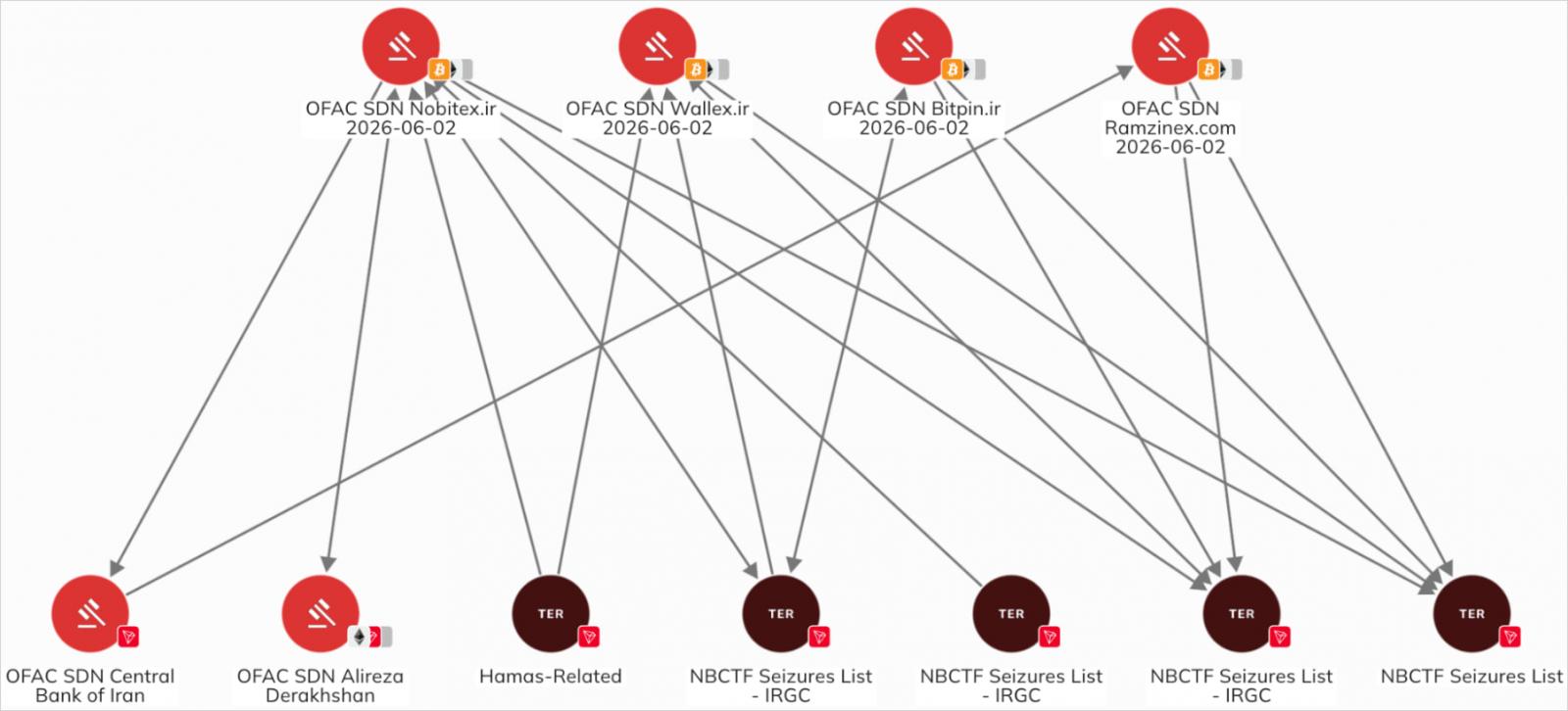
From a practical perspective, the sanctions mean that any property or assets of the designated entities and individuals that fall under U.S. jurisdiction are frozen, and U.S. persons are prohibited from doing any business with them.
At the same time, the sanctions create international pressure, as U.S. allies and companies based in foreign countries are reluctant to take risks and continue dealing with the designated parties.
In June 2025, the pro-Israel “Predatory Sparrow” hacking group claimed to have breached Nobitex, stealing digital assets worth roughly $90 million, and leaving politically-tinted messages behind.
Security teams log 54% of successful attacks and alert on just 14%. The rest move through your environment unseen.
The Picus whitepaper shows how breach and attack simulation tests your SIEM and EDR rules so threats stop slipping by detection.


Enduring Planet, a fintech company with Pacific Northwest roots, on Wednesday announced it has closed its second fund at more than $12 million — more than twice the size of its first.
Launched in 2021, Enduring Planet provides loans to early-stage climate startups, with a focus on those that have been awarded government grants and contracts. The company also offers part-time chief financial officer services.
“We’re really proud of this outcome, despite the challenging market environment that climate tech is facing in the US,” said Dimitry Gershenson, the startup’s Portland, Ore.-based co-founder and CEO.
Enduring Planet has issued nearly $40 million in loans to more than 70 climate startups and other businesses, including Tacoma, Wash.-based Aquagga and Portland’s Photon Marine.
The company provides financing of $100,000 to $2 million and, unlike venture capital investors, does not take equity in the startups it backs. The cash still comes at a price: annual interest rates run up to 15% to 17%, though additional fees are limited to a 1.5% origination fee.
The new fund arrives at a difficult moment for the sector. U.S. government support for climate initiatives hasn’t disappeared under the Trump administration, but it has become less broad, less predictable and less friendly to early-stage ventures.
Meanwhile, Sightline Climate reports that roughly $90 billion remains in climate investors’ coffers, but that capital is being deployed faster than new funds are being raised. Investors are also pulling back from riskier early-stage startups in favor of more established companies and infrastructure projects.
The fund was backed by Blue Haven Initiative, Cisco Foundation, ImpactAssets, DF Impact Capital, Green Spark Ventures, Montcalm TCR, SK2 Fund, The Arthur B. Schultz Foundation, Rebecca Buyers and Nils Johnson, Viridian Works, Brighter Investing, clients of Figure 8 Investment Strategies, 1994 LLC, Realize Impact (with support from The Schmidt Family Foundation), and others.
Defense tech is red hot right now. Anduril and Mach Industries just doubled and quadrupled their valuations, respectively, and the U.S. government is proposing a 40% increase in defense budget. A wave of new startups is chasing those government contracts, but according to Ross Fubini, the venture investor who wrote Anduril’s first check, most of them will get lost in the Valley of Death between prototype contract and real production deal.
Watch as, on this episode of TechCrunch’s Equity podcast, Rebecca Bellan asks Fubini — the founder and managing partner of XYZ Venture Capital, built on the Palantir alumni network and now approaching $2B AUM — what separates the survivors from the rest.
Subscribe to Equity on YouTube, Apple Podcasts, Overcast, Spotify and all the casts. You also can follow Equity on X and Threads, at @EquityPod.


A popular npm package for OpenAI Codex with 29,000 weekly downloads has been stealing developer authentication tokens for a month. The same credential-theft chain also ran through two Android apps with over 60,000 combined downloads.
TL;DR
The npm package looked legitimate. It had an active GitHub repository, steady development history, and roughly 29,000 weekly downloads. For developers using OpenAI Codex, it offered exactly what it advertised: a remote web UI for the AI coding tool.
But for the past month, every invocation of codexui-android has also been silently reading the contents of the user’s Codex authentication file and shipping it to an attacker-controlled server. The stolen data includes access tokens, refresh tokens, ID tokens, and account IDs, everything needed to impersonate the developer indefinitely.
“The refresh_token doesn’t expire,” Aikido Security researcher Charlie Eriksen wrote. “An attacker holding it can silently impersonate you indefinitely.”
The attack was unusually sophisticated for an npm supply chain compromise. Unlike typical supply chain attacks that rely on typosquatting or disposable packages, codexui-android was a functional tool under active development. Its GitHub repository remained clean. The malicious code existed only in the npm build.
The package extracts the contents of Codex’s ~/.codex/auth.json file, a plaintext credential cache created whenever a user logs in via the Codex app, CLI, or IDE extension. It then sends those credentials to sentry.anyclaw[.]store, a server name chosen to mimic Sentry, the legitimate error-tracking platform.
The nefarious functionality was introduced approximately a month after the package was first published, a common tactic for building user trust before deploying a payload. WHOIS records show the exfiltration domain was registered on 12 April 2026, just two days after the first package version (0.1.72) was uploaded to npm. The malicious code appeared from version 0.1.82 onward.
The npm package was not the only delivery vector. Aikido found that an Android application called OpenClaw Codex Claude AI Agent, published by a developer named BrutalStrike, was running the same npm package inside a PRoot sandbox on users’ devices. The app had accumulated more than 50,000 downloads on Google Play.
A second BrutalStrike app, simply called Codex, had over 10,000 downloads and contained the same exfiltration chain. Because neither app pinned a specific npm package version, they automatically pulled whatever was currently published, meaning the malicious code was delivered to mobile users the moment it went live.
The combined attack surface, roughly 29,000 weekly npm downloads plus more than 60,000 mobile installations, makes this one of the more significant credential-theft campaigns to target the AI developer tooling ecosystem.
The npm account behind the package belongs to “friuns,” identified by Aikido as Igor Levochkin. When confronted on GitHub, the author initially claimed to have lost access to the npm account, then edited the response to say they were “currently investigating this issue internally.”
Levochkin said no credential data was shared with third parties, but did not explain why the exfiltration code was inserted only into the npm build, or why access to users’ Codex tokens was needed in the first place. The X profile linked to the account includes the domain anyclaw[.]store, the same domain to which the stolen tokens were sent.
The attack arrives in a period of escalating threats to AI developer tooling. Last month, a poisoned VS Code extension breached GitHub’s own internal repositories, exfiltrating 3,800 repos after an employee installed the malicious package. That attack, attributed to the group TeamPCP, harvested credentials from 1Password vaults, Claude Code configurations, and AWS.
The lesson from both incidents is the same. As AI coding tools become essential infrastructure, the authentication tokens they generate, and often store in plaintext, are becoming high-value targets. OpenAI’s own documentation warns developers to treat ~/.codex/auth.json like a password. The codexui-android campaign is a demonstration of what happens when that advice goes unheeded, and when the tools developers trust are designed to exploit that trust.
Aikido has also separately reported that deleted Google API keys remain live for up to 23 minutes after revocation, a window attackers can exploit to access user data and Gemini conversations. Google has since classified the issue as a P0 bug. The finding underscores a broader problem: credential revocation in cloud environments is rarely as instant as defenders assume.

The return is higher than the $1.5bn that was estimated when the quantum company filed for its IPO a little more than three weeks ago.
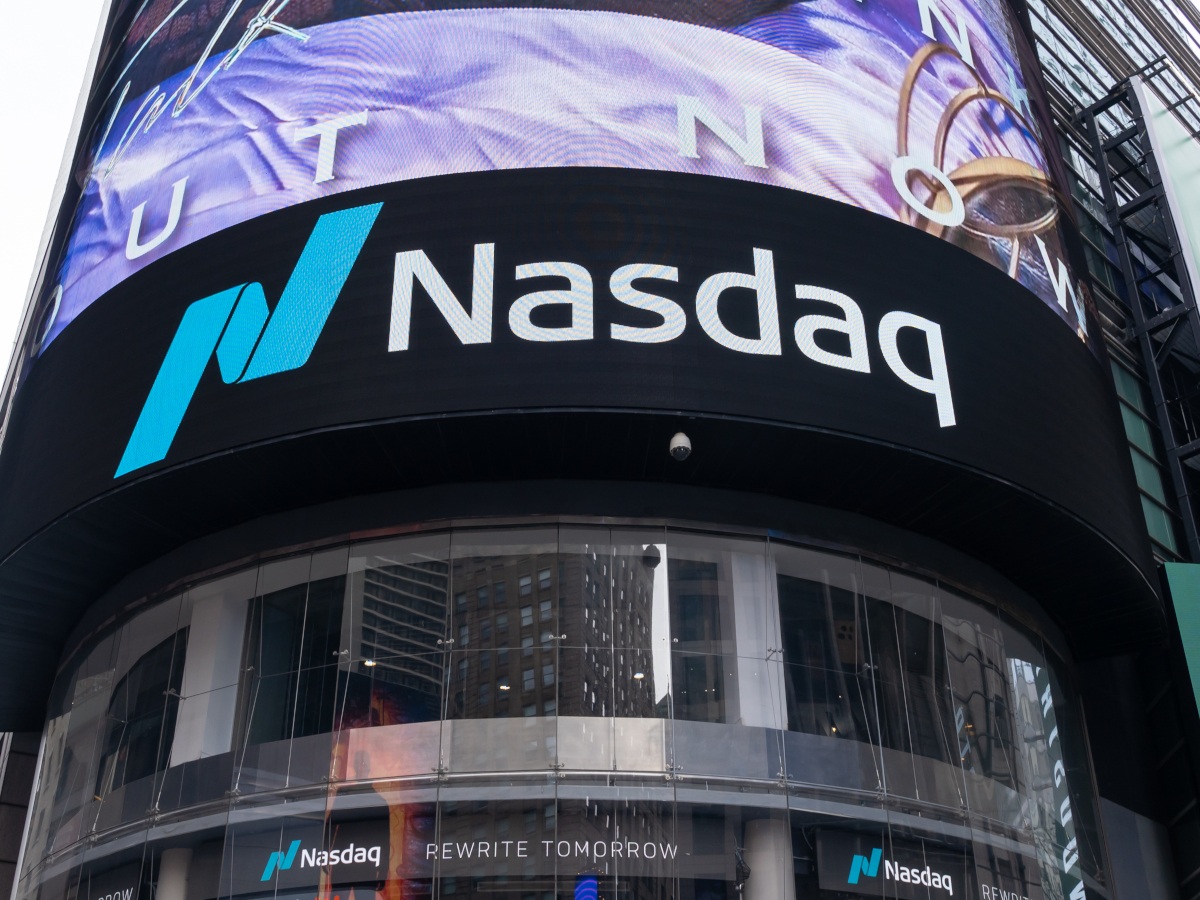
Quantum computing company Quantinuum has raised $1.68bn in its US initial public offering (IPO), with 28m class A common stock shares to begin trading for $60 each on the Nasdaq Global Market today (4 June).
The return is higher than was estimated after the US company filed for its IPO a little more than three weeks ago, when reports suggested that an offering could raise more than $1.5bn for the Honeywell International-backed Quantinuum and value it at as much as $20bn.
Bloomberg reported that the offering, which was increased from an anticipated 26.5m shares and priced above its marketed range of between $53 and $55 per share, values the company at $15.6bn.
Quantinuum said it had granted underwriters a 30-day option to purchase up to an additional 4.2m shares of its class A common stock “to cover over-allotments at the initial public offering price, less underwriting discounts and commissions”. JP Morgan and Morgan Stanley are acting as “joint lead active book-running managers” for the IPO.
Quantinuum is one of seven quantum computing companies and two quantum foundries in the US to be recently allocated a share of $2bn in federal incentives under the CHIPS and Science Act after it signed a letter of intent for $100m to fabricate low-loss integrated photonics and specialised optical components tuned to trapped-ion critical wavelengths.
The company plans to partner with GlobalFoundries for critical semiconductor components and Monarch Quantum for integrated photonics.
The UK-founded, Colorado-based Quantinuum produces full-stack quantum platforms with commercially deployed systems. Its products are used by businesses across sectors including pharmaceuticals, materials science, financial services and governments, according to the company, which has multiple sites in the US, as well as a presence in the UK, Germany, Japan, Qatar and Singapore.
A recent McKinsey report found that quantum computing could create as much as $2.7trn in economic value by 2035. It said that quantum companies generated more than $1bn in revenue in 2025 – a number which could compound to as much as $4.4bn by 2028.
Last week, computing giant IBM said it would invest $10bn in the quantum field over the next five years.
In Europe this week, French quantum start-up Quobly raised €115m in Series A funding, while Finnish quantum player IQM upsized its ‘private investment in public equity’ financing to more than $146m ahead of a planned SPAC merger and US stock market listing.
Don’t miss out on the knowledge you need to succeed. Sign up for the Daily Brief, Silicon Republic’s digest of need-to-know sci-tech news.

The flagship model is joined by the mid-range OpenDots Air.

Shokz has two new pairs of clip-on earbuds, the style popularized by Bose two years ago. The new flagship, OpenDots 2, introduces a new driver design that’s said to deliver better bass. And the OpenDots Air pairs a lighter, more style-conscious design with more midrange specs and pricing.

Bass response is often a weak point for open-ear designs — especially the clip-on variety. Shokz is trying to make it less of a hindrance with the Bassphere 2.0 technology in the OpenDots 2. The company claims that each bud’s pair of 11.8mm drivers, arranged in a spherical design, matches the output of a single 16mm driver. Meanwhile, a redesigned diaphragm is supposed to reduce distortion by 70 percent. The result, according to Shokz, is maximized performance in a compact space.
A feature Shokz is calling MirrorPitch angles sound so that it reflects toward your ear rather than projects outward. The company says this boosts bass response and volume, “making your music sound fuller and more focused.” The clip-on buds also get upgraded Dolby Audio support, supposedly adding “depth” and “impact” while preserving vocals and the soundstage.
Call quality gets an upgrade, too. A dedicated bone conduction mic serves as a reference point for onboard AI to differentiate between your voice and background noise. Shokz says the OpenDots 2 also has improved noise reduction for calls, helping your voice sound clear in wind conditions up to 12 mph.
You can control them by tapping the arc between the two sections or by pinching the back (battery) portion. (It uses a force sensor to help minimize accidental touches.) The earbuds are rated IP57 for water and dust resistance.
Shokz claims up to 10 hours of battery life per charge for the OpenDots 2. It’s said to last up to 40 hours with the case, which supports Qi wireless charging. Meanwhile, a five-minute quick charge is supposed to deliver two hours of additional playback.
The OpenDots 2 is available in black, gray, and pearl white. You can order it now from Amazon, Best Buy, and Shokz’s website for $200.

Shokz markets the cheaper OpenDots Air as a “lighter, more accessible” take on the clip-on form factor. Depending on your style, they may look slightly sleeker (and more purple!) in your ears. More importantly, you can save $70 compared to the flagship.
But the lighter part probably shouldn’t sway your decision. The OpenDots Air weighs 6.3g per earbud, compared to 6.4g for the OpenDots 2. Sure, you could argue that every milligram counts when something is clinging to your ear, but the difference on paper is minimal.
The OpenDots Air uses the older (1.0) version of Shokz’s Bassphere tech found in the first OpenDots. The cheaper model also doesn’t offer Dolby Audio or wireless charging. Its battery life is slightly shorter: up to nine hours of playback per charge. And its quick-charge feature is slightly slower, taking 10 minutes to add two hours of playback.
The Shokz OpenDots Air is available in black and the “daybreak purple” seen above. You can order th earbuds today for $130 from Amazon, Best Buy, and Shokz’s website.




Waymo dominates autonomous vehicle registrations as Tesla trails behind


This is BROKEN! INSANE 5x MONEY CAR WASH WEEK! The NEW GTA Online UPDATE Today! (GTA5 New Update)

SpaceX just won a second Golden Dome contract. This one is $4.16 billion.


Jade Biosciences, Inc. (JBIO) Discusses Positive Interim Results From JADE101 Phase I Healthy Volunteer Study and Development Plans Transcript


SHE IS KILLING XRP!!! WATCH URGENT AND ACT FAST

FIRST NIGHT REVIEW: Take That bring the Circus back to life in spectacular sun-soaked style


Is the Spurs Phenom Already Better Than Prime Diesel?

CFTC Has Approved the First Regulated Bitcoin Perpetual Contract in the U.S.


The House | Inside Andy Burnham’s Makerfield Campaign: “Nobody Thinks This Is In The Bag”


French Open 2026 results: Alexander Zverev beats Rafael Jodar and will play Jakub Mensik in semi-finals

Novak Djokovic v Joao Fonseca LIVE: French Open latest scores and results after Jannik Sinner’s shocking collapse

Weak ‘Supergirl’ Box Office Tracking Amid Milly Alcock Backlash

Snowflake (SNOW) Stock Rallies on Strong Q1 Results and AI Product Growth


Maddox Jolie-Pitt Legally Requests to Drop Brad’s Surname


CryZENx Releases Fresh Playable Content Deep Inside Jabu-Jabu for His Ocarina of Time Remake


Demand Conditions Improve In Chemicals Sector In April 2026

One of the Greatest Sitcoms of All Time Shoots Up Apple TV’s Charts 11 Years Later


MicroStrategy Moves $30 Million in BTC to Coinbase Prime: Is the Bitcoin Sell-Off Already Here?


This Week In Security: Ubiquiti Fixes, And FreeBSD Joins The Club You Don’t Want To Join

Bruce Willis’ Generosity Resurfaces Amid His Dementia




You must be logged in to post a comment Login