
TL;DR
A UC Davis BCI implant let an ALS patient speak independently for 3,800+ hours over two years with 99% accuracy, enabling him to work full time.



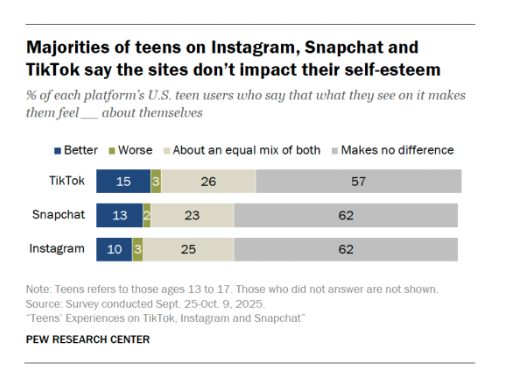
UK Prime Minister Keir Starmer is not having a particularly good time of being the UK’s leader. Basically everyone thinks he’s doing a terrible job and it seems unlikely that he’ll be in the role much longer. Apparently desperate to turn the tide on being historically disliked, he’s decided to grab the most reliable life preserver in modern politics: the techlash. Over the last few weeks, everything he’s done can be summarized in a single sentence: “let’s blame the internet for everything bad.”
It started a week ago with an announcement that if internet social media companies didn’t wave a magic wand and make all sexting disappear… he would start putting tech execs in prison.
“Today I’m calling on tech companies operating in this country to introduce device controls that prevent children from sending and receiving sexually explicit images,” Starmer said in a speech at London Tech Week. “This is not an impossible challenge.”
Under the new plans, firms like Apple and Google would have to build or activate technical solutions on smartphones and tablets to detect and block nude images for children. Adults would still be able to take, share or view nude content through an age verification process.
If companies did not act within three months, the government said it would bring forward legislation to force them to do so or risk facing fines or, as a last resort, the threat of criminal liability for bosses.
This is very much the magical “nerd harder” thinking by a technologically clueless bureaucrat who thinks that societal problems can be solved by making tech companies do the impossible: stopping humans from doing stupid things.
That magical wishcasting continued this week with Starmer announcing that the UK would be following Australia’s completely failed experiment in “banning” kids from social media, by putting in place an even stricter ban of teens from even more internet services.
The U.K. plans to follow the same model for a social media ban as Australia, which last year became the first country to bar under-16s from holding social media accounts. Platforms that fail to take reasonable steps to exclude children younger than 16 could be punished with multimillion-dollar fines.
The U.K. said its ban will apply to platforms including Snapchat, TikTok, YouTube, Instagram, Facebook and X, but not YouTube Kids or messaging services like WhatsApp and Signal. Starmer stressed that enforcement action will target tech companies, not children.
The prime minister also said he will go further than Australia’s measures.
He said the government will act to prevent strangers from contacting children on gaming and livestreaming platforms. Authorities are also considering additional measures including overnight curfews and breaks in infinite scrolling for those under 18. More details are expected next month.
This is more nerd harder nonsense. Again, Australia’s ban has been a total joke, with the vast majority of kids figuring out how to get around the ban, and the ones most hurt by the ban being teens who have lost access to the communities that were most important to them. Again, every detailed study on the subject has found that the number of teenagers who have negative experiences on social media is tiny.

But the media and politicians absolutely love to blame the internet for any sort of societal problem, and it makes a wonderful scapegoat for their own policy failures.
Even Ian Russell — a prominent UK child safety activist who has spent years blaming social media for anything bad that happens to children — finds this whole thing particularly pointless. Russell, who became an activist after his daughter died by suicide (which he blames on her social media experience), has pointed out that these kinds of teen bans are the kinds of headline grabbing measures politicians love, but do nothing to actually help kids.
Starmer also promised me personally that he would implement effective measures to strengthen regulation and finally address the harm caused by social media. He has failed to keep either promise.
He also promised bereaved parents after the recent consultation on children’s social media use that he would follow the evidence and take the time to consider his response then act decisively. Instead, he has rushed out a ban.
Indeed, the evidence has long suggested that these kinds of bans actually can make things worse by isolating kids who are at most at risk and who need support. At a time when fear mongering and moral panics have cut off basically everywhere that kids can be kids with each other and without adults hovering over them at every moment, social media became that kind of digital third space. Social media didn’t become the default digital third space because it’s uniquely ‘addictive’ — it became the default because adults have spent decades overreacting and shutting down every other place kids could gather and communicate without supervision.
And that’s not even getting into the fact that pretty much all experts agree that age verification technology itself makes kids way less safe online.
But, even more to the point, the UK spent years supposedly crafting what they insisted was a very balanced policy in the Online Safety Act. We always found those claims to be ridiculous as the bill seemed bad from the very start, but if they spent all these years crafting this policy, which only just went into effect, it seems pretty ridiculous to then immediately jump to a way more extreme and less carefully thought out plan.
However, that’s what we should expect for every single nonsense bit of internet regulation that is being pushed for by a political class “for the children.” Because the bills misrepresent the real problems they do nothing to solve them. Rather than admit that their policies were misguided and a kneejerk reaction to a moral panic, politicians will always blame others: in this case the tech companies, and immediately come up with more draconian regulations that serve no purpose other than to get flailing politicians headlines for “doing something.”
Perhaps the perfect encapsulation of how stupid all this is was the question of how Bluesky would be handled (disclaimer: I am on the board of Bluesky). When the ban was first announced, the government had said it would apply to sites that meet the following description:
This would capture user-to-user platforms, whose purpose is to enable social interaction and which allow users to post material, alongside algorithms. The ban will therefore include platforms like Snapchat, TikTok, YouTube, Instagram, Facebook and X. We do not intend for messaging services like WhatsApp and Signal to be included in the social media ban.
Some right wing nonsense peddler sites absolutely lost their shit at the lack of Bluesky being mentioned, claiming that the extremely centrist Starmer was somehow creating an exemption for the supposedly “left-leaning” Bluesky. However, when asked about it, the UK government apparently said that Bluesky was covered and would be required to ban teens like those other platforms.
But does that even make sense? If the supposed problem with all these sites is that they allow for the sharing of content “alongside algorithms,” Bluesky doesn’t actually do that. There are recommendation algorithms, but they are totally in the control of users themselves. They don’t need to use them. Or they can use one of the over 100k feeds that others have created. Or they can easily create their own feeds. It’s wholly different than all the other platforms named, which focus on telling you what they think you’ll want to see (or what maximizes their own profits).
Either way, this shows how random this policy is. Bluesky either does or doesn’t meet the requirements (depending on how you read “alongside algorithms” which is already painfully vague), but as soon as there was a right wing freakout about it, the UK government said “oh, yeah, sure, them too.”
This is not thoughtful policy. This is not considered policy. This is not protecting children. This is a desperate politician with no clue how any of this works announcing nonsense to grab headlines.
Filed Under: keir starmer, protect the children, social media ban, teen safety, uk

But will it see the same success as the MacBook Neo?

Dell announced the return of the XPS 13 late last month and said broadly that it would be available in June. The low-cost laptop is now available on both virtual and brick-and-mortar store shelves. It retails starting at $599 for students and $699 for other customers.
The Dell XPS 13 announcement came hot on the heels of Apple unveiling its first true budget laptop. The MacBook Neo is designed for education, targeting both teachers and students as its likely buyers and it impressed in our review. Apple even secured a deal to bring its gear, including more than 4,500 MacBook Neos, to the Kansas City Public Schools. It should be interesting to watch whether Dell will see the same success as Apple has been enjoying for such a similar laptop.

Apple‘s first foldable iPhone is still expected to debut later this year, but the company may already be looking beyond its first attempt. According to Bloomberg’s Mark Gurman, Apple is planning a second-generation foldable iPhone for release in 2027, just one year after the original model is expected to arrive. The device is reportedly codenamed V78 and will launch alongside the 20th-anniversary iPhone model. It looks like Apple might be going all in on foldables as a long-term product category rather than a one-off experiment.
The Cupertino giant has spent years watching rival smartphone makers refine foldable hardware. Samsung, Google, Honor, Oppo, and others have gone through multiple generations of designs, experimenting with everything from narrow book-style devices to wider tablet-like formats. Apple appears to have waited until the category matured before making its move.
Based on leaks and replica models that have surfaced in recent months, Apple’s foldable iPhone is expected to use a relatively short and wide design rather than the tall, narrow form factor seen on earlier Samsung Galaxy Z Fold devices. The device is rumored to feature a 5.5-inch cover display and a 7.8-inch inner panel with a 4:3 screen format.

That layout mirrors much of Apple’s iPad lineup and could provide a more natural and familiar experience for multitasking, reading, and running apps side by side. At 7.8 inches, the inner display would also come close to the iPad mini‘s 8.3-inch screen, potentially giving users a tablet-like experience when the device is unfolded. Apple appears to be preparing the software side as well, encouraging developers to ensure their apps adapt smoothly to different screen sizes and display formats.
Interestingly, Samsung may be arriving at a similar conclusion. Rumors suggest the company is preparing a wider foldable design for next year’s lineup, with the Galaxy Z Fold 8 Wide potentially becoming the standard Galaxy Z Fold 8. A taller version could reportedly be positioned as the Galaxy Z Fold 8 Ultra instead.

Whether Apple’s foldable strategy pays off remains to be seen, but the company does not appear to be treating the device as a one-year experiment. A second-generation model already in development suggests Apple expects the iPhone Ultra to establish itself as a permanent tier within the iPhone lineup, with enough demand to support regular annual updates.

Monitor Audio has launched the Radius Series 4G, a redesigned compact speaker range aimed at listeners and installers who need serious sound without large cabinets taking over the room.
The new lineup includes the Radius 1, Radius 3, and Radius On-Wall, supported by matching floor stands, desk pads, and wall bracket options. That gives the Radius Series 4G a broader role than a typical small speaker refresh. It can be configured for two-channel listening, desktop audio, multi-room systems, home theater, and commercial installations where space, appearance, and mounting flexibility matter almost as much as sound quality.
Monitor Audio is positioning Radius Series 4G around its Transparent Design Philosophy, but the bigger story is practical: compact loudspeakers that are designed to look finished in modern residential and commercial spaces, while still being flexible enough for stereo, surround, and near-field applications. Small speakers are often treated like compromise products. Radius 4G looks more like Monitor Audio trying to make the category useful again.

The Radius Series 4G is still a compact speaker range, but Monitor Audio has put meaningful engineering into this generation rather than simply updating the cabinets and calling it a day.
The core driver technology remains Monitor Audio’s C-CAM cone material, which uses a ceramic-coated aluminium/magnesium structure designed to be light, rigid, and resistant to unwanted flexing. For Radius 4G, that driver platform now incorporates RST III cone geometry, a surface pattern developed to reduce breakup and resonance across the frequency range. In a small speaker, that matters. There is only so much cabinet volume to work with, so driver control becomes a much bigger part of the performance equation.
The tweeter has also been redesigned. Radius Series 4G uses a new C-CAM Gold Dome tweeter with an external magnet motor system, bringing it closer in concept to a full drive unit rather than relying on a more conventional internal puck magnet design. Monitor Audio says the goal is greater control and cleaner high-frequency performance, which should help the Radius models sound more open without becoming bright or thin.

The crossover networks have also been reworked with new measurement, listening, and component selection. That is not the flashiest part of the story, but it is often where compact speakers either come together or fall apart. Good drivers still need to be integrated properly, especially when the speaker is being used for desktop listening, wall-mounted applications, or home cinema channels.
Cabinet construction has received attention as well. Monitor Audio uses Through-Bolt Driver Bracing to lock the drive units to the rear of the cabinet at a specific torque, improving rigidity while reducing unwanted chassis resonance. Each model also includes Monitor Audio’s HiVe II port design, created to improve airflow and bass control. On the new Radius 3, the port is 50 percent larger than the previous generation, which should help it deliver more low-frequency output from a still-compact enclosure.
The accessory range is also part of the story. The Radius 4G Floor Stand uses wooden tripod legs with internal cable routing, giving the speaker a more furniture-friendly presence. The Desk Pad is made from vibration-isolating rubber and gives the speaker a slight upward tilt for near-field listening. Add in the wall bracket options, and Radius 4G starts to look less like a single-use compact speaker and more like a flexible system for stereo, desktop, surround, multi-room, and commercial installation use.
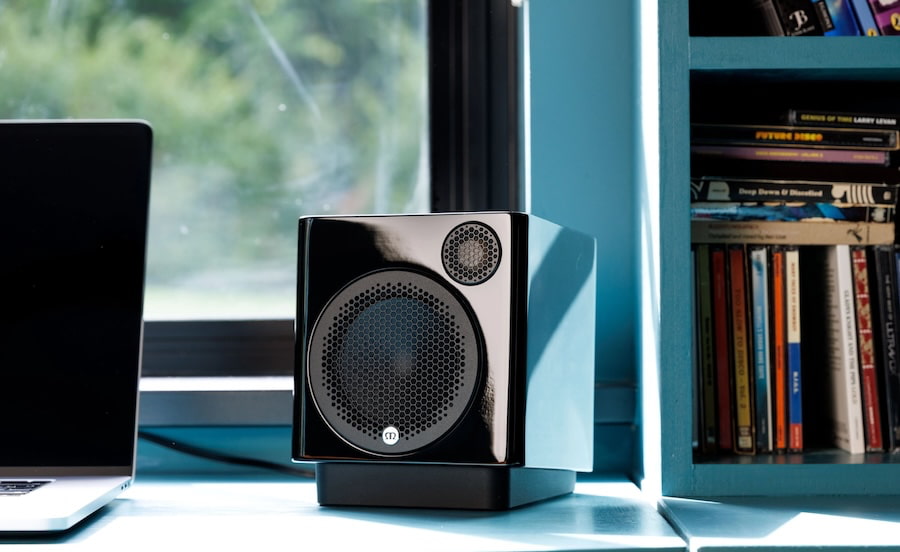
The Radius 1 4G is the smallest model in the new Radius Series 4G lineup, designed for discreet AV, surround, multi-room, desktop, and compact stereo applications. It uses a 4-inch RST III bass/mid driver with Monitor Audio’s C-CAM cone technology and a 19 mm C-CAM Gold Dome tweeter in a sealed 2-way cabinet.
Key specs and options:
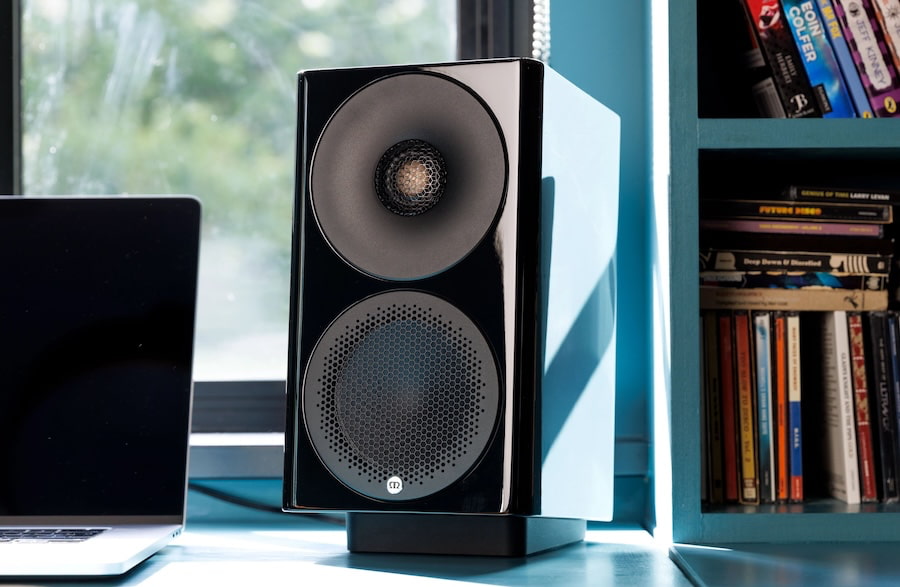
The Radius 3 4G is the larger mini-monitor in the range and the most flexible choice for stereo, TV, gaming, desktop, multi-room, and small commercial installations. It steps up to a 4.5-inch RST III bass/mid driver, a 25 mm C-CAM Gold Dome tweeter, and a ported cabinet for deeper bass extension than the Radius 1 4G.
Key specs and options:

The Radius On-Wall 4G is the TV and home cinema model in the Radius 4G range. It is designed for horizontal or vertical wall placement around a screen and uses two 4.5-inch RST III bass/mid drivers with a 25 mm C-CAM Gold Dome tweeter in a slim ported cabinet. A wall bracket and fixing template are supplied.
Key specs and options:

The Radius Floor Stand 4G is designed for the Radius 1 4G and Radius 3 4G. The stand uses wooden tripod legs, a single-bolt speaker attachment, and integrated cable routing that lets speaker cable exit cleanly at the base.
Key specs and options:

The Radius Desk Pad 4G is made for Radius 1 4G and Radius 3 4G desktop placement. It uses rubber with a specified hardness for vibration isolation and adds a slight upward tilt to aim the speakers more effectively in near-field setups.
Key specs and options:

The FIX-M is the more adjustable wall-mount option for Radius 1 4G and Radius 3 4G. It allows 0, 15, or 30-degree angle settings from center, and the rotating front section creates 14 possible positions.
Key specs and options:

The MASM Mount is a smaller wall or ceiling mount for users who want to get compact speakers off the desk or furniture. It uses a ball-joint connection for positioning and is listed as compatible with Radius 1 4G.
Key specs and options:
The Monitor Audio Radius Series 4G is not trying to replace a full-size hi-fi speaker system, and that is the point. Its appeal is the combination of compact cabinets, real Monitor Audio driver technology, flexible mounting options, and a cleaner design language that works in rooms where traditional speakers are either too large or too visually intrusive.
What makes Radius 4G different is the range of applications. Radius 1 4G can handle discreet surround, desktop, and multi-room duties; Radius 3 4G is the more capable compact stereo, TV, gaming, and near-field option; and Radius On-Wall 4G gives installers and home theater users a slim horizontal or vertical speaker for screen-based systems. Add the dedicated floor stands, desk pads, and wall brackets, and this becomes less of a small speaker refresh and more of a flexible compact audio system.
This is for apartment dwellers, design-conscious listeners, desktop users, custom installers, and anyone building a living room, media room, retail, hospitality, or office system where sound quality matters but big boxes are a non-starter. Bass obsessives and large-room listeners will still want a subwoofer, but for modern spaces that demand compact speakers with legitimate hi-fi intent, Radius 4G makes a lot of sense.
For more information: https://www.monitoraudio.com

Elementary school is tough.
There are playground politics, multiplication tables and learning to read.
Imagine dealing with all that in a new language — or even a whole new country.
That’s the added challenge for kids who are learning English at the same time they’re learning everything else as their peers.
It’s an issue that Sarah Walters and her colleagues were determined to tackle in Troy City Schools, a public school district made up of nine campuses roughly an hour north of Cincinnati. The area is home to an automotive manufacturer that brings some employees — and their families — over from Japan.
Roughly 3 percent of the 4,000 students have primary languages like Spanish, Ukrainian and Japanese, a relatively small population compared to the most recent national average of 11 percent.
But that small group is making big gains. Looking to close the literacy gaps that have plagued schools since the pandemic, the district took a big swing to increase literacy among its English learners. It trained 116 staff members — including every elementary teacher, intervention specialist, paraprofessional and principal — in the Orton-Gillingham approach, which folds movement and touch into reading instruction.
They say it’s paying off.
Walters, a literacy instructional support specialist, says that helping multilingual students master their grasp on English is vital. Like any other student, the foundation that they lay in reading and math will affect their learning from that point on.
NEWSLETTERS
Sign up for EdSurge newsletters for timely news, insights and analysis.
“We want to help the students continue to thrive, and really everything that we’re thinking about with our student services is equitable learning opportunities,” Walters says.
Federal data shows that English learners’ achievement scores lag far behind their peers on average, and have made little improvement over the past two decades.
Troy City Schools was eager to close widening literacy gaps that surfaced after the onset of the pandemic, Walters says, which was particularly hard on English learners like those at Concord Elementary. A big hurdle was phonics, the letter sounds that make up words.
“We were seeing a lot of student frustration and wanting to give up,” Walters recalls. “Students being very withdrawn, those social-emotional impacts.”
Back in 2020, English-language instruction was inconsistent and fragmented across classrooms.
Yet, even with the desire to boost English learner scores, the program took some time.
Following the pandemic, Troy City Schools mulled over the changes for three years before it had enough funding to deliver on it, according to Danielle Romine, director of elementary teaching and learning for the district. The effort was funded through post-COVID relief grants and budget allocations made by the district’s leaders.
As a literacy specialist, Walters became certified in the Orton-Gillingham method through the Institute for Multi-Sensory Education. She’s now responsible for supporting and training staff to successfully use the techniques.
Fourth-grade students at Concord Elementary participate in the auditory-kinesthetic drill as part of the Orton-Gillingham literacy method. The teacher dictates sounds as students use sand to write the letters represented by the sound, an activity meant to help with long-term recall of what they learn. Photo courtesy of Troy Public Schools.

Walters says teachers and staff were trained to utilize drills that connect literacy concepts through visuals, sound and movement. Students might use flash cards as a visual element or tap their fingers to each letter as they spell out a word. Students also learn the origin and history of words to strengthen their ability to decode them. For example, a “red word” is one that does not follow phonics rules.
“Our multilingual learners love it because no longer are they being told, ‘That’s just the way it is,’” Walters says.
After an initial summer training on the Orton-Gillingham approach, teachers spoke so highly of the method that requests for training grew among staff.
“In a school district, if you want to get something out, just tell a teacher, because it [will] spread like wildfire,” Romine says.
And the data are showing promising results, Walter says. The district-wide third grade reading proficiency had plummeted to 56 percent in 2021-22 but had risen to 81 percent by 2023-24 — slightly higher than its pre-COVID achievement rate. The most recent state data shows Concord Elementary far surpassed its target goal for English proficiency among multilingual students.
Walters has heard from teachers who say that the approach has helped some English learner students make lightning-fast gains in reading. One educator told her that two students from Japan who joined the elementary school in the fall were conversing in English by December. Another student’s phonics diagnostic score shot up by 38 points in the same timeframe.
Now, the district is working to spread the method beyond its own campuses.
“Eventually, our goal is to support the entire community, or the entire county because Sarah having that training [enables her] to support teachers from other districts, as well,” Romine says.
But for English learners, ensuring they’re on grade level in reading goes beyond measuring their success in the classroom.
Walters says that the district is thinking about long-term learning for children who, for example, may be in the U.S. for a few years before returning to Japan.
Now, the district is working to spread the method beyond its own campuses.
“Eventually, our goal is to support the entire community, or the entire county because Sarah having that training [enables her] to support teachers from other districts, as well,” Romine says.
But for English learners, ensuring they’re on grade level in reading goes beyond measuring their success in the classroom.
Walters says that the district is thinking about long-term learning for children who, for example, may be in the U.S. for a few years before returning to Japan.
“We want students to have success across math, science, everything,” Walters says. “So it’s important that we get them up to speed as quickly as possible, because those long-term impacts could really be harmful for them. That early literacy is key.”

A UC Davis BCI implant let an ALS patient speak independently for 3,800+ hours over two years with 99% accuracy, enabling him to work full time.
A man with ALS has been using a brain implant to speak independently for more than 3,800 hours over the past two years, producing nearly 2 million words with an average speed of 56 words per minute. The study, published Monday in Nature Medicine by researchers at the University of California, Davis, represents the longest sustained demonstration that a brain-computer interface can function as a practical daily communication tool outside a laboratory. Casey Harrell, the 47-year-old participant, has used the system to return to full-time work as an environmental advocate.
The implant consists of four microelectrode arrays placed in Harrell’s left precentral gyrus, the brain region that coordinates speech, recording activity from 256 cortical electrodes. Machine learning algorithms built into a software platform called BRAND, developed by UC Davis postdoctoral fellow Nicholas Card, translate that neural activity into English-language phonemes, then map those phonemes to words and sentences. The system reads out the decoded text in a synthesised version of Harrell’s pre-ALS voice.
In controlled testing with a 125,000-word vocabulary, the system scored over 99% word accuracy. In daily use outside the lab, Harrell rated 92% of sentences as accurate or mostly correct. During the study period, he communicated more than 183,000 sentences.

The 💜 of EU tech
The latest rumblings from the EU tech scene, a story from our wise ol’ founder Boris, and some questionable AI art. It’s free, every week, in your inbox. Sign up now!
“The key thing to me is that it’s enabling everyday communication for a guy who wants to talk but can’t,” neurosurgeon David Brandman, who implanted the device in 2023 and co-led the study, told The Register. “Despite being paralysed, he has gone back to work full time and has meaningful conversations with his daughter who’s never heard the sound of his voice.”
The study’s significance lies not just in accuracy but in independence. Previous BCI systems required researchers to be present in the patient’s home whenever the device was in use, or required the patient to travel to a lab. Harrell’s system is operated by his home care team, with no researcher support needed.
Based on the study’s timeline, he averaged more than five hours of daily use.
The UC Davis team is part of BrainGate, the consortium of universities and the US Department of Veterans Affairs developing brain-computer interfaces for speech restoration, computer control, and movement recovery. The hardware itself is not custom-built, using existing microelectrode arrays produced by Blackrock Neurotech. The breakthrough is in the software, specifically the BRAND platform’s machine learning algorithms that decode attempted speech from neural signals in real time.
Brandman compared the current state of BCI technology to early pacemakers, which in the 1950s required external wiring to large batteries or wall power. Seventy years later, pacemakers are implanted in outpatient procedures. “We’re at the early stages of this kind of technology,” Brandman said.
Harrell is still wired to external computers, but the UC Davis team’s AI advances combined with hardware miniaturisation work at companies like Neuralink, Synchron, and Paradromics point toward a future where the setup is far less cumbersome.
The competitive landscape in BCI is accelerating. Neuralink has implanted devices in at least 21 patients under research protocols but lacks commercial approval. China approved the first commercially available invasive BCI earlier this year.
Other approaches to restoring speech for people with ALS use AI voice conversion rather than brain implants, but those methods require the patient to retain some vocal ability.
What distinguishes the UC Davis work is its demonstration that a BCI can cross from laboratory experiment to sustained, practical daily tool. The 3,800 hours of brain recording also constitute the largest individual neural dataset with single-neuron resolution ever collected, according to co-principal investigator Sergey Stavisky, which will inform future improvements to the decoding algorithms.
The system remains an investigational device, limited by federal law to research use, and has been tested on a single patient. Whether the results generalise to other ALS patients, or to people with different neurological conditions, is not yet known. Scaling the technology from a clinical trial to a prescribed medical device will require regulatory approval, hardware miniaturisation, and cost reduction that could take years.
“I want desperately to not be unique or special, because that will mean I no longer have the disease or that everyone that has the disease like me can get this prescribed to them,” Harrell said through his BCI system.
SYSTEMS
Running low on memory, can’t afford more? The House of Zen’s latest acquisition puts an AI spin on flash-based memory expansion
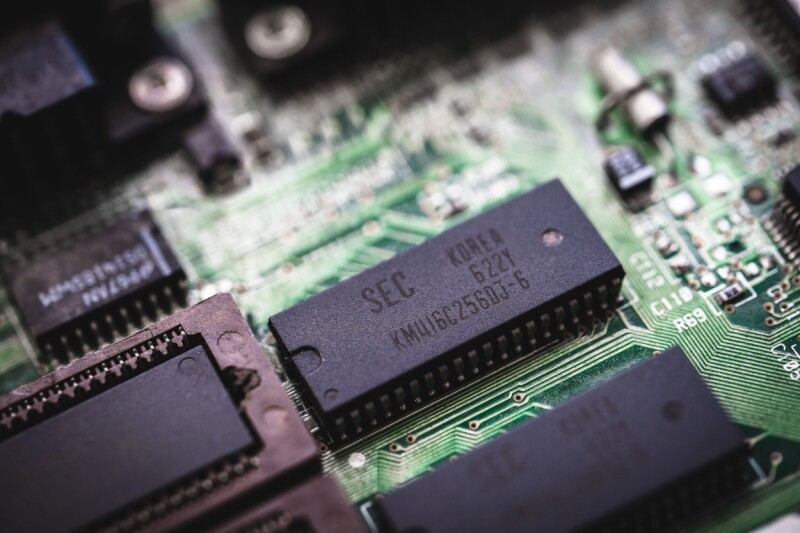
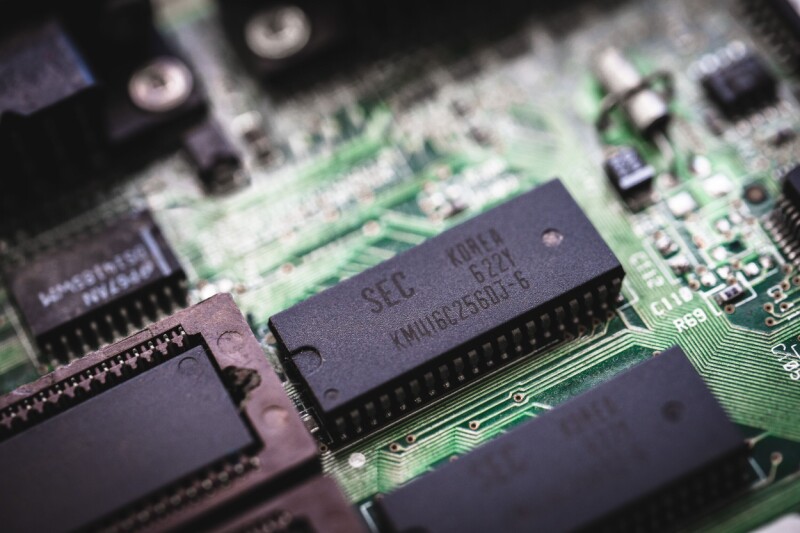
With no end in sight to the memory crunch, AMD thinks that AI, the main cause of the shortage, could be part of the solution. This week, the House of Zen acquired predictive memory startup Mext for an undisclosed sum, setting the stage for a world where bots decide which data to put into RAM and which to store in less-expensive flash.
Founded in 2023, the Mext proactive memory platform uses machine learning algorithms and learned heuristics to proactively offload “cold” memory to flash storage, and, based on data access patterns, restore it before its needed again.
Modern flash arrays are already approaching main memory in terms of aggregate bandwidth, but swapping to disk still imposes a stiff latency penalty.
Mext claims it can expand the effective memory of a system by 2 to 4x using flash, which gig for gig is still vastly less expensive than DRAM.
This flash memory is exposed to the operating system like regular memory simply by running the Mextd daemon.
Memory tiering is nothing new and has seen various reincarnations over the years with some being software based and others, like Intel Optane persistent memory, using special 3D XPoint memory tech co-developed by Micron.
Mext stands out for its use of machine learning to migrate data from hot memory to cold storage almost like a branch predictor — something AMD has an awful lot of experience with.
Mext isn’t using one model to decide when to shuffle your data. Instead it uses a series of heuristics, long short term memory, and modern transformer architectures depending on which combination renders the best results.
“This approach has the potential to reduce infrastructure costs, improve resource utilization, and help customers more effectively scale general-purpose and AI workloads,” Dan McNamara SVP of AMD’s compute and enterprise AI biz wrote in a blog post this week.
Beyond enterprise applications, the technology could have implications for AI serving.
Modern mixture of experts (MoE) models are, as their name suggests, comprised of multiple sub-models.
For each token predicted, a different selection of experts may be used. In practice an LLM may use some experts more frequently and others rarely.
We wouldn’t be surprised to see AMD use Mext’s prediction algorithms to offload infrequently utilized experts from HBM to slower system memory, enabling enterprises to take advantage of larger more capable models with fewer resources.
That’s just speculation of course, but we’ve reached out to AMD for comment; we’ll let you know if we hear anything back. ®

A new, bipartisan idea is taking Washington by storm: collective ownership of the means of production.
Last Friday, President Donald Trump announced that he would soon be meeting with the executives of top AI companies to discuss a financial “partnership.”
“There are concepts where pieces [of these companies] could be given to the American public, where the American public essentially becomes a partner with the companies,” Trump said. “And by doing that, they’re going to like it better.”
By this, the president (seemingly) meant that the US government may take an ownership stake in major AI companies and then distribute the fruits of its investments to the general public, perhaps through universal dividend payments.
This proposal did not come to Trump via some undercover, socialist operative embedded deep within the White House — but rather, from the CEO of OpenAI.
As NOTUS reported last week, Altman first pitched Trump on the concept in early 2025 and discussions between the administration and OpenAI have heated up more recently. No deal has been finalized. But talks have centered on an arrangement in which top AI labs voluntarily donate shares to the government — an approach that might enable Uncle Sam to partially nationalize the AI industry without Congress passing any law.
Officially, OpenAI’s interest in effectively transferring wealth from its shareholders to Uncle Sam is public-spirited. The company maintains that advances in AI are likely to generate massive profits for top labs, while sowing wrenching disruptions through labor markets. Thus, to ensure that ordinary people “share in the upside” of AI-fueled economic growth, the company has called for the creation of a “Public Wealth Fund,” which would invest in “both AI companies and the broader set of firms adopting and deploying AI,” and then send a portion of the returns to every American. In other words, it would pay out a universal basic income (another popular idea in Silicon Valley).
Yet many suspect OpenAI’s motives are more self-interested: By giving the US government a direct stake in its success, the company may be trying to insulate itself from stringent regulation or open competition. Moreover, whatever Altman’s intentions, skeptics argue that the government getting into cahoots with individual AI companies is a recipe for cronyism and conflicts of interest. (Disclosure: Vox Media is one of several publishers that have signed partnership agreements with OpenAI. Our reporting remains editorially independent.)
These concerns seem well-founded. A narrow partnership between the federal government and select AI companies would plausibly do more to generate corruption than redistribute income.
Yet there is a real risk that artificial intelligence will shift massive amounts of income away from workers and towards capital. And a highly diversified, scrupulously managed public wealth fund could help mitigate that hazard. Unfortunately, the Trump administration has evinced little interest in that approach to social ownership (or in scruples more broadly).
Companies don’t typically cook up schemes for reducing the value of their own shares. And yet, on its face, OpenAI’s reported proposal amounts to precisely that: If the company donates equity to the government, it will dilute the value of all its existing stock.
This invites the question: What’s in it for them?
There are multiple plausible answers. OpenAI may be trying to limit its exposure to regulation. In opinion polls, a supermajority of Americans express concern for where AI is taking their society — and support for more heavily regulating the industry.
Turning every American into an OpenAI shareholder could theoretically reduce the company’s susceptibility to onerous new rules in a couple of different ways. First, doing so may simply soften the AI industry’s image and buy it some goodwill from the American electorate (Trump seemed to reference this when saying that his arrangement would make Americans like AI better).
Second, such an arrangement would more closely align the public’s interests with those of OpenAI. After all, regulations that reduce the firm’s profitability would now also cut government revenue and/or, Americans’ dividend payments (such payouts might be small at first, but could become substantial over time, particularly if the government cuts deals with other major AI labs). Voters might be less inclined to protest a noisy data center if they think they’re directly profiting from it.
Similarly, accepting partial nationalization could boost OpenAI’s odds of securing a federal bailout if its revenues do not grow fast enough to cover its debts (a scenario that some analysts consider quite likely). There is a long history of governments shielding state-owned enterprises from market discipline. Thus, the progressive economist Dean Baker fears that an AI wealth fund would “end up being a mechanism to shovel yet more money” at billionaires aligned with the administration.
It is also possible that, by donating shares to the government, individual AI firms might buy themselves an advantage over their competitors. For its part, the Trump administration has displayed no shyness about rewarding businesses that curry its favor, and retaliating against those who do not.
Indeed, the White House has already tried to sabotage OpenAI’s chief rival. In February, Anthropic refused to sign a contract that would have authorized the Pentagon to use its AI for mass surveillance and fully autonomous weapons systems. The Defense Department responded by declaring Anthropic a “supply chain risk” — a designation that would restrict the capacity of government contractors to do business with the AI company. If a federal judge had not blocked that move, it could have done serious damage to Anthropic’s business — while benefiting both OpenAI and xAI, which is owned by Trump megadonor Elon Musk.
If the government took a stake in OpenAI but not Anthropic — or in all the major AI labs but not in more recent startups — the Trump administration might have further incentive to intervene on behalf of its favored firms.
Separately, the White House could use a public wealth fund to unduly influence AI labs’ decision-making. The government’s shares could give it the power to vote on companies’ internal policies — or else, seek to deter certain decisions with threats of selling off the firm’s stock.
These risks are amplified by the reportedly informal and ad-hoc nature of the public wealth fund being contemplated. Without congressionally authorized rules governing the fund’s management and investment decisions, the administration could have wide latitude to use its newfound financial power in self-interested ways.
“It would be good for OpenAI to have every American underwriting them,” Samuel Hammond, Director of Artificial Intelligence Policy at the Foundation for American Innovation, told me. “But in America’s political context, we’re likely to get a corrupted version of a state enterprise that is used for personal enrichment and the partisan motives of whoever’s in charge.”
Although Trump’s (reported) version of a public wealth fund seems to invite more risks than benefits, this would not necessarily be true of all such funds.
As a general concept, combating AI-induced inequality by increasing public ownership of corporations has much to recommend it.
Artificial intelligence could greatly increase investors’ share of national income at workers’ expense: If companies replace much of their high-skill workforce with AI, their shareholders could reap the benefits, even as white-collar laborers lose their jobs and bargaining power.
And if the technology truly takes off, generating an explosively productive economy run by software and robots instead of people, the AI giants could end up harvesting profits of mind-bending scale.
At the very least, this is what a lot of investors are seemingly betting on. Despite myriad economic headwinds, stock prices are hovering near record highs, due largely to the sky-high valuations of AI stocks. Meanwhile, Anthropic and OpenAI’s impending initial public offerings are expected to be among the biggest in history, and Musk could soon become a trillionaire.
The government could seek to share this wealth through traditional tax and transfer policies: If investors and tech firms are raking in cash, Congress can raise rates on capital gains, inheritances, and corporate income, then use the proceeds to fund more generous social programs or cash benefits for ordinary Americans.
Conventional taxes are surely part of the solution. As an approach to redistributing business income, however, a public (or “social”) wealth fund has some advantages over corporate taxes.
The corporate income tax applies only to the profits a company reports, which firms have considerable latitude and incentive to minimize. Large enterprises spend vast sums of money each year on finding innovative ways to defer or relocate their profits, so as to reduce their liabilities. The government then must dedicate its own resources to auditing these practices. This system not only enables corporations to weasel out of their obligations but also generates tremendous waste: All the skilled labor and entrepreneurial energy currently devoted to tax avoidance could otherwise be deployed towards creating actual value for consumers.
A public wealth fund circumvents these problems. Suppose that, instead of taxing corporate profits at 25 percent, the government required each firm to hand over newly issued shares equal to 25 percent of its total stock. From then on, whenever the company paid a dividend or bought back shares, the government would automatically collect a quarter of the payout. With this approach, a business’s profits have nowhere to hide: A company can shift its earnings to a subsidiary in Dublin or a mailbox in Singapore. Regardless, if that corporation wants to reward its shareholders, Uncle Sam will get his cut. And even if the company hoards its cash, when its operations get more profitable, its stock will rise — and the government’s portfolio will gain value.
Separately, a public wealth fund could have political advantages over traditional tax-and-transfer programs. Once voters get accustomed to the idea that they collectively own a share of their society’s financial wealth, dividends paid out of those assets may be seen more as an entitlement than a handout.
The Alaska Permanent Fund is a case in point. In the 1970s, Alaska used royalties on its oil resources to seed a financial fund owned by all its residents in common. This year, it will pay out $1,200 to each Alaskan. Critically, despite Alaska’s conservative bent — and Americans’ general skepticism toward unconditional cash welfare — the permanent fund is overwhelmingly popular among Alaskans, and no serious effort has been made to restrict eligibility for dividends.
“There’s this notion that we all own this,” Matt Bruenig, founder of the People’s Policy Project and a leading advocate for social wealth funds, said. “So, there’s this attitude of: Maybe I disapprove of you or speculate that you’re going to blow your dividend on a snow machine or whatever. But it’s not my business. It’s your money.”
It’s possible that this consensus reflects the particular origins of Alaska’s fund: The idea that everyone has some entitlement to their state’s oil reserves — which no human being brought into existence — may be more intuitive than the notion that we all deserve a share of corporate profits writ large.
Yet American companies’ value derives in large part from inherited technologies, knowledge, and institutions that no living person created — as well as public goods that all US workers and taxpayers help to sustain.
And artificial intelligence may make the social origins of private profits more readily apparent: As Bernie Sanders recently noted, when AI generates useful code, images, or writing, it does so by synthesizing vast corpuses of data that humanity collectively produced.
To be sure, a broad social wealth fund would present some of the same risks as the rumored Trump-Altman proposal.
Although a fund that invested in all corporations would be less likely to fuel government favoritism towards select firms or industries, such a policy would still align the government’s interests with those of corporate shareholders: Any new regulation that reduced the corporate sector’s profitability — whether by increasing its labor costs, environmental responsibilities, or some other mechanism — would simultaneously reduce the government’s revenue and potentially, voters’ dividend payments. Some on the left oppose social wealth funds on these grounds.
And yet, the government already has a stake in corporate profitability: When firms earn less profit, they pay less in taxes. A public wealth fund might make this reality more apparent. But the alignment of interest between the state and corporate shareholders is inherent in capitalism. And democratic governments have nonetheless constrained businesses’ profits in myriad ways, for better and worse.
This said, a public wealth fund would undoubtedly risk centralizing economic power and thus, abetting corruption: The government could theoretically leverage its status as a mega-shareholder to micro-manage the internal operations of private businesses. A world in which the Trump administration and its allies exercised influence over every corporate news outlet — rather than just some — would be less than favorable for democratic freedom.
This threat is also manageable in principle. One approach would be to simply have the public wealth fund hold exclusively nonvoting shares, which would limit the government’s role in corporate decisionmaking. Another would be to establish transparent, technocratic, and bipartisan rules for how the public wealth fund will exercise its voice in corporate affairs, as Norway has already done for its own fund.
Of course, many things are possible in principle but not in today’s United States. A rule-bound, universal social wealth fund might help ordinary Americans share in the fruits of AI-fueled economic growth. A voluntary partnership between the Trump administration and select AI firms, by contrast, seems more likely to help the president’s favorite companies limit their investors’ downside risks.
If so, Trump’s wealth fund would be less of a bold reform for unprecedented times than a new spin on an age-old tradition: Socialism for the rich, capitalism for the poor.

After multiple delays, Shrek is back, and he is bringing the whole family time! DreamWorks has released the first trailer for Shrek 5, and it is exactly as chaotic as you would hope. The film marks the franchise’s return after 17 years since Shrek Forever After in 2010, and it hits theaters on June 30, 2027.
Mike Myers, Eddie Murphy, and Cameron Diaz are all back as Shrek, Donkey, and Fiona. The trailer opens with a storybook recap of the original story, before Donkey interrupts to announce it is time for a makeover.
The gang, now joined by Shrek and Fiona’s three grown-up kids, head to a new city called Further Further Away, which is sketchier than Far, Far Away ever was.

The trailer wastes no time in serving up a Gingerbread Man with two gumdrops strapped to his butt, proudly declaring he is “caked up like a friggin’ bakery,” followed by some very enthusiastic twerking.
There is also a melting, grimy snowman lurking in a back alley asking, “Wanna date a snowman?” taking a dig at Frozen’s Olaf.

Zendaya voices Felicia, Shrek and Fiona’s daughter, and her involvement in Shrek 5 has been confirmed. However, she is completely absent from the trailer footage. Shrek can be seen in the jail cell with Fiona and his two sons, Fergus and Farkle, but Felicia is nowhere to be found. Whether Felicia got kidnapped or simply had better weekend plans is anyone’s guess.
Not everyone is thrilled with how the trailer looks, though. Many fans have taken issue with the updated animation style, which makes Shrek and Donkey look noticeably more detailed and lifelike than in the previous films.
Comments on Universal’s Instagram ranged from “we want the old Shrek back” to “do what they did with Sonic,” a reference to how Paramount famously redesigned Sonic the Hedgehog after fans revolted over his original movie look. It’s too early to say if Universal would be forced to do the same.
If animated trailers are your thing right now, Pixar also just dropped the first trailer for Gatto, and Disney unveiled its first look at Hexed, the studio’s most exciting original film in years.

On Wednesday morning, workers poured hydrogen peroxide into the Lincoln Memorial Reflecting Pool in Washington, DC.
The treatment is the latest attempt by the Interior Department to control an algae bloom that has turned the pool bright green, despite President Donald Trump’s costly renovation to make it “American flag blue” in time for the nation’s 250th anniversary. Hot temperatures and climate change are among the risk factors that could be driving the outbreak.
The Trump administration spent more than $14 million to update the pool ahead of celebrations across the US capital. The work was done under a no-bid contract by a company that has never worked for the federal government. (It has, however, worked on President Donald Trump’s golf courses, according to The New York Times.)
Algae began forming less than a day after the updated pool was unveiled last week. An Interior Department spokesperson told CNN that the bloom was due to “residual algae from the supply lines, which have been sitting dormant for eight weeks.”
One of the issues appears to be the water source. The Reflecting Pool usually draws water from the nearby Tidal Basin, which is often filled with algae. During periods with high amounts of algae, the water supply switches to municipal drinking water. The US Interior Department didn’t immediately respond to questions from WIRED about which water source is currently feeding the pool.
Another issue is the weather. High temperatures create “a perfect storm for [algae] to bloom,” says Hans Paerl, a former professor at the University of North Carolina’s Institute of Marine Sciences. Stagnant water, Pearl says, makes the problem even worse. “Lakes and reservoirs around the world—they all have this problem during this time of year.” Hotter-than-normal weather is expected to hit Washington, DC, to end the week, which could make controlling the bloom more challenging.
Paerl also points out another, related driver that the Trump administration has shown it’s not in a rush to resolve: climate change.
“It’s just getting hotter, and these blooms are expanding globally—they’re moving up into higher latitudes,” he says. “It’s clearly a temperature effect allowing them to optimize their growth.”
Beyond the hydrogen peroxide, the Interior Department is “deploying high-tech nanobubble ozone technology” to keep algae at bay, an agency spokesperson tells WIRED in an email.
Trump has touted the work on the pool, which includes painting it blue and fixing leaks, while also saying the company the government hired would be able to do repairs “in much less time, for much less money.”

After alleging that Apple supplier Tata contaminated farm water and threatening to close its iPhone factory, Indian regulators have now dropped the matter altogether.
As a result of Apple’s supply chain diversification plans, which aim to reduce reliance on China, a quarter of all iPhones sold worldwide are now made in India. Tata, which manufactures iPhone backplates, is a relevant factor in the process, but its production efforts have come under scrutiny.
In 2025, farmers near Tata’s facility in Tamil Nadu complained to authorities that factory wastewater was contaminating their land and open wells. After conducting five inspections from December 2025 through May 2026, the Tamil Nadu Pollution Control Board (TNPCB) threatened to shut down Tata’s factory.
On Tuesday, however, the regulator seemingly backpedaled. In a statement to Reuters, Tata explained that it had addressed all contamination concerns and that its facility in Tamil Nadu was no longer under TNPCB scrutiny.
As the company “satisfactorily addressed all queries” made by the Tamil Nadu regulator, it has now “dropped any further course of action on this issue.” Neither Apple nor the TNPCB commented on the matter, though.
Initially, the Tamil Nadu Pollution Control Board argued that “groundwater in the open wells located in the adjacent agricultural lands” was contaminated. It was alleged that Tata’s rainwater harvesting pond ended up overflowing because of wastewater discharged from the factory.
Tata was reportedly made aware of the contamination on December 23, 2025, but the company did not respond.
On Saturday, however, Tata revealed it had conducted an independent sample analysis, which indicated the company was in full compliance with regulations. All parameters were reportedly within the prescribed limits.
Now, the company says the TNPCB has reached the same conclusion, as “the reports of its own analysis of recently collected water samples from Tata Electronics’ manufacturing facility in Hosur, Tamil Nadu, do not indicate any contamination”.
Though the regulator ultimately conceded, it’s still unclear if farm water in the Tamil Nadu region was actually contaminated.
It’s unclear how and why Tata’s findings differed from the results of the initial tests conducted by the TNPCB. Either the regulator somehow made the same mistake five times in a row, or it was pressured into dropping its threat against Tata.
While Apple’s most significant supply chain partner, Foxconn, assembles the iPhone in India, parts for the devices also come from Tata.
In 2024, the company entered into a $1B partnership with Pegatron, another key Apple supplier, to expand iPhone manufacturing in Tamil Nadu. The year prior, Tata purchased Wistron’s Karnataka facility.
With its Tamil Nadu plant now receiving an all-clear from regulators, Tata’s iPhone component production will continue. Its manufacturing efforts may even increase, as Apple seeks to reduce its long-standing reliance on China.





No Jackpot Winner as $257 Million Prize Rolls Over to $269 Million Monday Draw


Oppenheimer backs SpaceX as $70 billion retail frenzy builds


Weekend Open Thread: Tuckernuck – Corporette.com


Markets Rally as SpaceX IPO Looms Amid Iran Tensions and Inflation Surge

Zimbabwe Requires Crypto Businesses to Register Annually Under New FIU Regulations


Thailand Ranks Second Worldwide for AI Adoption Growth, Microsoft Reports


NanoClaw integrates JFrog registries to secure AI agent downloads


This Week In Security: Microsoft On Microsoft, Register Your Domains, Linux On ARM, And FreeBSD Joins The File Cache Club


Bitget enters Argentina’s regulated crypto market through PSAV registration

Dutton Ranch star claims they ‘didn’t see any disruption’ on set following Chad Feehan’s exit from Yellowstone spinoff fueled by Taylor Sheridan clash rumors


El Nino has formed in the Pacific and could set records, forecasters say


Politics Home | Healey Resignation Is “Colossal Failure Of Government”, Says Former Labour Defence Secretary


‘This is Seattle’s position on AI’: City Council votes unanimously to pause big new data centers

Donnie Wahlberg & More Heat Up Las Vegas at Circa’s Barry’s Downtown Prime

Opendoor Ends India Operations, Fueling a Bigger Conversation About AI and Outsourcing


First Time Since 1971: Australia Register Historic Low In ODI Cricket


Belfast burns, while Met chief points finger at Iran and Russia


FBI searches office of Ohio voter registration group


AT&T: Verizon's 27% Outperformance Sets Up A Solid Entry Point


Modi thanks Trump for wishes as US attacks Indian seafarers


You must be logged in to post a comment Login