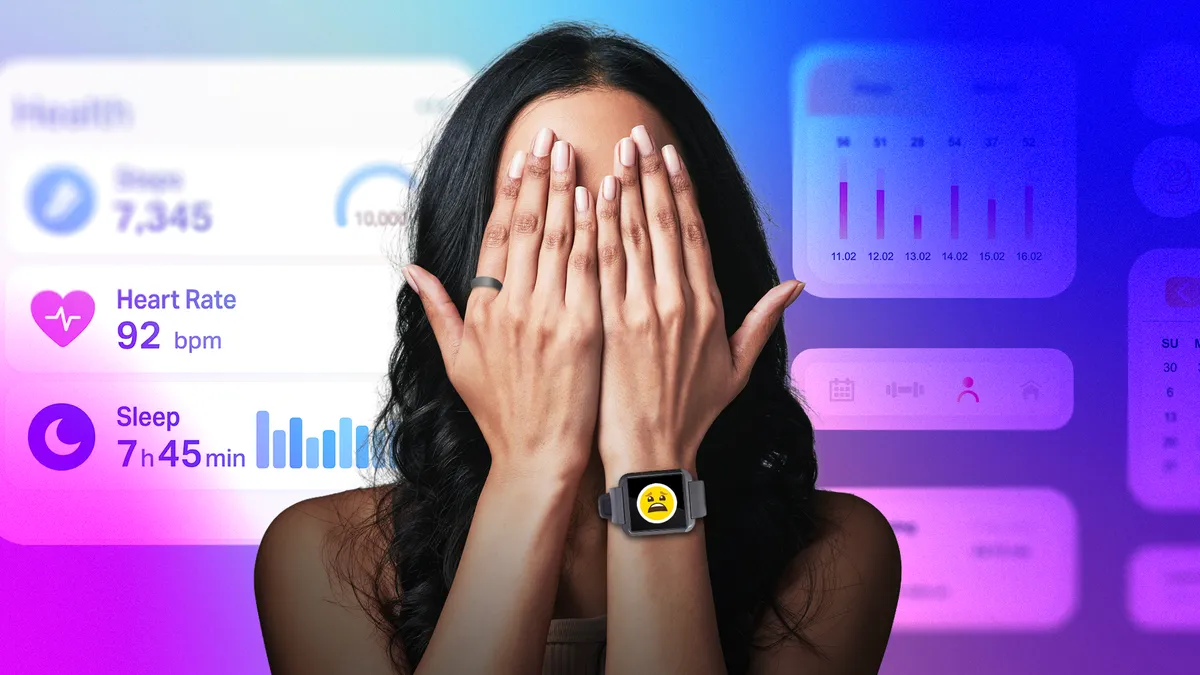
Whenever I wear a smartwatch, I find that my anxiety increases — specifically, my health anxiety. Also known as hypochondria or illness anxiety disorder, this type of anxiety makes me worry that I am or may become ill even when I’m healthy.
What’s ironic is that part of my job involves testing health-monitoring wearables, including fitness trackers and smart rings. While I love exploring this technology and do think it can help you learn more about your body, I have to be careful about how I use it so my anxiety isn’t triggered.
“Healthy adults and individuals with pre-existing medical conditions are increasingly using these devices to manage their health. Whether 24/7 access to health information from a wearable actually helps or potentially harms people is really unclear,” says Dr. Lindsey Rosman, assistant professor of medicine in the Division of Cardiology and co-director of the Cardiovascular Device and Data Science Lab at the University of North Carolina School of Medicine.
Advertisement
When you add in the ability to search your symptoms online or ask an AI chatbot in your wearable’s app about every anxiety-induced health question that pops into your head, it becomes even more difficult to discern between what’s helpful and harmful.
To help myself and others with health anxiety navigate the world of wearables so we can either enjoy using them or know when it’s time to stop, I reached out to experts for their advice.
1. Turn off health-related alerts
Rosman has observed clinically that it can be beneficial to either scale back or turn off the features that make you anxious. This can be especially helpful for people with pre-existing conditions that are already being treated, such as atrial fibrillation (AFib, an irregular heartbeat), as your wearable’s irregular heart rhythm notifications will only make you anxious and can prompt you to see your doctor when it’s not medically necessary.
Plus, certain medications can affect the accuracy of wearable sensors, provoking false alarms.
Advertisement
“We published a case report on a patient who performed over 900 EKGs [electrocardiograms or ECGs, which measure the heart’s electrical activity] on her smartwatch in a single year,” says Rosman. While most of the EKGs were normal, inconclusive alerts fueled her anxiety, leading to multiple ER visits, spousal conflict and the need for therapy to reclaim her daily life. The patient had no psychiatric history prior to getting a smartwatch.
When you get an unexpected health alert on your device, it can understandably cause panic.
Cole Kan/CNET/Apple
Dr. Karen Cassiday, author of Freedom from Health Anxiety and owner and managing director of the Anxiety Treatment Center of Greater Chicago, says that even patients who don’t have health anxiety can find wearables to be intrusive when they get too many alerts. “They discover they want to be less aware of every moment of their body’s functioning,” she says.
Advertisement
Thankfully, most wearable health features can be turned off completely or customized.
For instance, Shyamal Patel, SVP of science at Oura, maker of the Oura Ring, shares that the device’s Personalized Activity Goals allow you to choose to see steps instead of calories, adjust your daily activity goal or hide calories completely, which can be necessary for anyone who finds calorie counting triggering or overly rigid.
Advertisement
2. Avoid checking your device all the time
Referring to a 2024 study she worked on that examined the impact of wearables on the psychological well-being of patients with AFib, Rosman says that about half of the participants were checking their heart rate every day out of habit, not because they felt symptoms.
Cassidy explains that while people with health anxiety may initially find wearables helpful, compulsively checking to make sure their vitals are normal can accidentally become a form of negative reinforcement that further propels the anxiety.
“Often when I work with anxious people, we try to cut back or eliminate the need to compulsively check for reassurance on their wearables, as well as with ChapGPT or other digital ‘doctors,’” says Cassiday.
When people refrain from compulsively checking, wearables can provide useful feedback that counters the false belief that something terrible will happen to their health.
Advertisement
If checking your health metrics causes anxiety, try reducing how often you view them on your device or in its app. Setting an alert to check weekly, at a minimum, could help — especially since it’ll give you a broader picture, making you less likely to hyperfocus on a single data point that seems off.
You should also avoid checking your wearable’s health information right after you wake up or before you go to bed, as this can set the tone for an anxious day or make it harder to fall asleep.
If having a screen on your wrist makes it difficult for you to stop checking, a screenless smart ring or fitness tracker such as the Whoop 5.0 may be a better option, since they rely on apps instead of screens.
Advertisement
A screenless smart ring may help you stop compusively checking your device.
Anna Gragert/CNET
“You choose how much or how little you engage with the app, which gives those who might be anxious about their health the option to limit the amount of time they spend with their data,” says Patel.
3. Focus on trends, not one-off metrics
When I asked both Patel and Dr. Jacqueline Shreibati, head of clinical for platforms and devices at Google, how people who wear their devices can reduce health anxiety, they emphasized the importance of tracking trends — not individual metrics.
“We focus on long-term trends (rather than isolated metrics) to help users maintain a balanced relationship with their data,” says Shreibati. “What being healthy means differs for everyone, and we encourage users to consult their physician if they have any concerns.”
Advertisement
Patel points to the Tags and Trends features in the Oura app. Tags lets you tag lifestyle factors such as travel, alcohol, meditation or late meals, which you can then view in Trends to see how your behavior affects your recovery and sleep over weeks, rather than looking at a single score that may one day seem abnormal.
Instead of viewing a single sleep or stress score, consider looking at that data weekly or monthly.
Vanessa Hand Orellana/CNET
4. Remember that your smartwatch can’t replace a doctor
“Most consumer wearables were originally developed as personal wellness devices, which are not required to demonstrate safety and efficacy like traditional medical devices (e.g., a blood pressure cuff or pacemaker),” Rosman explains.
Advertisement
Yet we’ve begun using these wearables to monitor our health, using metrics such as heart rate and rhythm, blood oxygen, stress, sleep and physical activity. Now, some of these devices have medical-grade sensors, software and algorithms approved by the US Food and Drug Administration to detect irregular heart rhythms, hypertension and sleep apnea.
Despite FDA approval, wearables are simply not doctors, and they cannot provide medical diagnoses or treatment. That’s why it’s essential to understand what your device actually measures.
The ECG feature on many smartwatches is just one example of this. FDA-cleared as it may be, a single-lead ECG that only uses one electrode to record your heart’s electrical activity from your wrist is not the same as the 12-lead, hospital-grade ECG a cardiologist would use.
While your wearable’s ECG can surface a potential symptom worth investigating with your doctor, it can’t replace a professional or their medical-grade equipment.
Advertisement
Performing an ECG on your smartwatch is not the same as having that same measurement taken in a doctor’s office.
Viva Tung/CNET/Apple
The gap is even wider for features including stress and sleep scores, which haven’t been clinically validated because there’s no one single gold standard to validate against. These numerical scores are calculated from bodily signals such as heart rate, temperature, movement and heart rate variability, which tend to correlate with your stress and sleep states. But the translation from raw signal to “your stress score is 74” is more of an educated estimate.
“What you’re seeing is a rough indicator of how your nervous system is functioning, not a medical diagnosis,” Rosman emphasizes.
Advertisement
Patel adds that not all physiological stress is inherently negative. “Some forms of short-term physiological stress can be healthy and adaptive,” he says. “That’s why we aim to pair data with in-app context and insights, so members can better understand what they’re seeing rather than receiving that information in a vacuum.”
Nonetheless, when you don’t know exactly what your wearable is measuring, a “bad” stress or sleep score can seem scary when it isn’t necessarily a cause for alarm, but rather a sign that you may want to have a deeper conversation with your doctor.
5. Get your doctor’s thoughts
Just like you should talk to your doctor before starting a new medication or diet, you should get their thoughts on whether you could benefit from using a wearable.
“Education is probably the most underused tool we have,” Rosman says.
Advertisement
When you don’t know what a healthy heart rate or ECG looks like, one seemingly atypical reading can send you into a panic. That’s why it’s essential to speak with your doctor so you understand your own baseline and if a wearable makes sense for your current health condition.
As a guide, Rosman provides the following questions you can ask your doctor:
Advertisement
What type of wearable should I use?
How often should I check this data?
What are healthy numbers for me?
What do I do when I get an alert?
When should I call the clinic or seek emergency care versus waiting?
“A fast heart rate after climbing stairs is not the same as a dangerous arrhythmia, but without that context, a notification can feel terrifying,” Rosman adds. “So much wearable-related anxiety comes not from the data itself, but from not knowing what to do with it.”
6. Know when it’s time to remove your device and get help
When asked when someone should consider parting with their wearable or seeing a professional for health anxiety, Cassiday says that it’s similar to what many notice when they keep checking their smartphone for the next text, TikTok or other digital data.
“If you find yourself interrupting pleasurable activities or your free time to check, or if you feel anxious about not checking, you have a problem,” Cassiday states.
For instance, if you only stop thinking that you’ll have a heart attack when you check your wearable and see your resting heart rate. Or, put simply, if you only feel at peace after someone or something, such as a wearable reassures you that you’re in good health, it’s time to get professional support.
Advertisement
If health anxiety is making it difficult for you to enjoy life, then it’s time to talk to a professional.
When you have health anxiety, the gold standard for care is cognitive behavioral therapy. It involves exposure to health-related worries without any form of reassurance and learning to accept the uncertainty that comes with not knowing our future health status, manner of death or time of death.
“People need to learn that all the vague symptoms that trigger their health anxiety are just normal variations of normal body functioning and aging,” Cassiday explains. “They have to reframe the symptoms they notice as nothing to examine, discuss or manage and instead trust the facts of their other evidence of good health.”
CBT can help you live in the present instead of spiraling into the anxiety-inducing “What if?” of the future.
Who should and shouldn’t use wearables
Wearables can be great for people who like tracking their fitness to motivate them toward their goals, or for patients and their care teams when medically necessary. Though they usually cost hundreds of dollars, wearables can be less expensive than medical tests. Some are even HSA- or FSA-eligible.
Advertisement
“In AFib specifically, being able to correlate your symptoms with actual rhythm data can be genuinely empowering,” Rosman says. She’s observed that the patients who thrive with wearables are those who use the data as information — not as something to fear — and those who don’t participate in 24/7 surveillance.
In Rosman’s 2024 study, two-thirds of AFib patients said their wearable made them feel safer and more in control. Even so, there is still the risk of unintended consequences.
While they can be beneficial, wearables can also come with risks — especially since there isn’t enough research on the subject.
Advertisement
Giselle Castro-Sloboda/CNET
Just as doctors would never prescribe a medication without knowing the potential benefits, risks and how to manage them, wearables should be no different. “The technology has moved so much faster than the science, and we need the scientific evidence from clinical trials to catch up,” Rosman explains.
Since the evidence isn’t there yet, Rosman is hesitant to say anyone should categorically avoid wearables.
Despite that, people who are highly anxious about their heart or prone to obsessive symptom monitoring should approach with caution. The same goes for those with conditions involving unpredictable, abrupt symptoms, such as paroxysmal AFib and POTS, because the uncertainty of not knowing when the next episode will hit is stressful enough, and constant monitoring can make it worse.
A note on the science (or lack thereof)
Rosman has conducted research on the connection between wearables and anxiety, including a 2025 review describing the psychological effects of wearables on patients with cardiovascular disease and a 2024 study examining their impact on the psychological well-being of patients with AFib.
The 2025 review found that while wearables can help promote healthy behaviors and provide data for diagnosis and treatment, they also pose risks, such as adverse psychological reactions.
In the 2024 study, it was concluded that wearables were connected with higher rates of patients becoming preoccupied with their symptoms, being concerned about their treatments and using both formal and informal health care resources.
Advertisement
On the other hand, a 2021 study that analyzed the 2019 and 2020 US-based Health Information National Trends Survey found that using wearable devices for self-tracking can indirectly reduce psychological distress. Still, misinterpretation of wearable data may cause unnecessary panic and anxiety.
A 2020 qualitative interview study featuring patients with chronic heart disease also found that while wearables’ data may be a resource for self-care, it can create uncertainty, fear and anxiety.
Ultimately, more studies are needed.
“Honestly, we don’t have good scientific evidence in this area yet,” says Rosman. “Despite widespread use, there have been no clinical trials I’m aware of that have looked at the benefits and potential health risks of specific wearable health features.”
Advertisement
Rosman’s team plans to be the first to investigate this in patients with pre-existing heart conditions.
Wearables’ impact on our health care system
When wearables cause health anxiety, they can prompt healthy individuals to schedule unnecessary doctor’s appointments. This places a burden on our health care system, which is already experiencing shortages, making it difficult for people who actually require medical attention to access care.
Rosman’s 2024 study found that those using a wearable sent nearly twice as many patient portal messages to their doctors. Responding to these messages from patients takes time, isn’t reimbursed by insurance and can contribute to burnout.
Advertisement
When health anxiety caused by wearables prompts people to message their doctors, it can put a strain on the health care system.
MoMo Productions/Getty Images
As a result, Rosman believes we need better systems for managing wearable data in clinical settings before we scale it further: “Wearables are changing how we deliver care in ways we haven’t fully prepared for.”
Wearables can further widen health care inequity due to their cost.
“These devices are expensive, they were mostly designed and tested in young healthy people and they’re marketed toward higher-income consumers,” Rosman explains. “If we’re not thoughtful about access, wearables could actually widen health disparities rather than close them. That’s the opposite of what we want.”
The bottom line
While wearables have their benefits, there are also risks to consider, especially given the limited research on the subject.
If you purchase a wearable and it triggers health anxiety, you don’t have to use every available feature, wear it constantly or continue to wear it at all. Before you even buy that device, you can arm yourself with anxiety-reducing knowledge by getting your doctor’s expert opinion.
Advertisement
However, if health anxiety continues to take over your life, it may be time to remove your wearable and seek professional help.
As for me, writing this piece has been a necessary reminder that, while there’s a lot we can’t control in life, the power is in our hands (or on our wrists or fingers) when it comes to the technology we put on our bodies or invite into our homes. Just like an itchy sweater or a lumpy armchair, we can send the technology that doesn’t serve us packing.
Emotiva has built its reputation on delivering high-performance audio components with solid engineering, serious build quality, and prices that usually make the competition look a little too comfortable.
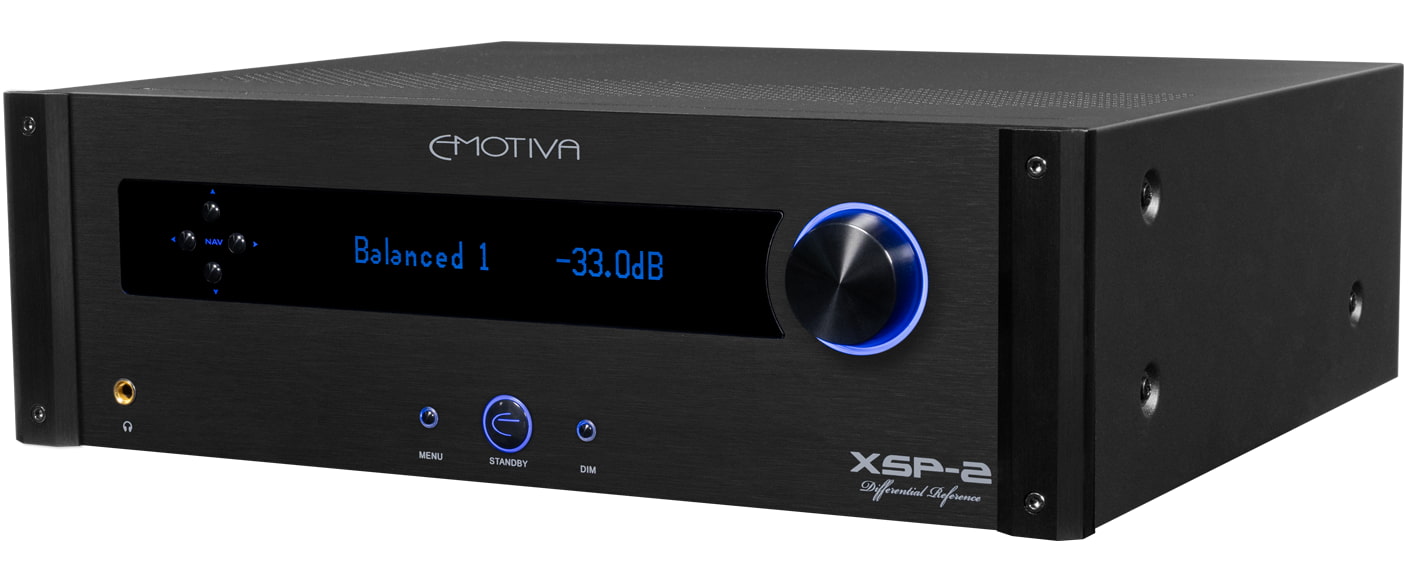
For 2026, the company is taking another run at the serious two-channel market with the XSP-2 Differential Reference Stereo Preamplifier, a major update to the well-regarded XSP-1 that first arrived in 2013. The new XSP-2 keeps the separates-first mindset intact, but adds a more modern modular platform, including a fully balanced ESS-based DAC module installed from the factory and an expansion path for a future streaming module.
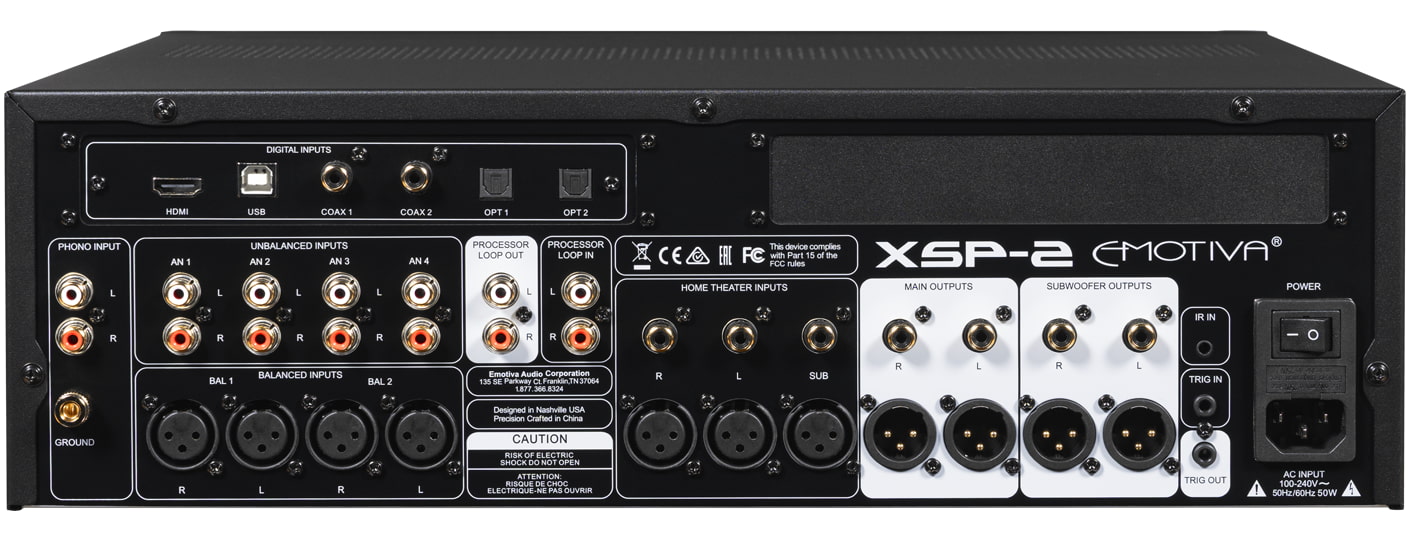
The XSP-2 ships with a pre-installed DAC module that expands its connectivity with HDMI-ARC, USB-C, two coaxial inputs, and two optical inputs. Dedicated shielding keeps the digital section isolated from the preamplifier’s pure analog signal path.
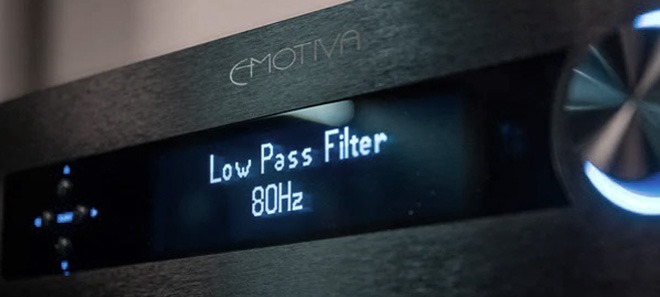
The XSP-2’s fully balanced, fully differential analog signal path is designed to lower noise, reject interference, and preserve low-level detail. It also includes fully balanced bass management for 2.1 or 2.2-channel systems, with independent high-pass and low-pass crossover settings at 40, 60, 80, or 100 Hz, plus stereo or summed mono subwoofer output options.
Advertisement
The XSP-2 also includes an onboard MM/MC phono section for easy connection to most turntables, along with a dedicated headphone output driven by a current-mode feedback amplifier designed to handle more demanding headphone loads.
All audio switching is handled by fourth-generation hermetically sealed subminiature relays, helping preserve signal purity throughout the audio path while reducing noise, crosstalk, and switching artifacts.
An external processor loop and Home Theater Bypass provide additional flexibility, allowing the XSP-2 to integrate more easily into mixed two-channel and home theater systems.
The front panel features a large blue OLED display, which is larger than the display used on its predecessor, along with a flexible menu system that can be controlled from the front panel or the included remote. The display is easy to read, and the menu system provides quick access to the XSP-2’s core setup and control features such as MM/MC cartridge select, balance, high pass filter, low pass filter, and selectring subwoofer mono/stereo choices.
“The XSP-1 is one of the most popular products in the history of the brand,” saysDan Laufman, President, Emotiva Audio Corporation. “It’s famous for being a highly flexible preamp that performs well above its price…After years of focused R&D, we’re finally ready to launch a worthy successor that retains the sonic benefits that made the original a hit, but with added flexibility across the board…The XSP-2 is not only a best-in-class preamp for today’s consumers, but it’s also ready for whatever comes next, including a streamer module that is currently in the works. When it launches, all it will take is a few easy steps to add it to the XSP-2.
The frequency response shown was measured with a high-resolution digital source. At lower sample rates, the frequency response will be limited by the sample rate of the content.
115 VAC or 230 VAC +/- 10% @ 50 / 60 Hz (automatically detected and switched).
Dimensions
17” wide x 5-1/4” high (without feet) x 14-1/2” deep (without connectors)
17” wide x 5-2/4” high (including feet) x 15” deep (including knobs and connectors)
17” wide x 6” high x 16.5” deep (includes feet and terminals)
Weight
13 lbs (unboxed)
28 lbs (unboxed)
Expansion Slots
2 x rear panel slots
None
The Bottom Line
The Emotiva XSP-2 looks like a strong value play in the serious two-channel preamp category. It’s competitively priced and feature packed with a fully balanced analog signal path, built-in MM/MC phono stage, balanced bass management, Home Theater Bypass, an external processor loop, and a factory-installed ESS-based DAC module for $1,599.
What makes the XSP-2 more interesting than a typical stereo preamp is its modular architecture. The two rear expansion slots give Emotiva room to add future functionality, and the included DAC module already brings HDMI-ARC, USB, coaxial, and optical digital inputs without turning the XSP-2 into a compromised digital-first control box. The analog section remains the main event.
Advertisement
Advertisement. Scroll to continue reading.
The catch is obvious but important: the XSP-2 is a preamplifier, not an integrated amplifier. It still needs to be connected to a power amplifier before it can drive a pair of loudspeakers. Emotiva’s own options include the XPA-2 Gen3 stereo power amplifier at $1,499, a pair of XPA-DR1 Differential Reference monoblocks at $1,699 each, or one of its Build-Your-Own XPA Gen3 power amplifiers starting at $1,499.
Also missing at launch is built-in streaming. Emotiva says a streaming module is in the works, but for now, anyone who wants network playback will still need to add an external streamer or use one of the XSP-2’s digital inputs. HDMI-ARC is useful for TV integration, but this is still a two-channel preamp, not a surround processor or all-in-one streaming amplifier.
Pro Tip: You may also desire to include one or two subwoofers into the mix, such as the xs12e ($399 each).
Advertisement
Price & Availability
The Emotiva XSP-2 Differential Reference preamplifier is available now for $1,599 at Emotiva.com.
Repair costs are often unknown until you visit a service center. ASUS aims to address that with its new Part Price Checker, which lets customers check the prices of genuine spare parts online before booking a repair. The user just needs to provide the device’s serial number to view the prices of ASUS spare parts. This will give them an idea of the cost of repairs before going to a service center.
Part of the ASUS Assurance Program
The Part Price Checker is part of the ASUS Assurance program, which aims to make after-sales support more convenient for customers. The program is built around four key pillars: Assured Quality, Always-on Support, All-around Coverage, and Added-value Services. The new tool lets customers check the prices of genuine spare parts online before visiting a service center. This makes it easier to estimate repair costs before taking the device for service.
ASUS recently expanded the availability of genuine laptop batteries through its Exclusive Stores and authorized partners across India. The Part Price Checker builds on that effort by giving customers another way to plan repairs before booking a service.
Instead of guessing replacement costs, customers can determine the true cost before visiting their authorized ASUS repair facility. This enables customers to budget for the repair and schedule visits to the repair facility at a convenient time.
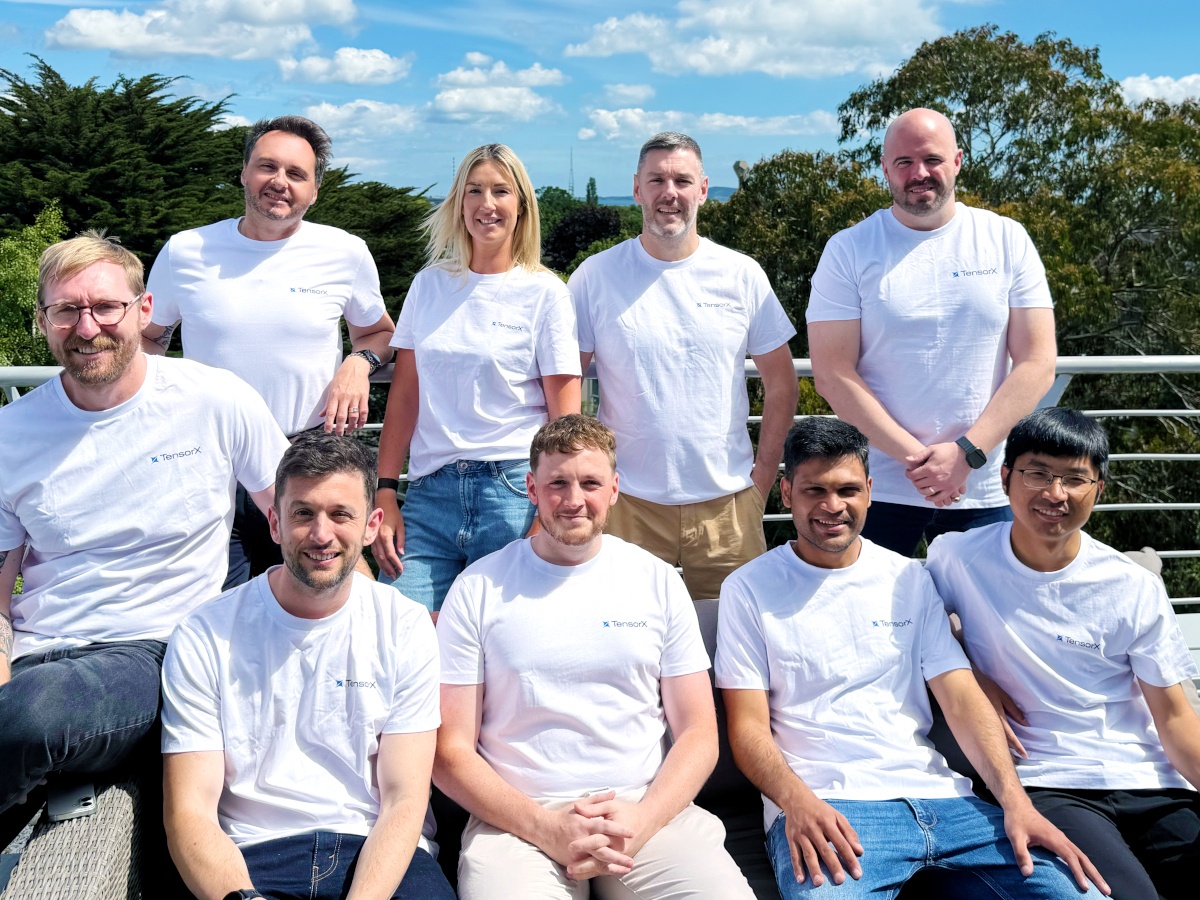
Earlier this week, TensorX raised €8m in a seed funding round, which its founder Shane Morton described as an ‘opening move’ ahead of a much larger build-out.
Irish AI infrastructure company TensorX is to collaborate with finance provider Solstice in a partnership to deliver up to $1bn-worth of sovereign European AI infrastructure.
The companies said they “will work together to create a facility … to finance AI hardware and data centre build-out to meet rising demand for sovereign compute across the EU”.
Dublin-based TensorX buys and runs AI hardware and data centre capacity across the EU, with the aim of connecting its start-up and enterprise clients to private compute and keeping “prompts and data on European infrastructure with full data residency and zero retention”.
Advertisement
Solstice is described as “an on-chain settlement and yield protocol and part of the Deus X Capital ecosystem”.
“Europe wants AI that can run on its own terms, on its own soil, without handing its data to someone else’s cloud on the world stage,” said Tim Grant, the chair of TensorX.
“Meeting that accelerating demand takes hardware, and a lot of it. The billion dollars going into GPUs and data centre capacity is the first step, and we expect to keep buying as demand grows. Solstice gives us a financing partner that can keep pace with this incredibly fast-moving market.”
Relatedly, Solstice will launch a yield asset named ‘aiUSX’ to help companies finance AI build-outs using capital they already hold.
Advertisement
“Every company is turning into an AI company, and every one of them watches its inference bill climb,” said Ben Nadareski, CEO of Solstice.
“aiUSX puts the money they set aside for AI to work in the meantime. They get access to the kind of AI-infrastructure lending that used to sit with large institutions, the capital stays liquid, and what it earns goes toward inference later.”
Earlier this week, TensorX raised €8m in a seed funding round with the goal of further contributing to European plans for sovereign AI infrastructure, which its founder Shane Morton described as an “opening move” ahead of a much larger build-out.
The EU is concerned about the control US technology companies wield over the bloc’s technology infrastructure and data.
Advertisement
“European companies don’t want to make a political statement about their AI stack. They want to make a practical one,” said Grant earlier this week. “Their data has to stay in Europe, on infrastructure they can trust, under laws they are required to comply with.”
Data from Accenture suggests that 62pc of European organisations seek sovereign AI, while 75pc of European enterprises plan to move AI workloads to local providers by 2030, according to Gartner.
“Sovereign AI is one of the biggest infrastructure build-outs of this decade, and it runs on capital as much as it runs on chips,” said Stuart Connolly of Deus X Capital.
“TensorX builds the compute, Solstice brings the financing and aiUSX lets more companies take part in funding it.”
Advertisement
Don’t miss out on the knowledge you need to succeed. Sign up for the Daily Brief, Silicon Republic’s digest of need-to-know sci-tech news.
Recent estimates approximate that there are 16.4 billion Google searches per day globally. A huge portion of those searches is for people’s names. Of those names, many are likely public figures, like Lionel Messi, Sabrina Carpenter, or any number of politicians doing something nefarious. But a great many of the name searches are ostensibly for normies. Maybe even you. Definitely me, based on the deluge of spam calls I get.
DeleteMe was founded in 2010 and claims to be one of the oldest companies in data removal. Services like DeleteMe and its competitor Incogni work by contacting data brokers on your behalf and getting them to remove your personal information, including your current and past mailing addresses, your phone numbers, and your email address. Theoretically, this process removes you from annoying marketing lists and makes it harder for randos to find you. I’ve used DeleteMe since January, and while it’s not a silver bullet for ensuring the complete absence of unwanted communication from strangers and scammers, it seems to have helped with the number of unsolicited marketing calls I get. It also helped clean up personal info from my Google results, so you’re more likely to read an old article I wrote than see where I live.
DeleteMe via Martin Cizmar
I have also used Incogni, where I managed an account for my elderly mother. She got similar results, which is to be expected, says DeleteMe executive Jason Dalrymple. Services like DeleteMe and others “all basically do the same thing,” he says. “We’re bound by the same laws and constraints in compliance. It’s a cat-and-mouse game.”
That’s because the degree to which data brokers need to cooperate with the requests of deletion companies is legally murky, given that there’s no comprehensive federal law in the US that regulates the way private companies can use personal data. Rather, most regulations are at the state level, where protections are varied (I live in Missouri, where I feel lucky to have running water). Some states, like California, have more protections, while many states have none. Regardless of where you live, data brokers aren’t necessarily just going to delete your information upon request. They may request further verification of your identity before complying and confirming the request was granted, they may deny the request, and they may ignore the request completely—all actions that require follow-up correspondence with the deletion service.
Advertisement
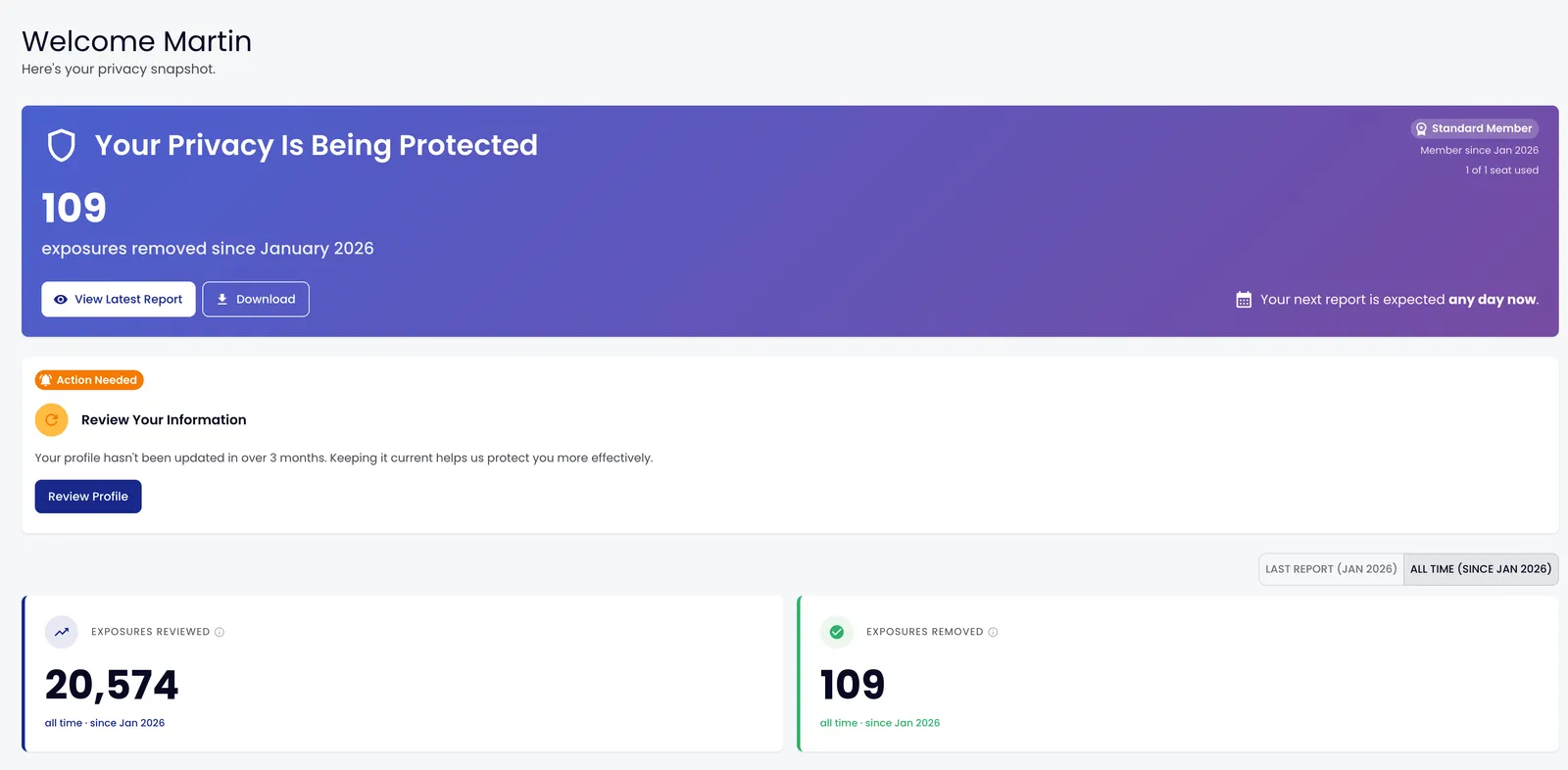
With DeleteMe and Incogni, you can track progress via a dashboard that provides an at-a-glance update on how many removal requests have been made and fulfilled. A few more clicks will show you specifics on each broker, though most of these will be unfamiliar to typical users. The main difference I noticed between DeleteMe and Incogni is that the former’s dashboard doesn’t update as often as the latter’s and also doesn’t show as many brokers being contacted.
I prefer the Incogni dashboard because it’s satisfying and reassuring to log in every few days and see that the company is crawling the web and busting brokers, each of which it rates based on their speed and general compliance. There are constant status updates for thousands of websites. DeleteMe, on the other hand, creates a report every few months showing progress on a smaller number of sites. Dalrymple argues that his company’s surgical approach is a feature, not a bug.
Apple said it couldn’t shield customers from rising component costs anymore.
An exacerbating chip shortage has led Apple to hike up prices for several of its products. Price jumps go from as little as €40 for the HomePod Mini, to nearly €1,000 for the Mac Studio M3 Ultra, though iPhones are unaffected for now.
Apple share prices dropped more than 6pc yesterday, before making marginal gains in pre-market trading today (26 June). Prices, however, have dropped more than 10pc in a month.
“The rapid expansion of AI data centres has created an extraordinary surge in demand for memory and storage”, a company spokesperson told news publications, adding that Apple has “never seen a component price increase this much, this quickly”.
Advertisement
Apple said that the worsening situation meant that it couldn’t shield customers from the rising component costs any longer.
The company previously raised prices for the iPhone 17 Pro, MacBook Air and MacBook Pro, but this is the first time it is hiking rates on products across several categories at once.
iPads will now cost EU customers €100 more at €529; the iPad mini will jump by €120 to €719. The new MacBook Neo, launched in March, is also seeing a price hike of €140, now costing customers €839 to purchase in the EU.
Outgoing CEO Tim Cook told investors in April that AI-led component shortages would constrain supply for Mac, Mac Mini, Mac Studio and MacBook Neo for the June quarter.
Advertisement
“Realistically, on the Mac Mini and the Mac Studio, I believe it will take several months to reach supply-demand balance,” he said at the time. “We are not at the point where we are saying this is going to end anytime soon.”
Chief financial officer Kevan Parekh, meanwhile, said that iPhones faced supply constraints in the March quarter. Bloomberg Intelligence expects iPhone prices to also rise, likely targeting the Pro models.
Apple isn’t alone in suffering from a shortage in memory chips. According to Counterpoint Research, global smartphone shipments are poised to drop nearly 14pc in 2026, with the squeeze particularly affecting entry-level and mid-range smartphones. Prices are expected to jump by as much as 13pc this year.
Meanwhile, rising prices allow for second-hand and refurbished sellers to fill in gaps with cheaper and environmentally better alternatives, according to Refurbed co-founder Kilian Kaminski.
Advertisement
Don’t miss out on the knowledge you need to succeed. Sign up for the Daily Brief, Silicon Republic’s digest of need-to-know sci-tech news.
Looking for the most recent regular Connections answers? Click here for today’s Connections hints, as well as our daily answers and hints for The New York Times Mini Crossword, Wordle and Strands puzzles.
Today’s Connections: Sports Edition features a tricky purple category. You’ll need to look inside of words for four words that have a certain connection. If you’re struggling with the puzzle but still want to solve it, read on for hints and the answers.
Connections: Sports Edition is published by The Athletic, the subscription-based sports journalism site owned by The Times. It doesn’t appear in the NYT Games app, but it does in The Athletic’s own app. Or you can play it for free online.
Hints for today’s Connections: Sports Edition groups
Here are four hints for the groupings in today’s Connections: Sports Edition puzzle, ranked from the easiest yellow group to the tough (and sometimes bizarre) purple group.
Yellow group hint: Wow, you’re terrific!
Advertisement
Green group hint: Hoops winners.
Blue group hint: Hoops stars who’ve been honored.
Purple group hint: A name is hidden in each word.
Answers for today’s Connections: Sports Edition groups
Yellow group: A revered star.
Advertisement
Green group: Last four NBA champions.
Blue group: WNBA players in the Basketball Hall of Fame.
What are today’s Connections: Sports Edition answers?
The completed NYT Connections: Sports Edition puzzle for June 27, 2026.
NYT/Screenshot by CNET
The yellow words in today’s Connections
The theme is a revered star. The four answers are great, icon, legend and superstar.
The green words in today’s Connections
The theme is last four NBA champions. The four answers are Boston, Denver, New York and Oklahoma City.
Advertisement
The blue words in today’s Connections
The theme is WNBA players in the Basketball Hall of Fame. The four answers are Cash, Catchings, Leslie and Whalen.
The purple words in today’s Connections
The theme is starts with an NFL starting QB. The four answers are Jacksonville, Mayer, Williamsport and Youngster.
Toughest Connections: Sports Edition categories
The Connections: Sports Edition puzzle can be tough, but it really depends on which sports you know the most about. My husband aces anything having to do with Formula 1, my best friend is a hockey buff, and I can answer any question about Minnesota teams.
That said, it’s hard to pick the toughest Connections categories, but here are some I found exceptionally mind-blowing.
Advertisement
#1: Serie A Clubs. Answers: Atalanta, Juventus, Lazio, Roma.
#2: WNBA MVPs. Answers: Catchings, Delle Donne, Fowles and Stewart.
#3: Premier League team nicknames. Answers: Bees, Cherries, Foxes and Hammers.
#4: Homophones of NBA player names. Answers: Barns, Connect, Heart and Hero.
Many motorists simply don’t feel the need to “upgrade” and opt for the latest model year whenever it’s available. Not doing so, it seems, is becoming increasingly popular among drivers. The United States Department of Transportation has presented data on the average age of cars and trucks in operation in the country since 2000, with data sets that include 2000-2016 and 2022-2025. It shows that there has been a slow but constant increase in the average age of passenger cars on U.S. roads, beginning with 8.9 years in 2000 and climbing all the way up to 14.5 years in 2025. Light trucks also saw an overall trend upwards over the last quarter-century from 8.4 to 11.9 years in age.
This is not just a U.S. trend, either. In August 2025, the U.K’s Royal Automobile Club reported that cars across the United Kingdom had reached an all-time-high average age of nine years and ten months, up from just seven years and five months in 2015. The reasons for this on both sides of the pond seemingly include the heavy costs associated with getting a new car, as well as a collective reluctance to embrace evolving technology like EVs. There are still concerns about critical factors like getting the most range out of an EV that spook many drivers, after all. Let’s take a closer look at some of these factors, as well as the potential impact that all these aging vehicles can have on the industry.
Advertisement
Costs associated with buying a new car are rising
Todayistuesday/Getty Images
Fuel prices are one huge issue that motorists face in 2026, and some solutions to ease it, like promoting wider use of E15 fuel, are temporary measures that won’t suit every type of engine. More fundamental ways around this issue, such as switching to an EV, are also prohibitive because the cost of buying one will tend to be higher than with a gas-powered counterpart. It’s also true that EVs and hybrids are becoming an ever-more important part of the puzzle when it comes to new vehicles, and there’s a considerable subset of drivers who don’t want to take the plunge with one of these just yet.
The unpredictable nature of government subsidies on EVs and the charging infrastructure to support them is a huge part of this. However, many are simply being priced out of buying a new vehicle in general. In December 2025, The Independent reported that the average price of a new vehicle in the U.S. had risen to $50,000, translating to hefty payments.
Over time, a driver will become extremely familiar with their car and the routes they tend to take it on. They’ll develop a routine for the type of maintenance to give it and how often, how each of its features and applications need to be treated, and any warning signs to watch for. It can be very difficult to surrender that for a model that may have issues you’re not used to managing. After all, while some motorists relish the chance to have a instrument panel full of new toys to tinker with, others will see them as more of a liability, filled as it is with unfamiliar features that could go wrong. All of this is assuming, of course, that the motorist is able to front the hefty cost of a new vehicle in the first place.
Advertisement
Automakers are providing increased support for a population driving older vehicles
Andresr/Getty Images
As The Wall Street Journal puts it, “automakers, dealers and repair shops are changing business practices to adapt to a new normal: the 13-year-old car.” How is this adaptation taking place? There are several factors to this, and one is ensuring that longer-lasting service can be provided for those vehicles. An important part of this is establishing longer-lasting warranties for the model. This same increased availability, however, also makes it more complicated and time-consuming to administer repairs, because some of the parts that were previously mechanical are now implemented into the system itself.
Though this can make repairs more complex (and potentially more expensive), there’s also the big advantage of this electronic system: Patches and updates can be applied that will fix issues and provide new features for what might be a long time to come. This keeps vehicle, owner, and manufacturer in a closer relationship throughout that period. It’s also a matter of continuing to support models that are no longer manufactured. For instance, in June 2025, it was reported that Honda would begin manufacturing official replacement parts for one of its beloved classics: the first generation NSX. This concept was expanded in April 2026 in the shape of the Honda Heritage Works, which, Honda reports, heralded “global sales of Honda Heritage Parts and a new Honda Restoration Service in Japan for classic Honda sport-type models.”
Advertisement
It’s also true that manufacturers are trying to incentivize buyers to invest in newer models by providing features that appeal more to different types of customers. For instance, some may have been turned off from upgrading their vehicle by the increasing prominence of touchscreen technology, and so there have been developments in systems that utilize classic physical buttons as well.
Friday Bitcoin closed at just $59,948 — dropping 19% just for June and more than 50% lower than its record high in October of $124,310.
To commemorate the occasion CNBC interviewed long-time bitcoin skeptic Jeremy Grantham, reporting that the 87-year-old cofounder/chief investment strategist of the massive asset-management firm GMO is “predicting it will gradually fade into irrelevance over decades.”
[The] longtime market commentator known for his calls on asset bubbles said bitcoin is a “useless, speculative” asset without intrinsic value, speaking on CNBC’s “Squawk Box” Friday. He also said bitcoin hasn’t outperformed during a bull market and questioned its practical use. “[Over] years and years, decades and decades, it will dwindle away, I suspect — not with a bang, but a whimper,” he said. “It’s not a stable form of value — it just halved … for no particular reason in a strong economy, so you can’t depend on it in that way.”
He added that gold has still delivered solid gains over the same period, even after pulling back from its highs. Bitcoin not only hasn’t proved itself as a useful asset to speculate on, it doesn’t provide any real world utility either, Grantham argued. “People don’t use it to make serious trades, they don’t use it to buy their dinner and pay at the supermarket. … What it does is allows crooks to move money around,” he said.
Advertisement
Bitcoin has become notorious over the years for its dramatic bear market crashes, which has taken it down at least 70% from its peak in every cycle.
The article adds that “many investors believe the current price slump could drag on for several more months.”
Verónica Cañas barely had time to grab her 6-year-old son and put on her shoes before running out of her apartment in Caracas. As she ran down the stairs, the walls began to crack and part of the facade started to crumble. A few kilometers away in Altamira, 50-year-old Eduardo Burger watched as one building swayed while another fell apart.
Neither of them knew that this was not just a single terrible earthquake but instead a rare phenomenon. On June 24, Venezuela experienced a seismic doublet that saw earthquakes of magnitude 7.2 and 7.5 occur just 39 seconds apart. The first tremor occurred with its epicenter in Yaracuy. Just a few seconds later, an even more intense earthquake shook the same region again.
Both occurred at a shallow depth of between 10 and 20 kilometers (6 and 12 miles), which caused the energy to reach the surface with greater intensity and allowed the seismic waves to be felt as far away as Colombia, northern Brazil, and several Caribbean islands such as Aruba, Bonaire, and Curaçao. While one alone would’ve caused damaged, it was the one-two punch that created the conditions that brought down so many buildings and have made it hard to rescue survivors as the death toll mounts.
The Technical Explanation: Tectonic Plates, Damage, and Resonance
“The dining room table started to shake … We thought it was a tremor; then it started shaking much more violently. The walls were cracking, and pieces of the ceiling were falling. We thought it was going to collapse on top of us,” Cañas says.
Advertisement
She and her family managed to make it to a sports field across from the building, where other neighbors were beginning to gather. There, they were hit by another tremor.
“We all hugged each other, terrified, because we’re not used to this. In Mexico and Chile, there’s an earthquake-preparedness culture, and people are already prepared when an alarm goes off or they feel certain movements, but we aren’t,” she says.
Cañas’ experience highlights one of the main differences between Venezuela and other countries with higher seismic activity. Although the country lies at the boundary between the Caribbean Plate and the South American Plate, earthquakes of this magnitude are relatively rare.
Alan Damián Sánchez Pulido, a civil engineer from Mexico’s Ibero-American University and a specialist in structural damage assessment, explains that the plates’ positions and movements are why earthquakes aren’t as common as they are in other regions—and why they’re so powerful when they do occur.
Advertisement
“In Venezuela, the interaction between the Caribbean and South American plates involves parallel movement; that is what may have caused two earthquakes of considerable magnitude to occur in such quick succession,” he notes.
Unlike Mexico, where the Cocos Plate subducts beneath the North American Plate, in Venezuela, lateral movement leads to different outcomes. “It’s a very rare phenomenon, but the probability isn’t zero. It can occur anywhere in the world where there is interaction between tectonic plates,” Sánchez Pulido says.
What was surprising was not only that two major earthquakes occurred but that the second struck just 39 seconds after the first. To Sánchez Pulido, that short interval is what made this set of quakes so destructive.
“Many structures sustained some kind of damage from the first earthquake. That doesn’t mean the damage was extensive, but any damage alters the original behavior for which they were designed. When another earthquake of similar magnitude strikes immediately afterward, there is no longer any opportunity to reinforce, inspect, or repair the structure. As a result, it no longer performs as intended,” he says.
Robot mowers have come a long way from the boundary-wire era, and Segway’s Navimow range sits at the sharper end of where that technology has landed.
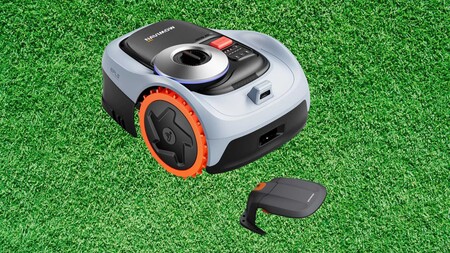
The Segway Navimow i205 AWD is down from £899 to £699 in this Prime Day deal, saving you £200 on a wire-free robot mower that maps your entire lawn from a single tap in the app, with the Garage S charging station included at no extra cost.
A sizeable discount lands on the Segway Navimow robot lawnmower, turning lawn care into a hands‑free upgrade that gives you your time back
A strong saving lands on the Segway Navimow robot lawnmower, transforming lawn care into a seamless, time‑returning upgrade.
That hands-free setup runs on EFLS Network RTK combined with Vision positioning, giving the mower centimetre-level accuracy across the whole garden, and the network data access is currently provided at no additional charge.
Advertisement
Where the i205 AWD justifies its name is on the kind of terrain that exposes the limits of a standard two-wheel mower, because the three-motor all-wheel-drive system engages that third motor only when the gradient actually needs it, keeping energy consumption down on flatter sections.
An automotive-grade Electronic Stability Control system keeps movement straight and controlled on slopes up to 45 degrees, while a patented Traction Control System adjusts grip automatically on wet or uneven ground so the wheels never spin out or leave marks.
The 2.5Ah battery covers up to 125 square metres on a single charge, and at 59 dB(A) the Navimow i205 AWD is quiet enough to run without clearing the garden of people first.
Advertisement
VisionFence obstacle detection recognises more than 150 object types and reroutes in under 0.1 seconds, while the smart security system fires an alert the moment the mower is lifted or moves outside its designated zones.
Gardens with a genuine mix of slope, tight corners, and awkward pathways are where the Navimow i205 AWD is designed to work without complaint, and at £699 with the Garage S thrown in, this deal takes a meaningful amount of friction out of that first step towards wire-free lawn care.
If you’ve got a small-to-mid-sized lawn that’s not particularly even, then the Segway Navimow i205 AWD could be for you. With its three-wheel AWD system, this robot drives over rough ground and copes with bumps without getting stuck. Add in its excellent object detection and avoidance, the integrated 4G and Wi-Fi (no need for a reference station for most people), the brilliant app and low price, and this is a great choice for most people.




















































You must be logged in to post a comment Login